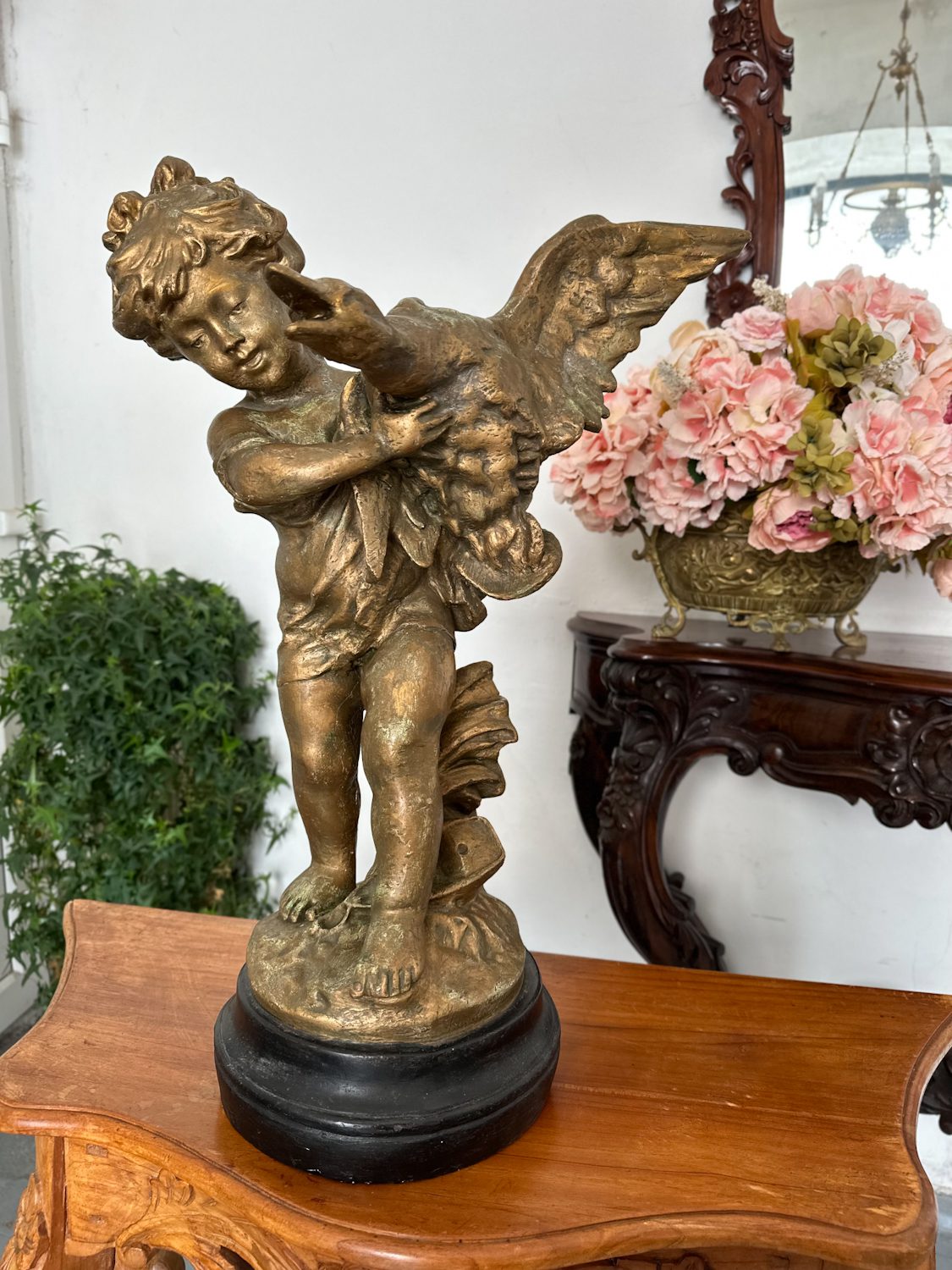
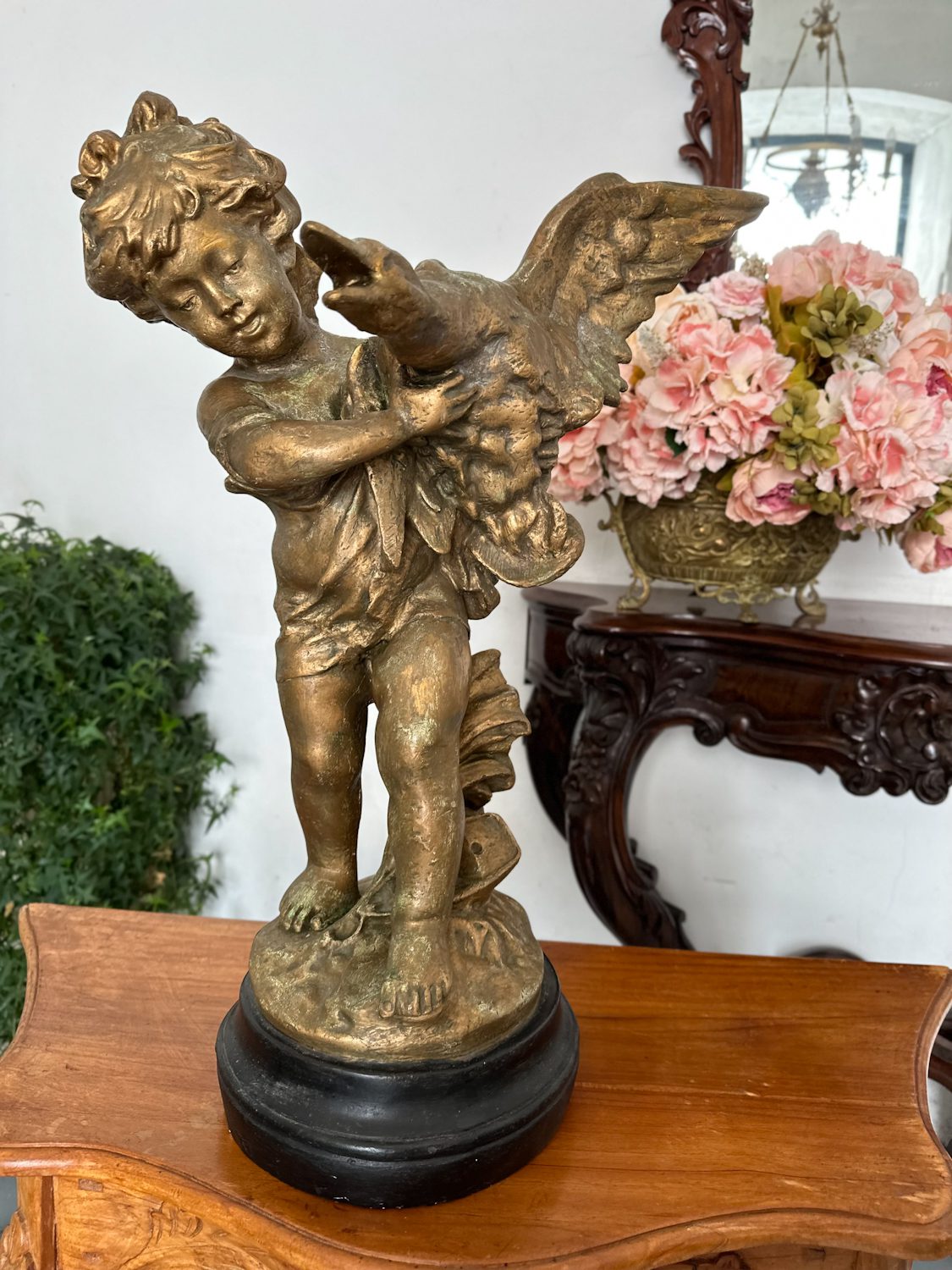
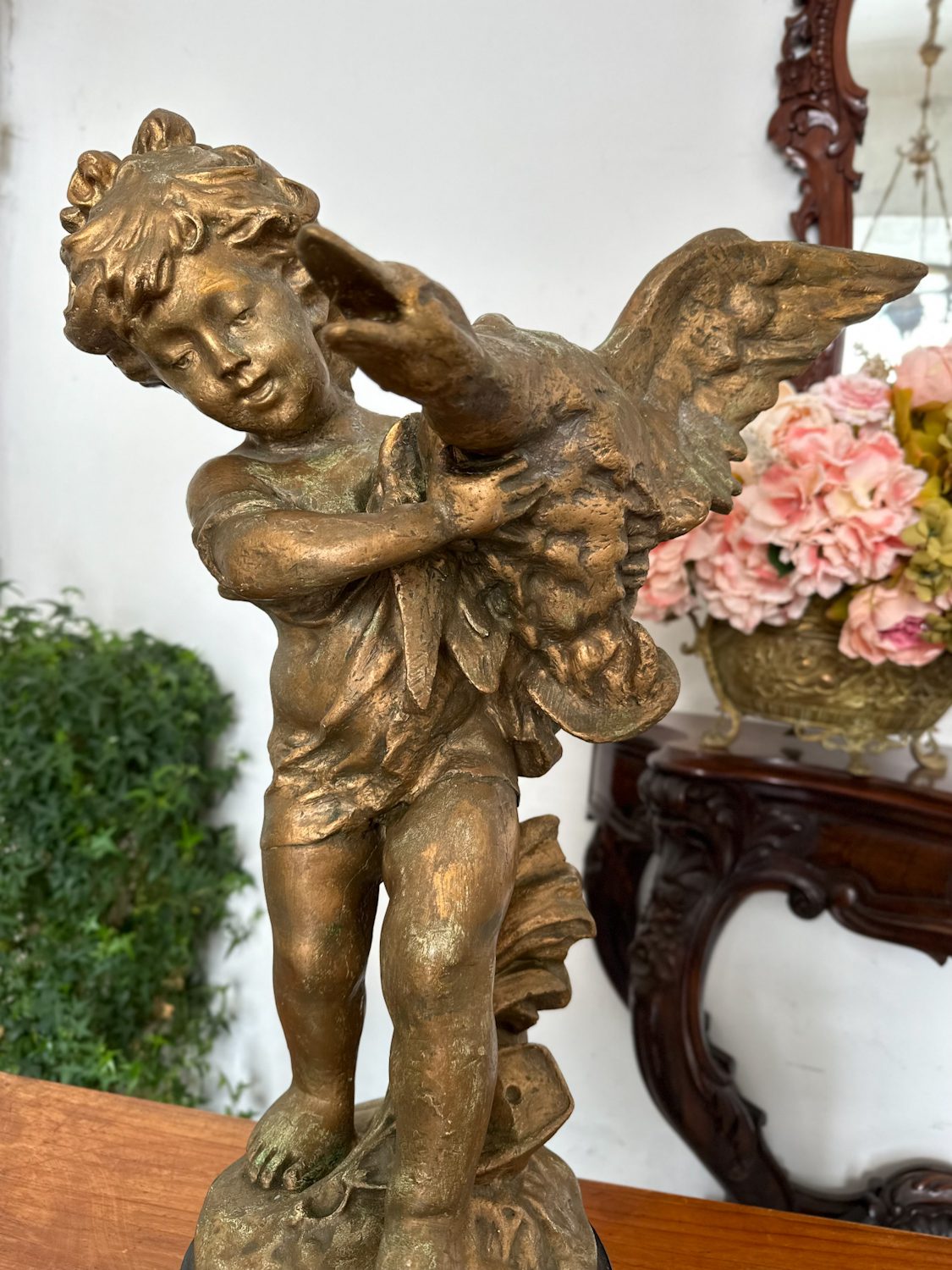
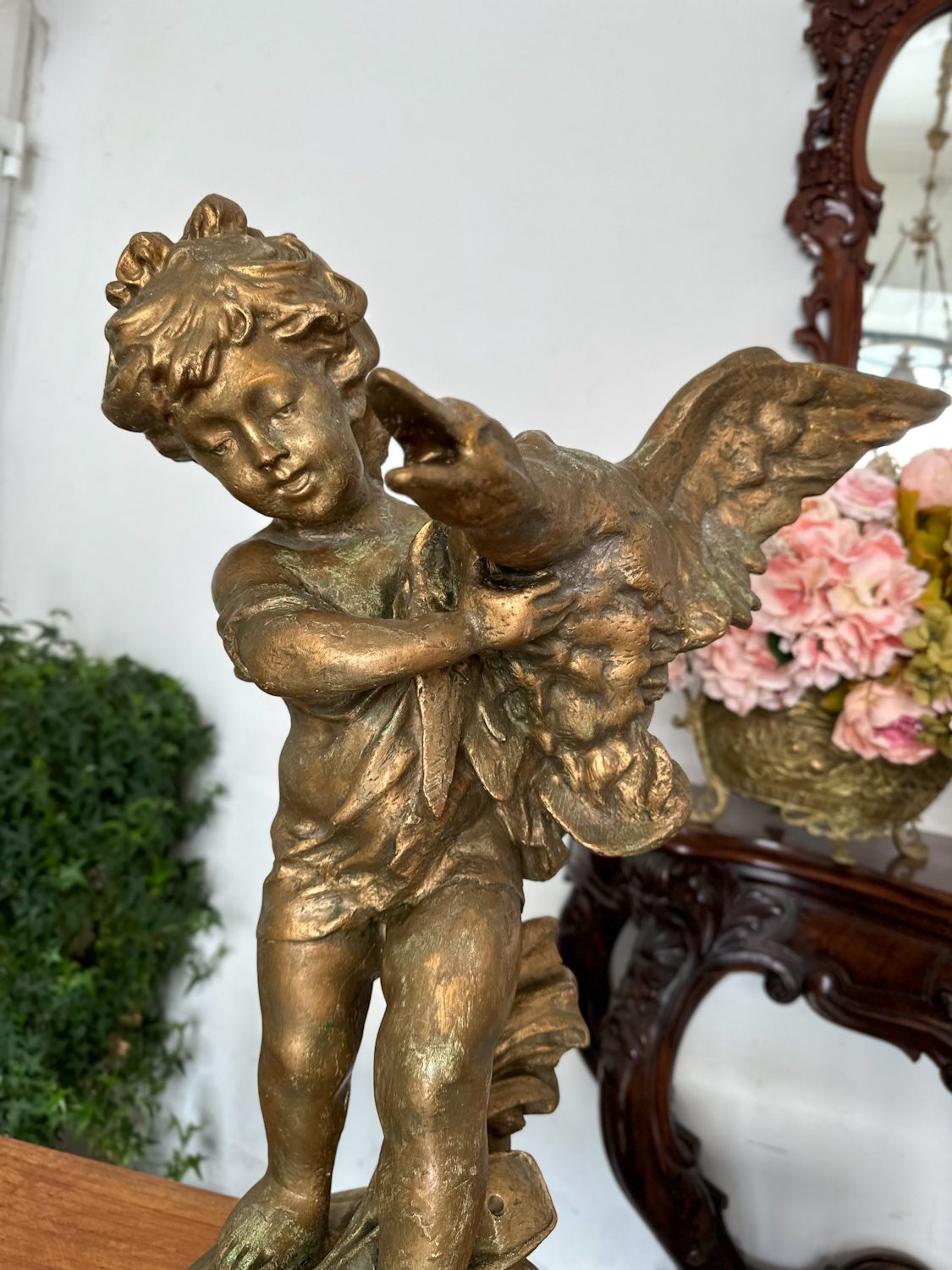
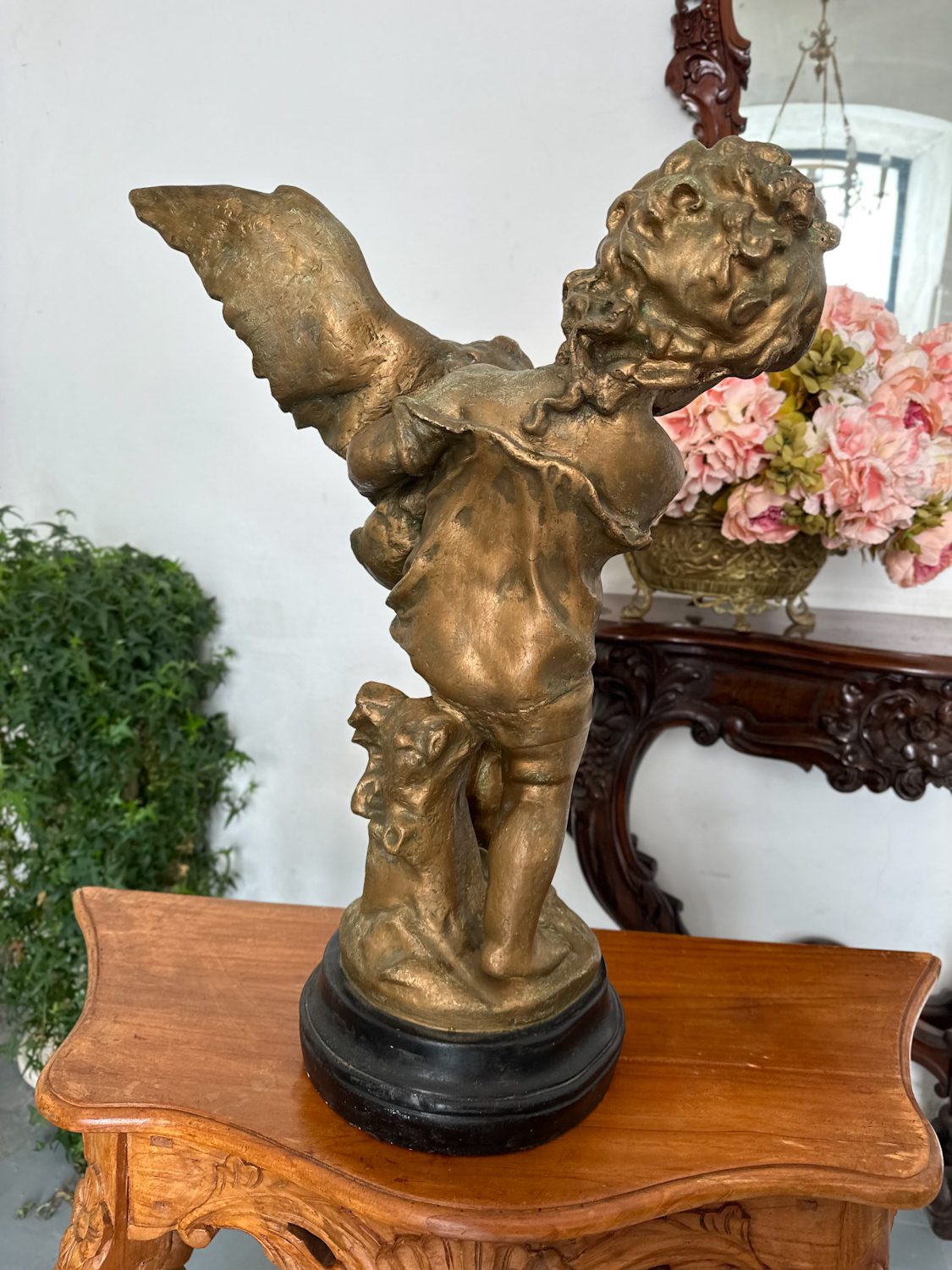
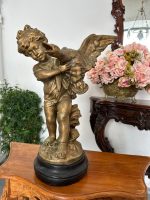
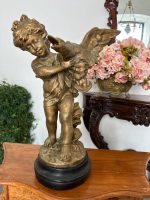
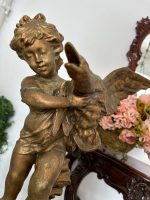
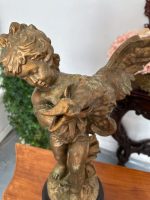
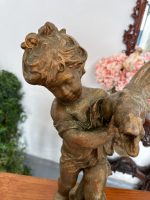
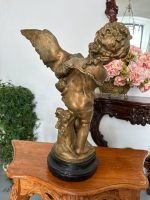
Putto with Swan — Winged Child Figure, Belle Époque, France, c. 1890–1910. This expressive figure captures the timeless motif of a child and bird in a playful, mythical struggle. The putto firmly grasps the large swan. 465,00 €
You’re now subscribed to price tracking for this product. We’ll notify you if the price drops. 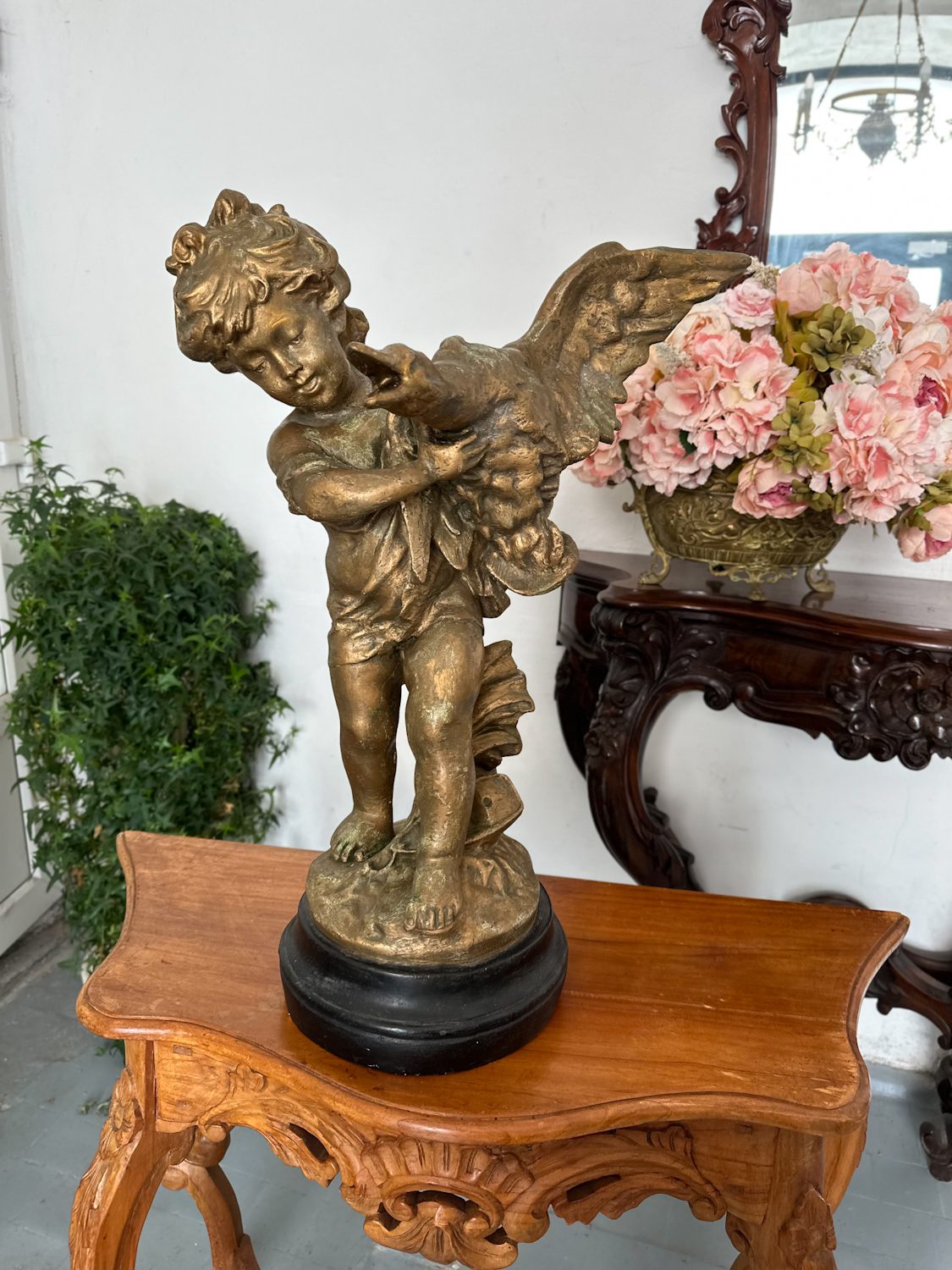
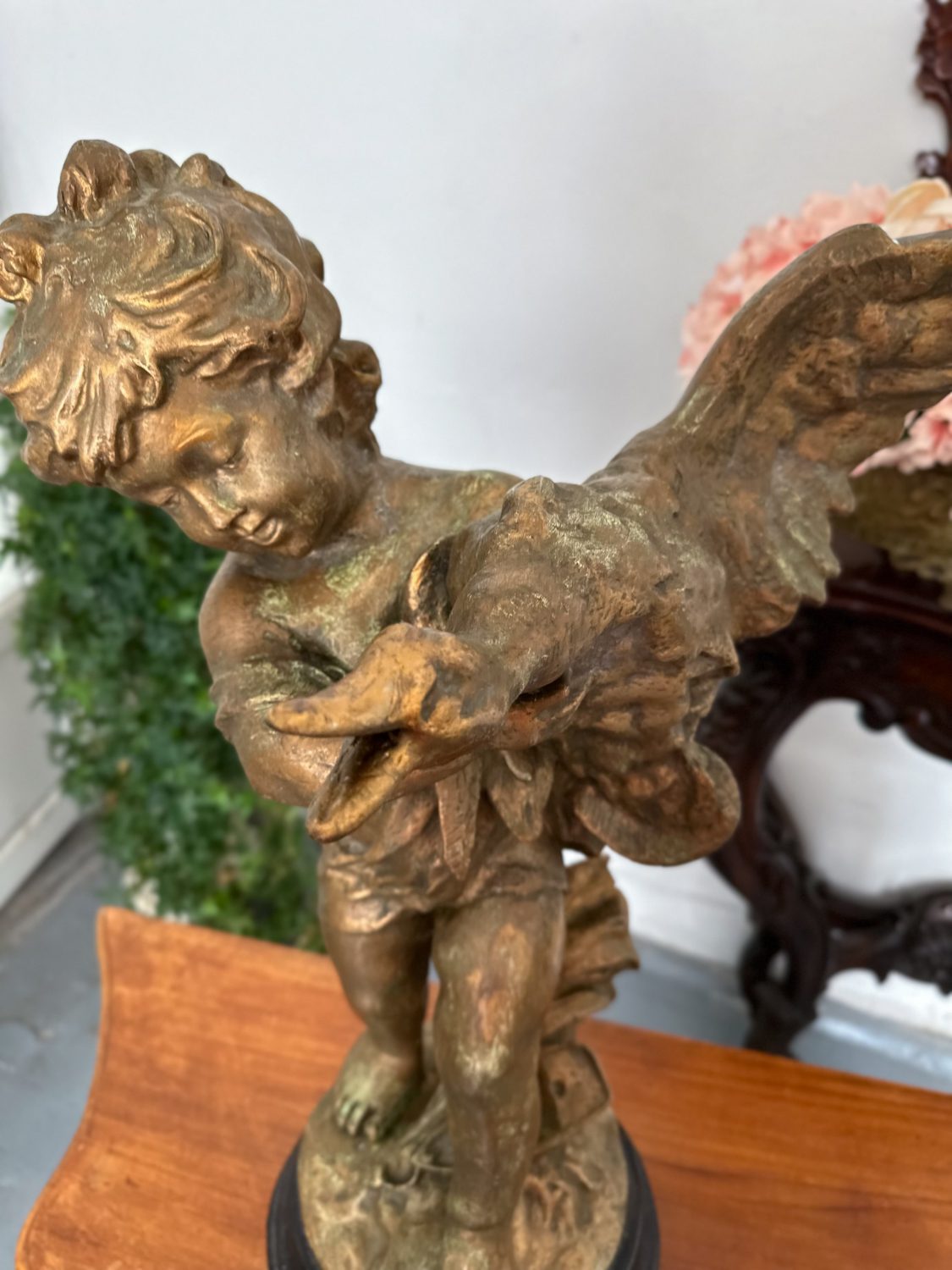
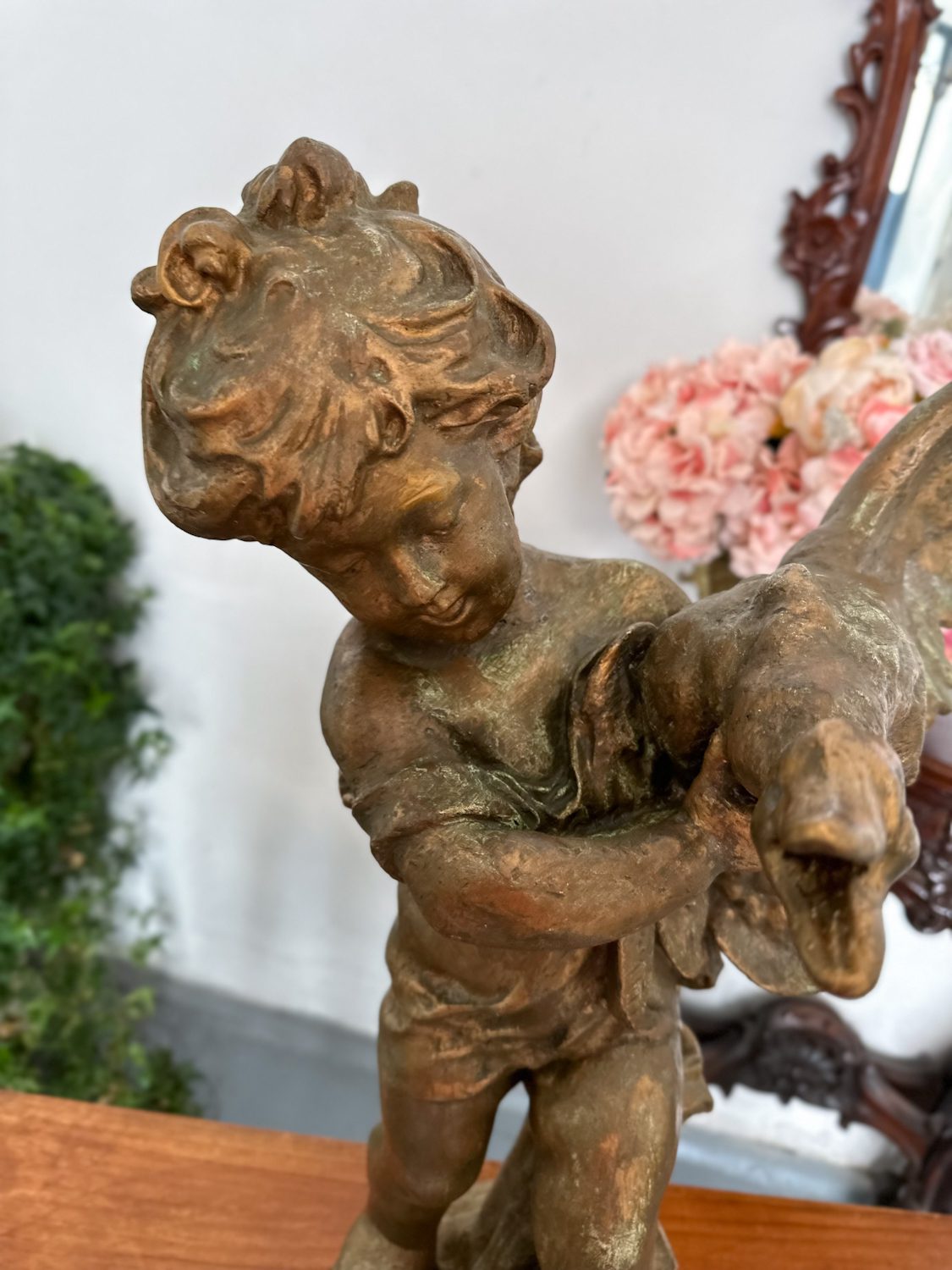
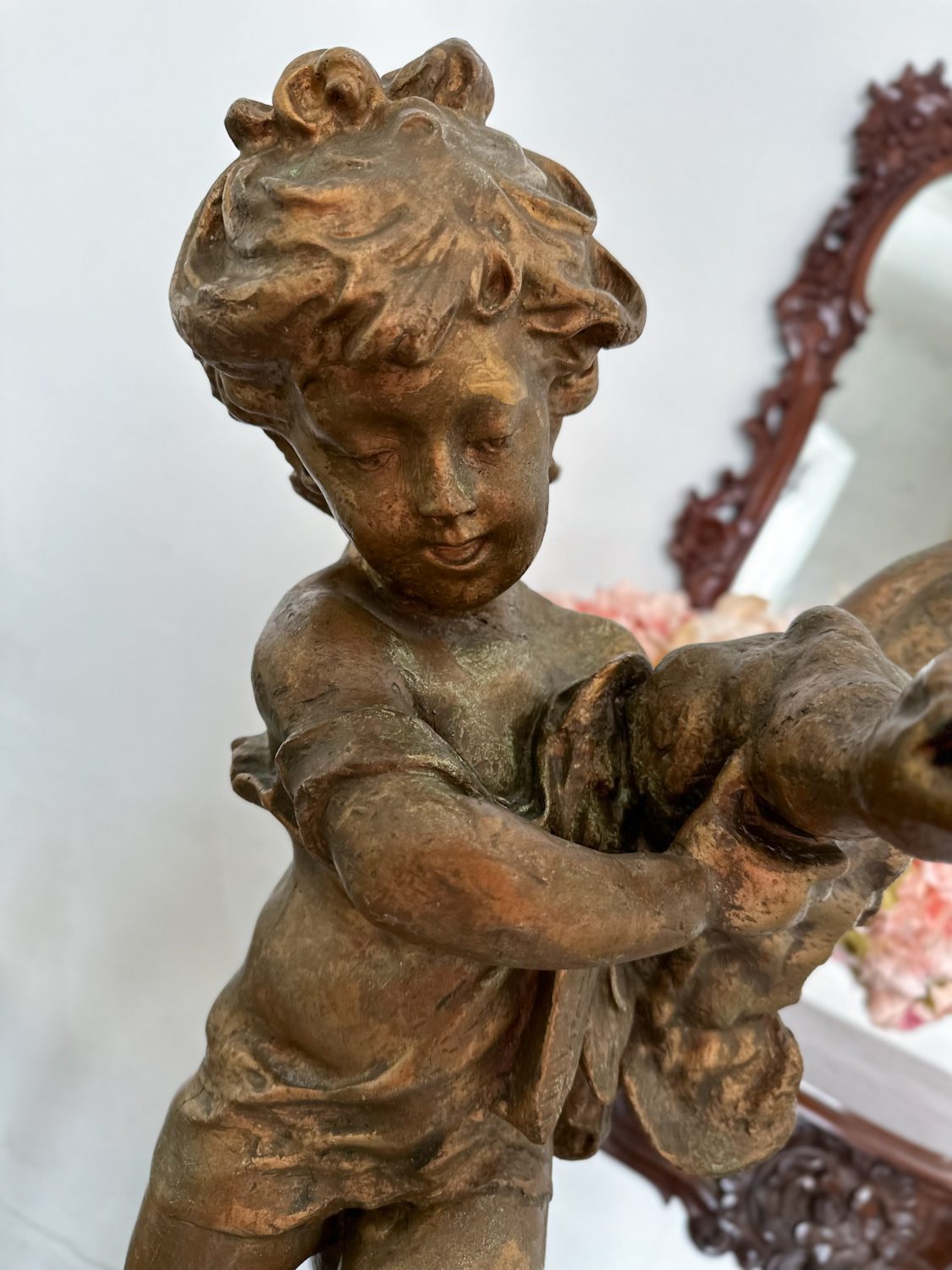
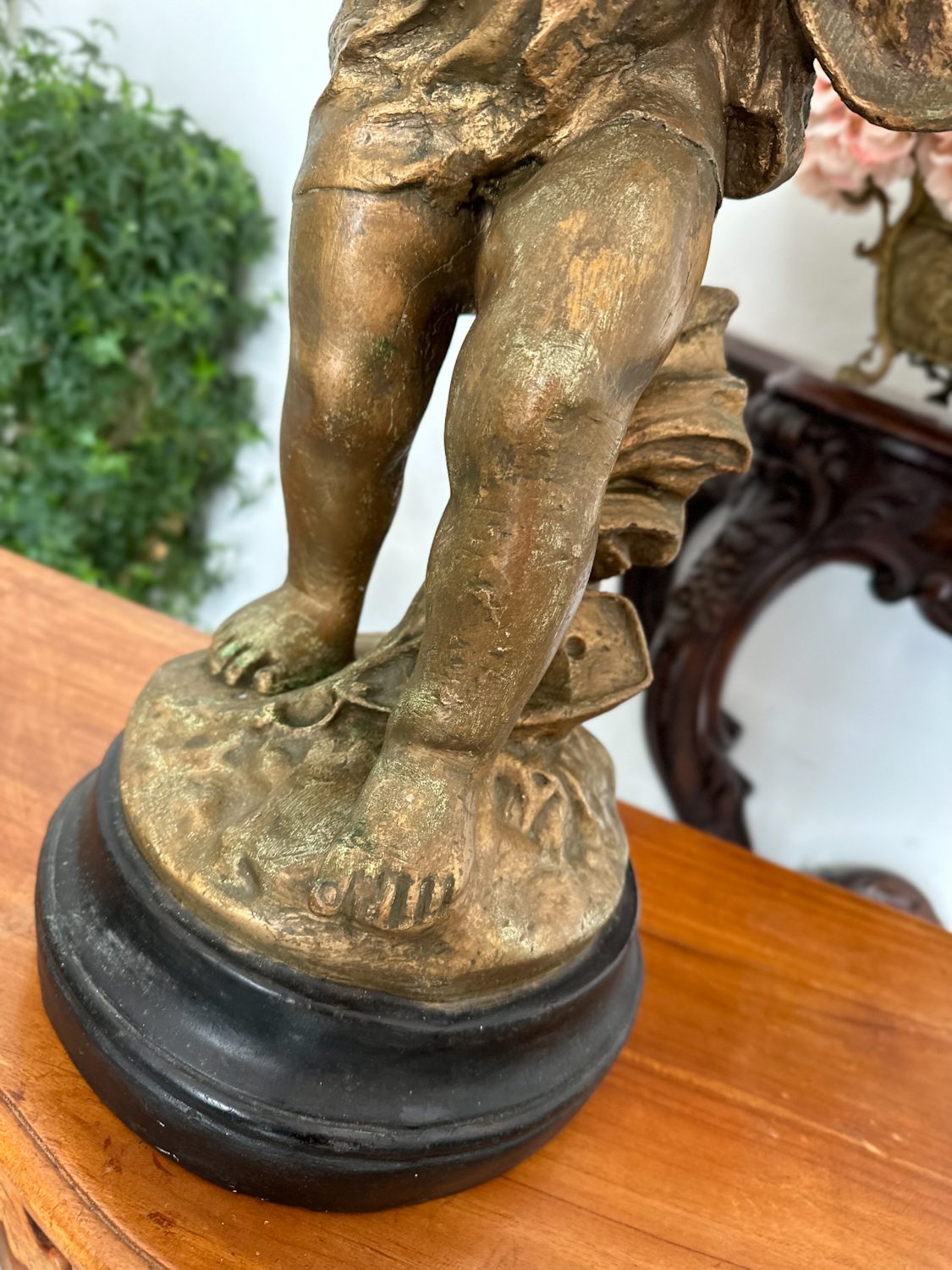
Putto with Swan — Winged Child Figure, Belle Époque, France, c. 1890–1910 (4672)
Height 61 cm Width 45 cm Color BronzeGoldNatural
Description
Putto with Swan — Winged Child Figure, Belle Époque, France, c. 1890–1910 (4672)
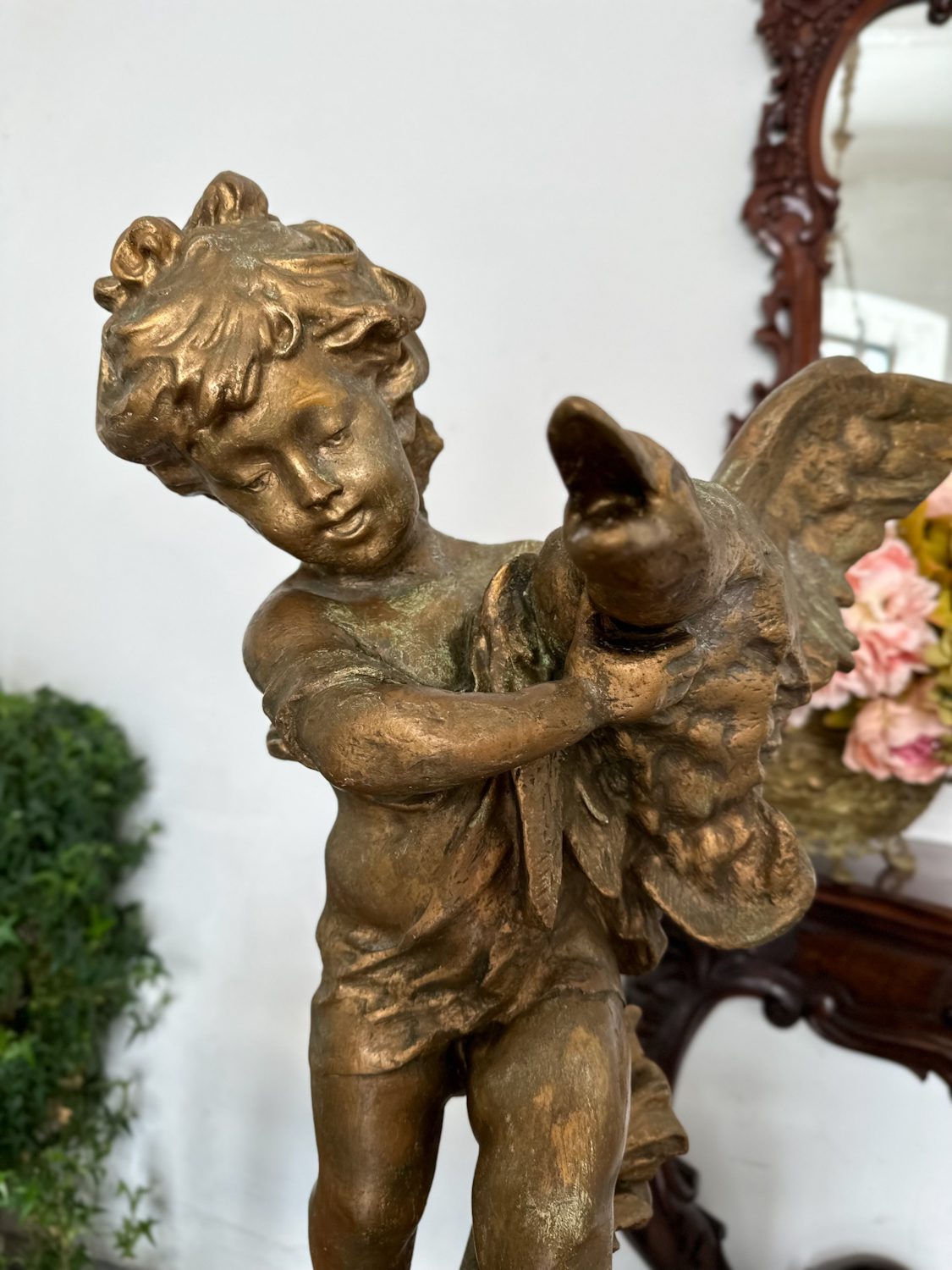
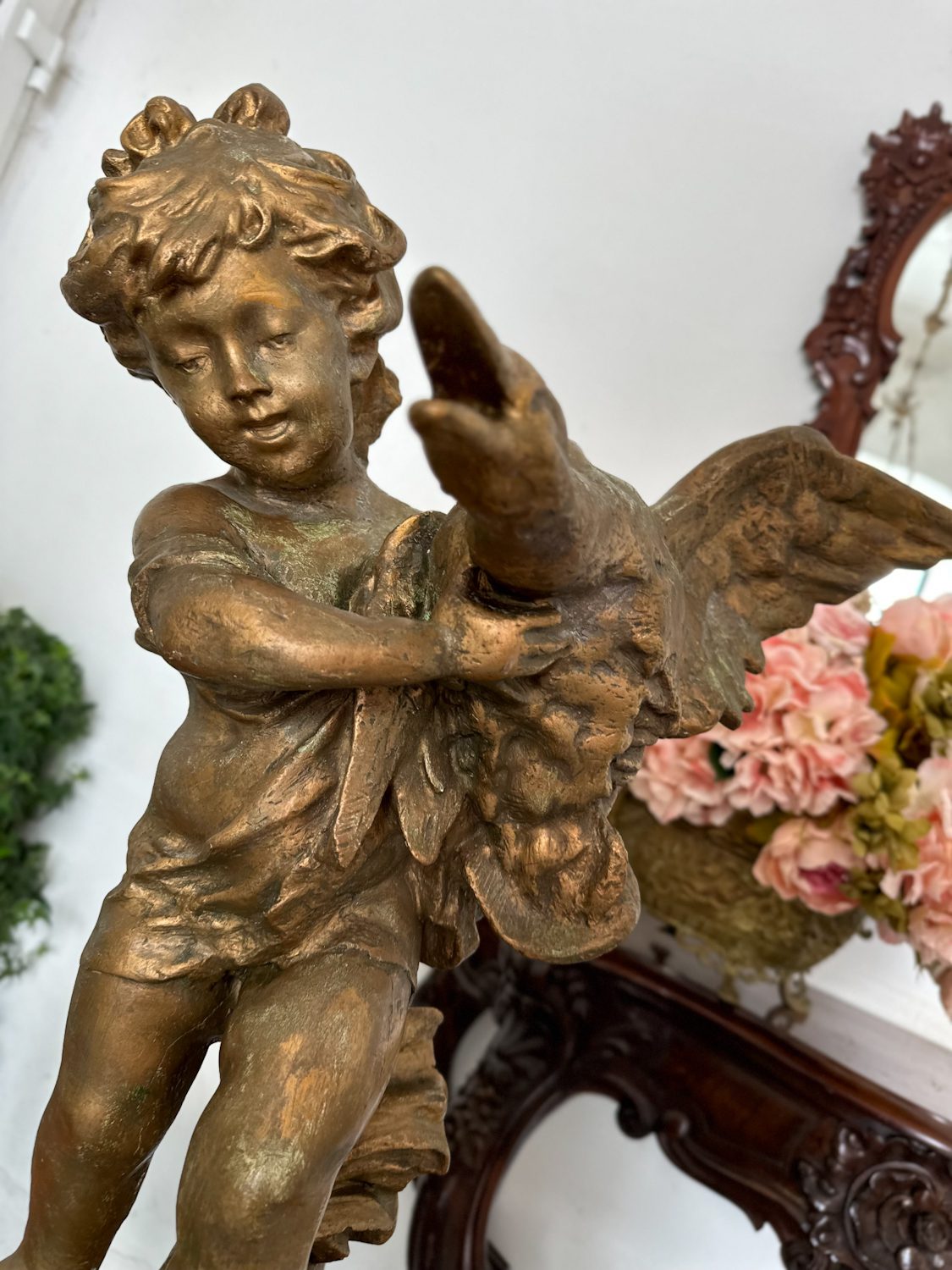
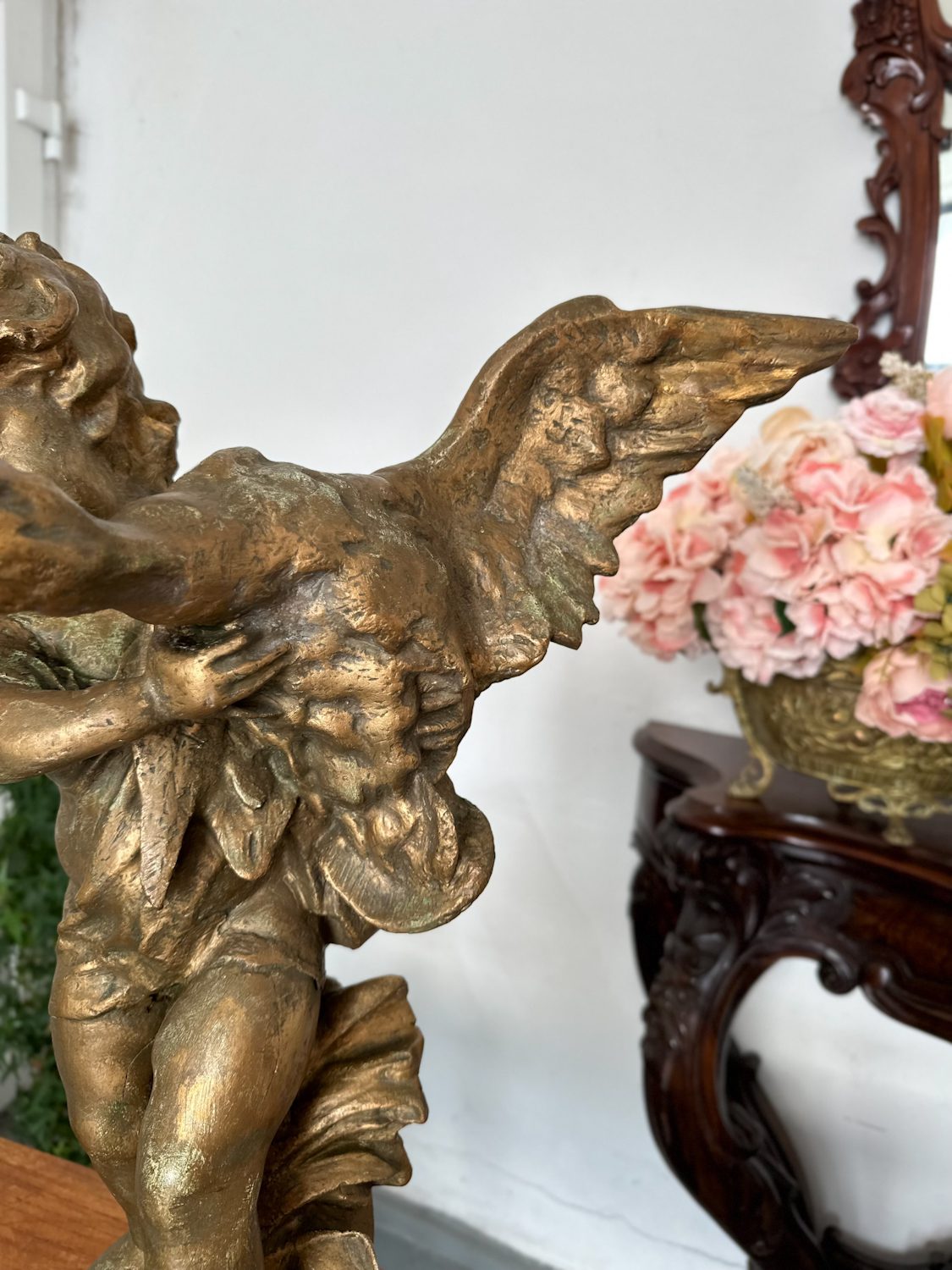
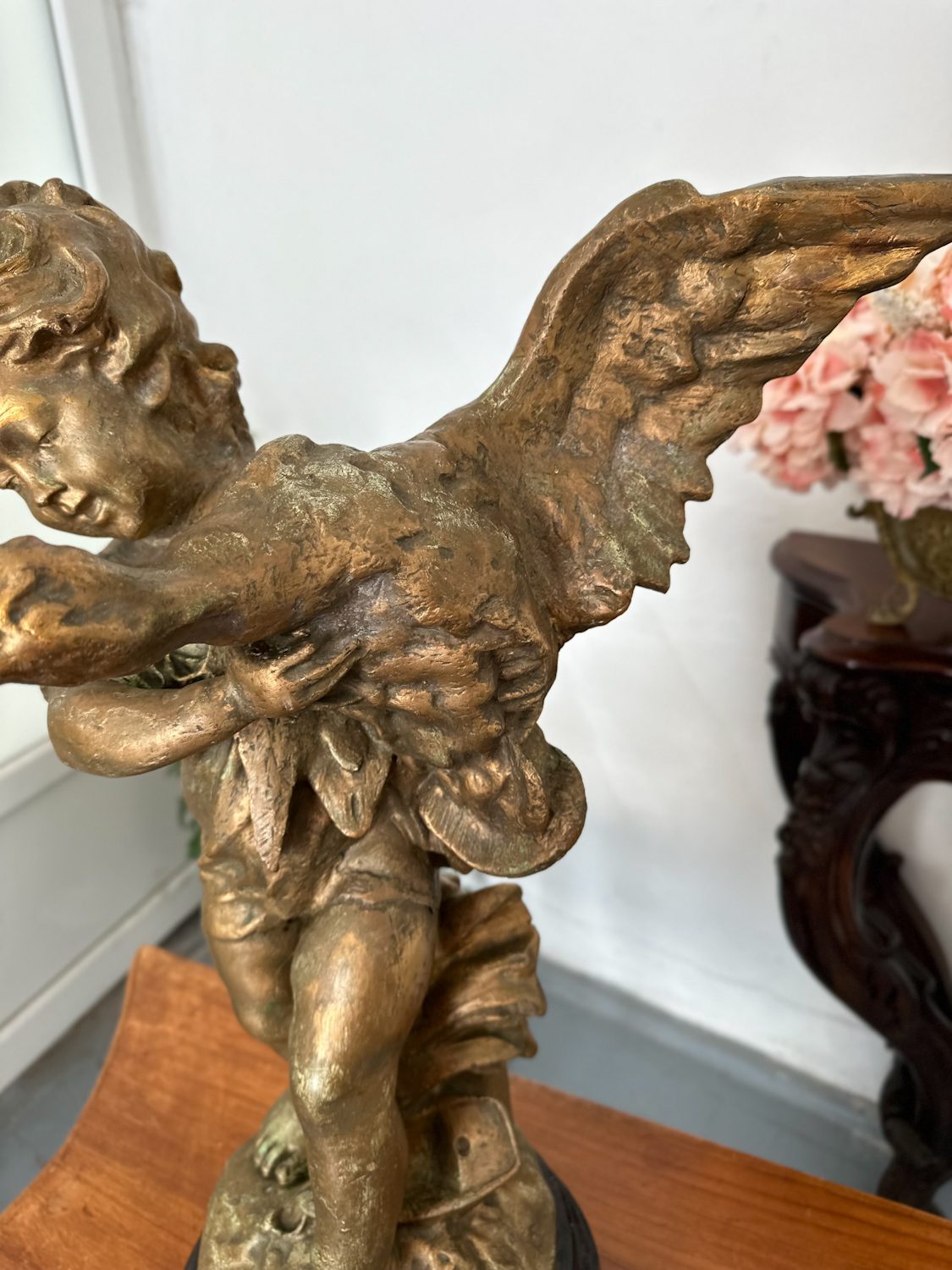
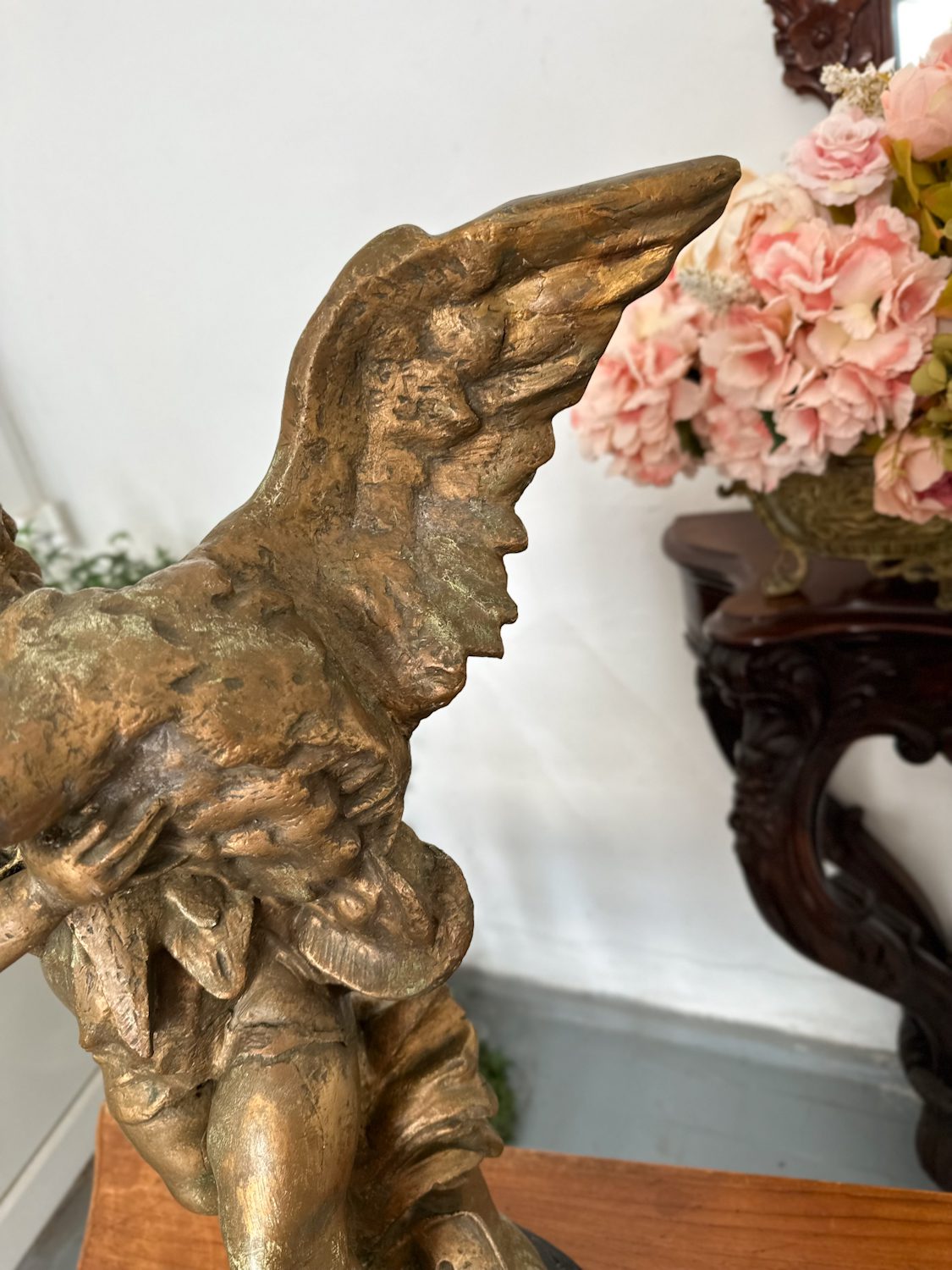
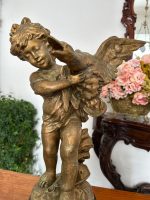
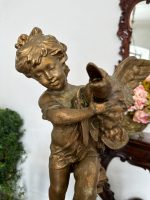
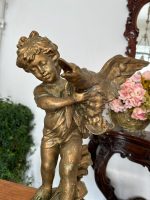
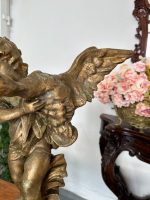
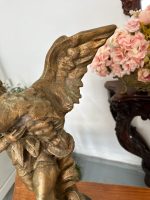
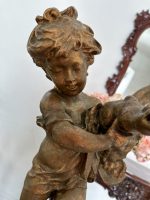
This expressive winged child figure (winged cherub) depicts the timeless art motif of a child and bird in struggle, which is both a game and a myth. The putto firmly grasps a large swan with outstretched, fluttering wings, his face bent in a tender, almost serious concentration, his hair swept by the wind. It is movement frozen in a moment — the heart of fin de siècle sculpture, where sentiment and anatomical mastery meet.
Height 61 cm × width 45 cm × depth ~30 cm. Weight considerable (heavy item).
Period of Manufacture and Art Style The figure dates from the Belle Époque, approximately 1890–1910, in France. This was an era when allegorical and mythological sculpture reigned in Parisian salons and bourgeois living rooms — cupids, nymphs, winged geniuses. The style combines academic realism with the fluidity of art nouveau: the flow of drapery, the dynamics of the wings, the soft modeling of the child’s body. Such figures were produced by large casting and plaster manufactories based on models by well-known salon sculptors, making high art accessible to a wider audience.
A snapshot of the Belle Époque: Auguste Rodin paused at the workbench of a young molder in the corridors of the Sèvres manufactory. He said nothing. His finger lightly brushed over the edge of a wing — where the plaster was still wet — and he remained thoughtful. A child and a bird, the eternal struggle between innocence and that which wants to fly away. The apprentice’s hands trembled from the master’s silence; he understood that something had just been said, even though no word had been spoken…
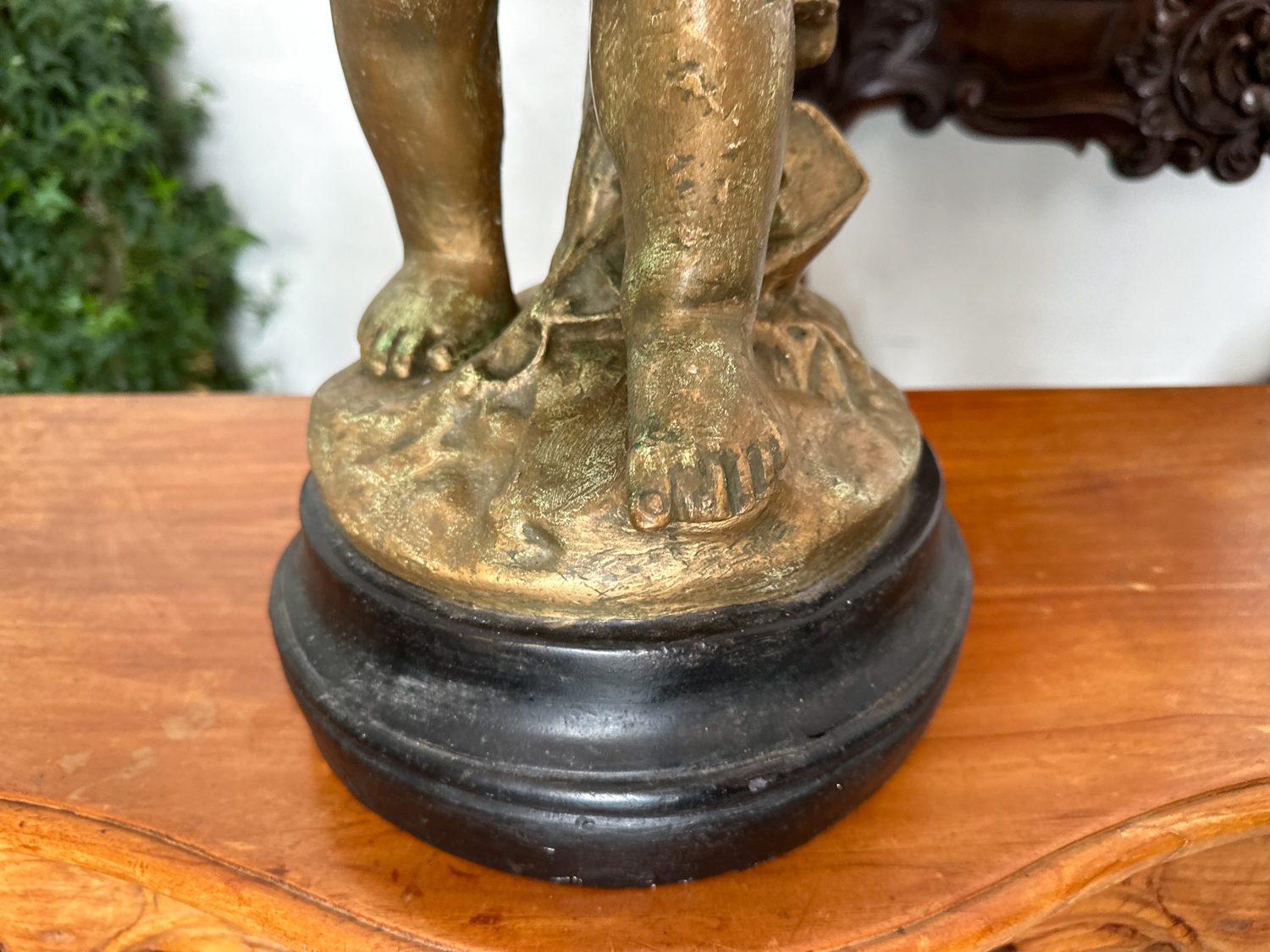
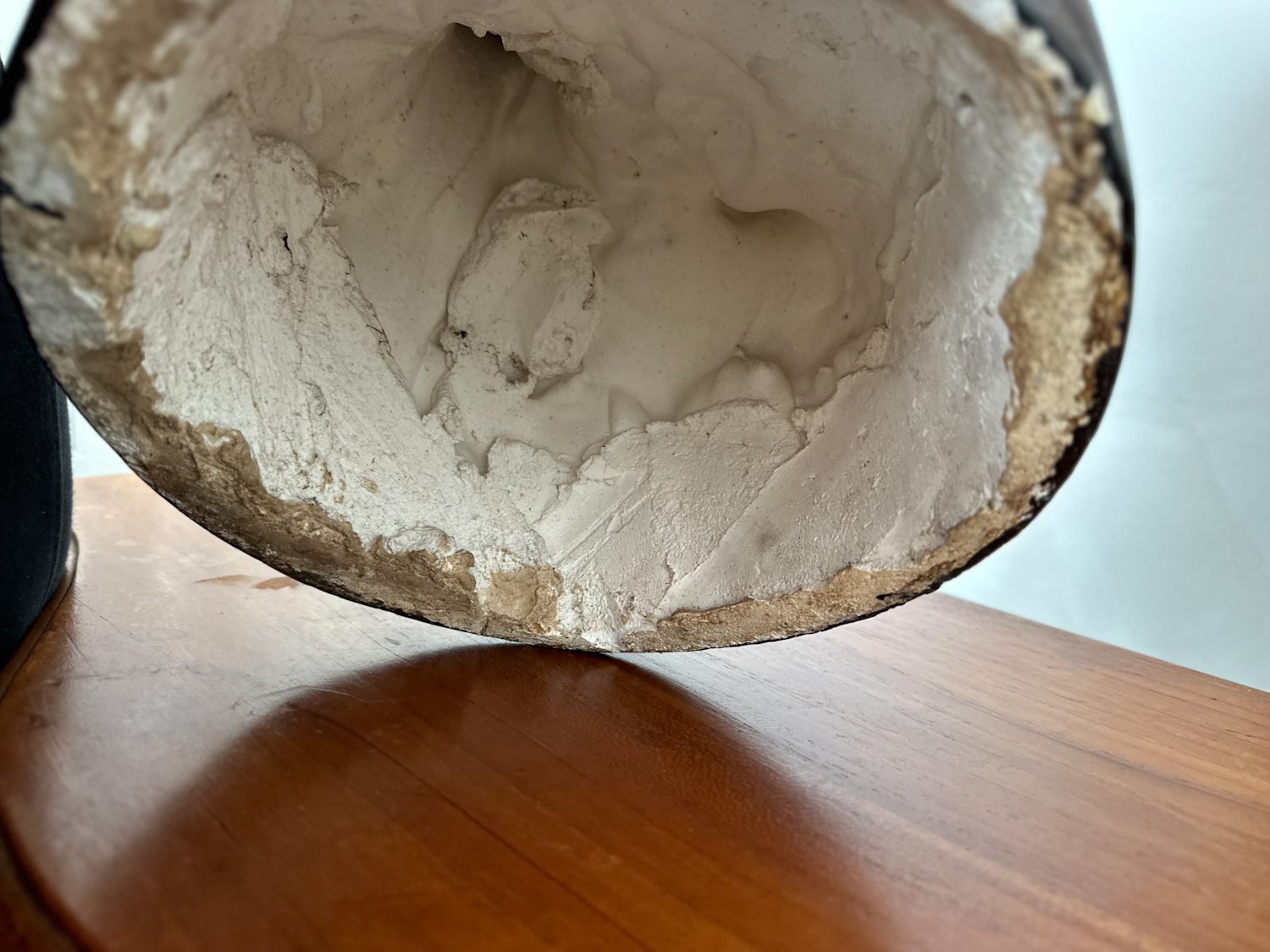
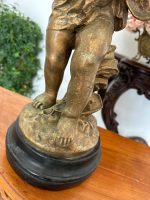
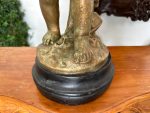
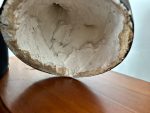
Manufacturer and Mark The figure is a typical salon model, produced in several manufactories at the turn of the 19th/20th century. Casting and molding marks are visible on the base and underside of the object; any signature or mark is not clearly discernible in the photographs. Models for such works were often derived from originals by salon sculptors (e.g., masters working in the circle of Auguste Moreau, Charles Lemire, etc.).
Rarity and Significance Large winged child figures in such a state of preservation are becoming increasingly rare. They are original testimonies of the era’s interiors — not modern casts, but a genuine part of fin de siècle domestic art. The size (61 cm height) makes it a truly representative, room-dominating object.
Application in Interiors, Design, and Photography It fits perfectly into a classic, art de vivre, or romantic interior — on a console, mantelpiece, library shelf, or as a central accent on an antique table. Its golden patina glows warmly in artificial light and becomes a favorite object for photographers and stylists in interior and art compositions.
Gift Idea An impressive gift for an art lover, collector, or for a housewarming — an object with presence and a story.
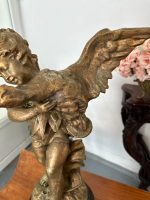
Condition In a condition appropriate for its age and material. The bronze patina finish shows wear and natural aging in places, as expected for an artist’s plaster object with over a hundred years of history; minor defects may be present on the edges of the wings and drapery. Ebonized plaster base with signs of use. The condition is fully reflected in the photographs.