Фигура «Путто с лебедём» — французская скульптура крылатого ребёнка, эпоха Бель Эпок, Франция, около 1890–1910 (4672) Эта выразительная фигура крылатого ребёнка изображает древний художественный мотив — дитя и птицу в борьбе, что одновременно есть игра и миф. Путто крепко удерживает… 465,00 €
You’re now subscribed to price tracking for this product. We’ll notify you if the price drops. 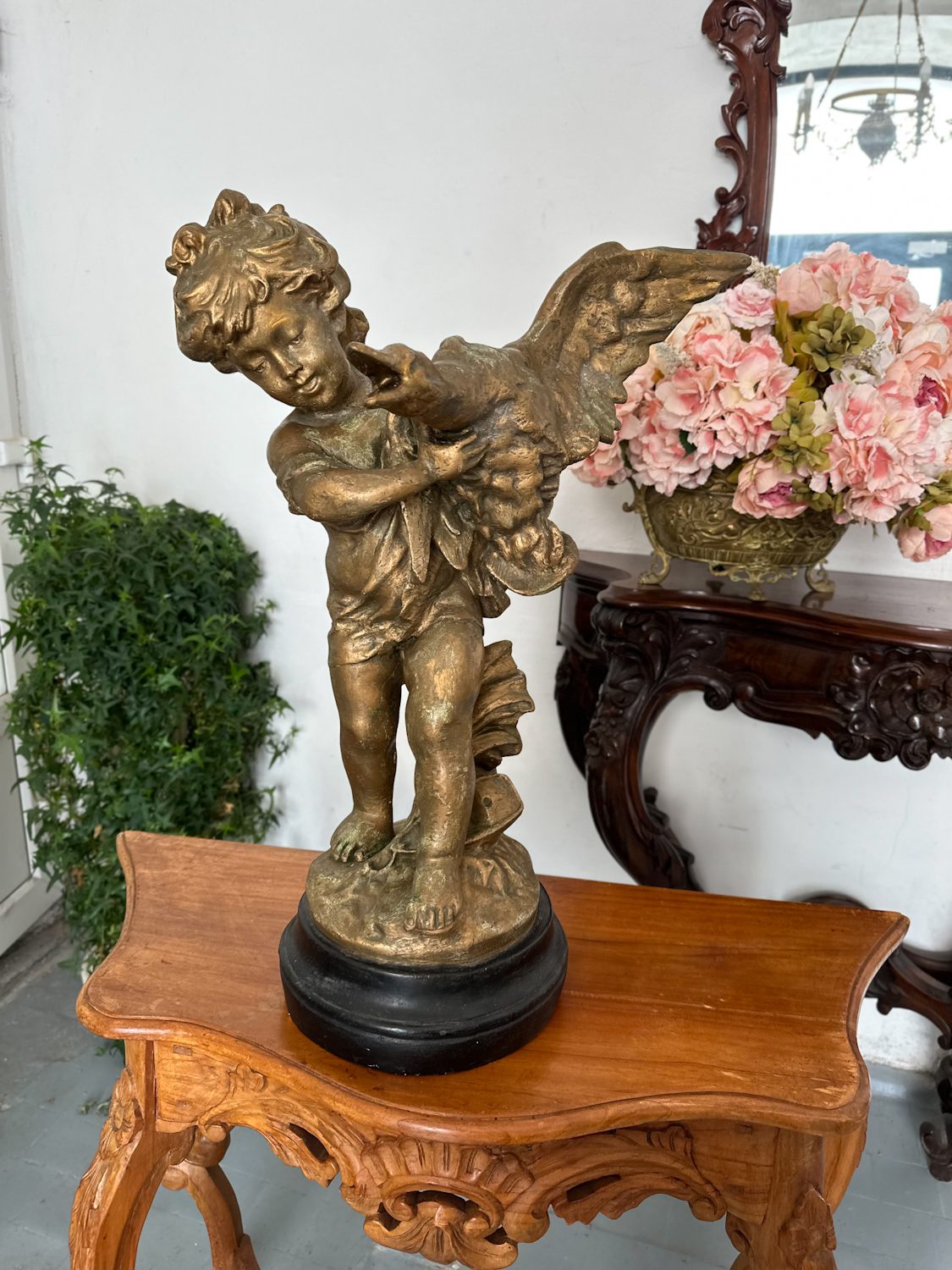
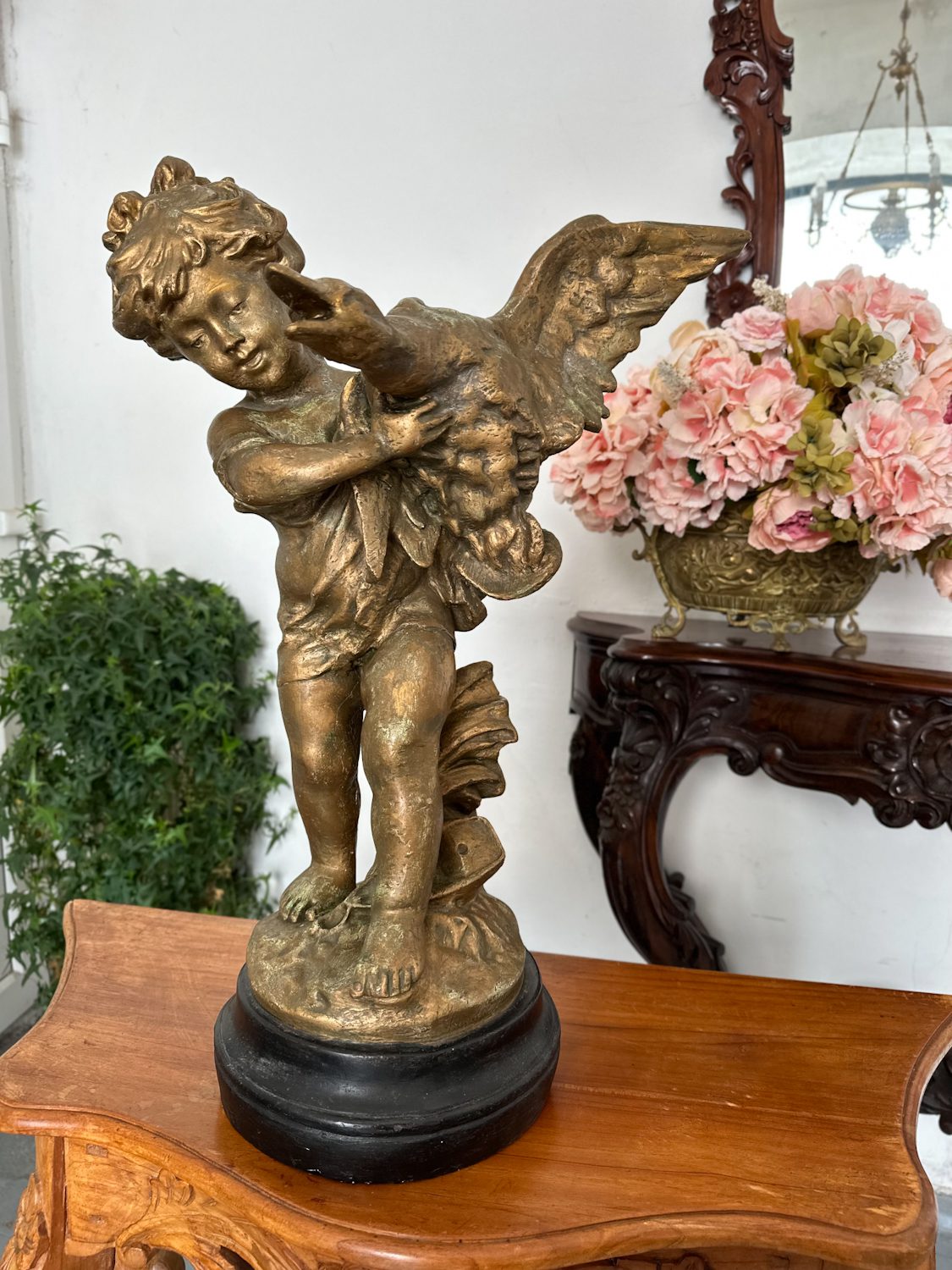
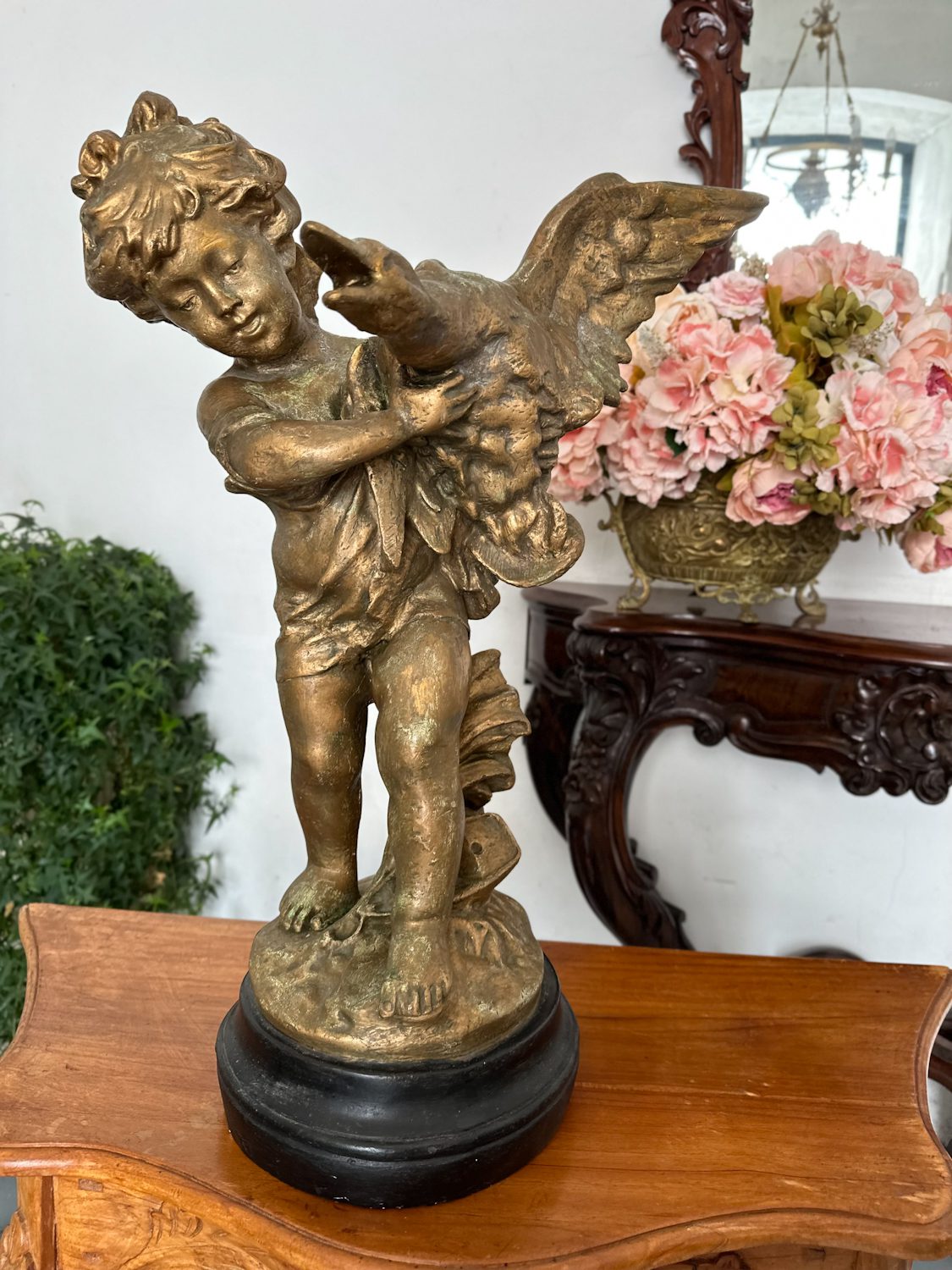
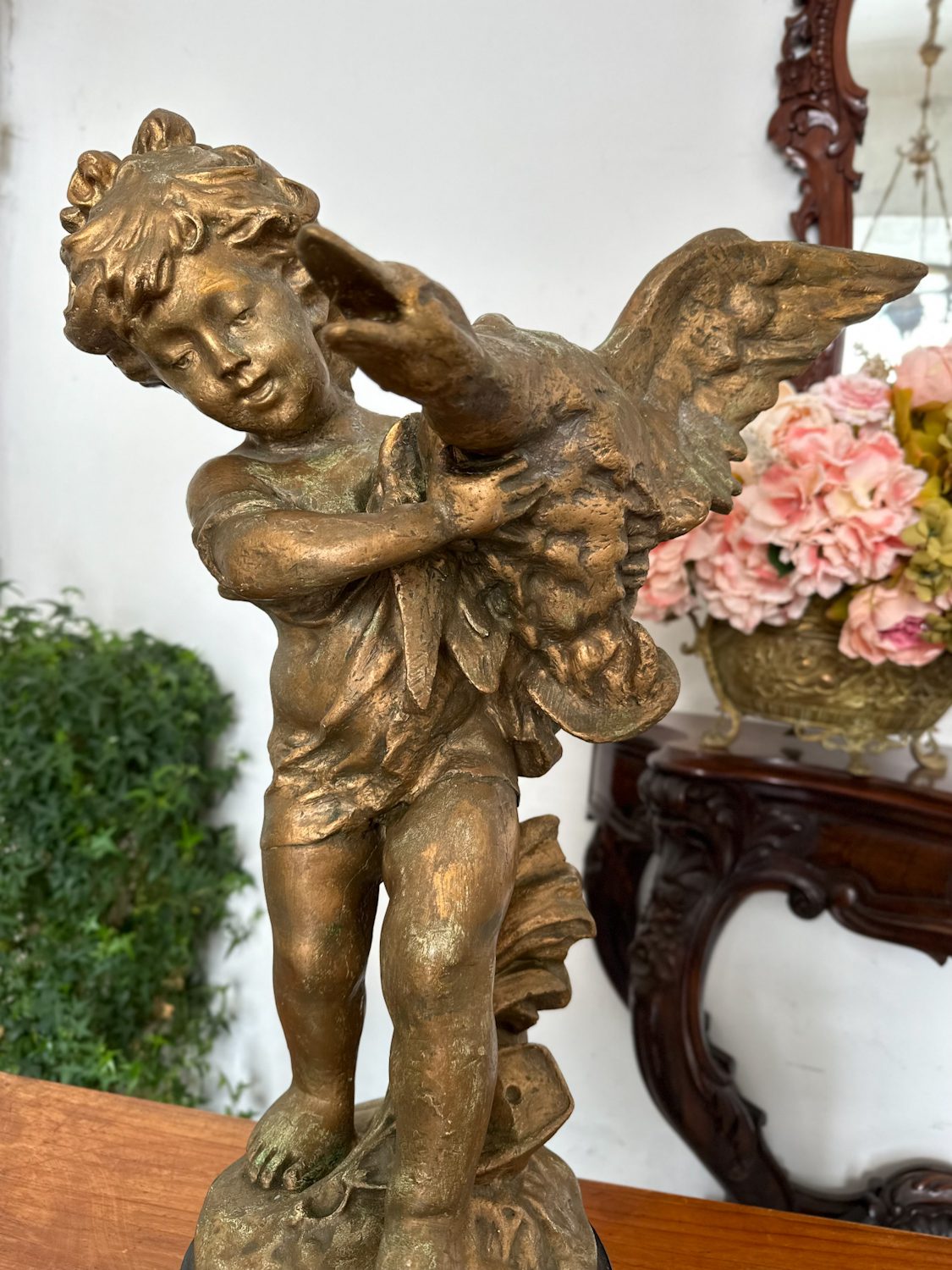
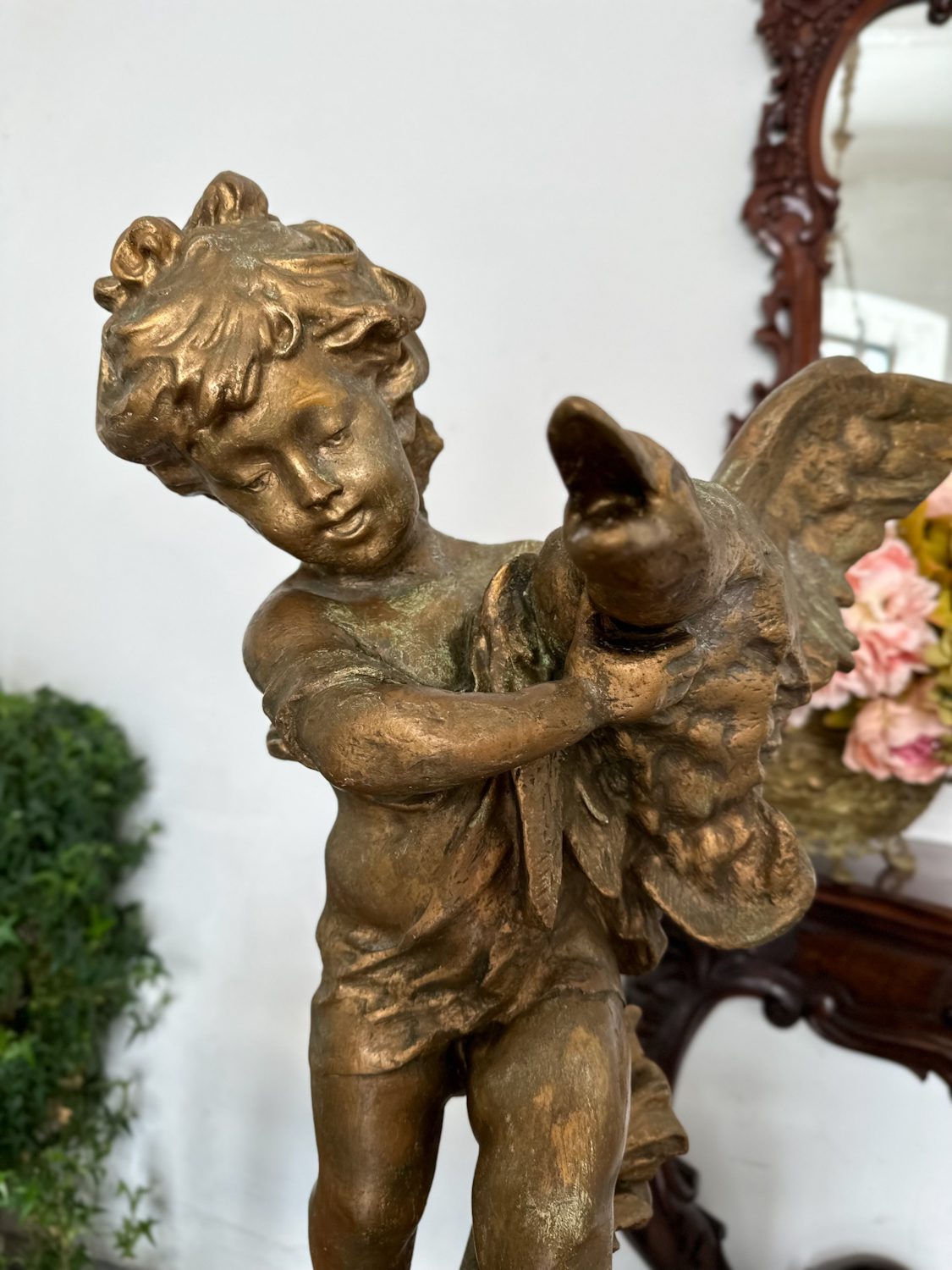
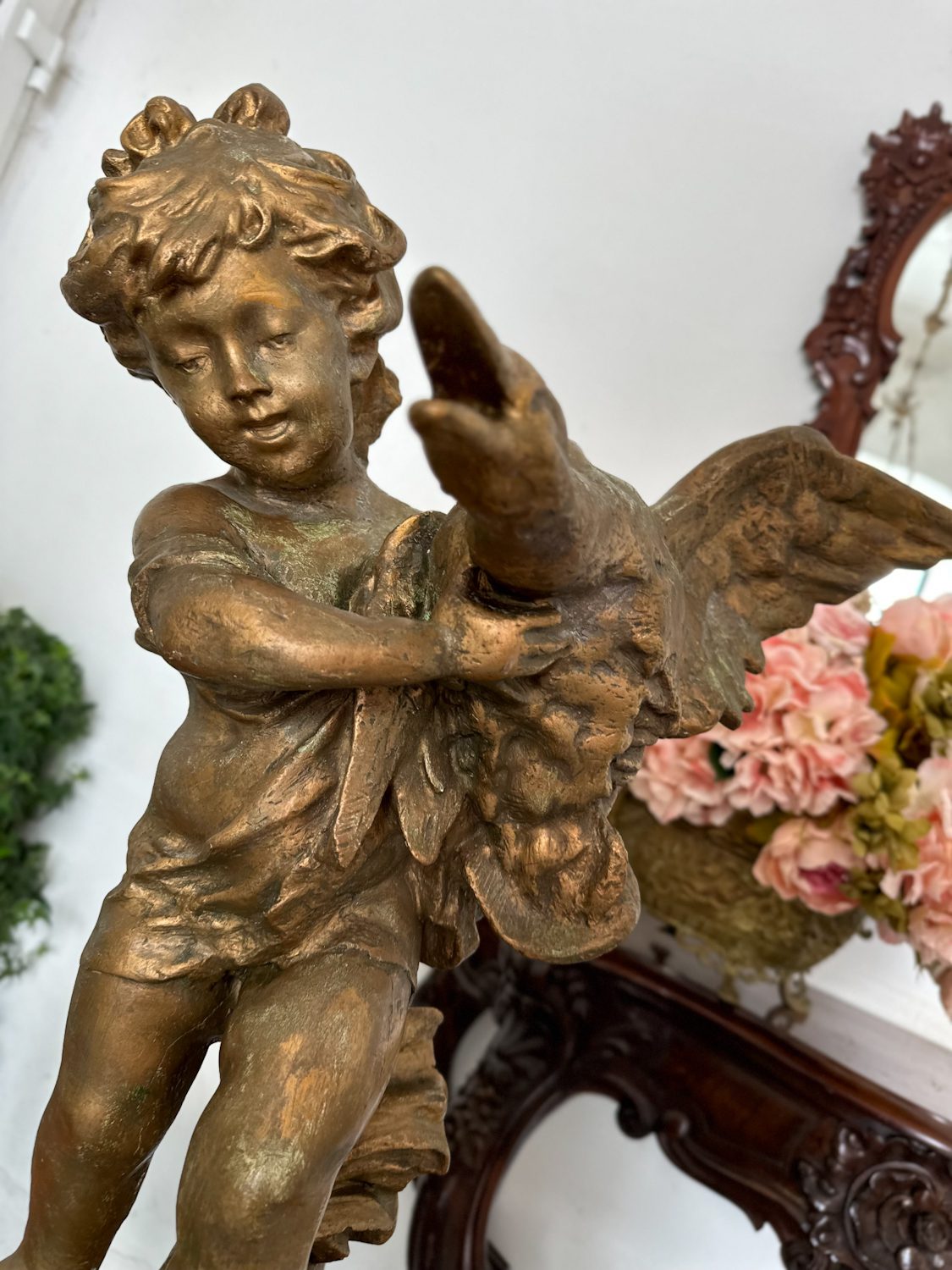
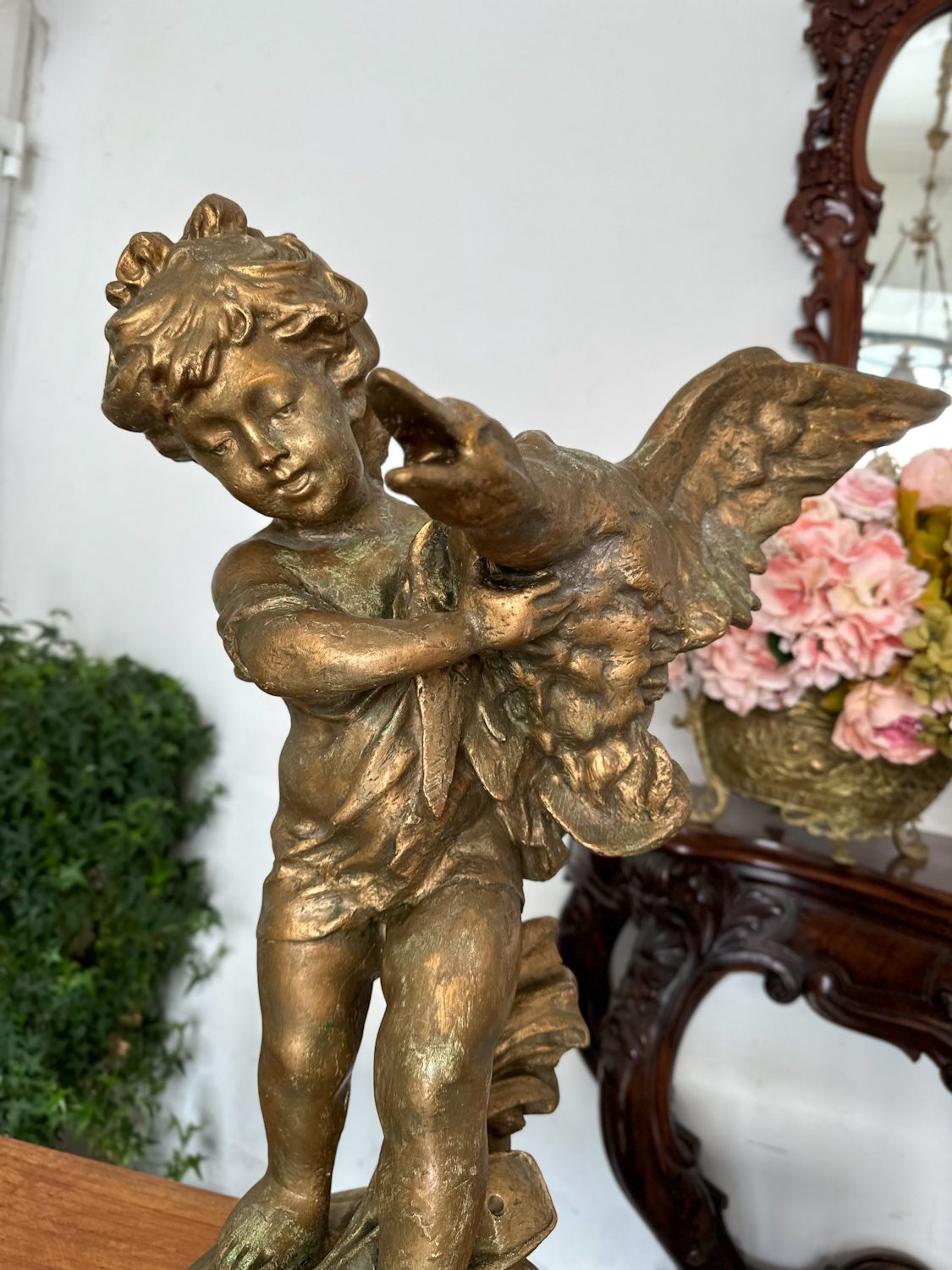
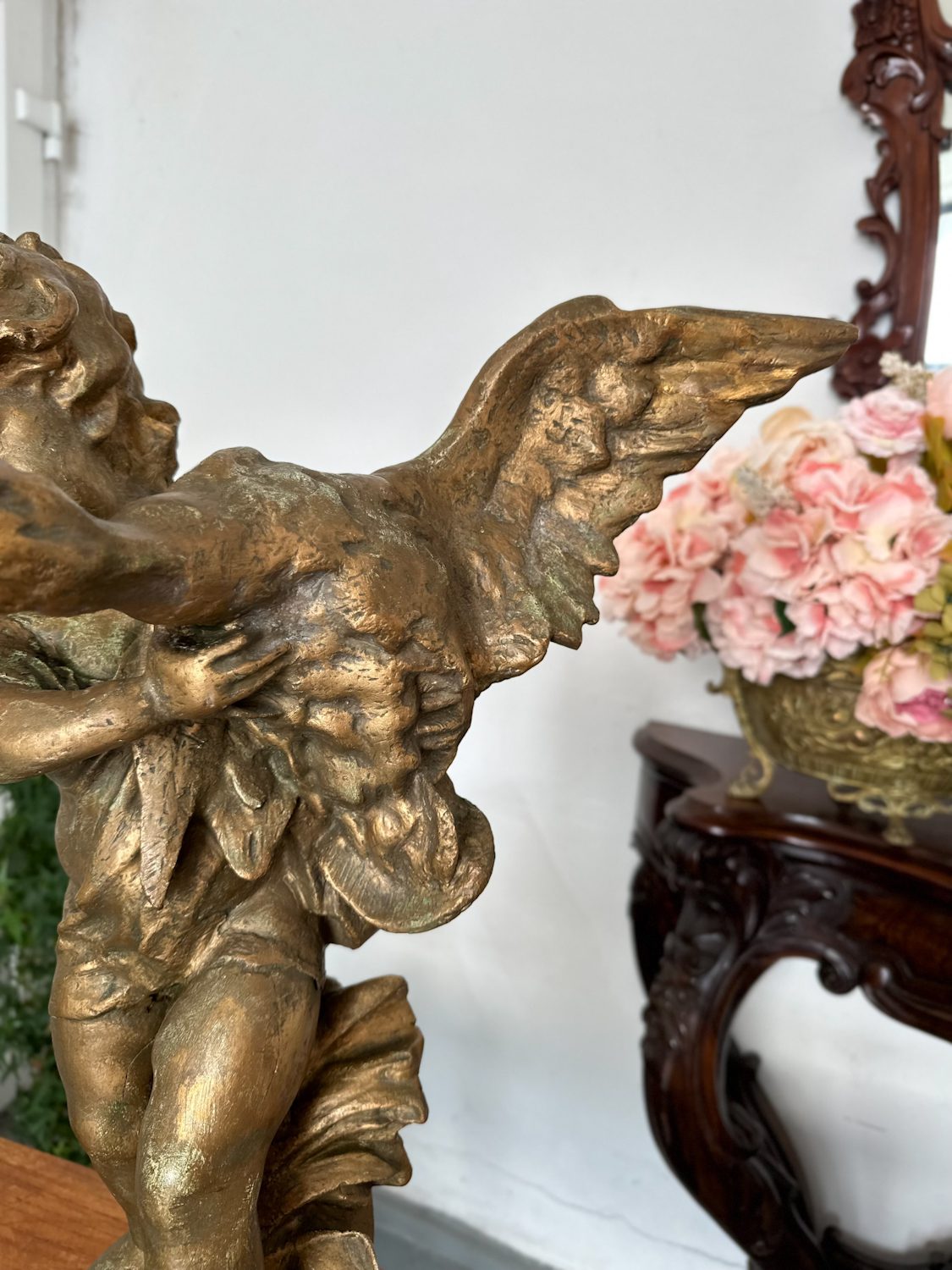
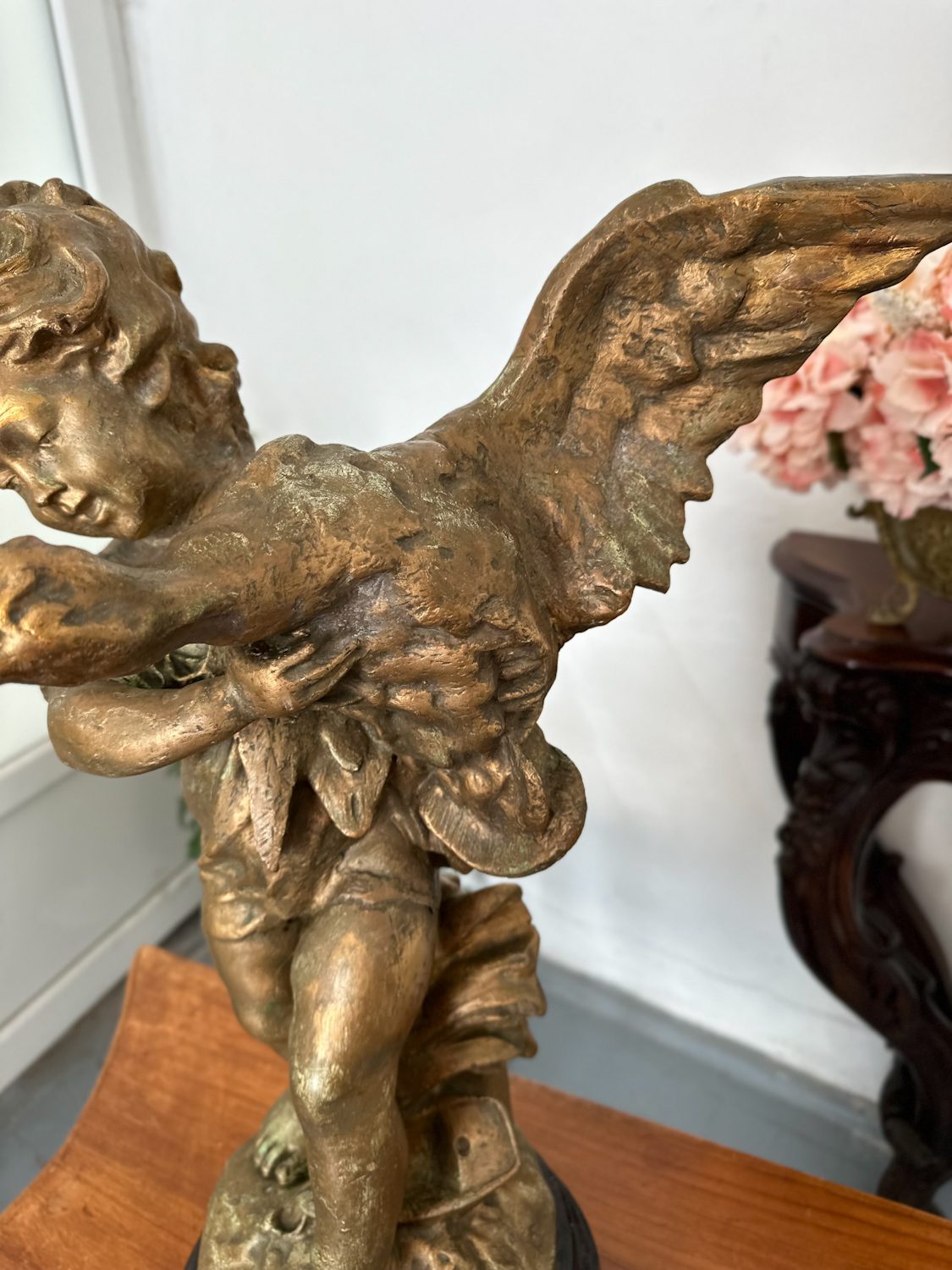
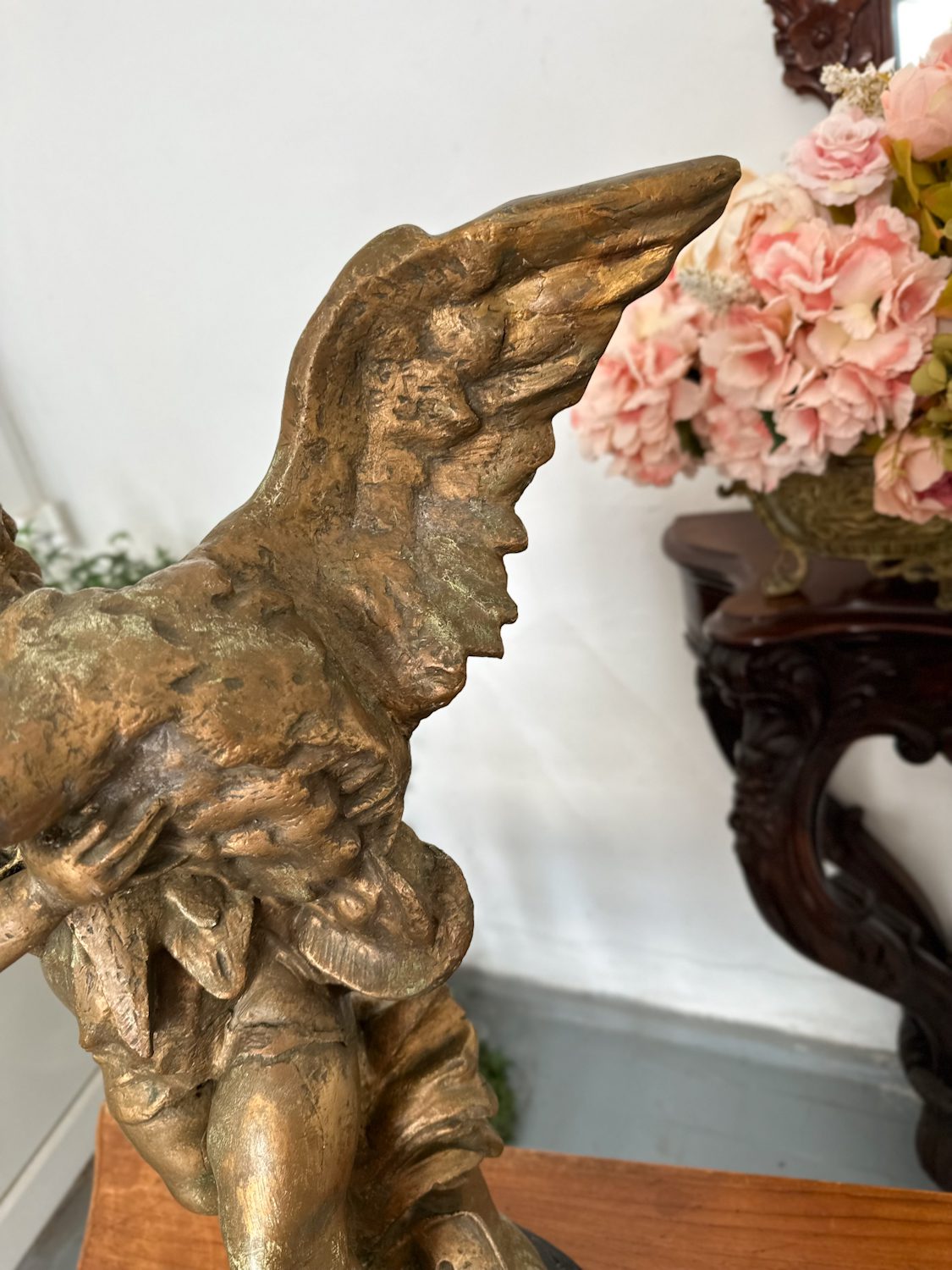
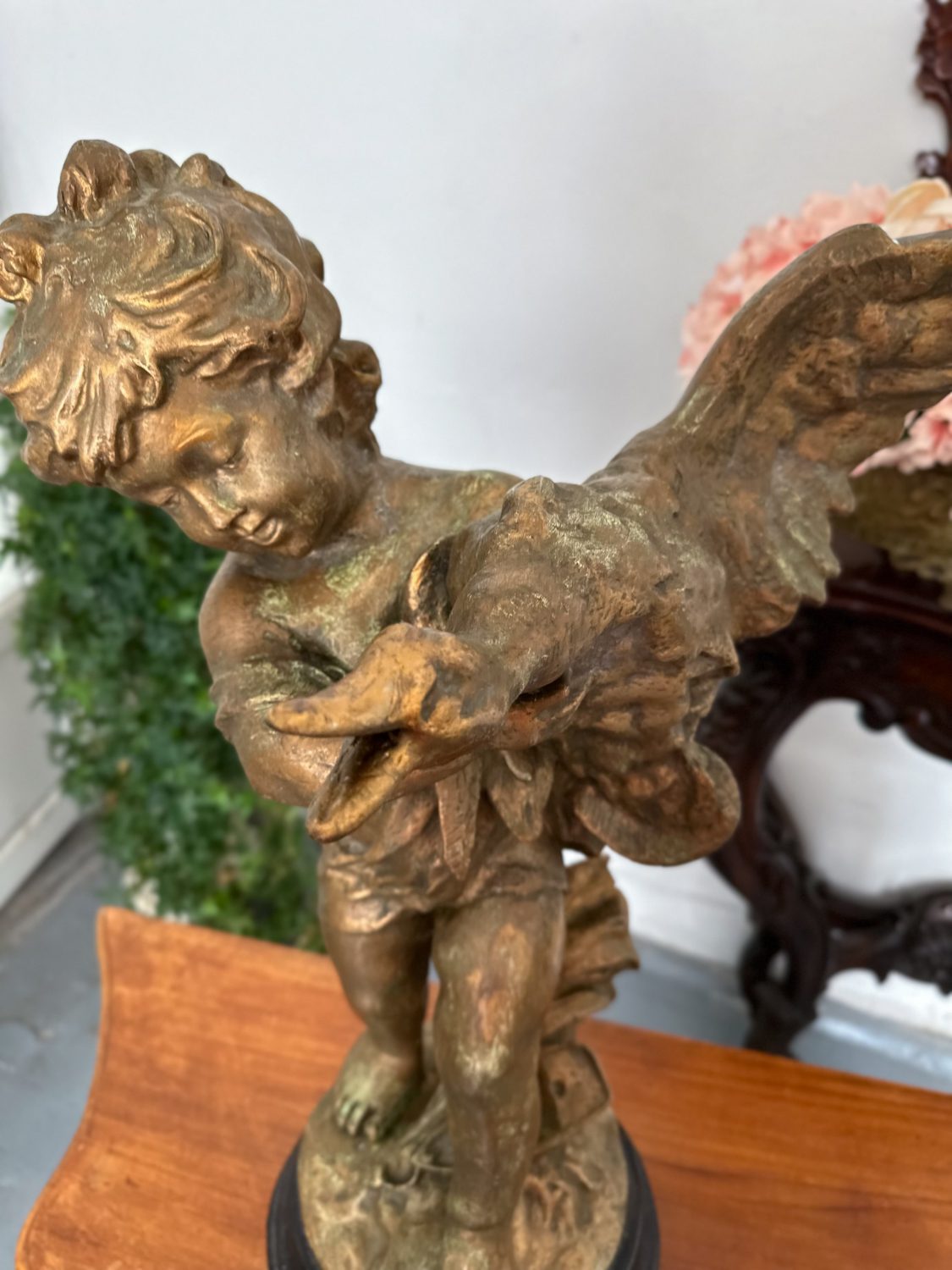
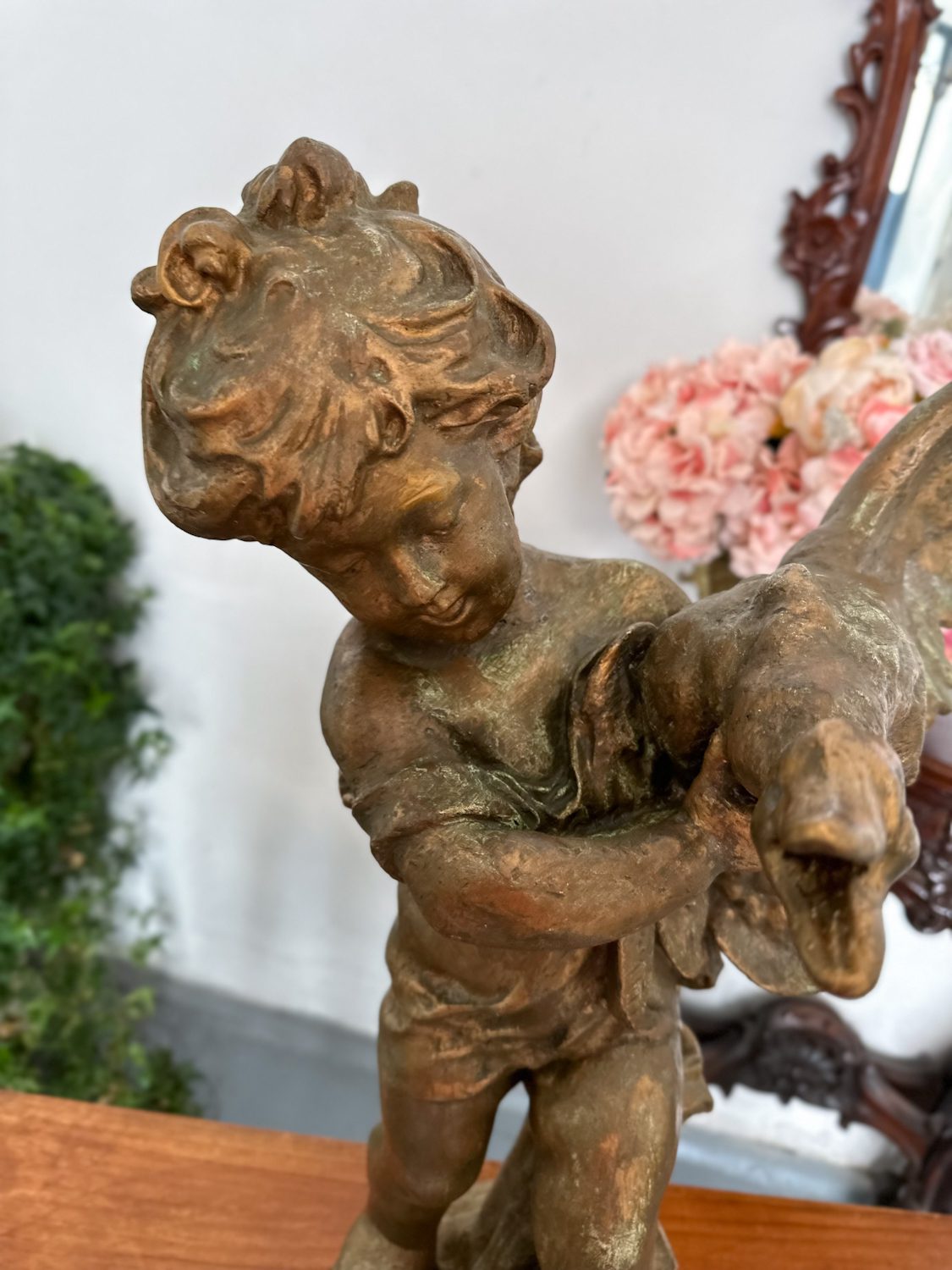
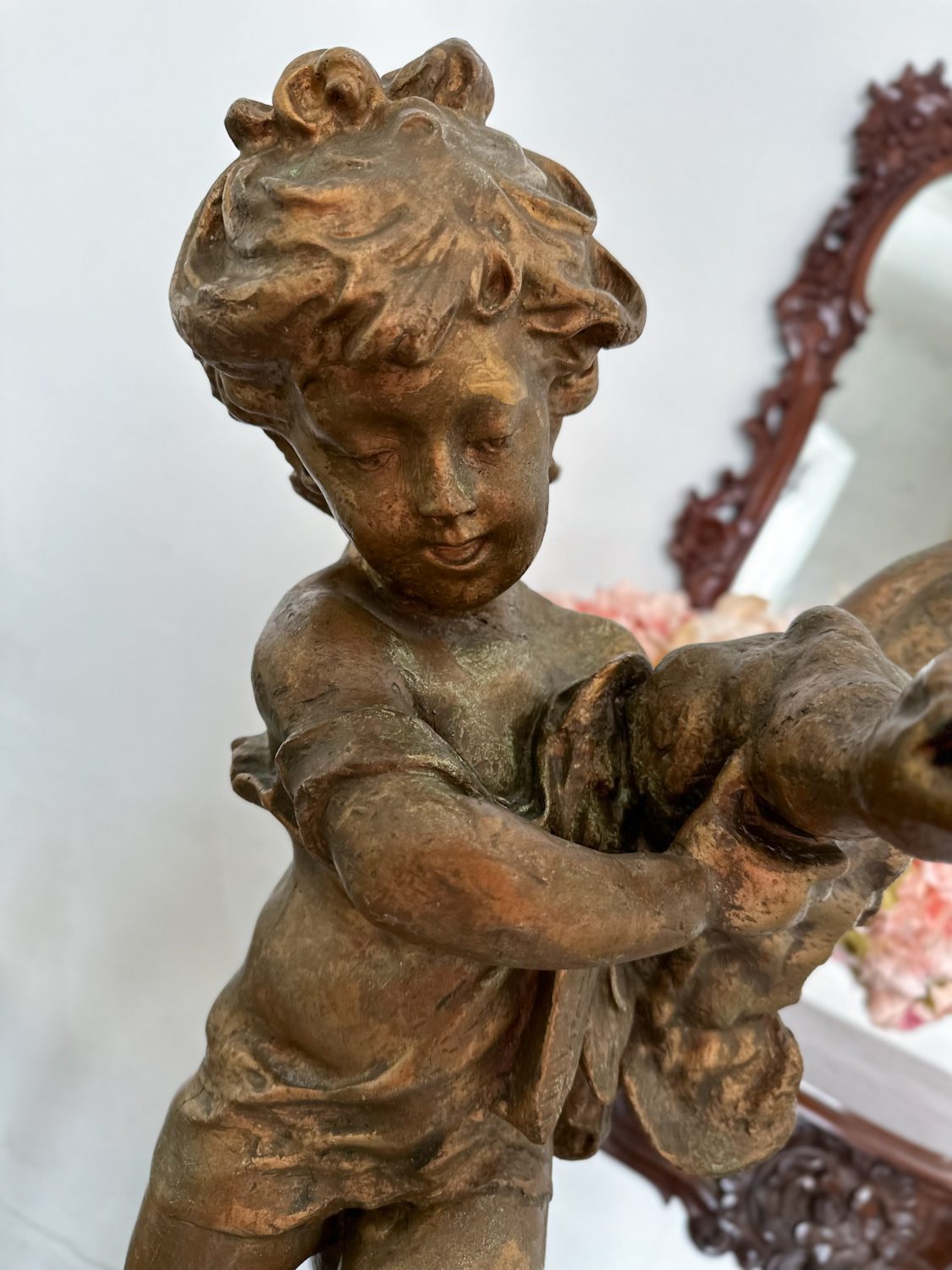
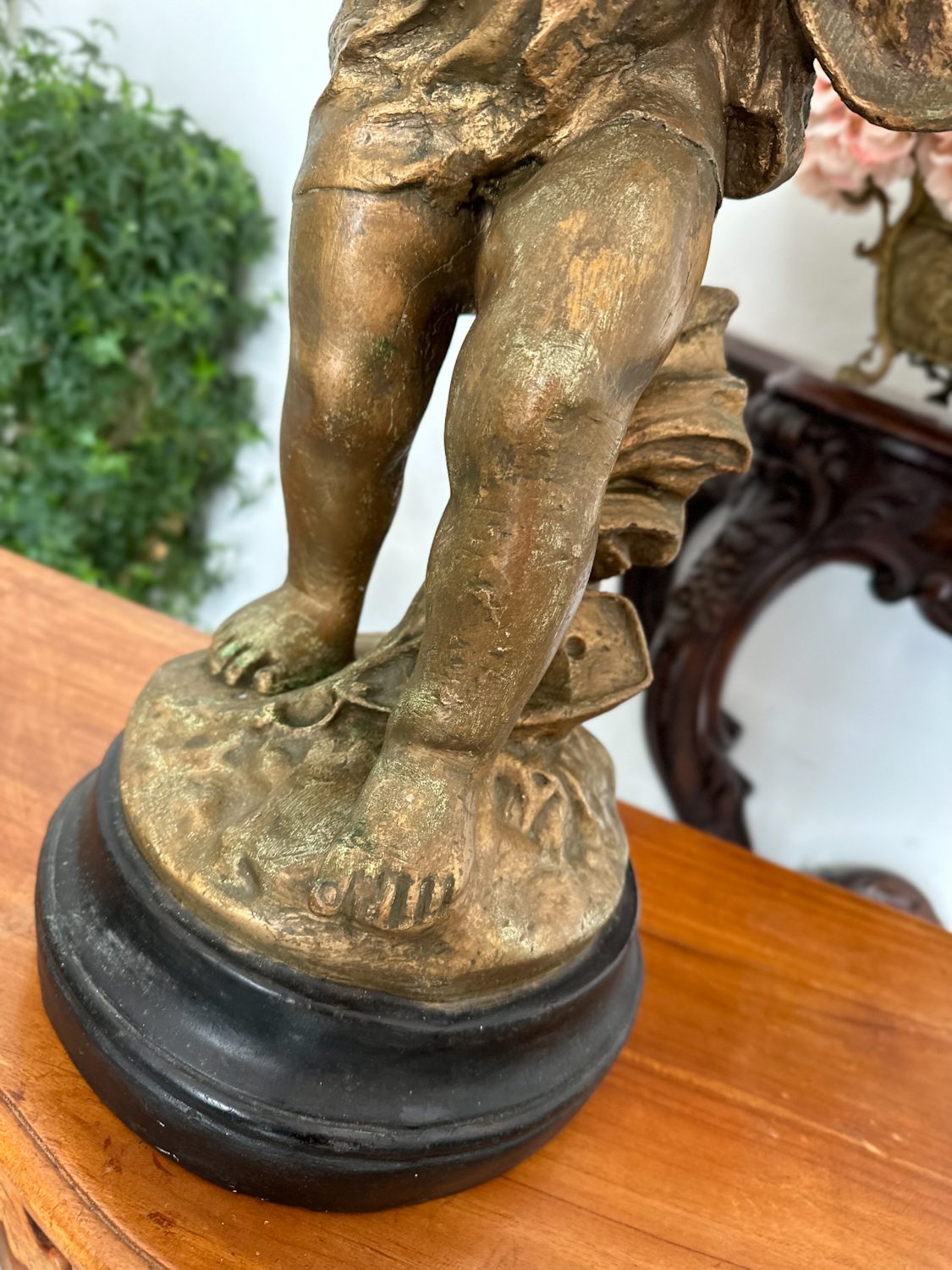
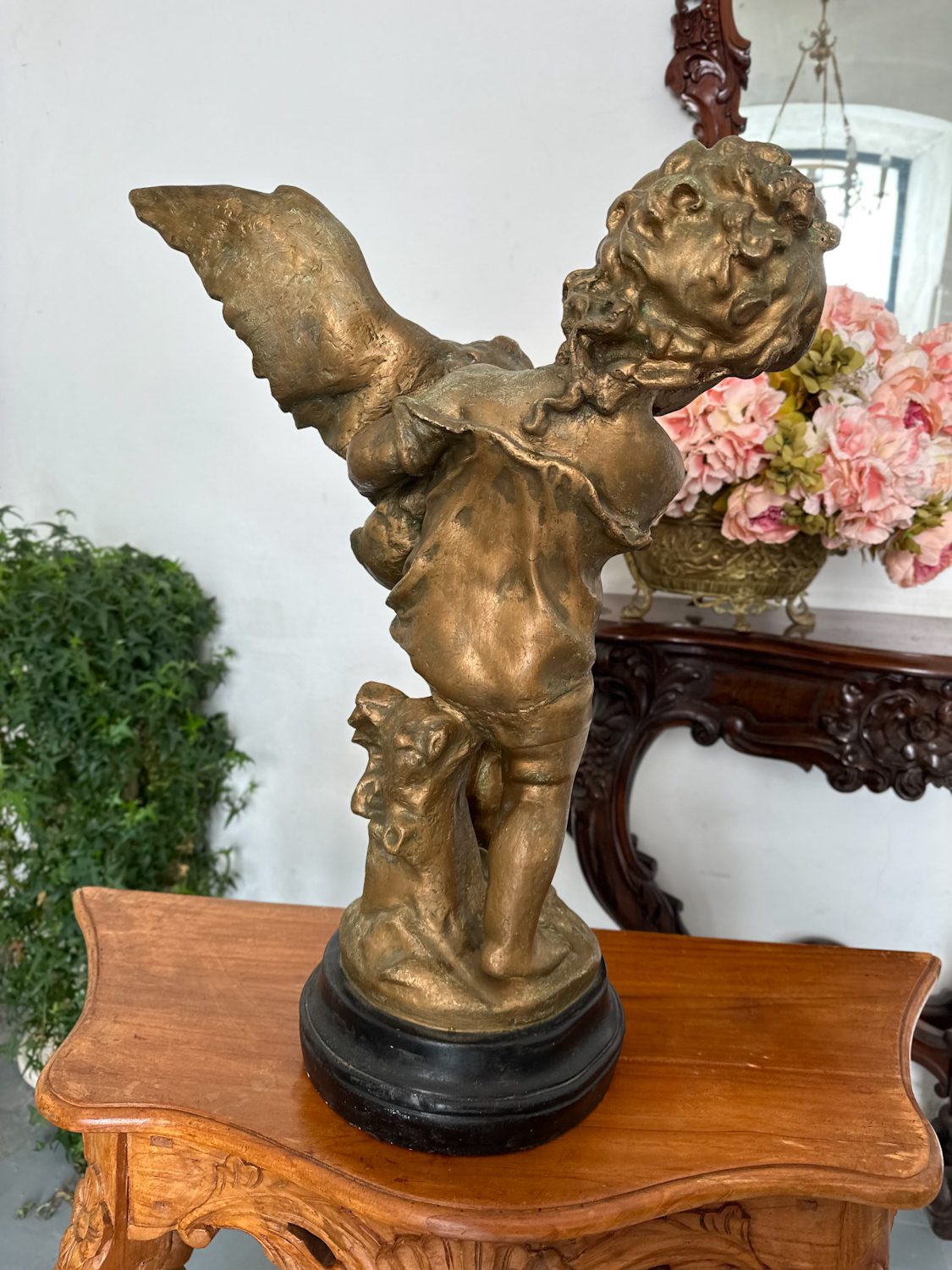
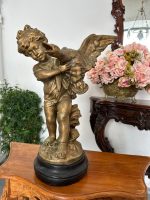
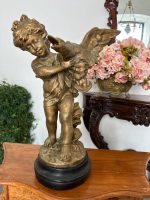
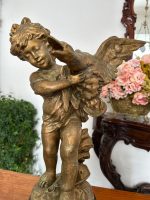
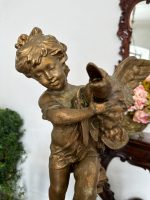
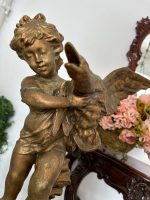
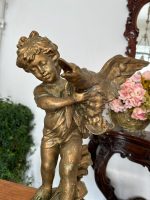
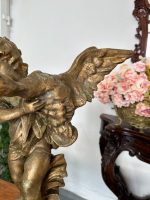
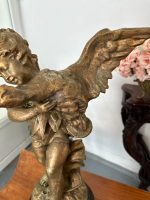
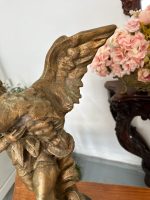
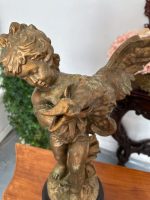
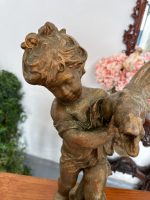
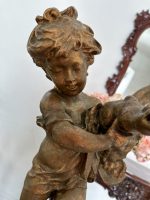
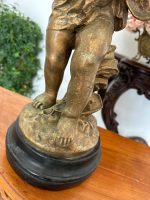
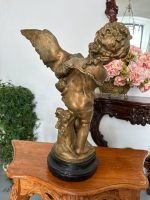
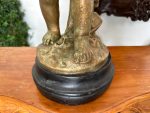
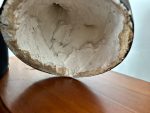
Амур с лебедем — крылатая фигура ребенка, Прекрасная эпоха, Франция, ок. 1890–1910 (4672)
Высота 61 cm Ширина 45 cm Цвет БронзовыйЗолотойНатуральный
Описание
Фигура «Путто с лебедём» — французская скульптура крылатого ребёнка, эпоха Бель Эпок, Франция, около 1890–1910 (4672)
Эта выразительная фигура крылатого ребёнка изображает древний художественный мотив — дитя и птицу в борьбе, что одновременно есть игра и миф. Путто крепко удерживает большого лебедя с раскрытыми трепещущими крыльями; его лицо склонено в мягкой, почти серьёзной сосредоточенности, волосы вздыблены ветром. Это движение, остановленное в одном мгновении — самое сердце французской скульптуры конца века, где сентимент встречается с анатомическим мастерством.
Высота 61 см × ширина 45 см × глубина ~30 см. Вес значительный.
Фигура датируется эпохой Бель Эпок, примерно 1890–1910 годами, Франция. Это время, когда в парижских салонах и гостиных буржуазии царила аллегорическая и мифологическая скульптура — амуры, нимфы, крылатые гении. Стиль сочетает академический реализм с подвижностью ар-нуво: текучесть драпировки, динамика крыльев, мягкая моделировка детского тела. Подобные фигуры выпускались крупными французскими литейными и гипсовыми мануфактурами по моделям известных салонных скульпторов, делая высокое искусство доступным широкой публике.
Снимок эпохи Бель Эпок: Огюст Роден (Auguste Rodin) остановился у верстака молодого формовщика в коридорах Севрской мануфактуры. Он не сказал ничего. Палец легко скользнул по краю крыла — там, где гипс ещё был влажным — и замер в задумчивости. Дитя и птица, вечная борьба между невинностью и тем, что стремится улететь. Руки ученика дрогнули под молчанием мастера; он понял, что нечто только что было сказано, хотя ни одного слова не прозвучало…
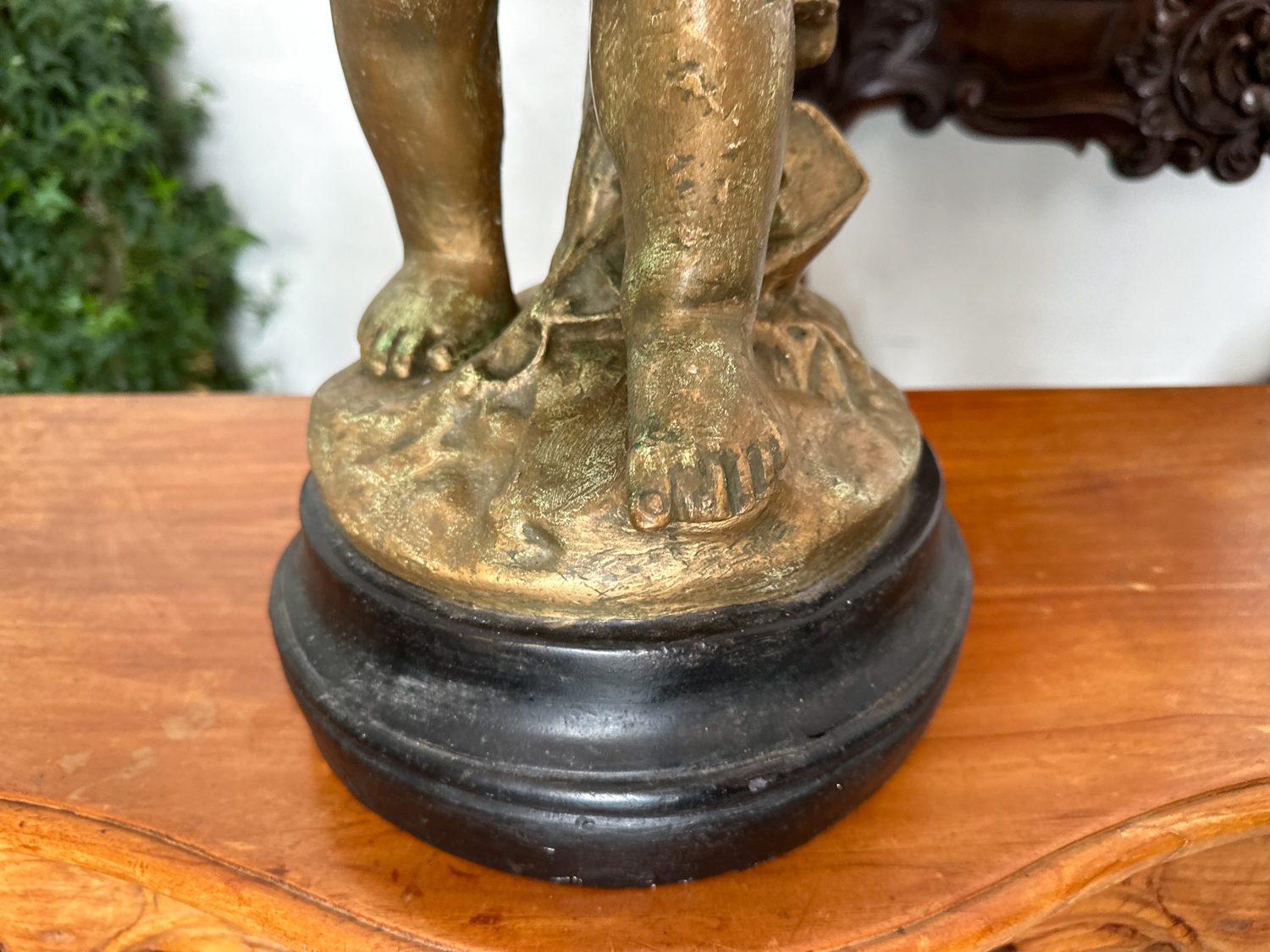
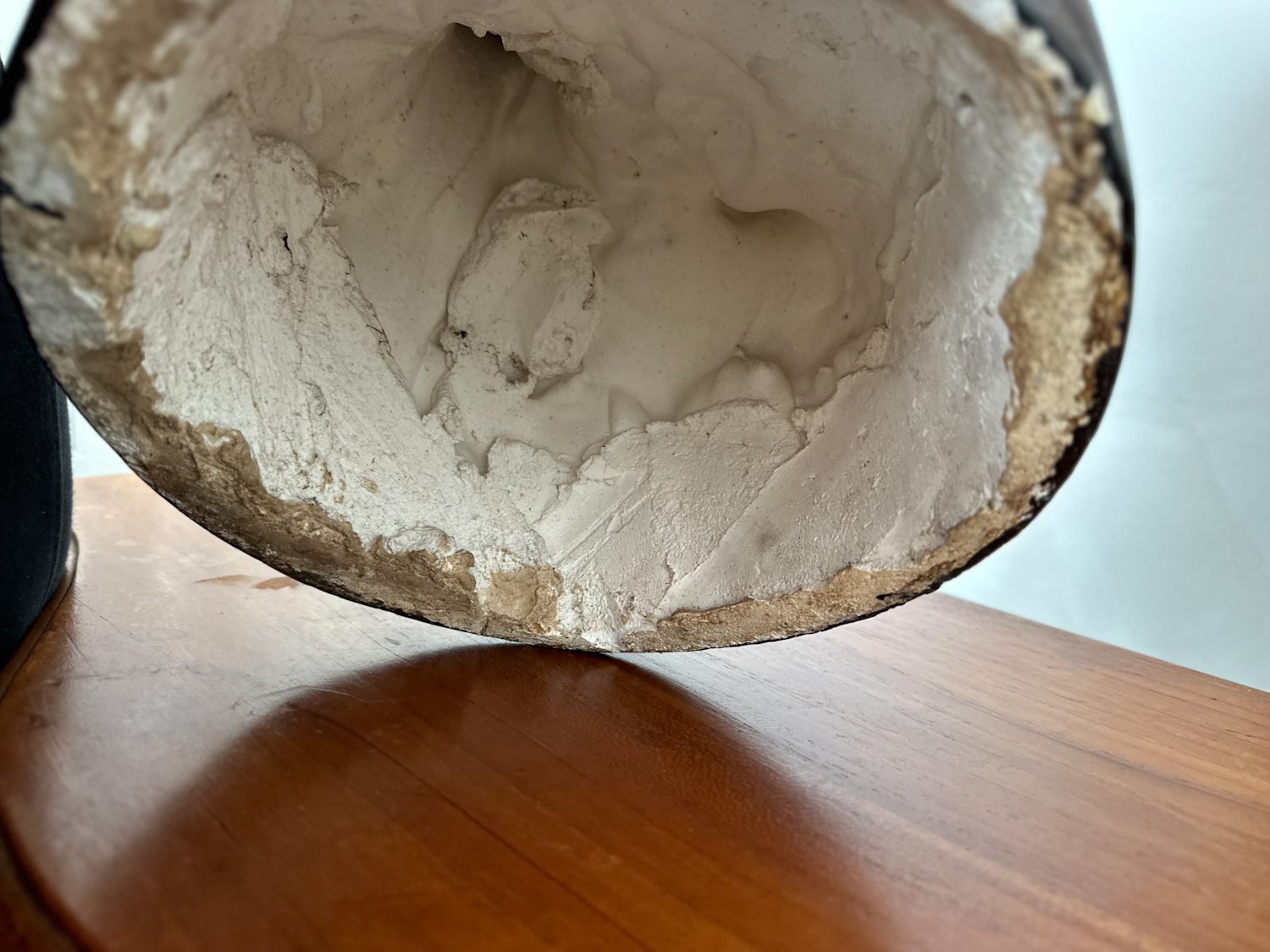
Фигура представляет собой типичную французскую салонную модель рубежа XIX–XX веков. На основании и под предметом видны следы литья и формовки; явная подпись или клеймо на фотографиях не различимы. Модели подобных работ часто восходят к оригиналам салонных скульпторов (Auguste Moreau, Charles Lemire и мастера их круга).
Крупные фигуры крылатых детей в подобной сохранности становятся всё более редкими. Это подлинные предметы эпохи, а не современные отливки — настоящая часть домашнего искусства Бель Эпок. Размер (высота 61 см) делает фигуру по-настоящему репрезентативной, доминирующей в пространстве. Она прекрасно вписывается в классический, французский интерьер в духе art de vivre или романтический интерьер — на консоли, каминной полке, библиотечной полке или как центральный акцент на антикварном столе. Золотистая патина тепло мерцает при искусственном освещении. Впечатляющий подарок ценителю искусства, коллекционеру или на новоселье.
Состояние соответствует возрасту и материалу. На бронзовой патине местами заметен износ и естественное старение, что ожидаемо для предмета из художественного гипса с историей более ста лет; по краям крыльев и драпировки возможны мелкие дефекты. Эбонизированное гипсовое основание со следами эксплуатации. Состояние предмета полностью отражено на фотографиях.
Antique Winged Cherub Figure with Swan, Belle Époque, France, c. 1890–1910 (4672)
This expressive winged cherub figure captures one of art’s oldest motifs — a child and a bird locked in a struggle that is at once play and myth. The winged cherub grips a great swan, its wings flung open in mid-beat, while the boy’s face bends in soft, almost solemn concentration, hair tossed as if by wind. It is movement frozen in a single instant, the very heart of fin de siècle sculpture, where sentiment meets anatomical mastery.
Height 61 cm × width 45 cm × depth ~30 cm. Substantial weight.
The figure dates to the Belle Époque, around 1890–1910, in France — an era when Parisian salons and bourgeois drawing rooms were filled with allegorical and mythological sculpture: cupids, nymphs, winged genii. The style fuses academic realism with the fluid movement of art nouveau: the flow of drapery, the dynamism of the wings, the soft modelling of the child’s body. Figures like this antique winged cherub were produced by the great foundries and plaster manufactories after models by well-known salon sculptors, bringing fine art within reach of a broad public.
Belle Époque snapshot: Auguste Rodin (Auguste Rodin) paused at the workbench of a young moulder in the corridors of the Sèvres manufactory. He said nothing. A finger slid lightly along the edge of a wing — there, where the plaster was still damp — and rested, thoughtful. The child and the bird, the eternal struggle between innocence and the thing that longs to fly away. The apprentice’s hands trembled beneath the master’s silence; he understood that something had just been said, though not a single word had been spoken…
This winged cherub is a characteristic salon model of the turn of the century, cast and finished in artist’s plaster with a bronzed patina. Traces of casting and moulding are visible on the base; no clear signature is legible in the photographs, so we recommend checking the underside, where such marks are often found. Large winged-child figures in this state of preservation are increasingly rare — genuine survivors of the era rather than modern reproductions. At 61 cm tall, it is a commanding, room-defining piece, perfectly suited to a classical or romantic interior: on a console, a mantelpiece, or as a centrepiece on an antique table, where its warm gilded patina glows under lamplight. It makes an impressive gift for an art lover, a collector, or a housewarming.
Condition is consistent with age and material. The bronzed patina shows wear and natural ageing in places, as expected of an artist’s-plaster object more than a century old; minor losses are possible at the edges of the wings and drapery. The ebonized plaster base shows signs of use. The condition of the item is fully reflected in the photographs.
Putto mit Schwan — französische Figur eines geflügelten Kindes, Belle Époque, Frankreich, um 1890–1910 (4672)
Diese ausdrucksstarke Figur eines geflügelten Kindes zeigt eines der ältesten Motive der Kunst — ein Kind und einen Vogel im Ringen, das zugleich Spiel und Mythos ist. Der Putto hält einen großen Schwan fest, dessen Flügel sich im Schlag weit öffnen, während sich das Gesicht des Knaben in sanfter, fast ernster Konzentration neigt und das Haar wie vom Wind gehoben ist. Es ist Bewegung, in einem einzigen Augenblick erstarrt — das Herzstück der französischen Bildhauerei des Fin de Siècle, wo Empfindung auf anatomische Meisterschaft trifft.
Höhe 61 cm × Breite 45 cm × Tiefe ~30 cm. Beträchtliches Gewicht.
Die Figur stammt aus der etwa 1890–1910, aus Frankreich. Es war die Zeit, in der die Pariser Salons und die Wohnzimmer des Bürgertums von allegorischer und mythologischer Bildhauerei erfüllt waren — Amoretten, Nymphen, geflügelte Genien. Der Stil verbindet akademischen Realismus mit der fließenden Bewegung des Jugendstils: der Fall der Draperie, die Dynamik der Flügel, die weiche Modellierung des kindlichen Körpers. Solche Figuren wurden von den großen französischen Gießereien und Gipsmanufakturen nach Modellen bekannter Salonbildhauer gefertigt und machten hohe Kunst einem breiten Publikum zugänglich.
Momentaufnahme der Belle-Époque-Zeit: Auguste Rodin (Auguste Rodin) hielt am Werktisch eines jungen Formers in den Gängen der Manufaktur von Sèvres inne. Er sagte nichts. Ein Finger glitt leicht über den Rand eines Flügels — dort, wo der Gips noch feucht war — und verweilte nachdenklich. Das Kind und der Vogel, der ewige Kampf zwischen der Unschuld und dem, was fortfliegen will. Die Hände des Lehrlings zitterten unter dem Schweigen des Meisters; er begriff, dass soeben etwas gesagt worden war, obgleich kein einziges Wort gefallen war…
Die Figur ist ein charakteristisches französisches Salonmodell der Jahrhundertwende, in Künstlergips mit bronzierter Patina gegossen und gefasst. Am Sockel sind Guss- und Formspuren sichtbar; eine deutliche Signatur ist auf den Fotografien nicht erkennbar, weshalb wir empfehlen, die Unterseite zu prüfen. Große Figuren geflügelter Kinder in diesem Erhaltungszustand werden zunehmend selten — echte Zeugnisse der Epoche, keine modernen Reproduktionen. Mit 61 cm Höhe ist sie ein eindrucksvolles, raumbestimmendes Stück, ideal für ein klassisches oder romantisches Interieur: auf einer Konsole, einem Kaminsims oder als Mittelpunkt auf einem antiken Tisch, wo ihre warme, goldene Patina im Lampenlicht schimmert. Ein beeindruckendes Geschenk für Kunstliebhaber, Sammler oder zum Einzug.
Der Zustand entspricht Alter und Material. Die bronzierte Patina zeigt stellenweise Abnutzung und natürliche Alterung, wie bei einem über hundert Jahre alten Objekt aus Künstlergips zu erwarten; kleinere Fehlstellen an den Rändern der Flügel und der Draperie sind möglich. Der ebonisierte Gipssockel weist Gebrauchsspuren auf. Der Zustand des Objekts ist vollständig auf den Fotografien wiedergegeben.
Putto au cygne — figure e d’enfant ailé, France, vers 1890–1910 (4672)
Cette figure expressive d’enfant ailé évoque l’un des plus anciens motifs de l’art — un enfant et un oiseau saisis dans une lutte qui est à la fois jeu et mythe. Le putto retient un grand cygne aux ailes largement déployées en plein battement, tandis que le visage du garçon s’incline dans une concentration douce, presque grave, les cheveux soulevés comme par le vent. C’est le mouvement figé en un seul instant — le cœur même de la sculpture e fin de siècle, où le sentiment rejoint la maîtrise anatomique.
Hauteur 61 cm × largeur 45 cm × profondeur ~30 cm. Poids considérable.
La figure date de la vers 1890–1910, en France. C’était l’époque où les salons parisiens et les salons de la bourgeoisie regorgeaient de sculpture allégorique et mythologique — amours, nymphes, génies ailés. Le style allie le réalisme académique à la mobilité de l’art nouveau : la fluidité du drapé, le dynamisme des ailes, la douce modélisation du corps enfantin. De telles figures étaient produites par les grandes fonderies et manufactures de plâtre es d’après des modèles de sculpteurs de salon réputés, mettant le grand art à la portée d’un large public.
Instantané de la Belle Époque : Auguste Rodin (Auguste Rodin) s’arrêta devant l’établi d’un jeune mouleur dans les couloirs de la manufacture de Sèvres. Il ne dit rien. Un doigt glissa légèrement le long du bord d’une aile — là où le plâtre était encore humide — et s’attarda, songeur. L’enfant et l’oiseau, l’éternelle lutte entre l’innocence et ce qui aspire à s’envoler. Les mains de l’apprenti tremblèrent sous le silence du maître ; il comprit que quelque chose venait d’être dit, bien qu’aucun mot n’eût été prononcé…
La figure est un modèle de salon caractéristique du tournant du siècle, coulé et patiné façon bronze en plâtre d’artiste. Des traces de fonte et de moulage sont visibles sur la base ; aucune signature nette n’est lisible sur les photographies, aussi recommandons-nous d’examiner le dessous. Les grandes figures d’enfants ailés dans cet état de conservation se font de plus en plus rares — de véritables témoins de l’époque, et non des reproductions modernes. Avec ses 61 cm de hauteur, c’est une pièce imposante qui structure l’espace, idéale dans un intérieur classique ou romantique : sur une console, une cheminée ou comme point central sur une table ancienne, où sa chaude patine dorée scintille à la lumière des lampes. Un cadeau impressionnant pour un amateur d’art, un collectionneur ou une pendaison de crémaillère.
L’état est conforme à l’âge et au matériau. La patine bronze présente par endroits une usure et un vieillissement naturel, comme il est attendu d’un objet en plâtre d’artiste de plus d’un siècle ; de légers manques sont possibles aux bords des ailes et du drapé. La base en plâtre noirci présente des traces d’usage. L’état de l’objet est entièrement reflété par les photographies.
Похожие товары