

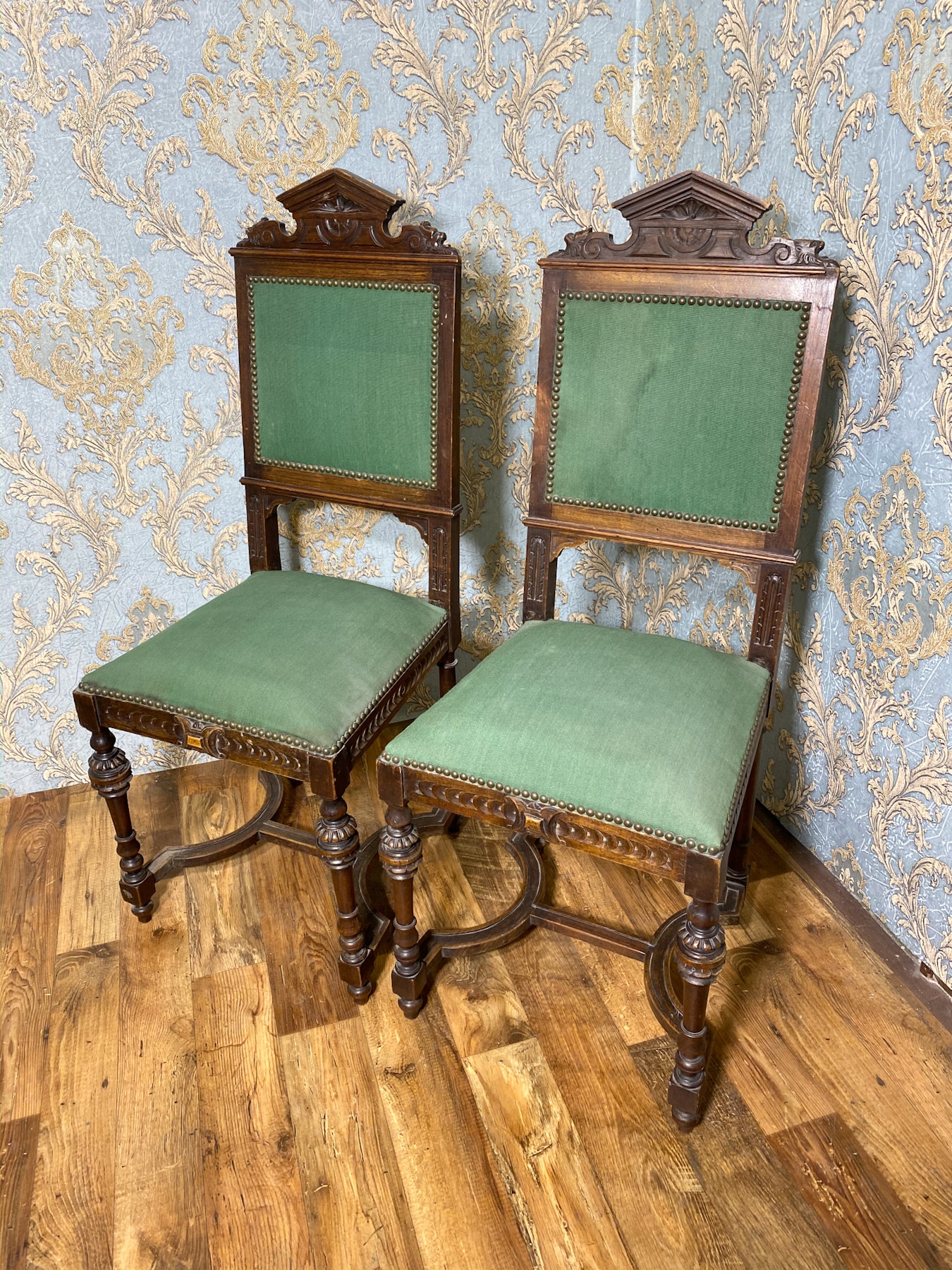
Green dining chairs — historicism (Renaissance revival), Western Europe, 2nd half of the 19th century These elegant chairs (antique chairs) are a work of the historicism period in walnut, in which the language of the Renaissance revival is expressed in… 90,00 €
You’re now subscribed to price tracking for this product. We’ll notify you if the price drops. 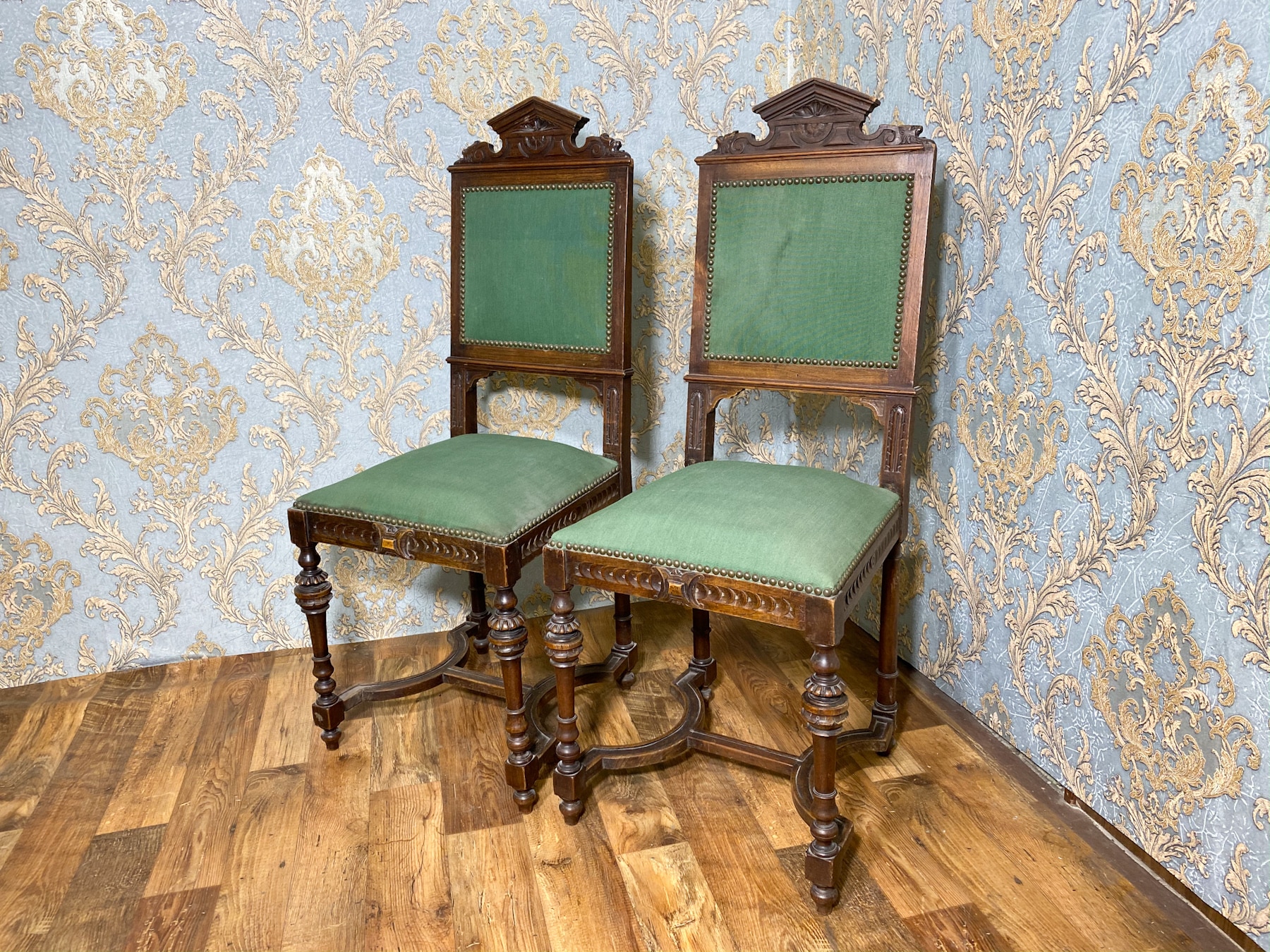
Green Dining Chairs, Walnut, Historicism, 6 pcs available (528)
Height 109 cm Width 46 cm Color GoldDark brownDark green
Description
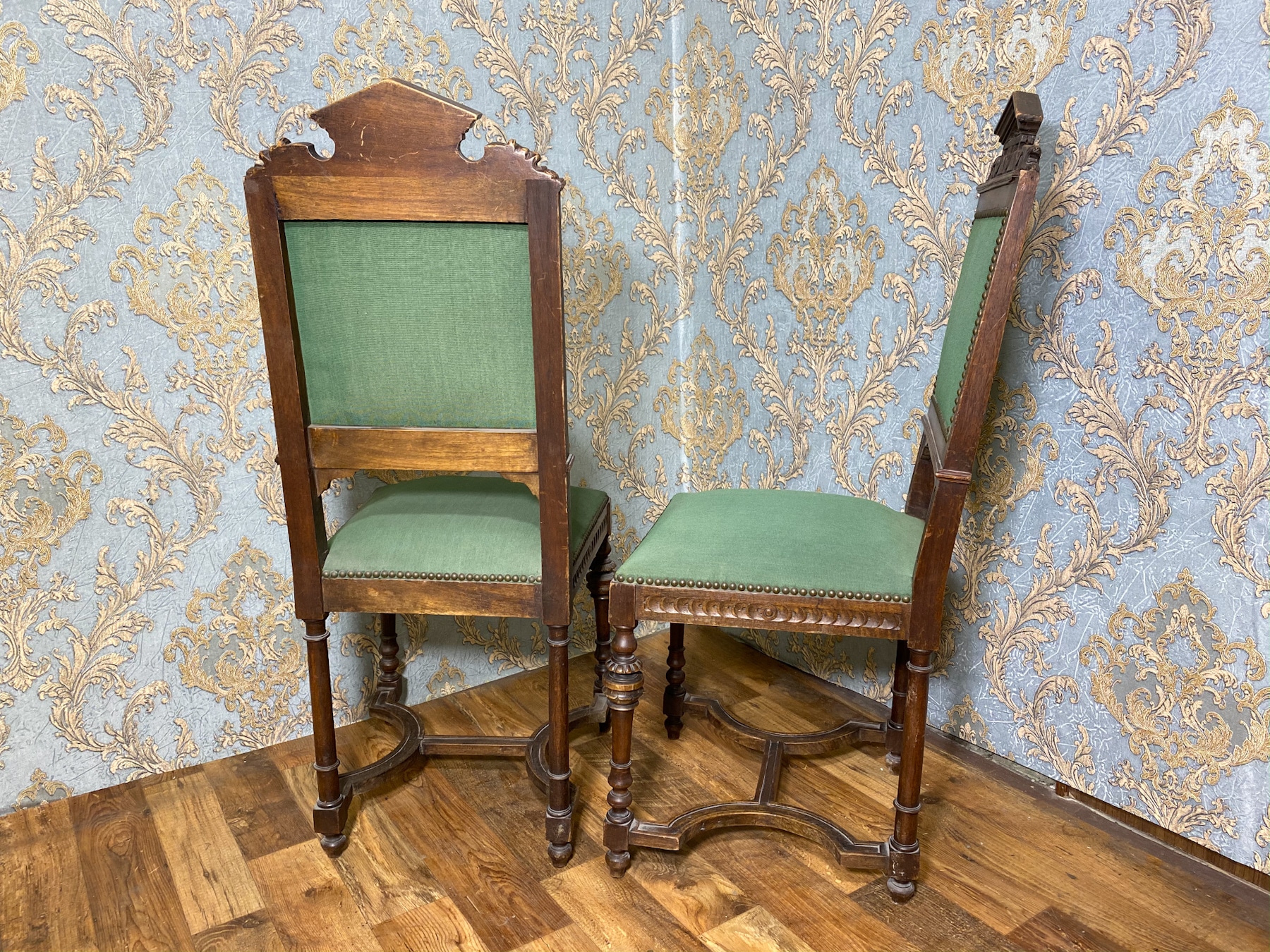
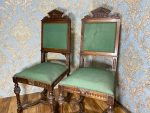
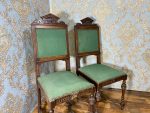
Green dining chairs — historicism (Renaissance revival), Western Europe, 2nd half of the 19th century
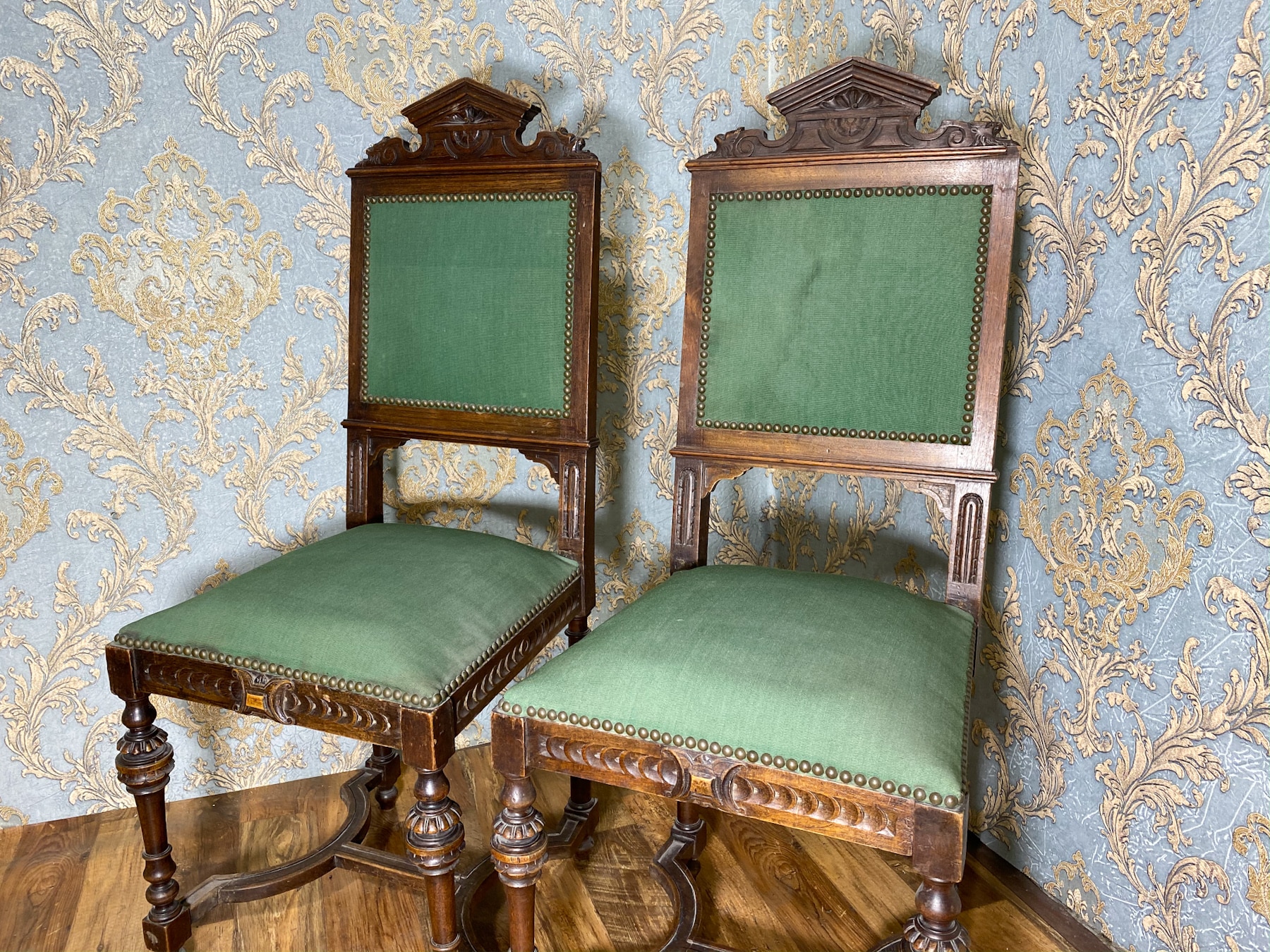
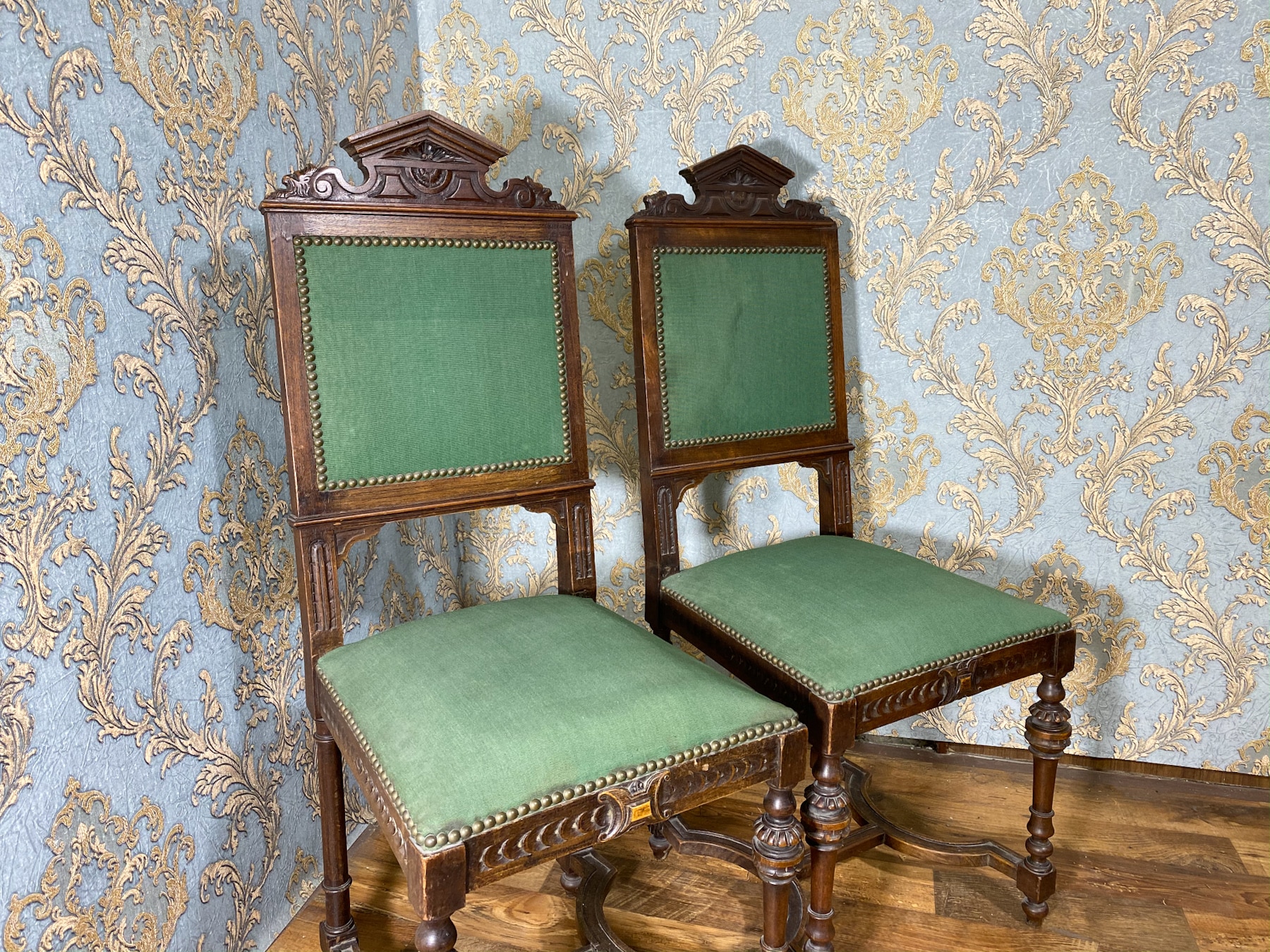
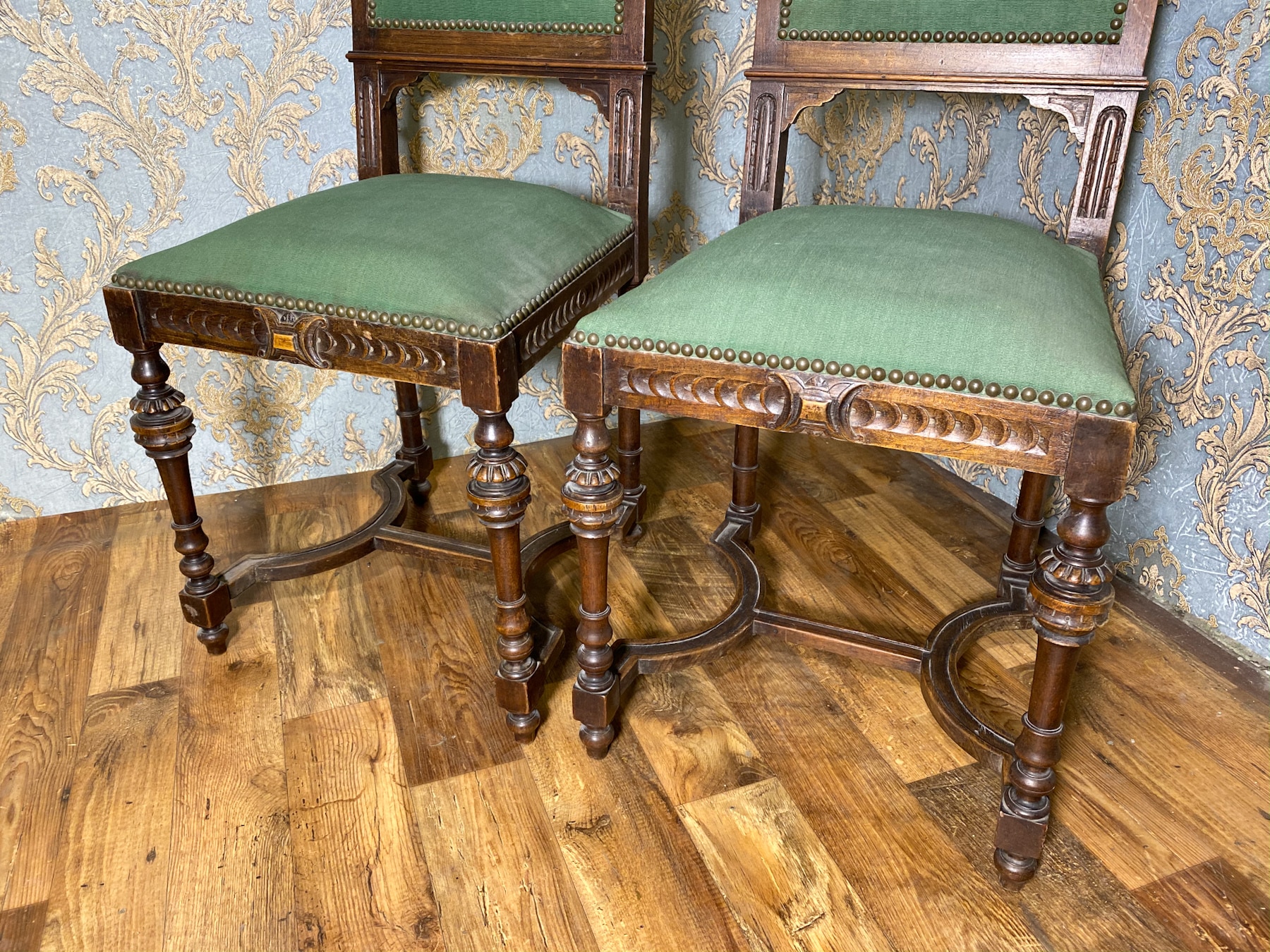
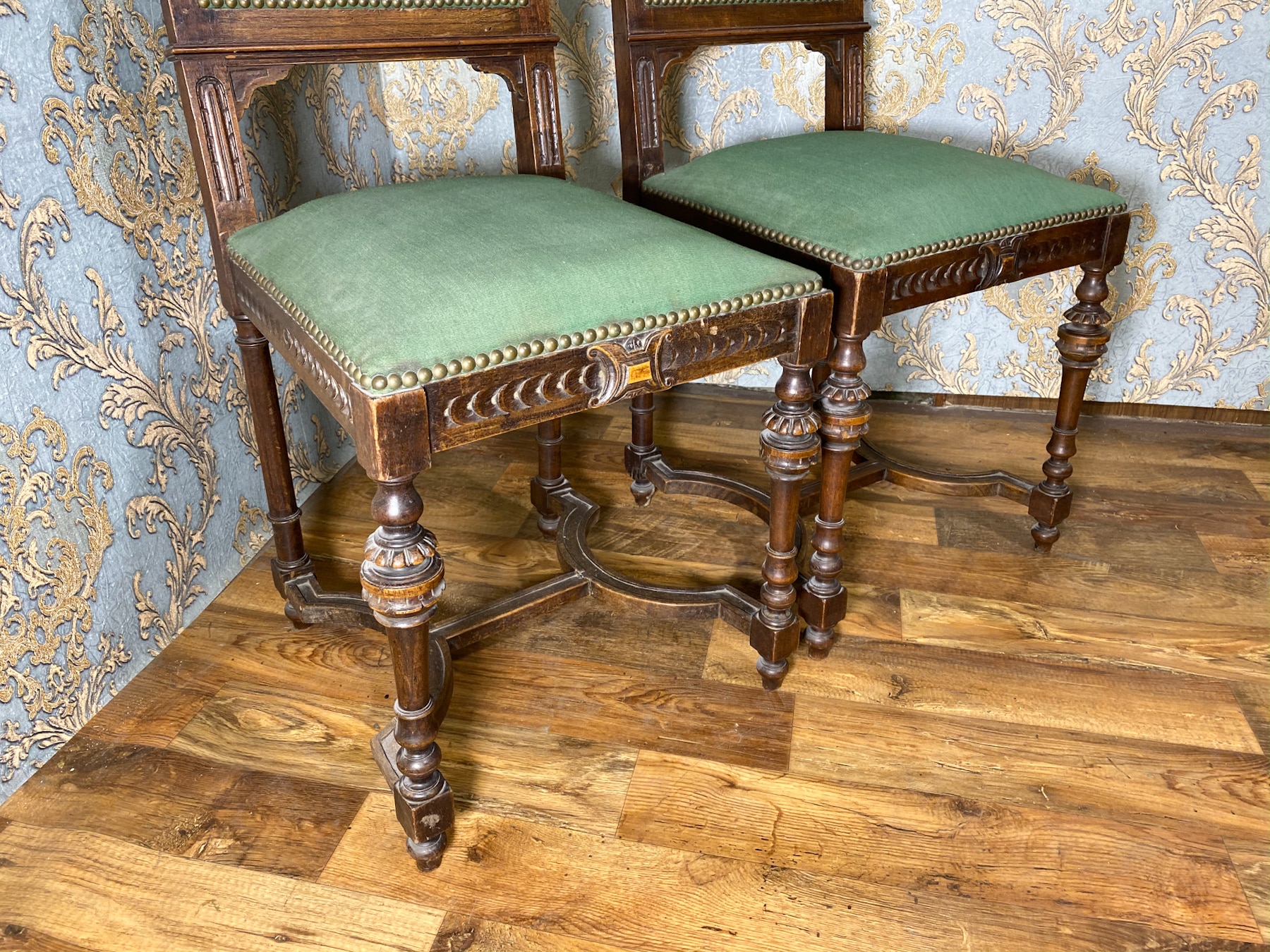
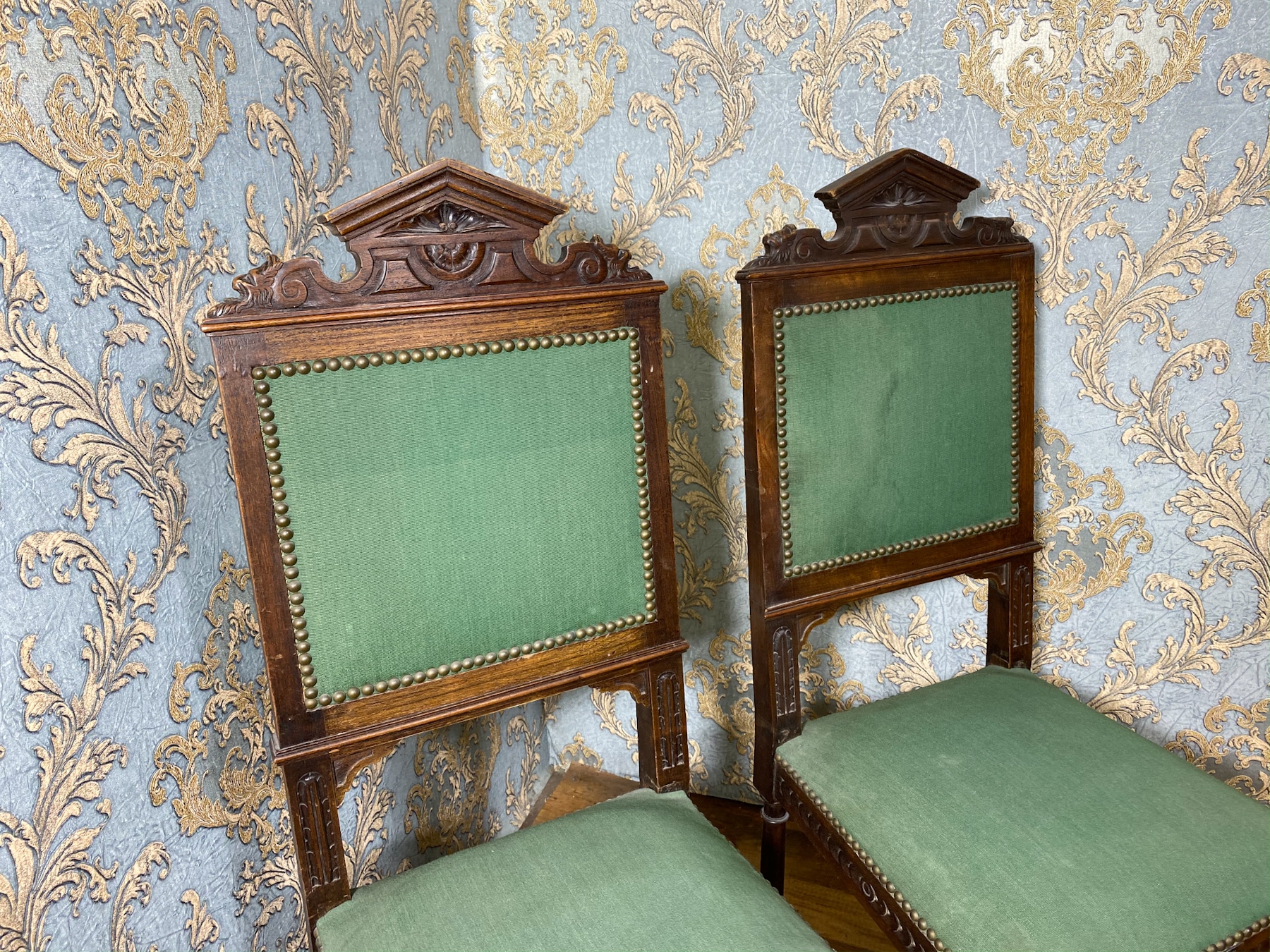
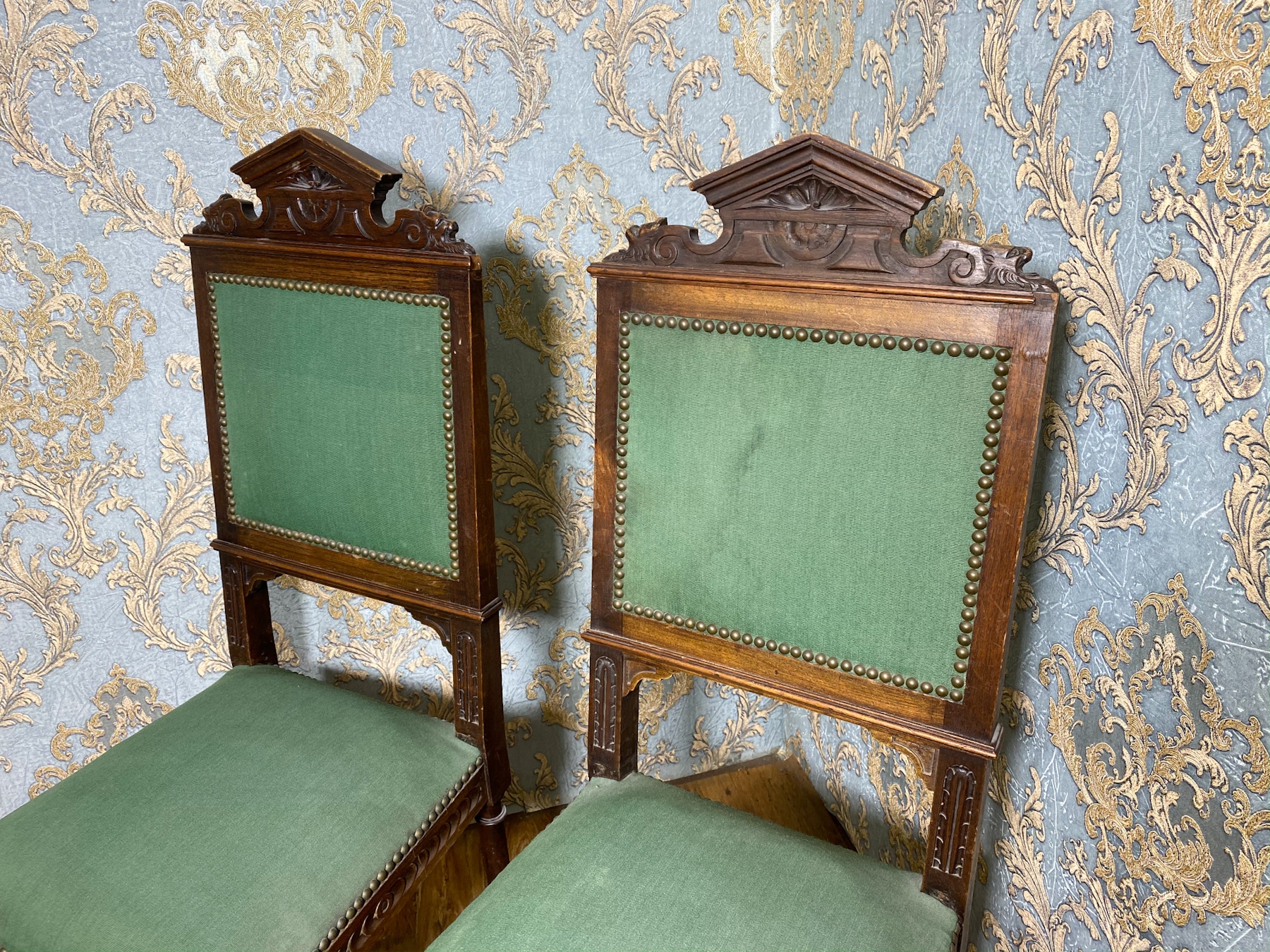
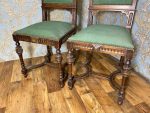
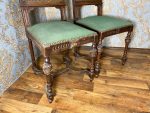
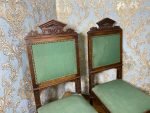
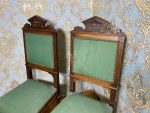
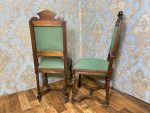
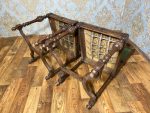
These elegant chairs (antique chairs) are a work of the historicism period in walnut, in which the language of the Renaissance revival is expressed in a slender, solemn silhouette. The high backrests are crowned with a pediment-shaped carving with volutes and a central rosette — a delicate work of the woodcarver that gives the chair architectural dignity. The upholstery is a calm green fabric, marked by a decorative row of bronze nails; the turned legs are joined by a gracefully curved H-shaped stretcher.
Dimensions (per chair): height 109 cm, width 46 cm, seat depth 37 cm.
Period of manufacture, art style, era The chairs belong to the second half of the 19th century, when historicism flourished in Europe — an era that respectfully and lavishly revived Renaissance and Baroque forms. The Renaissance revival favored an architectural silhouette: a pediment crowning, turned baluster legs, profiled fields, and a twisted H-stretcher, which gives the chair an almost church pew solemnity. It was chairs like these that marked the dining room of wealthy bourgeois families, where dinner was a ritual.
Snapshot of the Renaissance revival: composer Johann Strauss (Johann Strauss II) emerged from a hall in Vienna and sat down for a moment on the side, catching his breath after a rehearsal — the high backrest held his back straight, almost commandingly. The silhouette of the strings still flowed through the door, the afternoon light fell on the parquet squares. The shape under his fingers, carved in hard wood, was cool and definite, and he smiled, because it made him sit as one who listens to music with his whole body.
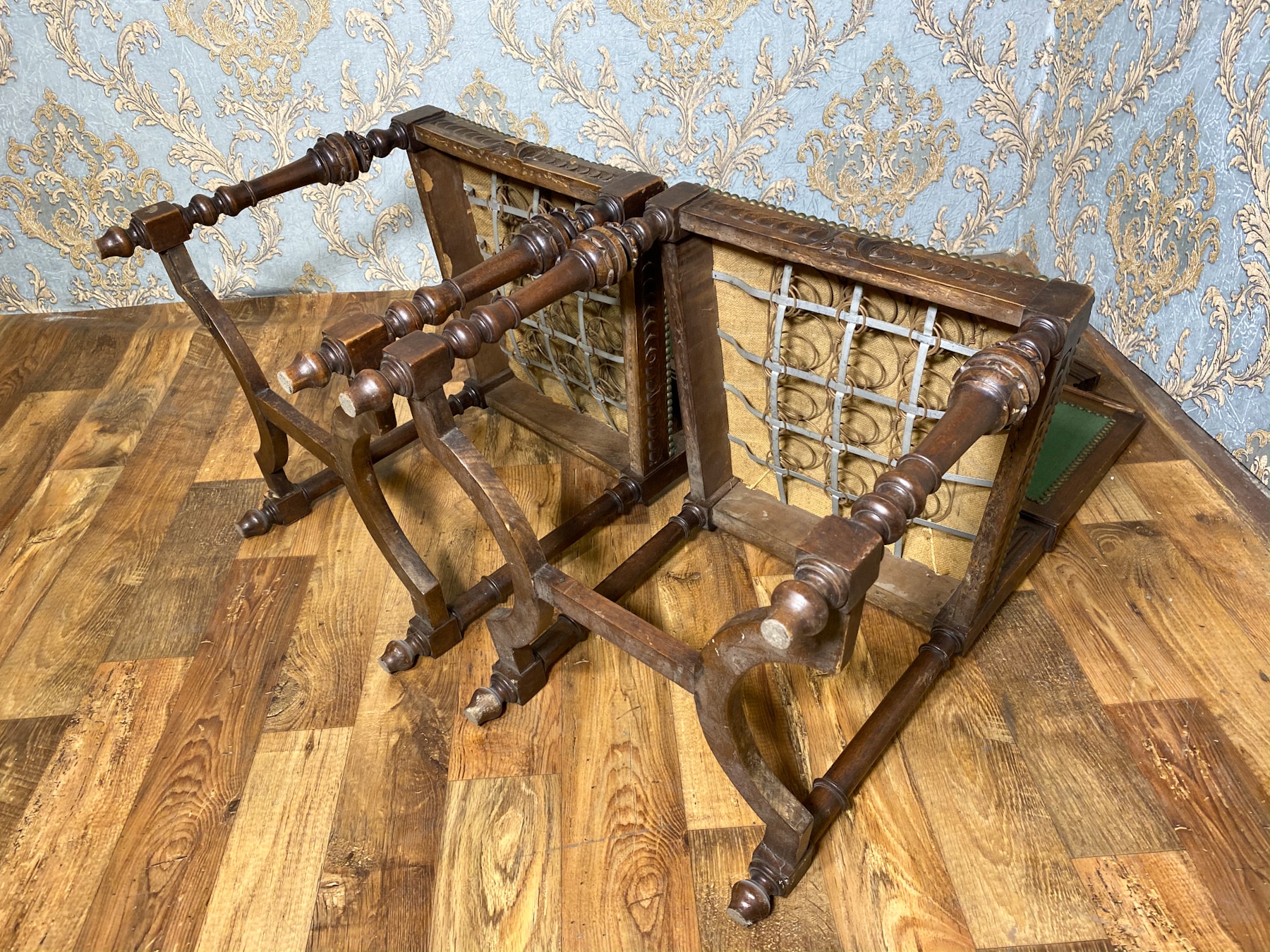
Material and carving The frame is made of walnut with a warm, natural patina. The pediment crowning the backrest with volutes and a rosette is a true figurative carving; the front legs are turned in the form of balusters, complemented by ring and leaf motifs. The seat frame is adorned with a pearl string and profiled fields; the H-stretcher joins the legs in a stable construction.
Rarity and significance A complete set of six chairs in one style is a rare find — individual historicism chairs are common, but a matching set of six allows for a full table setting in a unified atmosphere.
Condition The chairs are in good, stable antique condition with a natural patina of age on the wood. The green upholstery has been preserved with wear appropriate to the period. The condition of the items is fully reflected in the photographs.
Application in interior The chairs will be perfect for a dining room, living room, or a representative study, in a classic or eclectic interior. A row of six identical chairs creates a solemn, harmonious composition around a dining table. The price is for 1 chair (90 EUR); 6 pieces available.
“
Related Products
No account yet?
Create an Account