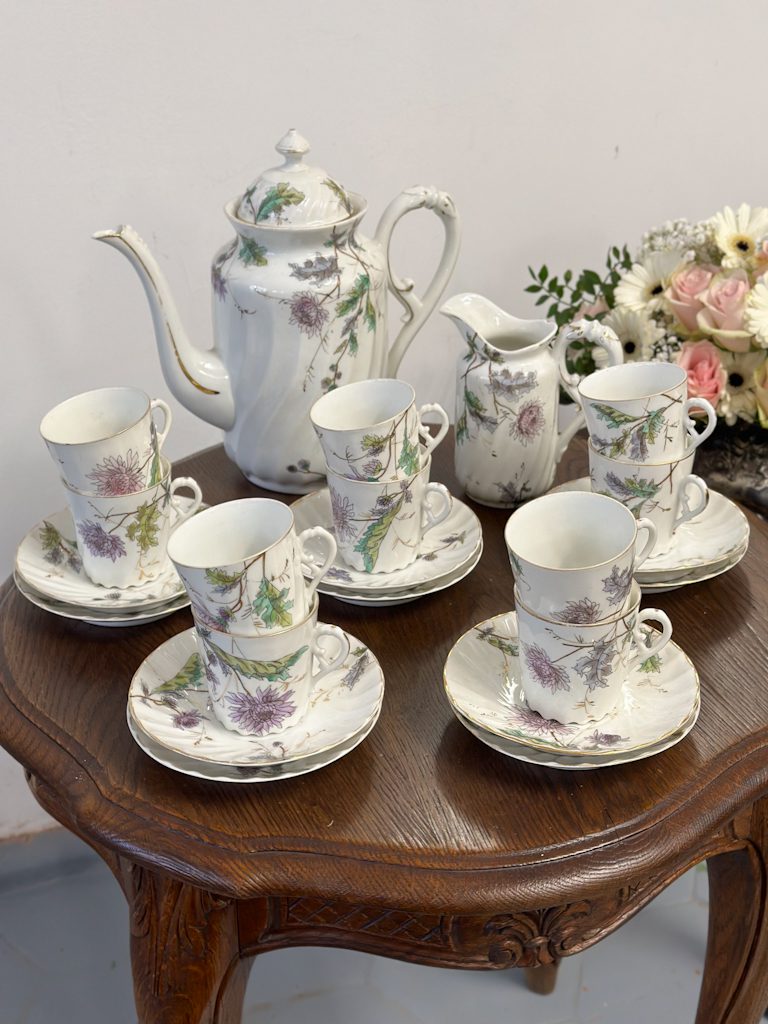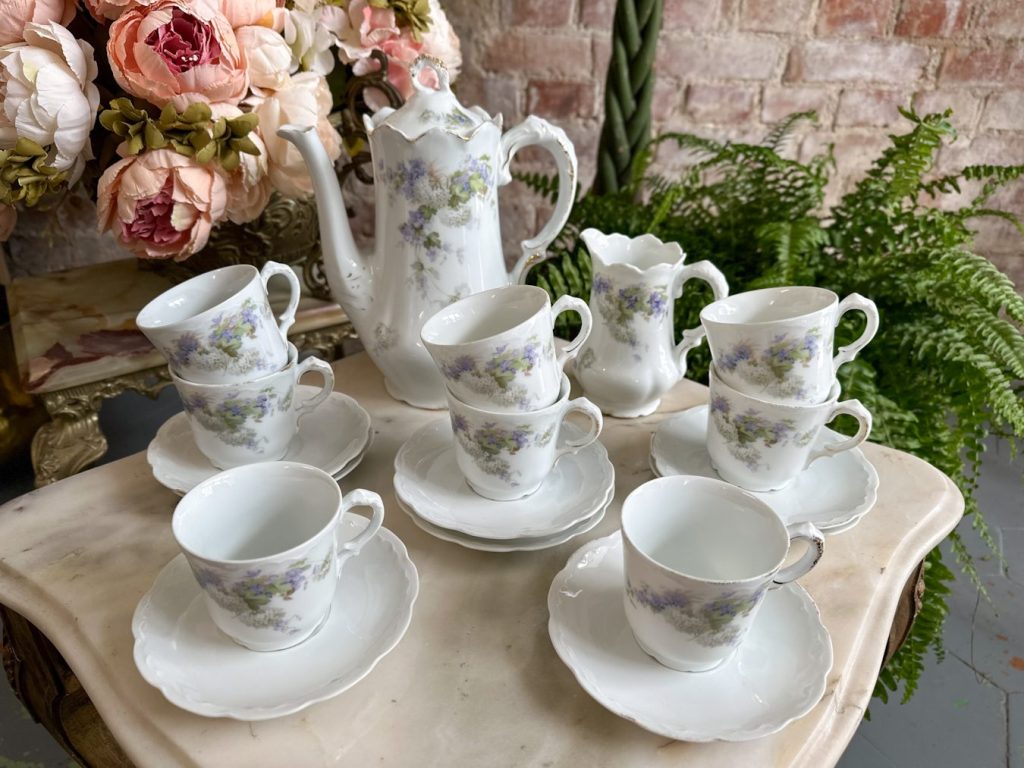
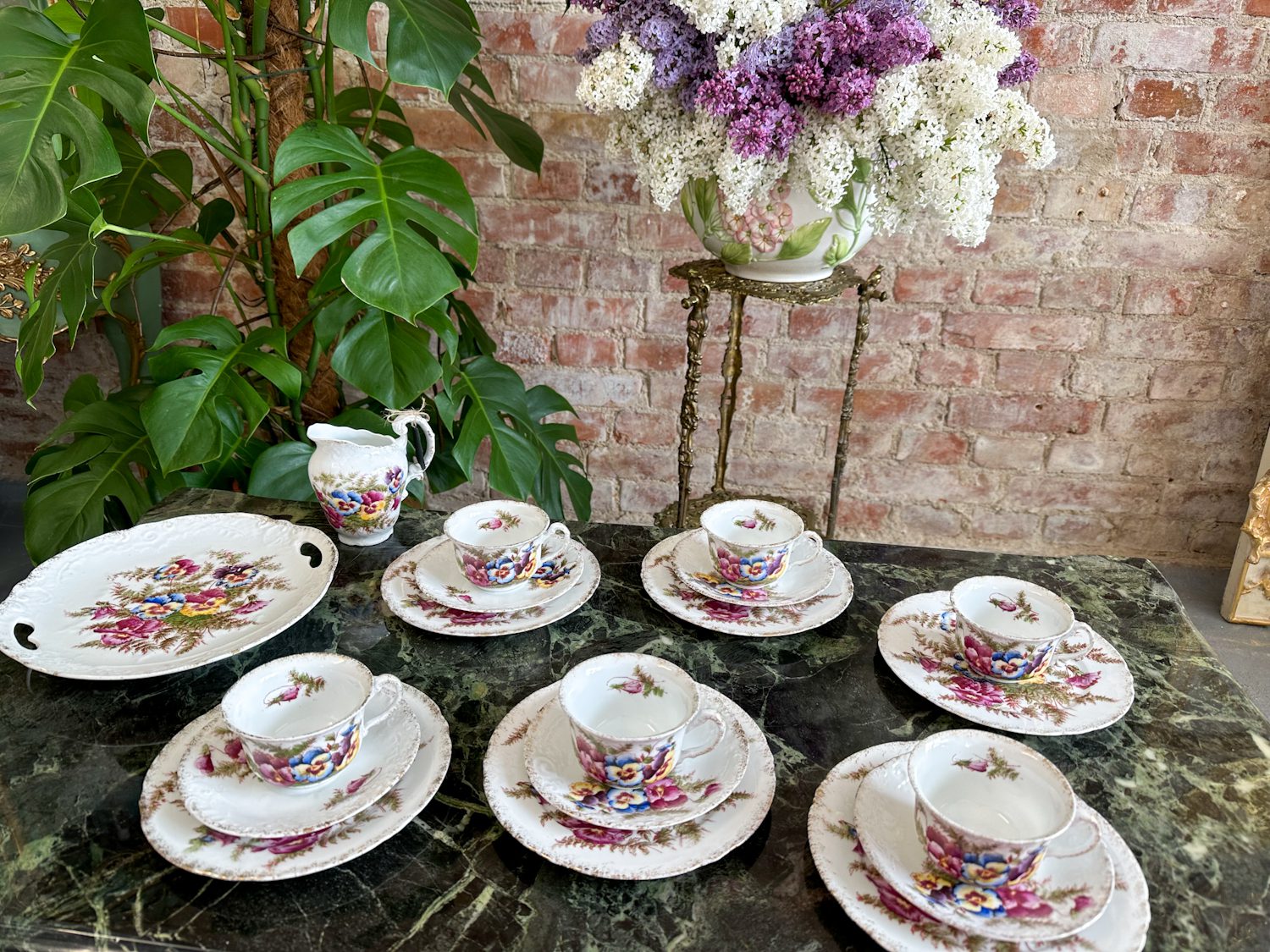
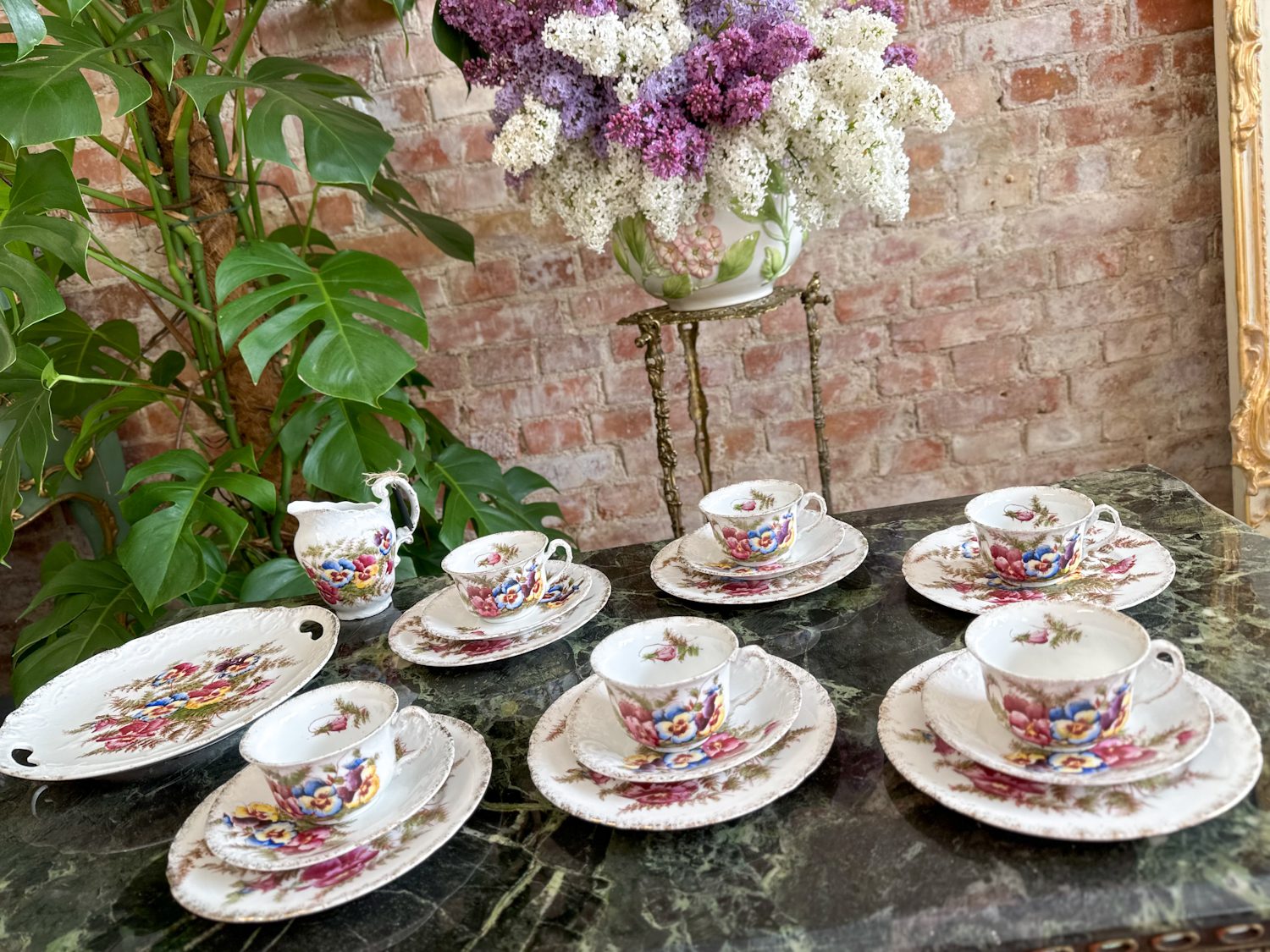
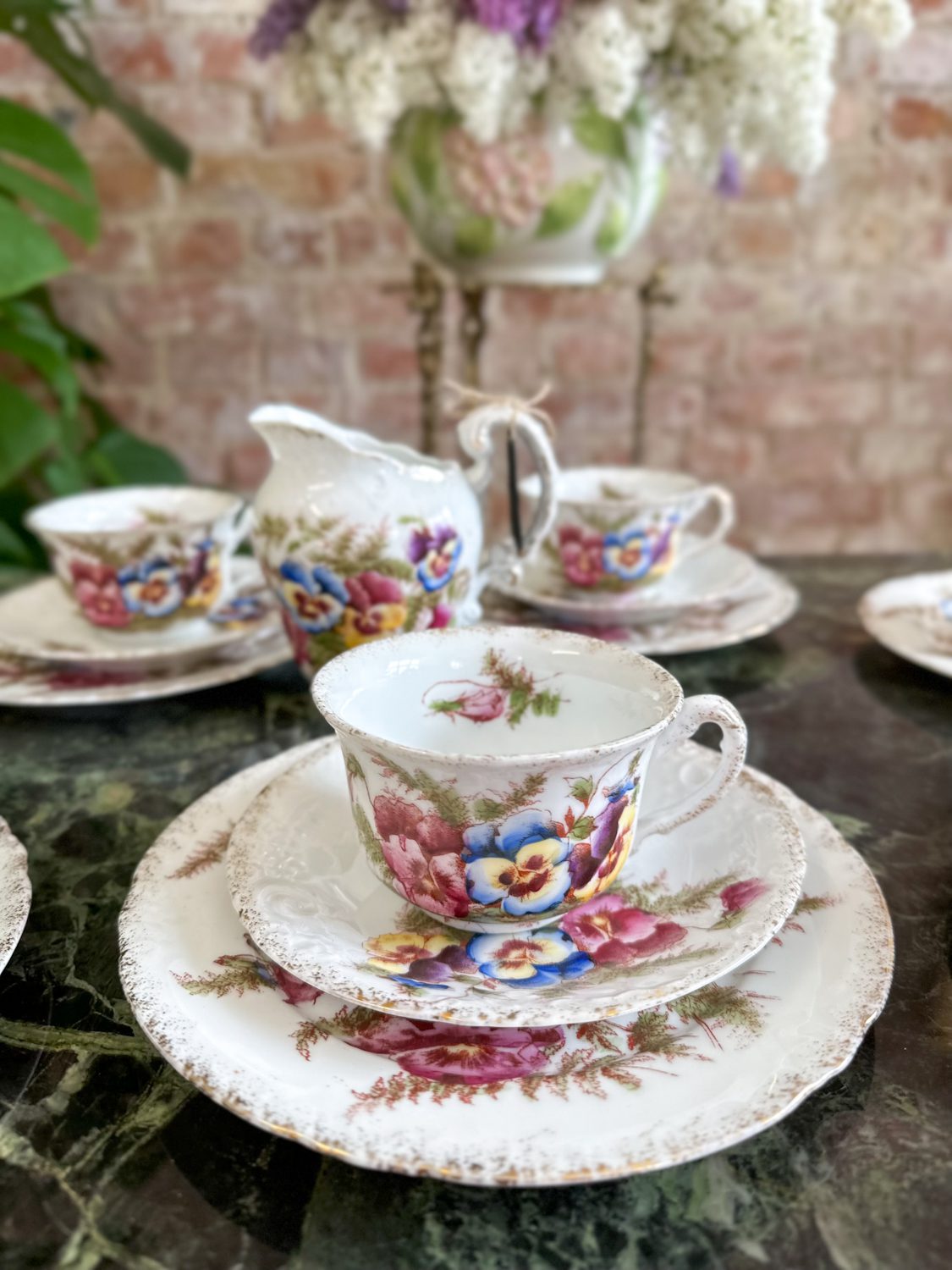
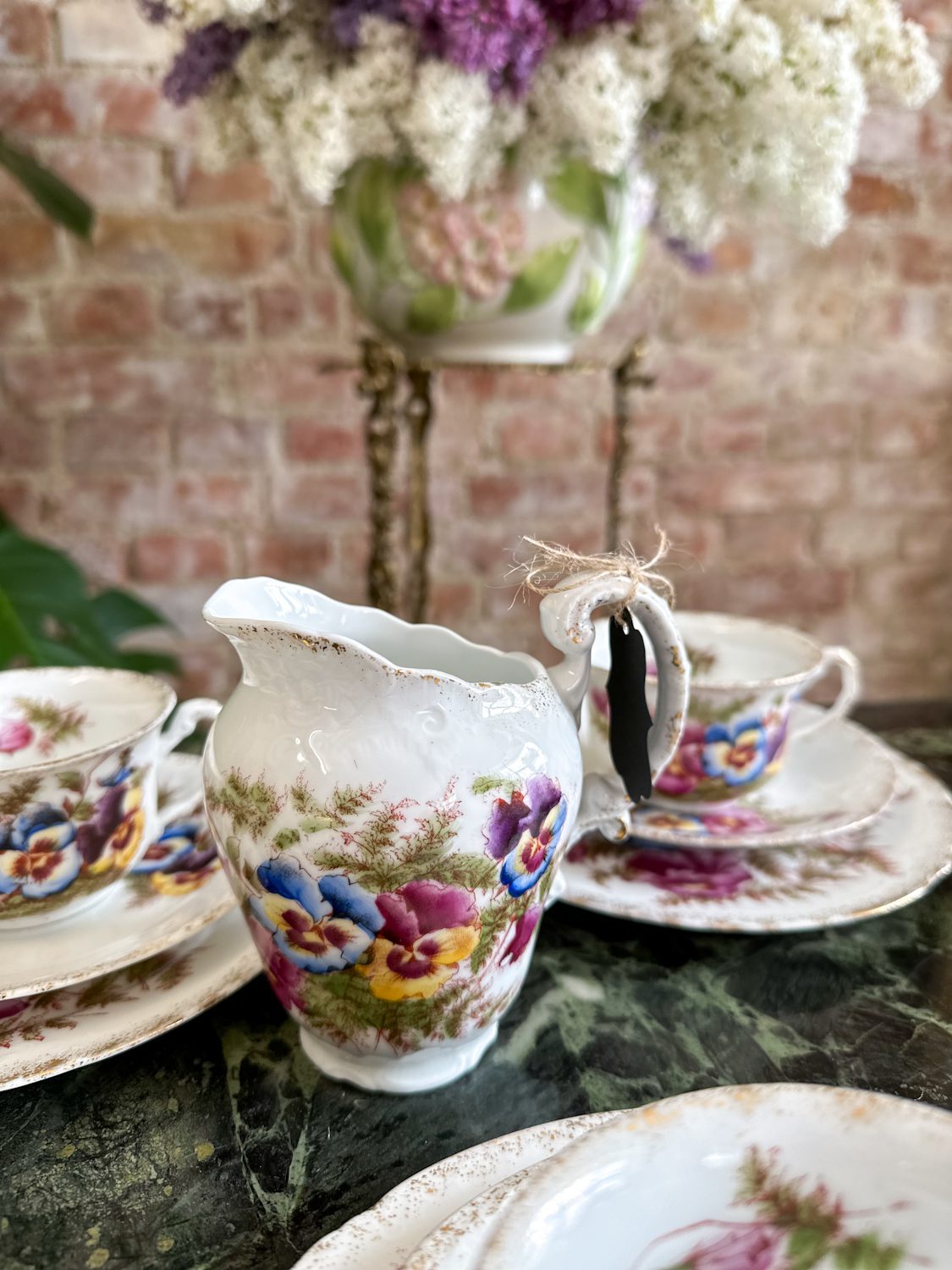
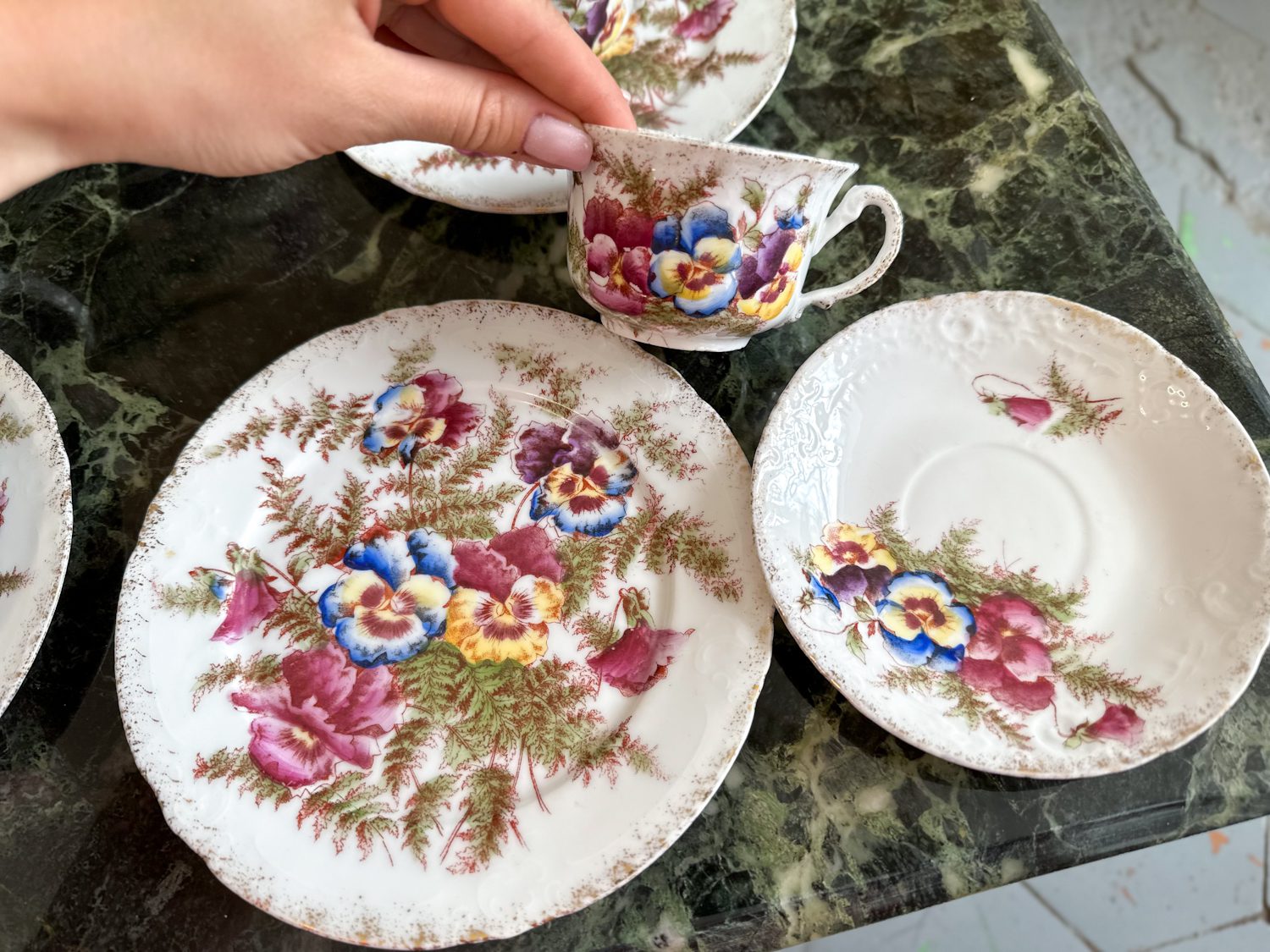
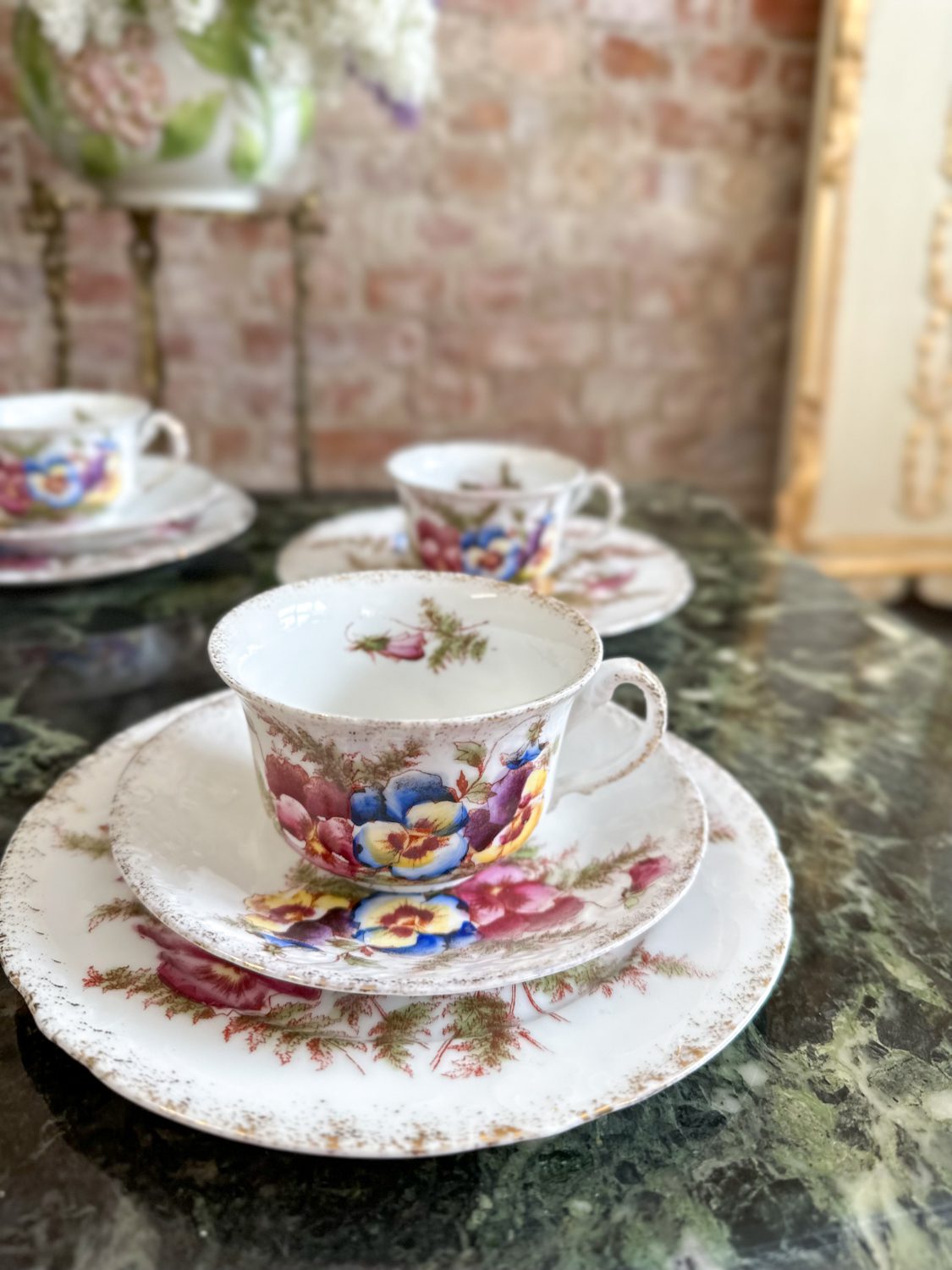
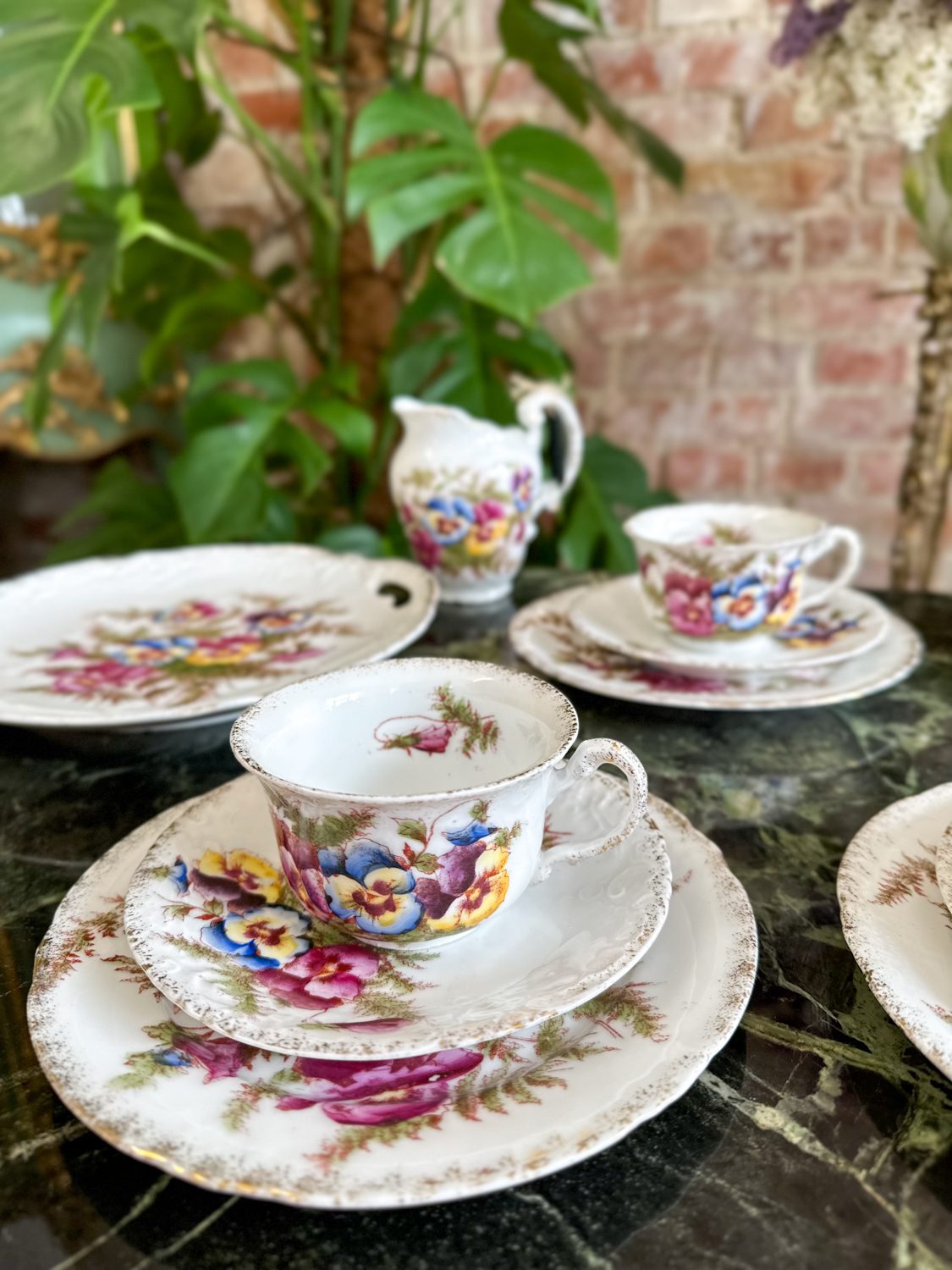
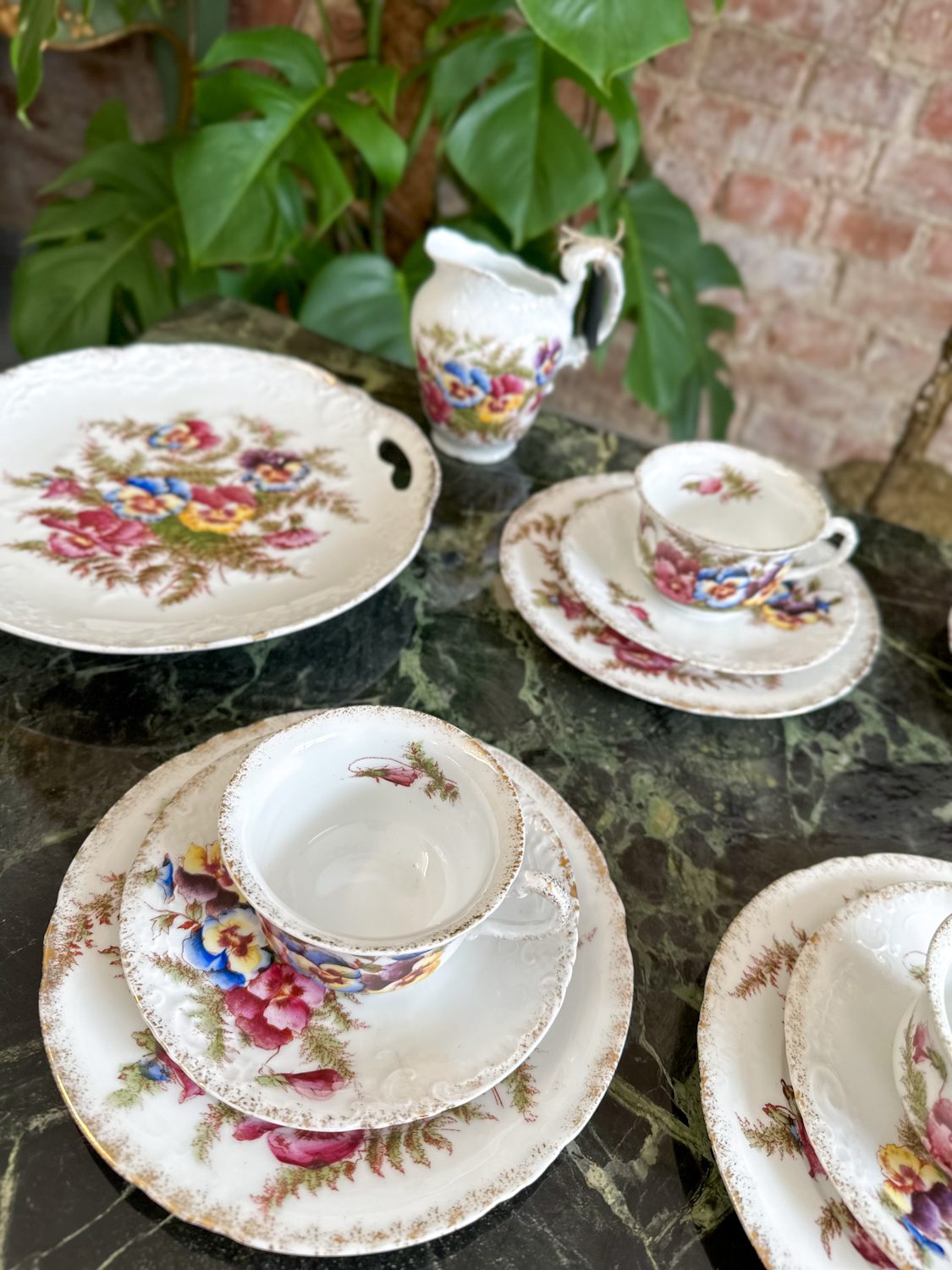
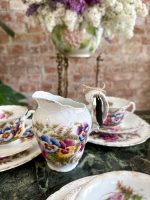
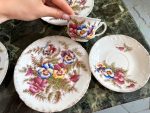
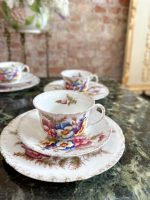
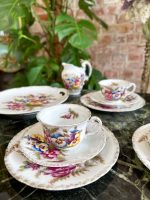
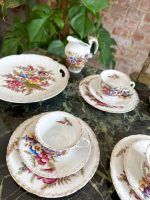
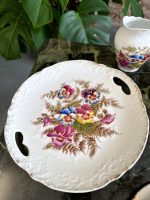
Gorgeous late 19th-century German porcelain tea and coffee service for 6 people (trio set) with expressive relief, gold accents, and vibrant, velvety pansy floral motifs (4075). 280,00 €
You’re now subscribed to price tracking for this product. We’ll notify you if the price drops. 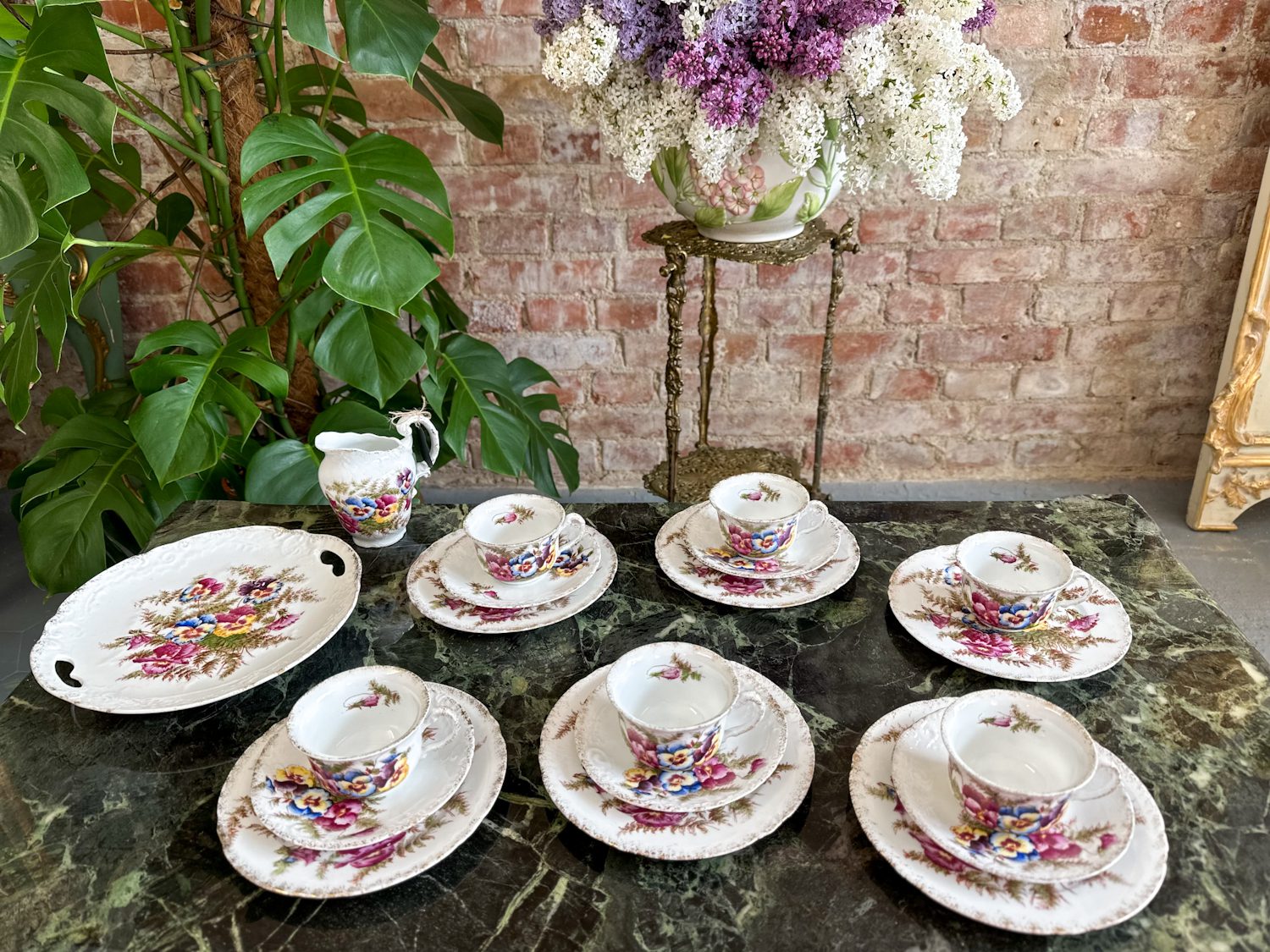
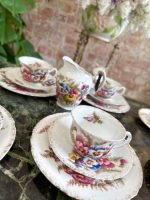
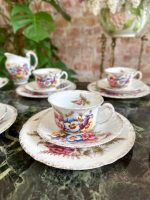
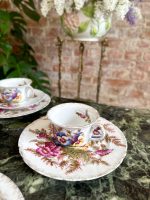
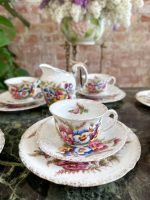
Antique Porcelain Pansy Tea & Coffee Service for 6 Persons (4075)
Color NaturalYellowCoffee
Description
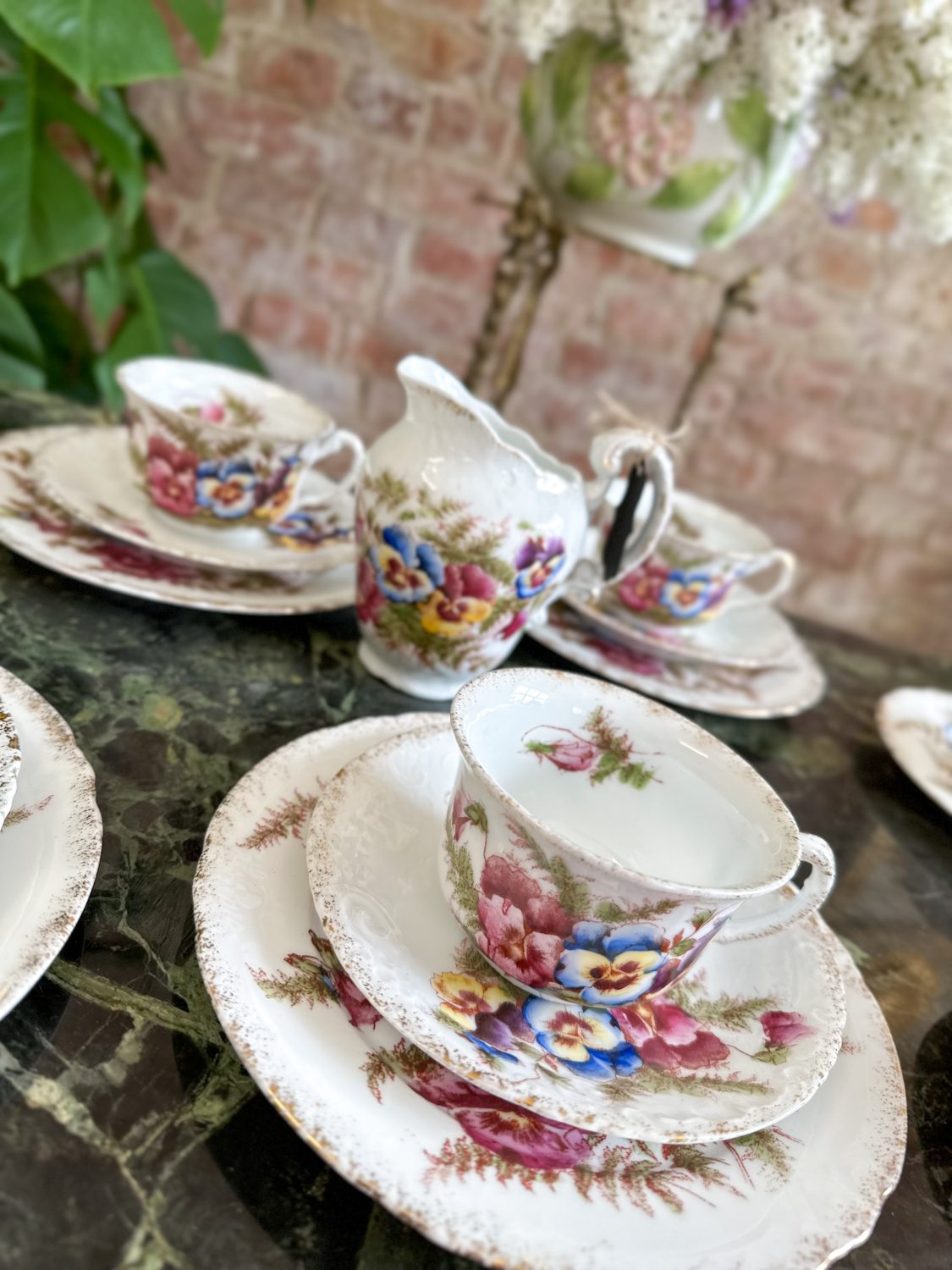
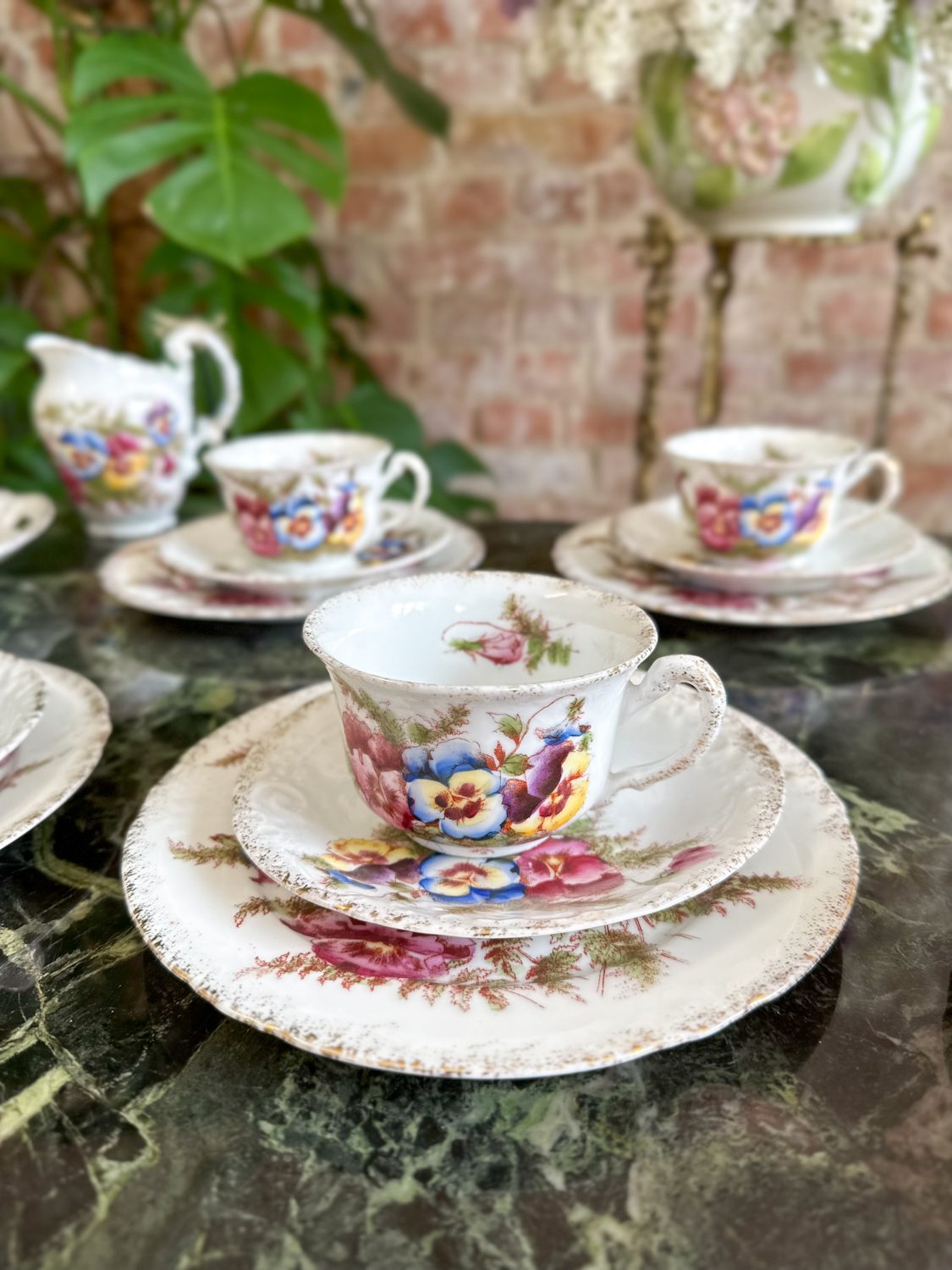
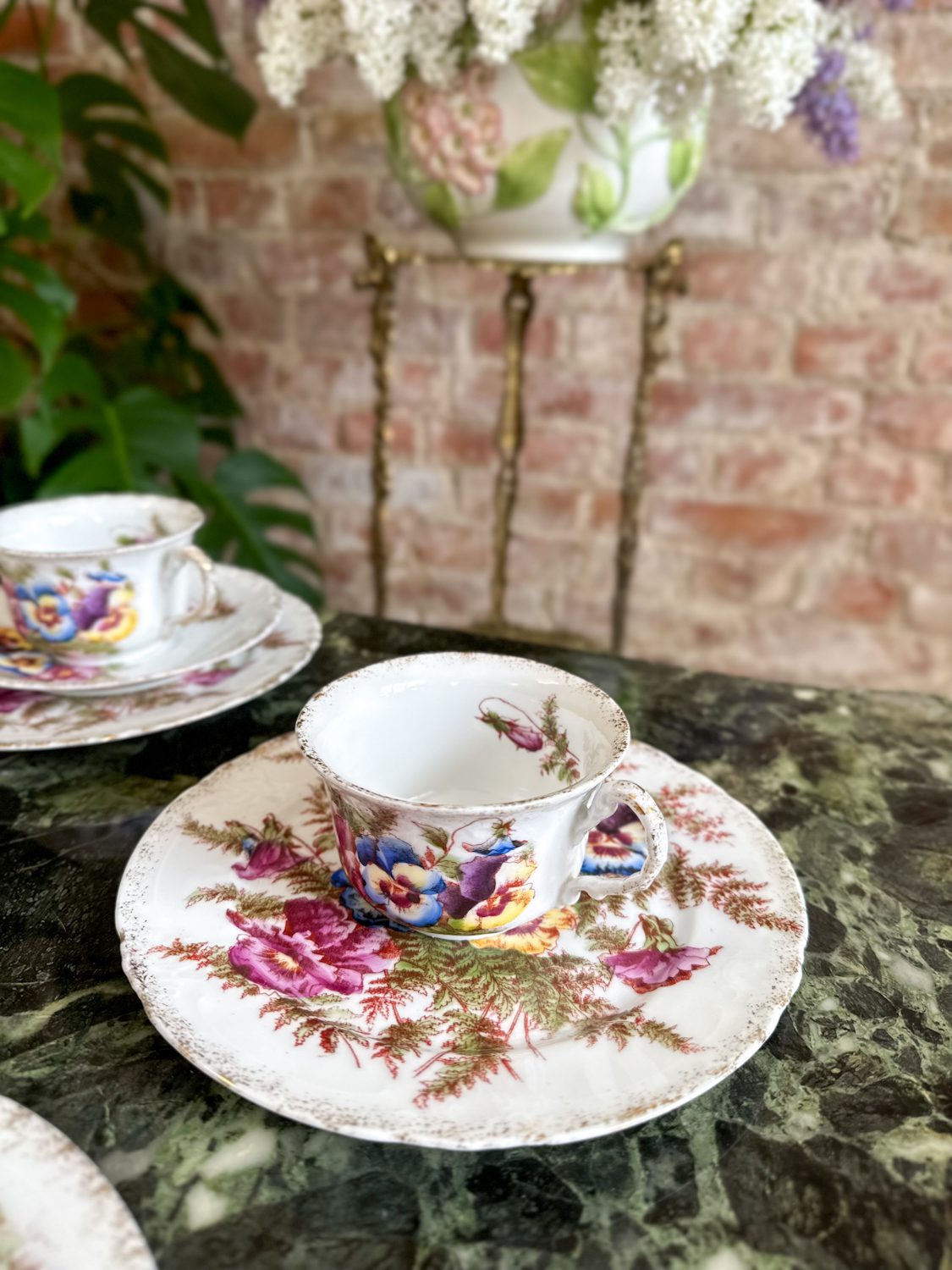
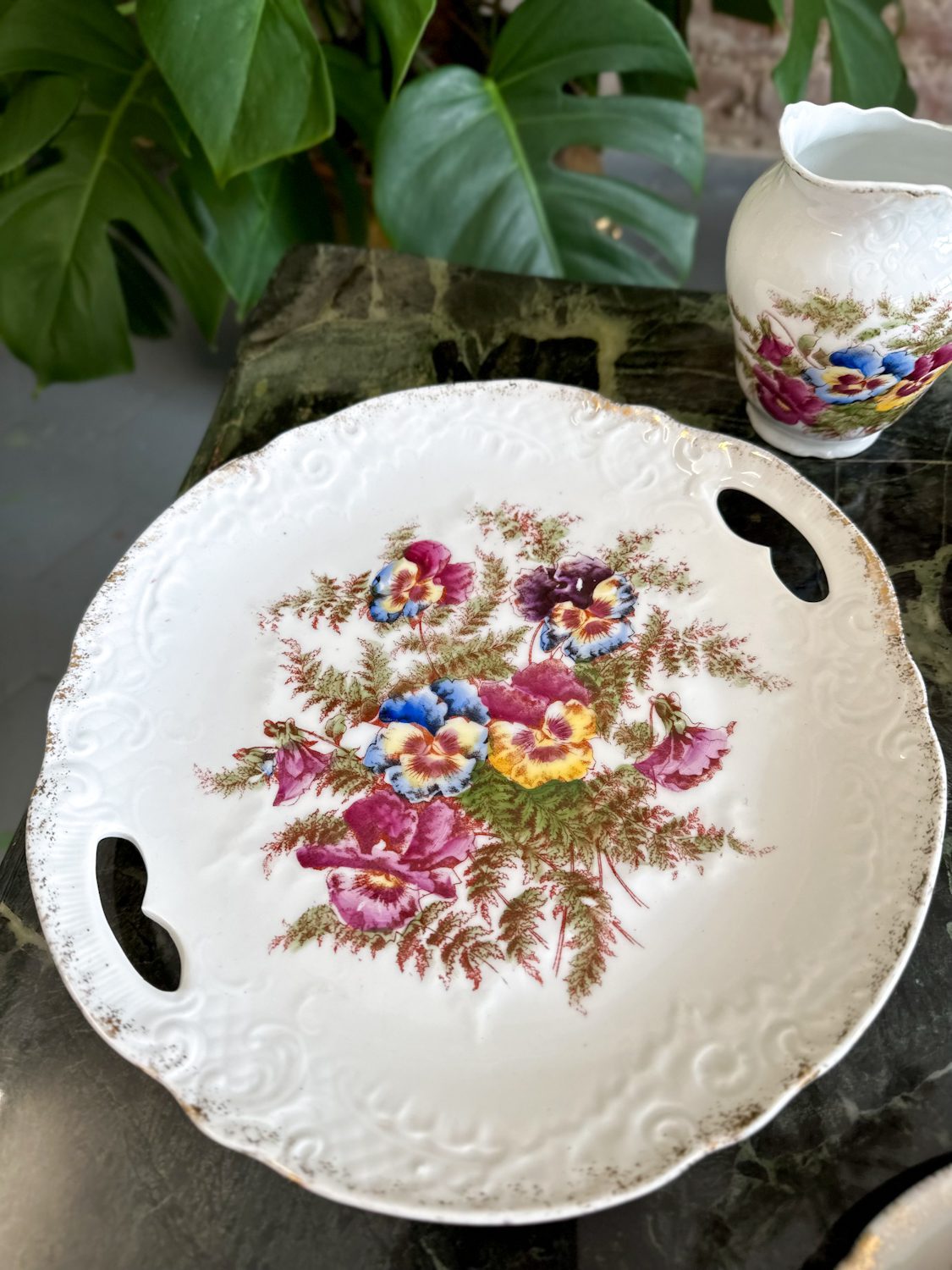
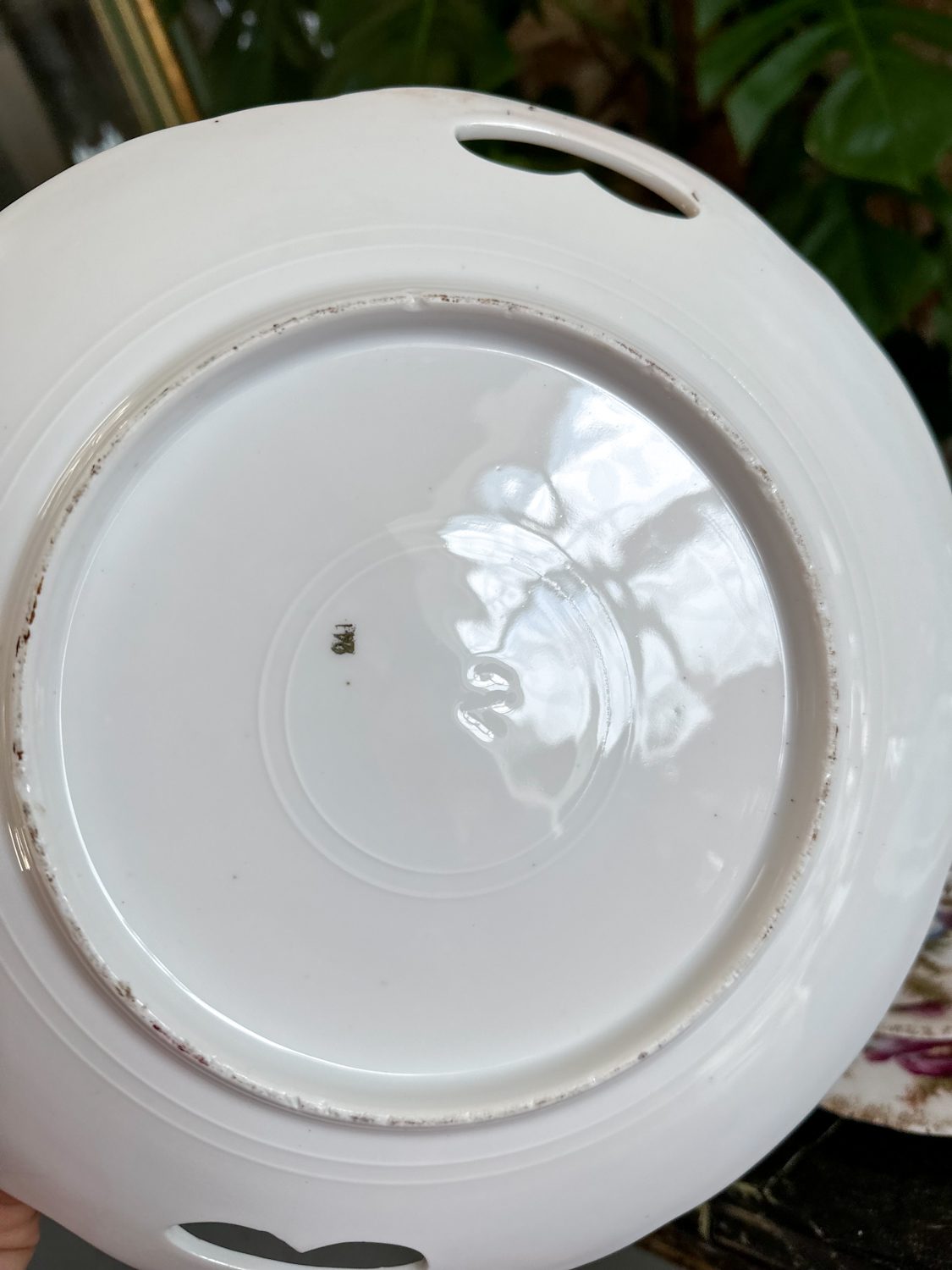
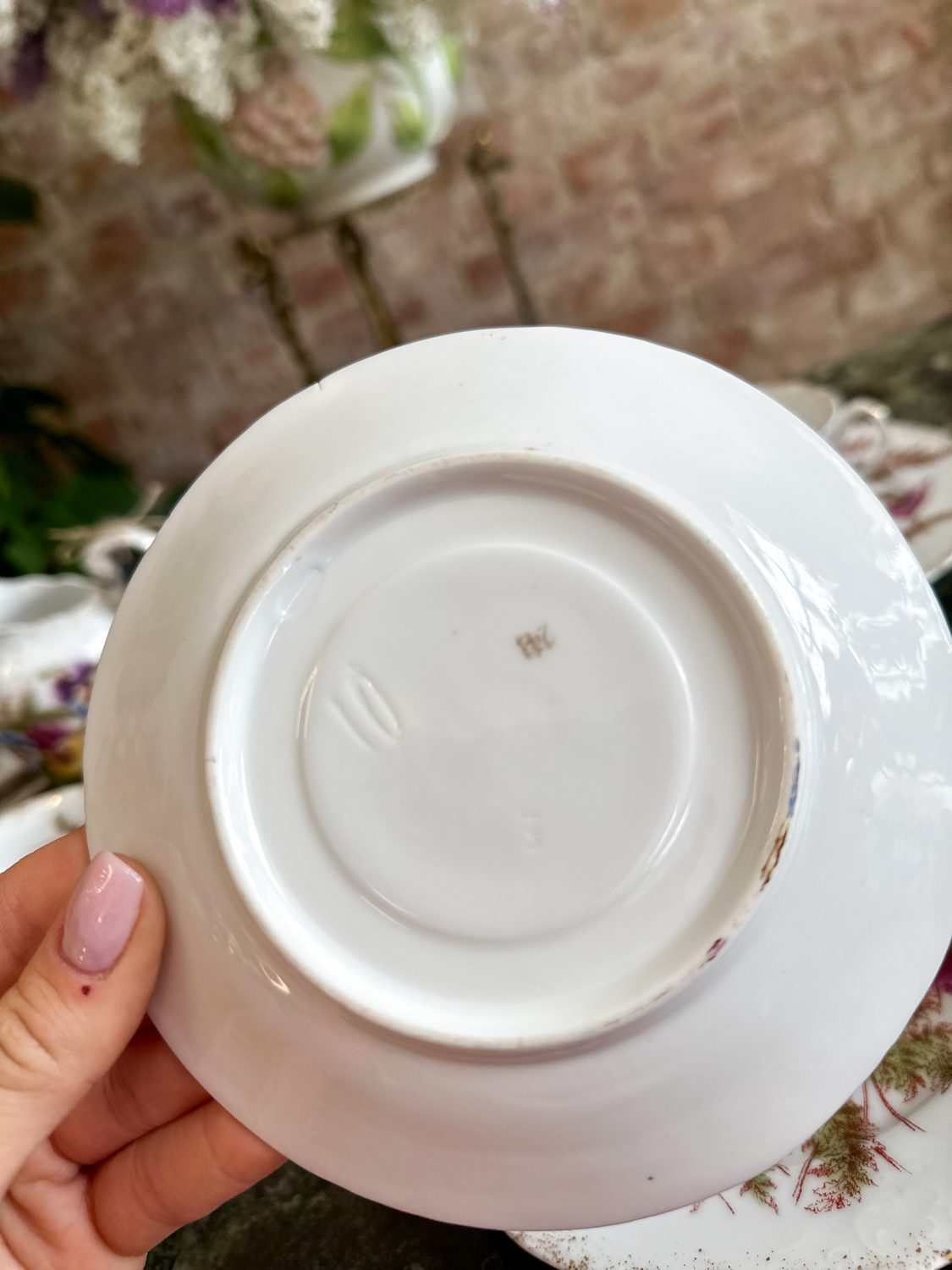
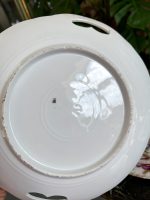
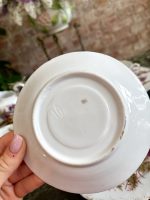
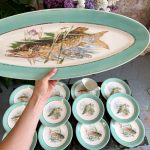
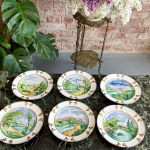
Dimensions: The set includes: milk jug, large serving platter/dish with handles, 6 cups, 6 saucers, and 6 dessert plates (total 20 pieces – a complete trio set). Antique porcelain tea and coffee service for 6 people A magnificent, sculpturally expressive, and unusually lively example of late 19th-century European porcelain art – a tea and coffee service for 6 people (antique porcelain tea set), preserved in a complete three-part (trio) configuration. Each vessel stands out with elegant Neo-Rococo style plastic relief and wavy, faceted edges adorned with a delicate, gilded decorative powder or a gold dust accent created using the “dry brush” technique. The surface of the vessels is decorated with vibrant and extremely detailed pansy (pansies) and wild flower motifs. In early Art Nouveau symbolism, the pansy embodied deep contemplation, memory, and free thought. The combination of flower colors – rich violet and velvety yellow tones combined with spring-green leaves and fern shoots – creates a strong visual contrast with the pure, clear white porcelain, forming a transitional phase from Historicism to early Art Nouveau. Period of Manufacture Late 19th century, approximately 1890–1895. Historicism period with early Art Nouveau influence, Thuringia or Silesia (y). The bases of the vessels bear the historic and prestigious Carl Tielsch (Altwasser) manufactory stamp, as well as hand-painted decorator series numbers and incorporated mold numbers. Rarity and Significance Complete trio sets for 6 people with the original flat cake serving plate, which have fully retained such intense, undamaged color and gilding brilliance, are a rare and highly sought-after find. The magnificent pansy decor perfectly illustrates the aesthetic of Riga’s intelligentsia salons of the late 19th century, where natural motifs gradually acquired symbolic and poetic meaning. Condition In excellent antique condition. The porcelain is shiny and clean, without cracks, chips, or signs of restoration. The gold rims and delicate floral color decor are preserved in excellent visual and physical condition with minimal, naturally acquired traces of time patina on the gilding. Cultural History Snapshot: Theatre diva Dace Akmentiņa (real name Doroteja Šteinberga, 1858–1936) before an evening performance in her dressing room slowly touched the delicate, embossed handle of the cup, feeling the fineness of the gilded decorator’s work with her fingertips. In the room, which smelled of powder, fresh roses, and stage satin, light from the mirror lamps played warmly on the porcelain surface, highlighting the velvety violet and bright yellow flow of the pansy flowers. These tones unusually precisely echoed her new costume, awaited at the Riga Drama Theatre, creating a quiet and poetic oasis of peace before heading into the glare of the stage lights. In the quiet evening hour, as the city’s first lamps slowly lit up outside the window, the vibrancy of the natural flower motifs on the thin walls brought a comforting calm, allowing her thoughts to calmly prepare for the upcoming stage role for a moment.