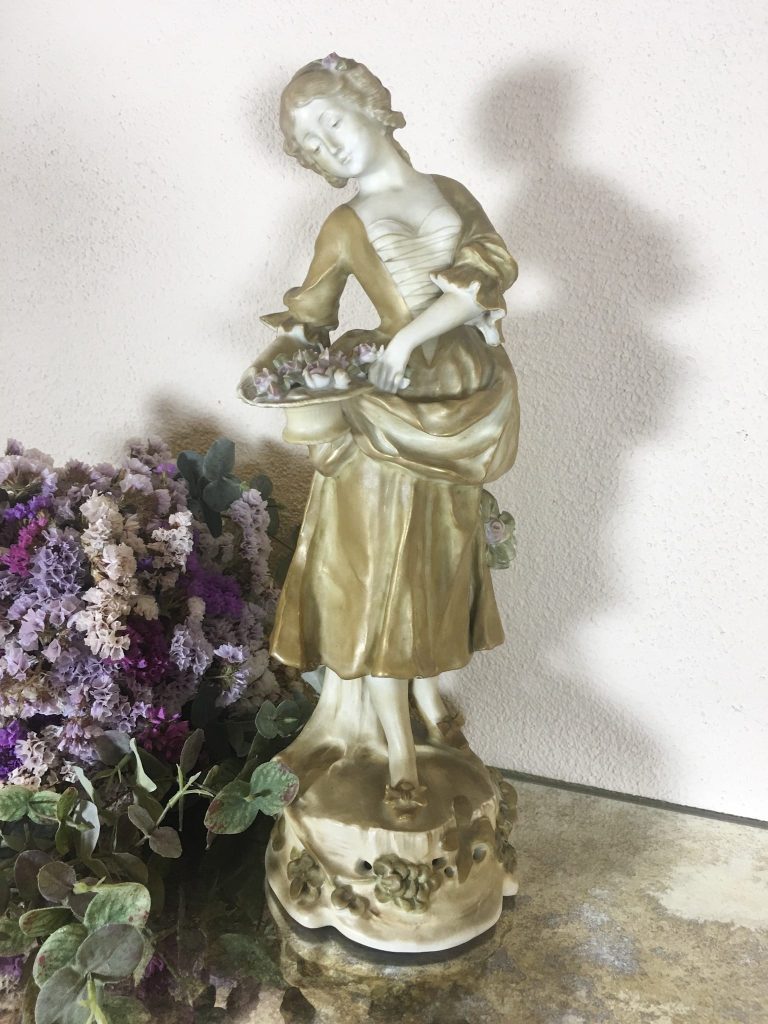
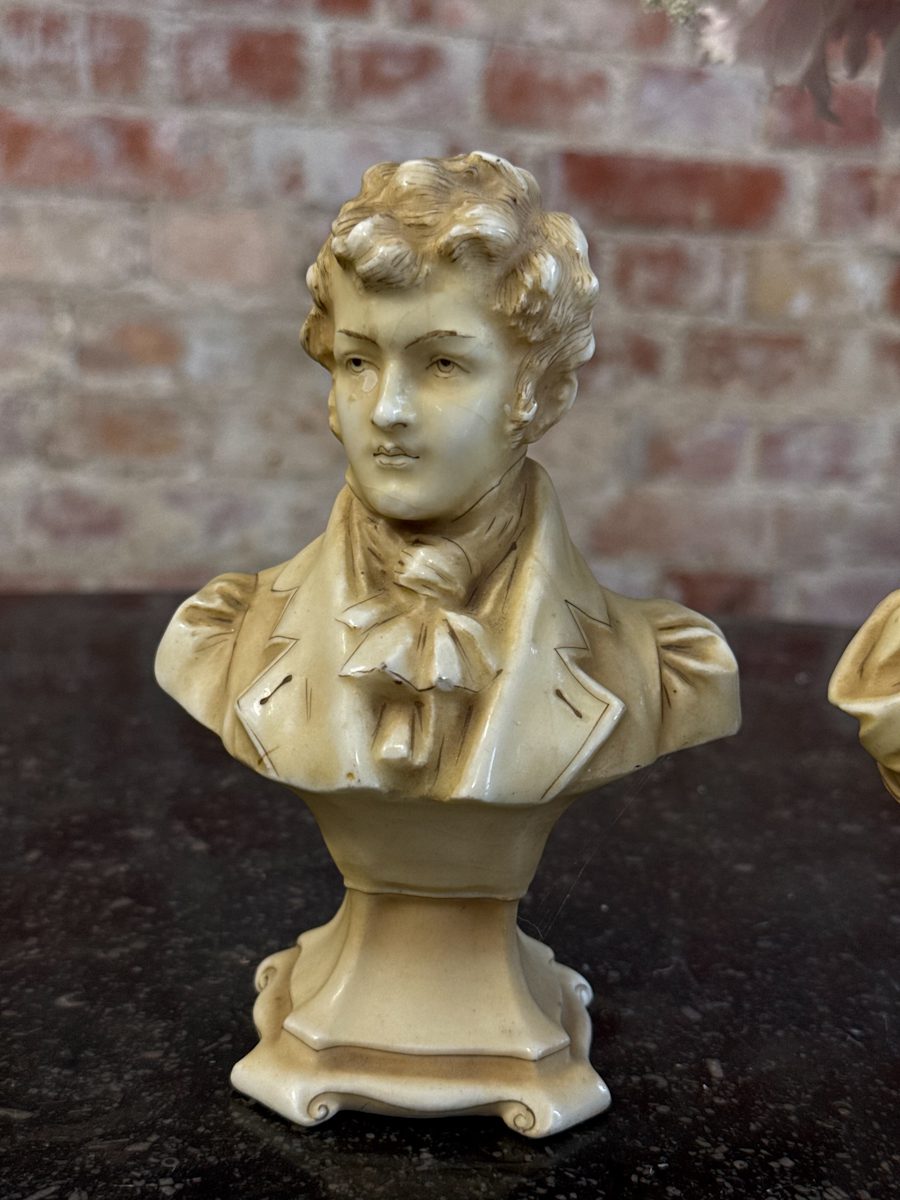
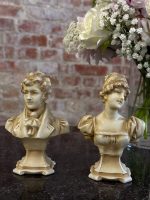
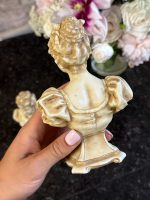
A pair of antique porcelain busts – Austro-Hungarian, in Biedermeier and Romanticism styles. These charming works demonstrate a delicate, ivory-colored finish with a fine patina, reflecting 19th-century ideals. Ideally suited for placement on a mantelpiece or bookshelf. 300,00 €
You’re now subscribed to price tracking for this product. We’ll notify you if the price drops. 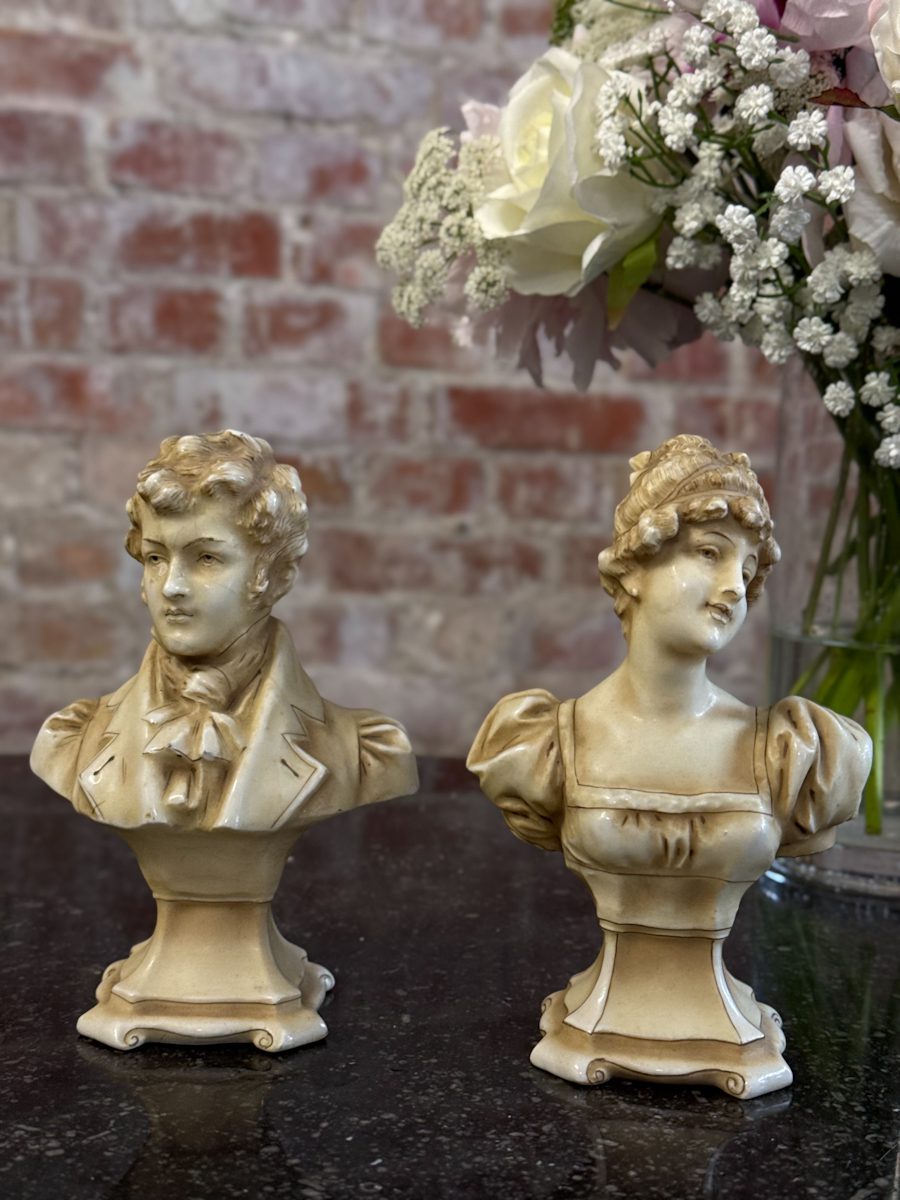
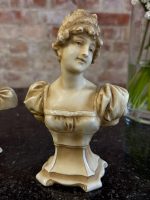
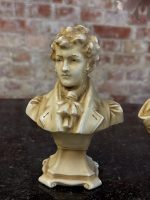
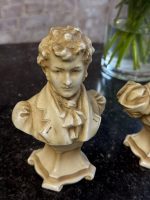
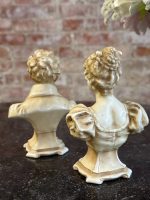
Two antique porcelain busts of Biedermeier and Romanticism style – Austro-Hungary (6898)
Height 15.5 cm Width 10.5 cm Color BrownBeigeCream
Description
Height: ~15.5 cm Width: ~10.5 cm Approximate dimensions.
Two antique porcelain busts in Biedermeier and Romanticism style
Echoes of the Biedermeier era, Klemens von Metternich: In the elegant salon of Vienna’s Hofburg Palace, where luxurious crystal chandeliers illuminated heavy silk carpets, the Chancellor slowly carried a cup of morning coffee. His gaze stopped at a small wooden table, on which, next to heavy diplomatic reports, rested two delicate, ivory-toned porcelain busts. The calm, romantic faces of the young man and lady created a pleasant, harmonious respite in the room from the constant political intrigues and tense debates of the empire.
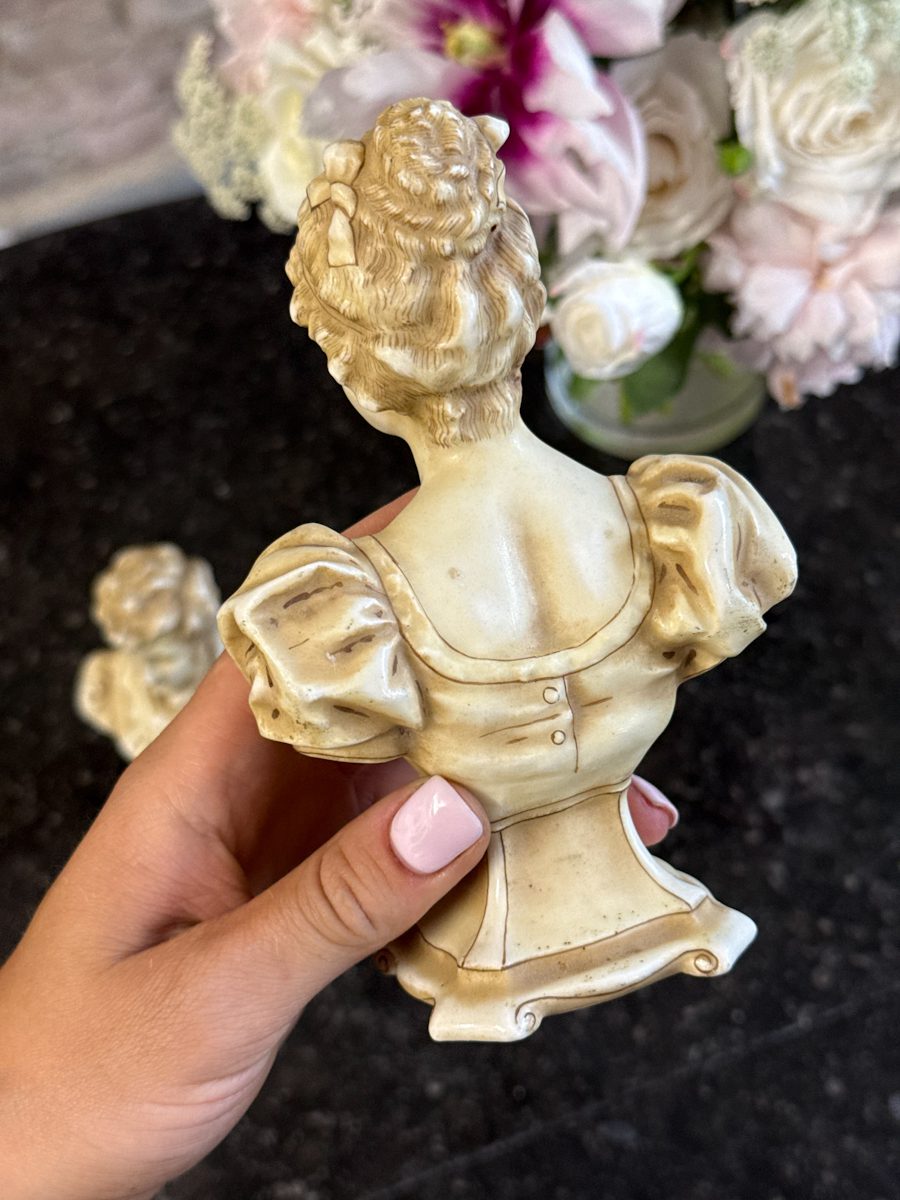
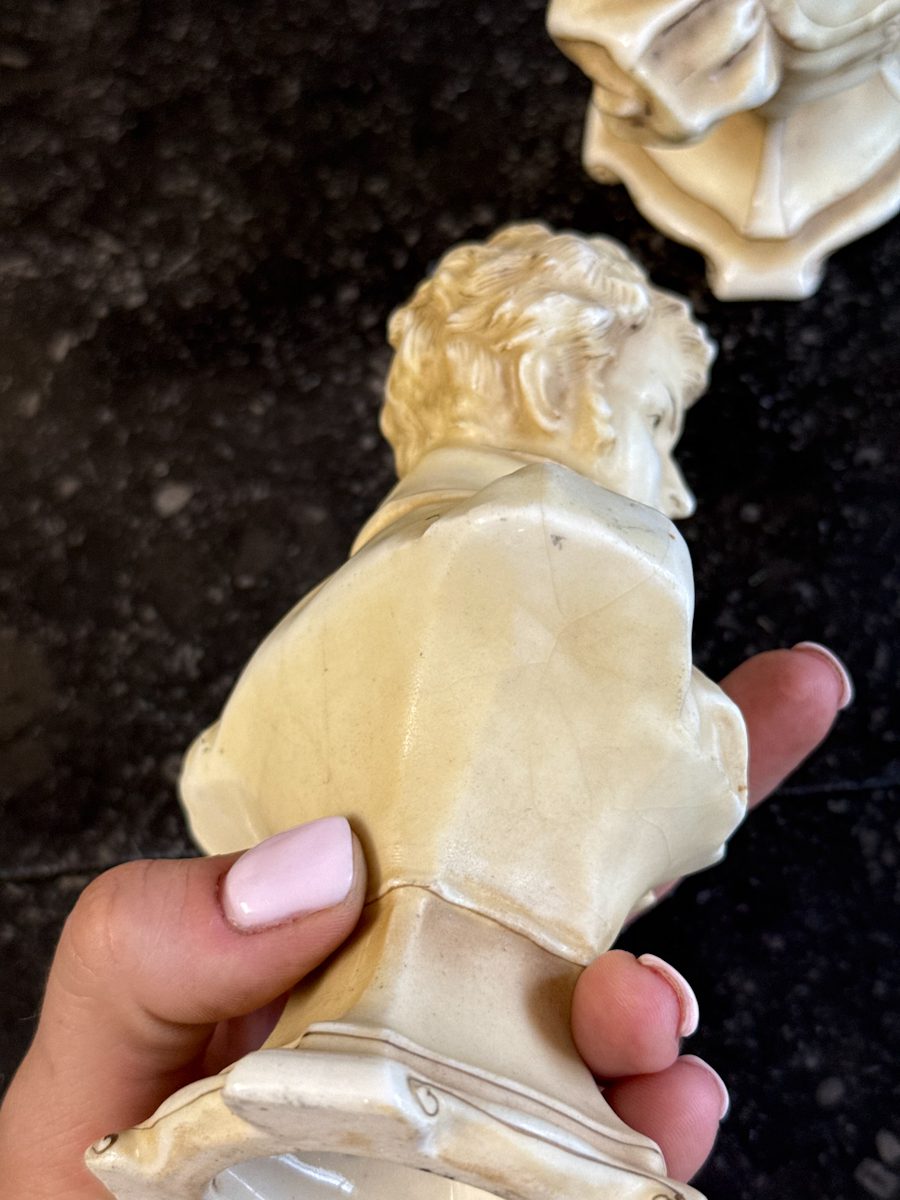
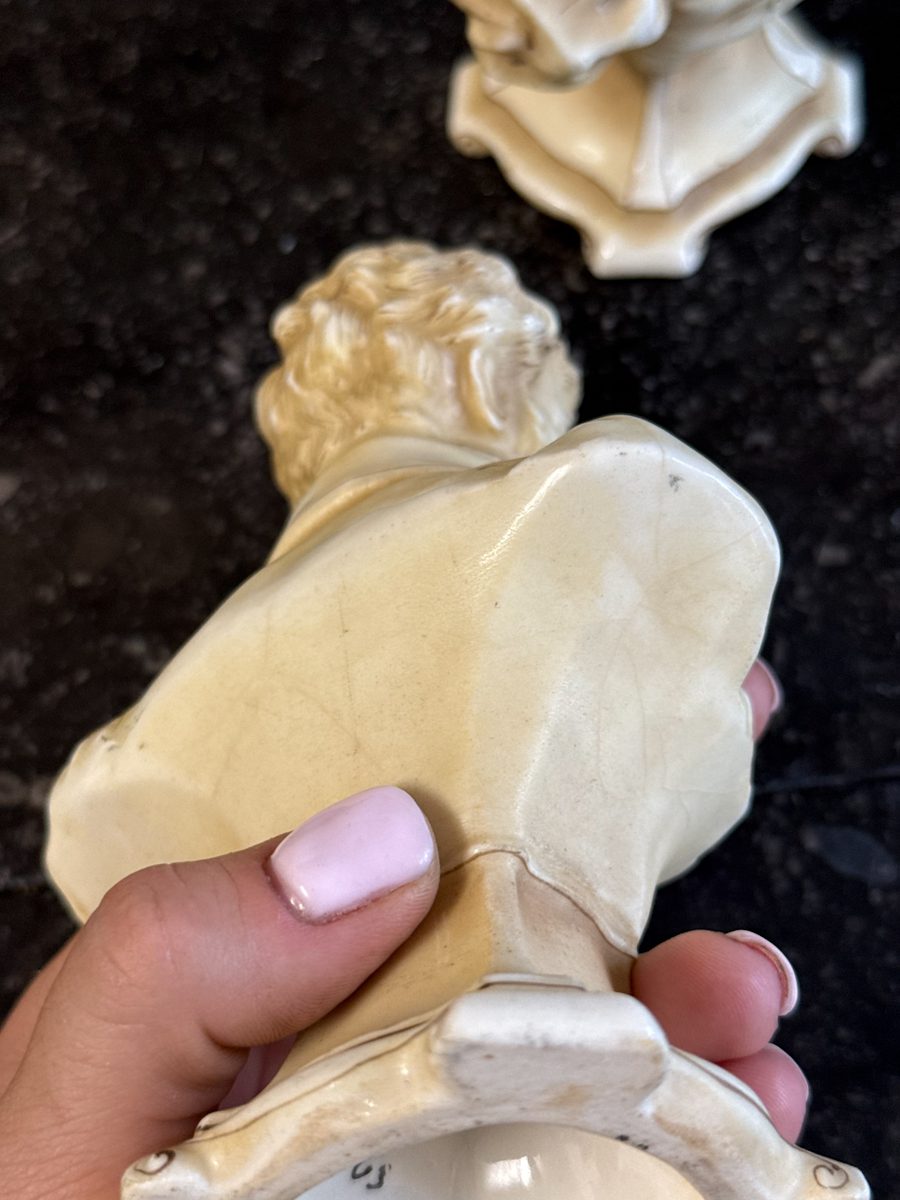
He put down the cup and lightly touched the lady’s miniature hair braid and the puffed sleeves of her dress with his fingertips, feeling the delicate coolness of the glaze and the almost imperceptible network of crazing caused by age. These small works of art vividly reminded him of the peace and innocence of the Biedermeier era at the turn of the century — an era when society sought simple family beauty and aesthetic coziness, which now, decades later, was nostalgically cast in porcelain.
Outside the window, the morning bustle of Vienna’s streets could be seen, but here, between these two silent figures, absolute peace and the breath of ancient nobility reigned. The Chancellor smiled to himself, appreciating this impeccable craftsmanship that could instill a romantic soul even in cold clay, transforming small statues into true keepers of memories and taste.
Introduction This charming pair of small porcelain busts is an excellent example of the ceramic and sculptural heritage of the Austro-Hungarian Empire. Although physically created in the second half of the 19th century during the Historicism period (a time when nostalgia for past styles flourished), they are visually and substantively a pure reflection of the Biedermeier and early Romanticism eras, embodying the ideal, romantic couple of this period.
Period of manufacture Second half of the 19th century (Historicism period), Austro-Hungarian Empire.
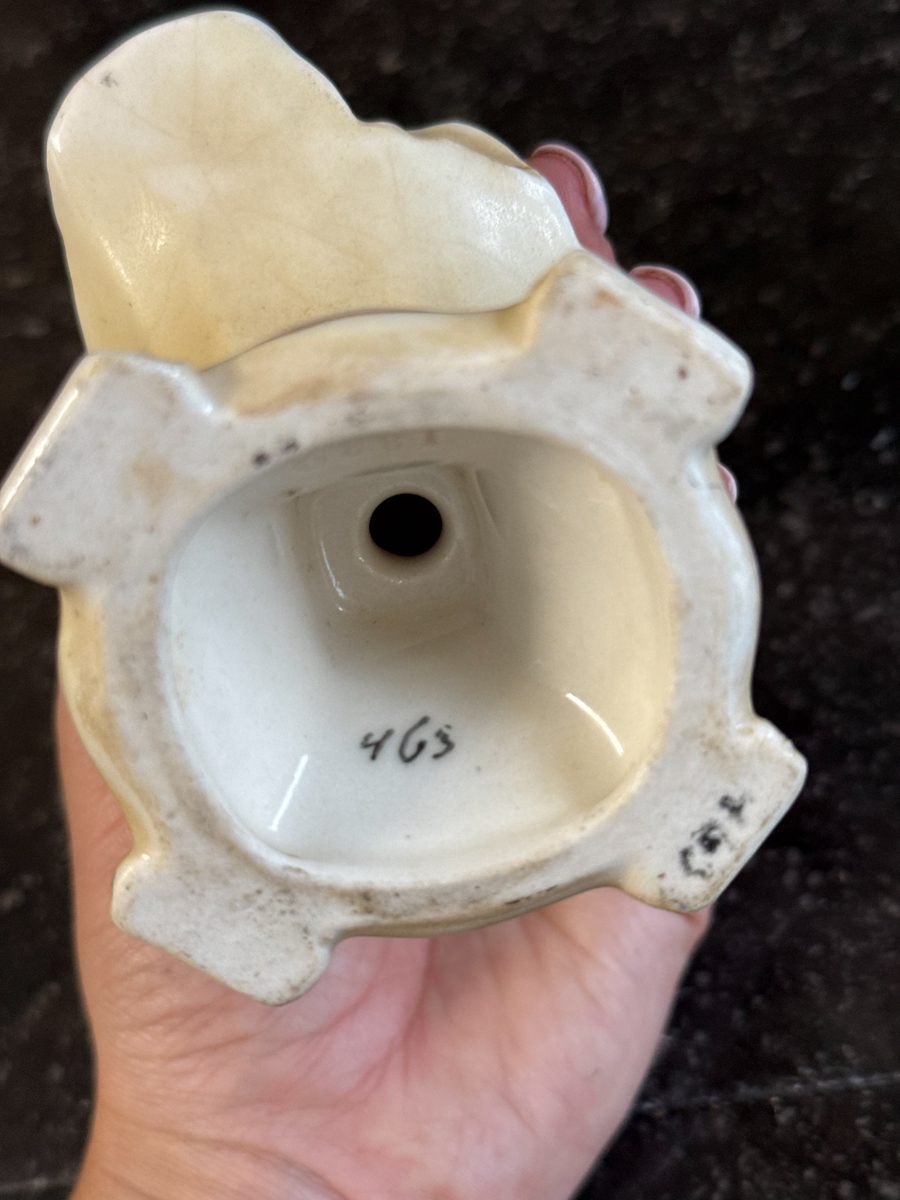
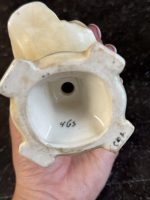
Manufacturer and signature On the inside of the base of one of the busts, a handwritten number “463” is visible, characteristic of the numbering system for models and forms of manufactories of that time, indicating a small series or individual form production.
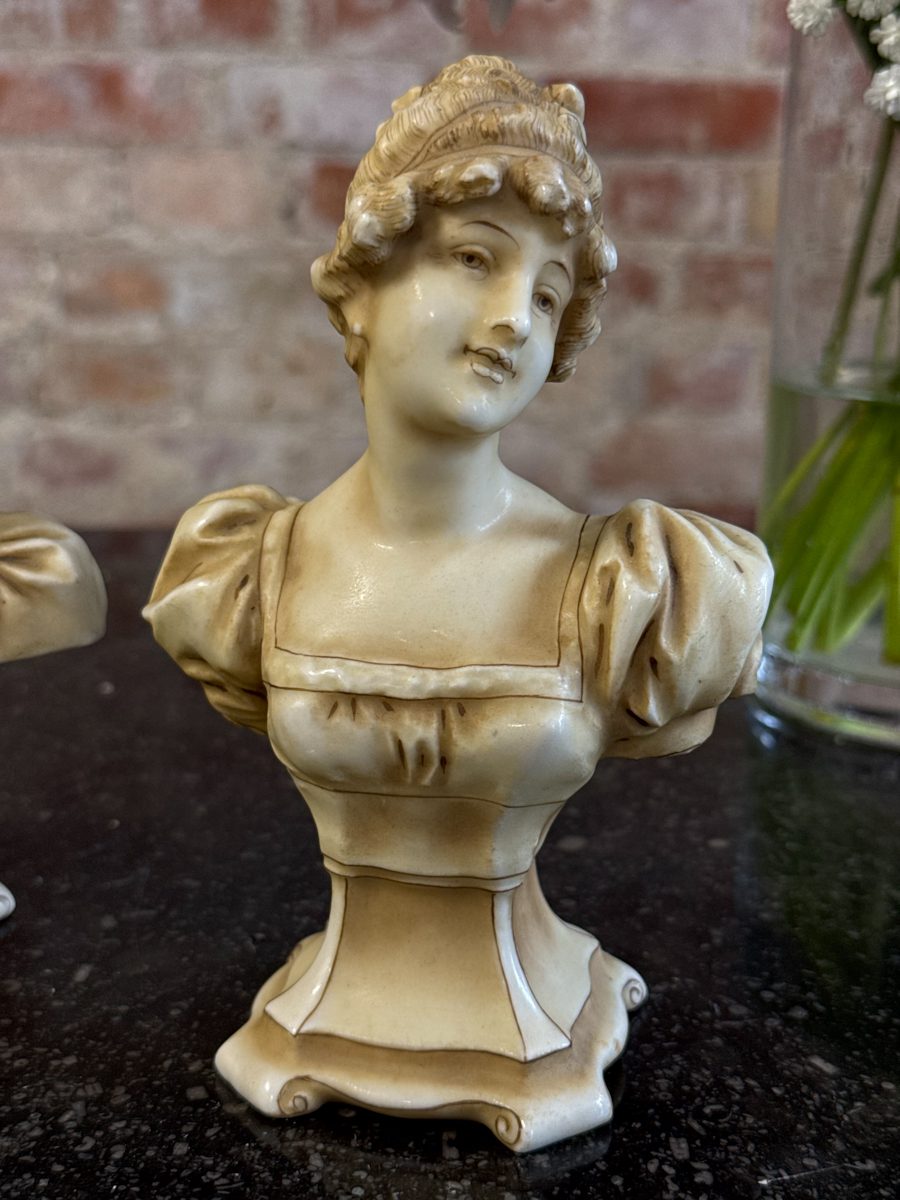
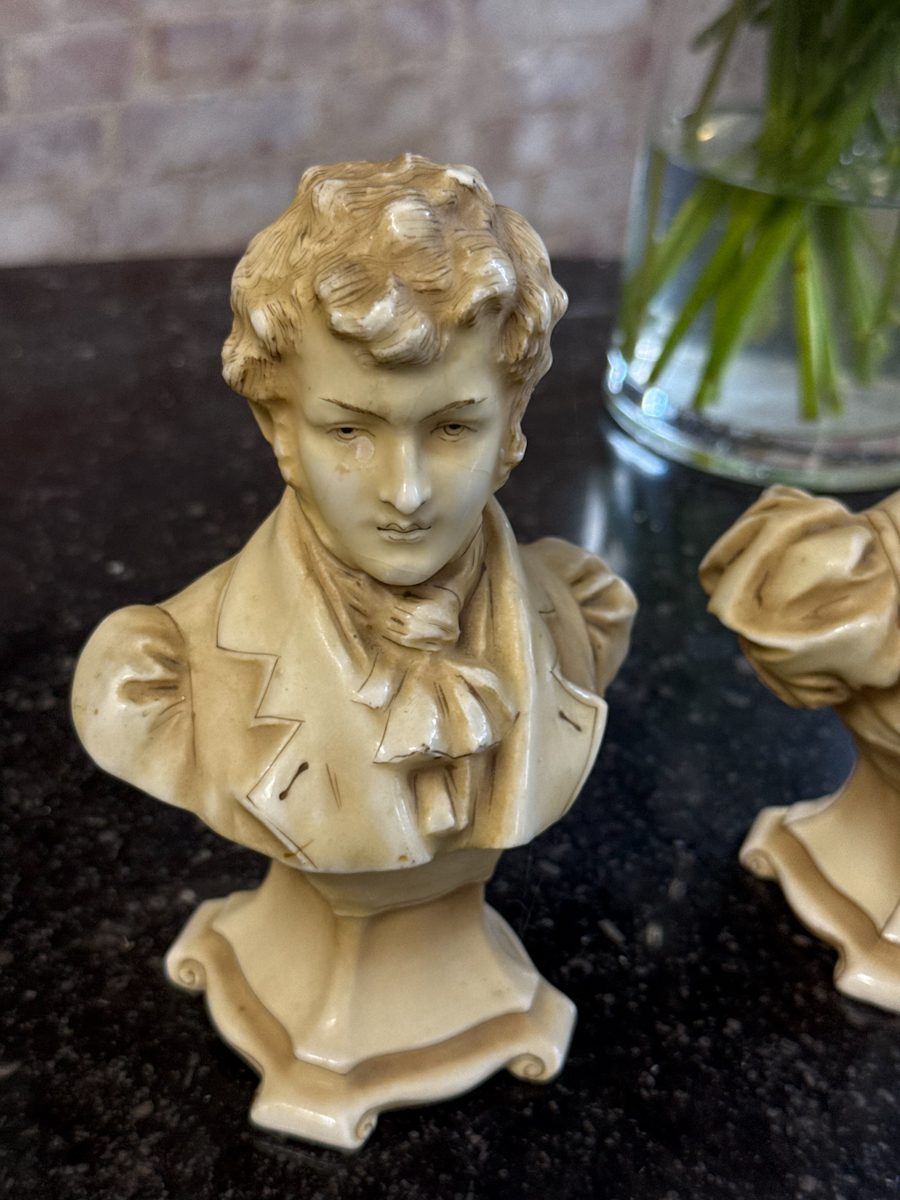
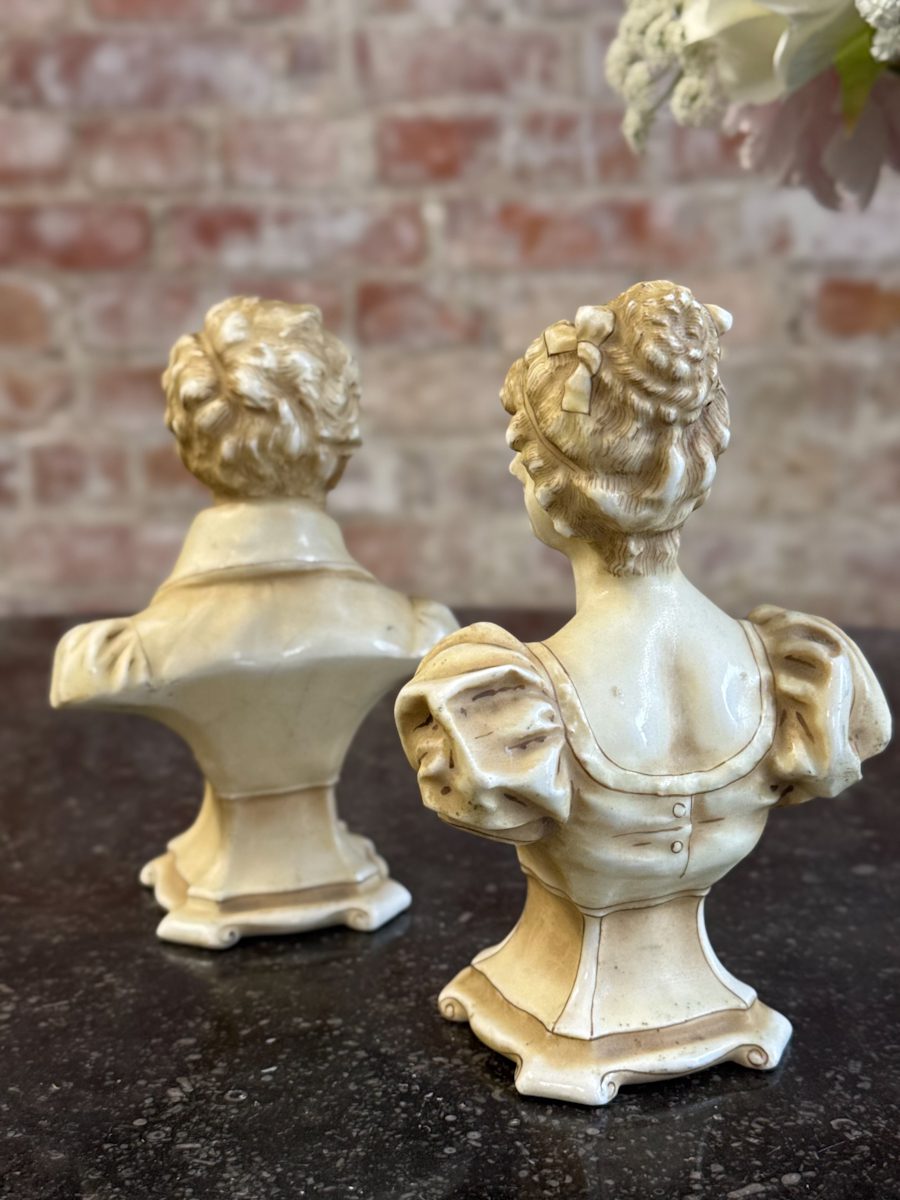
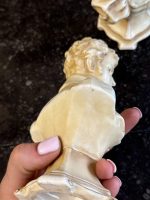
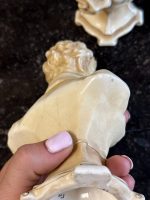
Design and decor The busts are made of high-quality porcelain and feature a soft, ivory tone with a delicate patina effect that highlights the folds of the garments, the curls of the hair, and the facial features. The sculptor has exquisitely captured the fashion of the Biedermeier era: the young man is dressed in an elegant tailcoat with a tie, while the lady stands out with a romantic dress with characteristic puffed sleeves and a finely arranged hairstyle. The bases are designed in a classic, flowing style with small elevations.
Application This pair is ideally suited for placement on a mantelpiece, bookshelf, sideboard, or small console table. They will serve as an elegant, nostalgic, and intellectual accent in any classic or eclectic interior.
Condition Antique condition with characteristic signs of age. Over the years, the porcelain has developed a natural, fine glaze crazing (crazing), which only enhances their true antique charm and visually appealing texture. The condition of the items is fully reflected in the photographs.