Seascape with sailing ships — a decorative marine in the spirit of the Dutch Golden Age, signed “Chardin”, 19th-20th century.This atmospheric painting of sailing ships depicts a squadron of large, multi-masted vessels on the open sea — a majestic warship… 850,00 €
You’re now subscribed to price tracking for this product. We’ll notify you if the price drops. 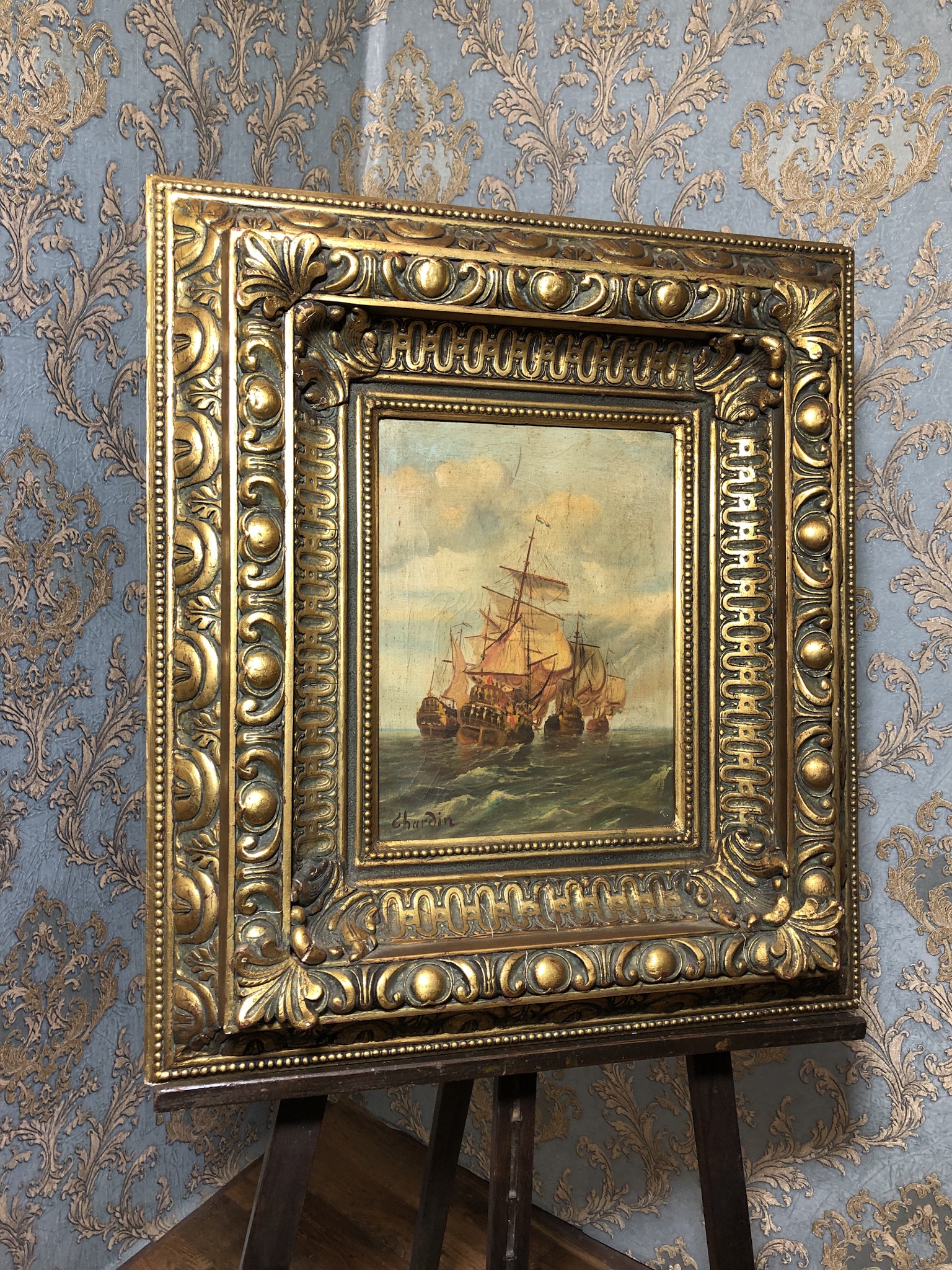
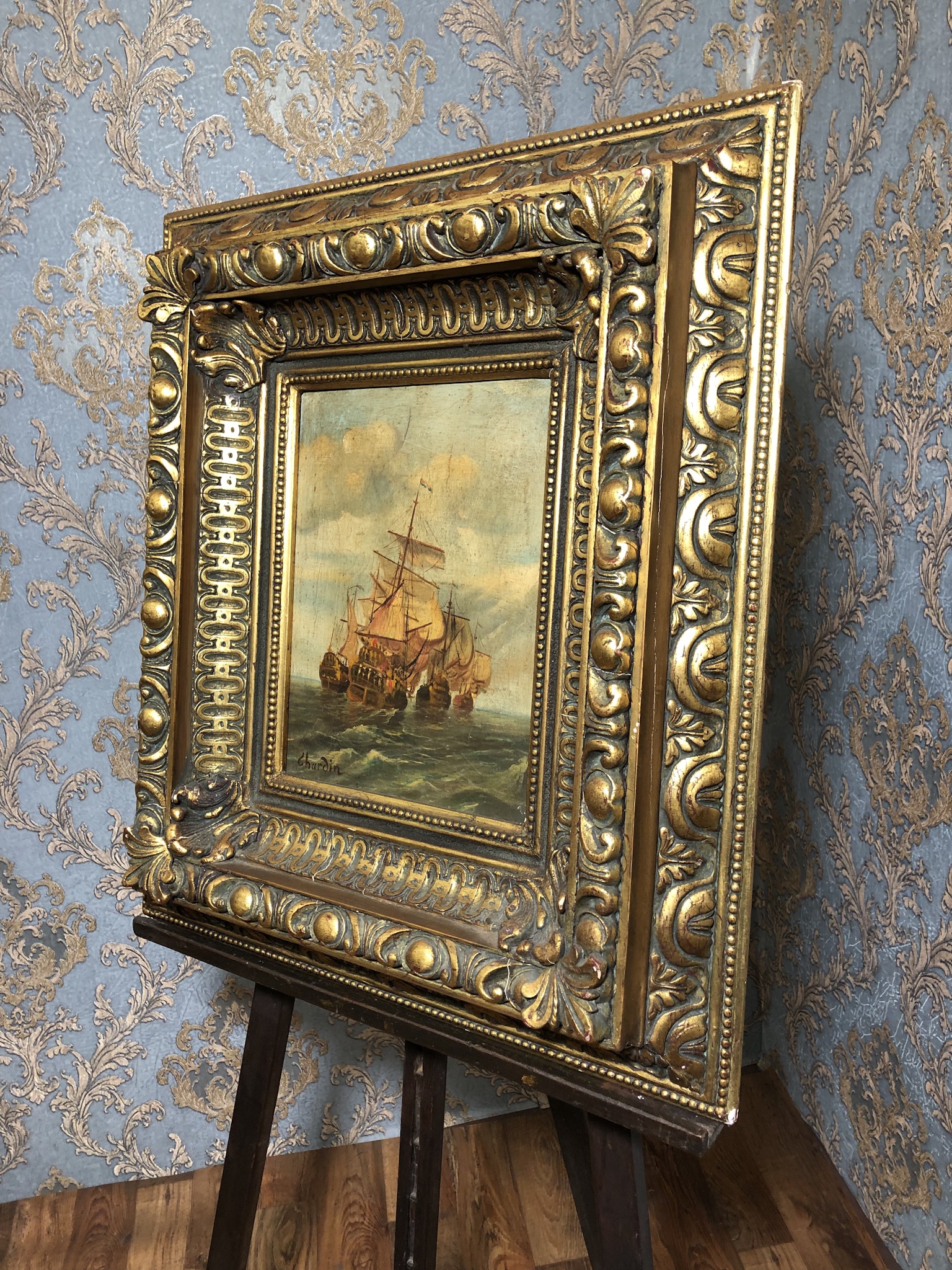
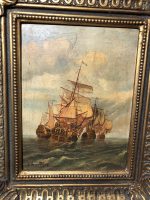

Seascape with Sailing Ships, Signed Chardin, Gilt Frame (109)
Height 74 cm Width 66 cm


Description
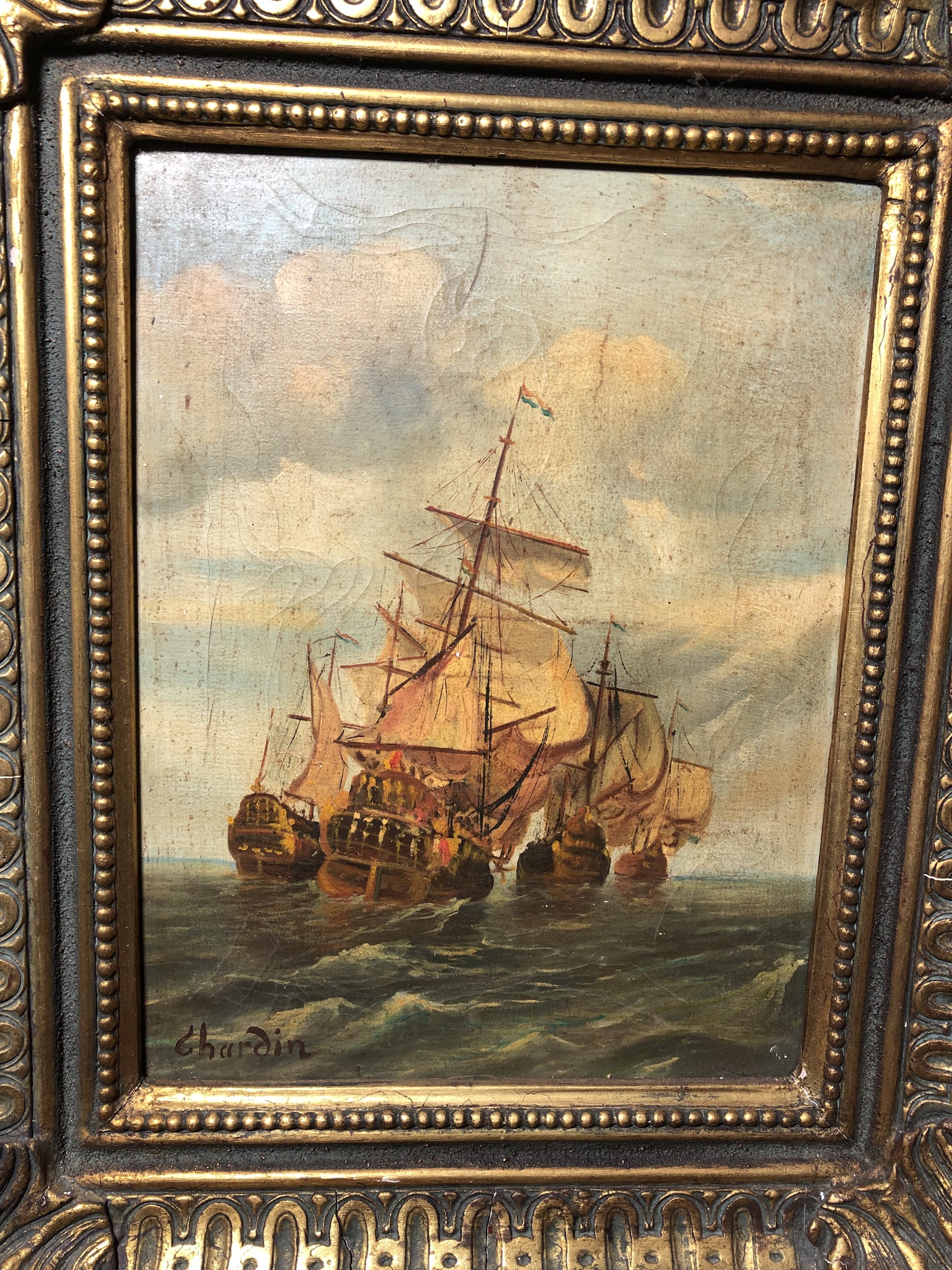
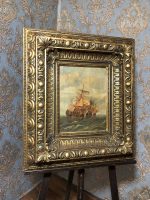
Seascape with sailing ships — a decorative marine in the spirit of the Dutch Golden Age, signed “Chardin”, 19th-20th century.
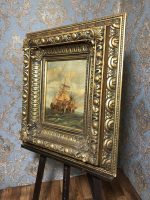
This atmospheric painting of sailing ships depicts a squadron of large, multi-masted vessels on the open sea — a majestic warship with full sails and signal flags in the foreground, surrounded by several smaller ships on a choppy sea under a vast, cloudy sky. The work continues the tradition of Dutch Golden Age marine painting of the 17th century, where the sea, ships, and light tell a story of commercial power and human courage in the face of the elements.
Height 74 cm, width 66 cm (with frame).
Period of creation, art style, era
The painting is a decorative seascape (marine), painted in the tradition of Dutch Golden Age masters — particularly Willem van de Velde — with warm, golden light on the sails and a vividly rendered depiction of wave movement. Oil on canvas. Based on its execution and style, it can be dated to the 19th century or the first half of the 20th century as a high-quality decorative work of historical genre.
Snapshot of a maritime era: Joseph Conrad paused by a window in a London dockside house, looking down at the grey waters of the Thames, where masts and rigging emerged from the mist. Behind him, in the dim light of the room, a golden patch of light faintly gleamed — the lines of taut canvas and the crests of waves, frozen in eternal motion. His fingers brushed for a moment against the cool, smooth edge of the frame, and somewhere deep within, a memory of his years at sea resurfaced, of the salty wind and the deck swaying beneath his feet. In this still scene resided all that he would later try to capture in words — the simultaneous beauty and cruelty of the sea, and humanity’s insignificance before it.
Artist and signature
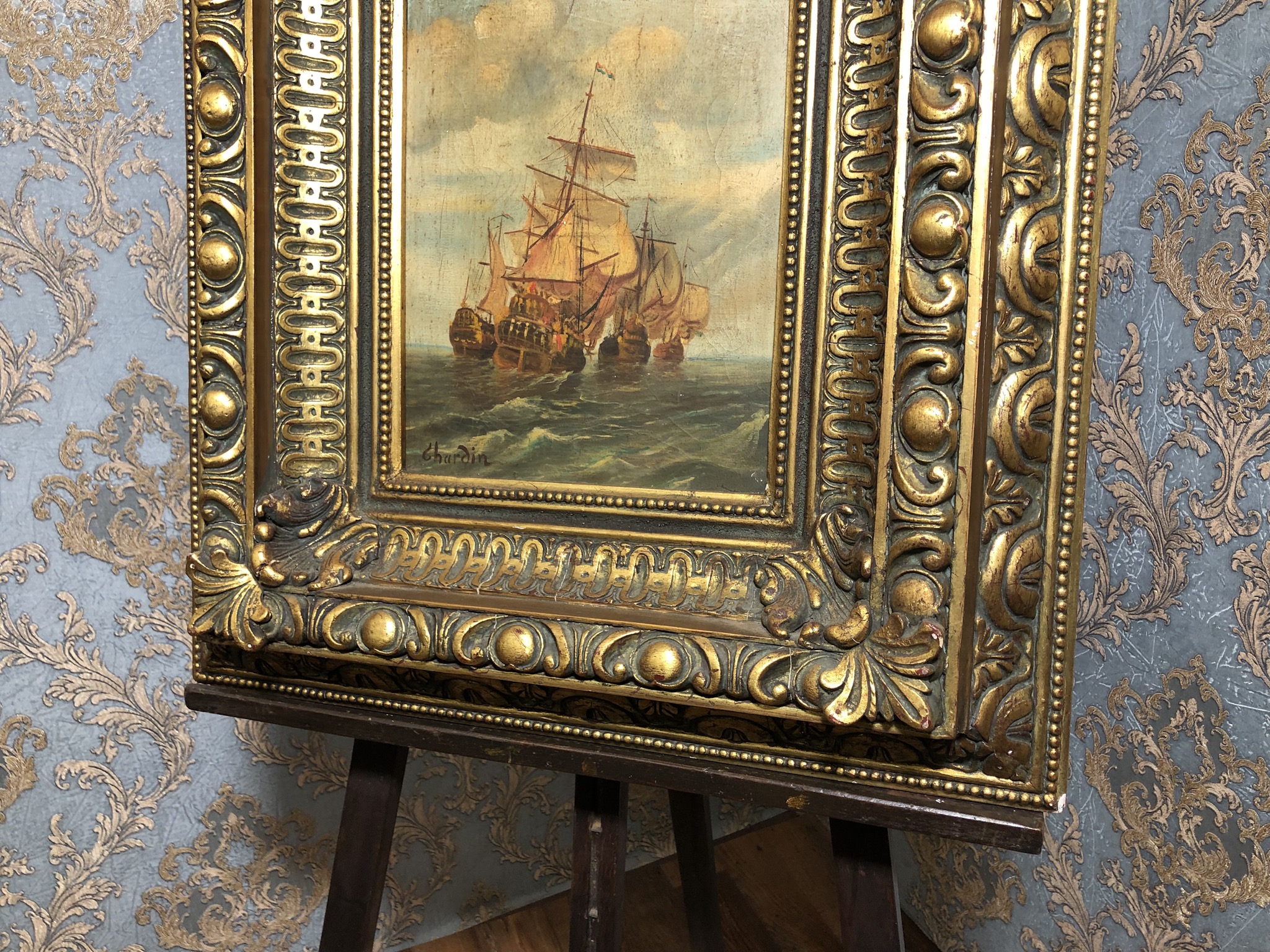
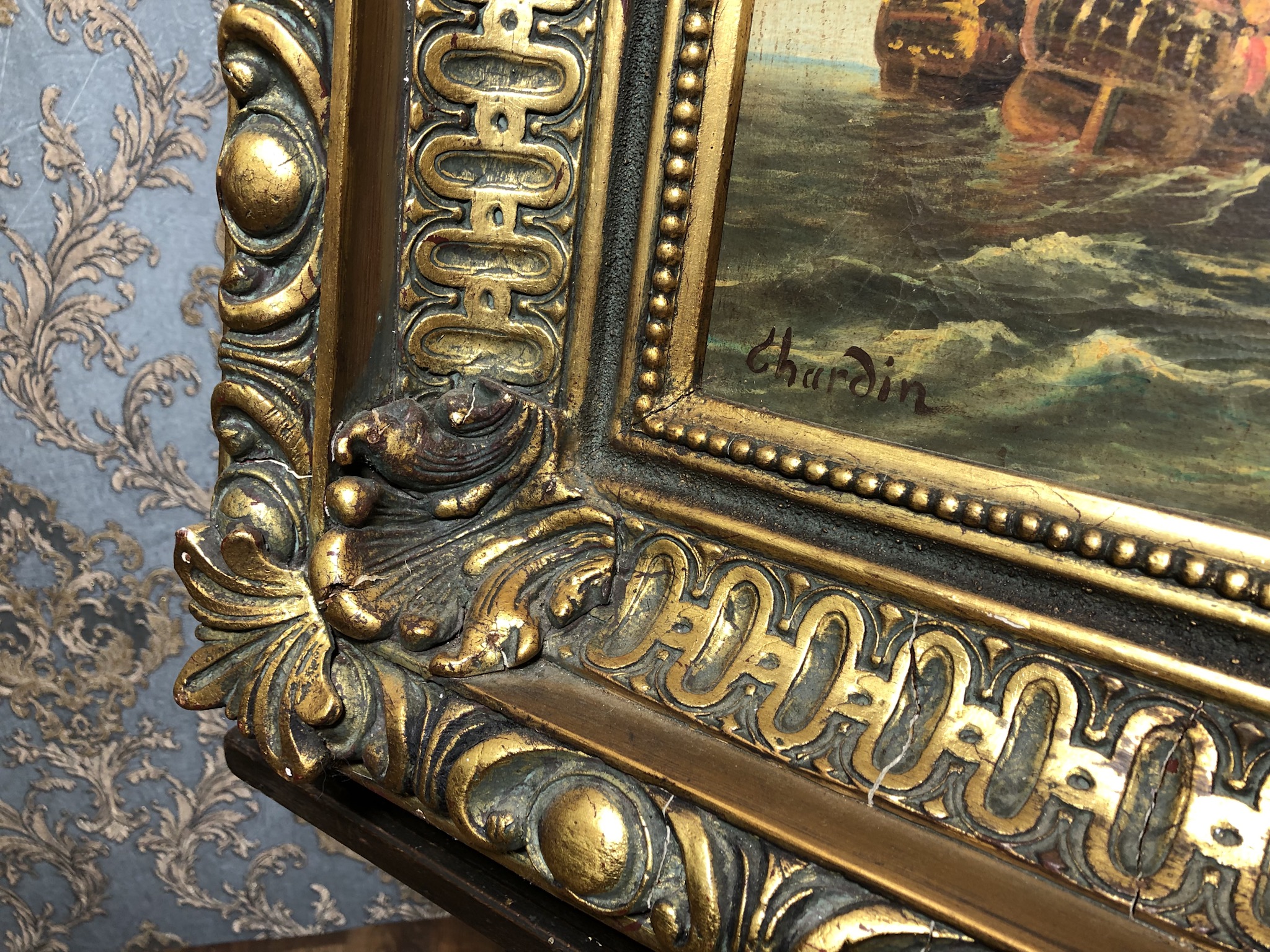
The painting is signed in the lower left corner as “Chardin” (see photo). Important: this signature is not related to the famous 18th-century master Jean-Baptiste-Siméon Chardin (1699–1779) — he was a painter of still lifes and genre scenes who never painted seascapes, and his works are housed in the world’s major museums. The signature seen here belongs to a later, unrelated artist or is decorative; the artist cannot be definitively identified. The work is offered as a high-quality decorative marine, not as an 18th-century museum-quality painting. Authentication is not included; we recommend collectors research the signature in specialized databases (Bénézit, askArt).
Rarity and significance
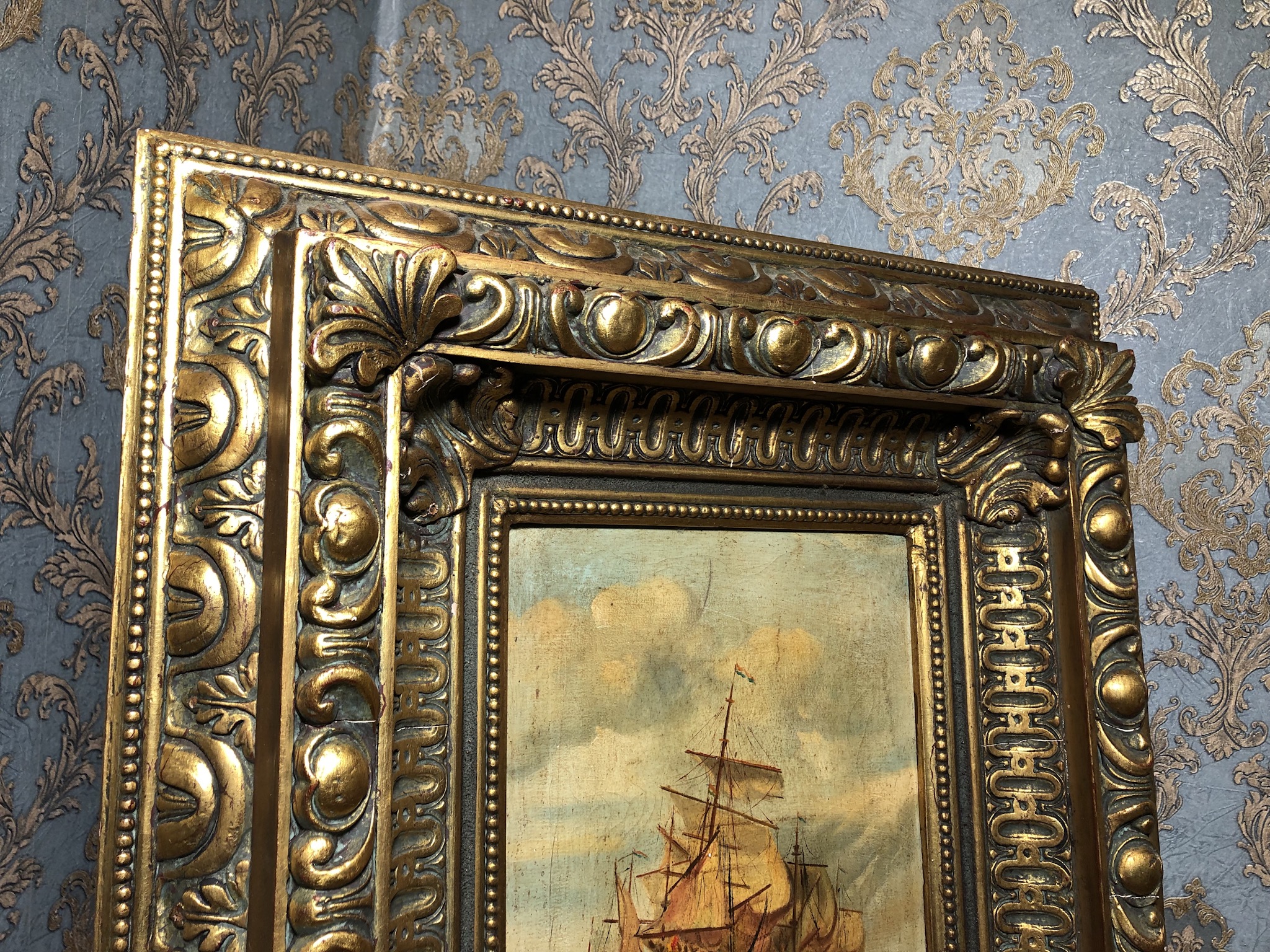
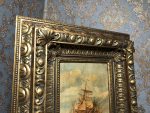
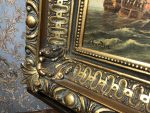
Historical seascapes with sailing ships are a popular and collectible genre — they appeal to both marine art enthusiasts and lovers of maritime history. The luxurious, massive gilded frame lends a representative, almost museum-like character to this format and significantly enhances the work’s visual value.
Use in interiors, design, and photography
The painting makes an expressive accent in a study, library, living room, or an interior dedicated to maritime themes. The dark, warm golden tones and the richly crafted Baroque-style frame harmonize perfectly with classic, colonial, or haute bourgeoisie decor. Due to its compact size, it easily fits into smaller spaces as a main wall accent.
Gift and personalization
An excellent gift for a sea and shipping enthusiast, a captain, a collector, or anyone captivated by the romance of the great sailing ship era.
Condition
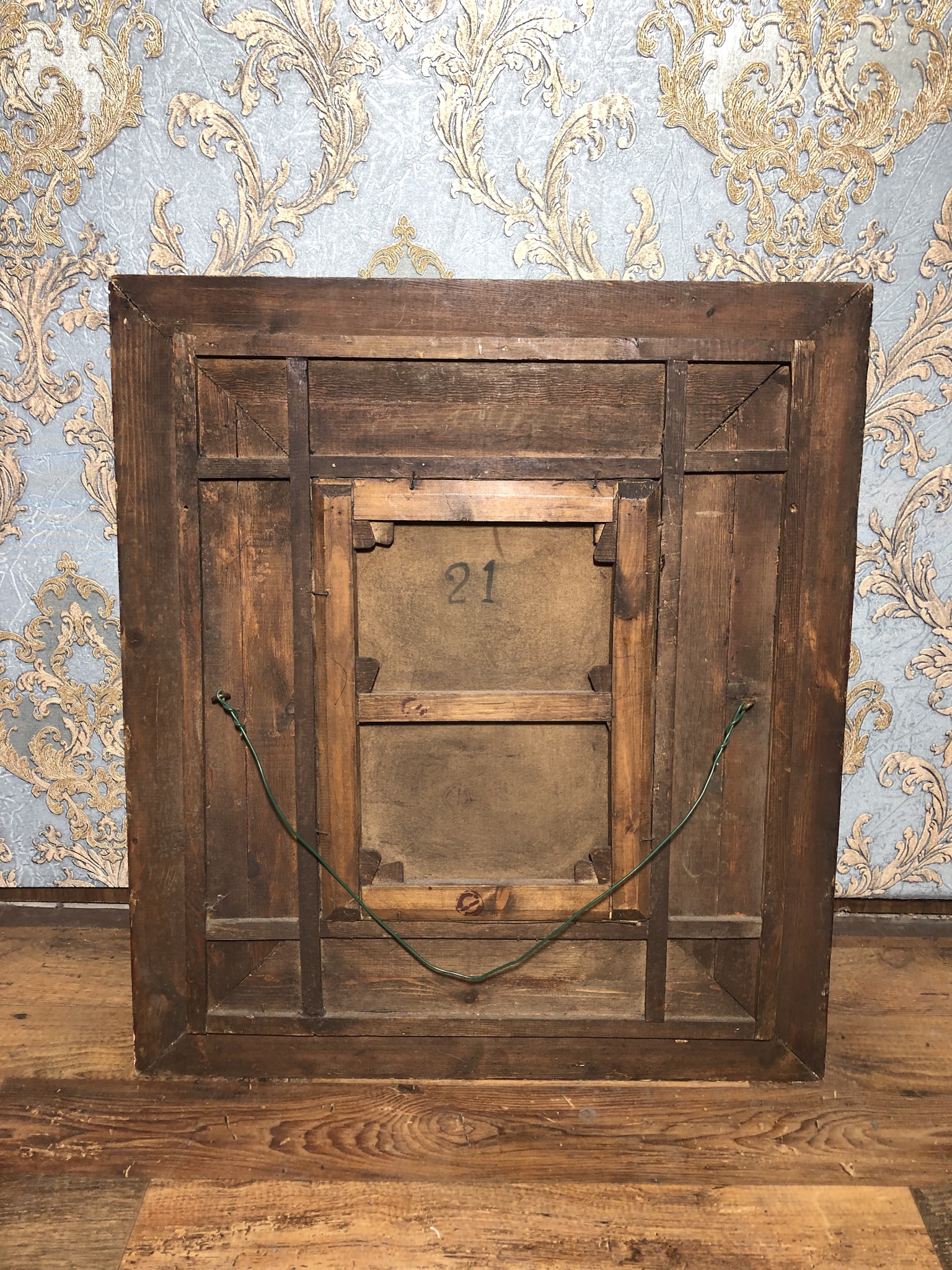
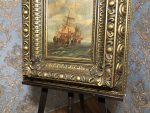
The painting is in good overall condition, with a vibrant, warm patina and characteristic age-related craquelure on the canvas surface. Luxurious, massive gilded wooden and plaster Baroque-style frame with acanthus leaves, pearl strings, and volute ornamentation; normal age-related wear and some minor defects are visible on the frame. The back of the canvas shows the inventory number “21” and a mounting wire (see photo). The condition of the item is fully reflected in the photographs.
Regarding the signature and possible origin (addendum)
The style and execution of the painting suggest it is likely a work from the second half of the 19th century — a period when historical romanticism and realism flourished in France and Belgium, and several smaller regional marine painters and academy students were active. The handwriting of the signature with the small initial “c” corresponds to the manner of the late 19th century. It is possible that it is the work of a lesser-known or Belgian marine painter inspired by the classical school; the tradition of hommage, or paying tribute, by signing with a reference to an outstanding past master was also common in academic circles of that time. The large number “21” visible on the back of the canvas corresponds to a lot or catalog number from old auction houses (e.g., Hôtel Drouot type or regional Belgian/auctions), indicating that the painting once passed through a serious art market and was registered in collections.
Related Products