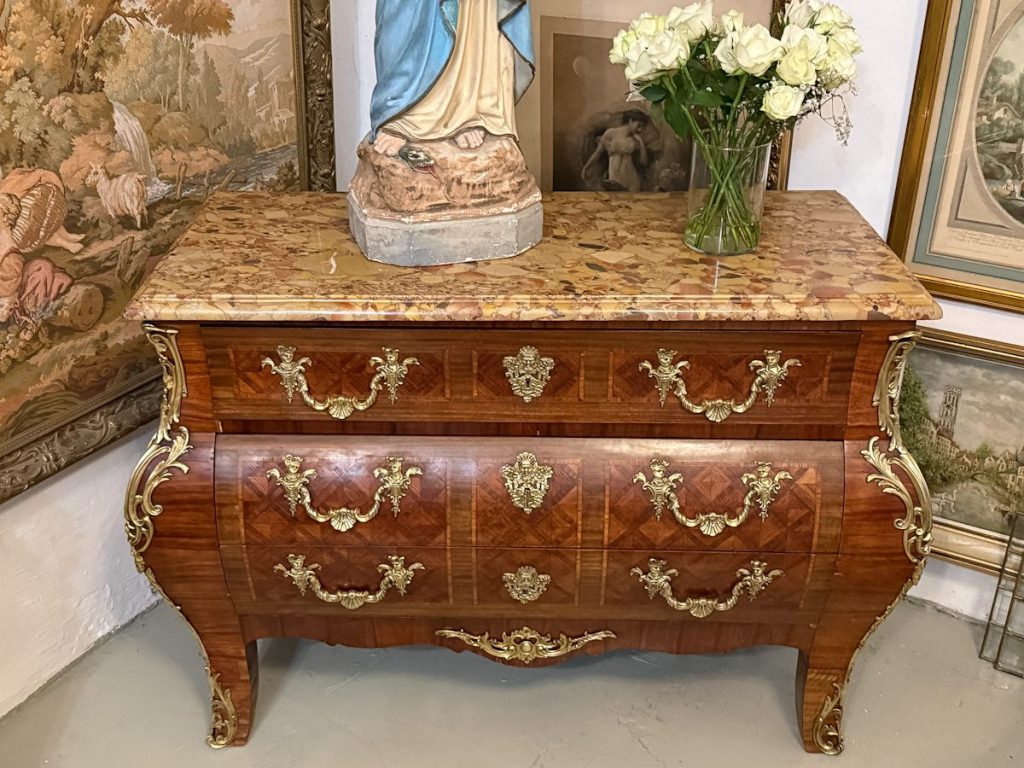
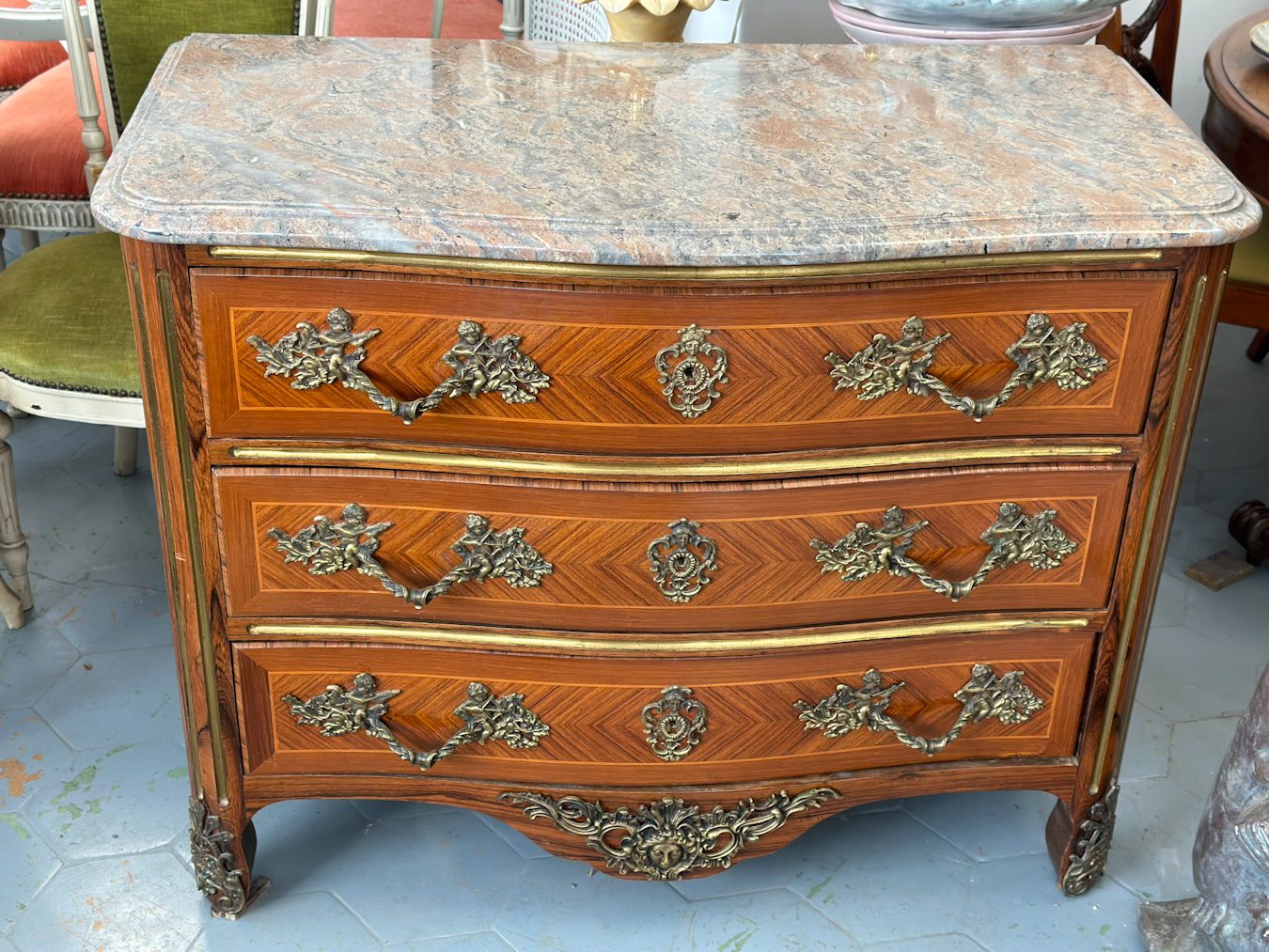
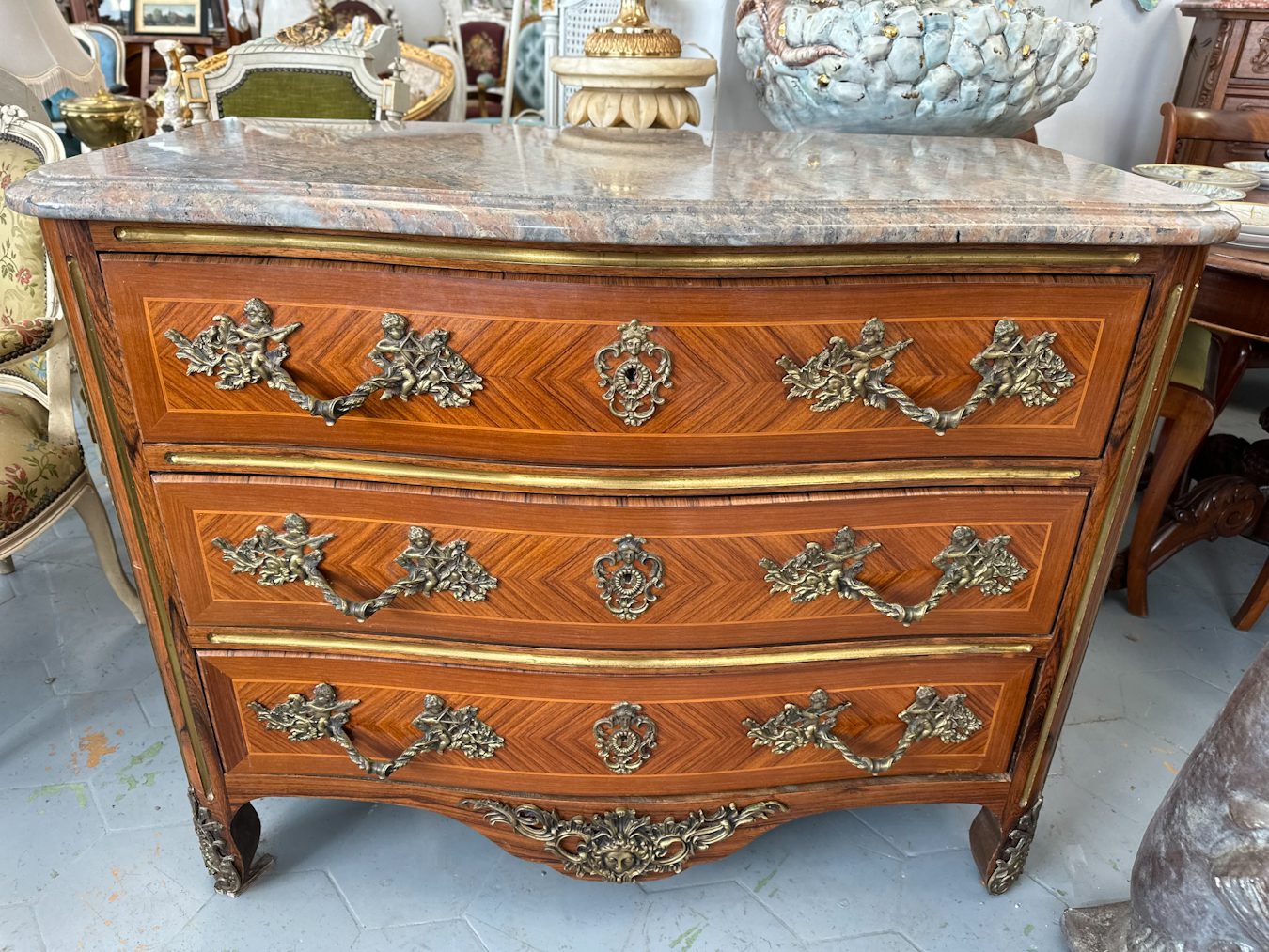
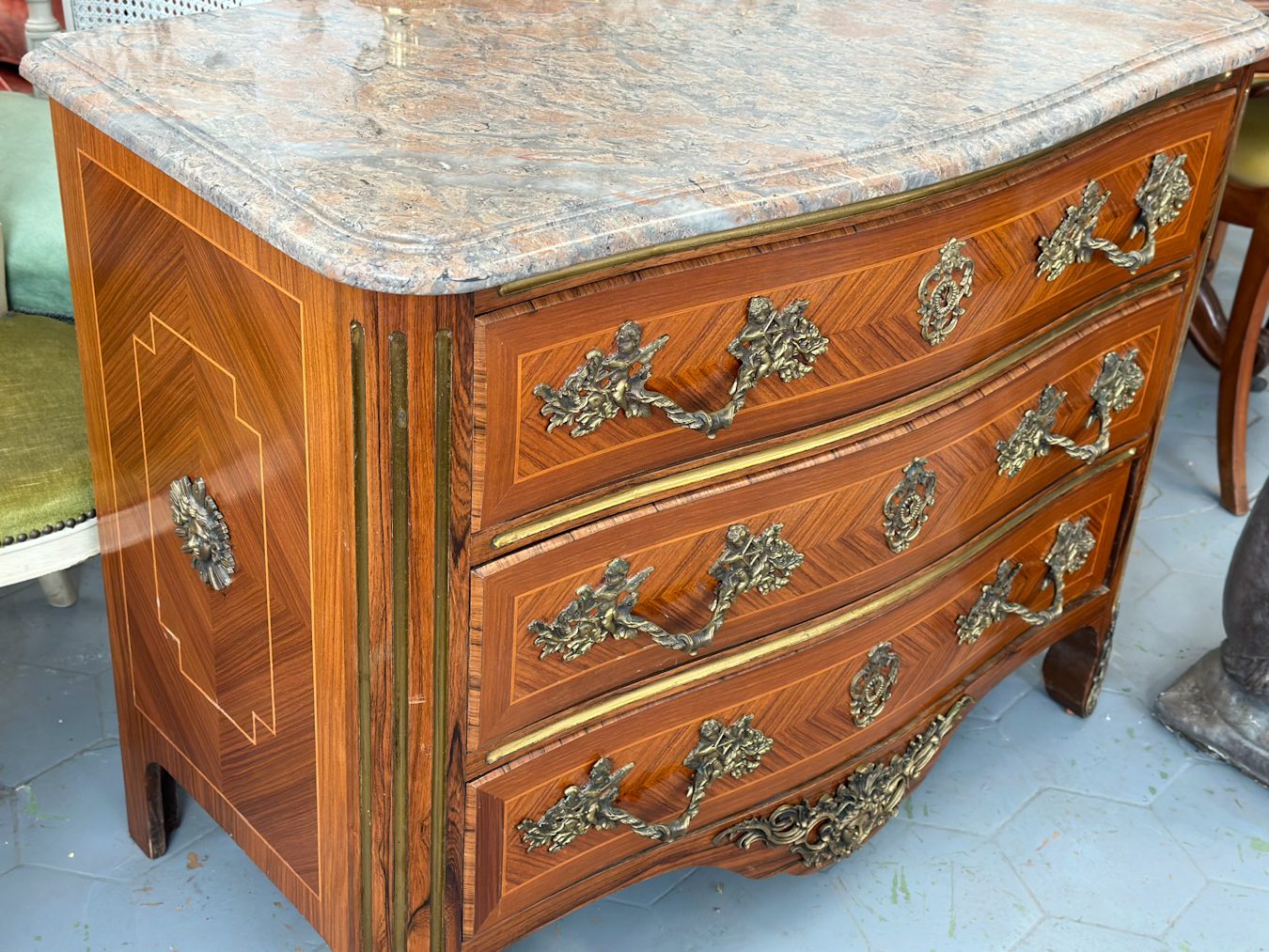
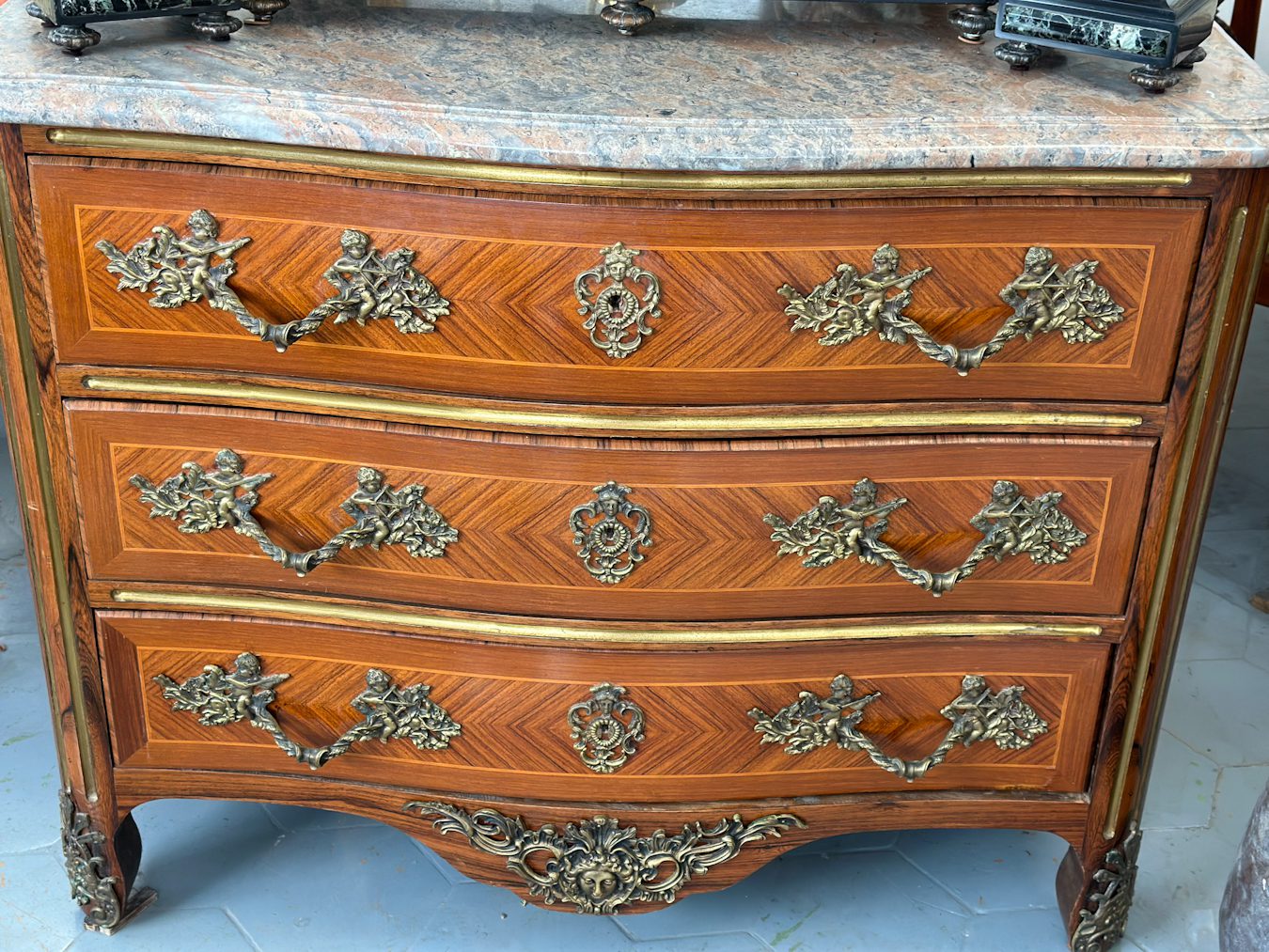
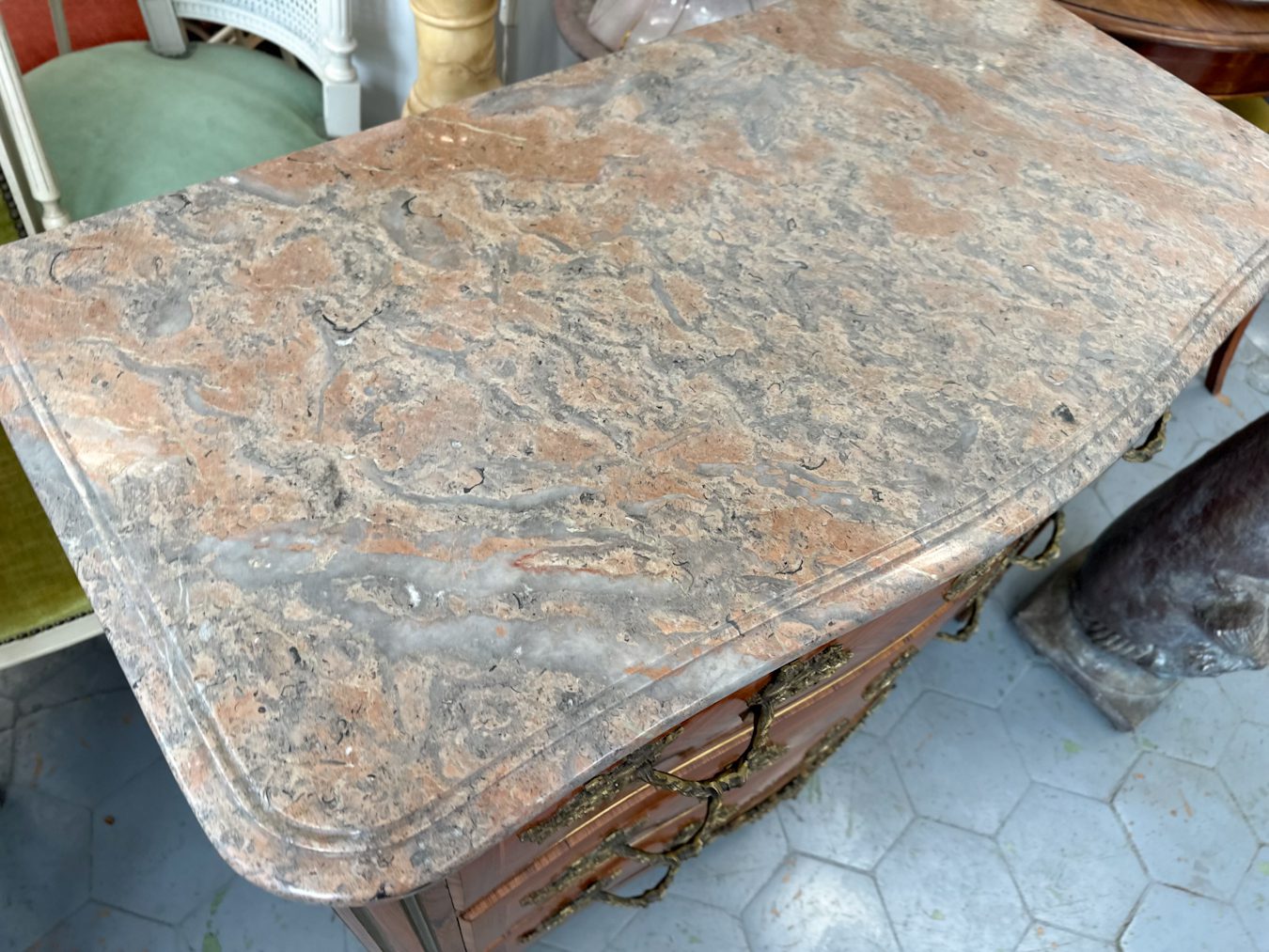
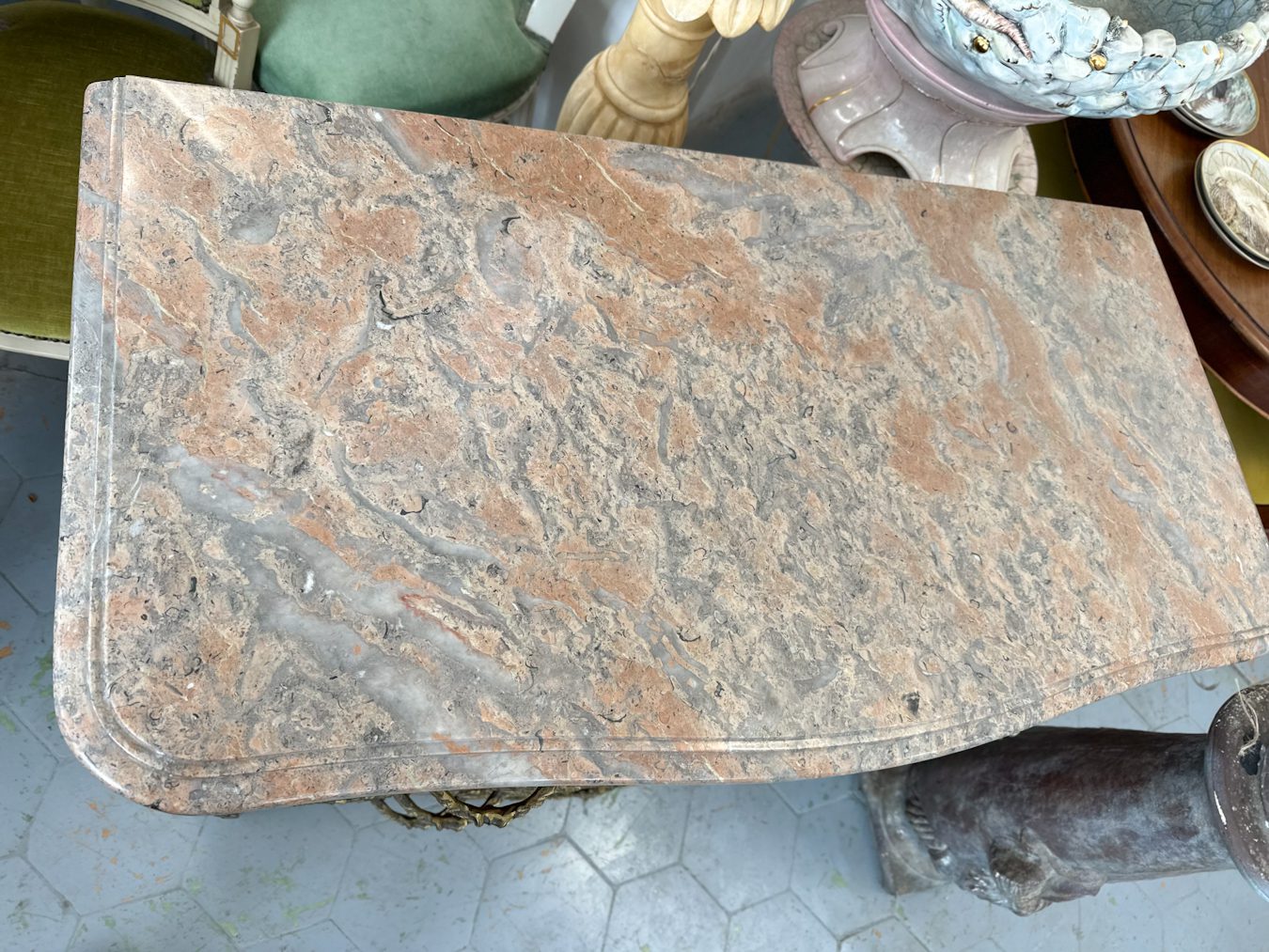
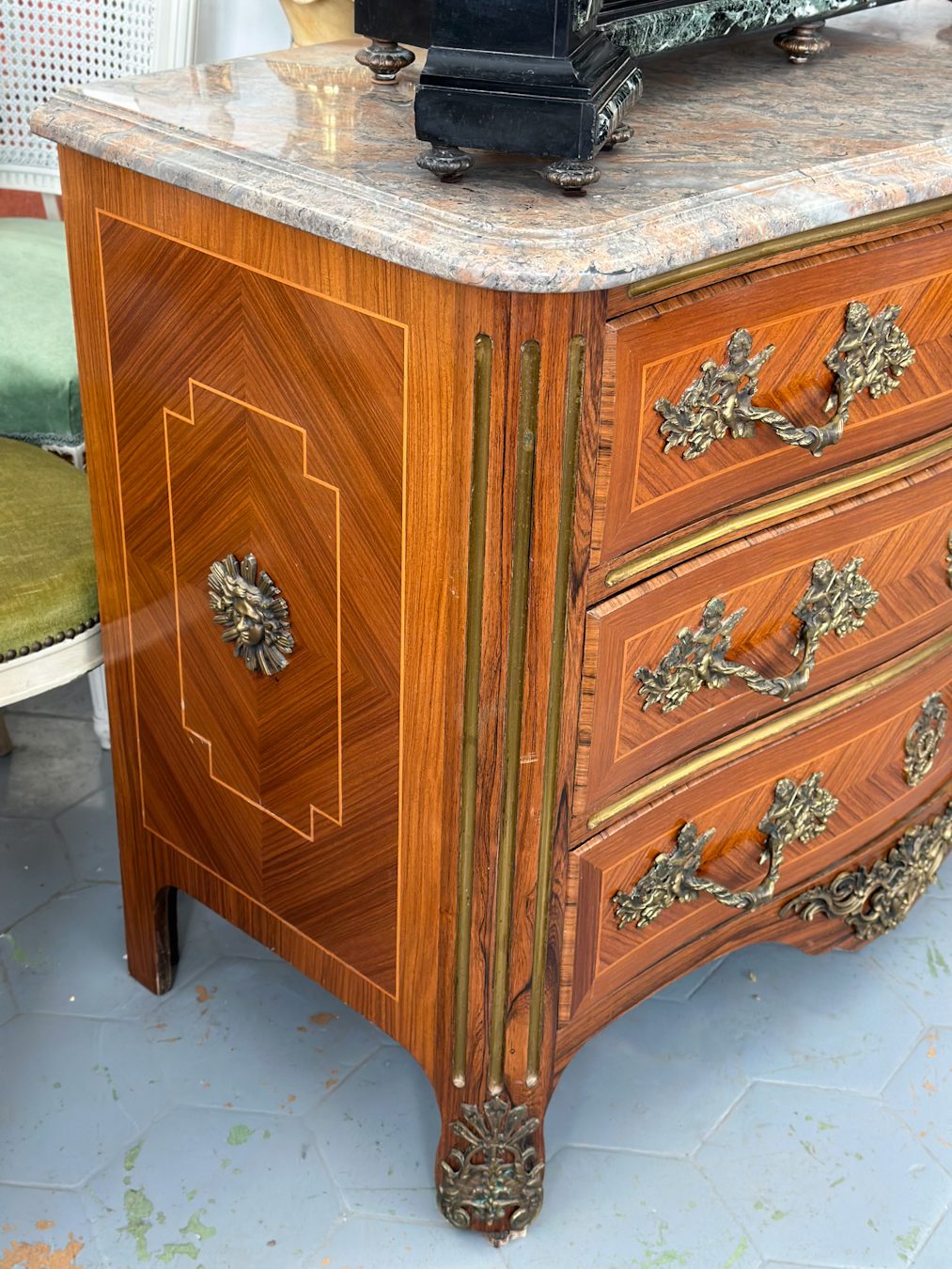
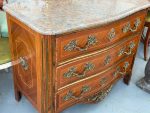
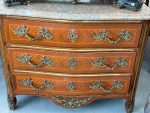
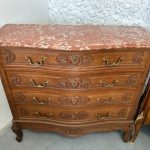
Kingwood commode with musical cherubs, sun medallion, and Breccia marble top — Louis XV/XVI transitional style, Belle Époque, France, c. 1870–1900. This exquisite piece showcases fine marquetry and ormolu bronze mounts, embodying the opulence of the era. 1 900,00 €
You’re now subscribed to price tracking for this product. We’ll notify you if the price drops. 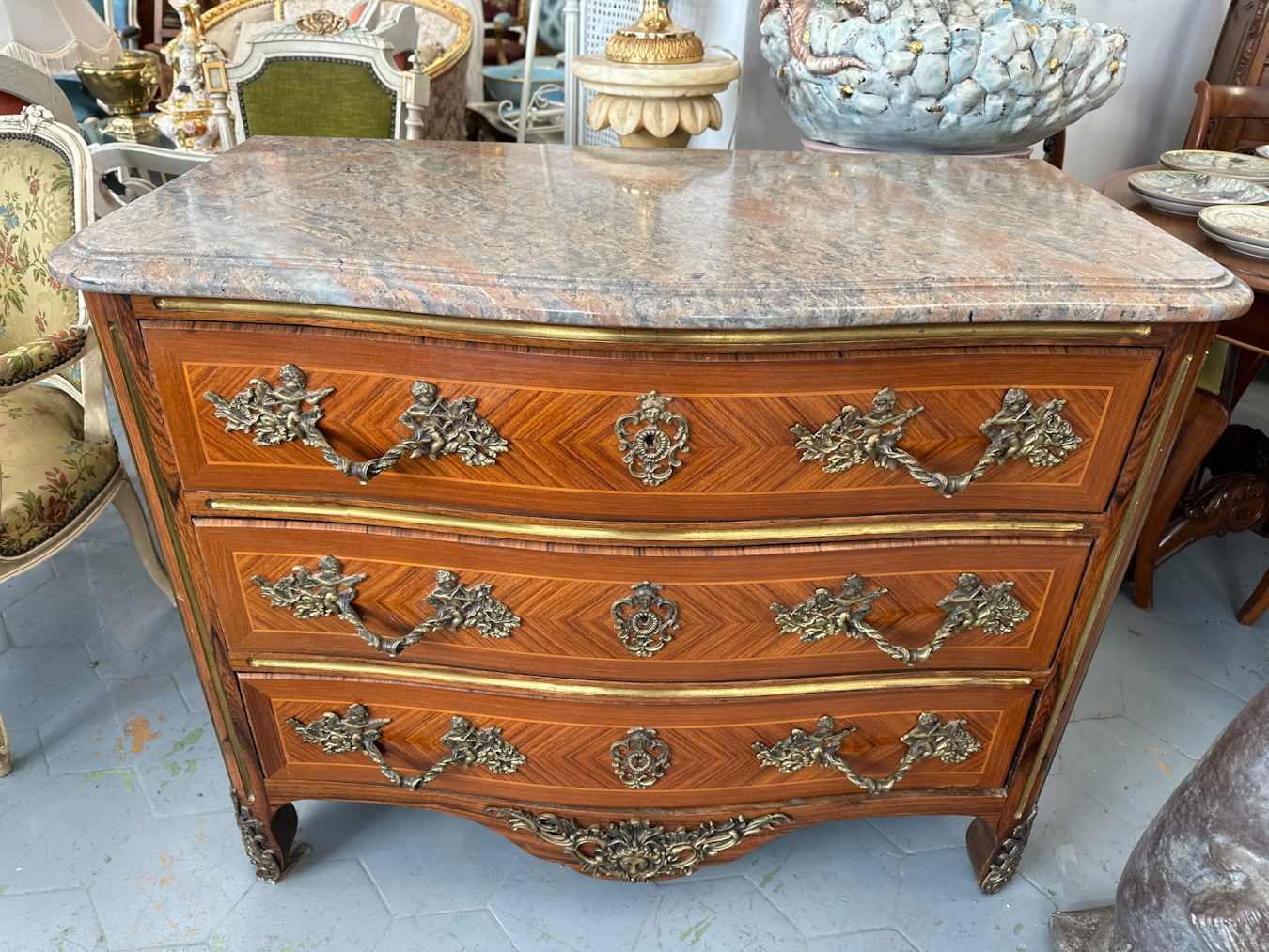
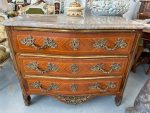
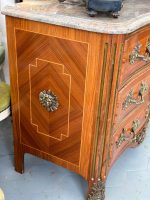
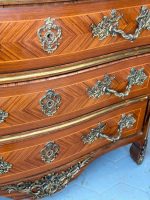
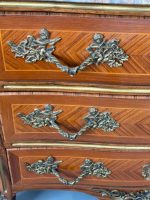
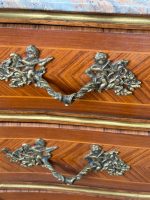
Rožkoka Kumode ar Eņģeļiem, Saules Medaljonu un Breccia Marmoru — Luijs XV/XVI, Francija, 19.gs. (4816)
Height 87 cm Length 110 cm Width 110 cm Color BronzeNaturalViolets
Description
DESCRIPTION IN
📐 DIMENSIONS Height 87 cm × width 110 cm × depth 52 cm. Very heavy.
―――――――――――――――――――――
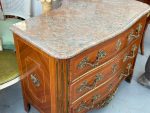
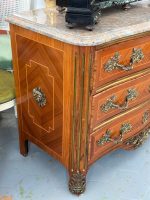
Kingwood Bombe Commode with Musical Cherubs, Sun Mascaron and Breccia Marble Top — Louis XV / Louis XVI Transition Style, Belle Époque, France, circa 1870–1900.
―――――――――――――――――――――
🏛️ PERIOD, ARTISTIC STYLE, ERA
This commode belongs to the most distinguished furniture genre of the Belle Époque — the commode en bombe with ormolu bronze mounts and marble top. The lasted from 1871 to 1914, and it was during this period that France produced the most consistently high-quality commodes, reproducing and interpreting the Louis XV and Louis XVI tradition with new technical means and artistic ambition.
This piece belongs to that extraordinarily fertile transitional moment when the Louis XV bombe form — curved front, scrolling legs, asymmetrical tablier apron — still held its proportions, while Louis XVI discipline was already bringing a symmetrical bronze programme and marqueterie à chevrons veneer. Both aesthetics coexist here with rare harmony.
Kingwood — bois de violette — was the favourite veneer of 18th-century Versailles cabinetmakers. Its intensely red-bronze tones with violet undertones make it the most visually striking European wood, supplied to France from Brazil. cabinetmakers used it as a deliberate historical reference — kingwood commodes were an unmistakable signal of the continuation of the court tradition.
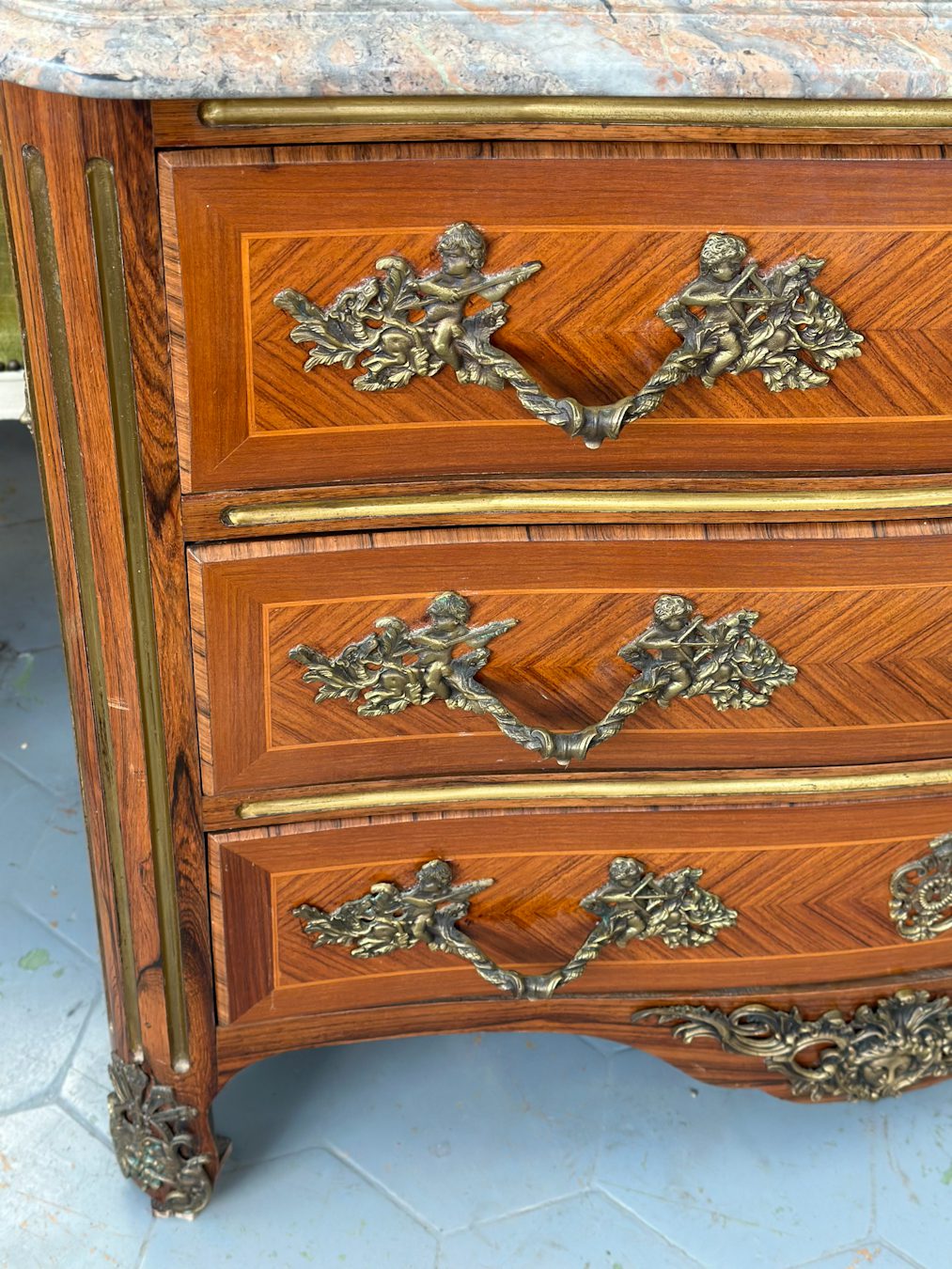
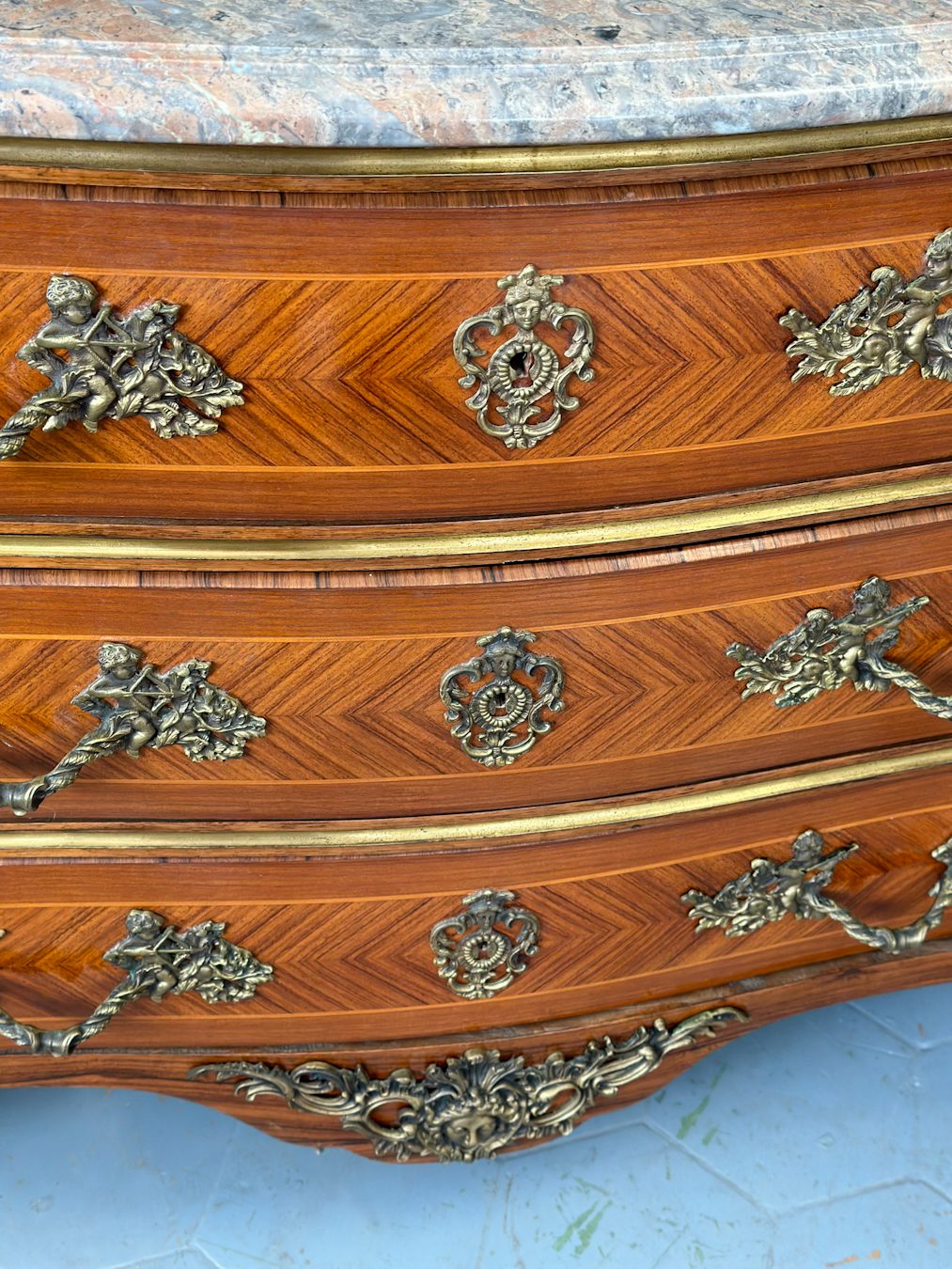
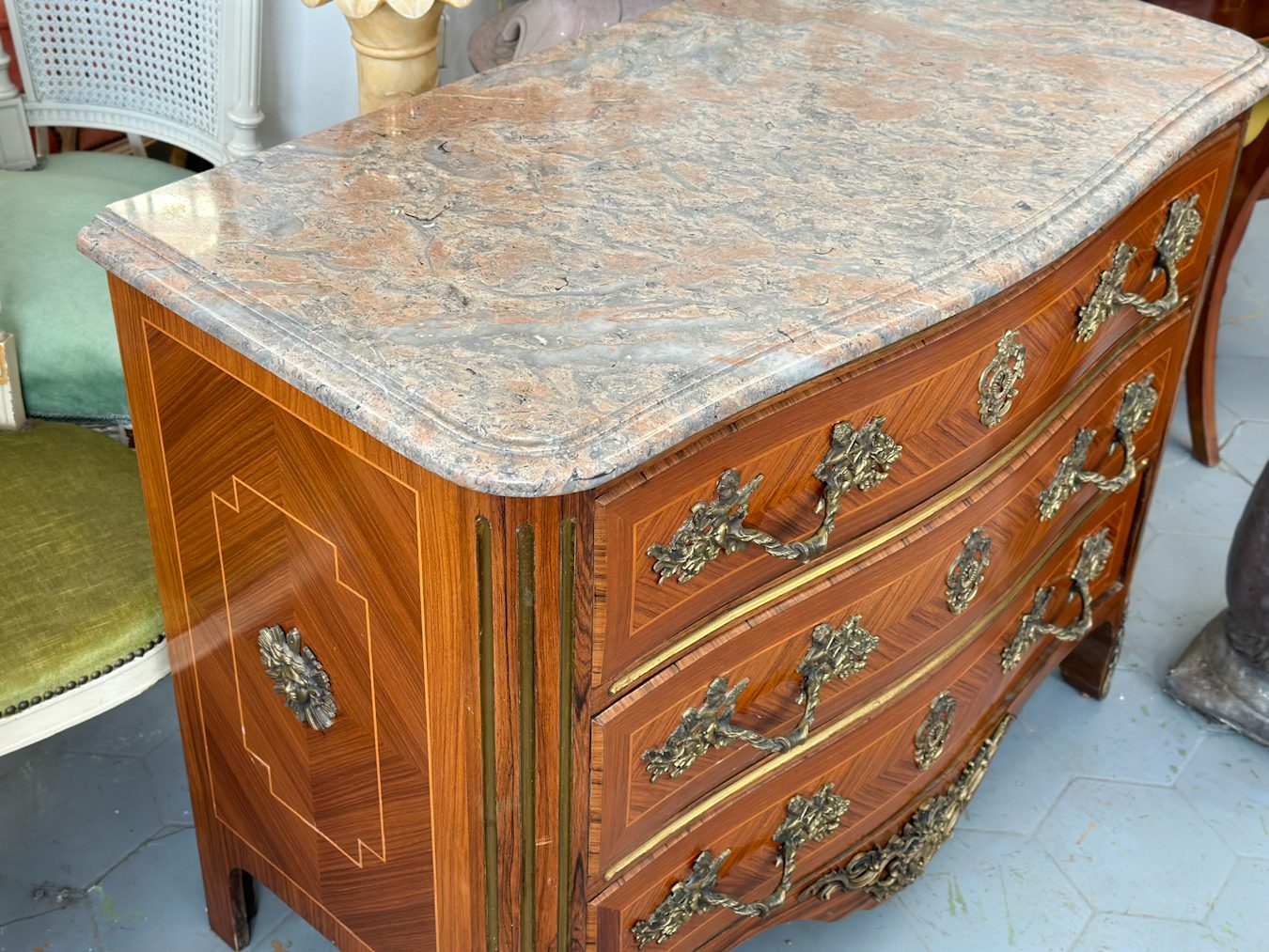
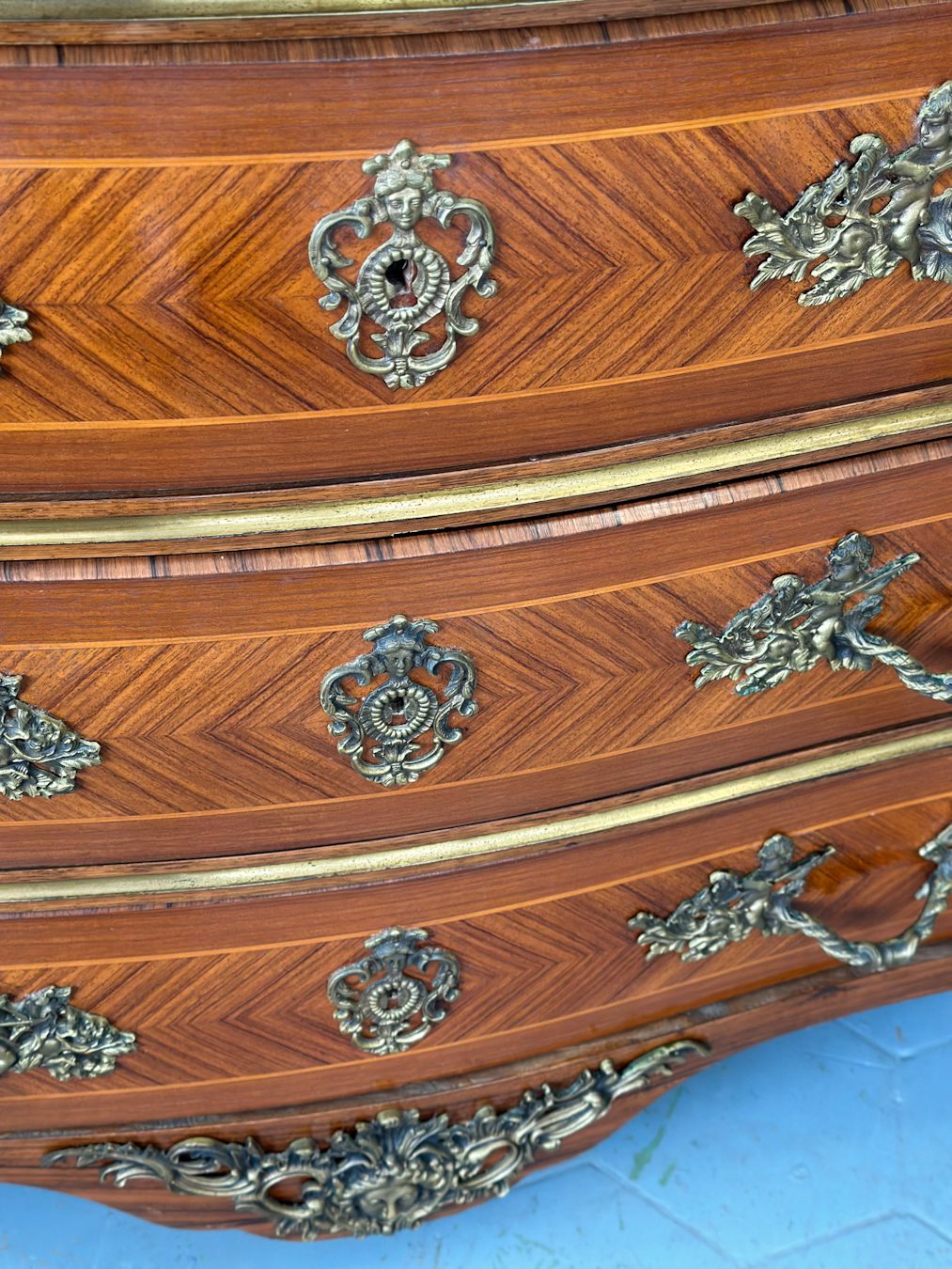
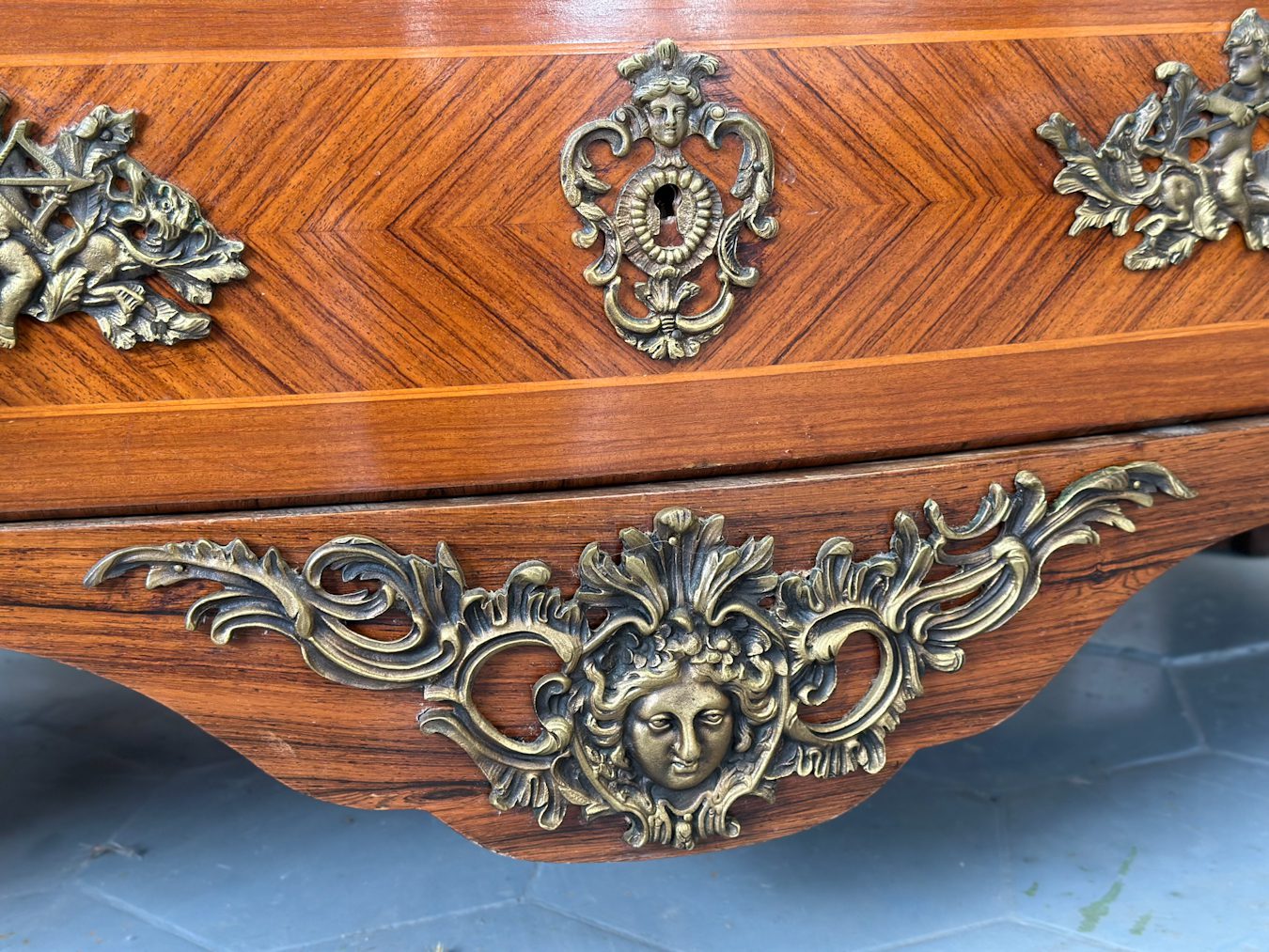
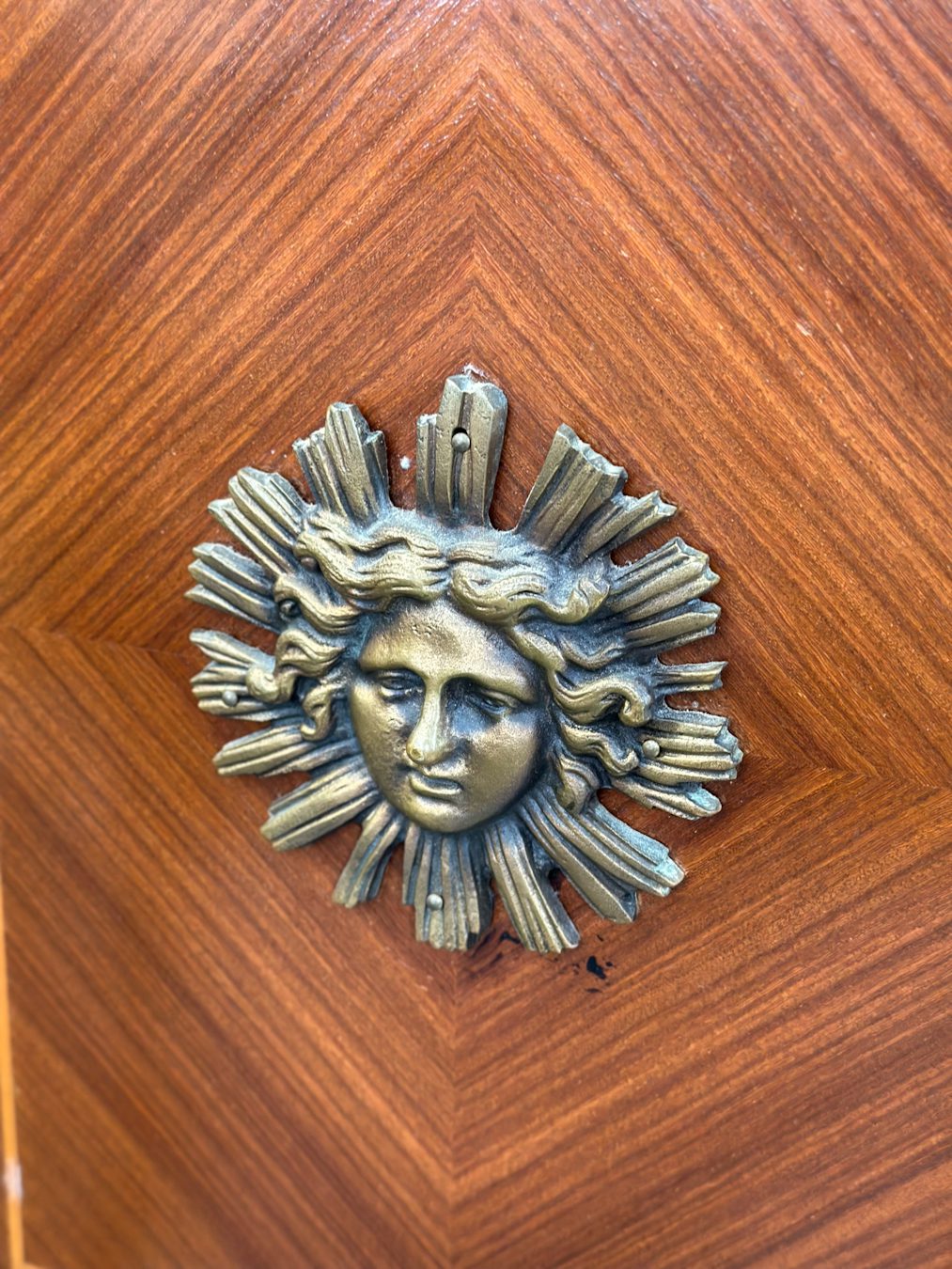
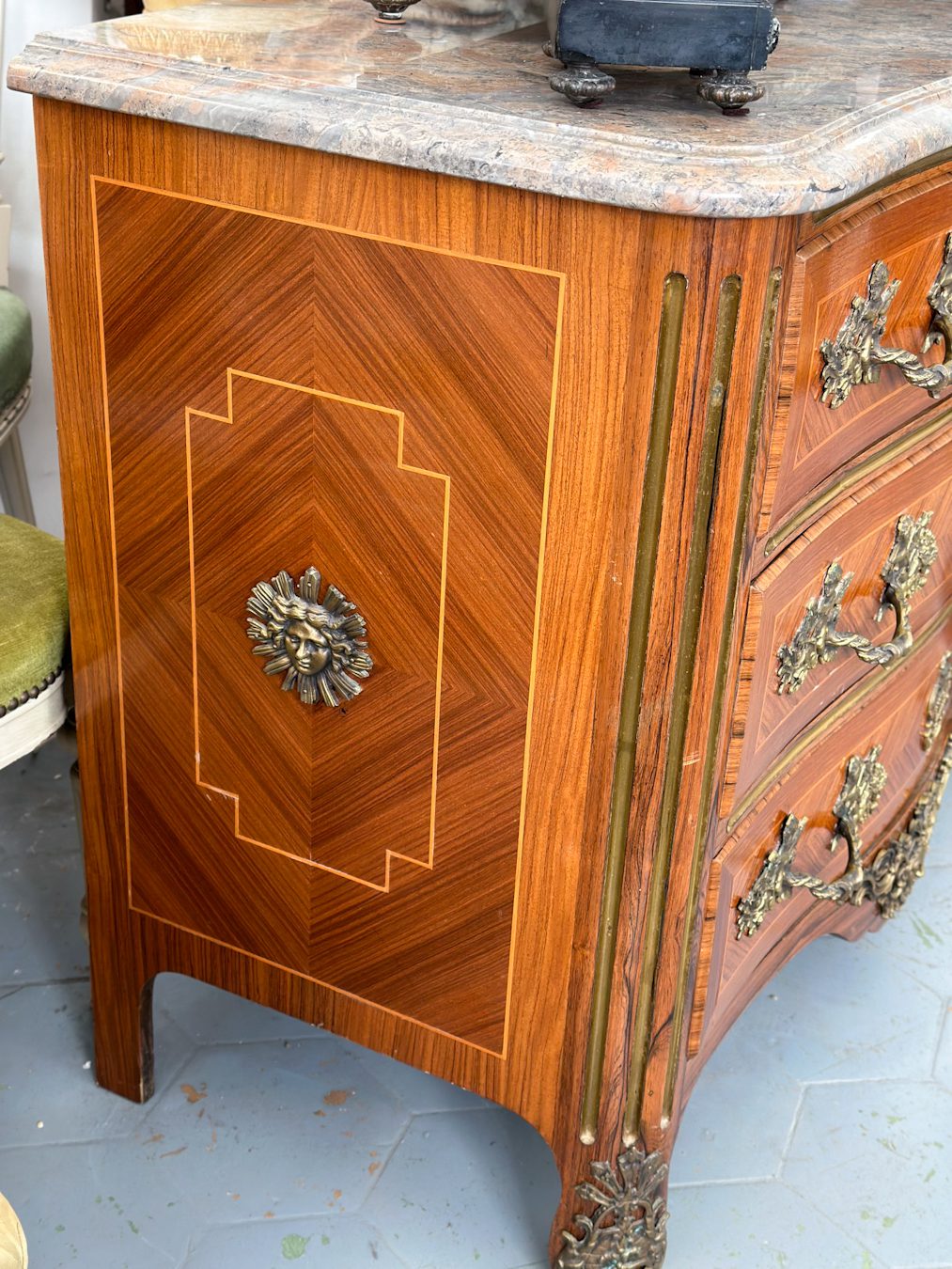
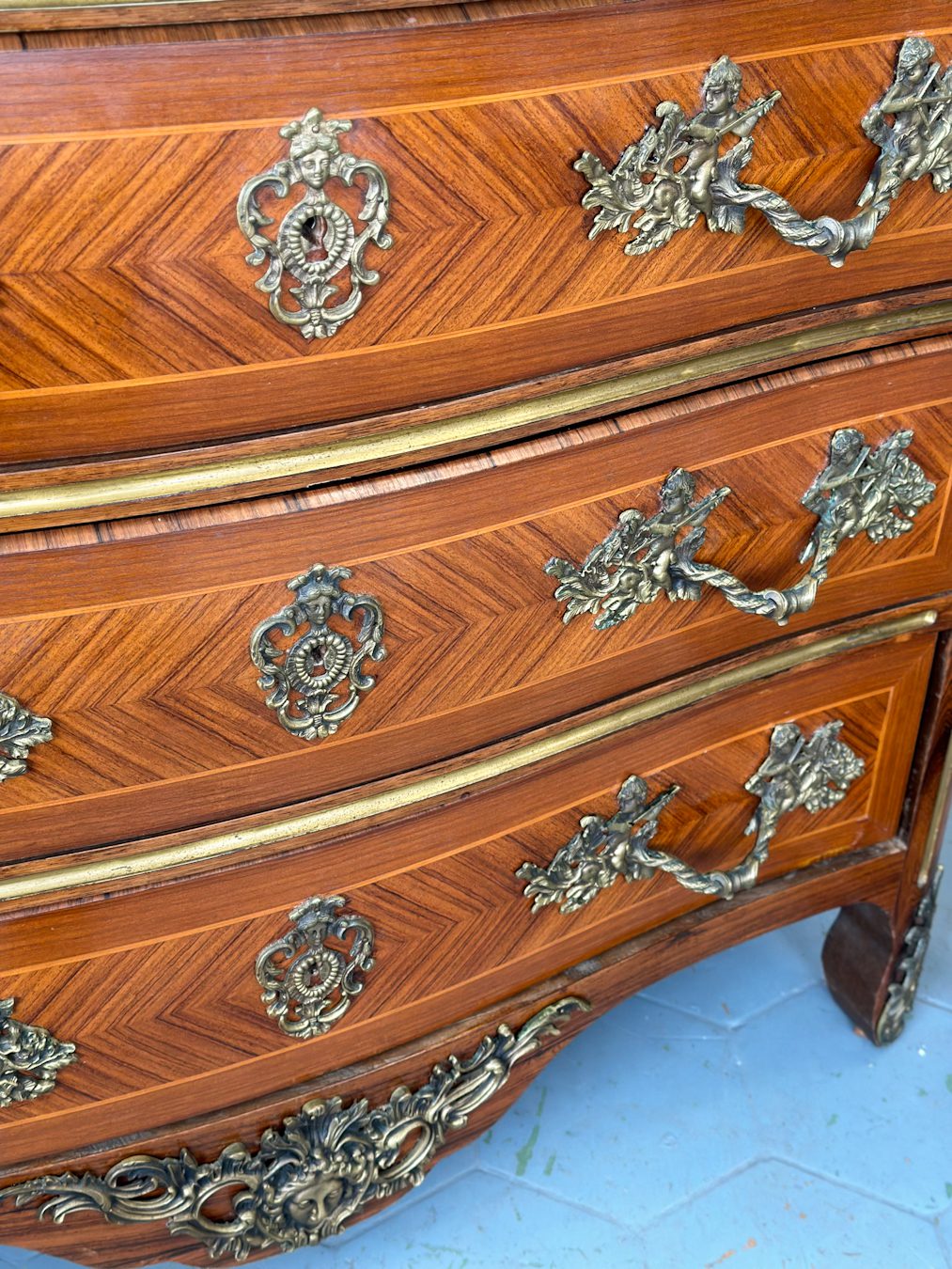
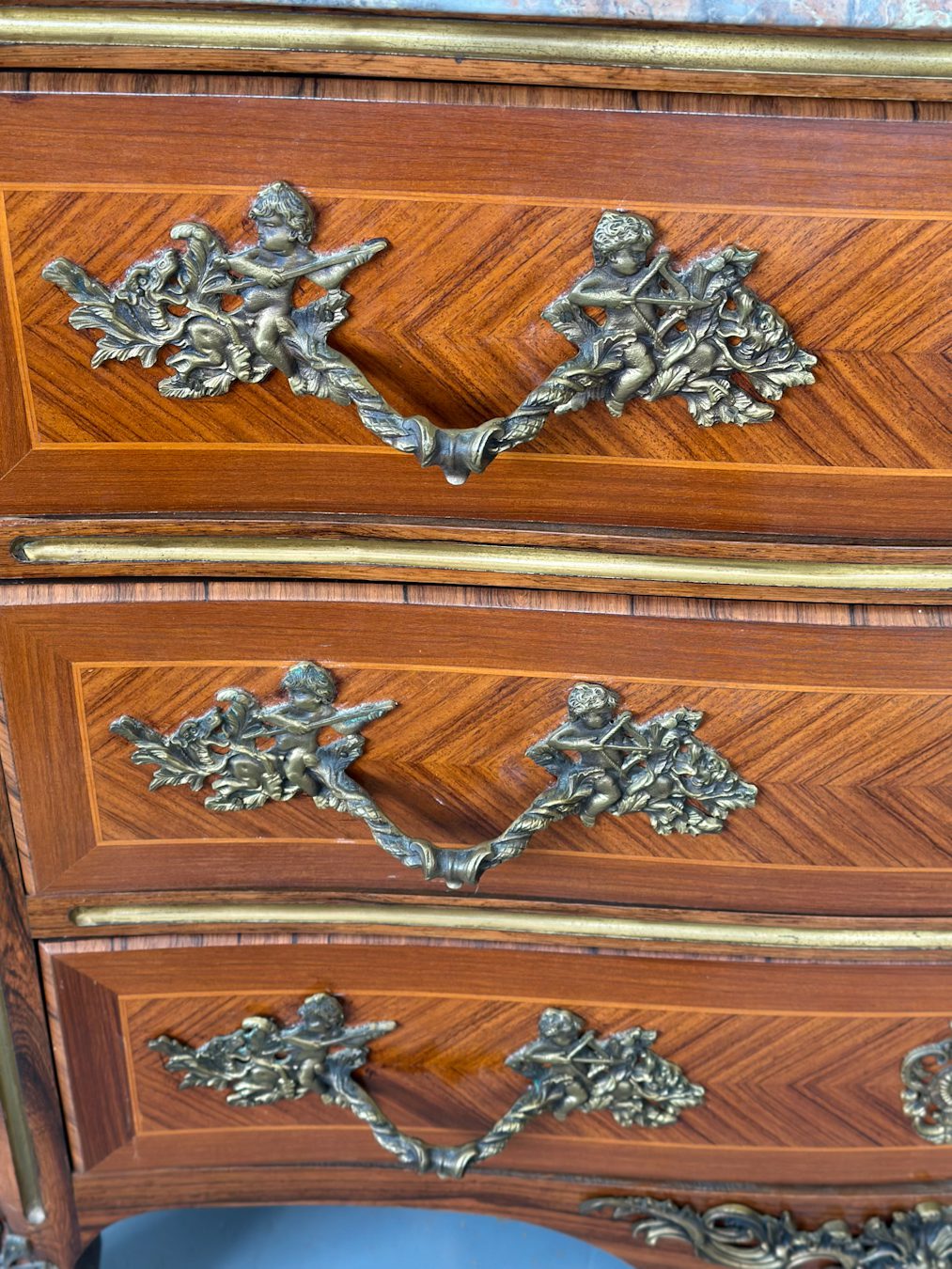
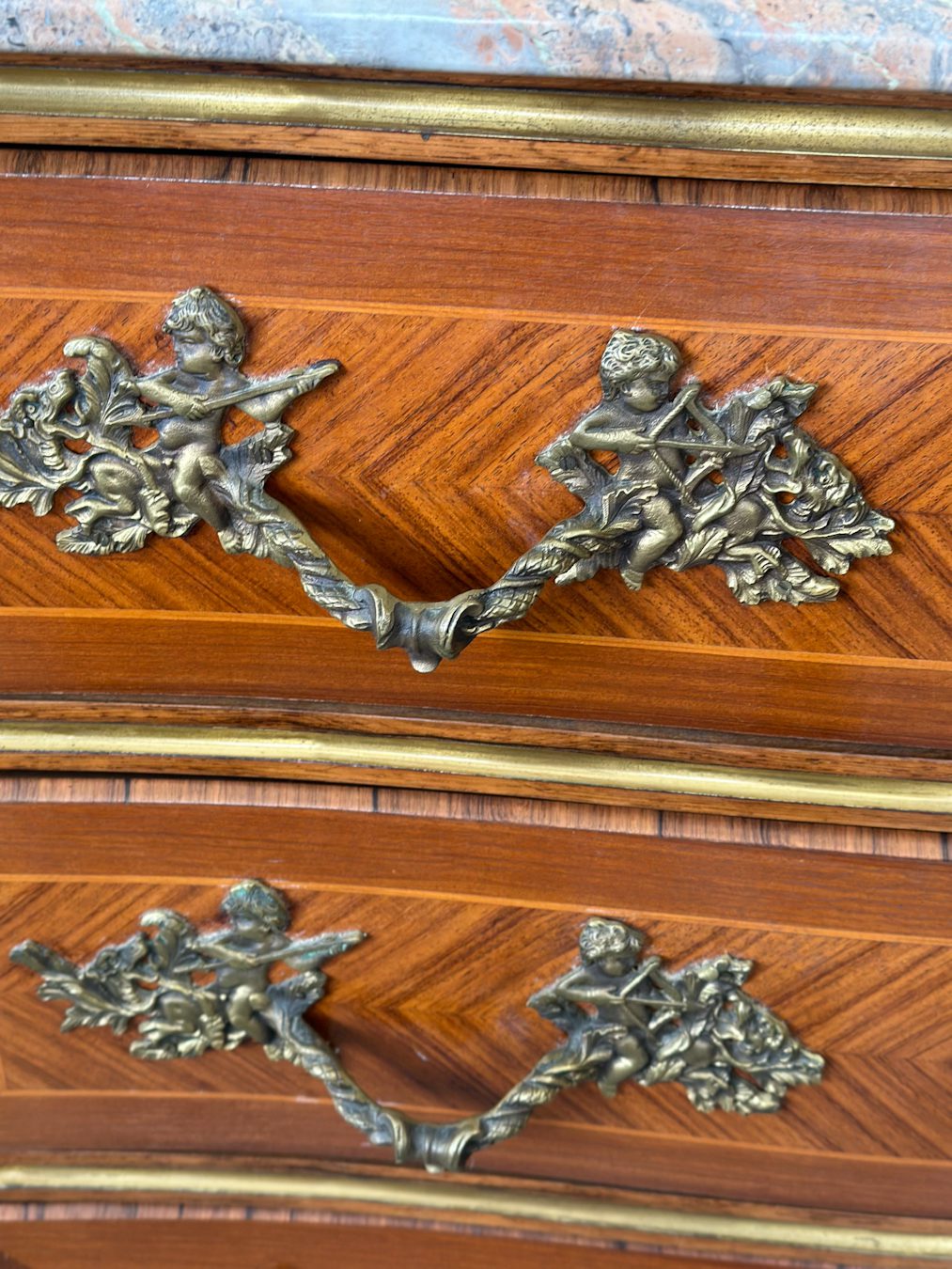
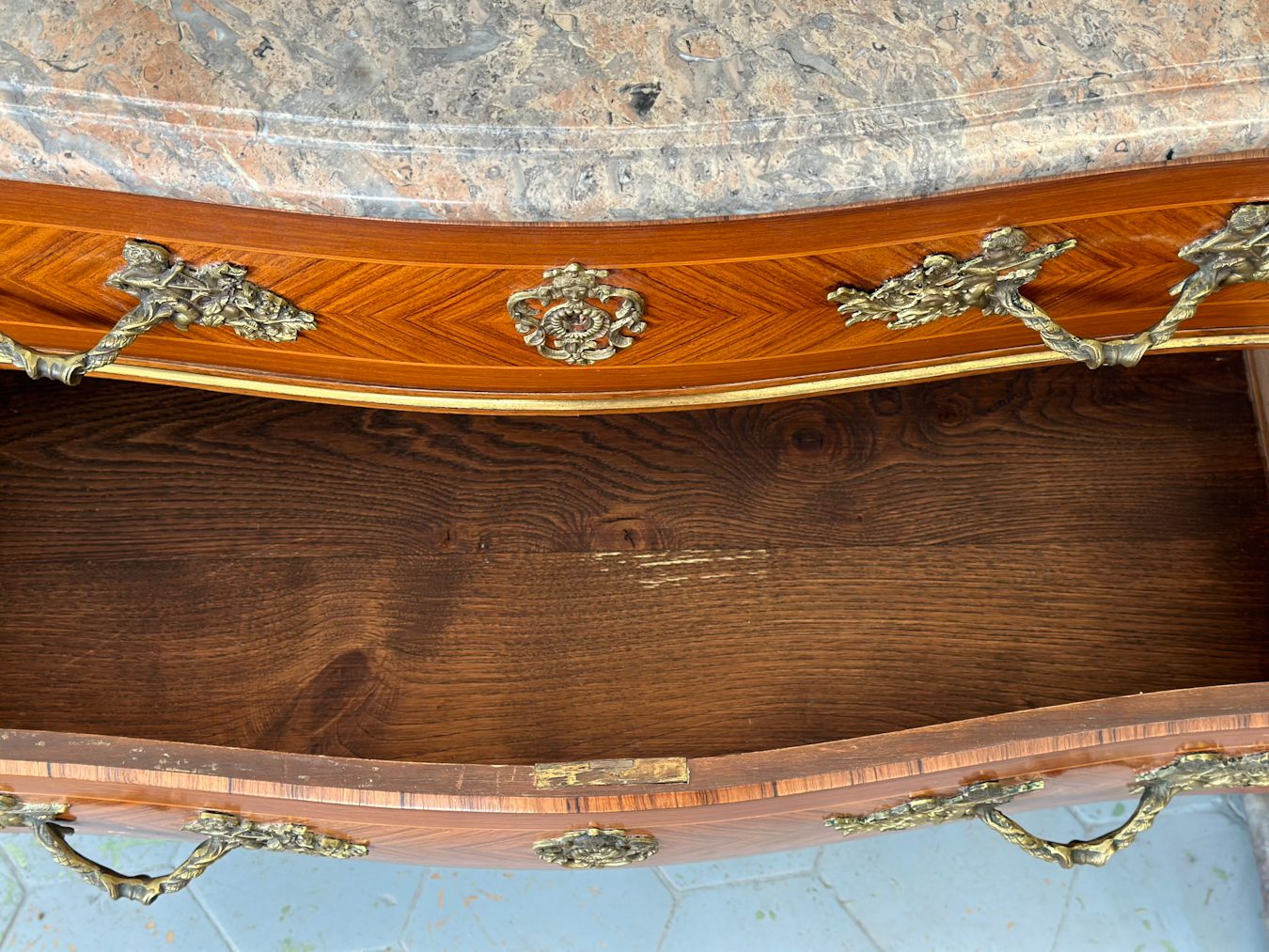
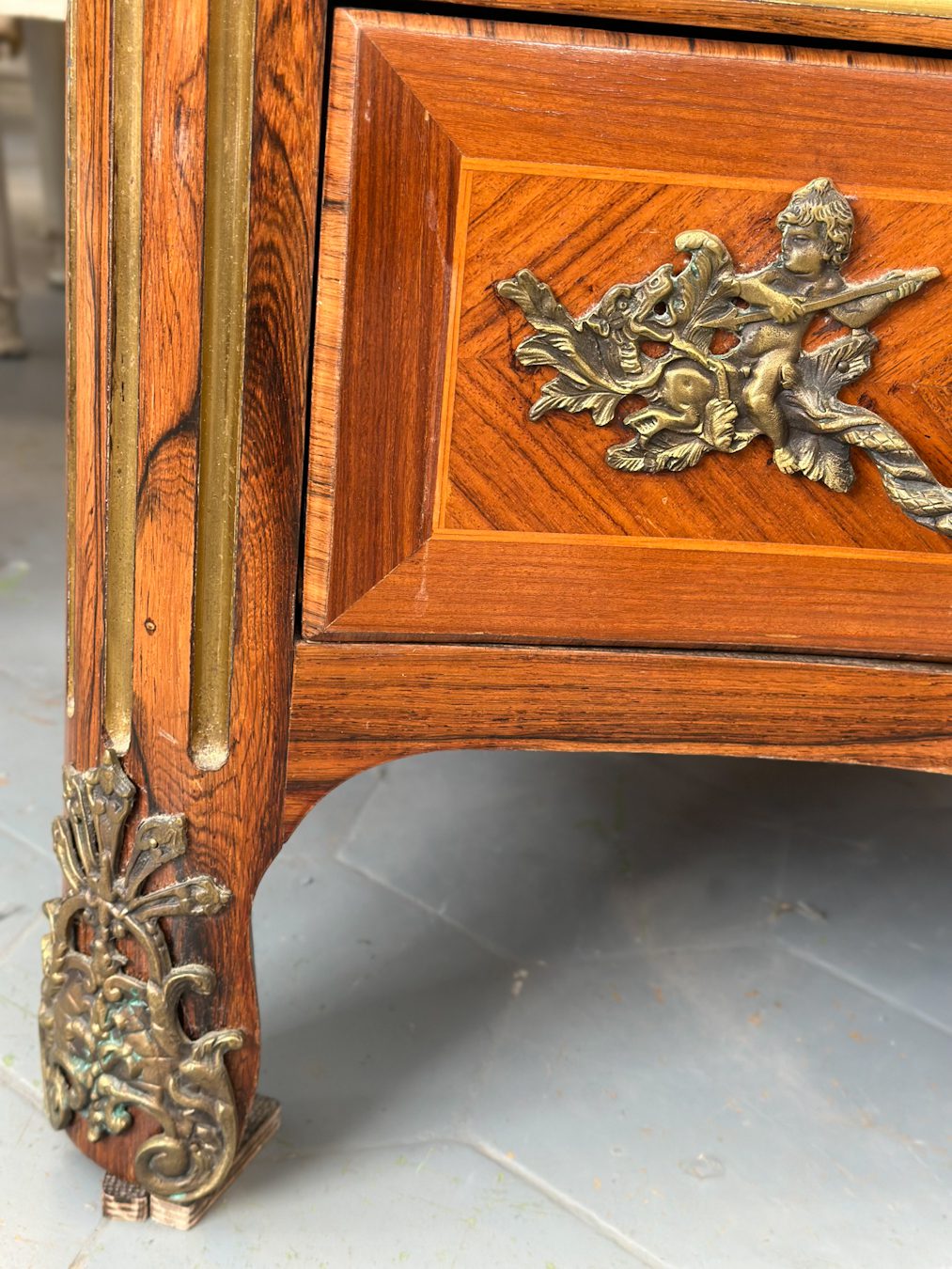
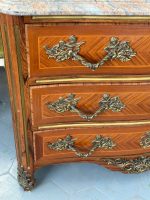
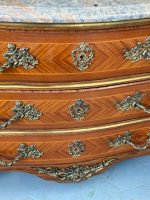
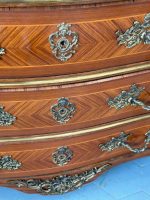
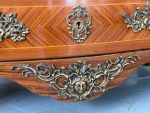
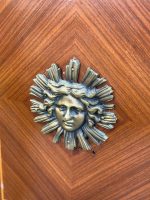
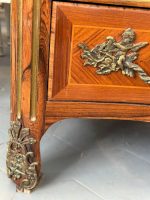
The bronze ormolu mount programme is deliberate and unified: musical putti — angels with instruments — as drawer handles; an Apollo sun mascaron with a ray crown on the side panel; a female mascaron mask with a laurel wreath on the tablier apron; and rocaille leg sabots with floral motifs. This is not merely decoration — it is a mythological narrative of beauty, music, and solar light, cast in bronze.
Pierre-Auguste Renoir was at that time painting his most celebrated dance scenes — Bal du moulin de la Galette (1876) and Dance at Bougival(1883) — in which precisely this kind of furniture richness adorned the background salons. Art and furniture in Paris were inseparable.
―――――――――――――――――――――
⚜️ MAKER AND MARKS
No visible maker’s mark. However, the execution level of the bronze ormolu mounts — the anatomical precision of the putti, the sharpness of the sun mascaron’s detail, the plastic expressiveness of the female mask — unmistakably points to a first-rank Paris cabinetmaker’s atelier, or a specialised bronze fondeur collaborating with an ébéniste.
In Paris in the second half of the 19th century, several maisons specialised in precisely this kind of high-quality Louis XV/XVI reproduction: Zwiener, Linke, Beurdeley and others. These workshops did not merely copy 18th-century prototypes; they created their own bronze programmes that sometimes surpassed the originals in plastic richness.
The kingwood à chevrons veneer with a delicate tulipwood stringing along the edges and the geometric parquetry framing on the side panels is a characteristic mark of high-grade Parisian execution, distinguishing this piece from provincial or secondary production.
―――――――――――――――――――――
💎 RARITY AND SIGNIFICANCE
A commode en bombe with a complete ormolu bronze programme — putti handles, sun mascaron, mascarona apron, and rocaille leg sabots — in this integrity and kingwood veneer quality is highly sought after on the international antiques market. Such pieces regularly appear at Drouot, Christie’s, and Sotheby’s as prime examples of ébénisterie.
Musical putti — playing angels — are one of the most iconic motifs of the Louis XV style, which experienced a new renaissance in the and are currently among the most sought-after bronze mount types in the Parisian salles des ventes.
―――――――――――――――――――――
🕯️ INTERIOR, DESIGN AND PHOTOGRAPHY USE
This commode is a room’s central accent — wide enough to serve as the principal piece in a dining room, salon, or bedroom, yet compact enough to integrate without dominating. The Breccia Violette marble’s pink, grey, and violet tones with kingwood‘s warm red-bronze and the gilded ormolu bronze compose one of the most visually refined colour combinations in classical interior art.
Interior designers use such a piece as a pièce maîtresse — the master piece — around which the entire room ensemble is composed. For photographers and set designers, the bombe form and the ormolu bronze brilliance make an unsurpassable photographic backdrop.
―――――――――――――――――――――
🎁 AS A GIFT
Musical putti — playing angels — are a symbol of art, music, and joyful innocence, making this commode an inspiring gift for artists, musicians, or anyone who values beauty with deep meaning. The sun mascaron on the side panel carries the symbolism of Apollo — god of light, art, and harmony. As a representative gift at the highest level — unrepeatable.
―――――――――――――――――――――
🔍 CONDITION
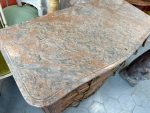
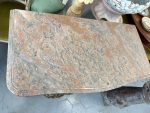
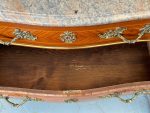
Good overall condition for a piece of this age and quality. The kingwood veneer well preserved — natural age patina visible, subtle tonal variations. The Breccia Violette marble top with natural marble texture characteristics and age patina — confirmation of authenticity. Bronze ormolu mounts — putti, sun mascaron, female mask, leg sabots — original, with a natural warm gilded patina. Drawers functional, oak interior.
The condition of the piece is fully reflected in the photographs.