Neo-Renaissance Cassone Chest — Italy/France, 19th Century. This monumental wooden chest features intricate putti carvings and a needlepoint tapestry top, embodying the revival of Italian Renaissance cassone traditions. 1 500,00 €
You’re now subscribed to price tracking for this product. We’ll notify you if the price drops. 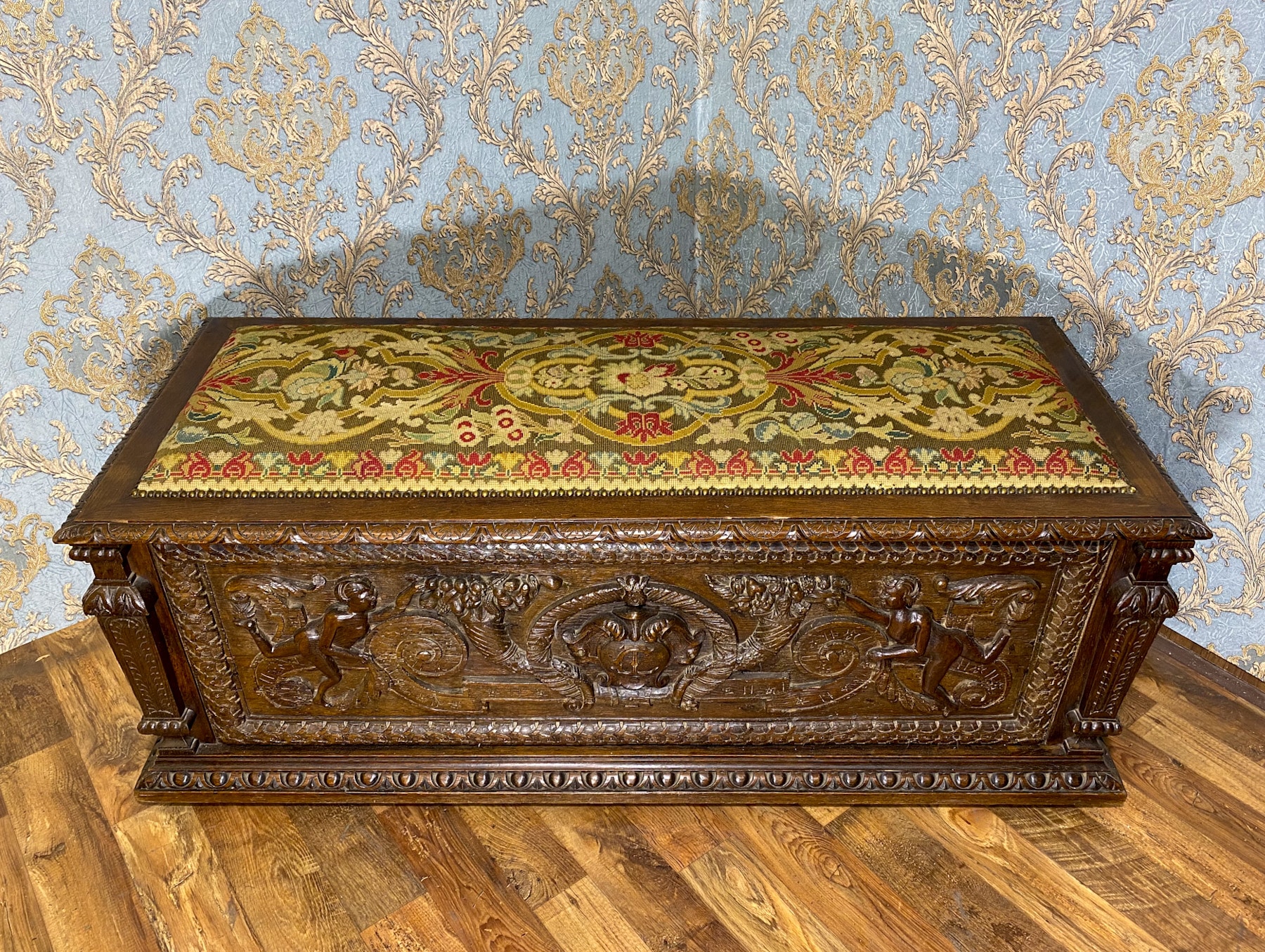
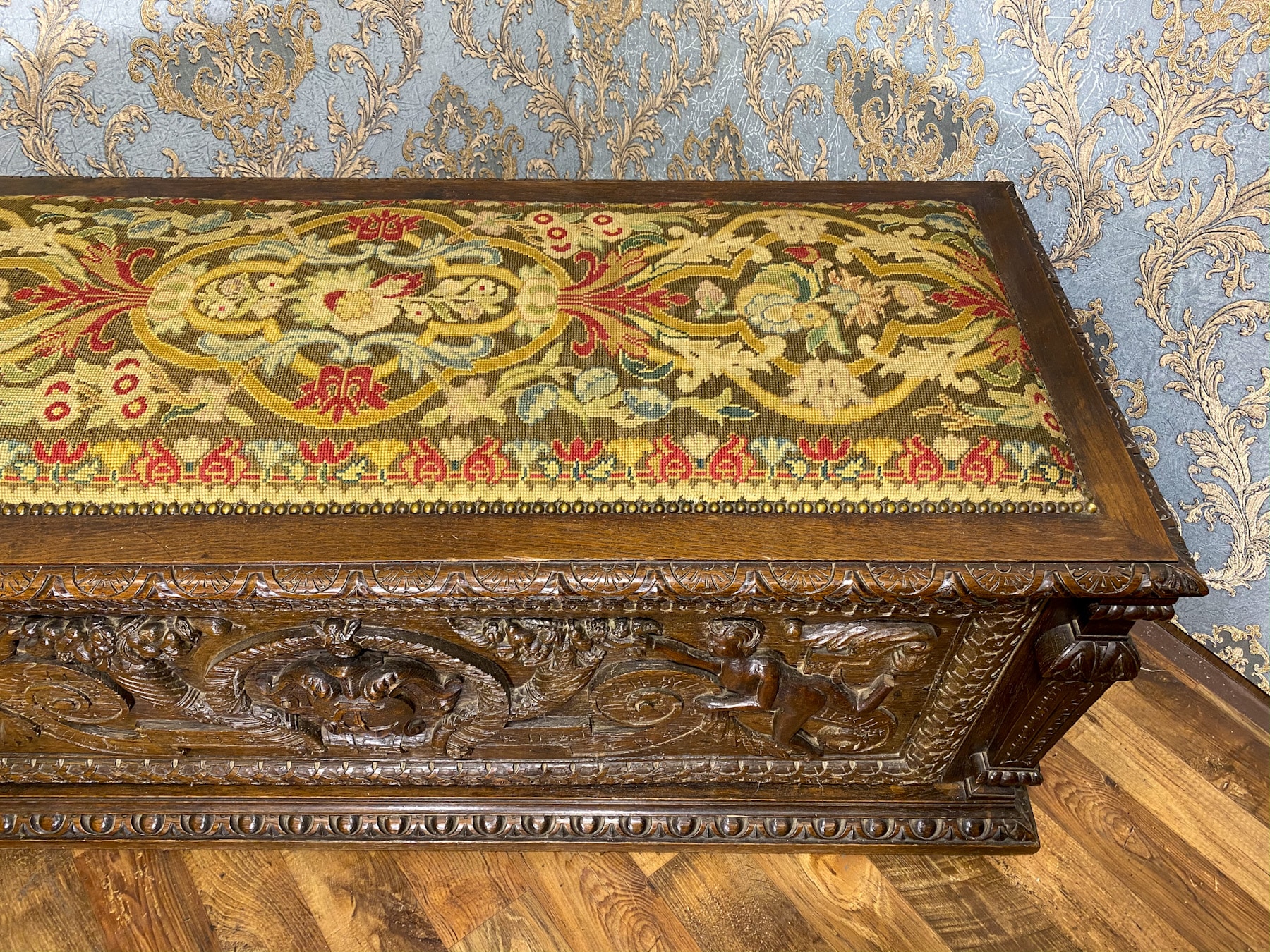
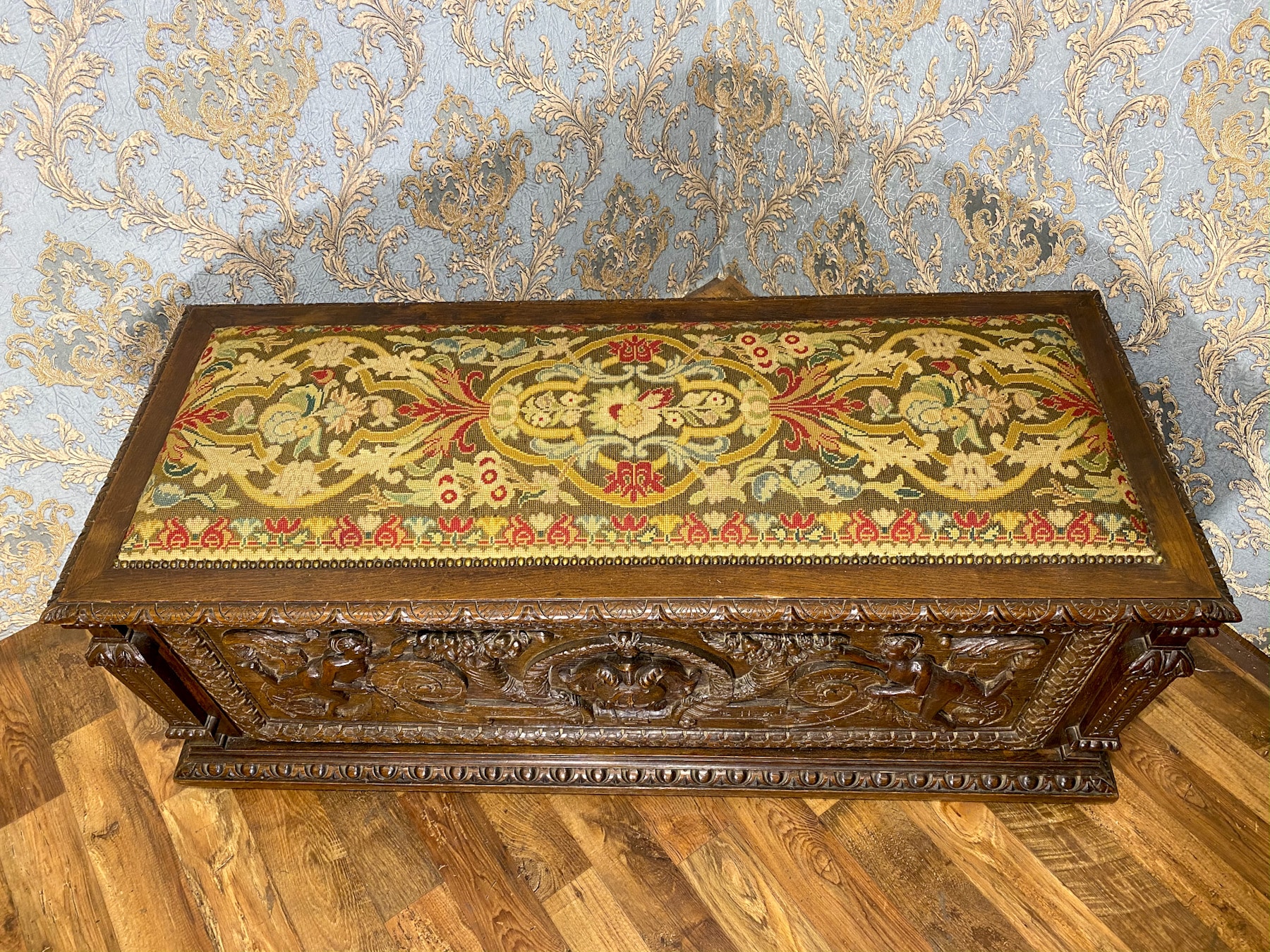
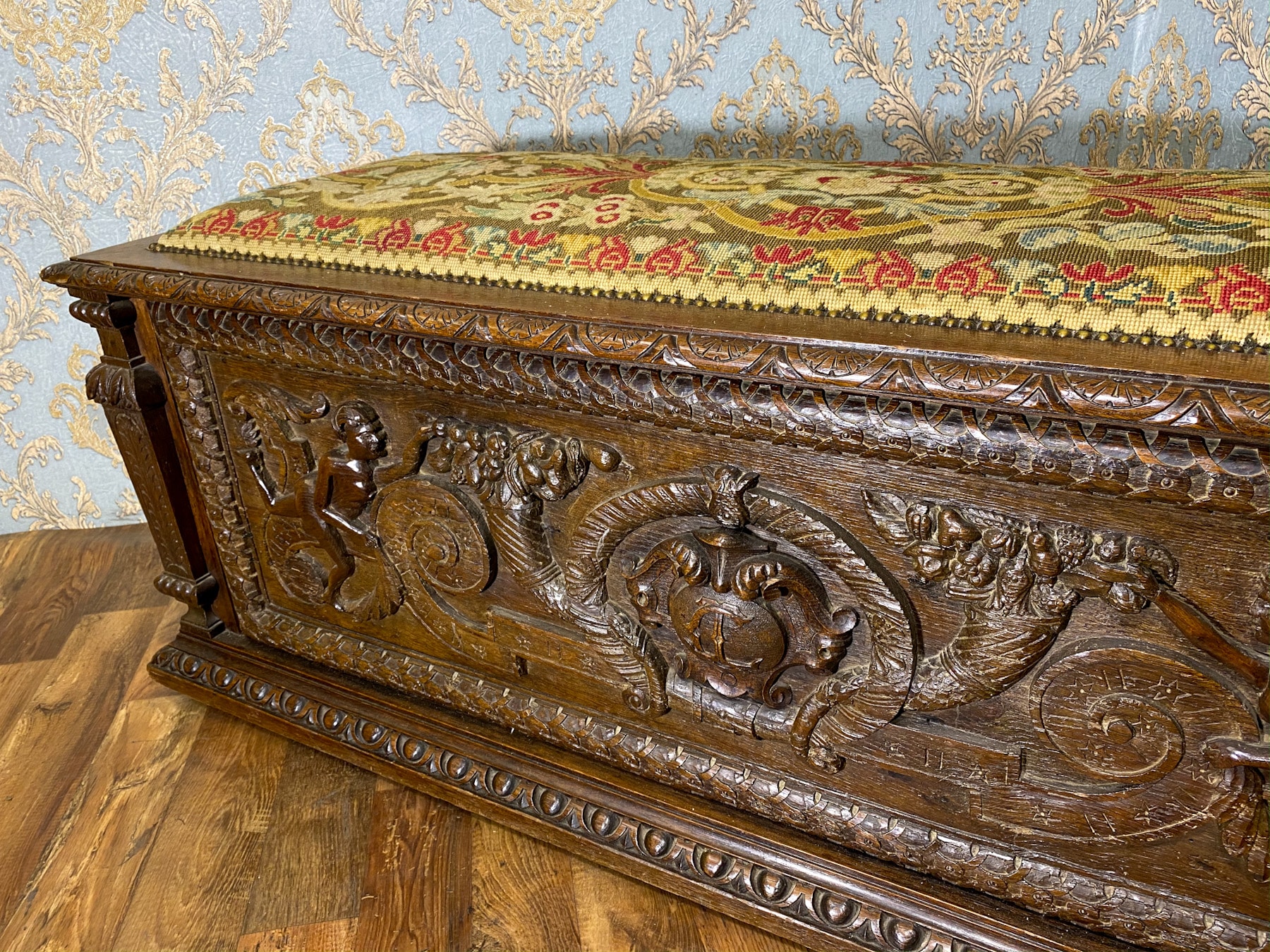
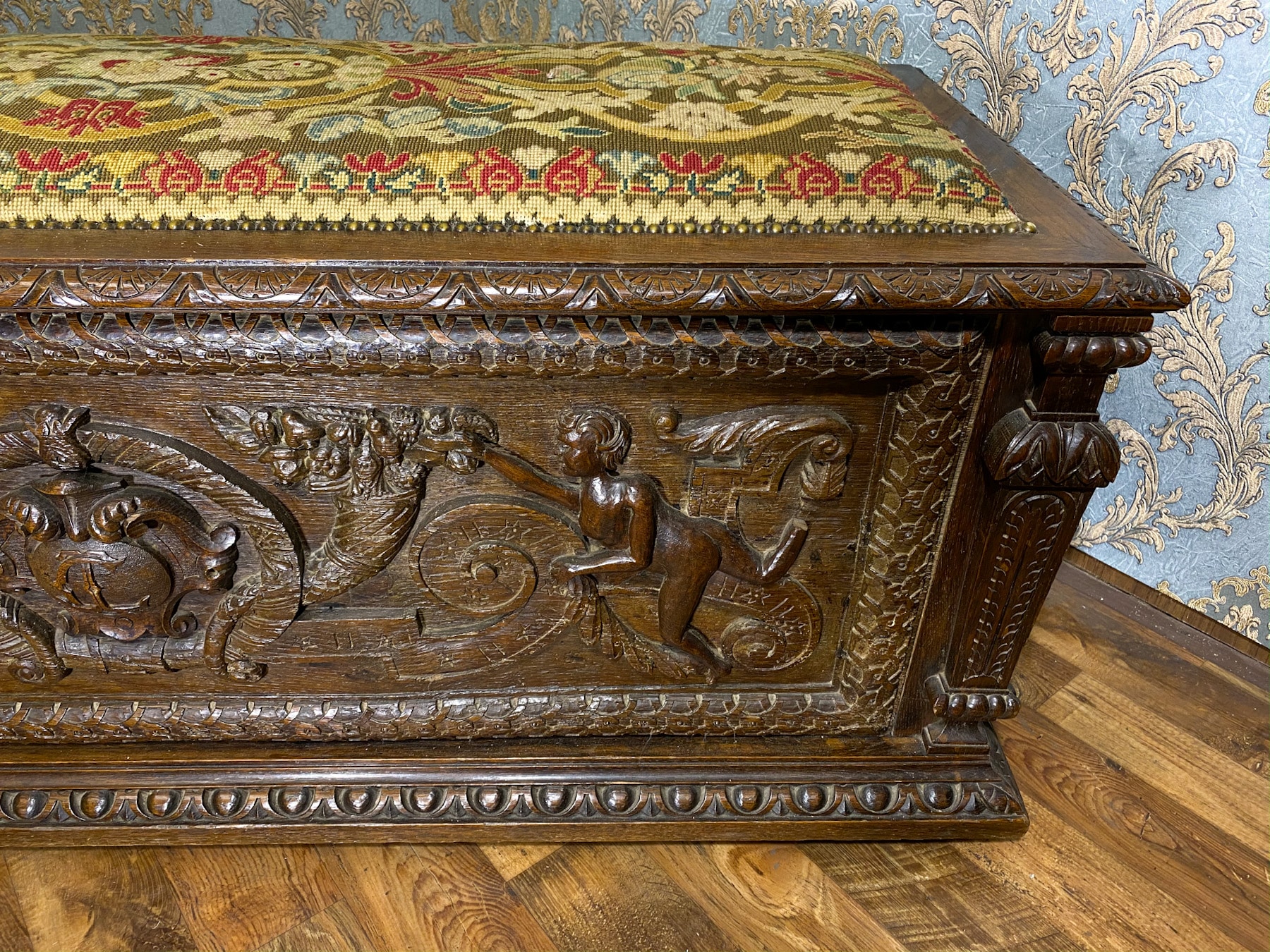
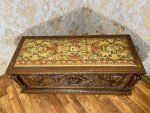
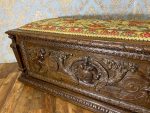
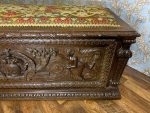
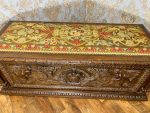
Renaissance Cassone Chest with Putti Carvings and Needlepoint Tapestry — Neo-Renaissance, Italy, 19th Century (287)
Height 60 cm Length 150 cm Color NaturalGreenBrass

Description
DESCRIPTION IN
―――――――――――――――――――――
📐 DIMENSIONS
Length: 150 cm × Height: 60 cm × Depth: 61 cm. Weight: very heavy (solid wood).
―――――――――――――――――――――
Renaissance Cassone Chest with Figural Carvings and Needlepoint Top — Neo-Renaissance / Historicism, Italy or France, approximately 1860–1890
―――――――――――――――――――――
PERIOD, ARTISTIC STYLE, ERA
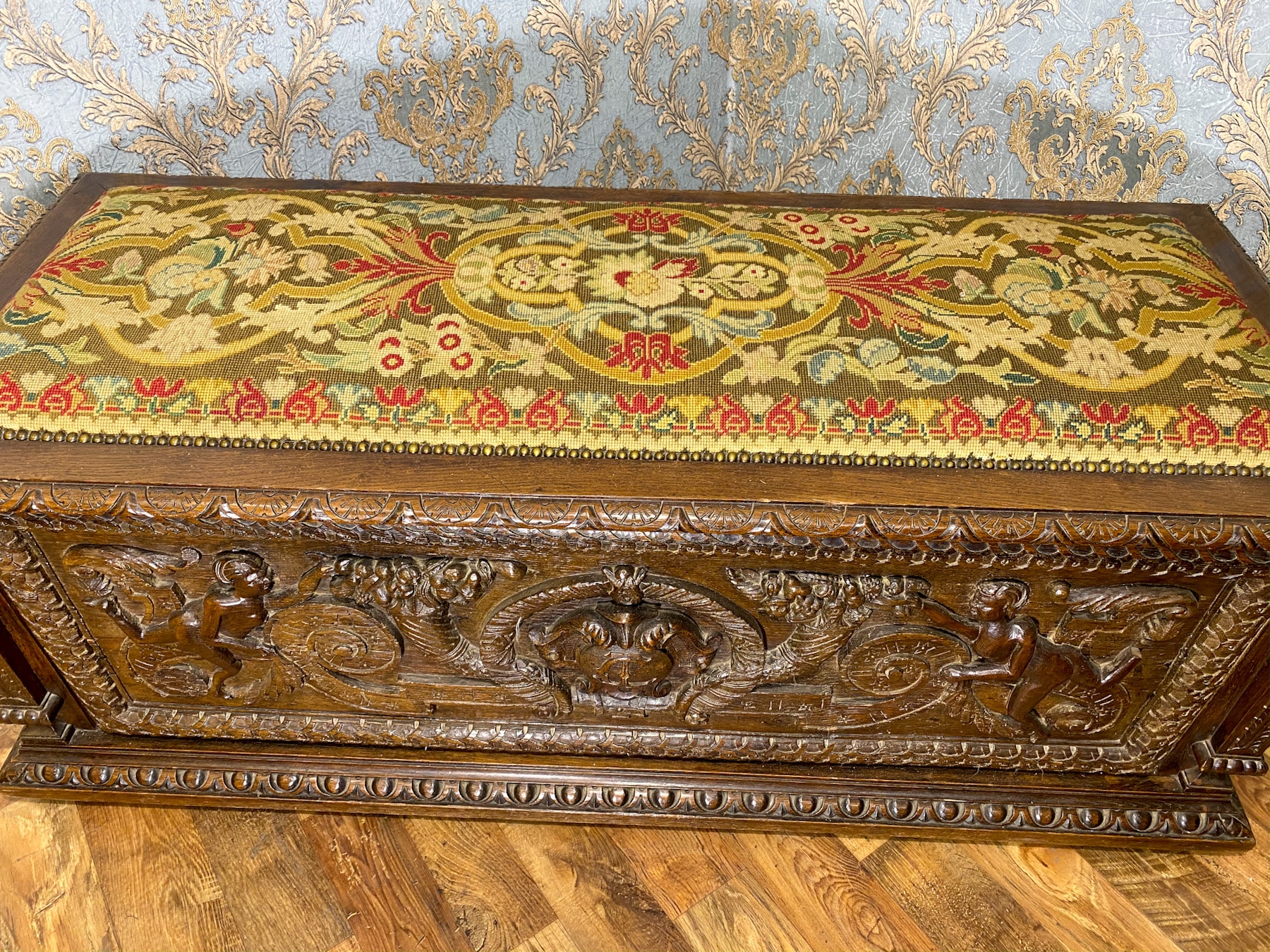
This monumental chest is a distinguished example of the Neo-Renaissance style within the Historicism era — a period in which 19th-century European craftsmen returned with enthusiasm to the Italian Renaissance cassone tradition, reproducing the forms of 15th and 16th-century Florentine and Venetian marriage chests with all the precision of industrial-age craftsmanship. The cassone — the Italian Renaissance marriage chest — was one of the most significant pieces of furniture in aristocratic and haute-bourgeois households, its carvings narrating mythological and historical scenes.
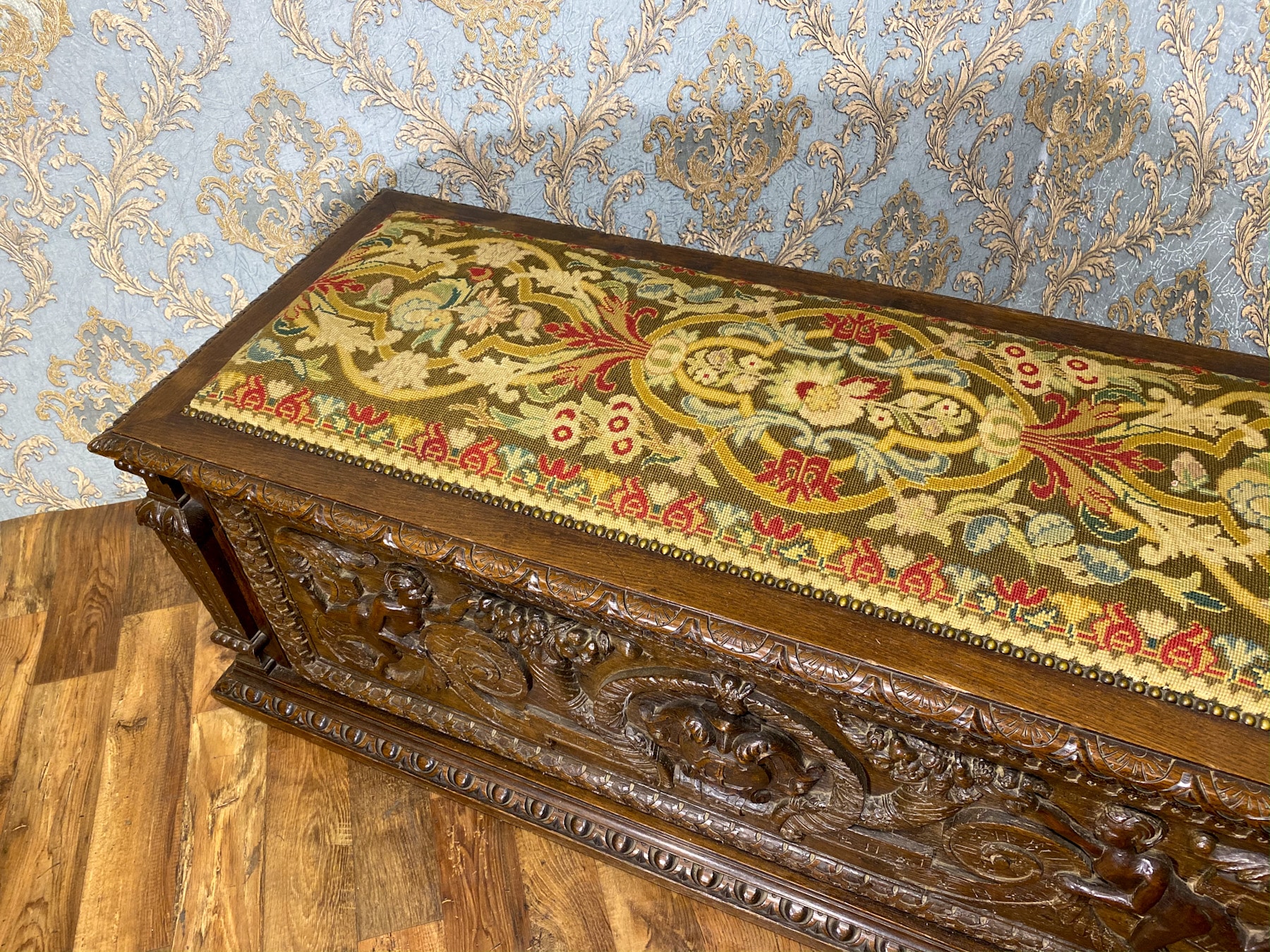
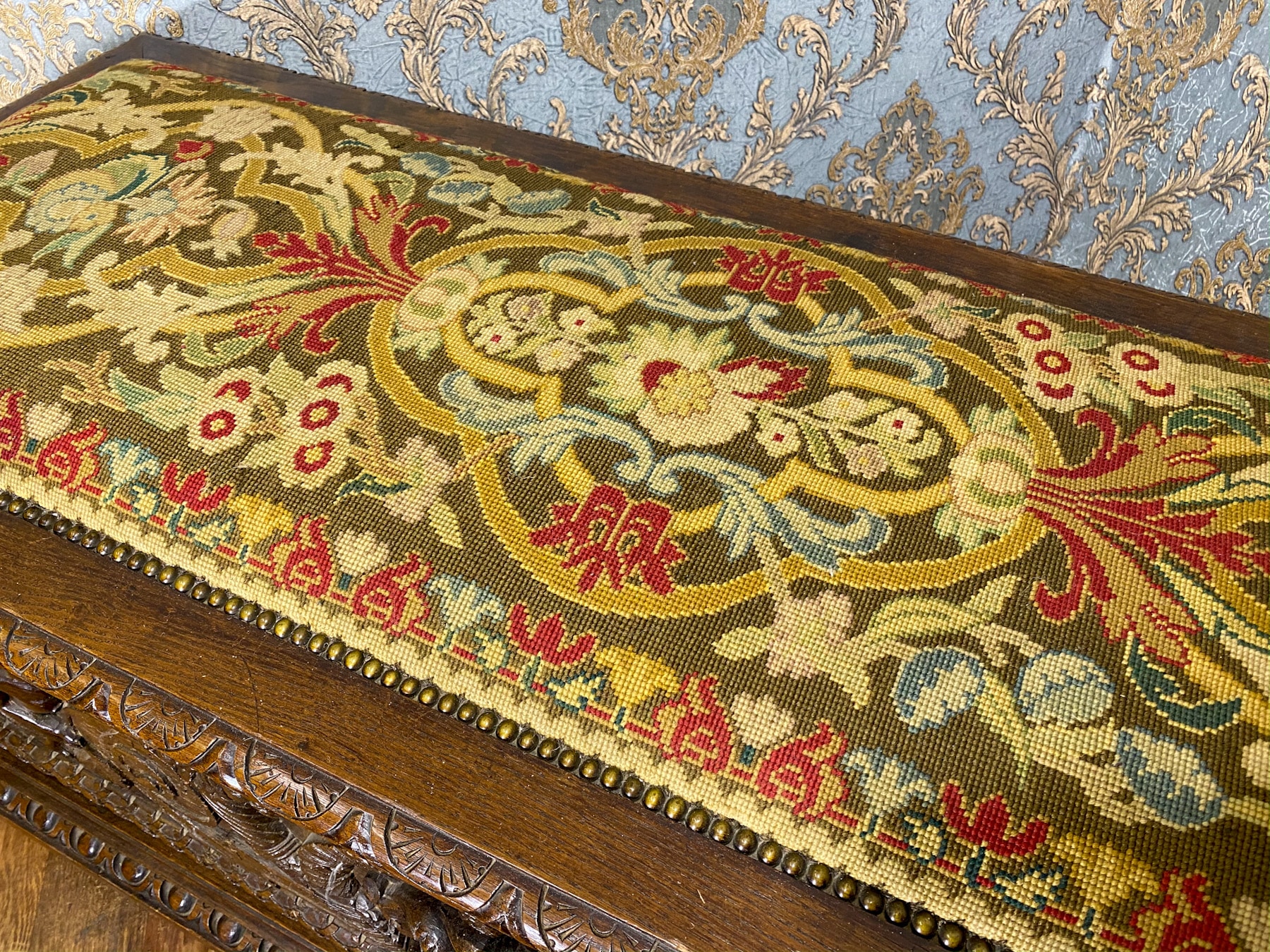
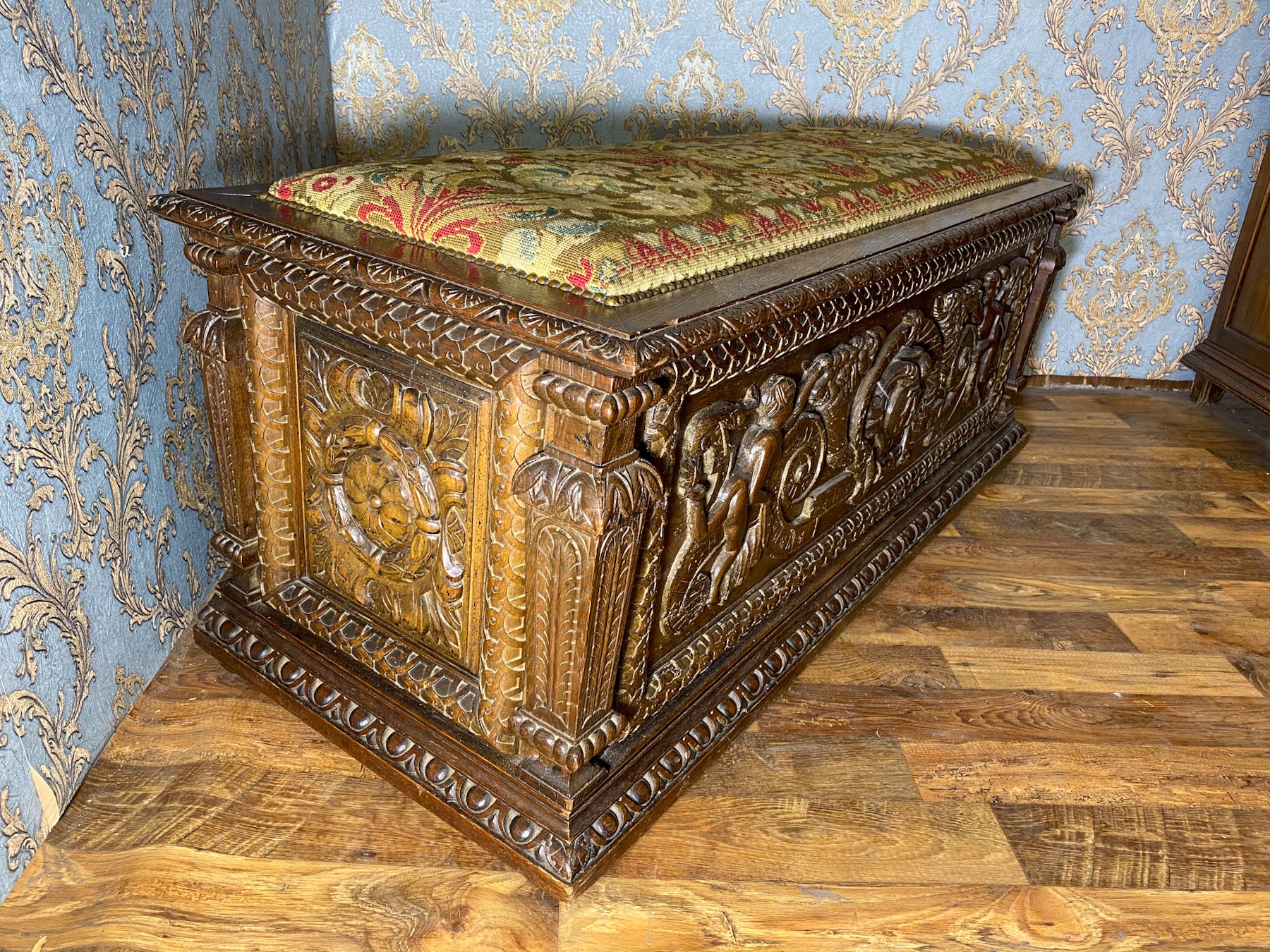
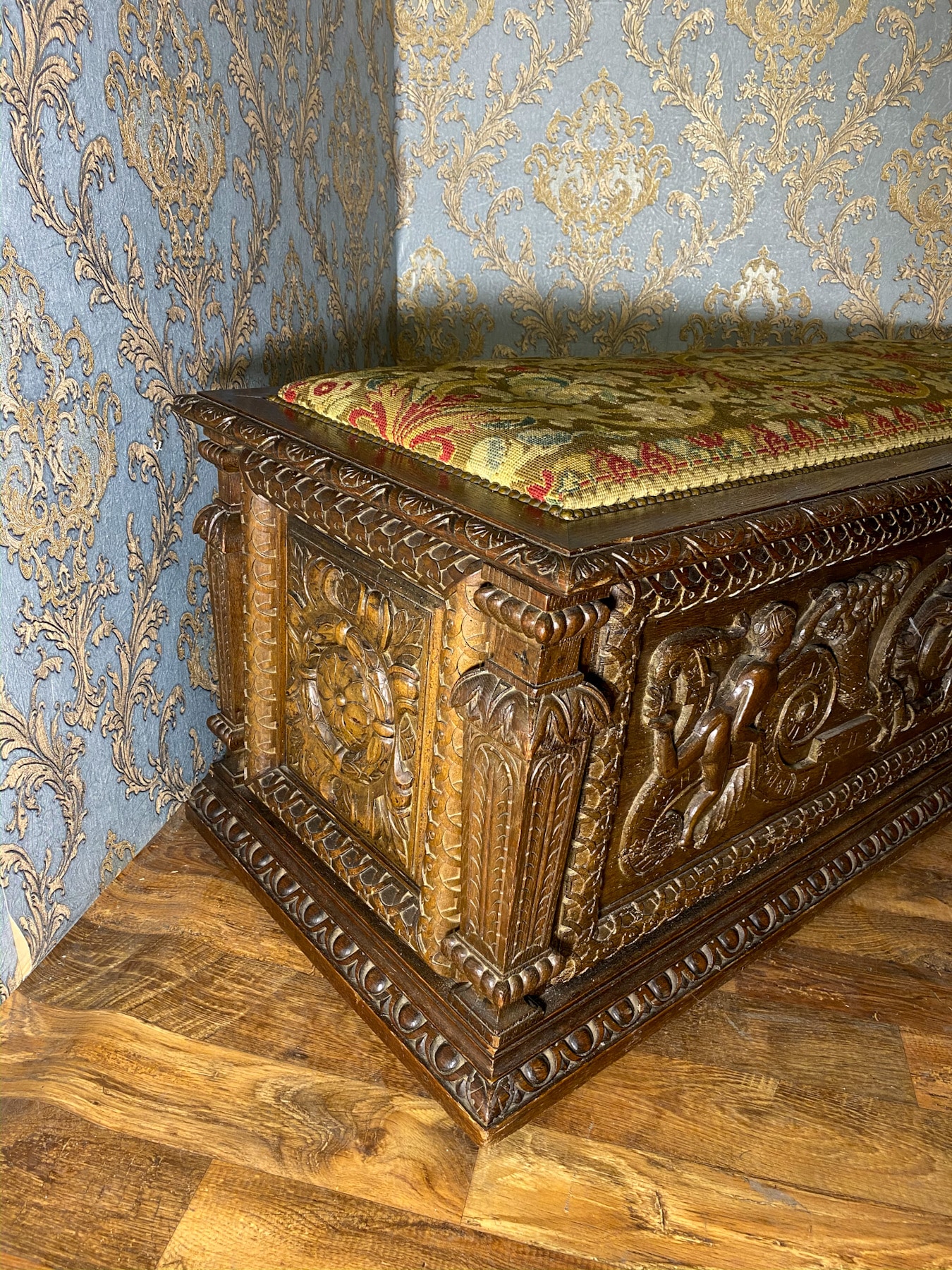
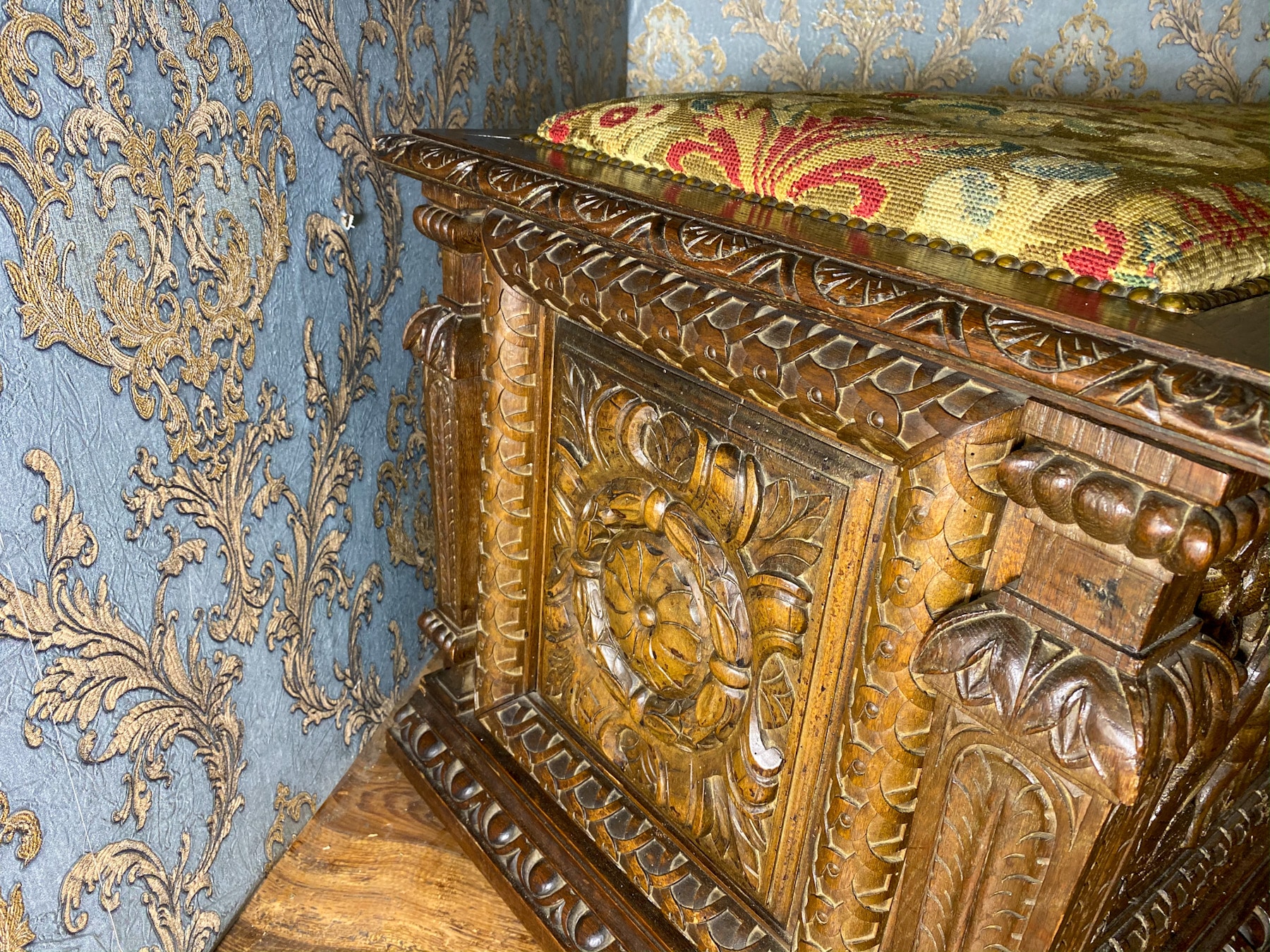
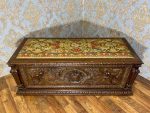
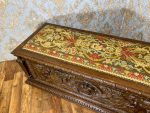
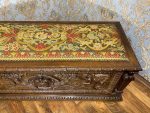
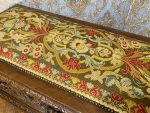
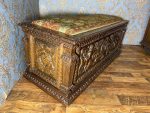
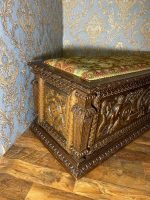
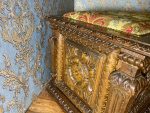
The central panel composition of the façade is of exceptional artistic quality: two symmetrical putti — nude child figures bearing shields and trophy garlands — flank a central cartouche with a helmet, armour and laurel branch trophée d’armes composition. This iconography directly references Renaissance themes of triumph and glory. The side panels are decorated with rosette and pilaster motifs — an architectural element characteristic of Italian Renaissance furniture. The upper and lower friezes carry egg-and-dart and bead-and-reel profiles — details of classical antique architecture. The tapestry top — in red, green and gold tones with a floral arabesque pattern — appears to be a needlepoint embroidery stylistically consistent with the Victorian or Arts & Crafts tradition, secured with gilt brass nails.
This chest is dateable to approximately 1860–1890 — the Belle Époque era, when the Neo-Renaissance style was one of the dominant expressions of Historicism in European interior art.
Belle Époque snapshot: In 1869, the newly built villas of the Pariolo quarter in Rome were furnished with exactly this type of cassone chest — Neo-Renaissance aesthetics were not merely a fashion but an expression of national identity in newly unified Italy. That same year, Eugène Viollet-le-Duc published his lecture series on medieval and Renaissance furniture in Paris, inspiring a generation of cabinetmakers and collectors across Europe. This chest may well have been born at the very peak of that wave of Renaissance nostalgia.
―――――――――――――――――――――
MAKER AND MANUFACTORY MARK
No visible maker’s mark is present. Based on the plasticity of the putti figures, the refinement of the trophée d’armes composition and the architectural treatment of the side pilasters, the probable origin is Italy (Tuscany or Venice) or France, where Neo-Renaissance furniture production in the second half of the 19th century reached a high artistic level. In Italy, cassone reproductions of this type were produced by the finest Florentine and Sienese cabinetmakers, often directly after museum originals. The needlepoint tapestry top — with its arabesque pattern and colour palette — may point to England or Belgium as the textile’s origin.
―――――――――――――――――――――
RARITY AND SIGNIFICANCE
A monumental Neo-Renaissance cassone chest with figural putti carvings, a central trophée d’armes composition and an original needlepoint tapestry top of this scale and state of preservation is an exceptionally rare find. The majority of surviving cassone chests either lack their textile top or have damaged façade carvings. The integrity of this piece — both the carvings and the needlepoint — places it in the museum-quality collection category. In the antiques world, cassone pieces with figural carvings and original textiles belong to the highest demand category.
―――――――――――――――――――――
USE IN INTERIOR, DESIGN AND PHOTOGRAPHY
This chest was created for representative entrance hall, library, salon or study interiors. Its needlepoint top allows it to function as an ottomane or bench — functional and aesthetic simultaneously. It harmonises with Neo-Renaissance, Neo-Baroque, eclectic and grand manor interiors. In interior photography — an unmistakable accent of an Italian Renaissance or Victorian aristocratic residence. In contemporary maximalist and dark academia interiors it is the culminating element.
―――――――――――――――――――――
GIFT AND PERSONALISATION
This chest is an outstanding acquisition for the highest-level collections, libraries, palace-style residences and connoisseurs of the arts. As a personal gift — for historians, architects or collectors who value the Renaissance heritage and the embroidery tradition combined with monumental furniture art. In astrological symbolism — Capricorn, Taurus and Leo — personalities with a strong historical vision and refined aesthetic sensibility.
―――――――――――――――――――――
CONDITION
The chest is in excellent overall condition. The carvings — putti, trophée, pilasters, rosettes — are sharp and detailed across the entire façade and sides. The needlepoint tapestry top is well preserved, with a natural age patina in the colours — no breaks or significant damage. The brass nails are original. The wood corpus is structurally stable. The condition of the item is fully reflected in the photographs.
―――――――――――――――――――――