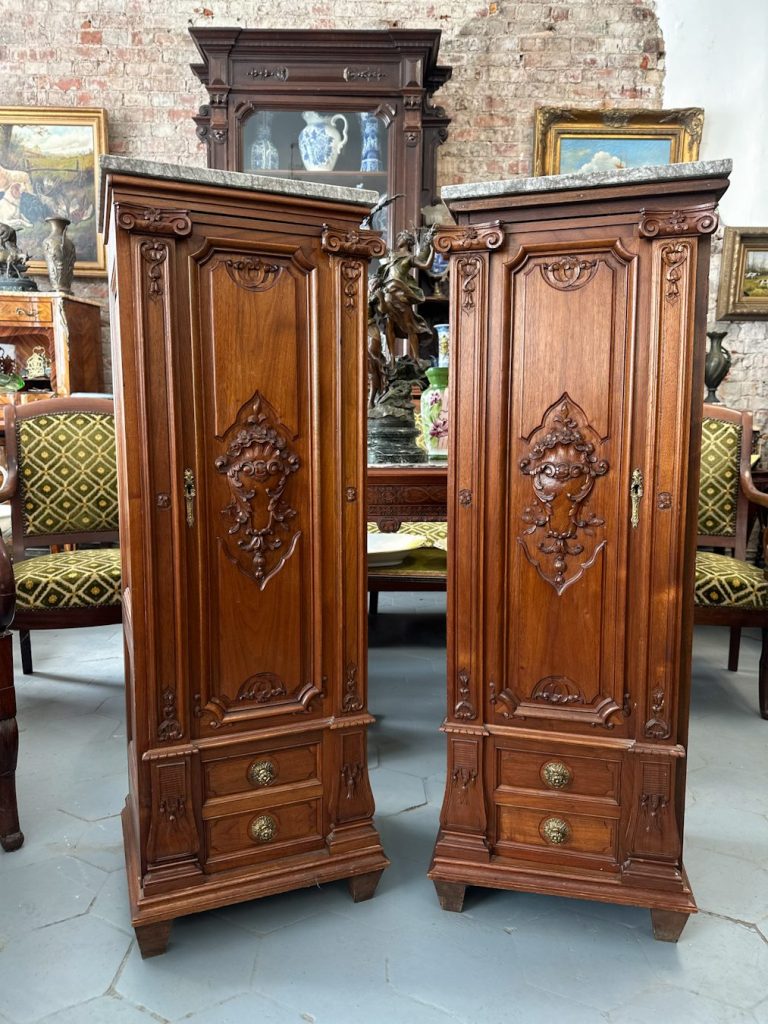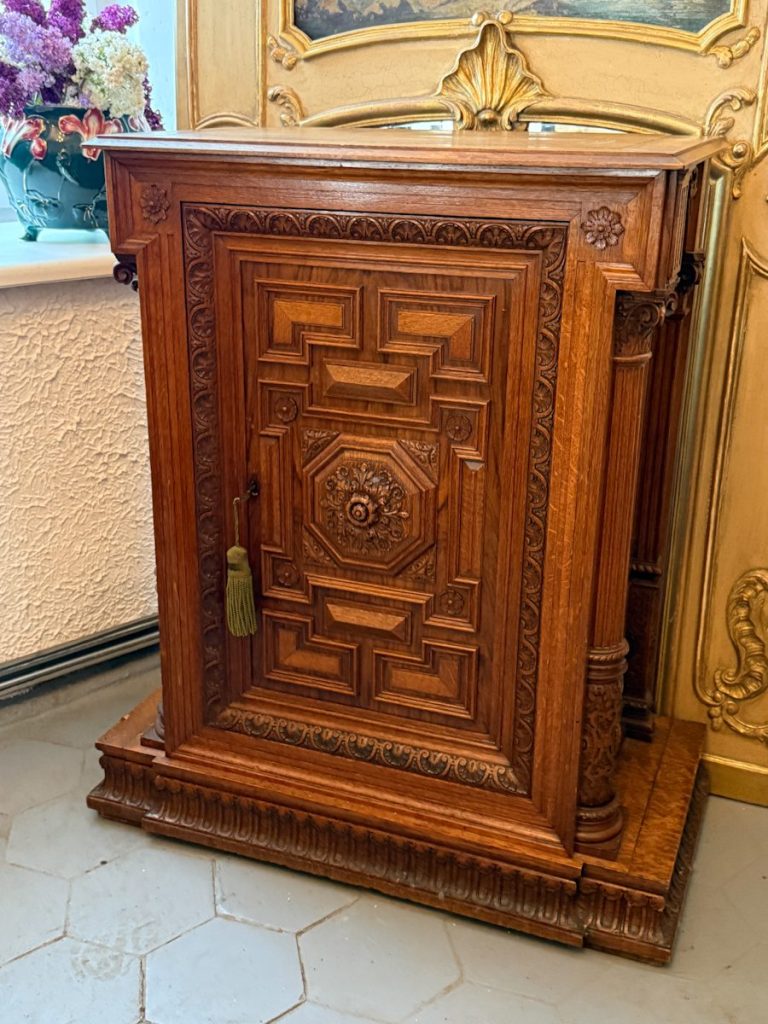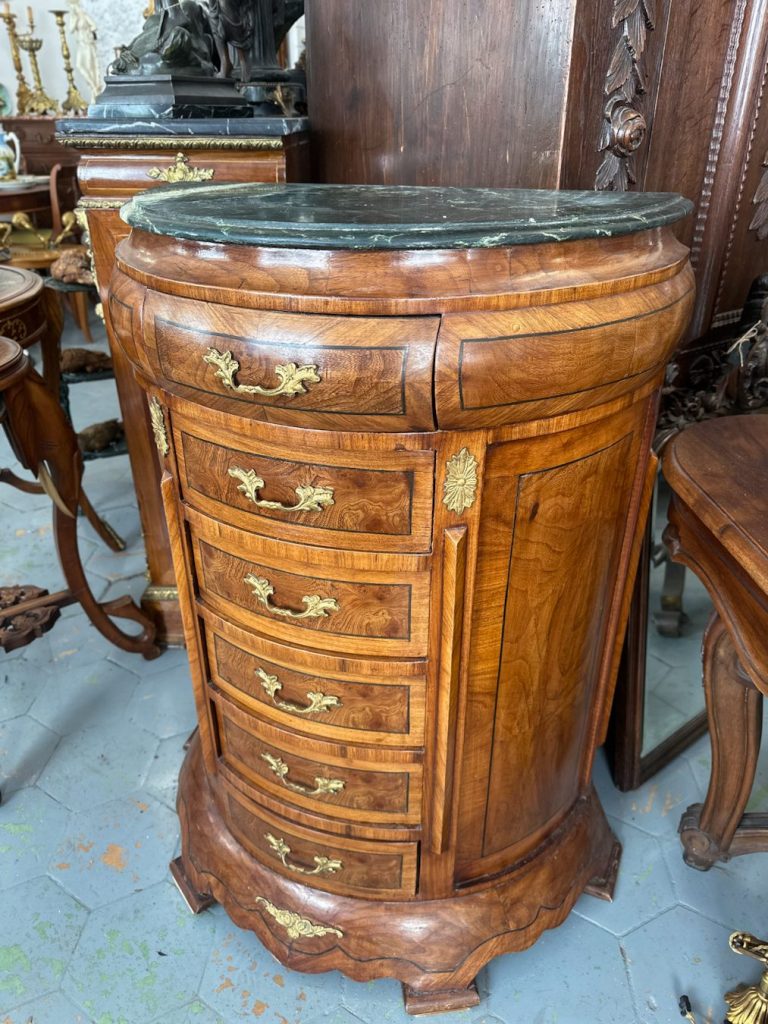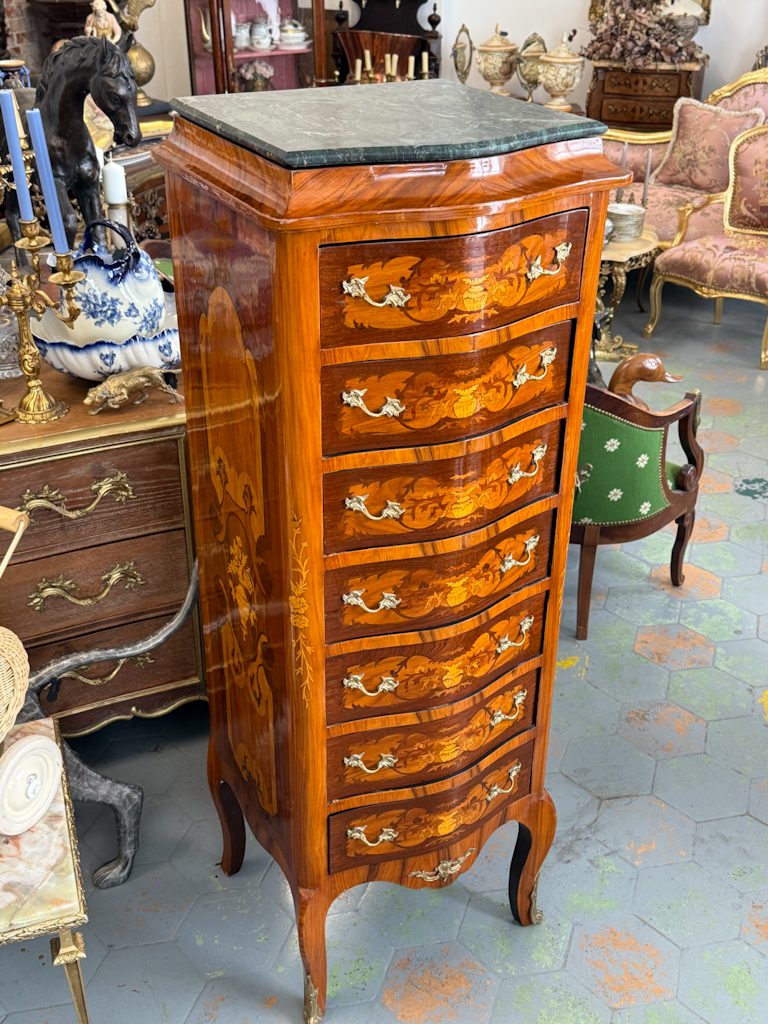
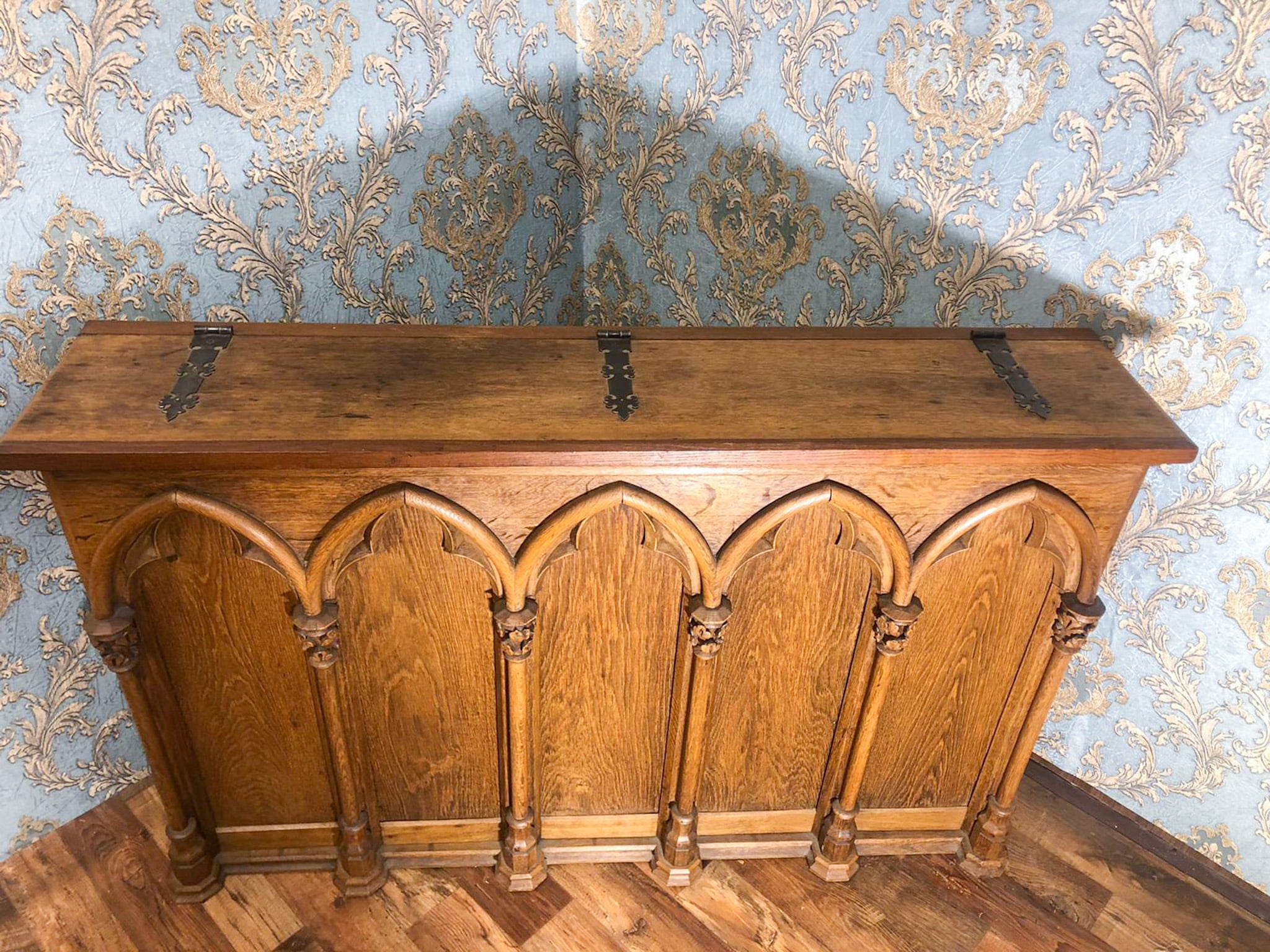
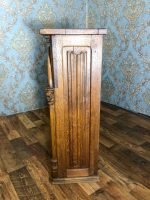
Oak map chest with Gothic carvings — Neo-Gothic, Europe, 19th century. This monumental piece, dating from 1860-1900, showcases exquisite craftsmanship with its five lancet arches and detailed iron hinges. Ideal for storing large drawings, maps, or as a striking decorative element in any historically inspired interior. 900,00 €
You’re now subscribed to price tracking for this product. We’ll notify you if the price drops. 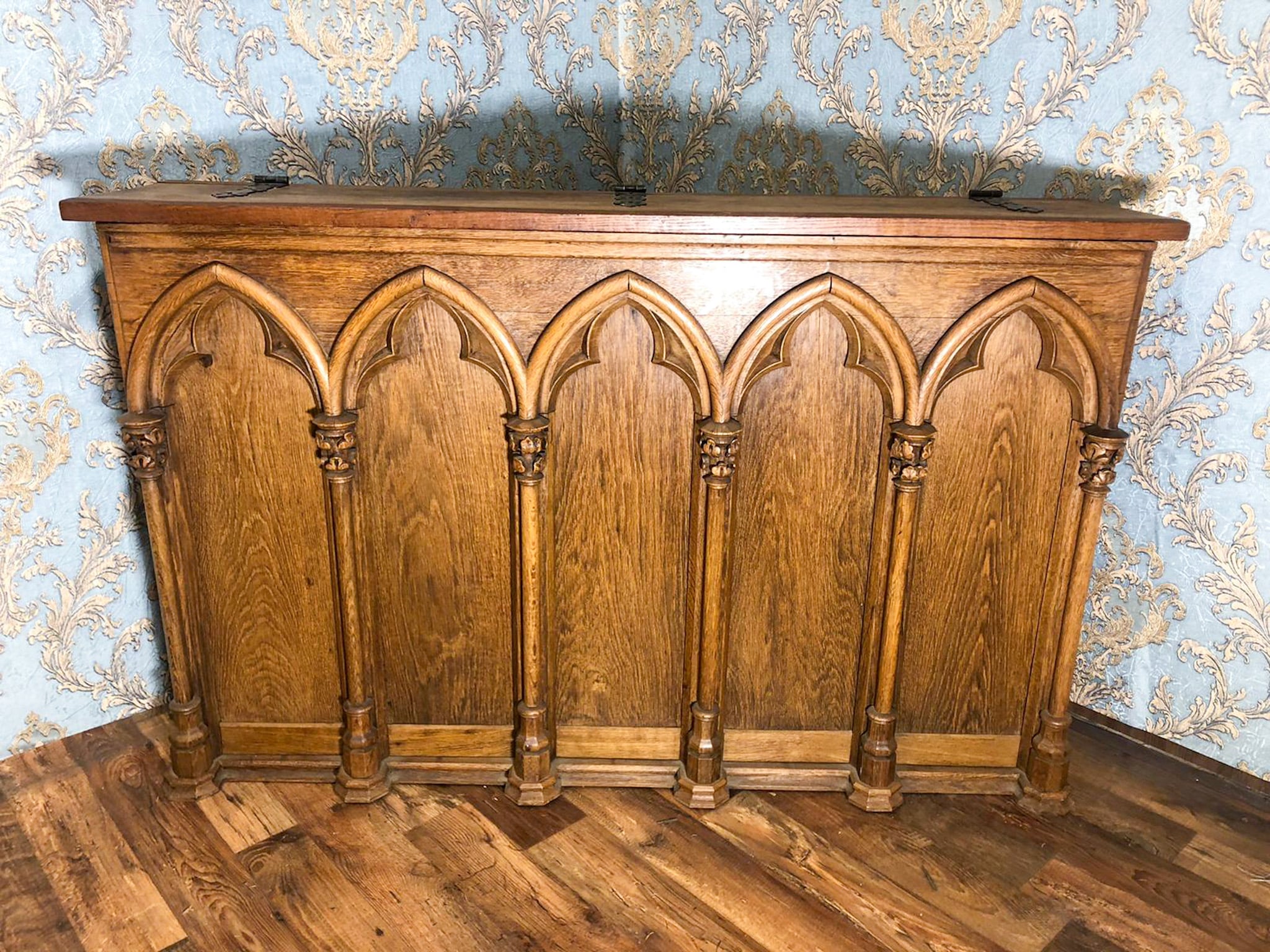
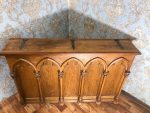
Oak Card Chest with Gothic Carvings, Very Heavy – Neo-Gothic, Europe, 19th Century (261)
Height 90 cm Width 142 cm Color BrownNaturalOak
Description
DESCRIPTION IN
―――――――――――――――――――――
📐 DIMENSIONS
Height: 90 cm × Width: 142 cm × Depth: 32 cm. Weight: very heavy (solid oak).
―――――――――――――――――――――
Oak Map Chest with Gothic Arch Carvings — Neo-Gothic / Historicism, Europe, approximately 1860–1900
―――――――――――――――――――――
🏛️ PERIOD, ARTISTIC STYLE, ERA
This monumental solid oak map chest is a distinguished example of the Neo-Gothic style within the Historicism era — a period in which 19th-century Europe enthusiastically returned to the forms of medieval cathedrals, and craftsmen competed in reproducing Gothic lancet arches, columns and capital systems in solid wood. Pieces of this type were used in architects’, cartographers’ and artists’ studios for storing large drawings, maps and project sheets — hence the designation map chest or drawing file cabinet.
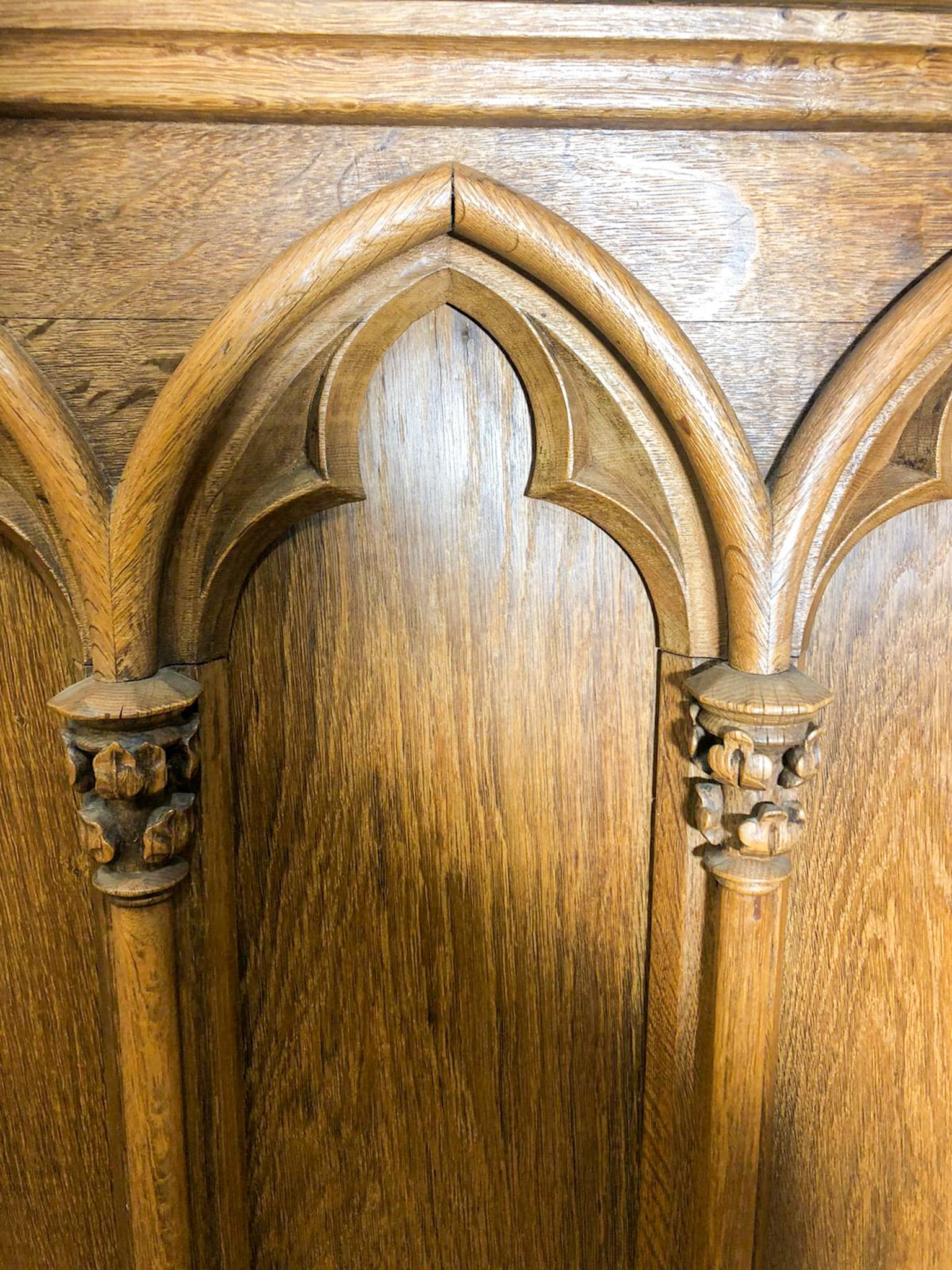
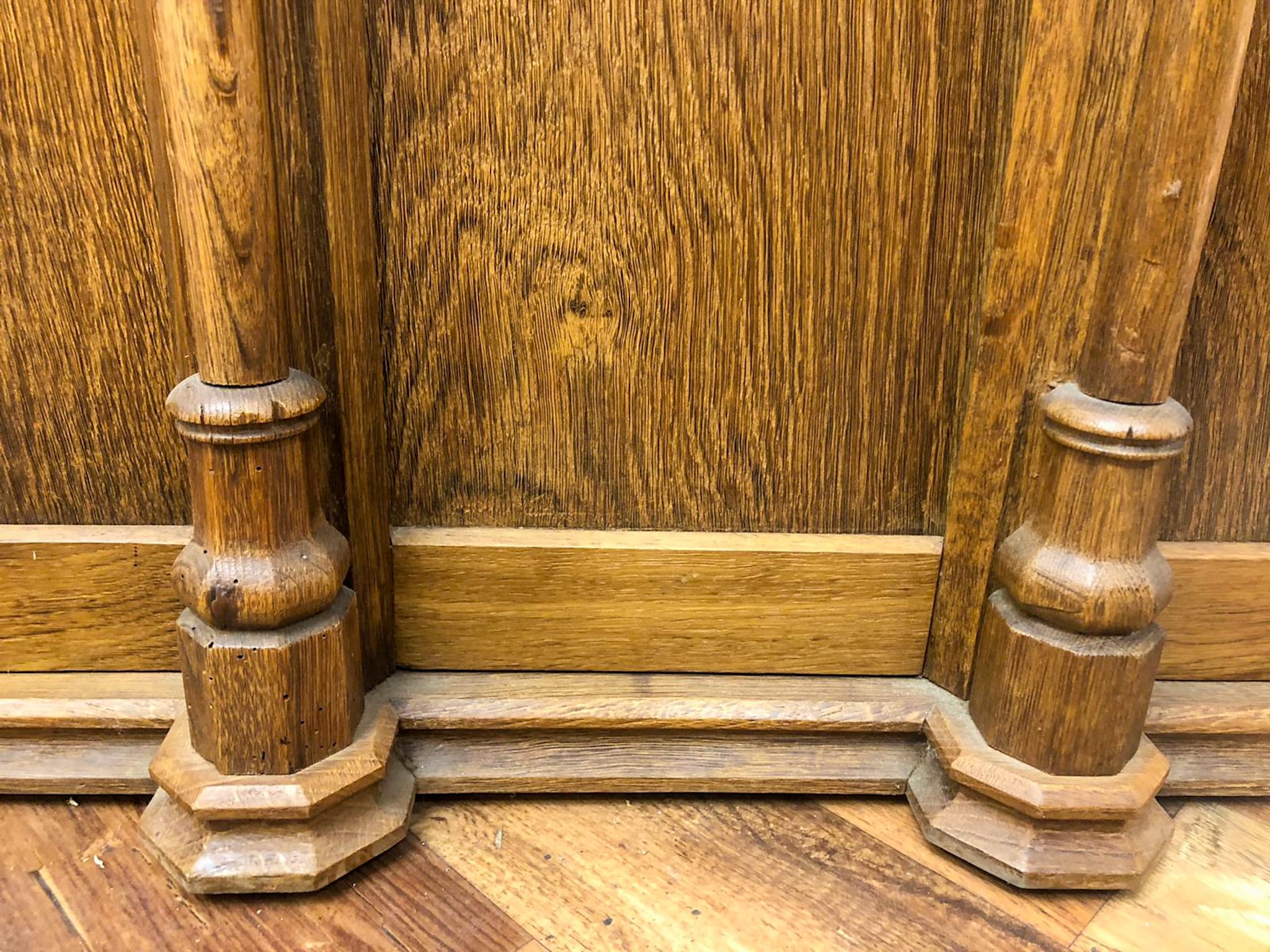
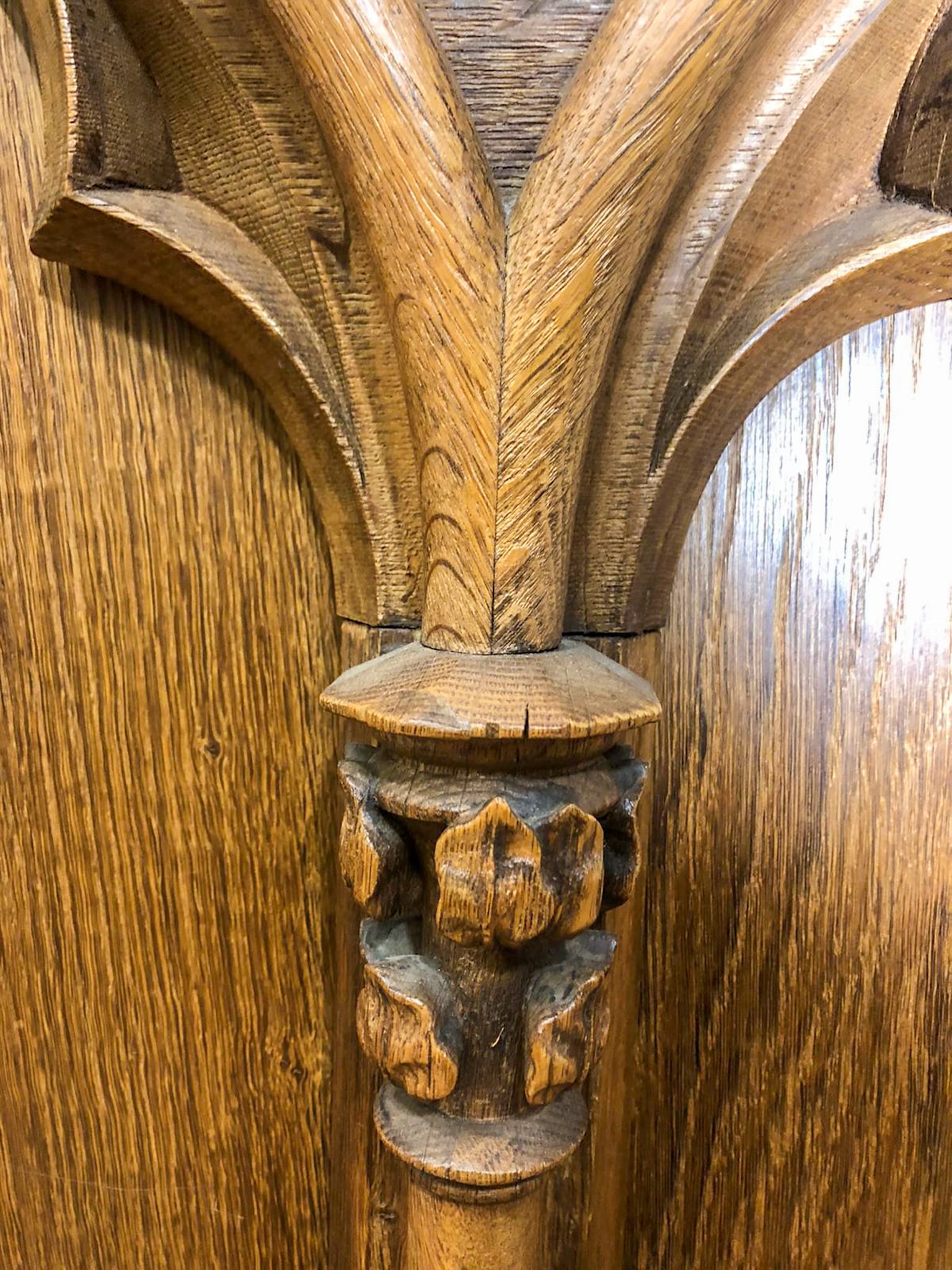
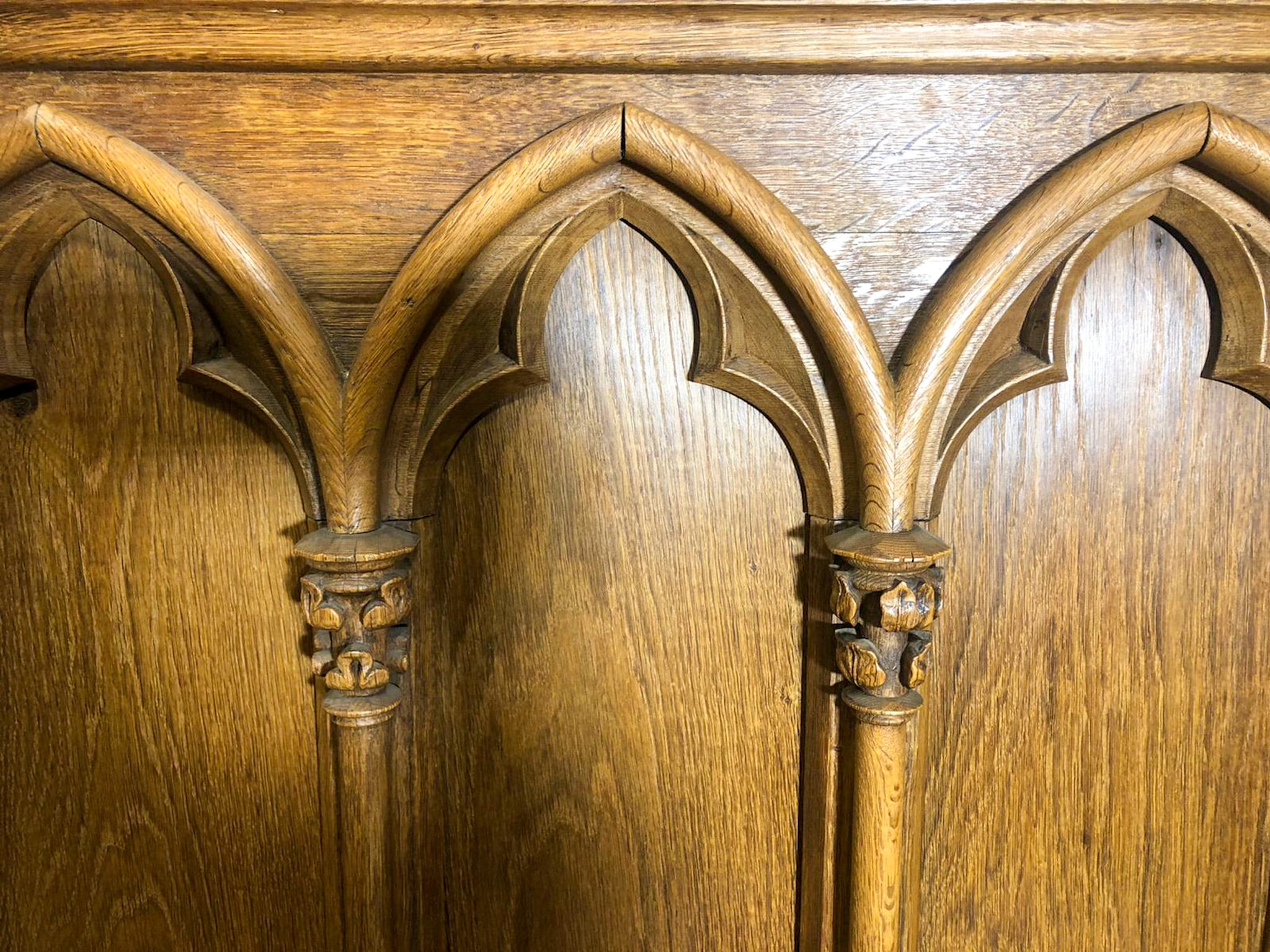
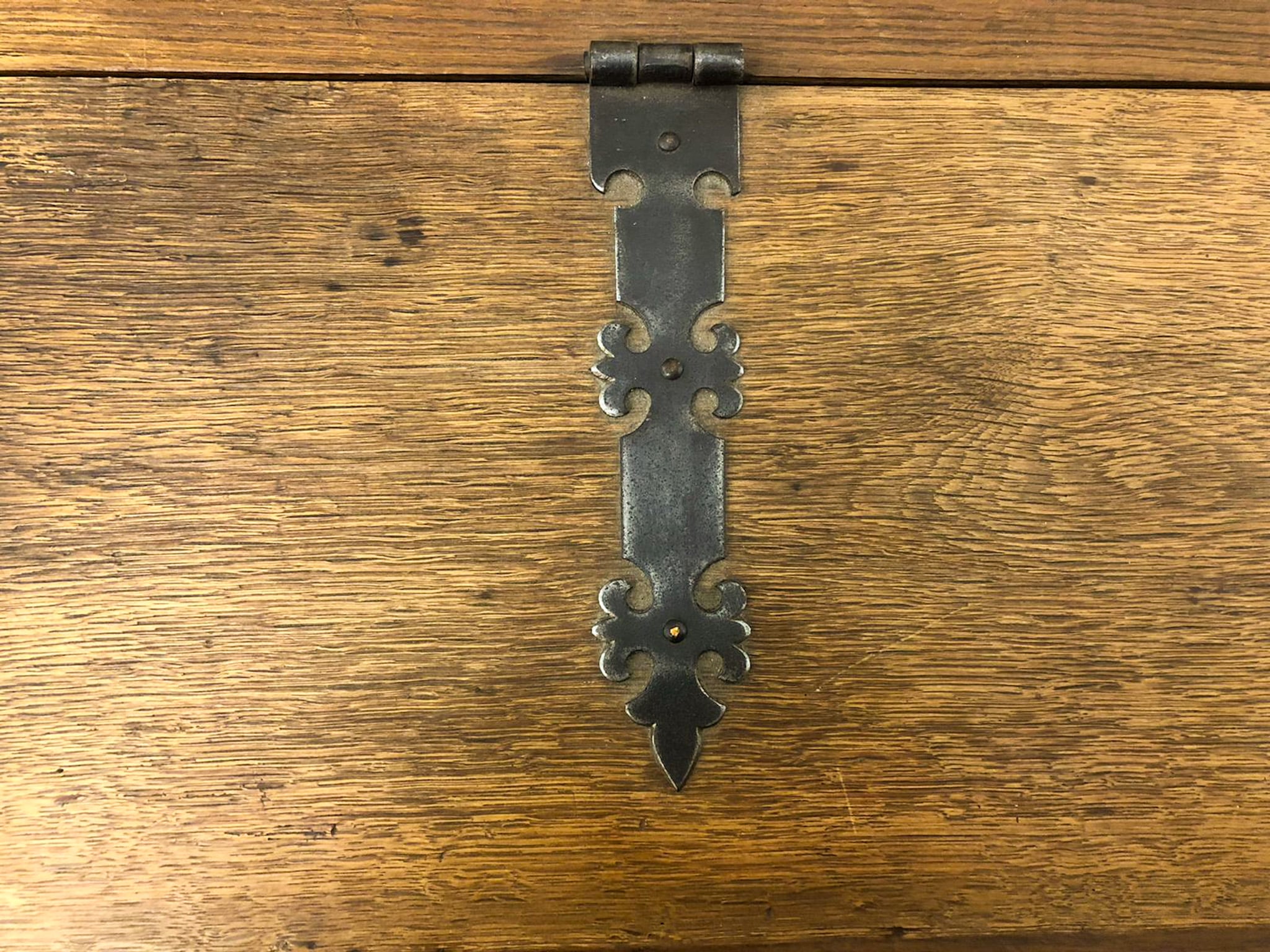
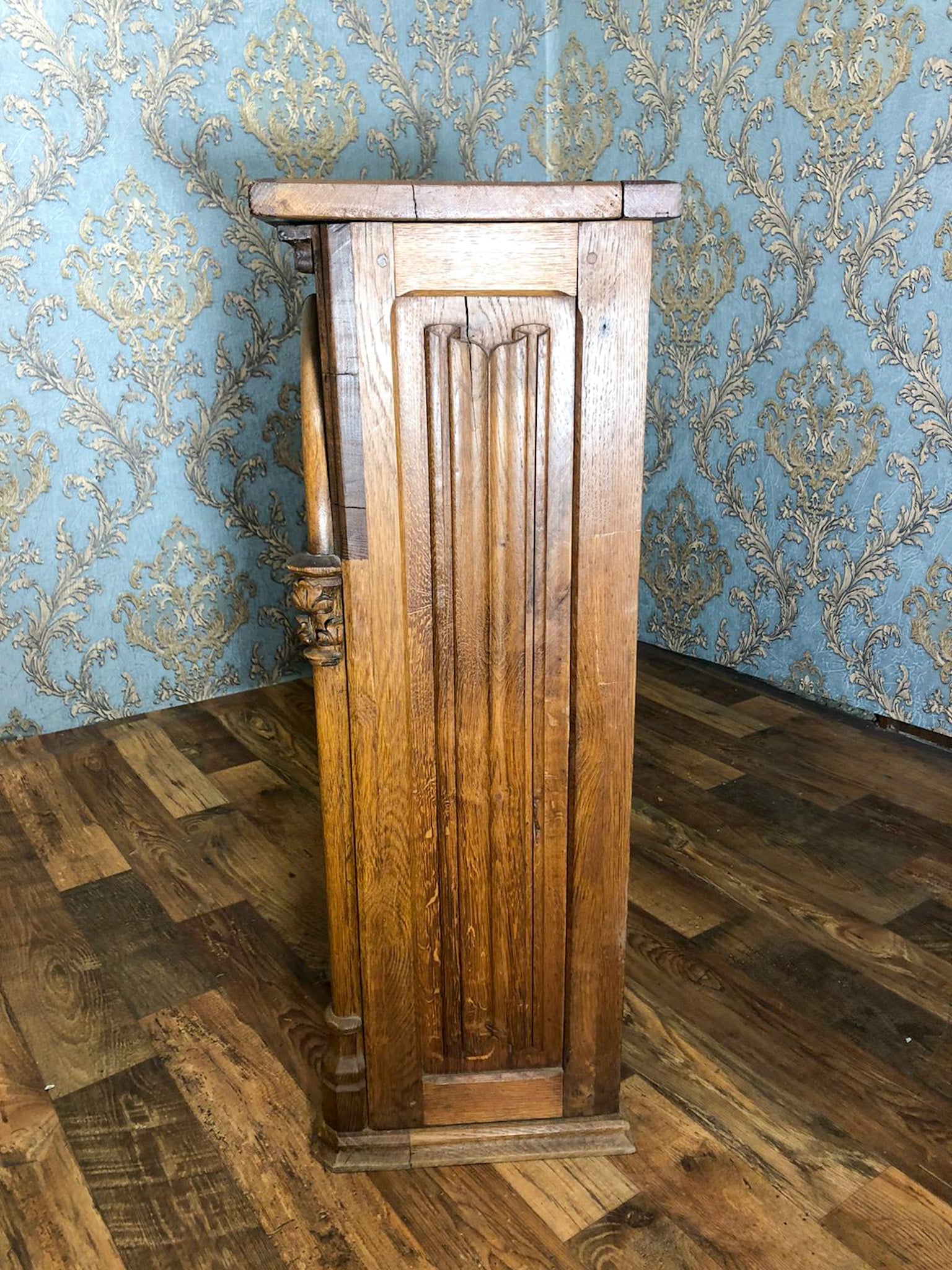
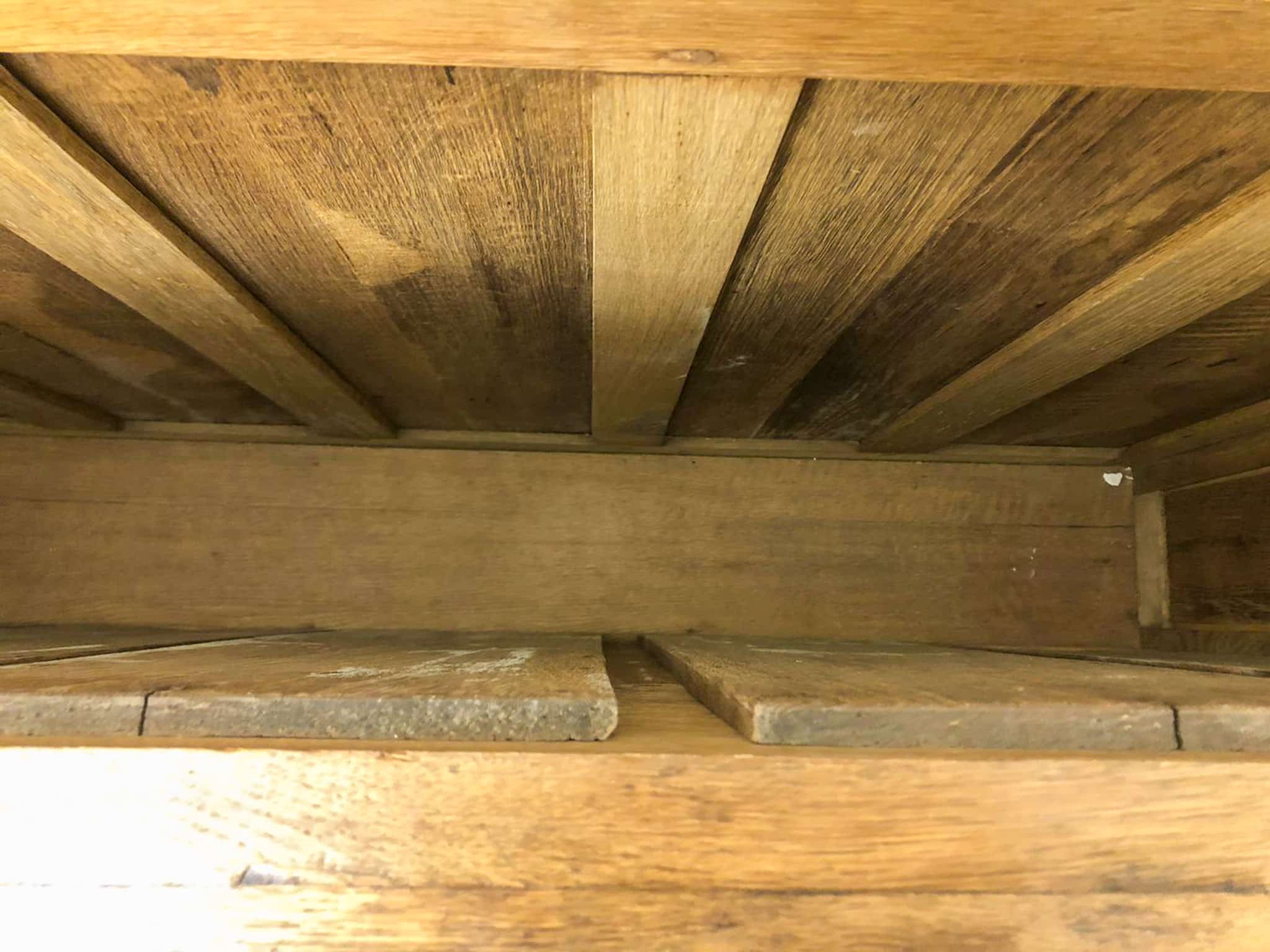
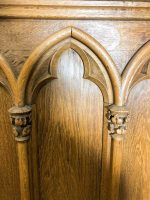
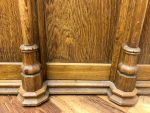
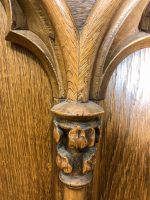
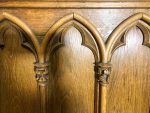
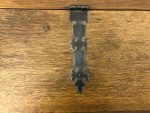
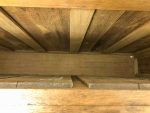
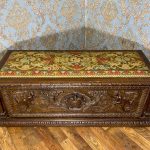
The five façade lancet arches — with sharp Gothic points and trefoil ornaments at their crowns — recall the tracery of cathedral windows. Each arch rests on tower-like columns with individually carved acanthus and leaf capitals. The octagonal column bases — plinthes — lend the lower section architectural stability and a finished quality. The lid, fitted with two wrought iron hinges bearing fleur-de-lis ornament, is among the most distinctive details of the piece, confirming that this is not merely a storage chest but an artistic object in its own right. The interior features unlacquered solid oak boards with a natural patina.
This chest is dateable to approximately 1860–1900 and belongs fully to the Belle Époque — 1871 to 1914 — when architects and engineers were engaged in realising Europe’s greatest construction projects.
Belle Époque snapshot: In 1889, Gustave Eiffel completed the final construction drawings for his tower in his Paris office on the rue Rabelais — thousands of drawing and map sheets stored in exactly this type of solid wood chest with Gothic arch façades. That same year, students of Viollet-le-Duc continued his work on the restoration of Notre-Dame de Paris, and Neo-Gothic forms were not merely an artistic ideal but a daily working tool. This chest may well have held the maps of that same world.
―――――――――――――――――――――
⚜️ MAKER AND MANUFACTORY MARK
No visible maker’s mark is present. Based on the quality of the oak, the precision of the lancet arch carving and the execution of the wrought iron hinges, the probable origin is France, Belgium or England, where Neo-Gothic furniture production in the second half of the 19th century reached the highest level in Europe. In England, pieces of this type were produced by firms such as Holland & Sons and Gillows of Lancaster — masters of high-quality office and library furniture. The fleur-de-lis form of the hinges points toward or Belgian origin.
―――――――――――――――――――――
💎 RARITY AND SIGNIFICANCE
A solid oak Neo-Gothic map chest with a fully preserved façade, five lancet arches and original hinges of this scale is an exceptionally rare find. Functional pieces of this type were frequently destroyed or converted as office storage systems changed. Surviving examples are sought by architectural offices, libraries, museums and collectors who appreciate the repetition of medieval forms in the industrial age.
―――――――――――――――――――――
🕯️ USE IN INTERIOR, DESIGN AND PHOTOGRAPHY
This chest is ideal as the central element of a library, architect’s office, studio or gallery. Its horizontal format — 142 cm in width and only 32 cm in depth — allows it to be placed even in narrower spaces as a wall element. Practical uses include storing large drawings, posters, maps or fabrics. In a Gothic Revival or Arts & Crafts interior it is a culminating piece. In photography — an unmistakable accent of a medieval cathedral and a 19th-century architect’s studio.
―――――――――――――――――――――
🎁 GIFT AND PERSONALISATION
This chest is an outstanding acquisition for architectural offices, design studios, libraries and museums. As a personal gift — for an architect, artist or history enthusiast whose workspace demands a unique identity. In astrological symbolism — Capricorn, Scorpio and Aquarius — personalities with a strong historical vision and a sense of originality.
―――――――――――――――――――――
🔍 CONDITION
The chest is in very good overall condition considering its age and scale. The oak façade displays a deep, warm patina. The lancet arch carvings are sharp and detailed throughout. Fine age cracks are visible in certain column sections — a normal consequence of movement in solid wood. The hinges are original and structurally stable. The interior is unlacquered, with a natural age patina and traces of dust. The lid surface shows minor wear. The condition of the item is fully reflected in the photographs.
―――――――――――――――――――――