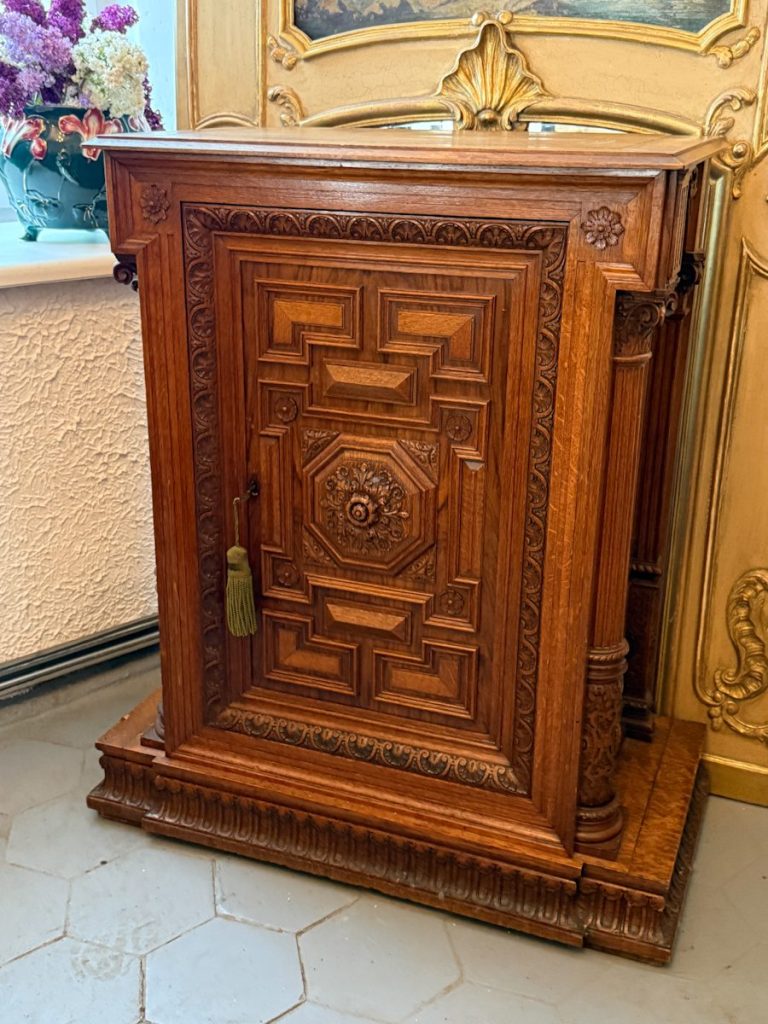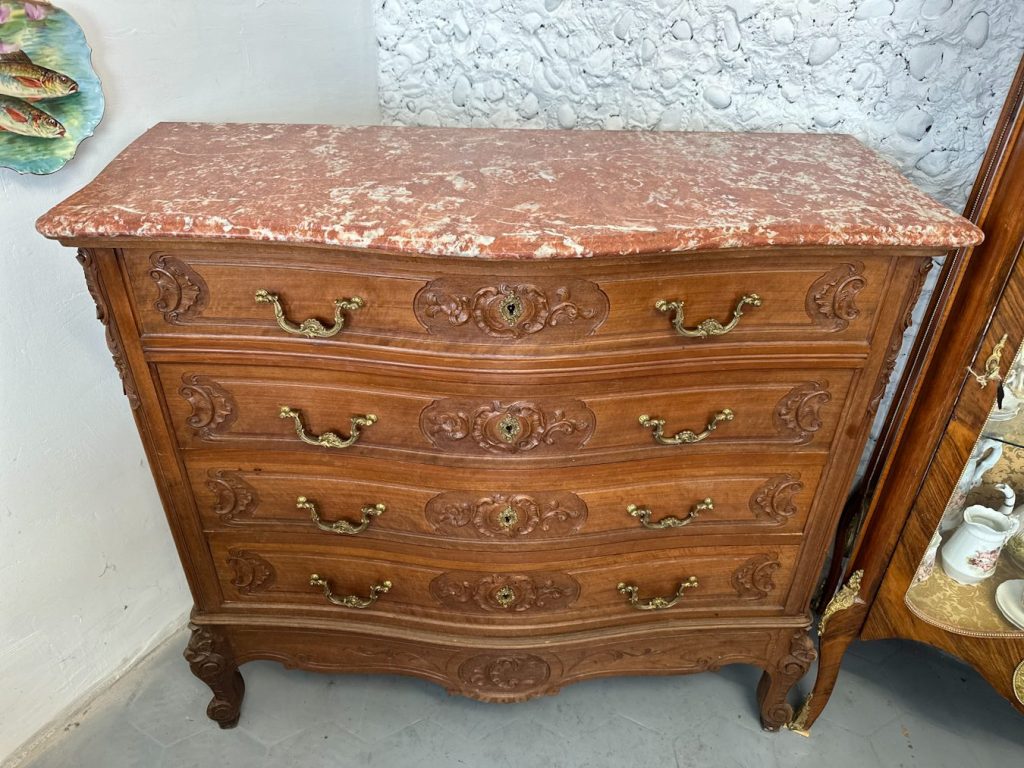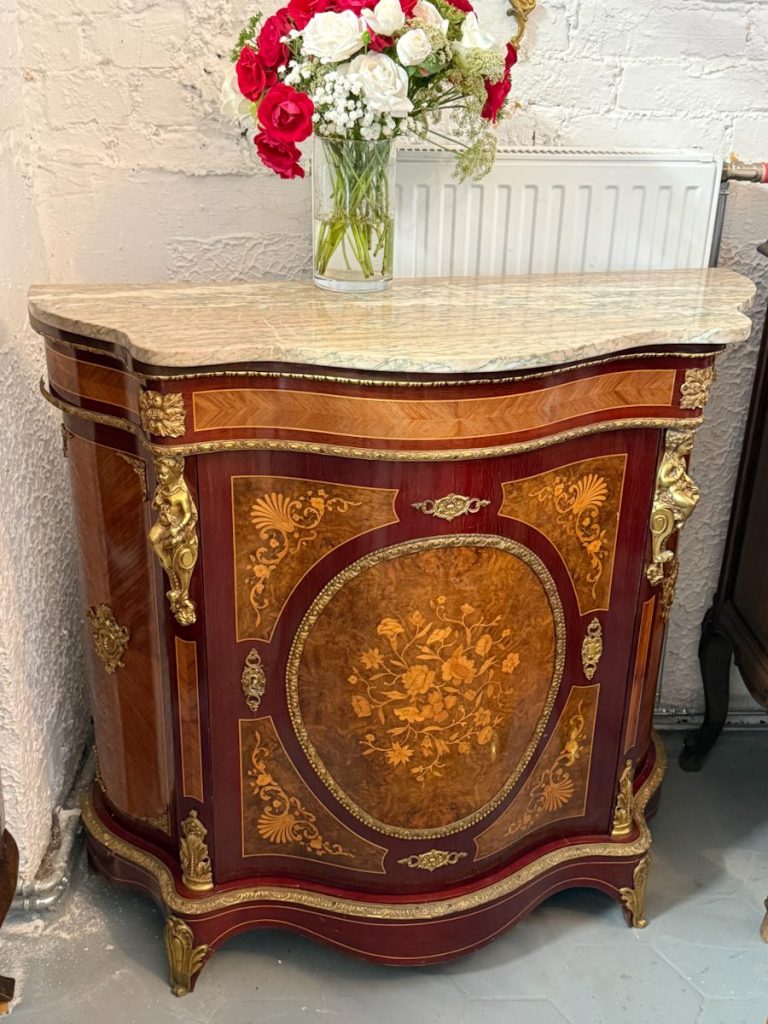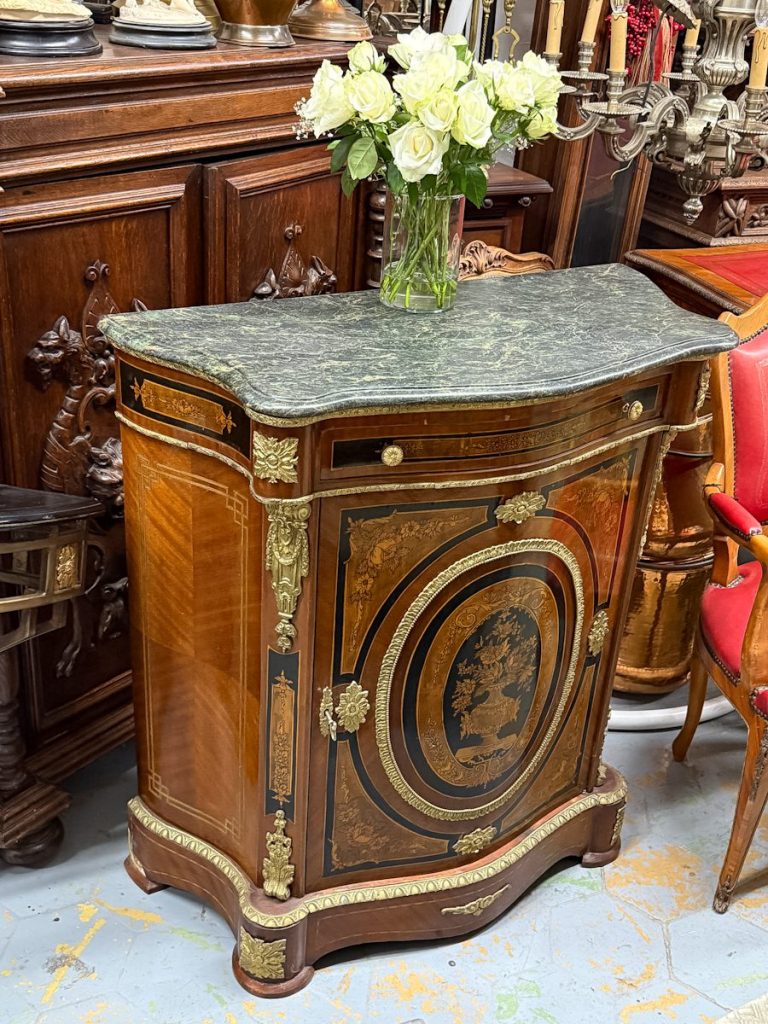
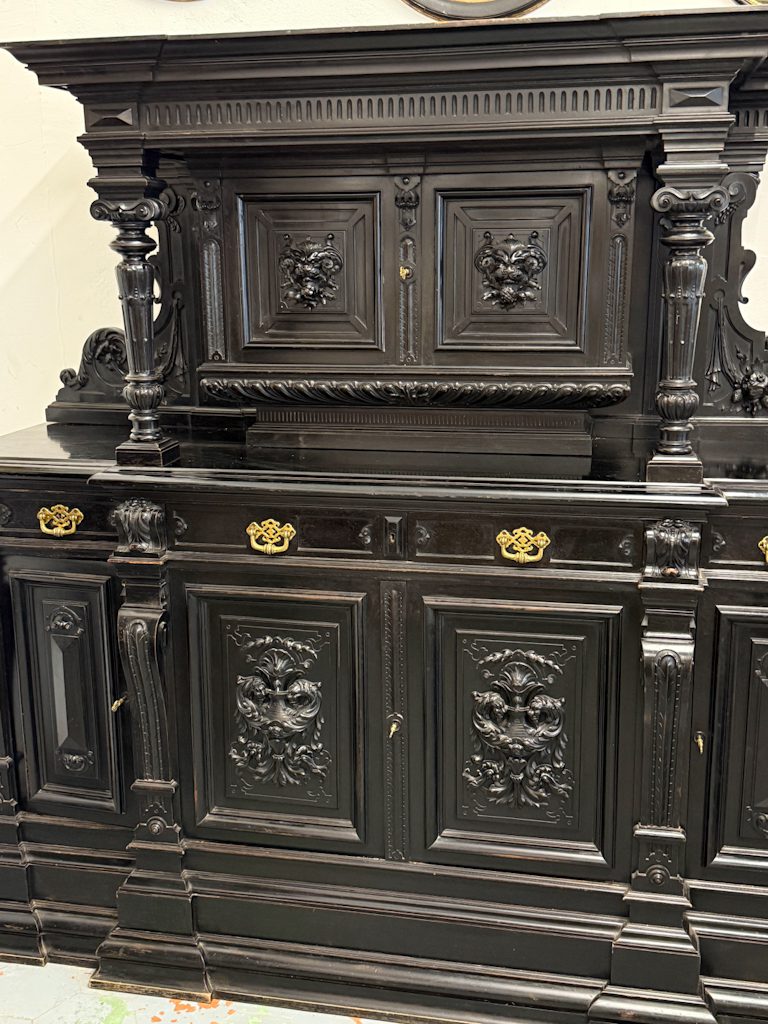
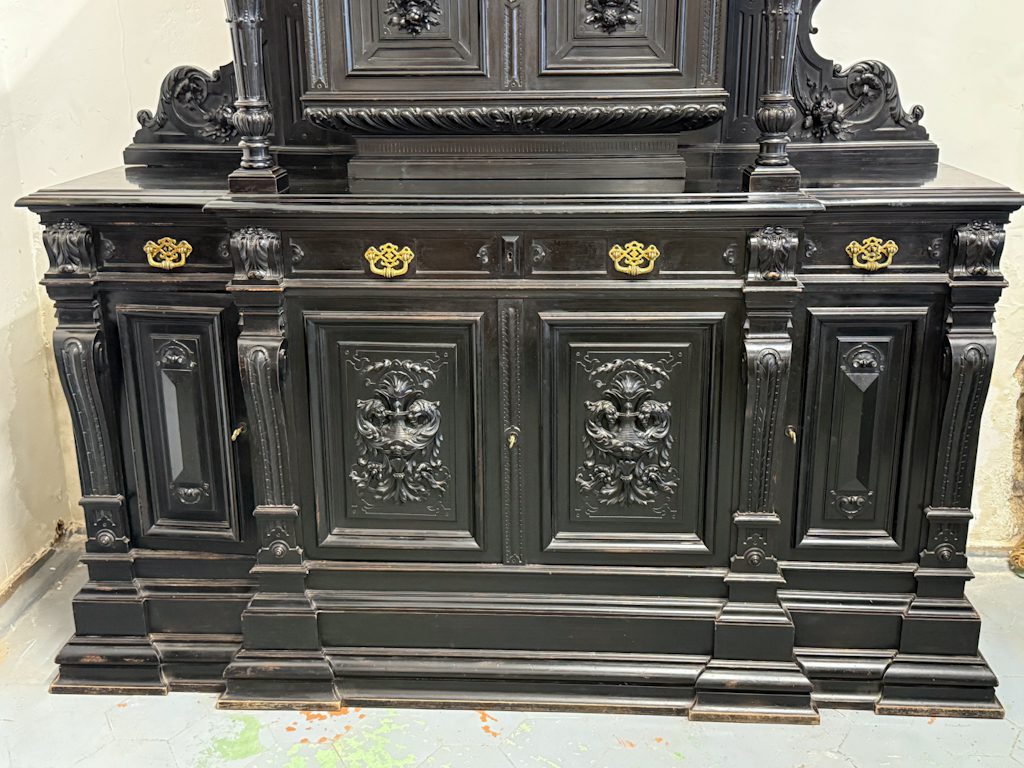
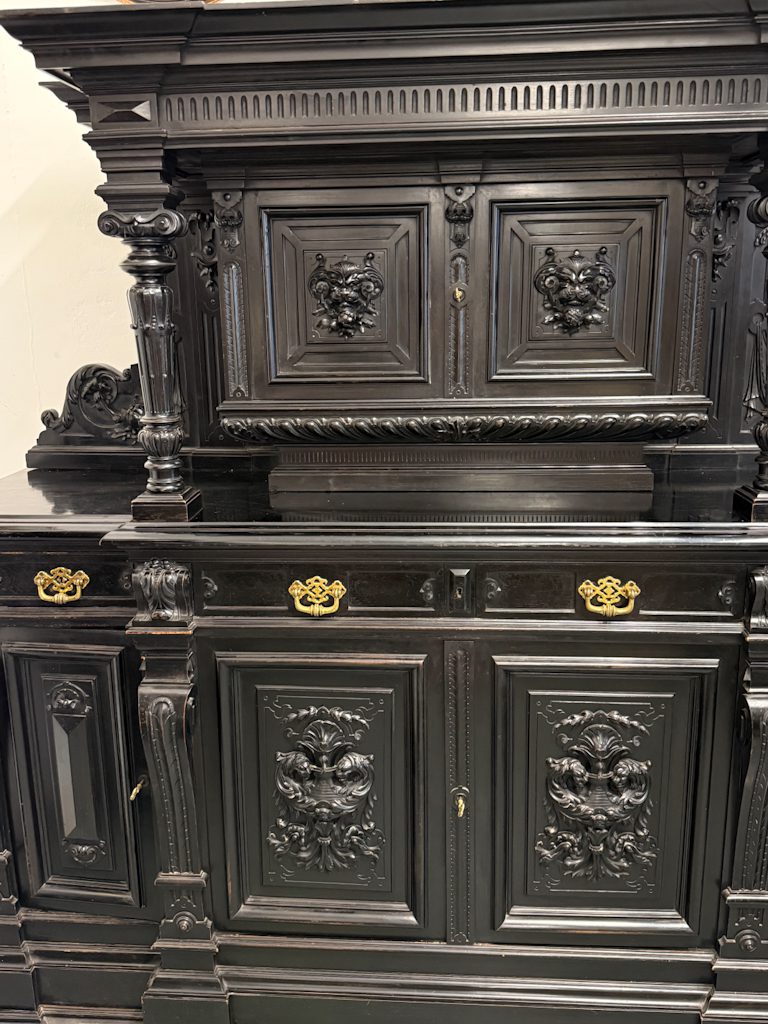
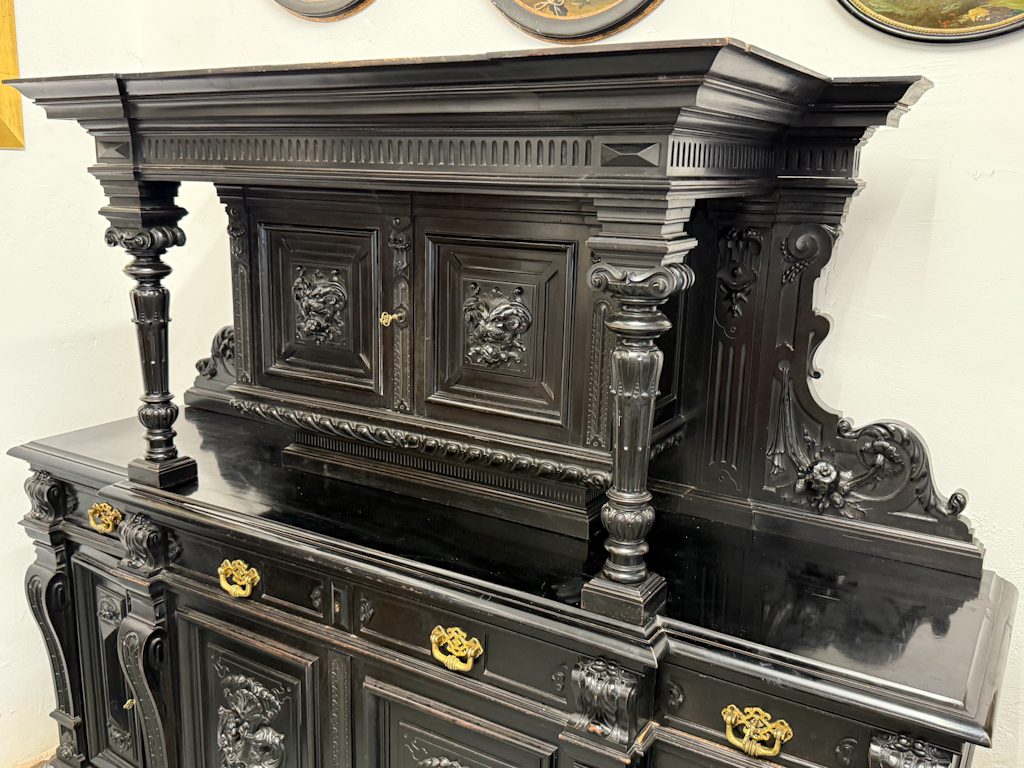
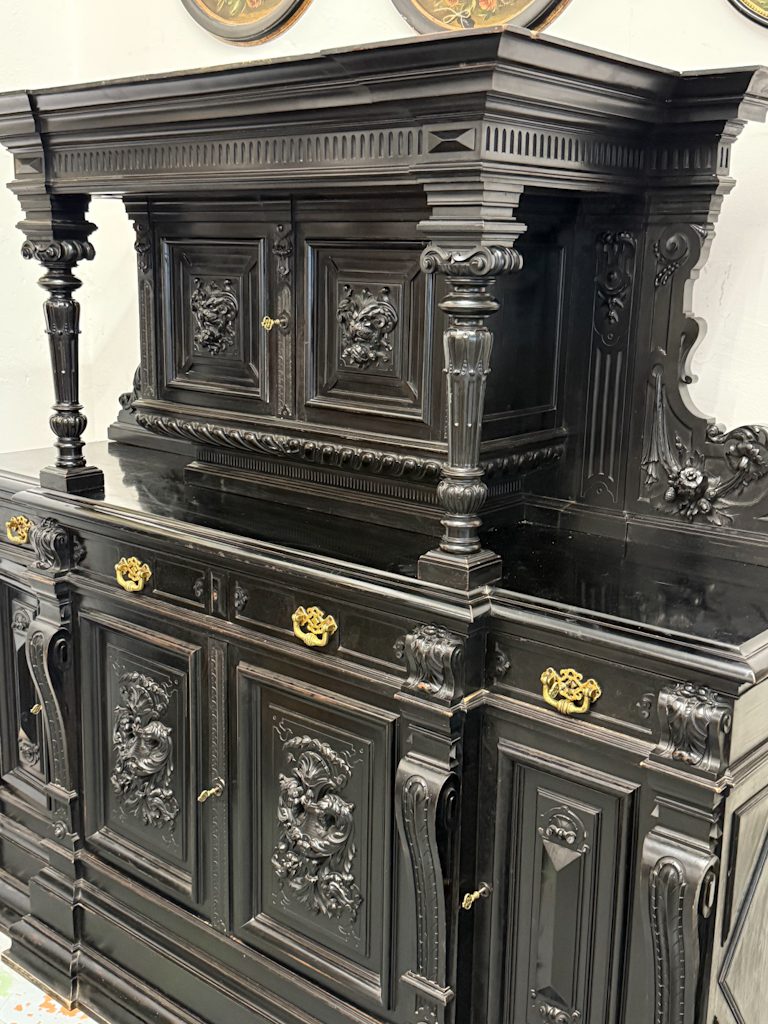
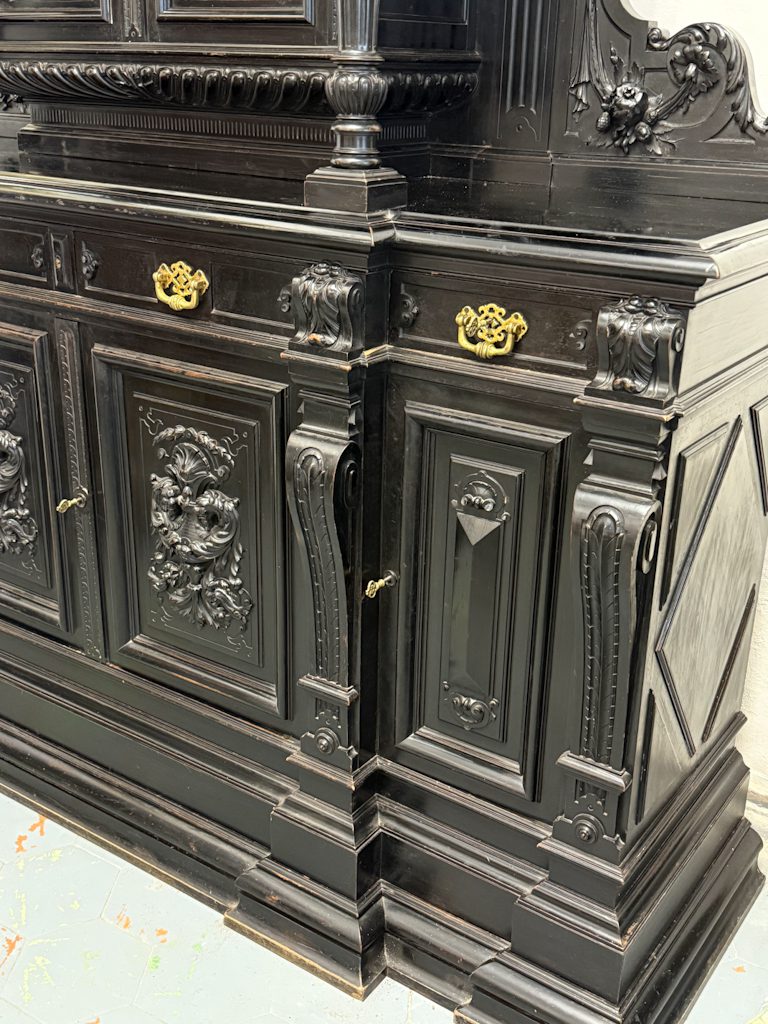
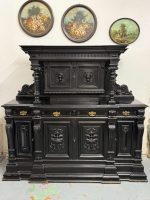
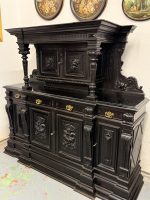
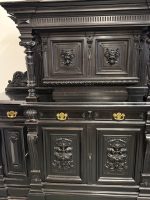
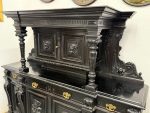
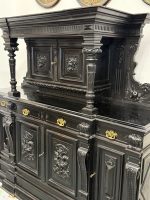
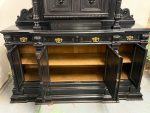
Monumental Ebonized Oak Two-Tier Buffet — Neo-Renaissance, France/Belgium, c. 1870–1895. This impressive piece showcases masterful craftsmanship with carved mascarons, fluted columns, and bronze handles, embodying the grandeur of the Belle Époque era. A rare and significant collector’s item, perfect as a statement piece in grand interiors. 4 500,00 €
You’re now subscribed to price tracking for this product. We’ll notify you if the price drops. 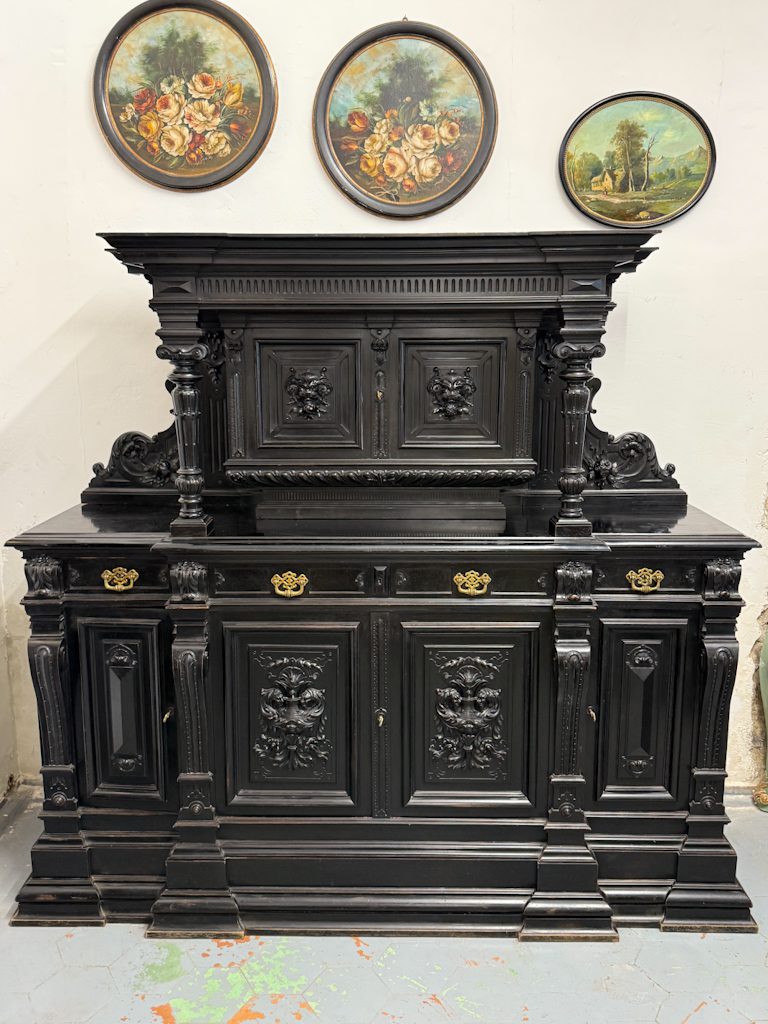
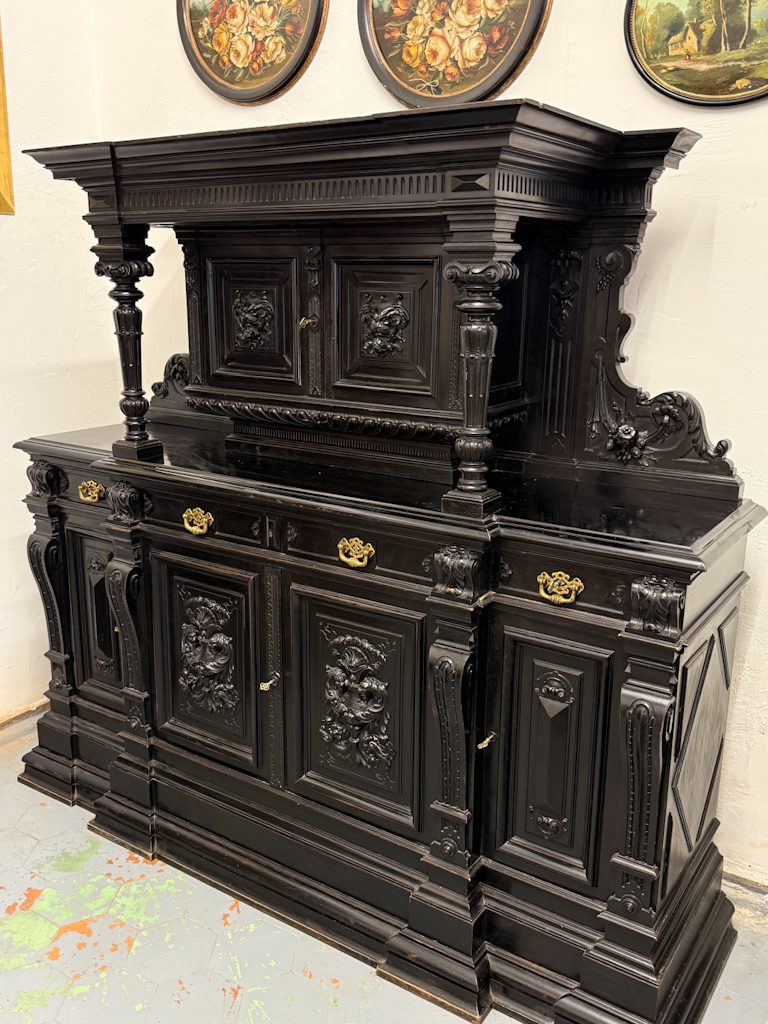
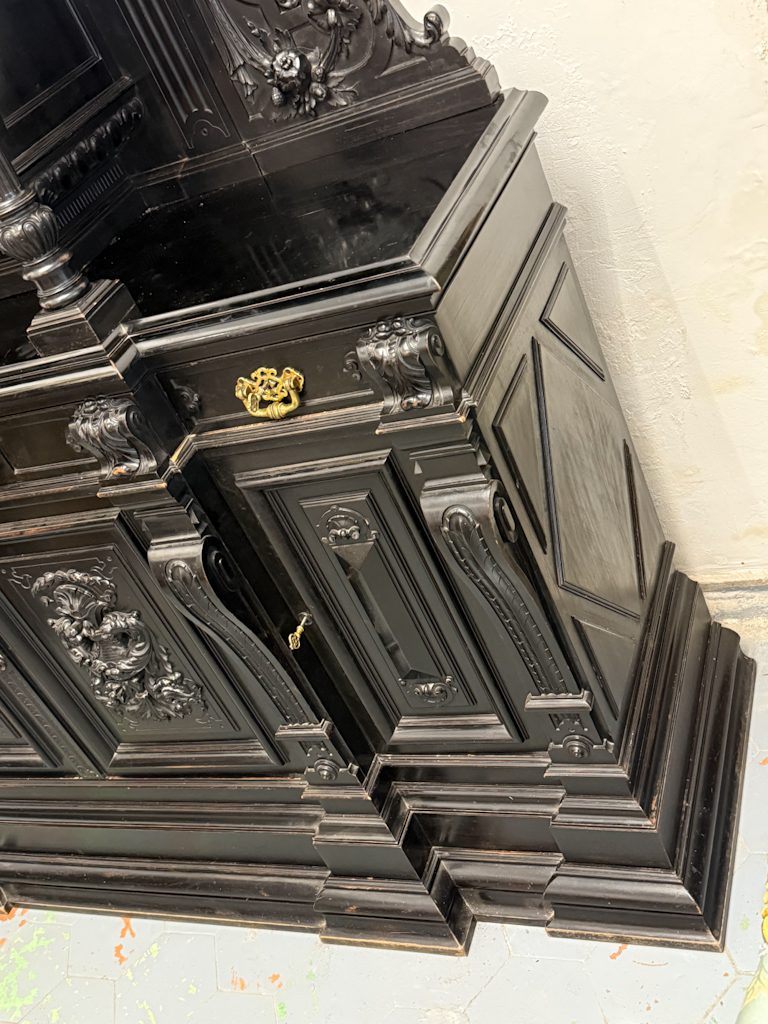
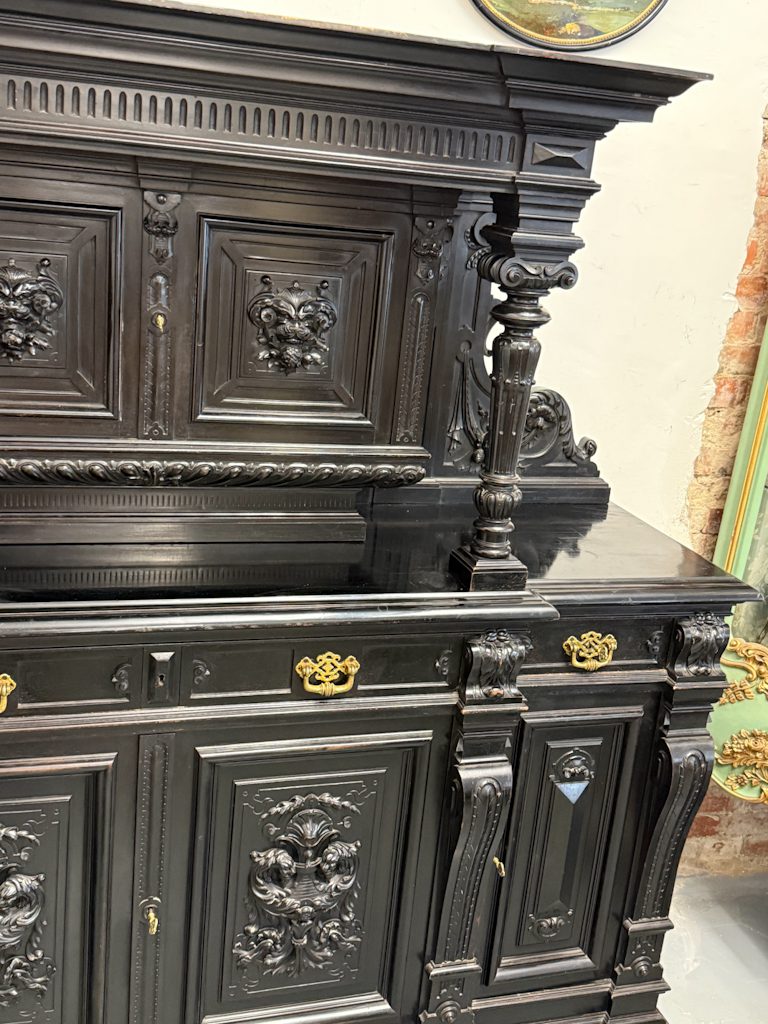
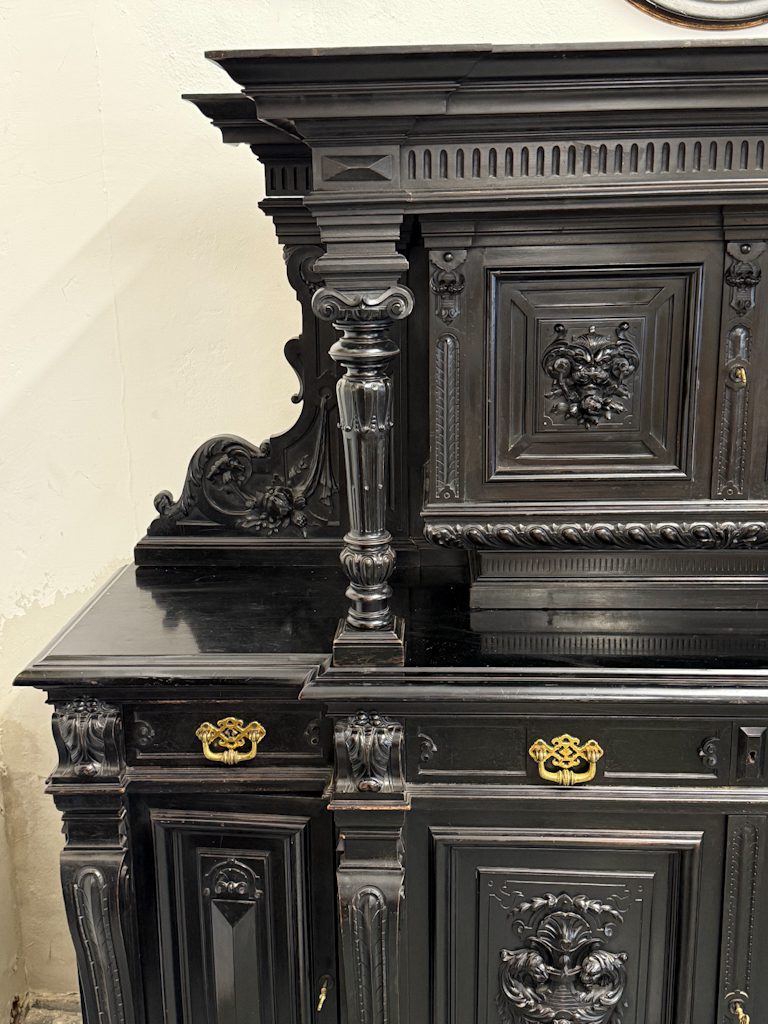
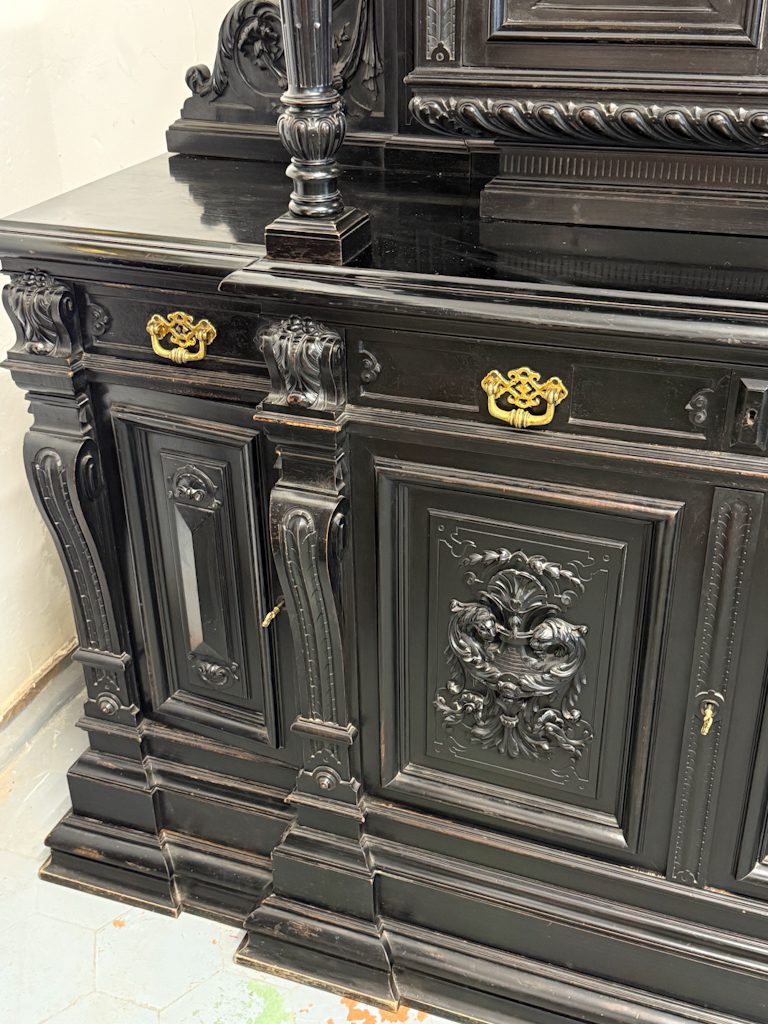
Representative Ebonized Oak Two-Tiered Buffet — Neo-Renaissance, France/Belgium, 19th Century (5783)
Height 190 cm Width 205 cm Color GoldNaturalBurgundy
Description
DESCRIPTION IN
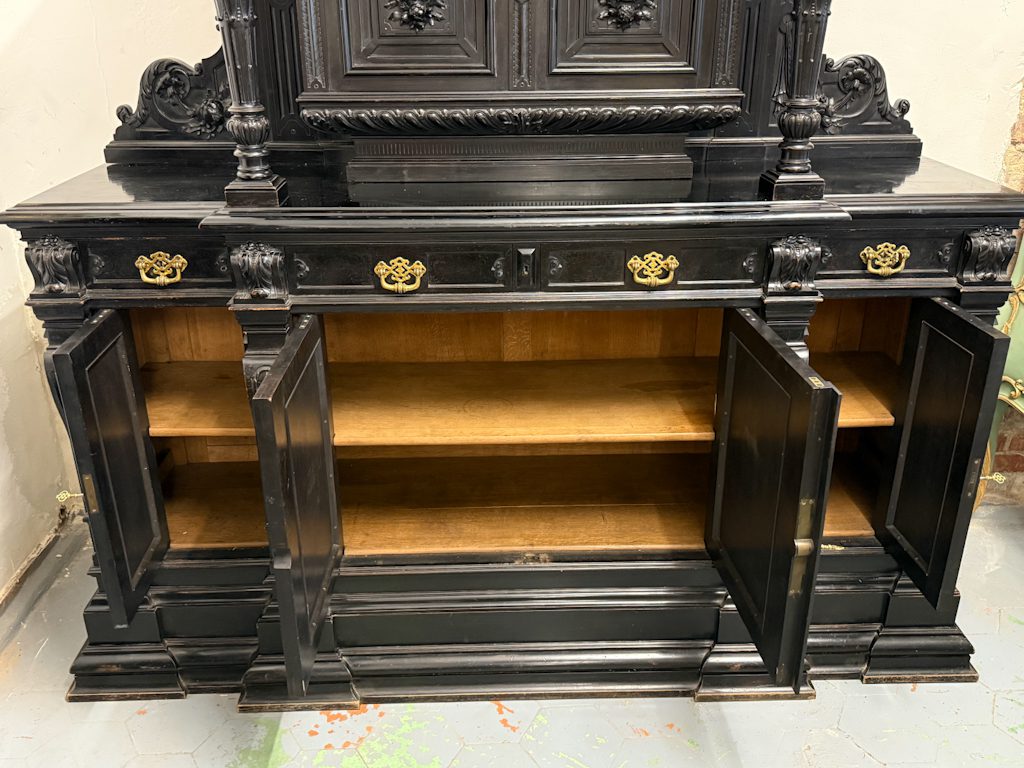
📐 DIMENSIONS Height 190 cm × width 205 cm × depth 53 cm. Extremely heavy — minimum 4 people required for moving.
―――――――――――――――――――――
Monumental Two-Tier Ebonized Oak Buffet — Neo-Renaissance / Historicism, France or Belgium, circa 1870–1895.
―――――――――――――――――――――
🏛️ PERIOD, ARTISTIC STYLE, ERA
This buffet belongs to the golden years of the Belle Époque — that extraordinarily fertile period between 1871 and 1914 when France and Belgium produced the finest furniture in Europe for the grand city residences and private estates of the haute bourgeoisie. The artistic style is Neo-Renaissance — one of the leading currents within Historicism — in which 19th-century cabinetmakers united the architectural discipline of the Renaissance with the decorative energy of the Baroque.
The buffet deux corps — a two-tier buffet — was the most prestigious dining room furniture format in France and Belgium. Such a piece was commissioned only by the upper bourgeoisie and aristocracy: it was a declaration of status and cultural refinement, visible to every guest who entered the dining room.
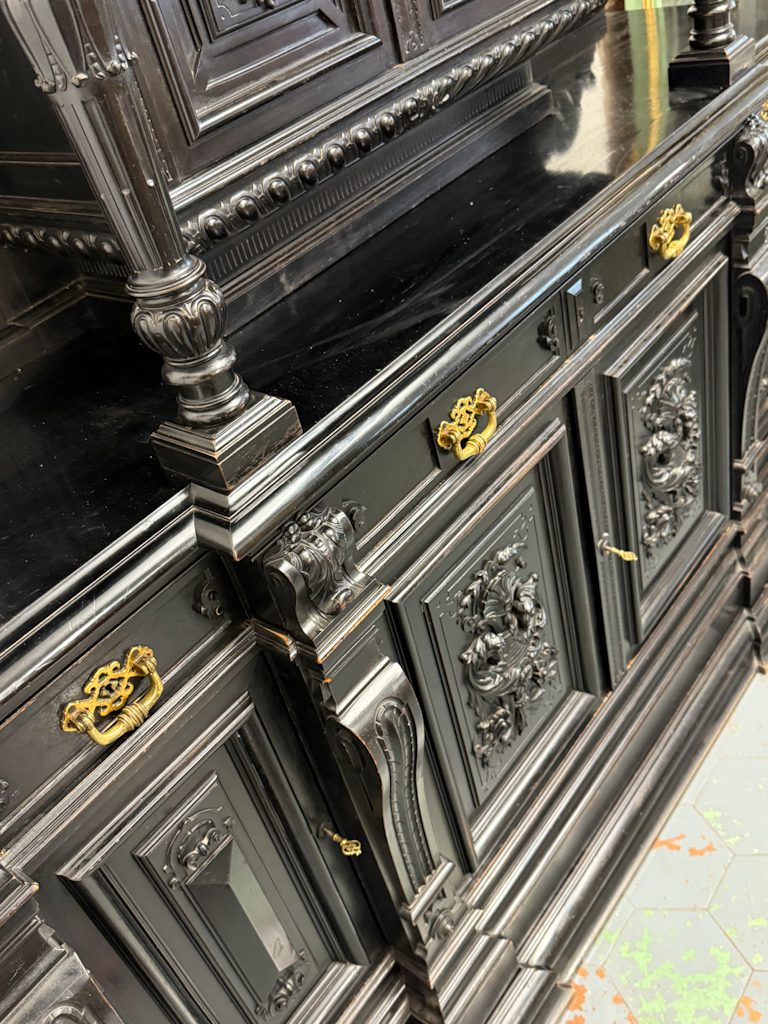
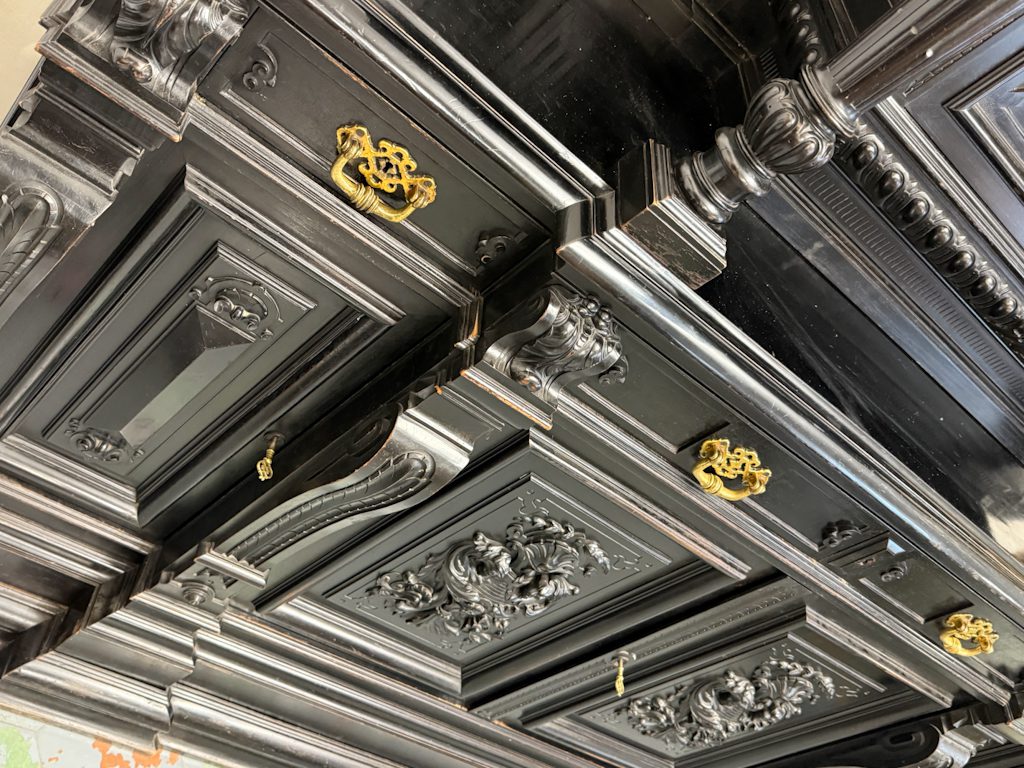
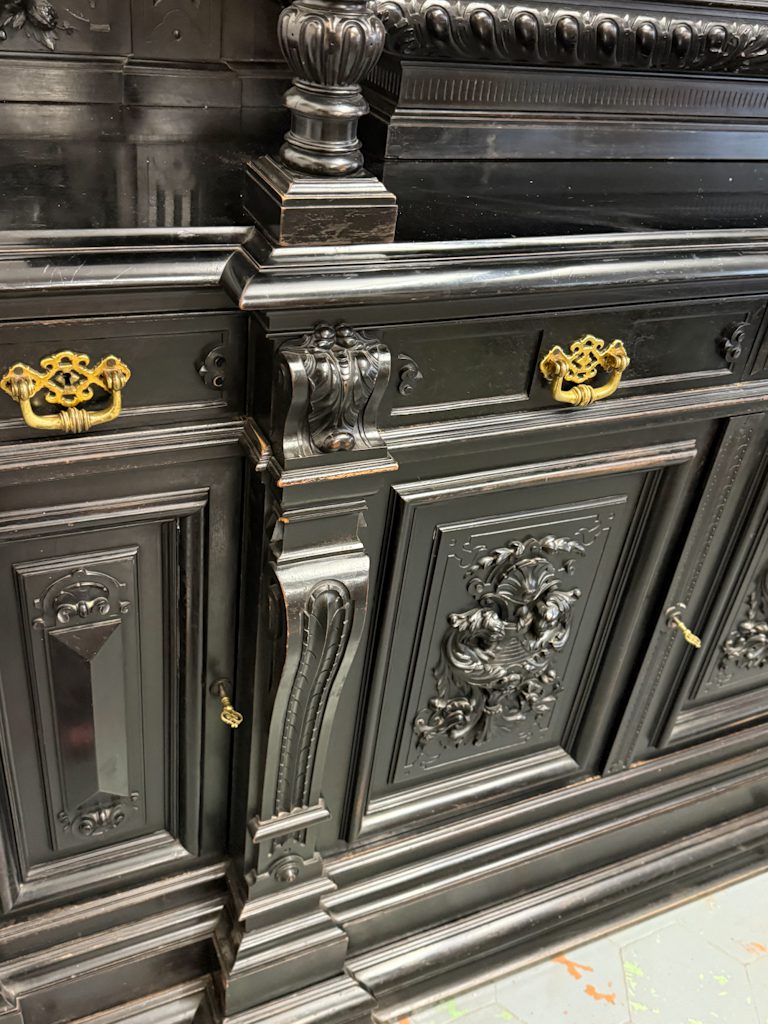
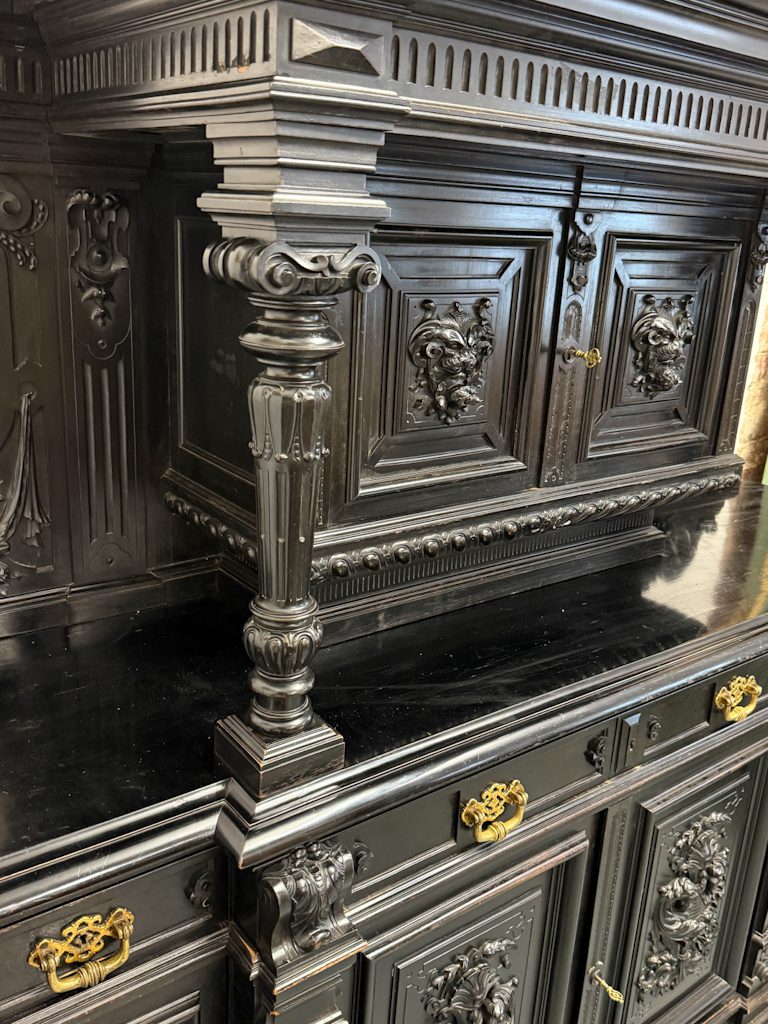
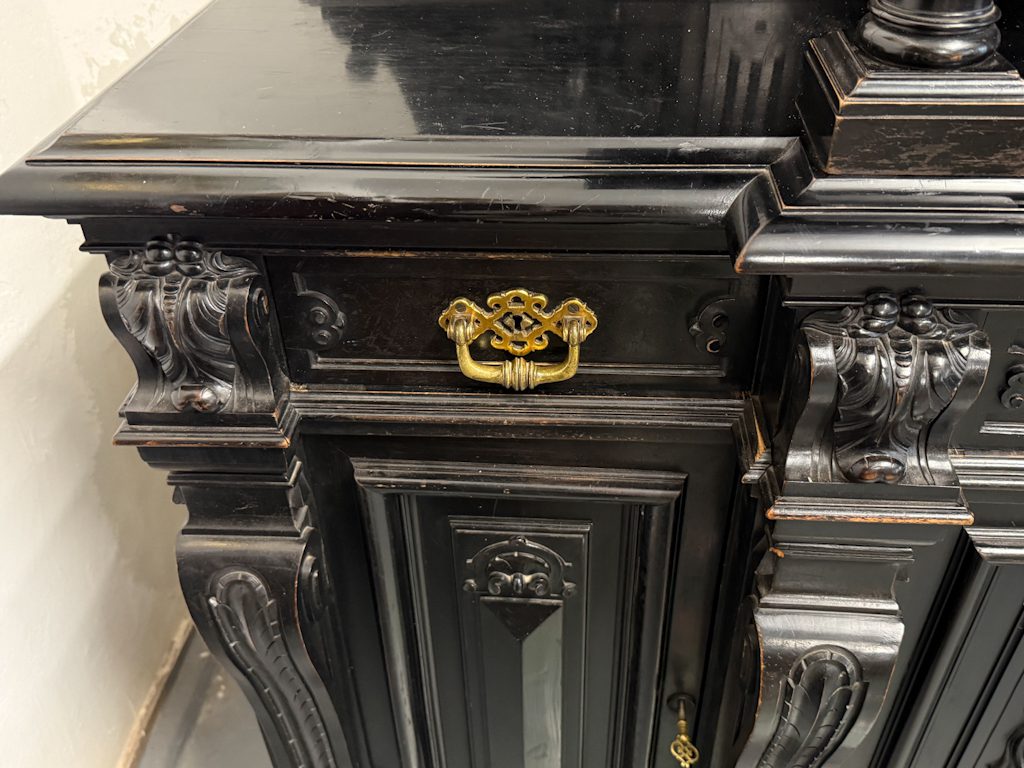
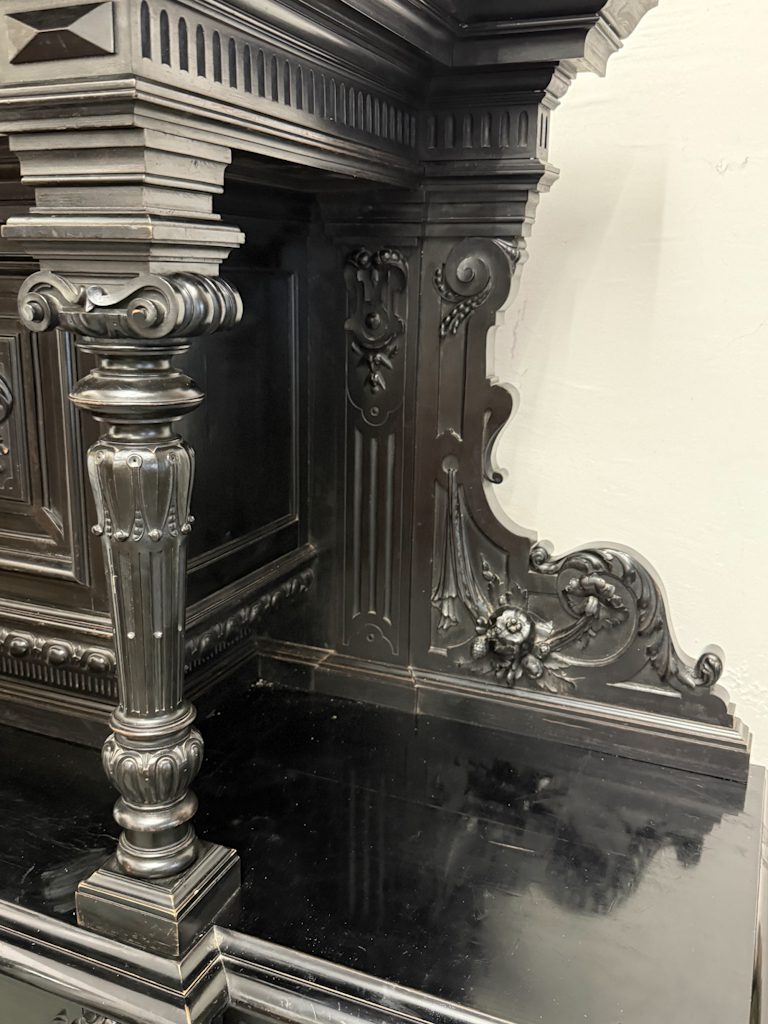
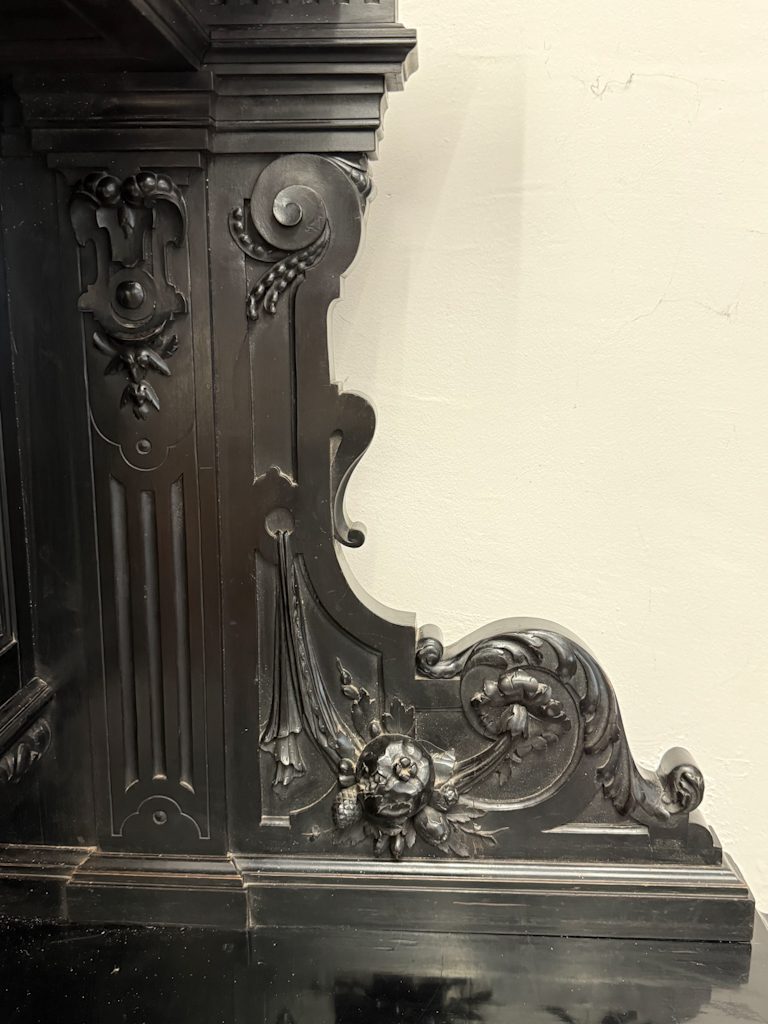
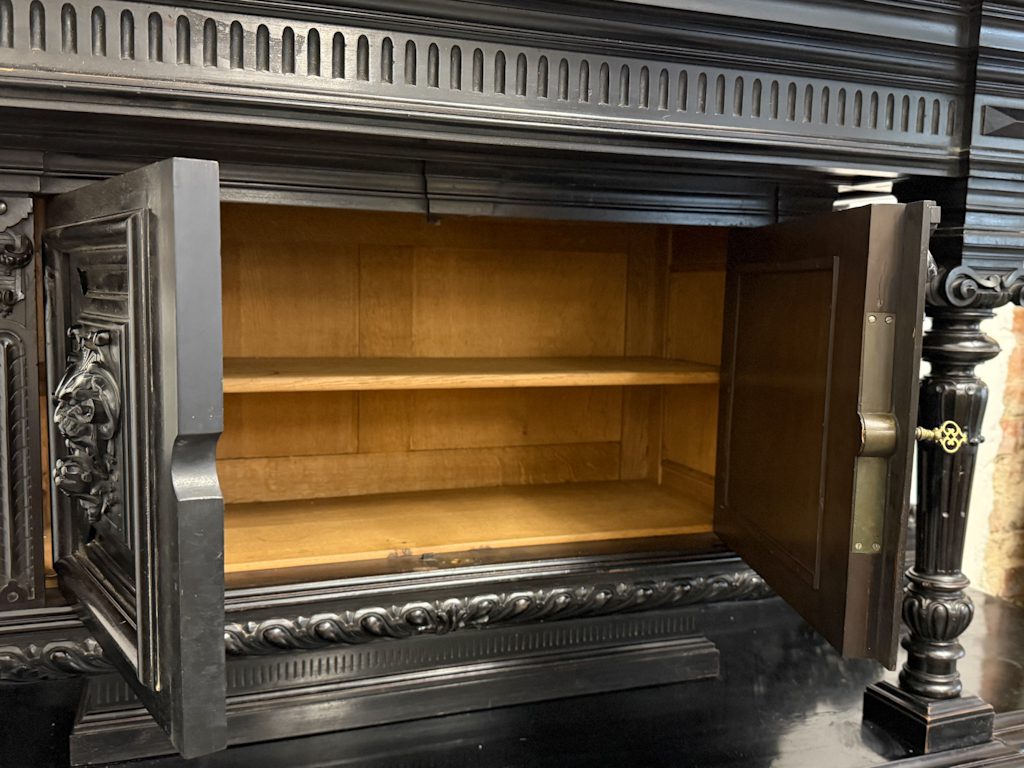
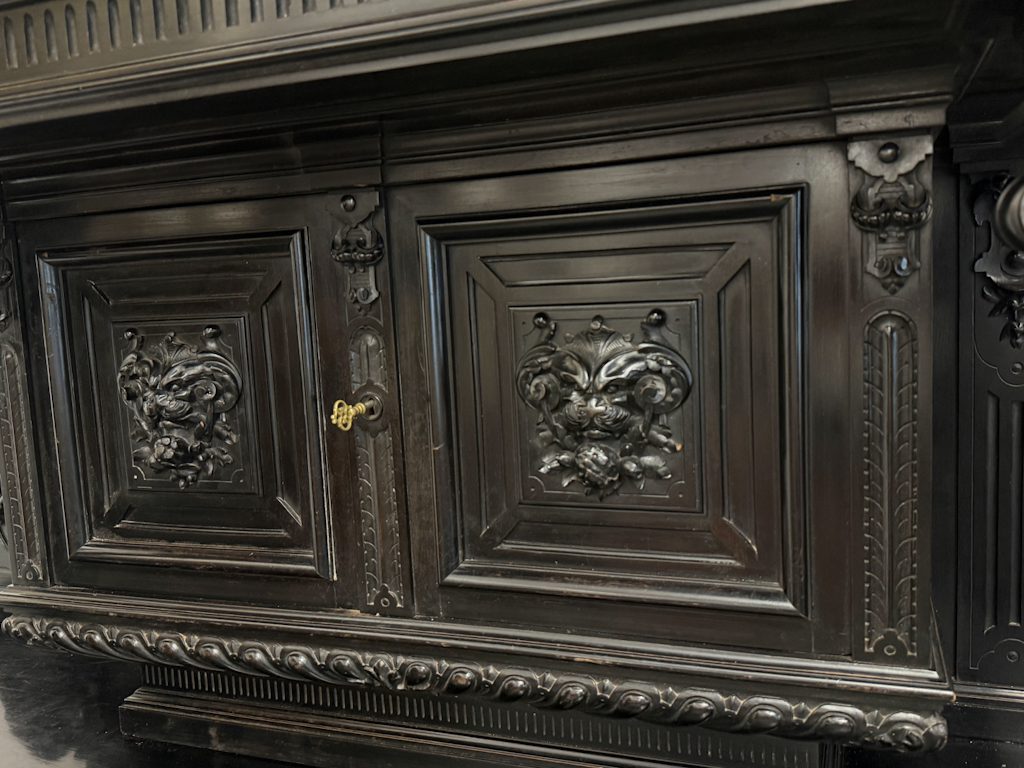
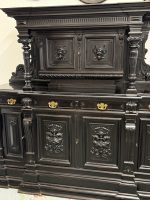
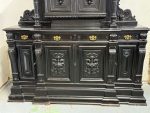
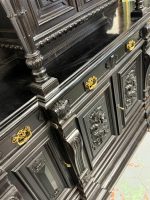
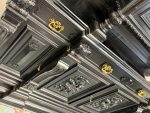
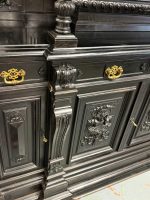
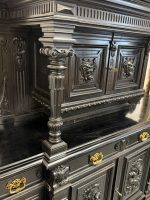
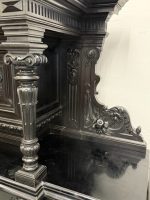
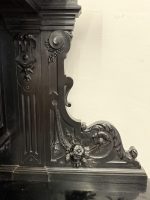
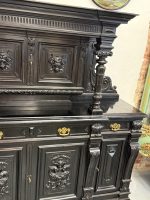
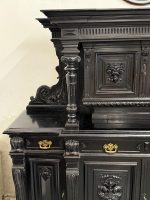
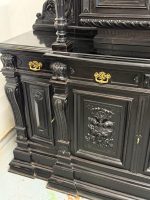
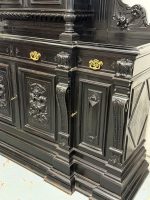
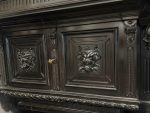
The mascarons — lion and demon faces carved with virtuoso precision — were a Renaissance architectural motif that found new life in the Historicism era. Fluted columns with Ionic capitals, acanthus leaf friezes, pearl mouldings, and scrolling volutes on the side panels compose a complete architectural statement, in which every detail is conceived and executed by a master hand.
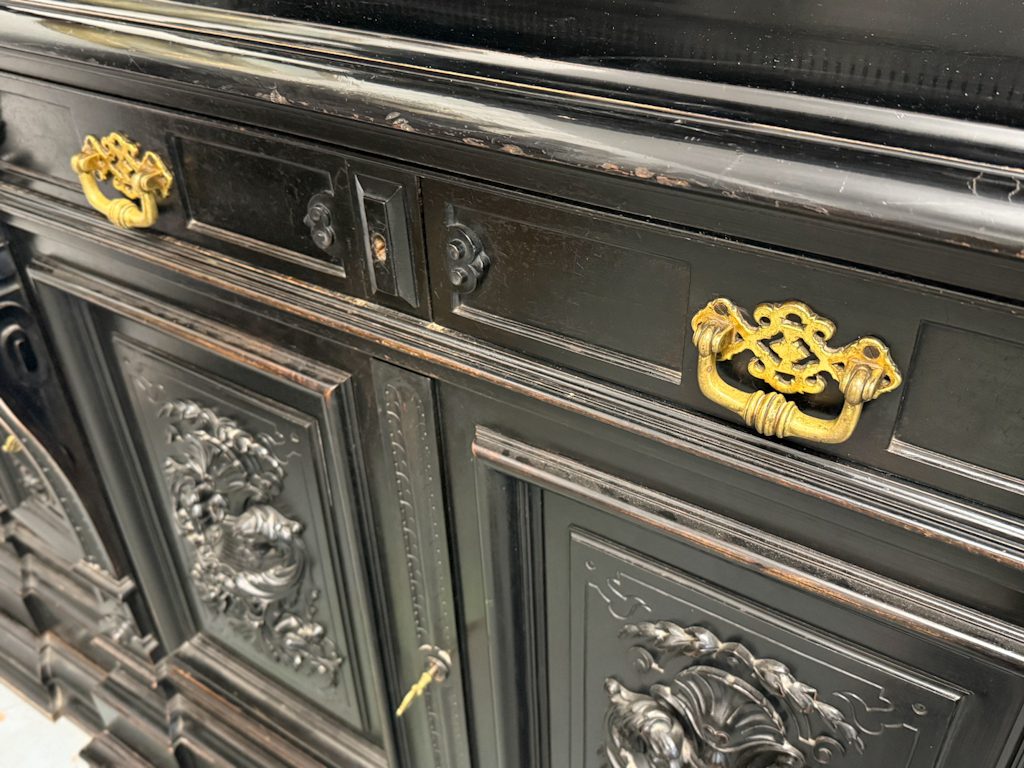
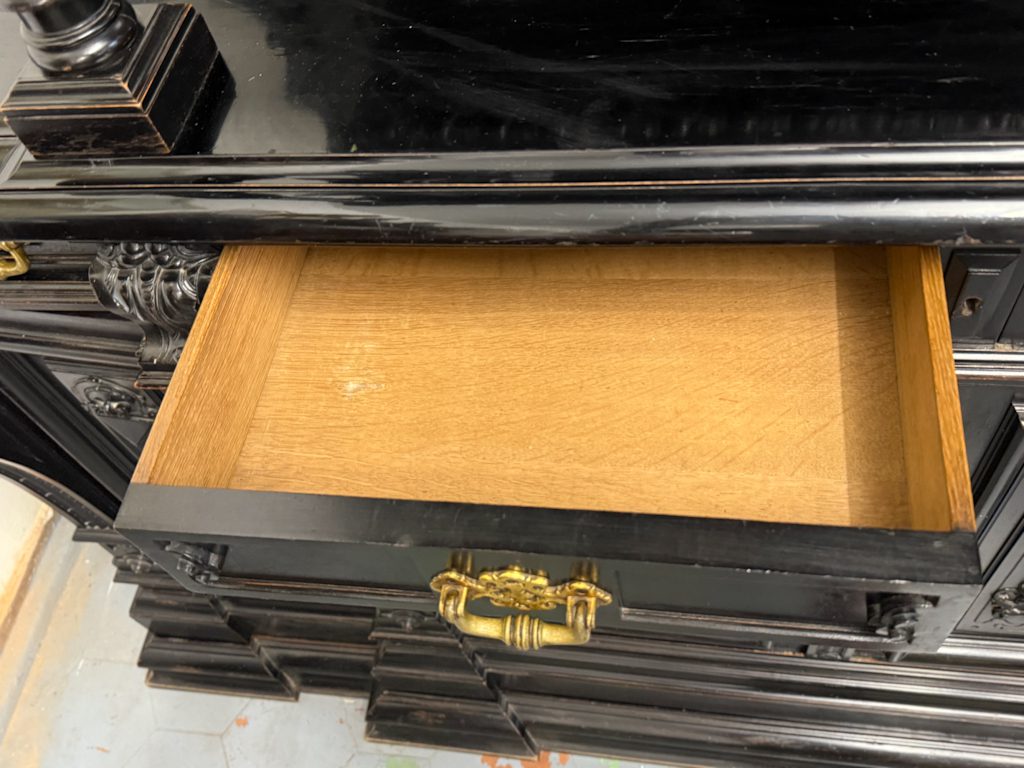
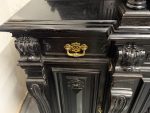
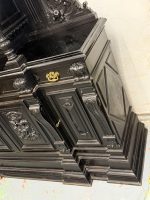
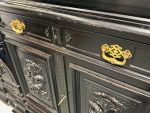
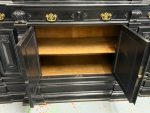
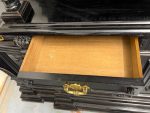
The bronze interlaced drawer pulls — the only golden accent against the intensely black surface — create a visual tension characteristic of the finest Parisian and Brussels cabinetmakers.
At the very time this buffet was being made, Émile Zola was writing Nana — his novel of Parisian haute bourgeoisie life. It was in dining rooms exactly like this one, beside sideboards exactly like this, that his characters hosted their dinner parties, with diamond-set silverware and Burgundy wines. This piece is not merely an object. It is a witness.
―――――――――――――――――――――
⚜️ MAKER AND MARKS
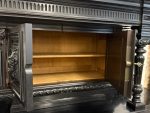
No visible maker’s mark. However, the quality of execution — the depth and uniformity of the ebonization, the plastic mastery of the mascarons, the precision of the column fluting, and the natural oak interior finish — unmistakably points to a professional cabinetmaker’s workshop in Paris or Brussels. Both cities in the 1870s–1895 were home to several elite furniture manufacturers specialising precisely in this type of monumental Neo-Renaissance piece.
Parisian ébénistes — ebony masters — held the highest reputation in Europe, while Brussels was a worthy rival with its powerful menuisiers tradition. These two cities set the standard for Europe’s finest representative furniture in the second half of the 19th century.
―――――――――――――――――――――
💎 RARITY AND SIGNIFICANCE
Fully intact buffet deux corps pieces of this scale, this level of execution, and in this condition are exceptionally rare on the international antiques market. The majority of such pieces have been separated, re-lacquered, or have lost their original ebonization over time.
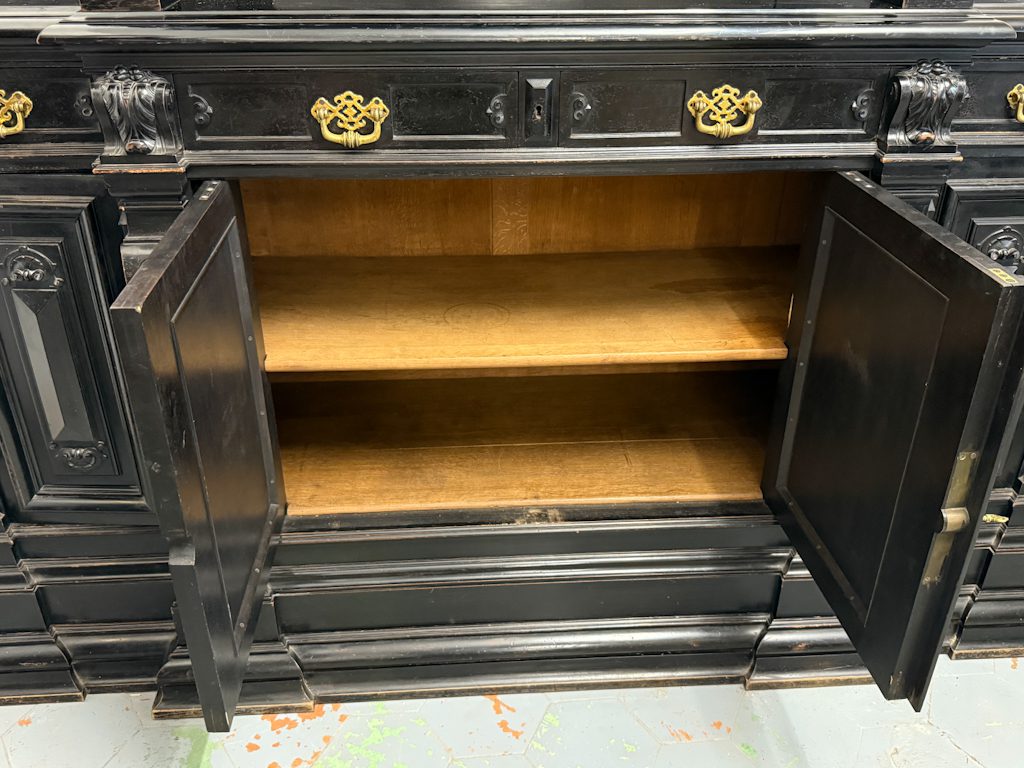
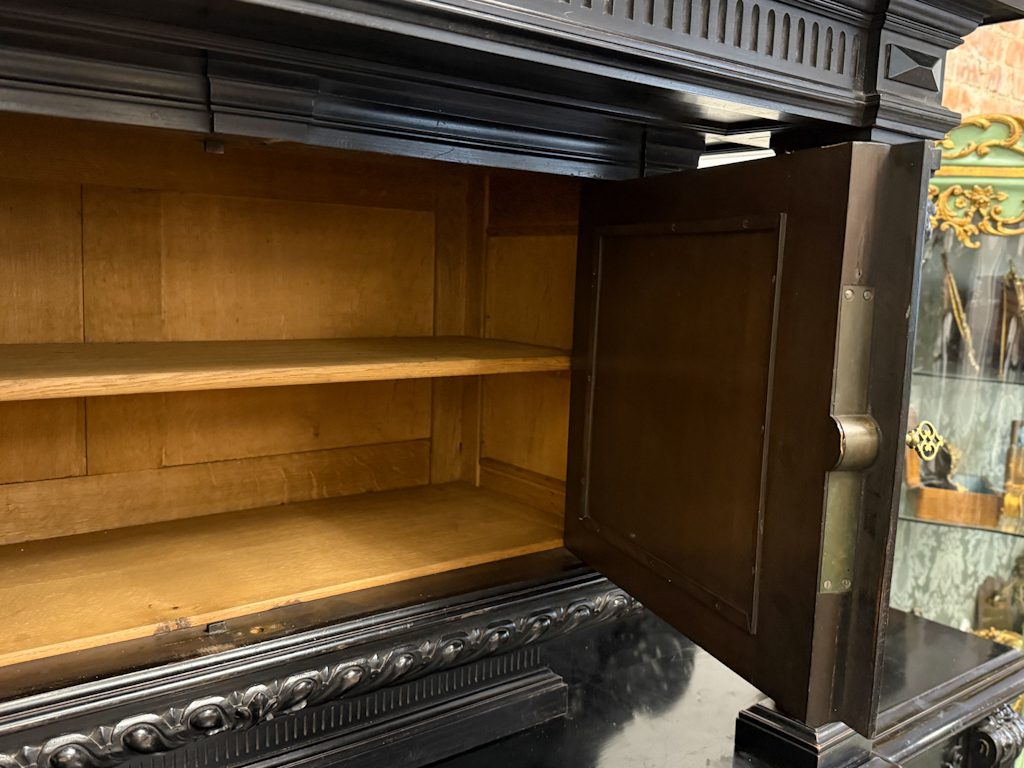
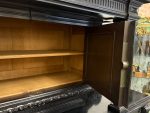
This example retains everything: the original black surface, the bronze hardware, the interior oak shelving systems, and the complete sculptural decoration in full integrity. Such preservation is the exception, not the rule.
Among collectors and interior designers, ebonized Neo-Renaissance buffets are among the most sought-after centrepiece furniture — in museums, historic residences, high-end private homes and hotels.
―――――――――――――――――――――
🕯️ INTERIOR, DESIGN AND PHOTOGRAPHY USE
This buffet is not a room accent — it is architecture. It calls for high ceilings and a generous dining room or reception hall where it can speak at full volume.
In a classical interior — a historic house, palace or residence — it finds its natural place. In an eclectic setting it functions as a dramatic dark anchor against pale walls and silver or golden accents. In a contemporary minimalist space it becomes an absolute, eloquent declaration of contrast.
Interior photographers and set designers use such a piece as an undisputed background dominant — the ebonized black wood against a light wall is visually unsurpassable. In fashion and narrative photography, a buffet like this gives the frame an era and a story without a single word.
―――――――――――――――――――――
🎁 AS A GIFT
A piece of this stature represents the highest level of corporate or diplomatic gifting — for an ambassador’s residence, a company’s principal office, a private collection. It is a gift that is never forgotten, because it becomes inseparably bound to the room it inhabits.
―――――――――――――――――――――
🔍 CONDITION
Very good overall condition for a piece of this age and scale. The ebonization is preserved evenly, without significant lifting or cracking. Some natural edge wear in places, consistent with the age patina and confirming authenticity. Interior clean; oak shelving in good condition. Bronze hardware original, with a natural warm patina.
Any detailed wear is fully visible in the photographs. The condition of the piece is fully reflected in the photographs.