Solid Copper Fish Kettle with Lid and Brass Handles — Historicist Kitchen Style This monumental, exceptionally heavy, and substantial copper vessel with lid (antique copper fish kettle with lid) is an outstanding example of late 19th-century European culinary heritage and… 330,00 €
You’re now subscribed to price tracking for this product. We’ll notify you if the price drops. 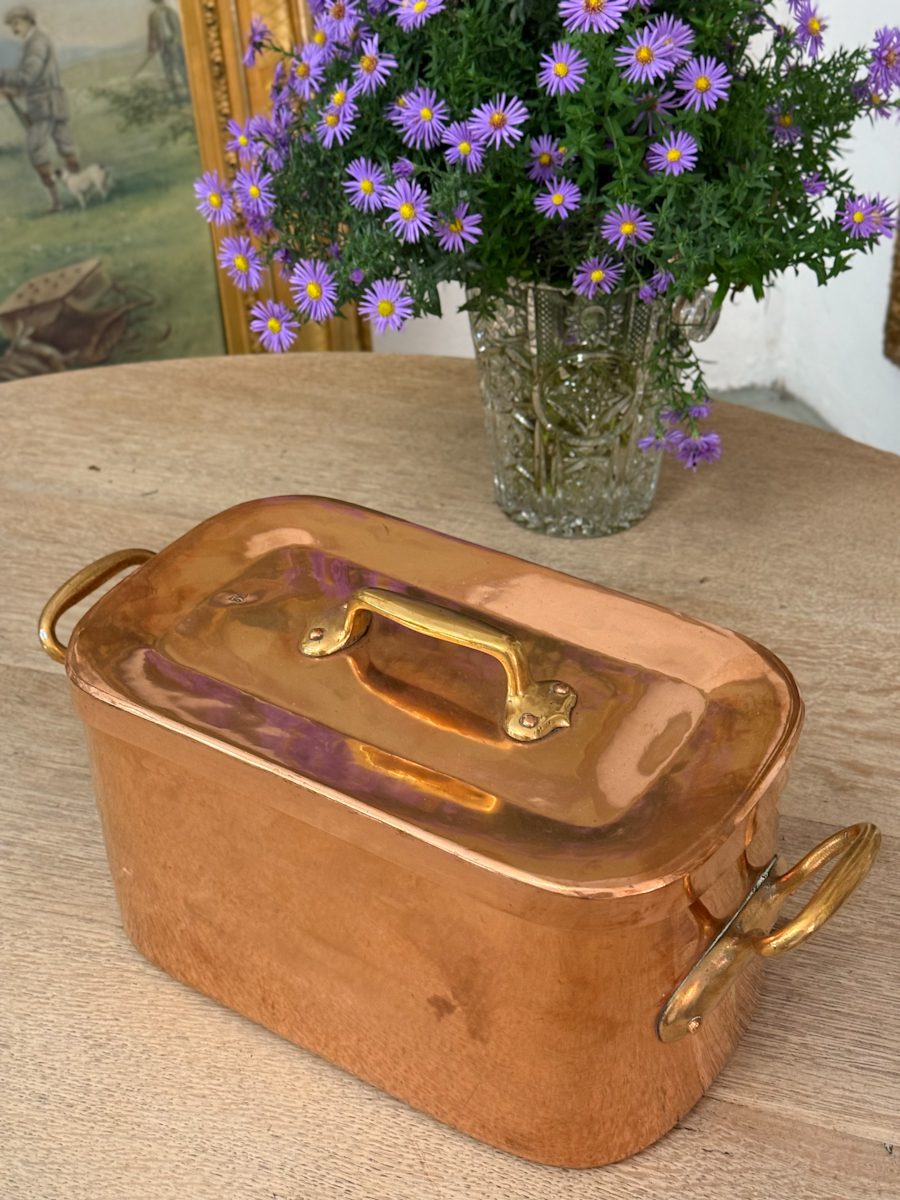





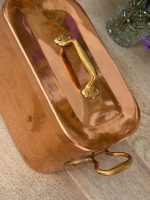




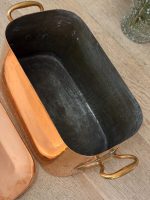
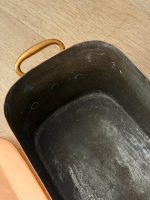
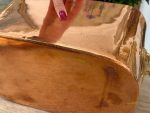
Solid Copper Fish Kettle with Lid and Brass Handles — Historicist Kitchen Style, (6191)
Height 20 cm Length 47 cm Width 21.5 cm


Description
Dimensions approx: Height — 20 cm Length — 47 cm Width — 21.5 cm
Solid copper fish pan with lid and brass handles — Historicism kitchen style
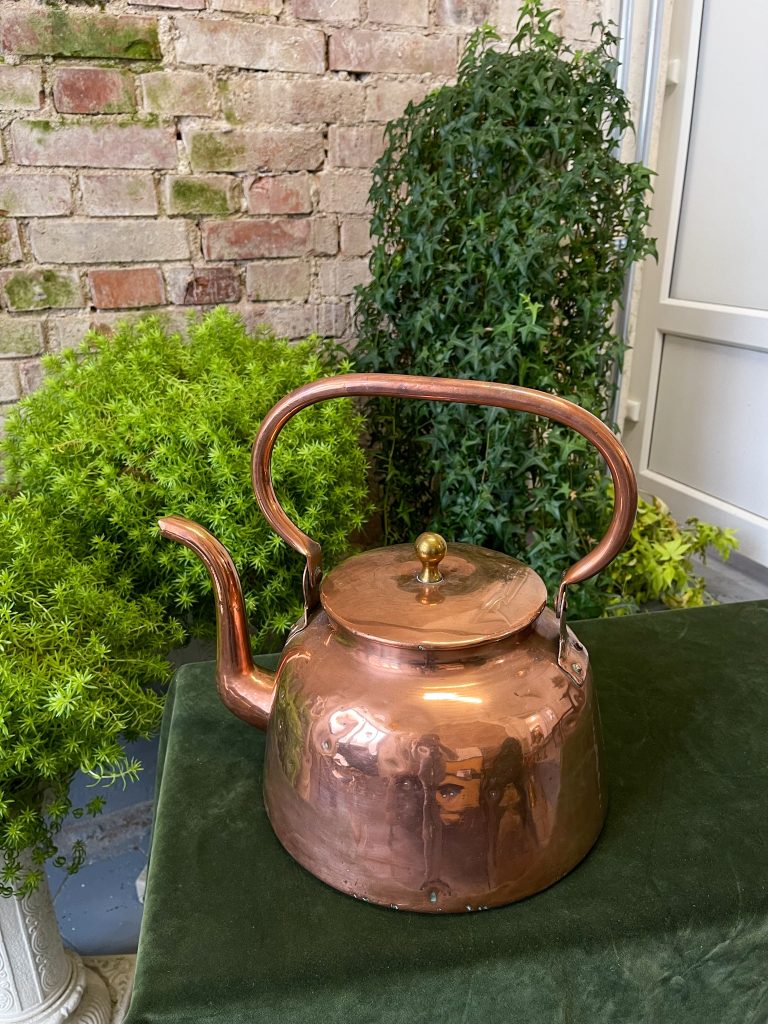
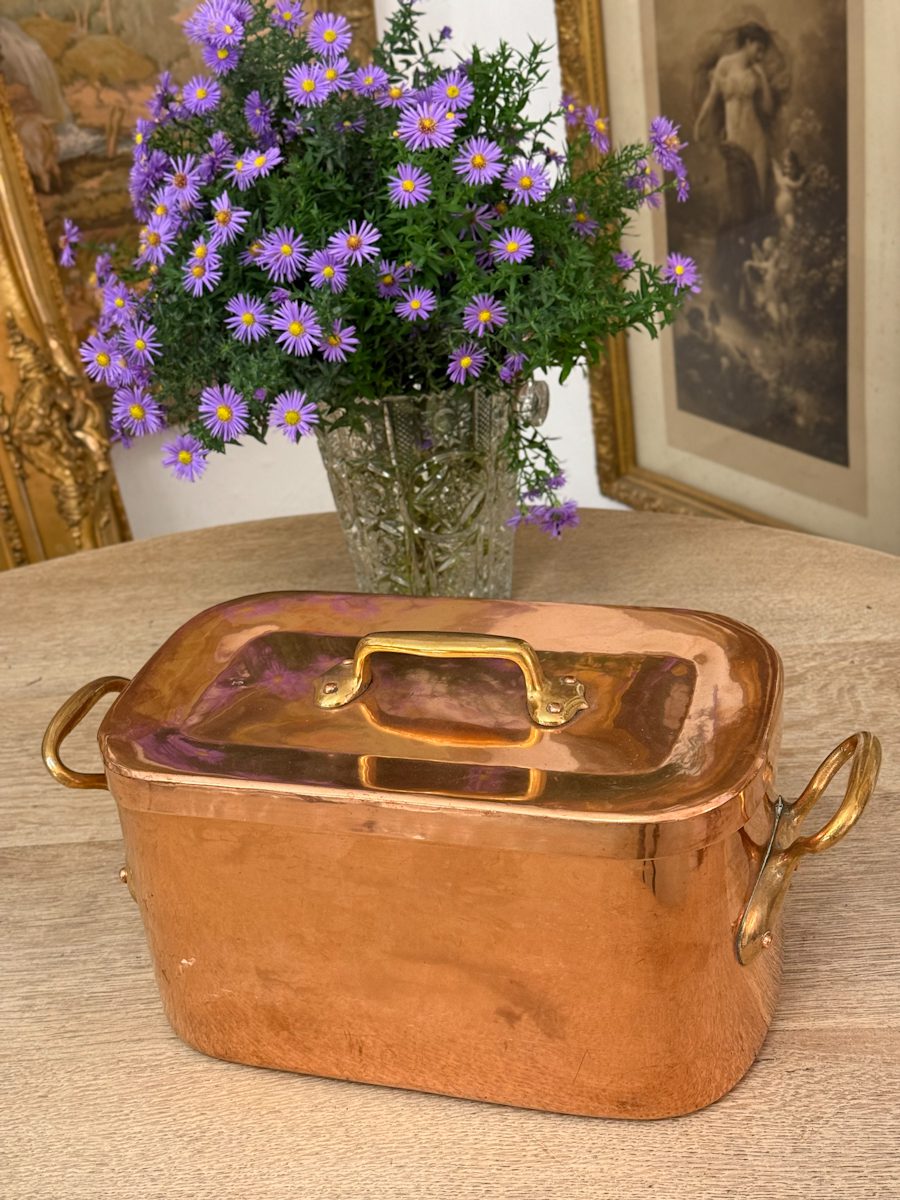
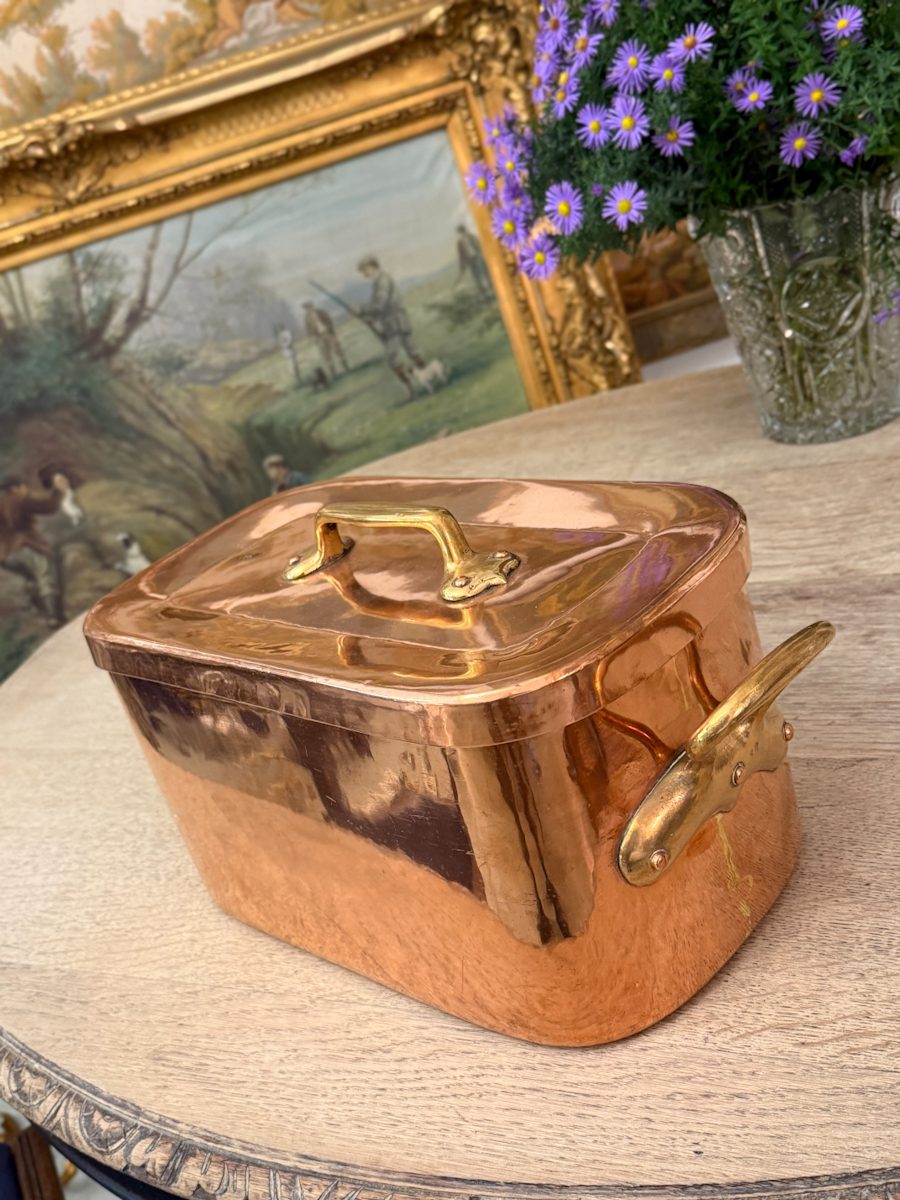
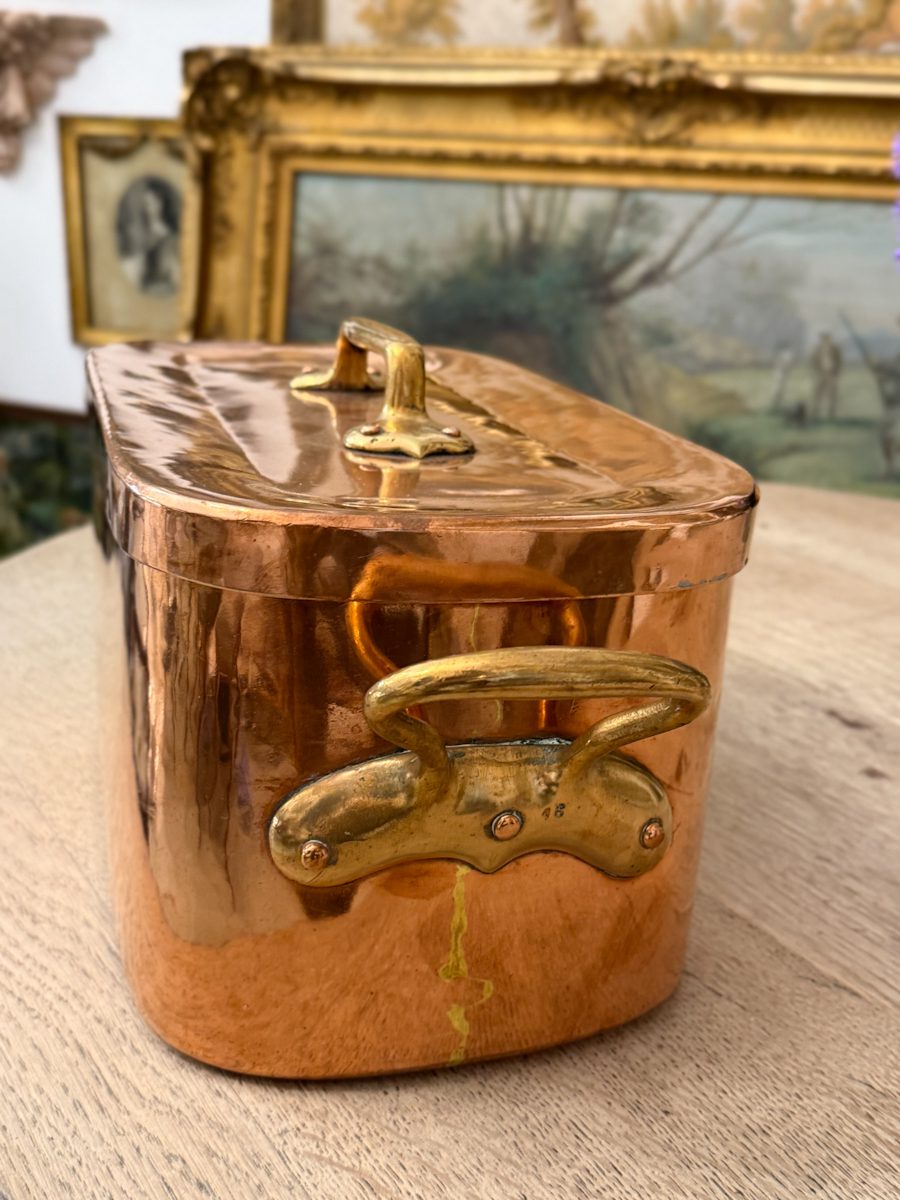
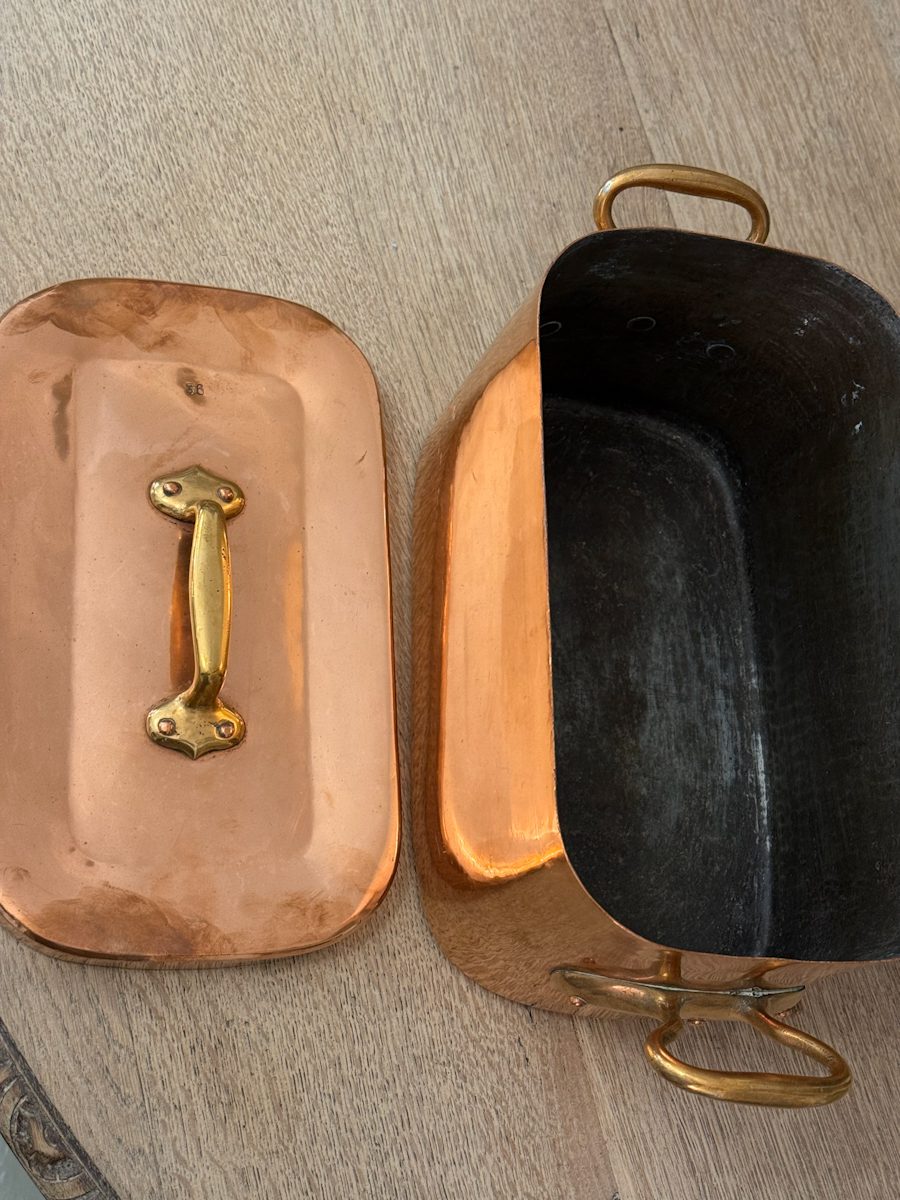
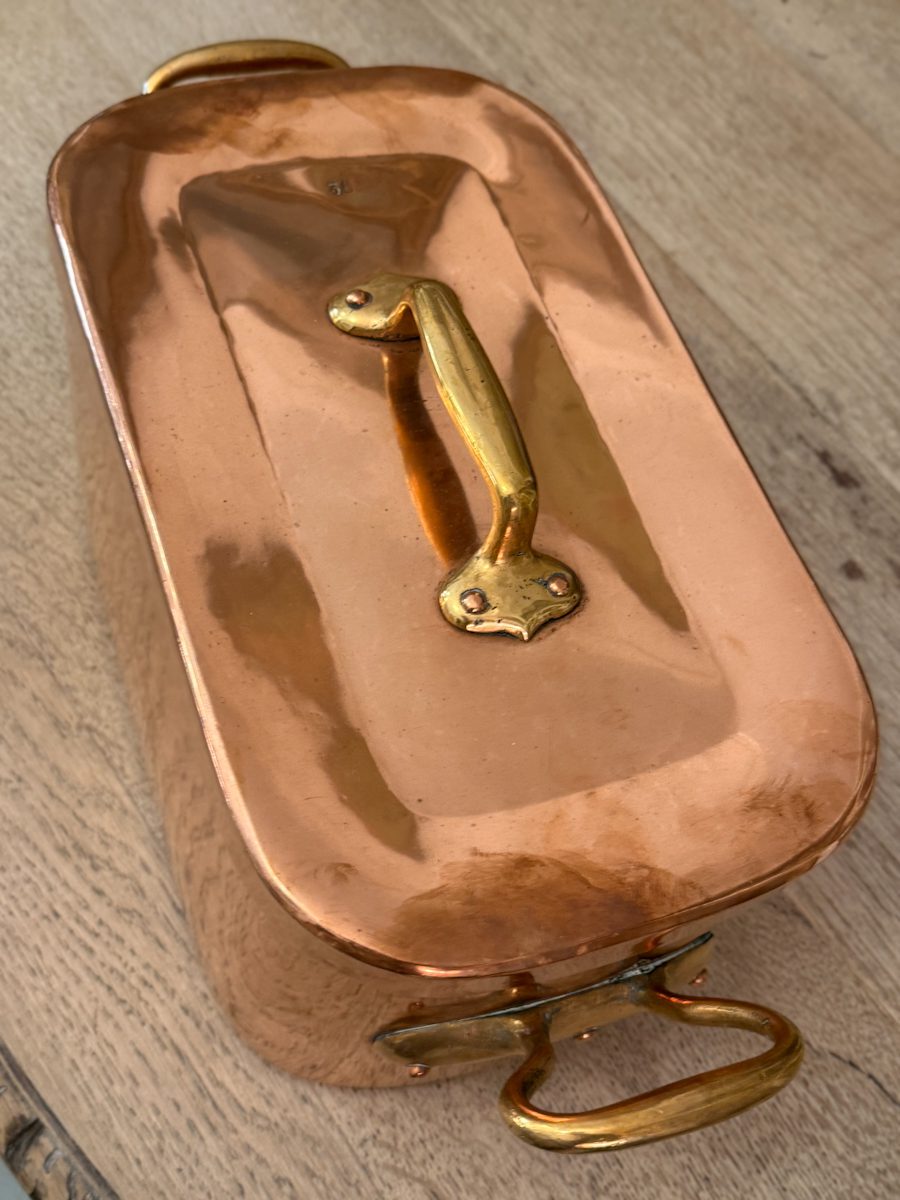
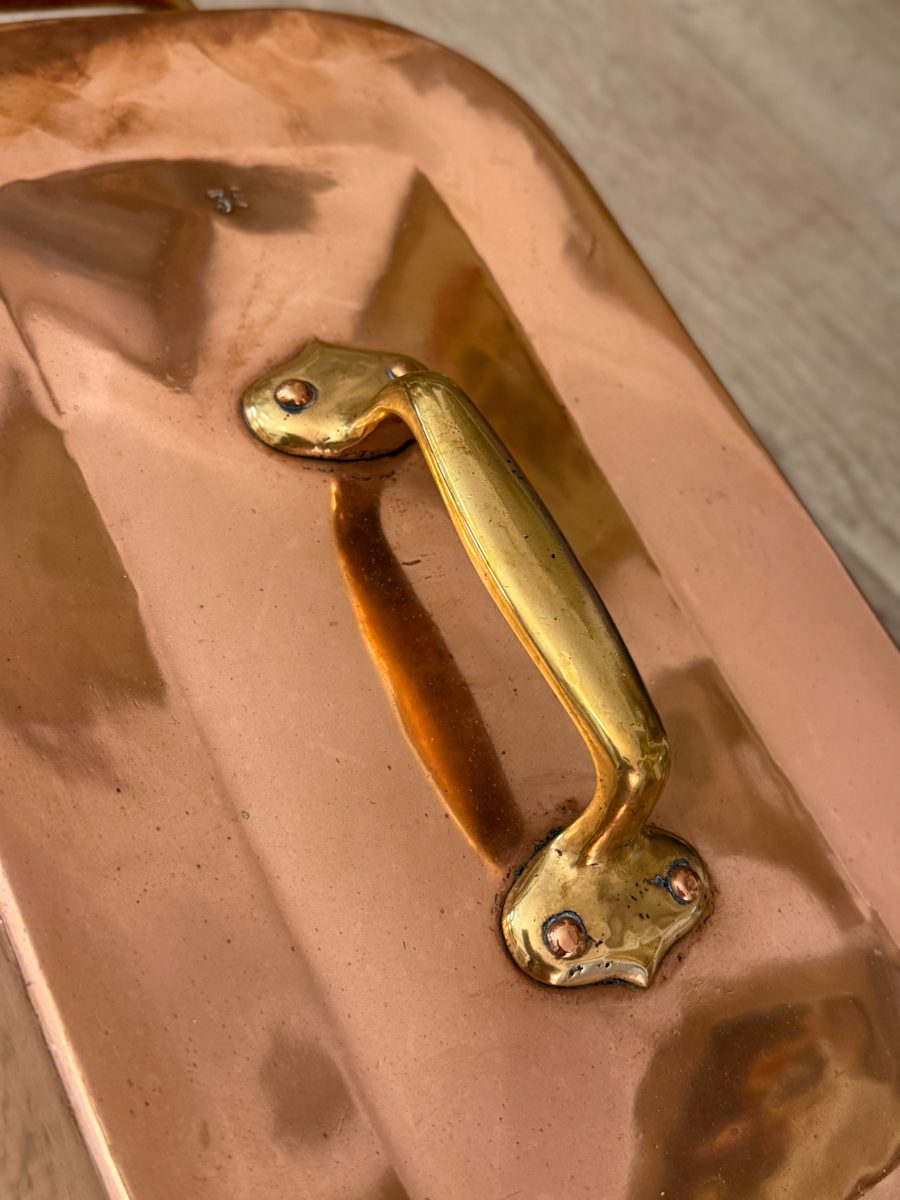
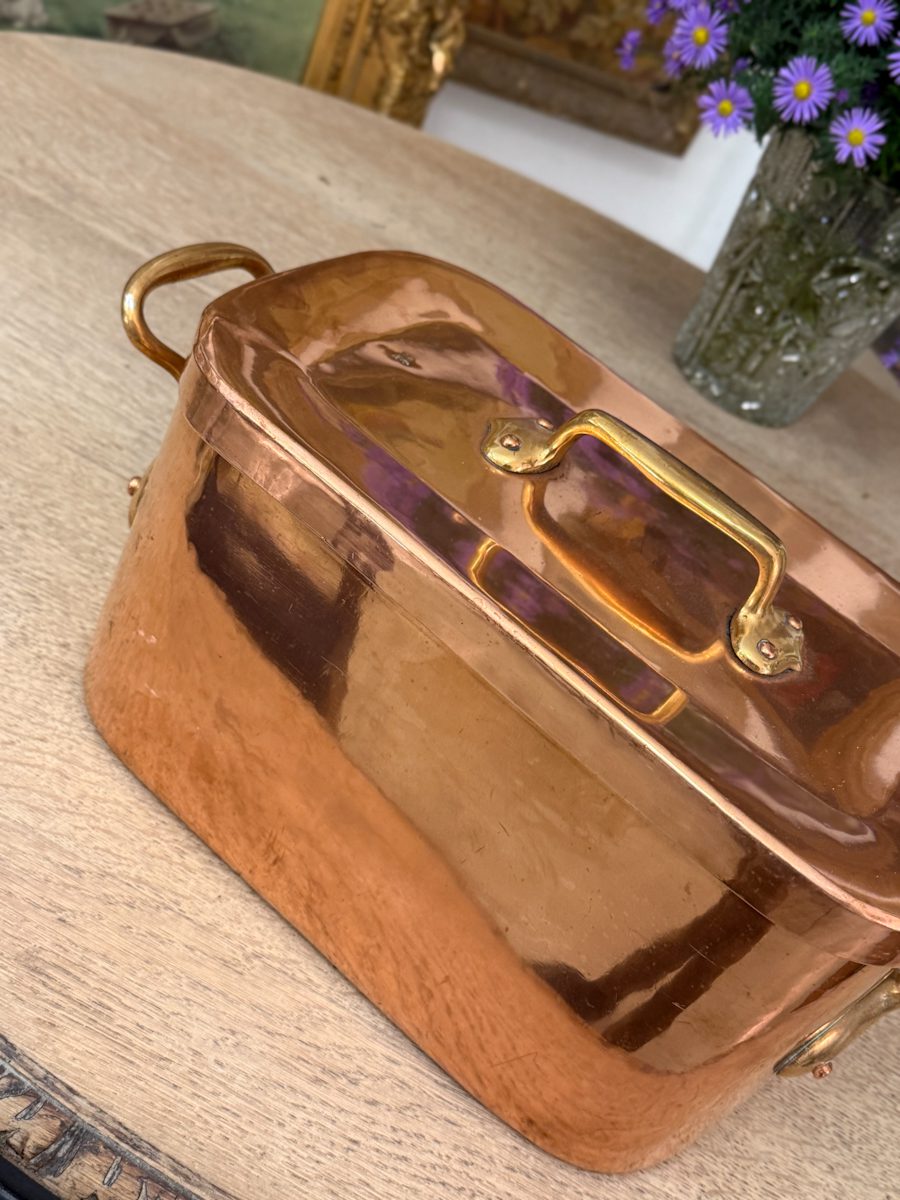
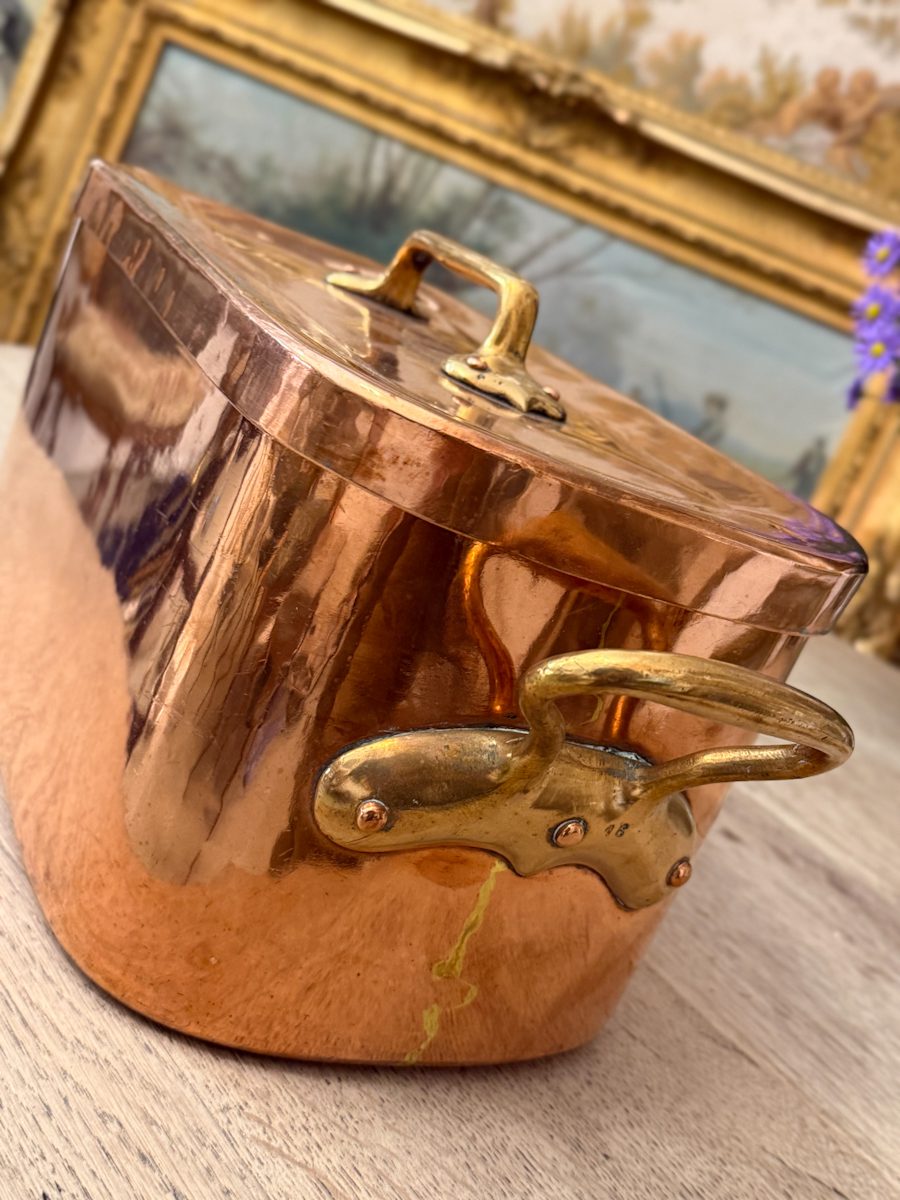
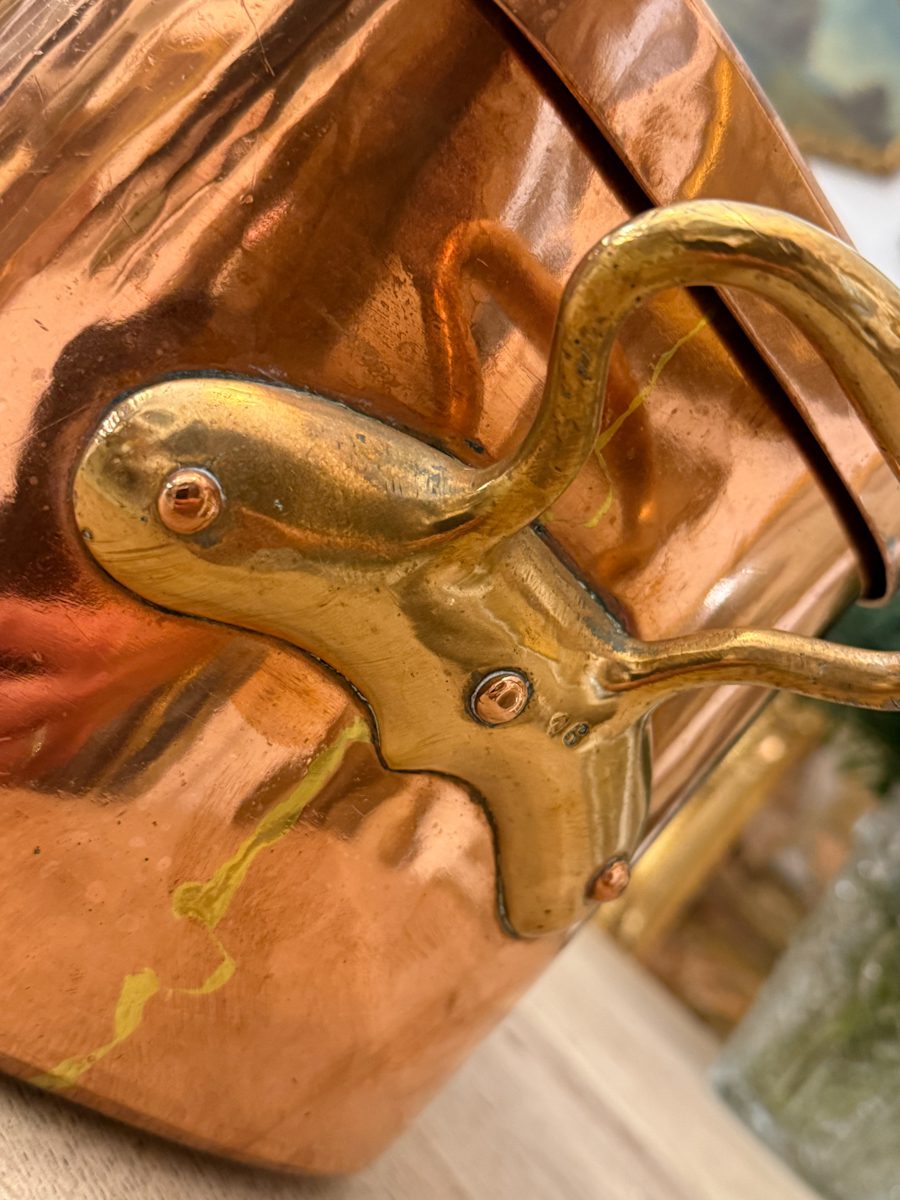
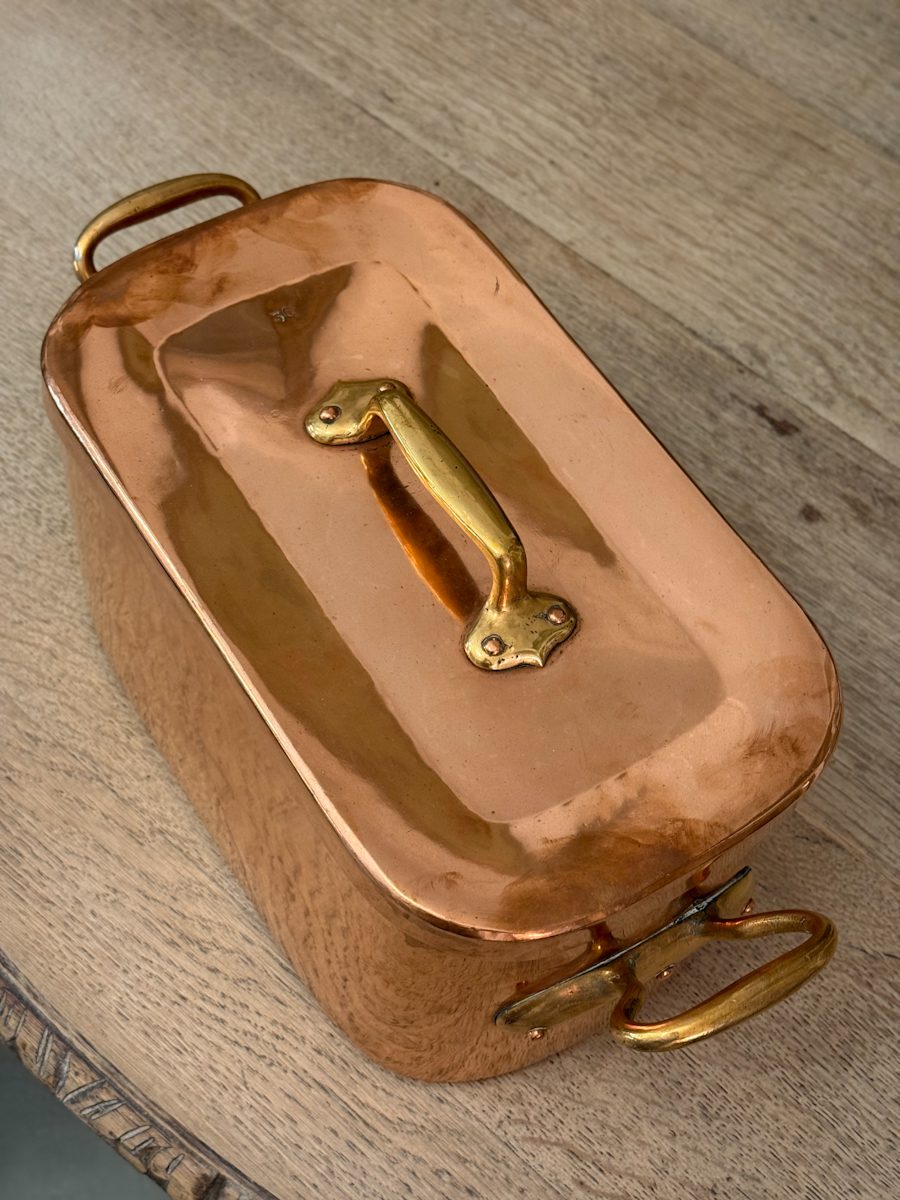
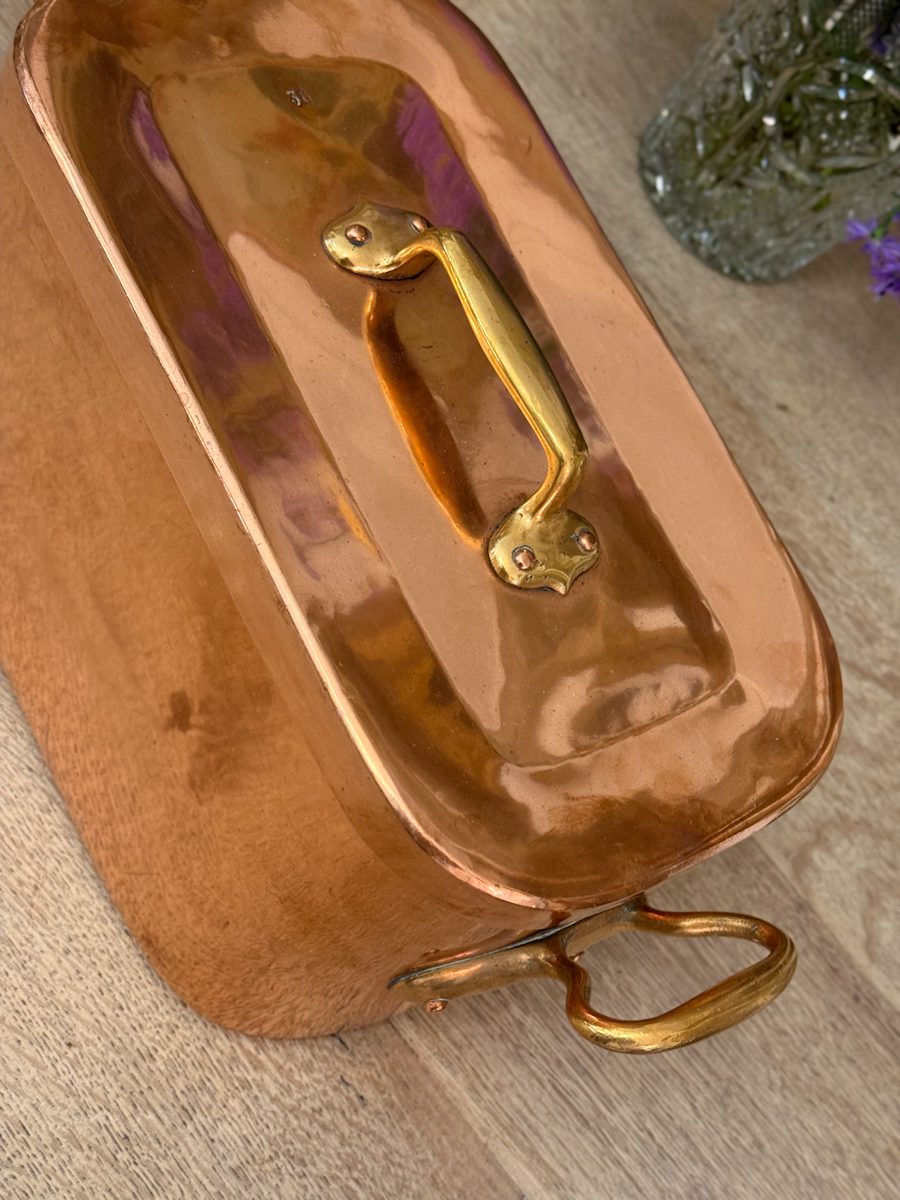
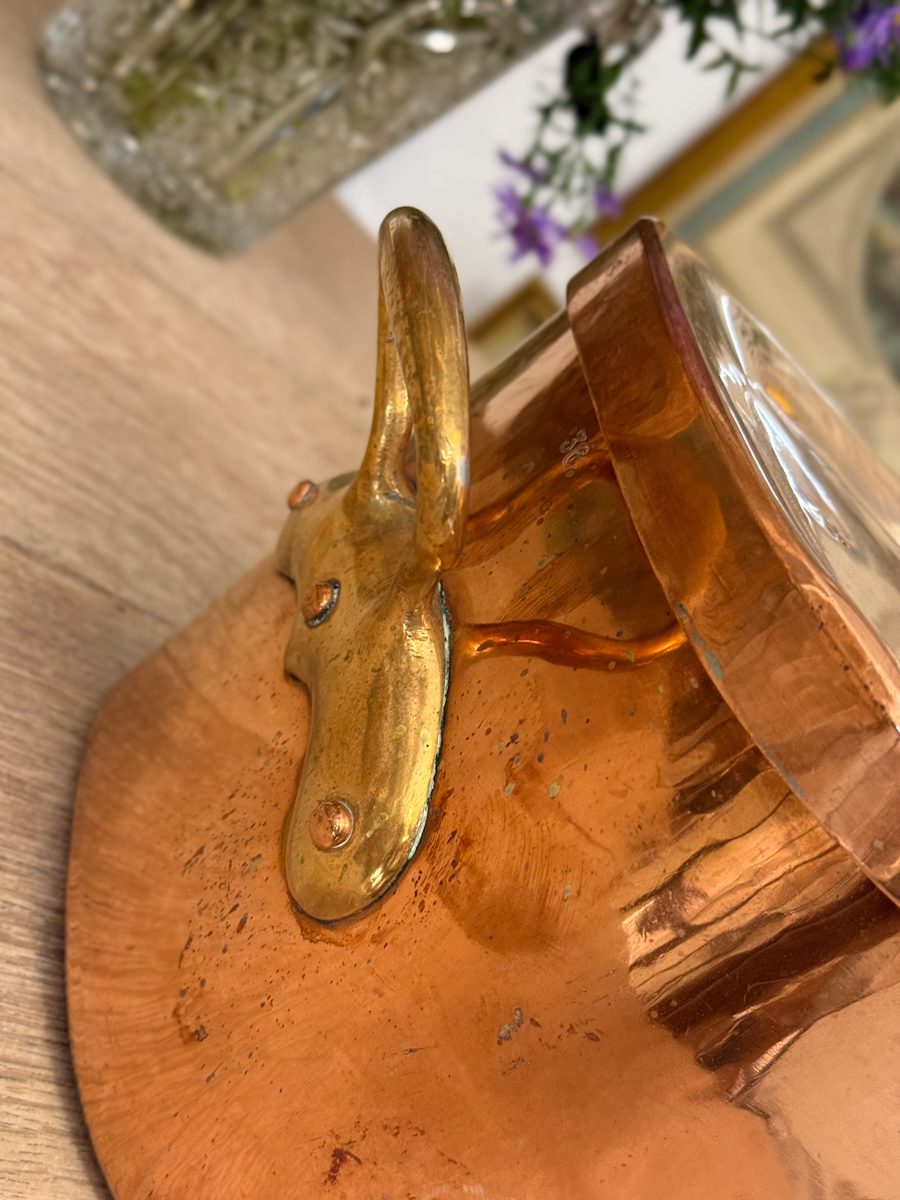
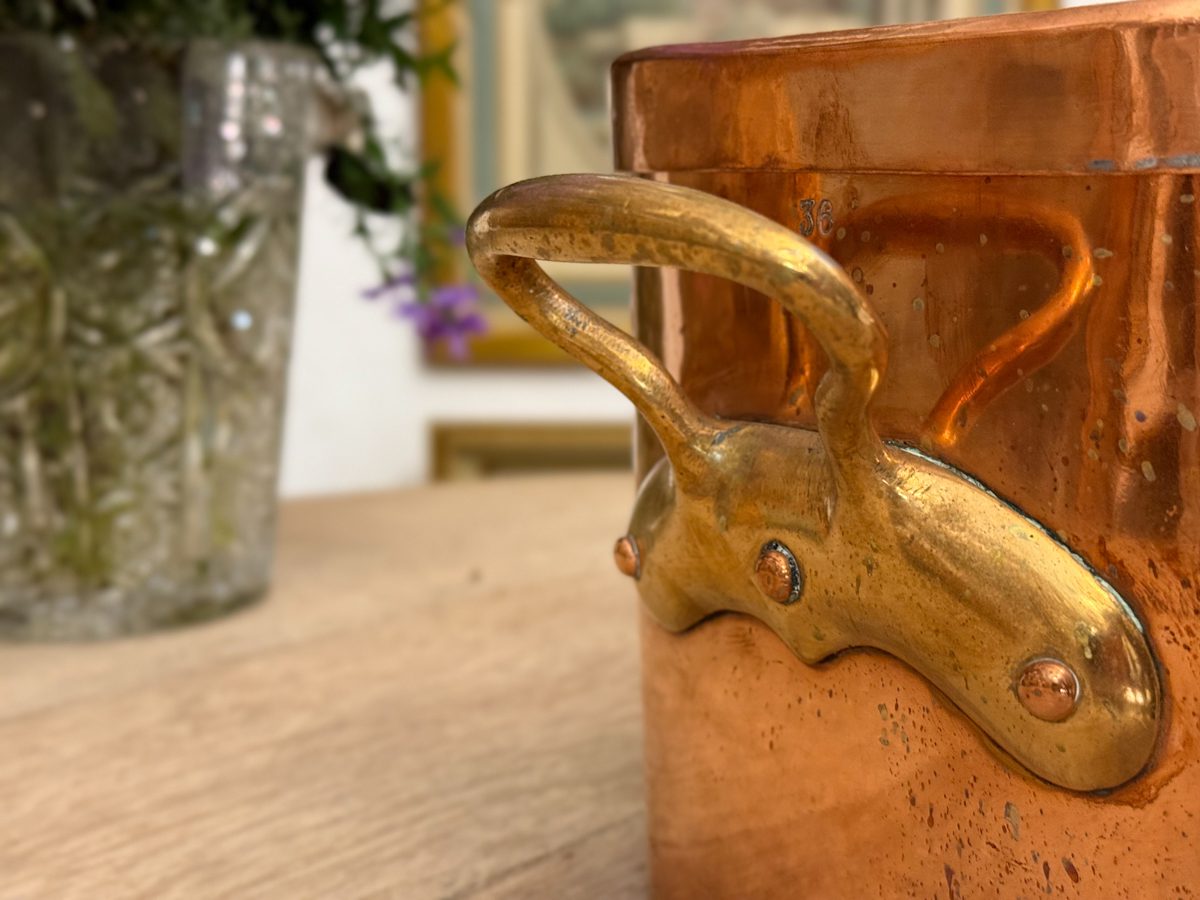
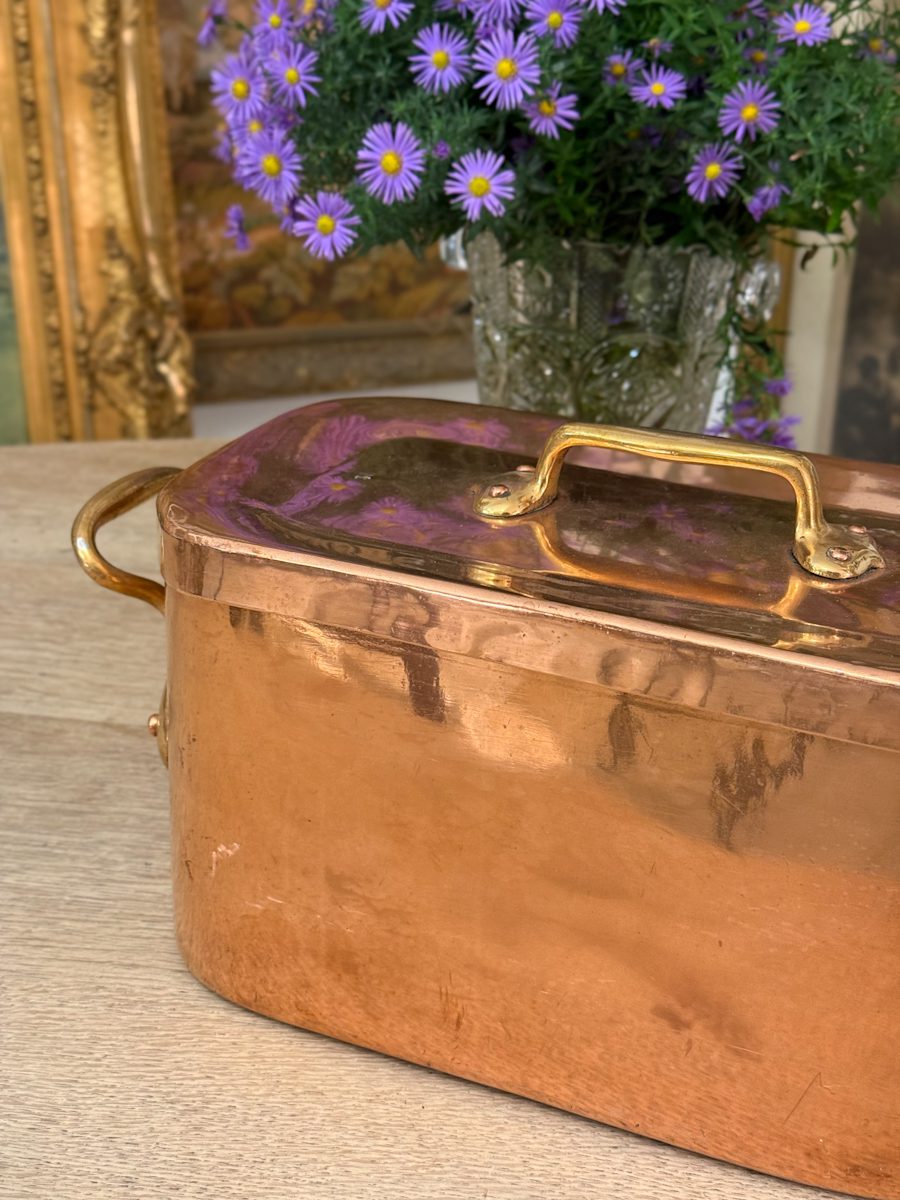
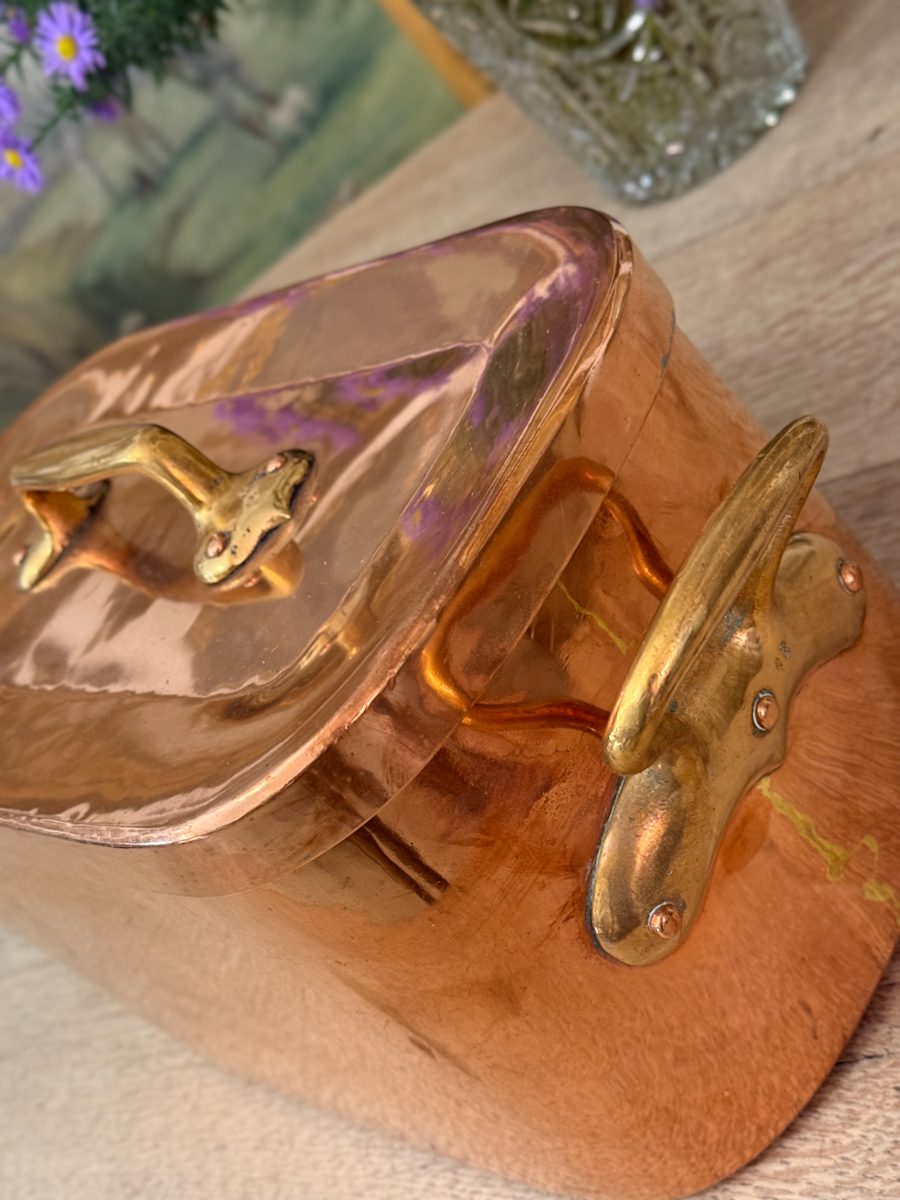
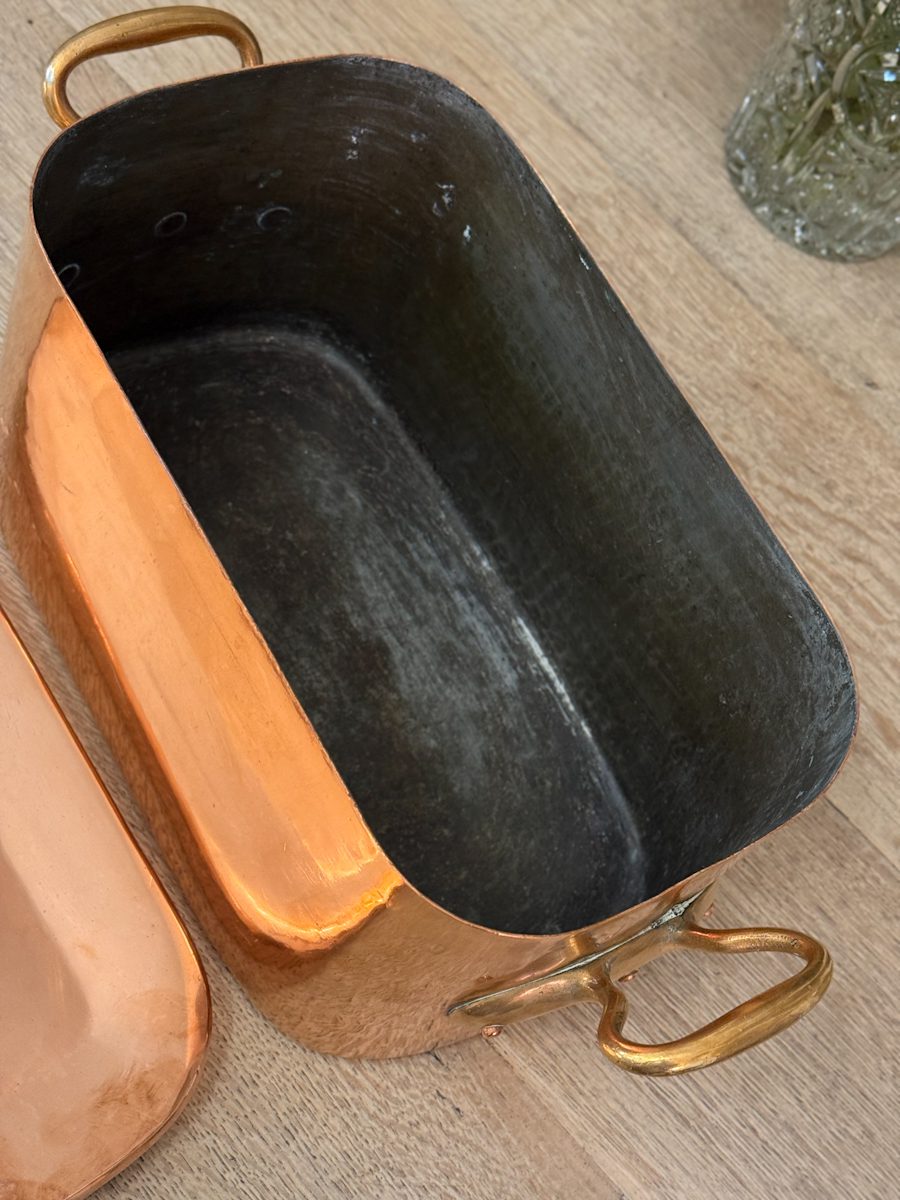
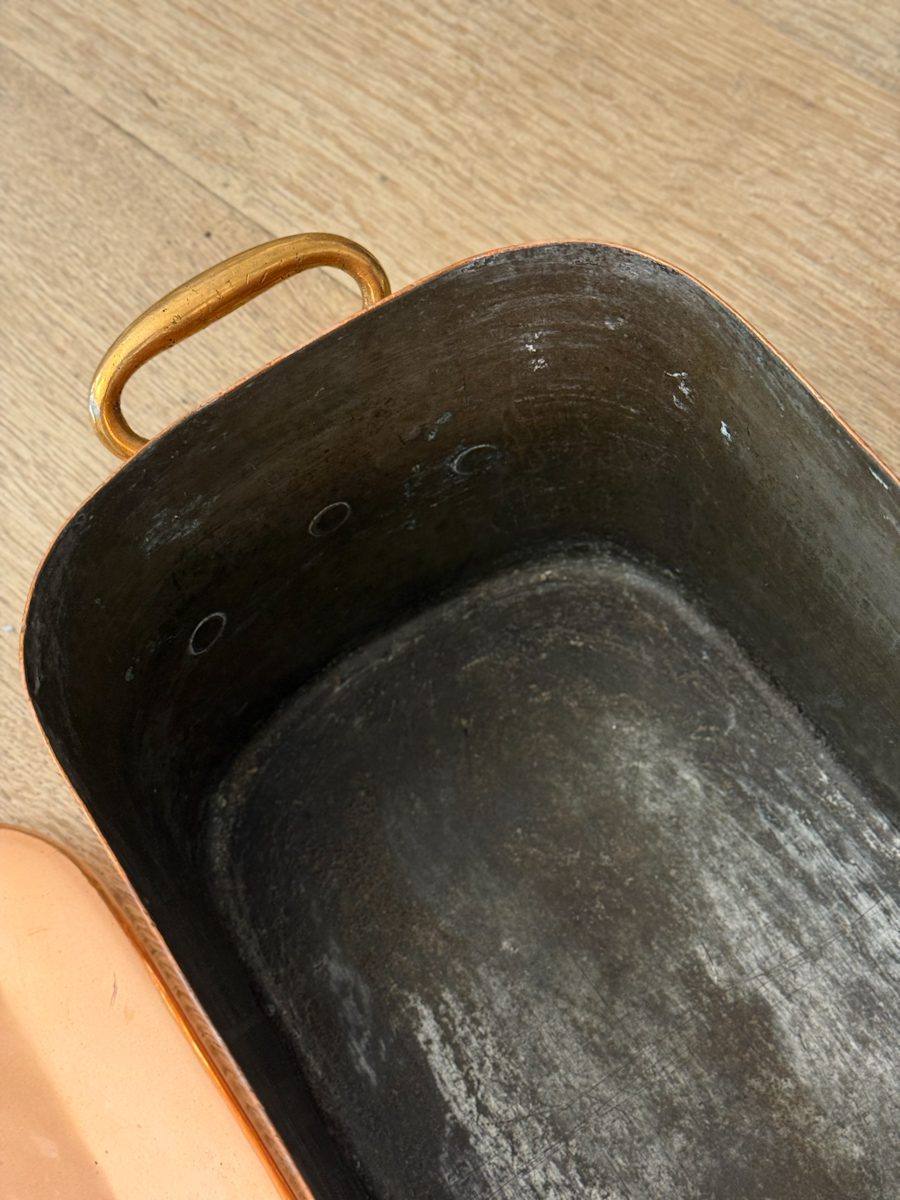
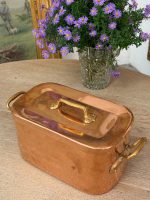
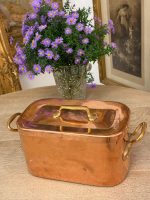
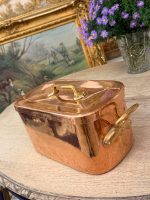
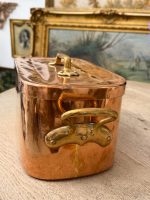
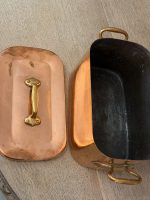
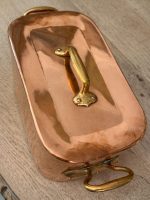
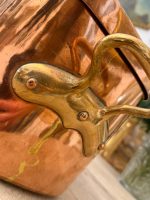
This monumental, extremely heavy and solid copper pan with lid (old-fashioned copper fish pan with lid) is an outstanding example of late 19th-century European culinary heritage and applied art. The item is a classic benchmark of kitchen culture — an elongated pan for cooking fish (poissonnière), made of the highest quality thick, hammered red copper (brass). The basic structure of the pan is complemented by massive, cast brass handles on both sides and on the lid, attached to the body with distinct, durable, and authentic copper rivets. The inside of the pan is lined with the traditional, historical tin coating (tinplate), which protected against copper oxidation and ensured safe food preparation.
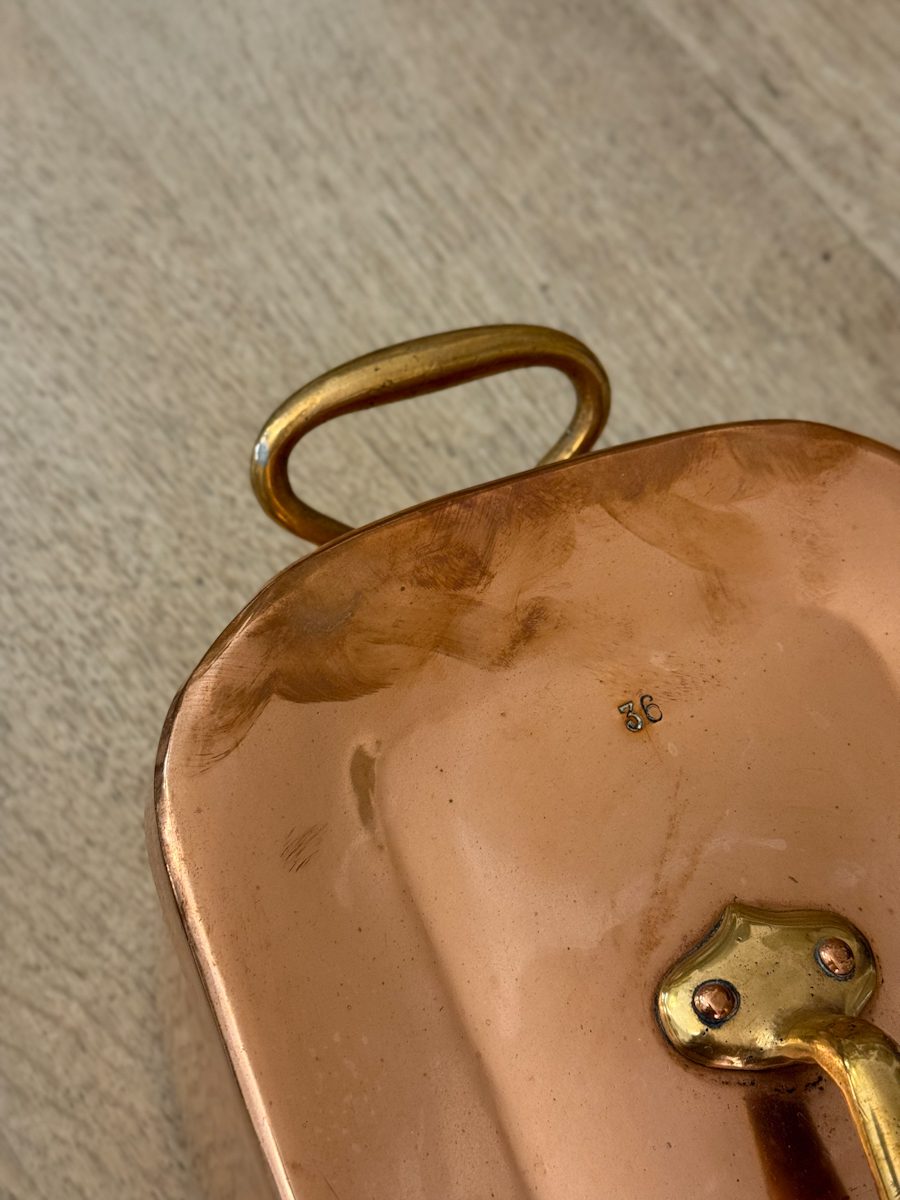
A historical numerical marking 36 is clearly visible on the lid surface and the sides of the body, confirming the professional class and volume series of the pan. Such impressive, heavy copper pans were the pride of any imperial or European aristocratic estate, hunting lodge, or wealthy city house’s large kitchen in the second half and end of the 19th century, where culinary art played a representative role in organizing high society events. Today, this item is not only a valuable collector’s exhibit but also an outstanding carrier of historical substance in interior design.
Period of manufacture Dated to the second half of the 19th century, approximately 1870–1890, when European (especially and ) copper smithies reached the highest technical and practical level of durability and quality for kitchen utensils.
Manufacturer / Signature / Stamp The pan is a high-quality and massive handmade piece from a professional copper forging master’s workshop. The stamped numbers 36 on the body and lid serve as a series and size marking, typical of niche artisan works of that time, which were supplied to elite homes and restaurant kitchens by special order.
Rarity and Significance The greatest value of this item lies in its outstanding material mass and complete set with the original lid. Thick, heavy copper pans of this type were often melted down over time or lost their lids, making a completely undamaged body with durable brass handles and historical tinning a rare and highly appreciated find among lovers of culinary antiques.
Application and Interior Use The pan serves as an excellent, visually impressive, and historically rich decorative item for interiors. It is ideal for placement on classic kitchen islands, near historical stove cladding, on open shelves, or in restaurant and hunting lodge interiors, instantly lending the space an authentic 19th-century atmosphere.
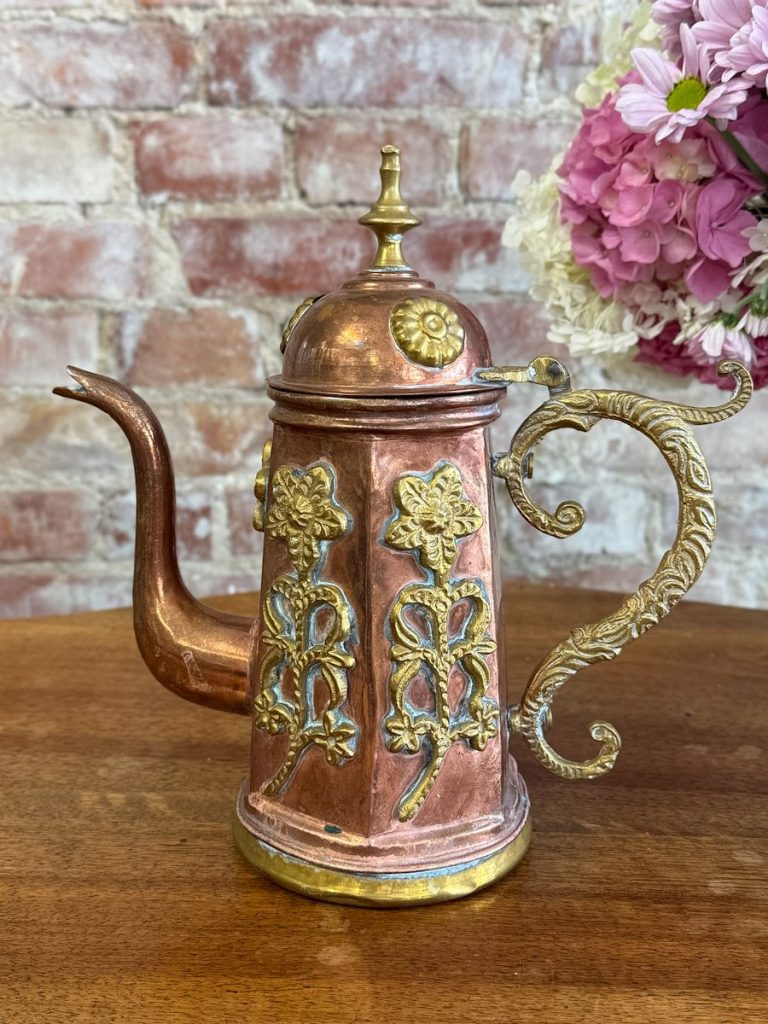
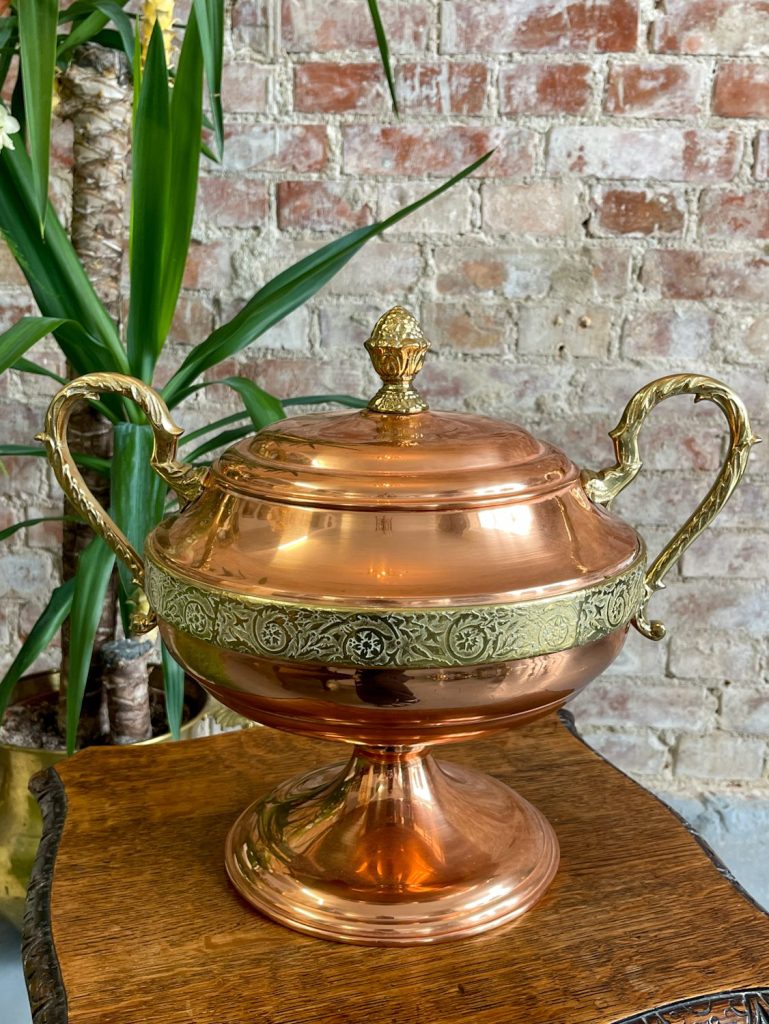
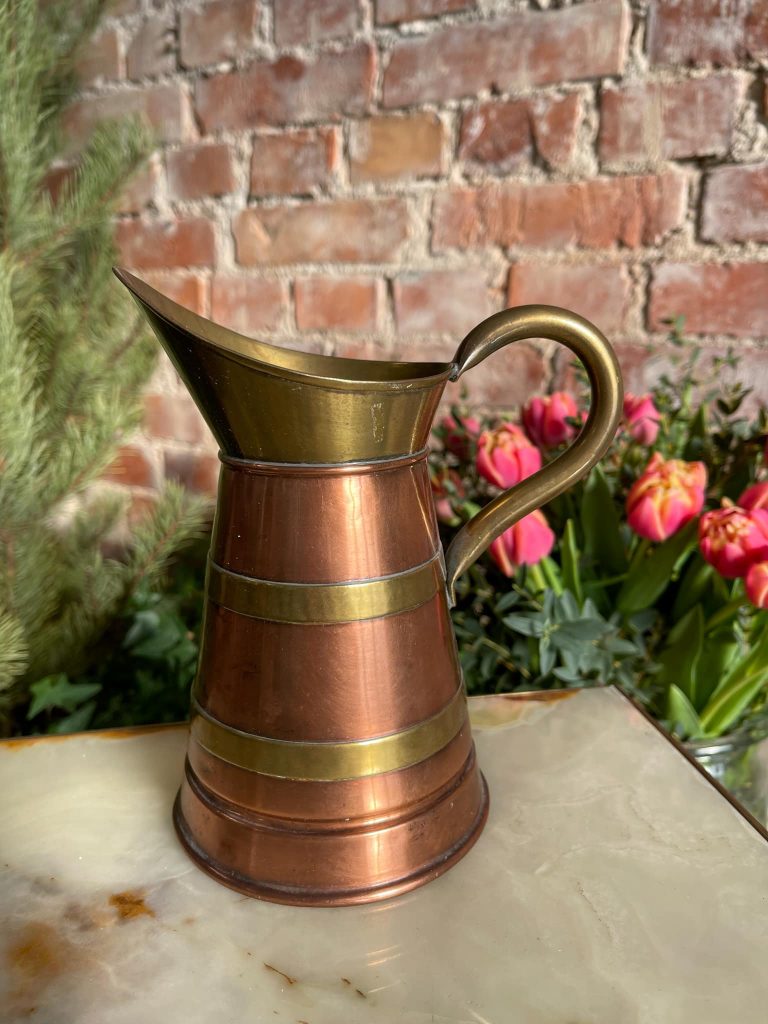
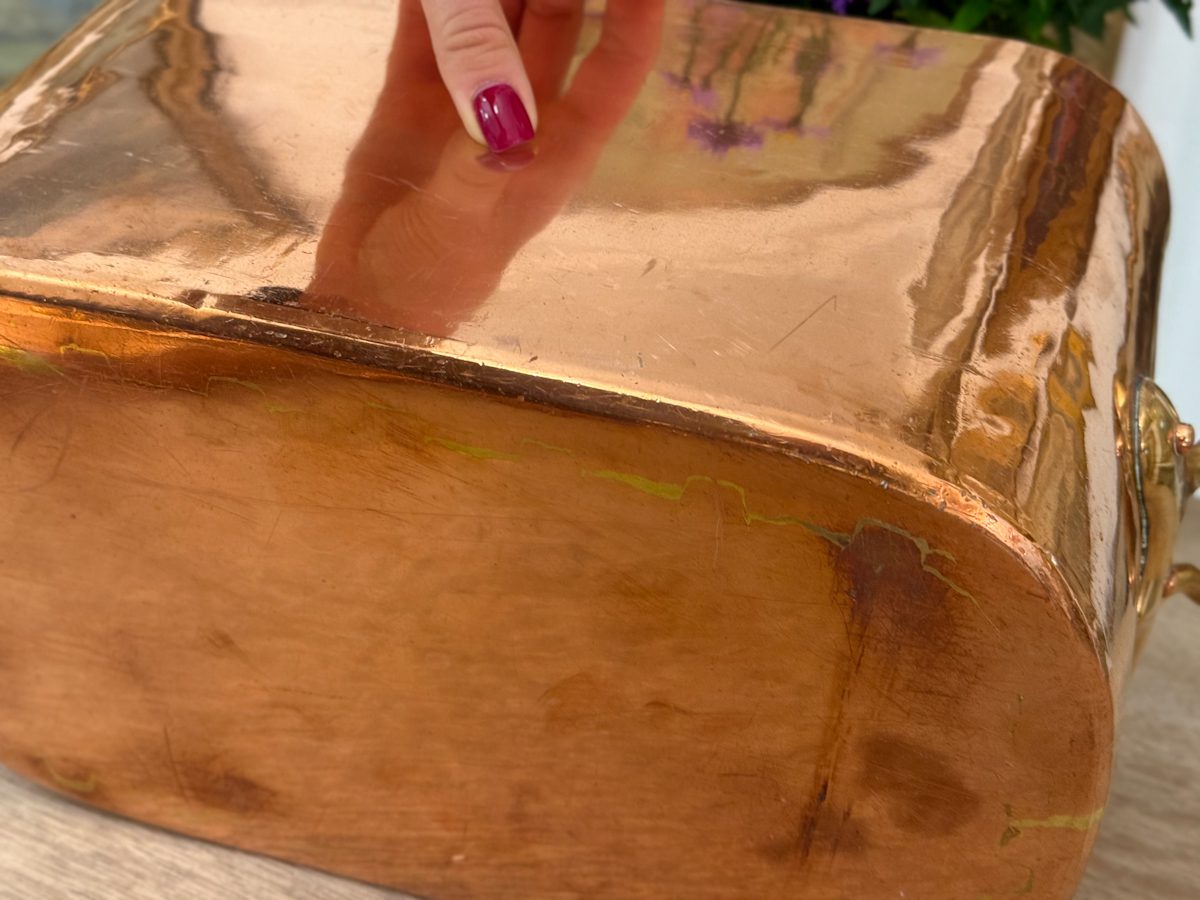
Condition Excellent historical condition. The copper body is completely firm, without significant dents or deformations. The attachments of the brass handles and lid hinges are faultless, the rivets are secure. The copper surface has been skillfully polished, retaining a warm, deep, and noble metallic sheen with a natural historical patina. The condition of the item is fully reflected in the photographs.
Snapshot of the Historicism Kitchen Era: The eminent scientist and chemist Dmitri Mendeleev sits in the dining room of his Riga house in the late morning hours, where soft northern light streams through the large windows. From the adjacent large kitchen, where a festive dinner is being prepared in honor of his scientific visits, comes a quiet, heavy metallic hum and the sounds of dishes. On the massive kitchen wooden table, alongside fresh herbs and a freshly caught catch, stands this wonderful copper pan, whose smooth, hammered red copper surface warmly reflects the glow of the fireplace. The massive brass handles and large rivets testify to the serious, almost scientific diligence with which the masters approached its creation. The room is filled with a delicate aroma, and the noble sheen of the metal lends unexpected visual substance and a sense of home warmth to the everyday imperial-era culture, momentarily diverting the professor’s thoughts from the complex calculations of the elemental system.