EN Dimensions: Clock: (Price is for the full 3-piece set, ensemble) Luxurious Antique Palace Clock Set with Two Candelabras — Historicism Style (antique clock garniture set) (4820) This monumental and artistically regal three-piece mantel or salon clock set (antique clock… 3 000,00 €
You’re now subscribed to price tracking for this product. We’ll notify you if the price drops. 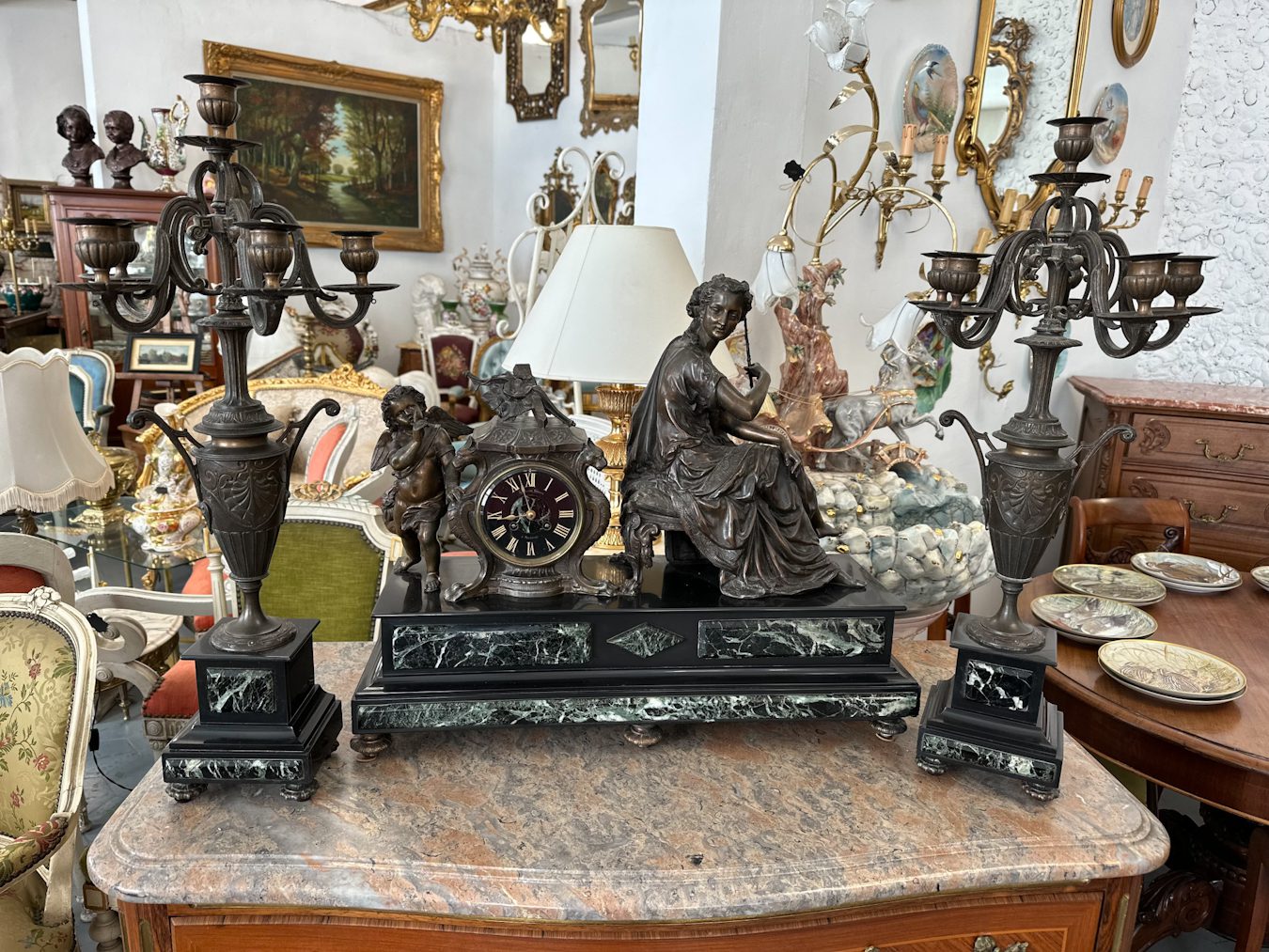











Luxurious Antique Palace Clock Set with Two Candelabras — Historicism Style – antique french mantel clock set bronze gar
Height 53 cm Length 65 cm Width 31 cm
Description
EN
Dimensions: Clock:
Height — 53 cm
Length — 65 cm
Depth — 23 cm
Candelabras:
Height — 69 cm
Width — 31 cm
(Price is for the full 3-piece set, ensemble)
Luxurious Antique Palace Clock Set with Two Candelabras — Historicism Style (antique clock garniture set) (4820)
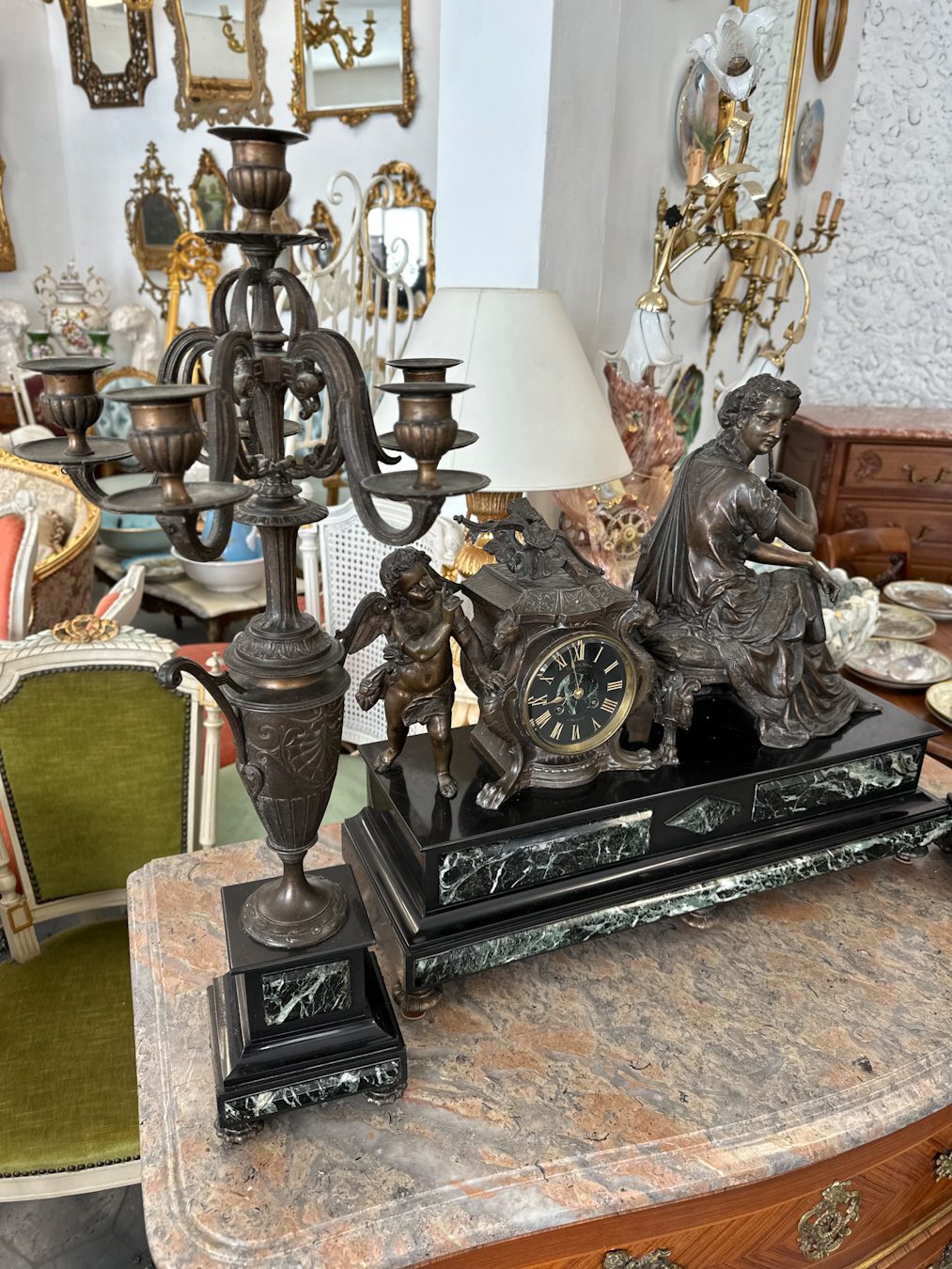
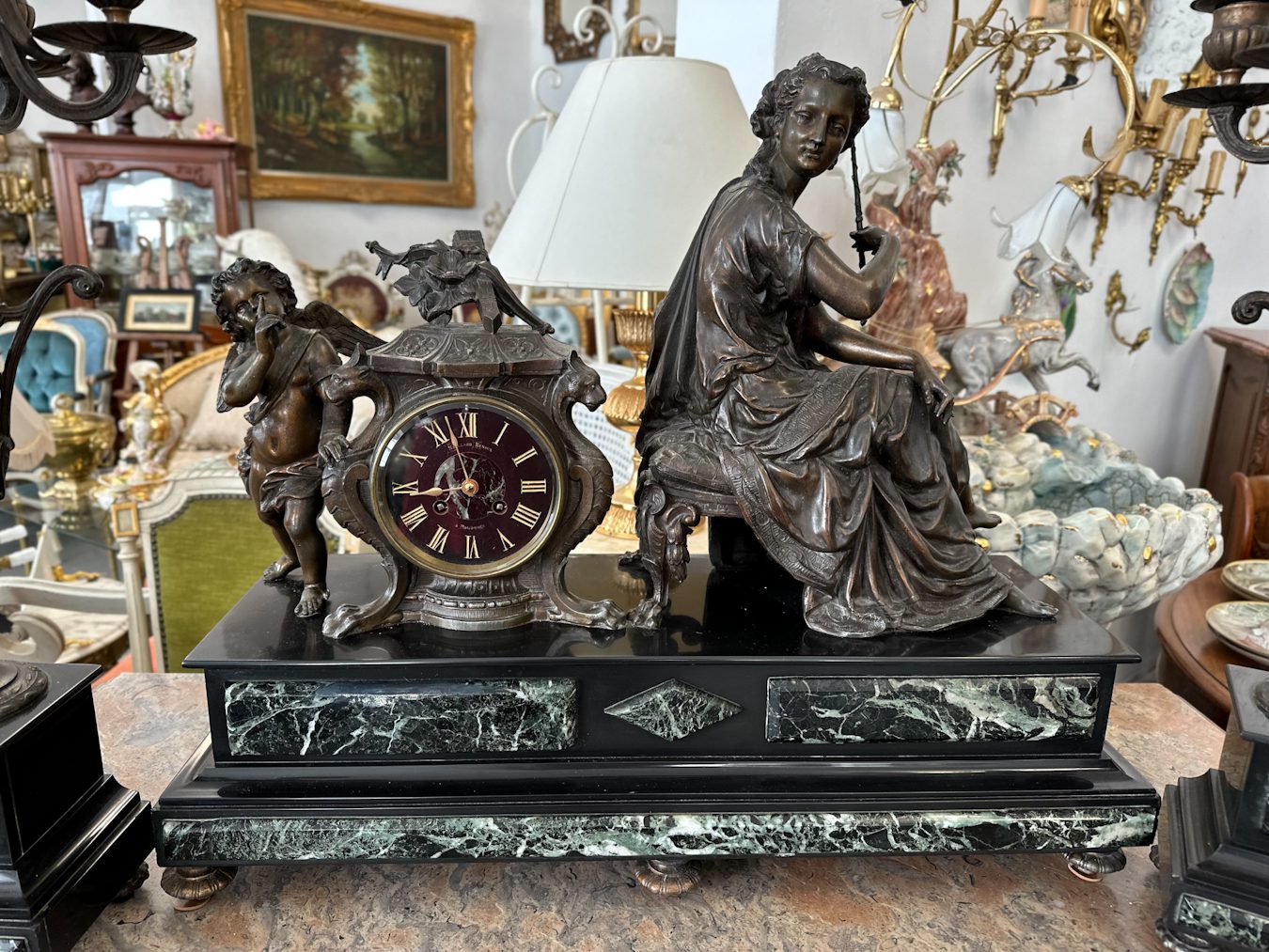
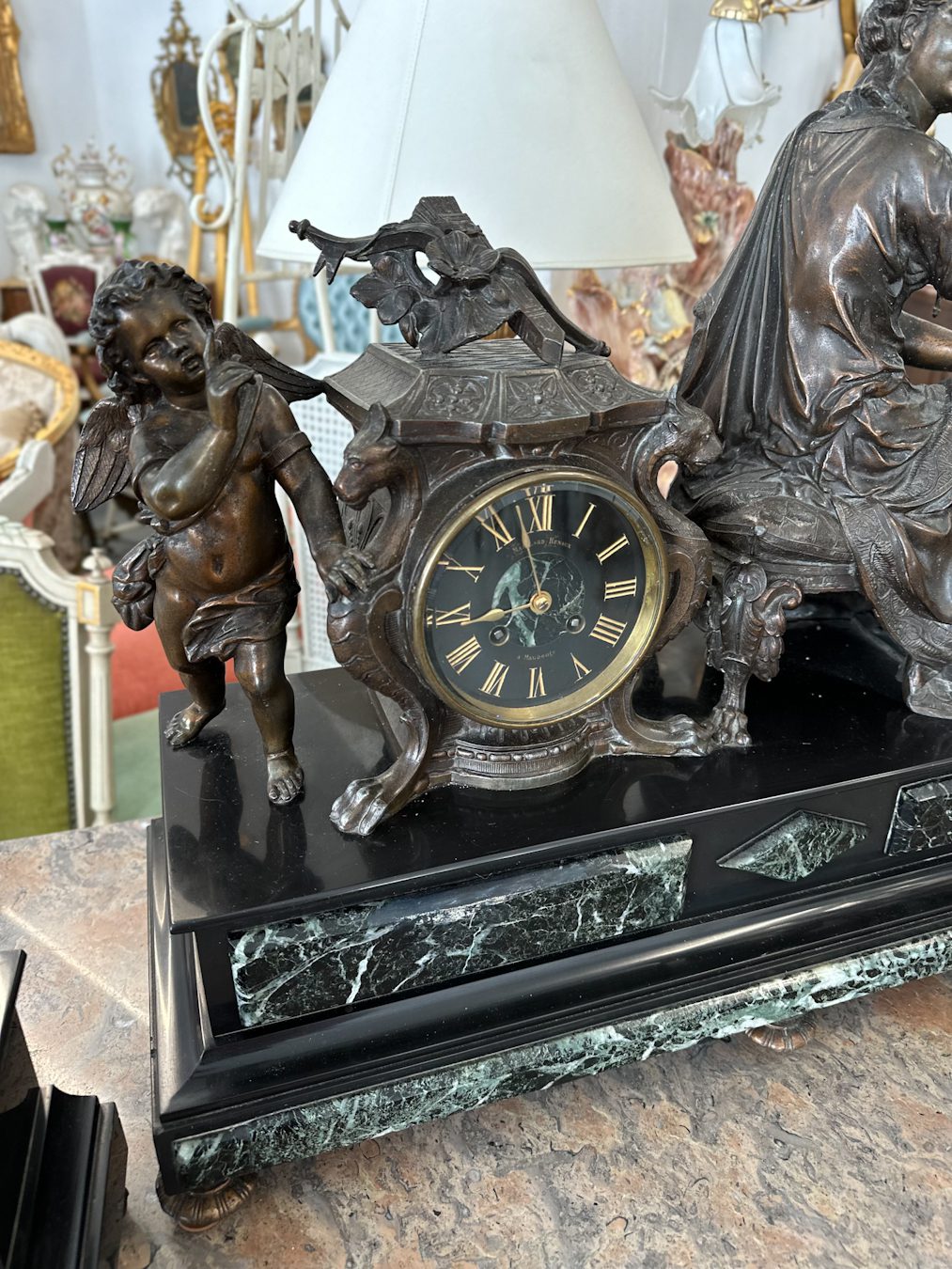
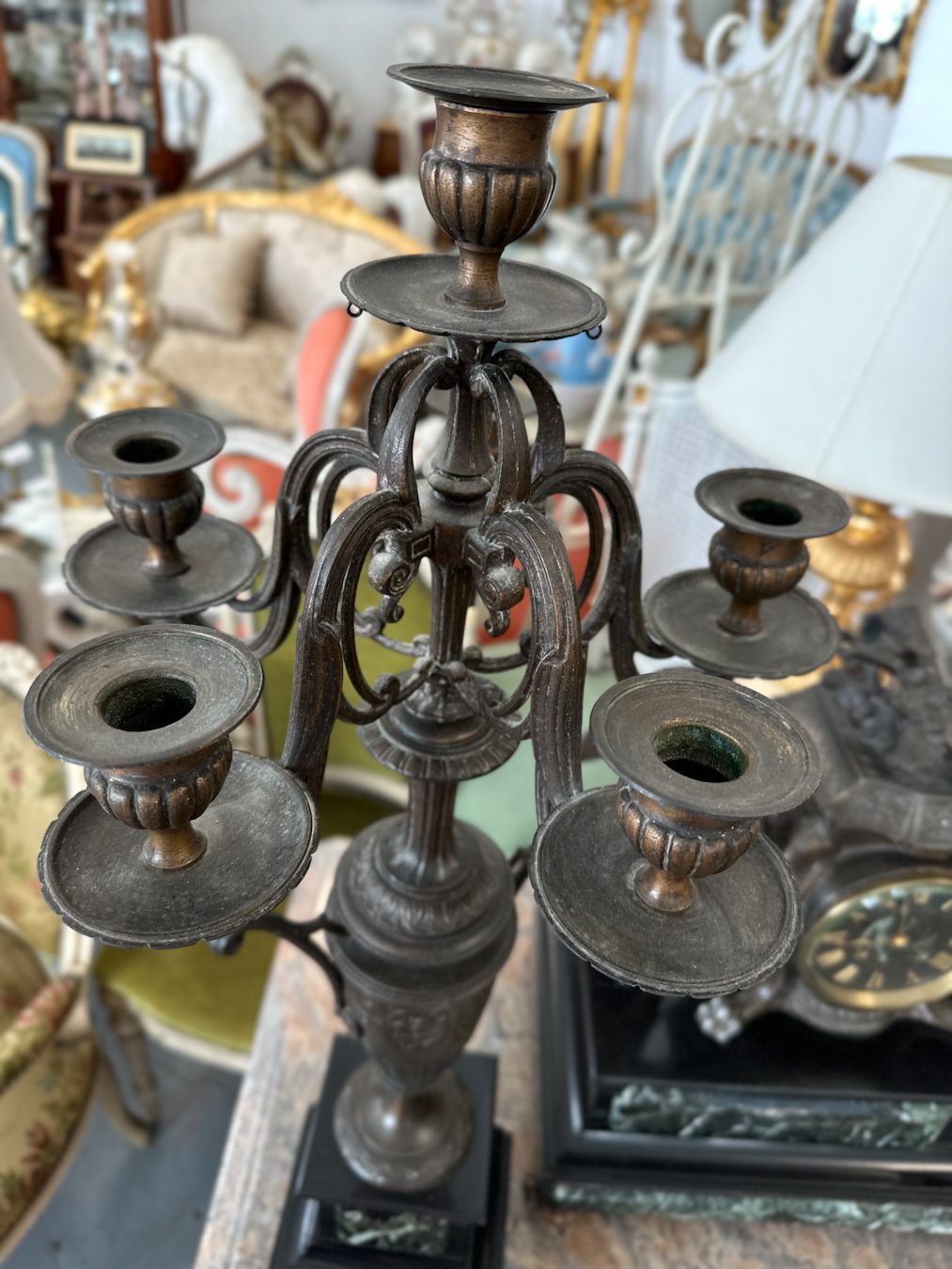
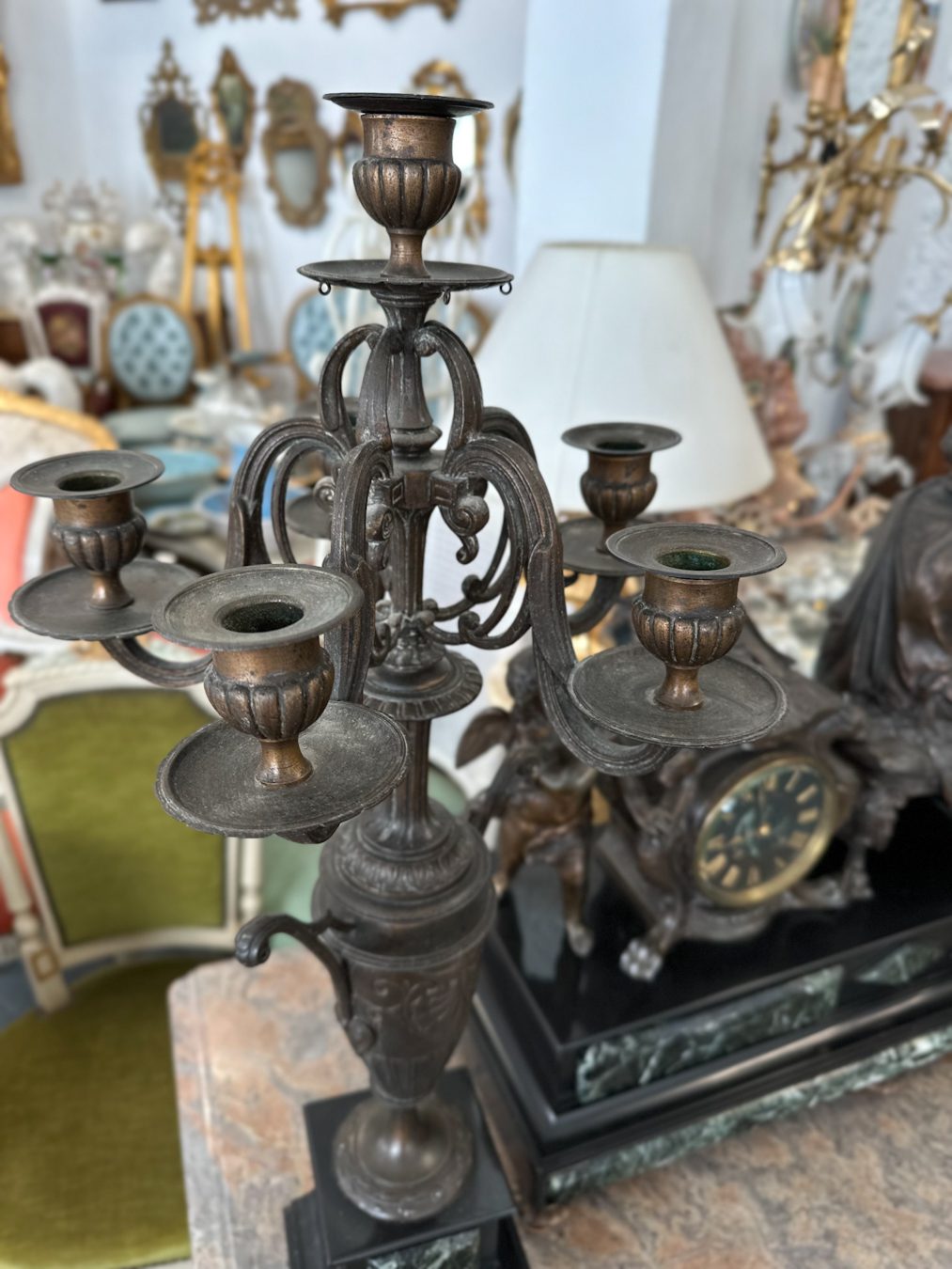
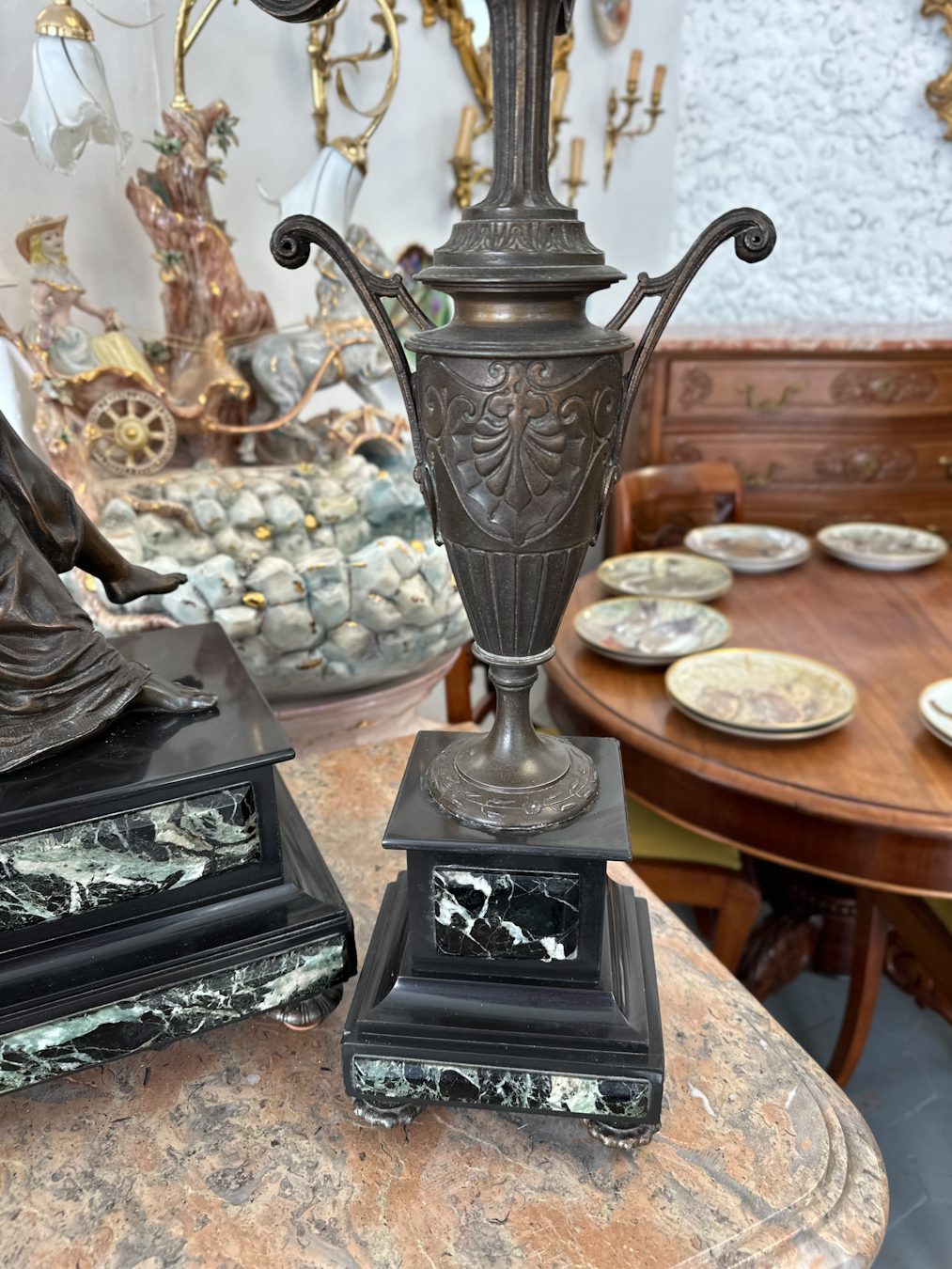
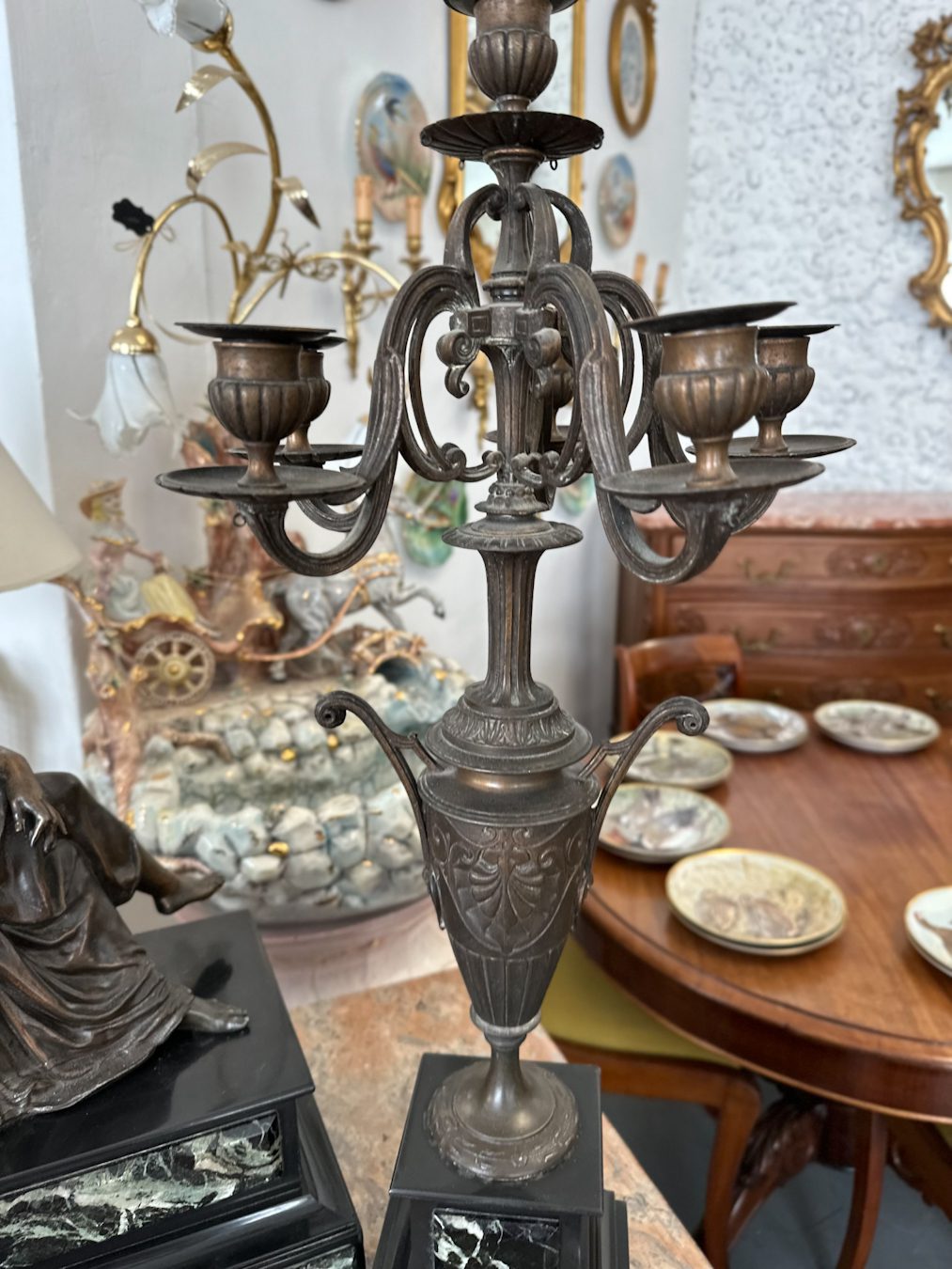
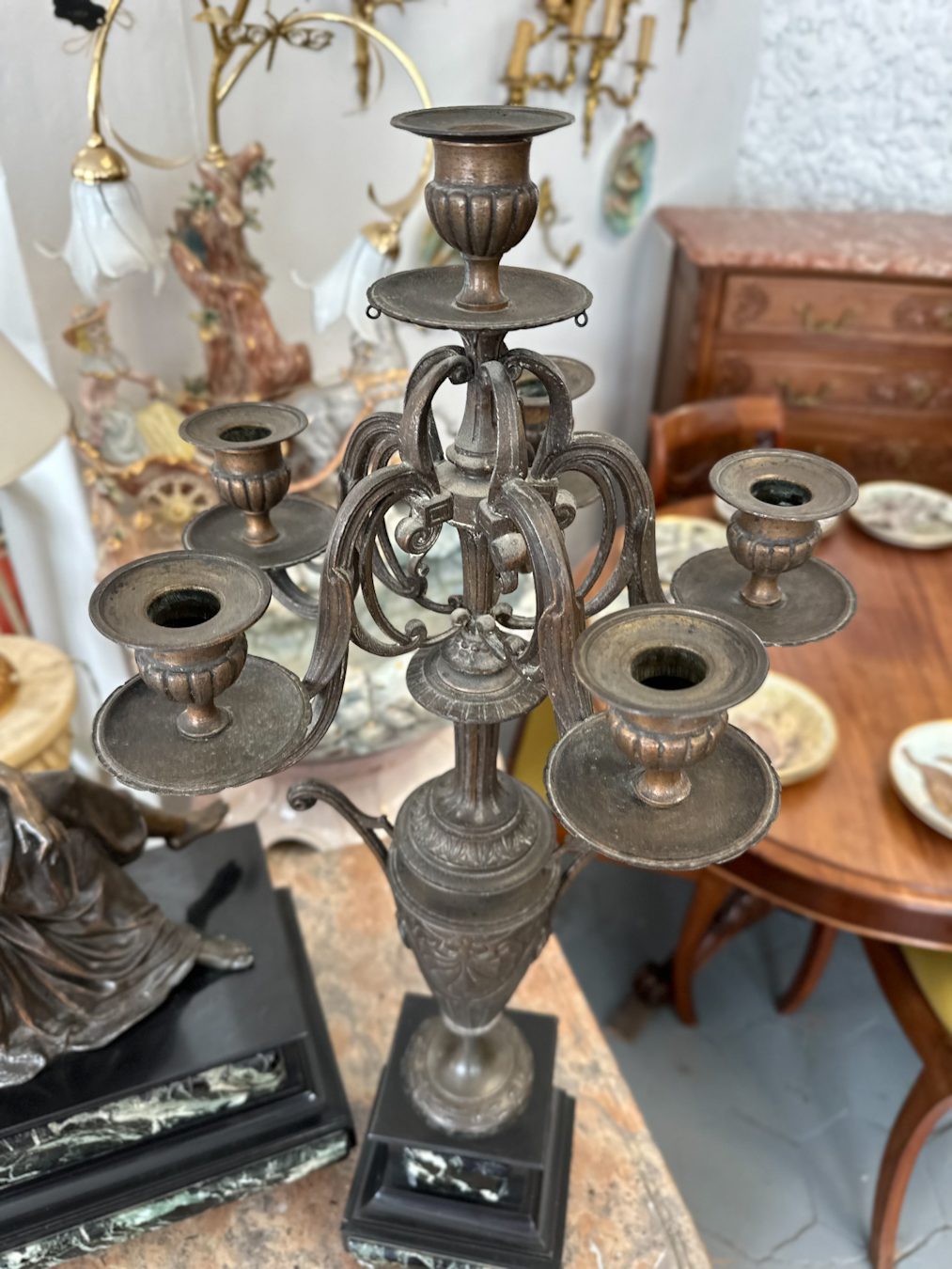
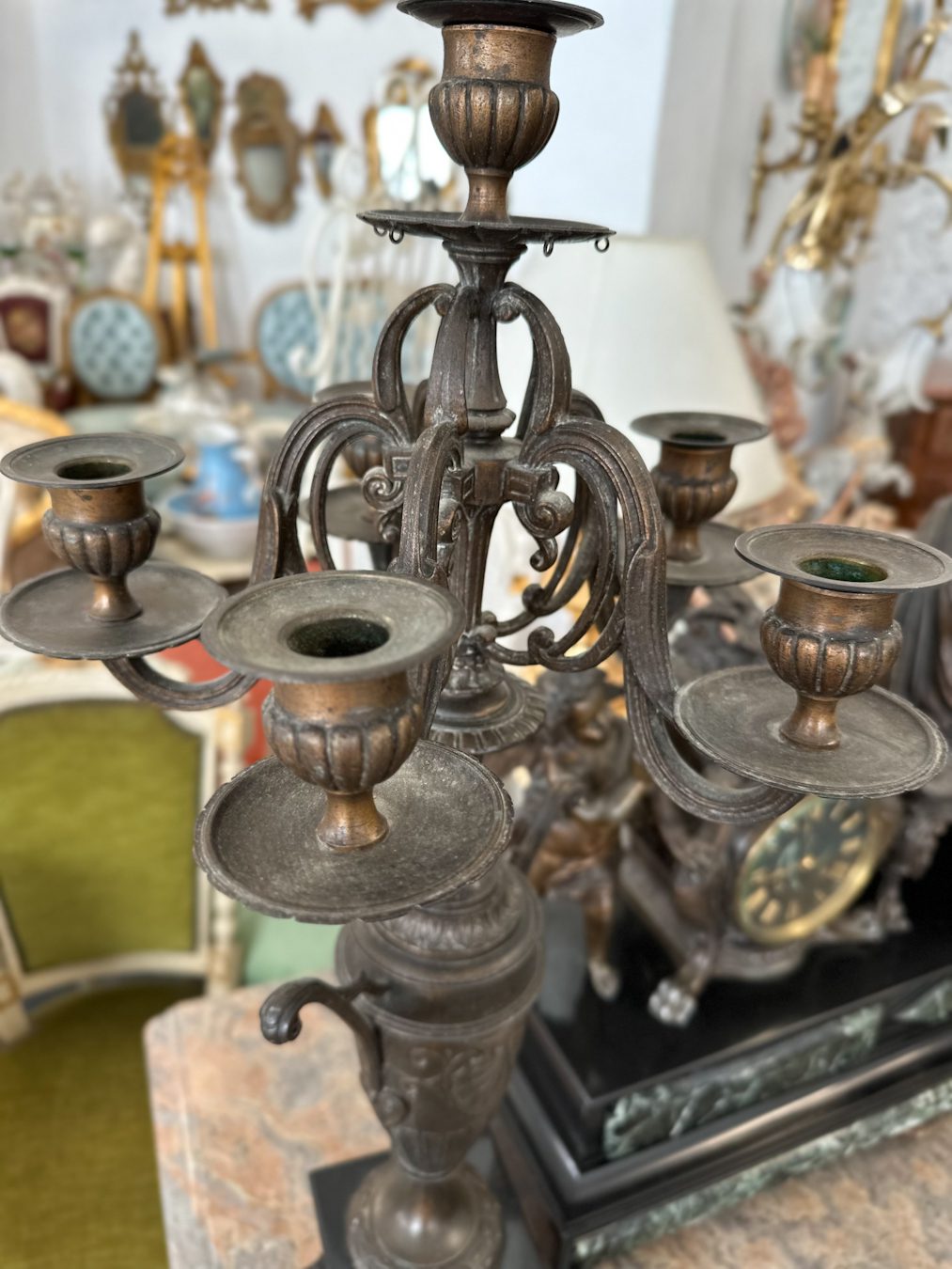
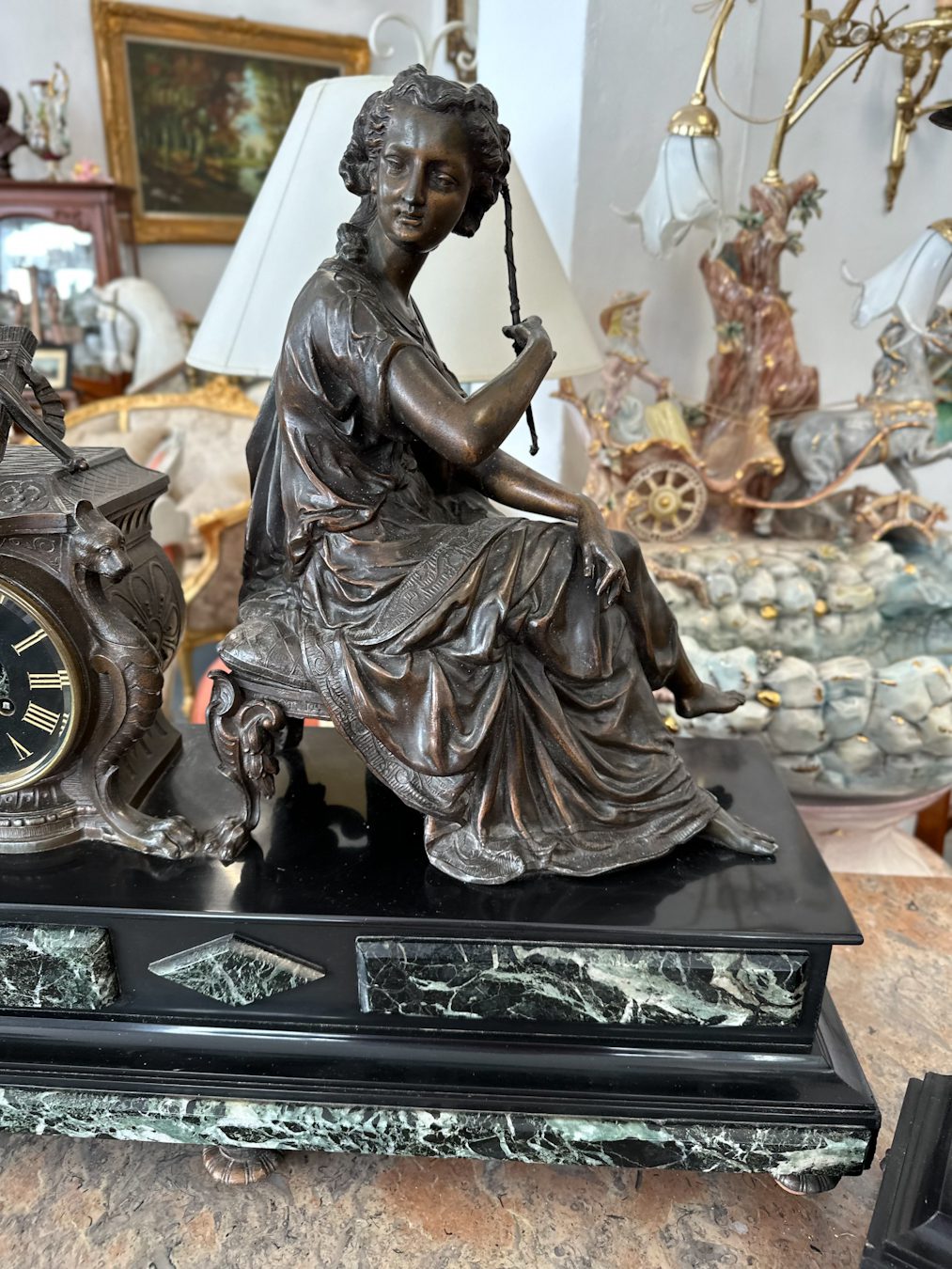
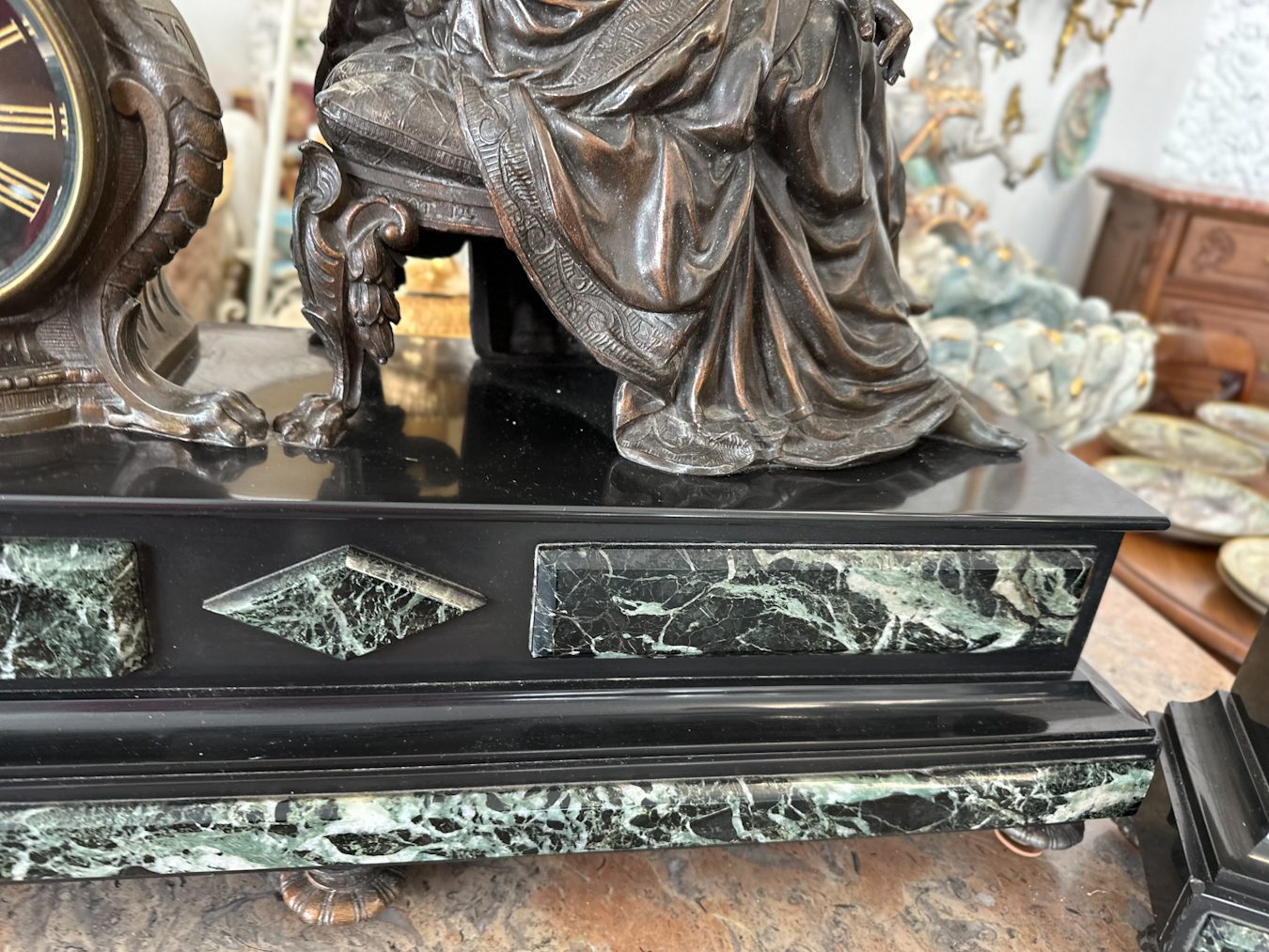
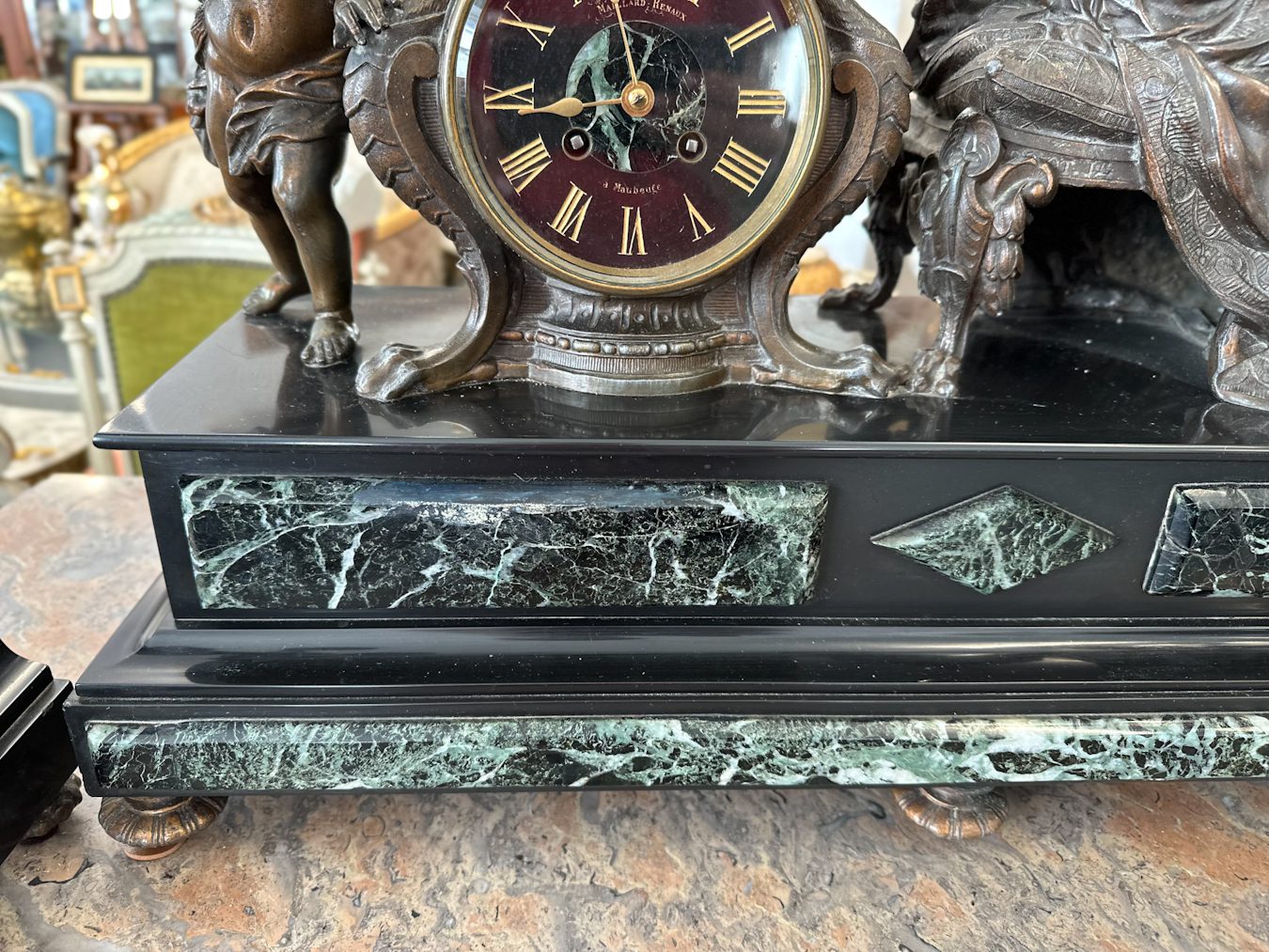
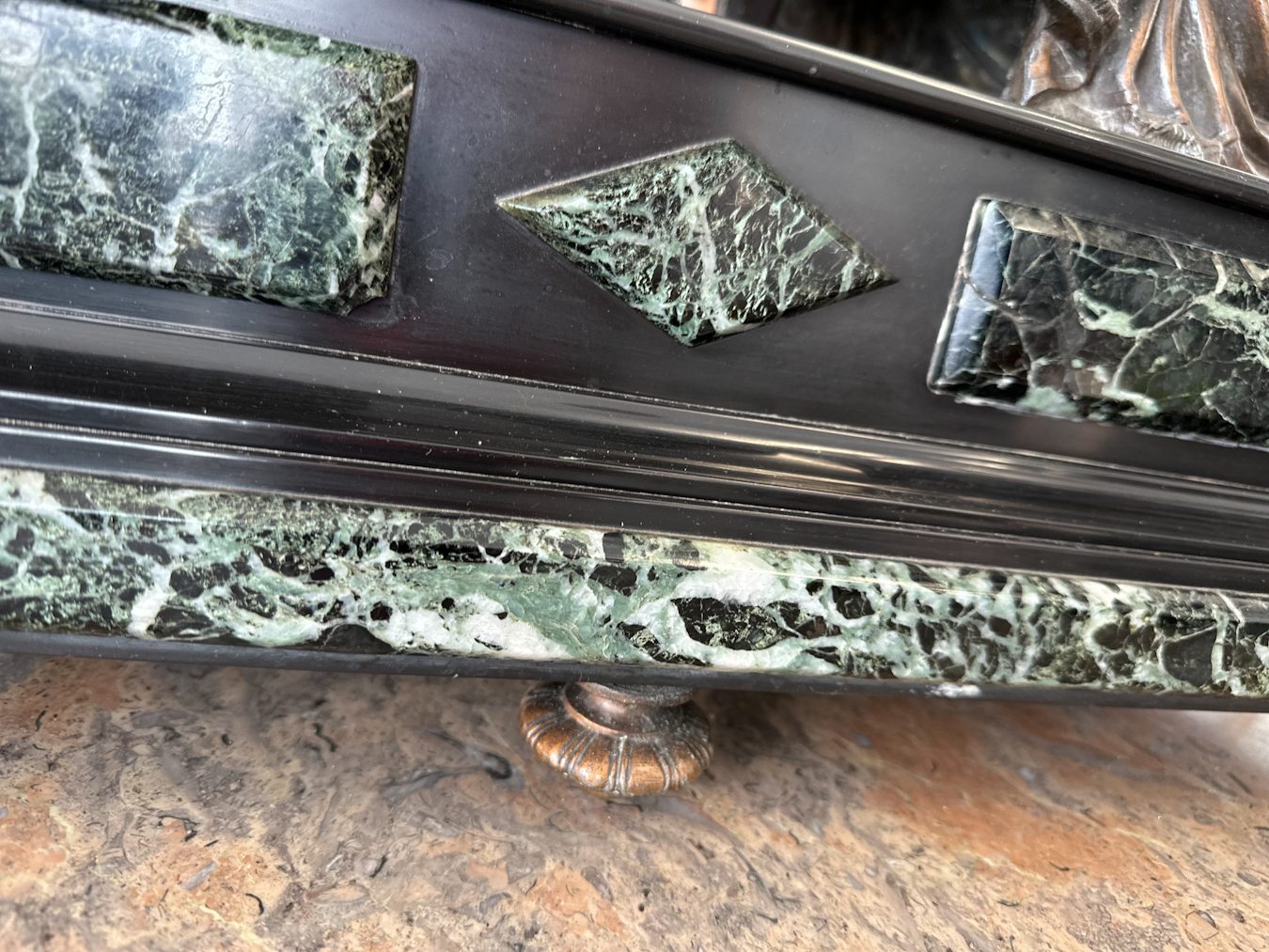
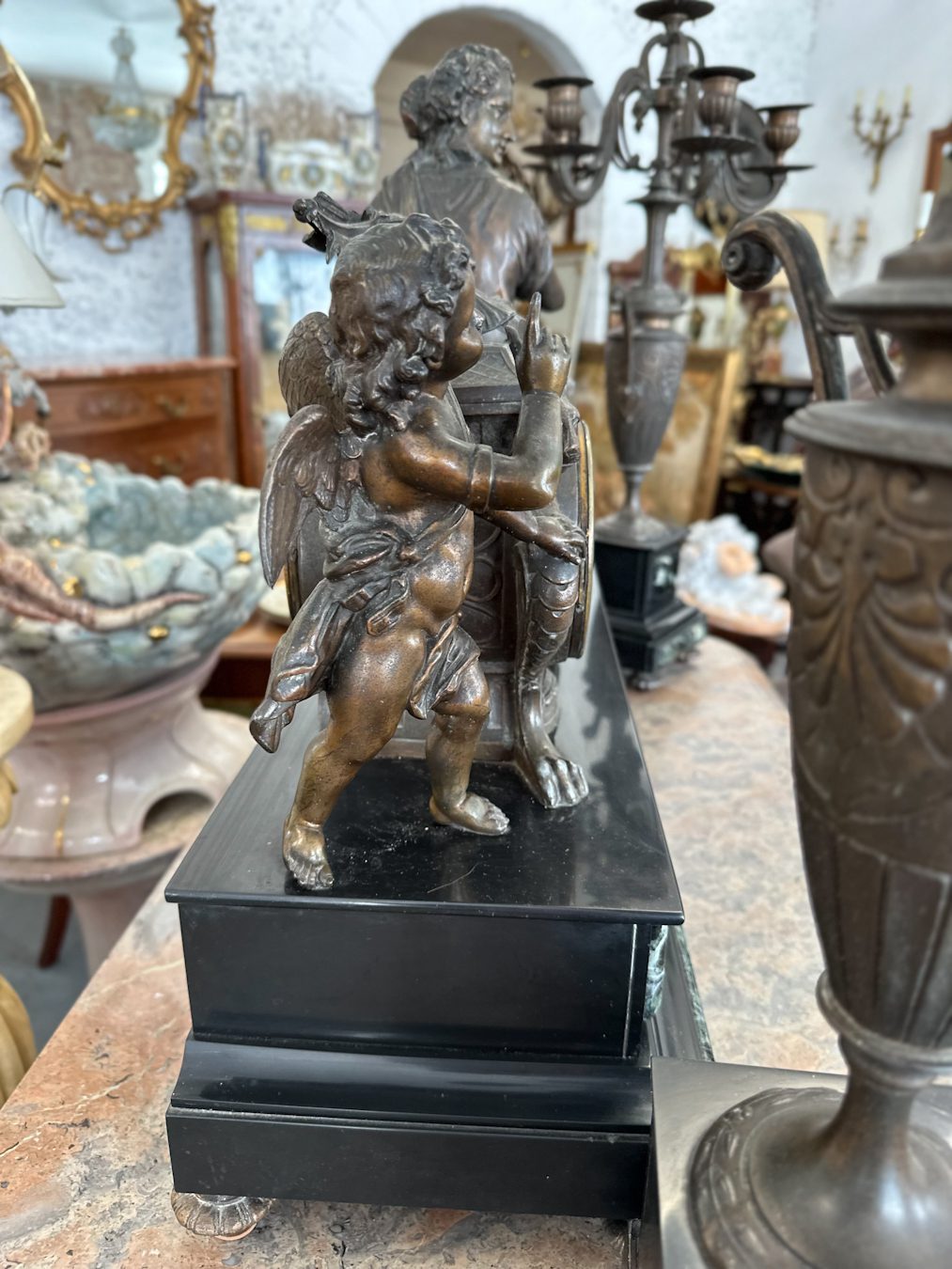
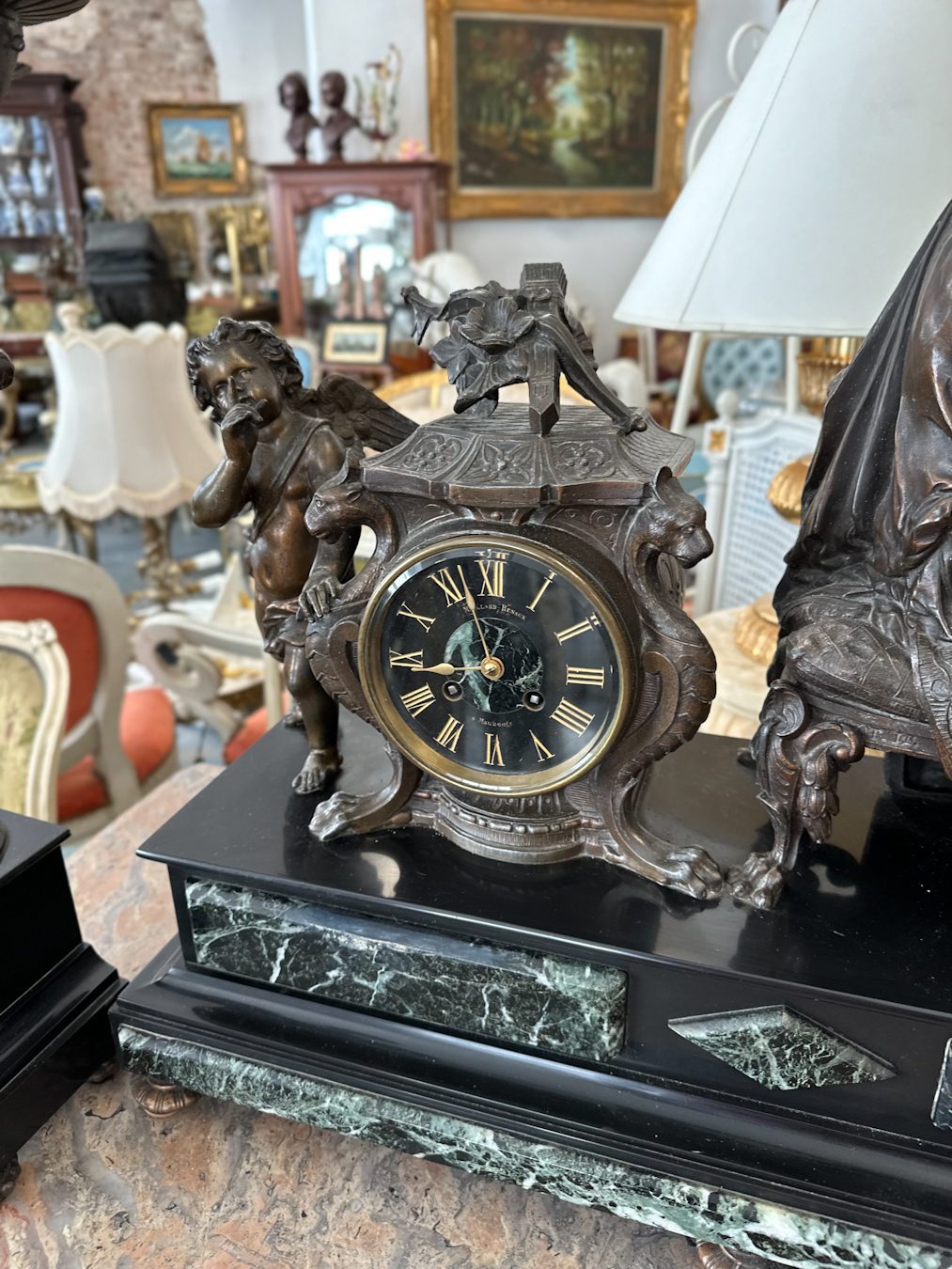
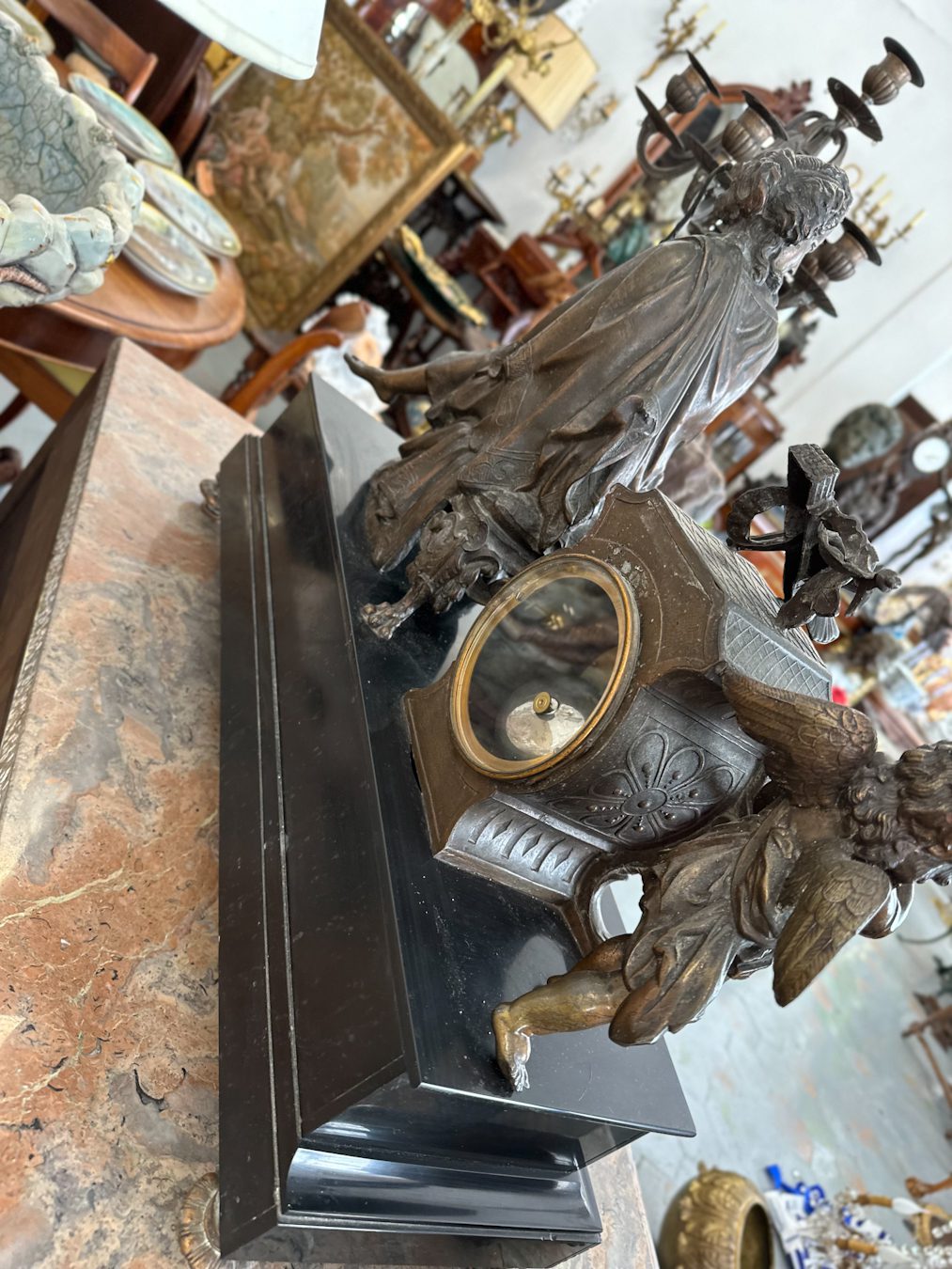
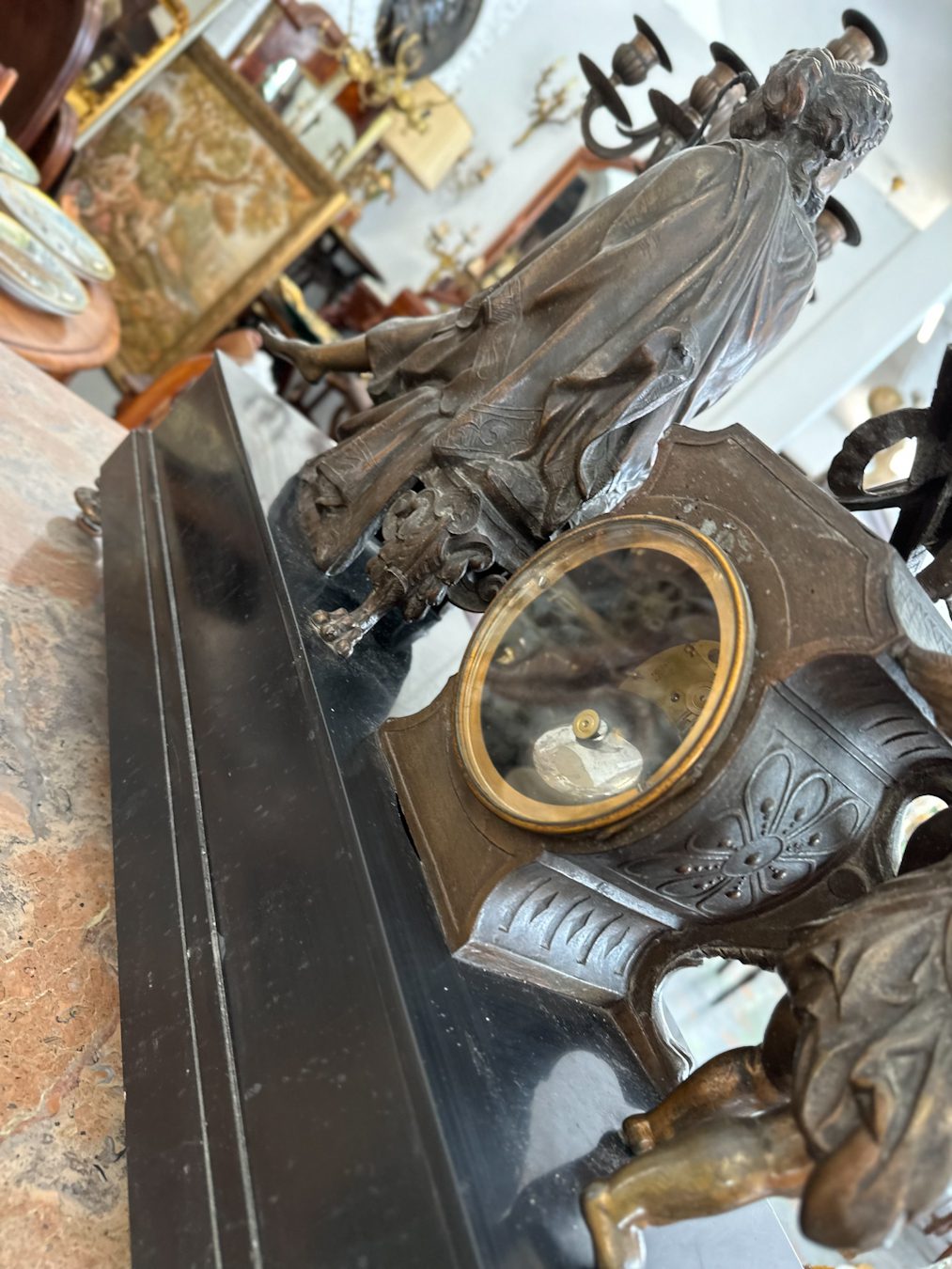
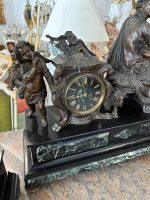
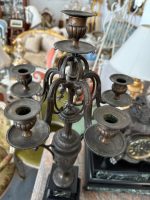
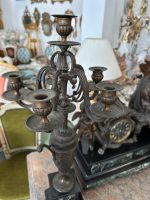
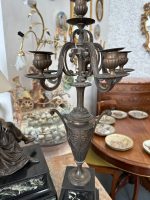
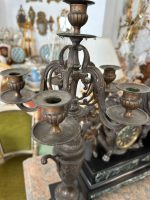
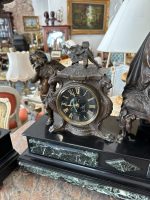
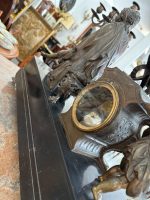
This monumental and artistically regal three-piece mantel or salon clock set (antique clock garniture set) is an outstanding example of late 19th-century bronze casting masters and decorative art. The set consists of a large-scale table clock and two massive, matching six-arm candelabras. The clock’s composition is crowned by two exquisitely sculpted bronze figures: a majestic lady in classical antique attire, thoughtfully seated on a chair, holding a writing stylus, and a winged cupid (putto) beside her, inviting silence with a finger to his lips. The clock case itself is adorned with Baroque-style chimera or lion figures and floral motifs. This entire weighty ensemble rests on a substantial polished black marble base, inlaid with high-quality, greenish-veined marble intarsia plaques and a rhomboid medallion. Both grand candelabras feature vase-shaped central bodies with acanthus leaf and neoclassical reliefs, transitioning into winding, sculptural arms, and resting on identical two-tiered marble bases.
Craftsmanship & Period Made in France, in the late 19th century (approximately 1875–1890), when the historicism style reached its peak and aristocracy and wealthy bourgeoisie desired to see a synthesis of the grandeur and luxury of Louis XIV and Empire styles in their salons.
Mechanism & Design The clock retains its original burgundy and dark enamel dial with Roman numerals and elegant, hand-drawn gilded manufacturer’s signatures. The center of the dial is adorned with the same green marble texture as the base. The mechanism is a classic full-caliber clockwork, visually complete (running and accuracy not tested).
Rarity & Significance The main value of this set is its undivided composition, impressive size (candelabras reach up to 69 cm in height), and the complete preservation of both sculptural figures. Such grandiose garnitures have almost always been dispersed or lost their pairs of candelabras over time, making a complete, intact palace set a serious acquisition for high-end interiors and collections.
Application & Interior Use This set is created to become the main, dominant, and majestic visual center of a room. It is ideally suited for placement on a large, massive marble or wooden mantelpiece, in a spacious reception hall, a manor salon, or on a long console table between historic mirrors.
Condition The set is in excellent historical and technical condition. All bronze sculptures and candelabra arms are fully intact, firm, with a beautiful, deep, and dark patina of time in the reliefs. The marble bases are smooth, without major chips, cracks, or breaks. The dial enamel and protective glass are undamaged. The set retains its original, cast bronze feet under the clock base. The item is authentic, untouched, and ready for display. The condition of the item is fully reflected in the photographs.
Belle Époque momentuzņēmums: Stéphane Mallarmé sat quietly in the living room of his Parisian apartment, where smoky cigar fumes and tea steam silently drifted between the bookshelves. The room was bathed in twilight and that creative, quiet solitude necessary for the birth of new poetic lines. On the mantelpiece, a large, dark silhouette of marble and bronze shimmered expensively in the light, its six-arm candelabras encircling the figures of the wise lady and the little cupid. The clock’s burgundy enamel dial and greenish stone veins gleamed dimly and nobly, while the mechanism’s calm, metallic rhythm and the silent solidity of the bronze figures brought to the evening that aristocratic, eternal satisfaction that could only be felt through atmosphere.