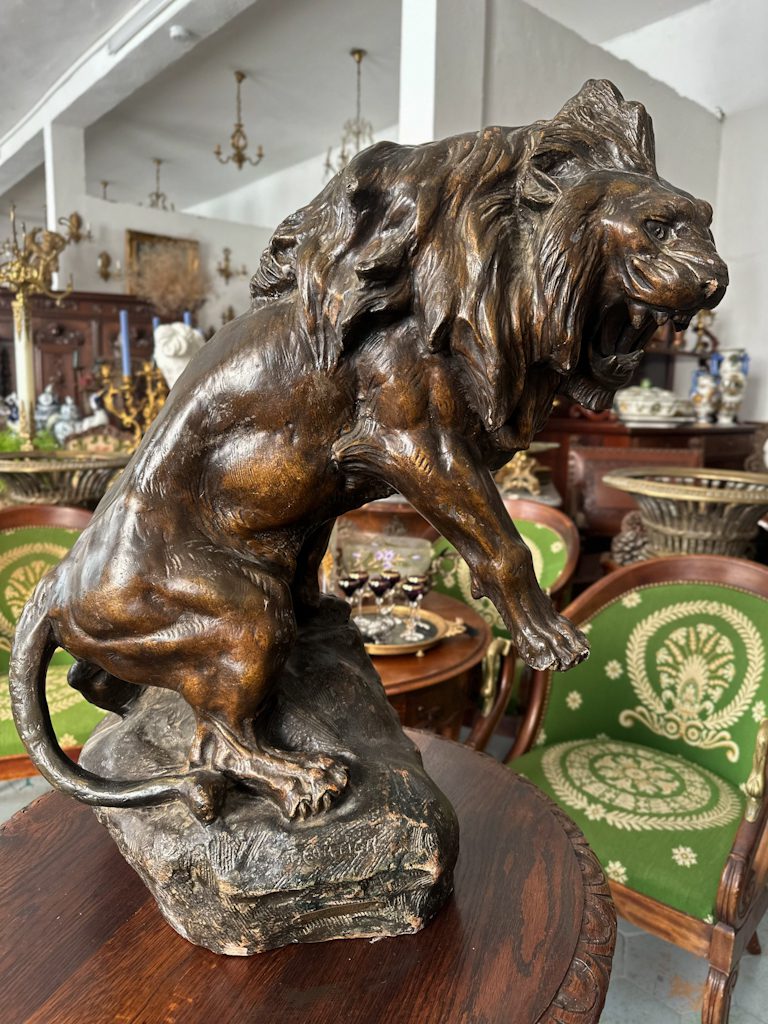
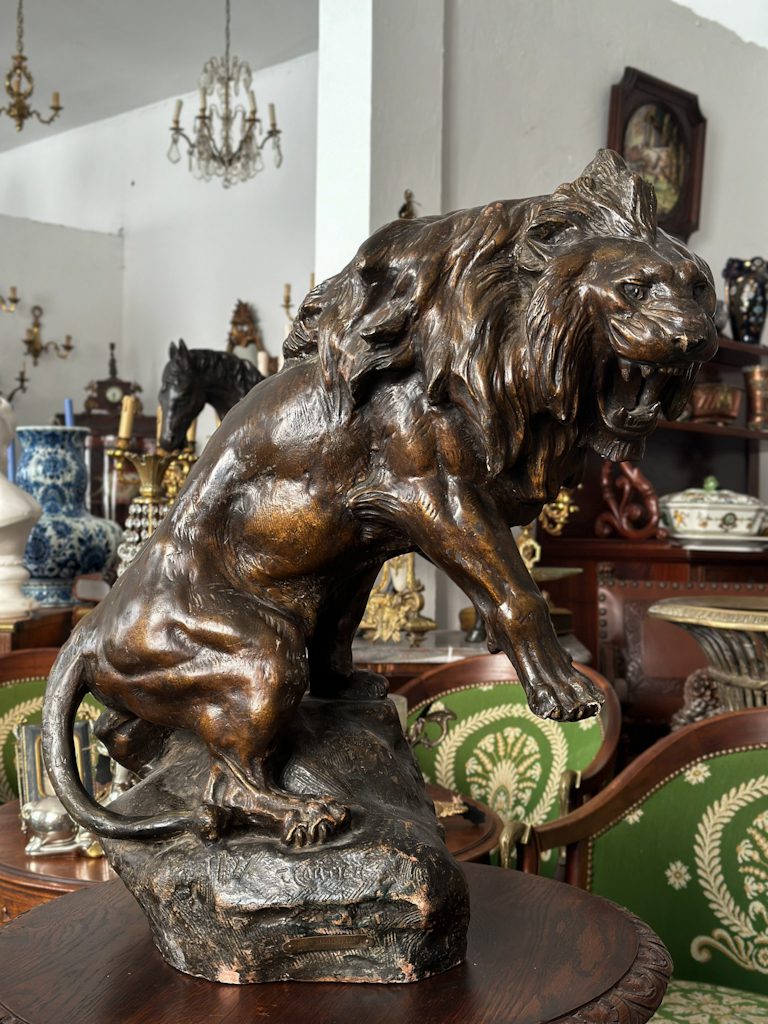
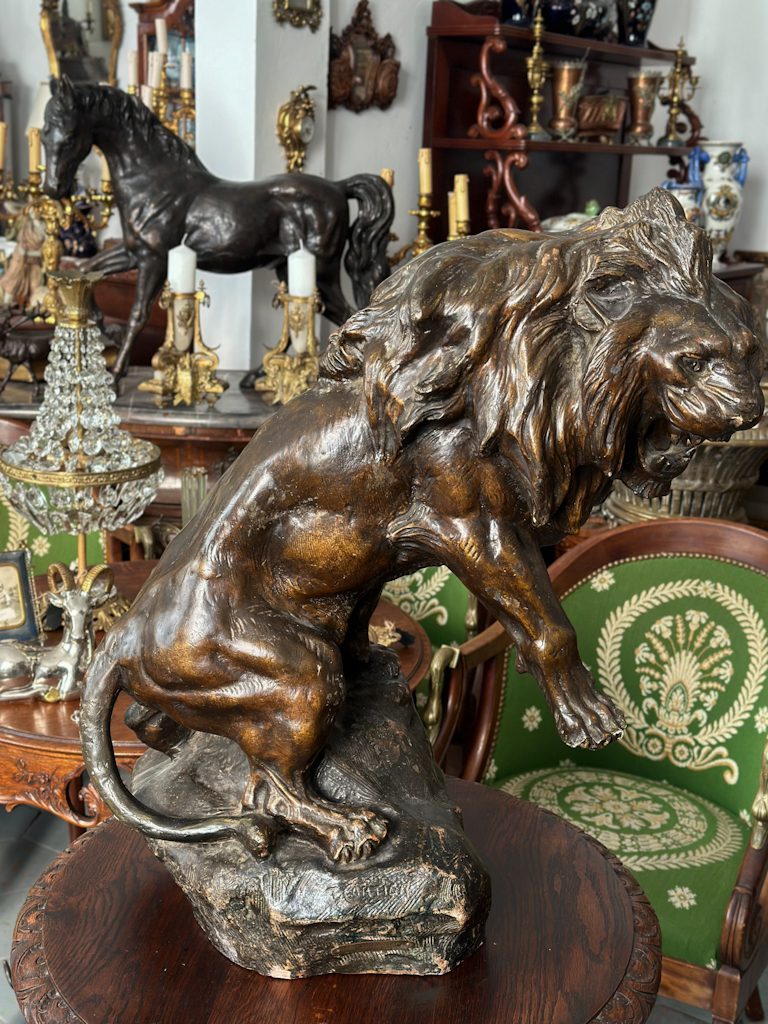
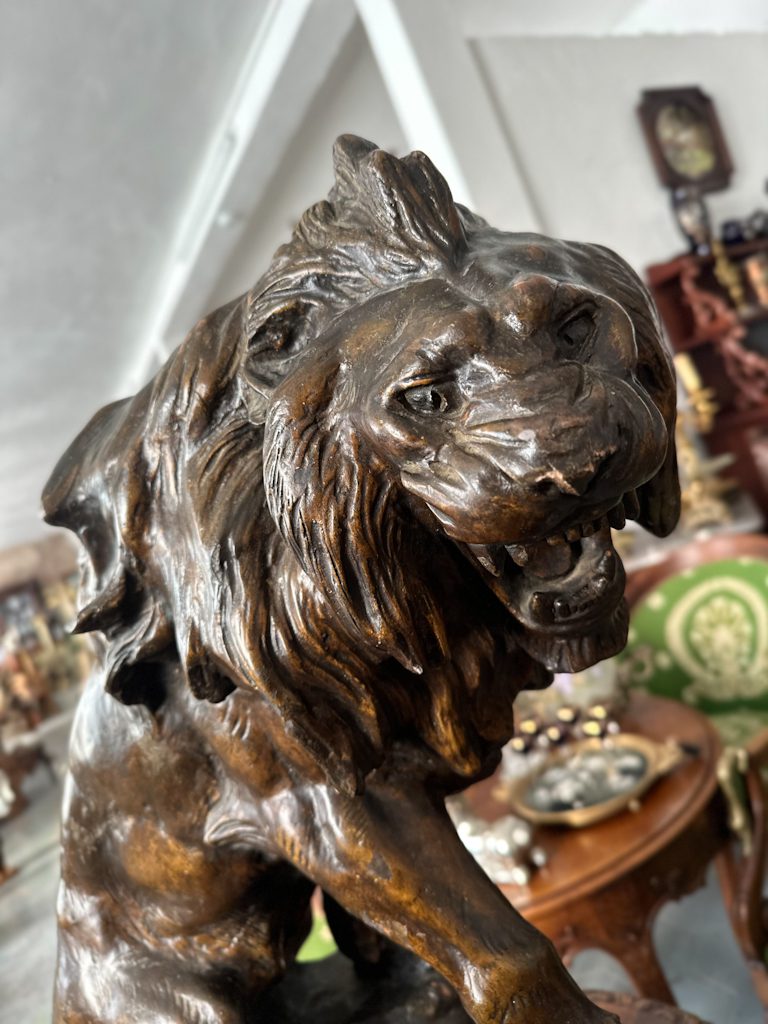
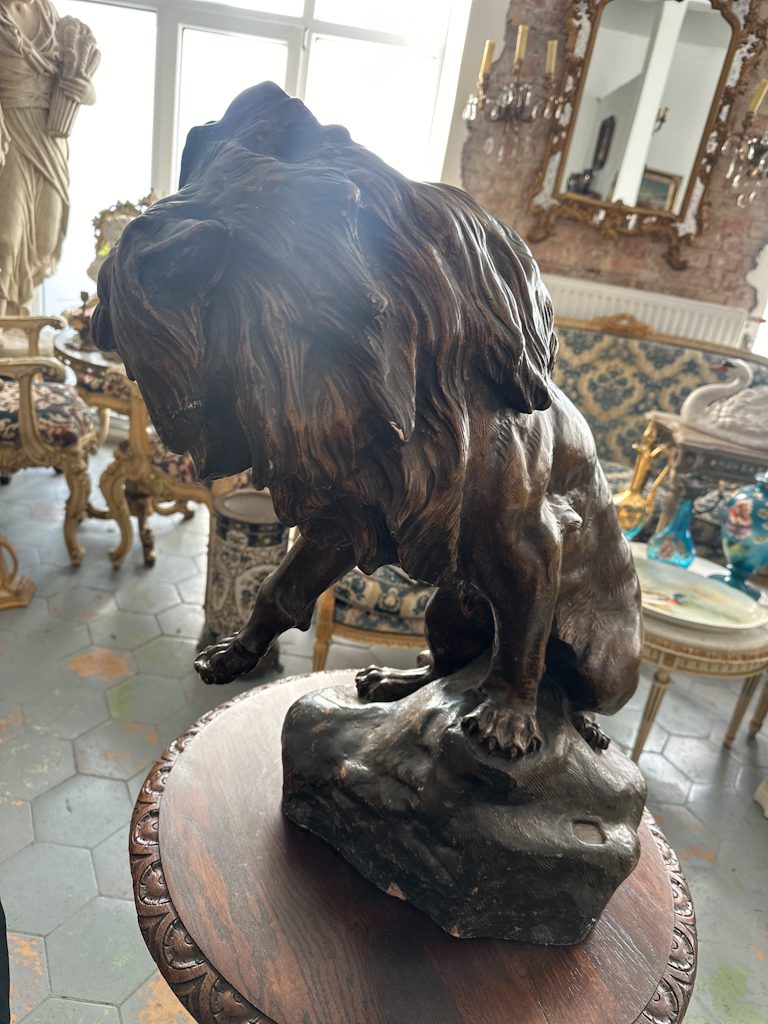
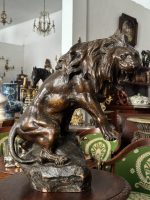
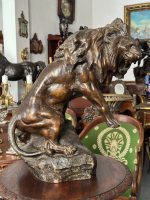
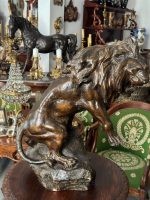
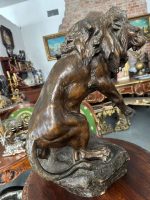
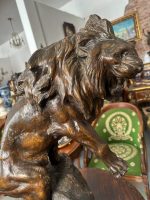
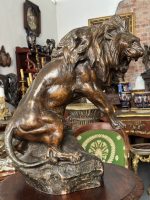
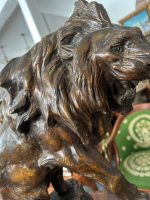
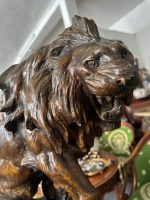
DESCRIPTION IN “Lion Combattant” — Fighting Lion, terracotta with bronze patina, after the model by Thomas François Cartier (1879–1943), Ateliers d’Art Martini edition, France, circa 1910–1940. ――――――――――――――――――――― 📐 DIMENSIONS Height 63 cm. Material: terracotta with a deep brown bronze-imitation patina.… 2 550,00 €
You’re now subscribed to price tracking for this product. We’ll notify you if the price drops. 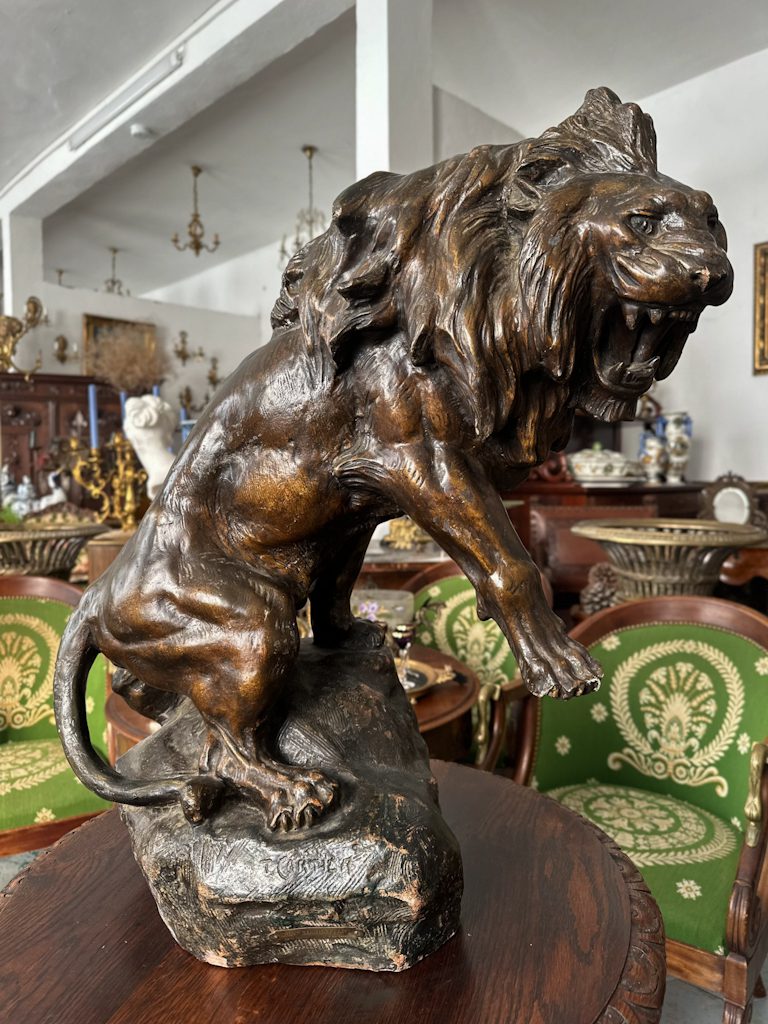
Lauva Cīnītājs — “Lion Combattant” — French Animalism, France, c. 1910 (5190)
Height 63 cm Color BronzeNaturalTerracotta
Description
DESCRIPTION IN
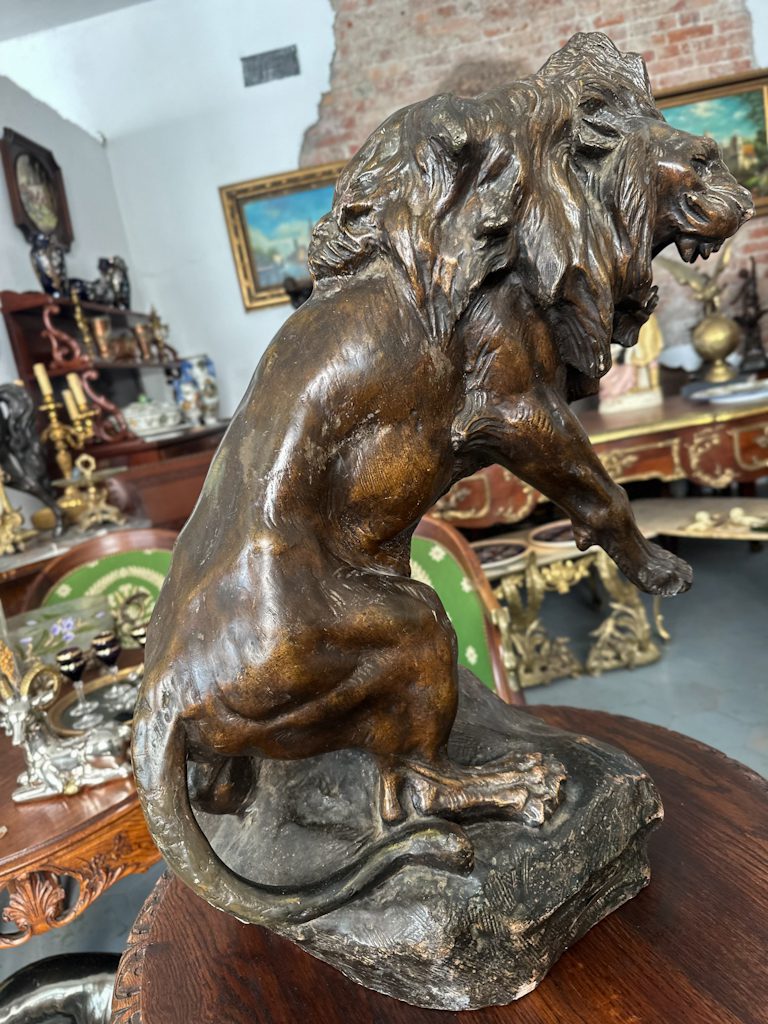
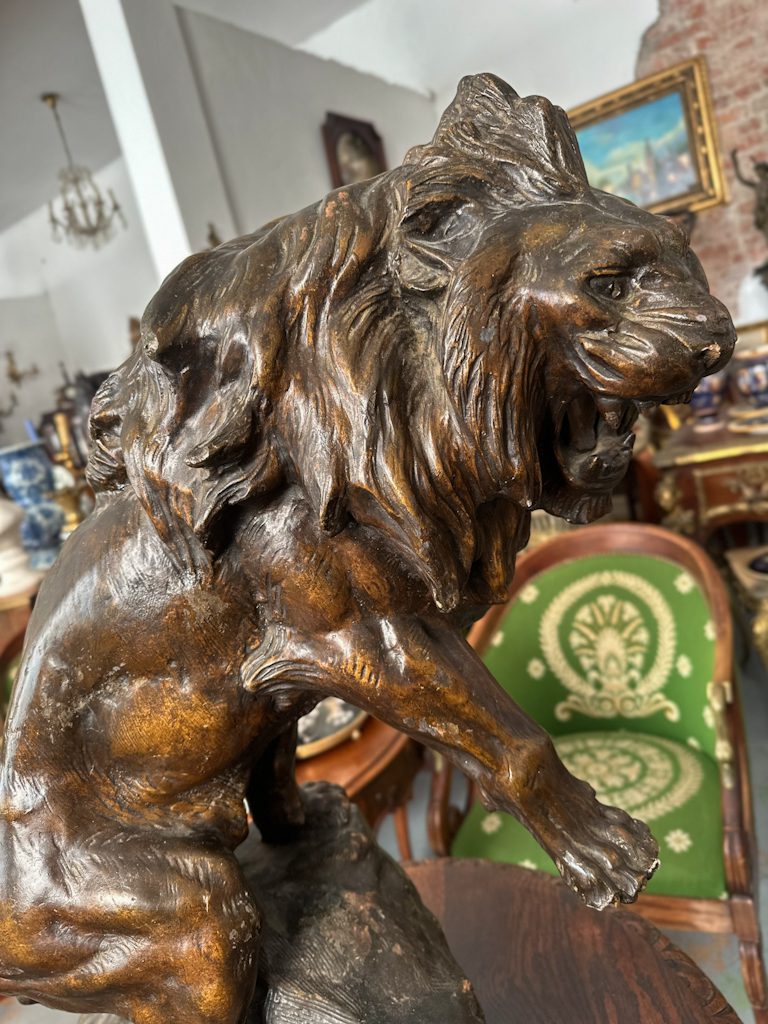
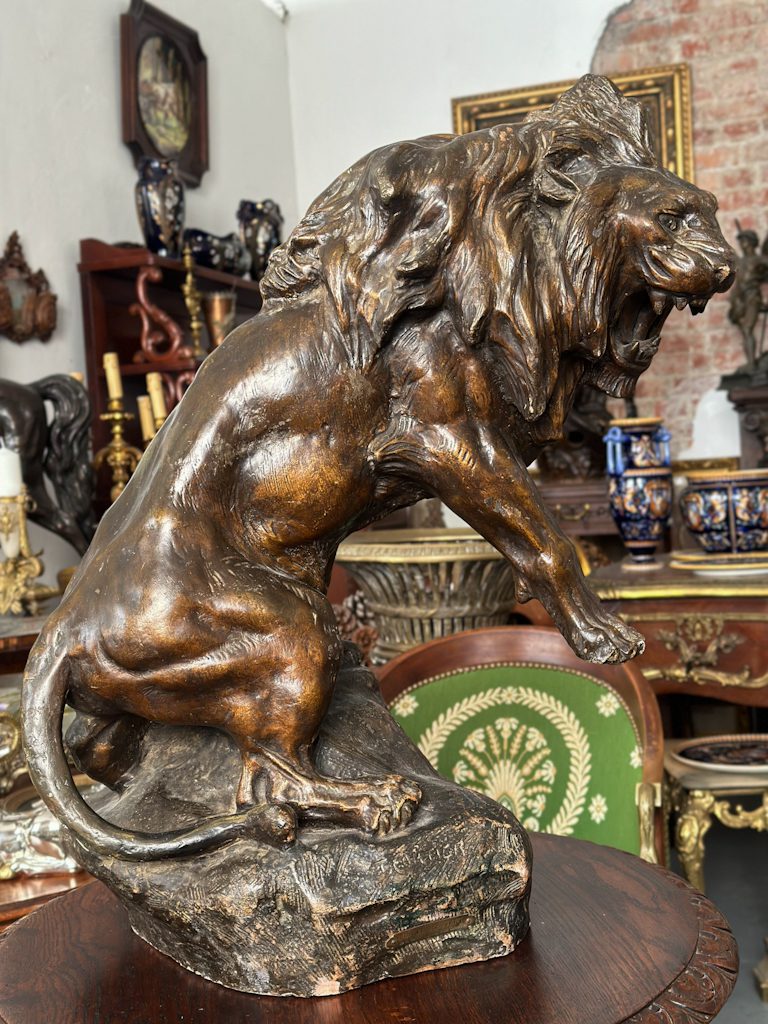
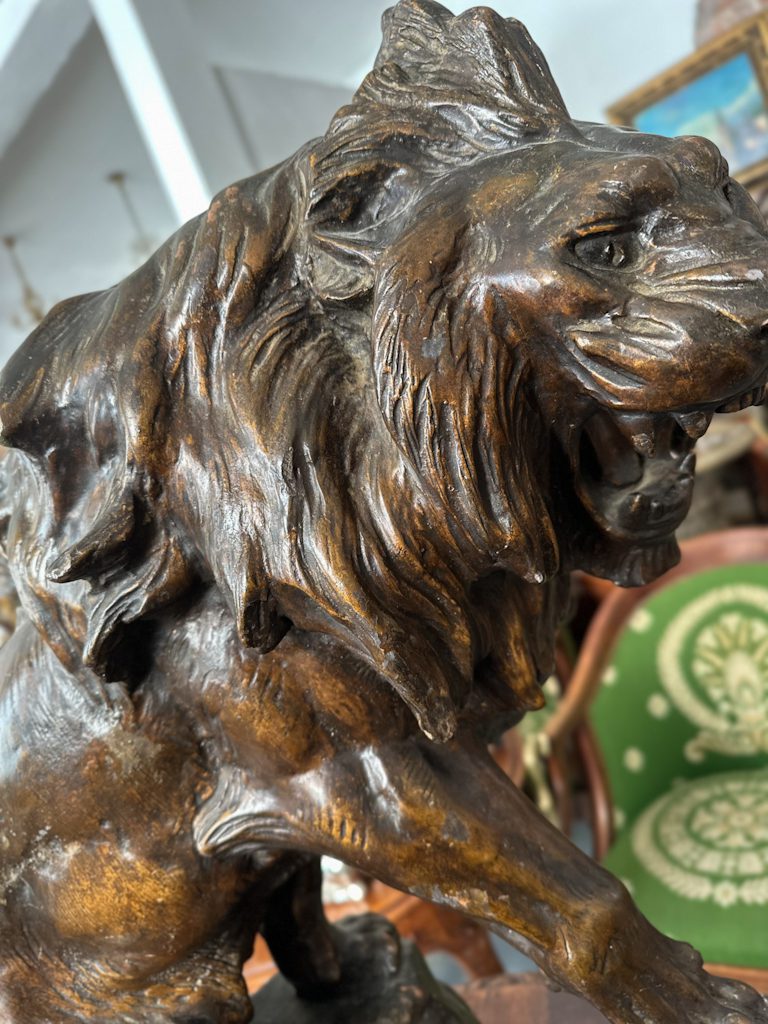
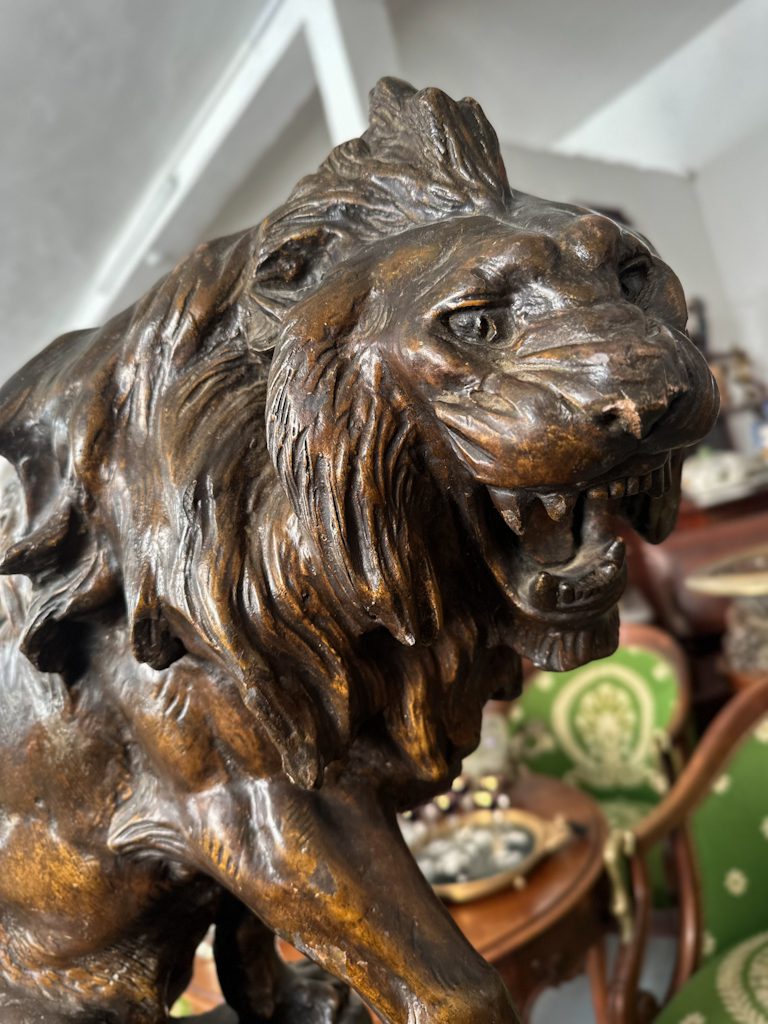
“Lion Combattant” — Fighting Lion, terracotta with bronze patina, after the model by Thomas François Cartier (1879–1943), Ateliers d’Art Martini edition, France, circa 1910–1940.
―――――――――――――――――――――
📐 DIMENSIONS
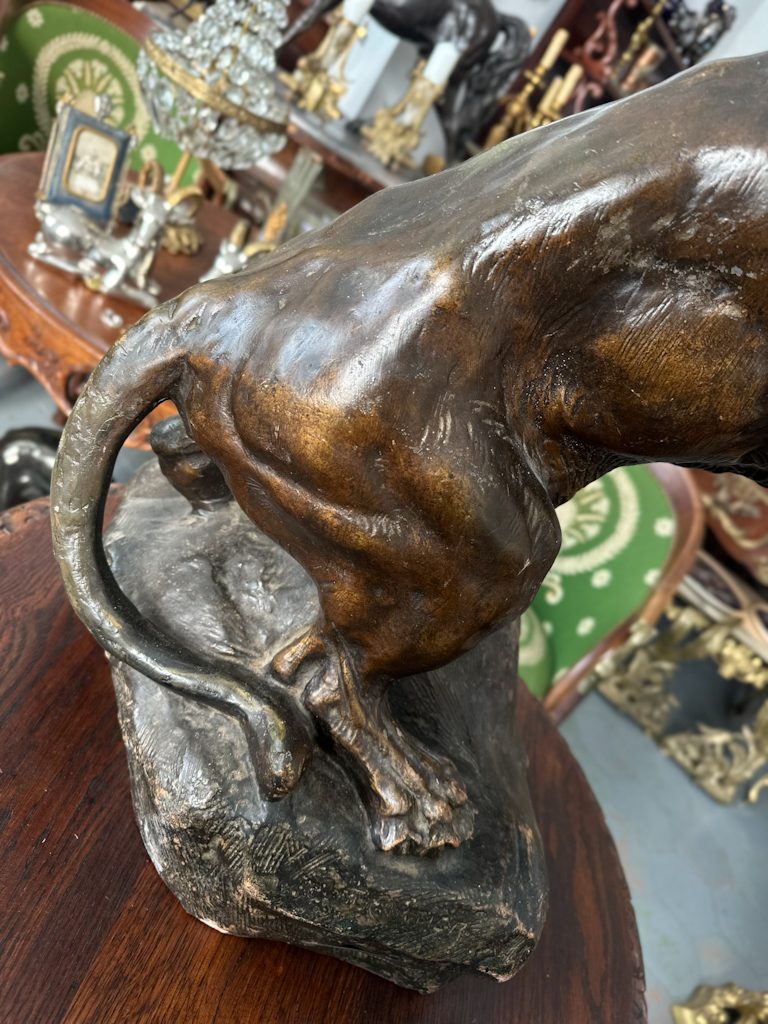
Height 63 cm. Material: terracotta with a deep brown bronze-imitation patina. Weight: considerably heavy — a solid casting on an organic rock base.
―――――――――――――――――――――
🏛️ PERIOD, ARTISTIC STYLE, AND HISTORICAL CONTEXT
This sculpture belongs to the zenith of the Animalier school — a period when animal sculpture in Paris enjoyed a prestige and collector attention previously reserved for historical and mythological subjects. From the tradition established by Antoine-Louis Barye — the founding father of the animalier movement — a new generation of sculptors grew in direct inheritance, of whom Thomas François Cartier was among the most brilliant.
The fighting lion — Lion Combattant — is one of the most classical animalier motifs, symbolising not only the power and beauty of the animal kingdom but also the moral dimension that 19th- and early 20th-century European culture projected onto the wild predator: courage, freedom, and regal dignity even in danger. The fighting or threatening lion as a sculptural subject was present in both aristocratic and bourgeois interiors and in public spaces — royal palaces, banks, ministries — as a visual symbol of power and indomitable will.
―――――――――――――――――――――
⚜️ MAKER’S MARK AND PUBLISHER
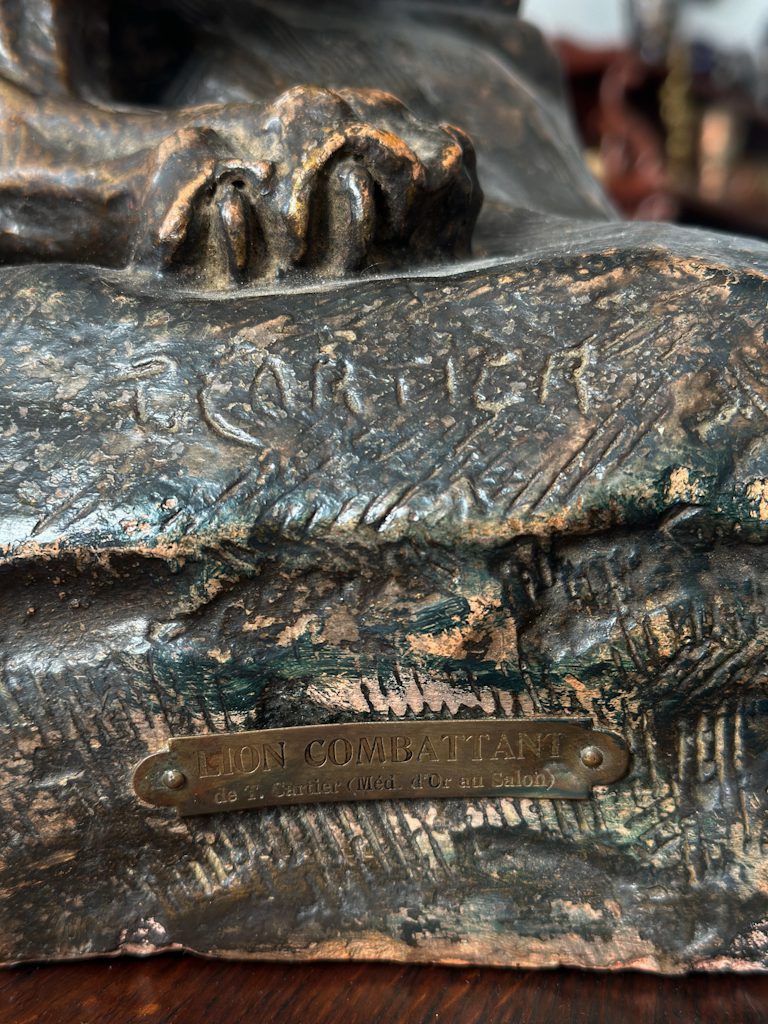
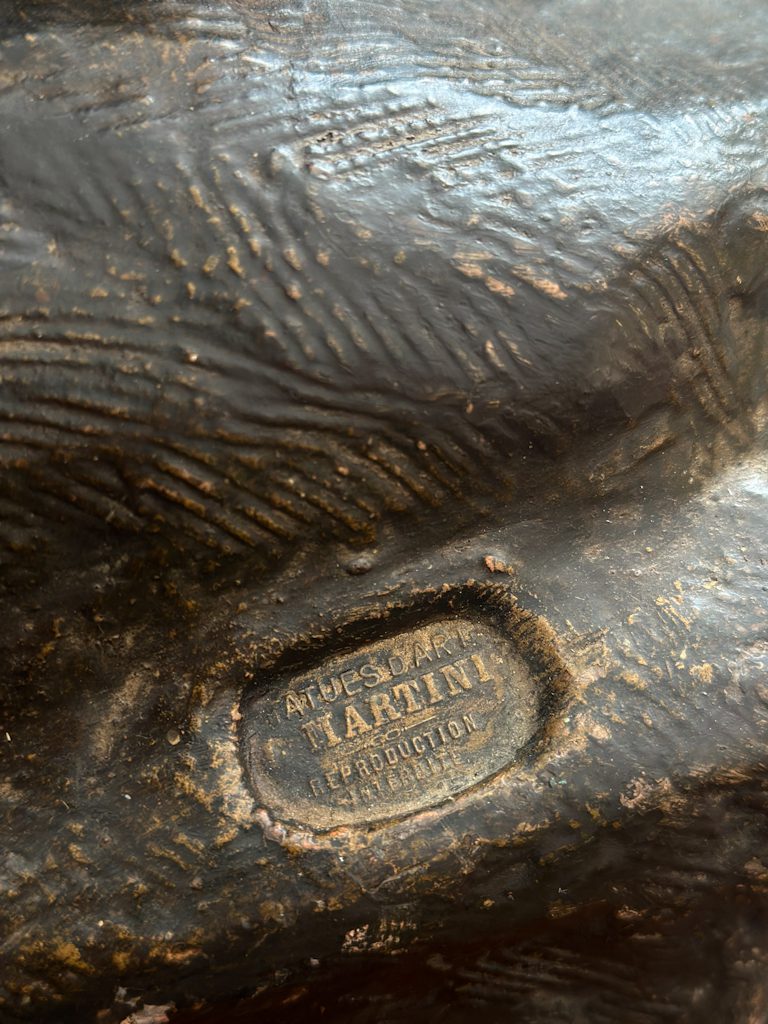
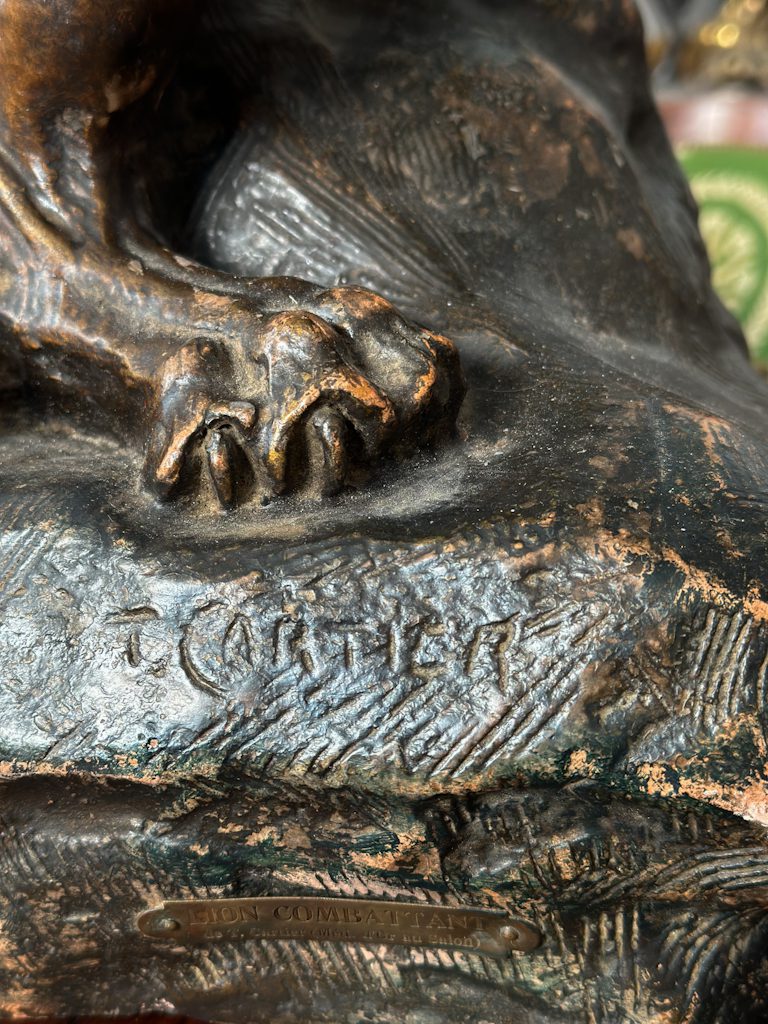
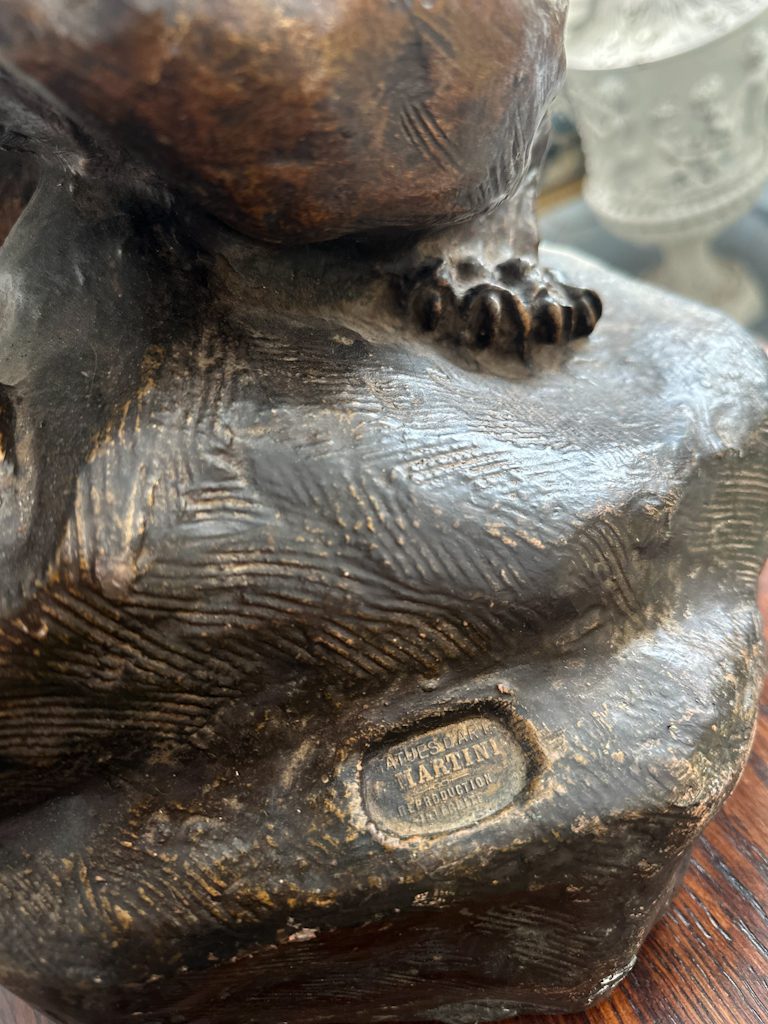
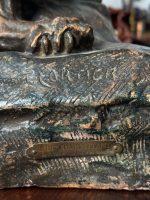
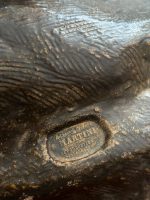
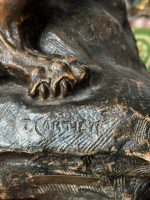
The base of the sculpture bears two marks that together constitute a precise document of origin.
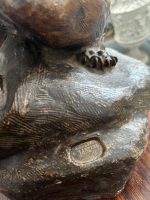
The first — a bronze plaque reading “LION COMBATTANT / de T. Cartier (Méd. d’Or au Salon)” — confirms both the title of the work and the author’s identity, together with his highest distinction: the Gold Medal at the Paris Salon. This is one of the most prestigious awards available to a practising sculptor in early 20th-century France.
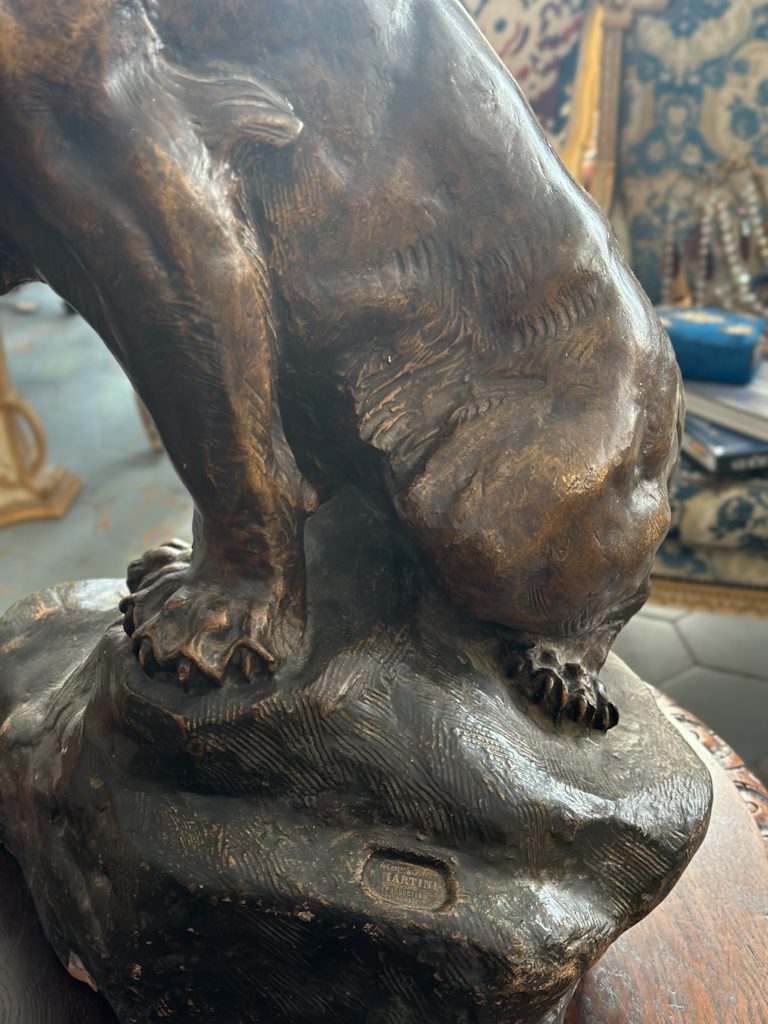
The second — an impressed oval stamp reading “ATELIERS D’ART MARTINI / REPRODUCTION INTERDITE” — identifies the publisher. Ateliers d’Art Martini was a distinguished Parisian firm specialising in high-quality authorised reproductions of sculptors’ works in terracotta and bronze, with strict copyright protection — as indicated by the “Reproduction interdite” (reproduction prohibited) notice. Such ateliers collaborated with living artists or their estates, paid royalties, and ensured that each edition was controlled and supervised. This confirms that the present piece is not an anonymous copy but an authorised edition of the artist’s work.
Thomas François Cartier (1879–1943) was one of the foremost animalier sculptors of the first half of the 20th century. He studied at the École des Beaux-Arts in Paris and became a regular exhibitor at the Paris Salon, where he received the highest distinctions. Cartier specialised in exotic and wild animal subjects — lions, tigers, leopards, horses — with extraordinary naturalistic precision and dramatic energy. His works are held in and Belgian national museums and in private collections throughout the world.
―――――――――――――――――――――
💎 RARITY AND SIGNIFICANCE
Authorised Martini atelier editions after models by T. F. Cartier bearing both marks — the author’s signature and the publisher’s stamp — are rare on the collector market. This documented provenance — an artist awarded the Gold Medal au Salon, an authorised publisher with a “Reproduction interdite” clause — gives the sculpture museum-quality significance and a clear chain of provenance.
Animalier sculptures with verifiable artist attribution, particularly from Paris Salon medallists, have experienced significant growth in demand in both European and international auction and gallery markets in recent decades.
―――――――――――――――――――――
🕯️ USE IN INTERIOR DESIGN AND PHOTOGRAPHY
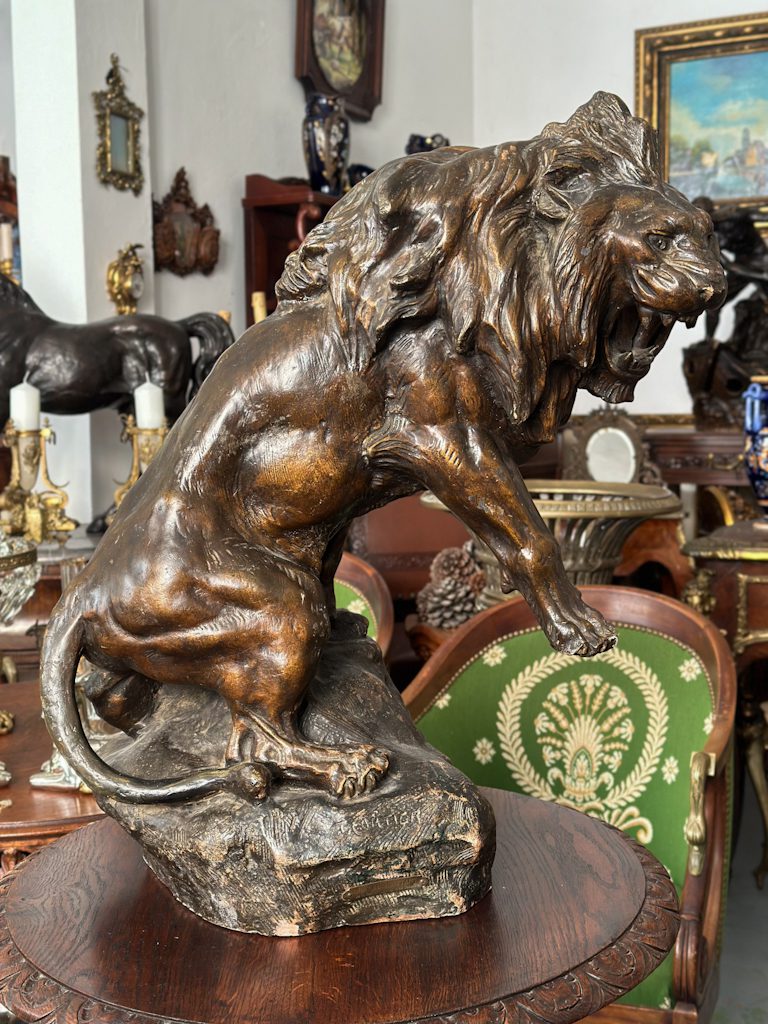
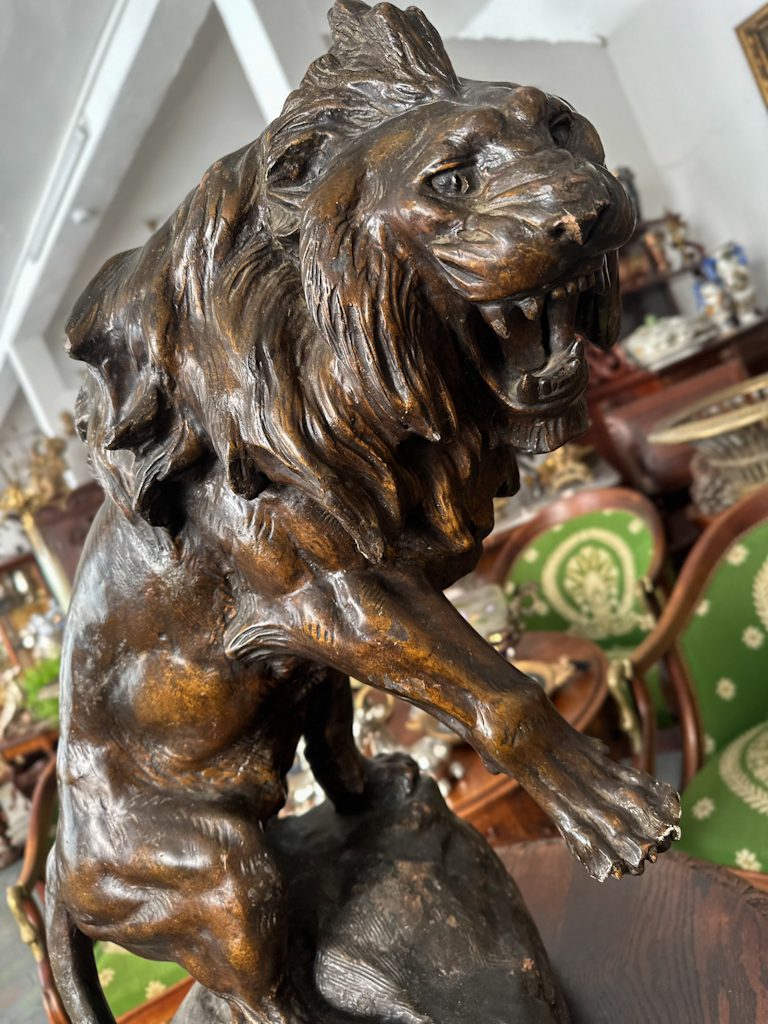
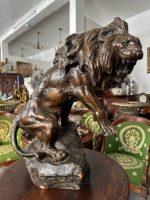
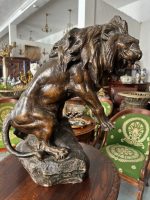
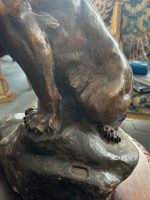
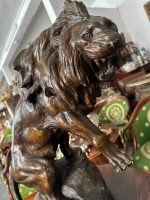
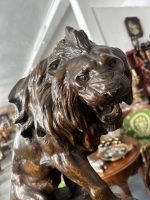
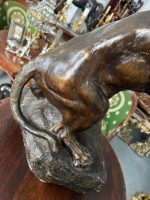
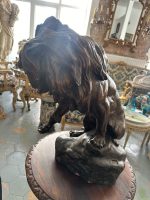
At 63 cm in height, with its dramatic forward-thrusting movement, this lion sculpture is an outstanding focal piece in any interior — on a solid timber table, mantelpiece, console, or plinth. The deep brown patina with bronze highlights suits both classical and eclectic interiors and a modern, high-contrast setting. The three-dimensional dynamism of the composition — the lion stepping onto a rock, head turned with open mouth — ensures a compelling visual impact from every angle.
For interior and art photographers, this sculpture is an exceptional subject: the deep patina, the texture of the mane, and the precision of the musculature modelling respond superbly to both lateral and frontal lighting.
―――――――――――――――――――――
🎁 AS A GIFT AND PERSONALISATION
The lion is the symbol of the Leo zodiac sign (23 July – 22 August) — and this exceptional sculpture represents a gift of the highest order: for ambassadors, senior officials, corporate executives and anyone for whom the lion carries personal or professional significance. The lion as an archetype of power, courage and nobility is a universal symbol across all cultures — from European heraldry to the Asian tradition, where the lion guards entrances and marks spaces of distinction. This sculpture also makes an outstanding corporate gift in financial, legal or governmental contexts — it speaks without words of strength, stability and prestige. The condition of the piece is fully reflected in the photographs.
―――――――――――――――――――――
🔍 CONDITION
The sculpture is in overall good and collectibly significant condition. The bronze-imitation patina on the terracotta surface retains its depth and tone. In certain areas of the base, a slightly darker terracotta tone is visible where the patina has partially worn, revealing the base material — a natural result of age and handling that does not diminish the artistic or collectible value of the piece. Both marks — the bronze plaque and the Martini oval stamp — are clearly legible and undamaged. No breaks or evidence of restoration are present on the principal compositional elements.
The condition of the piece is fully represented in the photographs.