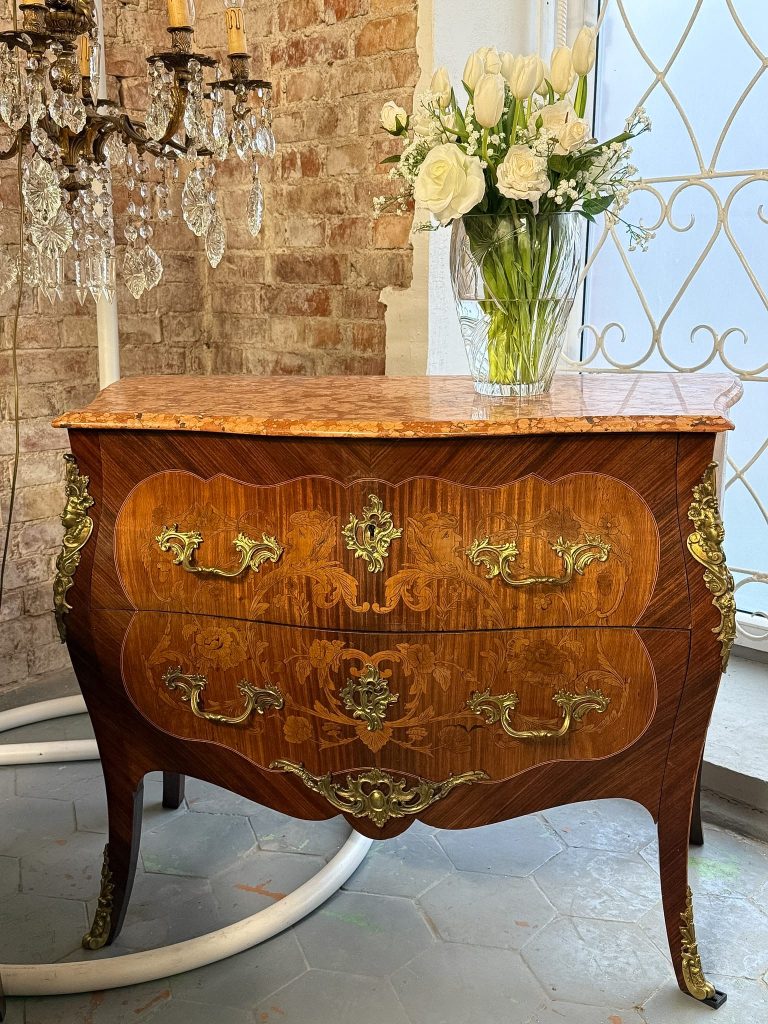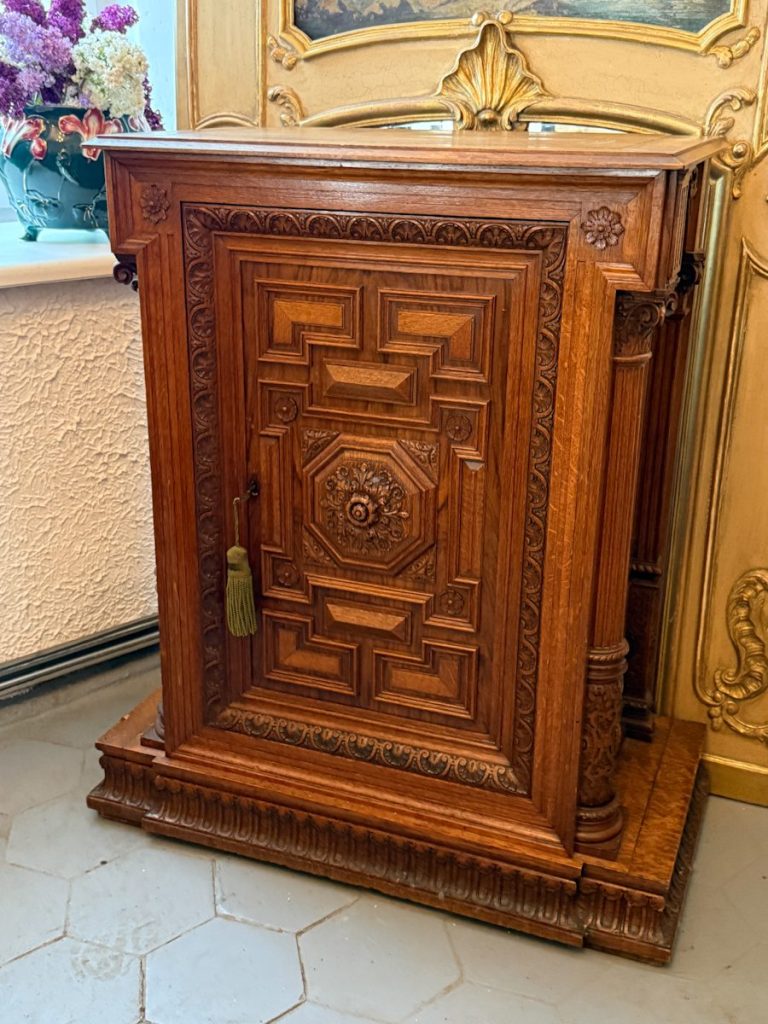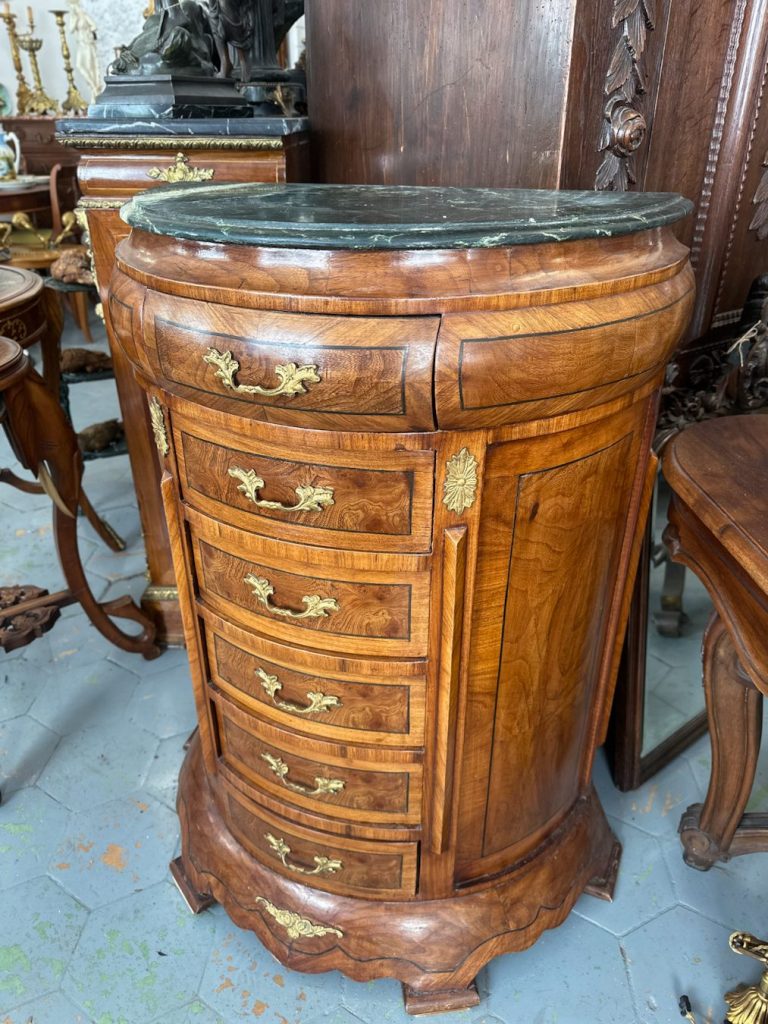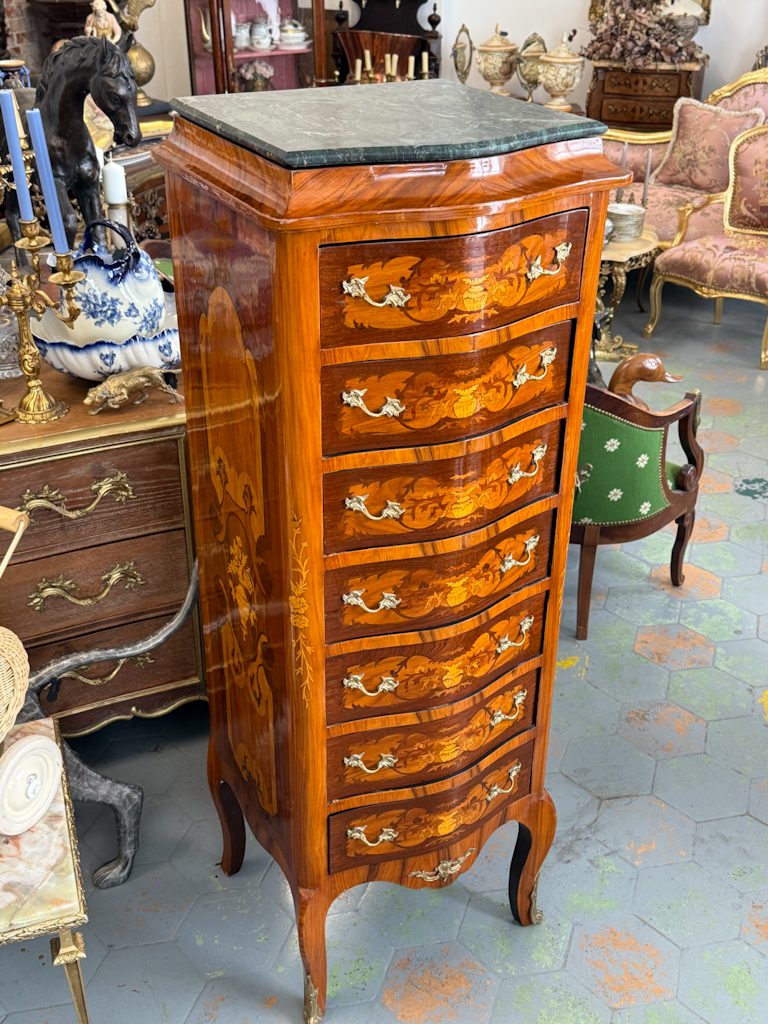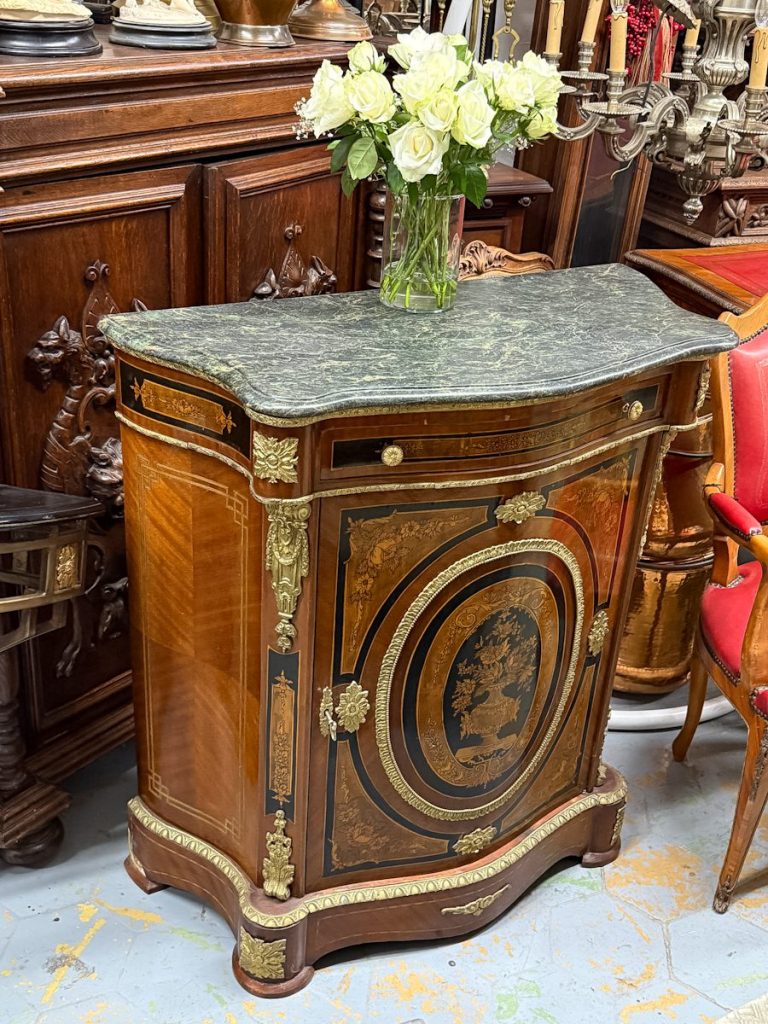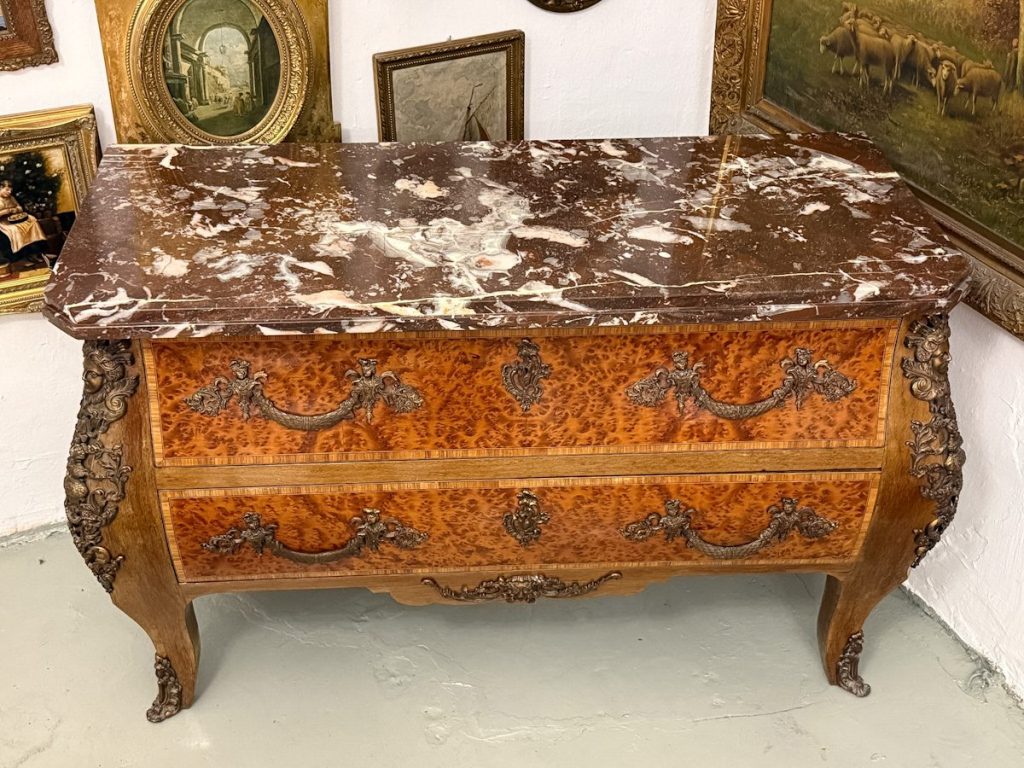
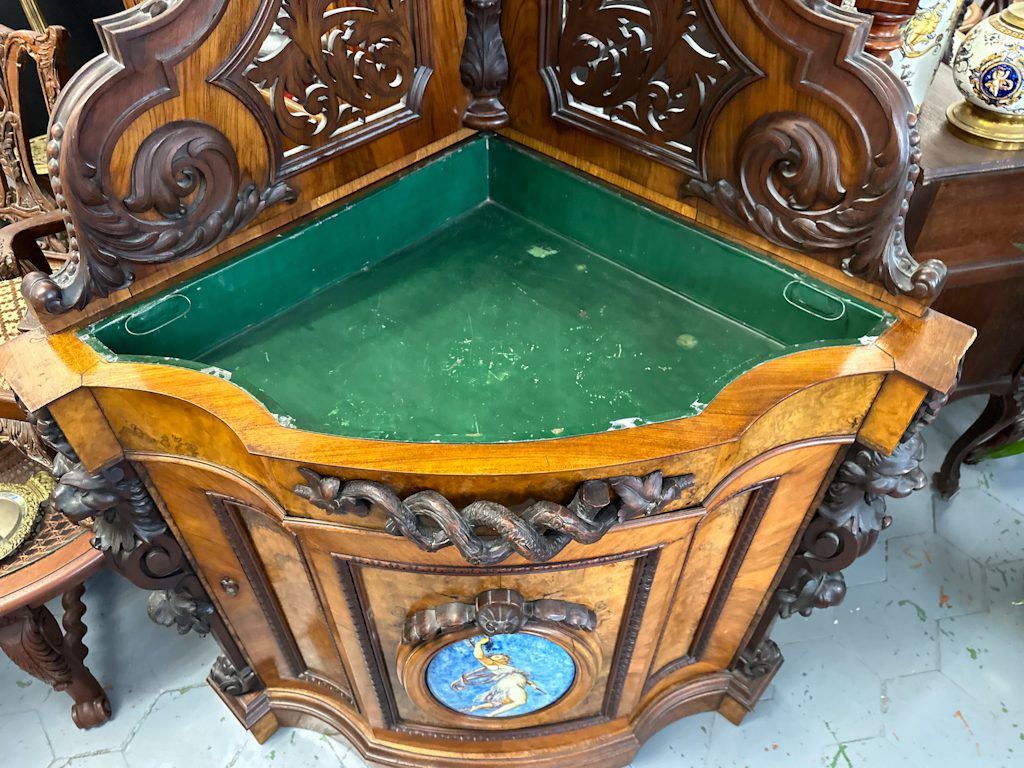
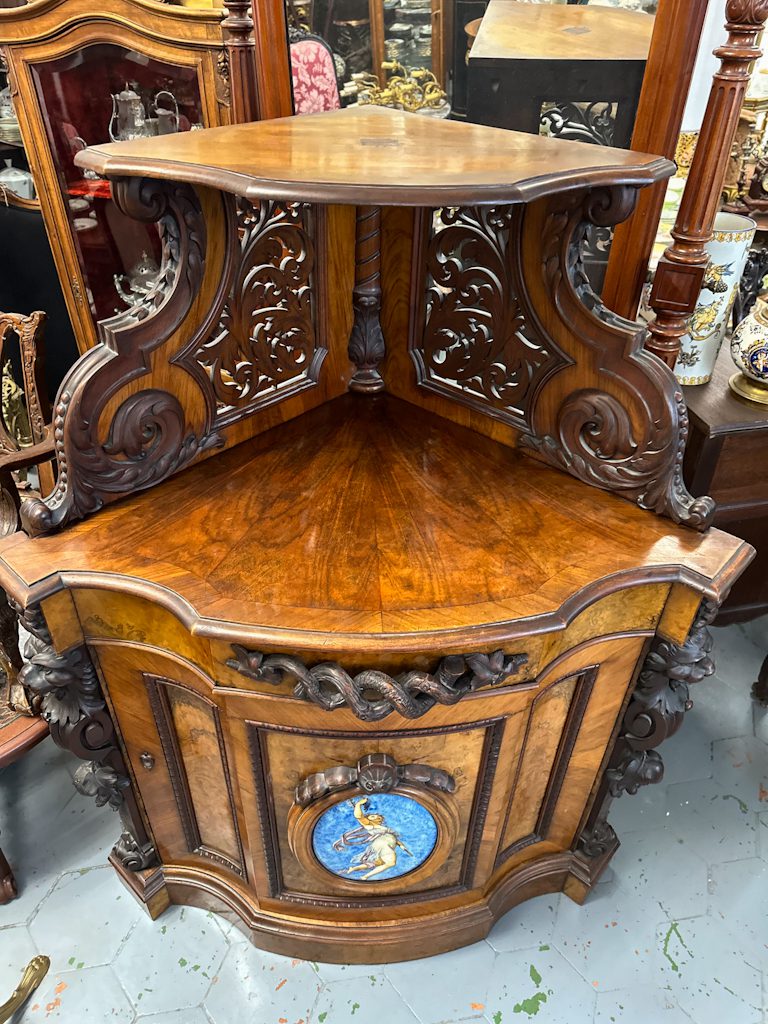
Corner cabinet with lion atlantes and porcelain medallion — Neobaroque/Historicism, Belle Époque, Ets de Gorart, Ghent, Belgium, c. 1870–1890. This rare piece features burr walnut veneer, a hand-painted porcelain plaque, and the original manufacturer’s stamp. 3 500,00 €
You’re now subscribed to price tracking for this product. We’ll notify you if the price drops. 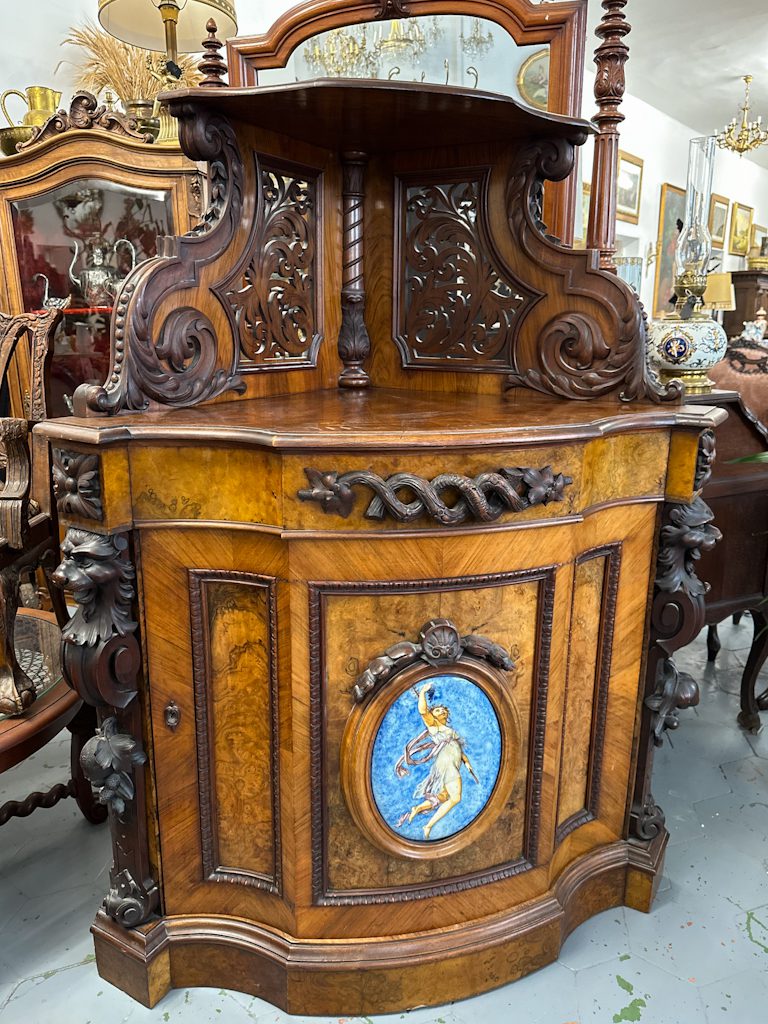
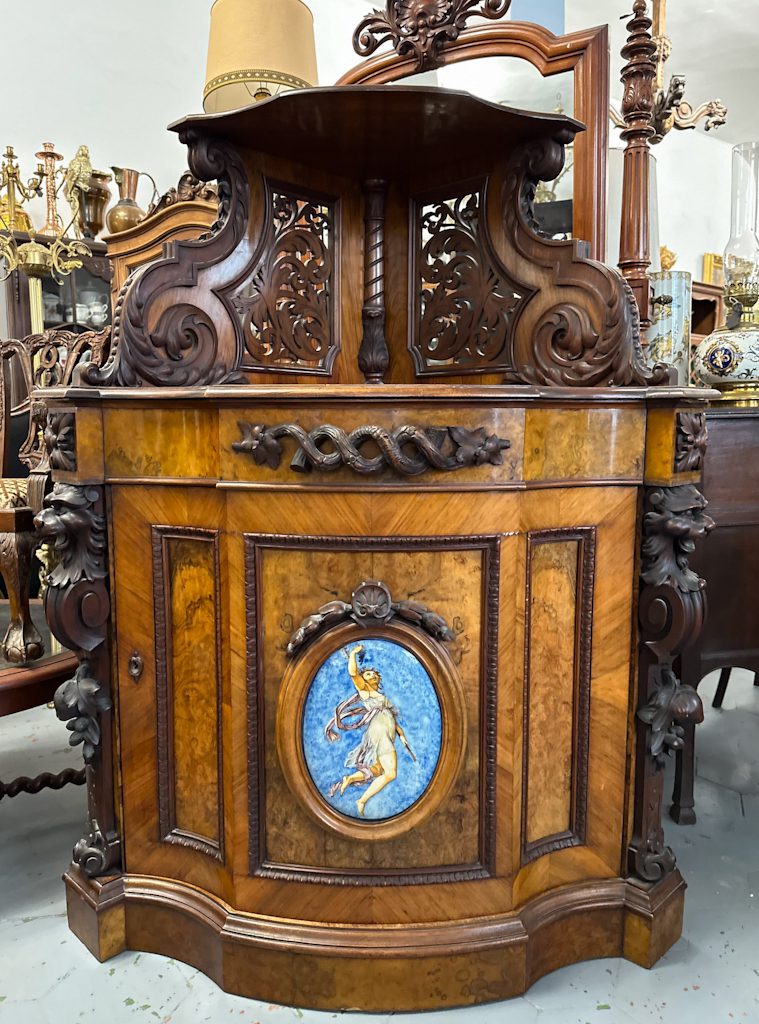
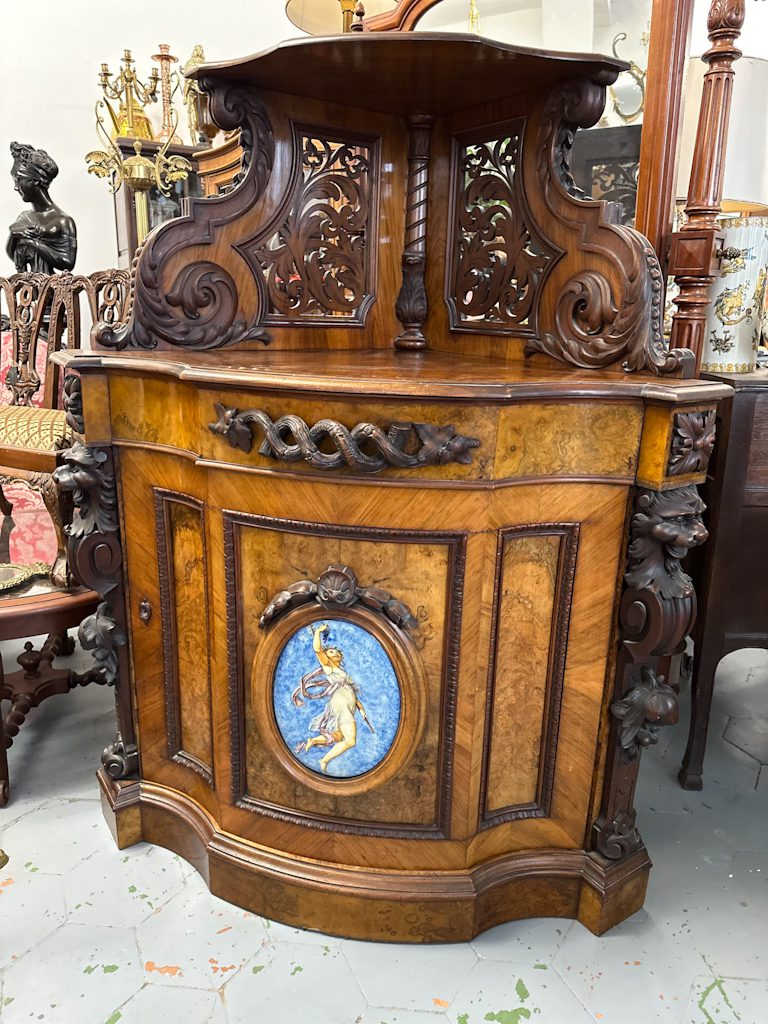
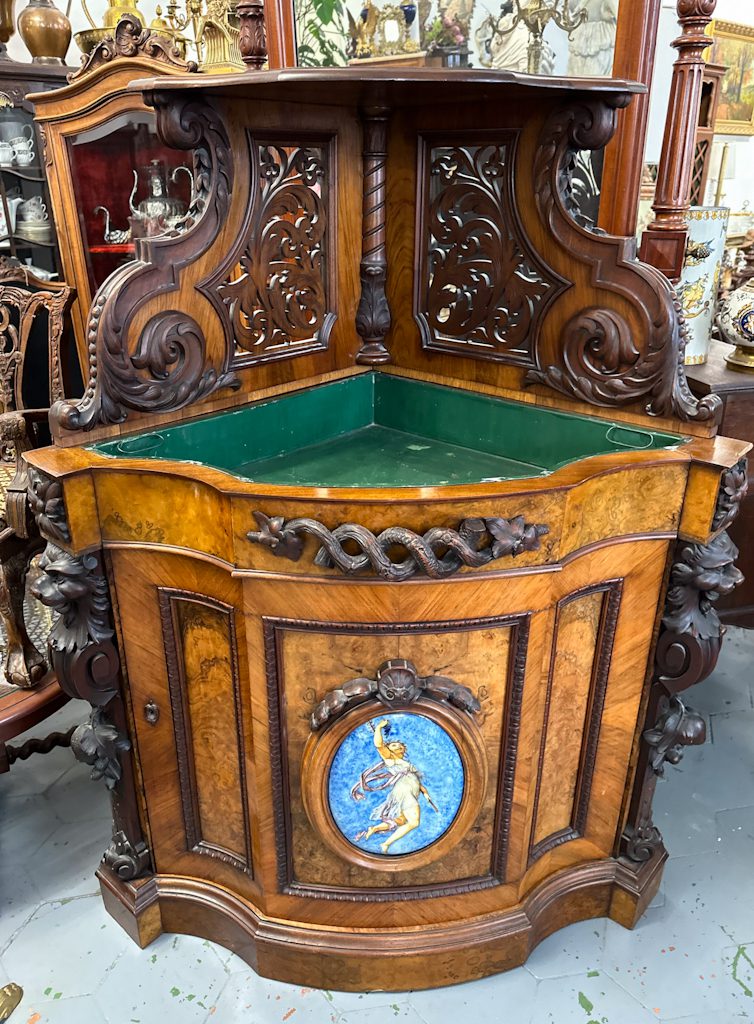
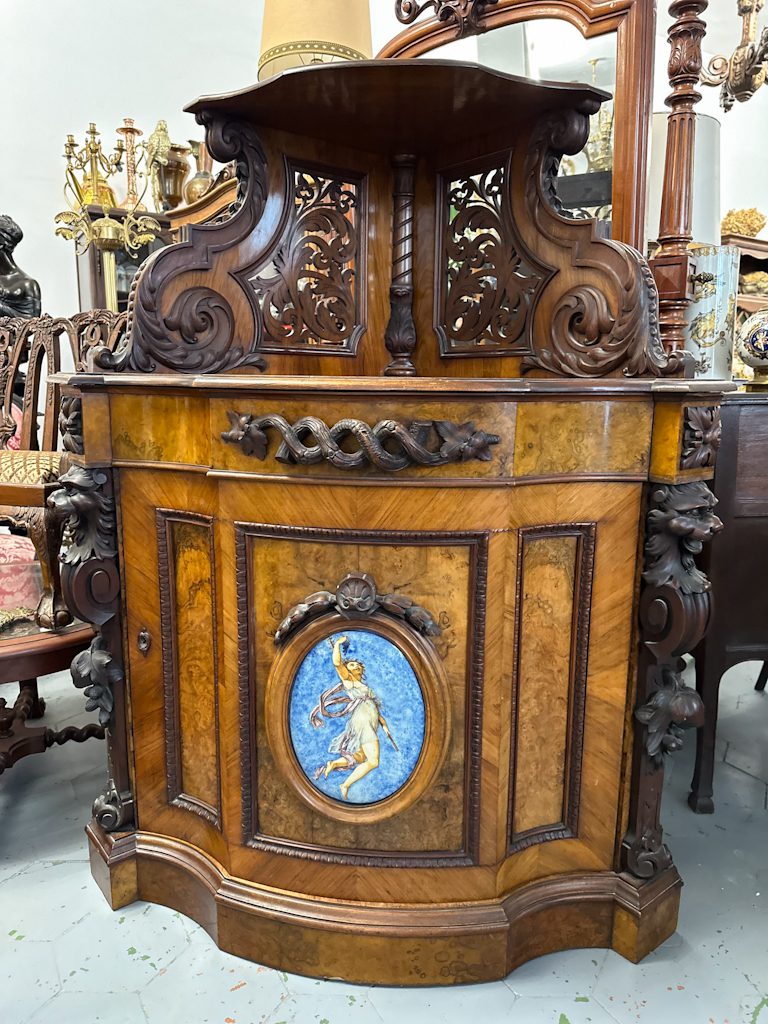
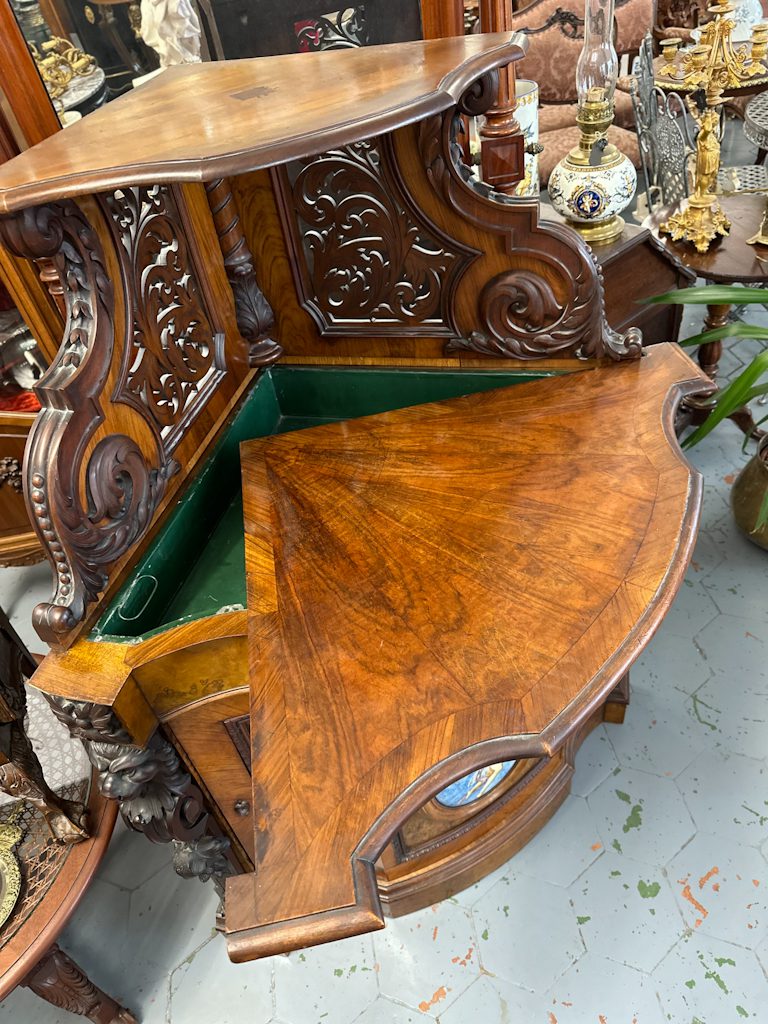
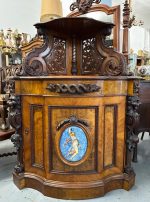
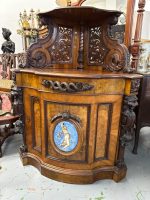
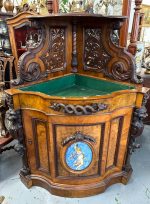
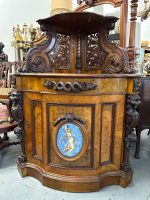
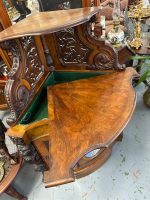
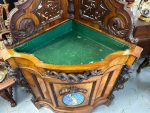
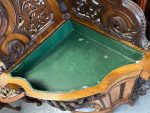
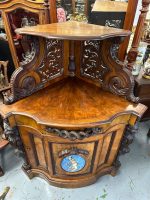
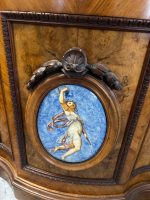
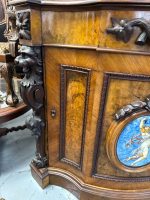
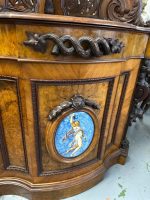
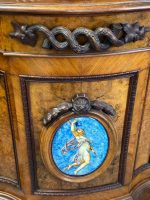
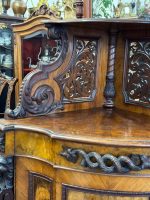
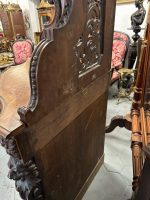
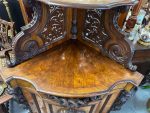
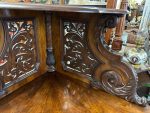
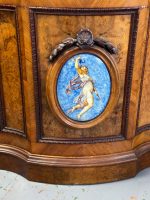
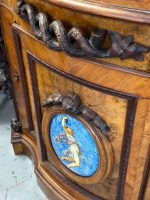
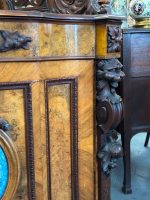
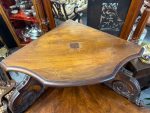
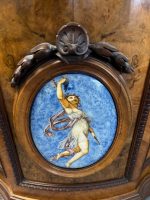
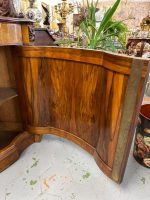
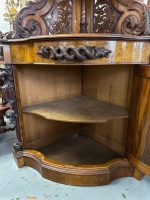
Corner Cabinet with Lion Atlantes and Porcelain Medallion — Ets de Gorart, Ghent, Belgium, 19th Century (5188)
Height 142 cm Width 111 cm Color WalnutNaturalCobalt blue
Description
DESCRIPTION IN
📐 DIMENSIONS Height 142 cm × width 111 cm × depth 80 cm.
―――――――――――――――――――――
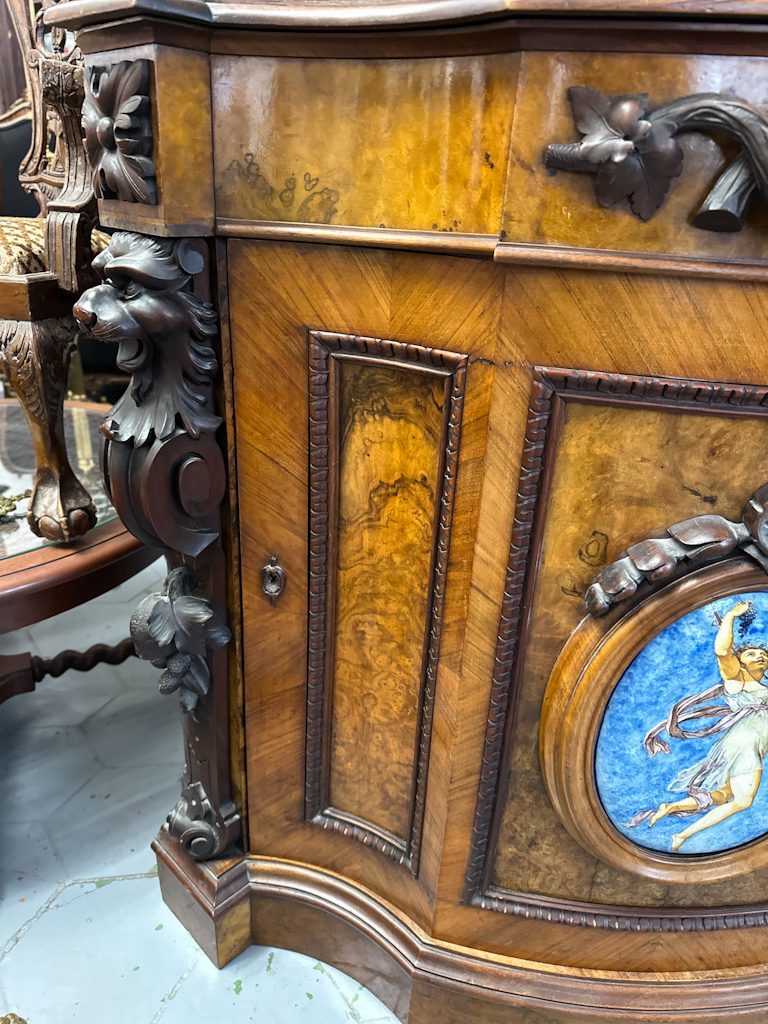
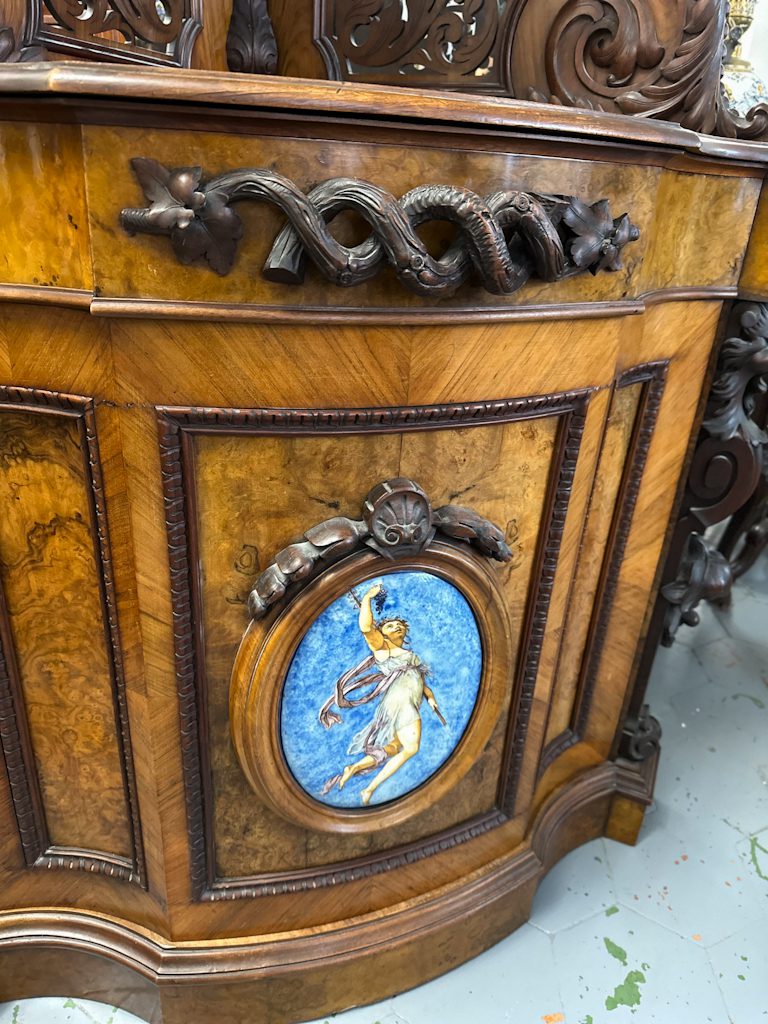
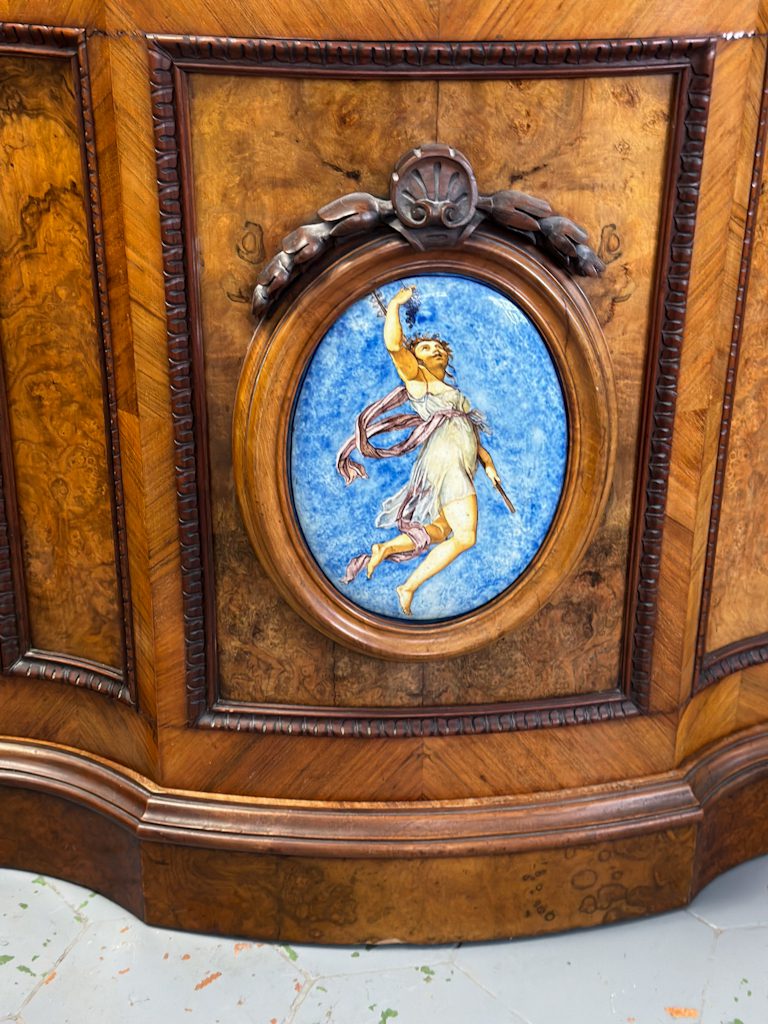
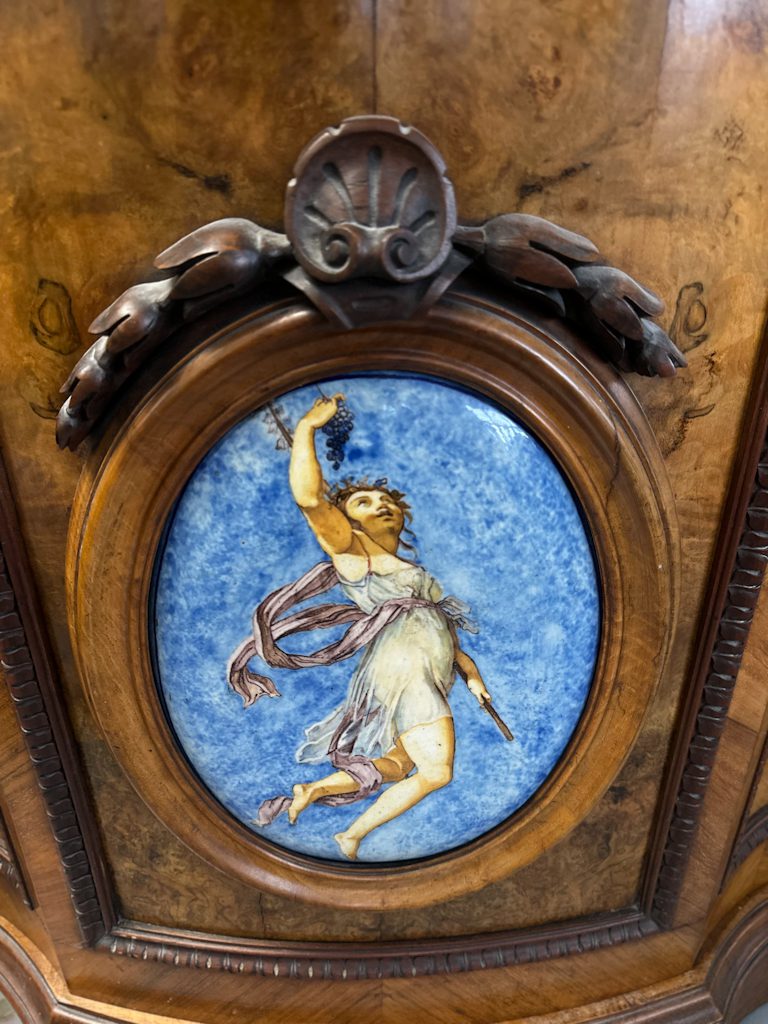
Corner Cabinet with Lion Atlantes and Porcelain Bacchante Medallion — Neo-Baroque / Historicism, Belle Époque, Ets de Gorart, Ghent, Belgium, circa 1870–1890.
―――――――――――――――――――――
🏛️ PERIOD, ARTISTIC STYLE, ERA
This piece belongs to the most creative years of the Belle Époque — the “Beautiful Era” from 1871 to 1914 — during which Belgium produced some of the most inventive furniture in Europe. The artistic style is Neo-Baroque — one of the most vivid currents within Historicism — in which 19th-century Belgian craftsmen reinterpreted the decorative exuberance of 17th-century Baroque with new technical precision and the confidence of the industrial age.
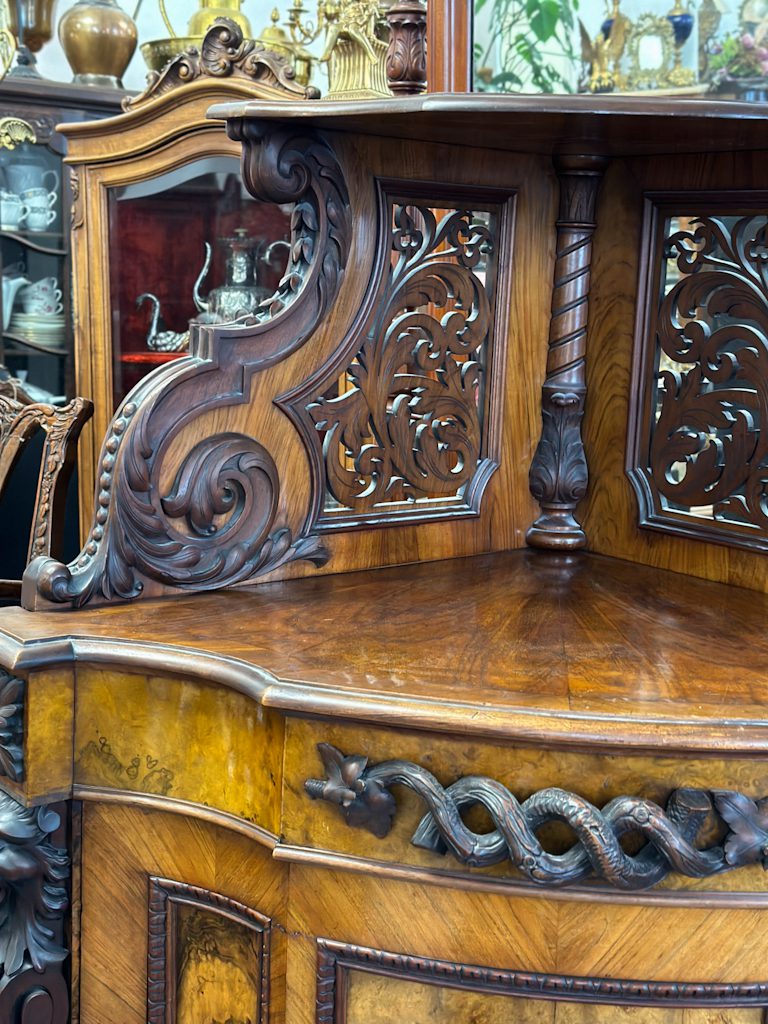
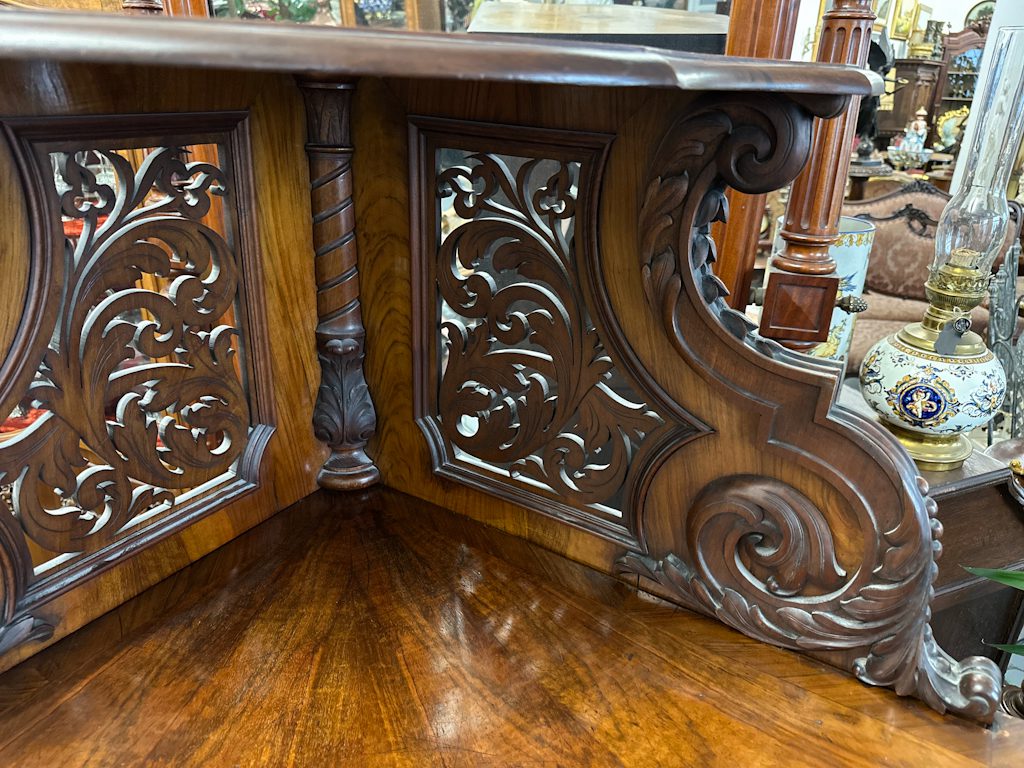
This piece belongs to that transitional moment when Historicism had reached its Baroque zenith, but Art Nouveau was already knocking at the door. The form is still architectural and symmetrical, yet the lion atlantes at the corners, the grapevine pampres frieze, and the ajouré fretwork panels already carry that organic, flowing movement that would soon become the language of Art Nouveau. Both aesthetics coexist here with rare harmony.
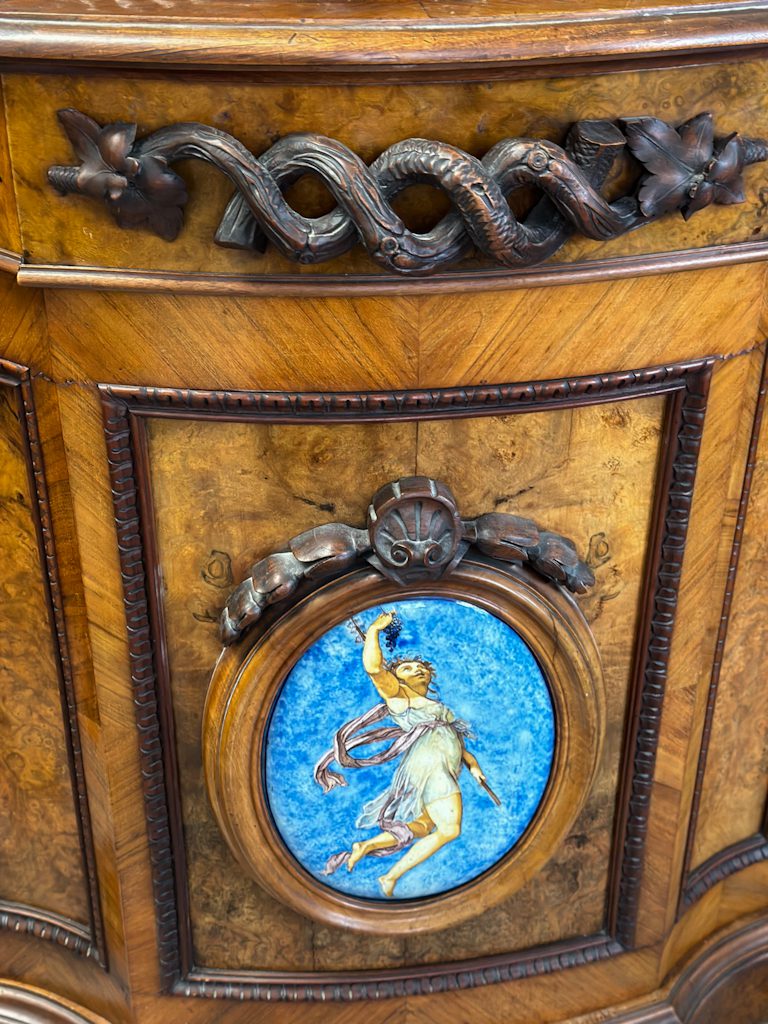
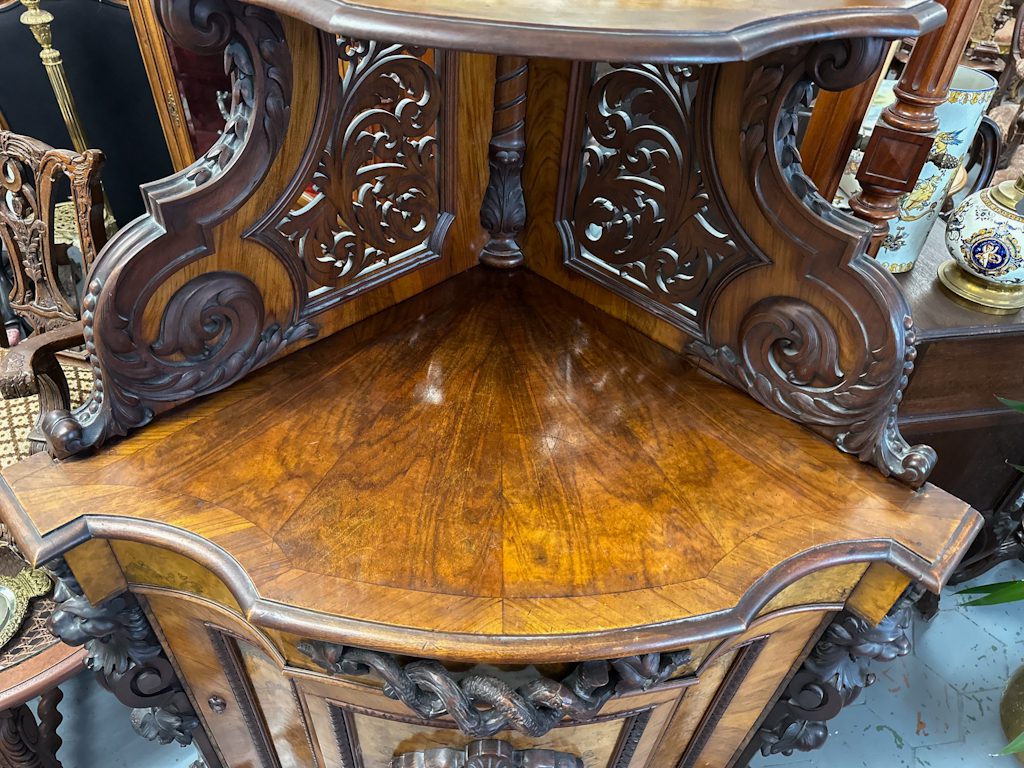
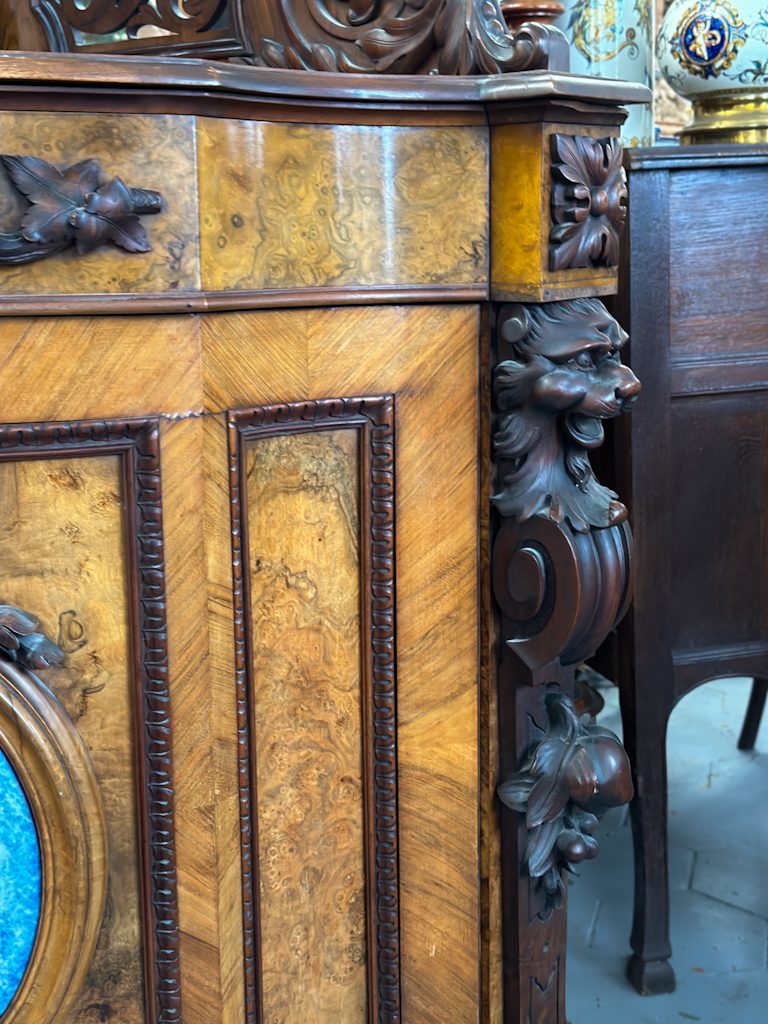
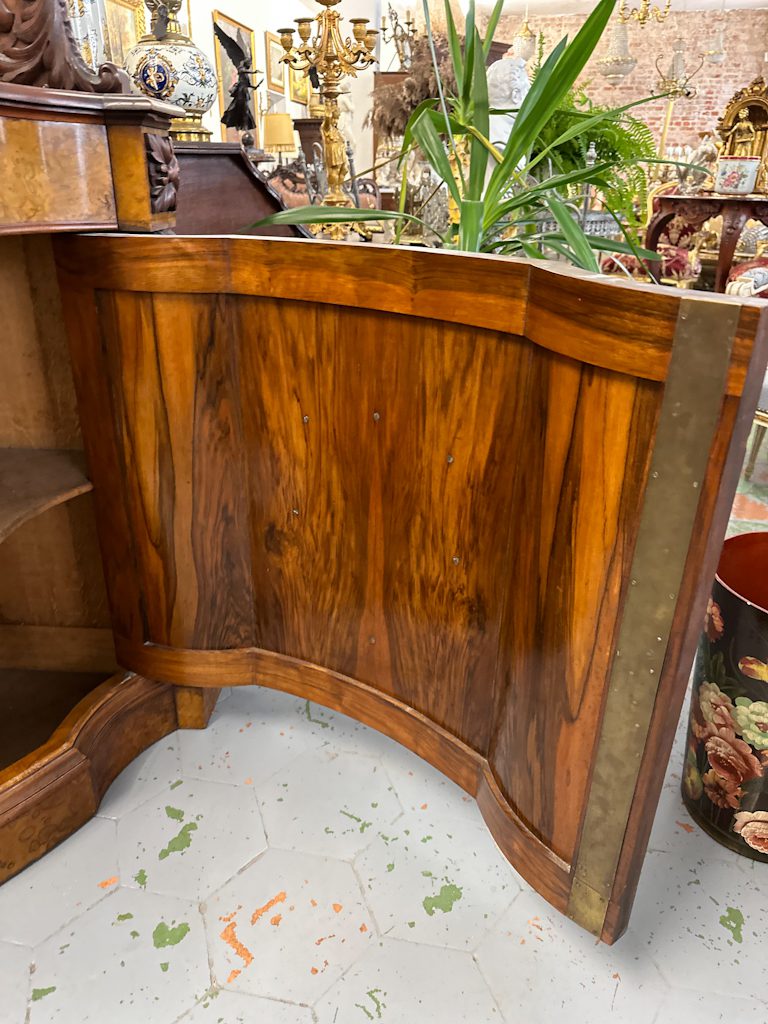
Burr walnut — with its hypnotic circular grain patterns — was the most prestigious decorative wood veneer in Belgium and France during the Belle Époque. Every panel on this cabinet’s body is like abstract painting: none repeats, each is a unique work of nature.
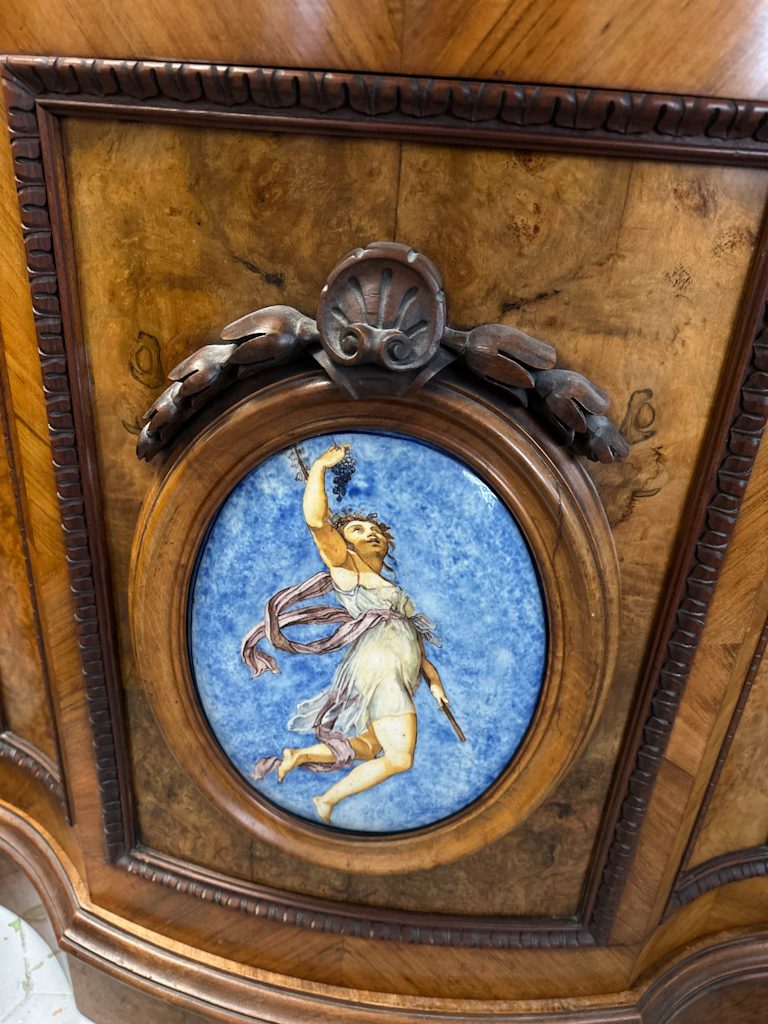
Henri de Toulouse-Lautrec arrived in Paris in 1888 and began drawing the dancing girls of Montmartre — figures of precisely the same lightness and playfulness as the Bacchante on this porcelain medallion, leaping across a cobalt blue ground with a bunch of grapes raised aloft. Art and furniture spoke the same language then — and both did so with great boldness.
―――――――――――――――――――――
⚜️ MAKER AND MARKS
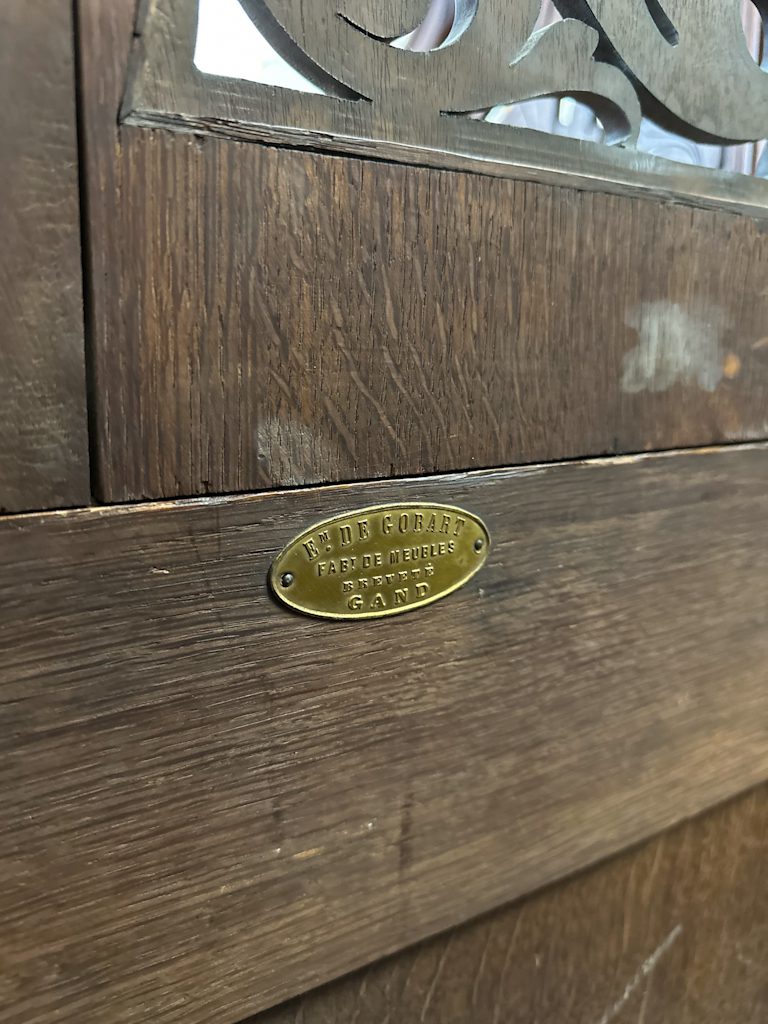
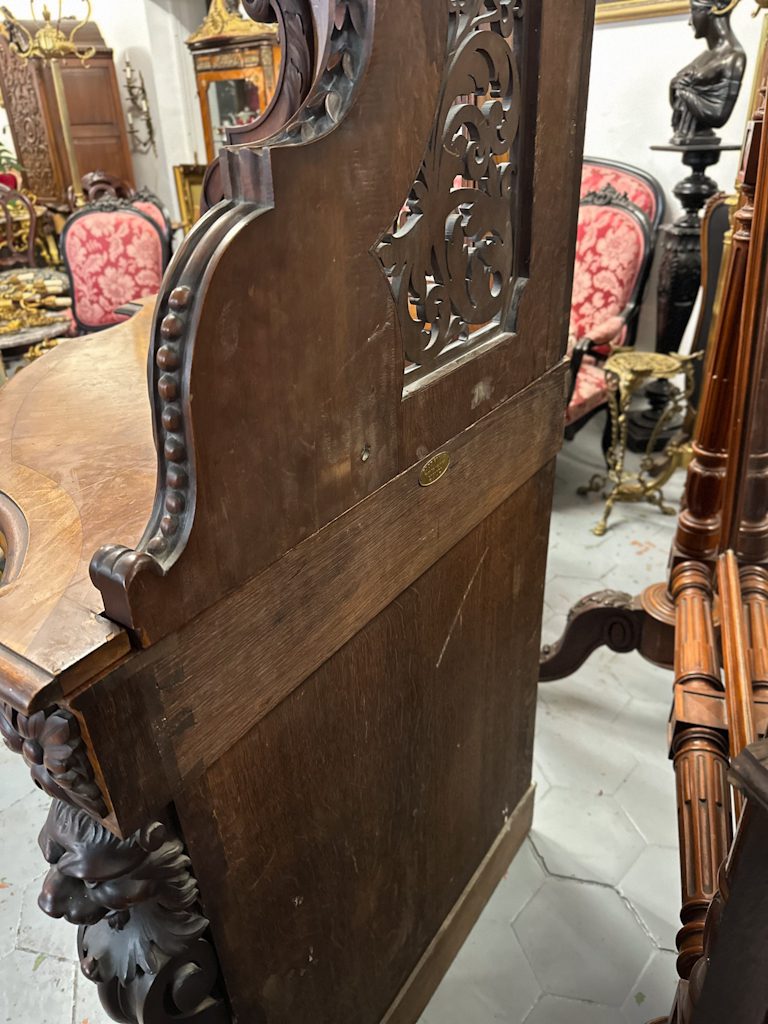
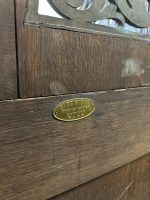
On the reverse, the original oval bronze maker’s plaque reads: “Ets DE GORART / FABR DE MEUBLES / BREVETÉ / GAND”.
Établissements De Gorart — furniture manufacturers in Ghent (Gand in ), Belgium. The designation breveté — “patented” — indicates that the manufactory held registered patent protection, which in the 19th century was the highest certificate of quality and originality a furniture maker could hold.
Ghent in the second half of the 19th century was one of Belgium‘s most important industrial and artistic centres. The city, where the Flemish craft tradition merged with the new possibilities of the industrial age, produced a series of premier furniture workshops exporting their work to Paris, London, and Brussels. De Gorart‘s production was known for its precise veneer cutting, use of the finest wood materials, and the artistic integration of decorative elements — porcelain, bronze, woodcarving — into a coherent whole.
The survival of the original bronze maker’s plaque is exceptionally rare — on most furniture such marks have been lost or damaged. It makes this piece a documented, traceable witness to Belgian furniture history.
―――――――――――――――――――――
💎 RARITY AND SIGNIFICANCE
This is one of the rarest pieces one can encounter in the antiques world. Three circumstances together make it a museum-grade object.
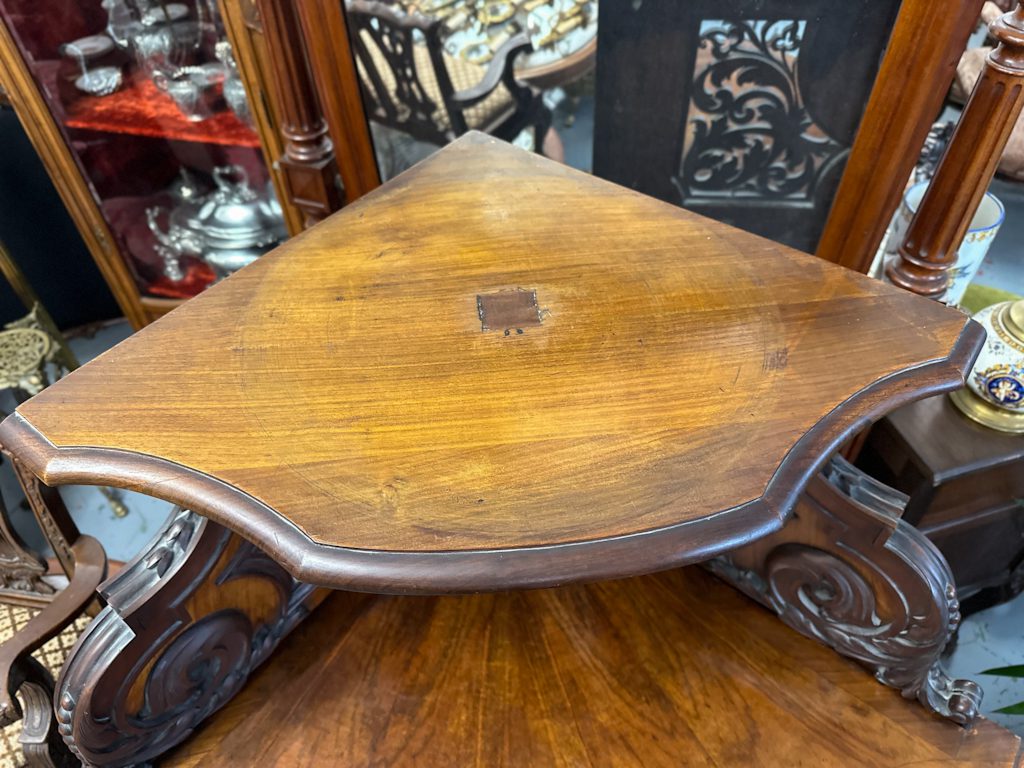
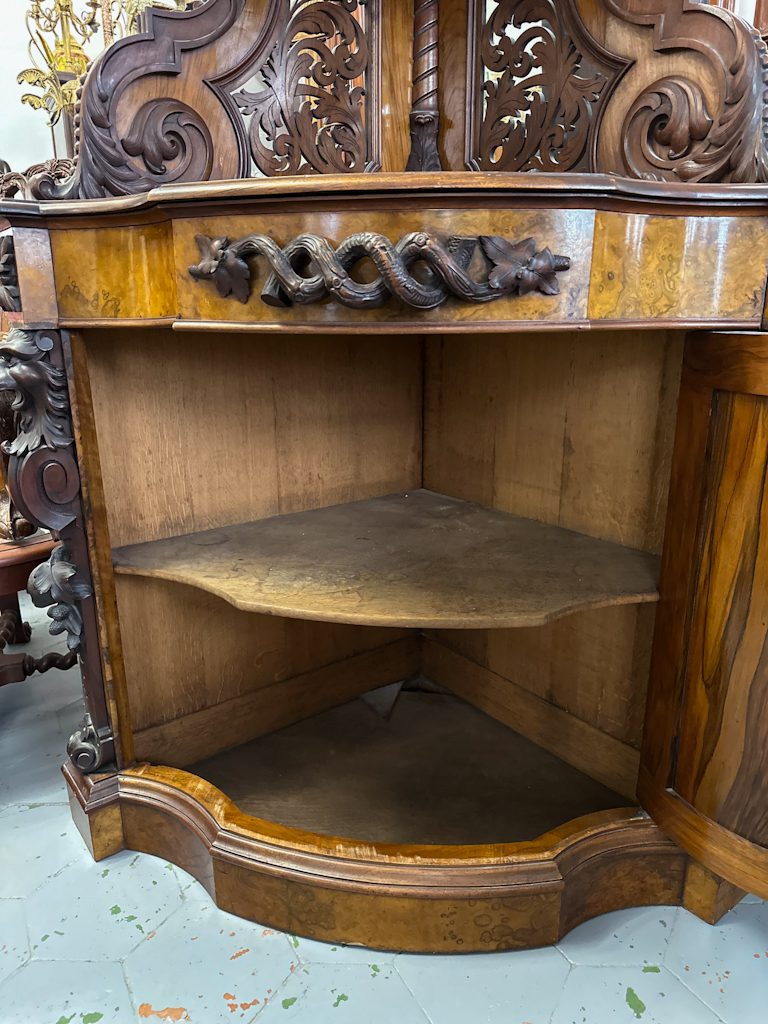
First — the form: a corner cabinet (encoignure) with a two-tier construction and an open fretwork upper shelf is an extremely rare format, made to order for a specific room and a specific client.
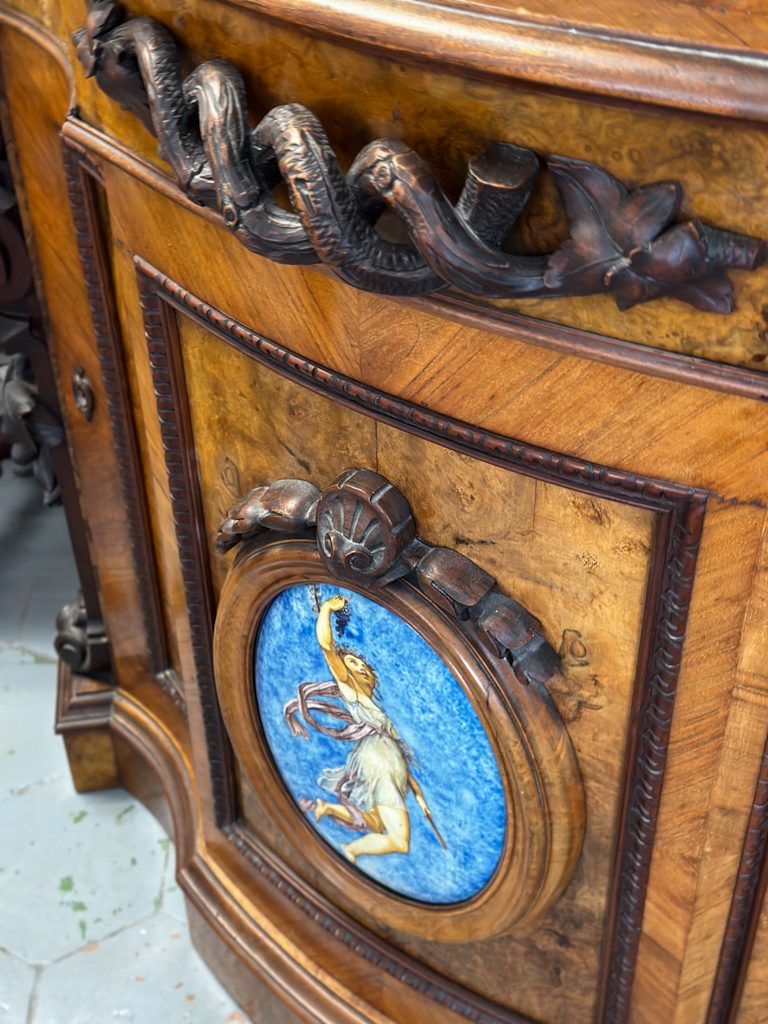
Second — the porcelain medallion: a hand-painted oval plaque with a mythological Bacchante figure on a cobalt blue ground — executed in the Sèvres manner, with high artistic value as an independent work of art. The iconographic programme is deliberate and unified: the Bacchante with her bunch of grapes in the medallion, the grapevine pampres frieze encircling the body — everything speaks one language.
Third — the documented maker: the original De Gorart / Gand bronze plaque transforms this piece into a traceable historical document, adding an additional dimension of authenticity that the collector’s market values exceptionally highly.
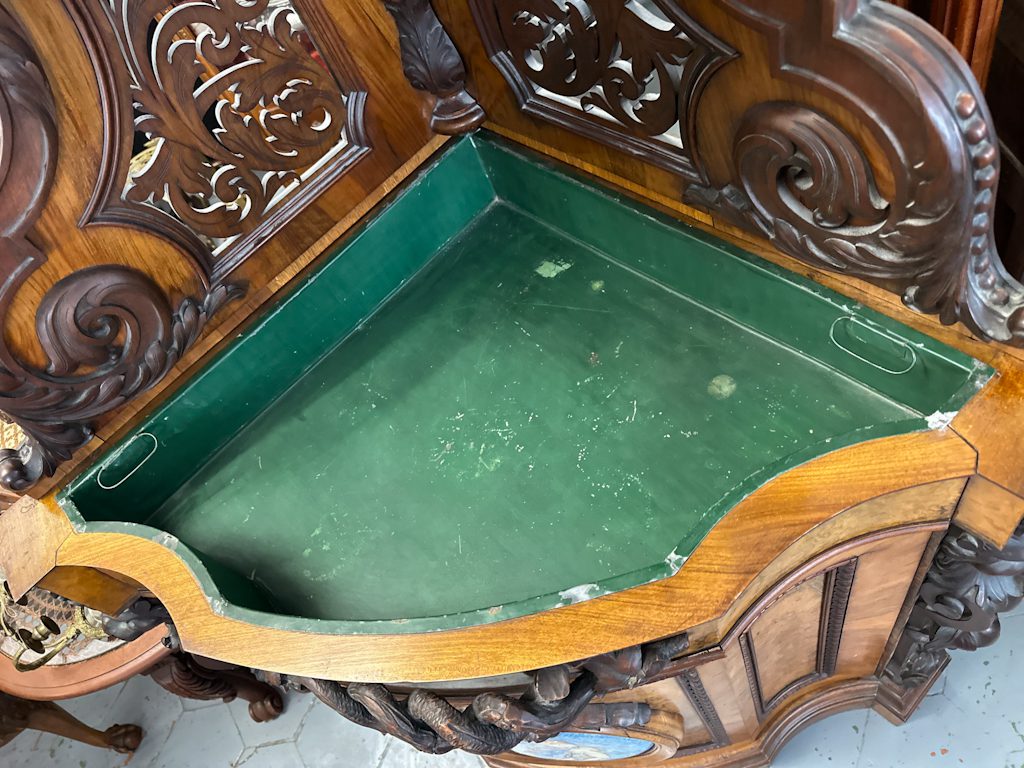
The lion atlantes at the side corners, the ajouré fretwork panels above, the upper jardinière section with its waterproof green lining — each element is an individual work of art, composing together a unified, astonishing whole.
―――――――――――――――――――――
🕯️ INTERIOR, DESIGN AND PHOTOGRAPHY USE
A corner cabinet is simultaneously an architectural solution and a decorative accent — it fills a corner in a way no other piece can. This particular cabinet, with its height and decorative richness, calls for a room with high ceilings where it can speak at full volume.
The open upper jardinière section with its green waterproof lining — designed for potted plants — gives the piece a living, organic dimension. Interior designers use such a piece as a corner-defining element — the moment it is placed, the room acquires its character.
For photographers and set designers, the burr walnut veneer with its hypnotic texture and the cobalt blue of the porcelain medallion form an ideal backdrop for narrative and fashion photography.
―――――――――――――――――――――
🎁 AS A GIFT
The Bacchante — companion of Bacchus, figure of wine and joy — makes this piece a symbolically rich gift for anyone who appreciates wine culture, Greco-Roman mythology, or simply artistic boldness. The grapevine frieze and the Bacchante medallion together form a unified iconographic programme, making this cabinet an ideal gift for a wine collector or estate. As a corporate or diplomatic gift it is of the highest representative calibre — unrepeatable.
―――――――――――――――――――――
🔍 CONDITION
Good overall condition for a piece of this age and complexity. The burr walnut veneer is well preserved — natural age patina visible, with some minor veneer hairline cracks characteristic of pieces of this age, confirming authenticity. The porcelain medallion without visible damage — glaze and painting clear. The green waterproof lining of the upper jardinière section shows age-related wear. The bronze maker’s plaque original and well preserved. All carved details — lion atlantes, grapevine frieze, ajouré panels — in full integrity.
The condition of the piece is fully reflected in the photographs.