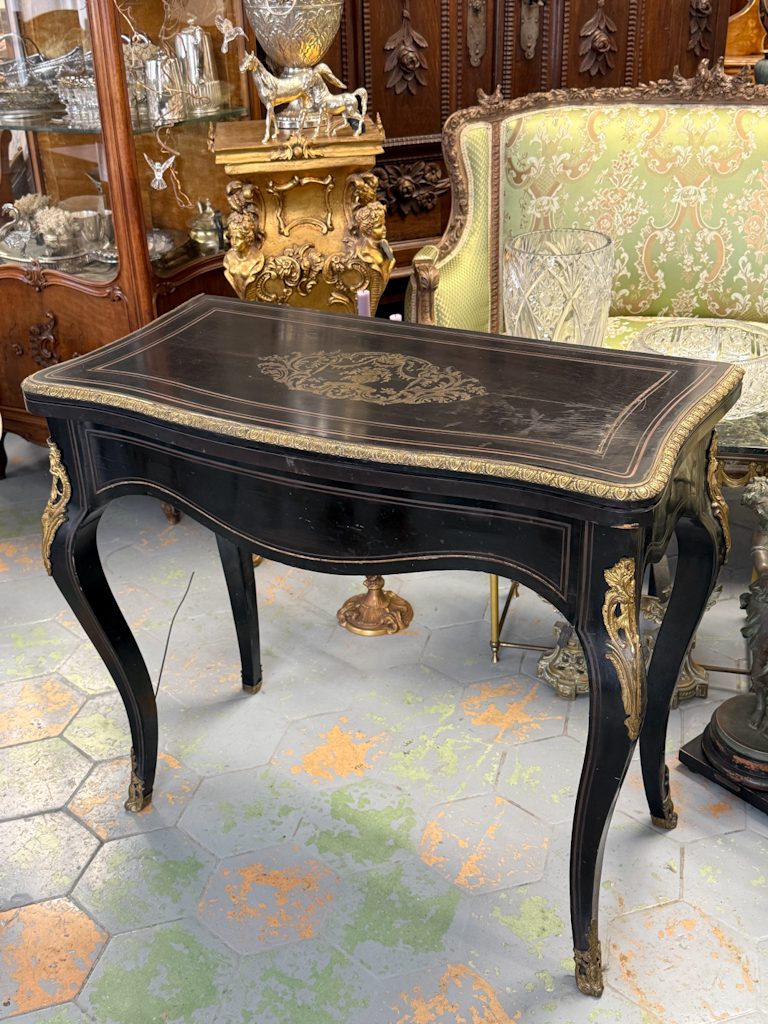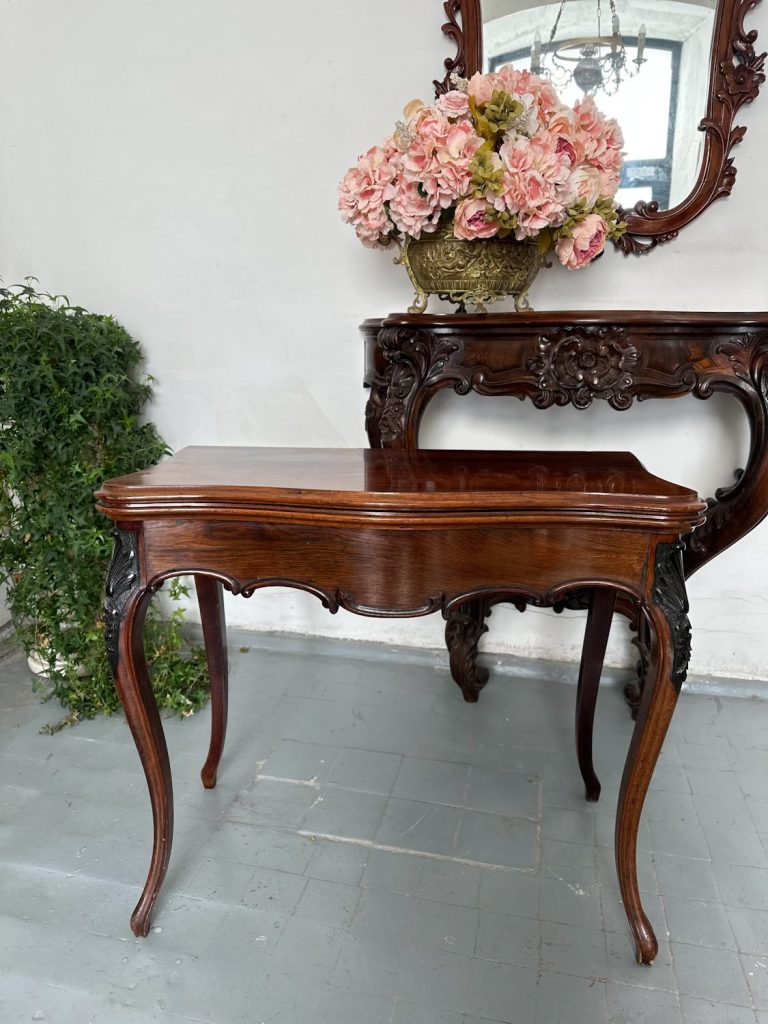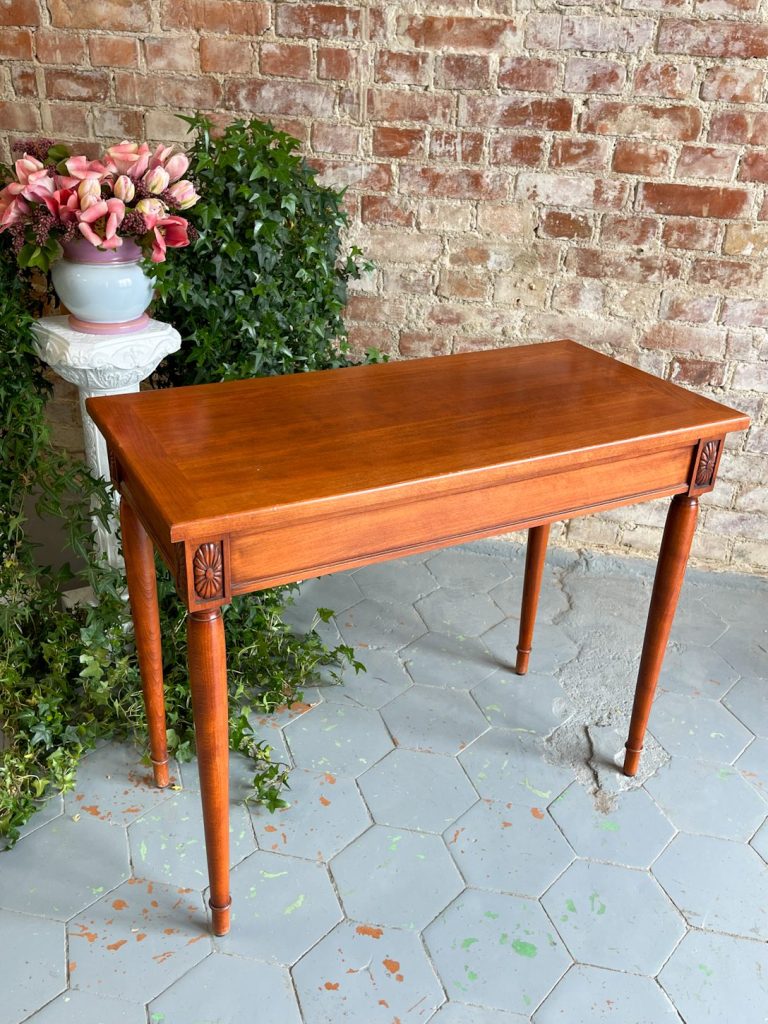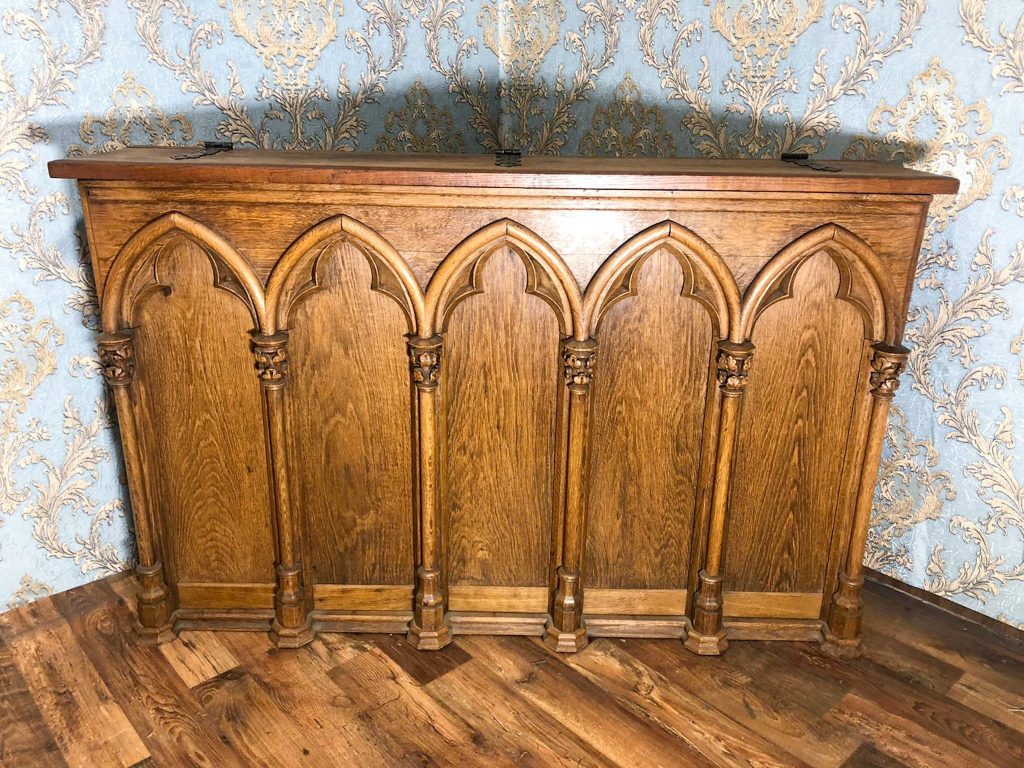
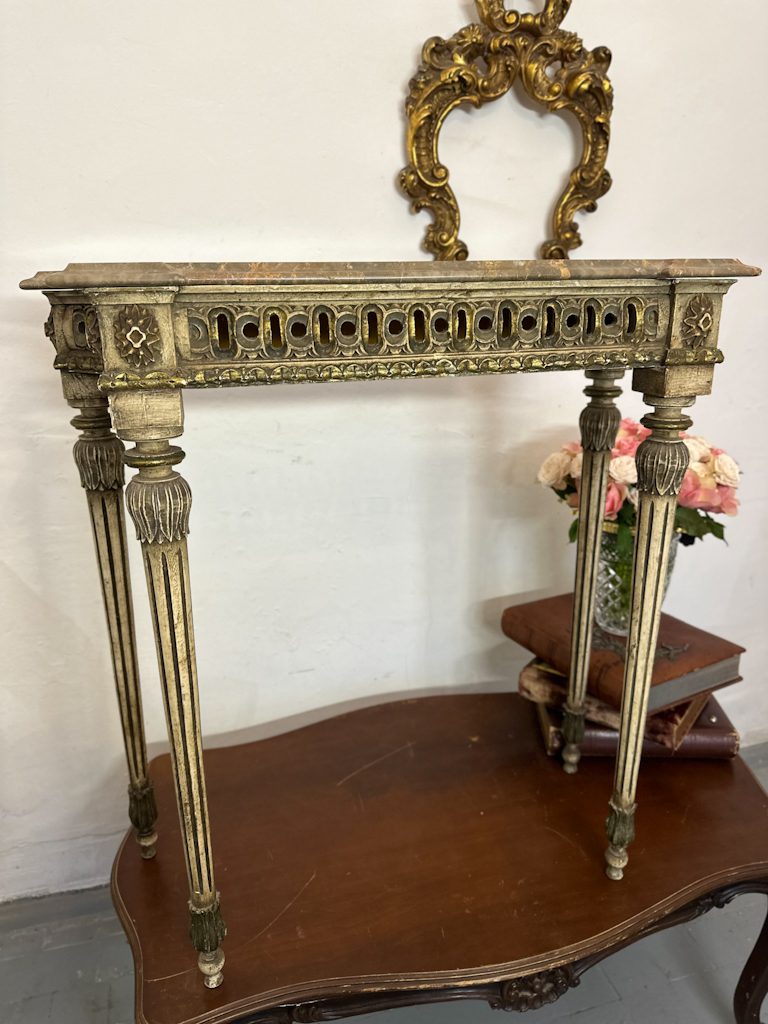
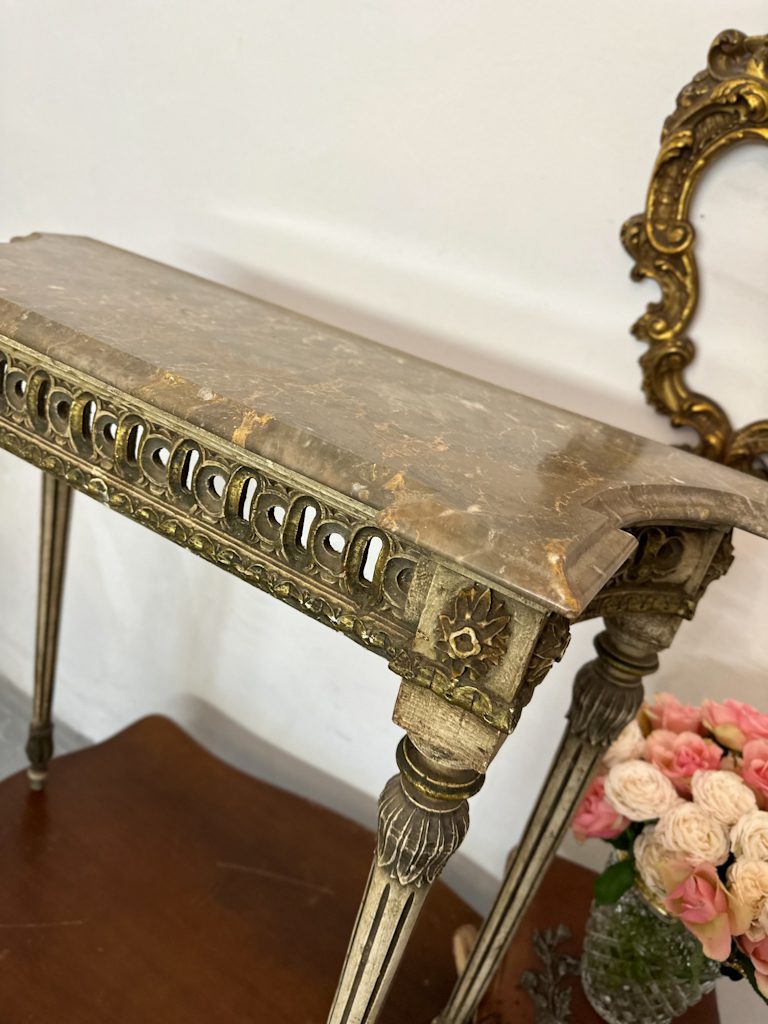
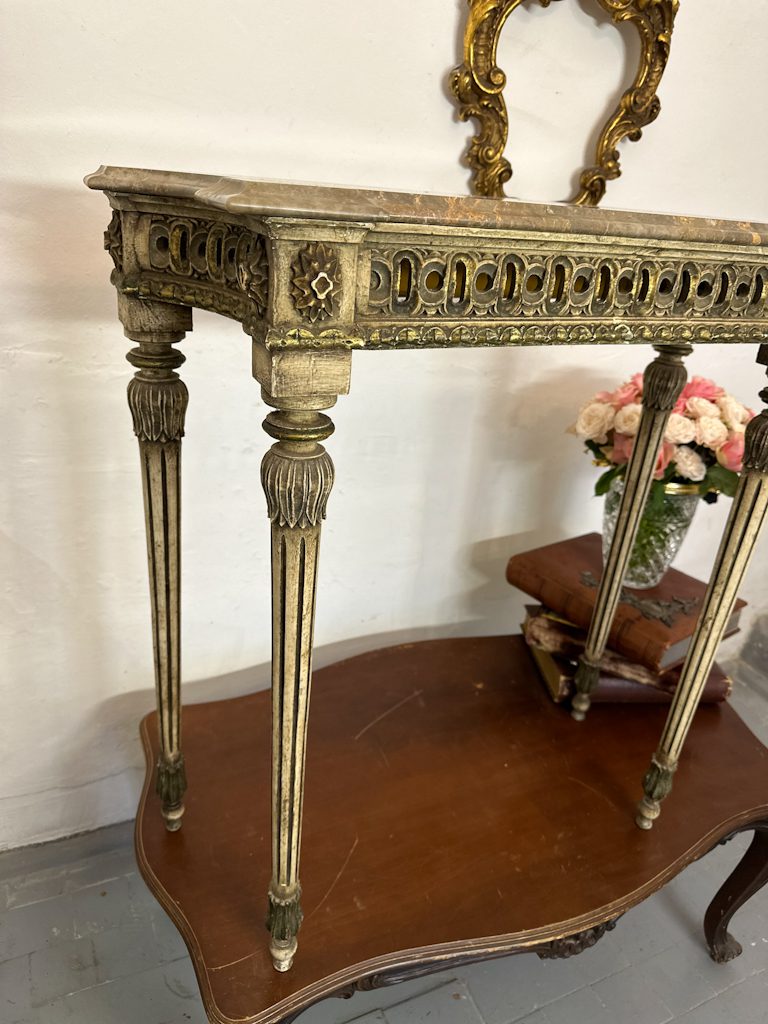
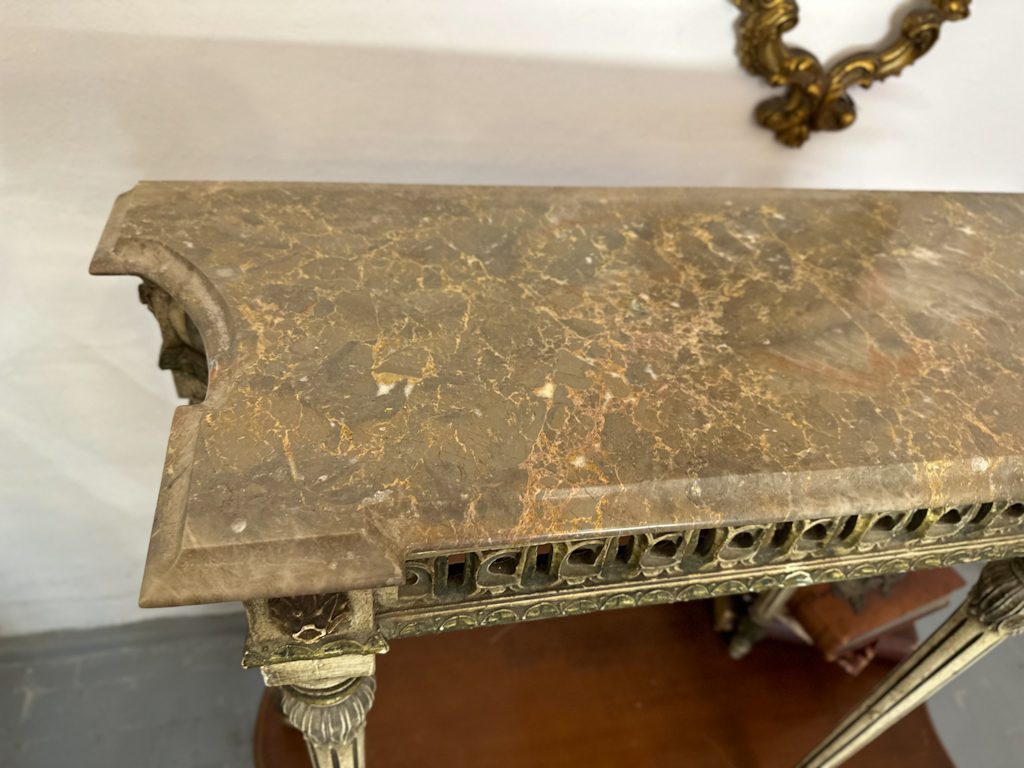
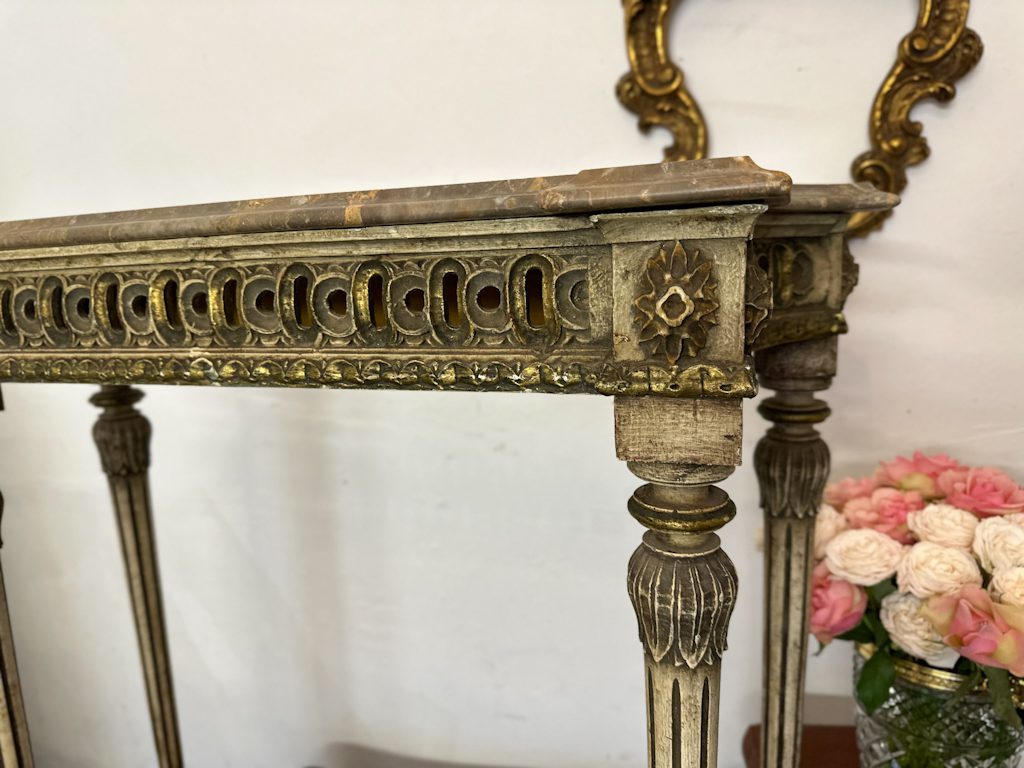
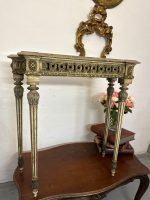
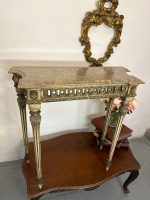
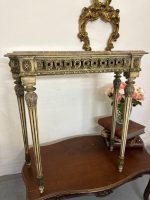
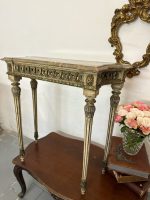
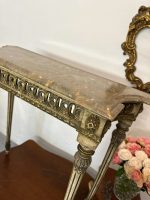
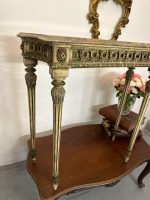
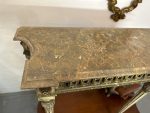
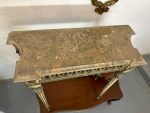
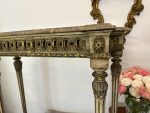
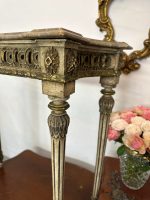
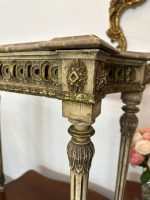
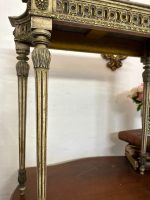
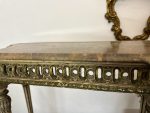
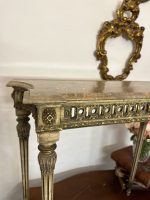
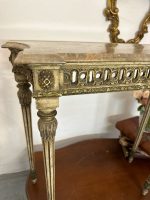
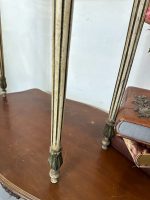
Console with a marble top—lacquered wood with gilt accents, in the Louis XVI Neoclassical style, crafted in France or Italy during the late 19th century. This elegant piece features cannelure legs and a rhythmic à jour frieze, embodying the refined aesthetic of the period. Its slender silhouette and neutral tones make it versatile for classic or eclectic interiors. 430,00 €
You’re now subscribed to price tracking for this product. We’ll notify you if the price drops. 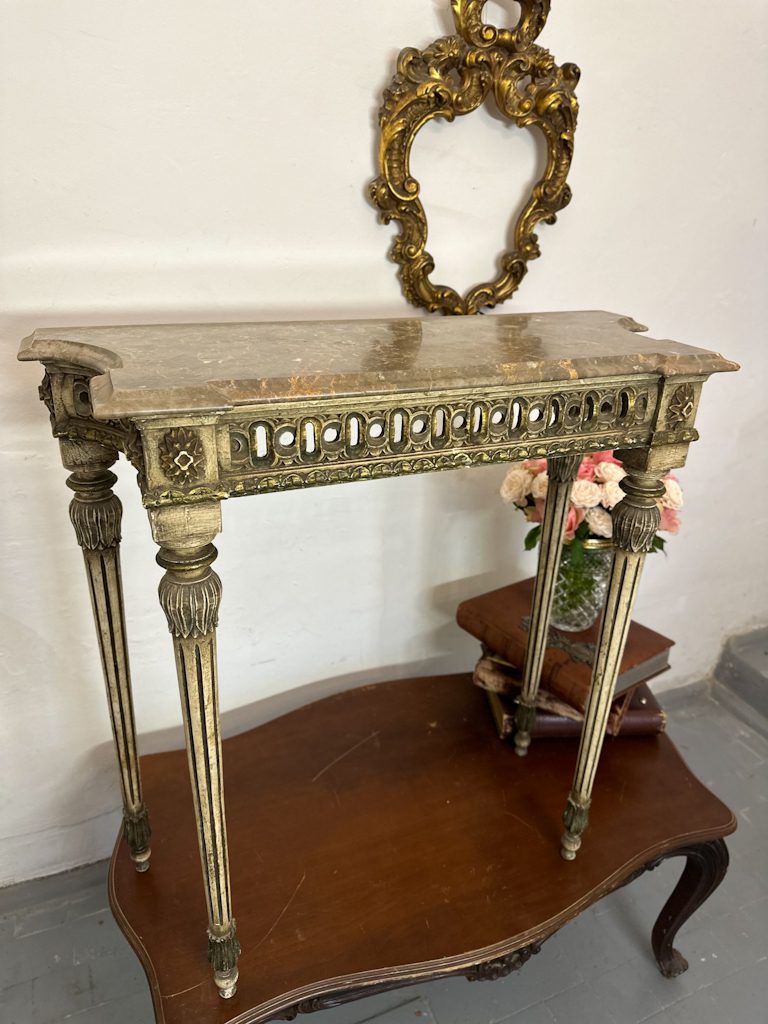










Konsole ar marmora virsmu — lakots koks, Luija XVI stils, Francija/Itālija, 19. gs. (4604)
Height 81 cm Length 81 cm

Description
Console with Marble Top — Lacquered Wood with Gold Accents, Louis XVI Style, France / Italy, Late 19th Century
Louis XVI period snapshot: In the spring of 1787, Wolfgang Amadeus Mozart wrote the final note of the Act II finale of Don Giovanni and set down his pen. He rose from his chair in Prague, passed the console in the hallway — his fingers brushing lightly against the cold marble corner — and went out into the street. It was snowing.
This console belongs to the Neoclassical tradition of the style — an era that answered the excesses of Rococo with deliberate discipline and measure. Where Louis XV danced in rocaille spirals, stood straight and spoke the language of ancient Greece and Rome. Late 19th-century Historicism revived this vocabulary with fresh precision: Parisian and Turinese workshops produced consoles with cannelure-fluted legs, rosette ornaments and pierced grecques friezes as elegant as anything from the age of Versailles.
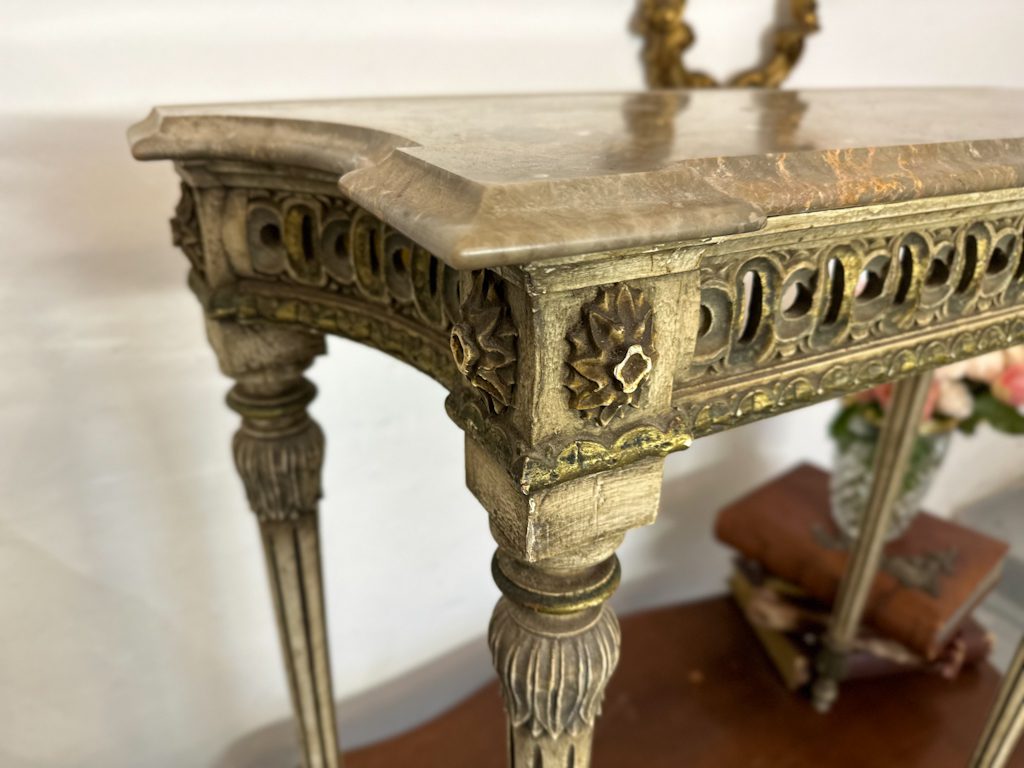
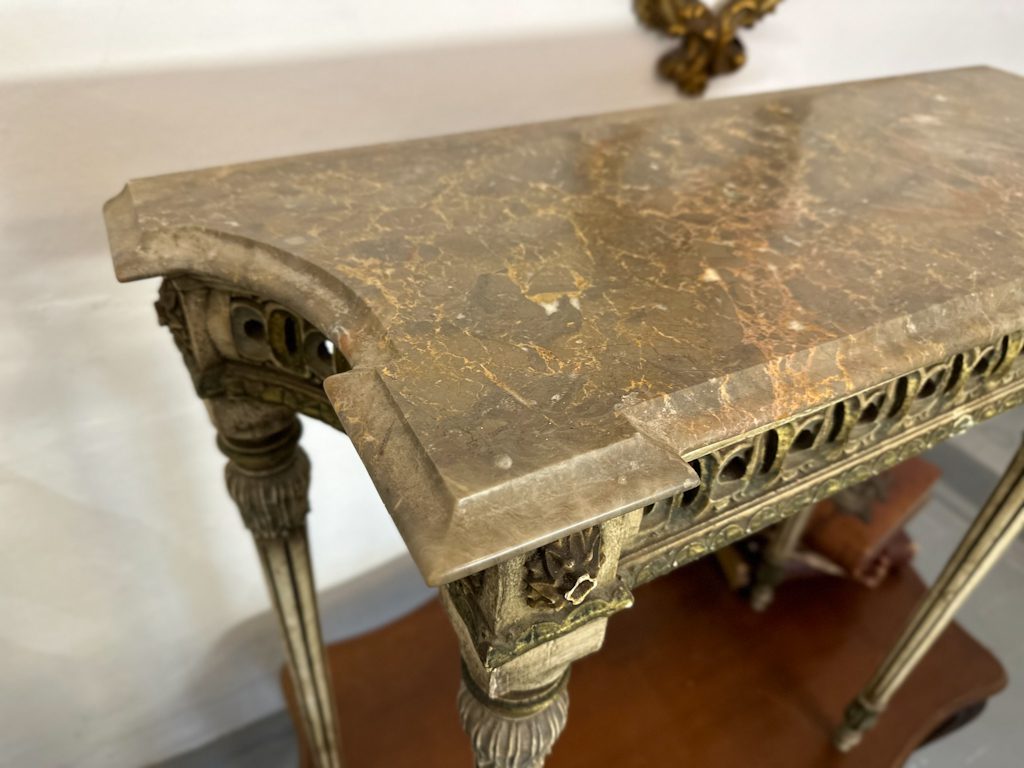
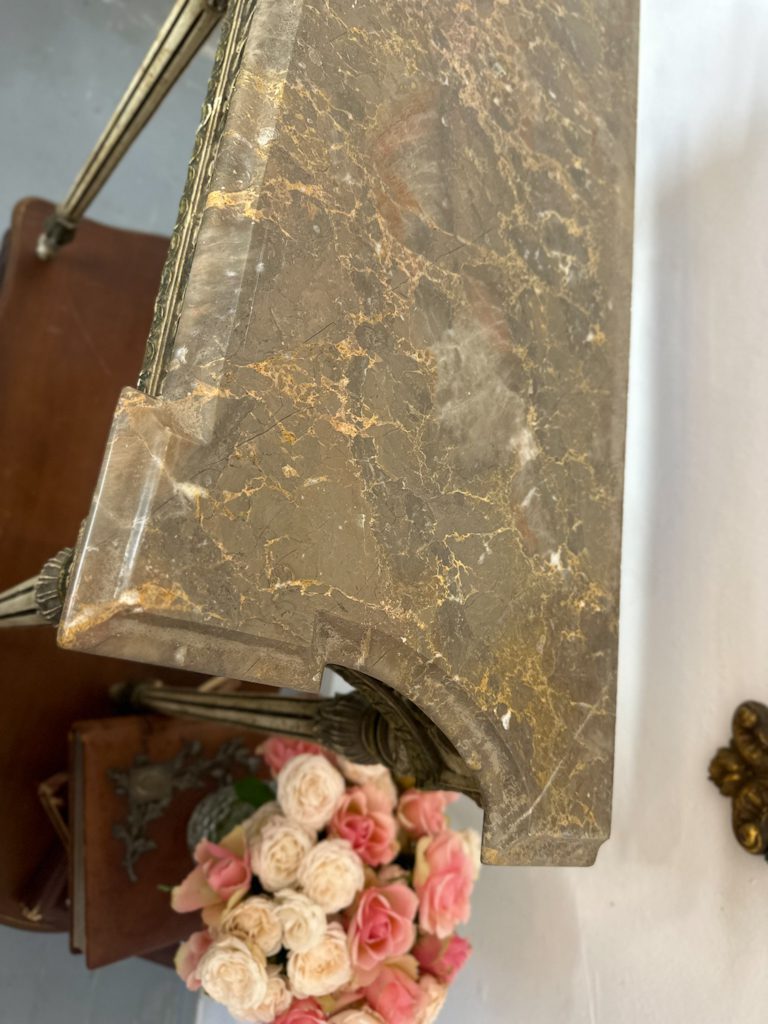
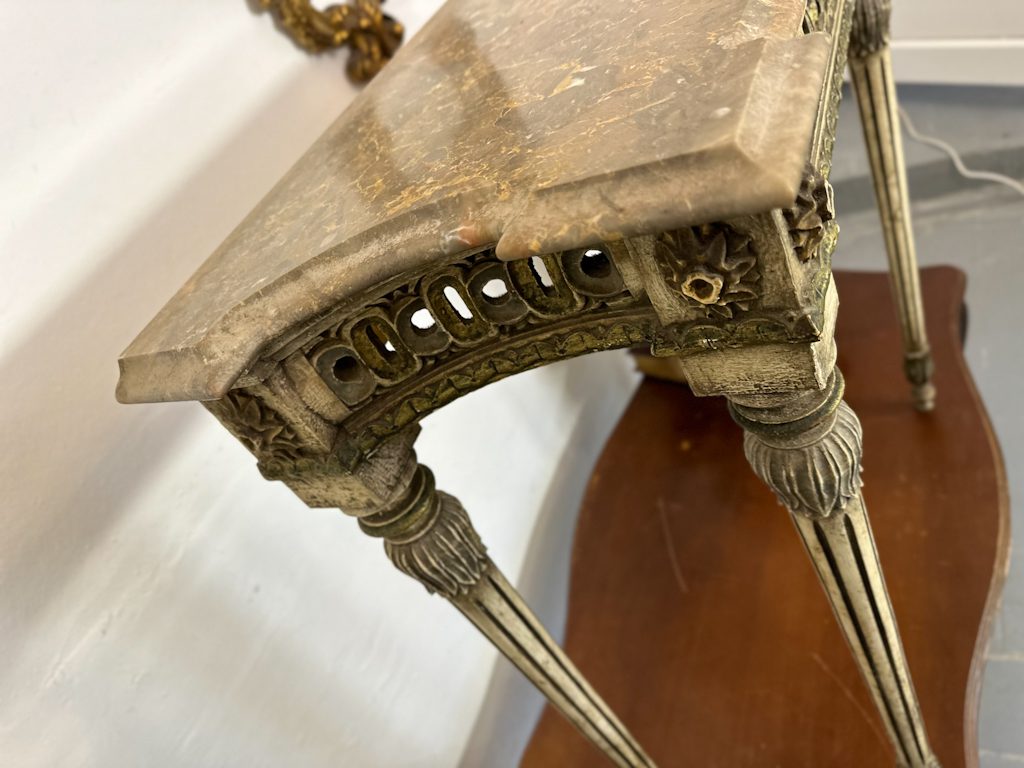
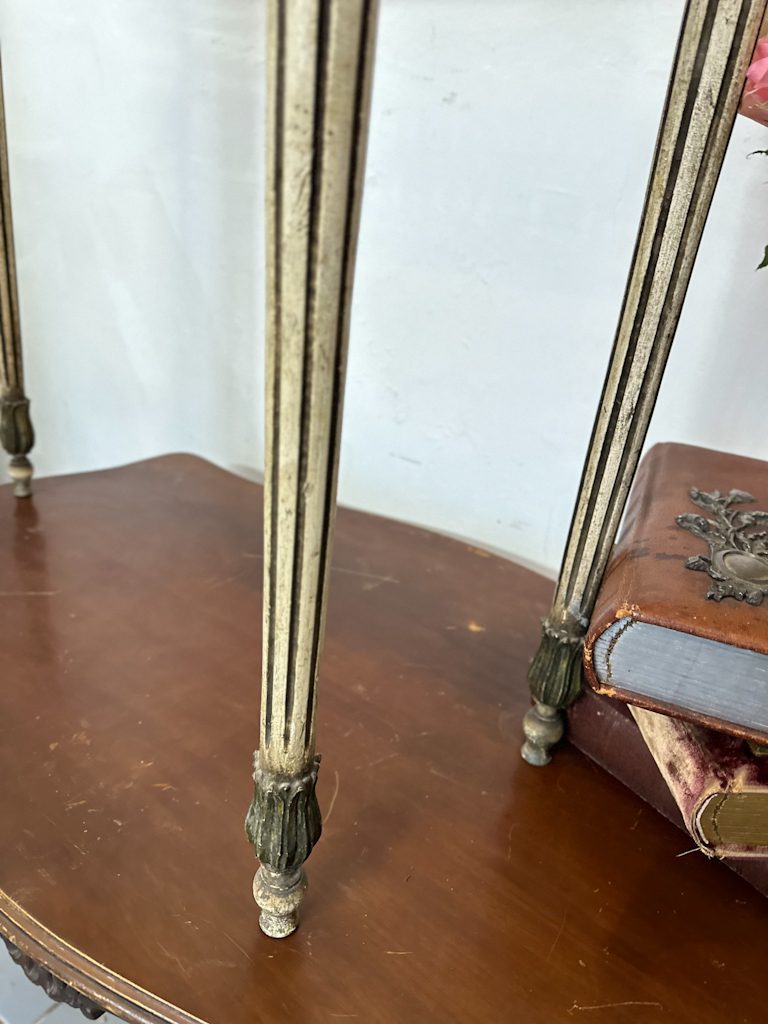
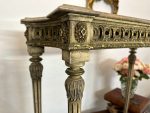
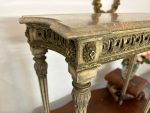
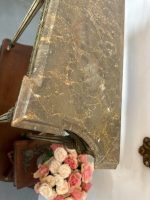
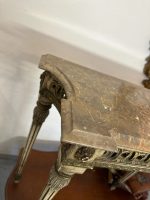
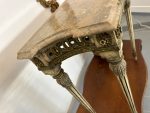
The frame is treated with a grey-green lacquer finish with gold accents — laque ancienne technique, widely used in and Italian furniture of the 18th and 19th centuries as an accessible alternative to gold-leaf gilding. The pierced tablier — apron with a rhythmic oval-and-rectangle à jour pattern — is a defining Neoclassical element, referencing the antique pulvinus and Greek meander tradition. Corner blocks bear eight-petalled rosette ornaments. Legs are cannelure-fluted in fuseau form with feuille d’acanthe terminals — the classic repertoire. The marble top is in warm brown breccia tones with orange-gold veining, likely of Spanish or southern origin.
No maker’s mark is present. The proportions, precision of the fluted legs and à jour apron execution point to a or northern Italian professional atelier. The laque ancienne finish with gold accents is characteristic of Italian (lacca italiana) and southern high-quality provincial furniture.
The condition of the item is fully reflected in the photographs.
Höhe: 81 cm. Länge: 81 cm. Tiefe: 31 cm.
Console à dessus de marbre — bois laqué avec accents dorés, style , France / Italie, fin XIXe siècle
Instantané de l’époque : Au printemps 1787, Wolfgang Amadeus Mozart écrivit la dernière note du finale du deuxième acte de Don Giovanni et posa sa plume. Il se leva de sa chaise à Prague, passa devant la console dans le couloir — ses doigts effleurant légèrement l’angle froid du marbre — et sortit dans la rue. Il neigeait.
Cette console appartient à la tradition néoclassique du style — époque qui répondit aux excès du Rococo par une discipline délibérée et une mesure retrouvée. L’Historicisme de la fin du XIXe siècle ranima ce vocabulaire avec une fraîcheur nouvelle : les ateliers parisiens et turinois créaient des consoles aux pieds cannelés, aux rosettes et aux frises à jour aussi élégantes que sous Versailles.
Le cadre est traité d’une finition en laque gris-vert avec accents dorés — technique laque ancienne. Le tablier ajouré avec son rythme d’ovales et de rectangles à jour est un élément définitoire du néoclassicisme . Les pieds cannelés en fuseau avec feuilles d’acanthe complètent le répertoire classique. La stoleshnitsa de marbre en tons bruns breccia avec veines orangées dorées est vraisemblablement d’origine espagnole ou du sud de la France.
L’état de la pièce est entièrement reflété dans les photographies.