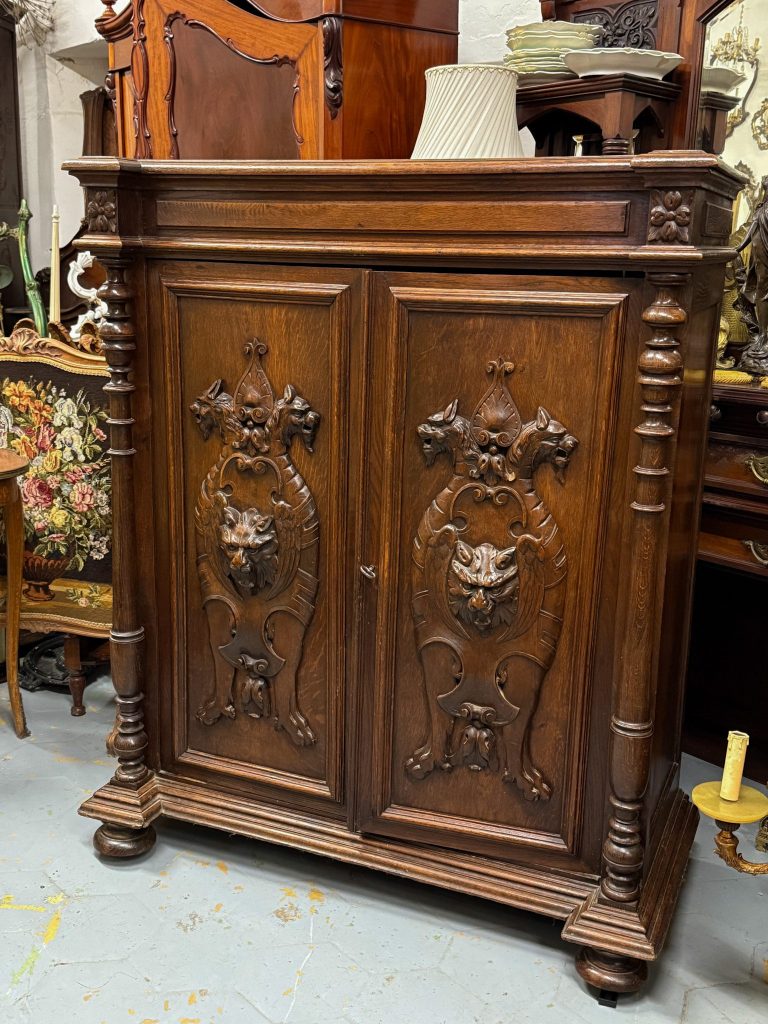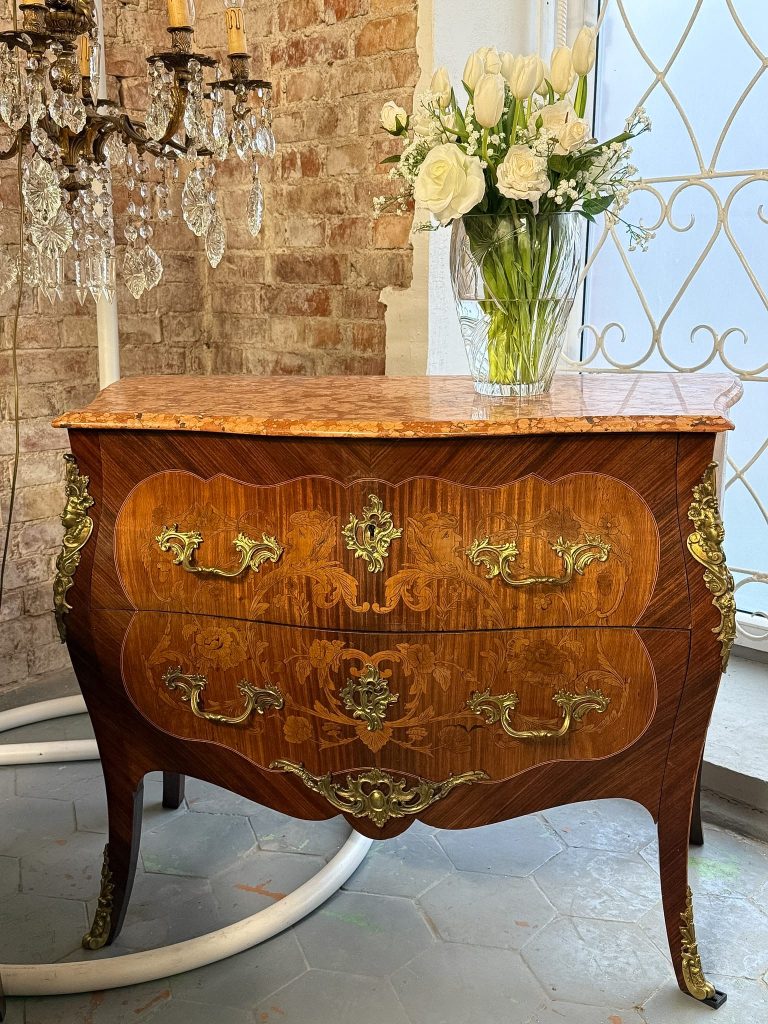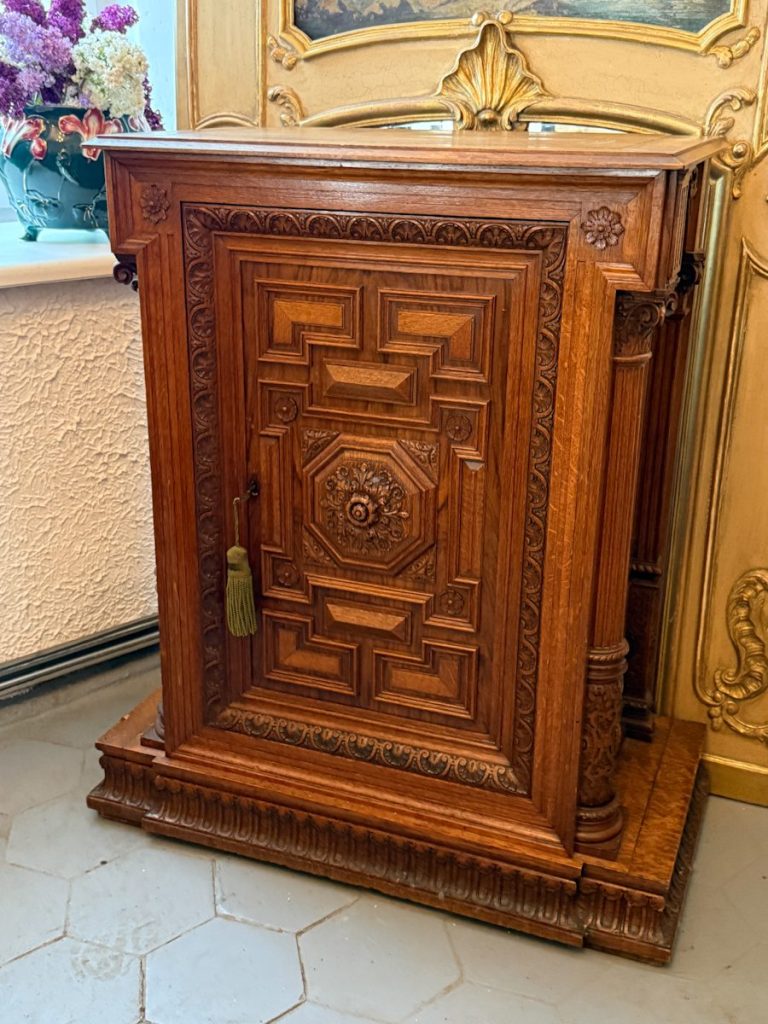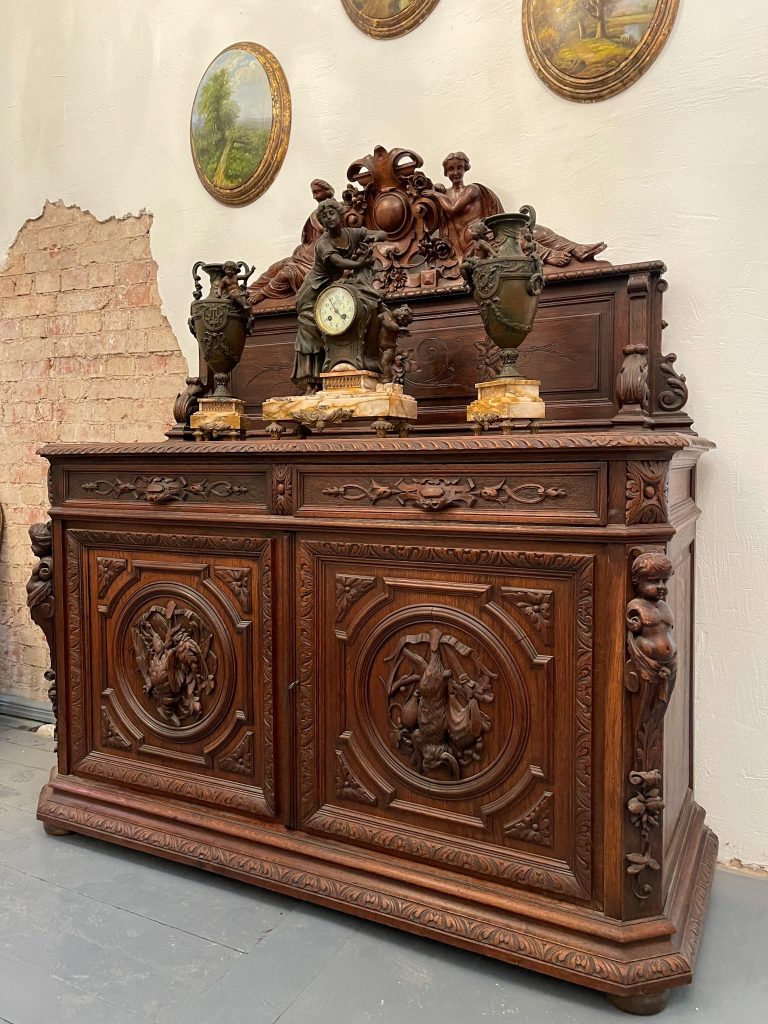
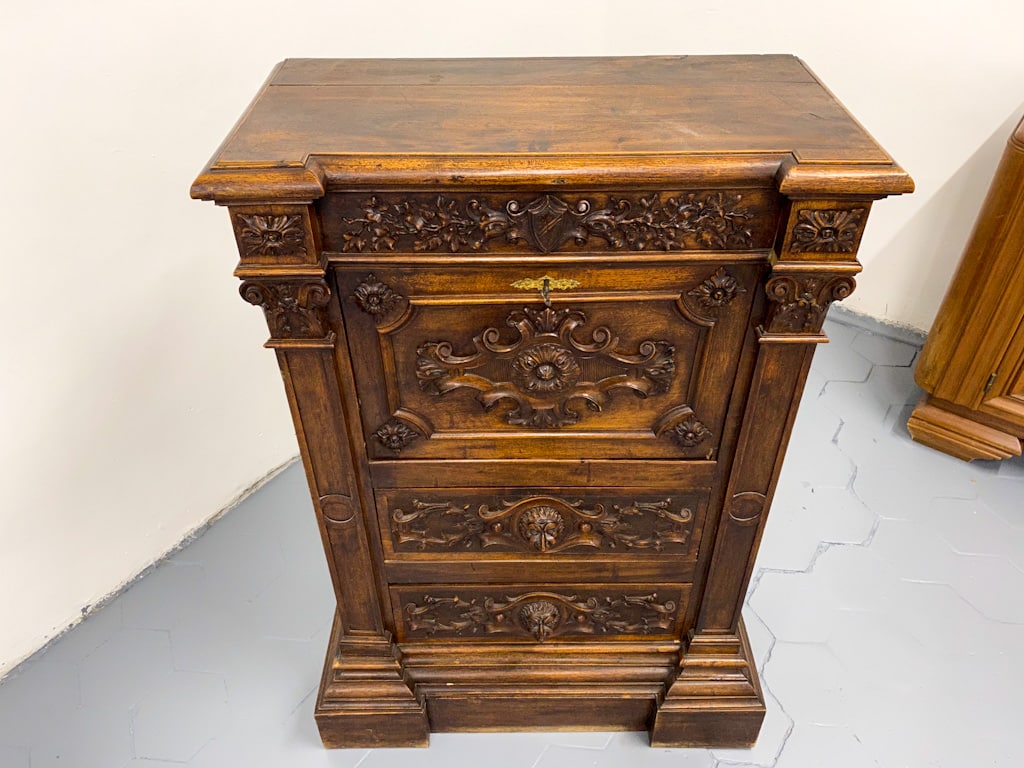
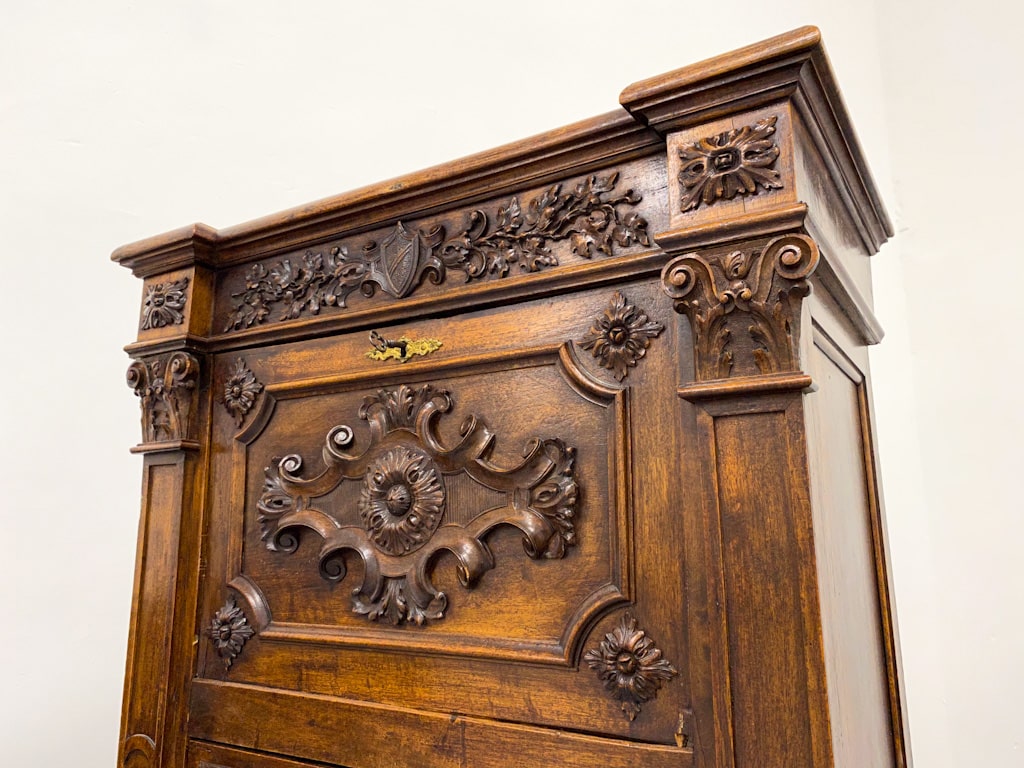
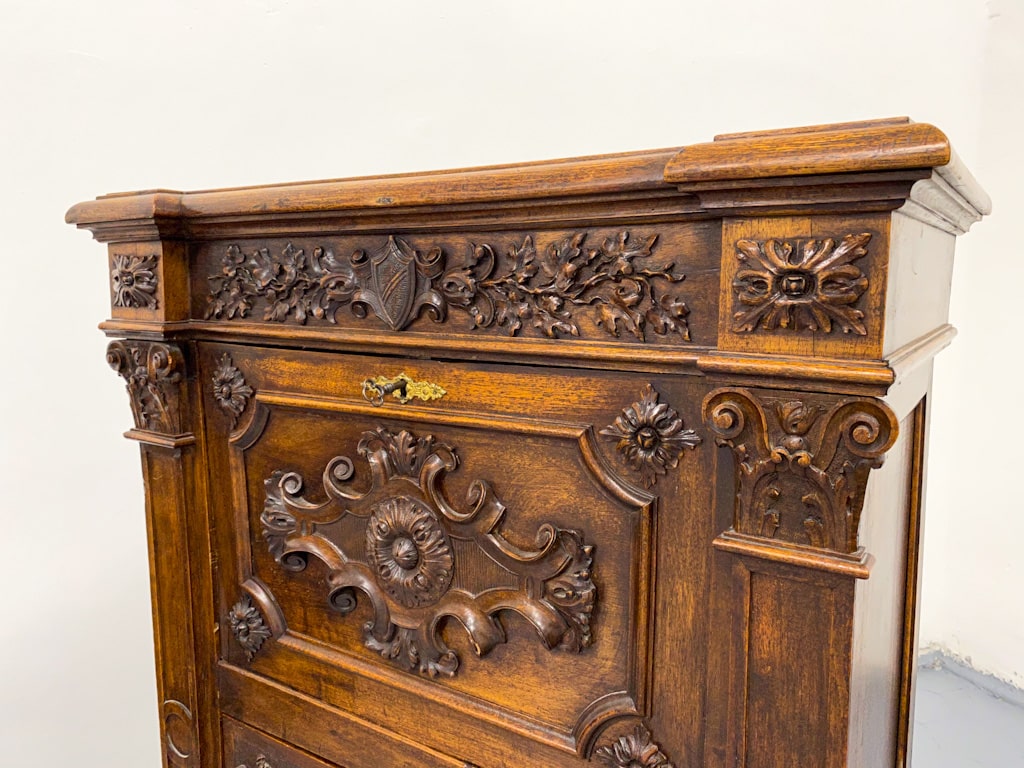
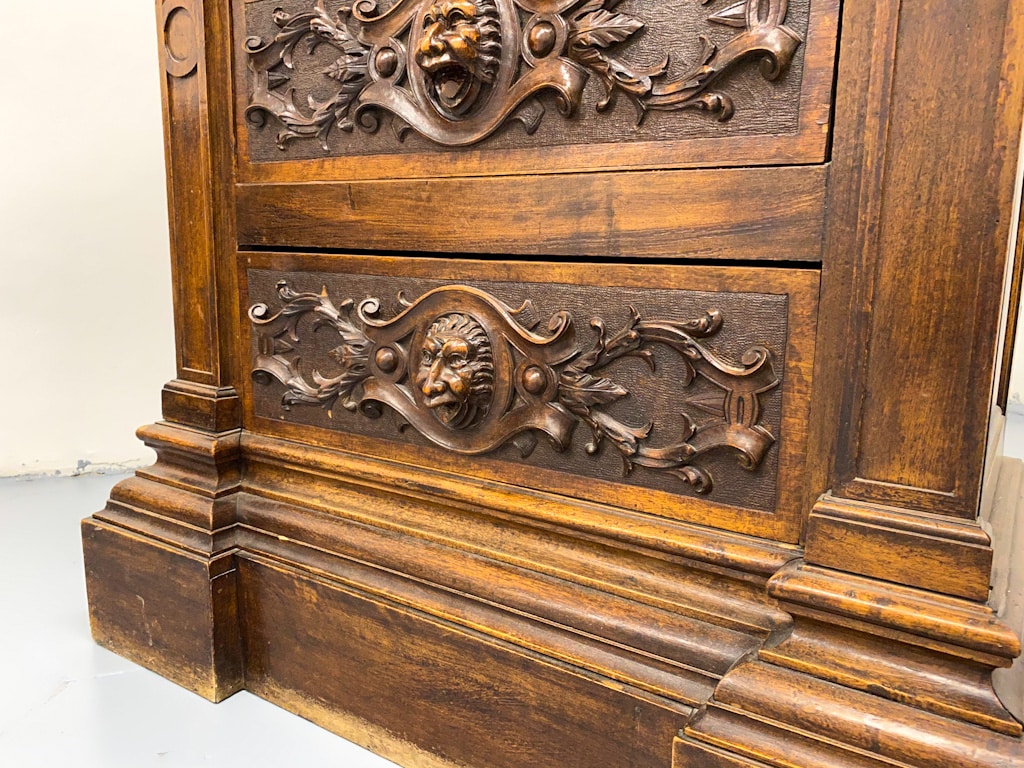
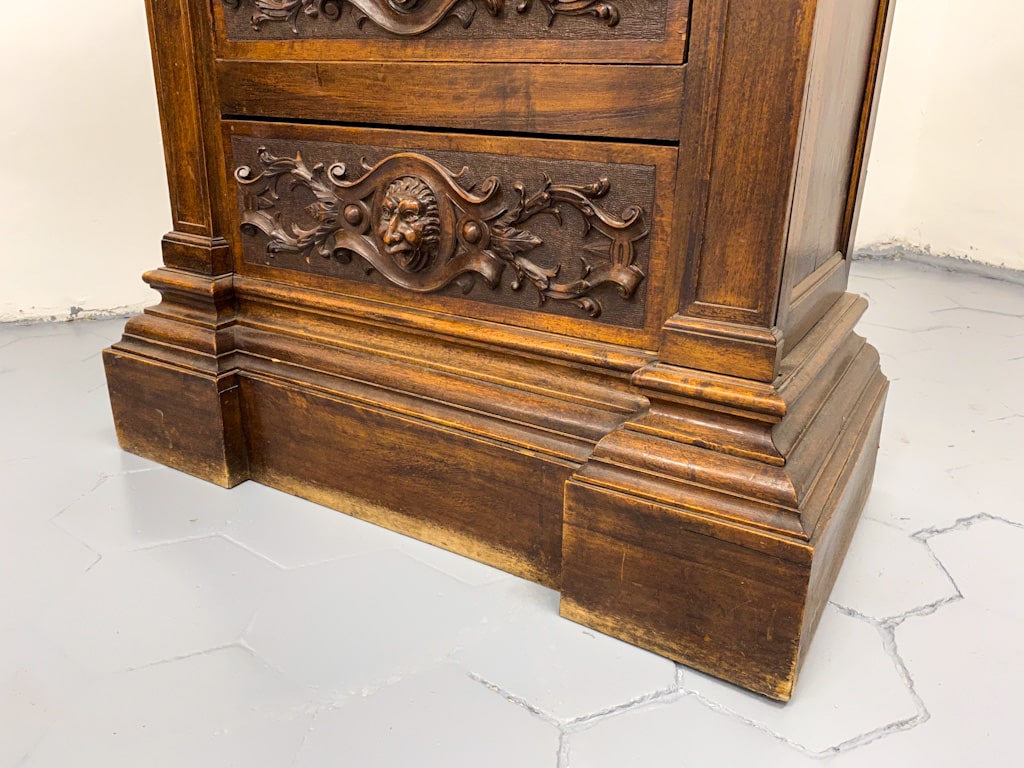
Carved secretary-chest of drawers — Neo-Renaissance Historicism, Belgium/France, c. 1870–1890. This monumental piece showcases intricate hand-carving, featuring lion masks and acanthus motifs, typical of Belle Époque craftsmanship. A rare and impressive statement furniture piece for any discerning collector. 1 550,00 €
You’re now subscribed to price tracking for this product. We’ll notify you if the price drops. 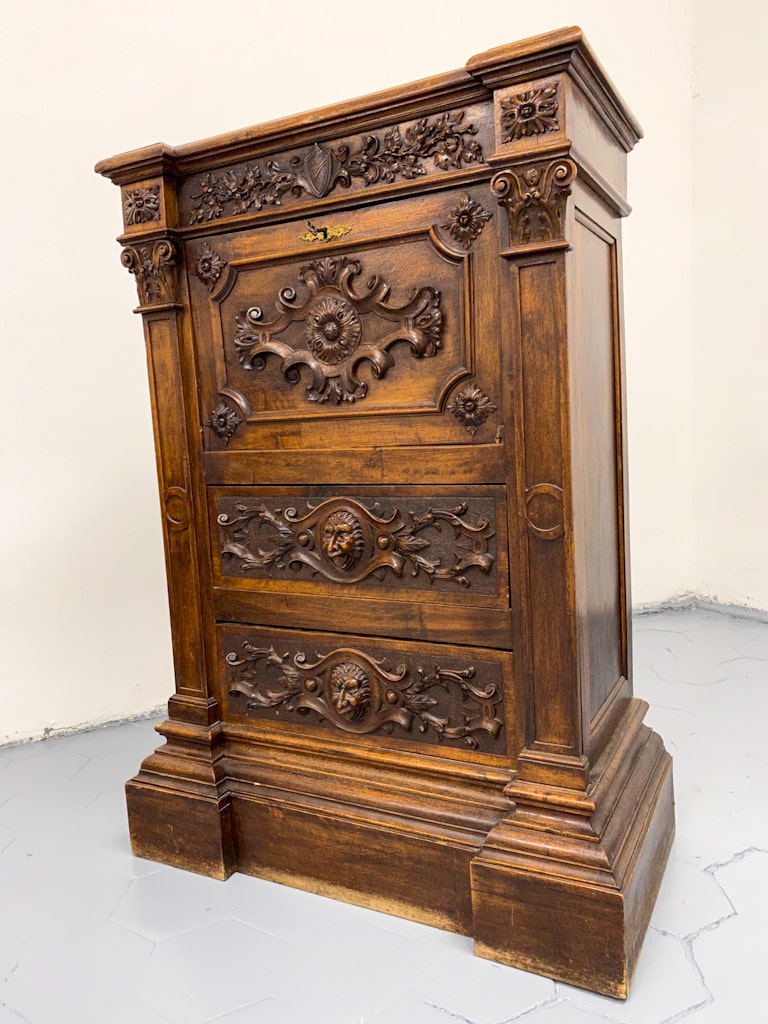
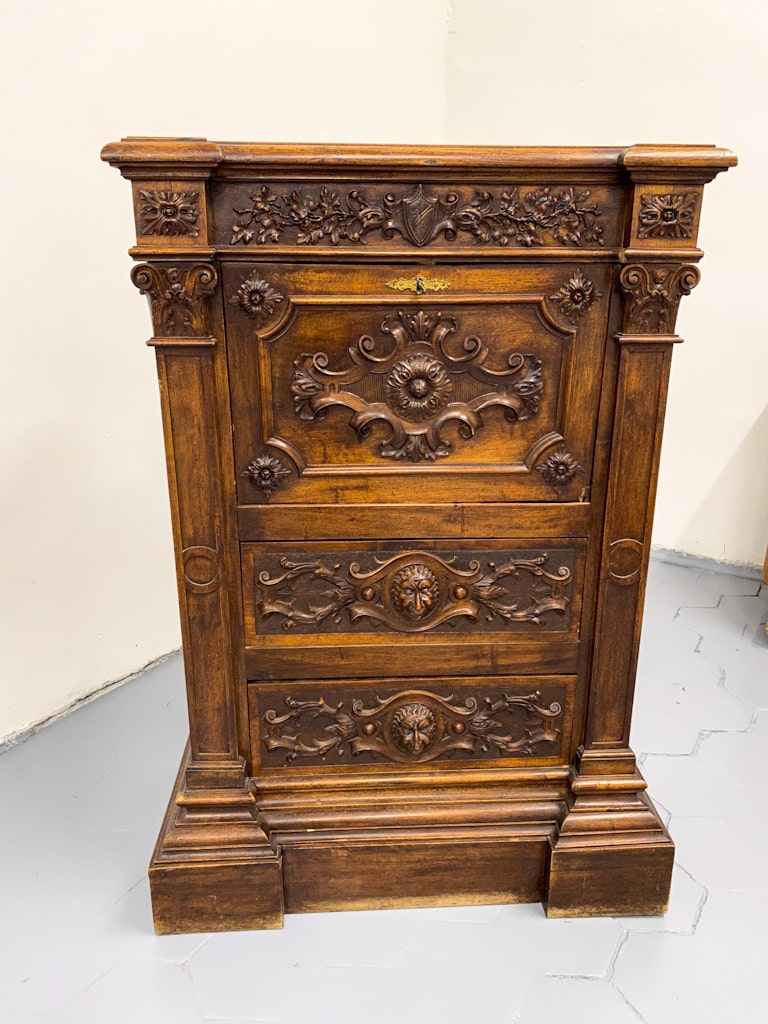
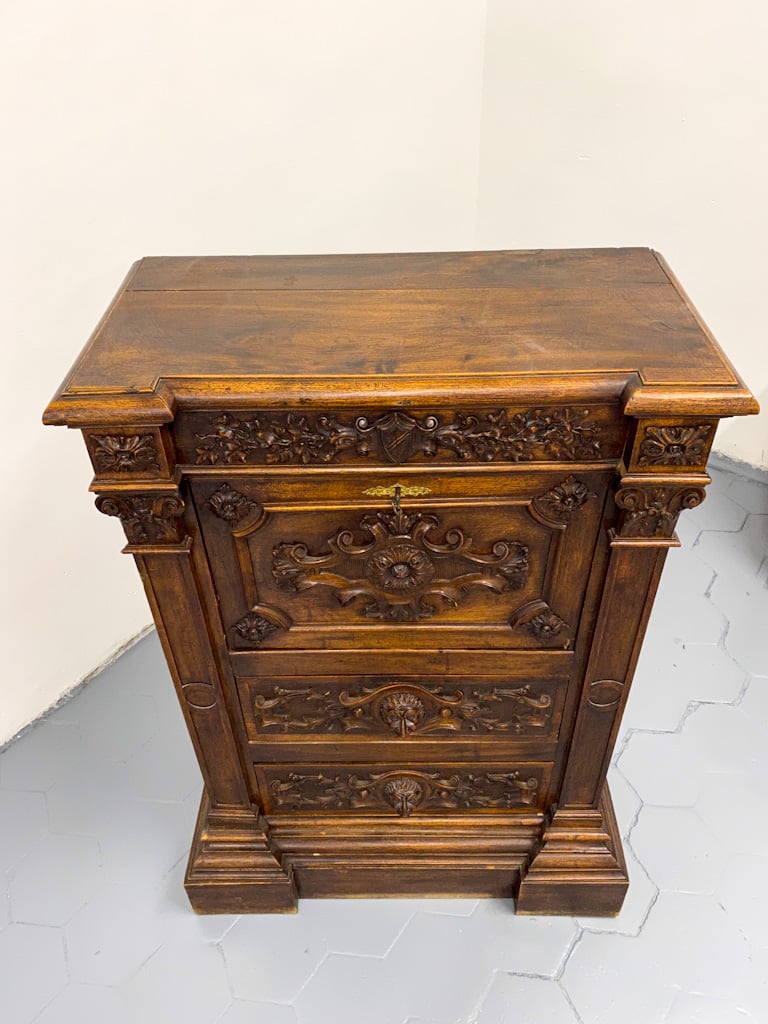
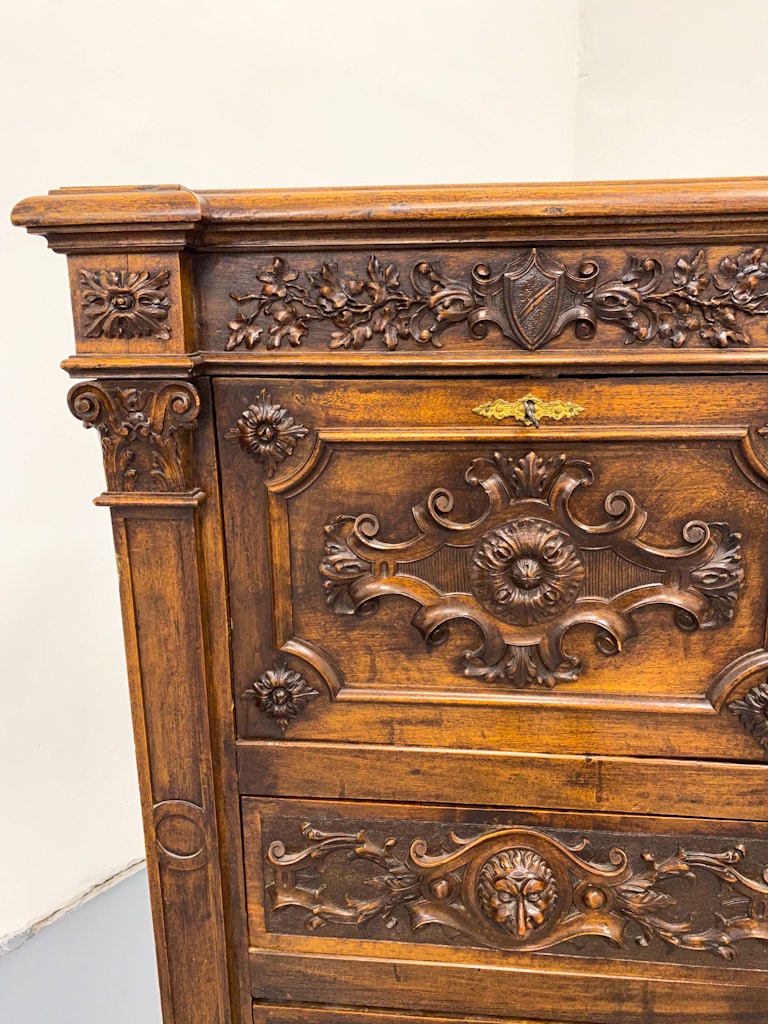
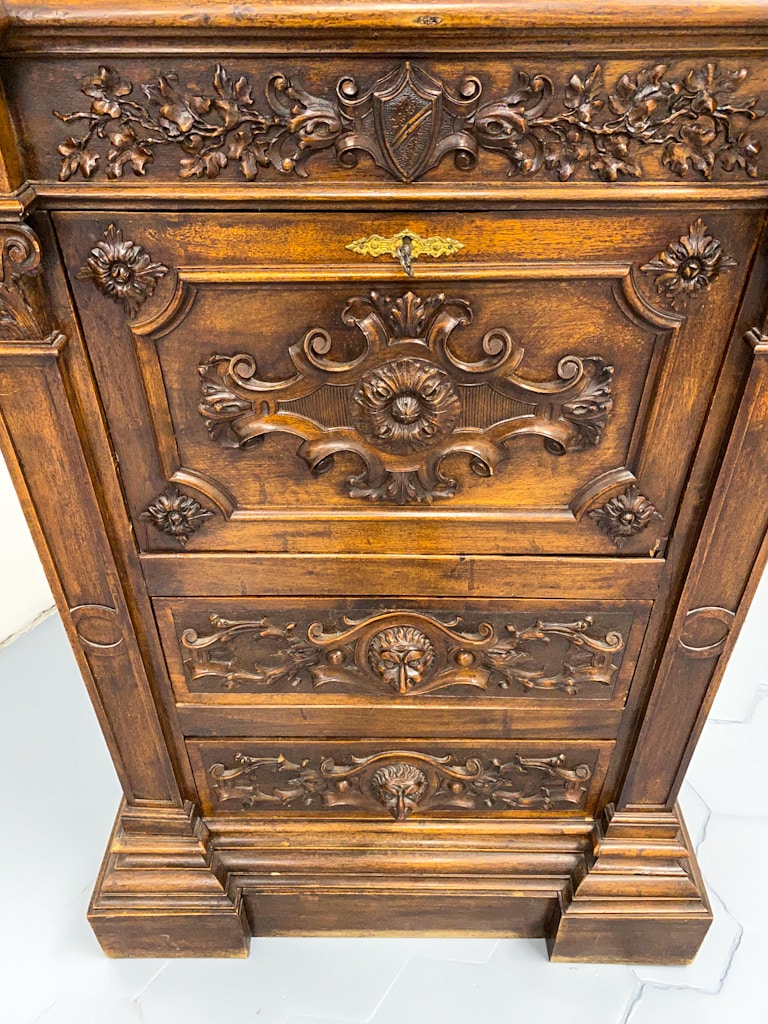
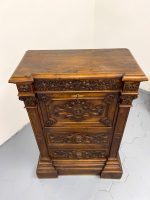
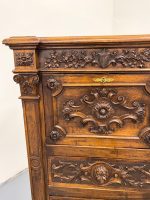
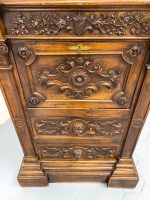
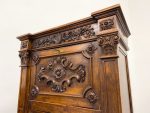
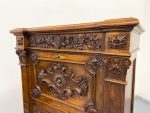
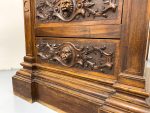
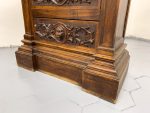
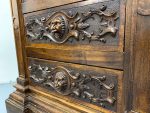
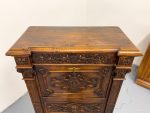
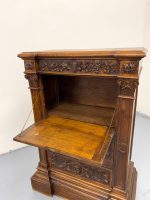
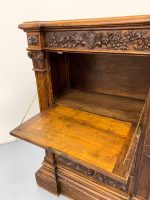
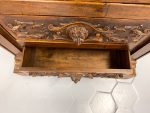
Carved Secretary Chest of Drawers – Neo-Renaissance Historicism, Belgium/France, c. 1870-1890
Height 130 cm Width 92.5 cm Color BronzeBrownOak
Description
Carved Secretary Cabinet — Neo-Renaissance Historicism, Belgium / France, approximately 1870–1890
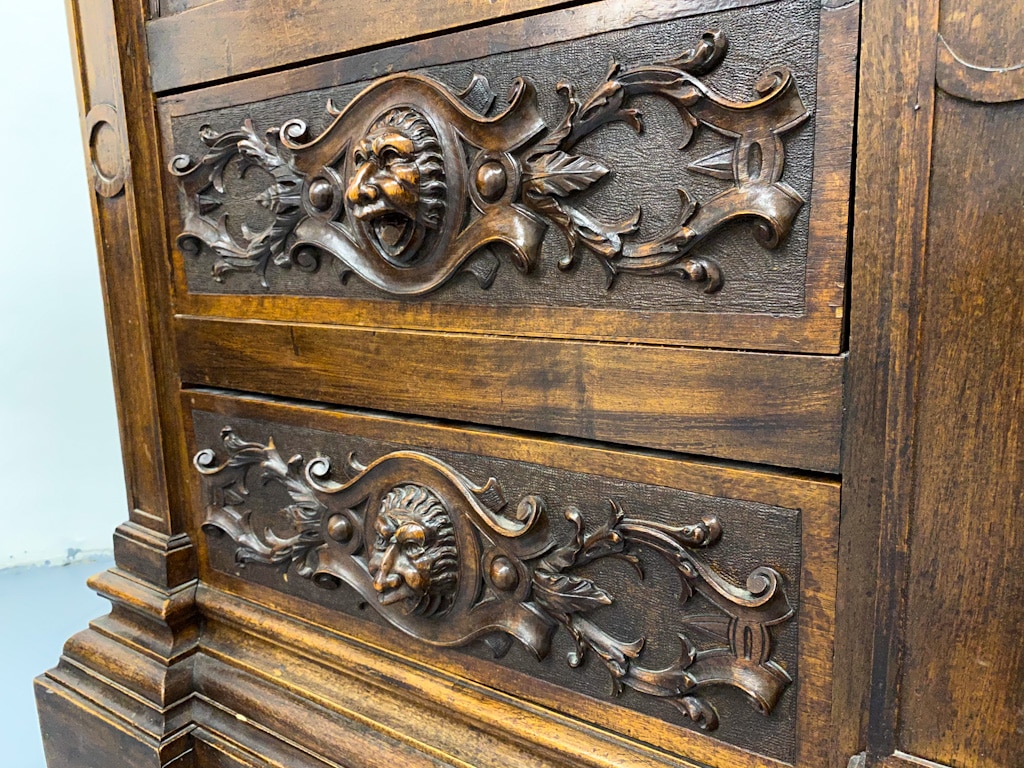
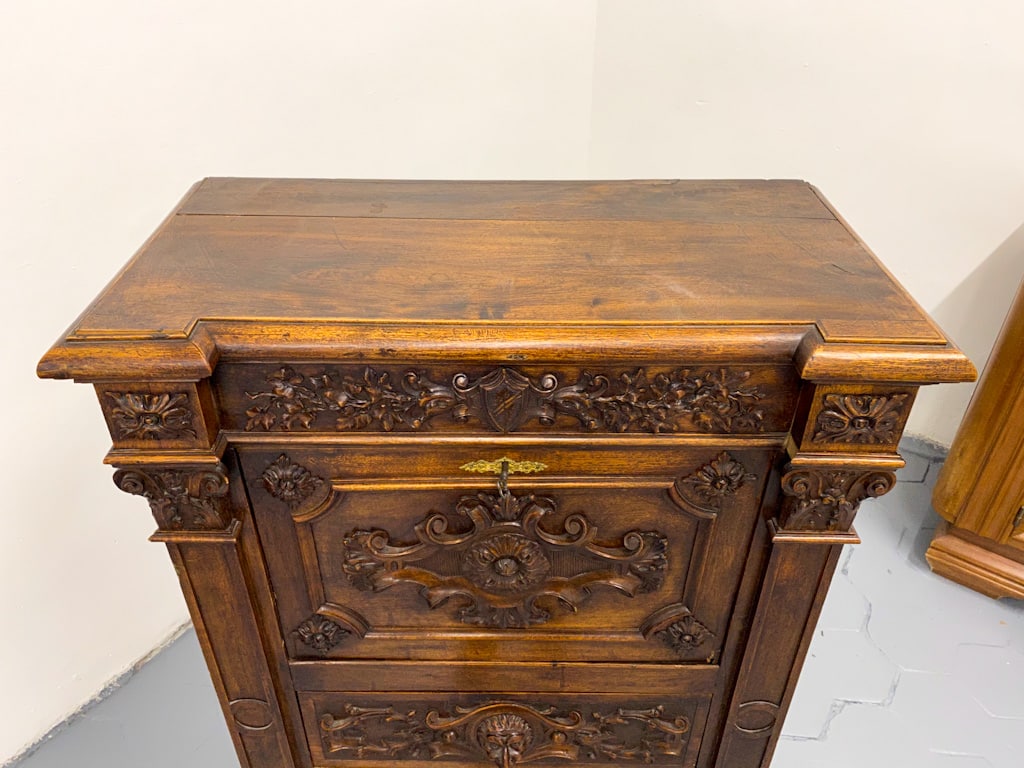
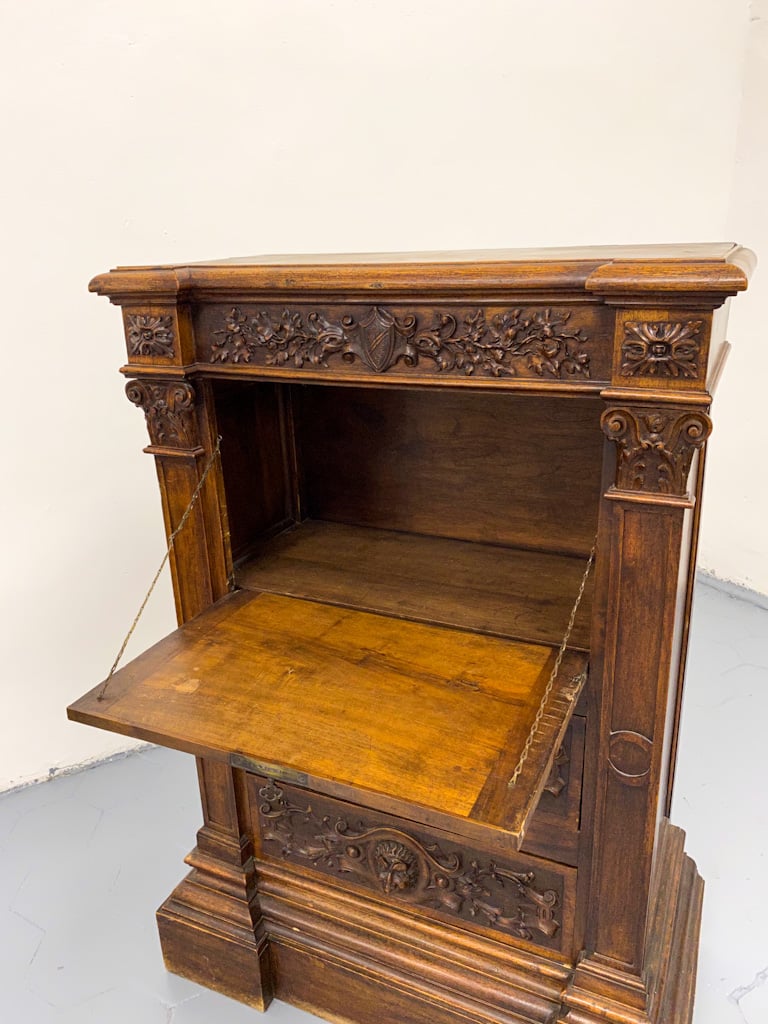
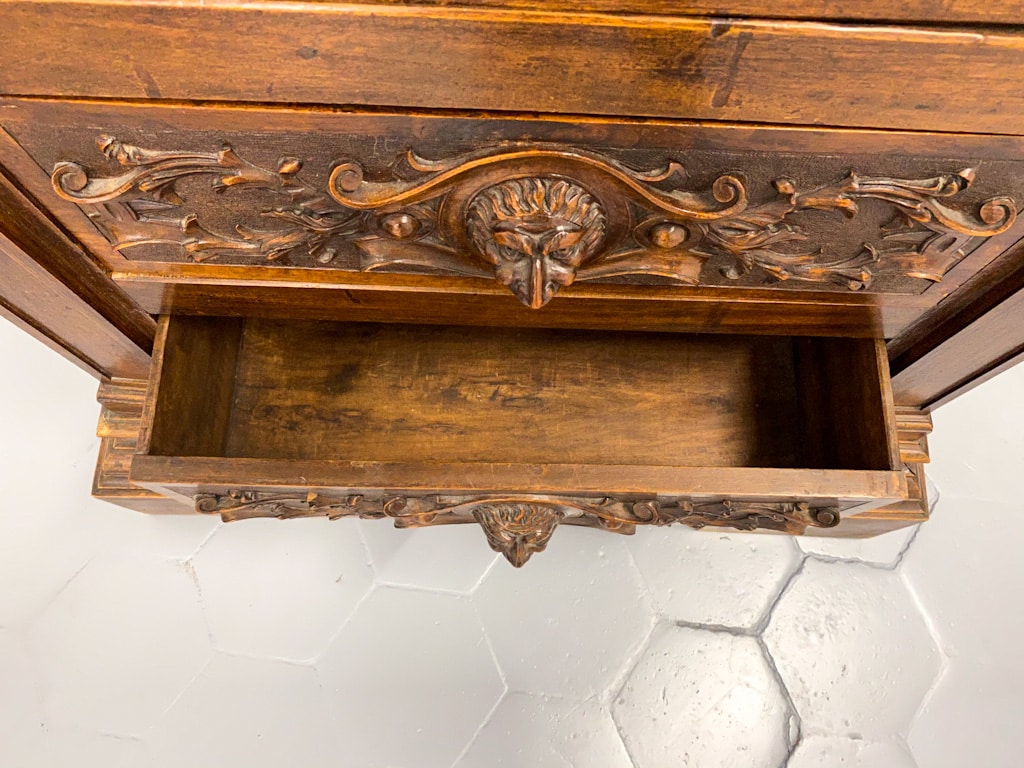
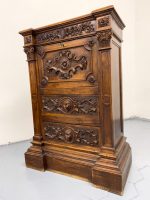
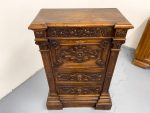
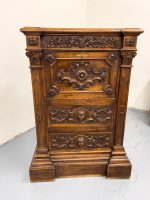
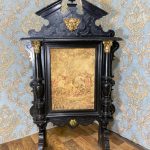
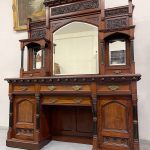
This monumental piece is a classic secrétaire abattant — a fall-front writing cabinet over a bank of drawers — executed in the Neo-Renaissance Historicist style that dominated the finest Belgian and northern cabinetmaking workshops of the Belle Époque. The carving programme is extraordinary in its density and precision: a heraldic shield with oak branches in the upper frieze, a central panel of rocaille scrolls and acanthus leaves surrounding a large flower rosette, and two powerfully modelled lion-head mascarons on the lower drawers. The pilasters with Corinthian capitals frame the composition with architectural rigour. Material: solid oak, hand-carved throughout.
A Belle Époque moment. At the 1878 Exposition Universelle in Paris, the Belgian pavilion presented precisely this kind of furniture — monumental, oak-framed, rich with Renaissance carving. Visitors paused: these were not factory goods, but objects that declared their owner’s historical literacy and appreciation of craft.
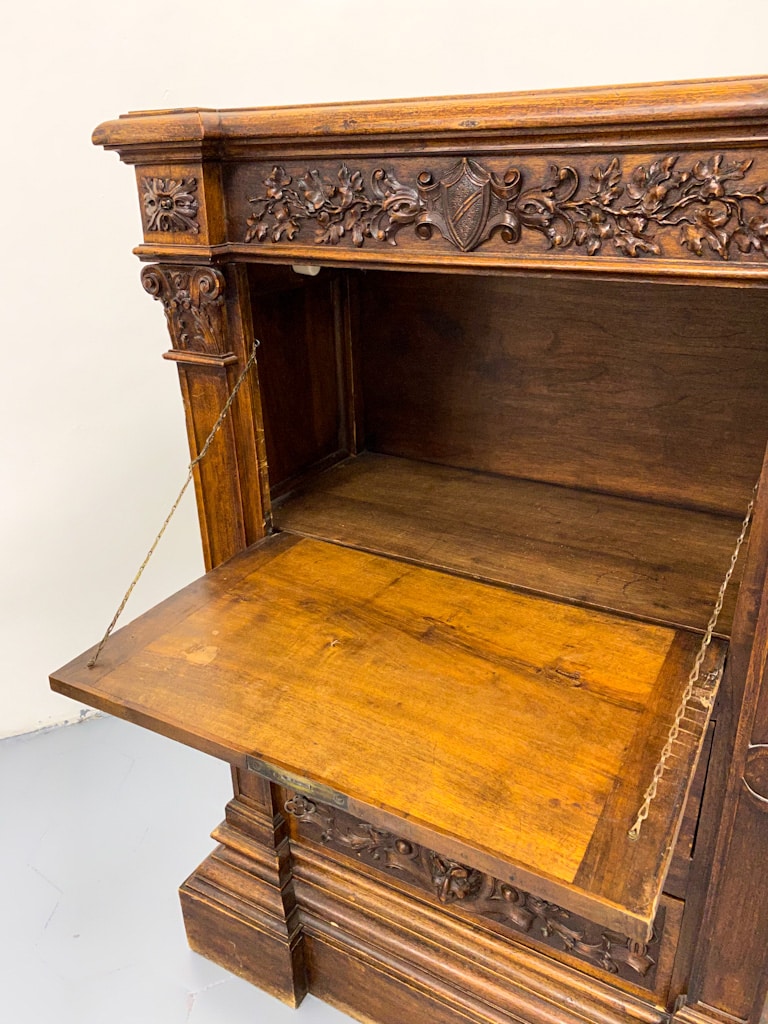
No maker’s mark is present, consistent with bespoke workshop production for haute bourgeoisie clientele. The quality of carving — no machine routing, precise proportional pilasters — points to a first-class workshop in Belgium or northern France. The interior of the fall-front writing surface retains its original lighter, unfinished oak tone, confirming authentic 19th-century manufacture.
A secrétaire abattant of this scale and carving quality is genuinely rare. The fall-front mechanism with original chain supports remains functional. In interior design, this piece anchors a library, study, or grand salon; in contrast settings such as loft or industrial spaces, it provides warmth and historical depth. The condition of the item is fully reflected in the photographs.
BESCHREIBUNG AUF
Höhe 130 cm × Breite 92,5 cm × Tiefe 47,5 cm
Secrétaire-Commode Sculpté — Néo-Renaissance / Historicisme, Belgique / France, vers 1870–1890
Ce meuble monumental est un secrétaire abattant classique — un abattant d’écriture au-dessus d’un bloc de tiroirs — réalisé dans le style Néo-Renaissance Historiciste qui caractérisa l’ébénisterie d’élite belge et nord-e de la Belle Époque. Le programme sculpté est d’une richesse exceptionnelle : un écu héraldique encadré de branches de chêne dans la frise supérieure, un panneau central de volutes rocaille et de feuilles d’acanthe autour d’une grande rosette florale, et deux puissants mascarons à tête de lion sur les tiroirs inférieurs. Matériau : chêne massif, entièrement sculpté à la main.
Un instant Belle Époque. À l’Exposition Universelle de Paris en 1878, le pavillon belge présentait exactement ce type de mobilier — massif, architectural, riche de la grammaire renaissance. Les visiteurs s’arrêtaient : ces objets n’étaient pas des produits d’usine, mais des témoignages d’un savoir-faire et d’une conscience historique.
Aucune marque de fabricant n’est visible, ce qui est cohérent avec la production sur commande pour une clientèle haute bourgeoisie. Le mécanisme d’abattant avec ses chaînes d’origine est pleinement fonctionnel. Dans la décoration intérieure, cette pièce s’impose comme élément focal d’une bibliothèque, d’un cabinet de travail ou d’un grand salon. L’état de la pièce est entièrement reflété dans les photographies.