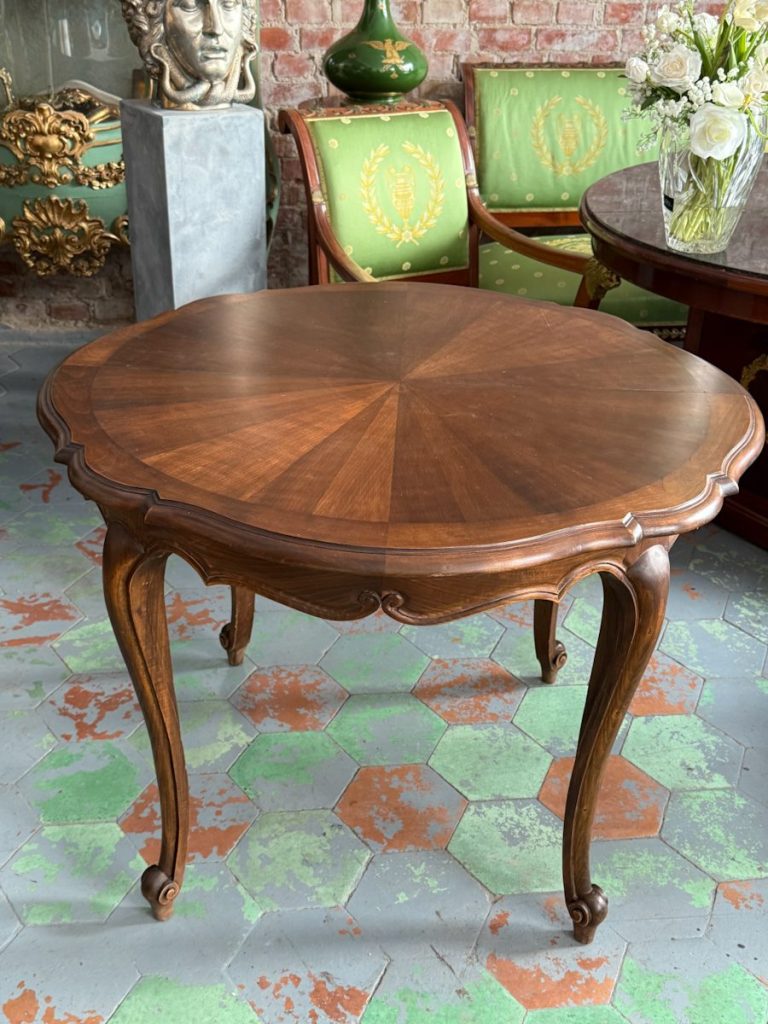
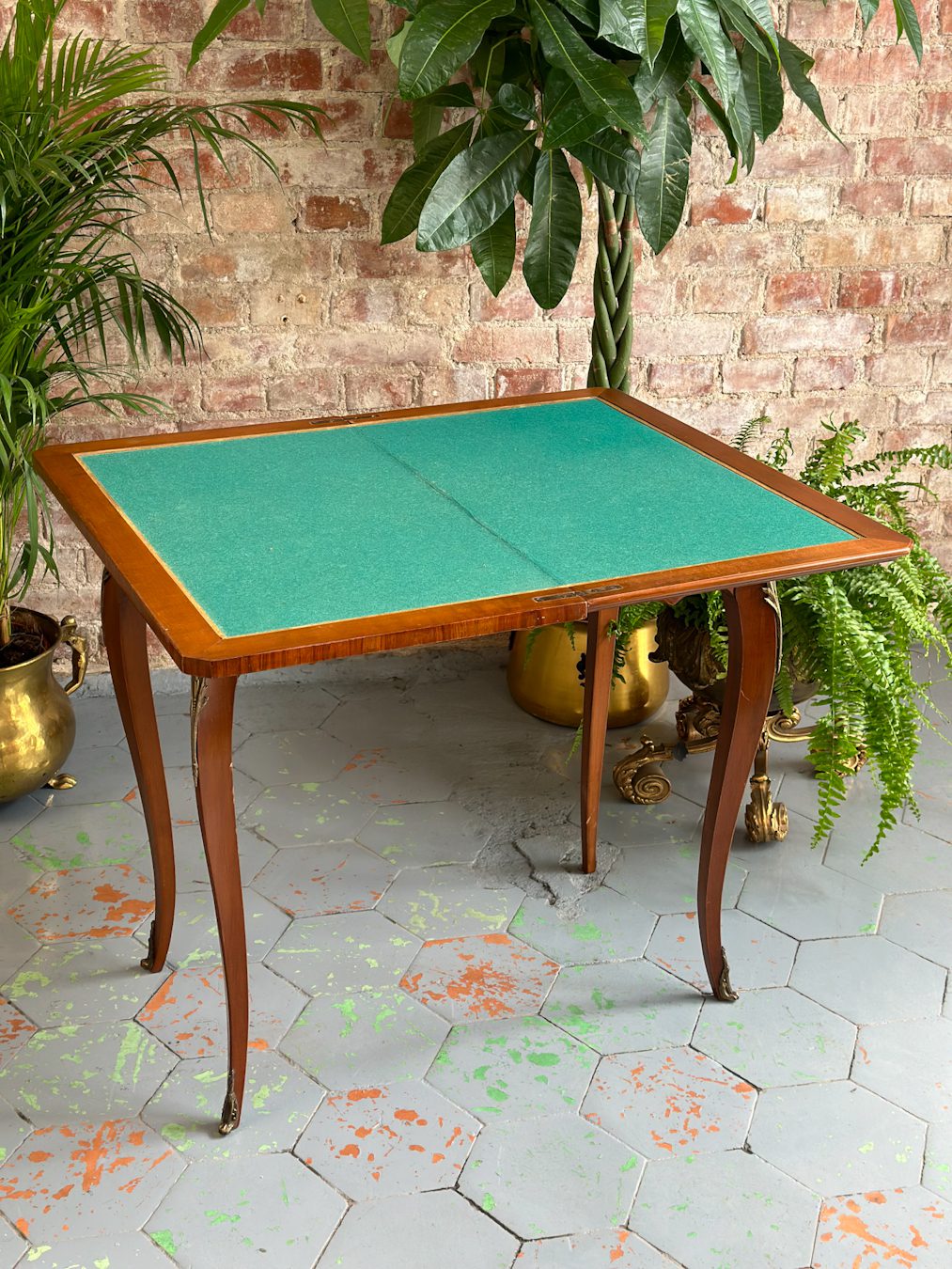
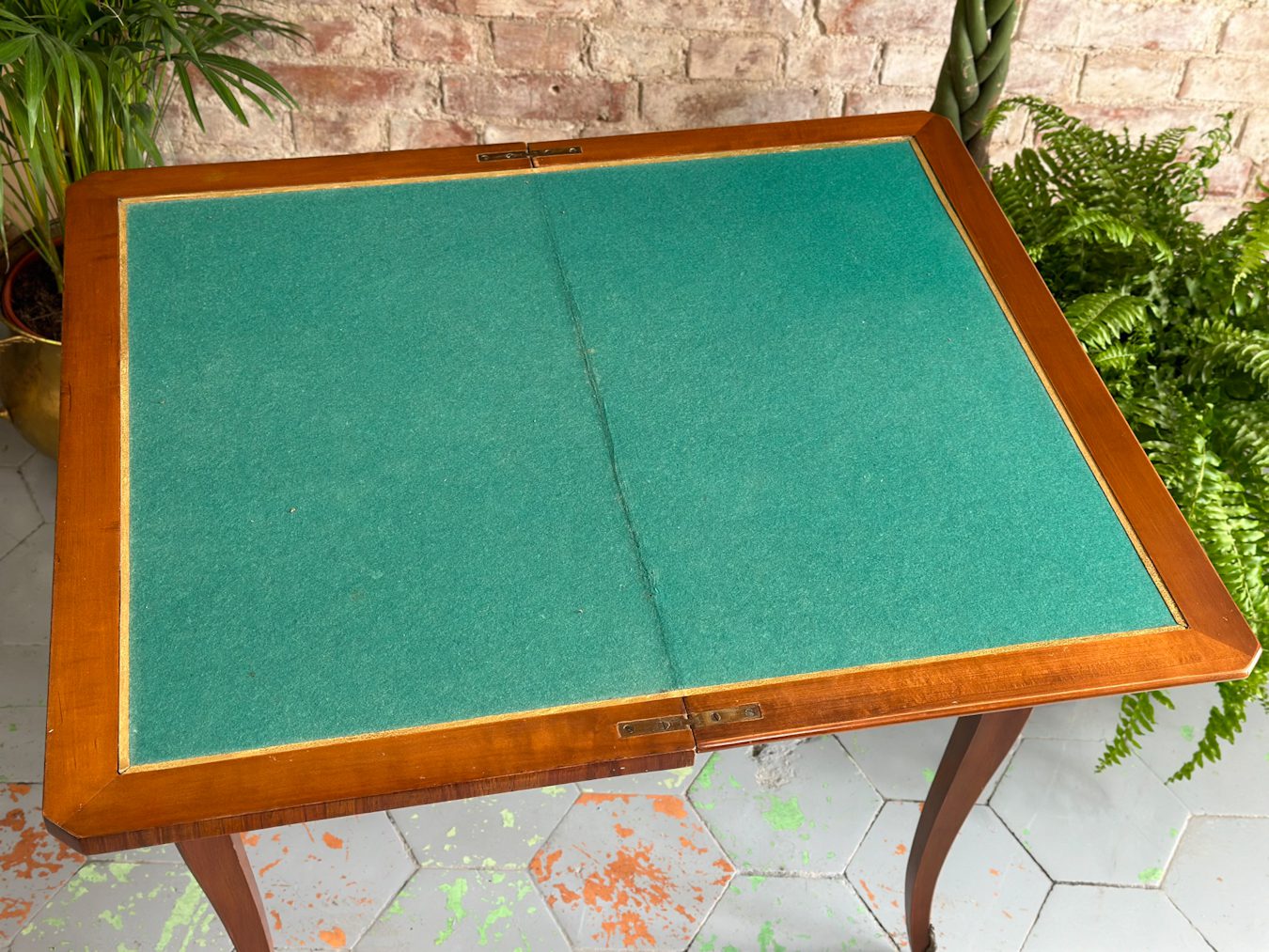
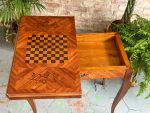
A Louis XV style inlaid marquetry console game table — France, late 19th century. This exquisite piece features a rosewood and darker wood marquetry top with a central chessboard, opening to reveal a green gaming surface. A rare find, it functions beautifully as both an elegant console and a sophisticated game table. 650,00 €
You’re now subscribed to price tracking for this product. We’ll notify you if the price drops. 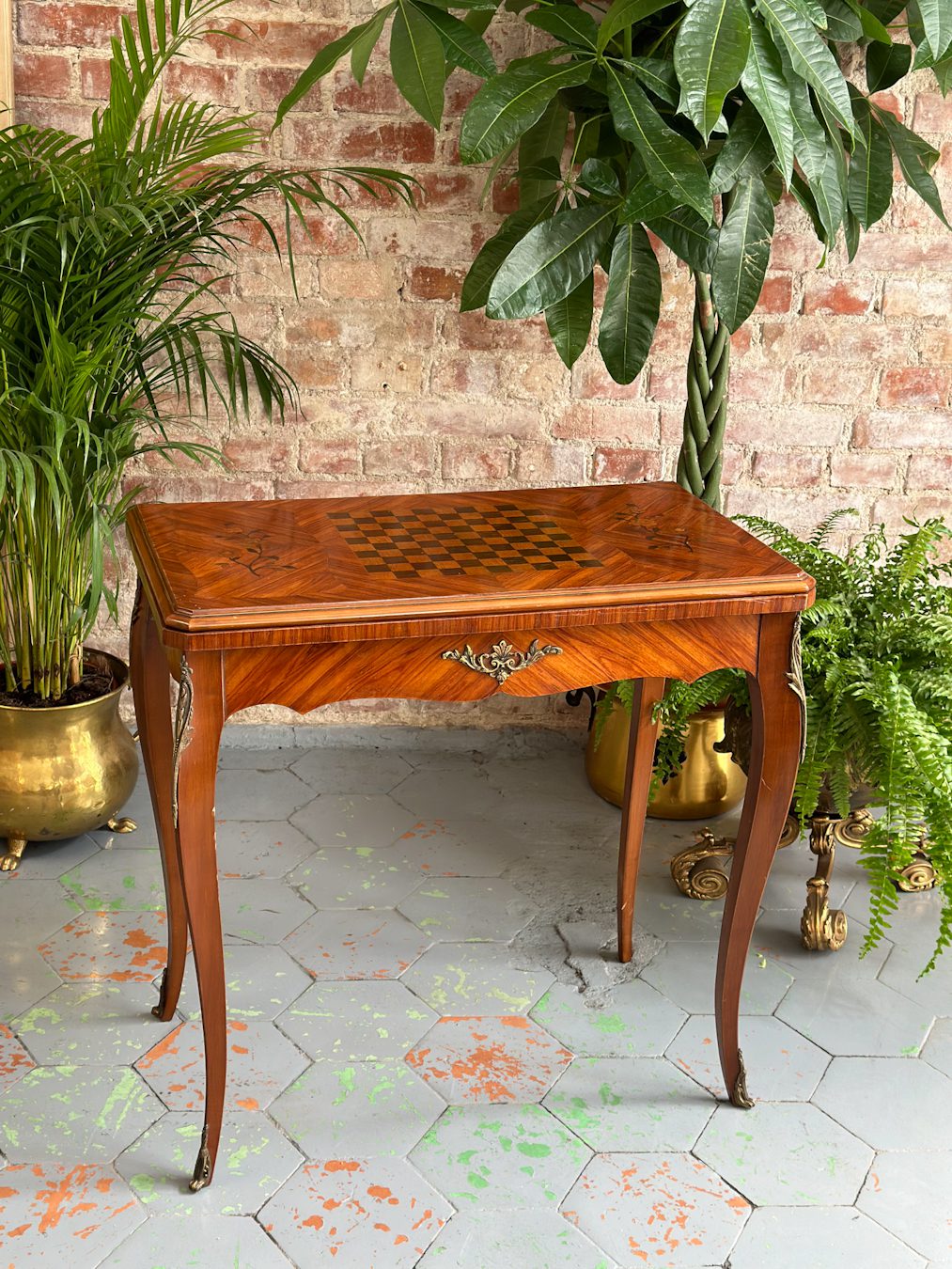
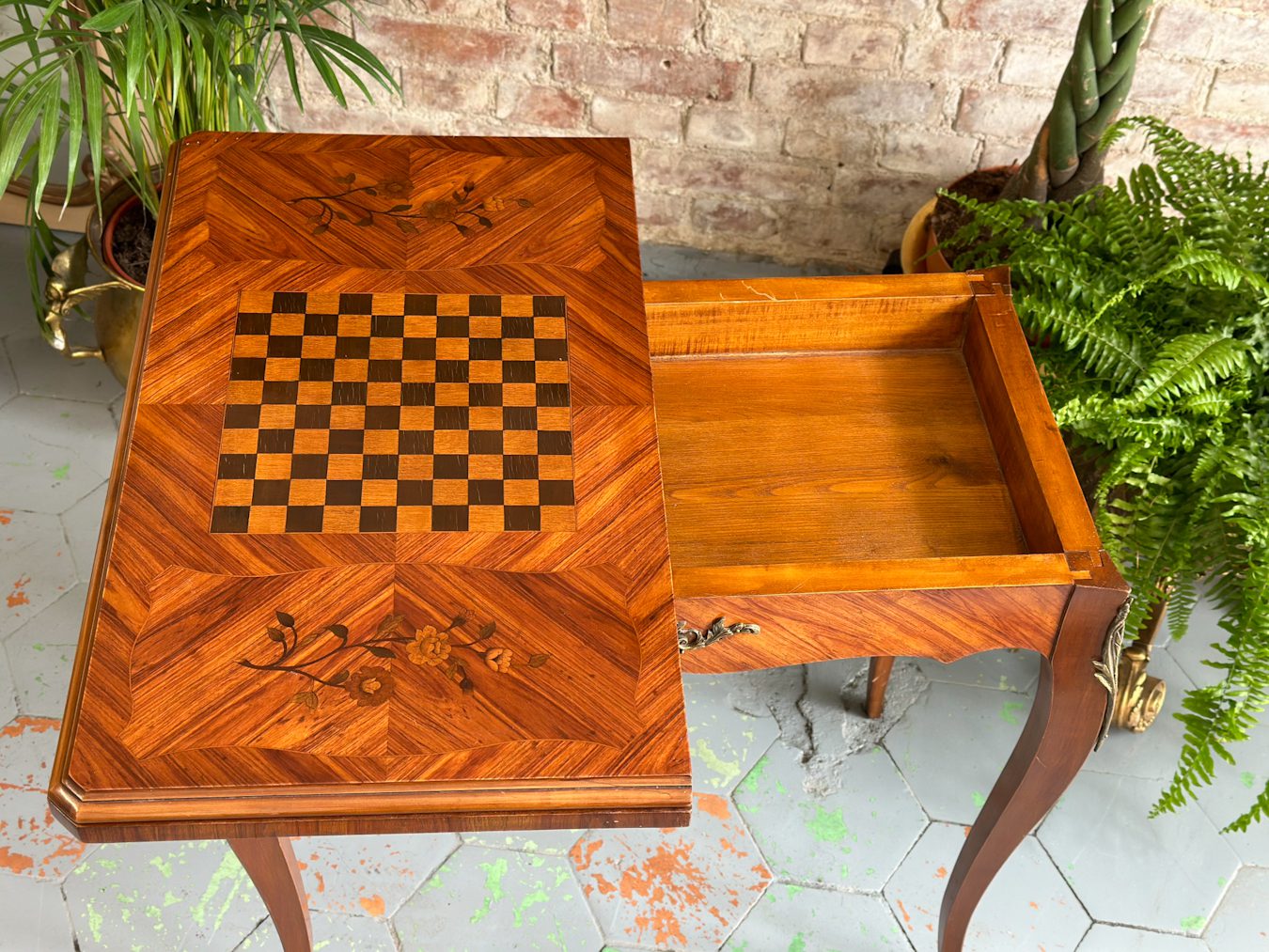
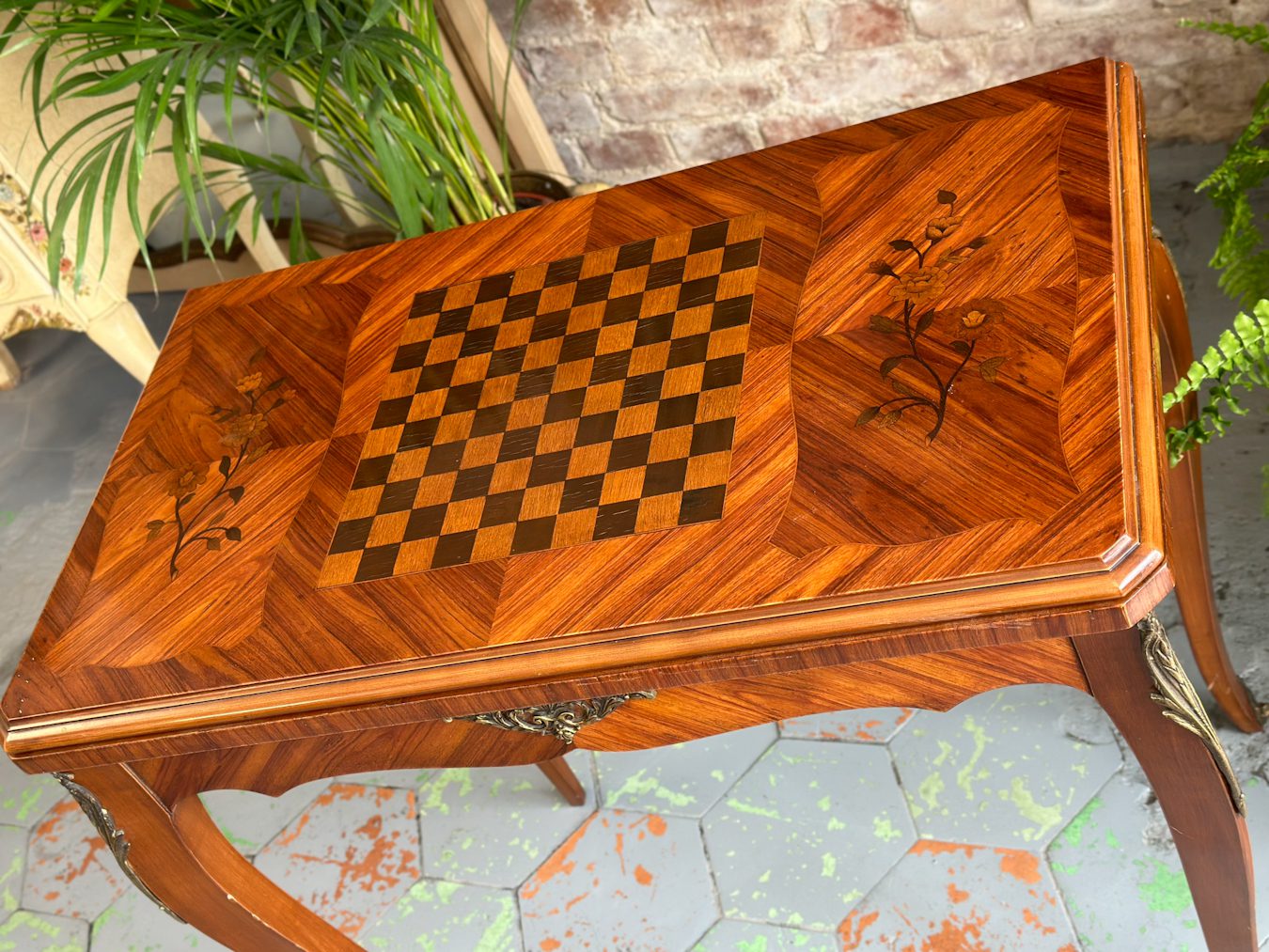
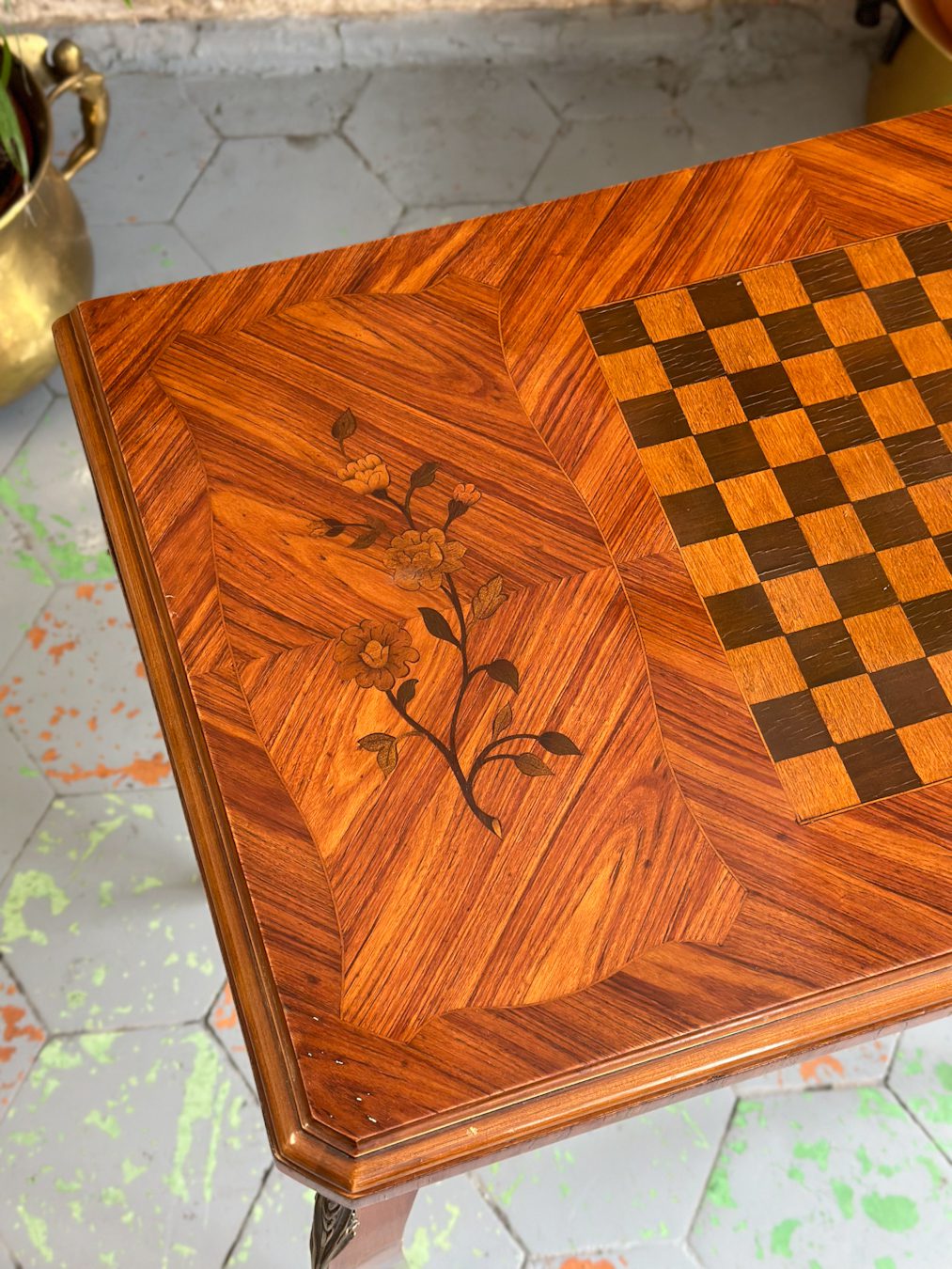
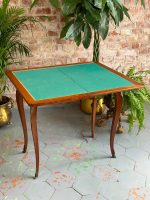
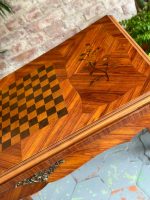
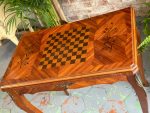
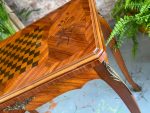
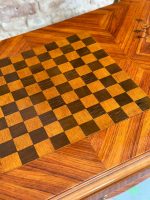
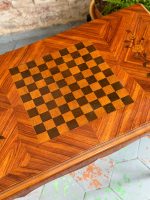
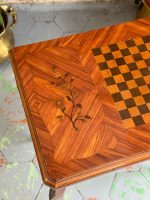
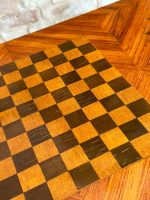
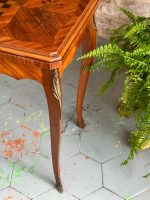
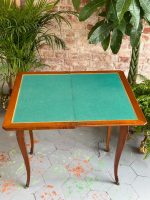
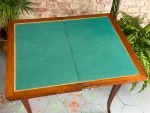
Chess Console Table with Hinged Game Surface — Louis XV, France, 19th Century (4967)
Height 74 cm Length 75.5 cm Color BronzeNaturalGreen

Description
DESCRIPTION IN
📐 Dimensions: Height 74 cm × Length 75.5 cm × Depth 43 cm. Open surface: 86 cm × 75.5 cm.
―――――――――――――――――――――
Chess Console Table with Fold-Open Gaming Surface — Louis XV Style, France, c. 1880–1900.
―――――――――――――――――――――
🏛️ PERIOD, ARTISTIC STYLE, ERA
This refined table de jeu is a distinguished example of the finest Belle Époque cabinetmaking — that luminous period from 1871 to 1914 when France stood as the undisputed centre of European decorative arts and salon culture. The piece belongs to the Louis XV Revival movement, which experienced a true renaissance in Third Republic Paris, as the haute bourgeoisie and aristocratic households filled their interiors with the sinuous forms and gilded bronze montures characteristic of this style.
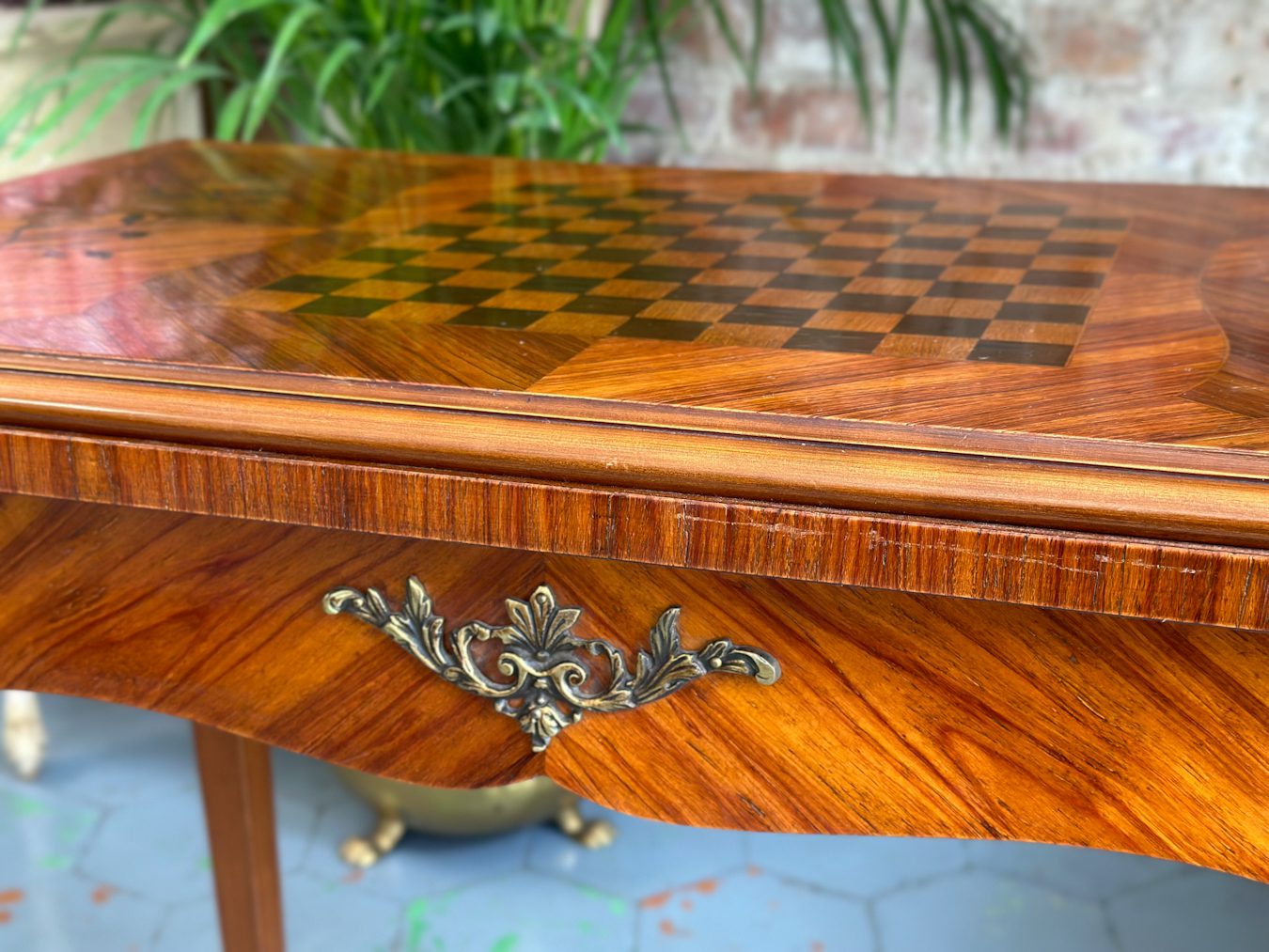
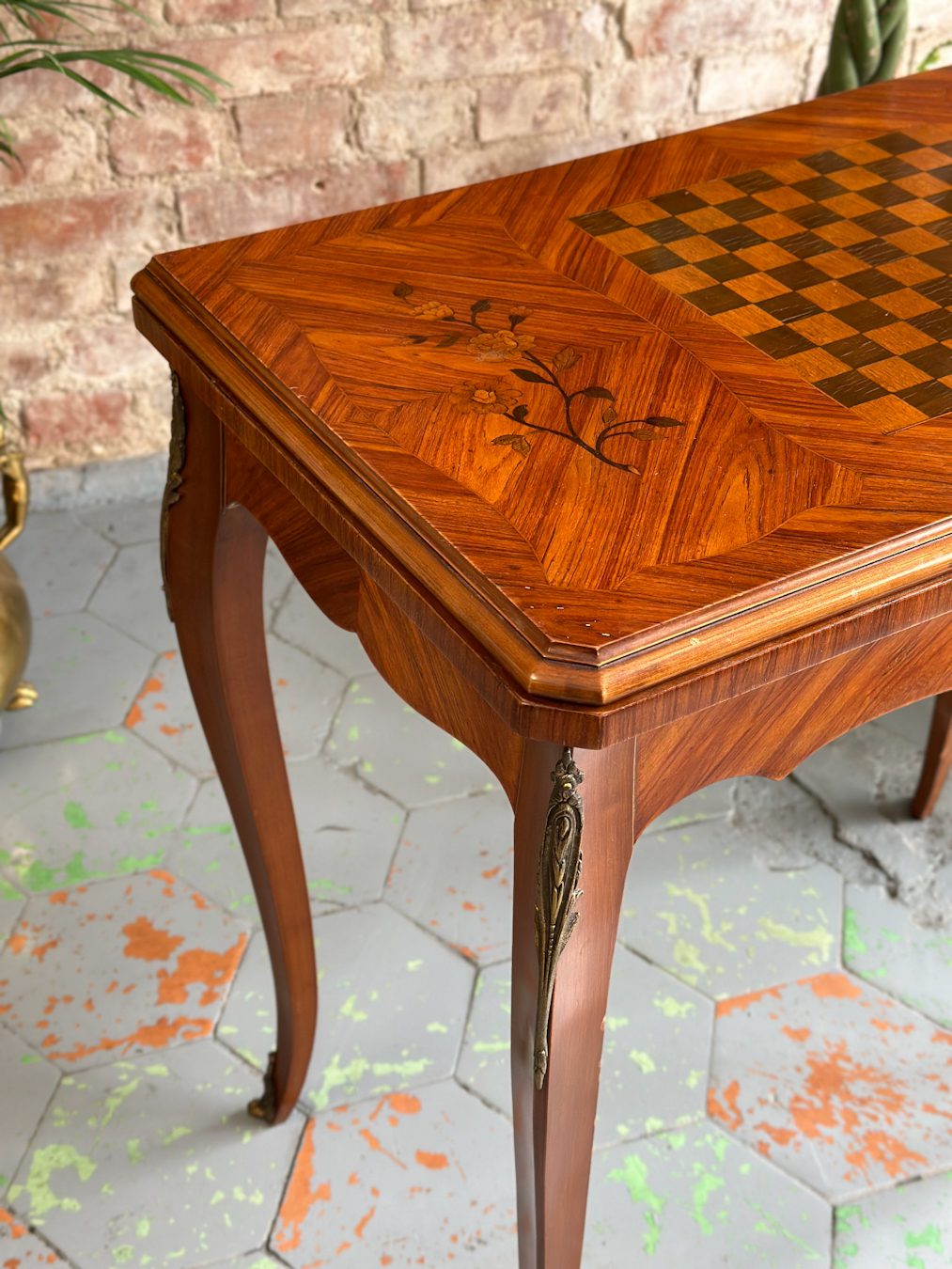
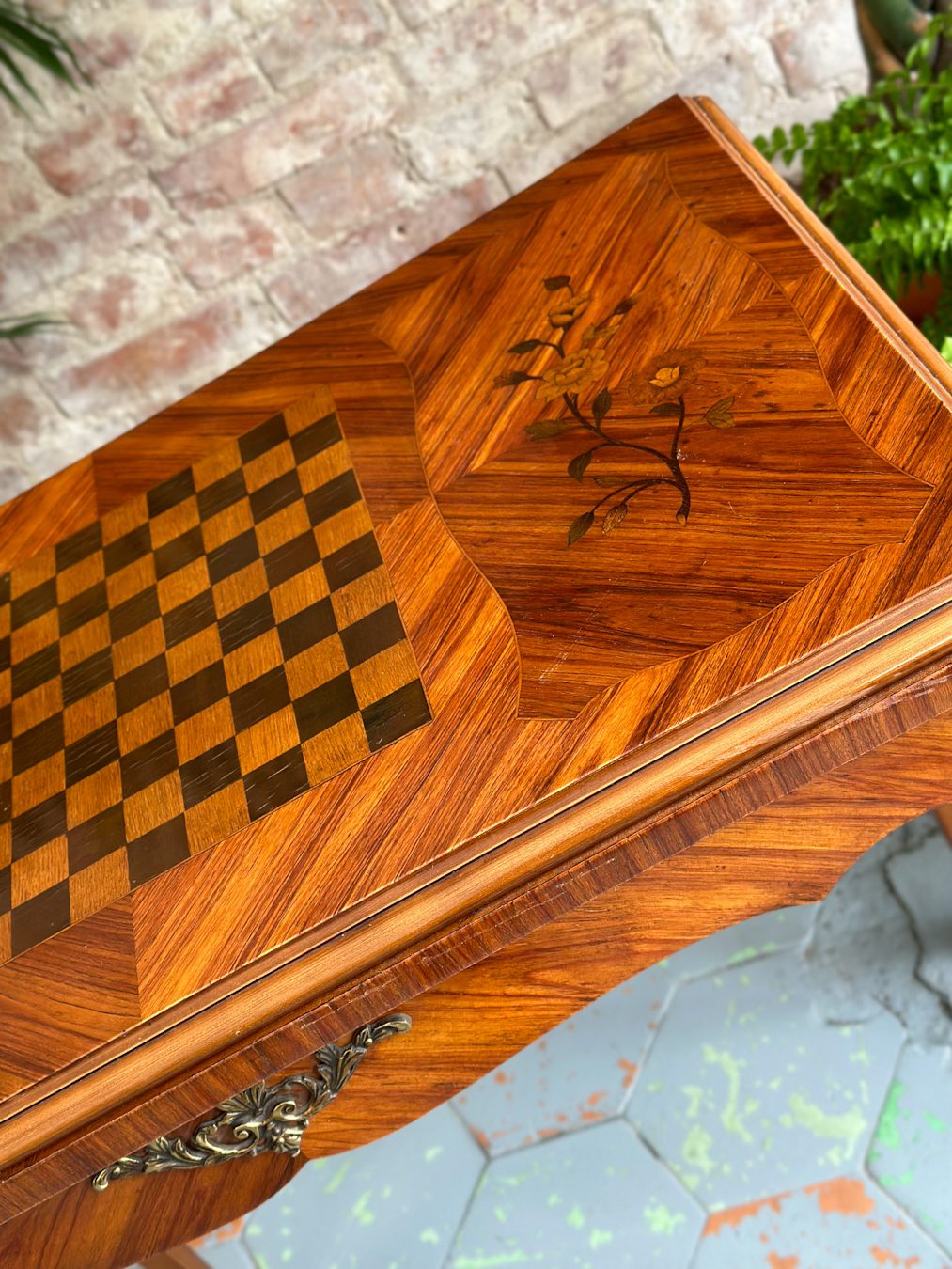
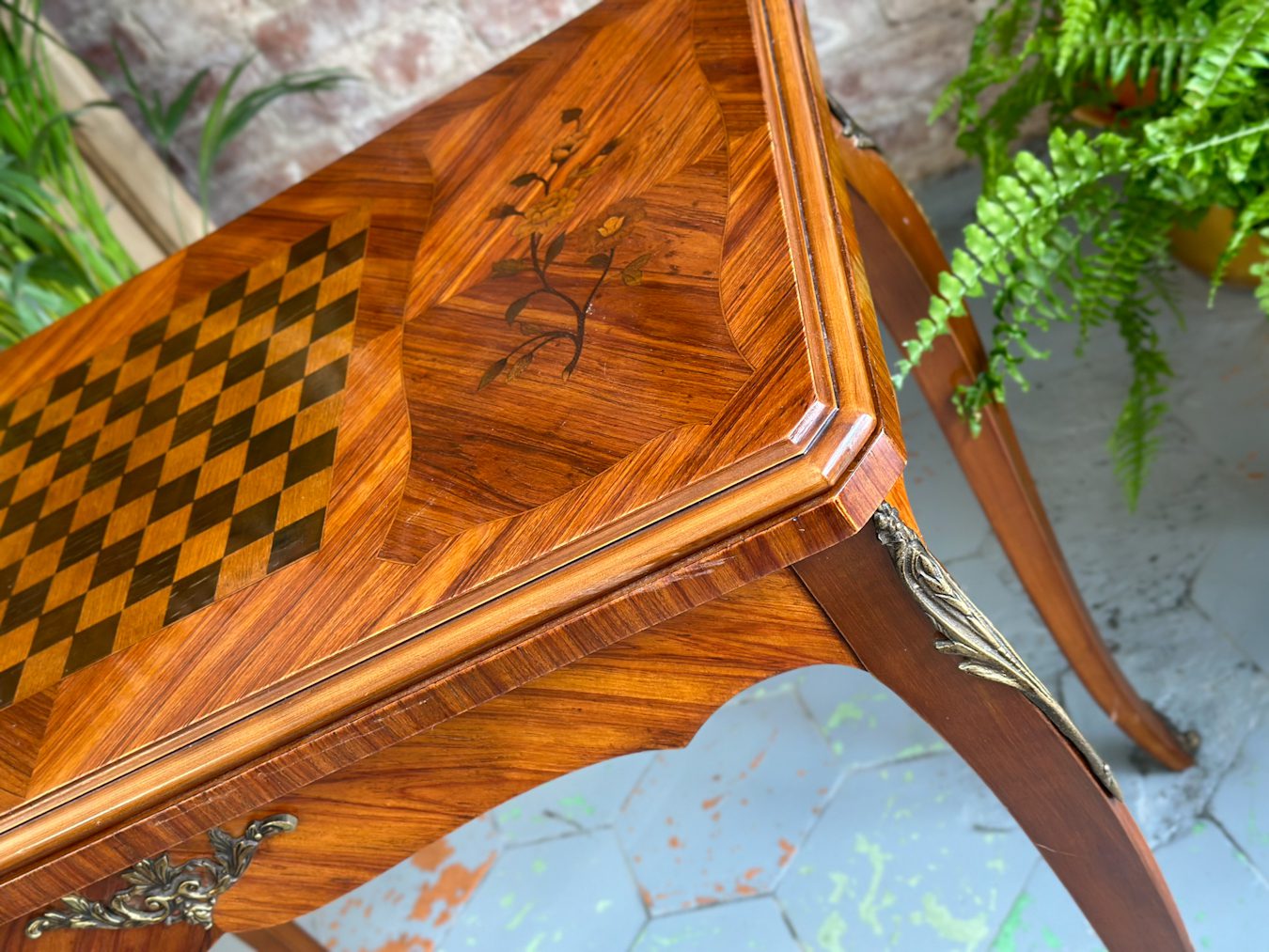
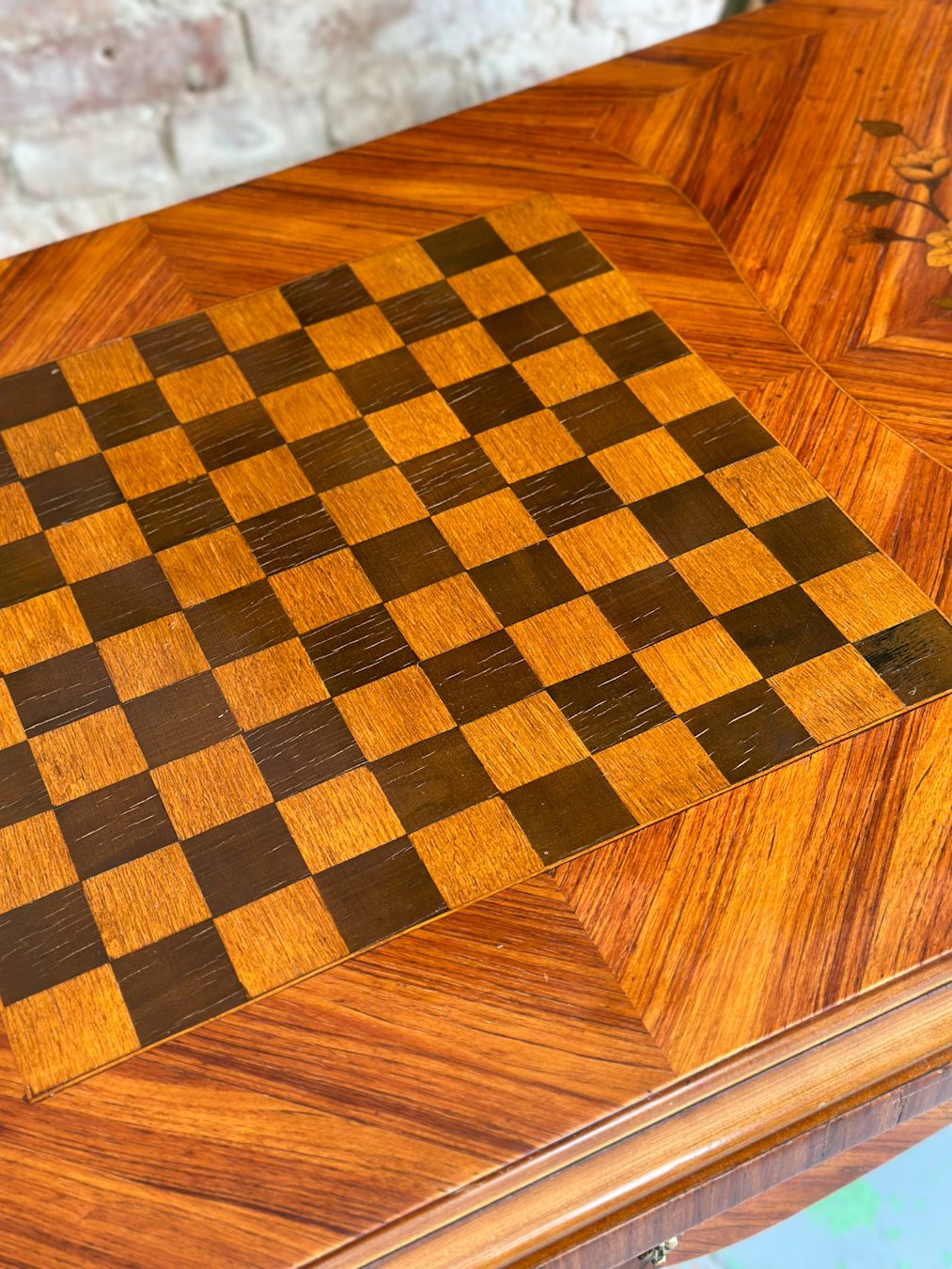
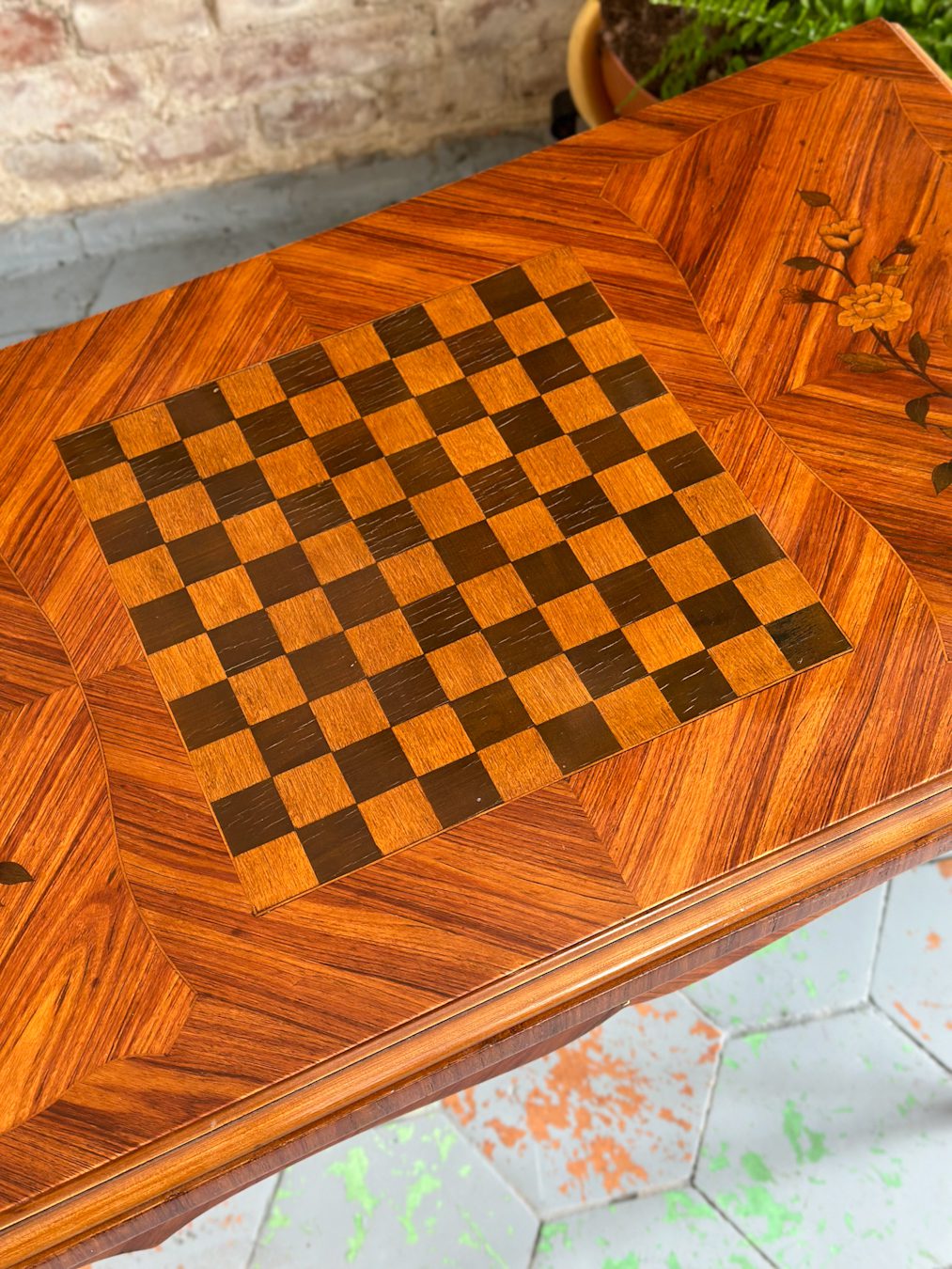
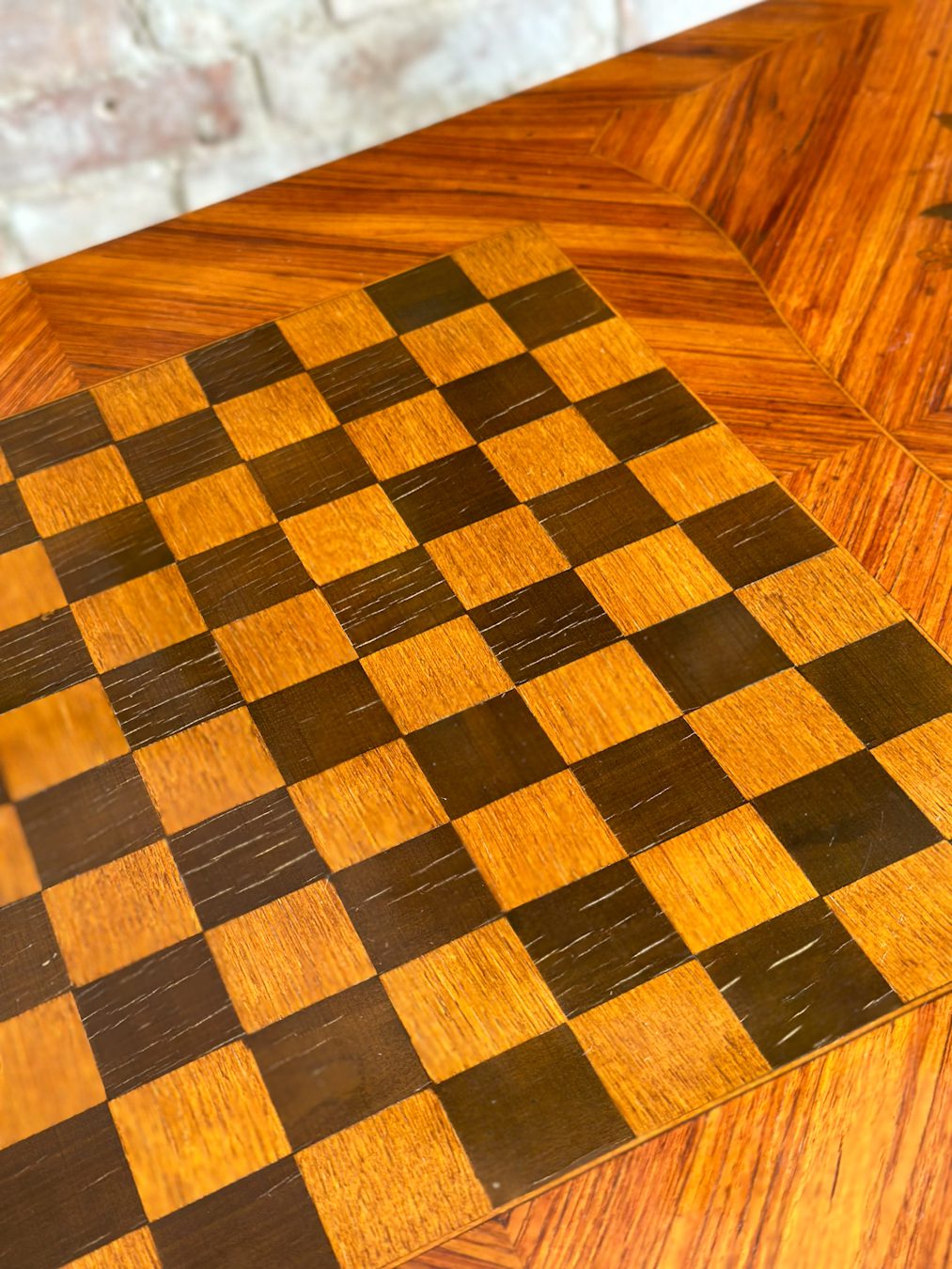
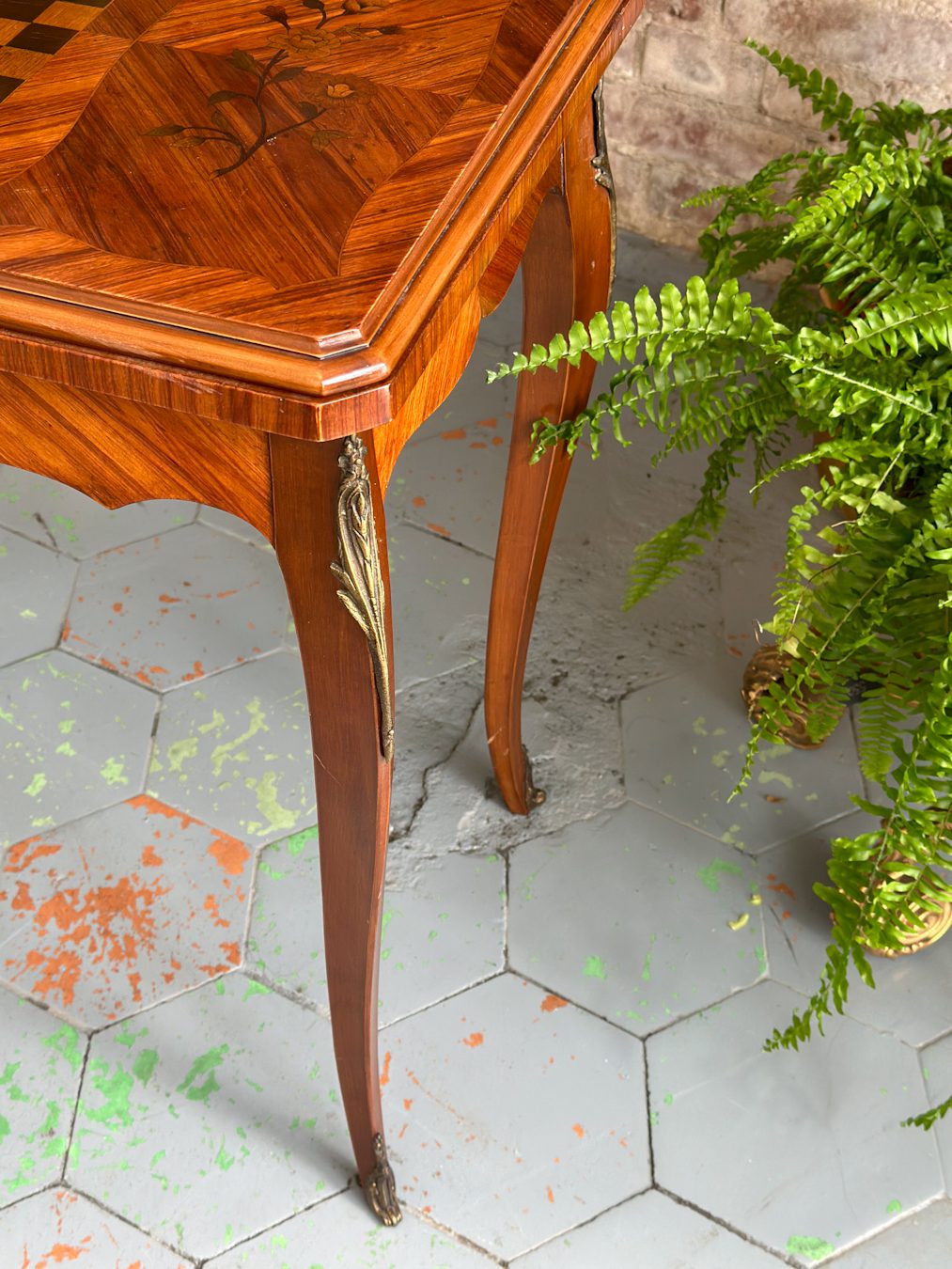
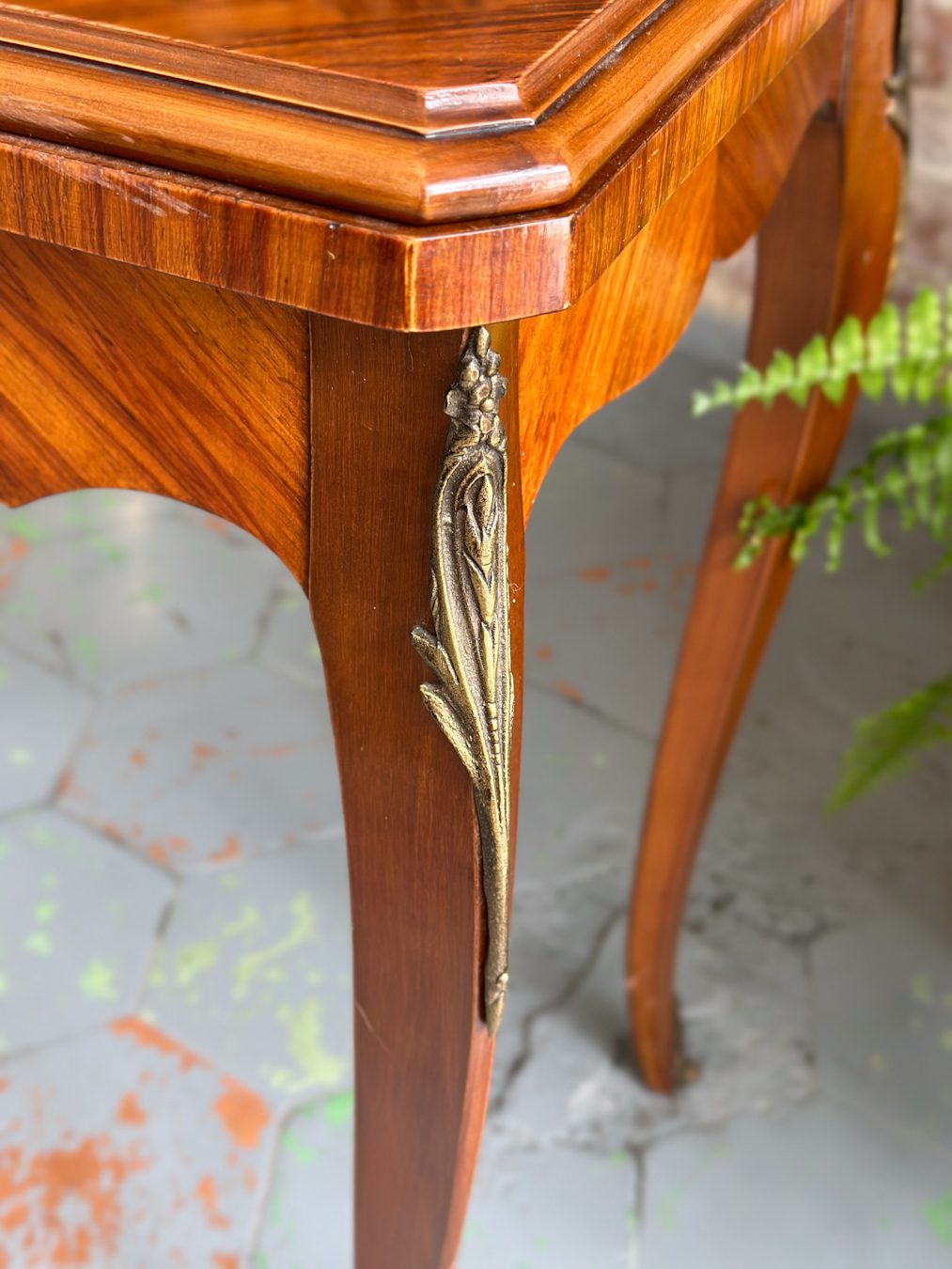
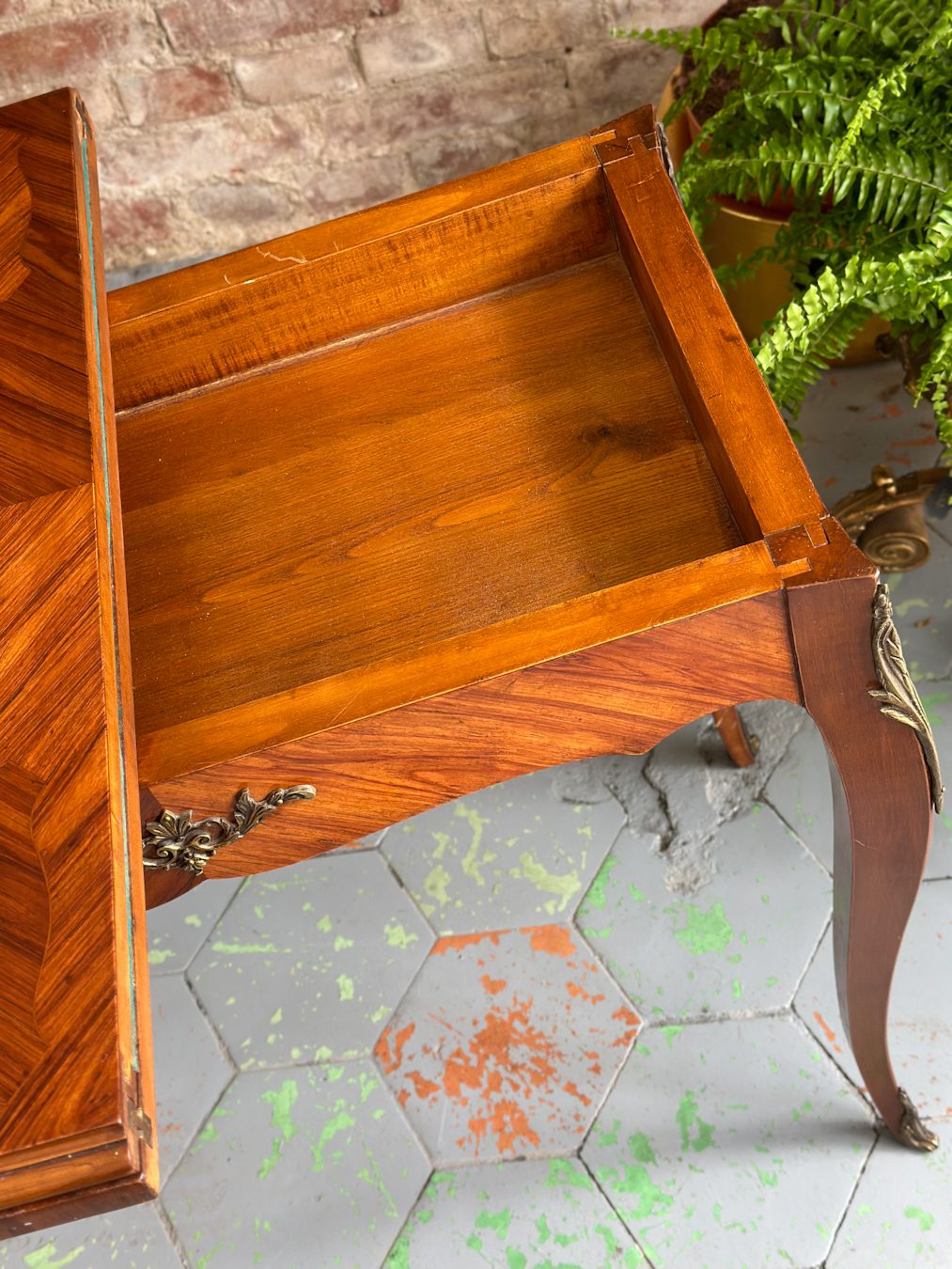
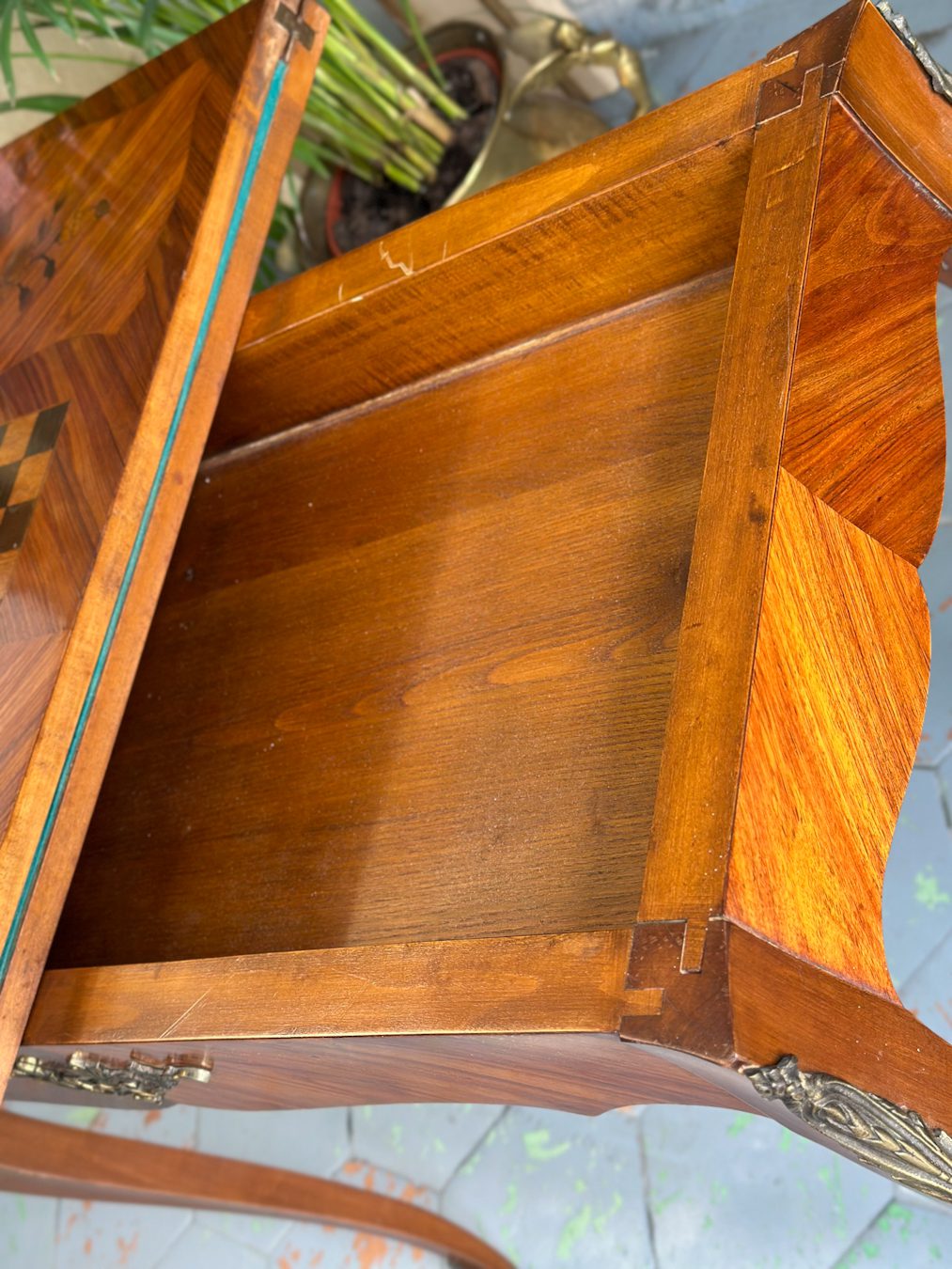
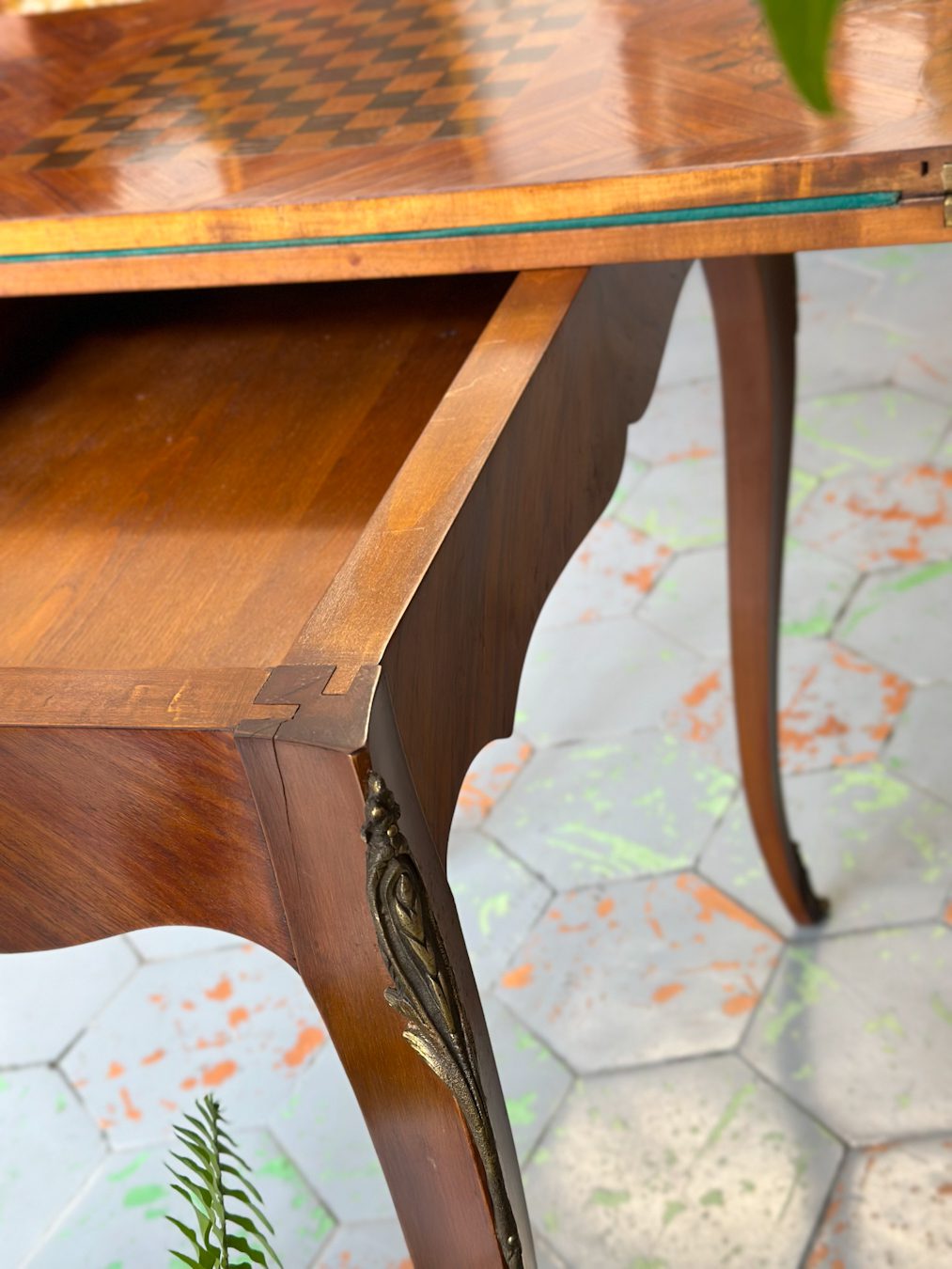
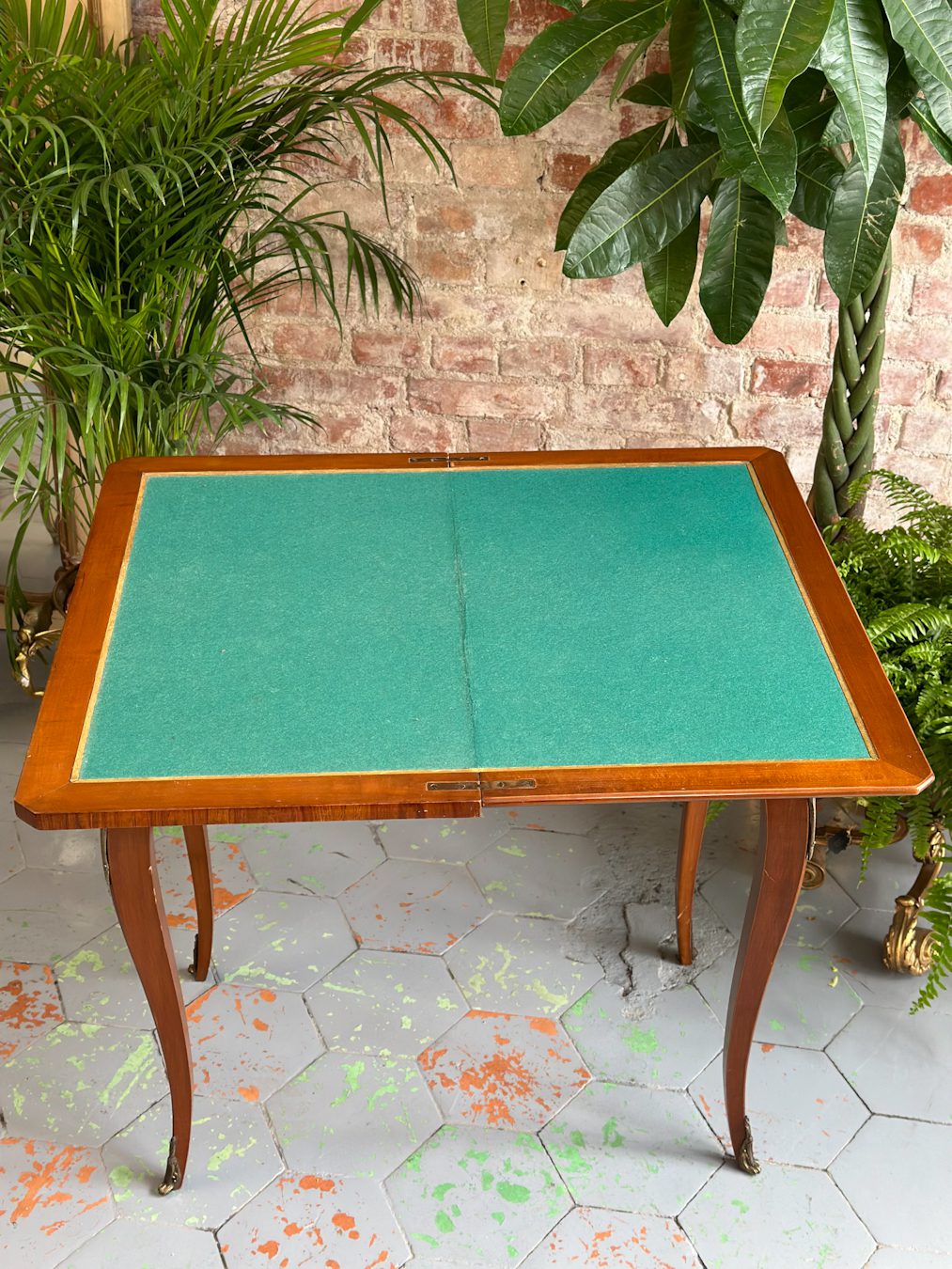
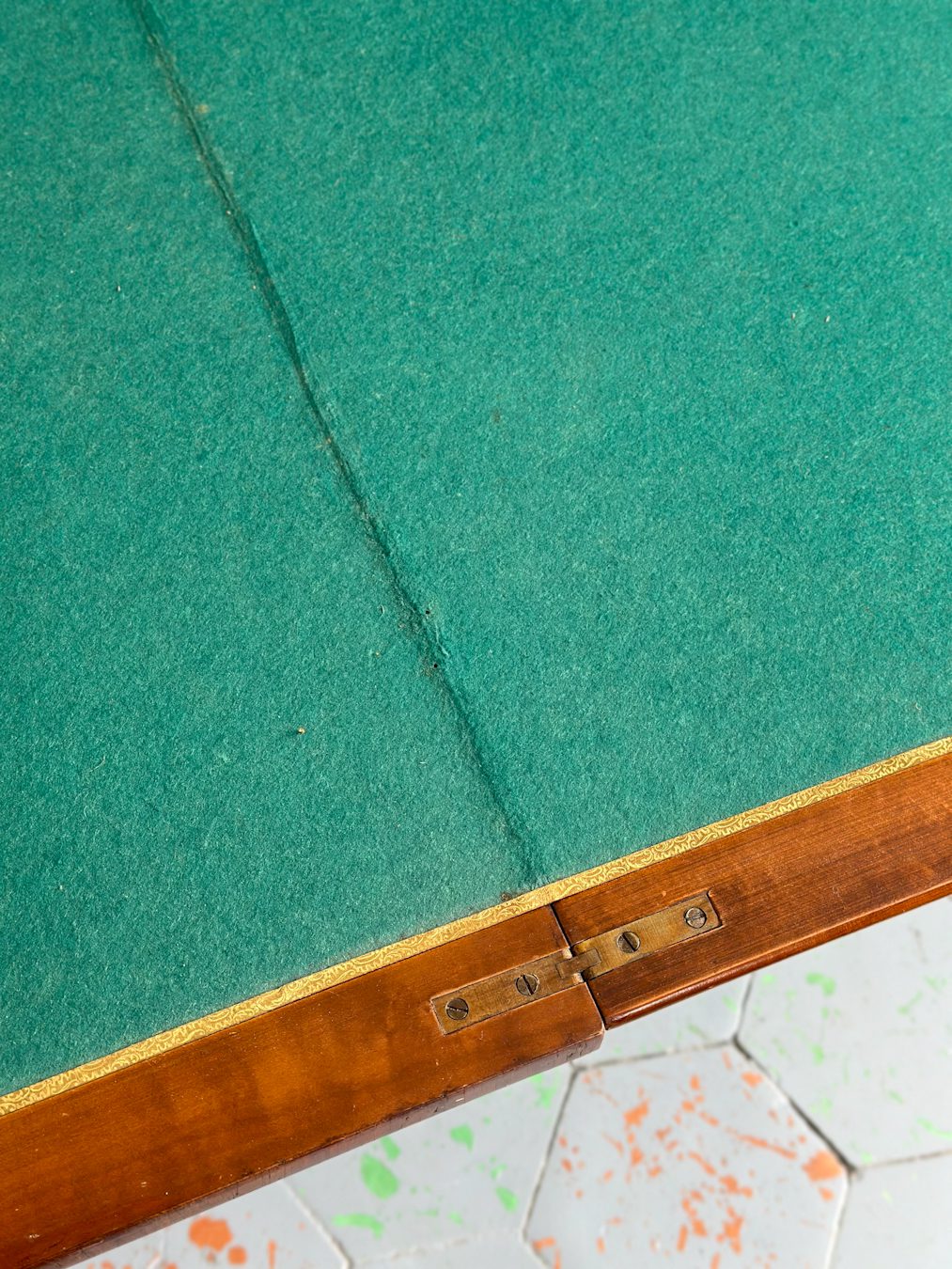
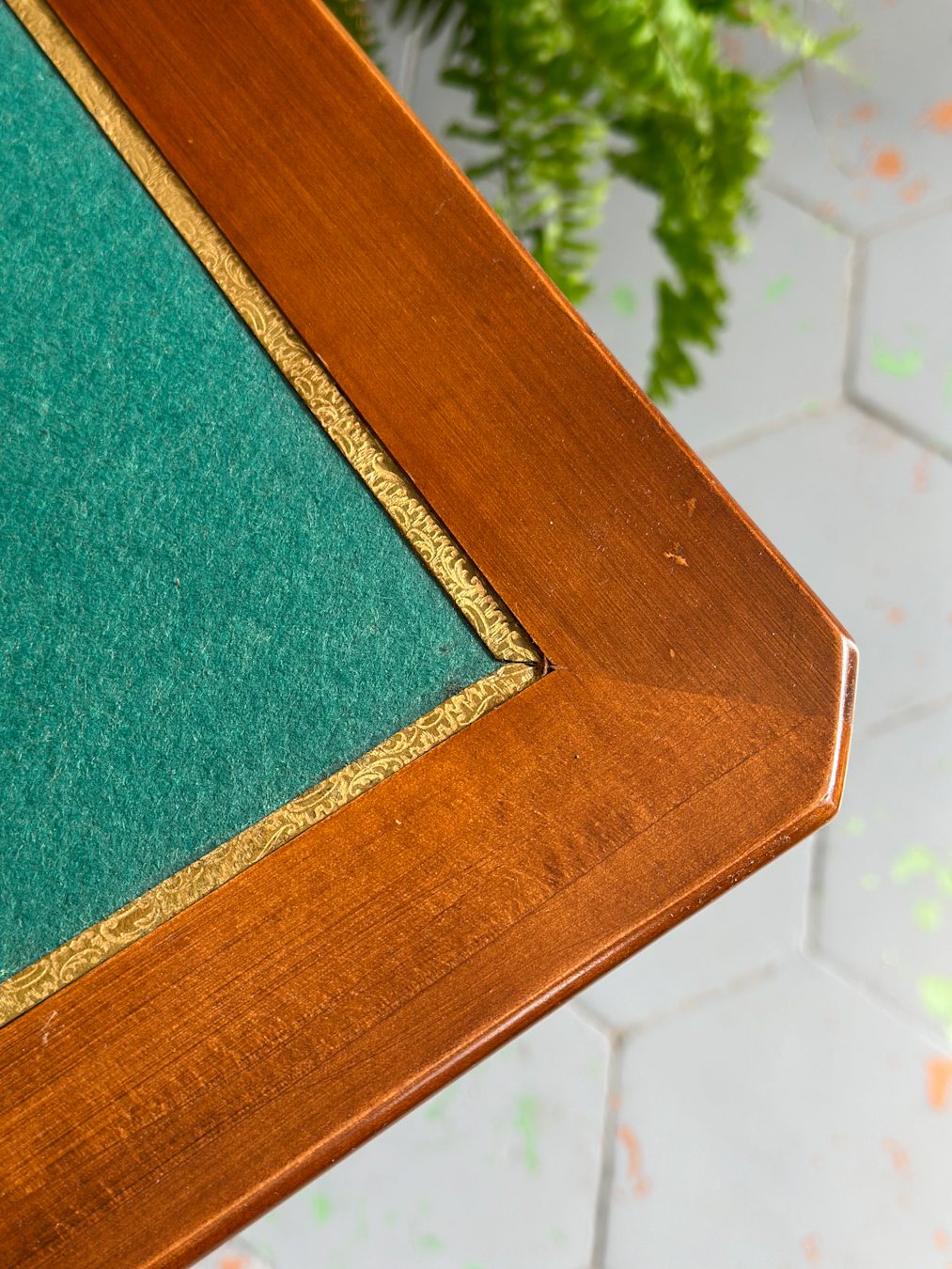
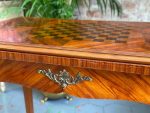
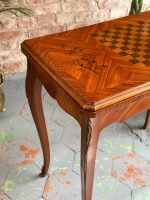
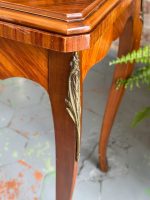
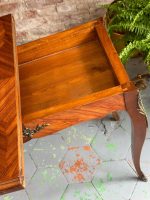
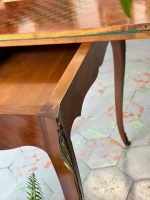
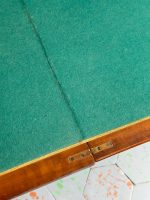
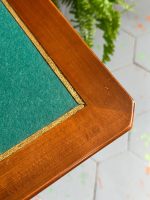
The piece is an exceptional specimen of marqueterie and parqueterie craftsmanship: the top is composed of precisely laid bois de rose (rosewood) and contrasting wood veneer panels arranged in a diagonal star pattern, at the centre of which is inlaid a full chess board (échiquier). Each corner bears delicate floral incrustations — flowering branches and buds recalling 18th-century Rococo marqueterie masterpieces. The curved tablier is fitted with gilded bronze sabots on cabriole legs and a decorative bronze applique on the front apron. Opened, the surface reveals a green tapis vert — the classic gaming table baize known from Versailles to London’s finest clubs.
✨ Belle Époque snapshot: In 1880s Paris, chess matches in private salons were far more than a pastime — they were a social ritual. It was in precisely this era that Wilhelm Steinitz, the world’s first official chess champion, was living and playing in Paris, and the city’s salons and cafés became the stage where this ancient intellectual game met the elegance of salon life at its height. At a table such as this, a duchess and a philosopher might have sat across from one another — and both would have found it entirely natural.
―――――――――――――――――――――
⚜️ MAKER AND MARK
No specific maker’s mark or label has been identified on this piece. However, the quality of the marqueterie — particularly the precision of the chess board inlay, the symmetry of the diagonal veneer pattern, and the refinement of the floral incrustations — points clearly to a high-calibre Parisian or Paris-region ébénisterie workshop. Such tables de jeu were produced in the second half of the 19th century by makers including Henri Dasson, Paul Sormani, and numerous smaller but equally skilled Parisian workshops supplying the salon apartment market. The quality of the bronze appliques and sabots is consistent with the highest tier of manière e cabinetmaking.
―――――――――――――――――――――
💎 RARITY AND SIGNIFICANCE
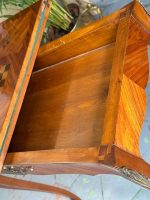
Tables de jeu combining an inlaid marqueterie chess board, a green baize reverse, and a functioning drawer are exceptionally rare on the antique market. Most surviving examples serve either as gaming tables or as console tables — pieces uniting both functions in a single object represent a special category sought by collectors. This example stands out for the preservation of its marqueterie, the integrity of its bronze mounts, and the working condition of its opening mechanism. Louis XV style tables de jeu of this quality regularly appear at the major auction houses — Christie’s, Sotheby’s and Drouot — where they attract strong collector interest.
―――――――――――――――――――――
🕯️ USE IN INTERIORS, DESIGN AND PHOTOGRAPHY
Closed, the table functions as an elegant side or console table — perfectly suited to a drawing room corner, the centre of a study, or beside a bed. Open, it becomes a fully operational gaming table for four players. The marqueterie surface with its rosewood lustre creates a warm, regal atmosphere in any classical or eclectic interior. Interior designers frequently use pieces of this character as a focal accent in Louis XV, Rococo Revival or maximalist spaces. For photographers and stylists, the table provides exceptional visual richness — its marqueterie pattern and bronze details photograph beautifully even in close-up detail shots.
―――――――――――――――――――――
🎁 AS A GIFT
A chess table of this quality speaks without words — it is a gift for a person who values both intellect and beauty in equal measure. Suitable as a distinguished corporate or diplomatic gift, and equally compelling as a personal offering to a chess enthusiast, an interior collector, or anyone who appreciates the aesthetic of the Belle Époque salon. The table unites two worlds — art object and functional furniture — making it a gift with an enduring presence in daily life.
―――――――――――――――――――――
🔍 CONDITION
The table is in good overall condition for its age. The marqueterie surface is well preserved with natural signs of use — light surface scratches that only affirm the piece’s authenticity. The chess board veneer elements are intact. The green tapis vert on the fold-open surface is worn and partially damaged in places — this is the only element that may benefit from replacement. The bronze appliques and sabots retain a handsome natural patina. The drawer is functional. The opening mechanism operates correctly.
Condition is fully reflected in the photographs.
―――――――――――――――――――――