Artistic antique-style coffee table with oriental motifs A refined and visually light piece, a synergy of Far Eastern and European aesthetics, created under the influence of the opulent and eclectic Japonisme style (brass twig glass coffee table). The table’s main…
You’re now subscribed to price tracking for this product. We’ll notify you if the price drops. 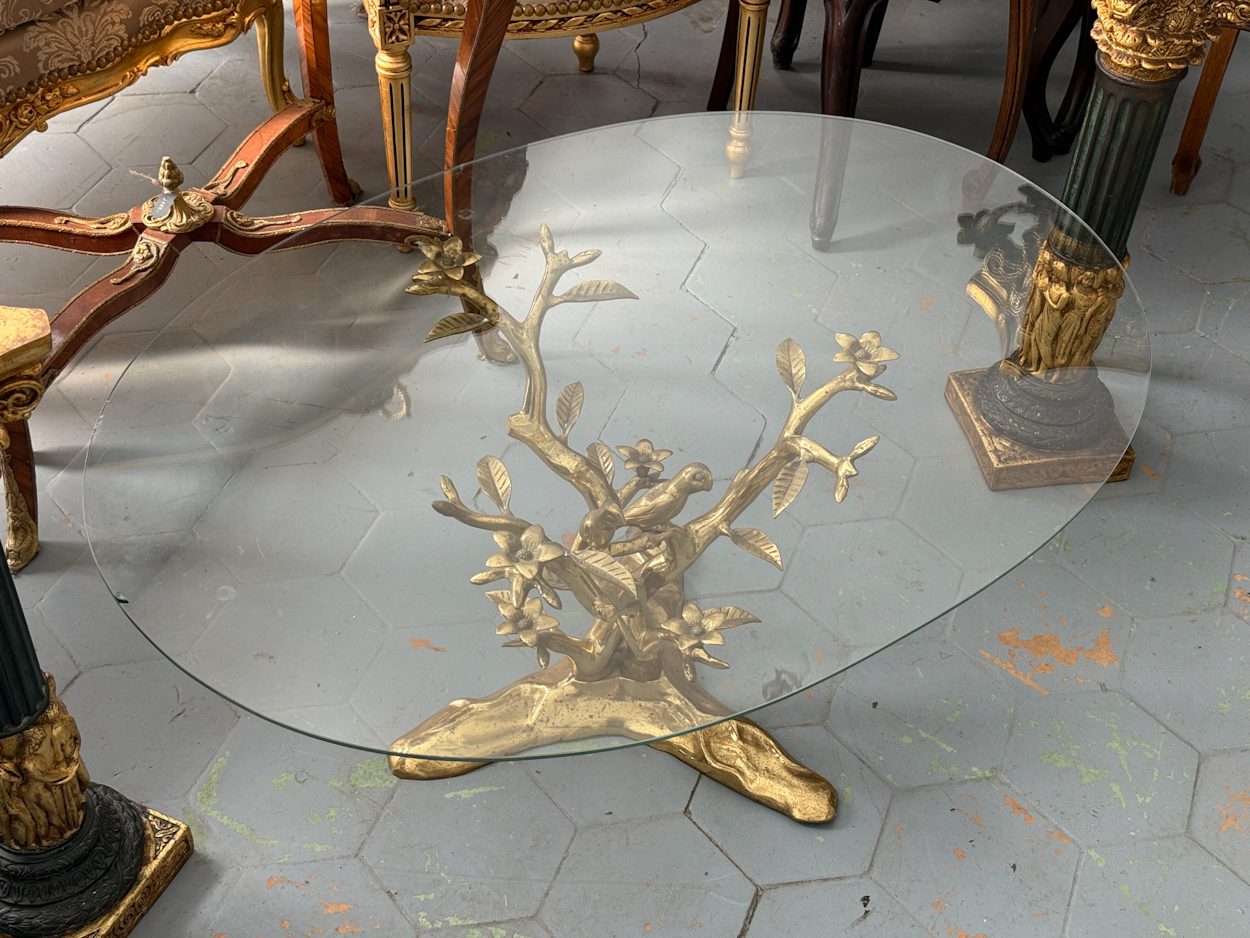
Japanese style coffee table, brass base with birds and floral motifs, glass top (6366)
Description
Artistic antique-style coffee table with oriental motifs
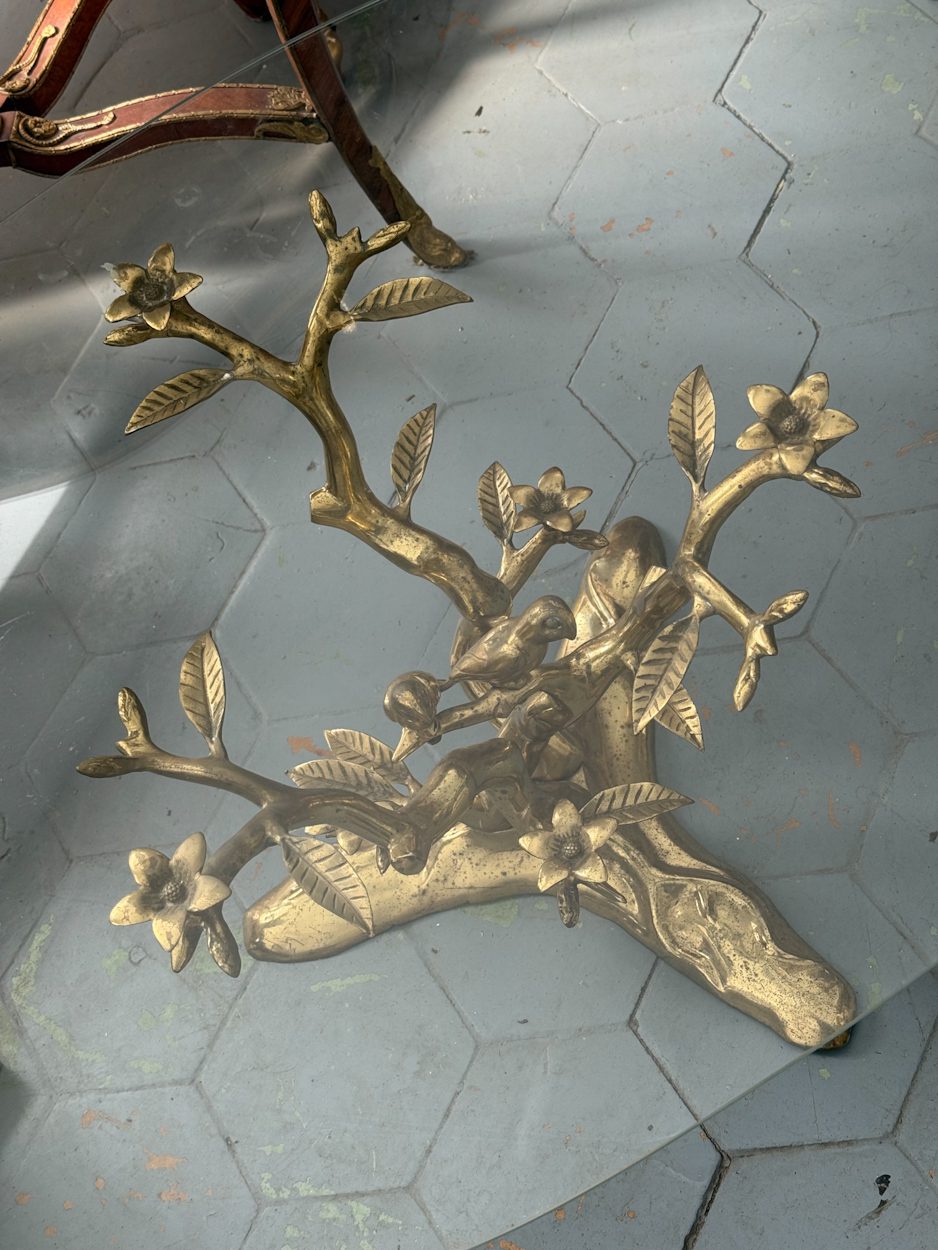
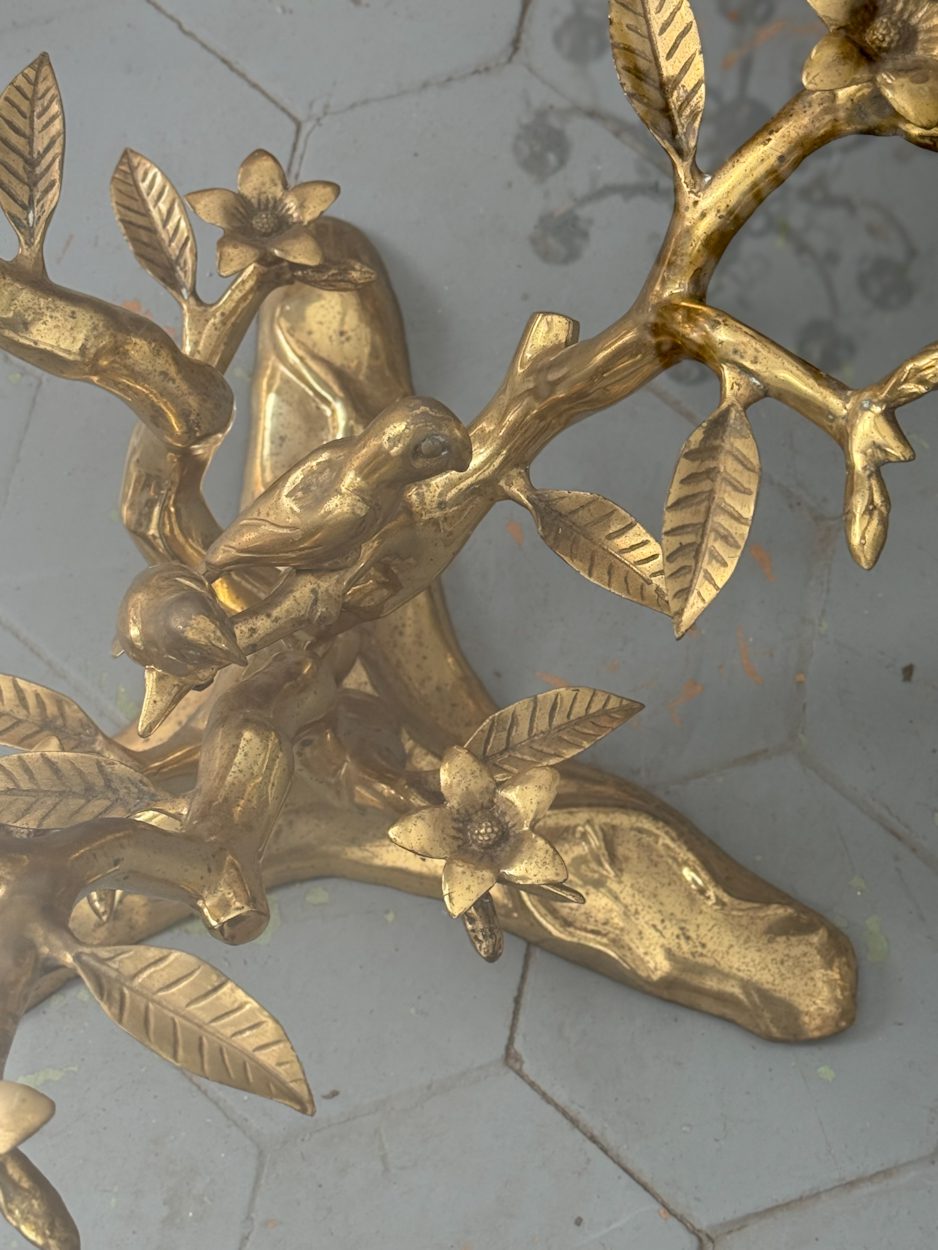
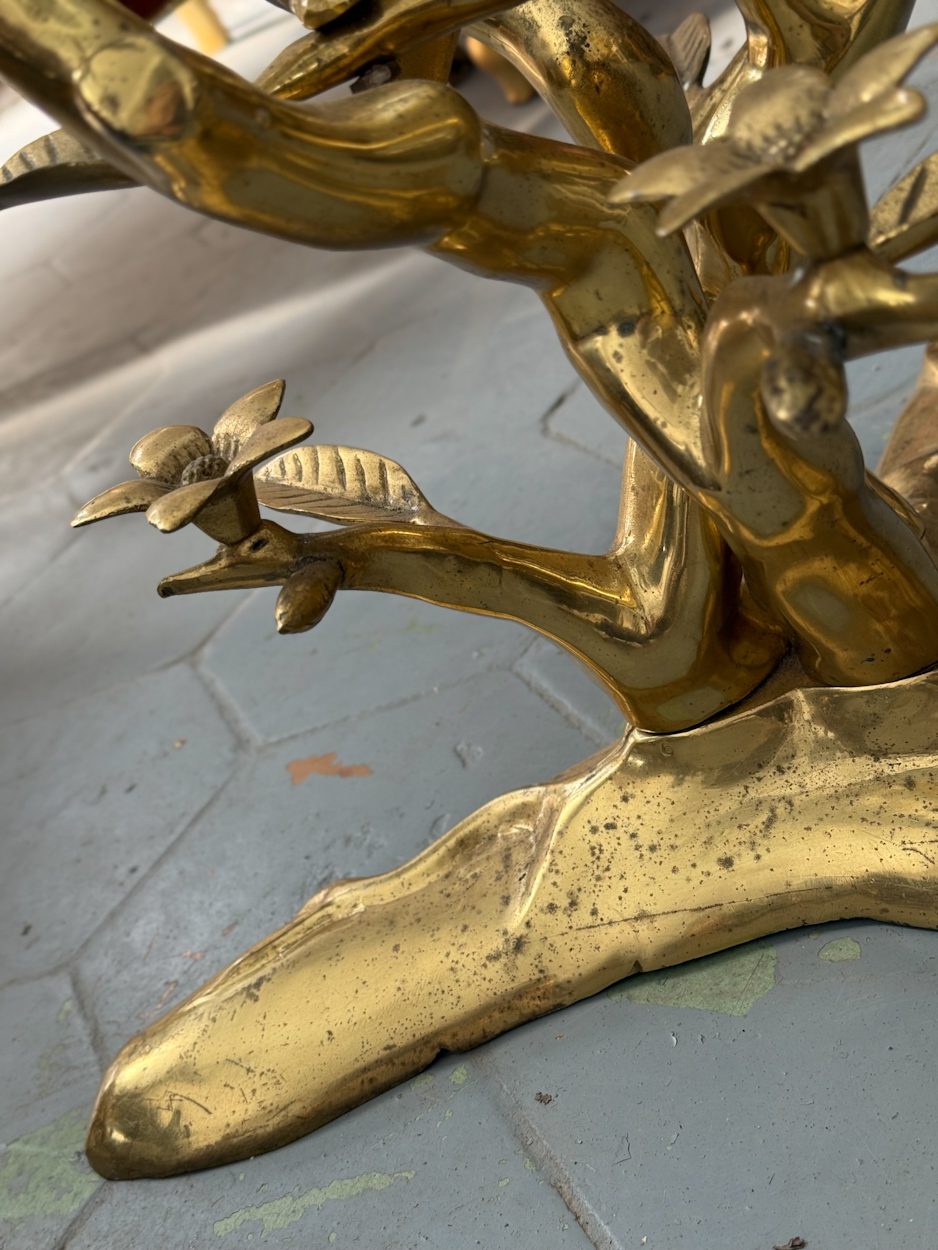
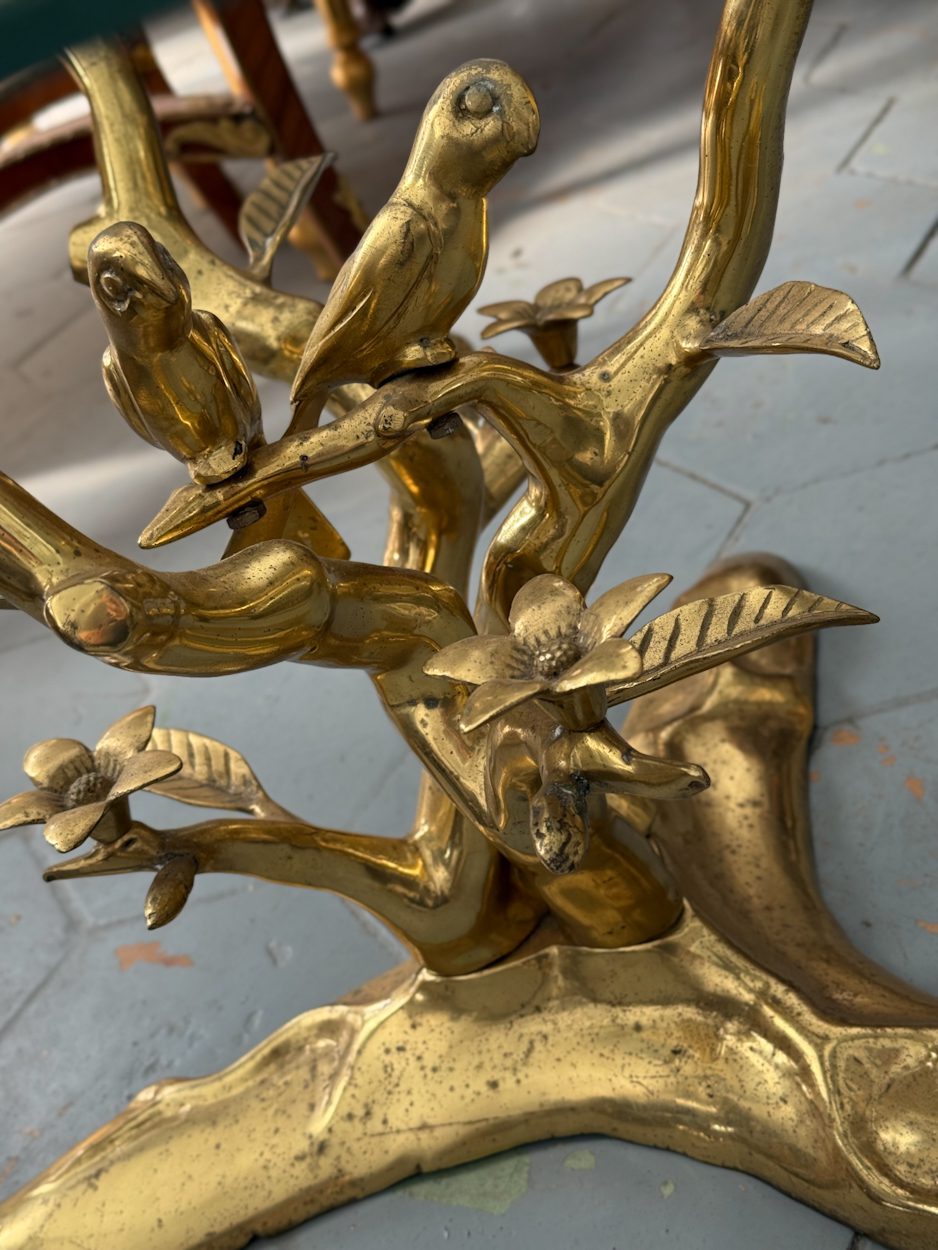
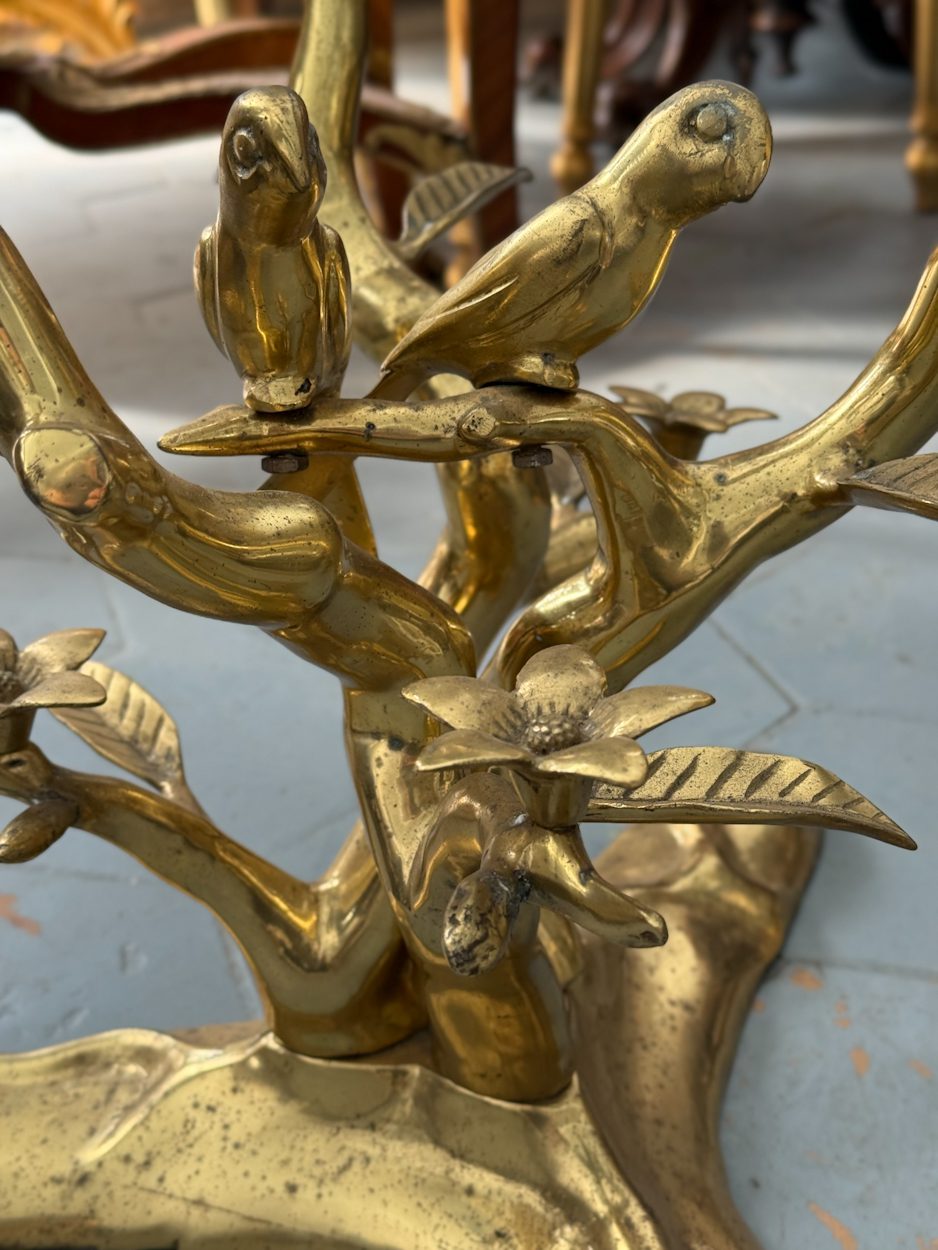
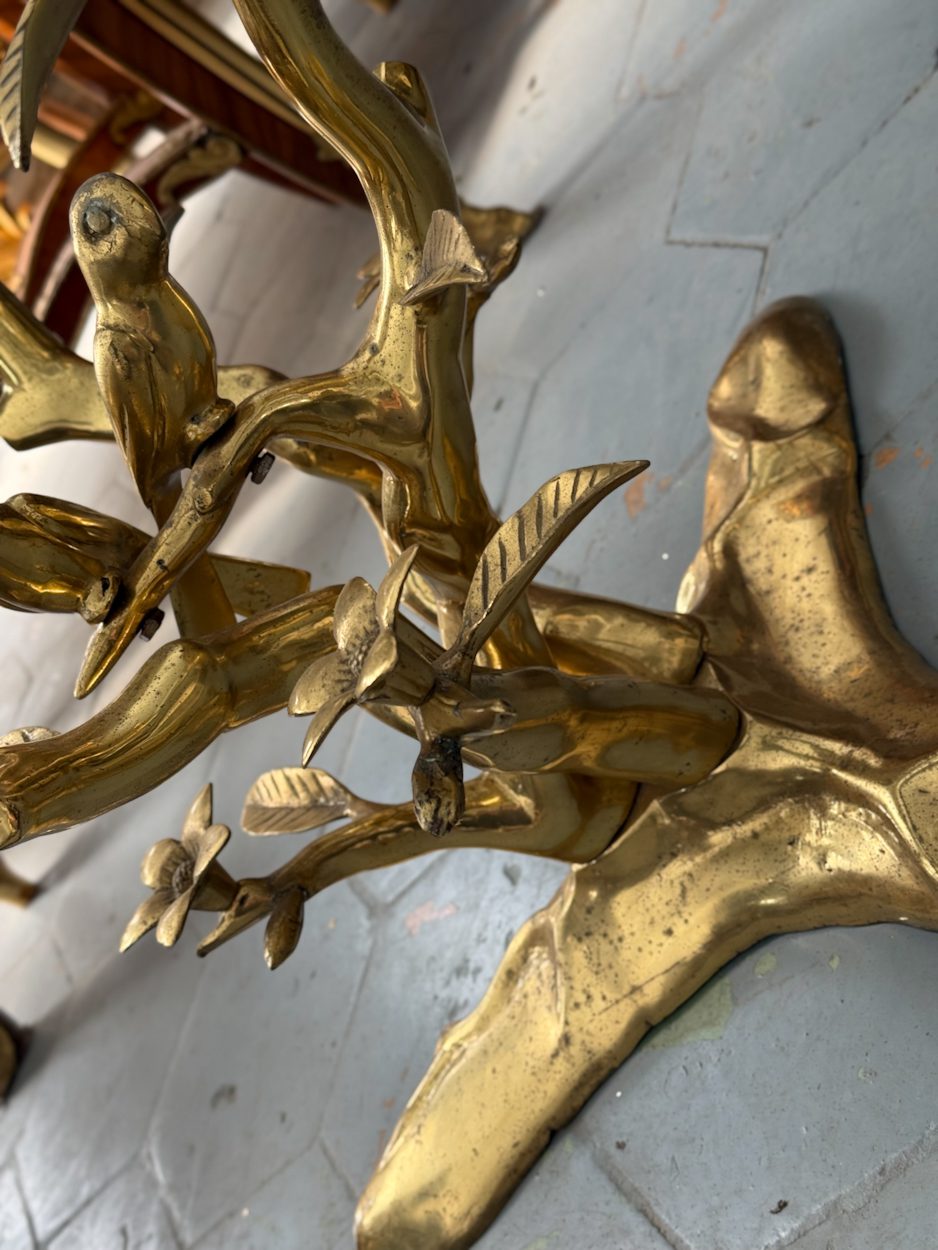
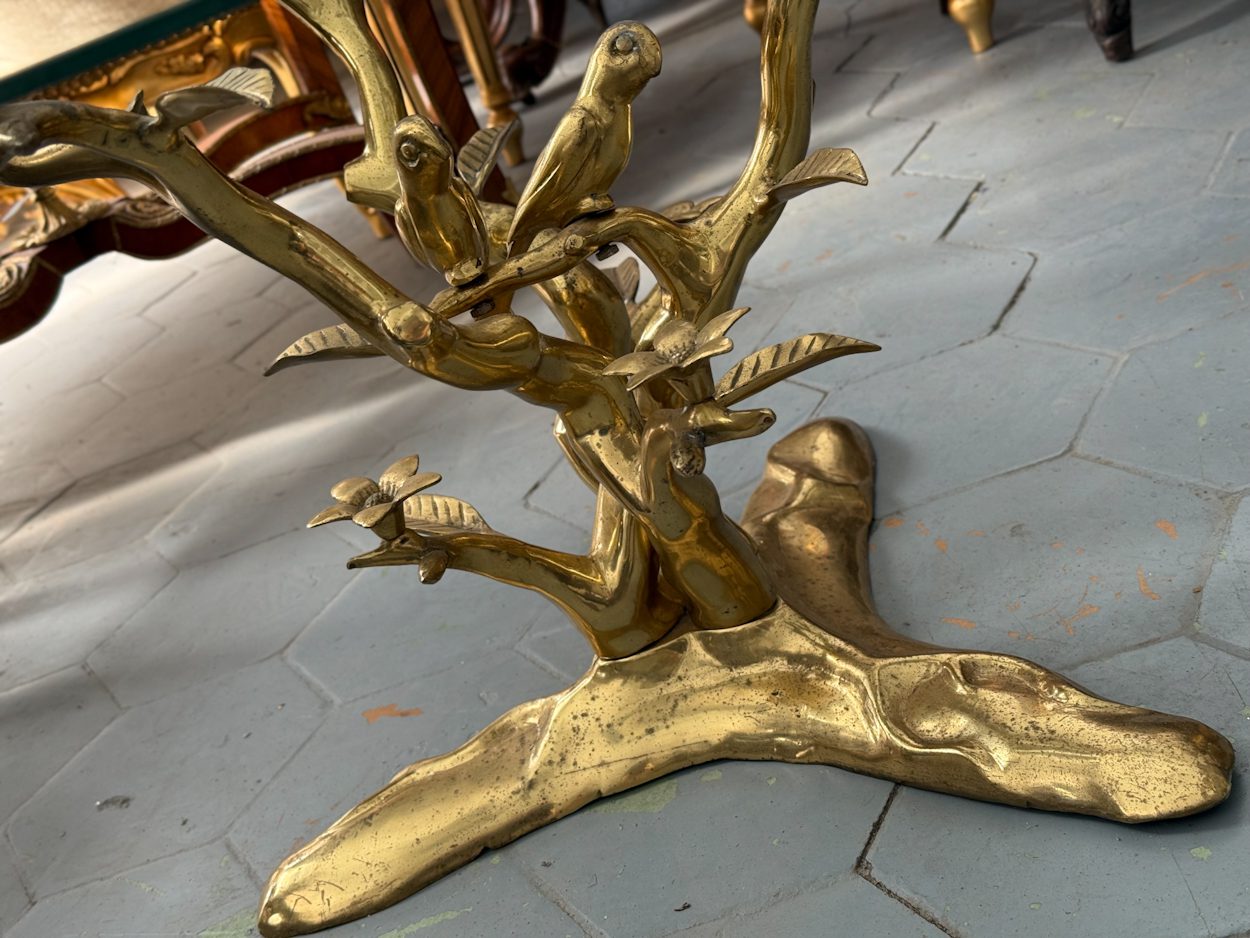
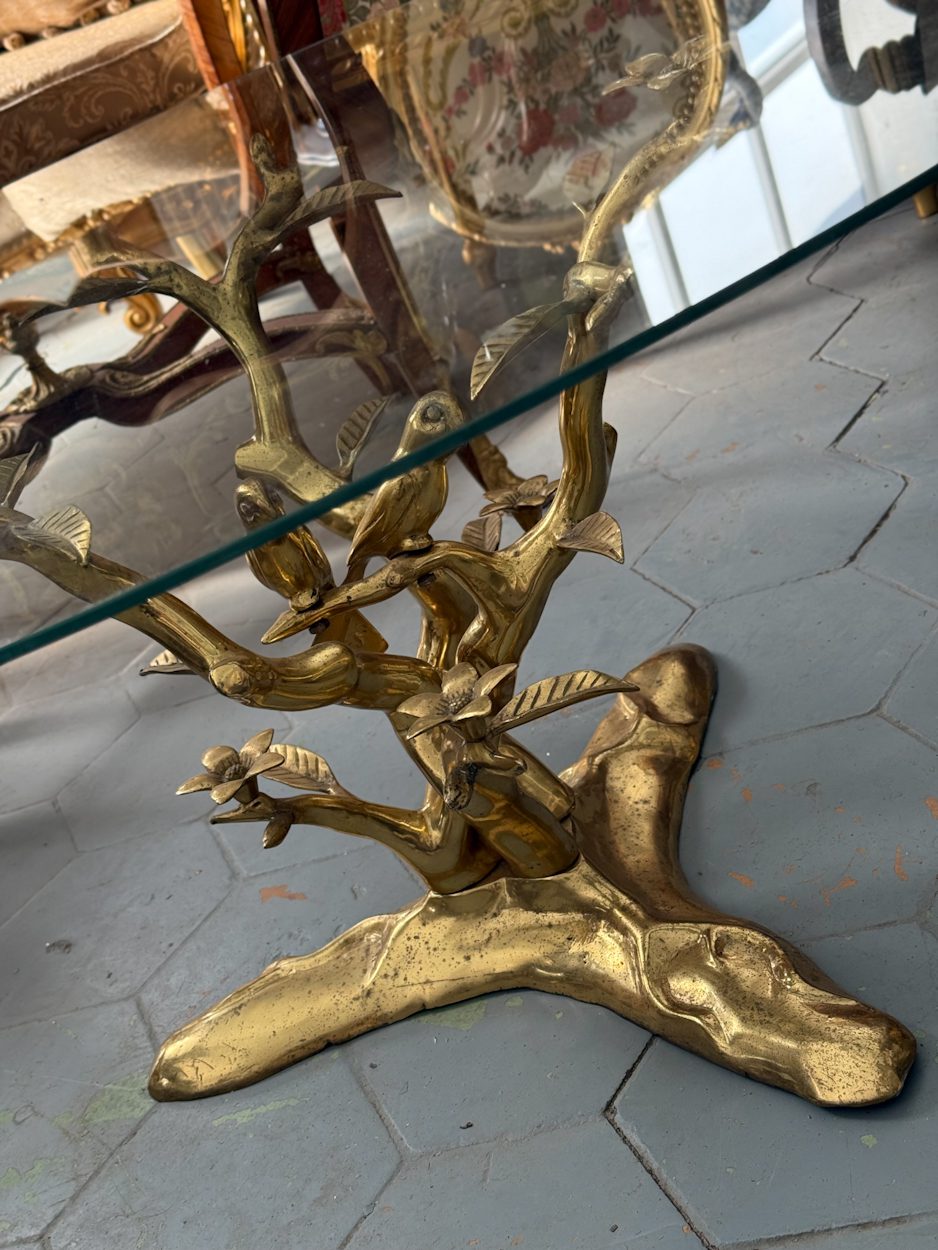
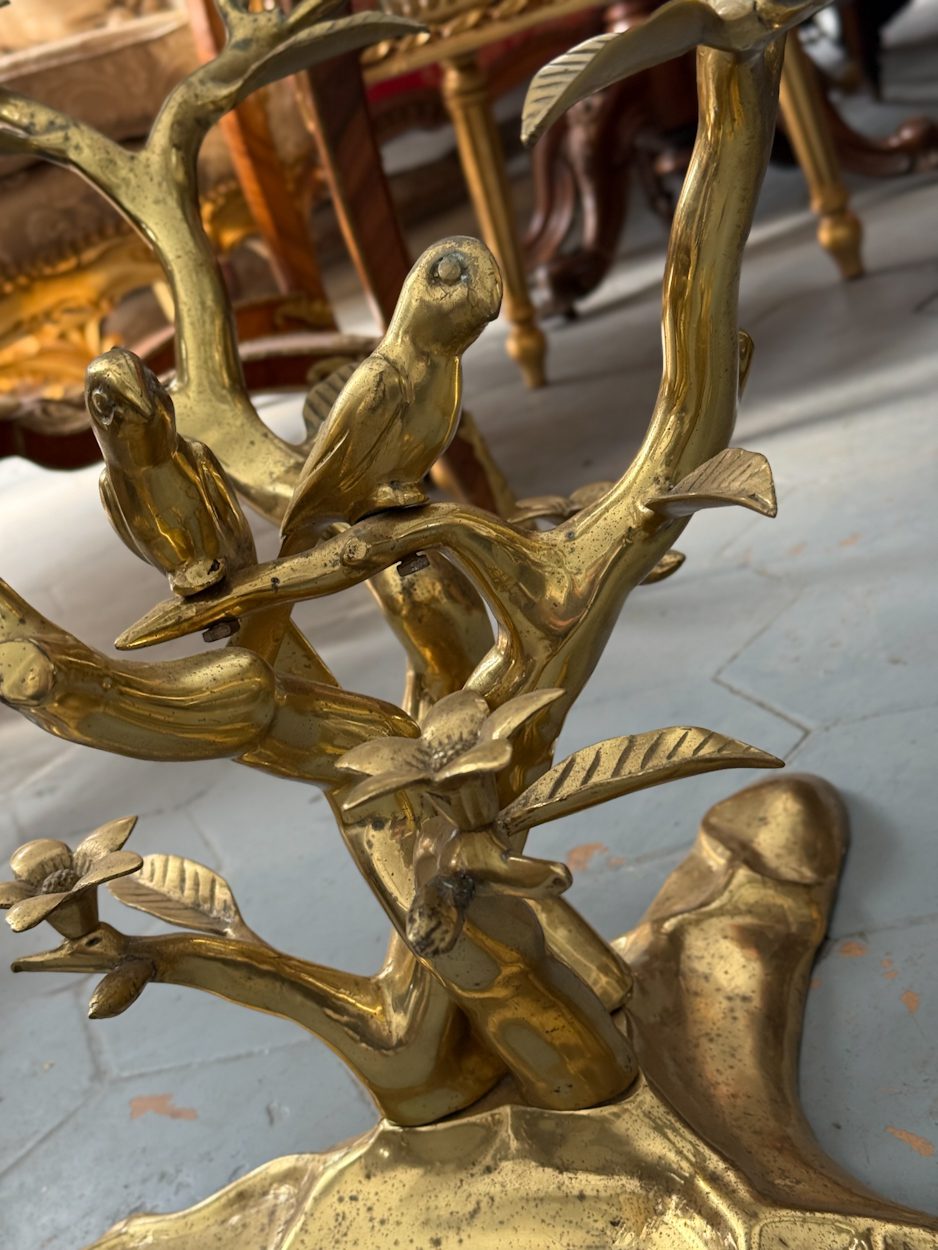
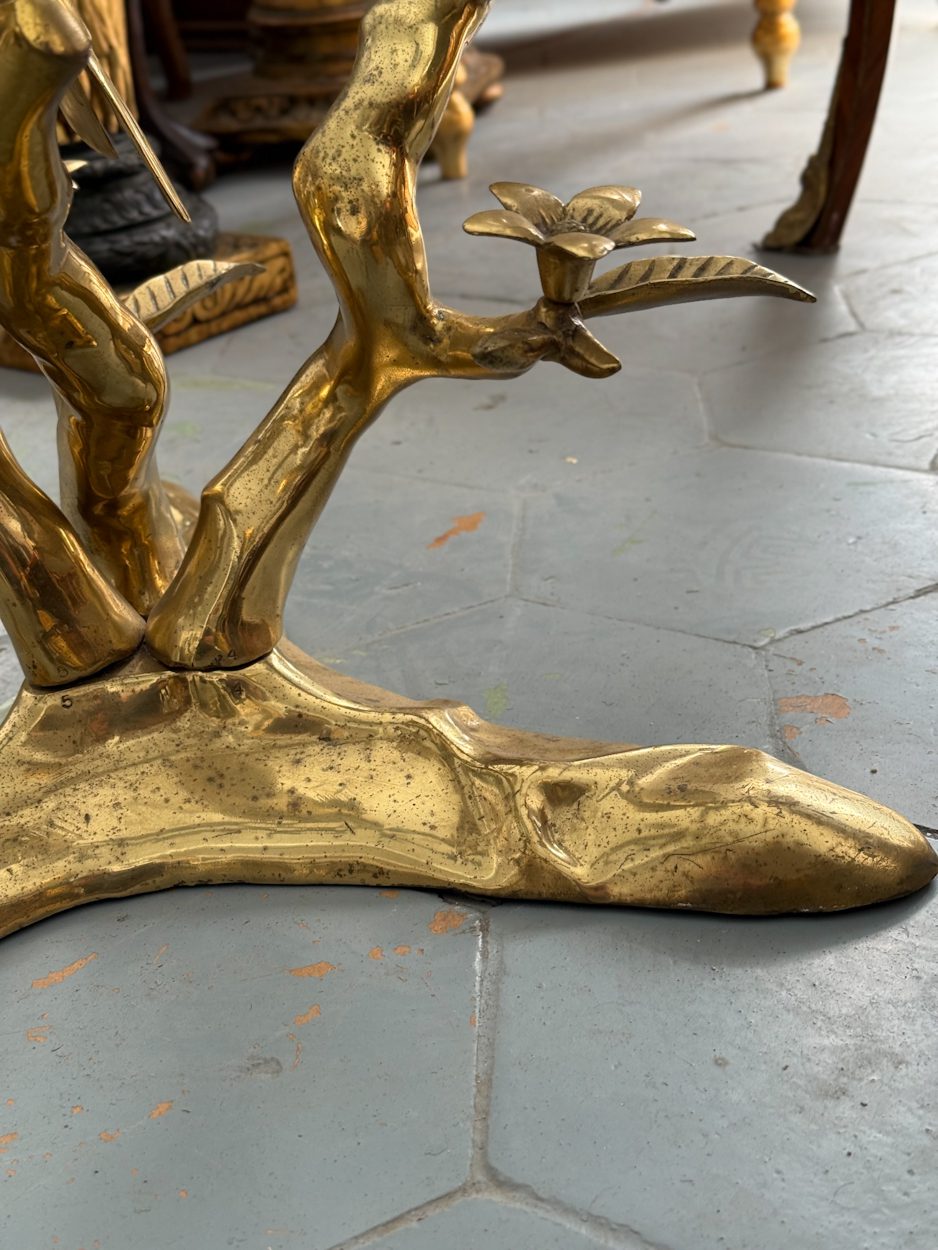
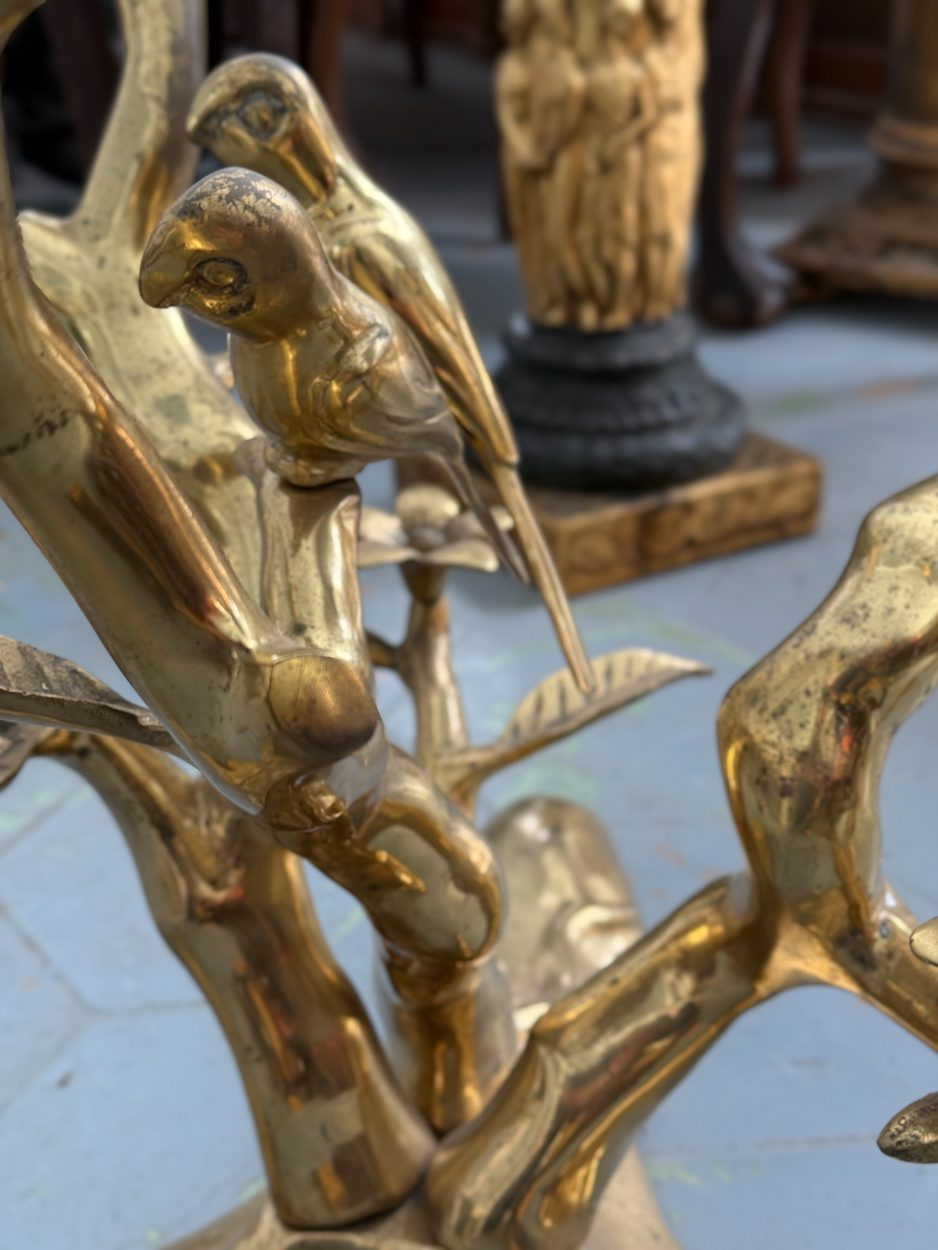
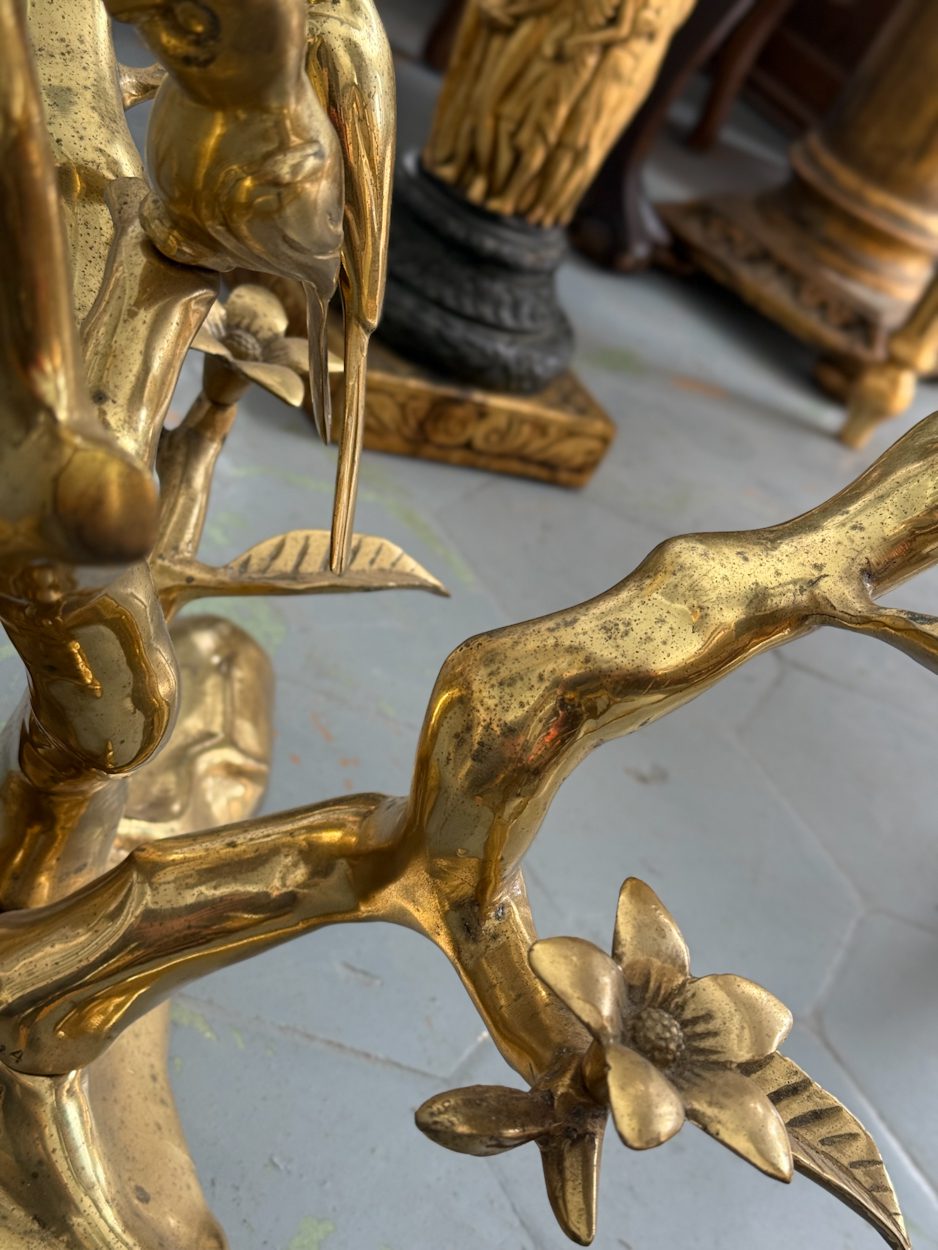
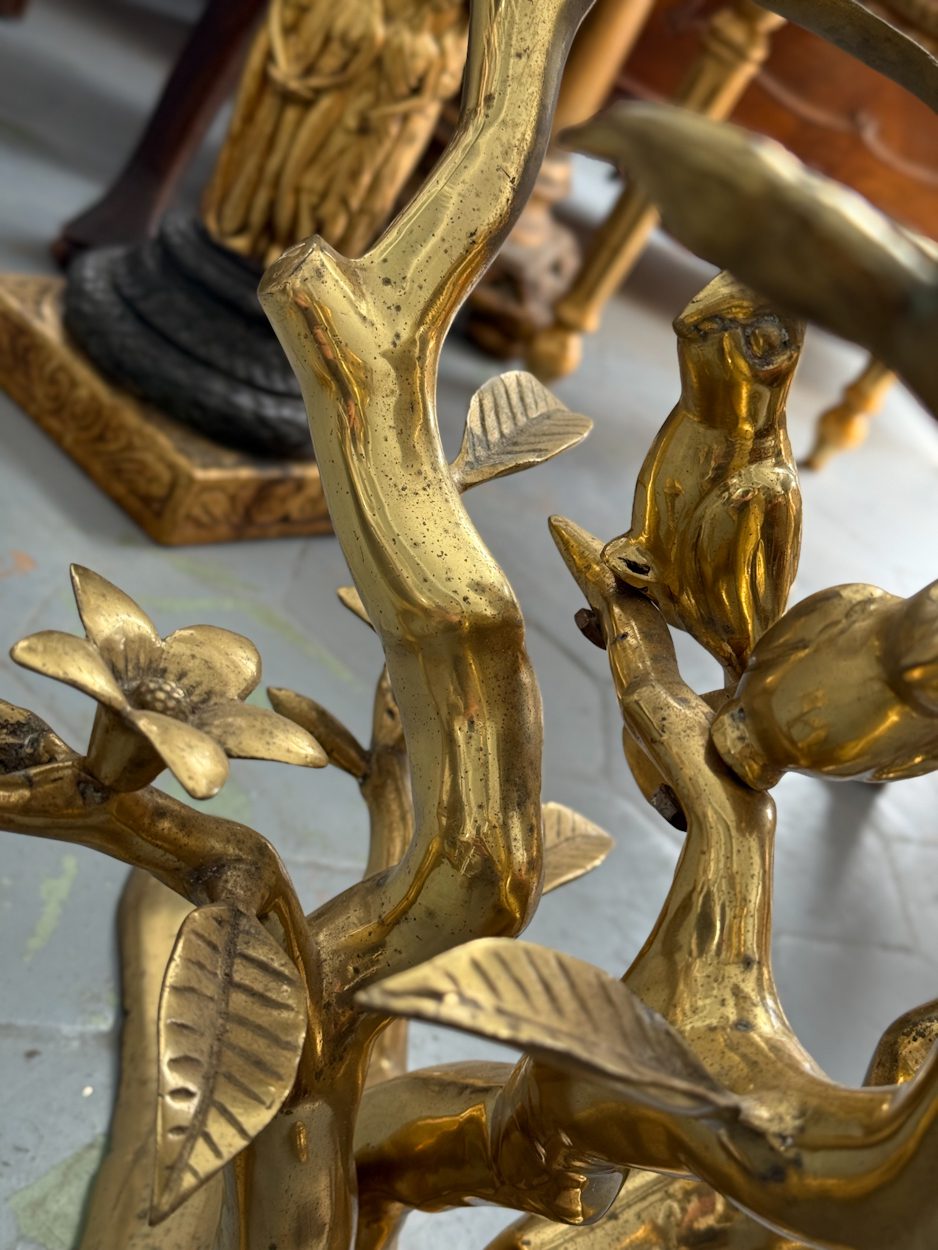
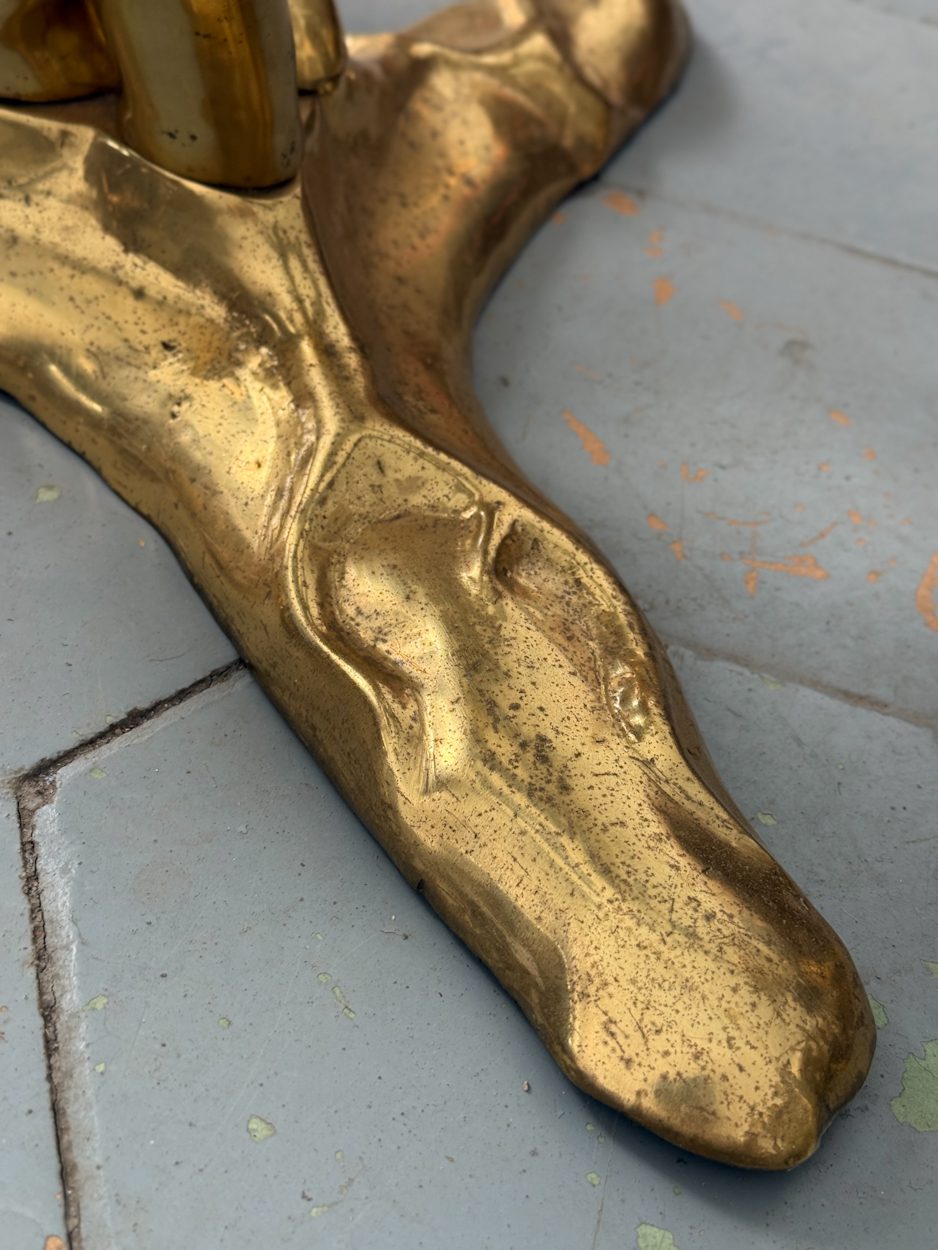
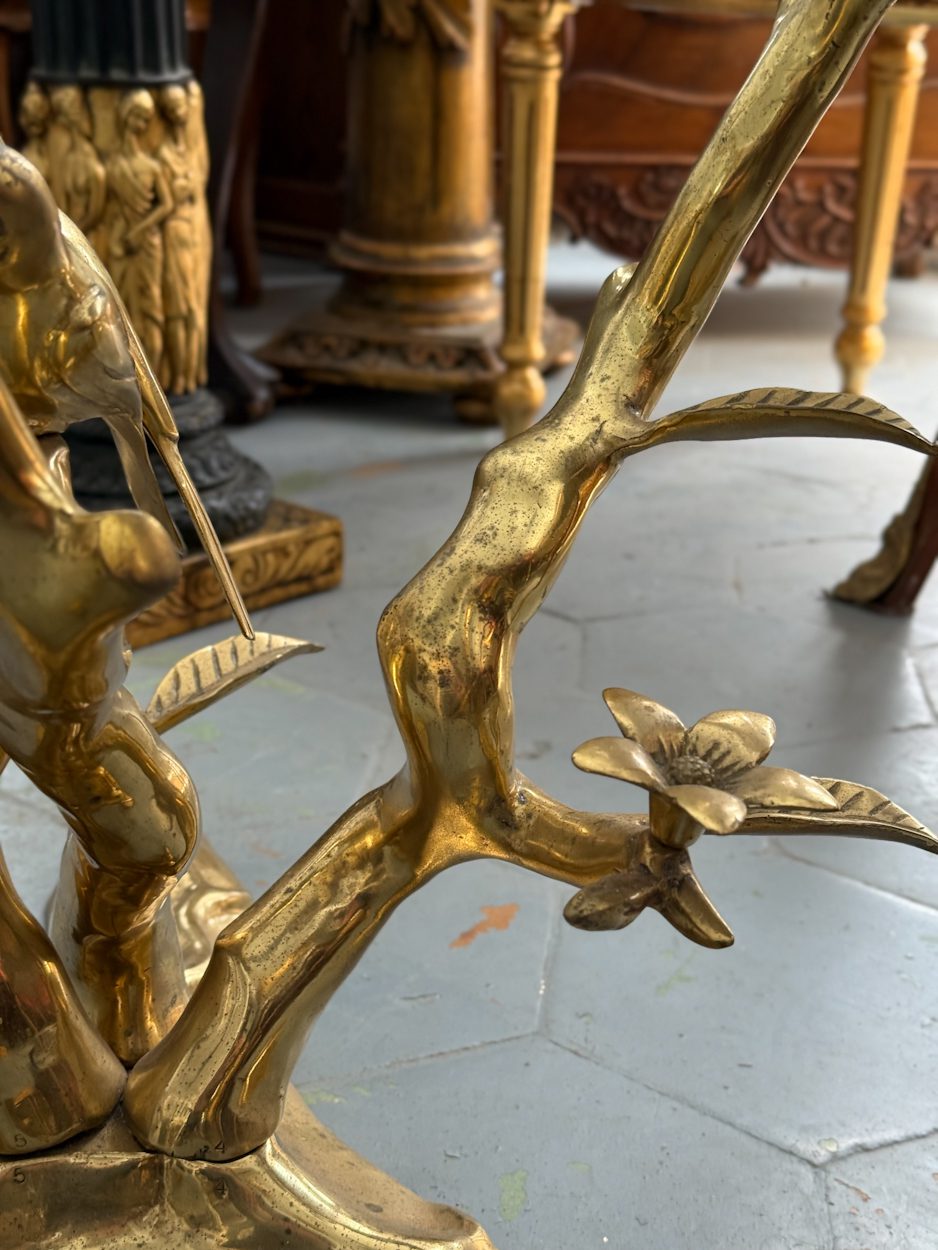
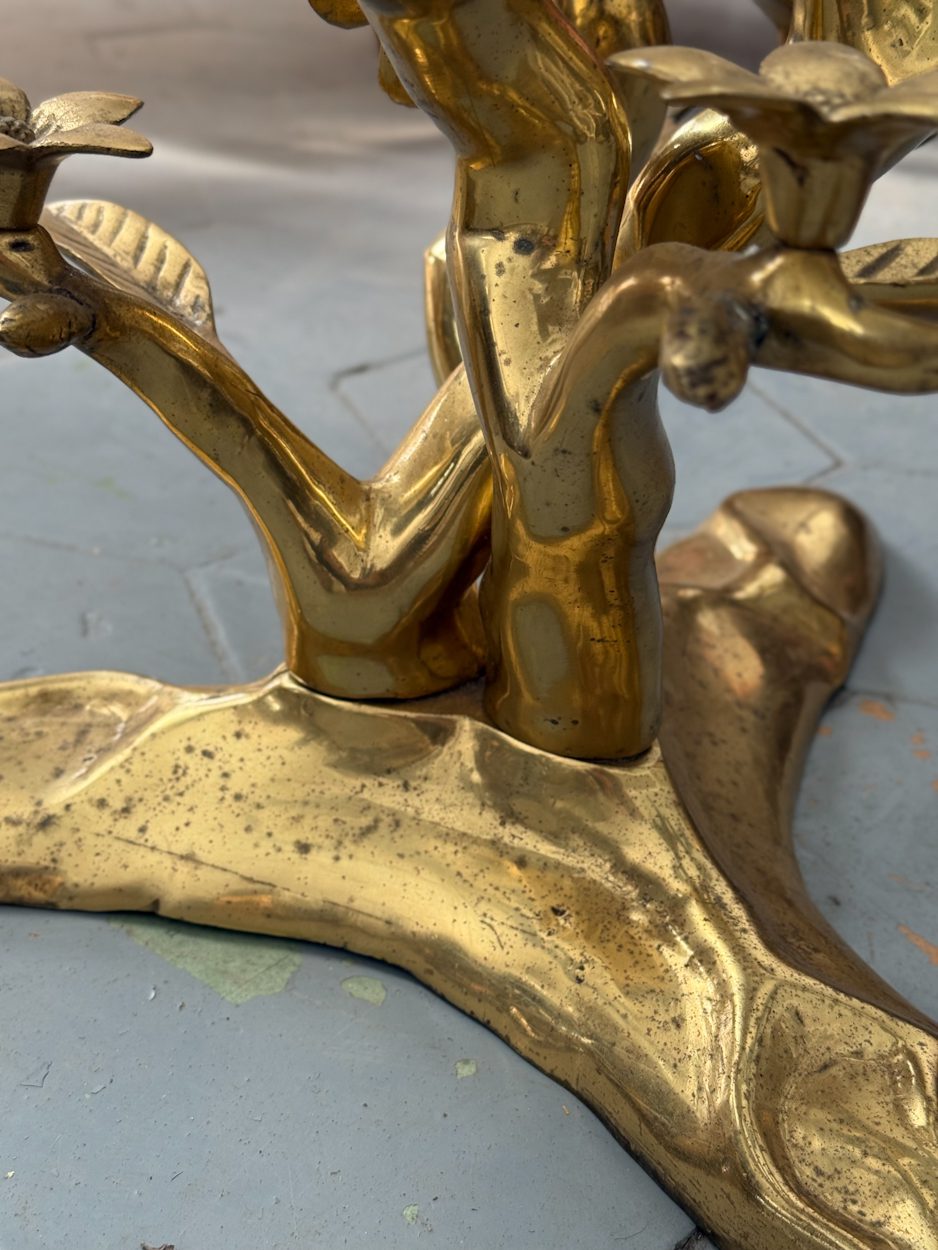
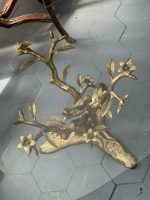
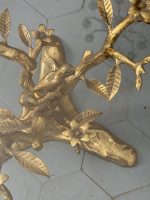
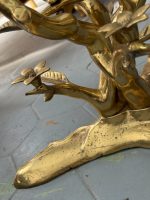
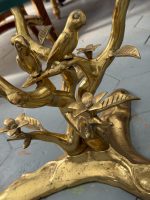
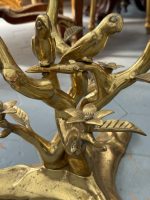
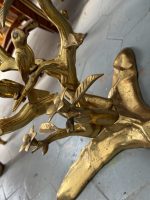
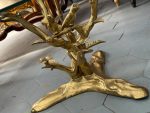
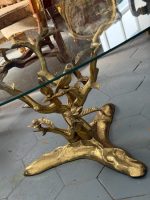
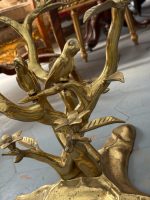
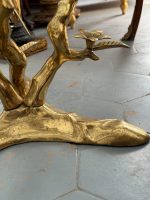
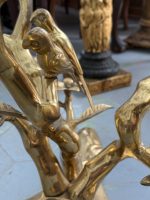
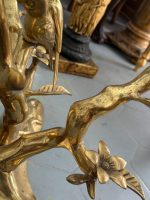
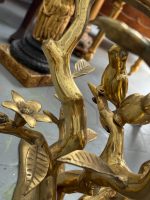
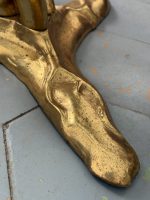
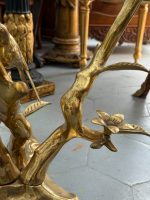
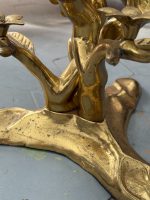
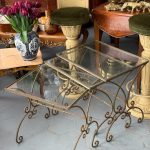
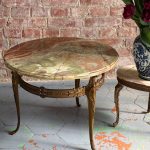
A refined and visually light piece, a synergy of Far Eastern and European aesthetics, created under the influence of the opulent and eclectic Japonisme style (brass twig glass coffee table). The table’s main value and supporting structure is its sculptural, solid, and heavy cast brass base, which naturalistically depicts a flowing intertwining of a tree trunk and branches (visible in image IMG_1563.jpeg). The brass casting imitates natural forms – upward-reaching branches terminate in detailed, blooming flower calyxes and delicate leaf outlines (see IMG_1564.jpeg). Integrated into the central part of the composition, on one of the branches, are two masterfully rendered bird figures (most likely small parrots or Oriental songbirds), adding liveliness and significant sculptural value to the piece (close-ups visible in IMG_1570.jpeg and IMG_1571.jpeg). The upper branches of the base serve as stable and secure support points for a thick, oval glass top with a clear, faceted, and polished edge, allowing the buyer’s eyes to fully appreciate the splendor of the brass casting from any viewing angle (IMG_1568.jpeg).
Period of Manufacture Second half of the 20th century, created during a wave of revival inspired by Far Eastern nature motifs in Chinoiserie and Japonisme aesthetics.
Manufacturer / Signature / Mark This table is a high-quality casting from European or Western decorative art workshops specializing in the production of luxury interior items and art furniture. The expressive form of the base and the integration of natural elements suggest the work of an individual designer. No specific manufacturer’s stamps have been found on the brass base.
Rarity and Significance Unlike traditional carved wood or rectangular metal coffee tables, this piece functions more as a standalone sculptural element within a space. Such organic, flowing bases cast from heavy metal, visually imitating delicate natural motifs and incorporating figural groups, are relatively rare and highly valued in the creation of eclectic and “Hollywood Regency” style interiors.
Application & Interior Use Thanks to its transparent glass top, the table does not visually clutter the space and is ideal for placement as a central focal point in a living room, lounge, or conservatory, nestled among a low seating arrangement. It serves as a powerful artistic accent that draws attention and lends a sophisticated and exotic character to the room.
Condition In excellent and fully functional antique condition. The heavy brass base is firm, stable, and free from any structural damage. The metal surface displays a naturally formed, pleasing, and uneven historical patina, revealing brighter brass gilding in some areas and a deeper tone in others (visible in IMG_1577.jpeg). The glass top is intact, clean, and free from deep scratches or edge chips. The condition of the item is fully reflected in the photographs.
A Snapshot of the Japonisme Era: Aubrey Beardsley sat in the morning light of a garden pavilion, where sunbeams slowly illuminated the leaves of exotic plants. His fingers lightly touched the smooth, transparent surface, beneath which cast brass branches stretched upwards like a frozen, delicate interplay of lines. The cool glass plane contrasted with the natural texture of the metal, and the poet’s gaze involuntarily paused at the silhouettes of two small birds, seemingly frozen for a moment amidst metal leaves and blooming flowers in their eternal song. The scent of Far Eastern tea in the air mingled with the light, clean coolness of the garden, and this object, where the heavy mass of bronze and brass transformed into an almost airy miniature of nature, instantly turned the morning tea ritual into a pure and immortal moment of aestheticism.