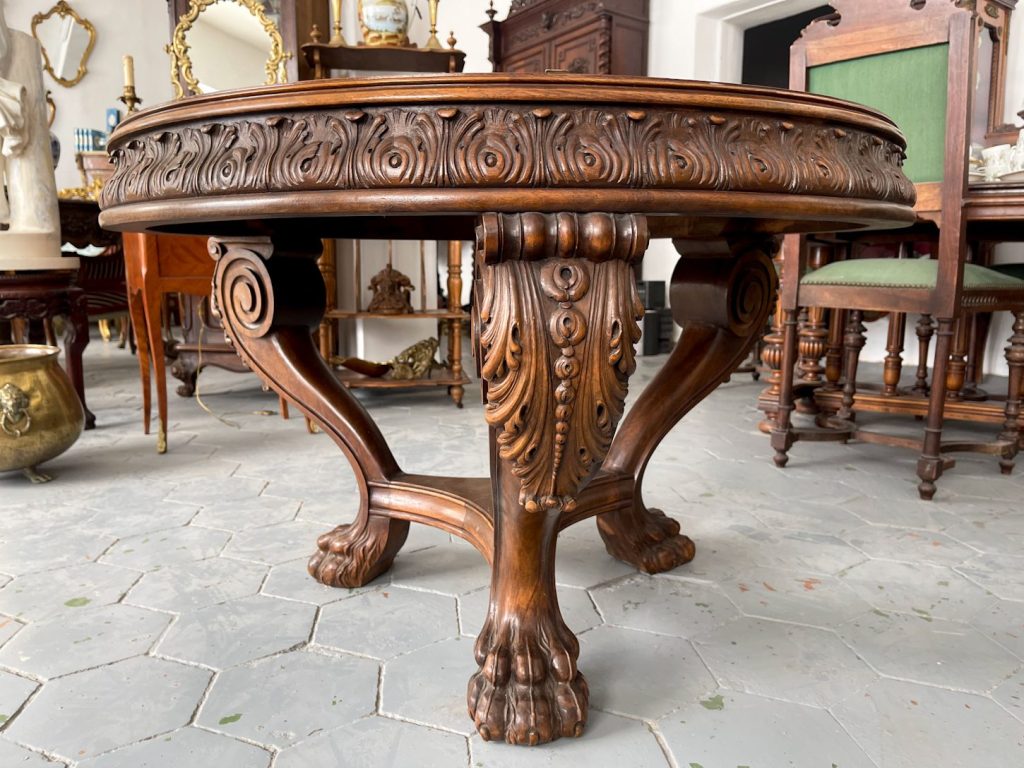
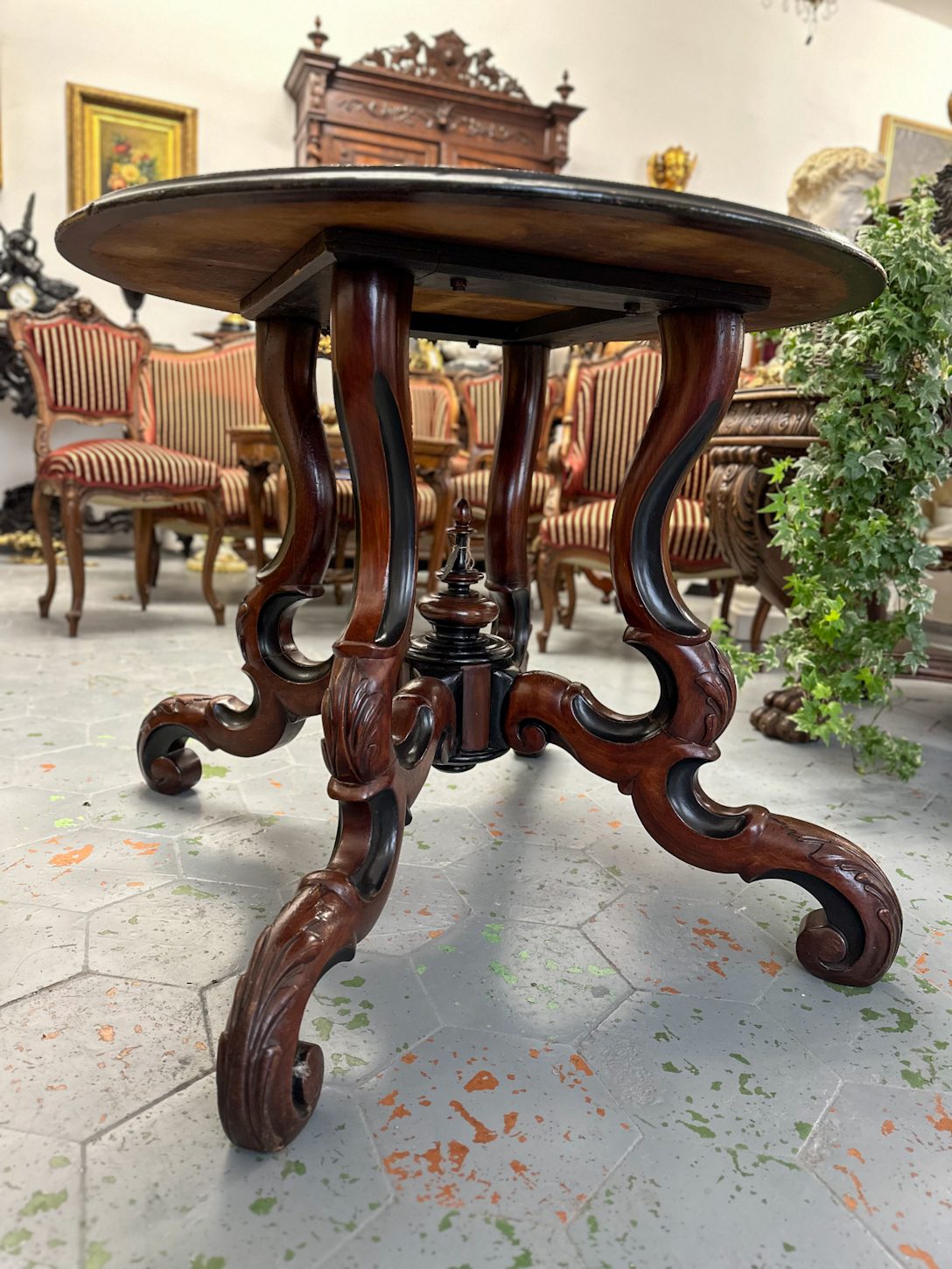
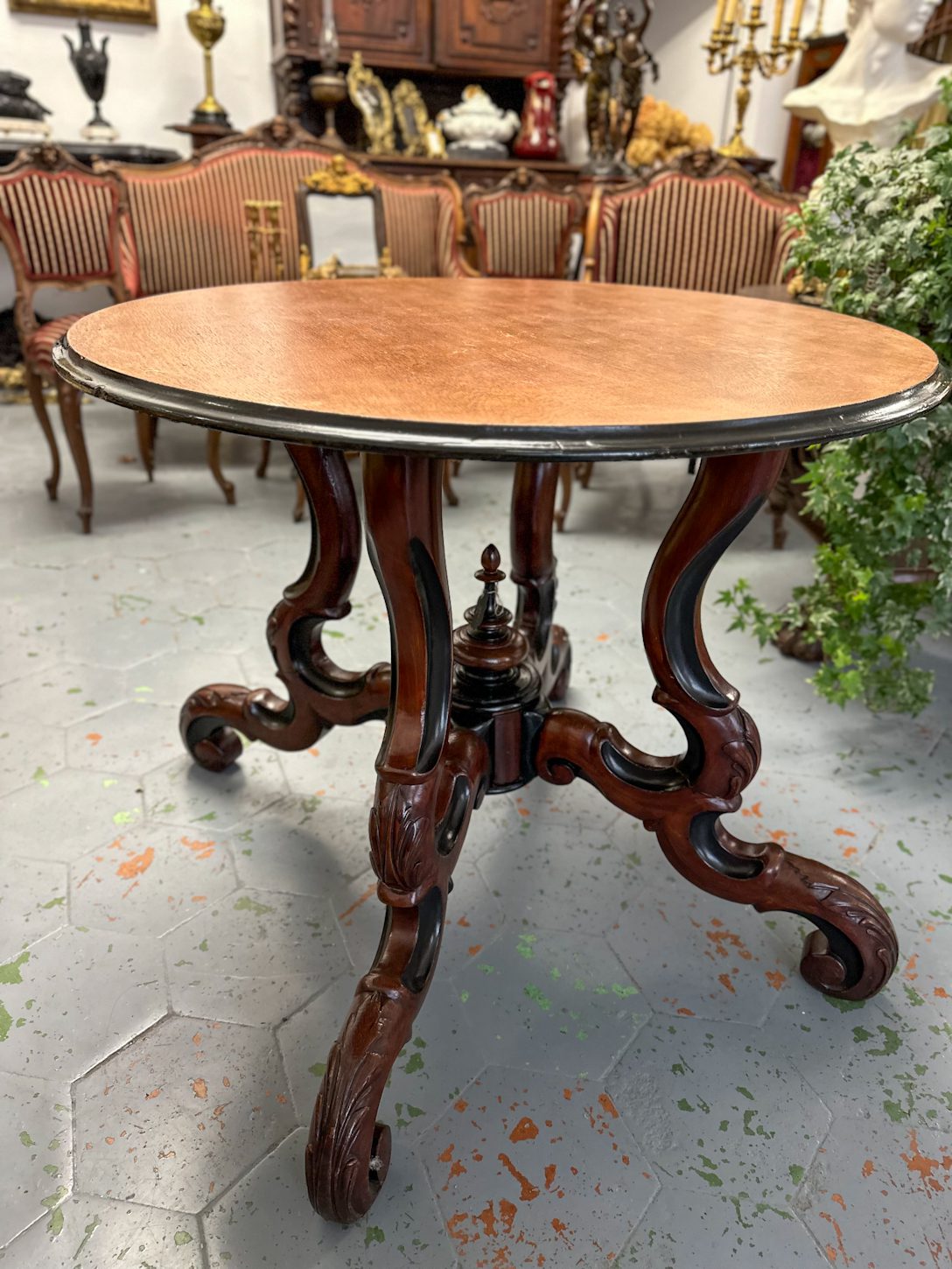
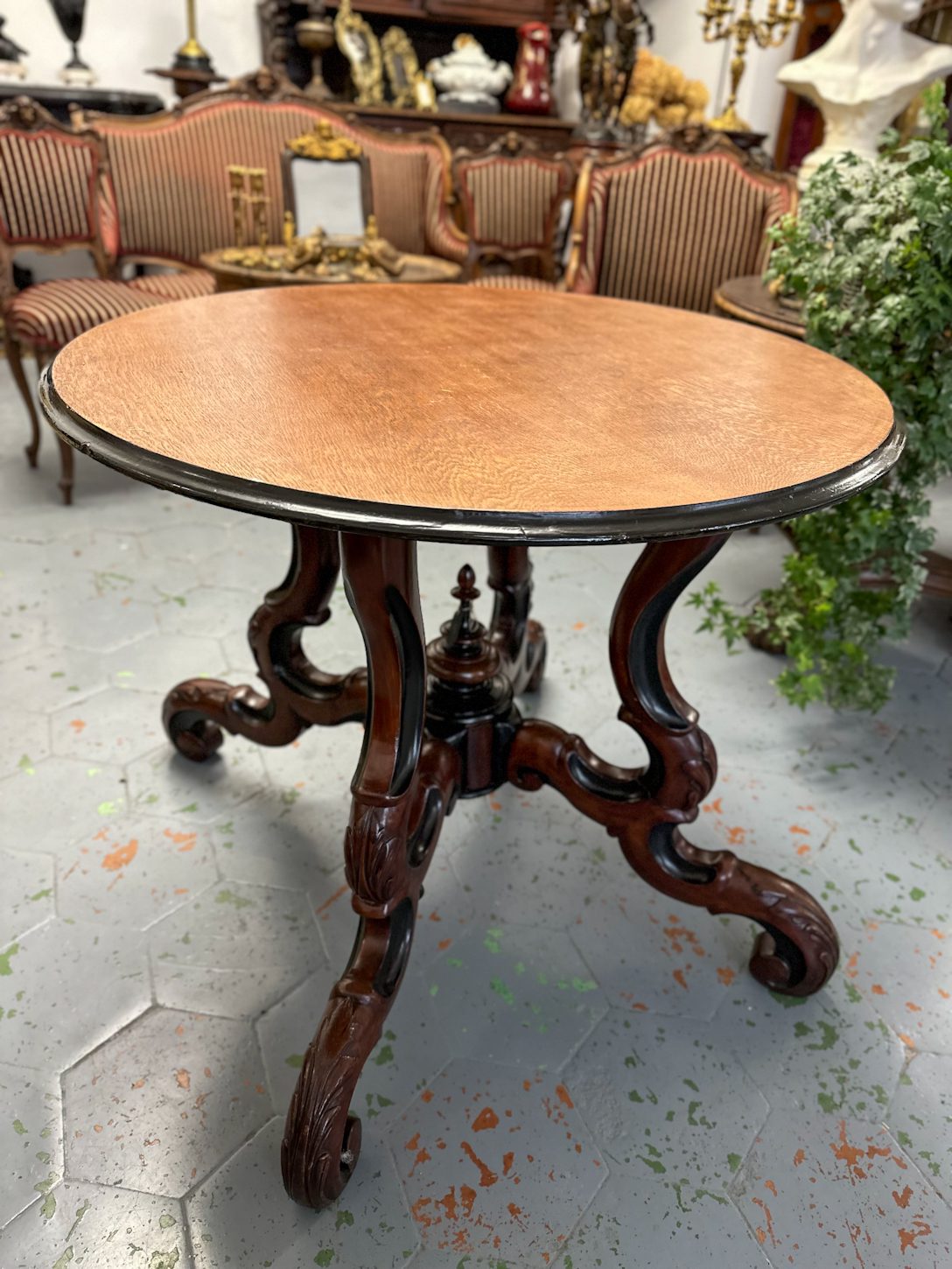
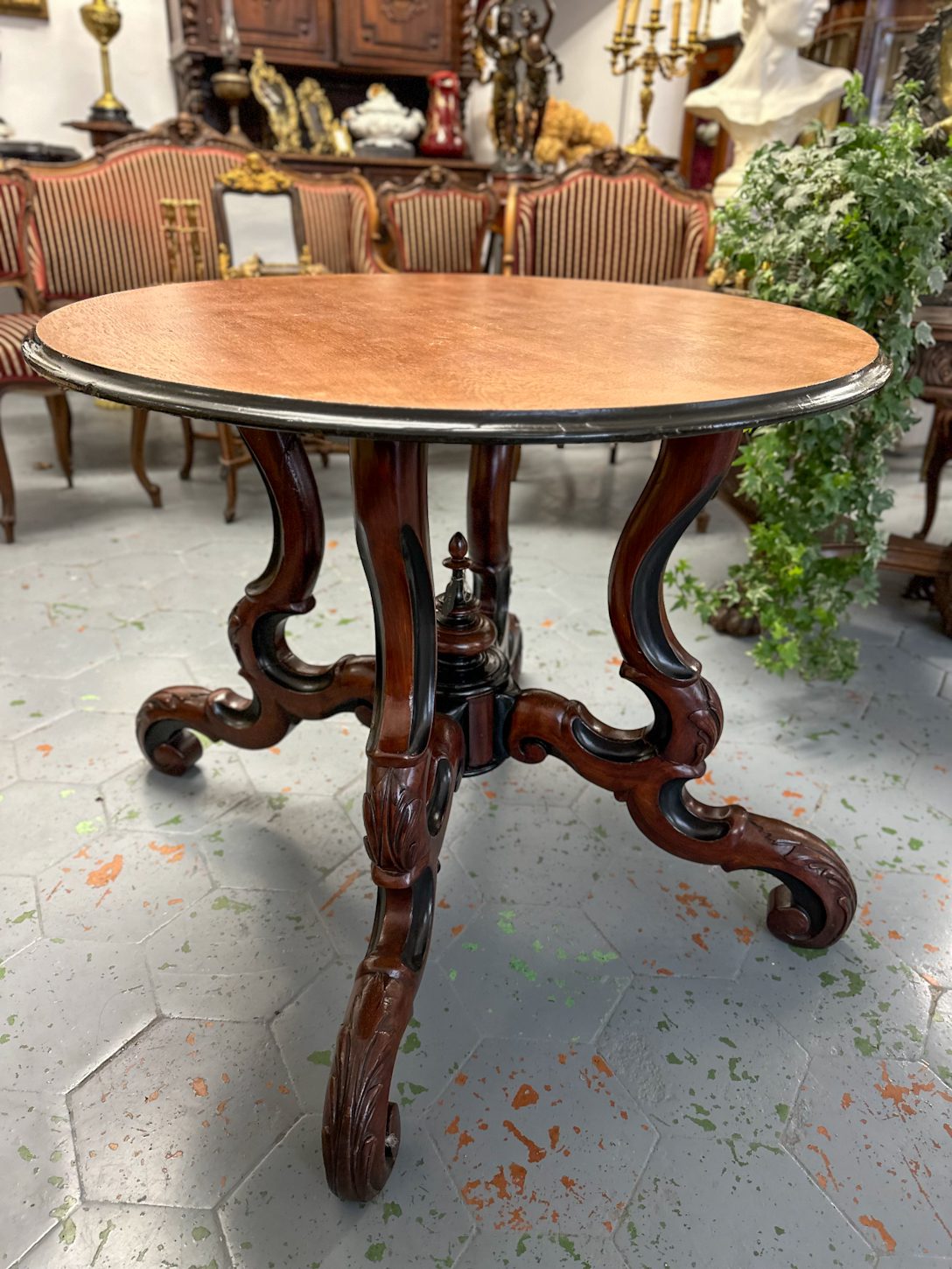
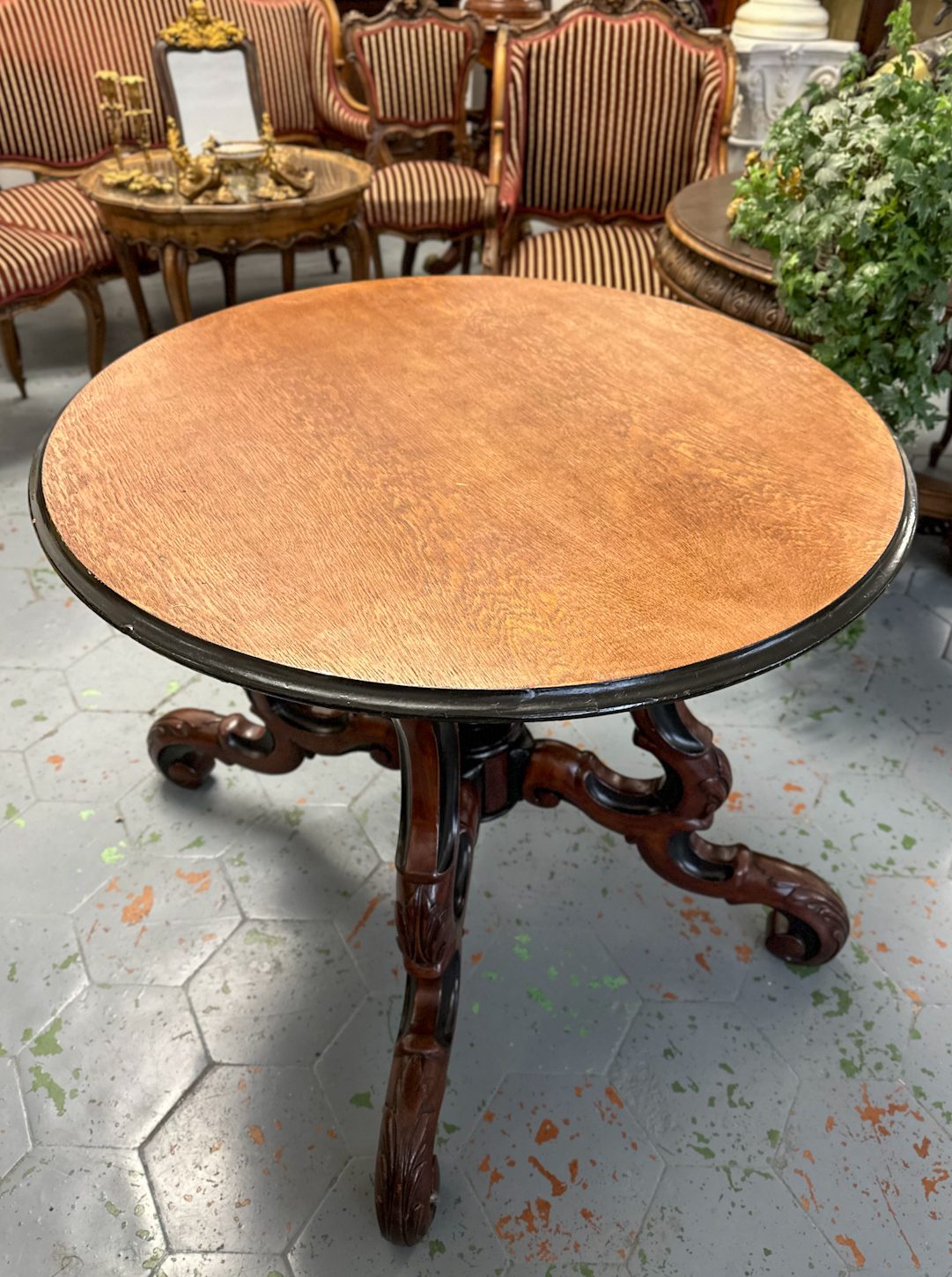
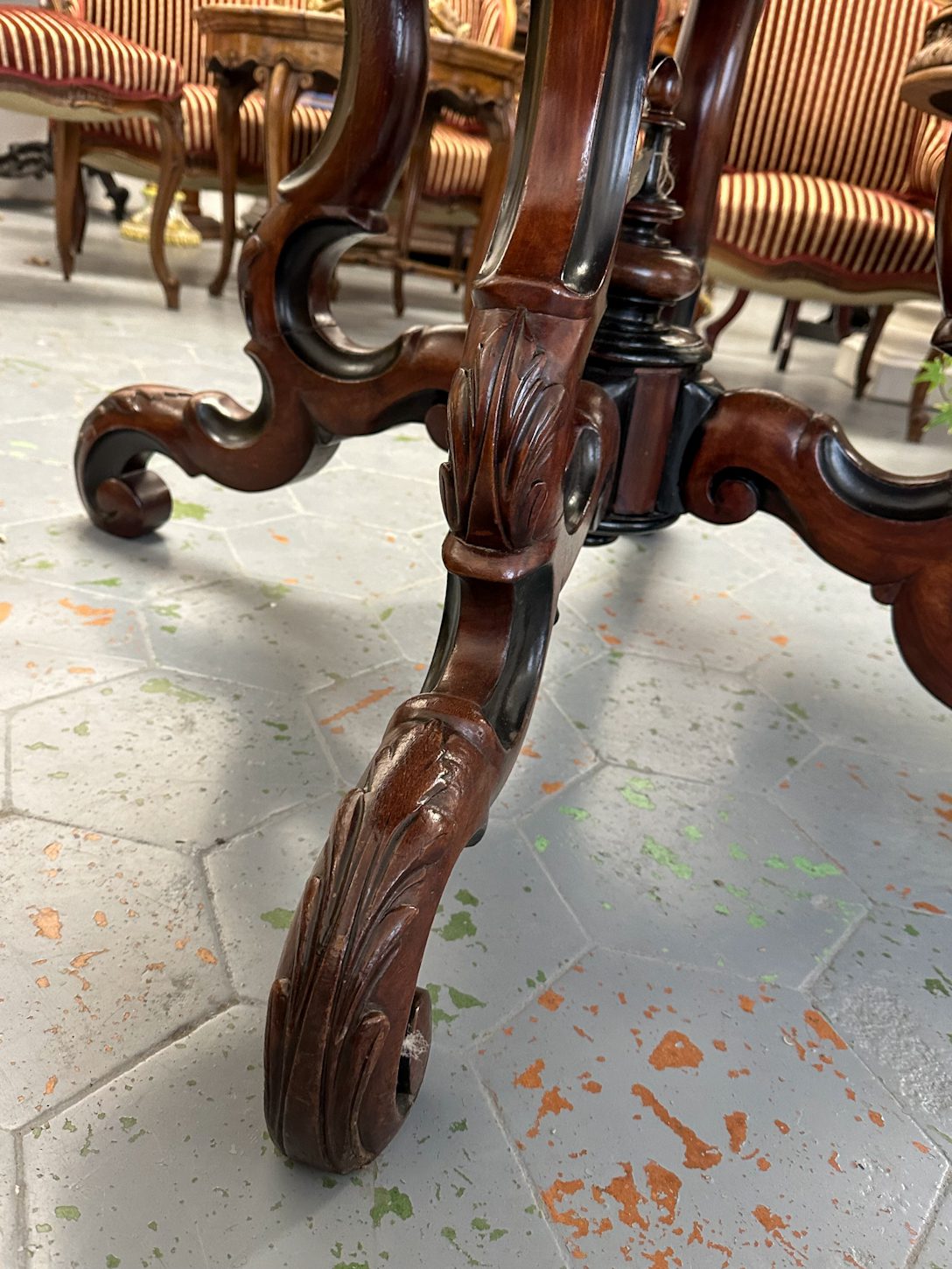
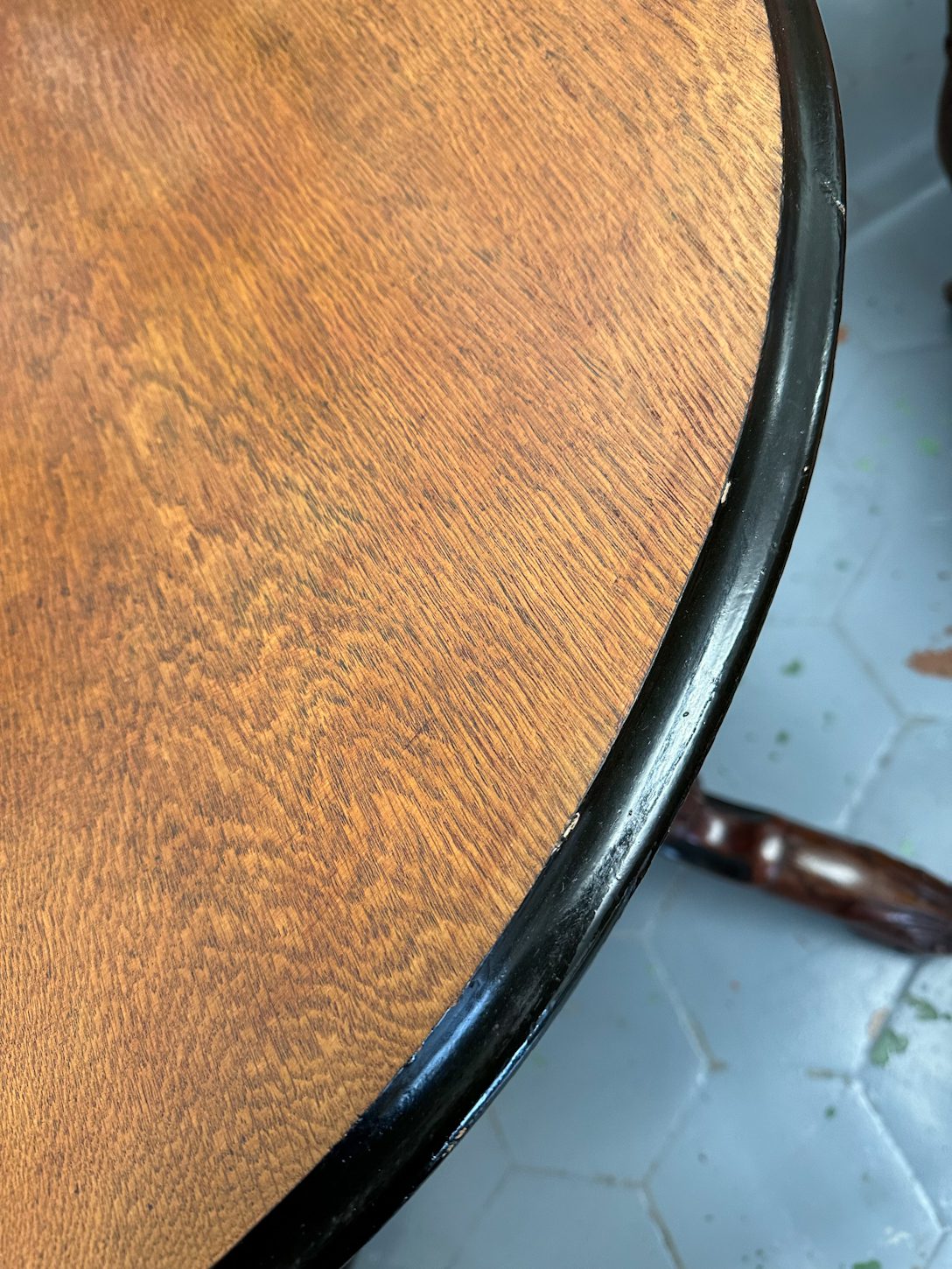
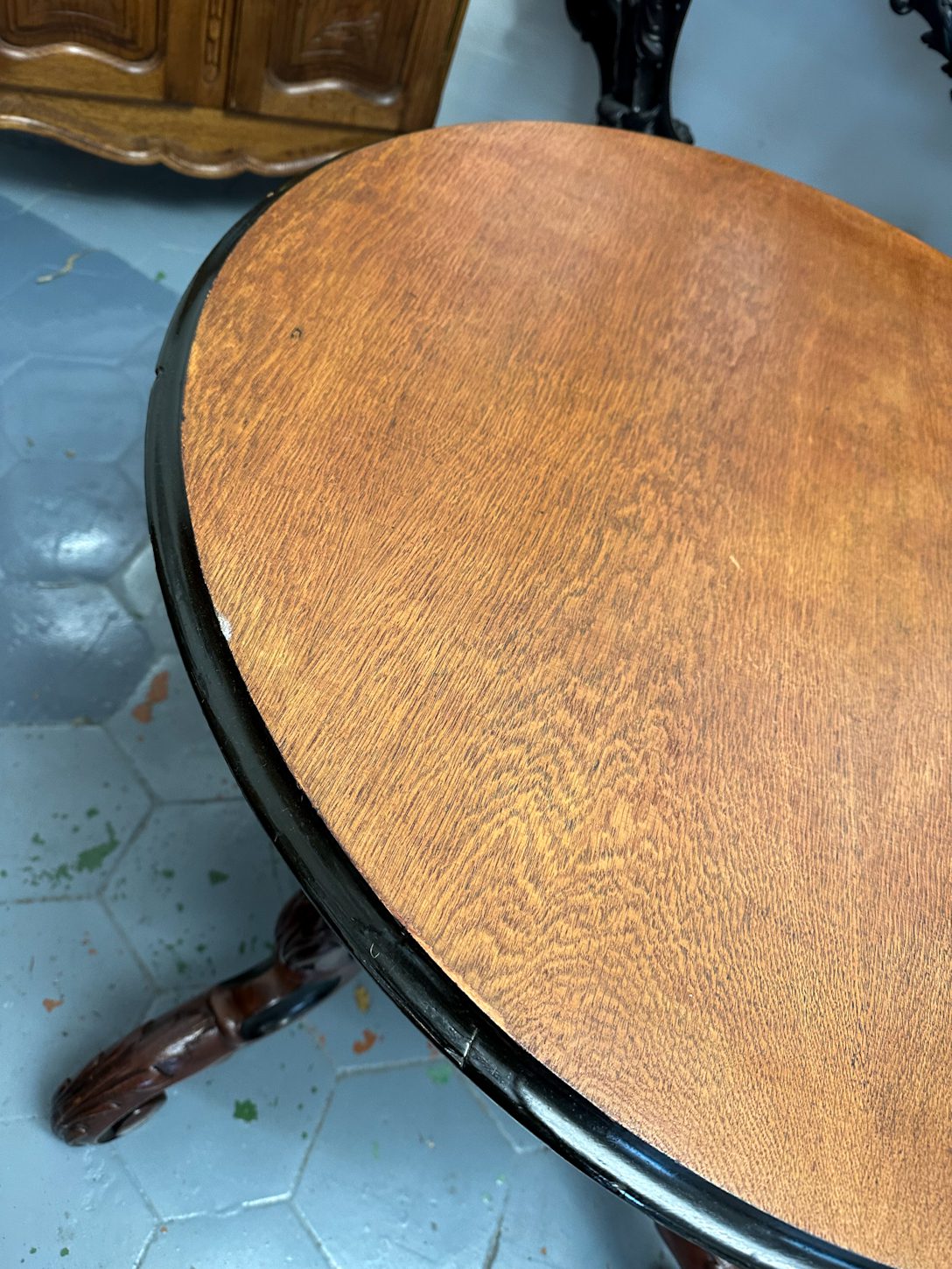
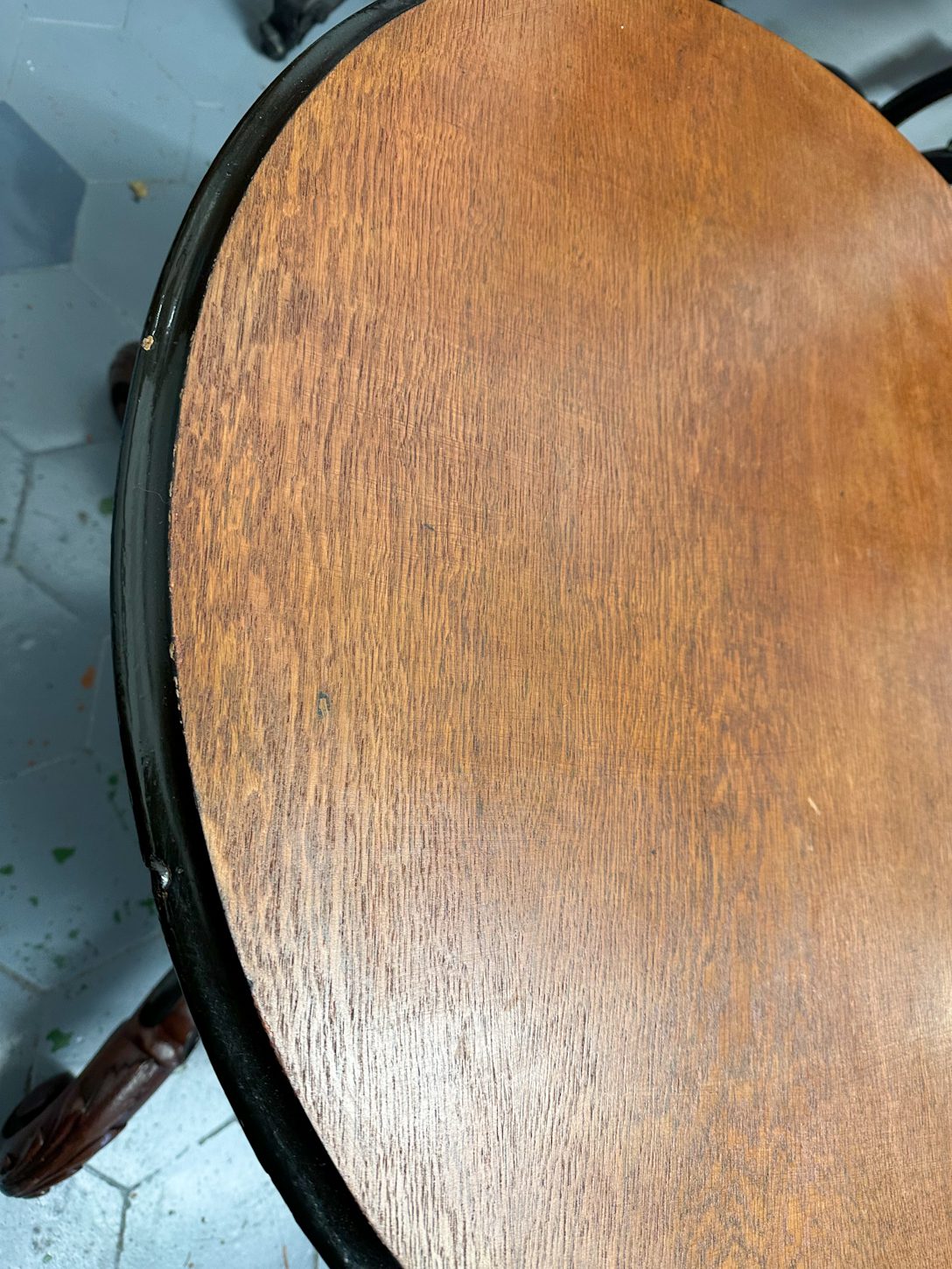
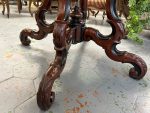
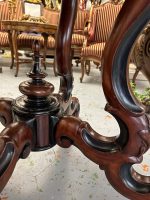
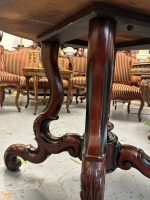
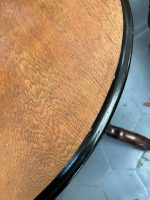
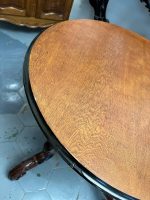
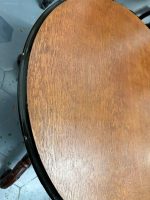
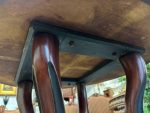
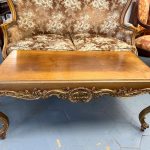
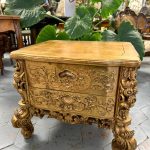
Round salon table with warm oak/burr wood placage top and ebonized edge. Four cabriole legs with rocaille carvings, connected by an ebonized stretcher system and central finial. Historicism / Biedermeier transition, Central Europe, c. 1850–1880. Height 70 cm × diameter 84.5 cm. 950,00 €
You’re now subscribed to price tracking for this product. We’ll notify you if the price drops. 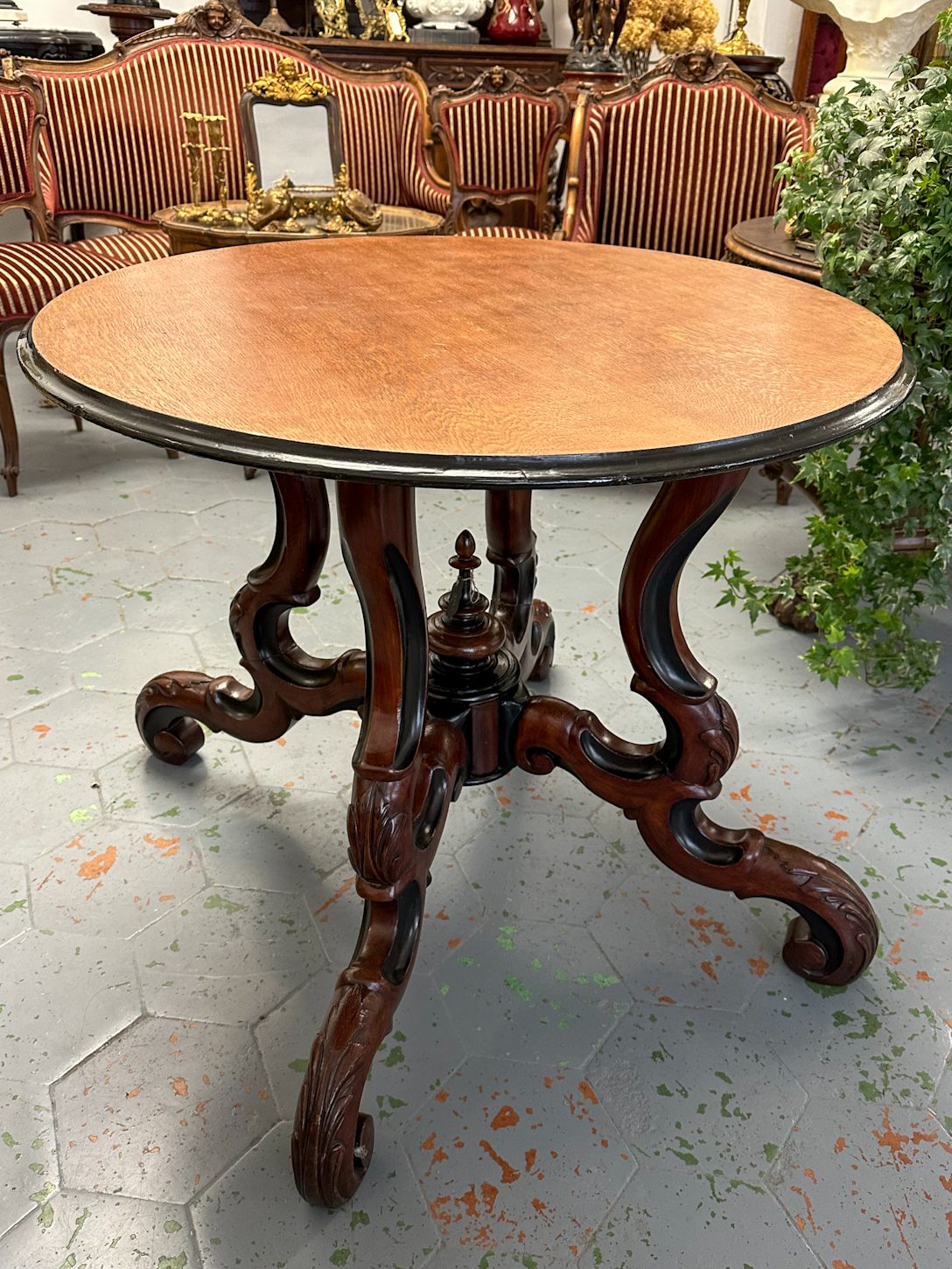
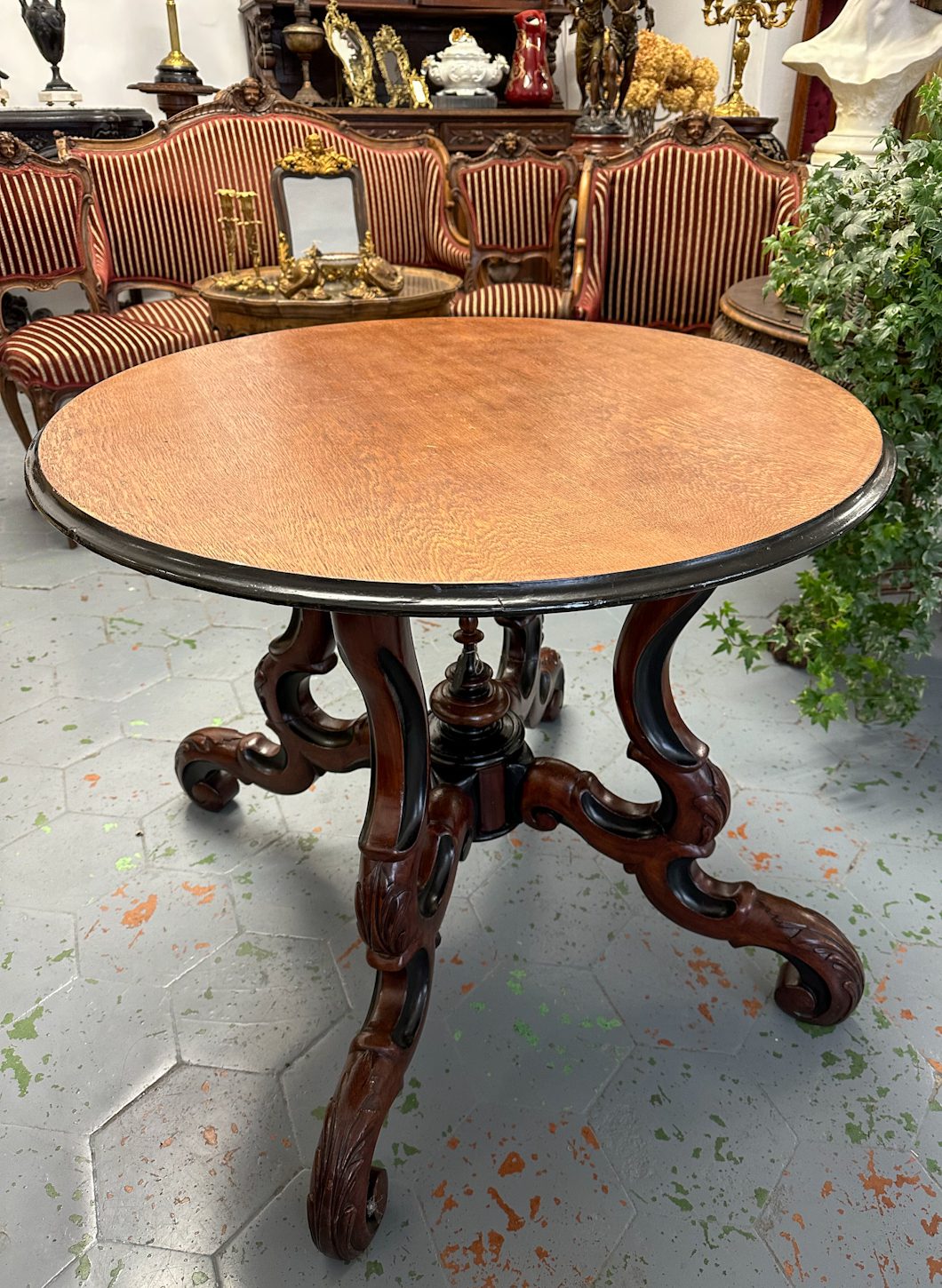
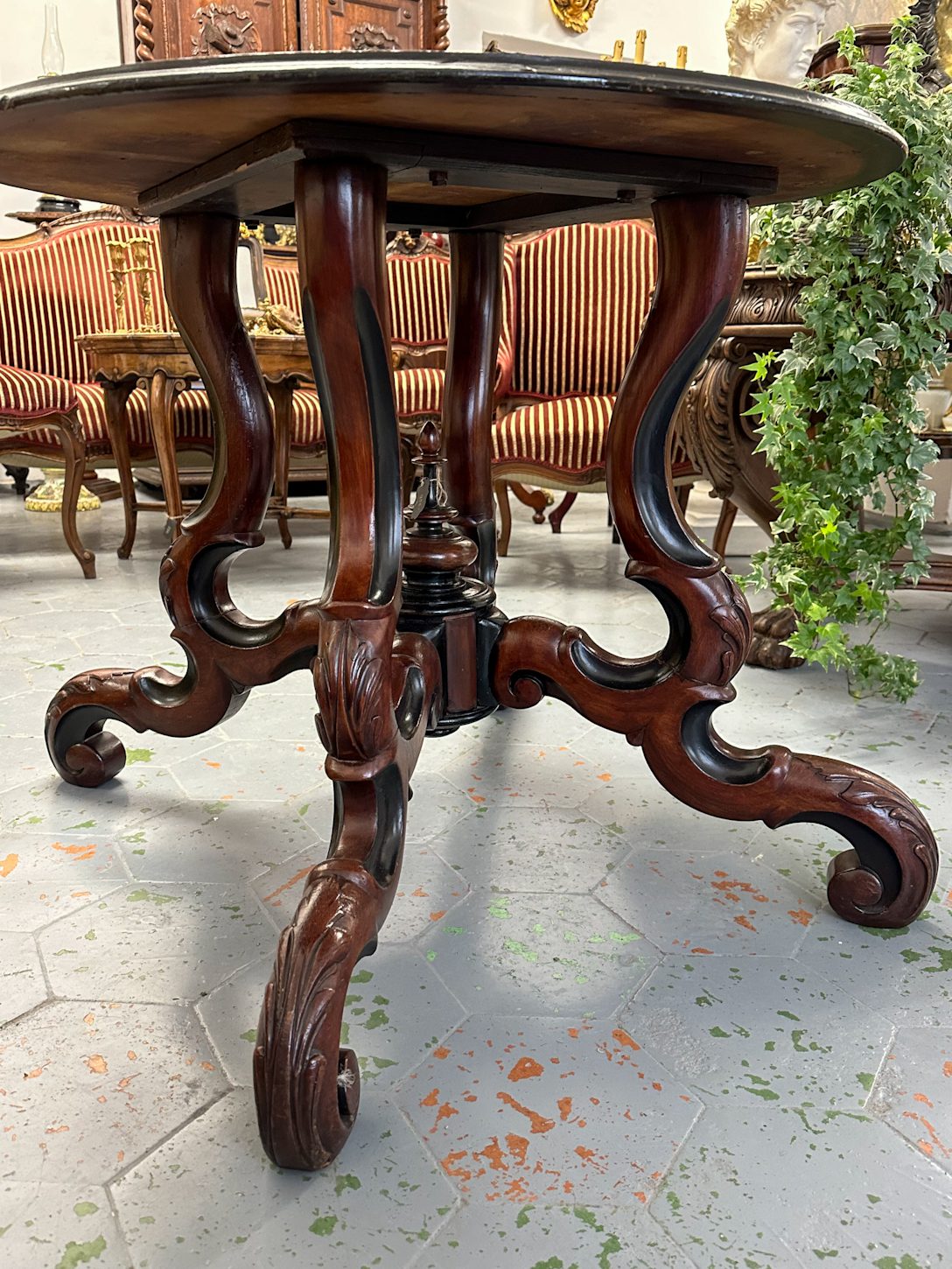
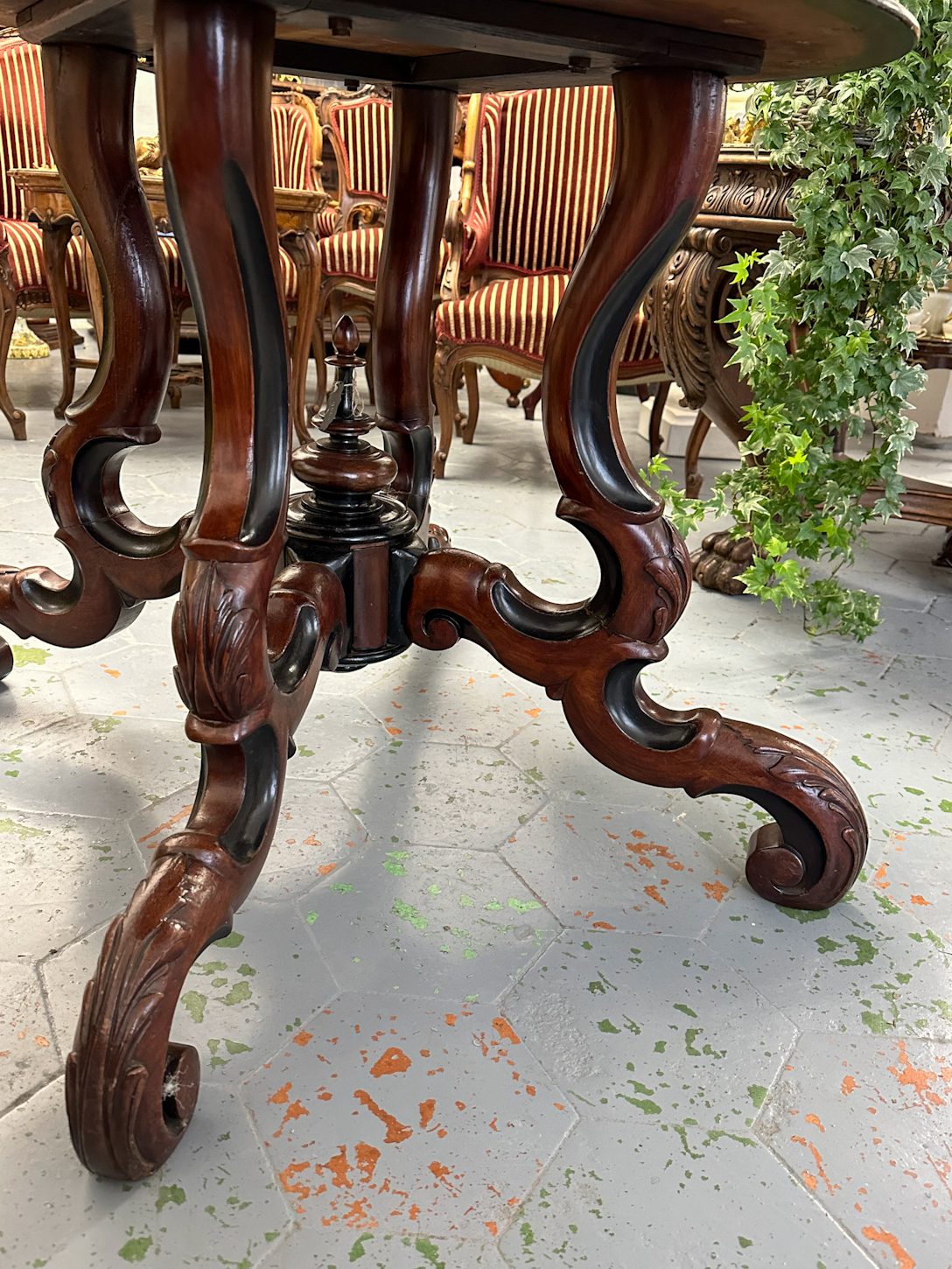
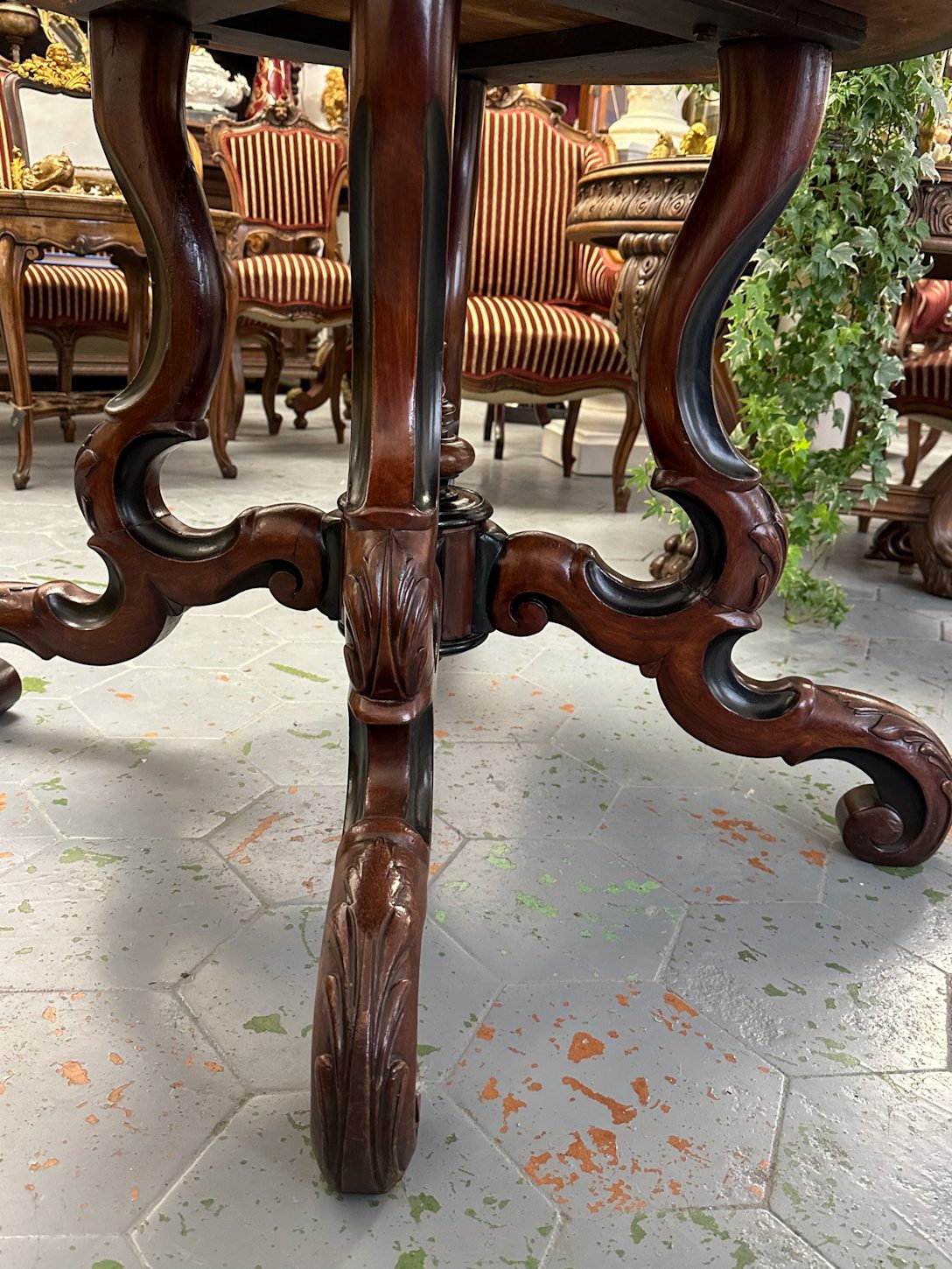
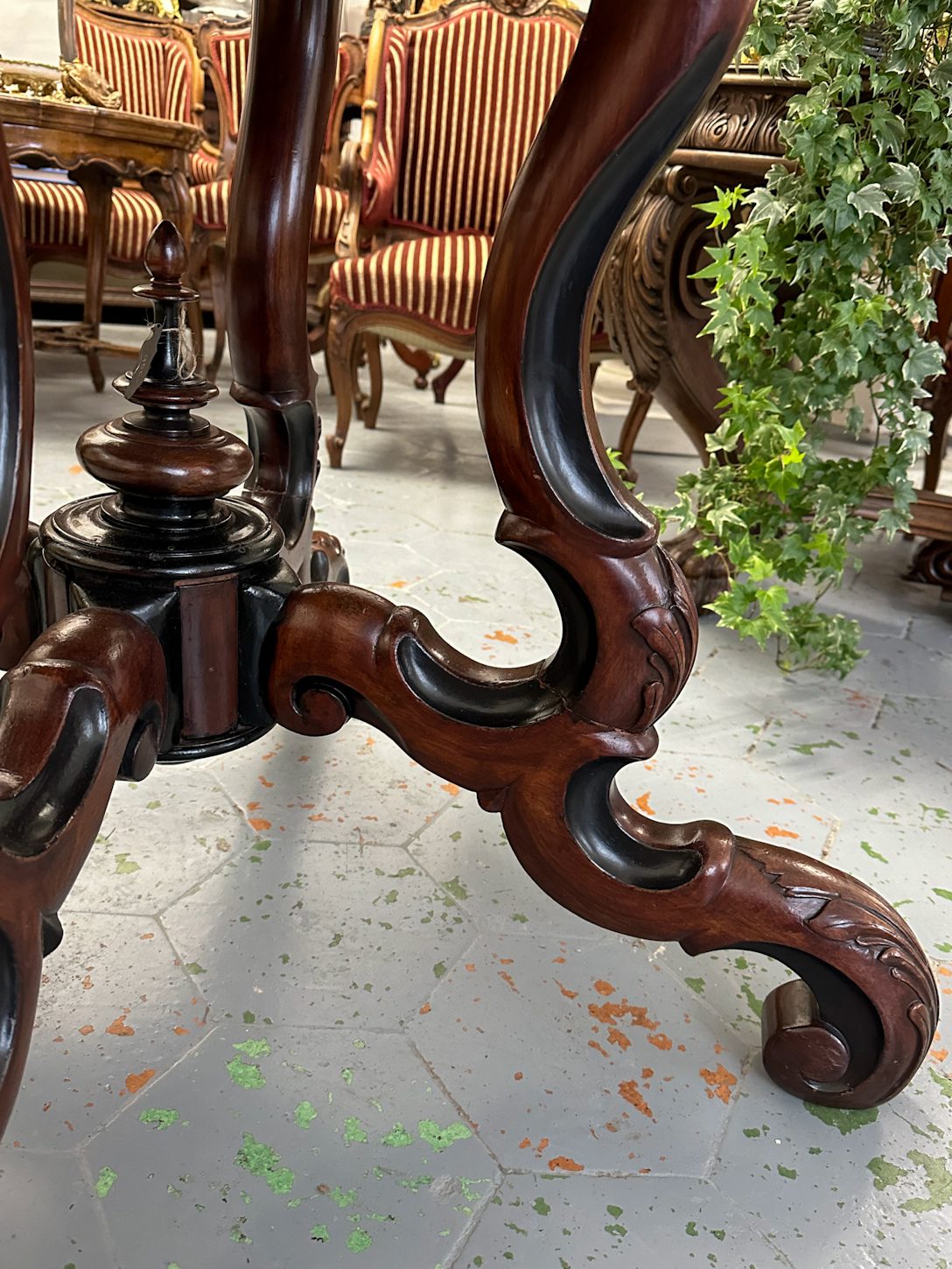
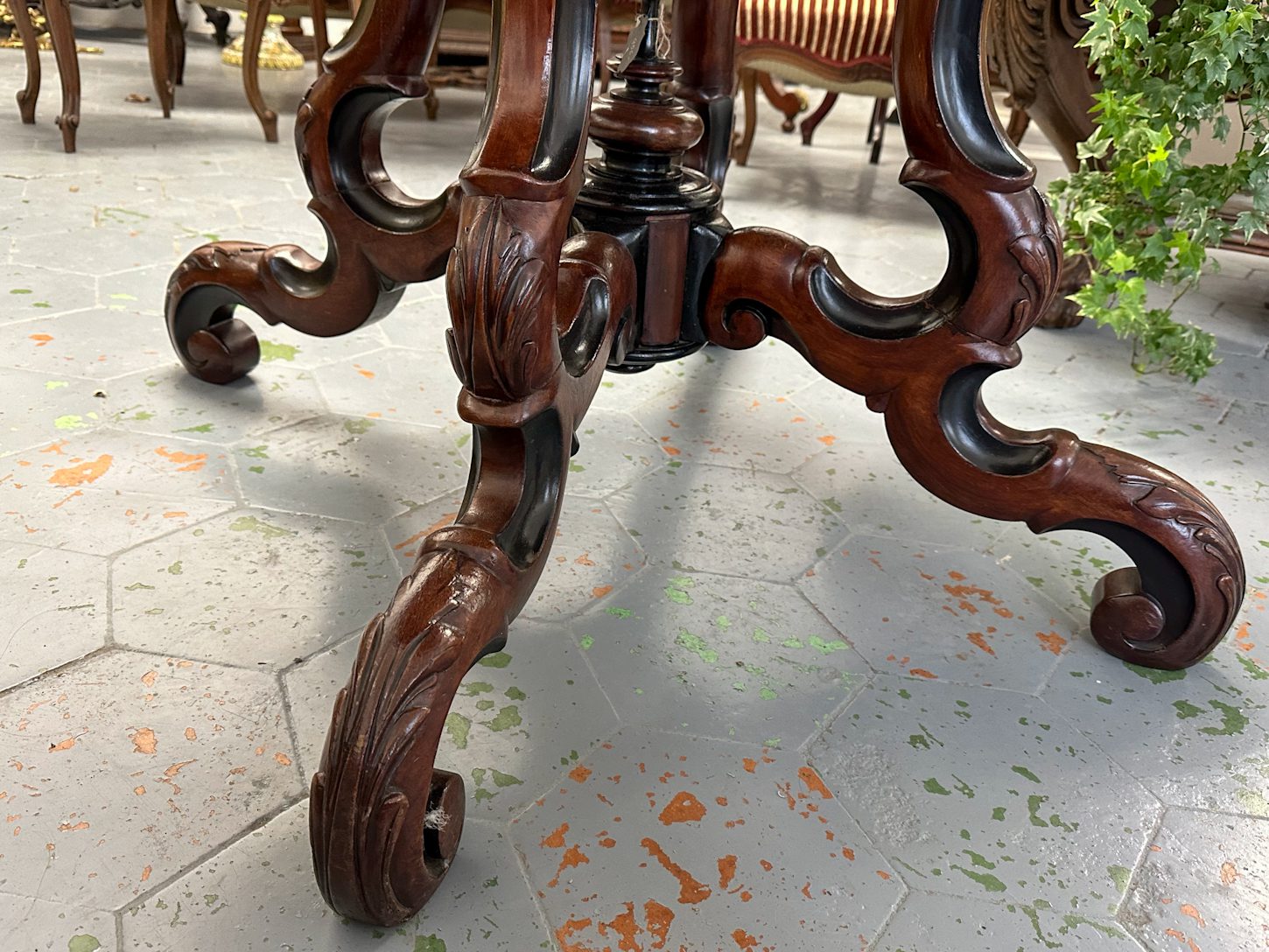
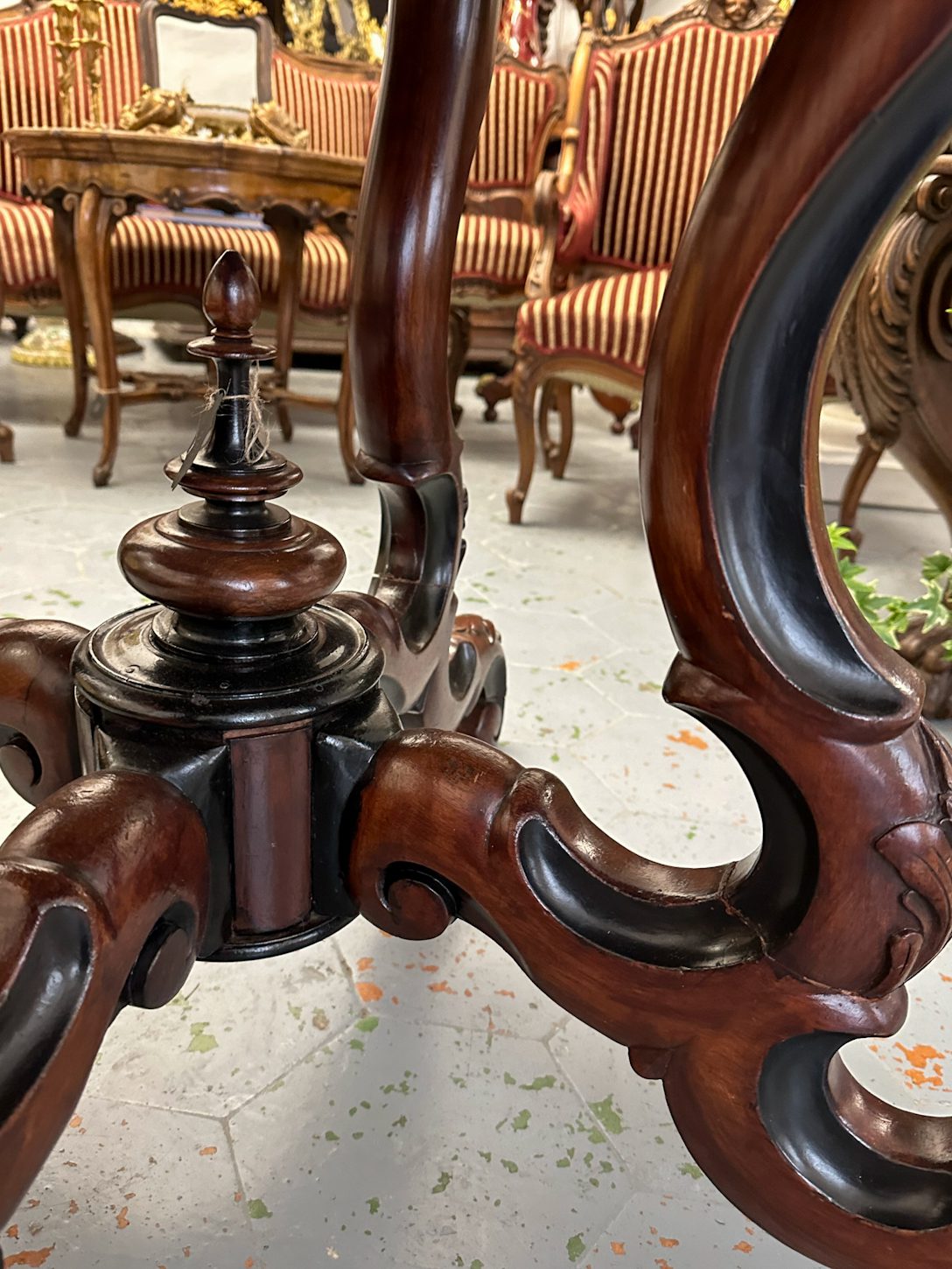
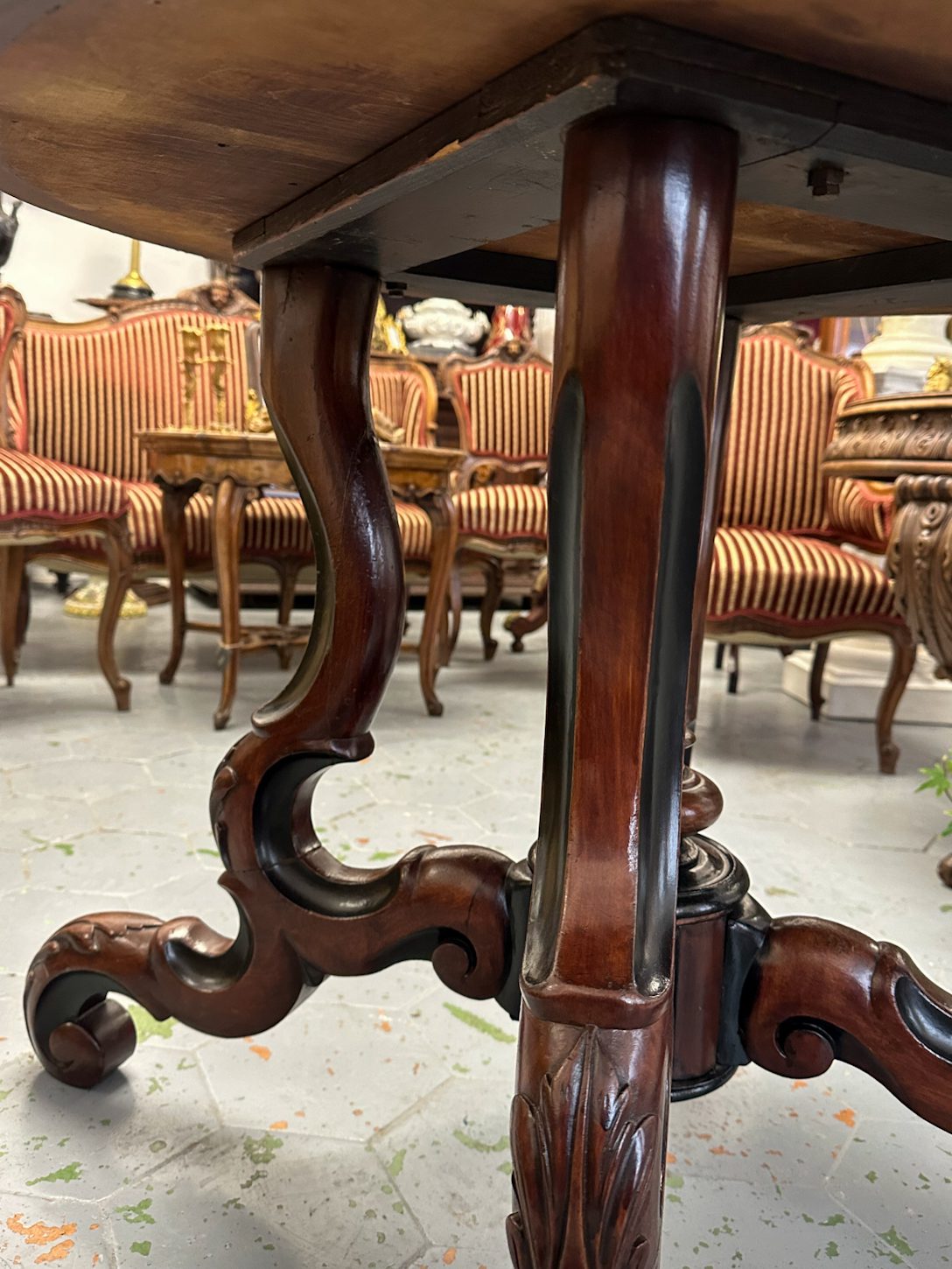
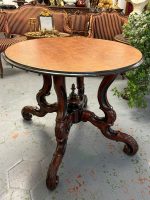
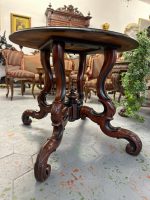
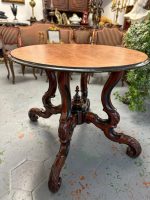
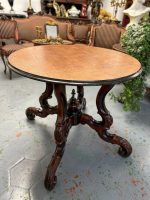
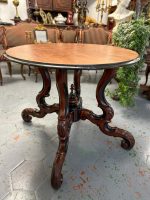
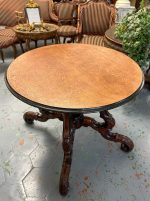
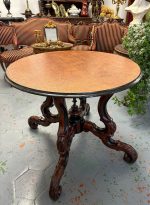
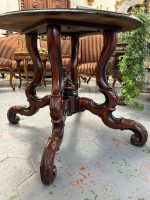
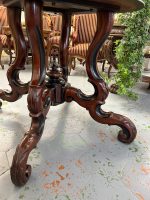
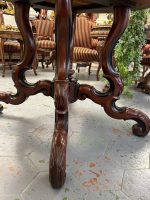
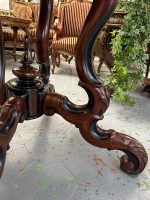
Round Salon Table with Walnut Top and Ebonized Accents — Historicism, Central Europe, c. 1860. (3698)
Height 70 cm Width 81 cm, 84.5 cm Color AmberCoffeeBlue
Description
📐 DIMENSIONS
Height 70 cm × top diameter 84.5 cm × leg width 81 cm.
―――――――――――――――――――――
Round Salon Table with Ebonized Edge and Burr Wood Top — Historicism / Biedermeier transition, Central Europe, c. 1850–1880.
―――――――――――――――――――――
🏛️ PERIOD OF MANUFACTURE, ART STYLE, ERA
This table belongs to that fertile transitional moment when Biedermeier still held its forms — the simple, warm, intimately familial surface — but Historicism already brought a new ornamental language: rocaille curves in the leg profile, an ebonized ébénisé contour line as an instrument of dramatic contrast, and a central connection with a turned finial tower as an echo of a Baroque silhouette. Both aesthetics coexist here in one object — and this makes this table an extraordinarily personal witness to the 19th-century Central European bourgeoisie’s interior.
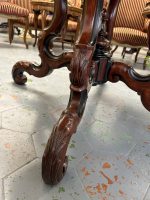
Four cabriole type legs with rocaille pattern at the top and scroll curves in the legs, connected by a central ebonized stretcher system, crowned by a tower-like finial — this is the most characteristic solution of high-class joinery in y, Austria or the Czech Republic around 1860. The tabletop — warm yellowish-grey oak or burr wood placage — creates a wonderful contrast with the ebonized edge and leg accents.
Belle Époque — “Beautiful Era” — began in 1871. But this table was created precisely at that moment before it — when Vienna was still the cultural center and axis of Europe, around which everything revolved, and Johann Strauss II had just written The Blue Danube. In 1867, at its premiere, the Vienna Philharmonic played in a hall where such tables stood in the foyer — with warm wood tones and ebonized accents that echoed the lapels of a tailcoat. This table is from that world.
―――――――――――――――――――――
⚜️ MANUFACTURER AND MANUFACTURER’S MARK
There is no visible manufacturer’s mark. The elegance of the leg profiles — the cabriole form without exaggeration, the moderation of the rocaille carvings, the precision of the contrast between ebonized and light tones — indicates a highly skilled joinery workshop in Vienna, Prague or Dresden, which worked for haute bourgeoisie commissions. The sophisticated proportionality of the central connection structure with the finial testifies to a master who understood not only function but also sculpture. The tone of the tabletop placage — the characteristic honey-amber color — corresponds to the Central European oak or burr wood tradition.
―――――――――――――――――――――
💎 RARITY AND SIGNIFICANCE
Salon tables with this specific combination of legs and stretcher — cabriole with rocaille top, ebonized stretcher with central finial, and a warm-toned top contrasting with ebonized accents — are relatively rare to have survived in full original condition. This size — 84.5 cm in diameter — is ideal for modern apartments, and that is why this category is actively sought after in international antique markets. Vienna and Prague auctions regularly value such tables with serious collector interest.
―――――――――――――――――――――
🕯️ USE IN INTERIOR, DESIGN AND PHOTOGRAPHY
The table is versatile — it will fit into a classic Biedermeier-inspired interior, an eclectic contemporary apartment salon, and even a Scandinavian minimalist space as a conscious contrast with warm wood tones. Ideal as a coffee table, side table or lamp stand in a living room or study. In photography, the warm surface with ebonized contouring creates an almost chiaroscuro effect — it is a very photographic table.
―――――――――――――――――――――
🎁 GIFT AND PERSONALIZATION
The compact size makes this table an exquisite gift for a home furnishing enthusiast or an appreciator of cultural and historical heritage. Significant enough to represent high taste — compact enough to be placed in any room.
―――――――――――――――――――――
🔍 CONDITION
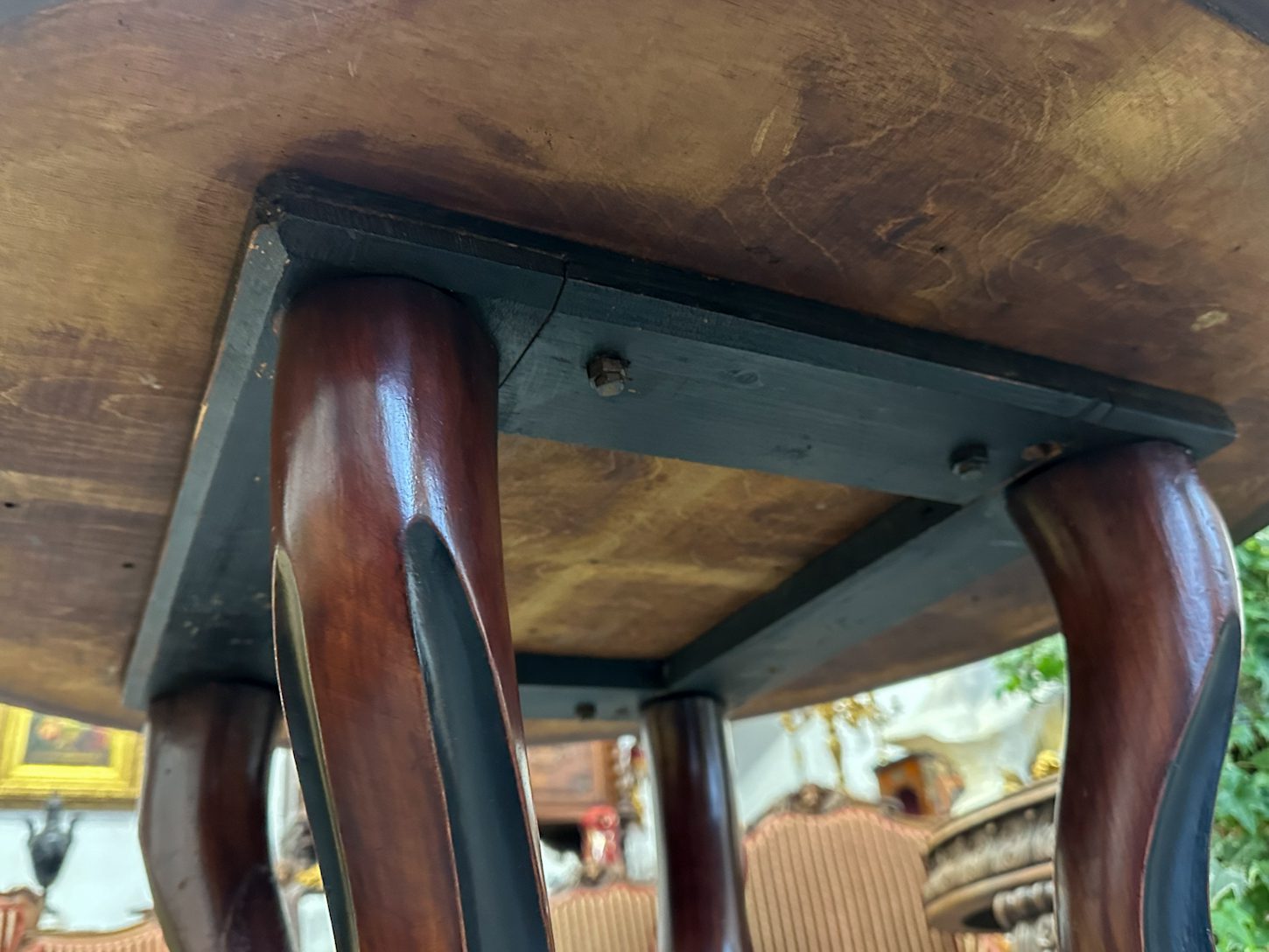
Good antique condition. Tabletop placage with signs of age-related use — superficial scratches and minor color tone changes visible in places; minor signs of wear on ebonized edges. Leg rocaille carvings have retained their detailing. Central finial — connection stable. Leg scroll legs — without deformations. The condition of the item is fully reflected in the photographs.
―――――――――――――――――――――
DESCRIPTION IN