Art Nouveau Oval Metal Serving Tray with Hand-Painted Irises — Early 20th Century Art Nouveau snapshot: 1904, Paris. Inside a town mansion designed by the celebrated Belgian architect Victor Horta (Victor Horta), a serene spring morning unfolds. Light filters through… 180,00 €
You’re now subscribed to price tracking for this product. We’ll notify you if the price drops. 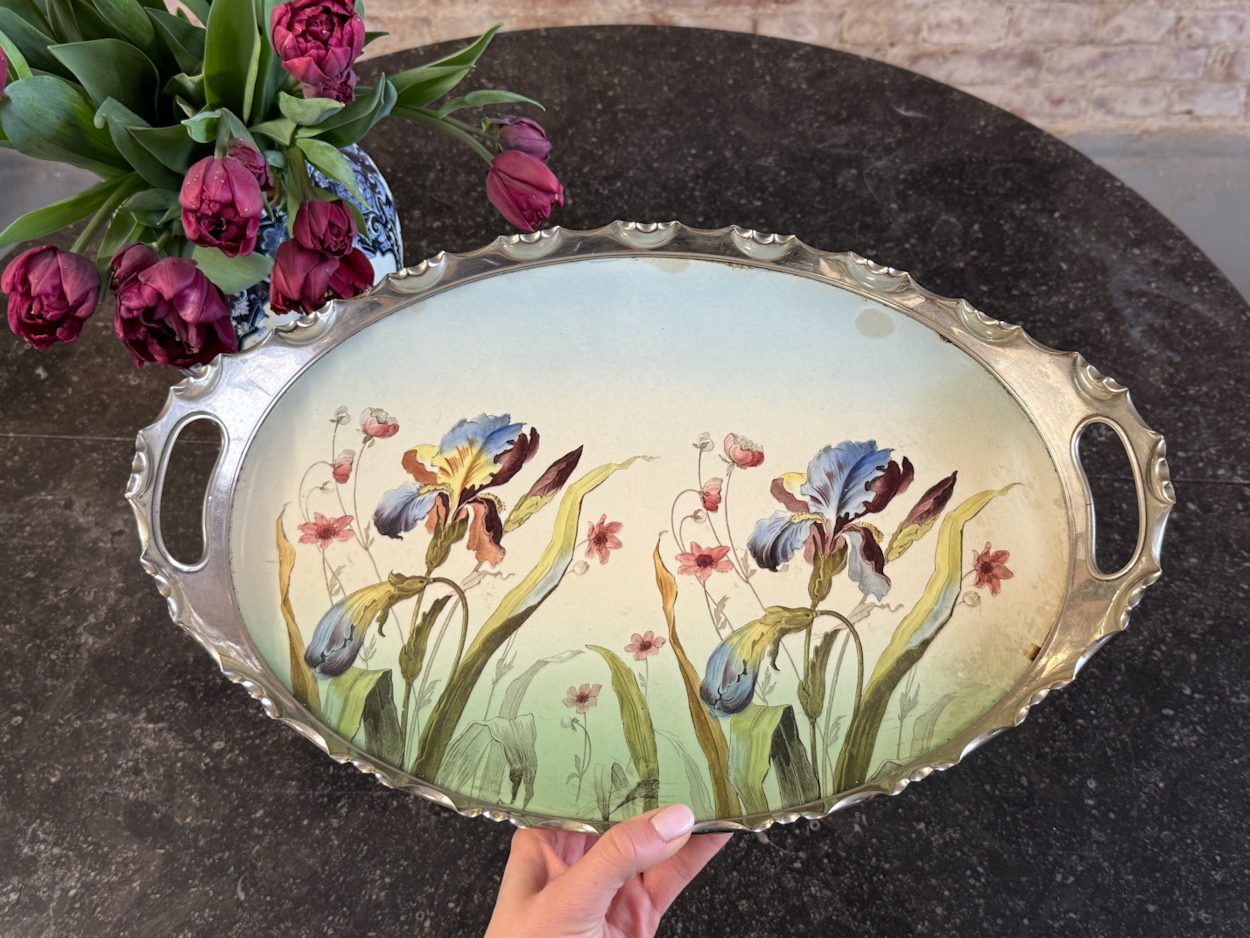
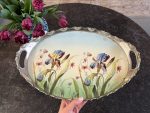
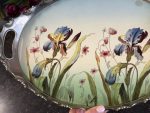
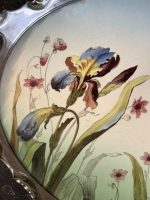
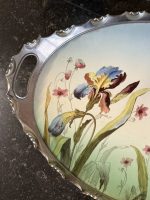
Art Nouveau oval metal tray with hand-painted iris motifs — early 20th century (6386)
Length 45 cm Width 31 cm Color GreenSilverLight blue
Description
Dimensions: Length — 45 cm Width — 31 cm
Art Nouveau oval metal tray with hand-painted iris motifs — early 20th century
PERIOD OF MANUFACTURE, ART STYLE, ERA This exquisite oval tray is a vivid and authentic example of applied art from the Art Nouveau period, crafted in the very early 20th century (around 1900–1905). During this era, a revolutionary aesthetic swept through European design, completely abandoning historical styles and drawing its main inspiration from the asymmetry of natural forms, flowing lines, and floral motifs. The iris was one of the primary floral symbols of the time, embodying the sophistication of the early new century with its poetic form and elegance. This tray is an excellent example of how an everyday household item was elevated to the level of an independent work of art.
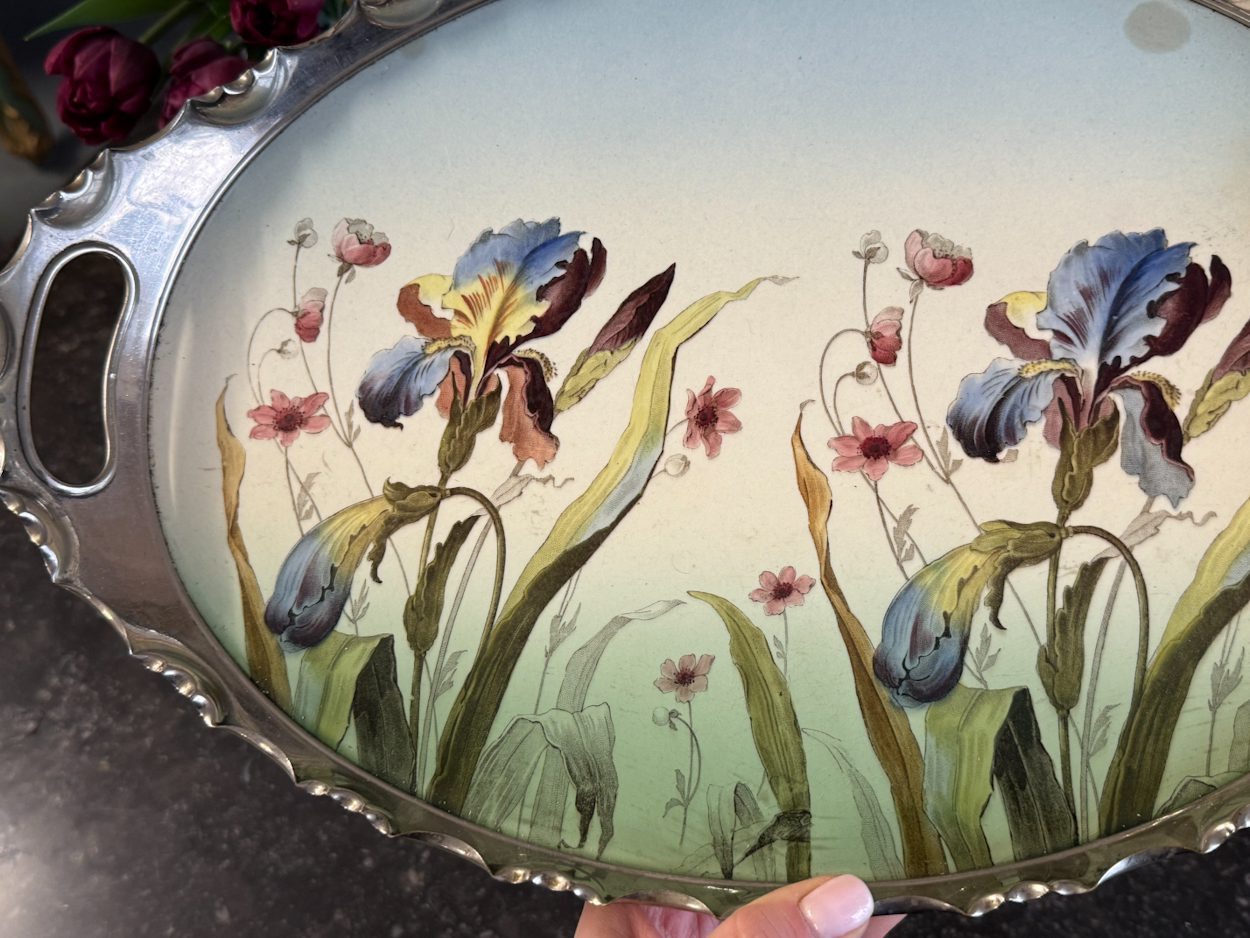
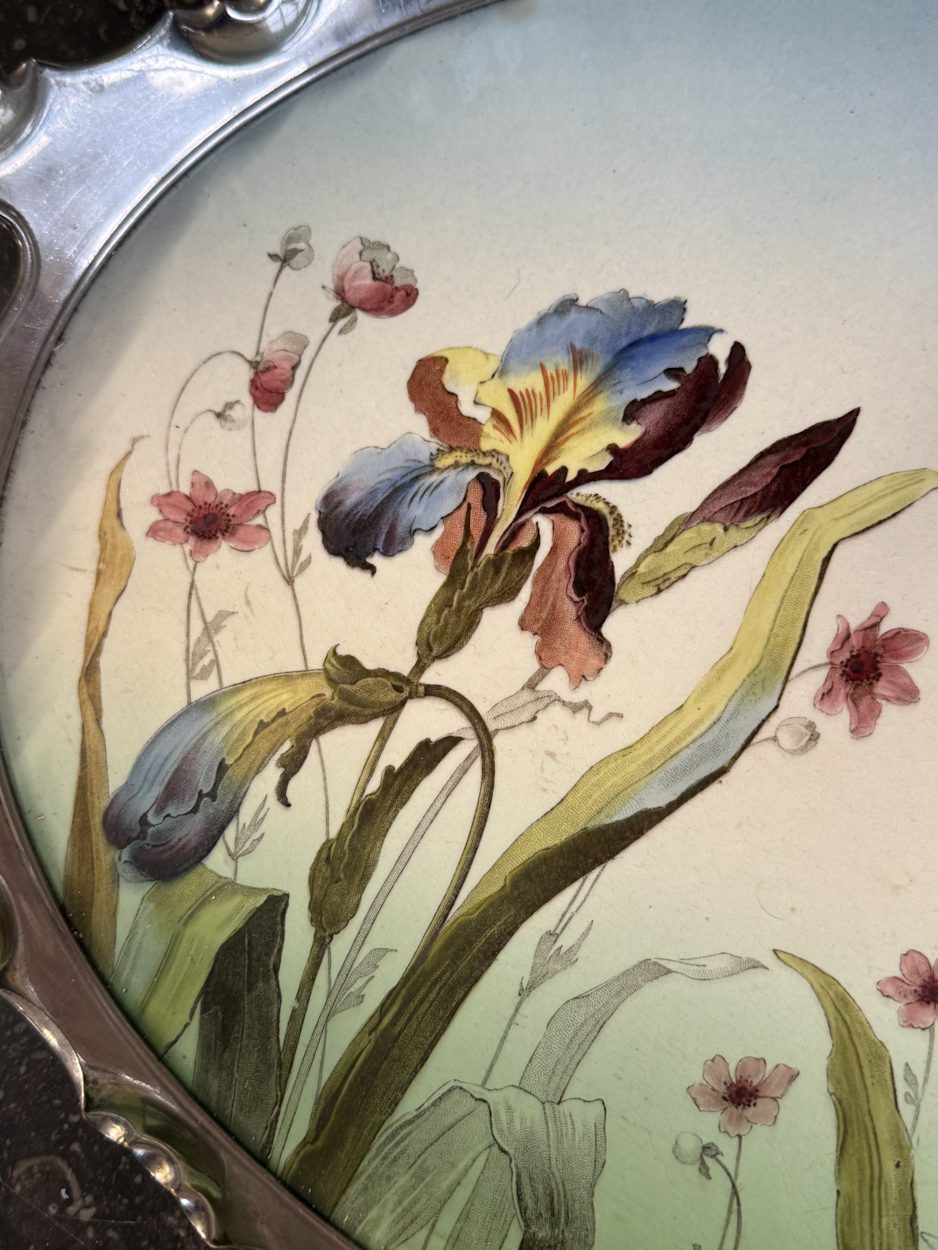
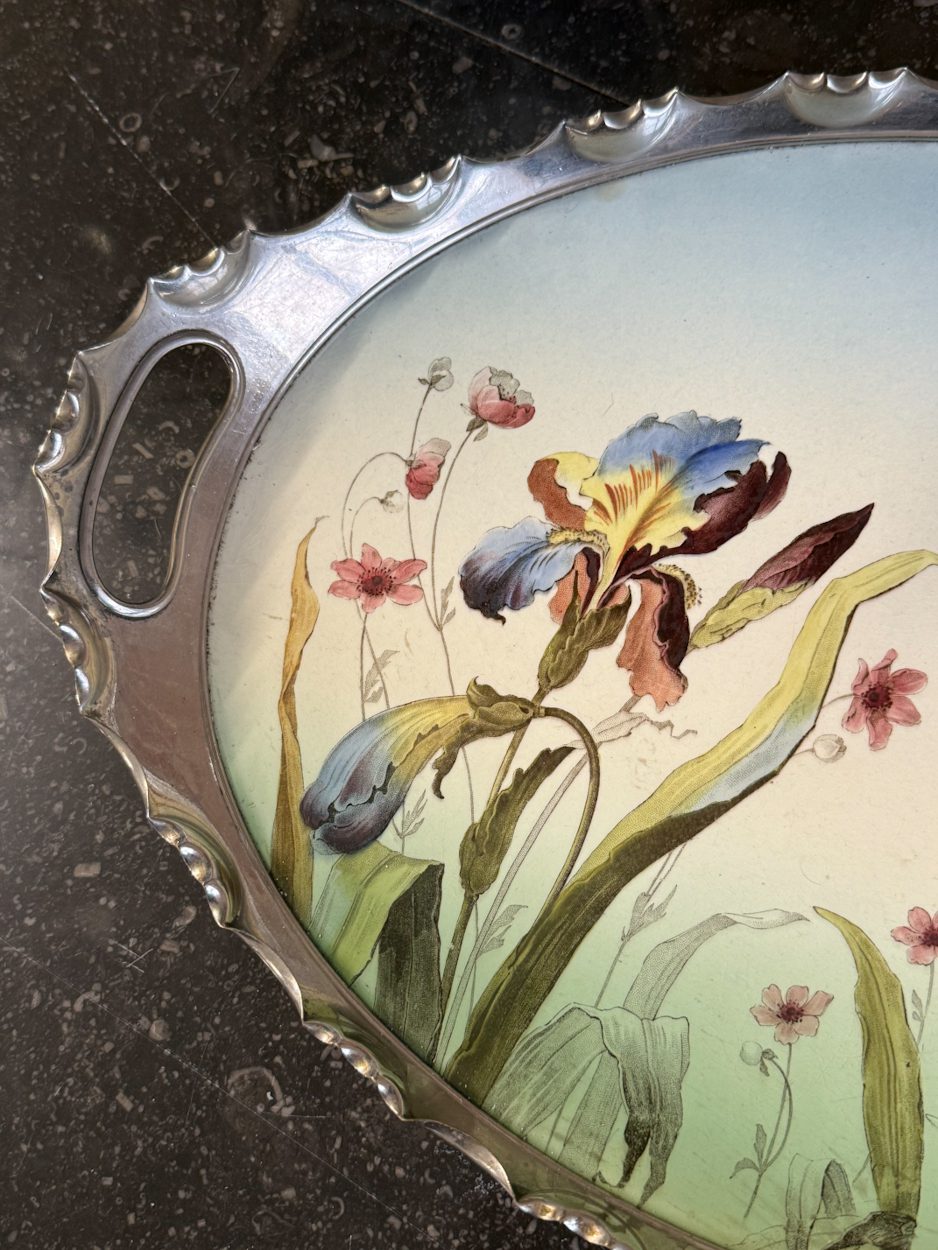
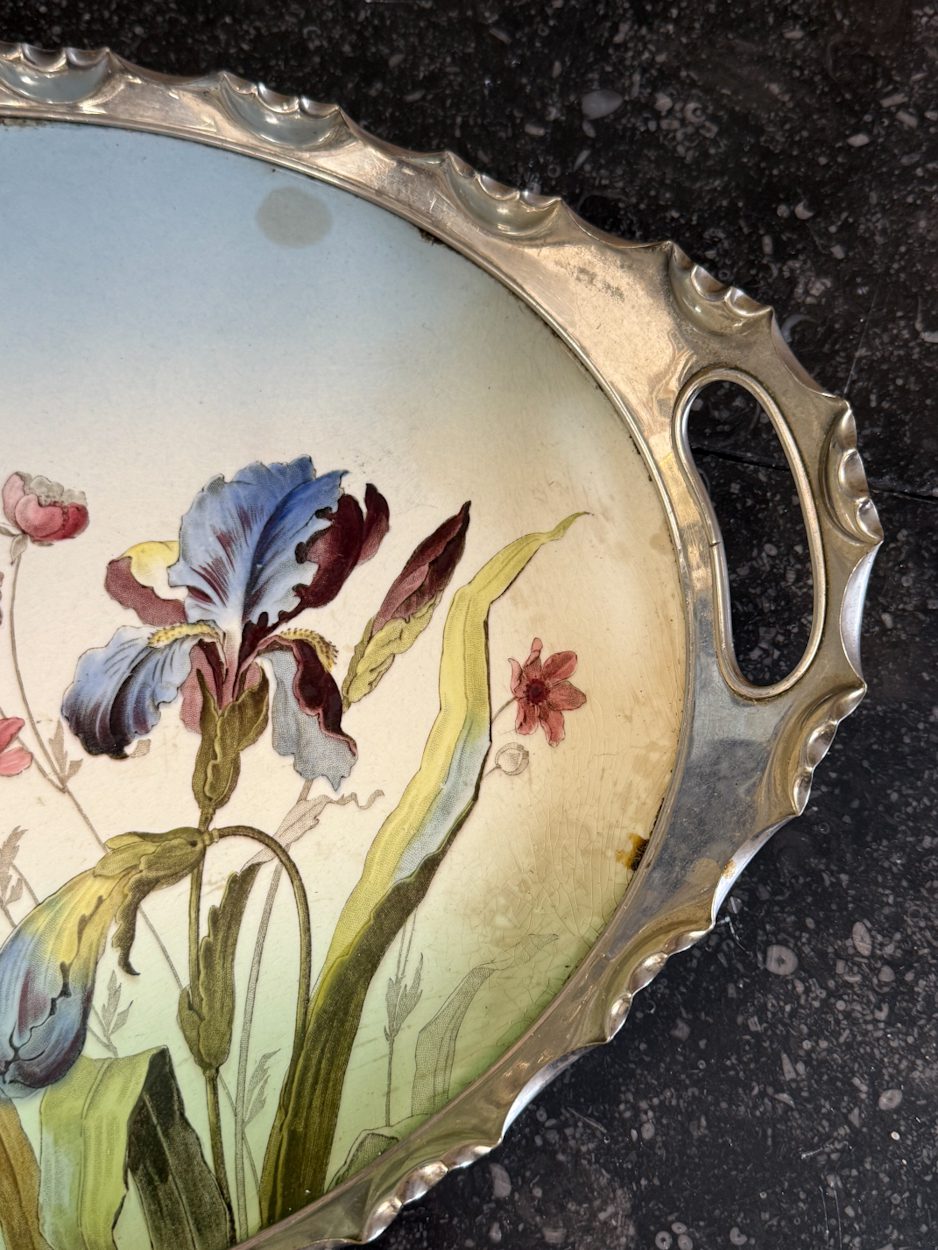
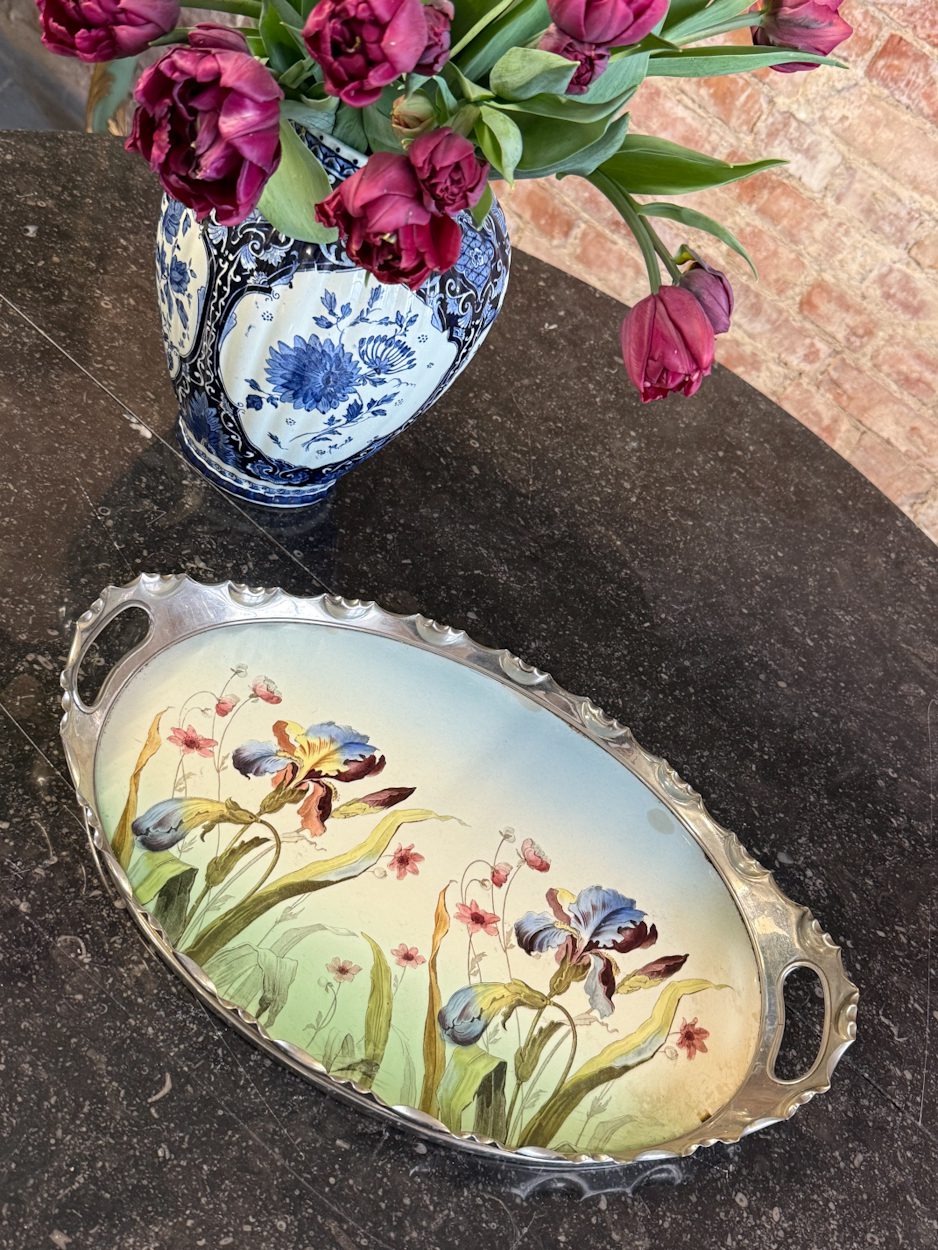
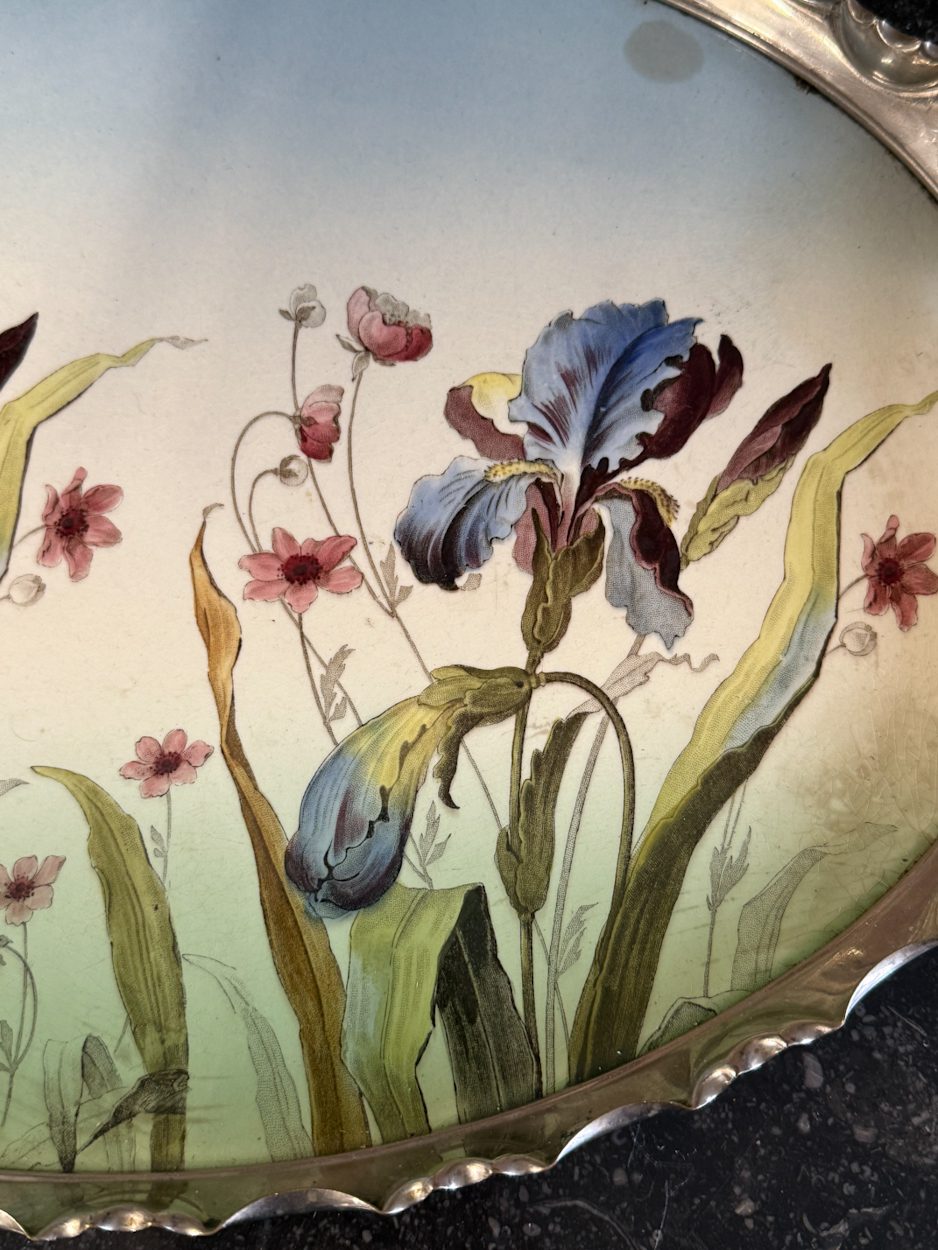
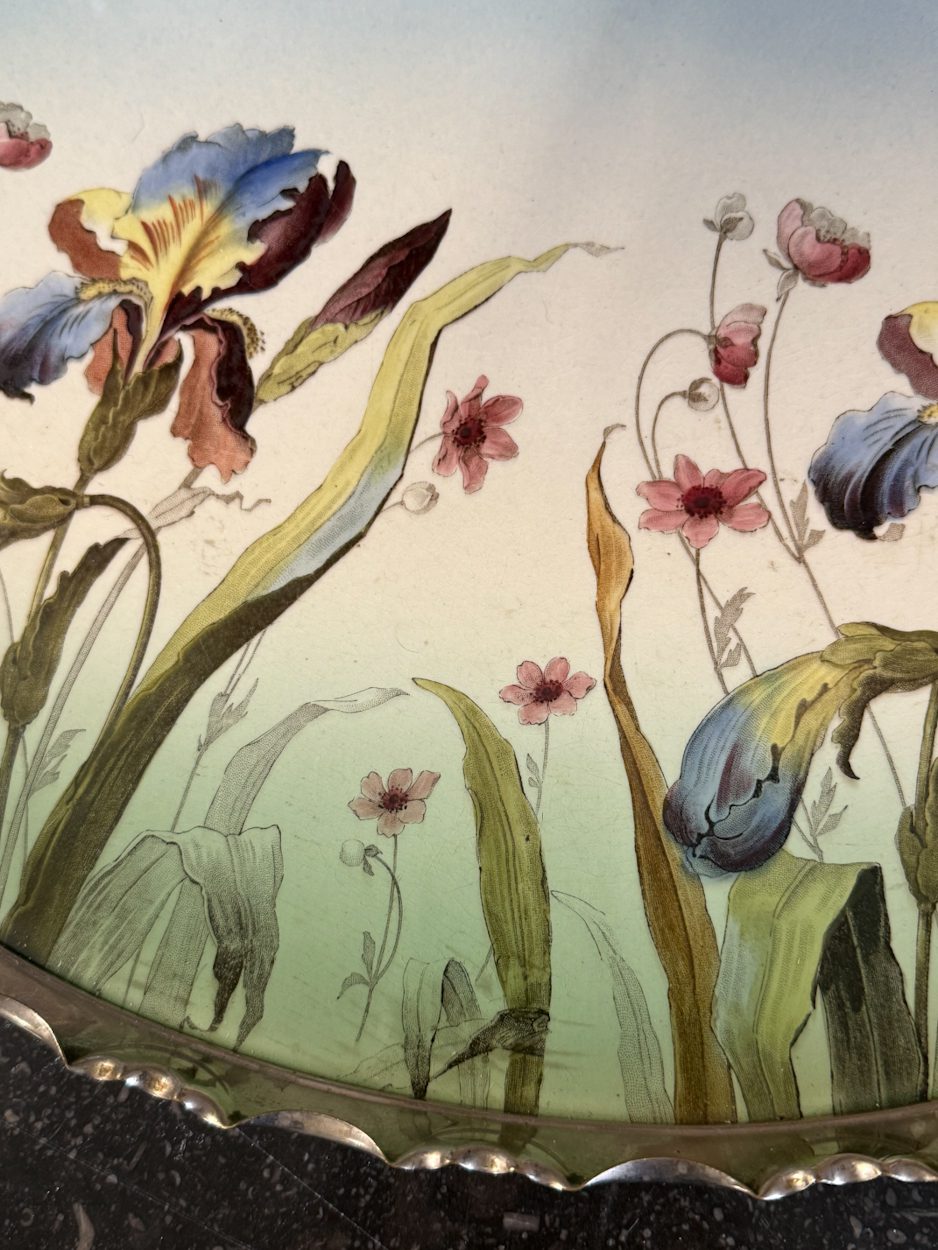
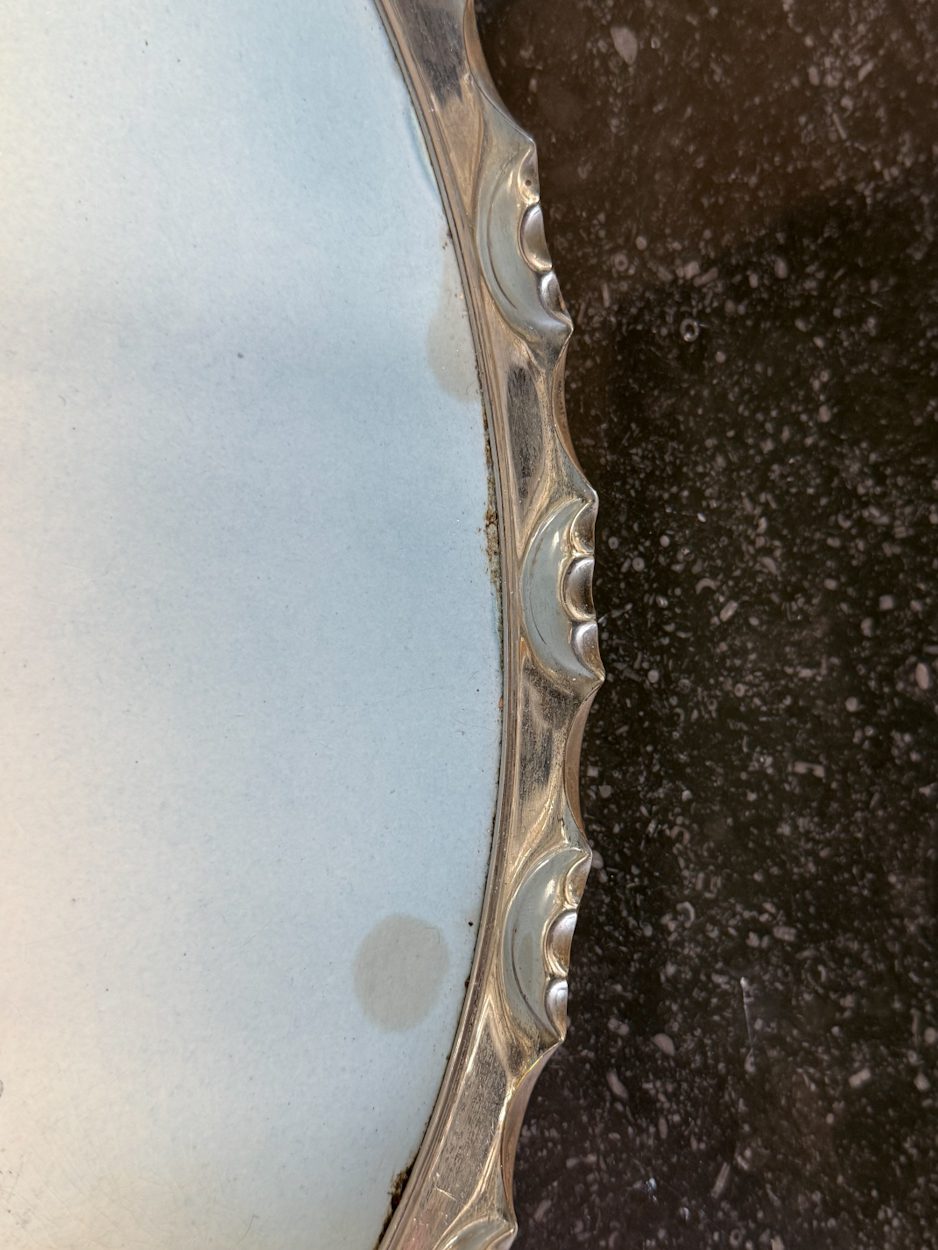
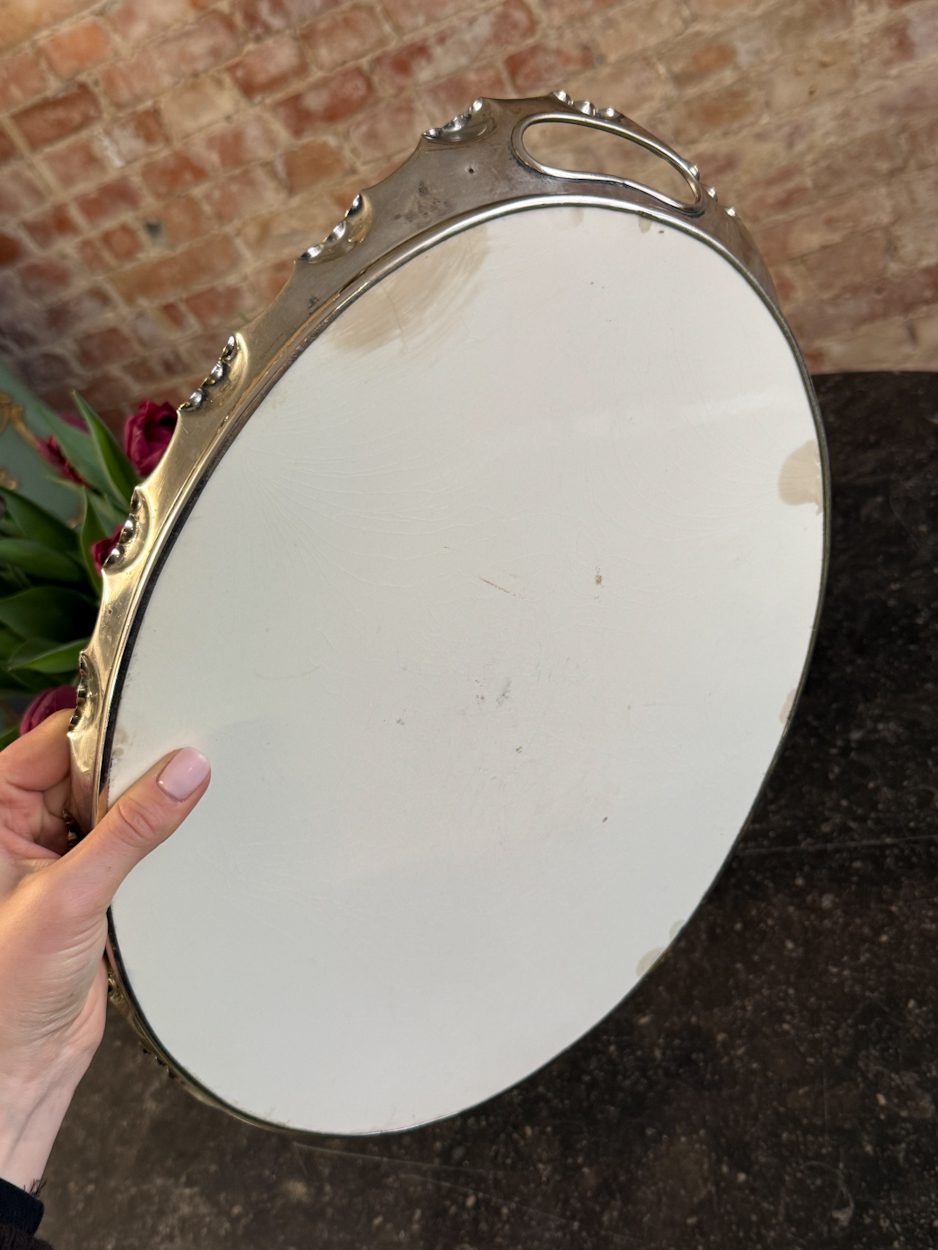
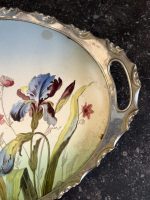
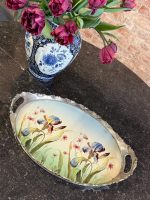
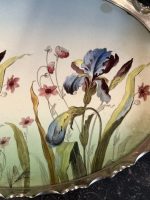
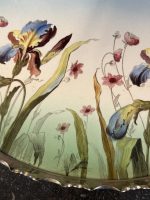
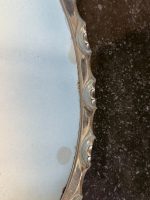
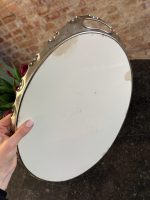
The tray has an oval base adorned with a high-quality, artistic, hand-painted work. The composition is dominated by two large, blooming irises in noble blue-violet and yellow tones, complemented by delicate meadow flower stems and sharp leaf silhouettes. The background color transitions from a soft greenish-yellow at the bottom to a light sky tone at the top, creating an impression of depth in a natural landscape. The painting is elegantly framed by a wavy, fluted metal rim with two integrated, ergonomic handles on the sides, whose flowing and sinuous form (the so-called “whiplash” motif) is a classic and unmistakable hallmark of this era. The back of the tray has a smooth, white enamel or protective coating, ensuring practical protection during use.
Snapshot of the era: 1904, Paris. A calm, spring morning reigns in the city townhouse designed by the famous and extravagant Belgian architect Victor Horta. Light flows through stained-glass windows, casting colorful shadows on the sinuous lines and delicate wood panels of the walls. A small but instantly noticeable object is placed on a small, asymmetrical coffee table. The hostess serves morning tea in delicate porcelain cups, but the guests’ attention is drawn precisely to the floral painting on the base. Fingers, grasping the cool, flowing metal handle, immediately feel the dynamics of its natural lines, which resonate so well with the design of the surrounding space. It is a moment when the morning coffee break transforms into a small aesthetic ritual, where even a simple vessel testifies to the triumph of early 20th-century art over the mundane.
MANUFACTURER AND CRAFTSMAN’S MARK Although there are no direct stamps or master signatures visible on the metal rim or the back, the execution technique, the character of the decorative rim, and the style of the floral painting clearly indicate the work of a specialized or (Jugendstil) workshop. Around 1900, high-quality floral trays of this type were produced in famous centers of art industry such as Nancy or the Solingen region, ensuring the highest aesthetic level for the European market.
RARITY AND SIGNIFICANCE trays of this type with such well-preserved hand-executed floral painting are a distinct collector’s priority. As metal objects were used intensively in daily life, the paint layer on most items from this period is heavily worn or scratched by dishes. This specimen has excellently preserved the integrity of its design, the vibrancy of its colors, and the fine details, which significantly increases its historical value.
APPLICATION IN INTERIORS, DESIGN, AND PHOTOGRAPHY This tray is a versatile and extremely elegant accent in any interior. It will look great both in practical use (for serving wine glasses or tea) and as a permanent decorative element on a sideboard, dresser, or even displayed vertically on a shelf like a painting. Thanks to the soft natural tones of and the iris motif, it will perfectly complement not only classic and historical interiors but will also be an outstanding, expensive, and intriguing accent in a modern, minimalist, or Scandinavian-style environment, bringing historical artistic depth to the space. For photographers and decorators, this item is an excellent prop for creating delicate, floral, and spring-themed compositions.
CONDITION The tray is in excellent historical condition. The metal rim and both integrated handles are completely firm, stable, and without deformation. The hand-painted surface is clean, the colors are vibrant, and have not lost their depth. Only minimal, completely natural signs of age (a few small age spots on the edges) are visible on the painted surface and the white coating on the back, which only enhance the object’s authenticity and its origin from the early 20th century.