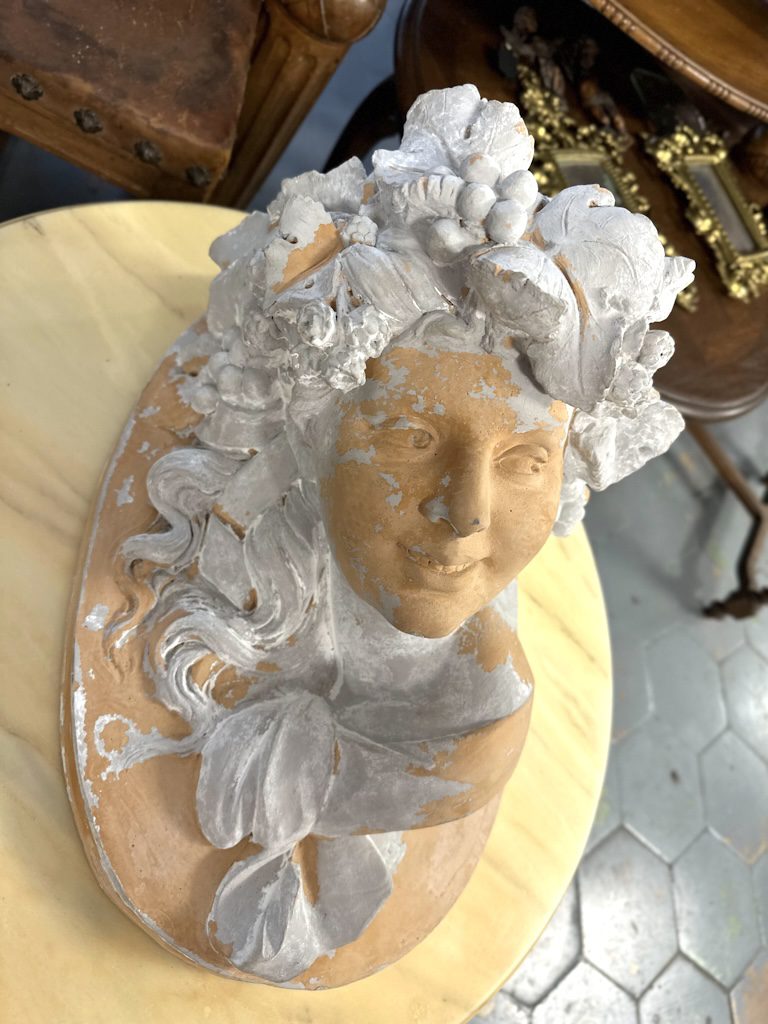
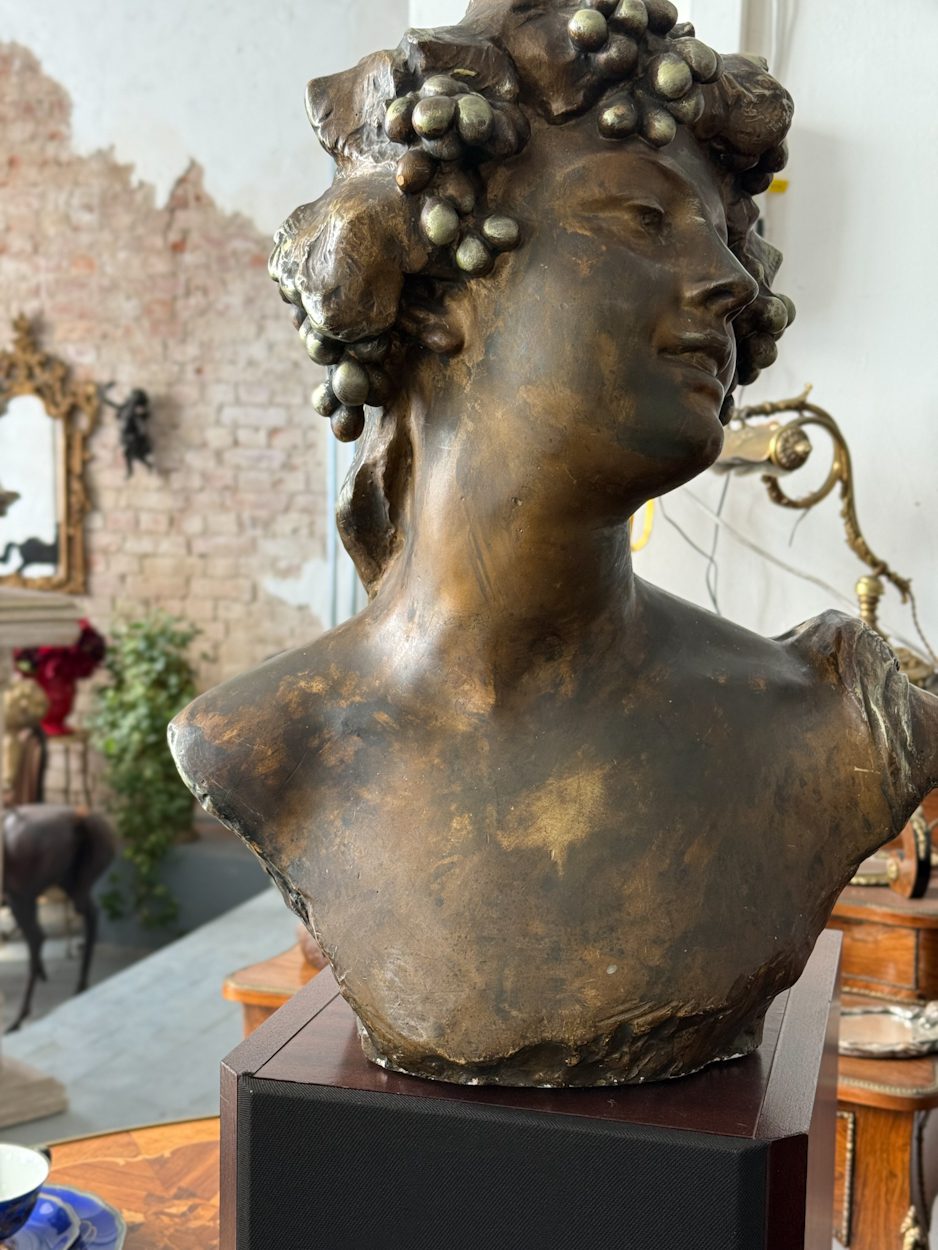
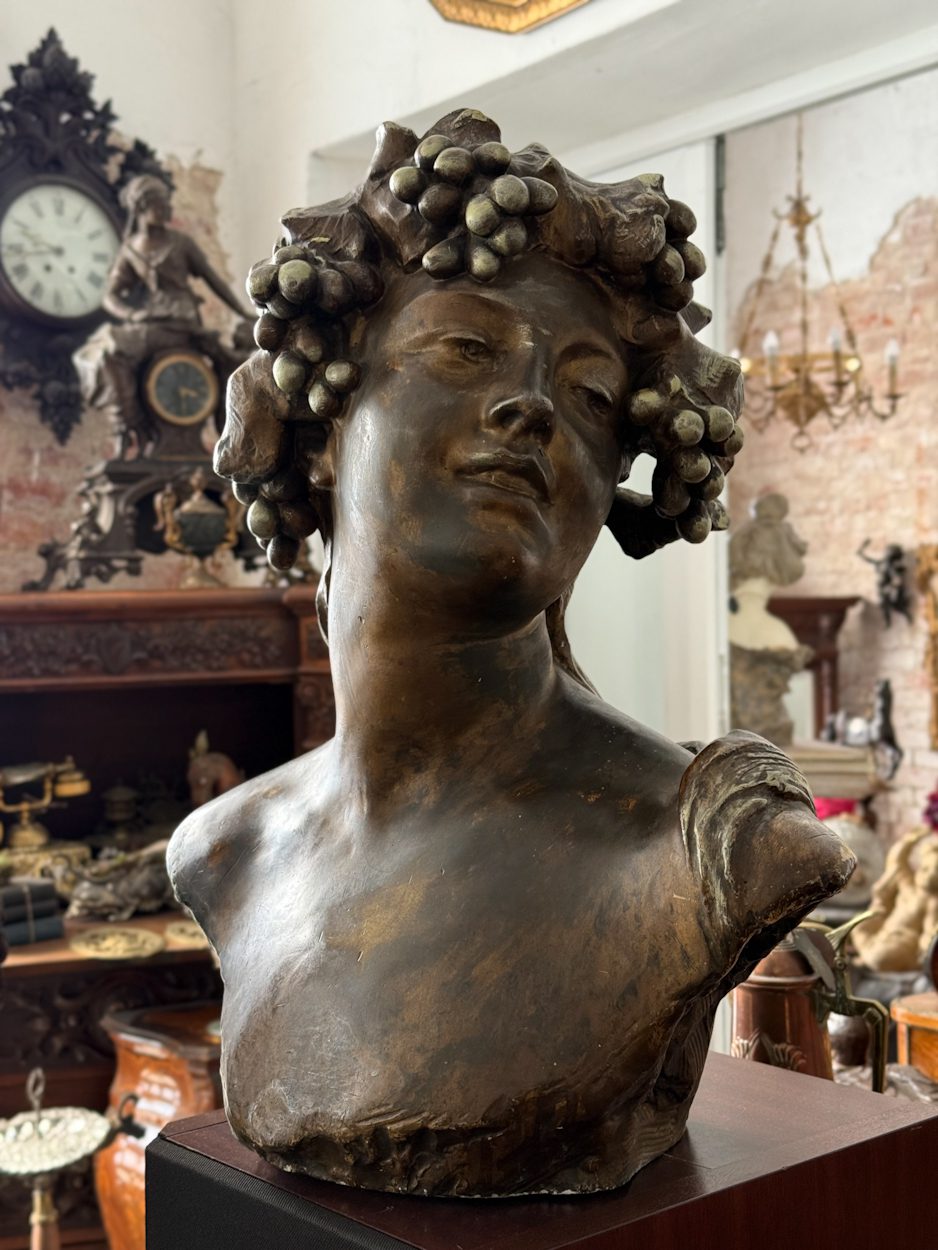
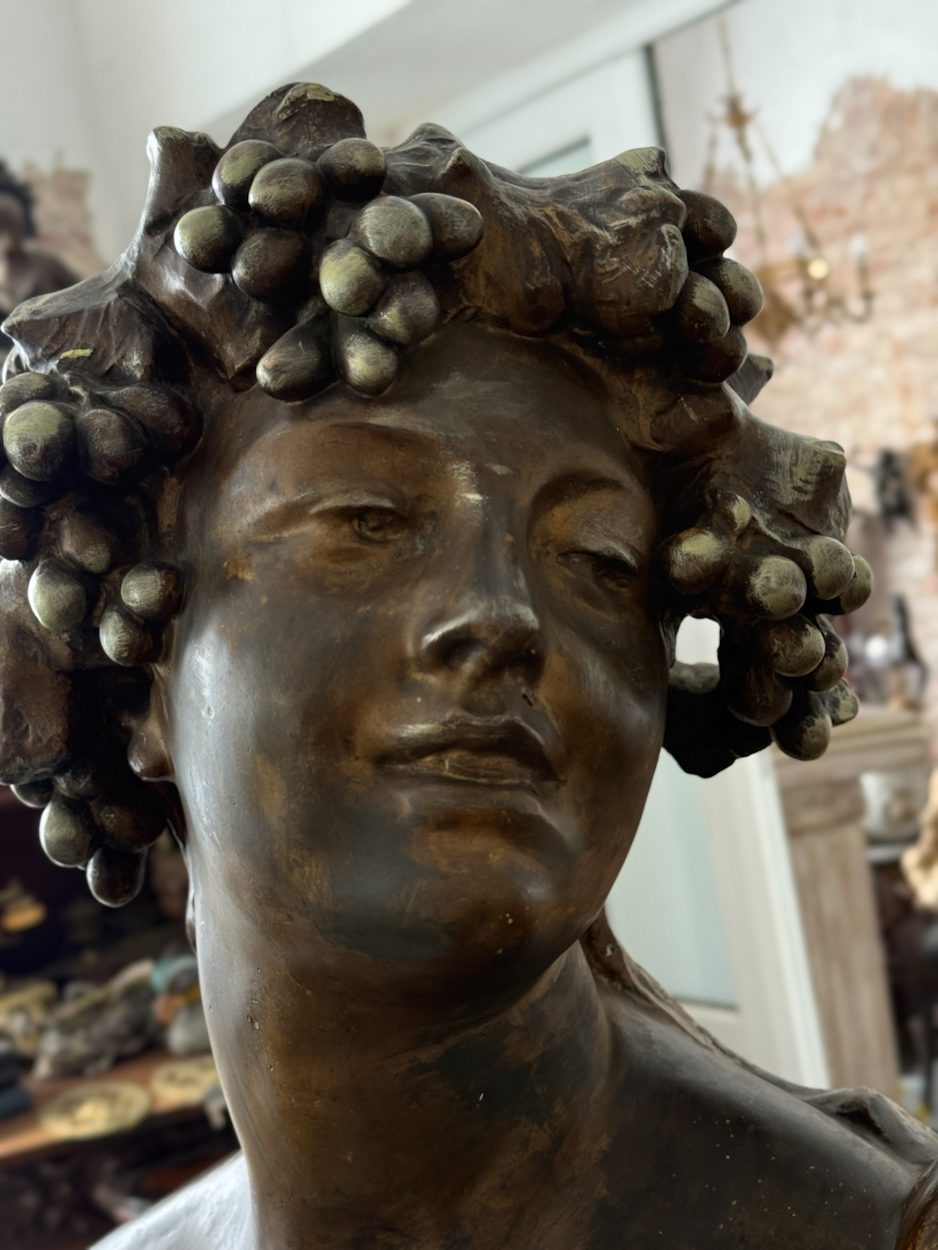
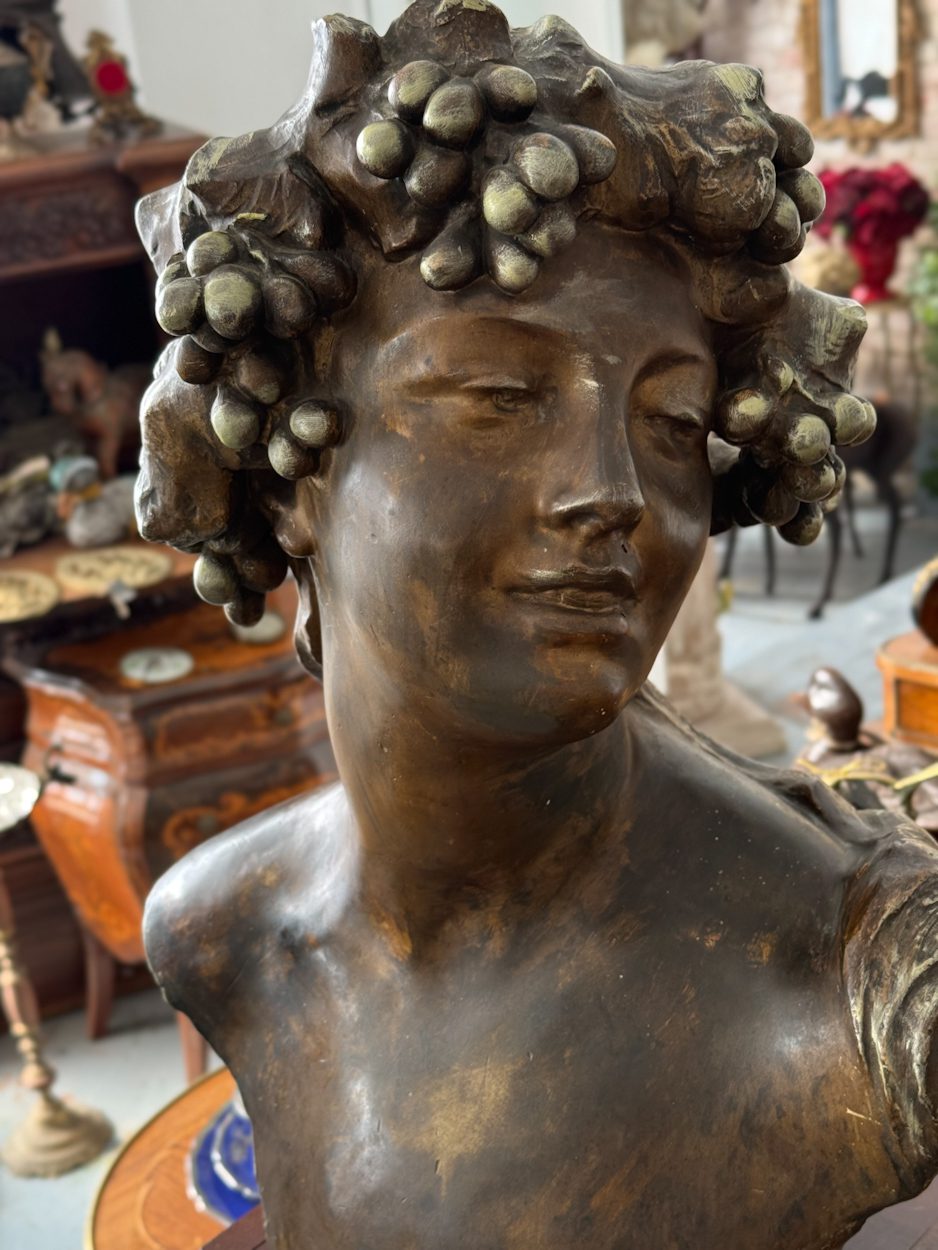
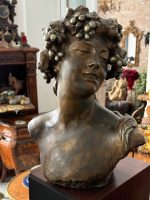
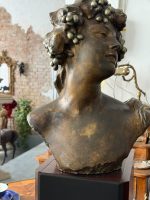
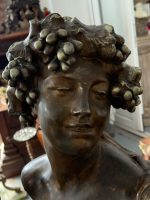
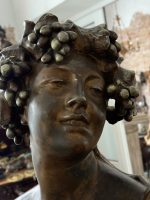
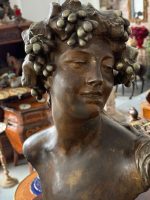
The Lambeaux Bacchante Bust — Art Nouveau Terracotta, Belgium, c. 1890–1905 This expressive, heavy terracotta Lambeaux bacchante depicts a young follower of Bacchus crowned with a luxuriant wreath of grapes and vine leaves. The model corresponds to “Femme aux pampres”… 450,00 €
You’re now subscribed to price tracking for this product. We’ll notify you if the price drops. 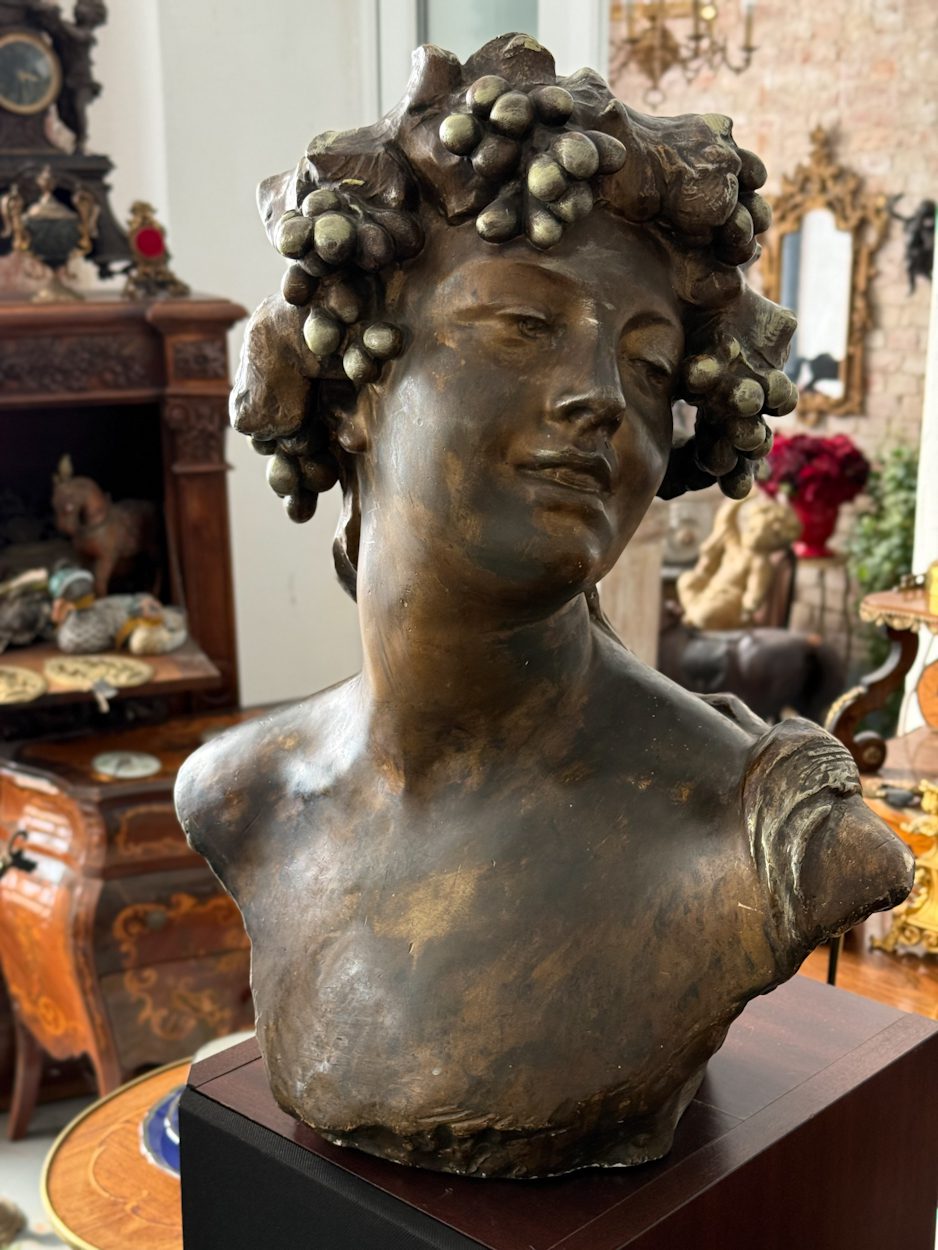
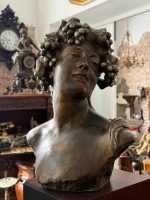
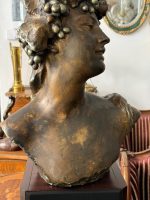
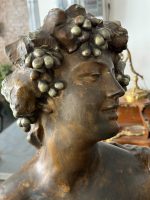
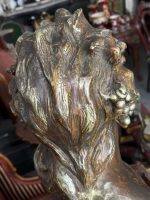
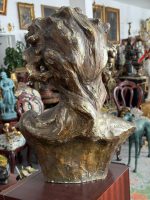
Bacchante with a Grape Crown — Art Nouveau, Belgium, c. 1900 (6384)
Height 55 cm Width 41 cm Color GoldBrownGreen
Description
The Lambeaux Bacchante Bust — Art Nouveau Terracotta, Belgium, c. 1890–1905
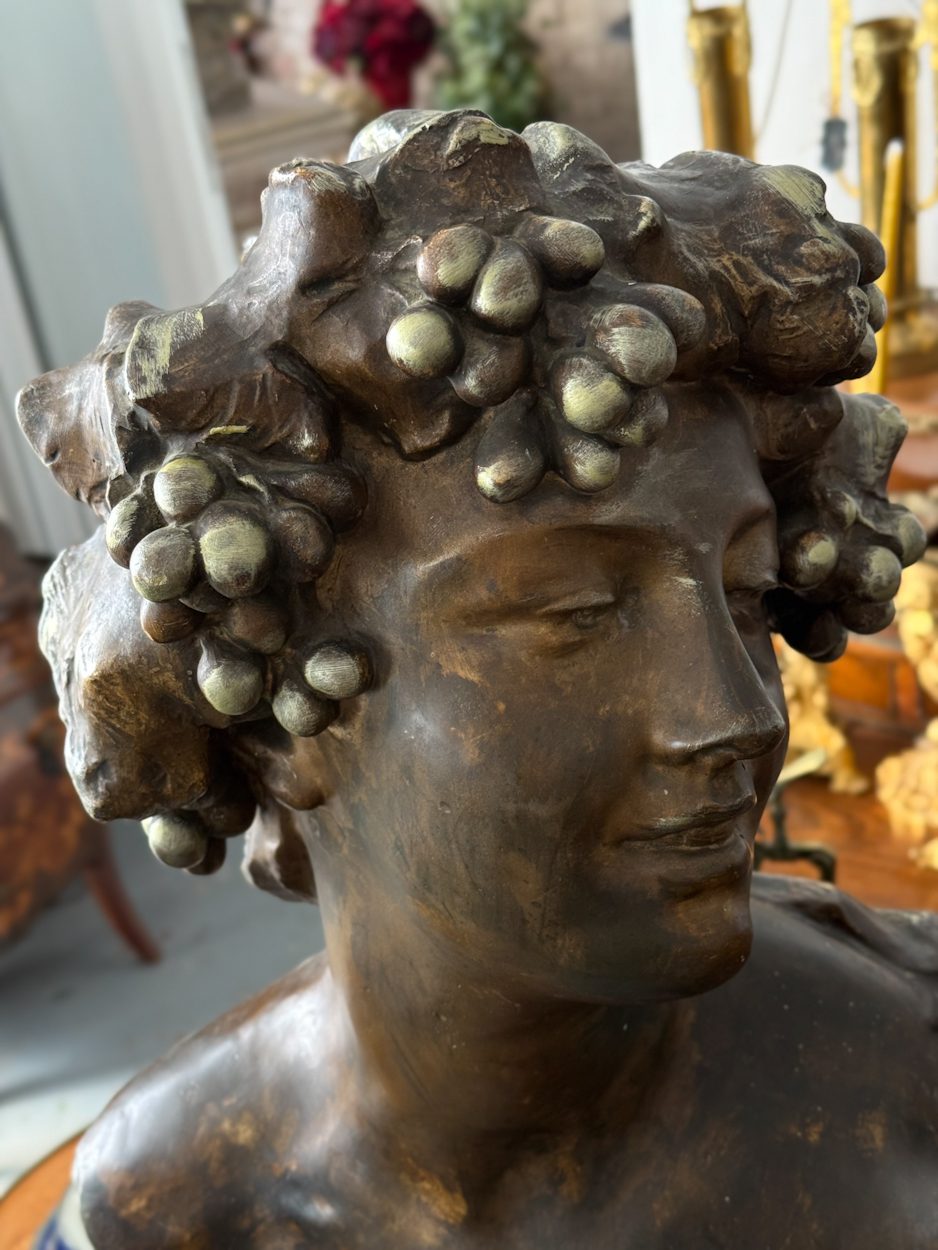
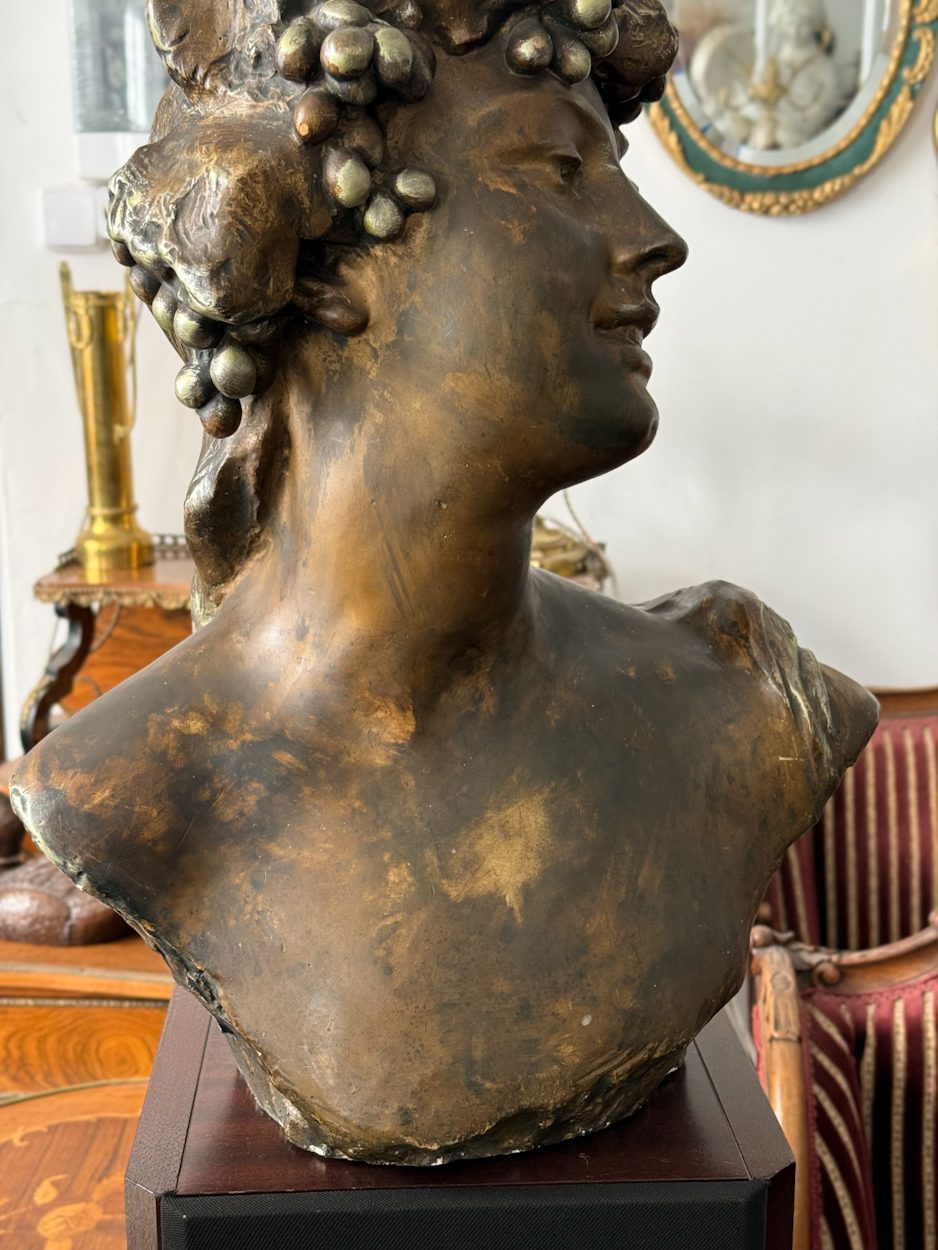
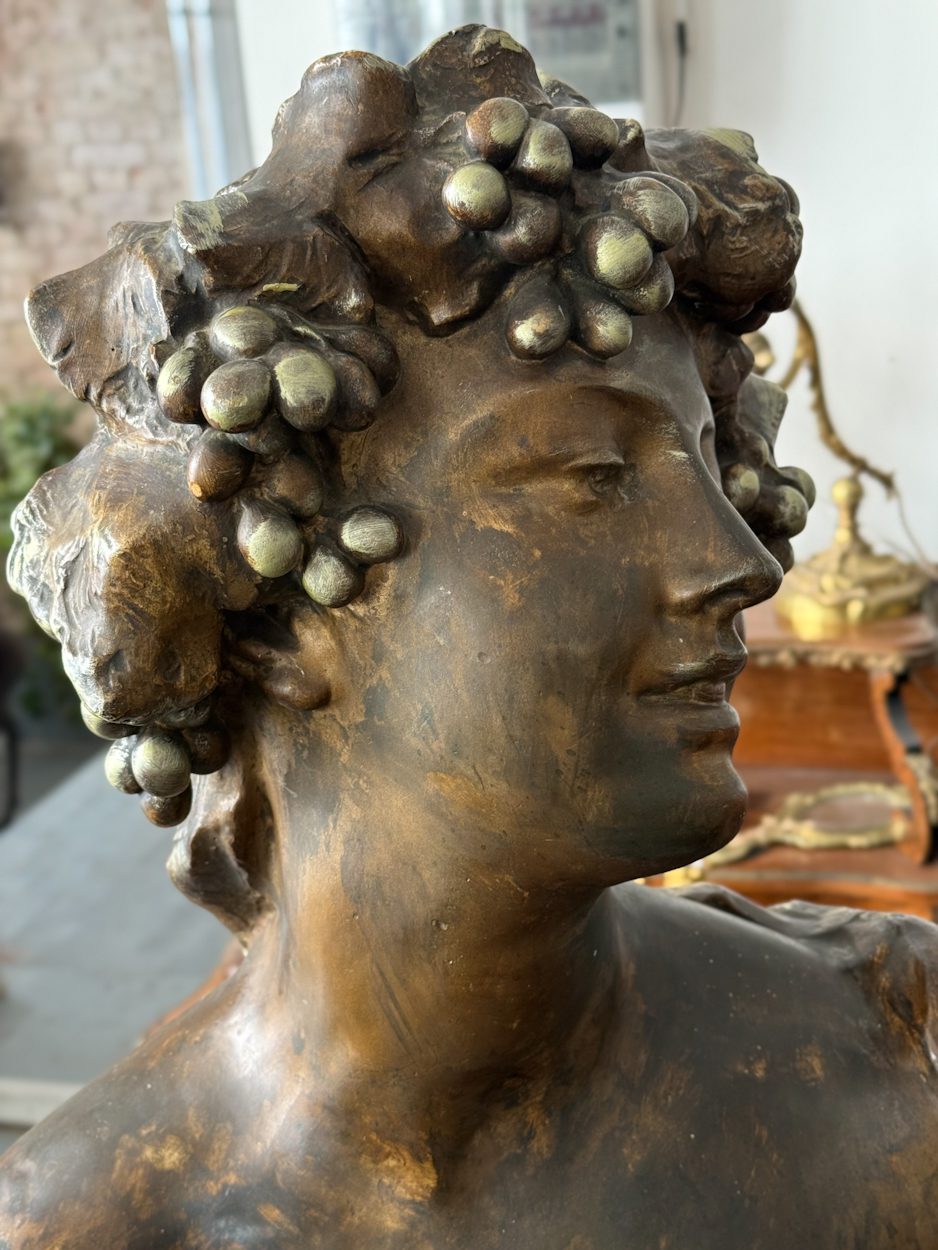
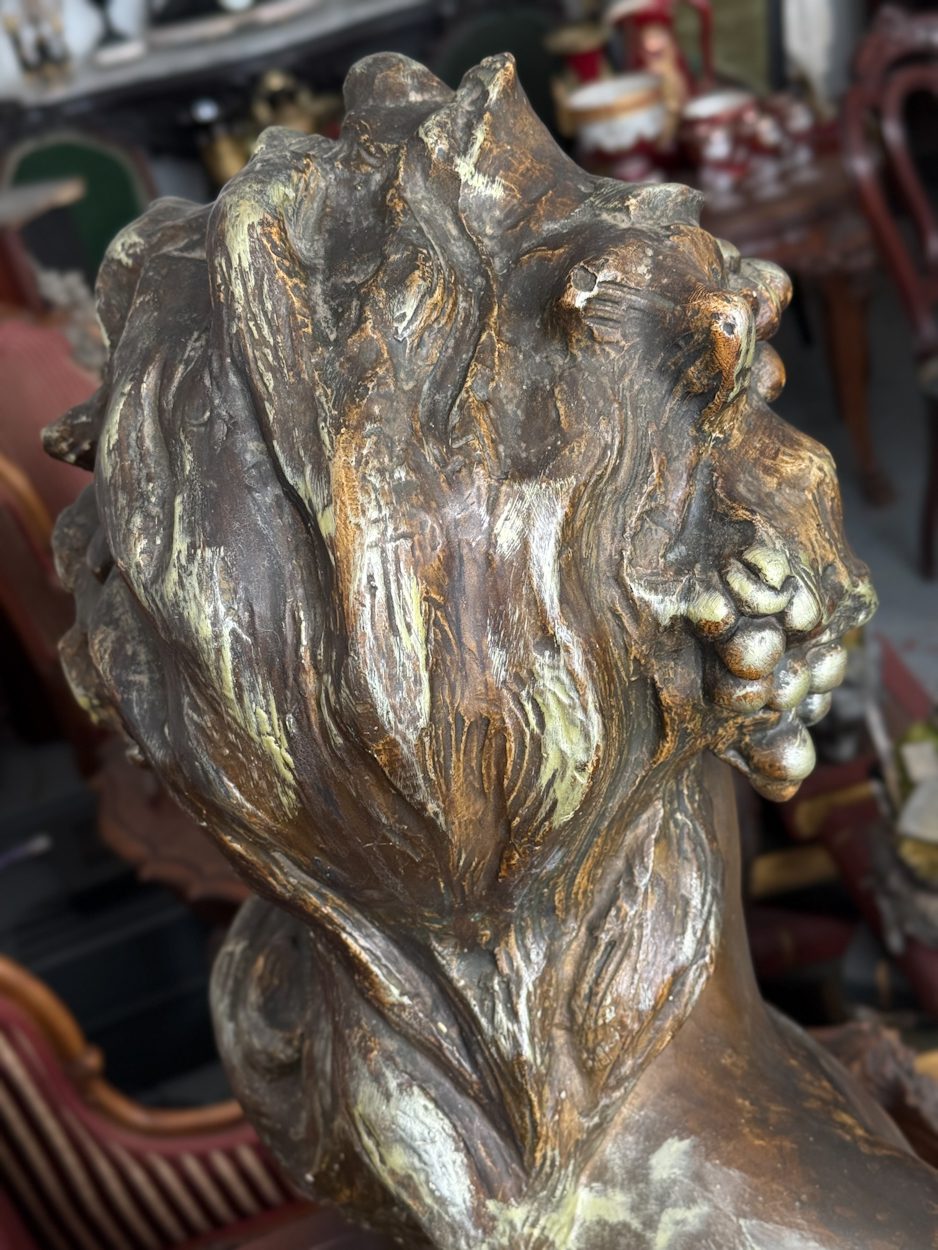
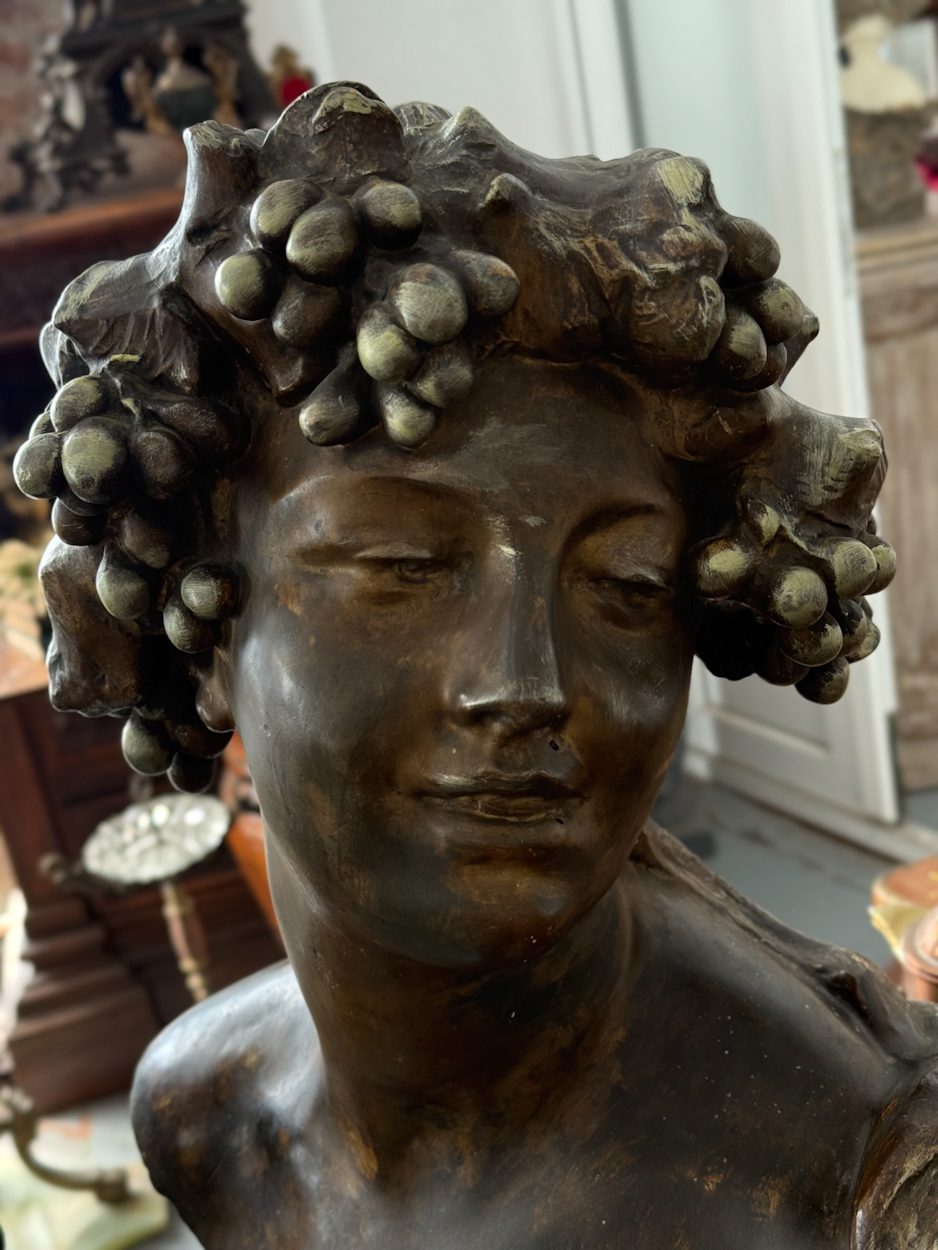
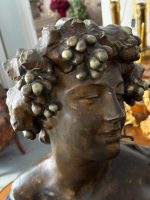
This expressive, heavy terracotta Lambeaux bacchante depicts a young follower of Bacchus crowned with a luxuriant wreath of grapes and vine leaves. The model corresponds to “Femme aux pampres” by the Belgian sculptor Jef Lambeaux (Jef Lambeaux, 1852–1908), and this belongs to the transitional period between Belgian Art Nouveau and Neo-Baroque around the turn of the twentieth century.
Art Nouveau snapshot: Jef Lambeaux (Jef Lambeaux) paused in the half-light of his Antwerp studio. Late afternoon light slid through the window, and something moist and round glinted — a whole cluster, frozen in clay, still smelling of autumn. He laid his hand on the cold surface where his fingers had once left their mark. Behind him someone softly spoke his name, but he did not turn — he was listening to the form, not the person.
The and Its Maker
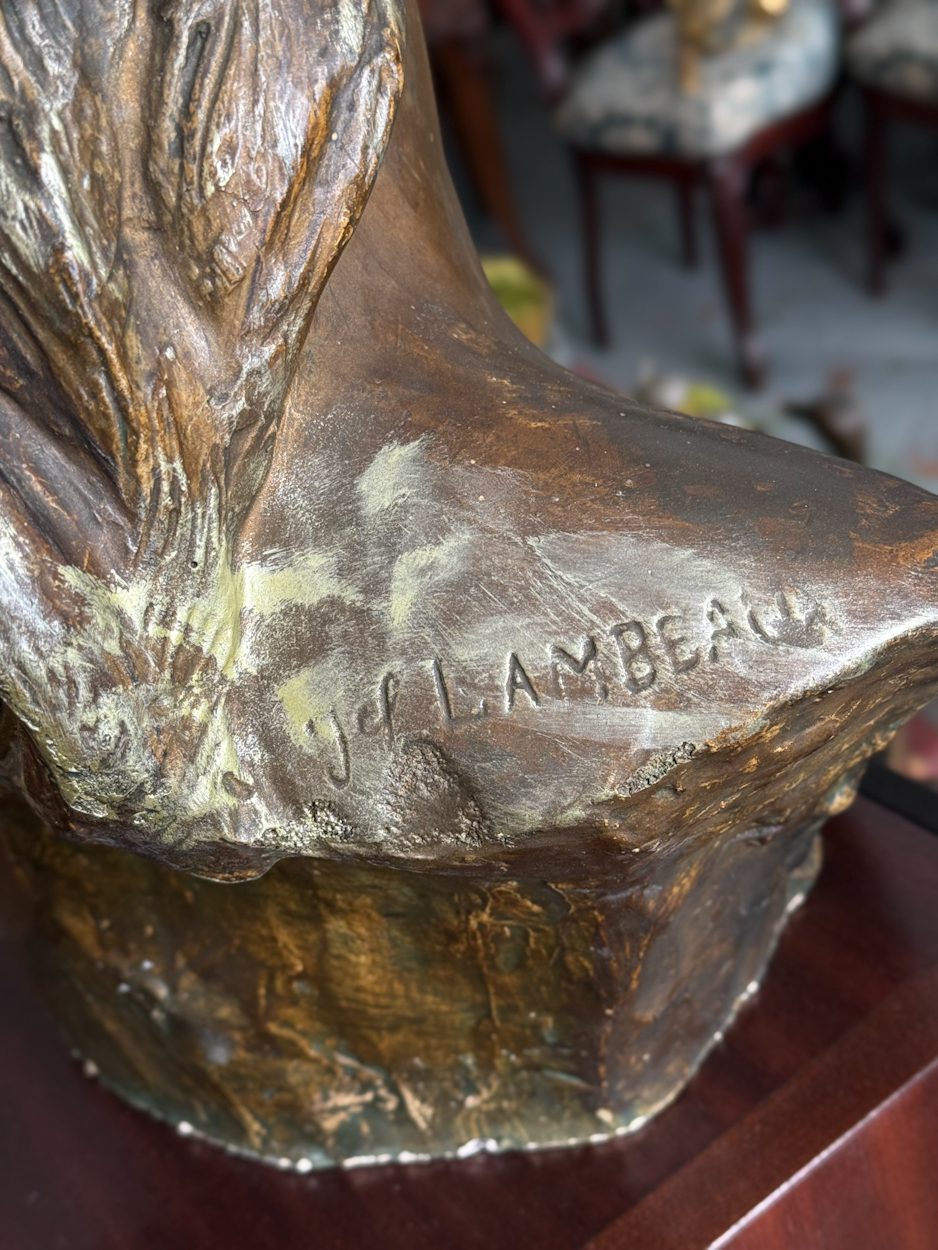
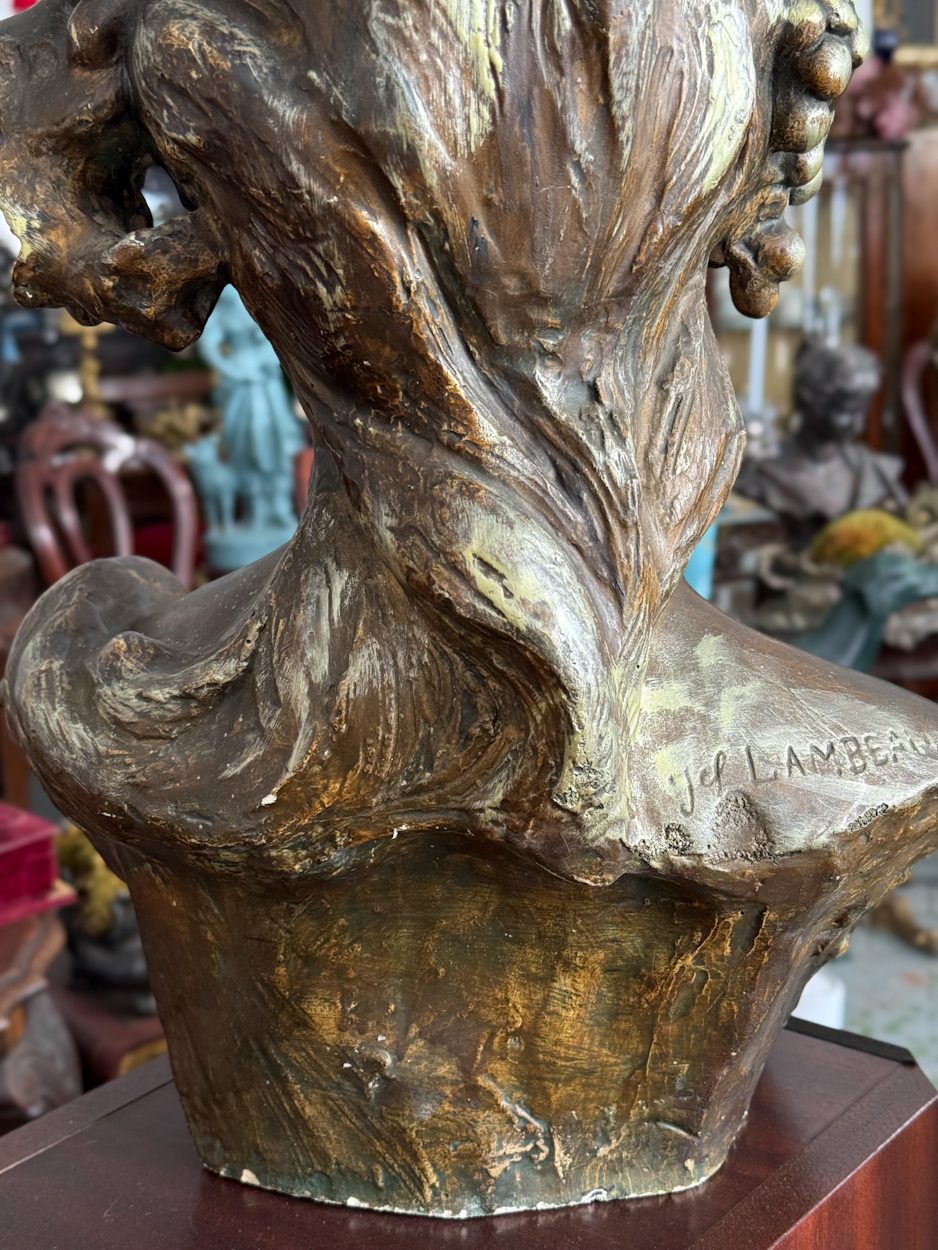
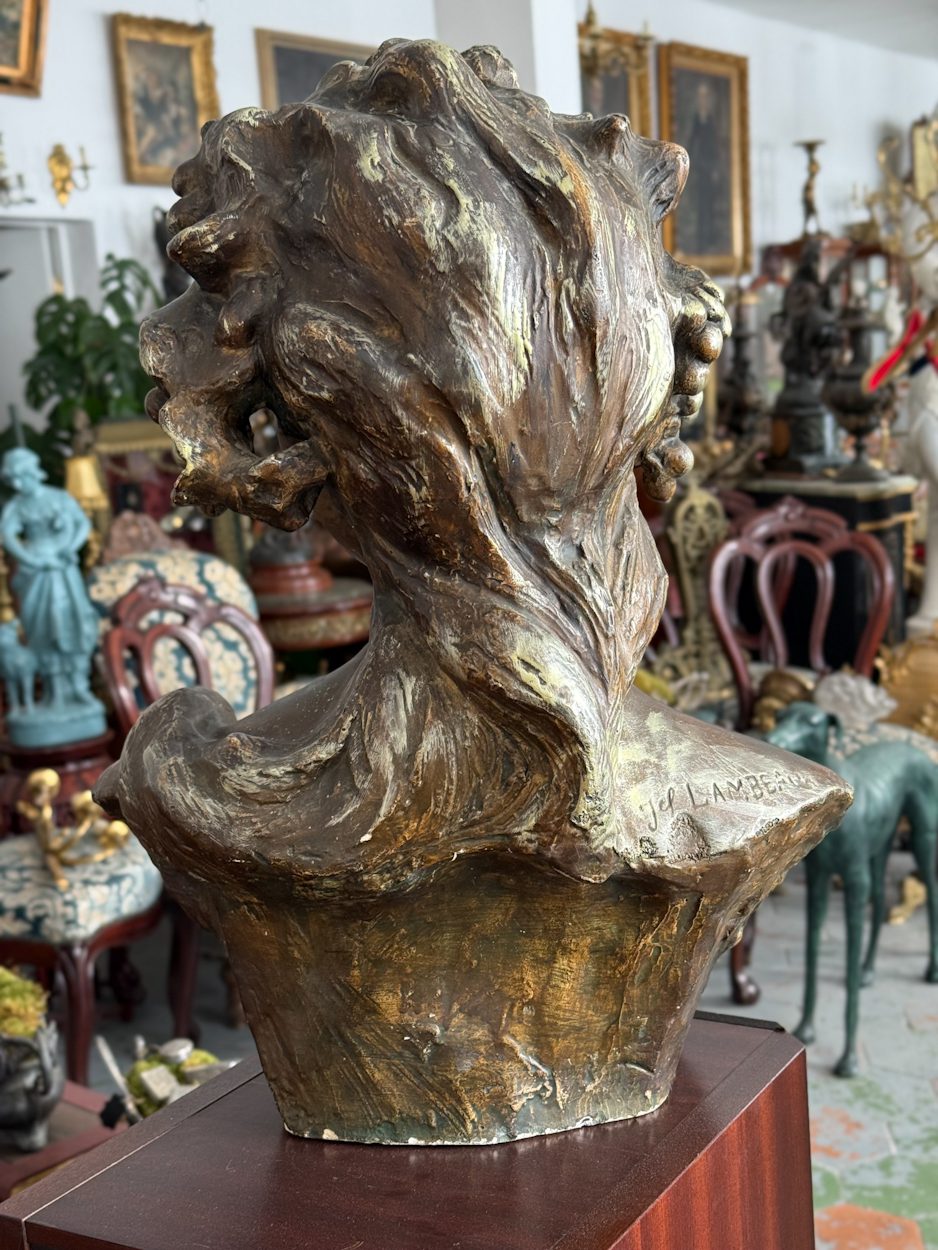
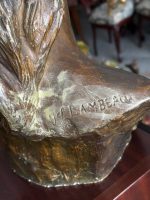
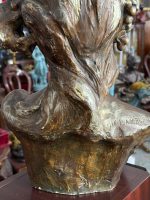
The tilted head, parted lips and dynamic line of the neck give this the movement and sensual energy for which the sculptor became famous — and at times scandalous. The bust bears an incised signature “Jef Lambeaux” on the side, clearly visible in the photographs. Born in Antwerp and trained at the Antwerp Academy of Fine Arts, Lambeaux became one of the most prominent Belgian sculptors of his era; his most famous work is the monumental marble relief Human Passions (1898) in Brussels. This is a period cast bearing the sculptor’s signature; authenticity has not been separately certified, so it is offered as a signed period piece rather than a certified original.
Collecting a in Terracotta
A terracotta is especially interesting, as the clay preserves the sculptor’s hand more directly than bronze. As a focal point it commands a classical, eclectic or Art Nouveau interior, and this also serves as a strong subject in portrait and interior photography. Age-appropriate patina and surface wear are present. The condition is fully reflected in the photographs.