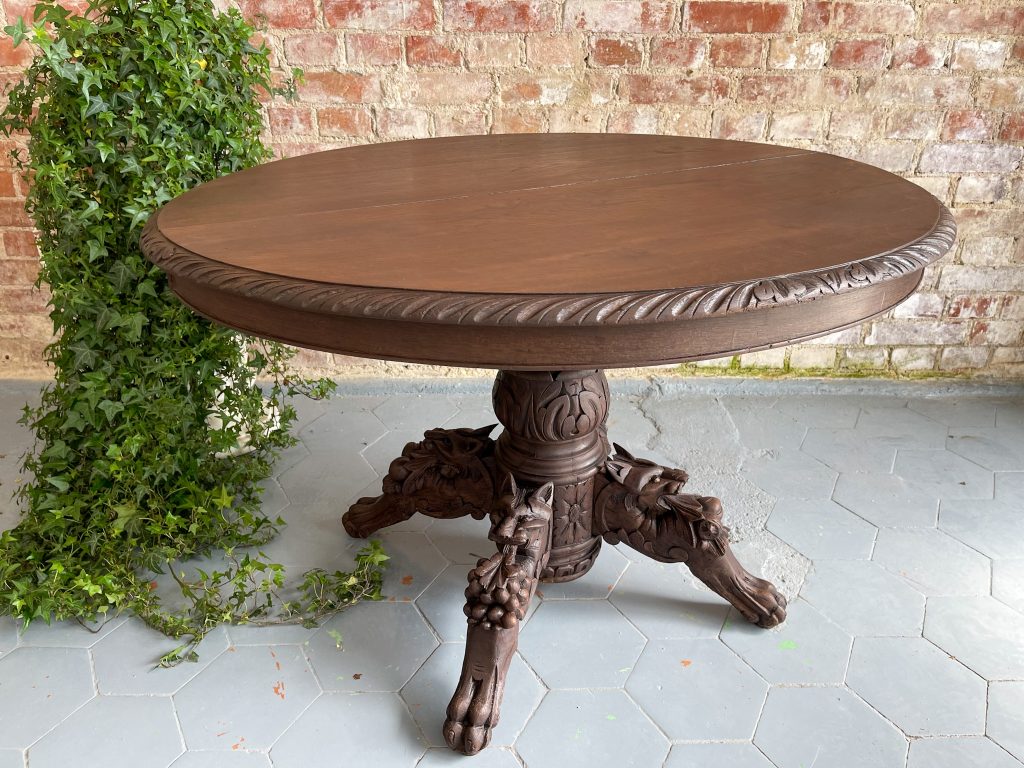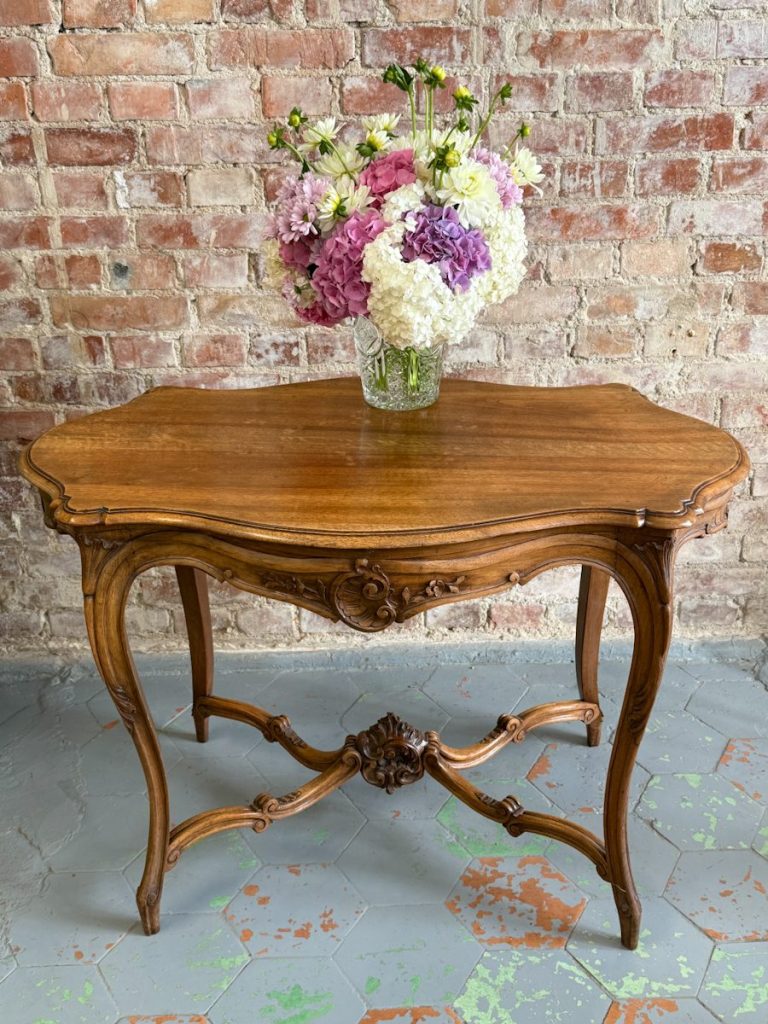
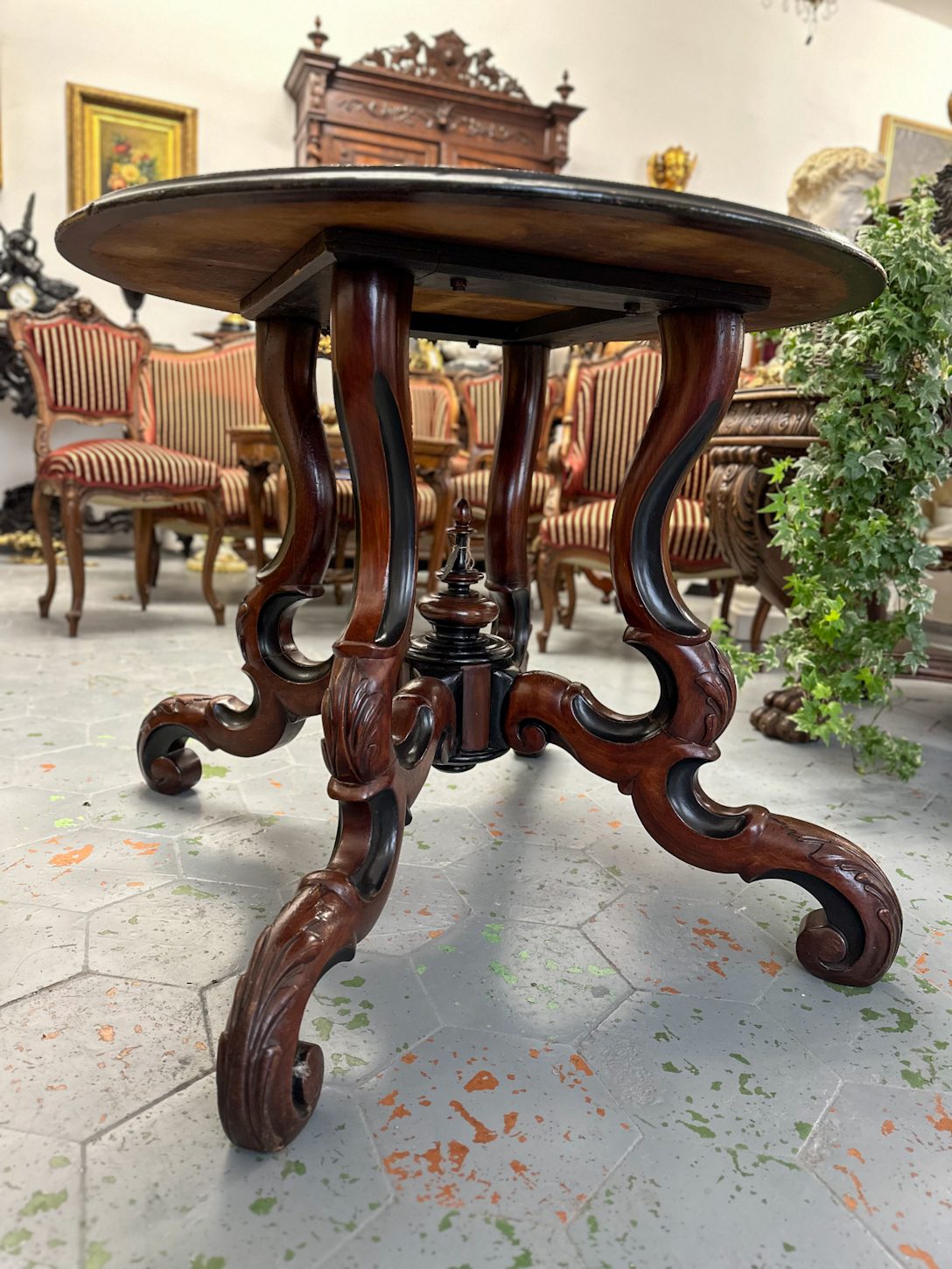
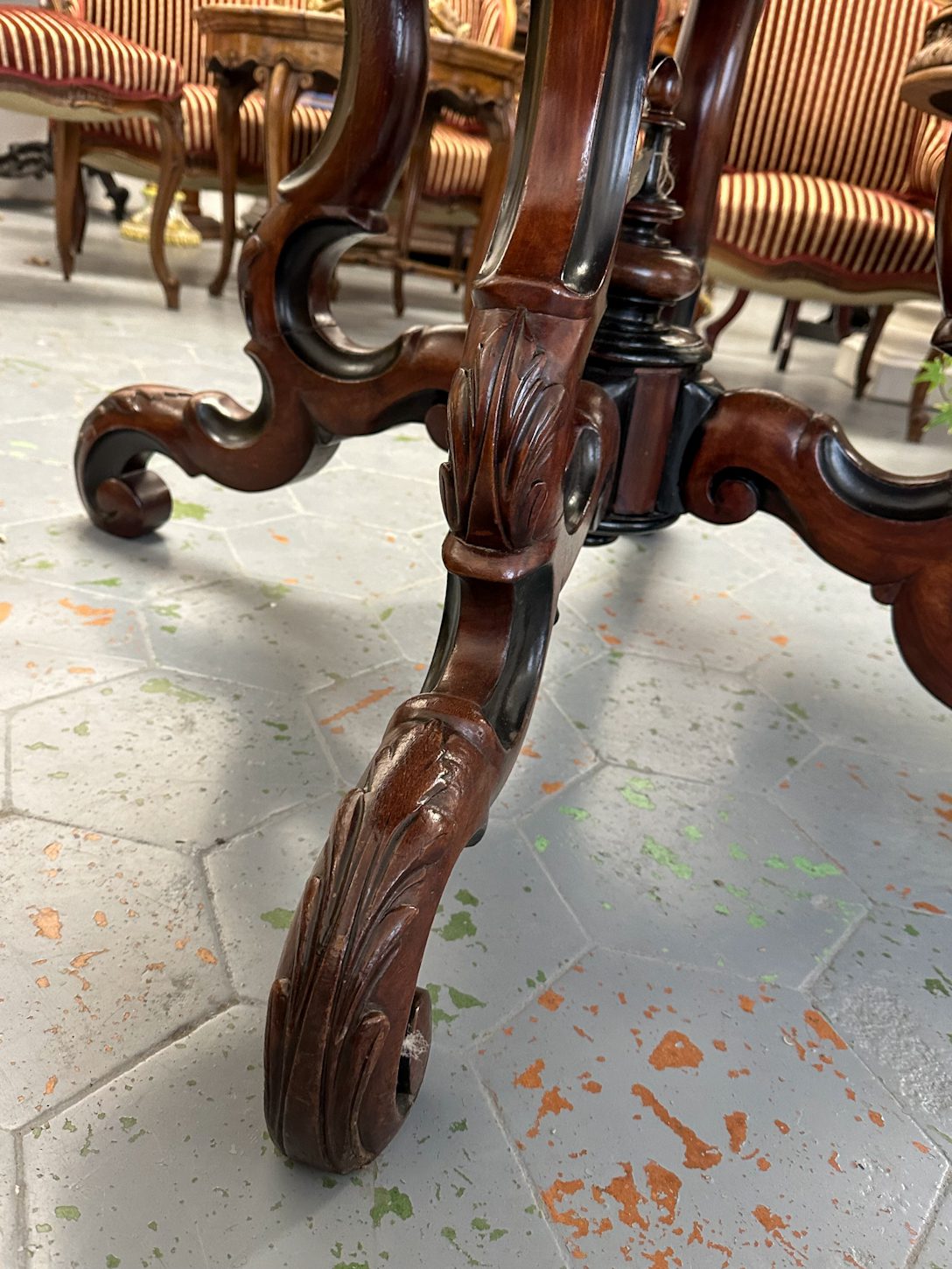
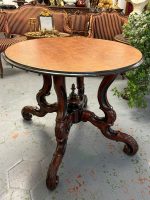
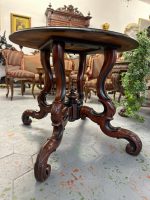
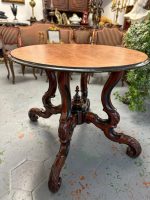
A round salon table from Central Europe, circa 1860, showcasing a transition between Biedermeier and Historicism. Featuring a warm wood top contrasted with ebonized accents and cabriole legs with rocaille carving, this piece is a testament to fine Central European craftsmanship. 950,00 €
You’re now subscribed to price tracking for this product. We’ll notify you if the price drops. 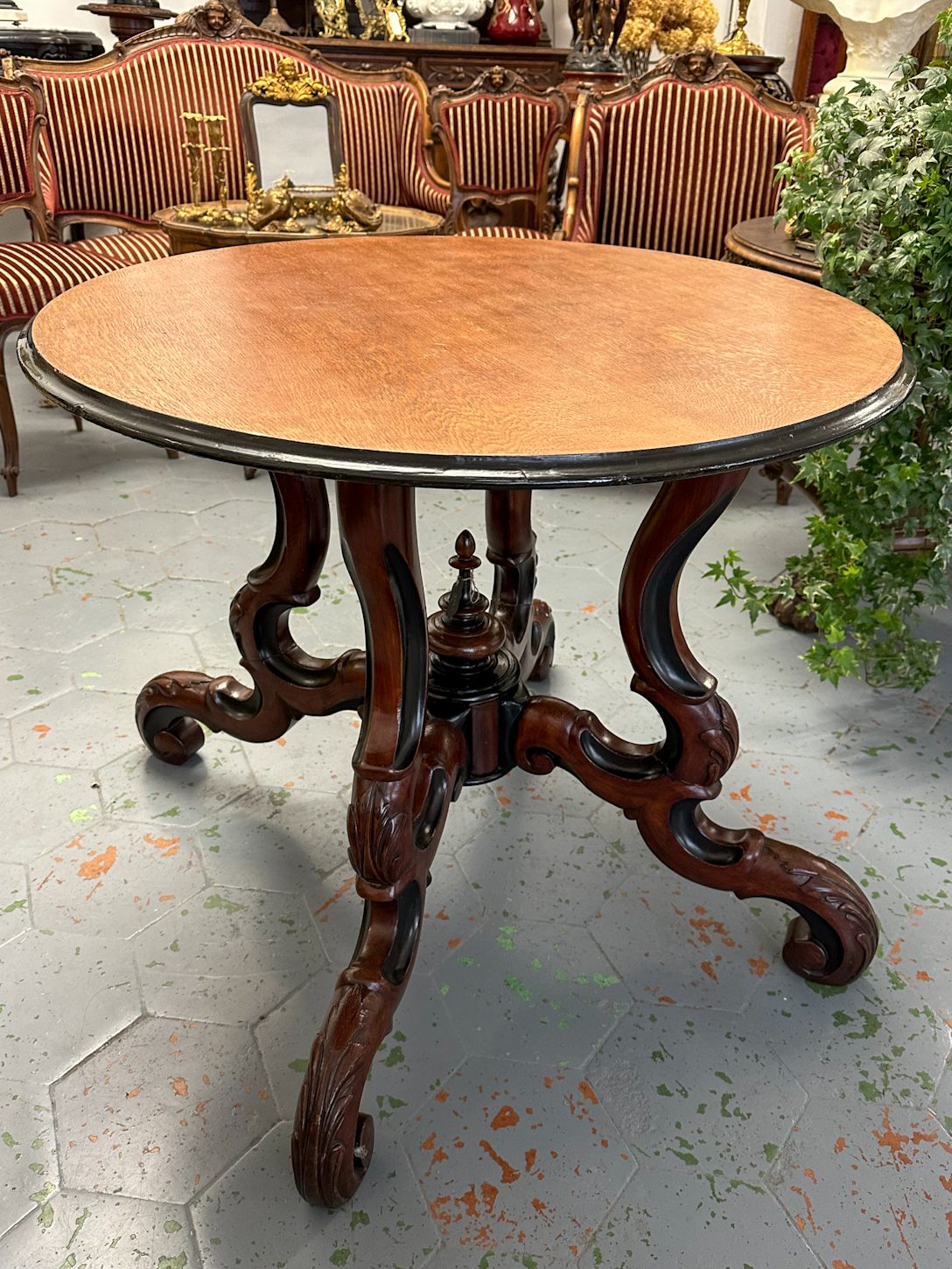
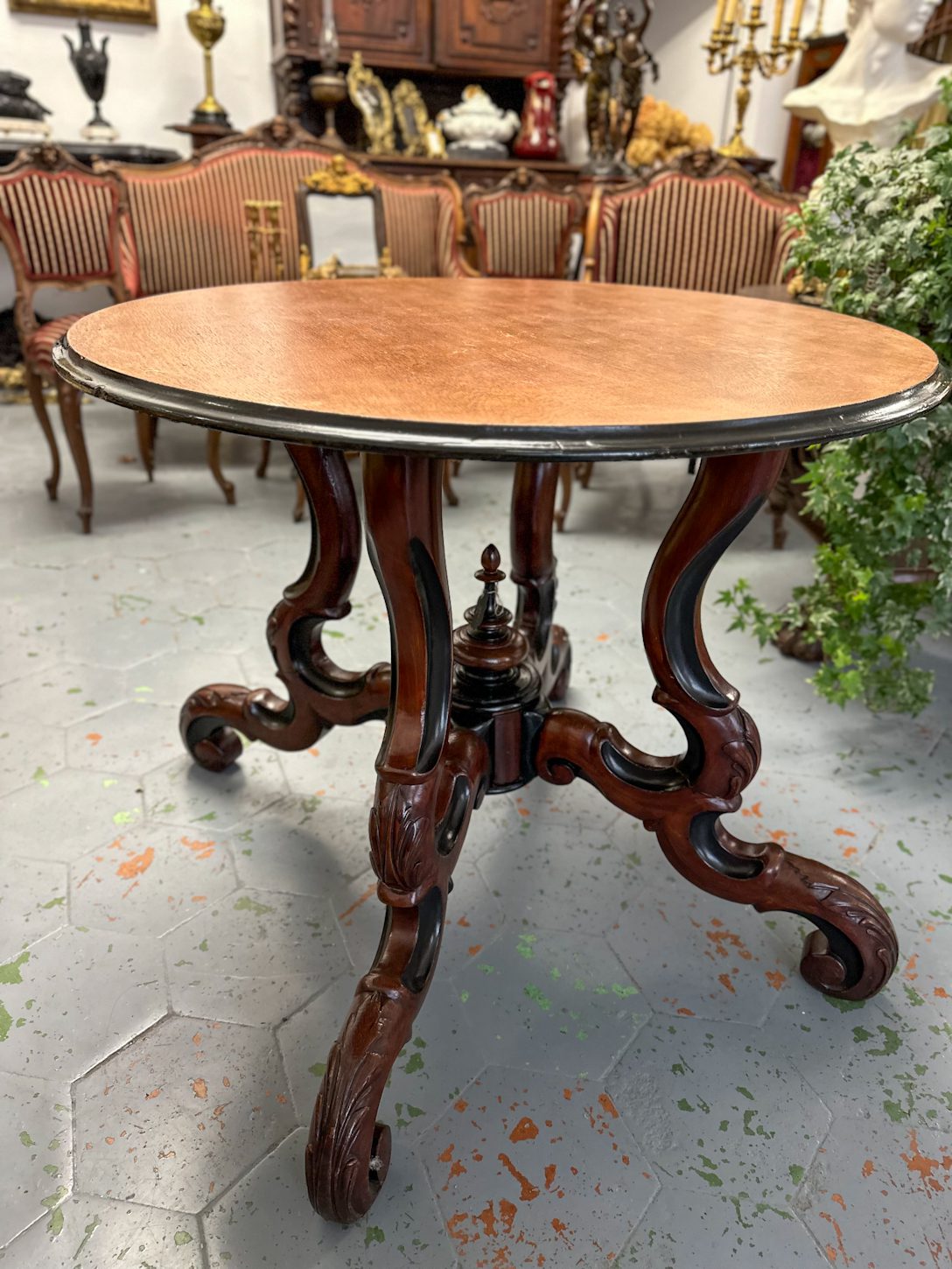
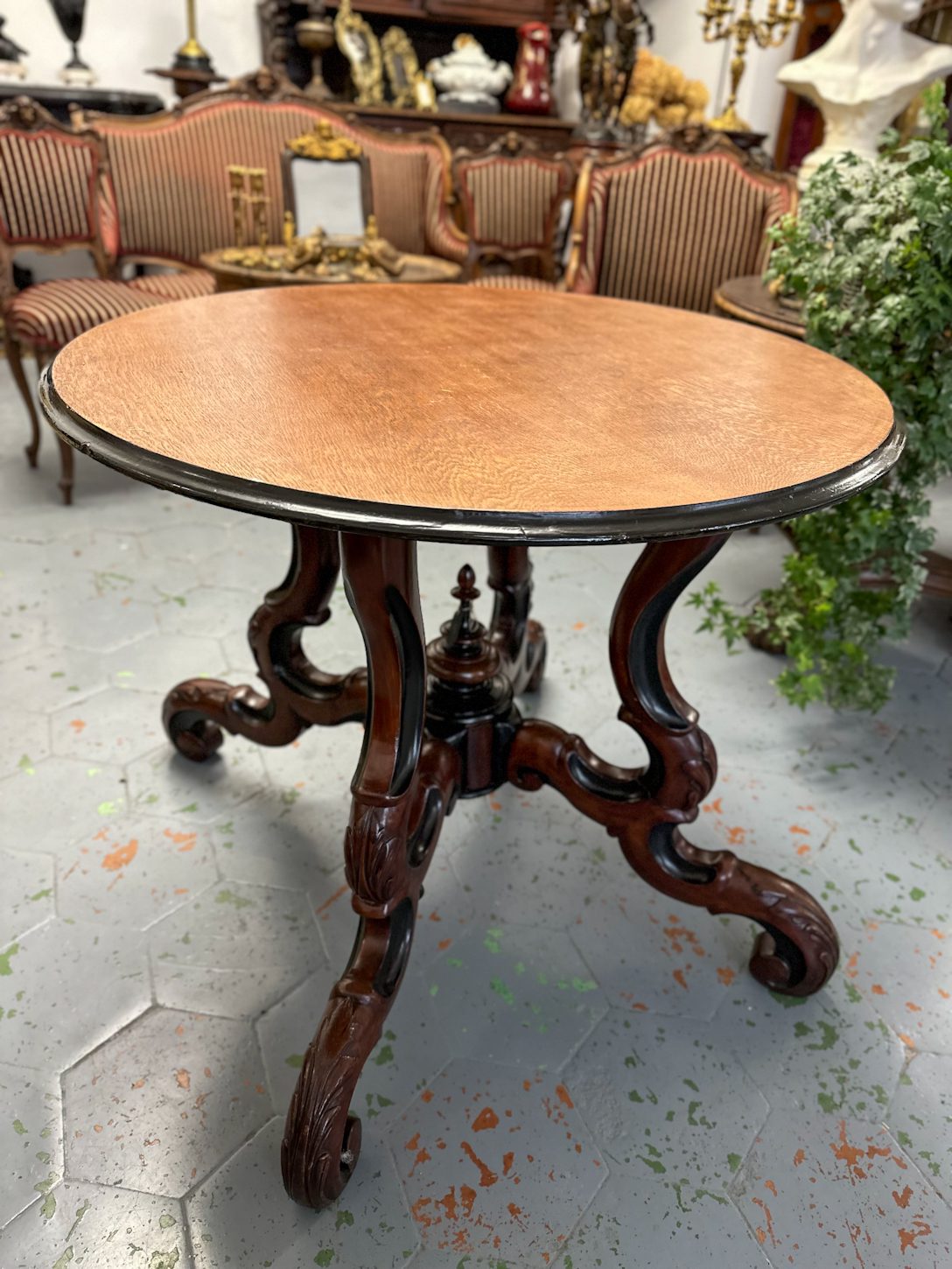
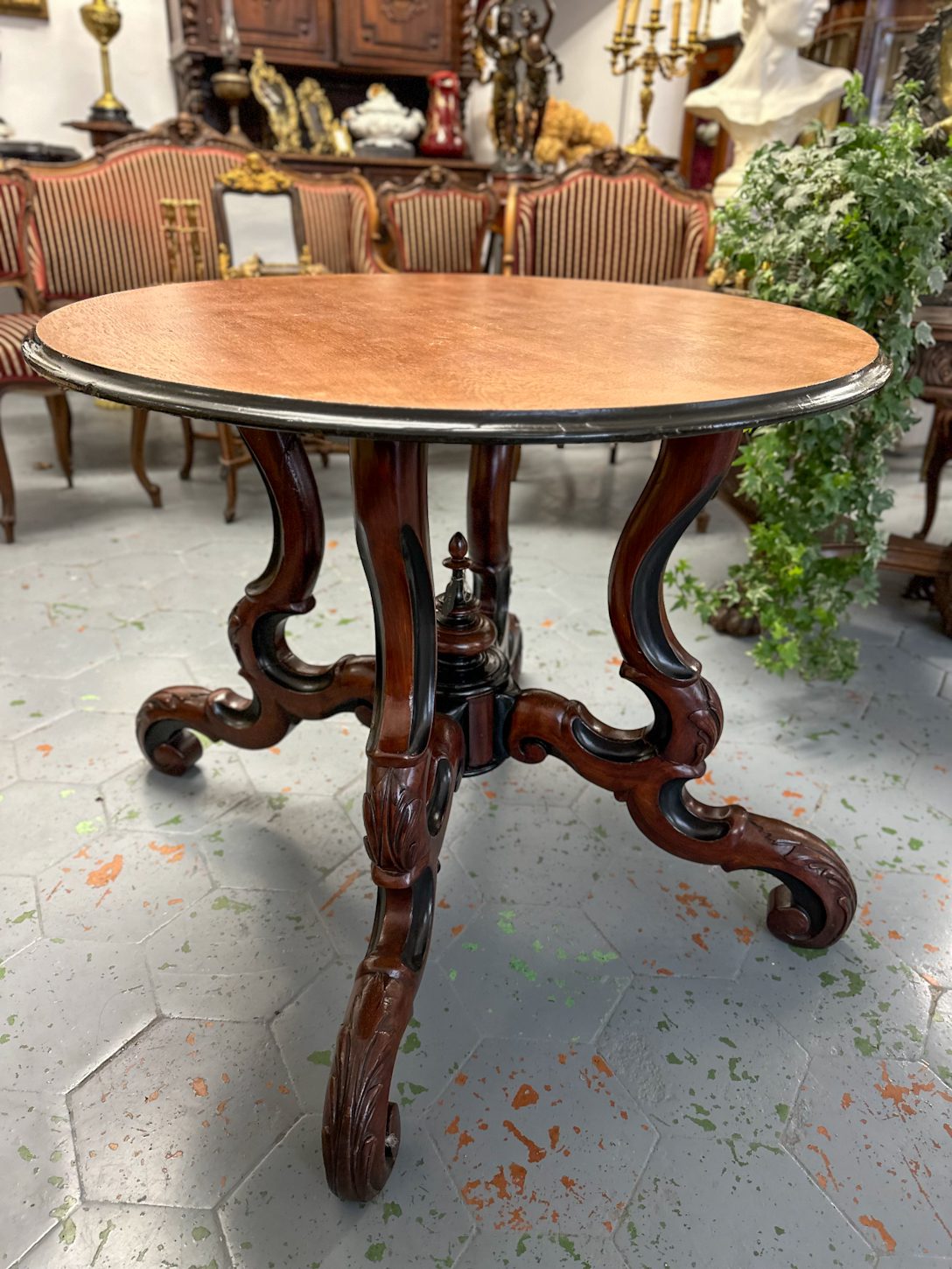
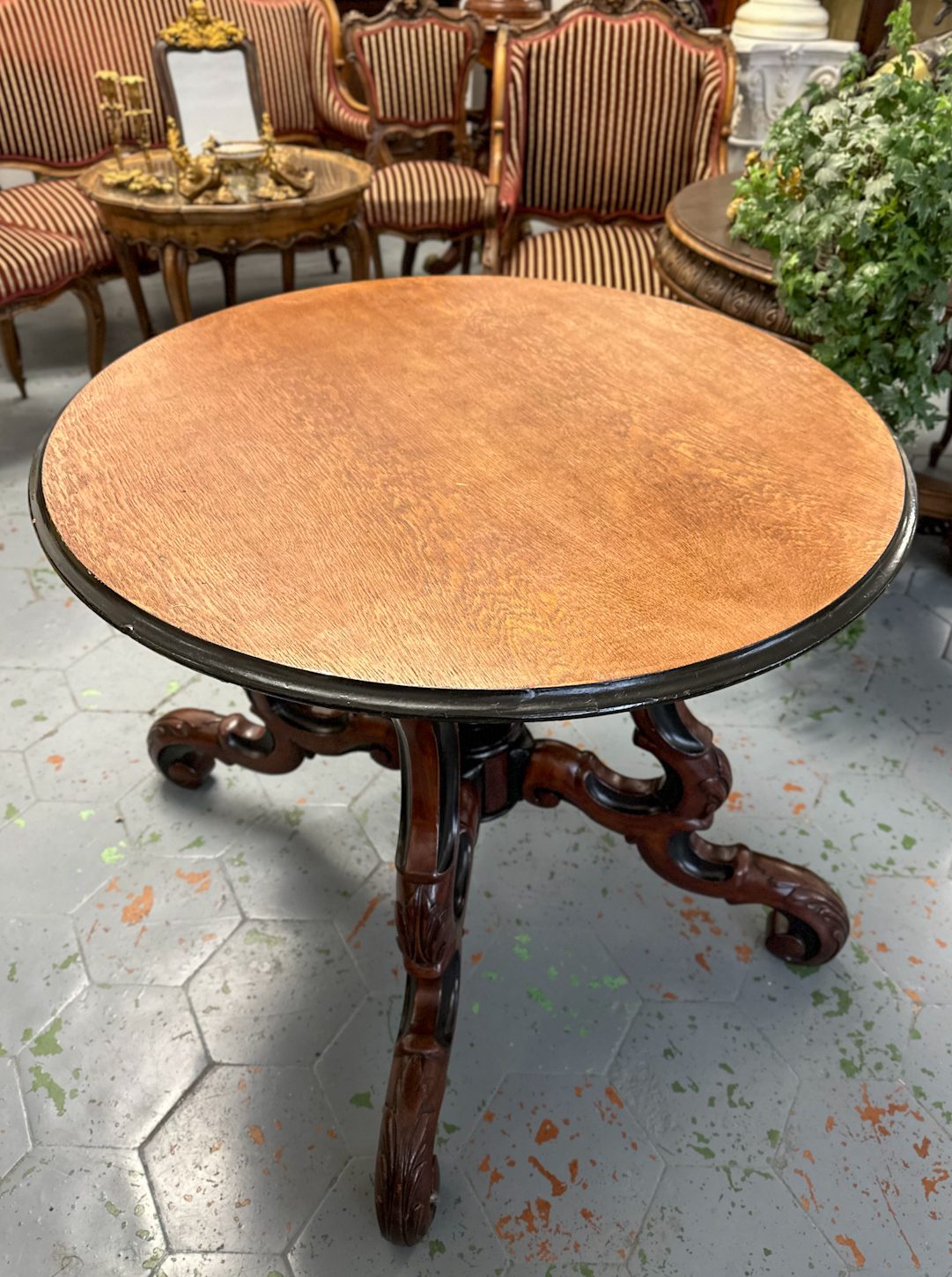
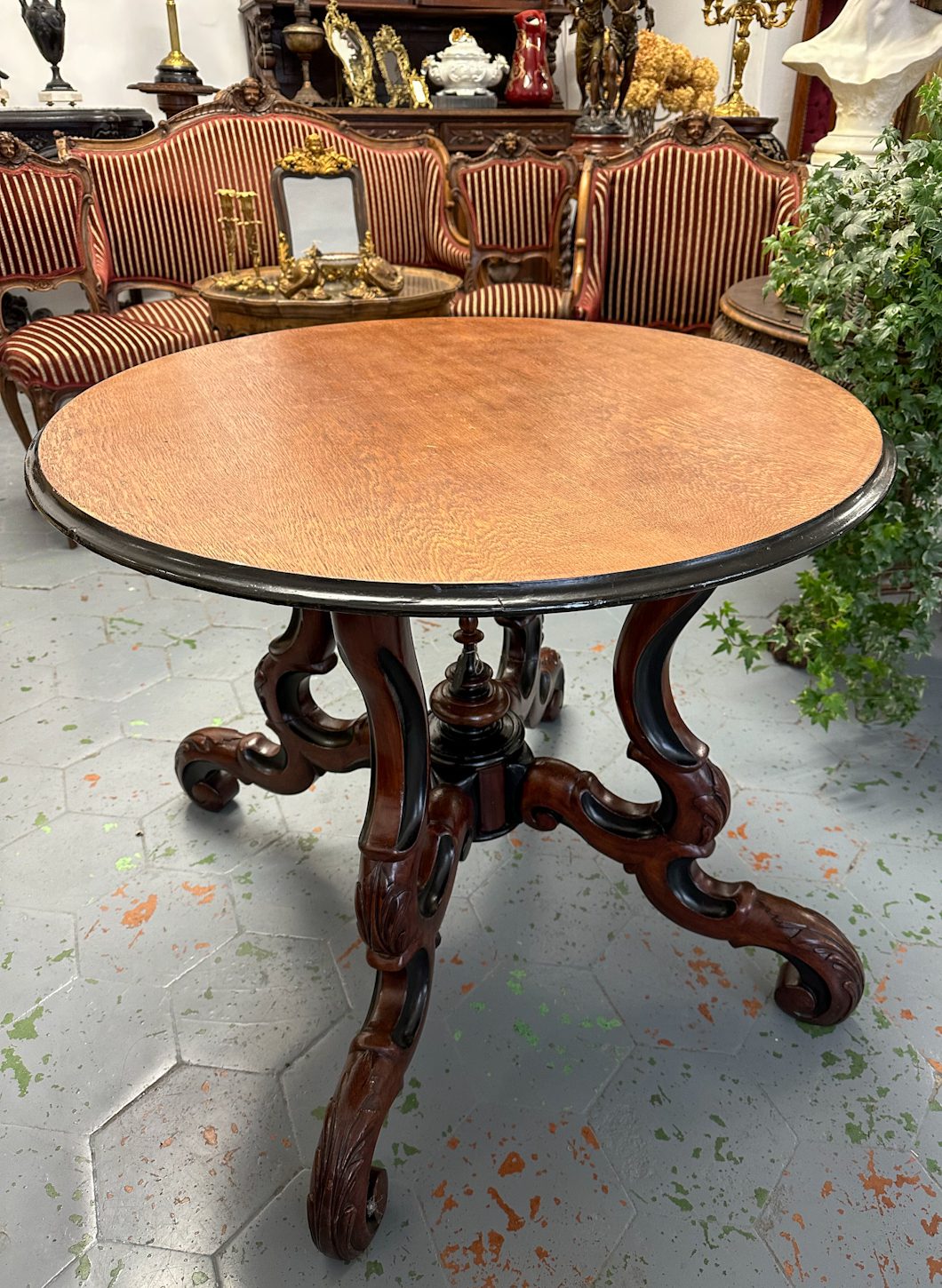
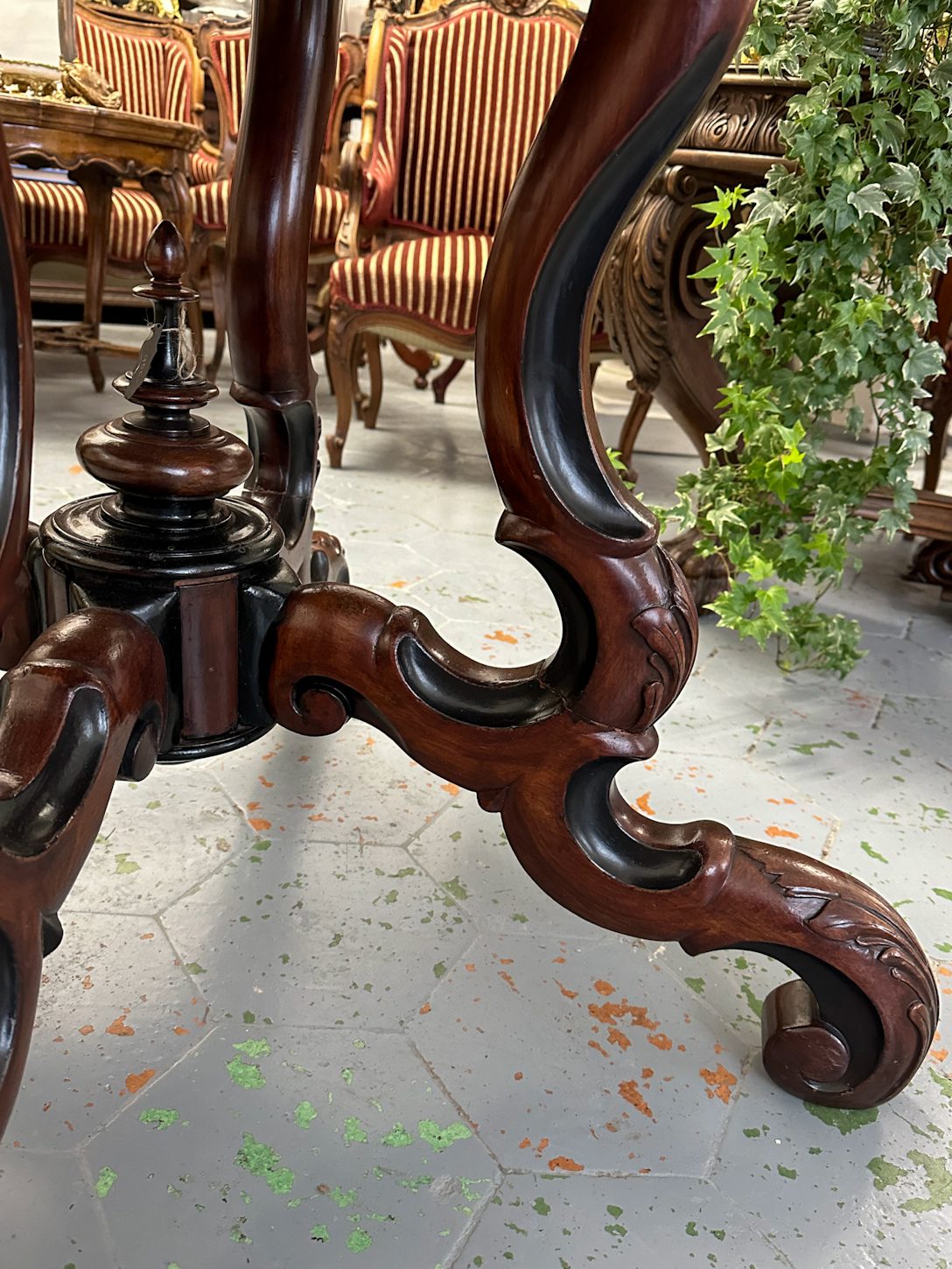
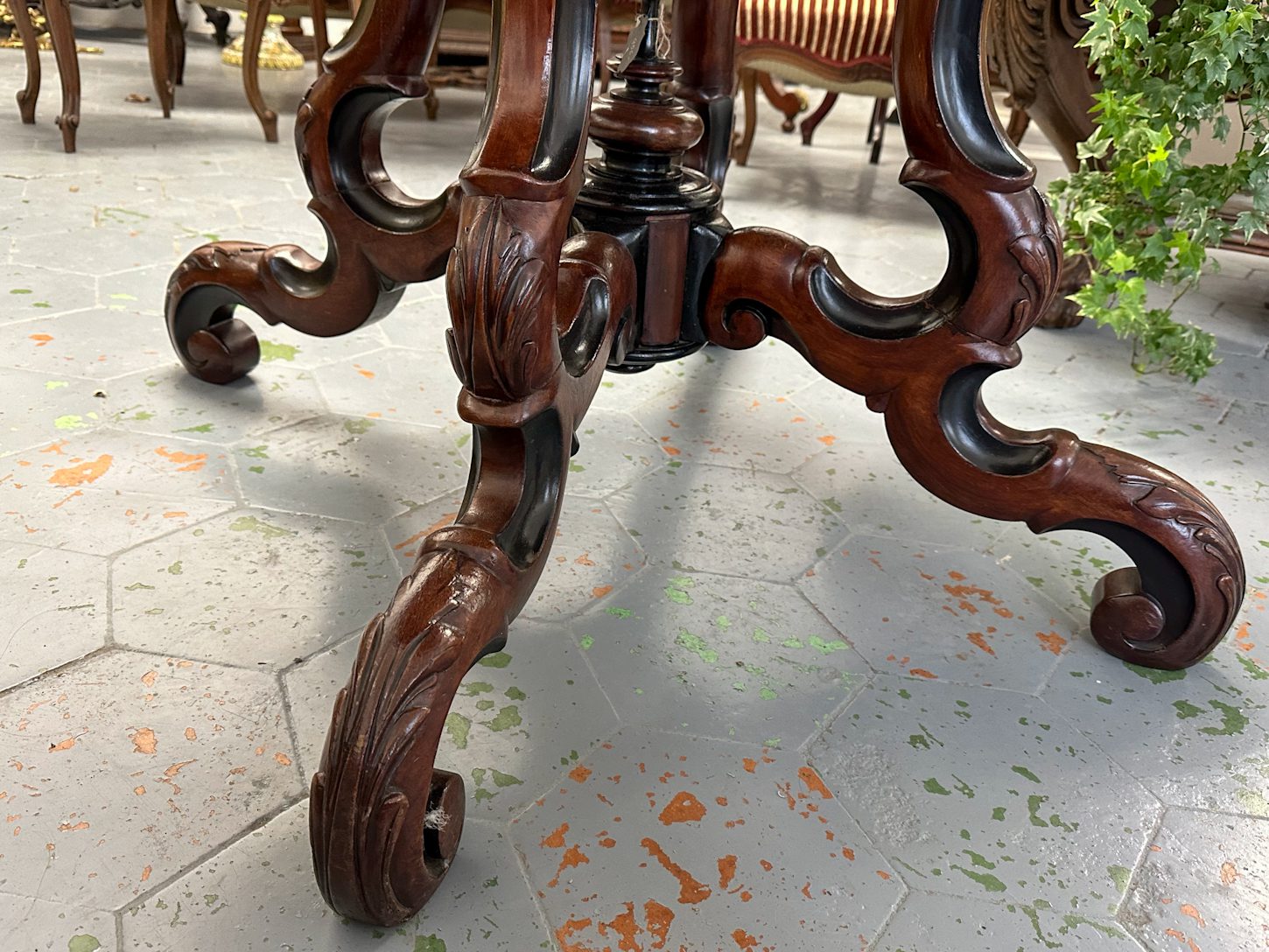
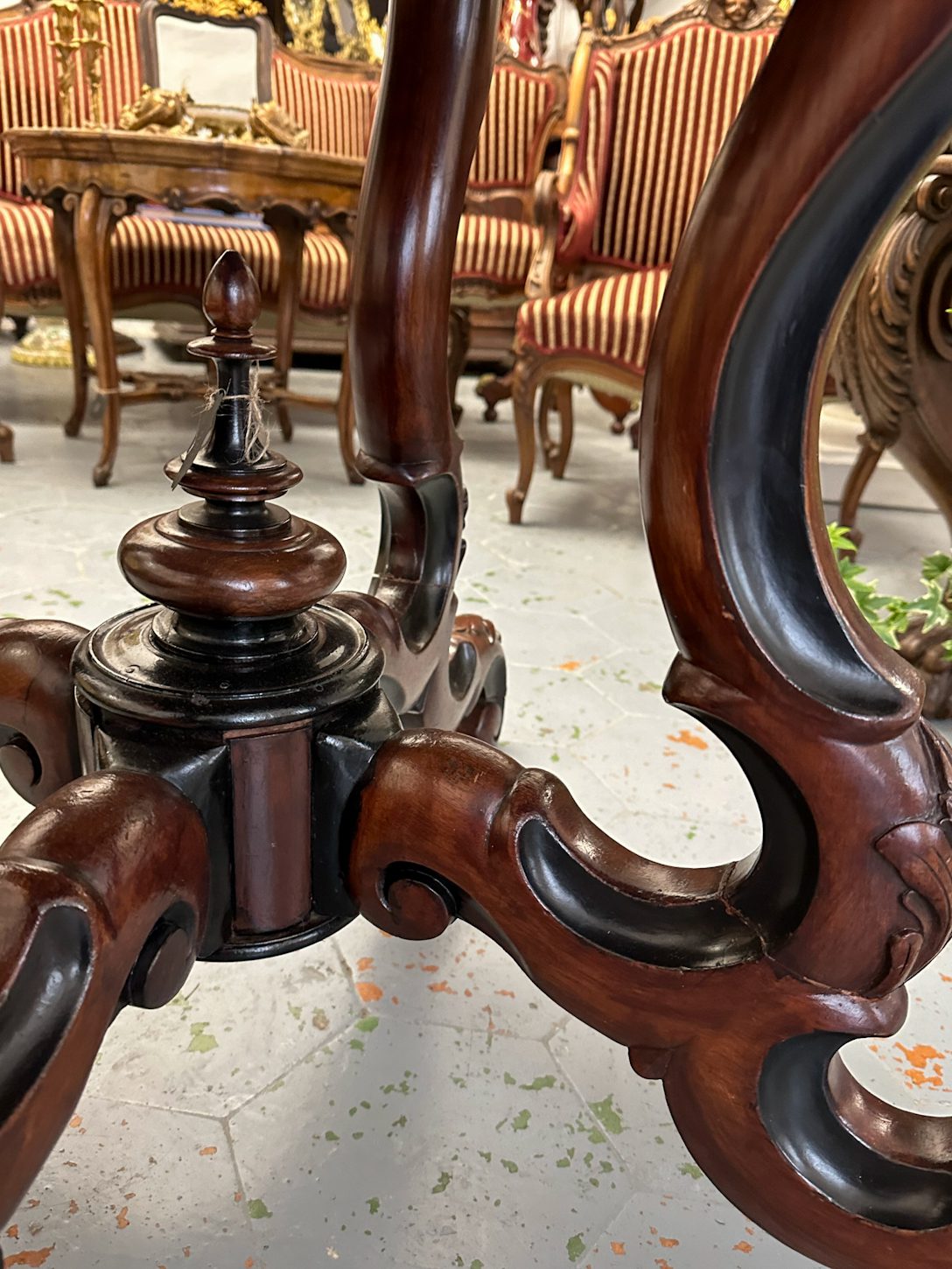
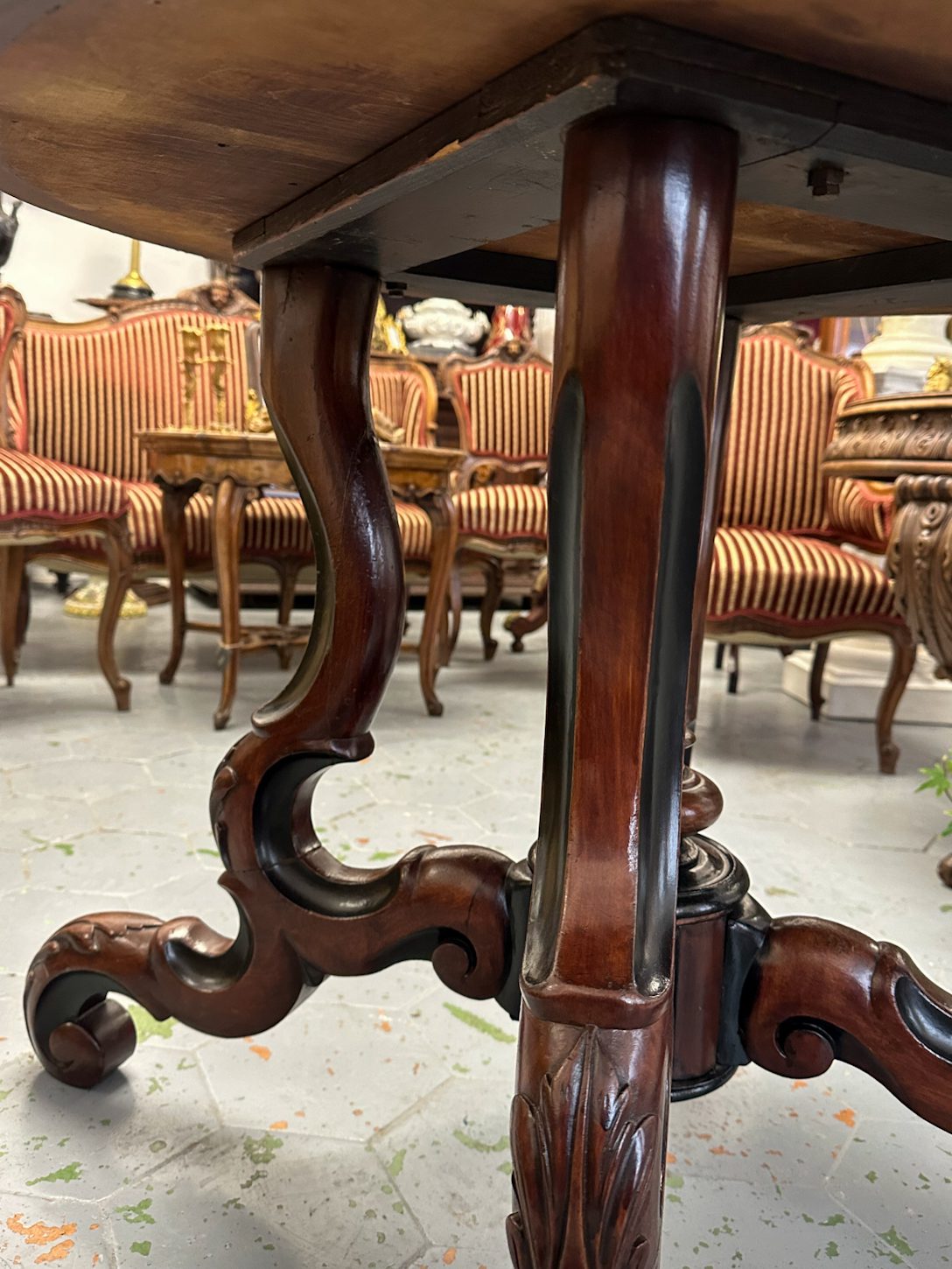
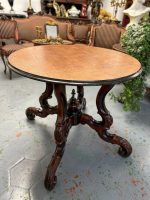
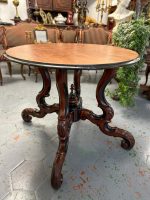
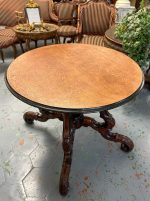
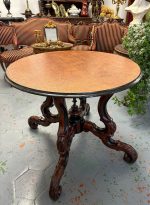
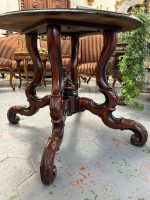
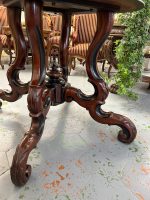
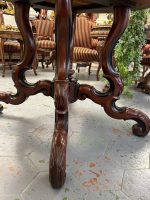
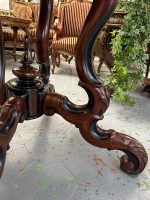
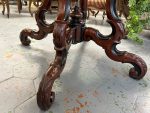
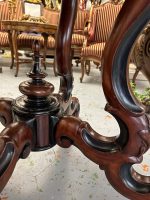
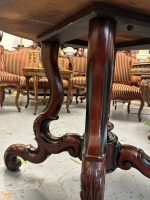
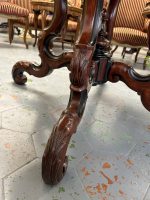
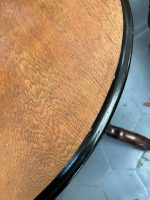
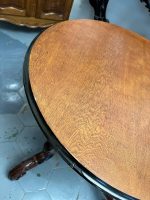
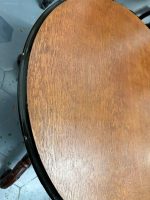
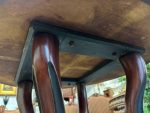
Round Salon Table with Walnut Top and Ebonized Accents — Historicism, Central Europe, c. 1860. (3698)
Height 70 cm Width 81 cm, 84.5 cm Color AmberCoffeeBlue
Description
DESCRIPTION IN
📐 DIMENSIONS
Height 70 cm × top diameter 84.5 cm × leg spread 81 cm.
―――――――――――――――――――――
Round Salon Table with Warm Oak Top and Ebonised Accents — Historicism / Late Biedermeier Transition, Central Europe, circa 1850–1880.
―――――――――――――――――――――
🏛️ PERIOD, ARTISTIC STYLE, ERA
This table belongs to that fertile transitional moment when Biedermeier still held its forms — the simple, warm, domestically intimate surface — while Historicism was already introducing a new ornamental language: rocaille scrollwork in the leg profile, ebonised ébénisé contour lines as an instrument of dramatic contrast, and a central connector with a turned finial tower as a Baroque silhouette echo. Both aesthetics coexist in a single object — and this is precisely what makes this table an exceptionally personal witness to the 19th-century Central European bourgeois interior.
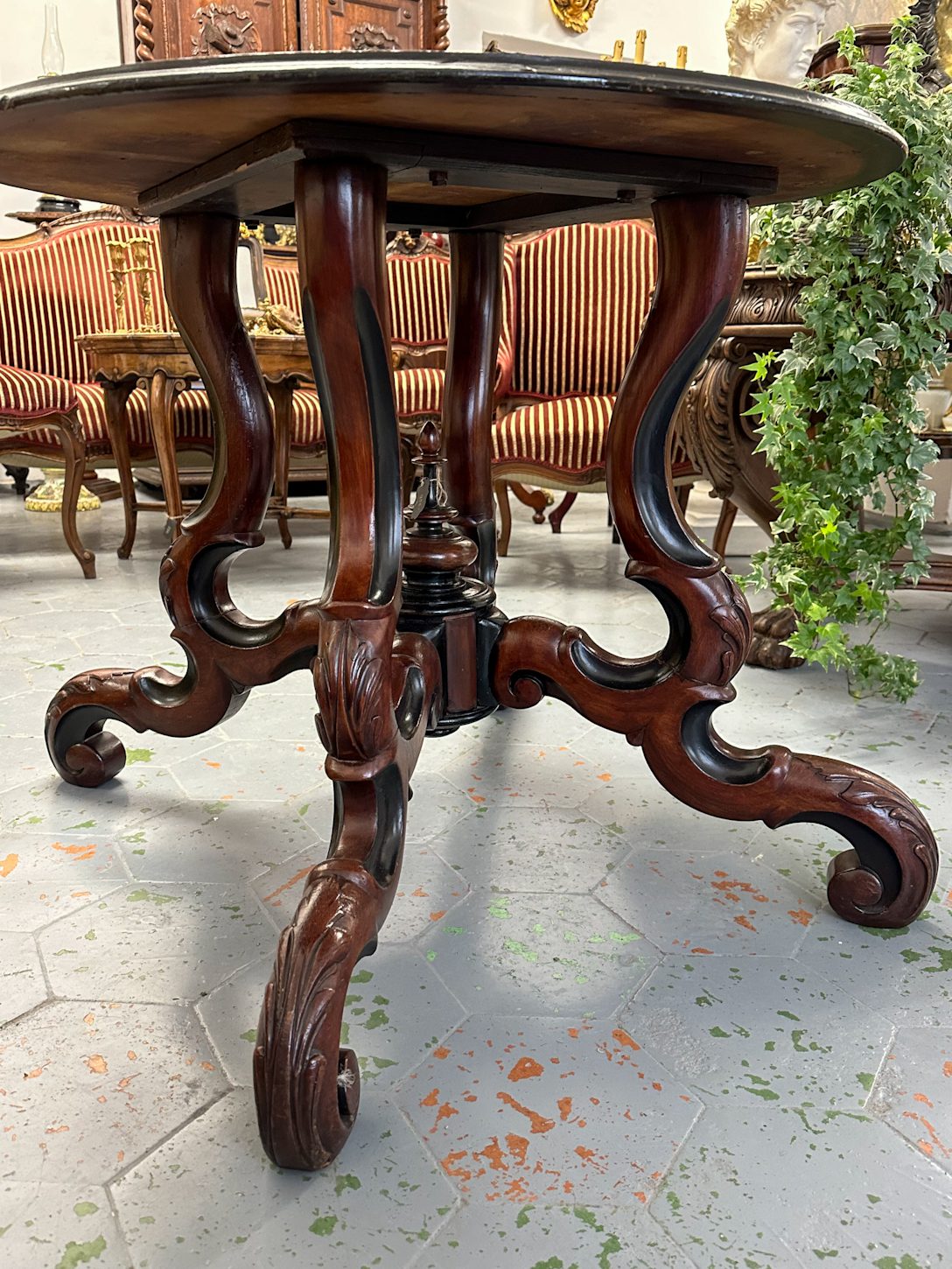
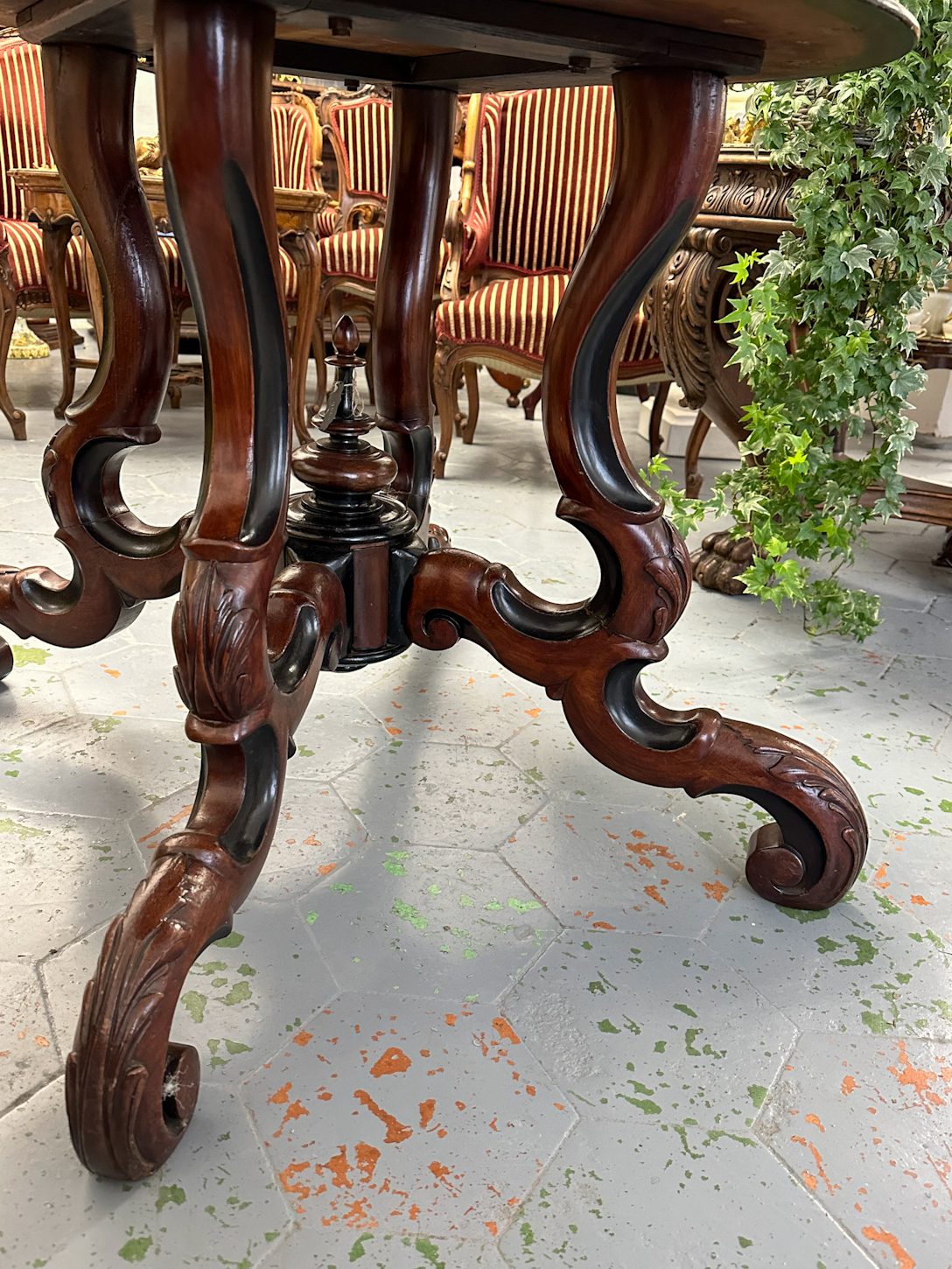
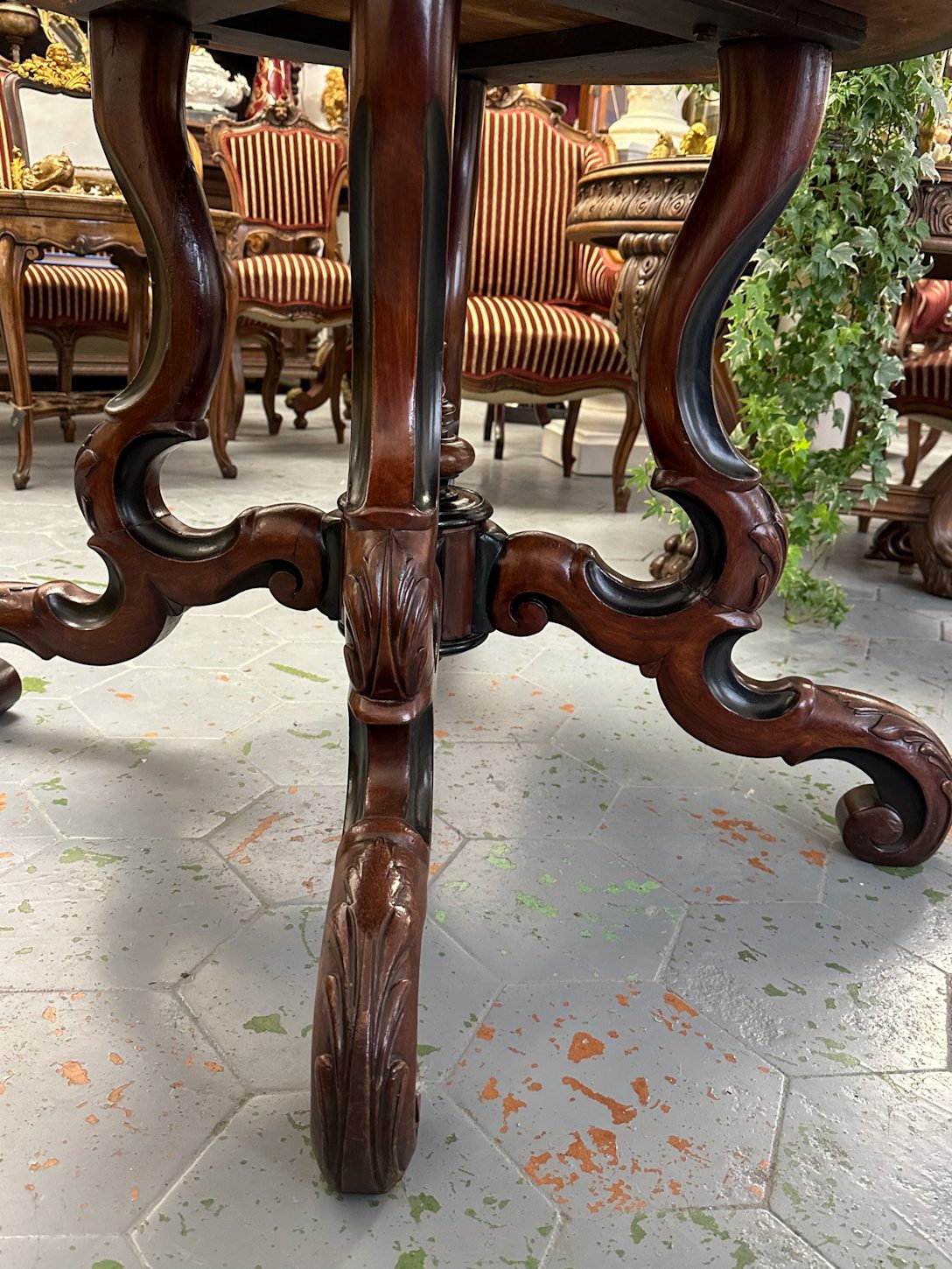
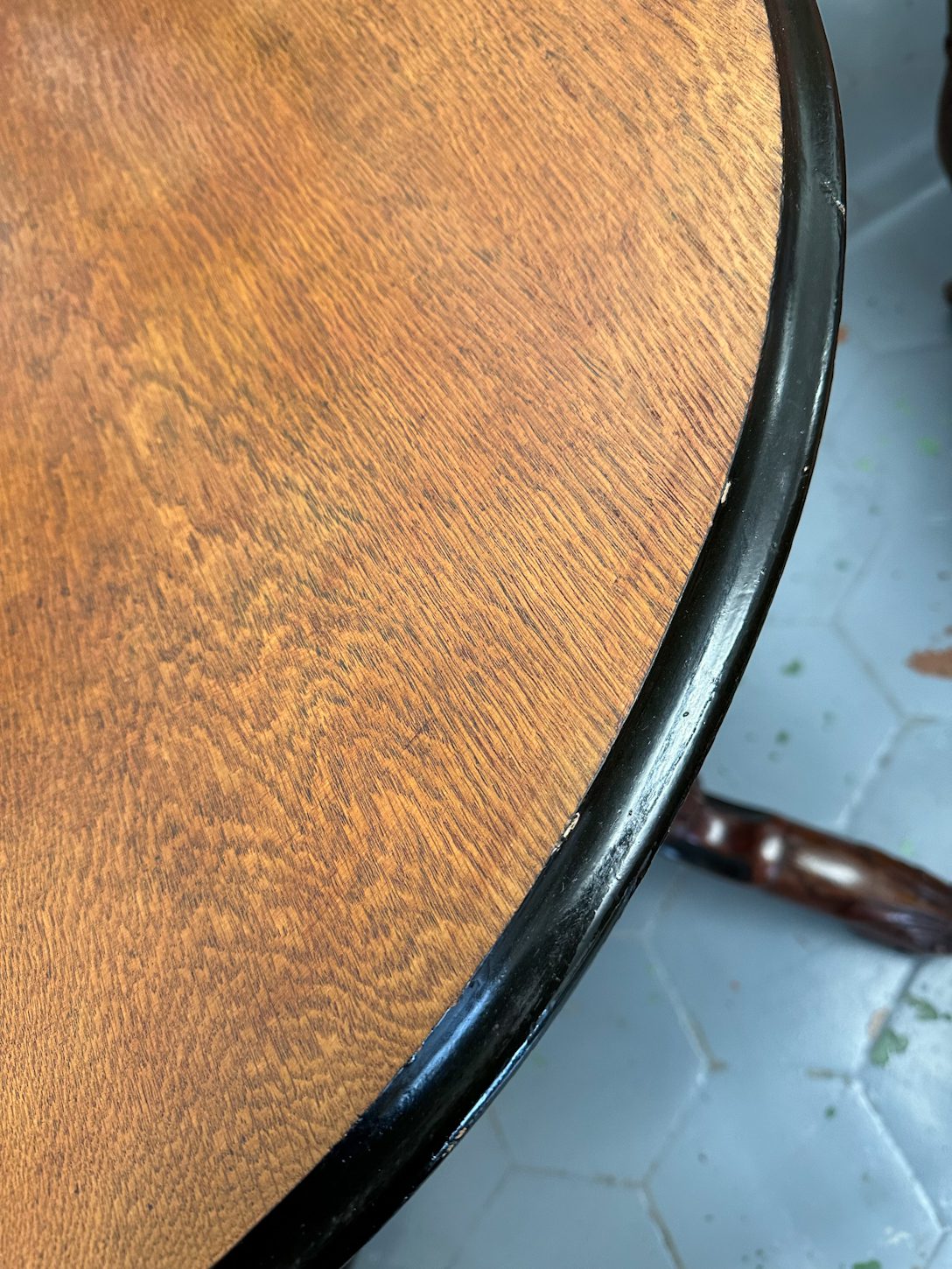
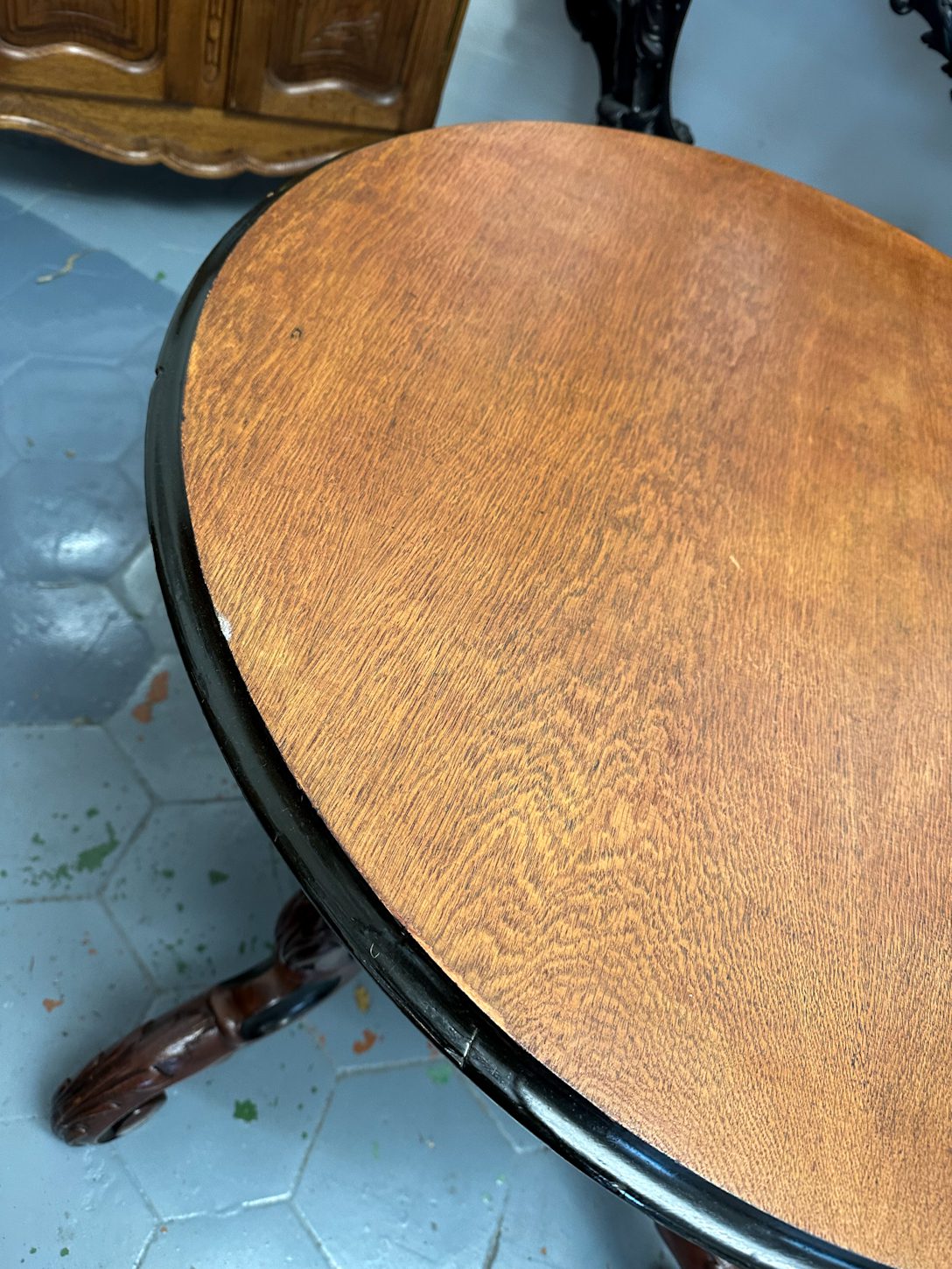
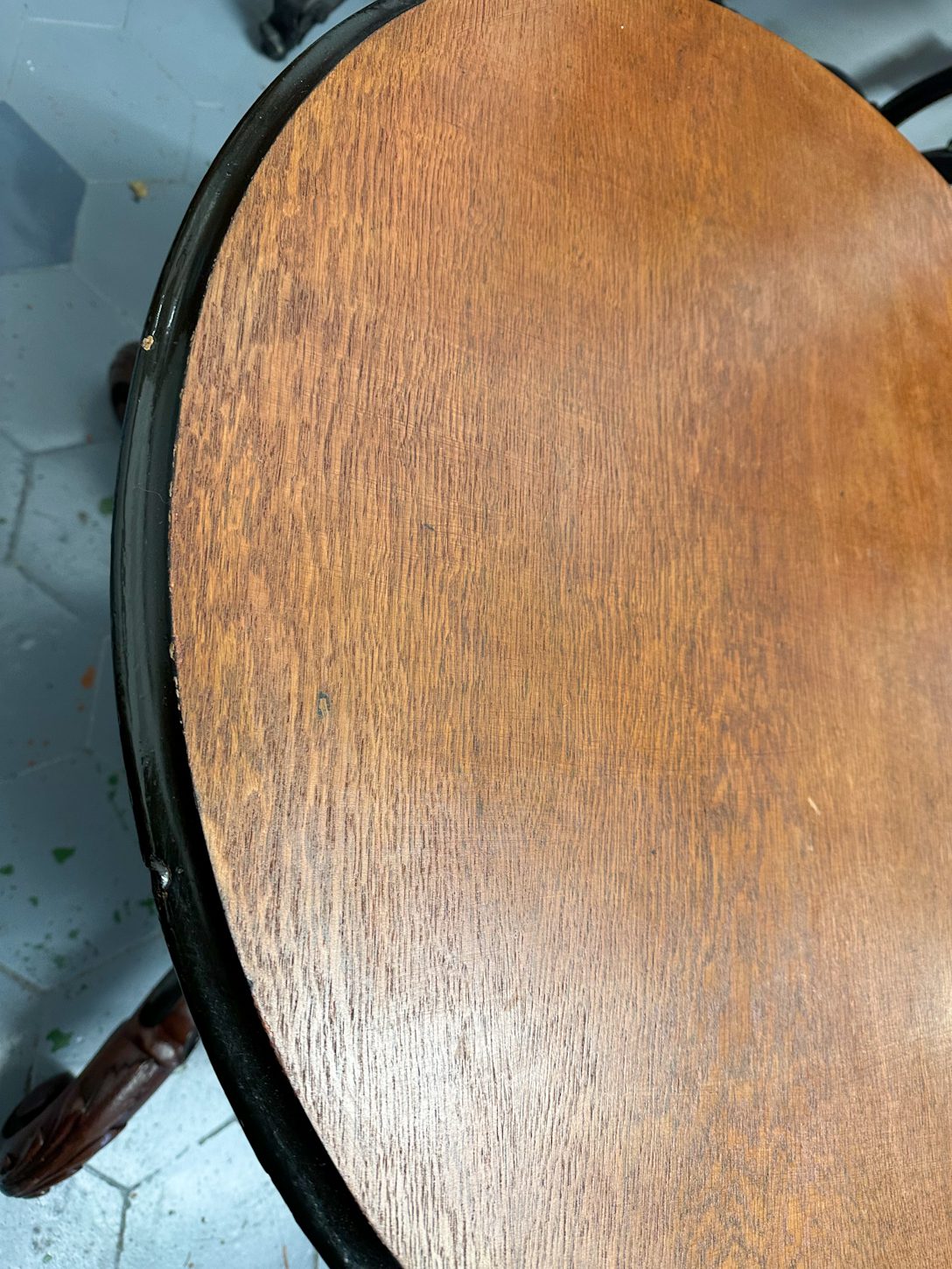
Four cabriole-type legs with rocaille carving at the top and scroll terminations below, joined by a central ebonised stretcher system crowned by a tower-form finial — this is the most characteristic solution of , Austrian, or Czech high-grade cabinetmaking around 1860. The table top — in a warm honey-amber oak or elm placage — creates a wonderful contrast with the ebonised edge and leg accents.
Belle Époque began in 1871. But this table was made at the precise moment before it — when Vienna was still the cultural axis of Europe and Johann Strauss II had just written The Blue Danube. At its 1867 premiere, the Vienna Philharmonic played in a hall where such tables stood in the foyer — with their warm wood tones and ebonised accents mirroring the lapels of a dress coat. This table belongs to that world.
―――――――――――――――――――――
⚜️ MAKER AND PROVENANCE
No maker’s mark is visible. The elegance of the leg profile — cabriole form without exaggeration, the restraint of the rocaille carving, the precision of the ebonised and light tone contrast — points to a high-grade Viennese, Prague, or Dresden workshop working for haute bourgeoisie commissions. The refined proportionality of the central connector construction with its finial speaks to a craftsman who understood not only function but sculpture. The placage tone — that characteristic honey-amber — corresponds to the Central European oak or elm tradition.
―――――――――――――――――――――
💎 RARITY AND SIGNIFICANCE
Salon tables with this specific combination of legs and stretcher — cabriole with rocaille upper section, ebonised stretcher with central finial, and warm-toned top in contrast to ebonised accents — have survived in complete original condition comparatively rarely. This diameter — 84.5 cm — is ideal for modern apartments, and this is precisely why this category is actively sought in international antique markets. Vienna and Prague auction houses regularly see serious collector interest in such tables.
―――――――――――――――――――――
🕯️ USE IN INTERIORS, DESIGN AND PHOTOGRAPHY
The table is versatile — it sits equally naturally in a classical Biedermeier-inspired interior, in an eclectic contemporary apartment salon, and even in a Scandinavian-minimalist space as a deliberate counterpoint with warm wood tones. Ideal as a coffee table, side table, or lamp table in a drawing room or study. In photography, the warm surface with its ebonised contour creates an almost chiaroscuro effect — this is a highly photogenic table.
―――――――――――――――――――――
🎁 AS A GIFT
Its compact size makes this table a refined gift for a home decoration enthusiast or an admirer of cultural heritage. Significant enough to represent elevated taste — compact enough to find a place in any room.
―――――――――――――――――――――
🔍 CONDITION
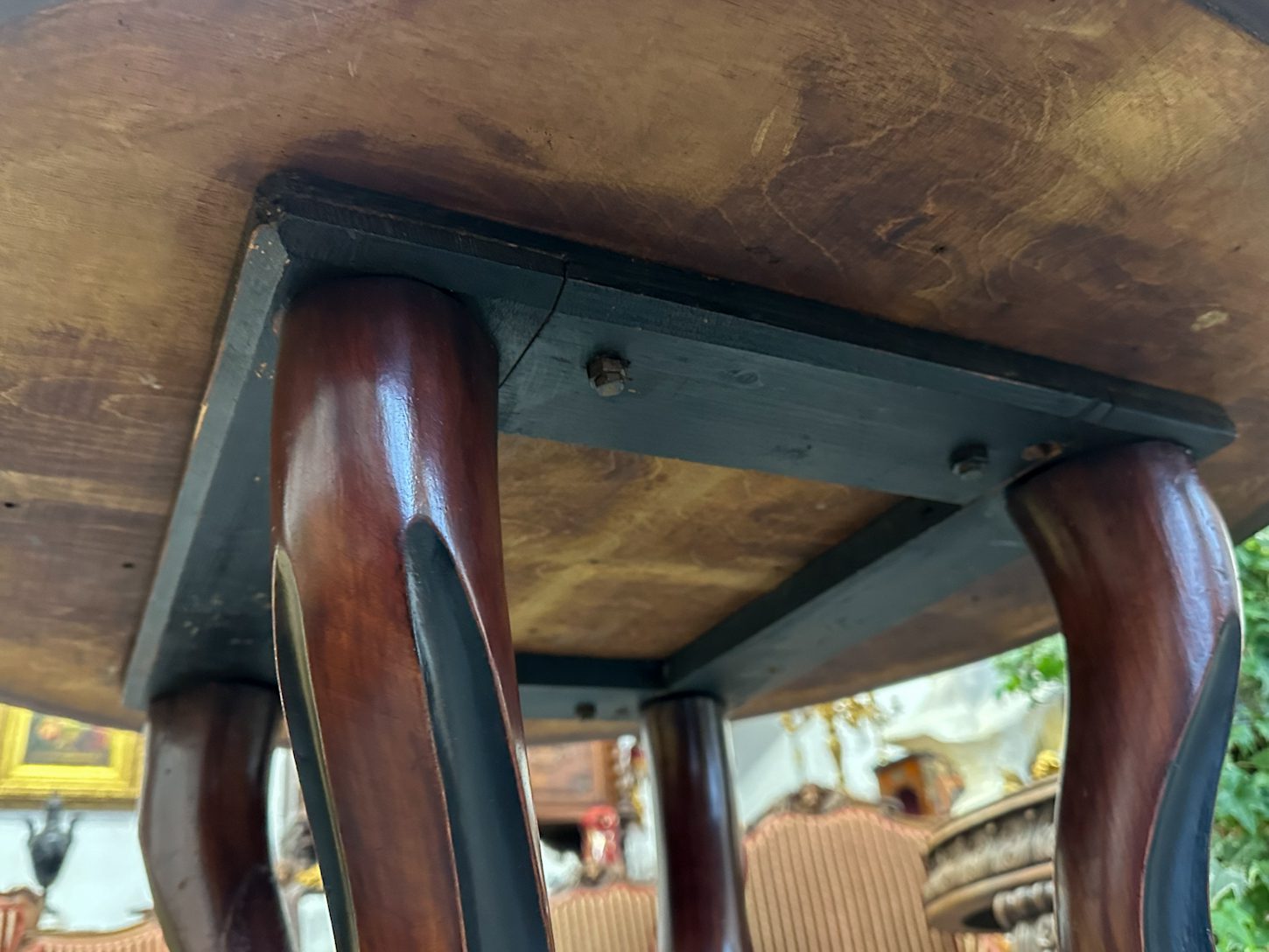
Good antique condition. Table top placage with age-related use marks — minor surface scratches and slight tonal variations in places; minor wear on the ebonised edge sections. Leg rocaille carvings retain their detail. Central finial connection stable. Leg scroll feet without deformation. The condition of the piece is fully documented in the photographs.
―――――――――――――――――――――