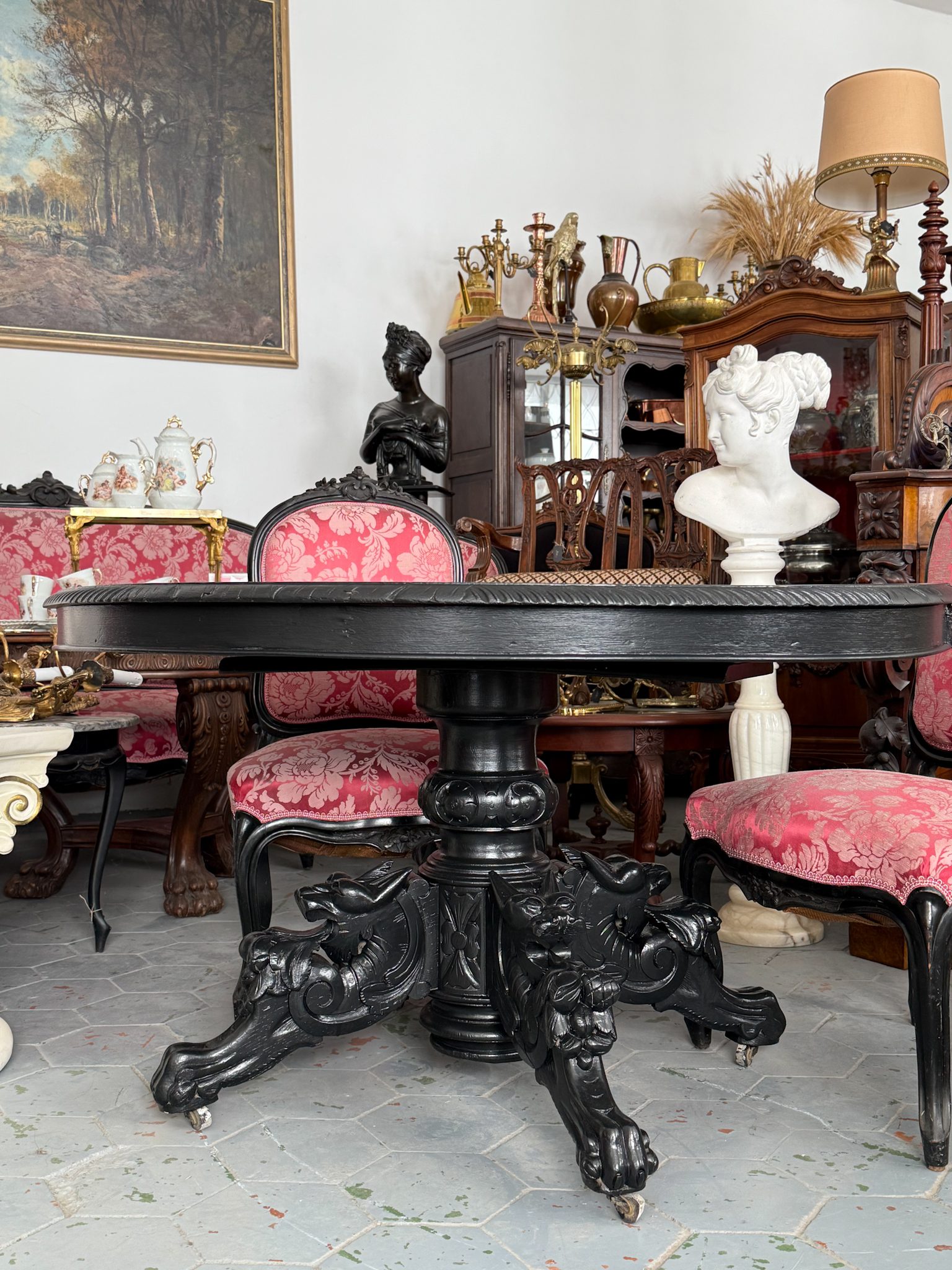
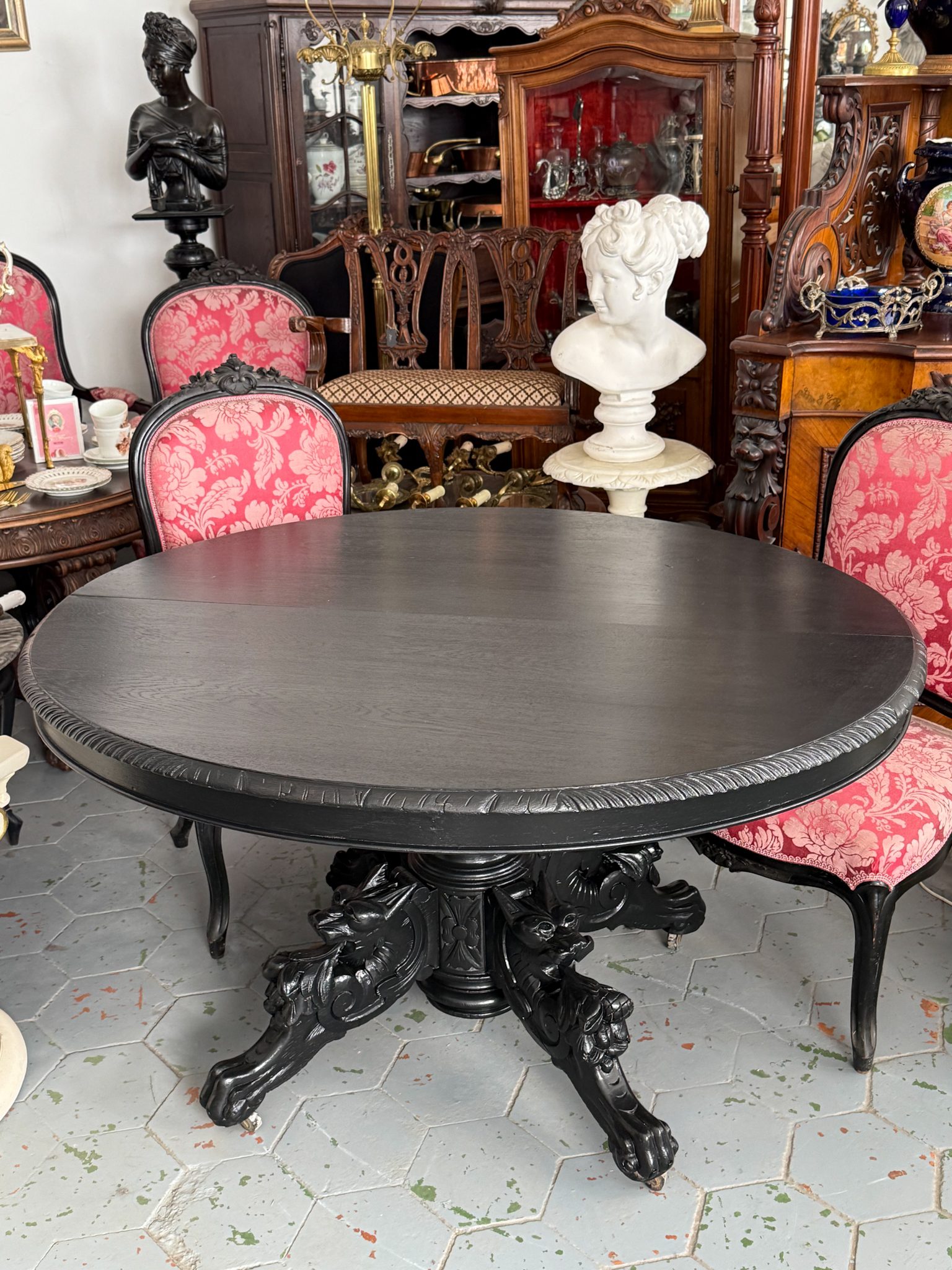
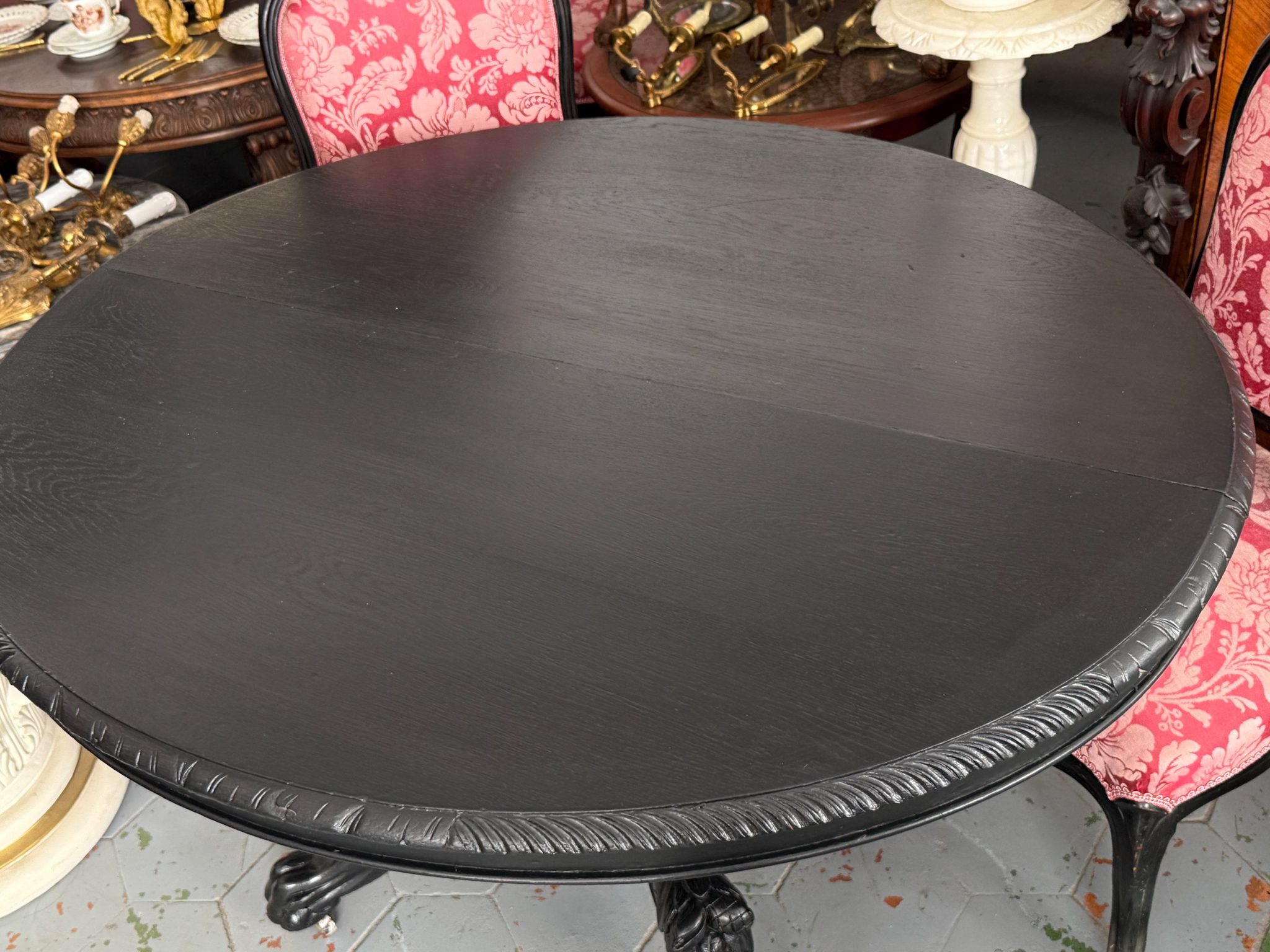
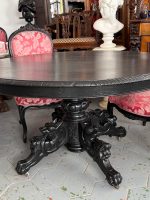
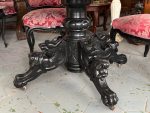
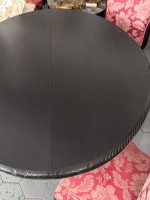
Blackened oak dining table with griffin-like legs — Neo-Renaissance, Western Europe, 19th century. This rare and dramatic piece features sculptural griffin pedestals and a rich ébénisé finish, perfect for creating a striking statement in any grand interior. 850,00 €
You’re now subscribed to price tracking for this product. We’ll notify you if the price drops. 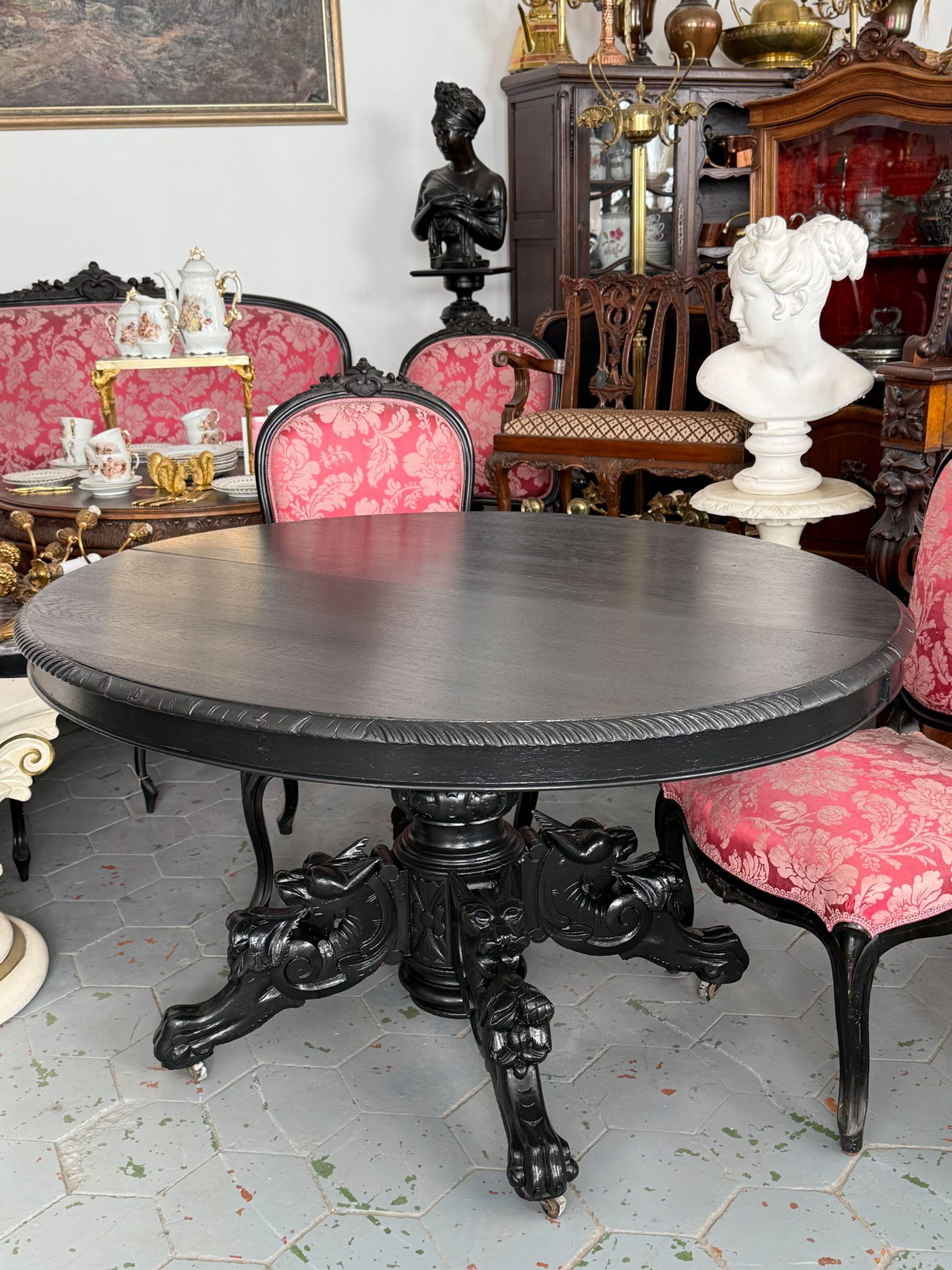
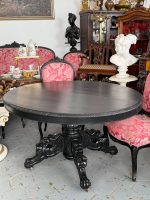
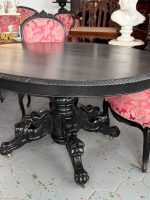
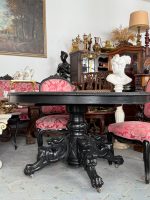
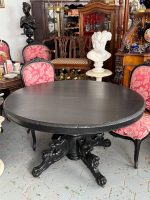
Neo-Renaissance Oak Dining Table with Griffin-Like Legs, Western Europe, 19th Century (2241)
Height 75 cm Width 112 cm Color BronzeBlackSilver
Description
DESCRIPTION IN
📐 DIMENSIONS
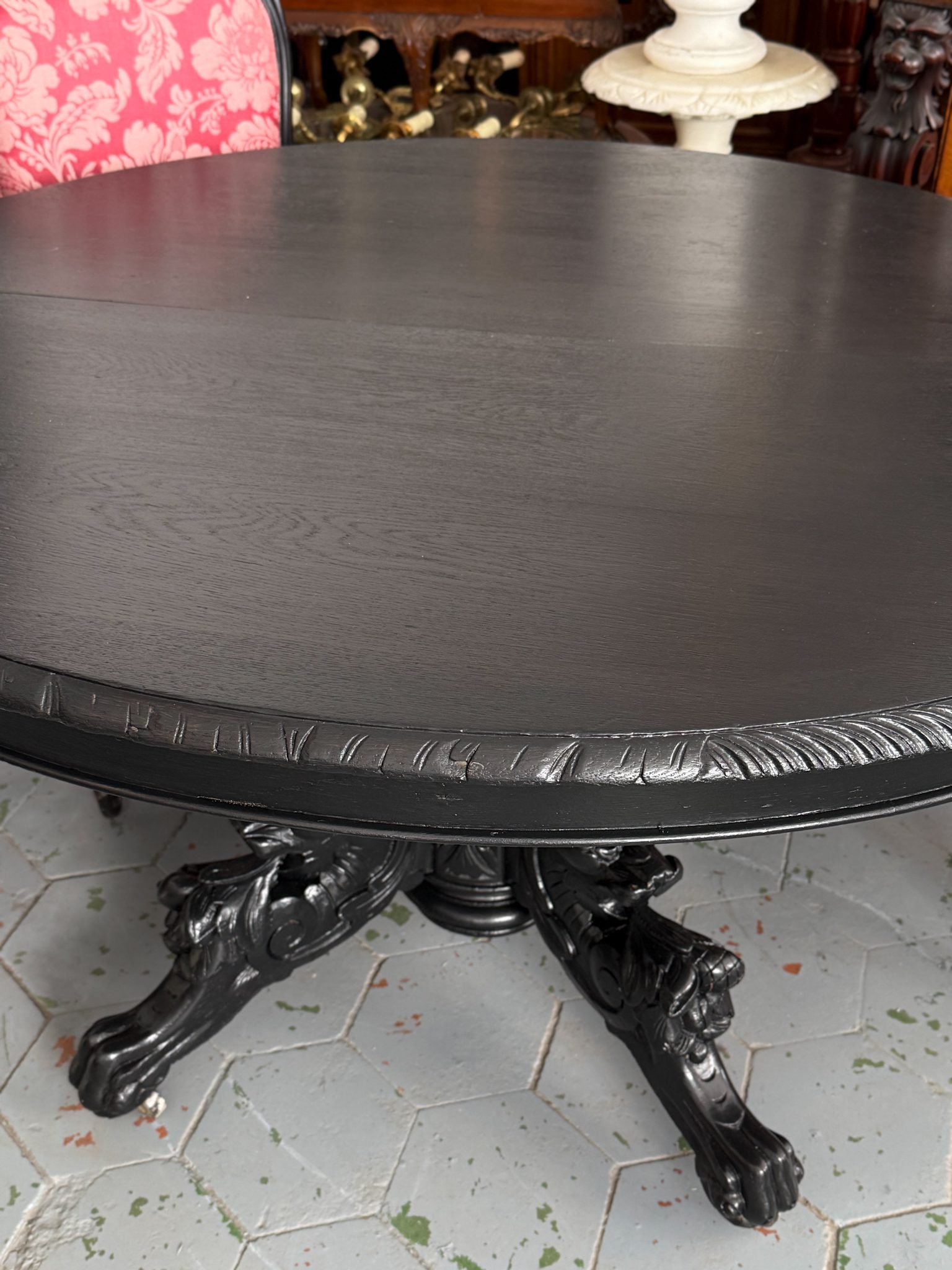
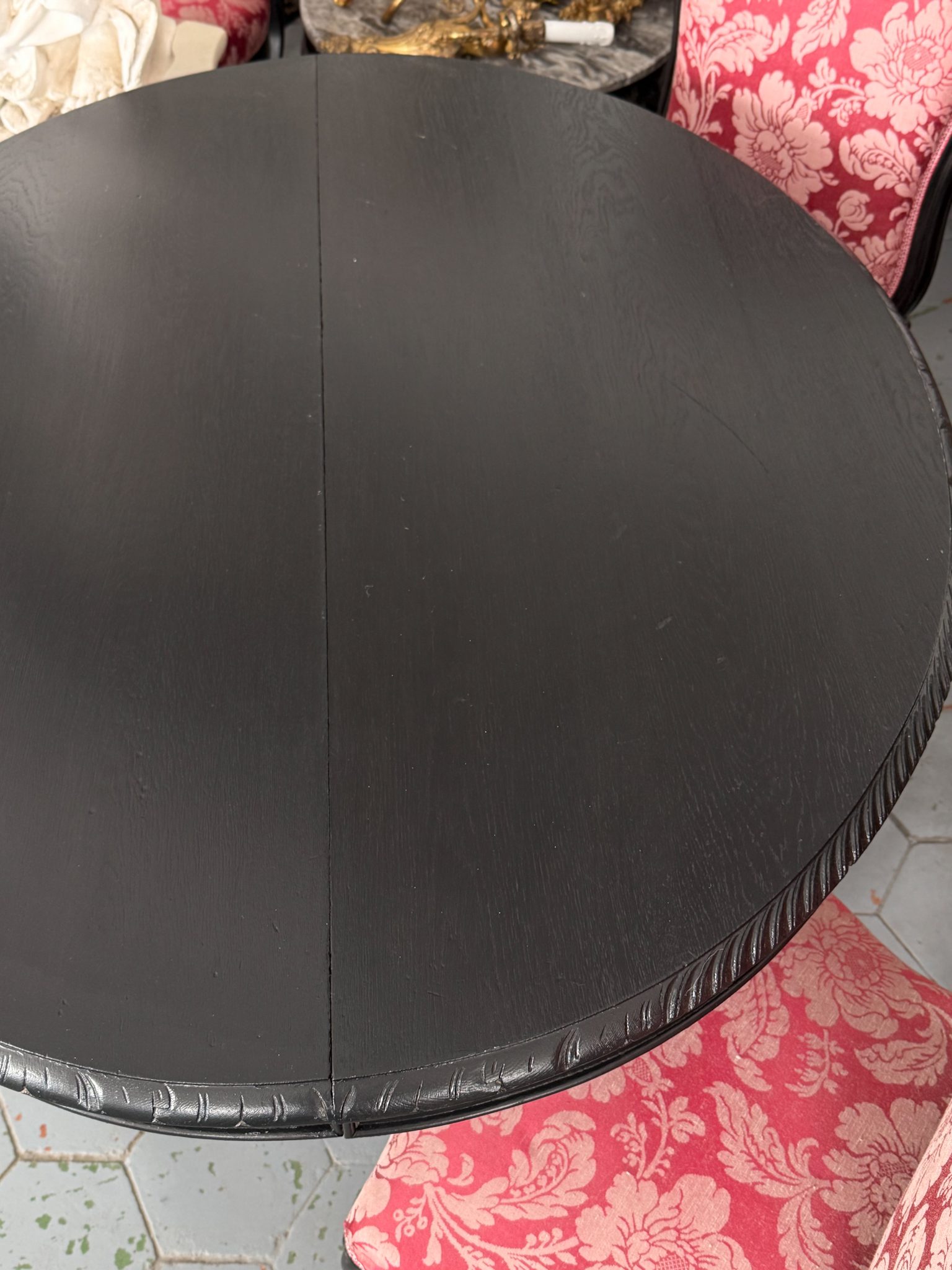
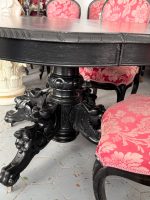
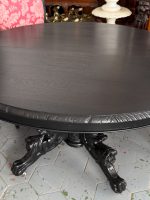
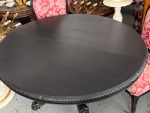
Top 130 cm × 112 cm (oval) × height 75 cm. Massive and heavy.
―――――――――――――――――――――
Ebonised Oak Dining Table with Griffin Figural Pedestal — Neo-Renaissance / Historicism, Western Europe, circa 1860–1890.
―――――――――――――――――――――
🏛️ PERIOD, ARTISTIC STYLE, ERA
This table represents the most ambitious genre of Historicism and Neo-Renaissance — the large dining table with a figural pedestal construction, produced by high-grade workshops in the second half of the 19th century for manor houses, city palazzi, and aristocratic dining rooms. The ébénisé ebonising technique — in which oak is treated to an intensely dark, near-black tone with a high polish — was particularly prized in England and y during the 1860s–1880s, when Neo-Renaissance demanded drama and grandeur.
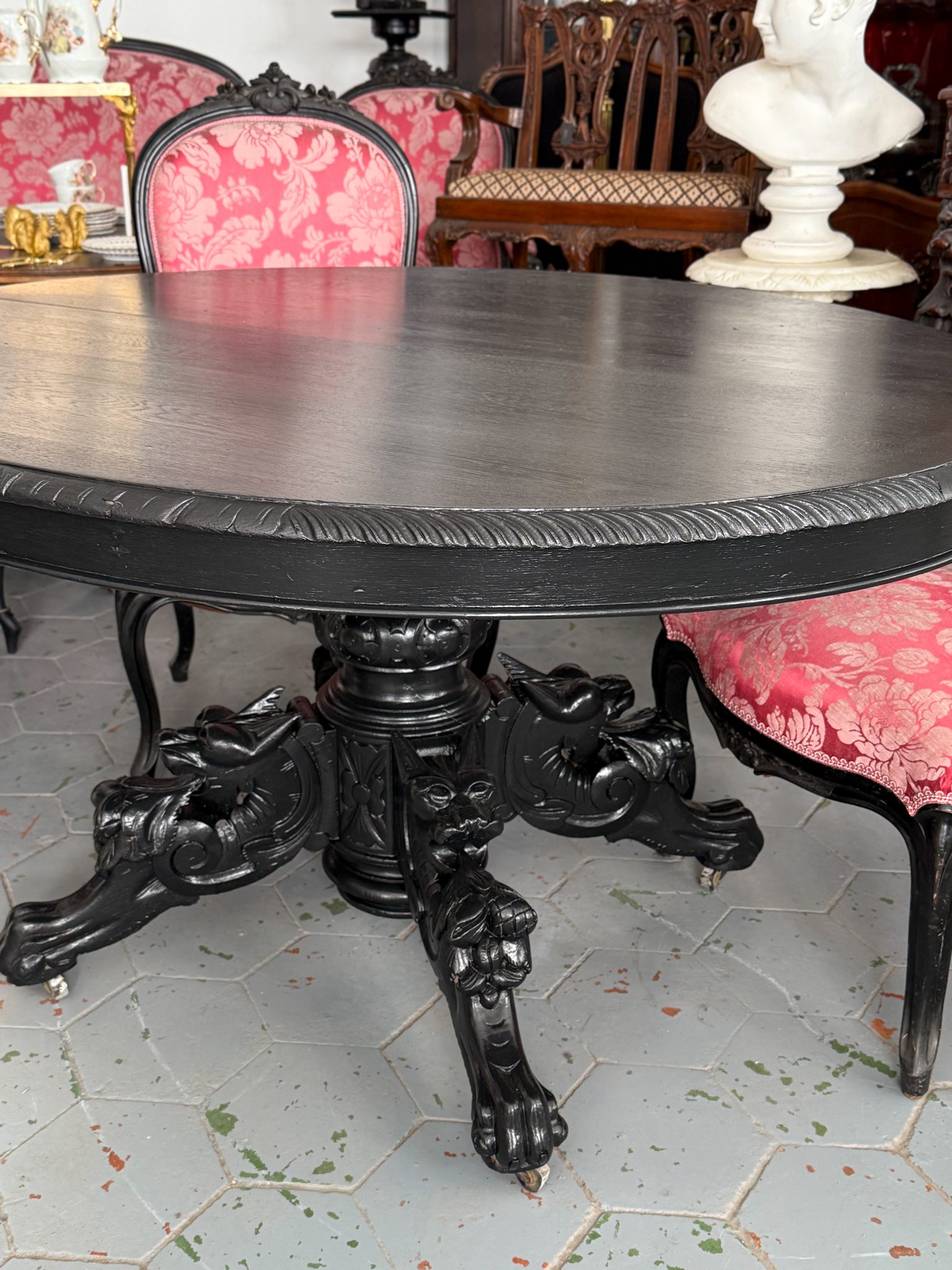
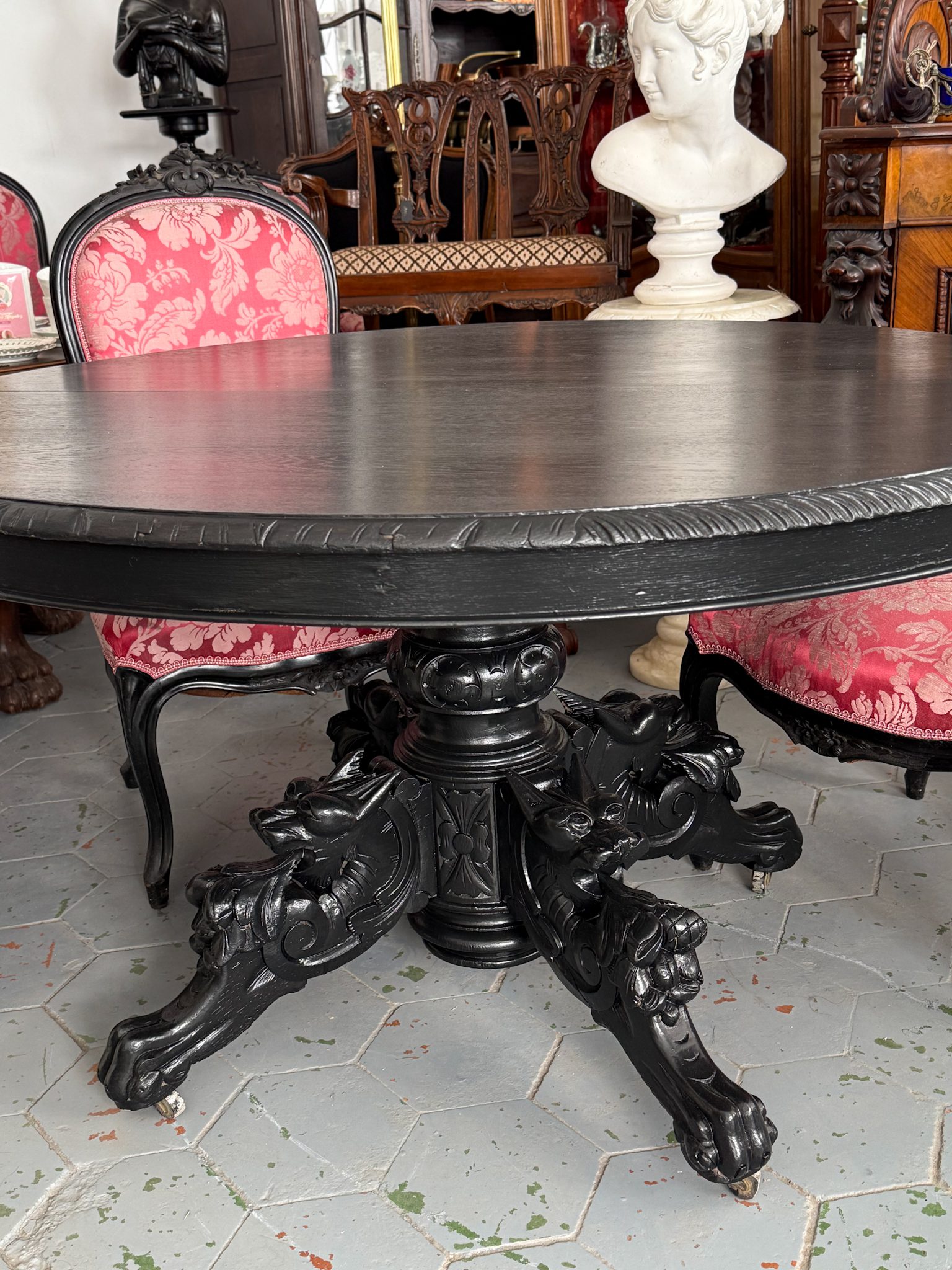
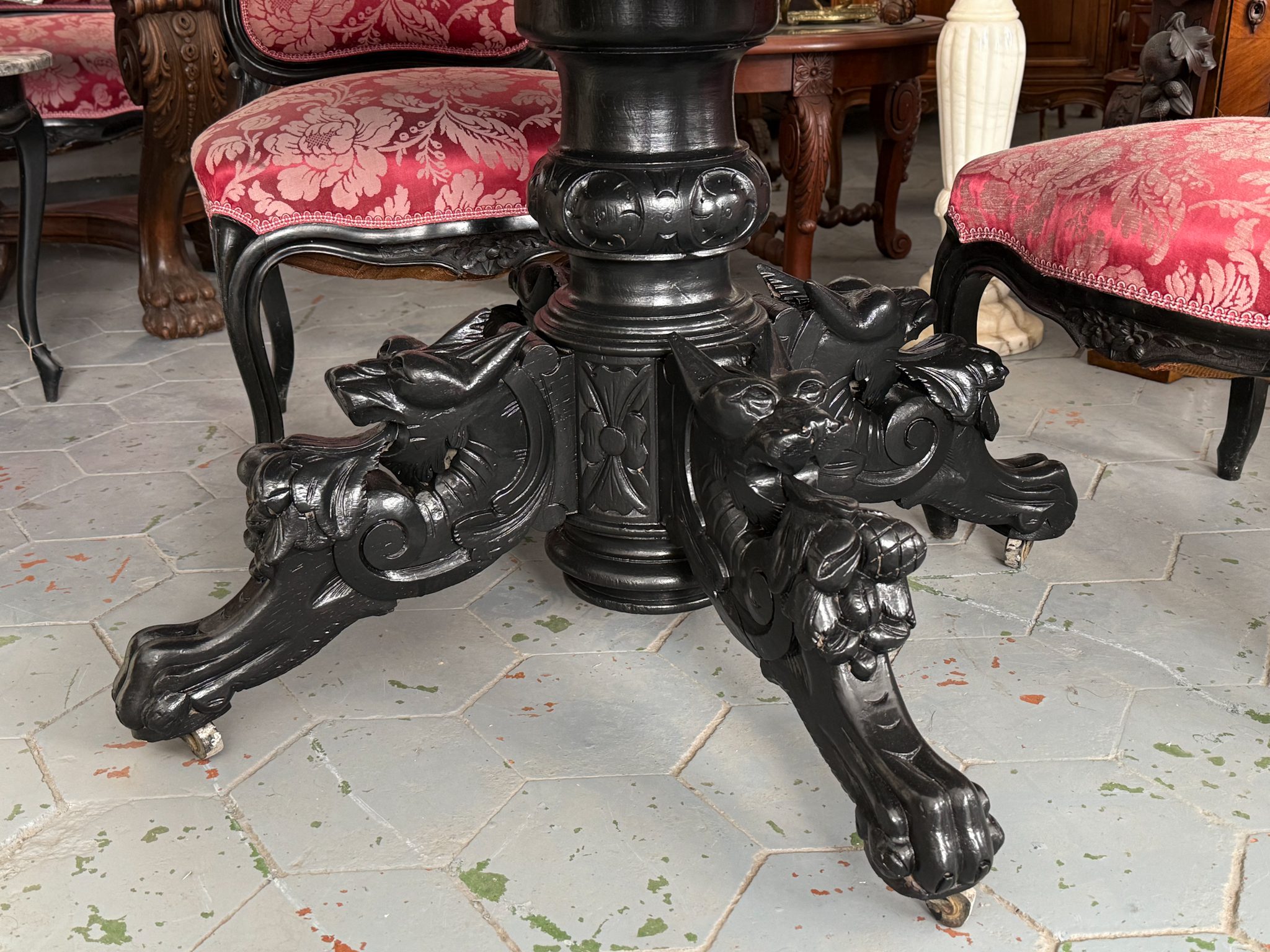
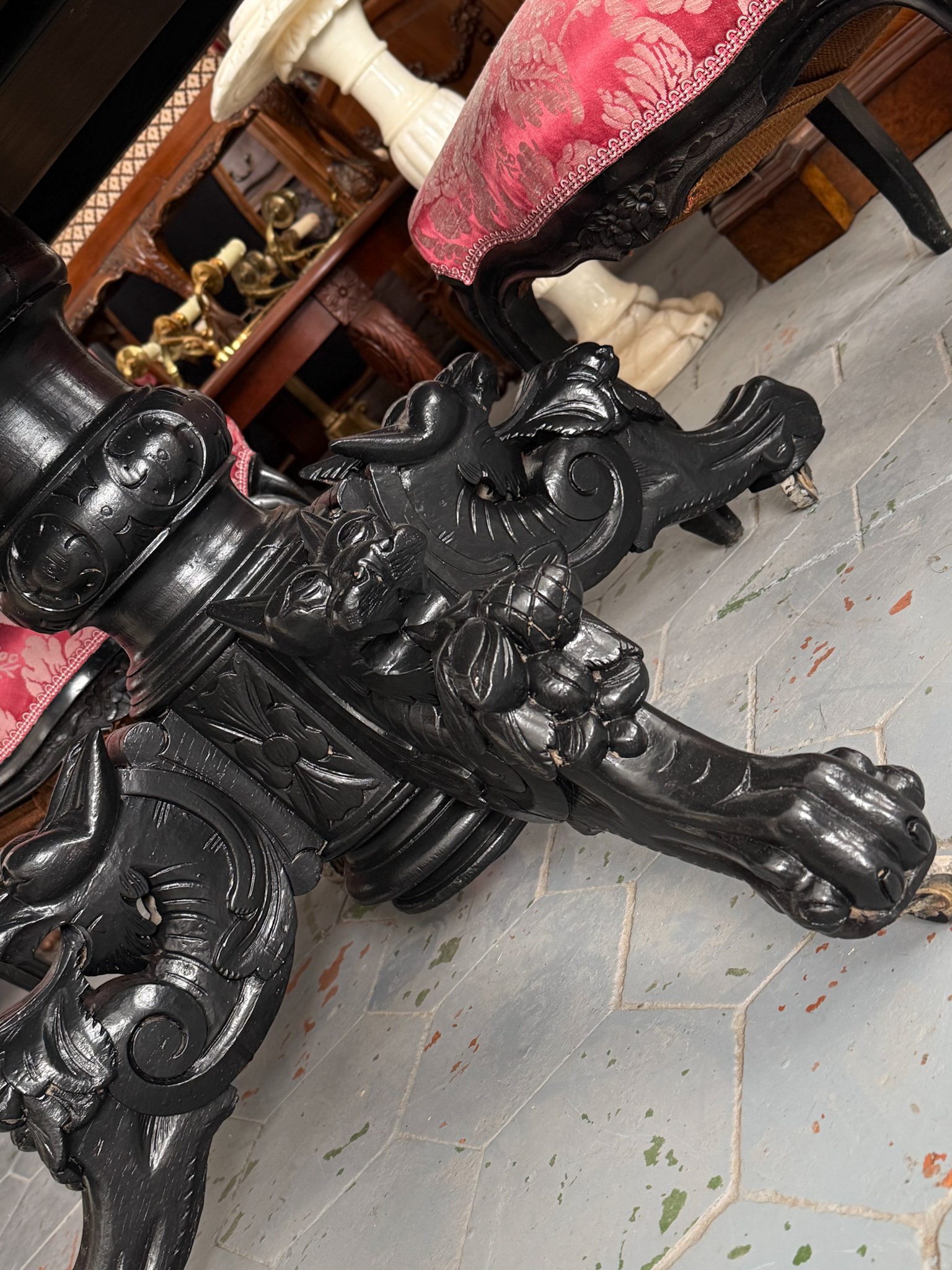
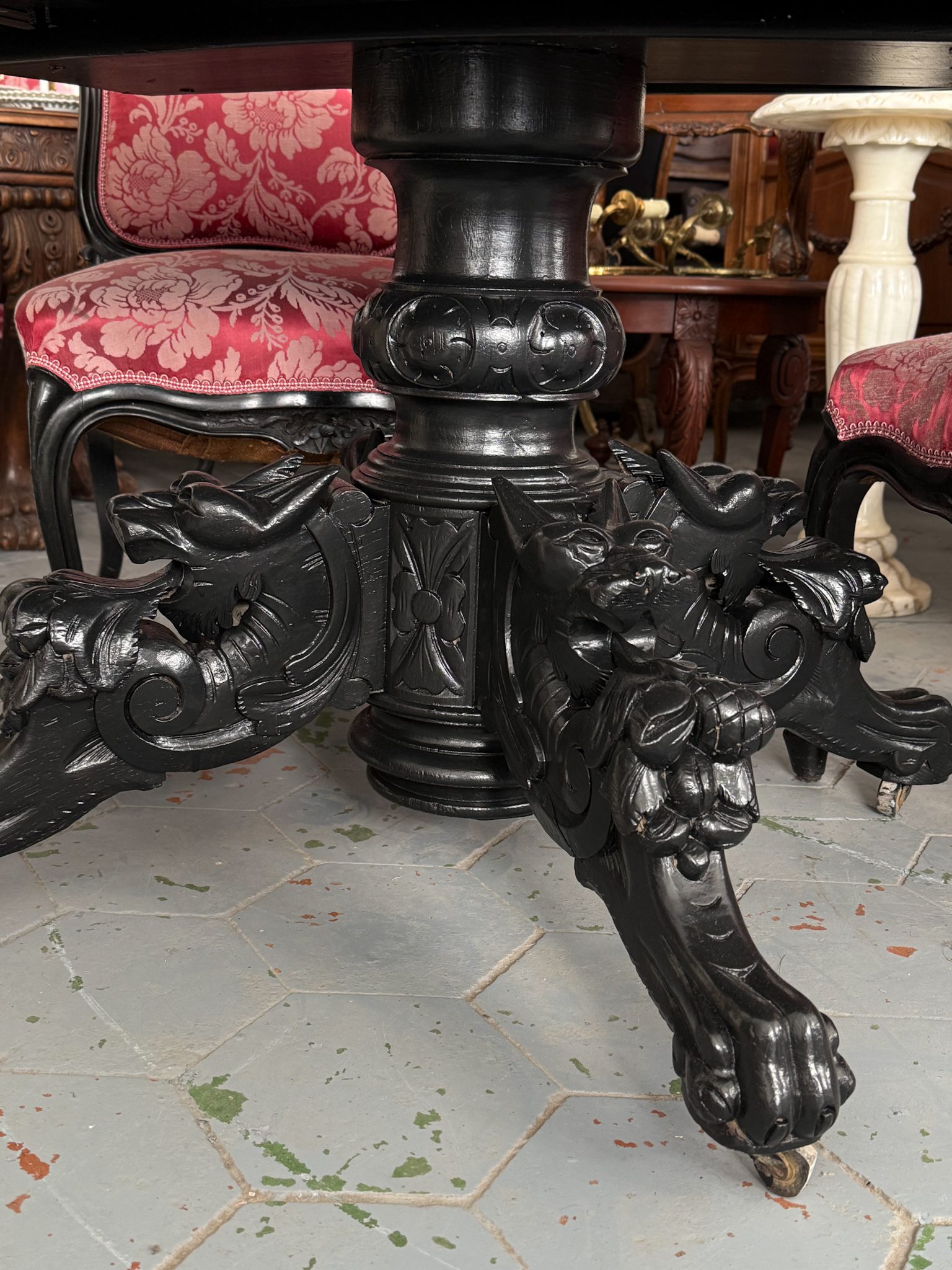
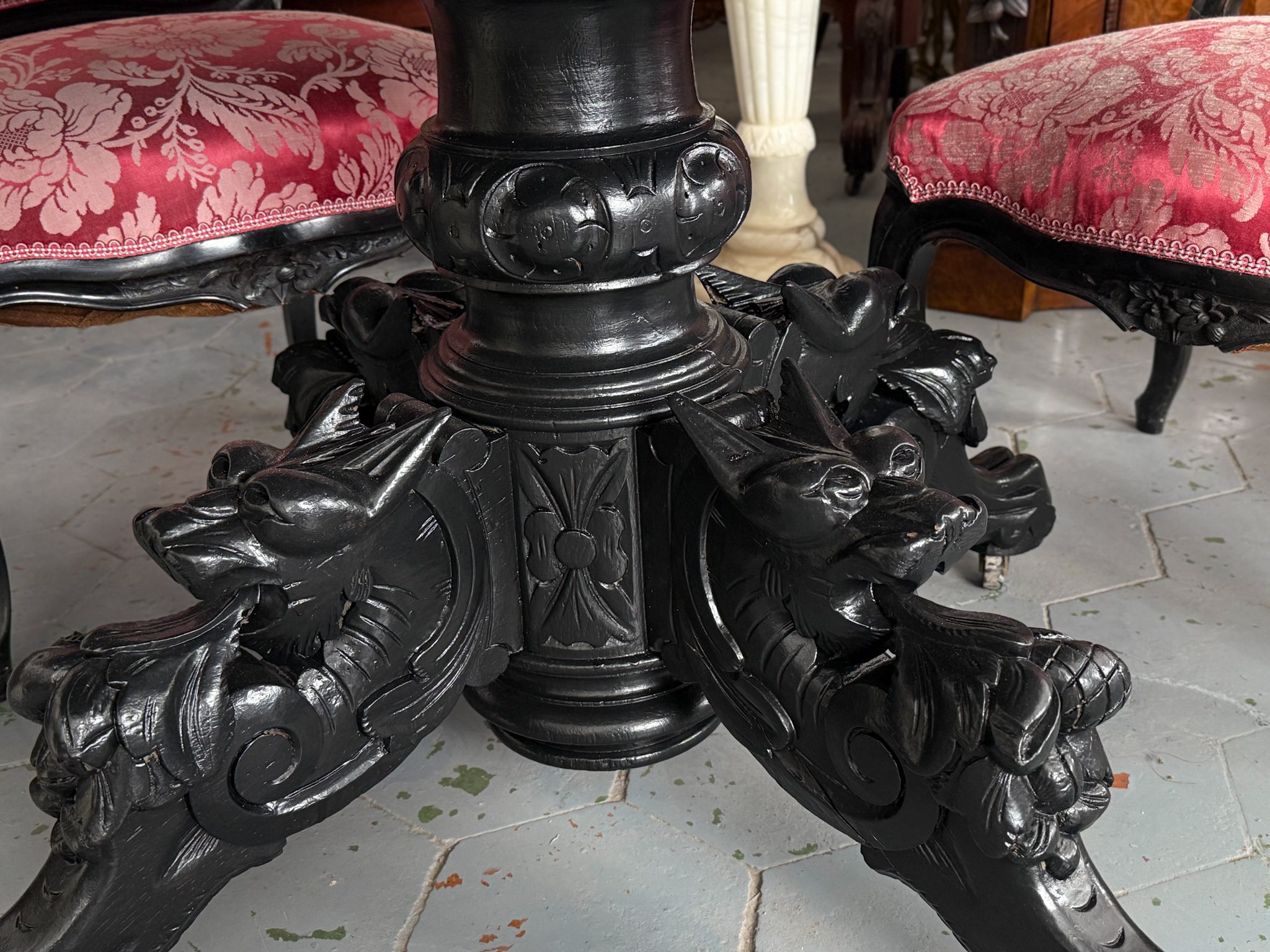
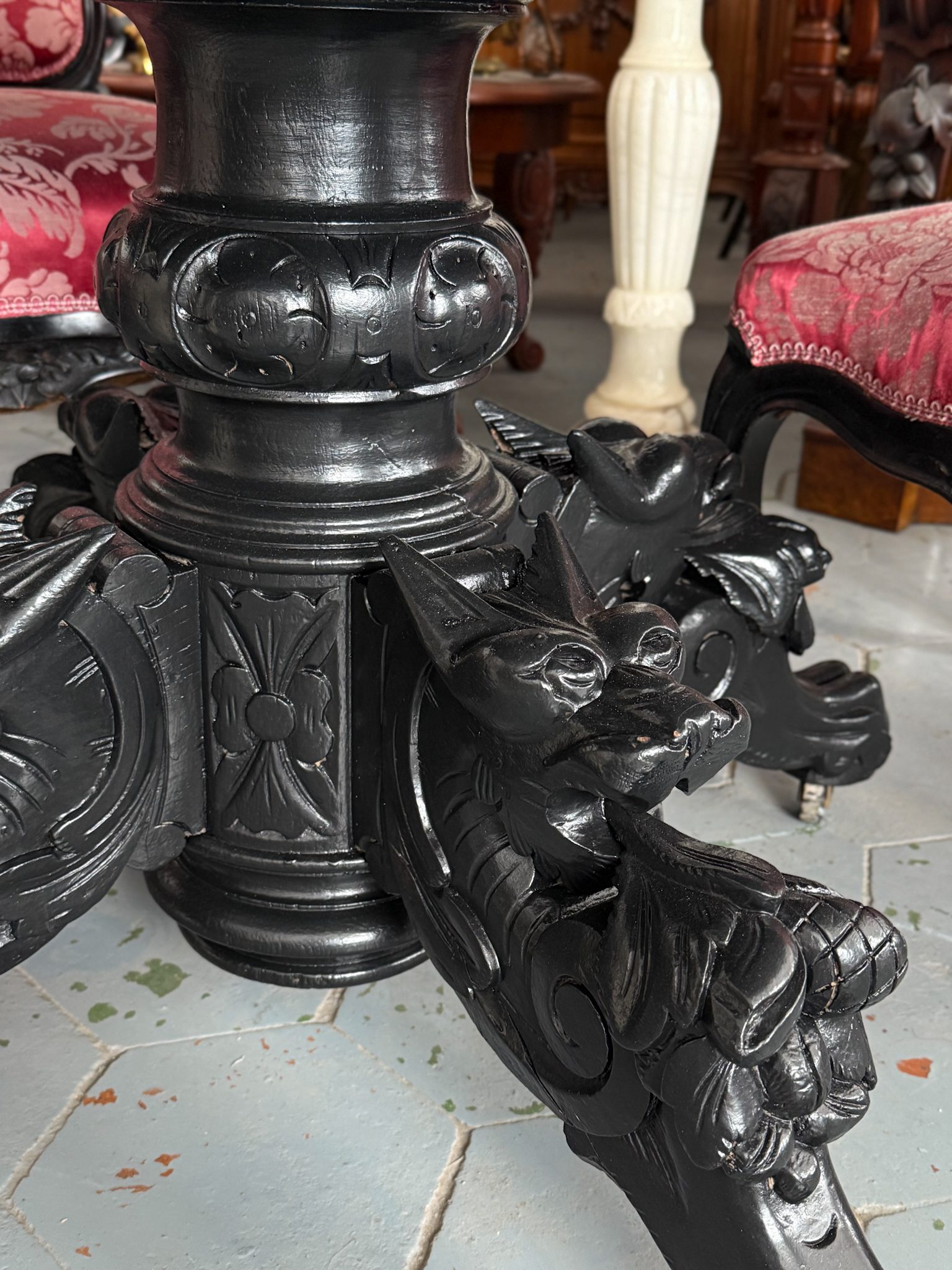
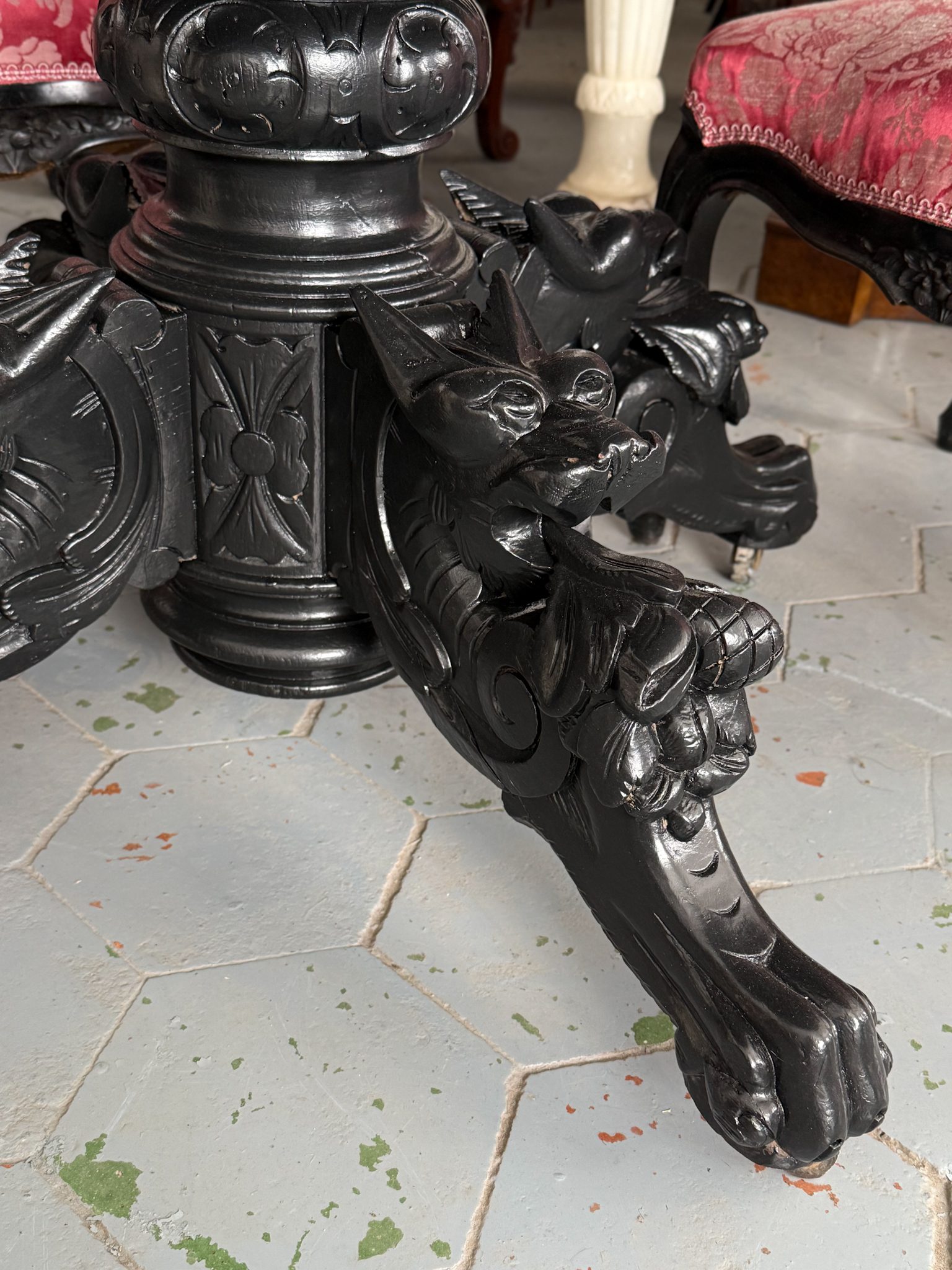
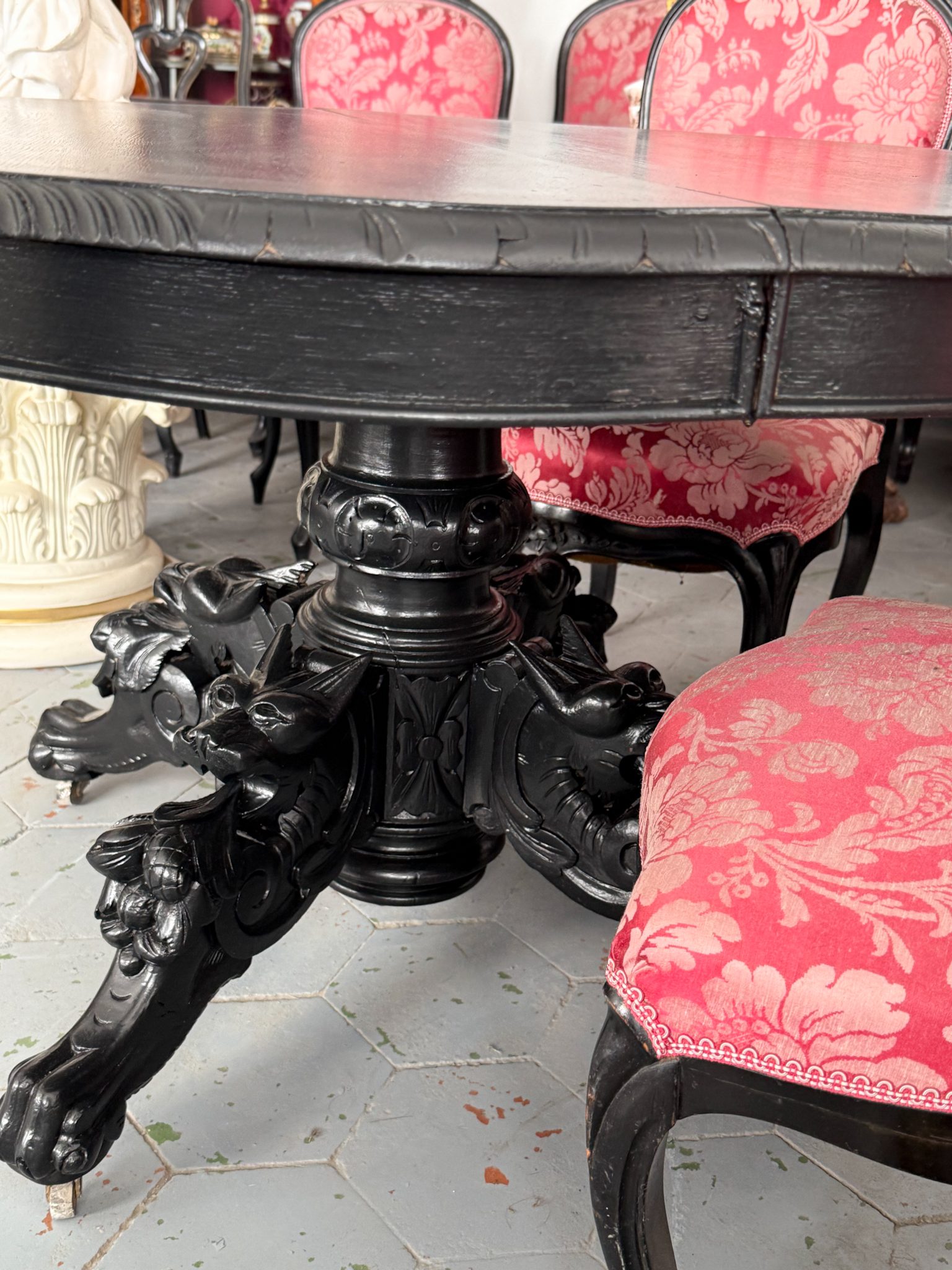
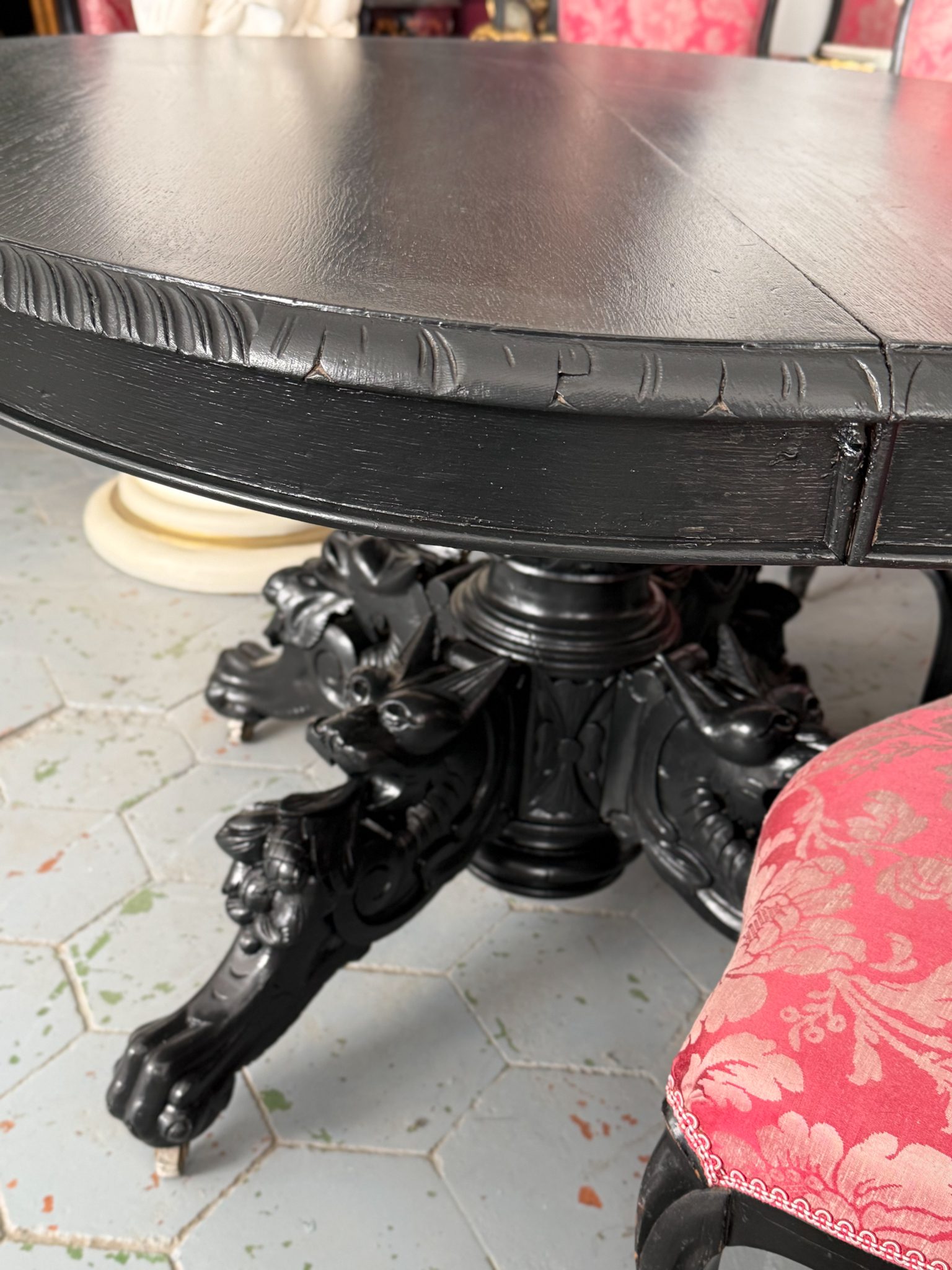
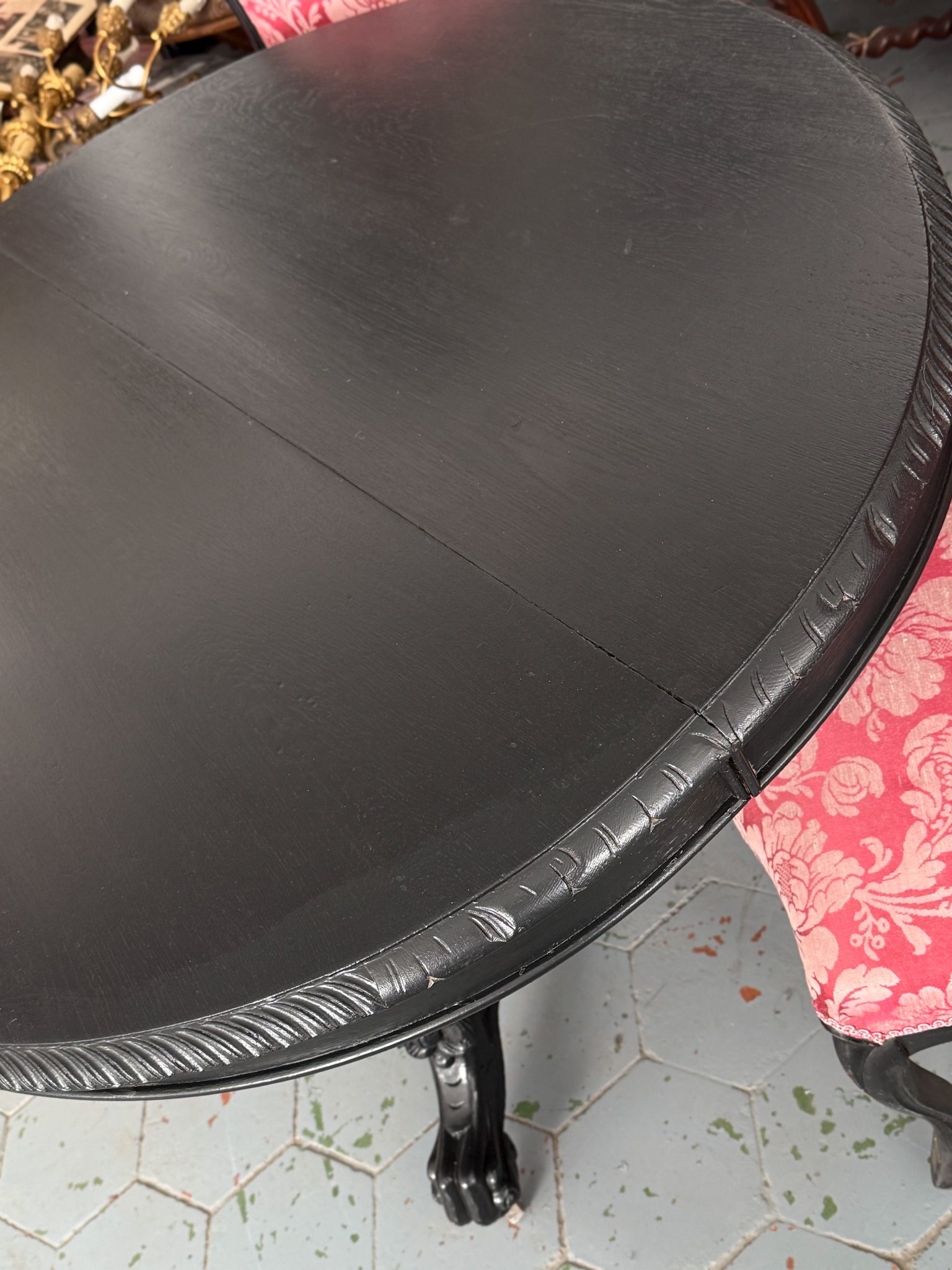
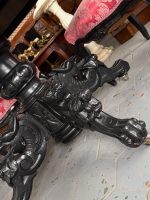
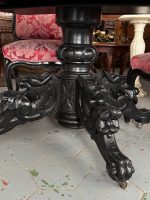
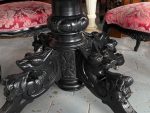
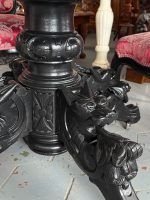
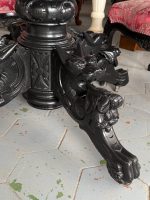
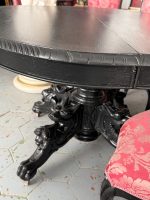
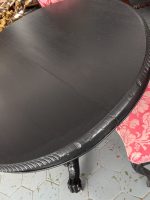
The pedestal is exceptional: four griffin-like figural creatures — with bird heads and acanthus-leaf wings — emerge from a central columnar shaft and terminate in massive lion’s paw feet on bronze castors. This compositional solution is a direct inheritance from Renaissance sgabello tables and Baroque torchère traditions, reinterpreted by Historicism as its most iconic aesthetic declaration. The table edge with its continuous gadroon moulding — in an egg-and-lance rhythm — completes the Neo-Renaissance vocabulary.
Belle Époque began in 1871, and in precisely that decade, hunting culture among the European aristocracy experienced a new florescence. Kaiser Wilhelm I regarded his annual hunts at Rominten Lodge as affairs of state — and it was in dining rooms exactly like this, with their black oak tables, antlered trophies on the walls, and candelabra casting pools of light, that this table was born and used. A hunting trophy above, a silver candelabra on the surface, and these griffins below — it was a complete worldview made furniture.
―――――――――――――――――――――
⚜️ MAKER AND PROVENANCE
No maker’s mark is visible. The sculptural quality of the figural griffin-like legs — the anatomical detail of the bird heads with open beaks and relief feather motifs, the dynamic acanthus leaf carving on the upper leg sections, the anatomical precision of the lion’s paw feet — points to a highly skilled carver working in a specialist , Belgian, or workshop. The ébénisé ebonised finish with high gloss corresponds to the highest-grade or cabinetmaking, where this technique was the primary language of representational furniture. The bronze castors on the leg terminals indicate a piece intended for a large, frequently rearranged dining room.
―――――――――――――――――――――
💎 RARITY AND SIGNIFICANCE
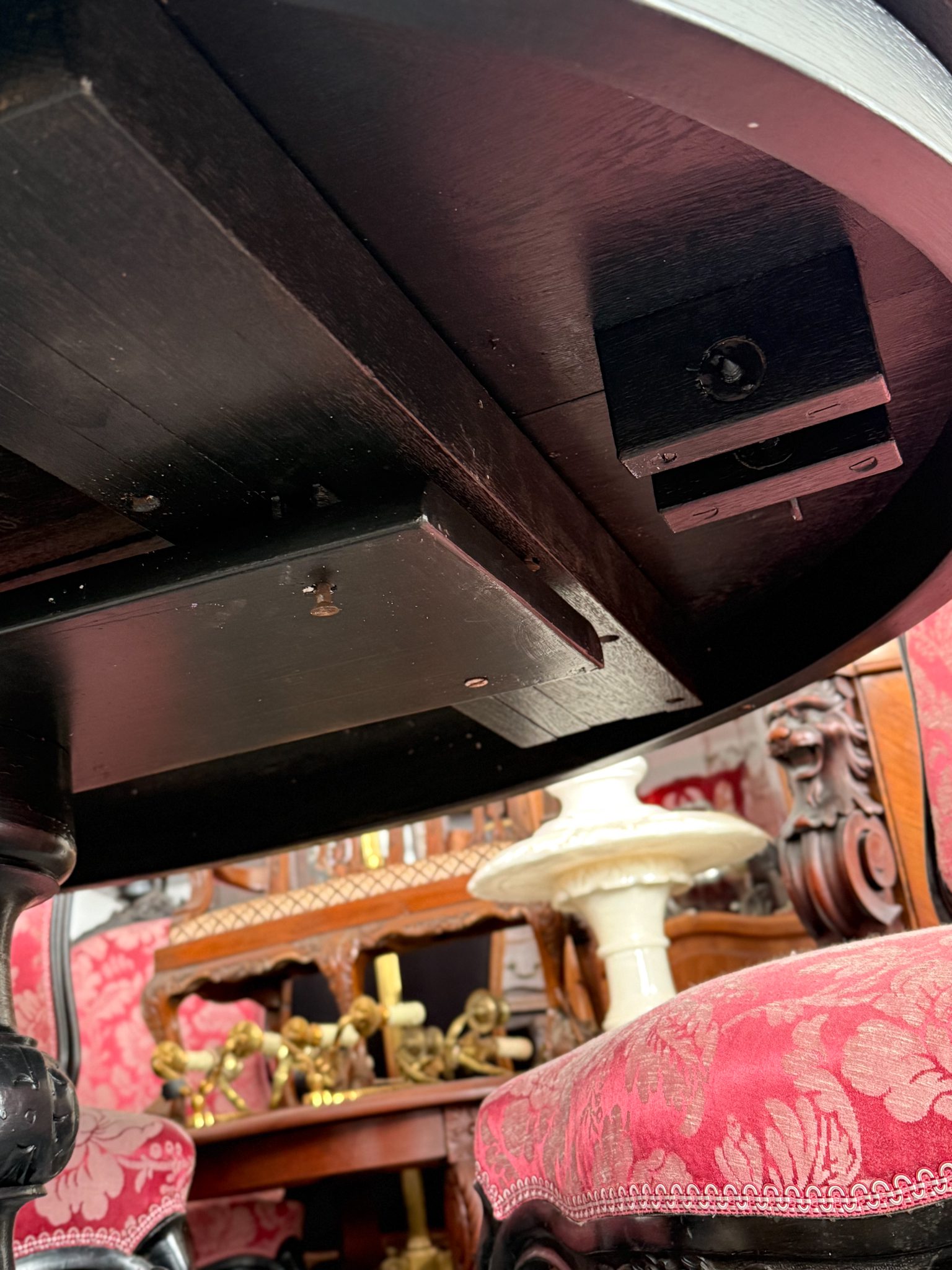
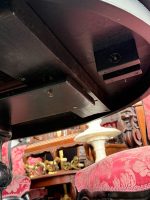
Dining tables with griffin or fantastical creature figural pedestal legs are exceptionally rare in the antique market — the majority of Historicist dining tables use lion’s paw or cabriole legs, but figures with bird heads are the mark of a bespoke commission for a high-status patron. The ebonised oak adds further value — it is an aesthetic tool actively sought by contemporary interior designers for creating dramatic contrast. The extension mechanism (visible in the underside photograph) adds functional versatility.
―――――――――――――――――――――
🕯️ USE IN INTERIORS, DESIGN AND PHOTOGRAPHY
This table is dramatic furniture — it transforms a room. The black ébénisé oak with griffins creates an absolute contrast in both a classical interior with gold accents and an ultra-contemporary black and white space. Ideal as the centrepiece dining table in a large dining room, the main room of a private club or hotel restaurant, or an artist’s or architect’s working space. In photography it reads dramatically — the black surface with griffins below is almost a cinematic composition. Interior designers use it as the anchor piece of Gothic Revival, Dark Academia, and Neo-Victorian interiors.
―――――――――――――――――――――
🎁 AS A GIFT
As a gift, this table is an exceptionally bold choice — suited to those who give not objects but statements of personality. Ideal for a collector with a strong aesthetic voice, an artist’s or creative professional’s home, or as a distinguished acquisition for a private club or institutional setting.
―――――――――――――――――――――
🔍 CONDITION
Good antique condition. The ebonised finish shows age-related wear — minor paint flaking visible at the gadroon frieze in places, attesting to active period use. The griffin-like leg carvings retain their detail clearly. Bronze castors on all four leg terminals present and functional. Extension mechanism operational (visible in underside photograph). Table top without deep damage. The condition of the piece is fully documented in the photographs.
―――――――――――――――――――――