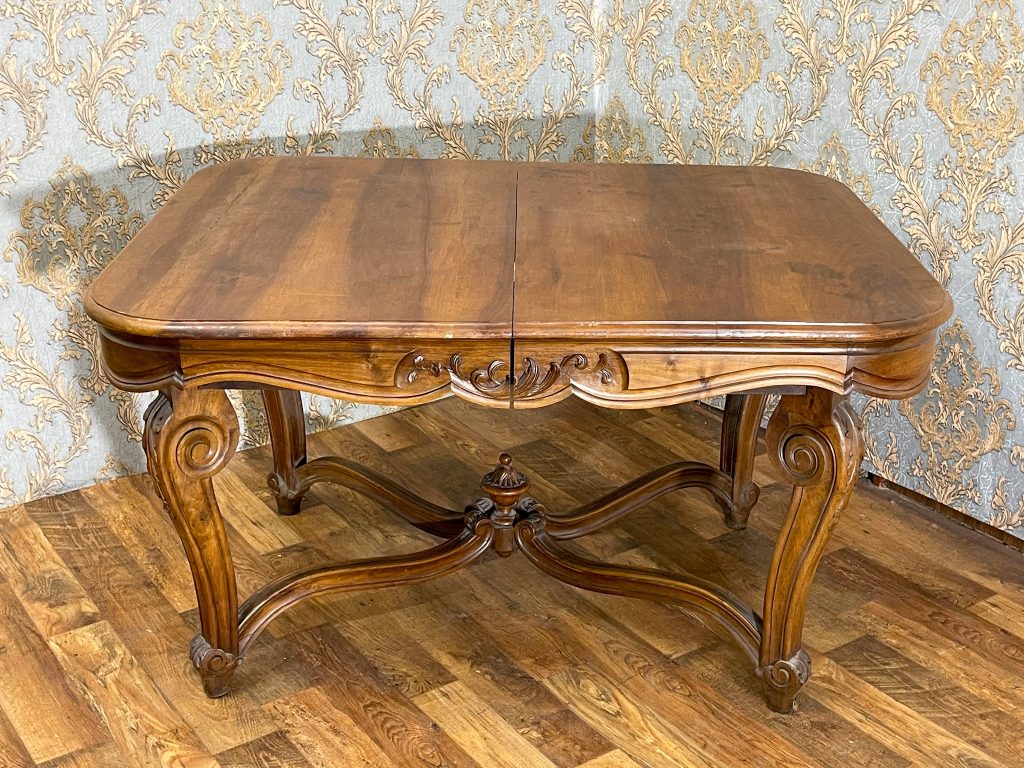
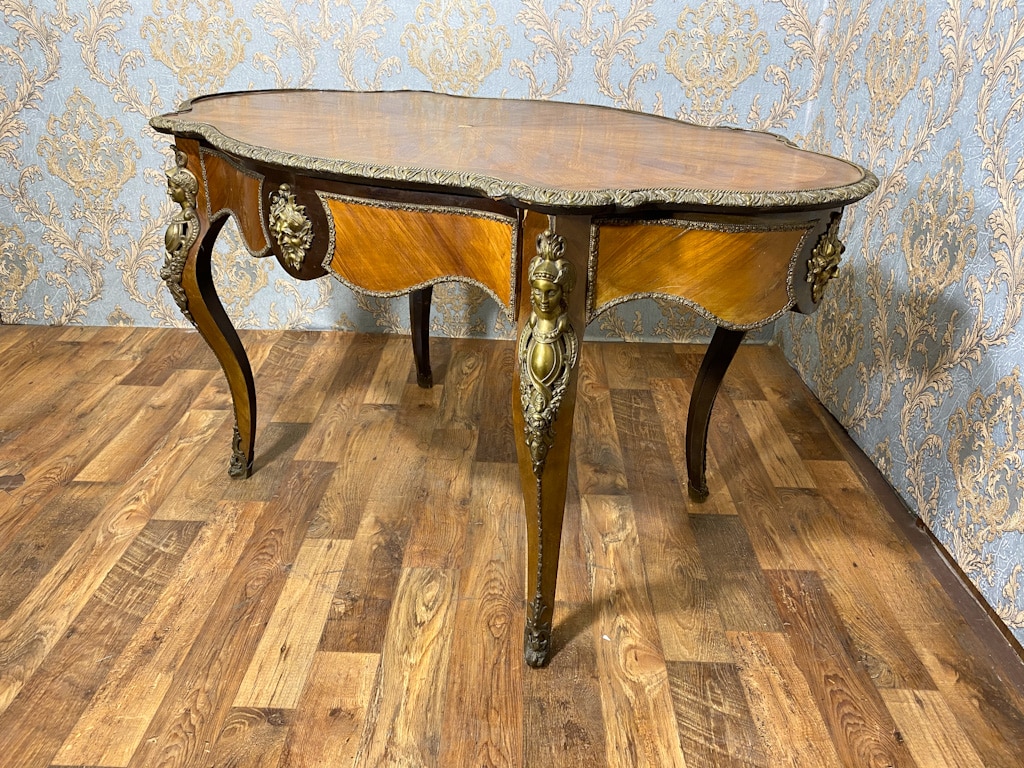
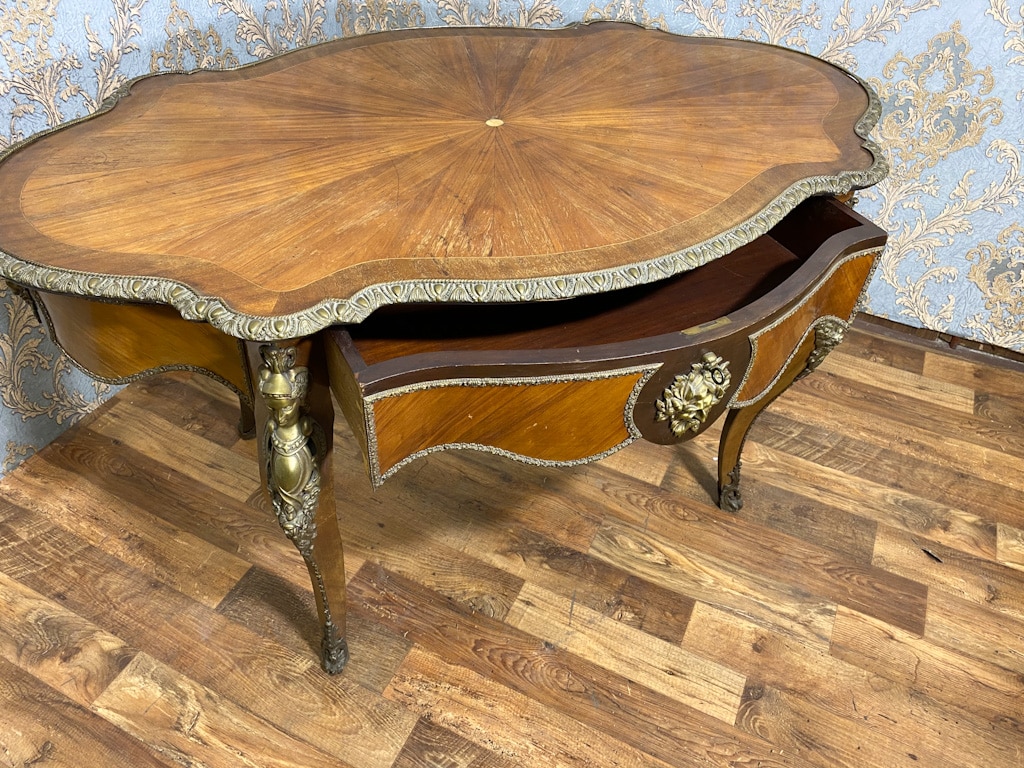
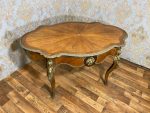
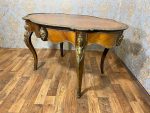
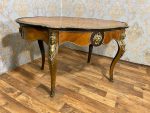
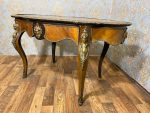
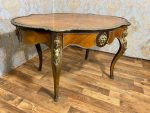
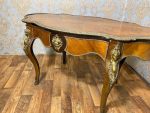
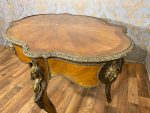
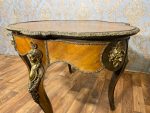
Writing Table — Louis XV / Napoleon III Style, France, circa 1860–1880. This exceptionally refined oval table features intricate bois de rose and fruitwood veneer with a sunburst pattern and a mother-of-pearl inlay. A stunning example of Napoleon III cabinetmaking, it boasts exquisite bronze ormolu mounts and cabriole legs. 1 650,00 €
You’re now subscribed to price tracking for this product. We’ll notify you if the price drops. 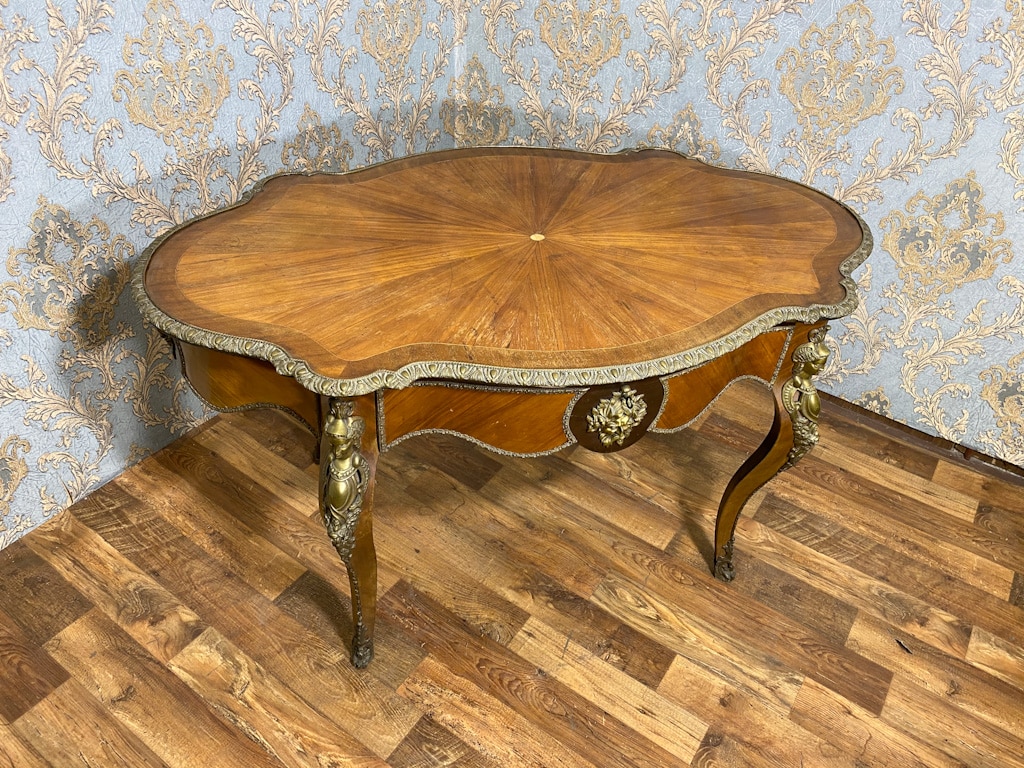
Louis XV / Napoleon III Style Writing Desk, France, c. 1860-1880
Height 77 cm Length 140 cm Width 86 cm Color BronzeNaturalSand
Description
Augstums 77 cm × Garums 140 cm × Platums 86 cm
Writing Table — Louis XV / Napoleon III Style, France, circa 1860–1880 (571)
Louis XV / Napoleon III style. France. Circa 1860–1880.
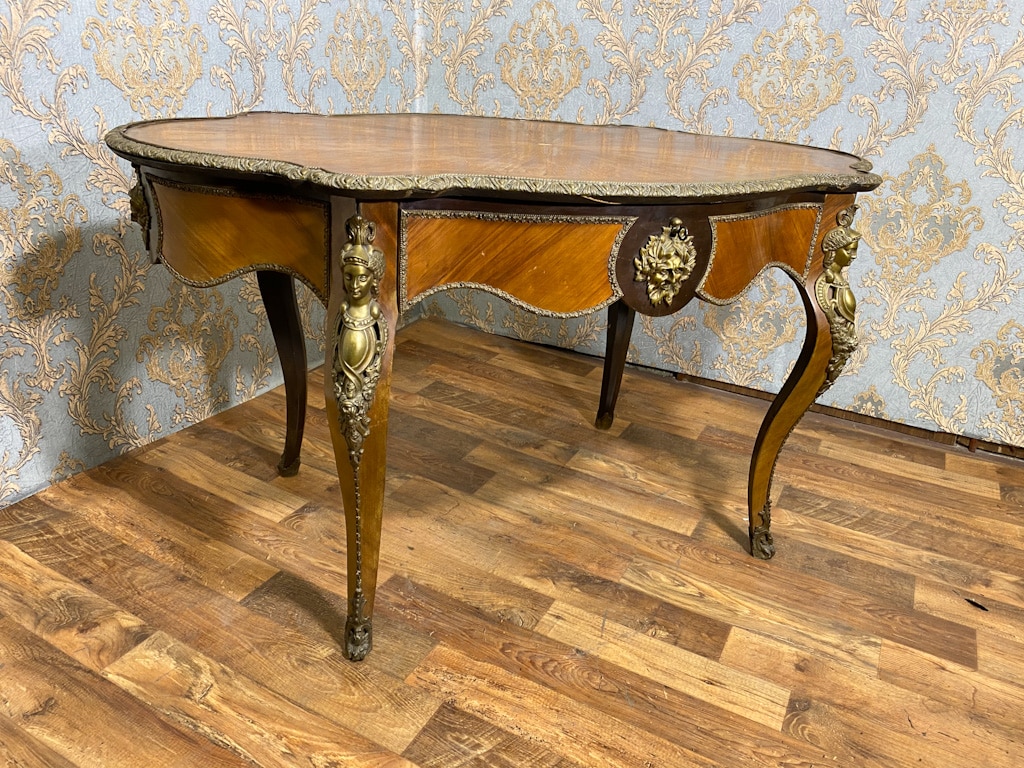
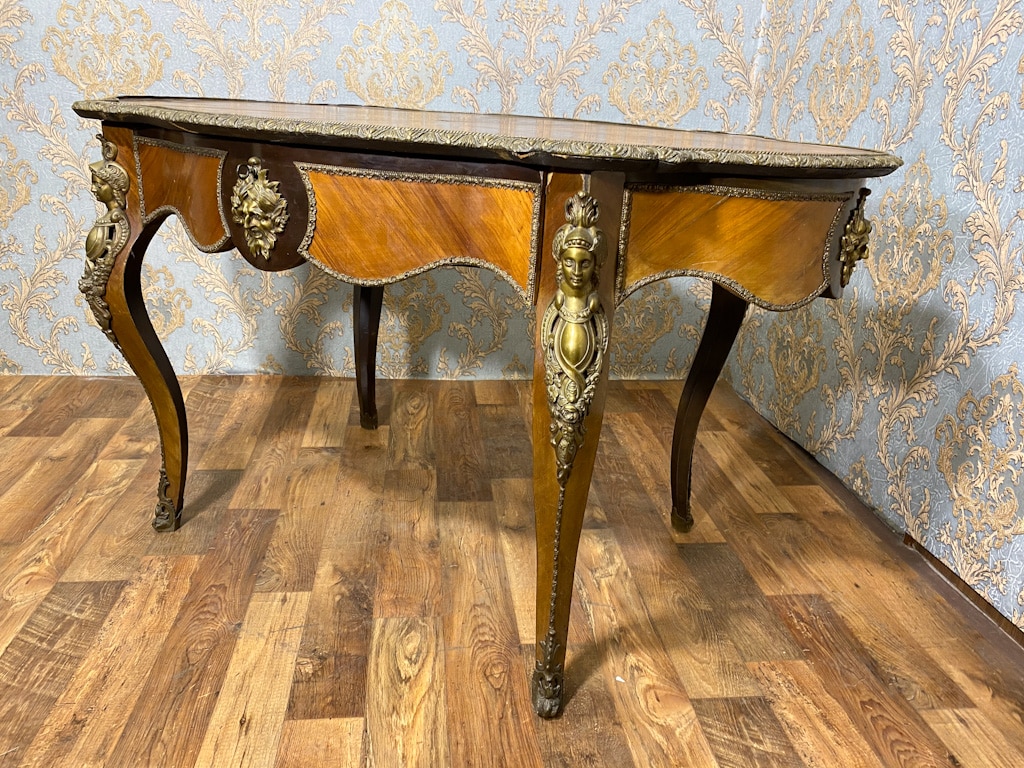
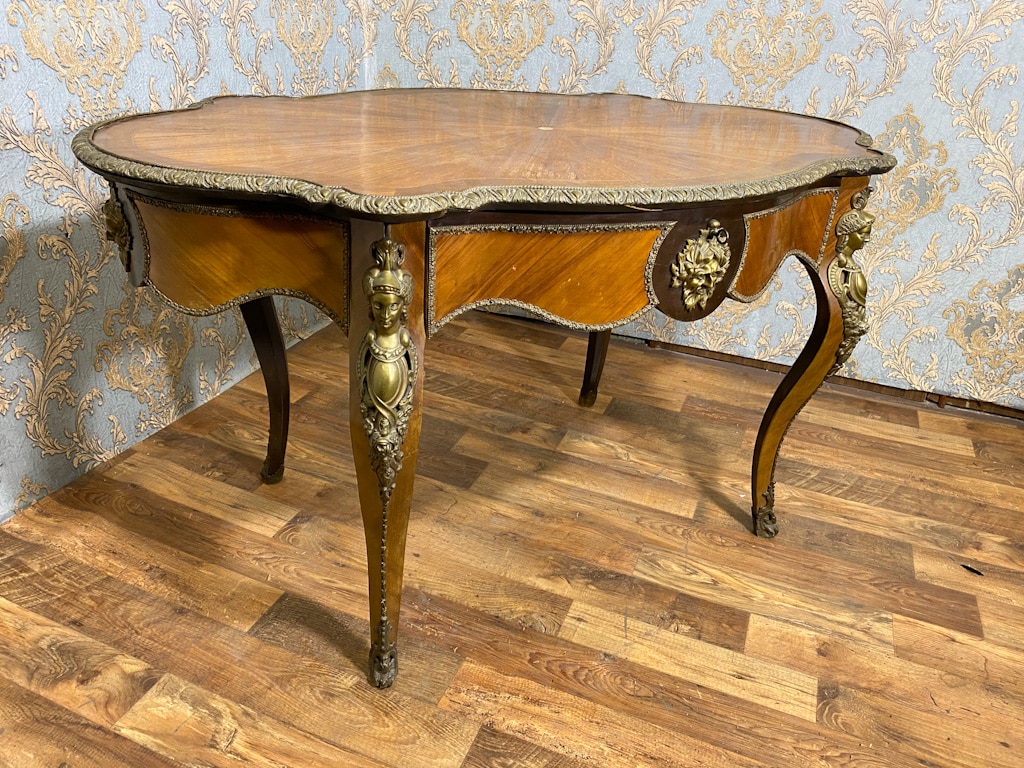
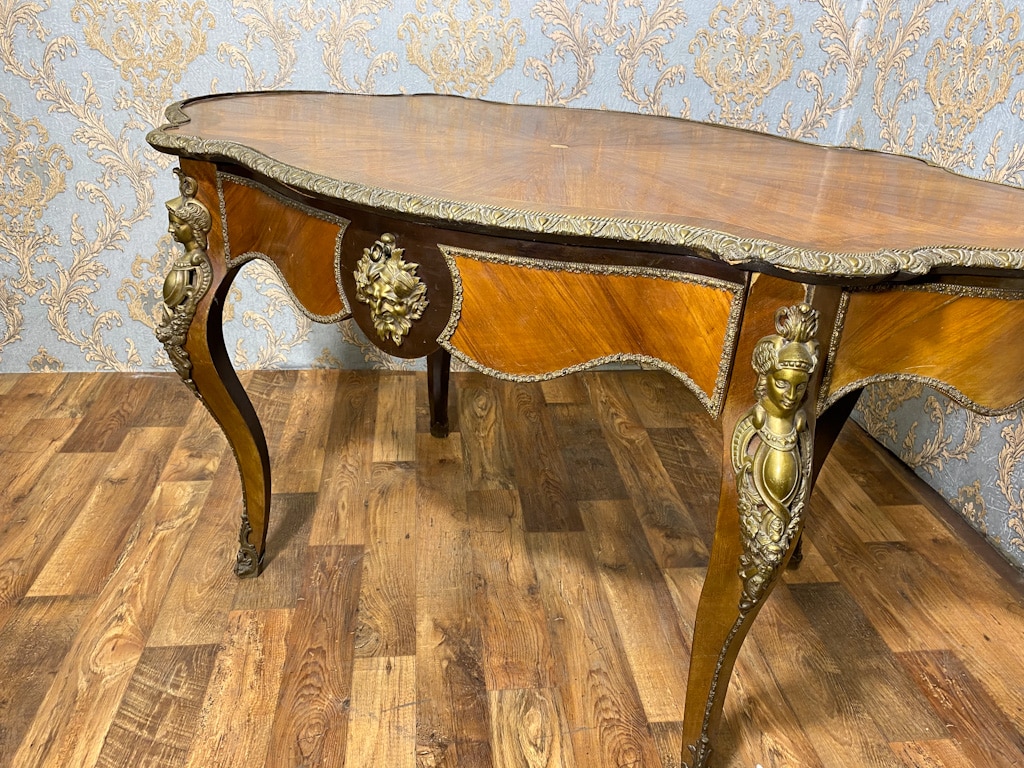
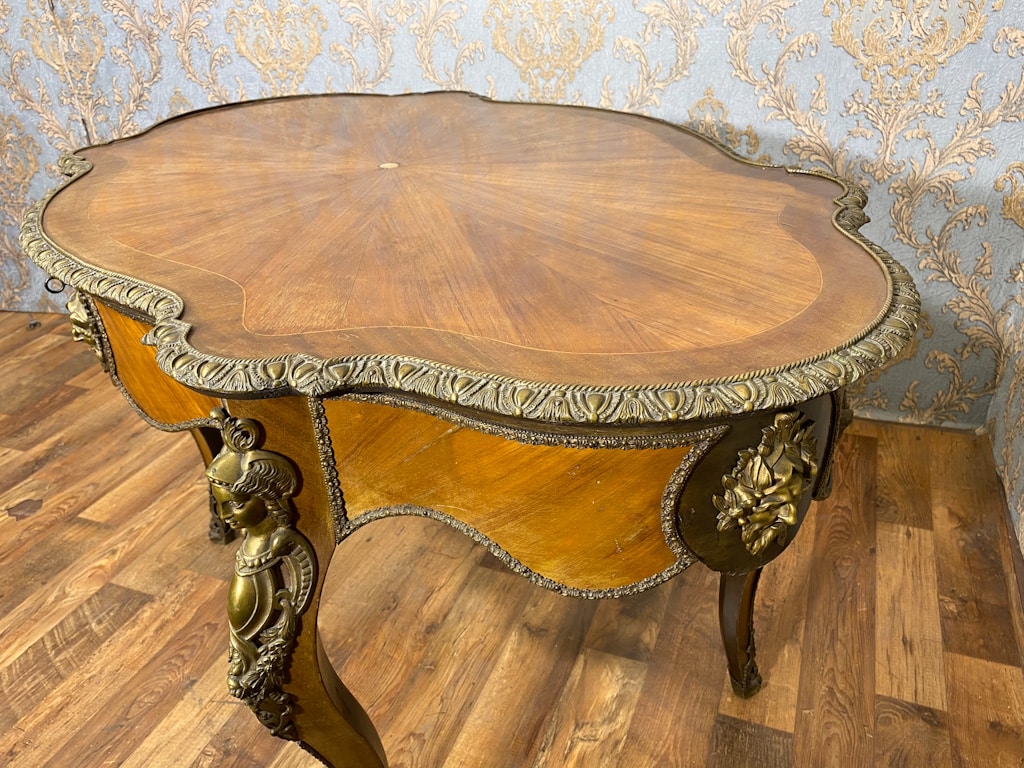
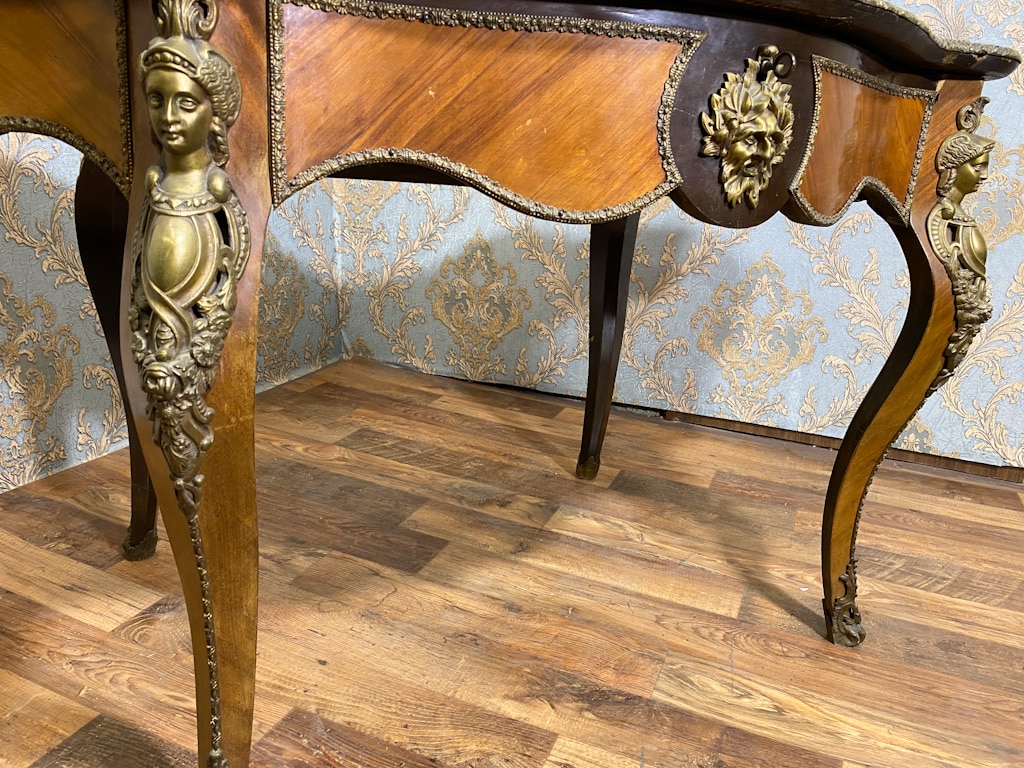
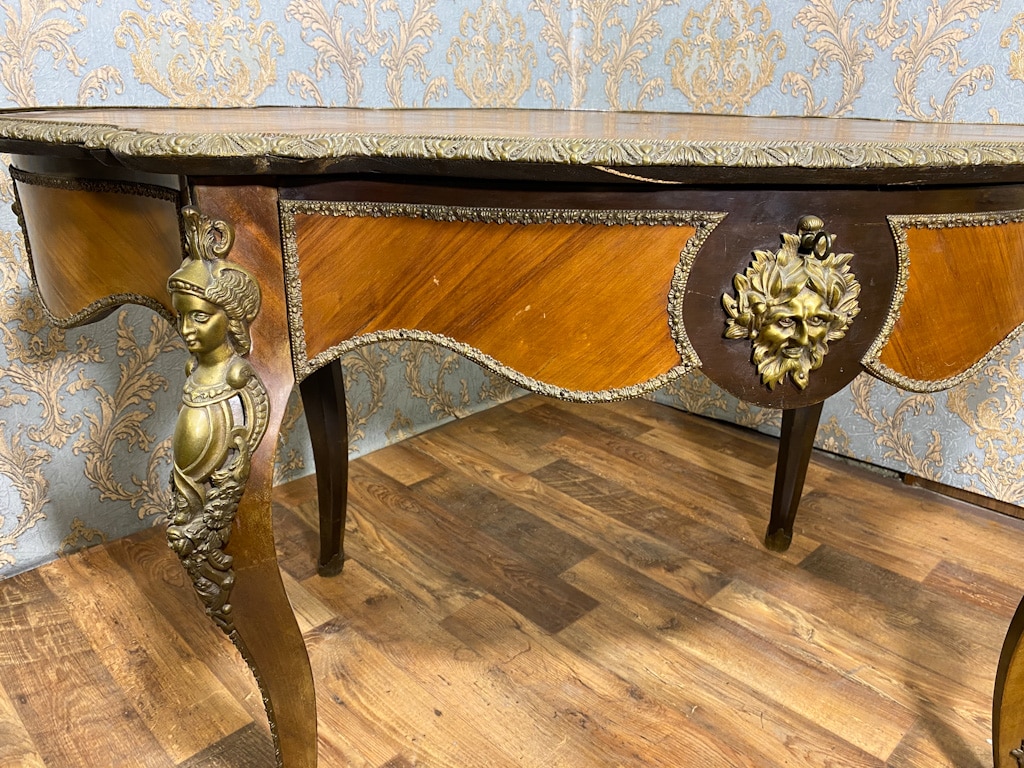
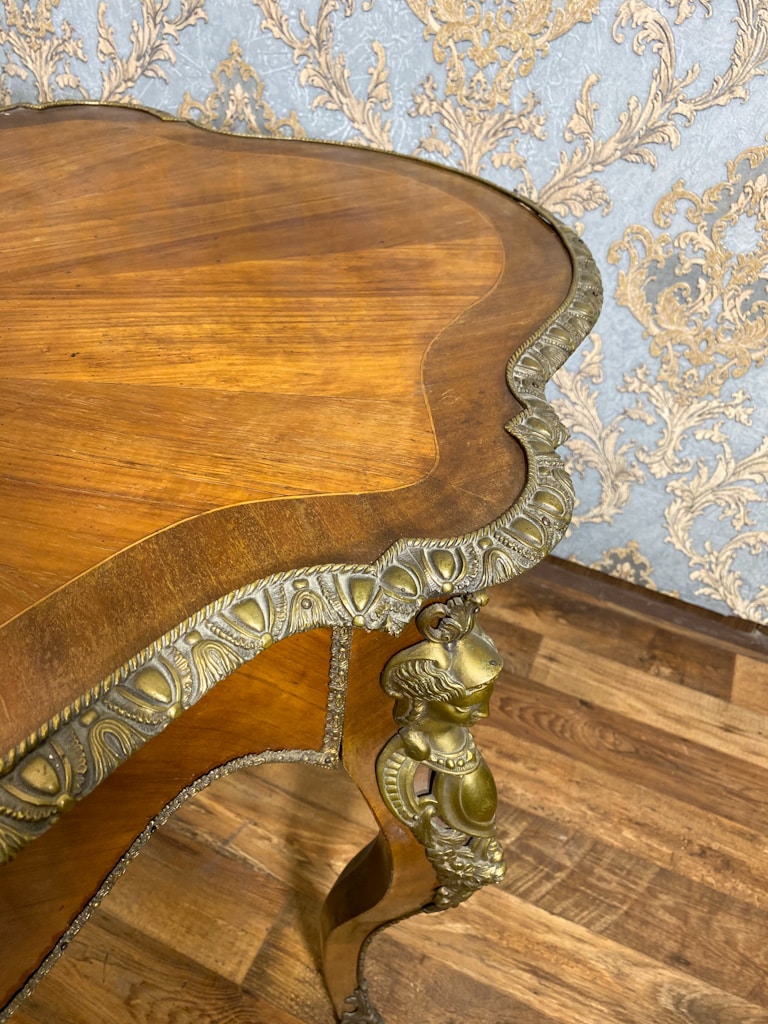
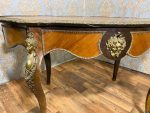
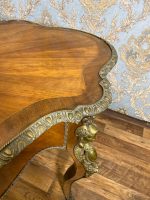
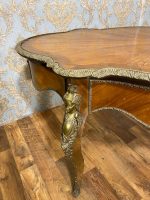
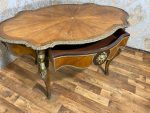
An exceptionally refined oval writing table (table de milieu) in bois de rose and fruitwood veneer with a sunburst (rayonnant) pattern and a central mother-of-pearl accent — one of the most elegant and visually rich examples of cabinetmaking, uniting the freedom of Louis XV rococo with the technical ambition of its own era. The serpentine contour of the top — undulating, with pronounced concave turns — is executed with mathematical precision; all veneer grain directions flow outward from the centre like sunrays, converging at a circle of mother-of-pearl inlay. Such an effect demands a master hand and many hours of work.
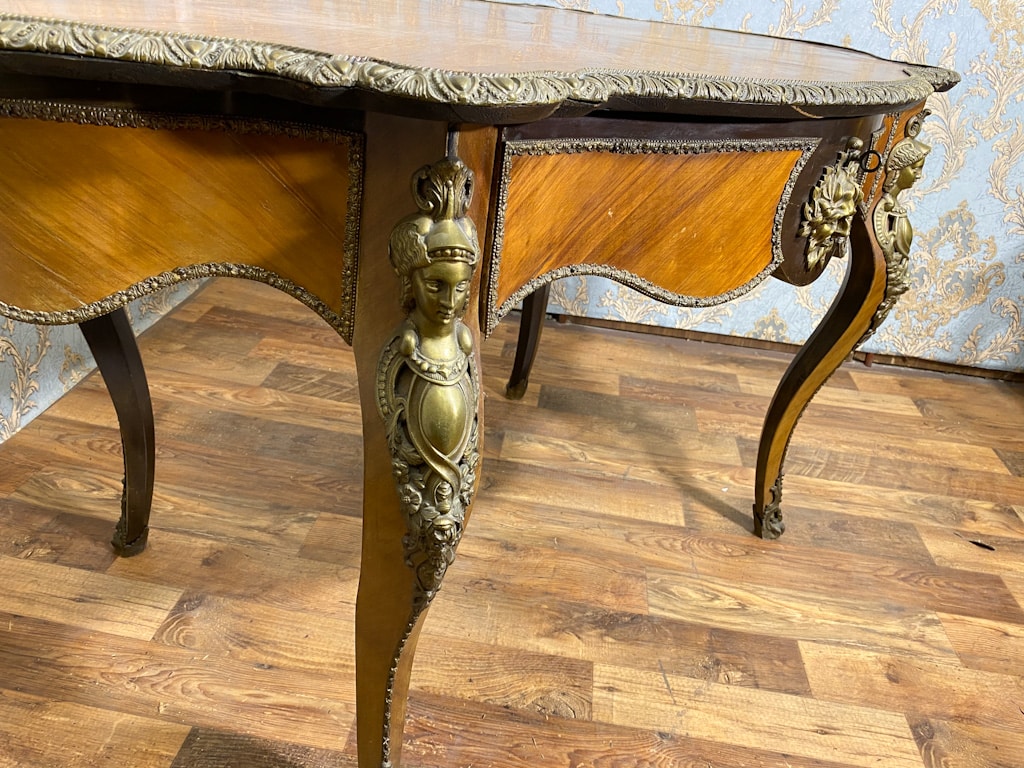
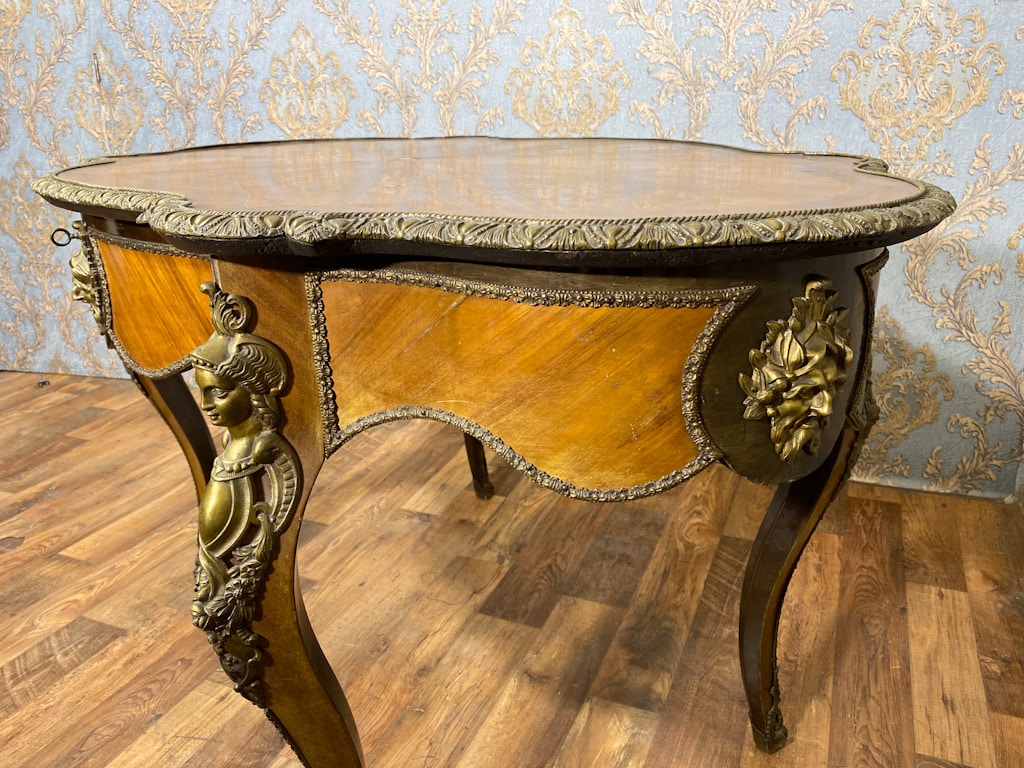
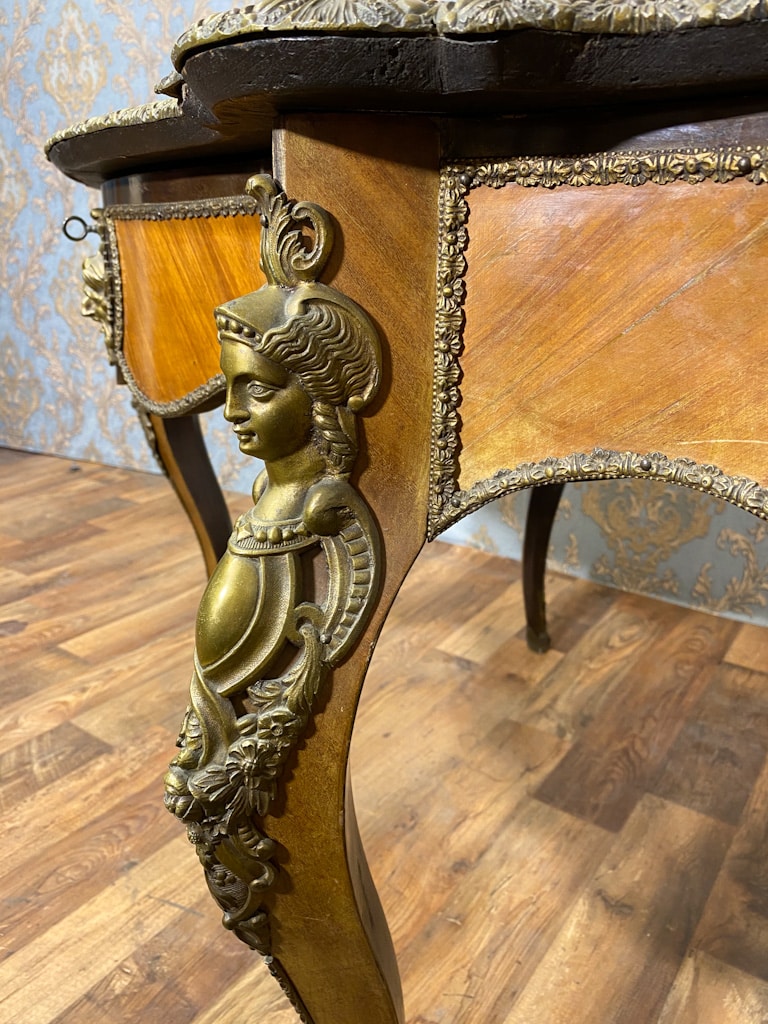
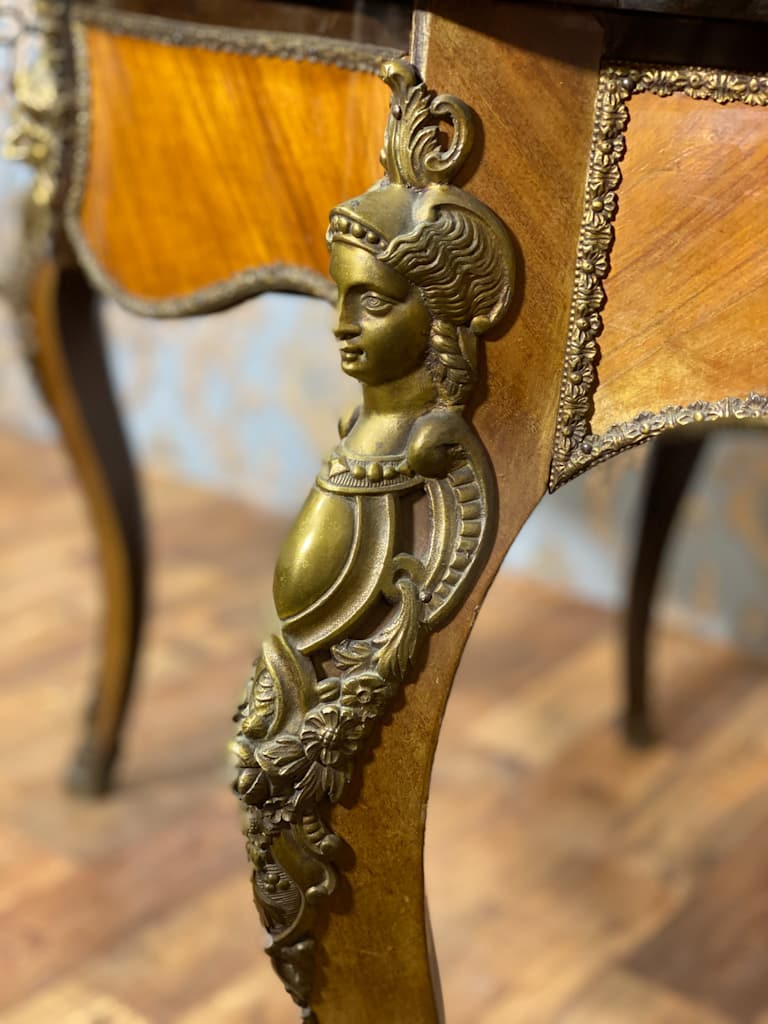
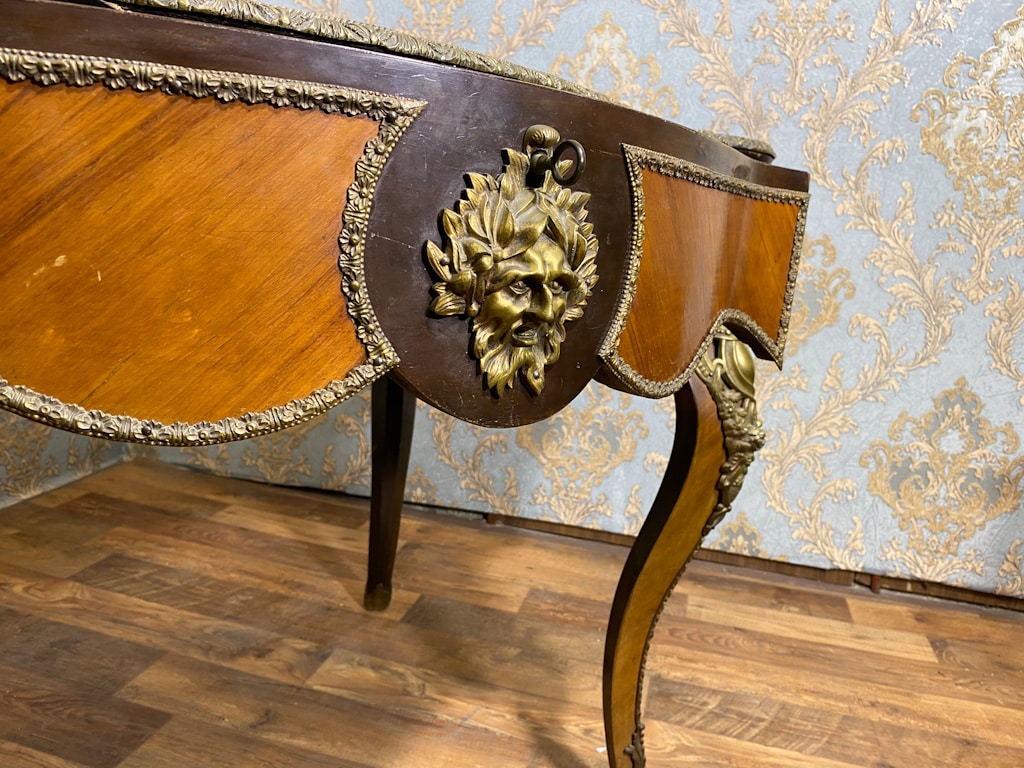
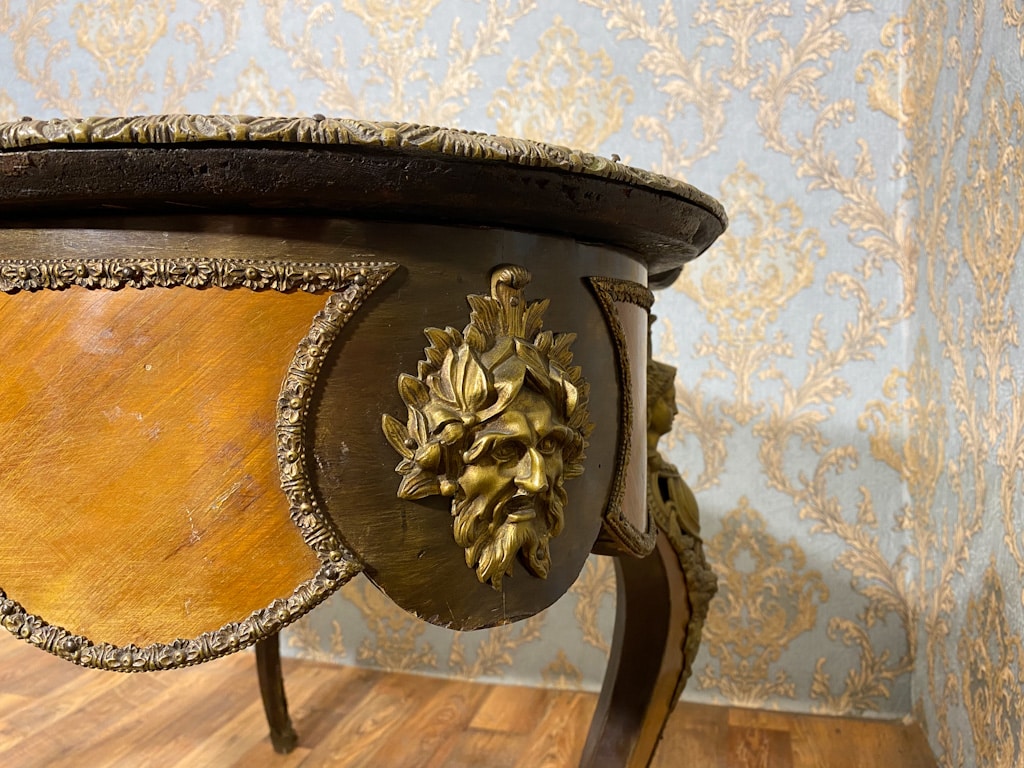
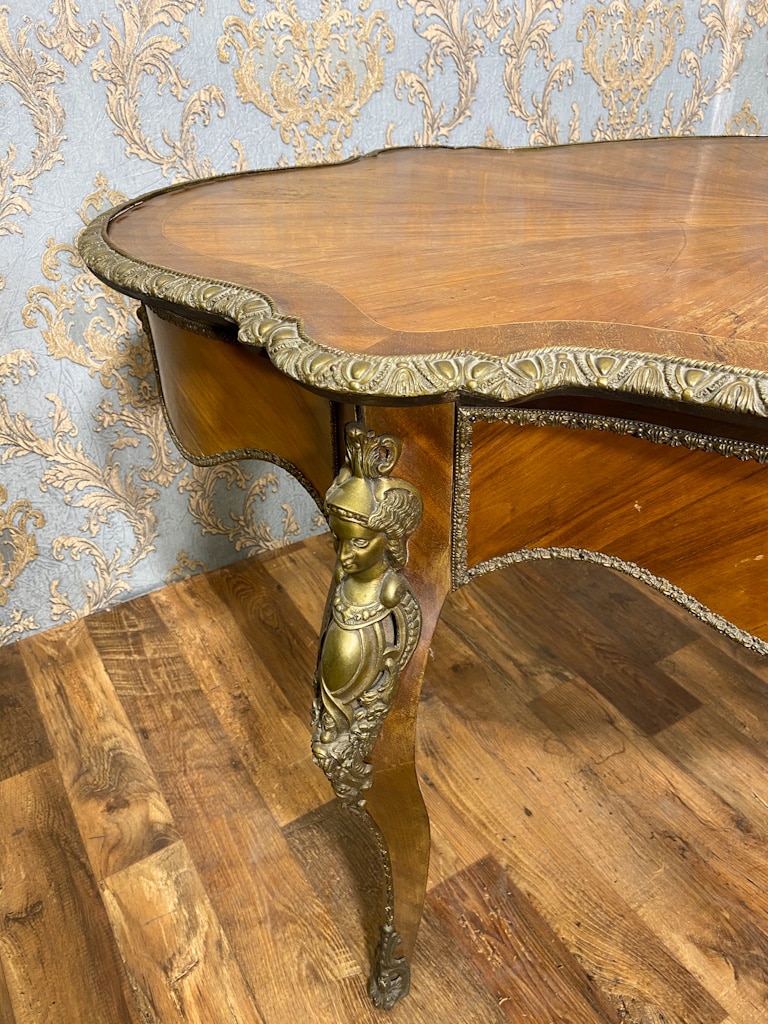
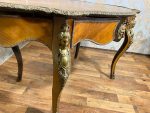
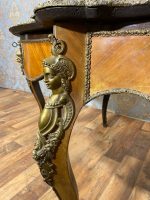
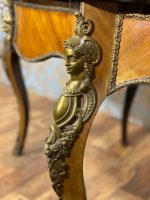
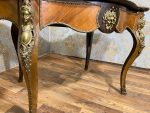
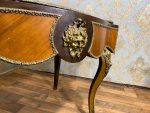
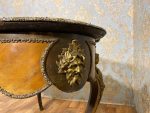
The table edge is encircled by a broad ormolu bronze border with an oeuf-et-dard — egg-and-dart — frieze, one of the oldest and most beloved ornamental motifs of Roman classicism. The apron carries a single drawer with a bronze gadroon border. The central frieze mascaron — a bearded male face in a laurel wreath surrounded by acanthus garlands — is identifiable as Neptune or Bacchus, two beloved motifs of the decorative programme. The four cabriole legs are fitted with massive bronze hermès figures — female faces with diadems above a torso from which leaf garlands descend. At the upper leg, additional small winged putti figures. The legs terminate in bronze sabots with small scroll elements.
era snapshot: In Paris, in June 1867, the writer George Sand (George Sand) had come to the World’s Fair for a single day. Afterwards she returned to her hotel room and sat at the table by the window. For a moment her hand stopped on the mother-of-pearl — cool, smooth, faintly damp from the evening air. She wrote nothing. But her hand stayed there a little longer.
Maker and marks. No maker’s mark is visible in the photographs. The precision of the sunburst veneer, the quality of the bronze hermès figures, and the depth of the ormolu border point to the leading Parisian ateliers of the period, comparable to the production of Linke, Dasson, and other masters of the era.
Rarity and significance. Oval tables with sunburst veneer, a mother-of-pearl centre, and a full bronze programme of hermès figures and mascarons are exceptionally rare on the antiques market. The central mother-of-pearl inlay is an extraordinarily rare element, raising this table above the standard table de milieu category to the level of an individual commission.
Interior and photographic use. The table demands a representative salon with generous ceiling height — as a central accent table, a writing surface, or a display piece for sculpture and decorative compositions. Its oval form and bronze programme make it outstanding for fashion, jewellery, and luxury product photography.
Condition. The veneer is in good overall condition with natural aged patina. The mother-of-pearl centre is undamaged. The bronze mounts show aged patina without significant damage. The drawer functions. The condition of the item is fully reflected in the photographs.
Höhe 77 cm × Länge 140 cm × Breite 86 cm
Table de milieu — Style Louis XV / Napoléon III, France, vers 1860–1880 (571)
Style Louis XV / Napoléon III. France. Vers 1860–1880.
Une exceptionnellement raffinée table de milieu ovale en placage de bois de rose et bois fruitier avec un motif en rayonnant et un accent central en nacre — l’un des exemples les plus élégants et visuellement riches de l’ébénisterie de l’ère Napoléon III, unissant la liberté du rococo Louis XV aux ambitions techniques et décoratives de son époque. Le contour serpentine du plateau est exécuté avec une précision mathématique ; toutes les directions des fibres du placage rayonnent du centre vers l’extérieur, convergeant dans un cercle de nacre. Le bord est encerclé par une large bordure en bronze ormolu avec une frise oeuf-et-dard. Le mascaron central — un visage masculin barbu en couronne de lauriers, identifiable comme Neptune ou Bacchus — est entouré de rinceaux d’acanthe. Les quatre pieds cabriole sont garnis de massives figurines hermès en bronze — visages féminins avec diadèmes au-dessus d’un torse d’où descendent des guirlandes de feuilles. Des petites figurines ailées putti ornent la partie supérieure des pieds.
Instantané de l’époque Napoléon III : À Paris, en juin 1867, l’écrivaine George Sand (George Sand) était venue à l’Exposition universelle pour une seule journée. Ensuite elle regagna sa chambre d’hôtel et s’assit à la table près de la fenêtre. Un instant, sa main s’arrêta sur la nacre — fraîche, lisse, légèrement humide de l’air du soir. Elle n’écrivit rien. Mais sa main resta là encore un moment.
Fabricant et marques. Aucun poinçon visible. La qualité indique les principaux ateliers parisiens de la haute période Napoléon III, comparables à la production de Linke, Dasson et d’autres maîtres de l’époque.
Rareté et importance. Les tables ovales avec placage en rayonnant, centre en nacre et programme bronze complet sont exceptionnellement rares sur le marché des antiquités. L’incrustation centrale en nacre est un élément extraordinairement rare.
Utilisation en décoration et photographie. La table convient à un salon représentatif. Pour les photographes, un accessoire remarquable pour des prises de vue mode, joaillerie et luxe.
État. Placage en bon état général. Centre en nacre intact. Appliques en bronze avec patine. Tiroir fonctionnel. L’état de la pièce est entièrement reflété dans les photographies.