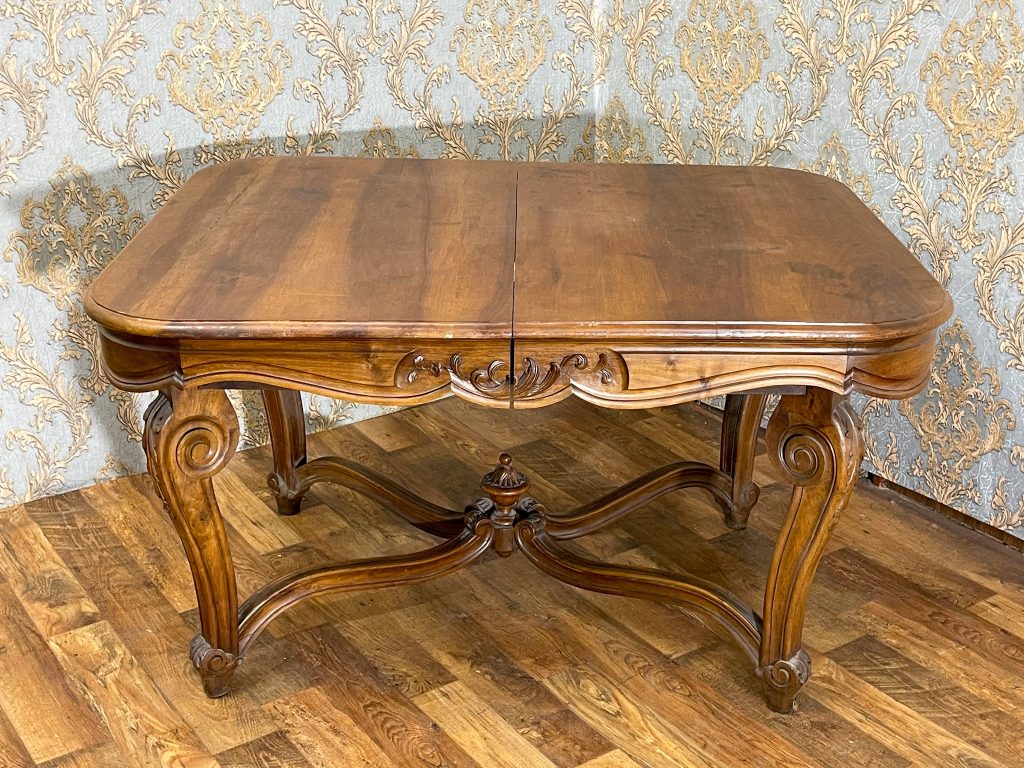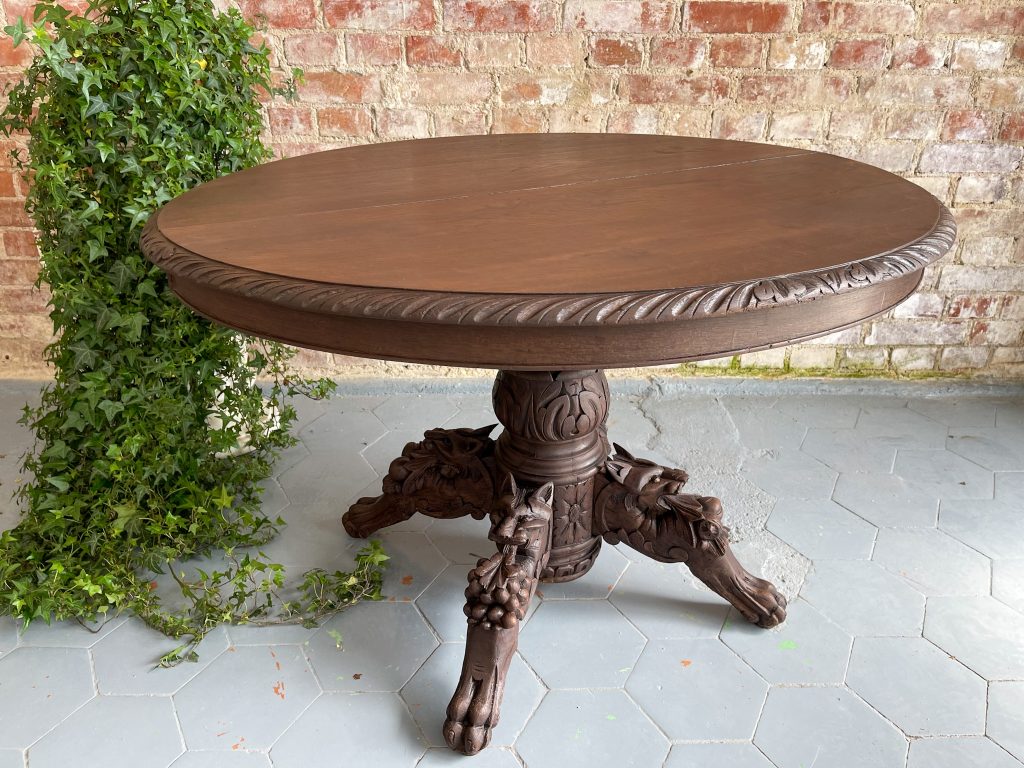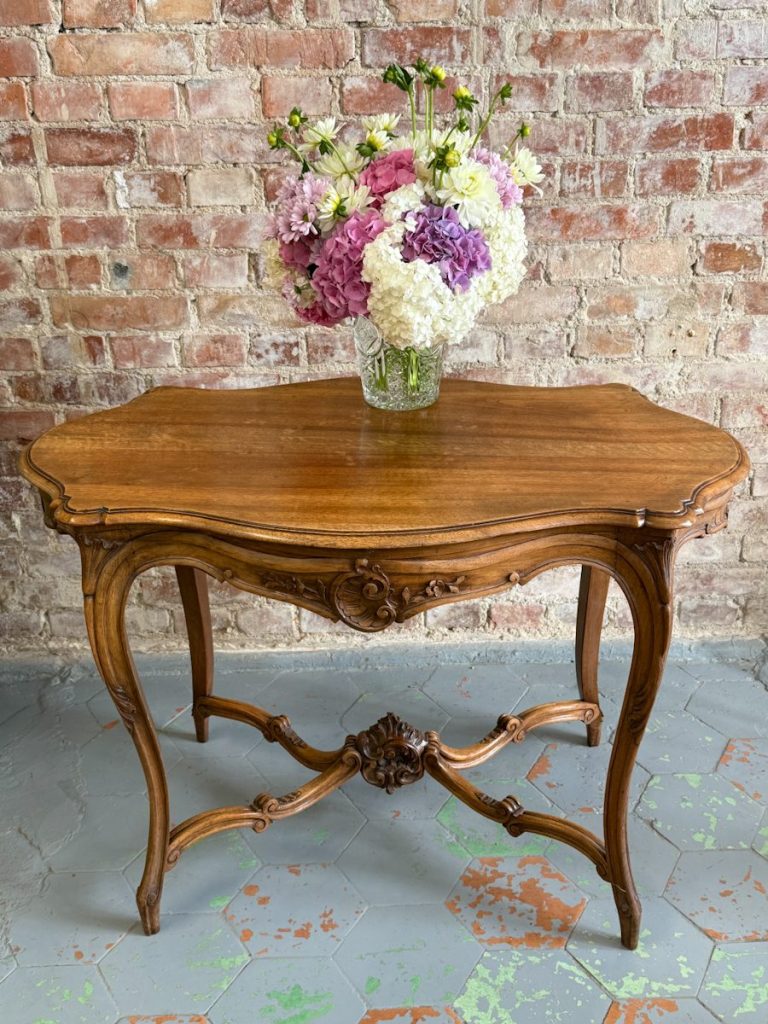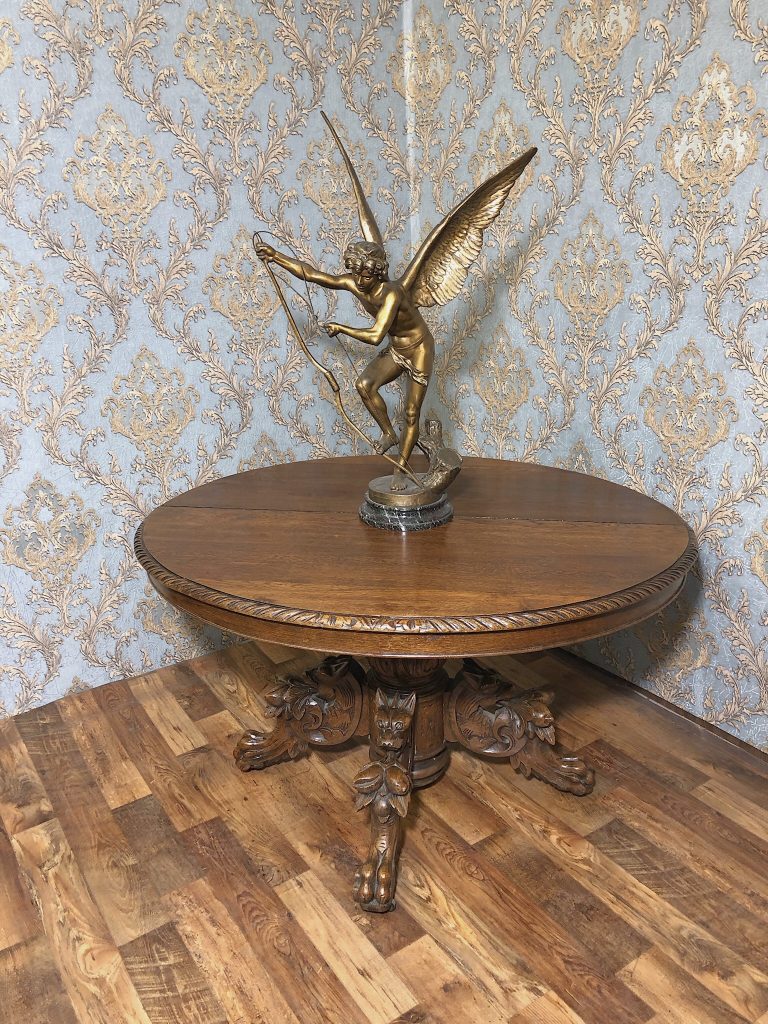
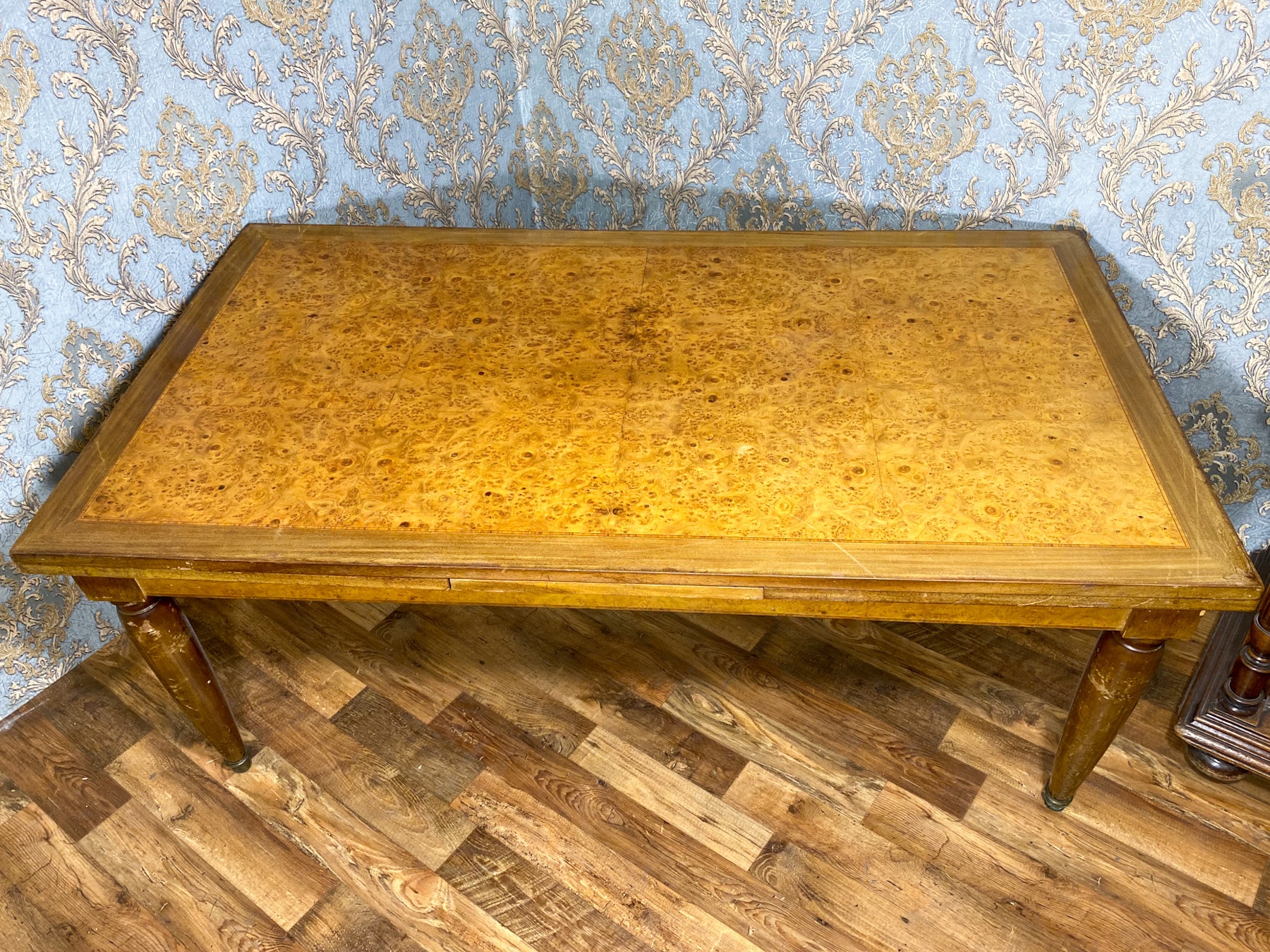
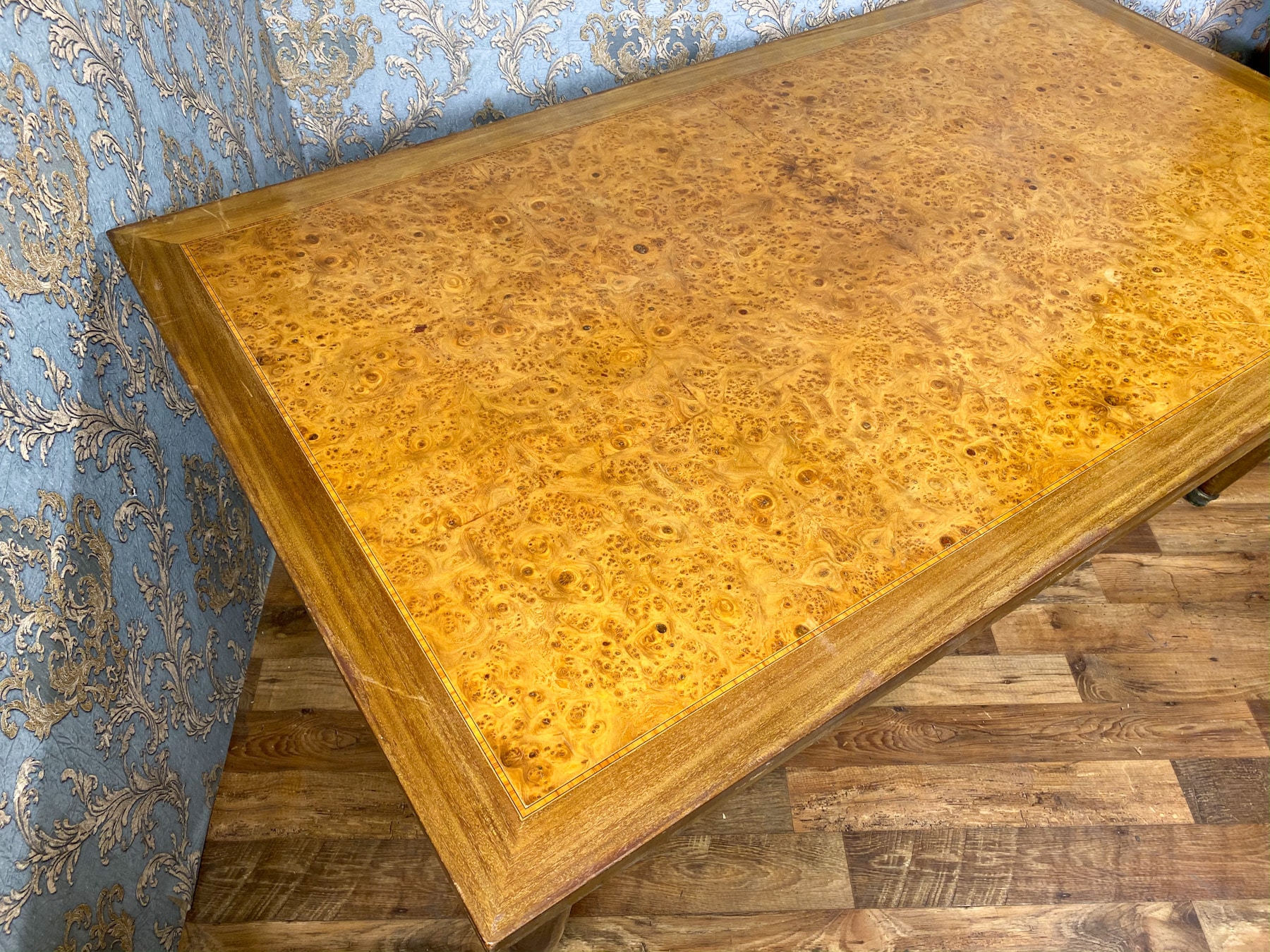
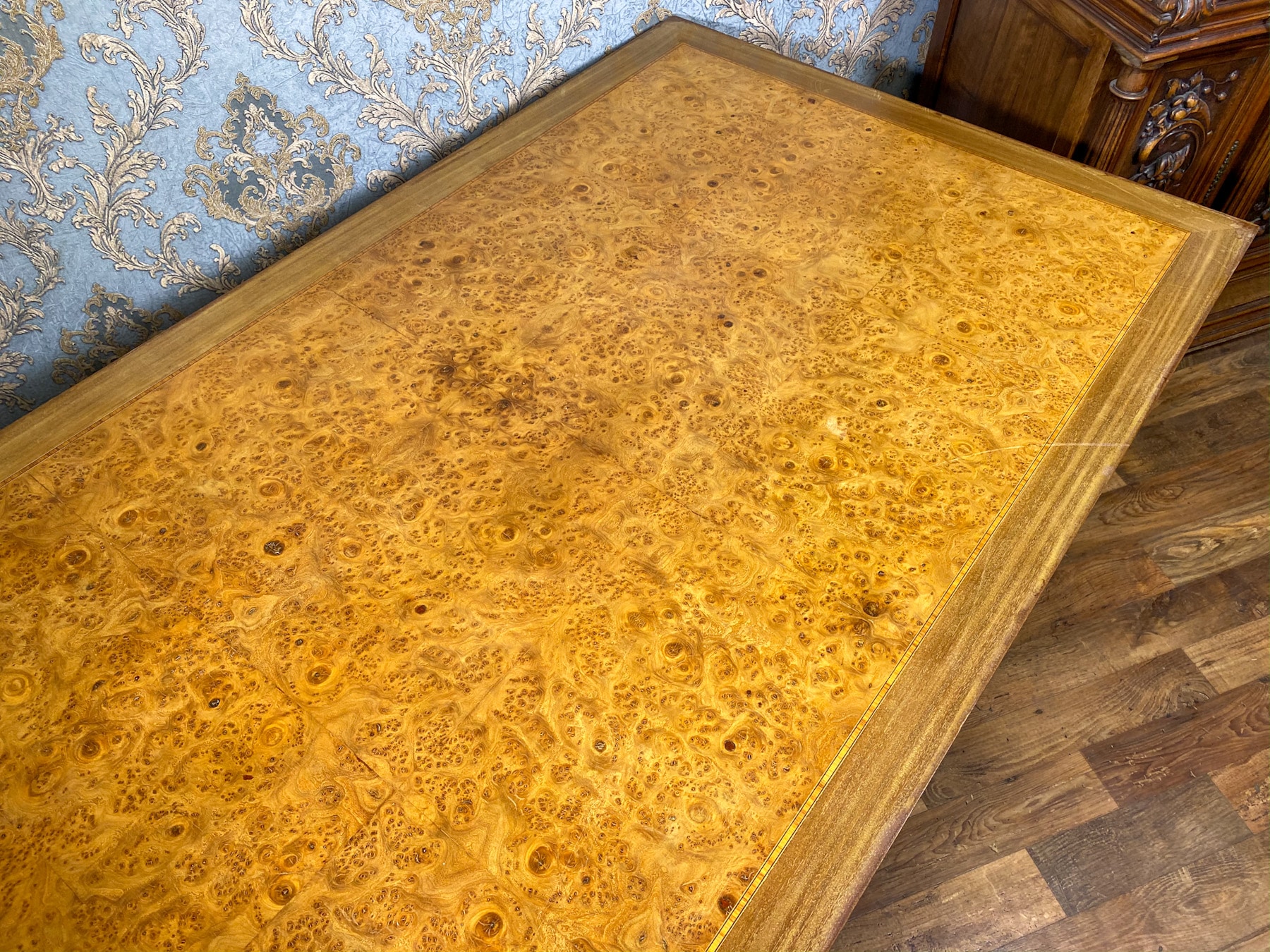
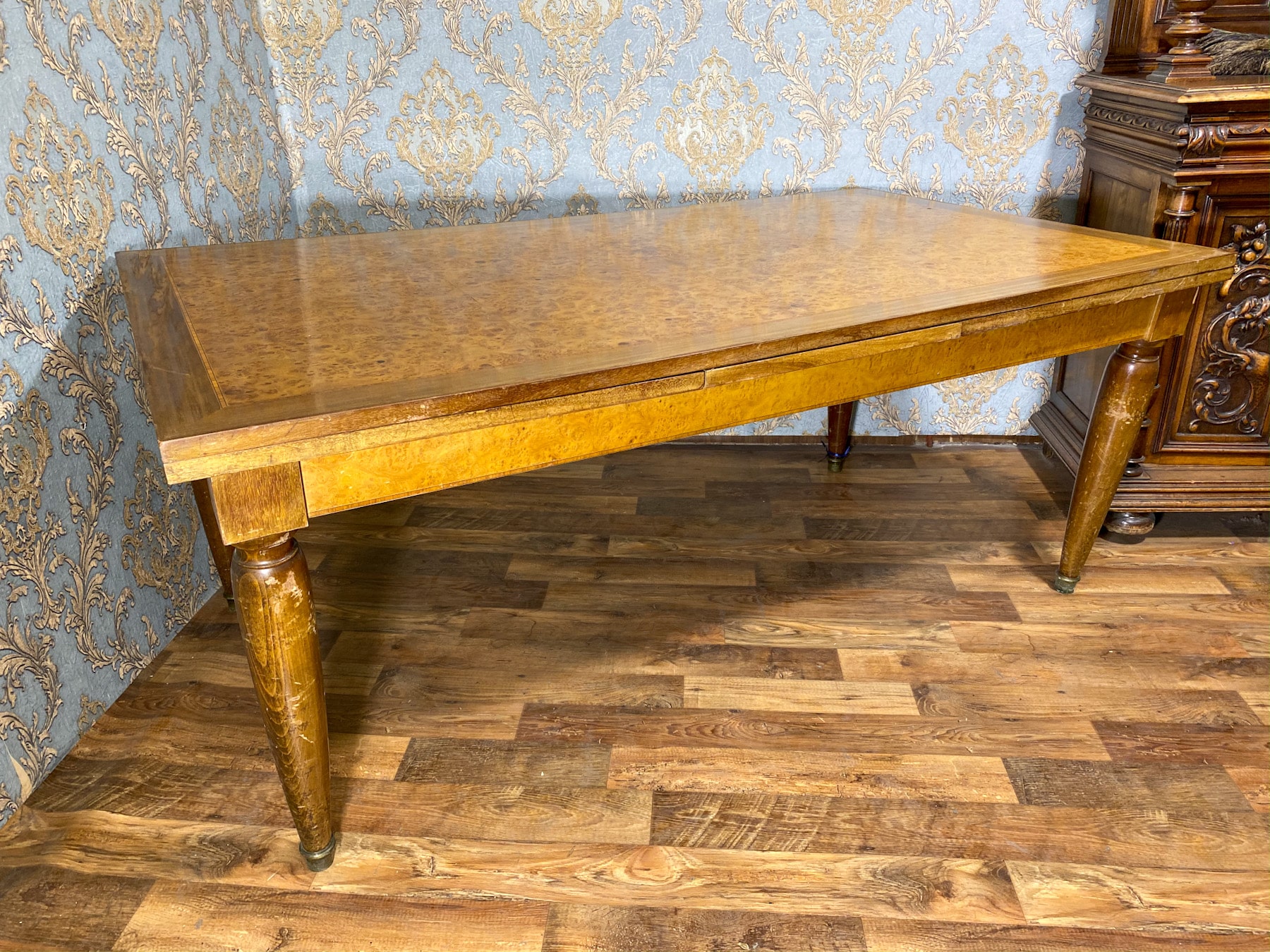
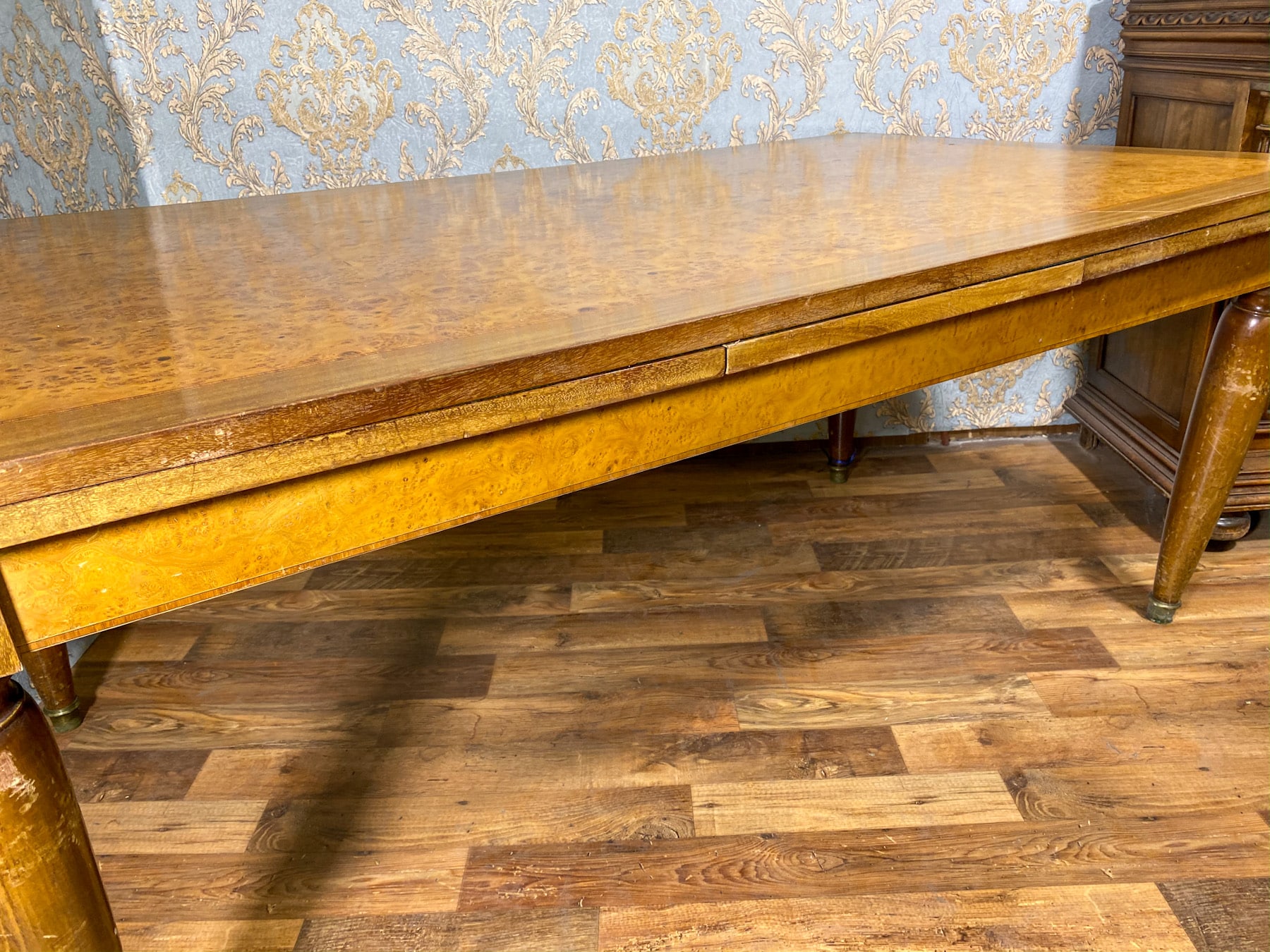
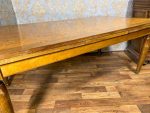
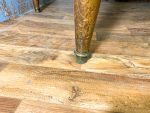
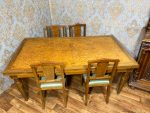
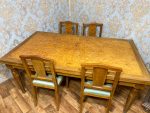
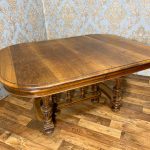
An extendable Art Deco dining table from France/Belgium, circa 1920-1940. Features a striking Karelian birch burl veneer top with geometric lines and tapered legs with bronze sabots. A substantial and functional piece showcasing the elegance of the era. 370,00 €
You’re now subscribed to price tracking for this product. We’ll notify you if the price drops. 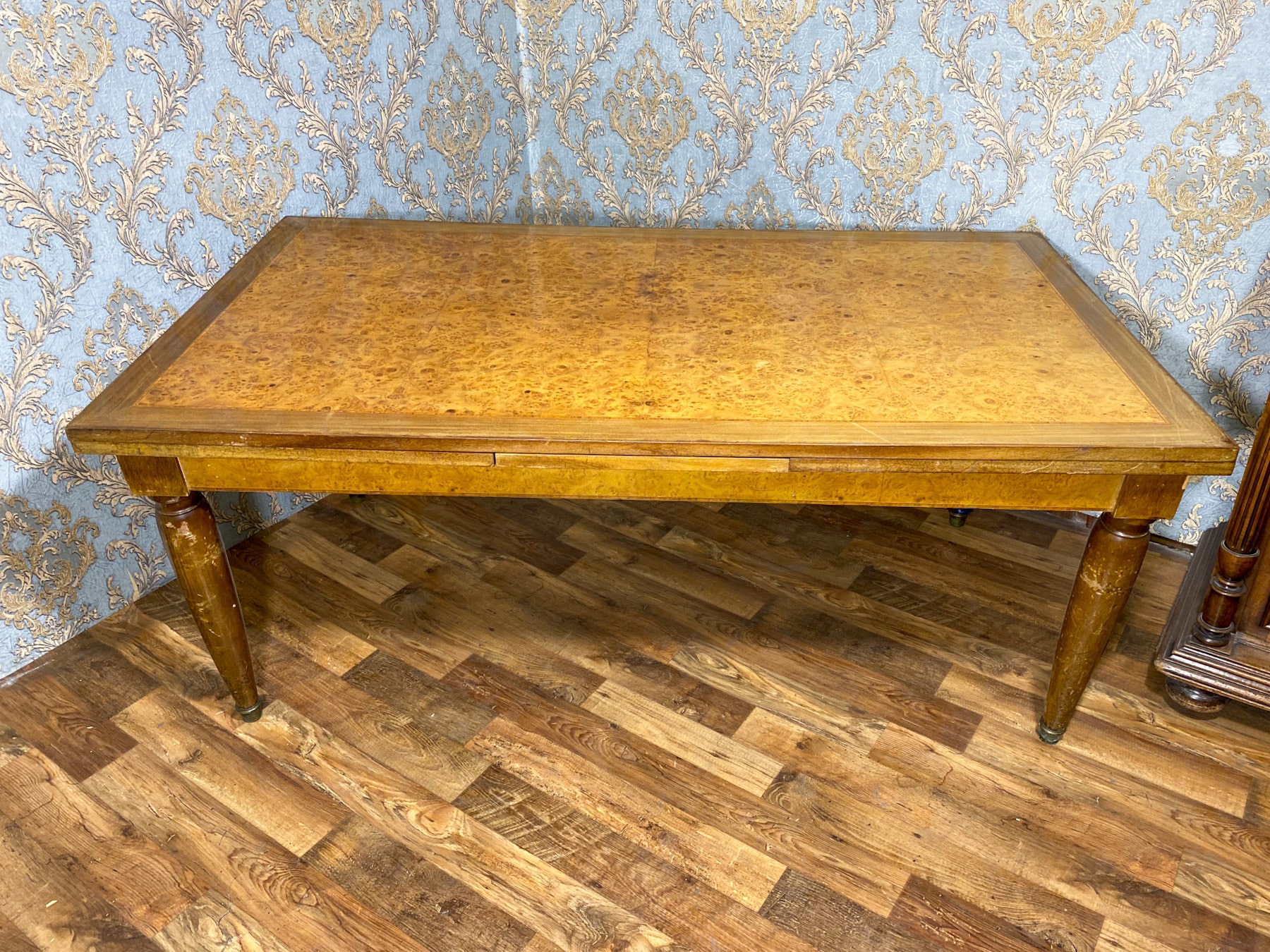
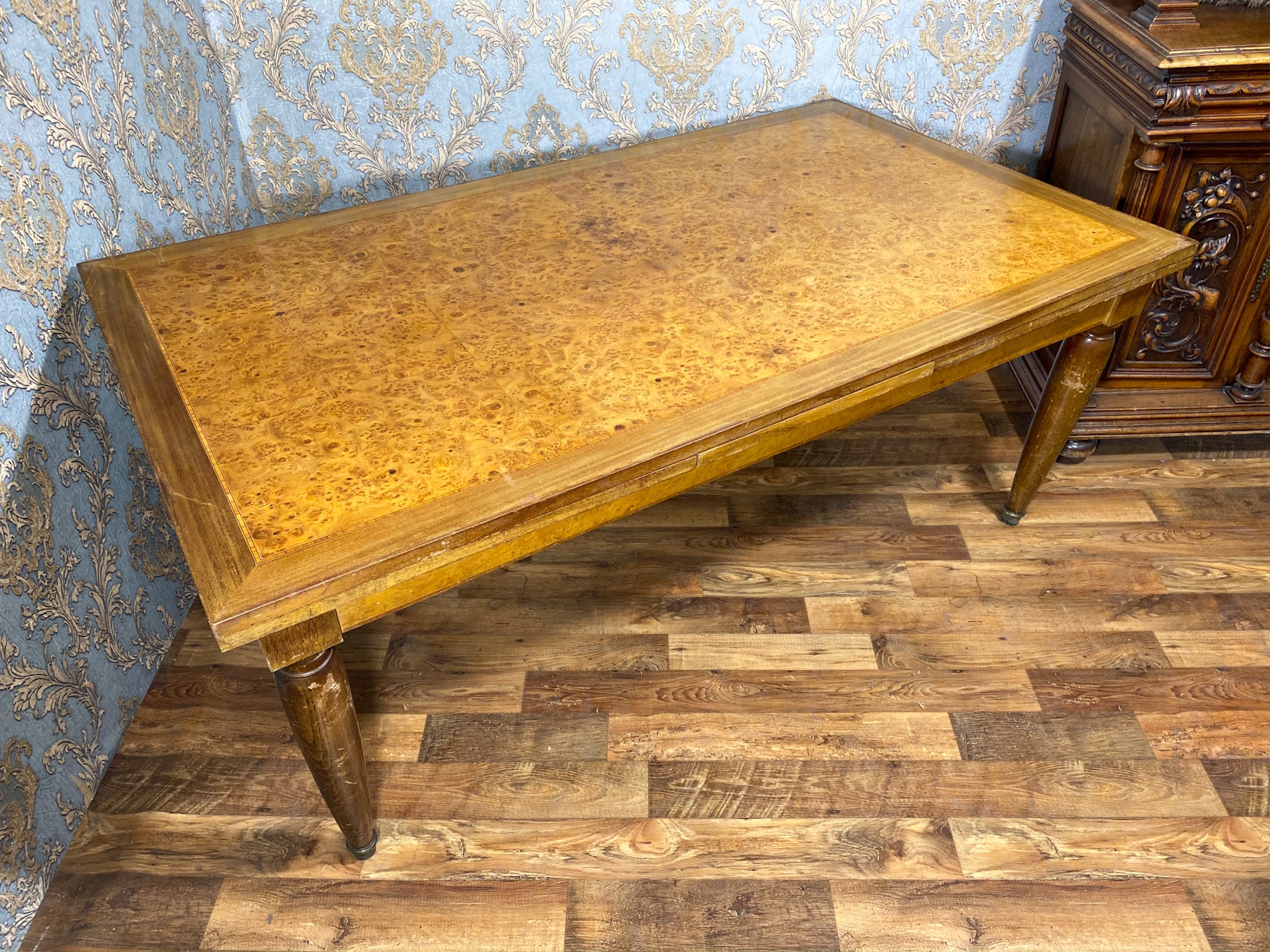
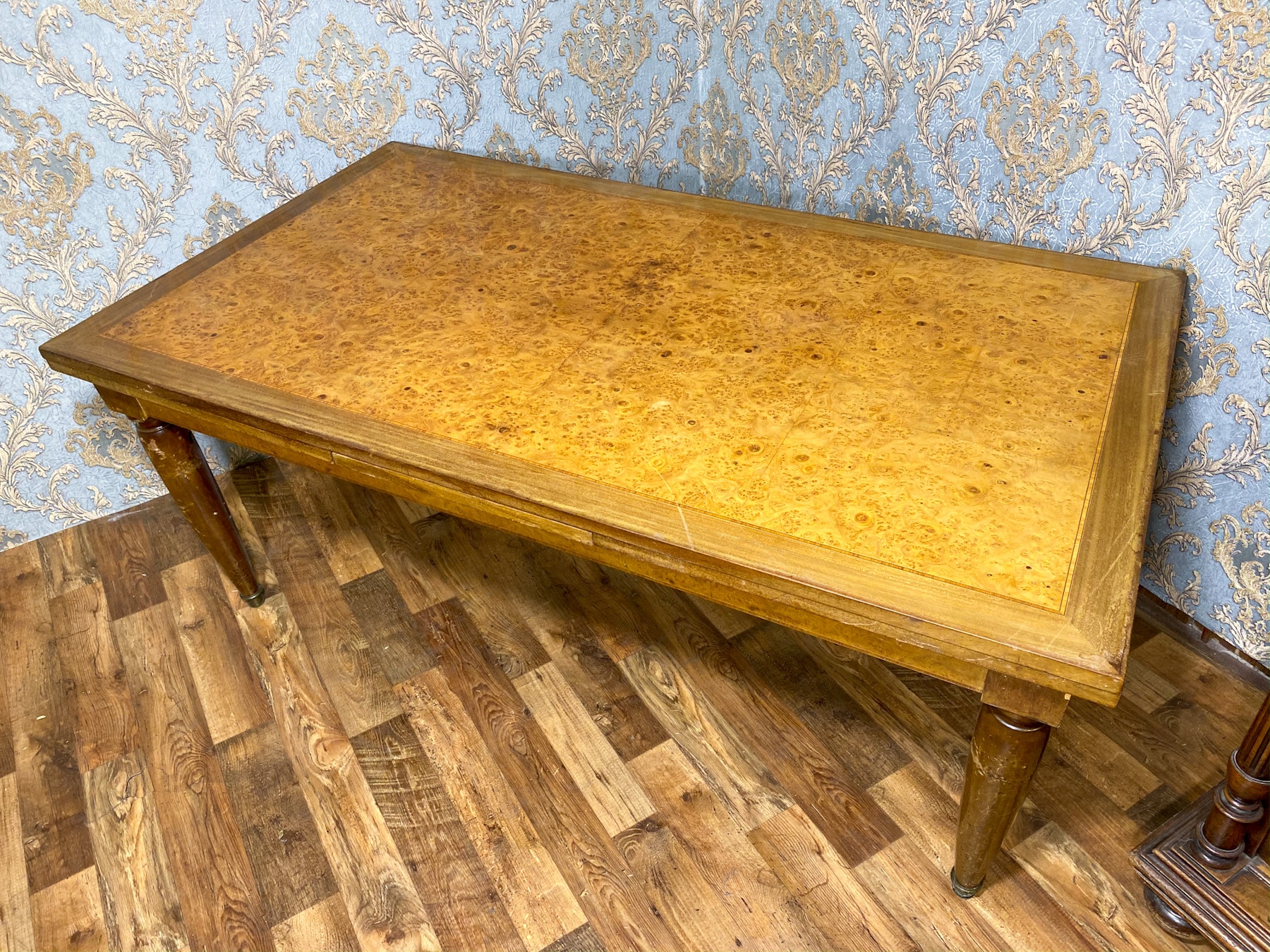
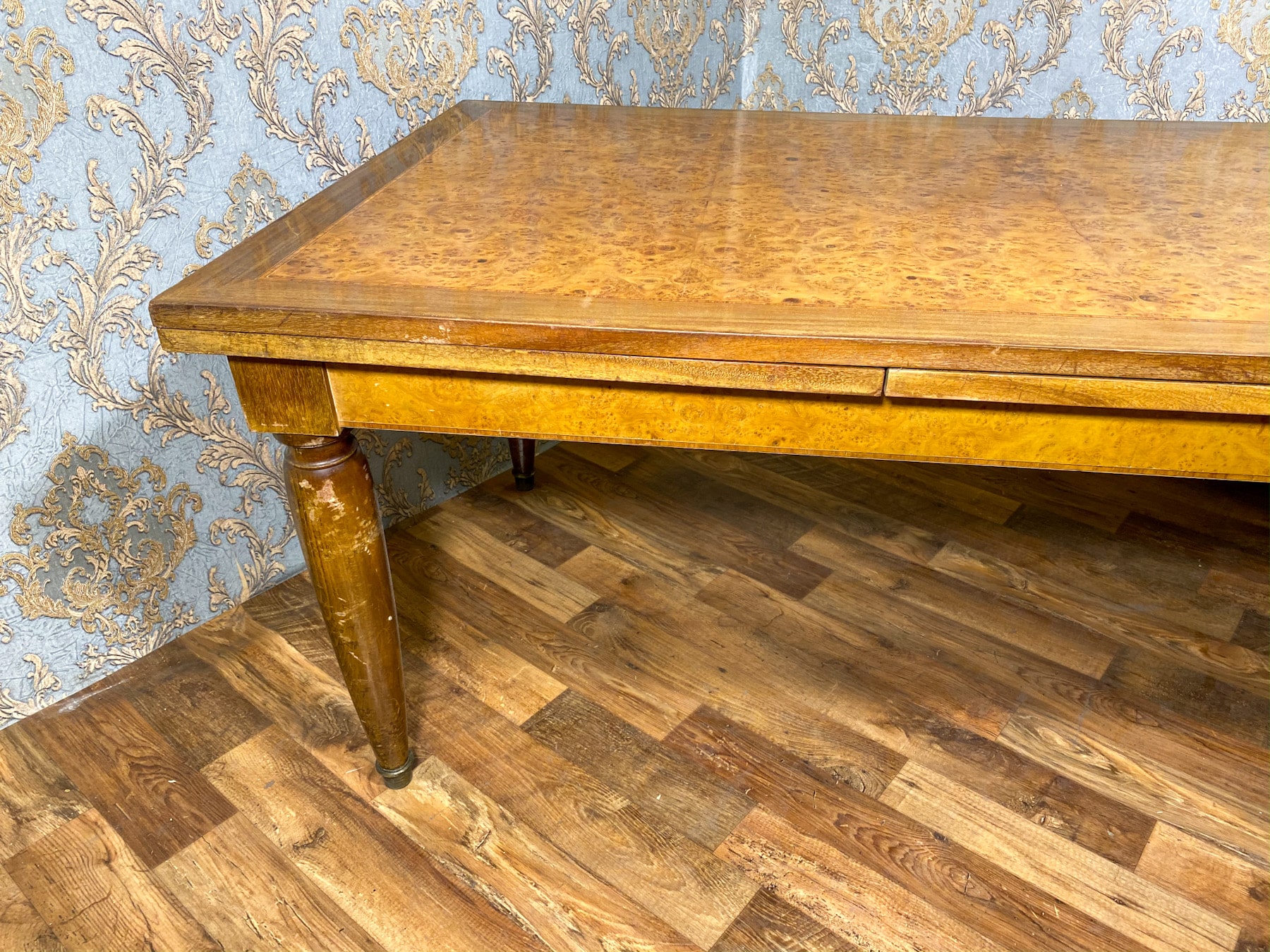
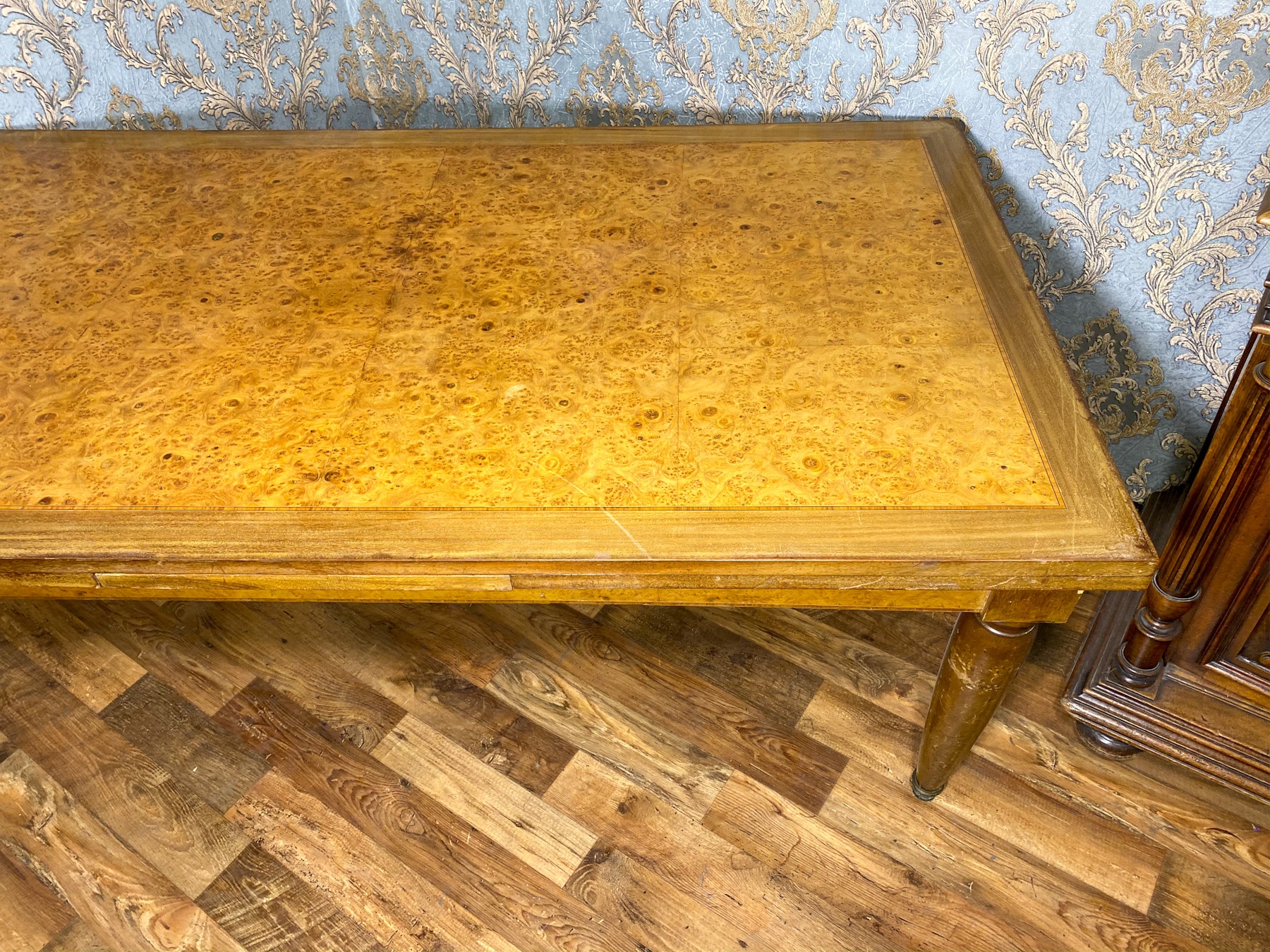
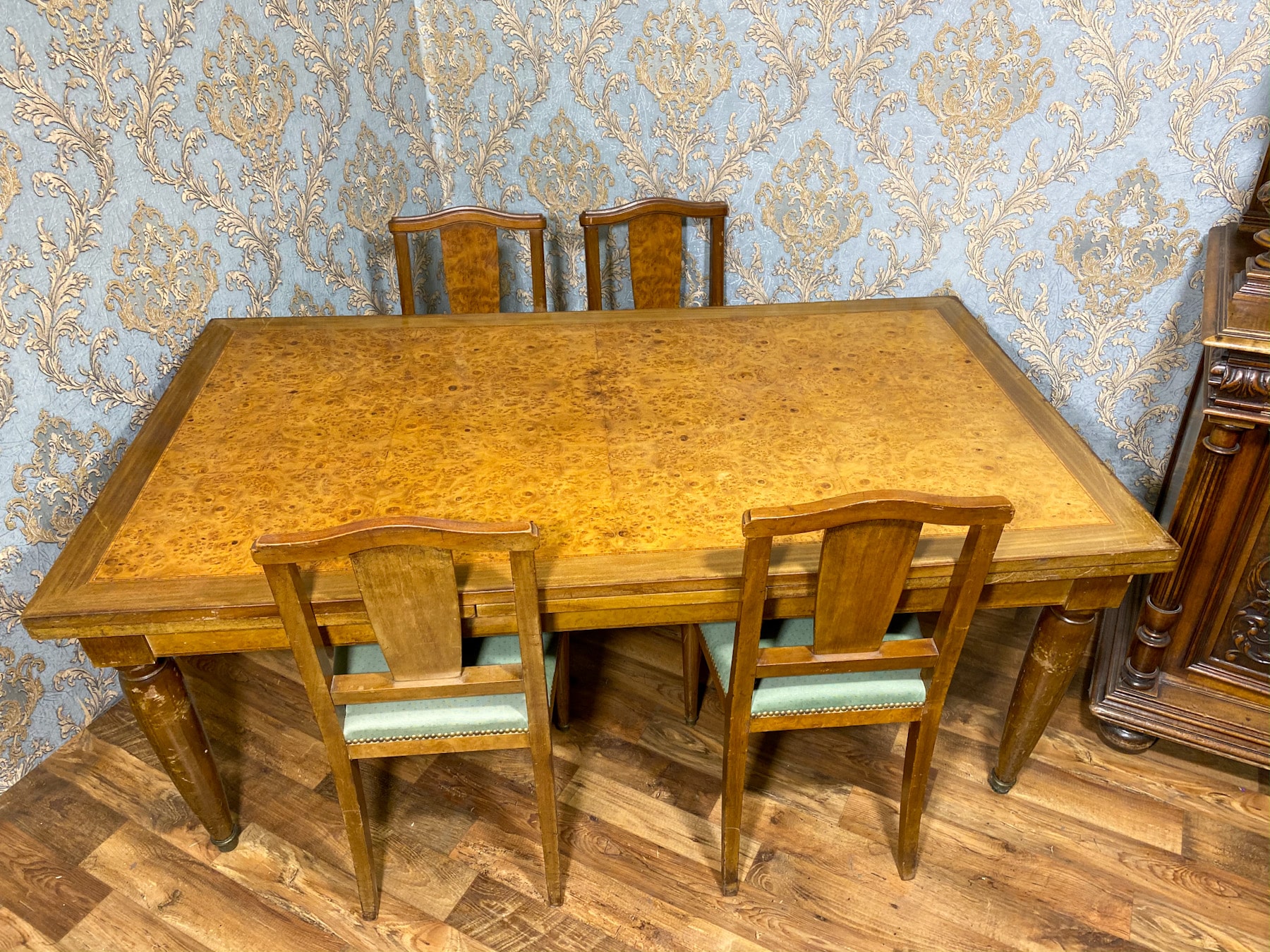
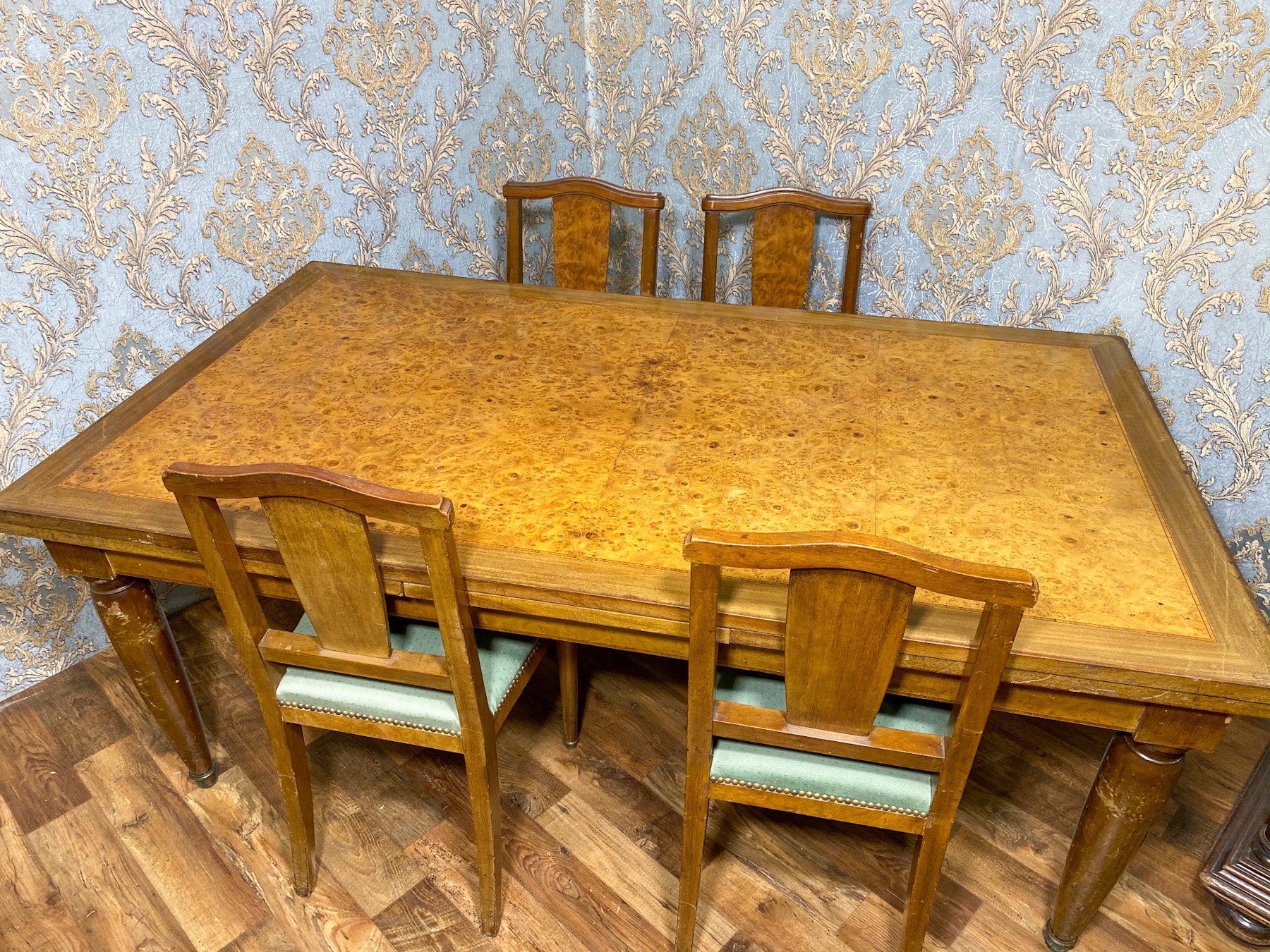
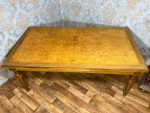
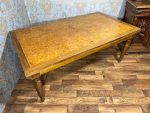
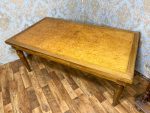
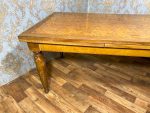
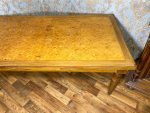
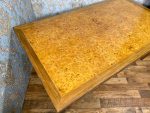
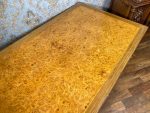
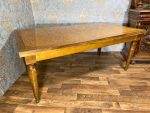
Extendable Table with Karelian Birch Solid Wood Top — Art Deco, France/Belgium, Early 20th Century (554)
Height 74 cm Length 175 cm Width 99.5 cm Color BronzeBrownNatural
Description
DESCRIPTION IN
―――――――――――――――――――――
📐 DIMENSIONS
Length 175 cm × width 99.5 cm × height 74 cm. Extremely heavy, solid construction.
―――――――――――――――――――――
Extendable Dining Table with Karelian Birch Burl Veneer — Art Deco, France/Belgium, c. 1920–1940
―――――――――――――――――――――
🏛️ PERIOD, ART STYLE, EPOCH
This remarkable dining table belongs to the Art Deco period — an era that reached its peak in the great furniture ateliers of Europe between the two world wars, approximately 1920–1940. The Art Deco aesthetic is unmistakable here: clean geometric forms, tapered legs with bronze sabots, precise horizontal banding along the table’s edge, and the almost reverential treatment of the surface material — for a Karelian birch burl of this quality was a choice made only by the finest ébénistes with an uncompromising aesthetic vision.
Yet in the table’s proportions and its massive, foundational construction, the spirit of Historicism still breathes — this is that fertile transitional space where old-world solidity met the graphic clarity of a new age. Both principles coexist in this single object in quiet, confident dialogue.
Jacques Lipchitz was already carving his Cubist sculptures in his Montparnasse studio in those same years, and a table like this — with its almost abstract burl pattern — would not have looked out of place in his salon. The swirling Karelian birch grain, which dinner guests would inevitably study as the table was set, was itself a work of art.
―――――――――――――――――――――
⚜️ MAKER AND MARK
No visible maker’s mark or signature has been identified. The quality of construction, choice of materials, and level of finish are consistent with the top tier of or Belgian furniture workshops — the tradition known as ébénisterie de luxe, which reached its apex in Belgium and northern France precisely during the interwar period. Makers of such tables supplied the great bourgeois households and provincial châteaux, where dining tables were chosen to last for generations.
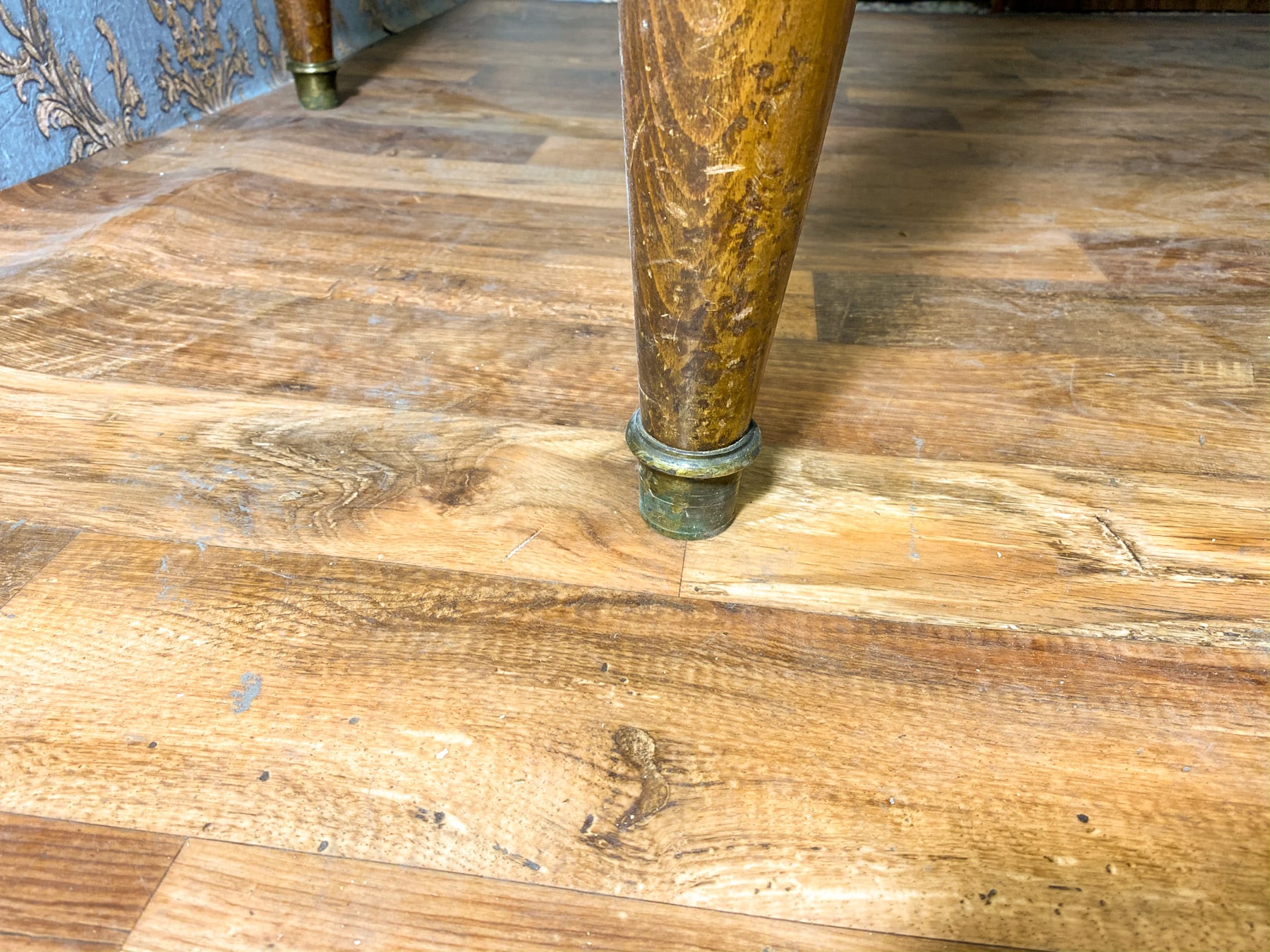
The bronze sabots on the leg terminals confirm that this piece was built with longevity and floor protection in mind — not merely aesthetics.
―――――――――――――――――――――
💎 RARITY AND SIGNIFICANCE
Karelian birch burl — one of the most prized and visually dramatic of all decorative wood veneers — appears here in a veneer of outstanding quality, with a deep, almost three-dimensional optical effect. Pieces of this scale and quality in Art Deco style are consistently sought by the antiques market — both by interior designers in Paris and Brussels and by collectors consciously assembling period ensembles. The table remains fully functional, which adds considerably to its value.
―――――――――――――――――――――
🕯️ USE IN INTERIORS, DESIGN AND PHOTOGRAPHY
This table is the central element of any room it occupies. In an Art Deco interior it belongs effortlessly; in an eclectic setting it takes the role of the dominant chord. For interior designers it is an exceptional find — sufficiently restrained in form to pair with contemporary chairs, yet with a material presence so strong that the room acquires character immediately. For photographers and stylists, the table surface itself — with its organic, almost abstract burl pattern — serves as an extraordinary textured backdrop.
―――――――――――――――――――――
🔍 CONDITION
The table is in good overall condition given its age. The surface shows signs of honest wear and the marks of a genuine life — consistent with a piece that has served its purpose well. The legs with their bronze sabots carry a natural patina that only confirms authenticity. The structure is solid and stable throughout. The condition of the item is fully reflected in the photographs.