Mahogany buffet with shelf superstructure and bronze figures — Louis Philippe style, France, mid-19th century This noble mahogany buffet combines two worlds: a functional lower part with drawers and cabinets, and an airy, open shelf superstructure for serving dishes and… 1 300,00 €
You’re now subscribed to price tracking for this product. We’ll notify you if the price drops. 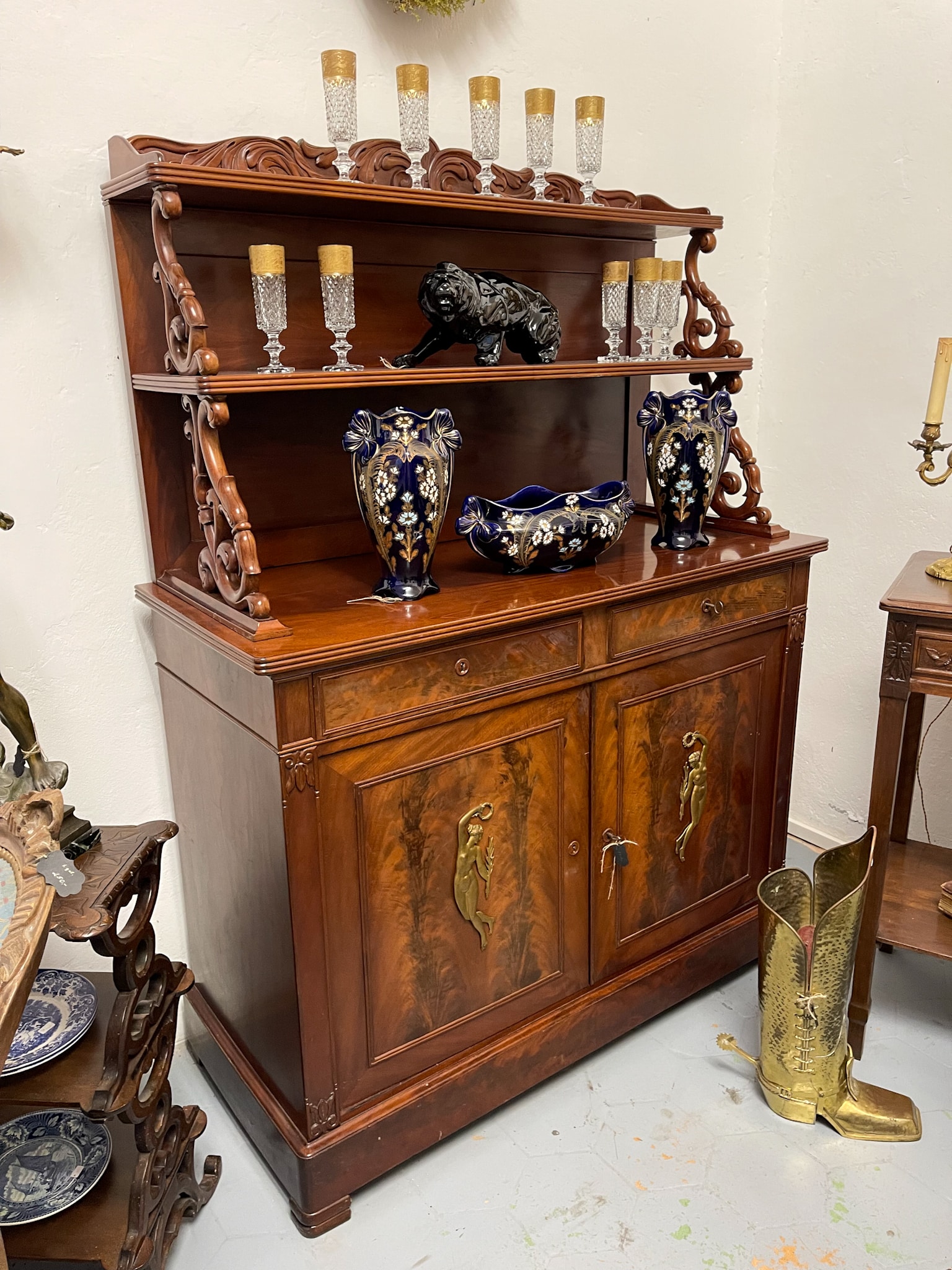
Wooden sideboard-buffet with shelf superstructure and bronze figures, Louis Philippe style (2777)
Height 180 cm Width 129 cm Color BronzeMahoganyNude
Description
Mahogany buffet with shelf superstructure and bronze figures — Louis Philippe style, France, mid-19th century
Height 1.80 m × width 1.29 m × depth 54.5 cm
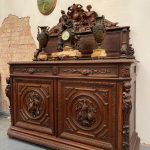
This noble mahogany buffet combines two worlds: a functional lower part with drawers and cabinets, and an airy, open shelf superstructure for serving dishes and decor. Made of glossy mahogany with a distinctive flame-like texture, it represents the Louis Philippe style (style Louis-Philippe) of the mid-19th century — an era that valued warm wood, calm lines, and moderate yet rich decor.
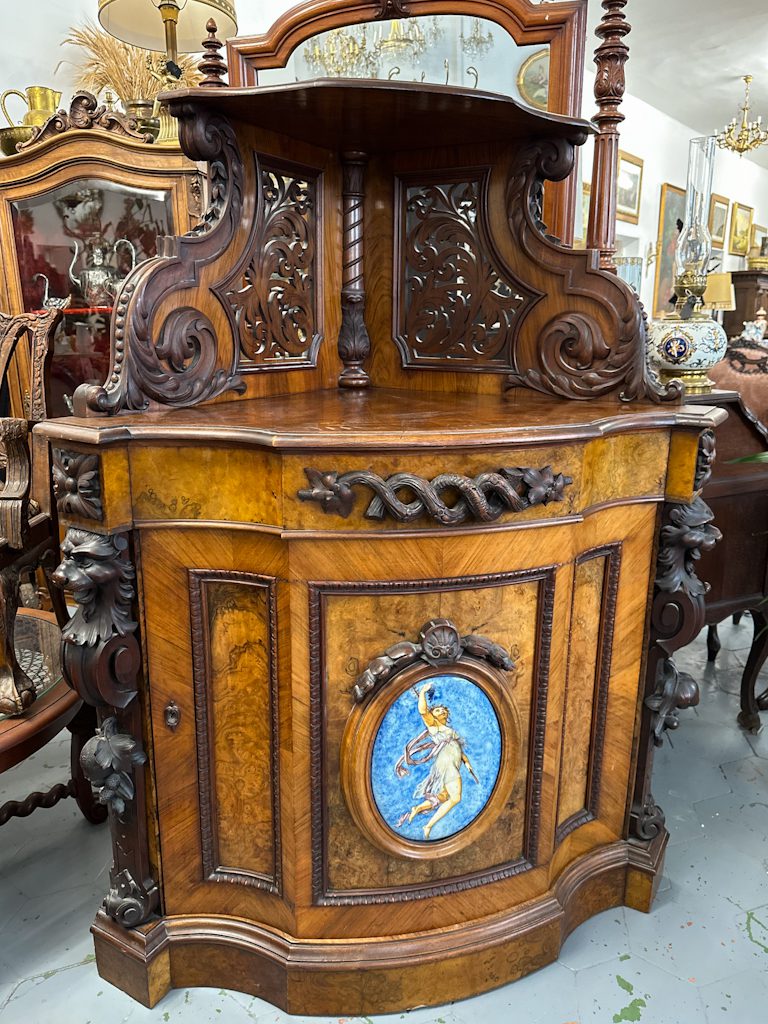
The superstructure consists of two open shelves, supported by ornate carved volutes and garlands — the work of a woodcarver that gives the upper part an almost Rococo lightness. The top edge is crowned with an openwork frieze with foliage and volute motifs. The lower body houses two drawers and two doors; the door panels are adorned with flame-like mahogany veneer and exquisite gilded bronze figures — nude nymphs/dancers in an antique spirit, characteristic of mid-19th century fittings. The corner pilasters are complemented by small bronze and carved wood accents.
A snapshot of Empire echoes: sculptor Jean-Baptiste Carpeaux stopped at the workshop door, wiped his hands, and raised his eyes to the morning light that slid over the rounded forms of a recently completed work. A bronze figure gleamed in the mahogany — a woman’s body, stretched in motion, as if wanting to break free from the wood. He smiled: it was not his hand, but the same longing for living flesh in cold metal.
Period of manufacture, art style, era. The buffet dates from the mid-19th century, the aesthetics of the Louis Philippe reign and the subsequent period. This style in France meant a return to comfort and solid bourgeois luxury: massive mahogany, soft curved lines, moderate carvings, and bronze accents. Buffets with an open shelf superstructure (buffet à étagère) were central pieces of furniture in dining rooms and salons — porcelain, silverware, and crystal were displayed on the shelves, while tableware was stored below.
Manufacturer. Unmarked; the work is characteristic of a carpentry workshop operating in the Louis Philippe / early Napoleon III spirit. The quality is evidenced by the choice of mahogany, the precision of the carved volutes, and the original bronze fittings.
Rarity and significance. Buffets with preserved carved superstructures and original figural bronzes are difficult to find in complete sets today — the superstructure volutes are easily damaged, and the bronze figures often disappear.
Application in interior, design, and photography. The buffet serves in the dining room, living room, or spacious hallway as a serving and display piece of furniture. The open shelves are ideal for displaying porcelain, vases, and crystal; the surface is suitable for plates and candlesticks. Its expressive silhouette and bronze details make it a splendid background for interior and object photography.
Gift. An impressive gift for an antique furniture lover, collector, or interior designer.
Condition. The furniture is in good, exhibition condition; the carved superstructure, mahogany veneer, and original bronze figures are preserved. Minor signs of age and use, micro-cracks in the veneer, or small retouches consistent with age are possible. The condition of the item is fully reflected in the photographs.