

DESCRIPTION IN Pair of Life-Size Bronze Greyhound / Sighthound Sculptures — Neoclassical / Grand Manner Tradition, Europe, mid-to-late 20th century after 18th–19th century models. ――――――――――――――――――――― 📐 DIMENSIONS Height 108.5 cm × length approximately 100 cm × width 26 cm. Material:… 6 000,00 €
You’re now subscribed to price tracking for this product. We’ll notify you if the price drops. 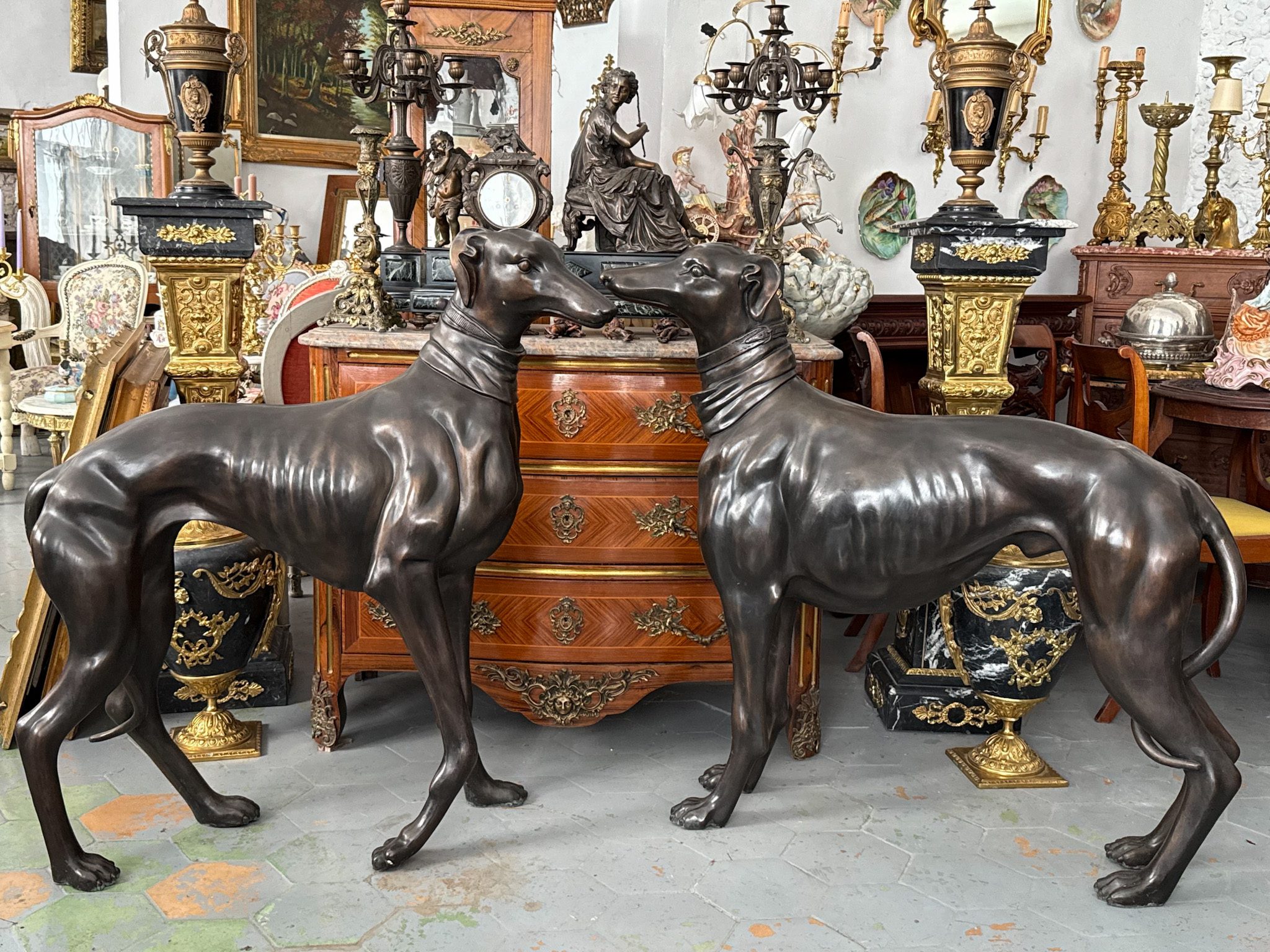
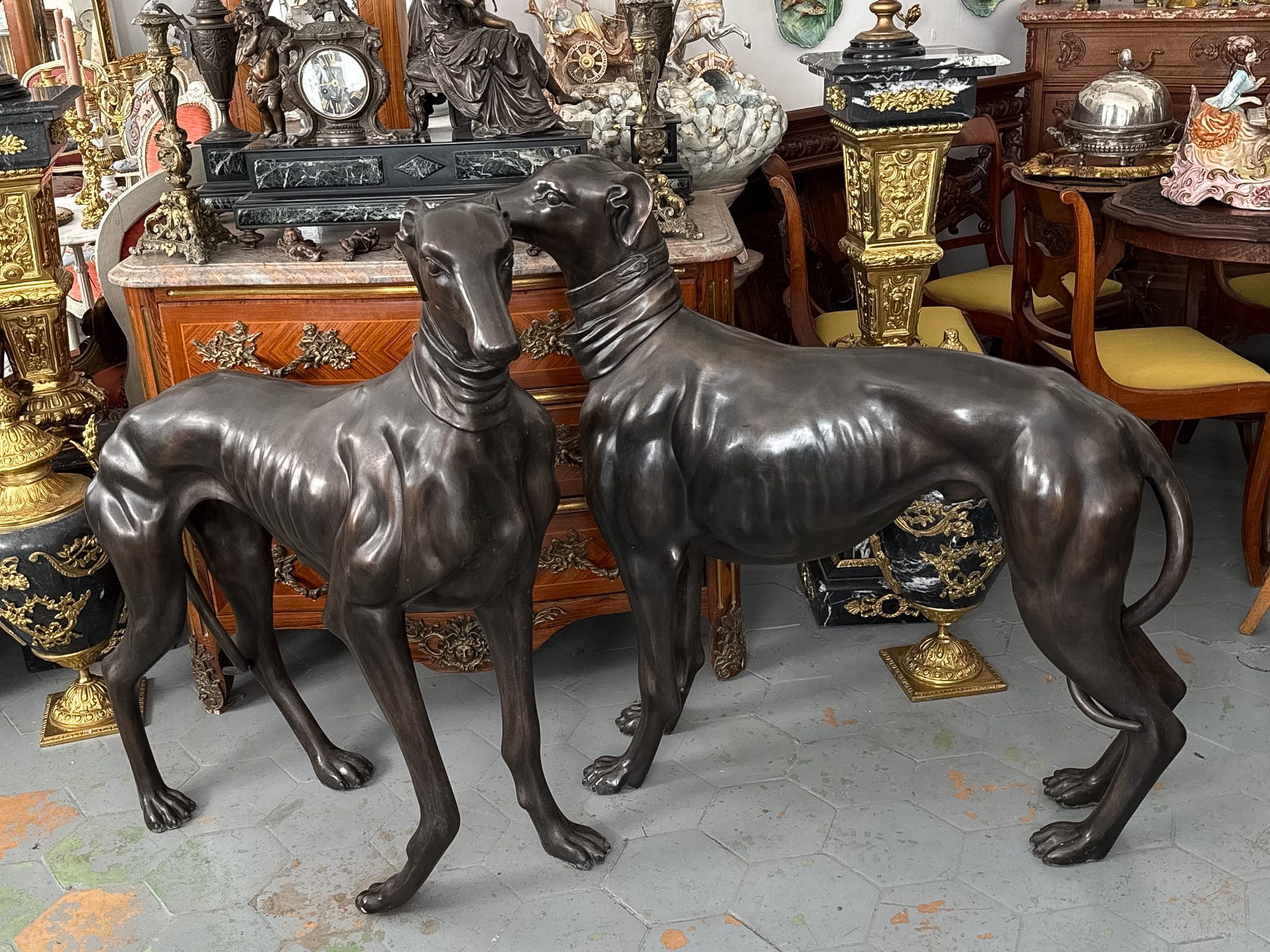
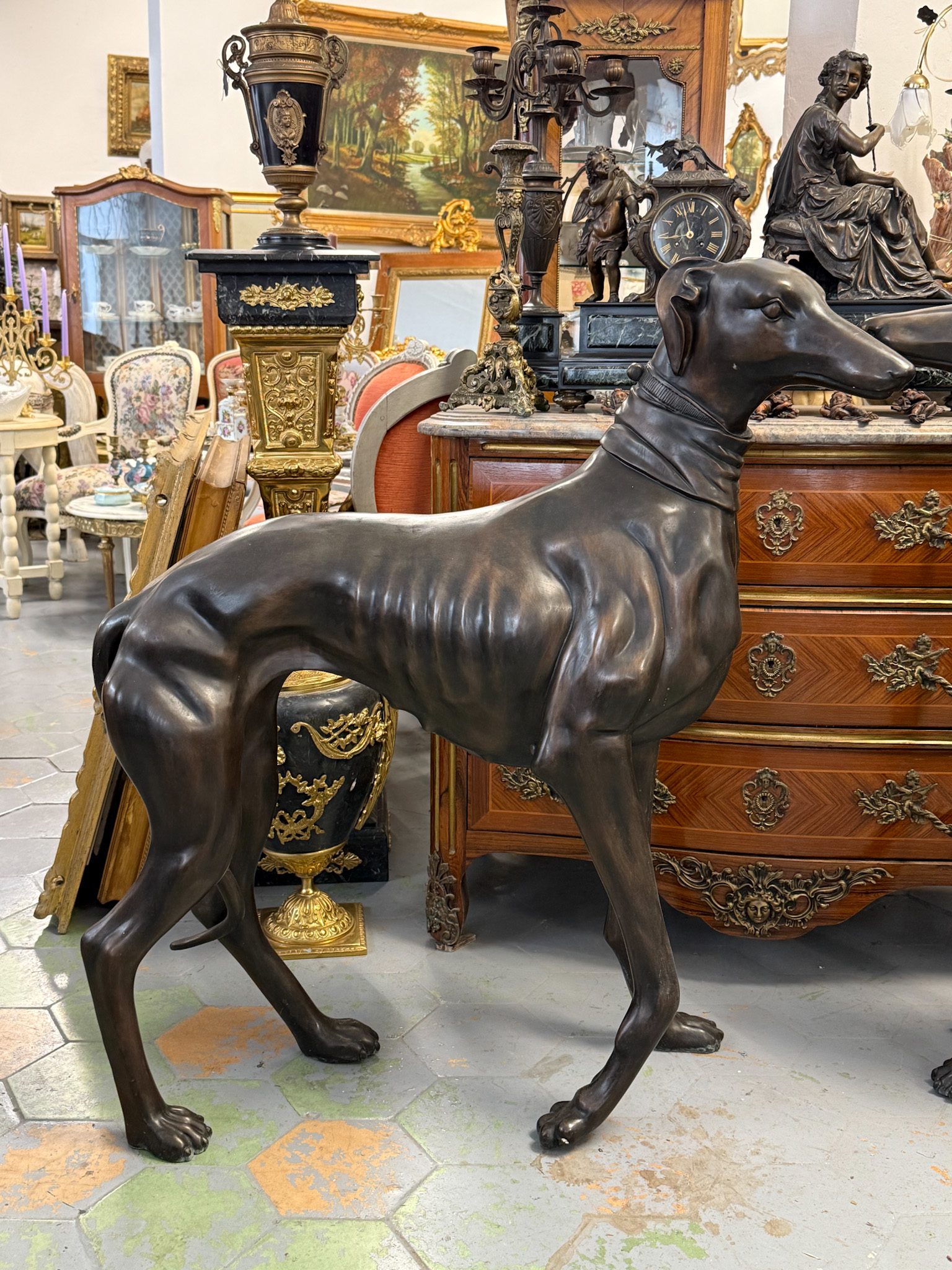
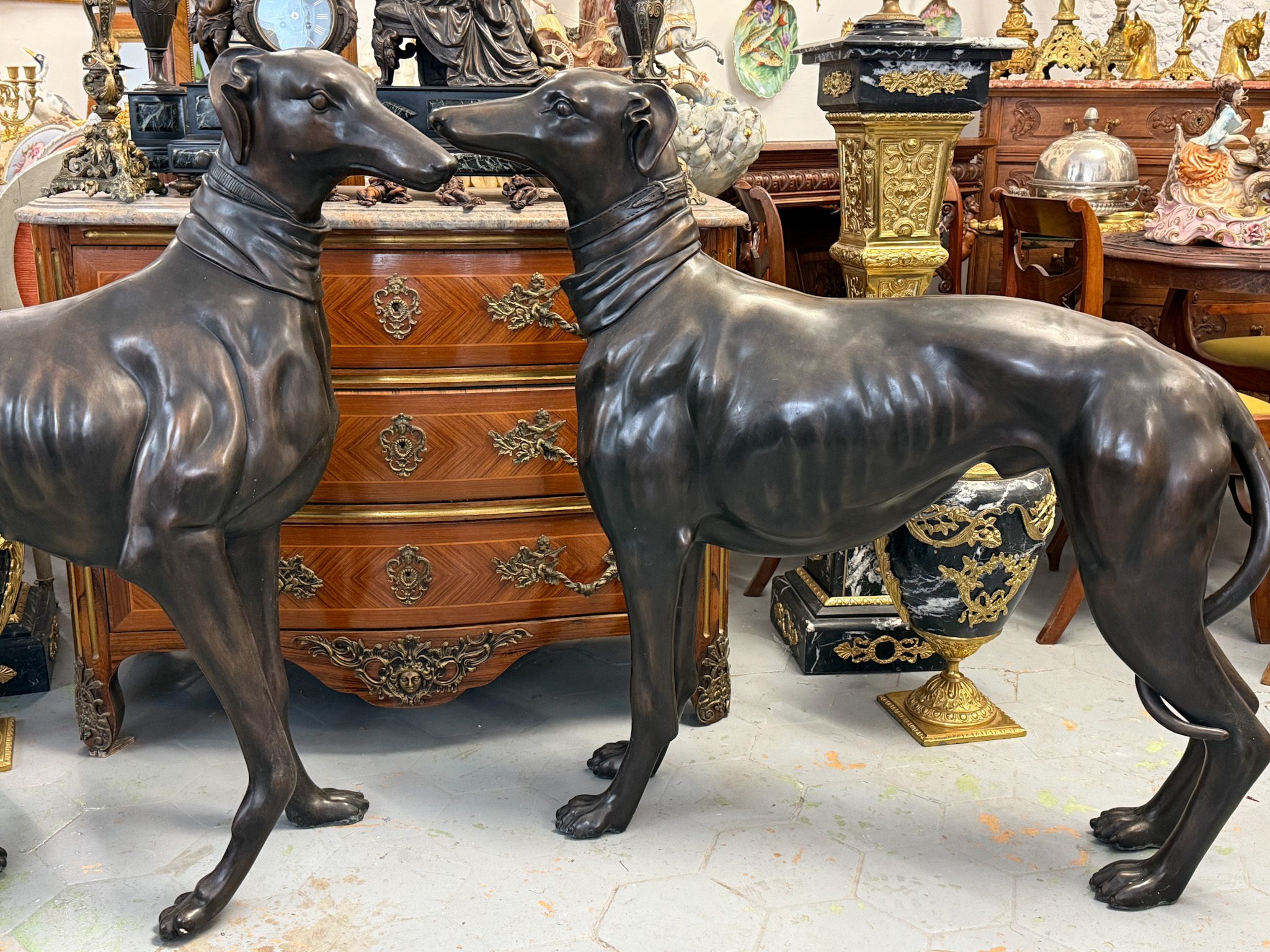
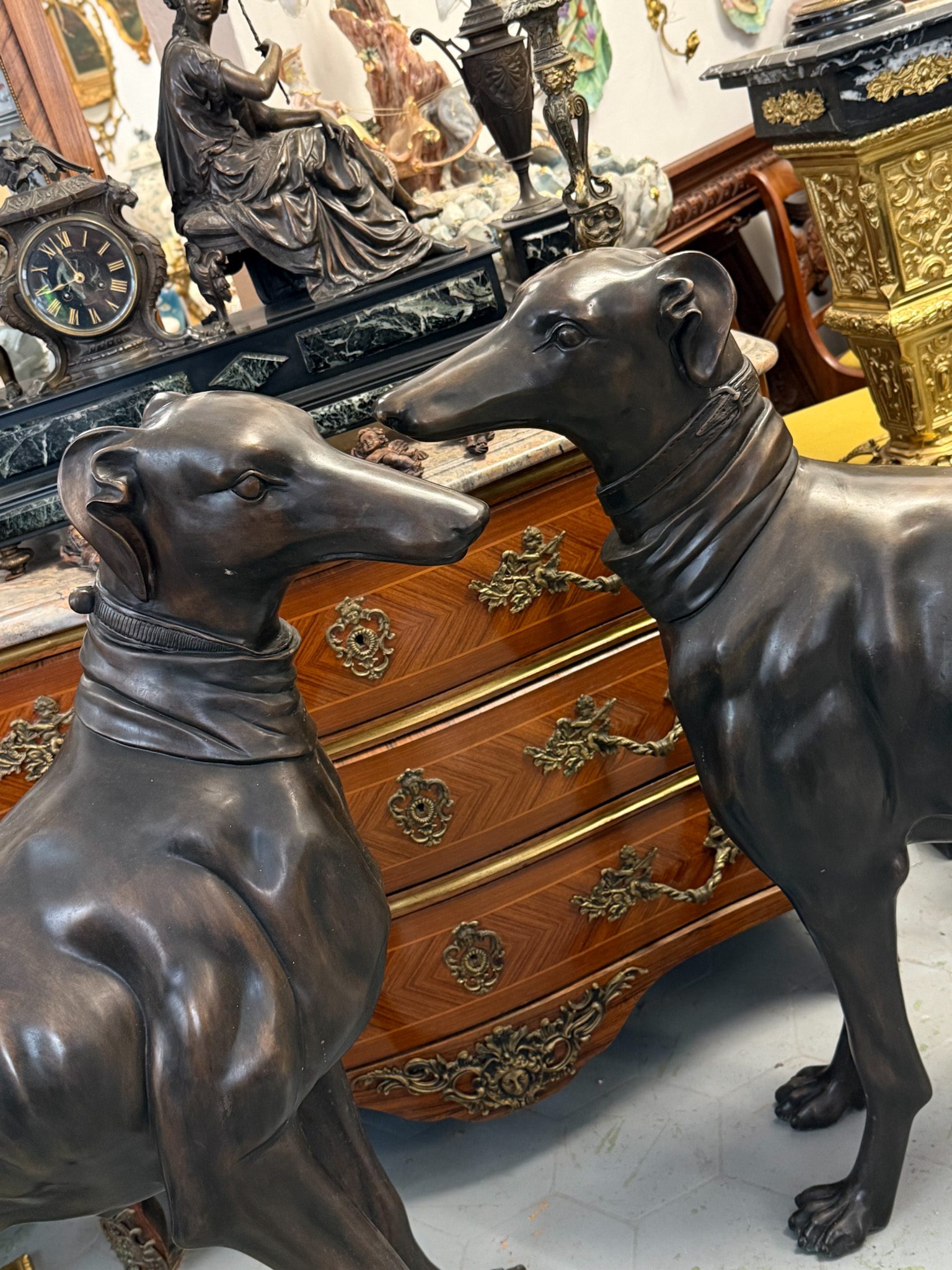
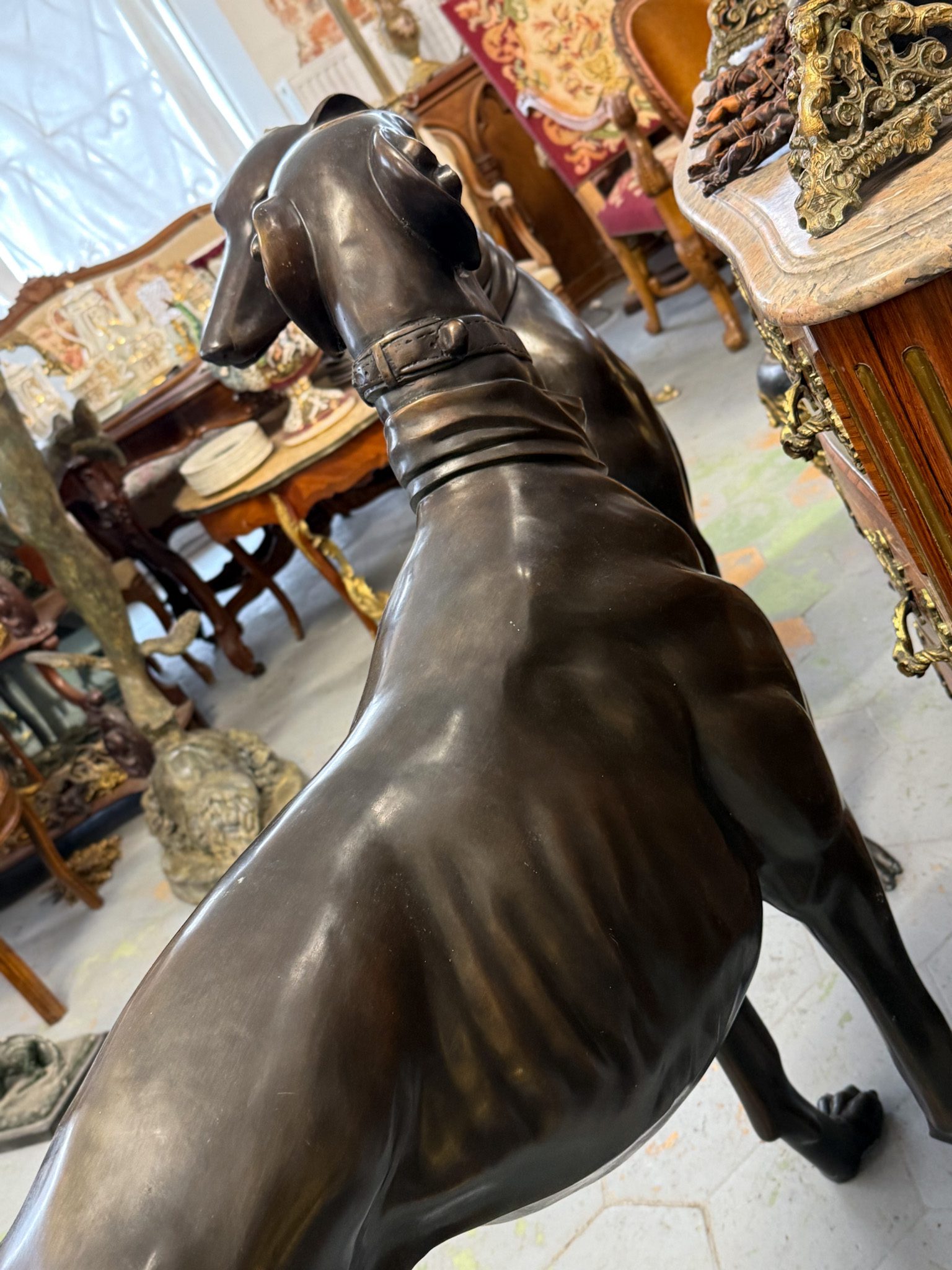
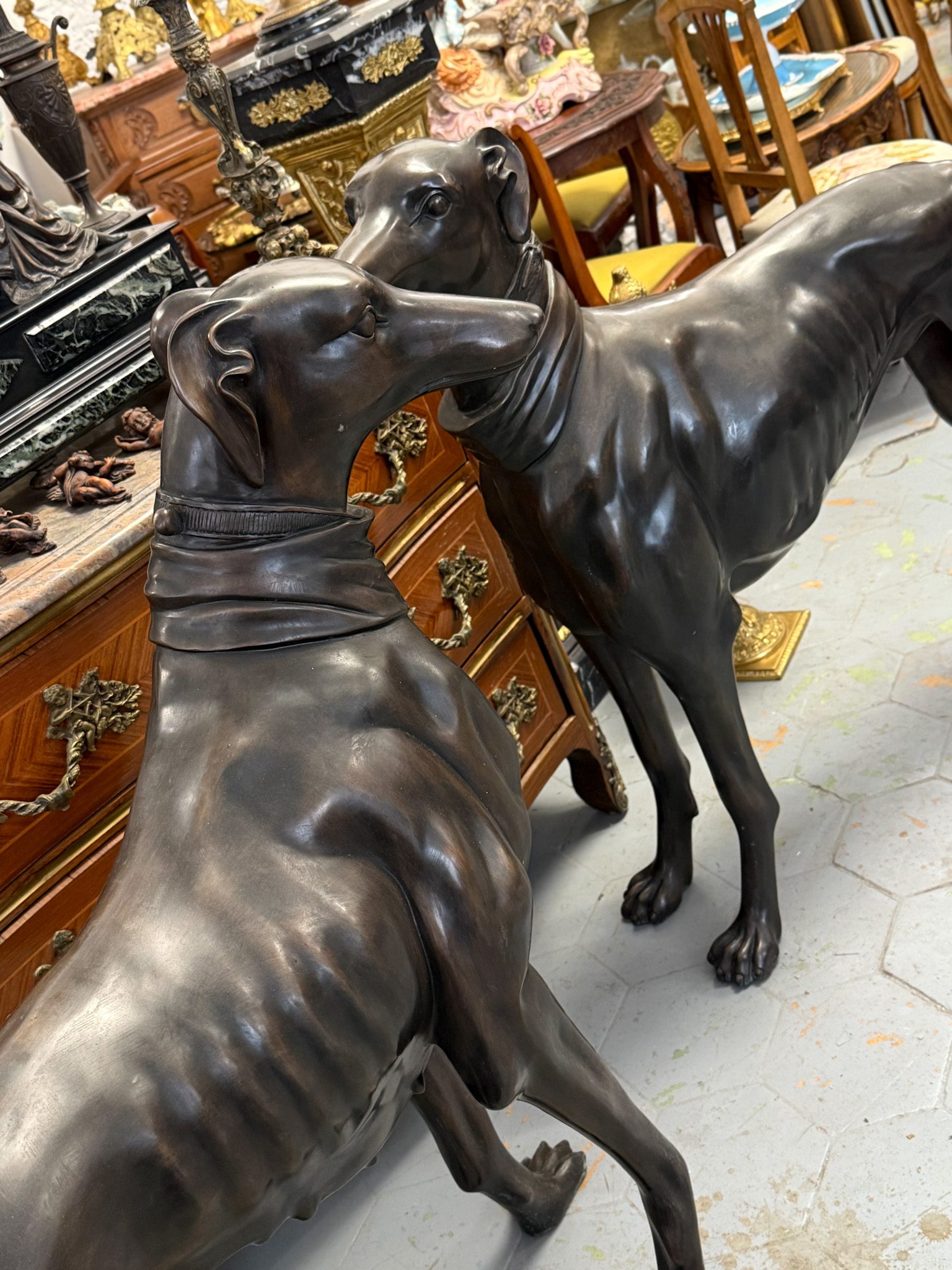
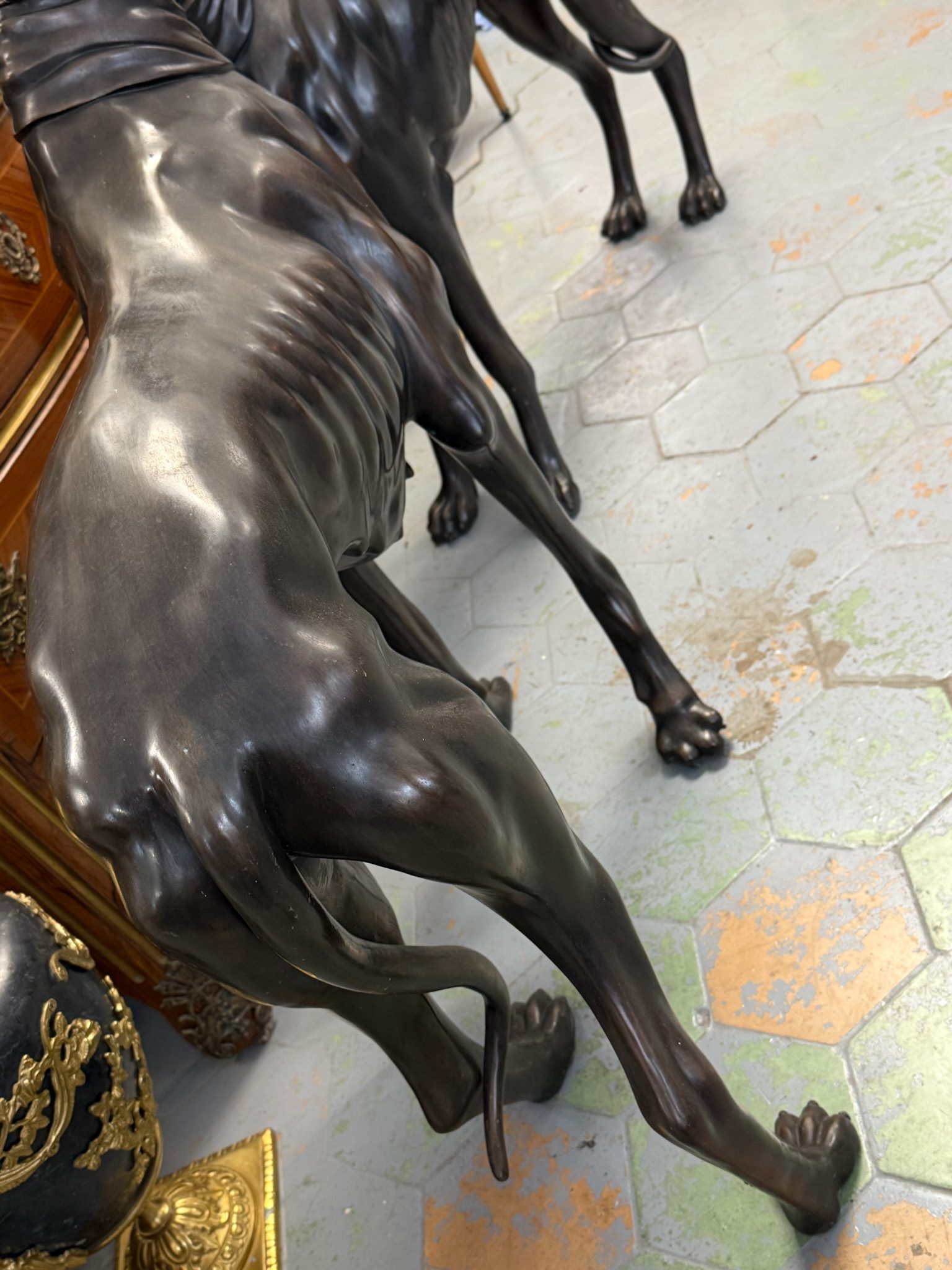
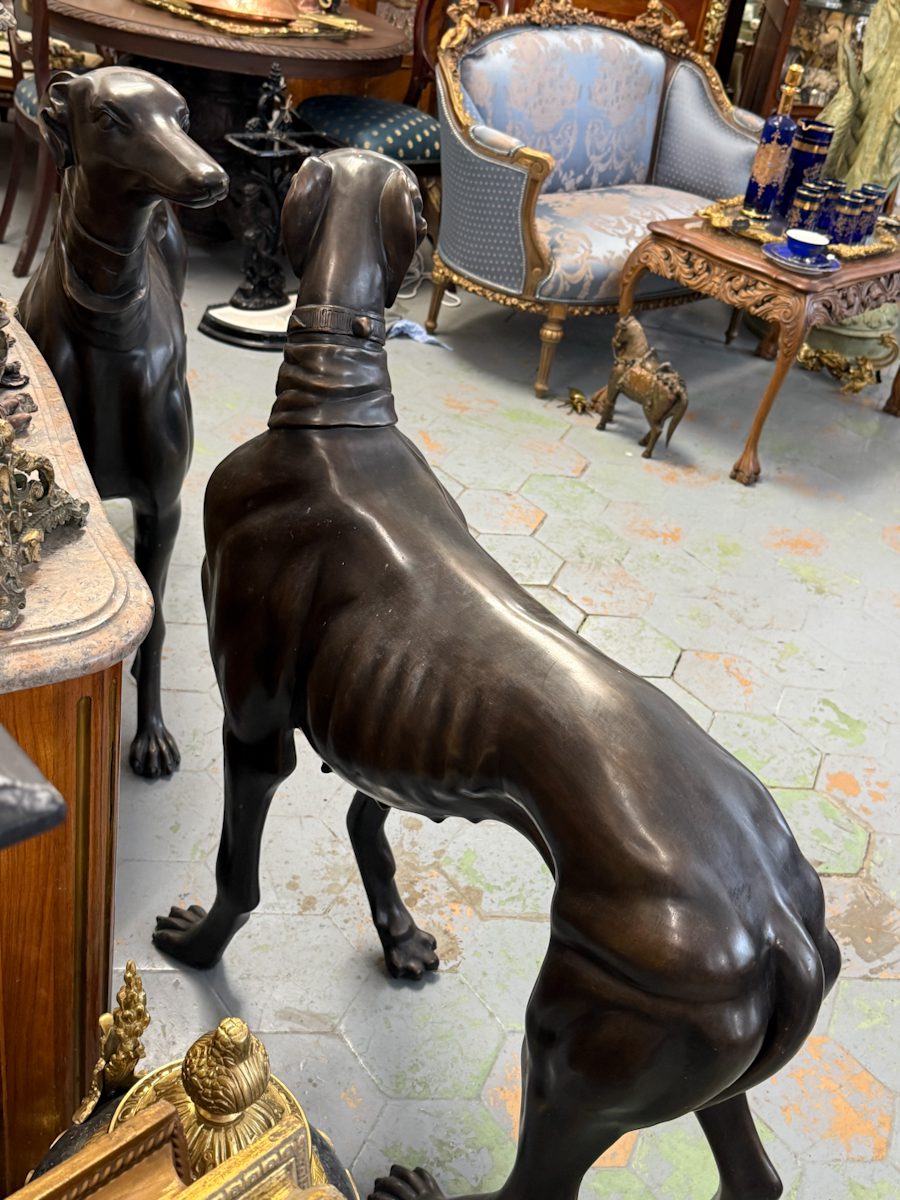
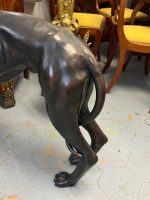
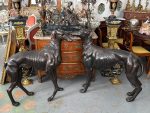
Life-Size Bronze Greyhound Dog Sculpture Pair – Neoclassical / Grand Tour Tradition, Europe, Mid-to-Late 20th Century af
Height 108.5 cm Length 100 cm Width 26 cm Color BronzeNaturalTerracotta
Description
SET:
Height: 108.5 cm
Length: 100 cm
Width: 26 cm
📐 DIMENSIONS
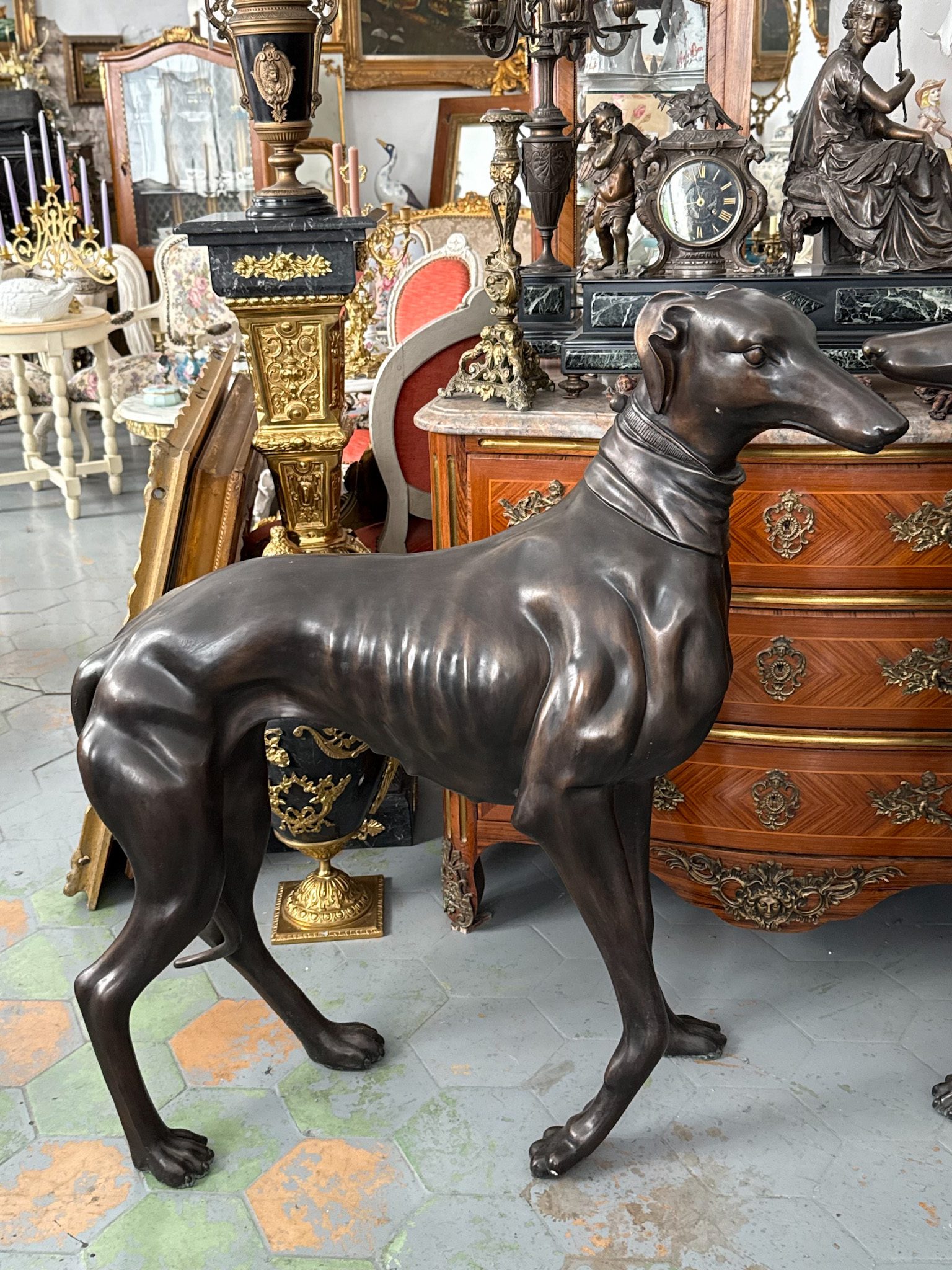
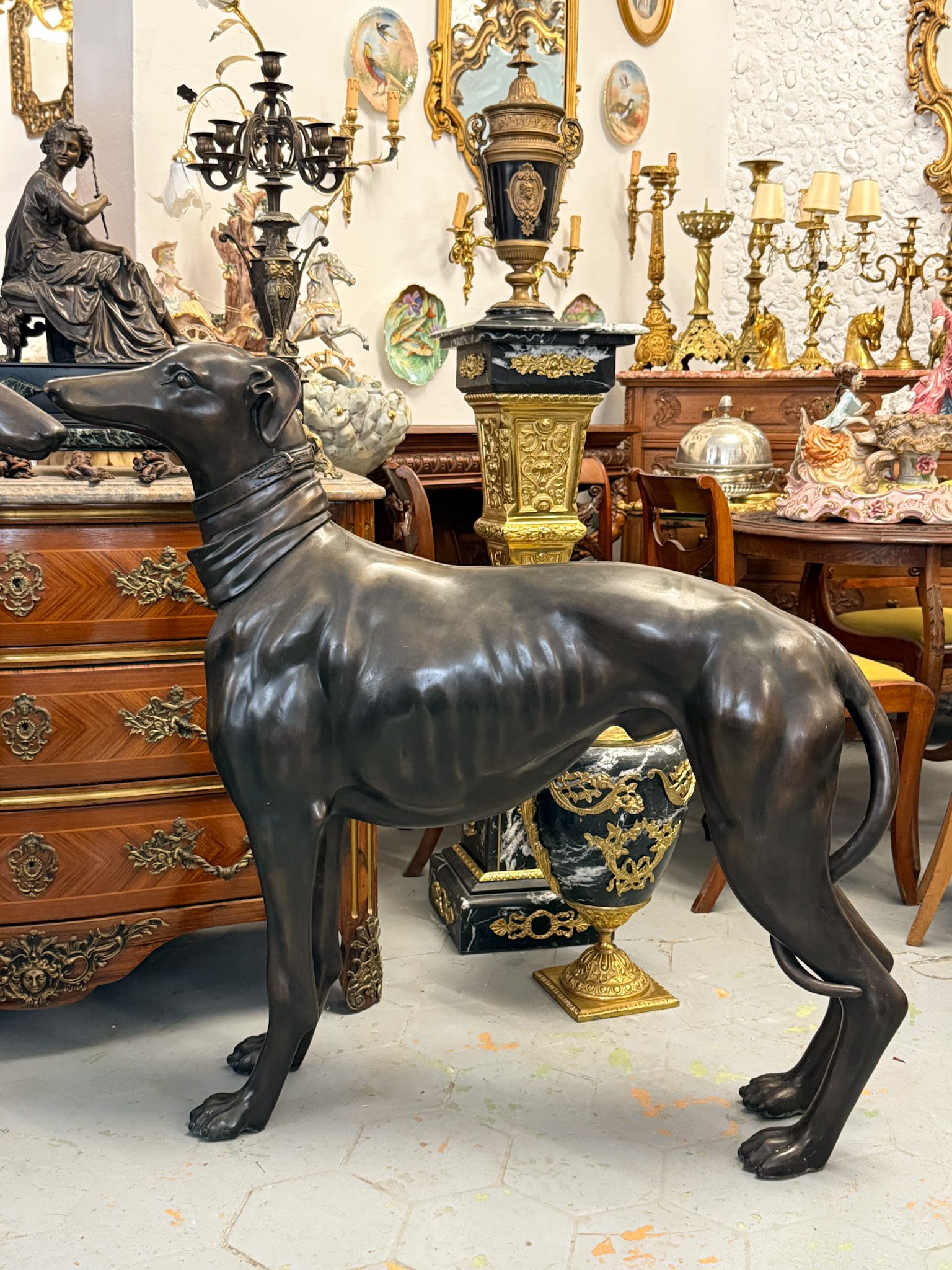
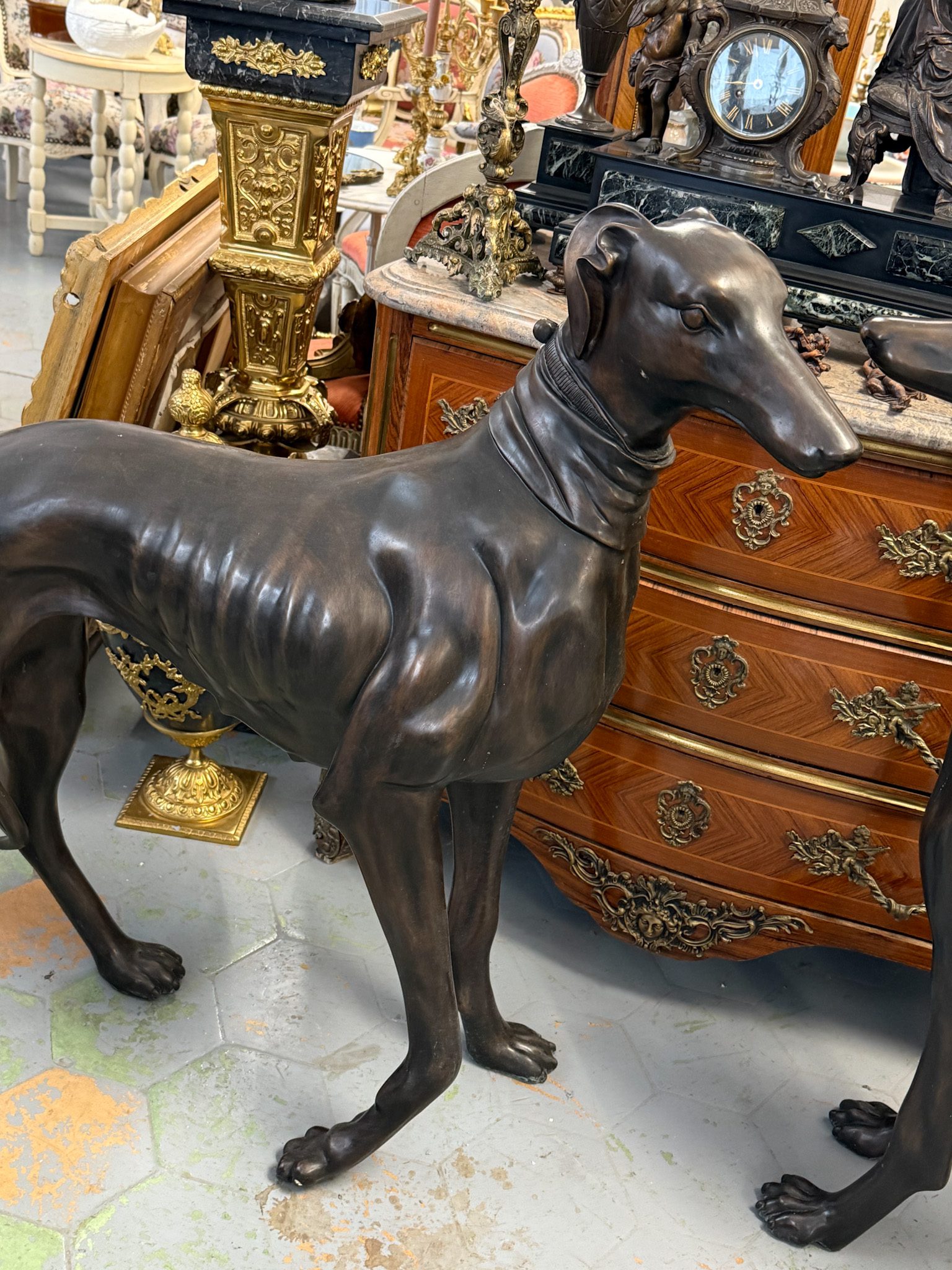
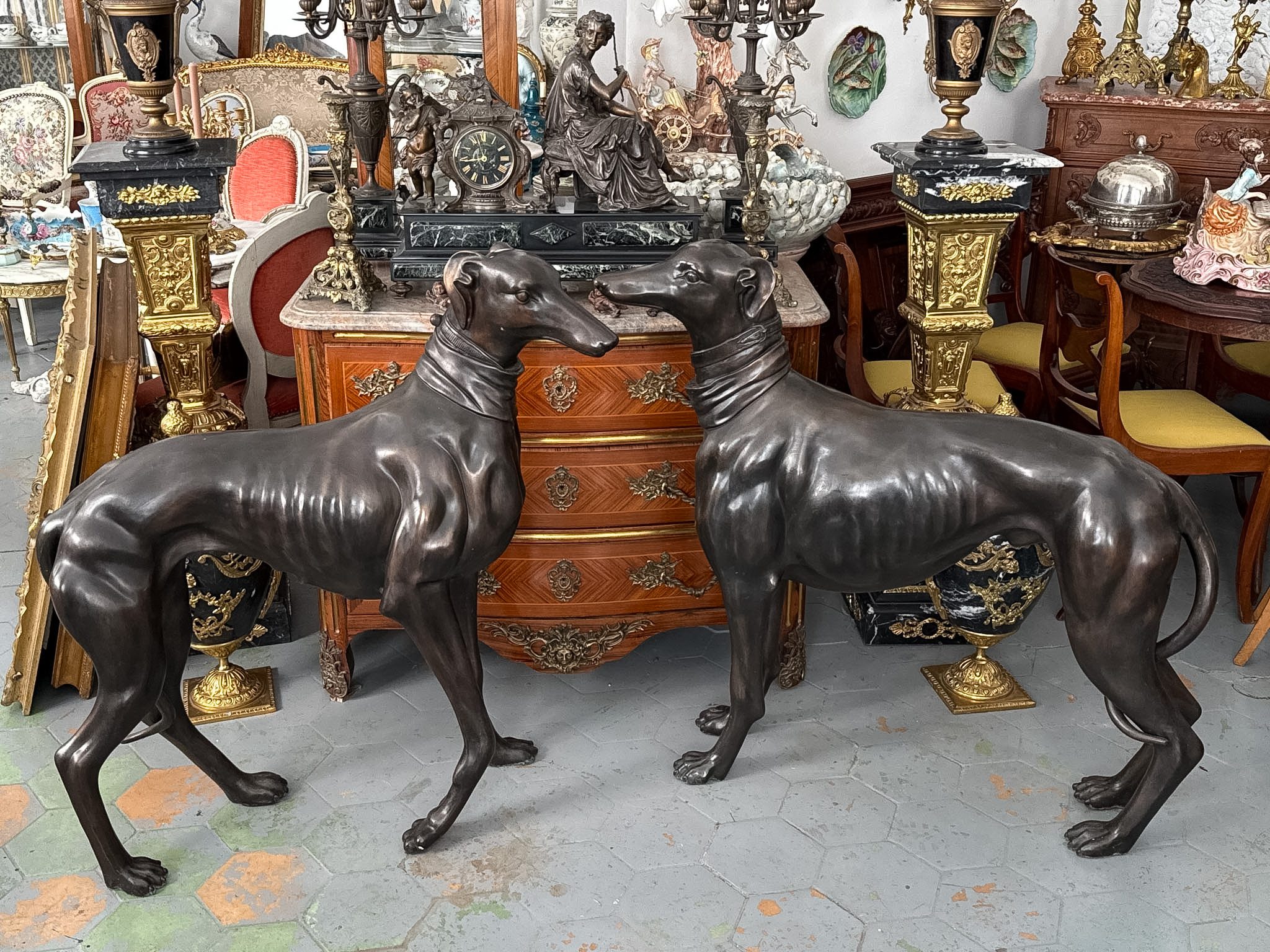
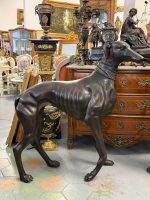
Height 108.5 cm × length ~100 cm × width 26 cm. Material: cast bronze with dark brown patina. Sold as a pair — 2 pieces. Weight: each specimen approx. 40–60 kg — solid, massive castings.
Life-size bronze greyhound sculpture pair — Neoclassicism / Grand Manner tradition, Europe, mid-late 20th century after 18th-19th century models.
―――――――――――――――――――――
🏛️ PERIOD OF MANUFACTURE, ARTISTIC STYLE, ERA
The composition and execution of these sculptures are based on a long and noble tradition rooted in European decorative art since at least the 18th century, when grand European aristocratic homes — , , and Italian nobility — began furnishing their entrance halls, park alleys, and castle thresholds with life-size bronze dog sculptures as symbols of power, diligence, and aristocratic lifestyle.
The greyhound — *lévrier* in — was not only a hunting dog but also a status animal of high society. Its depiction in art began in ancient Rome, continued through the Renaissance, and reached its representative culmination in the aristocratic culture of 18th-19th century Europe. It was precisely such figures, placed in pairs on either side of an entrance hall, that were present at Versailles, the Château de Chantilly, in country house interiors, and in St. Petersburg palaces. They not only decorated but spoke of the owner’s character: loyalty, elegance, strength, and aristocratic passion for hunting or racing.
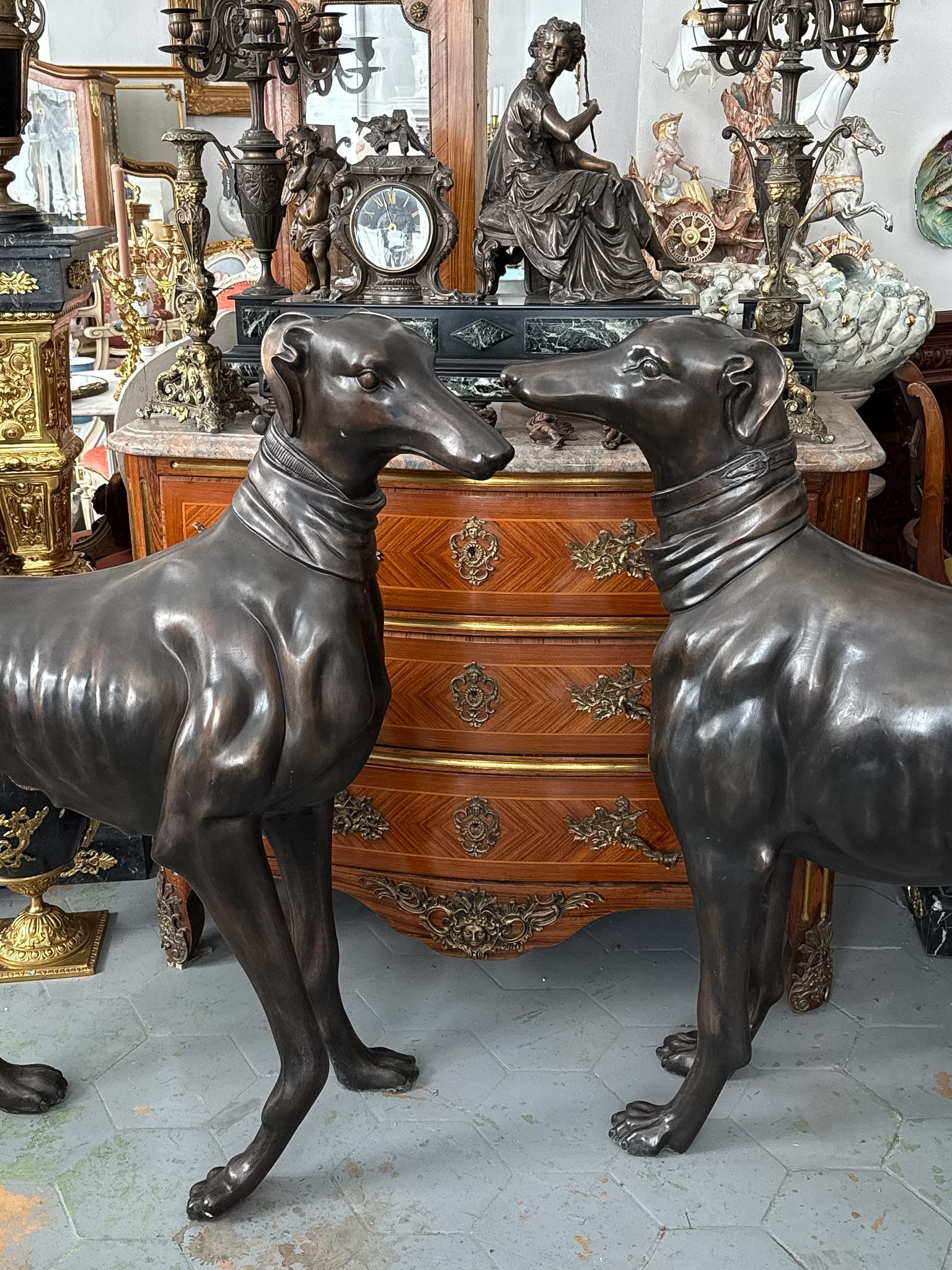
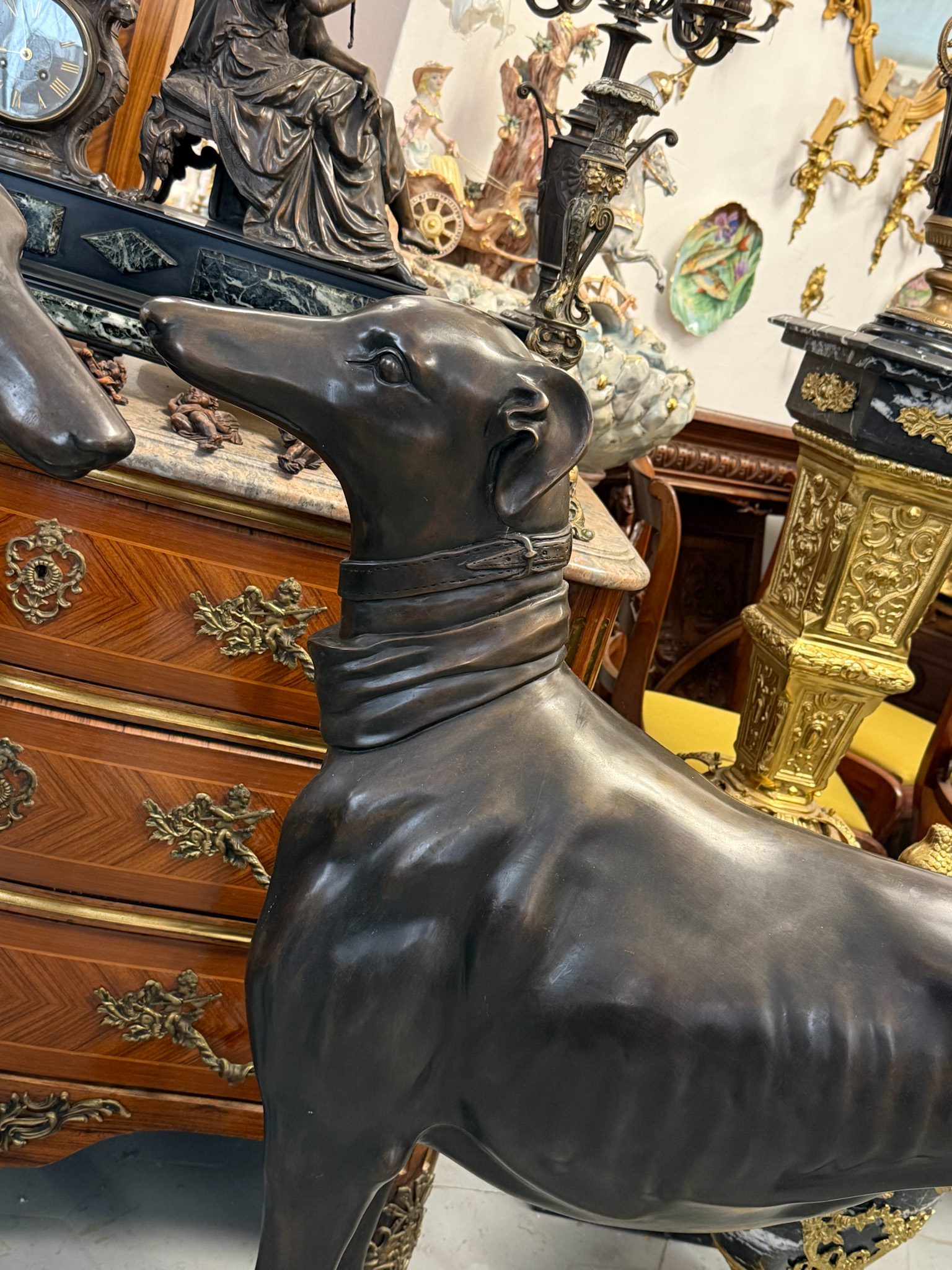
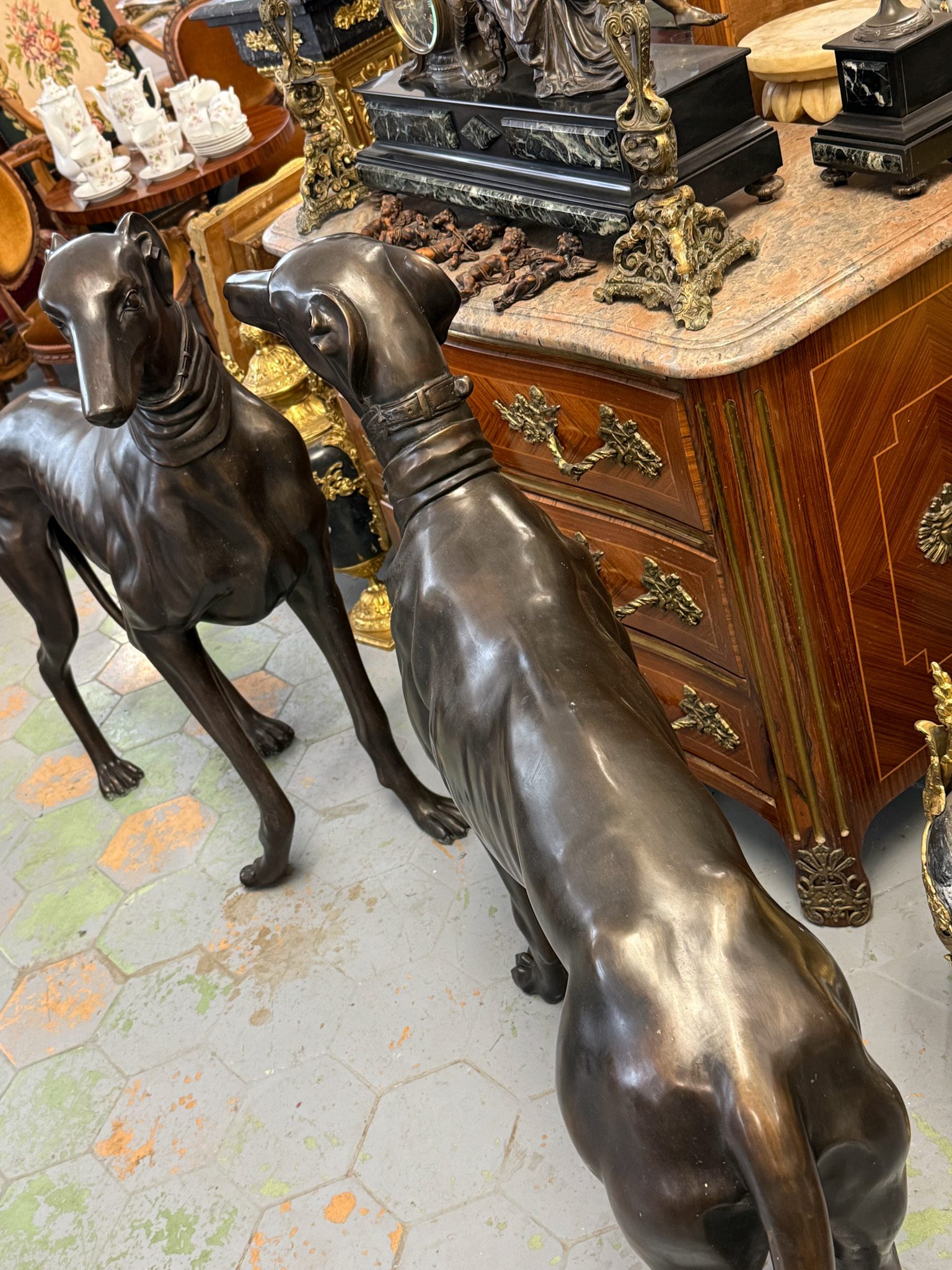
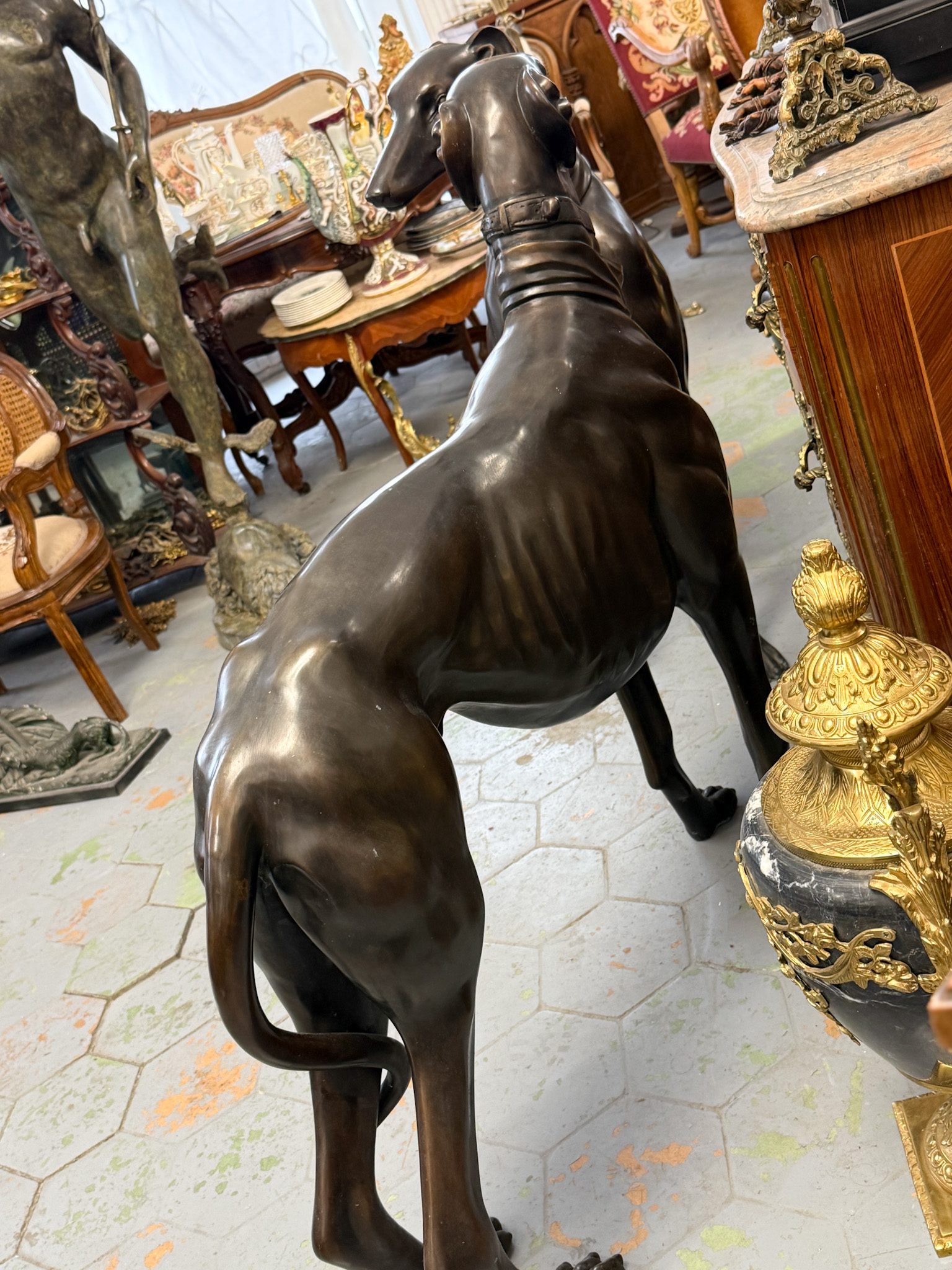
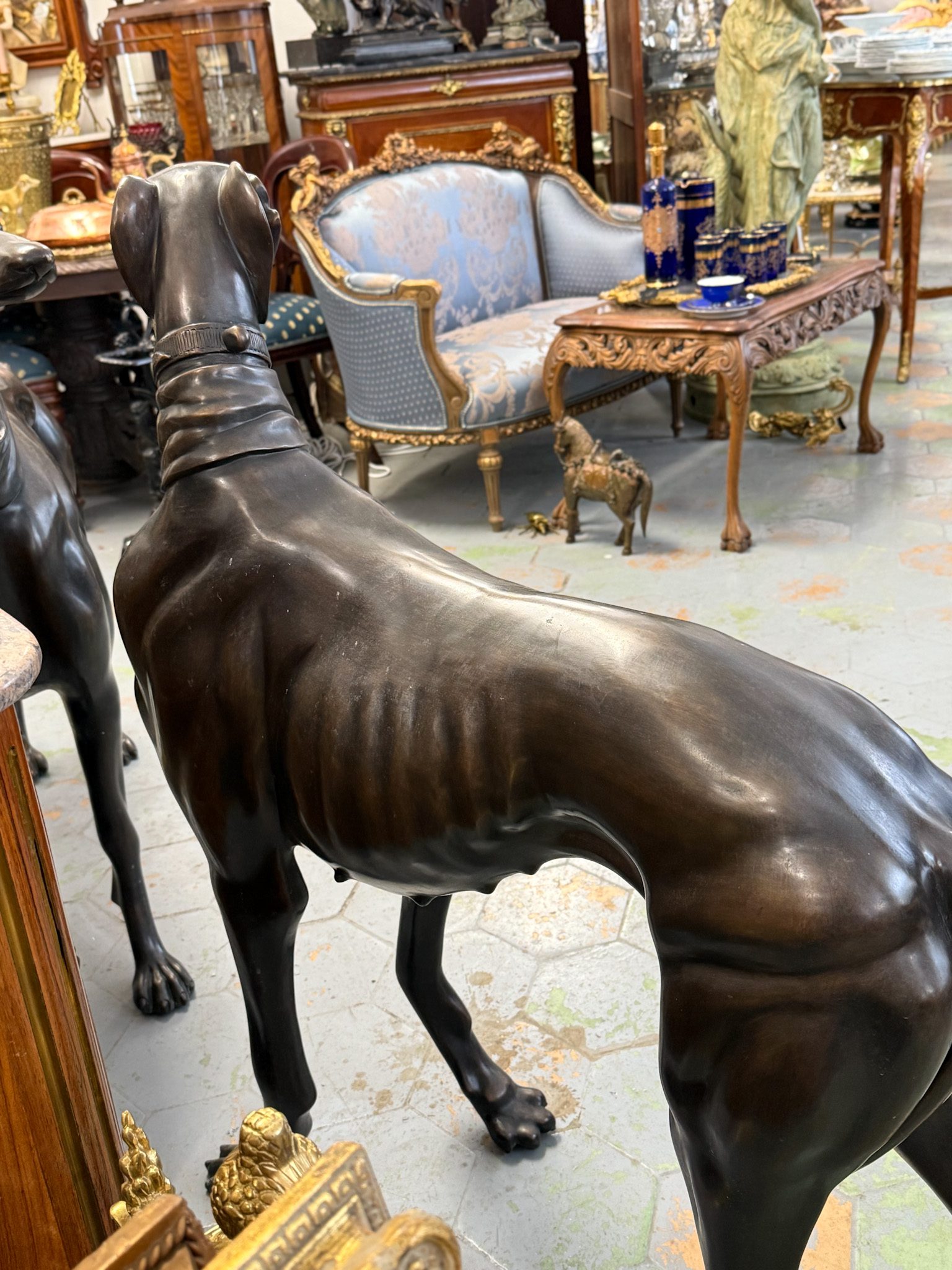
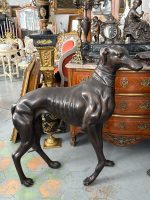
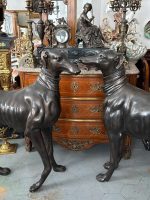
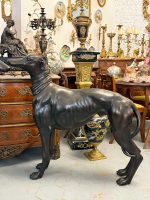
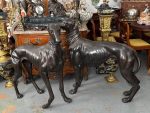
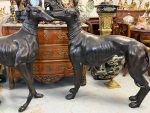
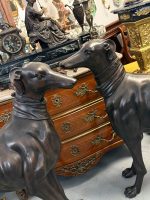
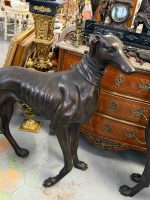
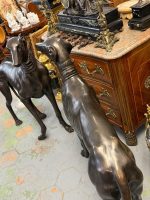
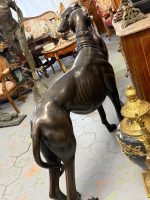
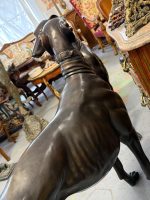
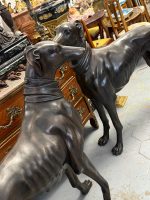
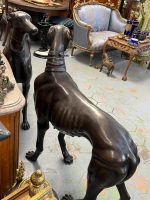
This pair, with its differentiated poses — one dog looking straight ahead with a dignified presence, the other turned with its gaze upwards — creates a lively, dynamic dialogue between the two animals, elevating the overall sculptural impression from a simple decoration to the level of an artistic composition.
―――――――――――――――――――――
⚜️ MANUFACTURER AND TRADITION
No specific manufacturer’s mark or founder’s signature is visible on the sculptures. This is typical for large, representative bronze castings made after classical European models — such castings were ordered privately, and their quality and scale speak for themselves.
The tradition of such greyhounds in Europe is continuous. In the 18th century, famous bronze foundries and foundries in Paris cast such pairs for the wealthiest aristocratic families. In the 19th century, major European foundries in France, Belgium, and Italy produced representative bronze dog pairs for both palace interiors and park decoration. The entrance to the famous Château de Chantilly, where bronze guard dogs majestically stand at the threshold, is one of the most iconic examples of this tradition. The same tradition continued in the 20th century in high-quality bronze foundries working after classical models.
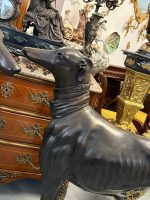
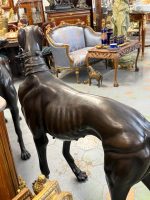
The tones of the patina — deep brown with warm bronze reflections on the curves — indicate a high-quality chemical treatment process that mimics the effect of natural aging patina and gives both dogs their significant “antique” dignity.
―――――――――――――――――――――
💎 RARITY AND SIGNIFICANCE
Pairs of greyhounds are one of the rarest and most valuable formats of decorative sculpture in the antique world. Bronze castings of this scale (height 108.5 cm) and quality appear mainly in prestigious international auction houses and high-end antique galleries. The preservation of the pair — both figures in almost identical condition with a uniform patina — is an additional rarity, as pairs are often separated over time.
Demand for such pieces is stable and growing in the European, US, and Middle Eastern markets, where representative interior sculptures are highly valued as architectural elements.
―――――――――――――――――――――
🕯️ APPLICATION IN INTERIORS, DESIGN, AND PHOTOGRAPHY
This pair is designed for the architectural furnishing of an entrance hall, vestibule, or large salon. Placed symmetrically on either side of an entrance door, they immediately impart a palace and manor atmosphere to the space. They work equally well in classical and neoclassical interiors, as well as in modern minimalist settings where bronze sculptures become the main visual dominant.
For garden or terrace use — on a stone or terracotta surface — these figures gain an additional dimension: the bronze develops a natural green patina over time, which becomes an additional artistic effect. Architects and interior designers use such pieces as a final accent for representative projects — hotel lobbies, private residences, and representative office spaces.
For photographers, the symmetry, massiveness, and dark bronze surface of this sculpture pair create excellent visual contrast and depth in both black and white and color photography.
―――――――――――――――――――――
🔍 CONDITION
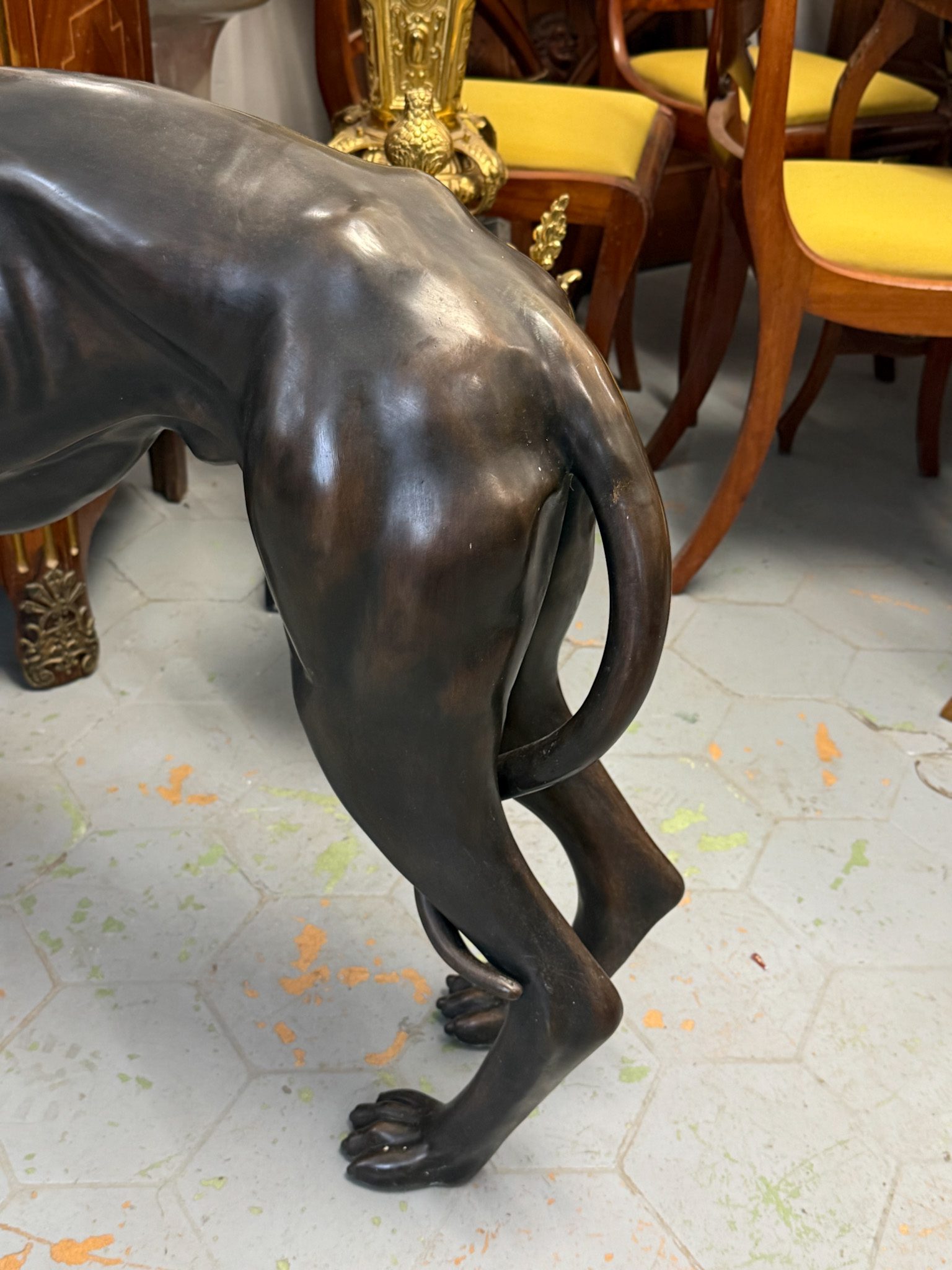
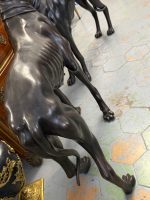
Both sculptures are in excellent, museum-quality condition. The bronze surface has a uniform, deep brown patina without significant damage. A consistent patina development is visible on both dogs, attesting to their common origin and storage. There are no signs of breakage, restoration, or metal corrosion. Fine structural details are visible on the collars, indicating high casting quality. The modeling of the body musculature is precise and remarkably expressive from all viewing angles.
The condition of the item is fully reflected in the photographs.
―――――――――――――――――――――
Related Products
No account yet?
Create an Account