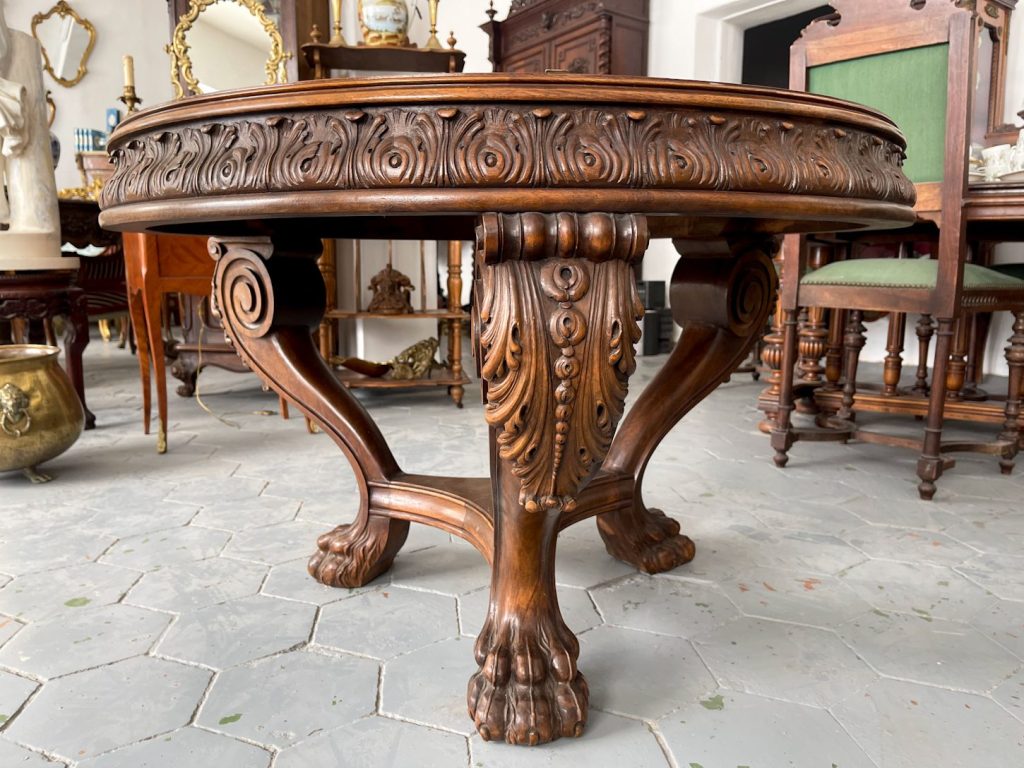
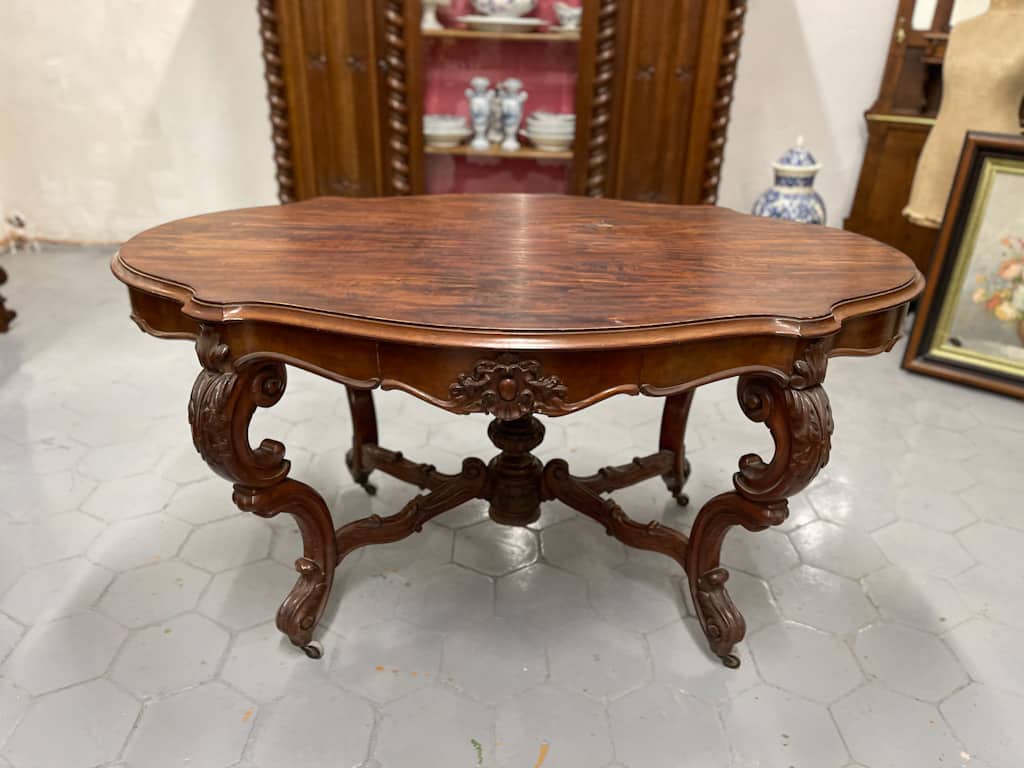
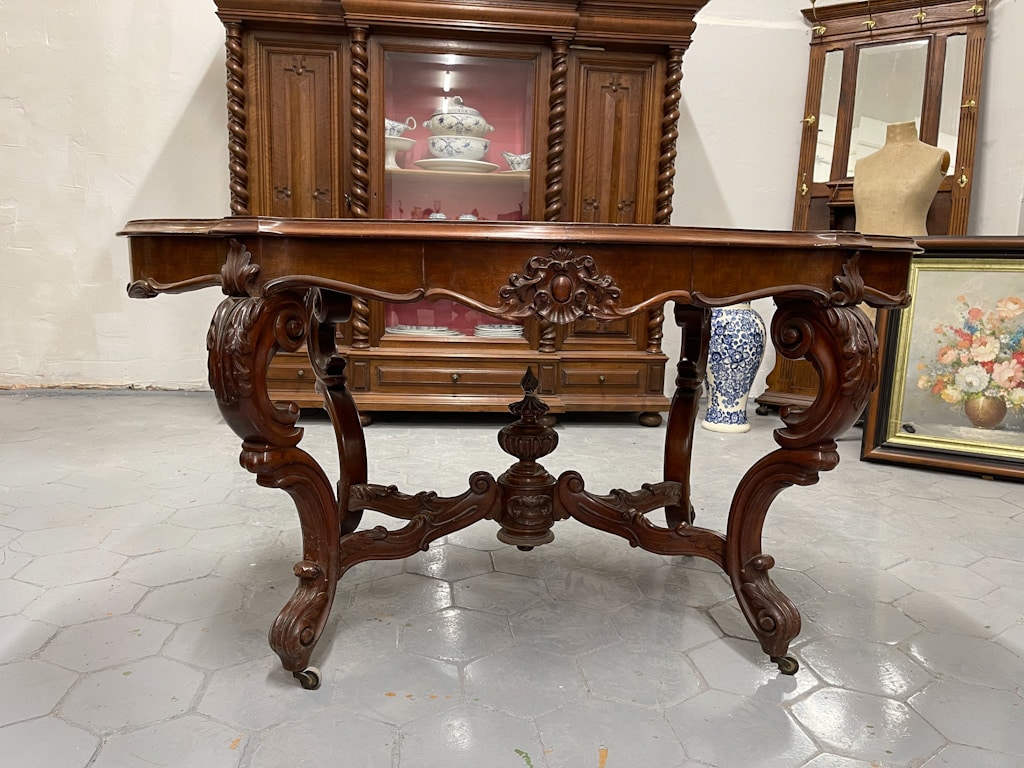
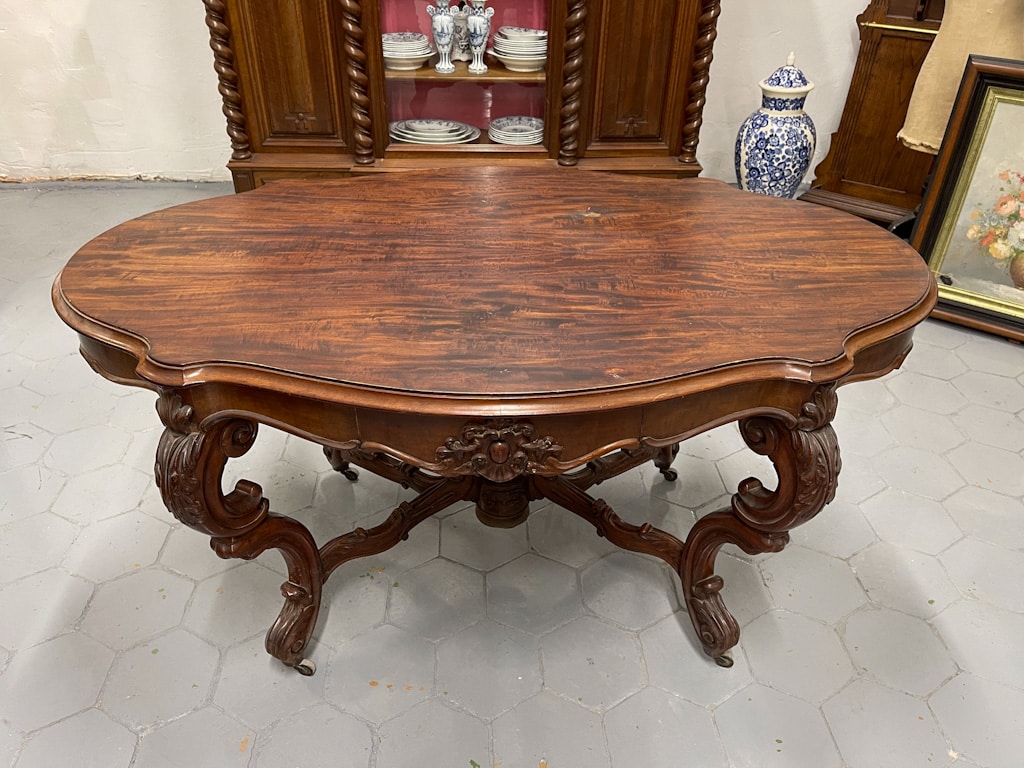
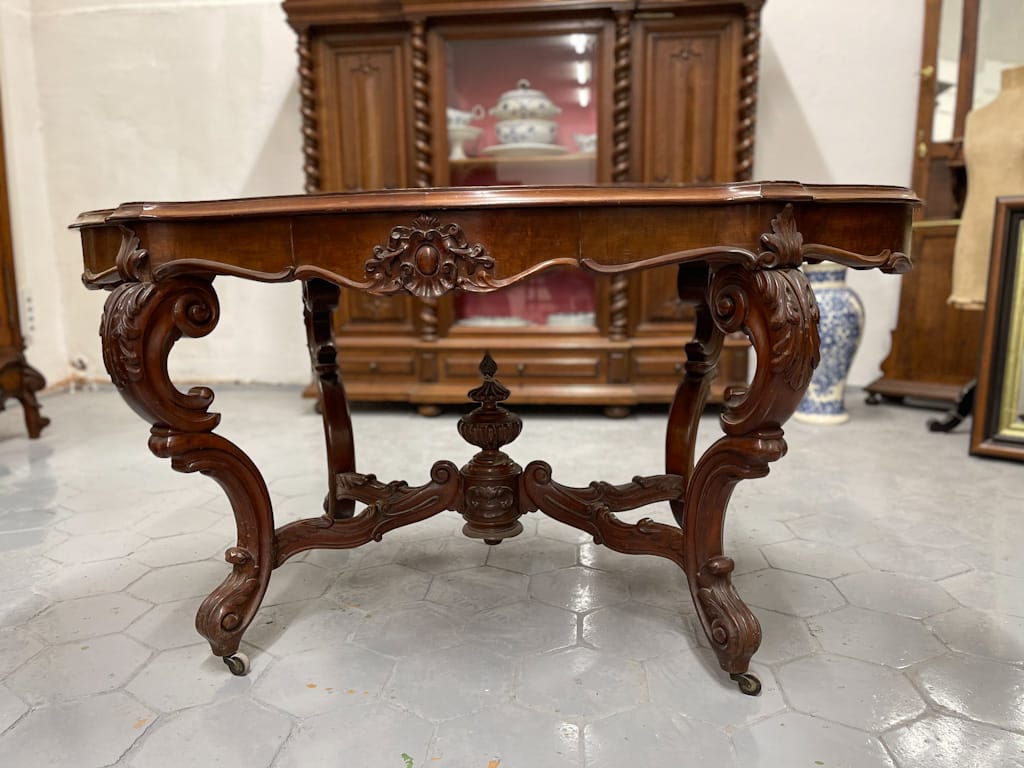
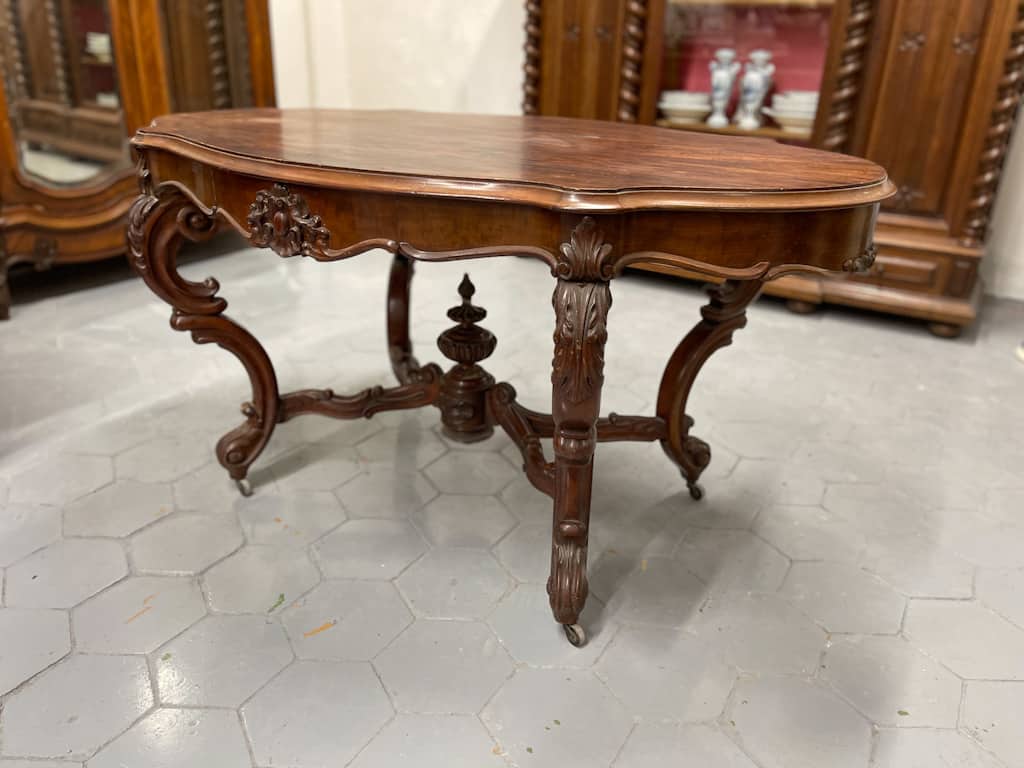
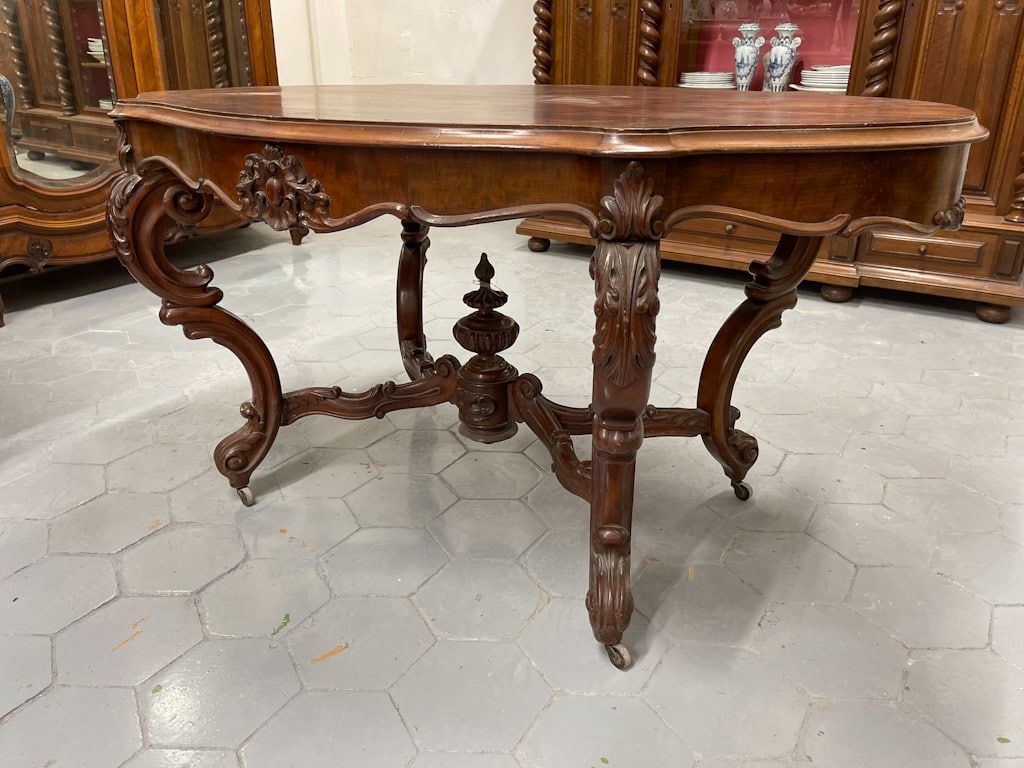
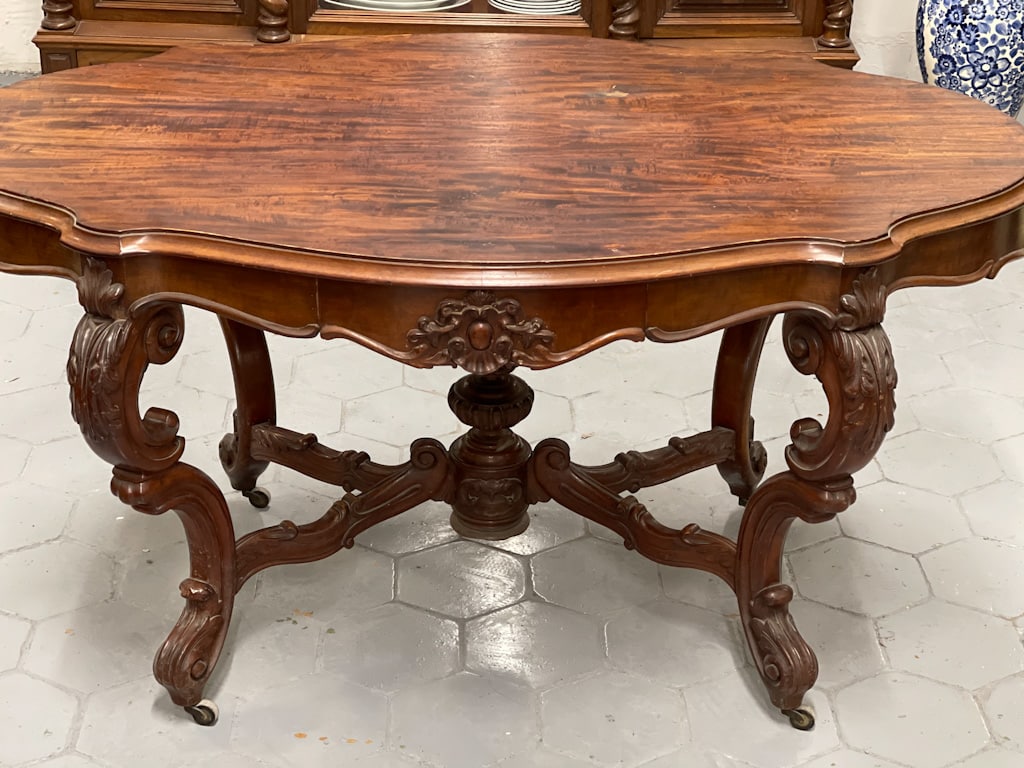
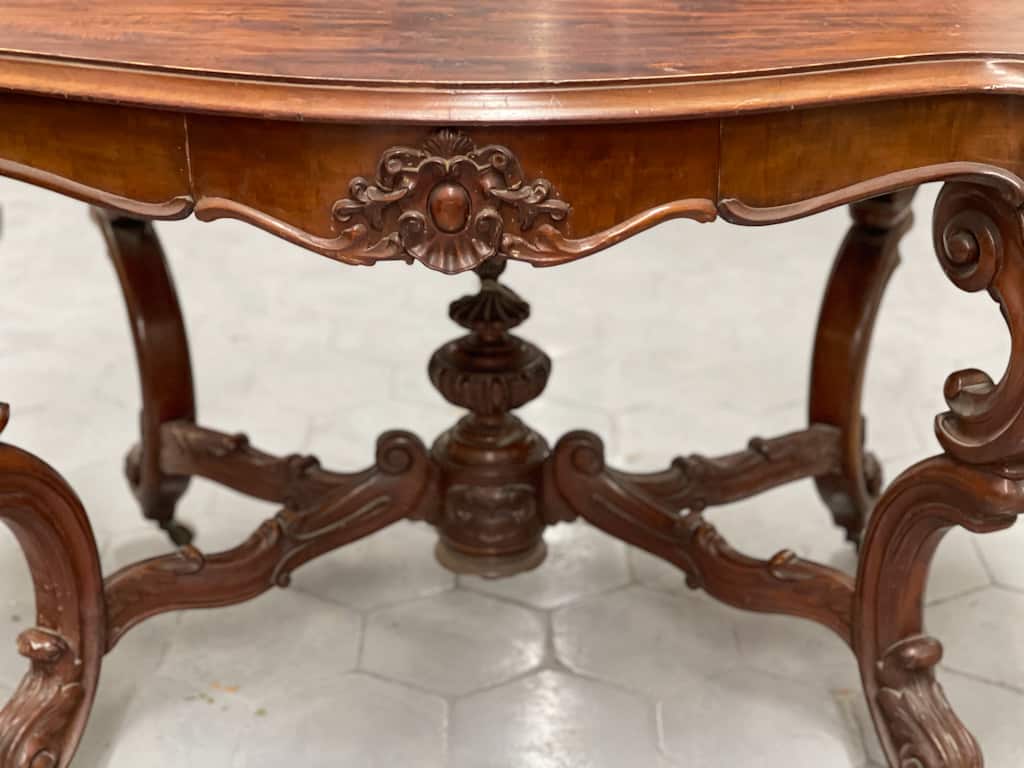
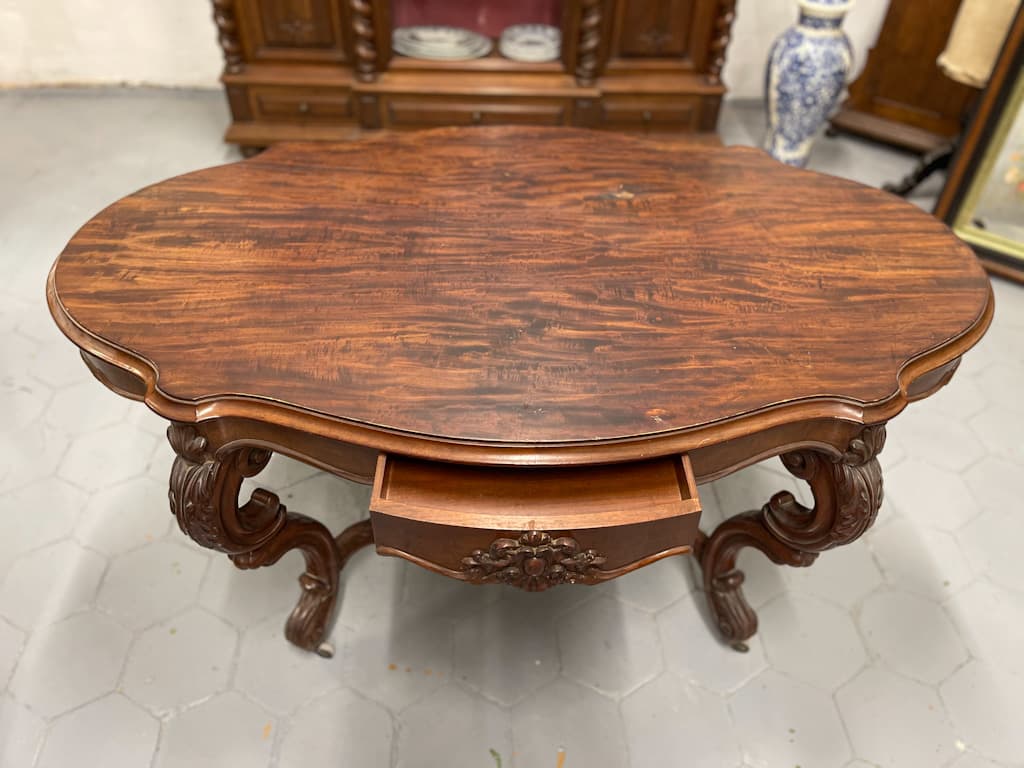
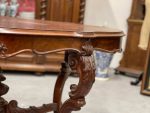
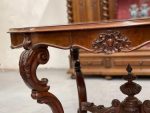
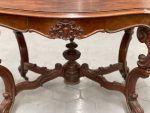
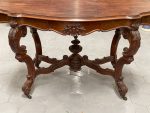
Oval Walnut Salon Table — Historicism/Neo-Rococo, France/Belgium, c. 1860-1890. This exquisite table features intricate carvings, two drawers, and a distinctive X-shaped base with a central urn. A stunning piece reflecting the opulence of the Belle Époque era, perfect for a grand interior. 750,00 €
You’re now subscribed to price tracking for this product. We’ll notify you if the price drops. 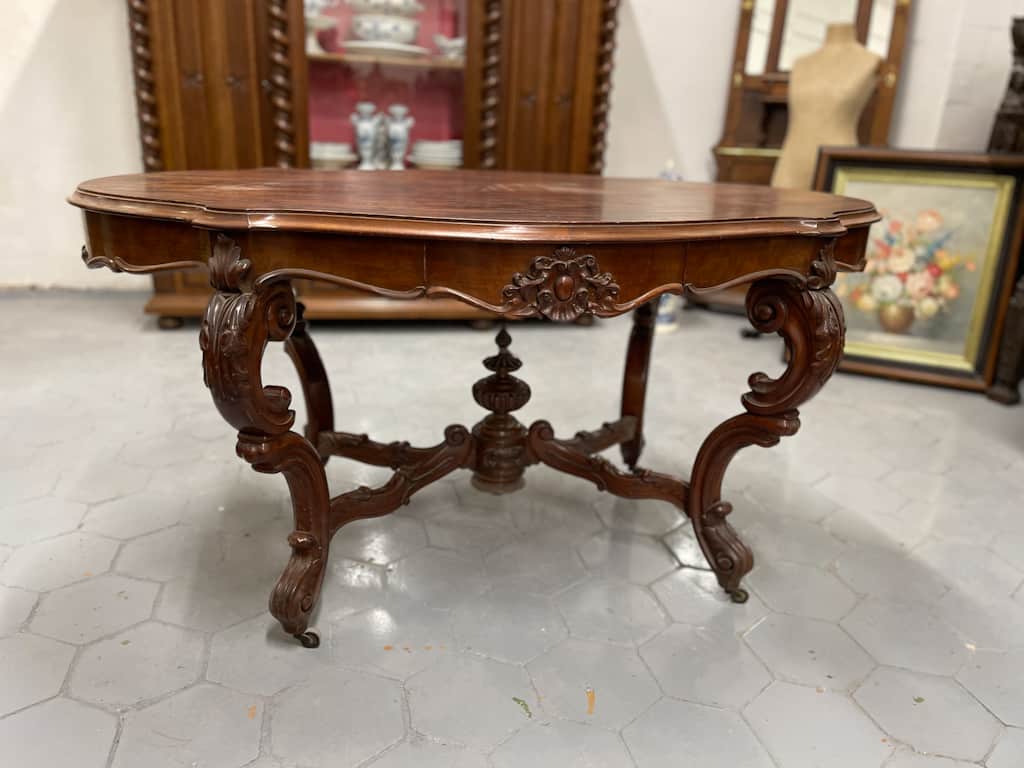
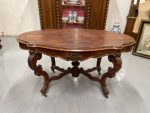
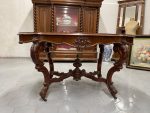
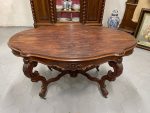
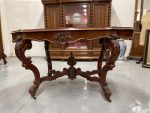
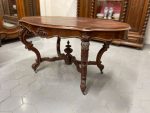
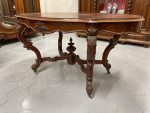
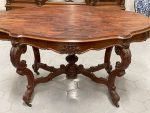
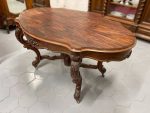
Oval Walnut Table with Carvings and 2 Drawers — Historicism, France/Belgium, 19th Century (724)
Height 75.5 cm Length 145 cm Width 90 cm Color BrownWalnutBrass
Description
DESCRIPTION IN
―――――――――――――――――――――
📐 DIMENSIONS
Length 145 cm × width 90 cm × height 75.5 cm. Massive and heavy.
―――――――――――――――――――――
Oval Carved Walnut Salon Table with Two Drawers — Historicism / Neo-Rococo, France/Belgium, c. 1860–1890
―――――――――――――――――――――
🏛️ PERIOD, ART STYLE, EPOCH
This commanding salon table belongs to the opening chapter of the Belle Époque — that fertile moment after 1871 when Historicism in its fullest expression swept through the interiors of Europe’s finest homes, and Neo-Rococo became the chosen language of court circles and the grand bourgeoisie. The table dates to approximately 1860–1890, a period when the great workshops of France and Belgium competed in their reinterpretation of the Rococo vocabulary.
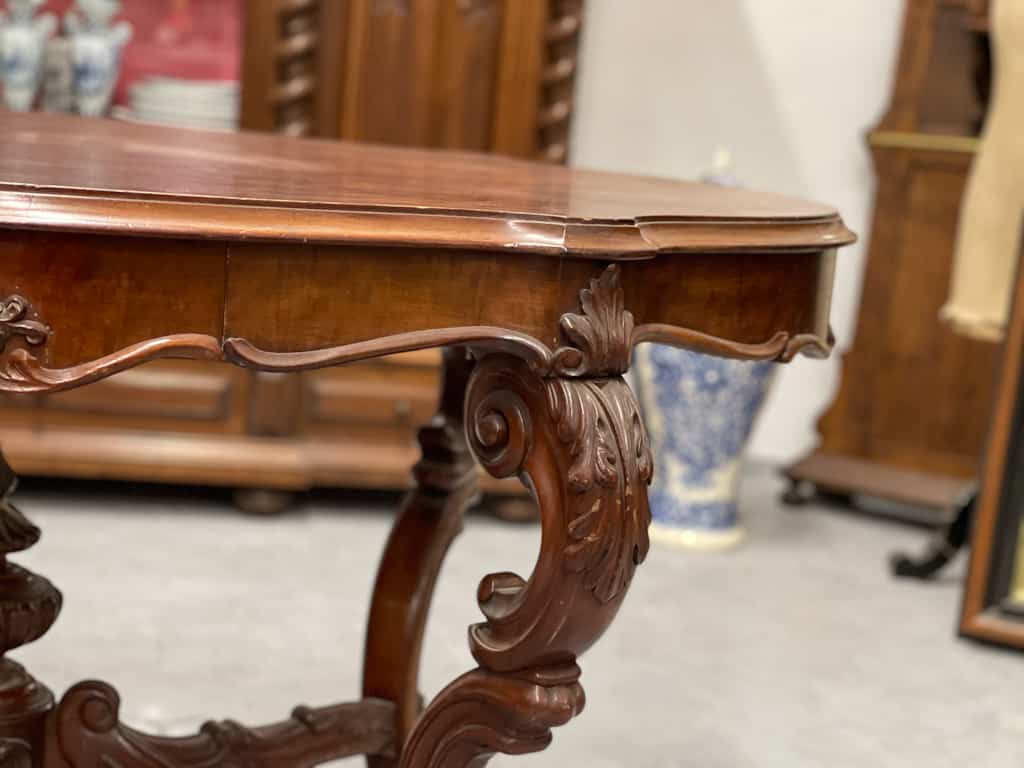
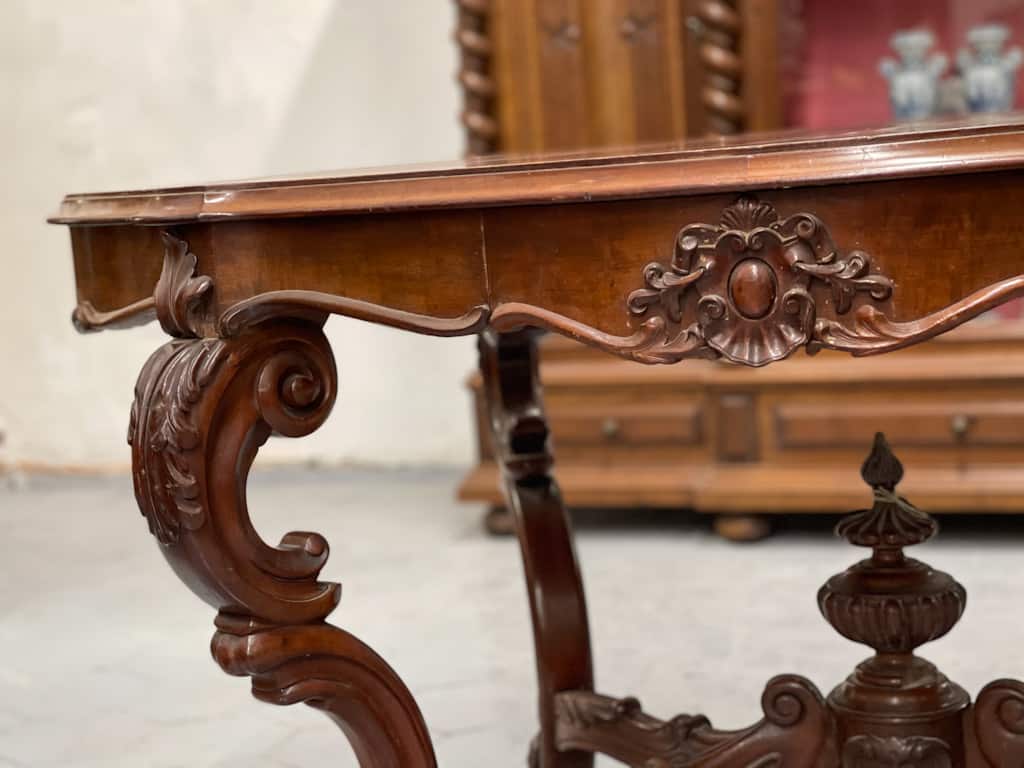
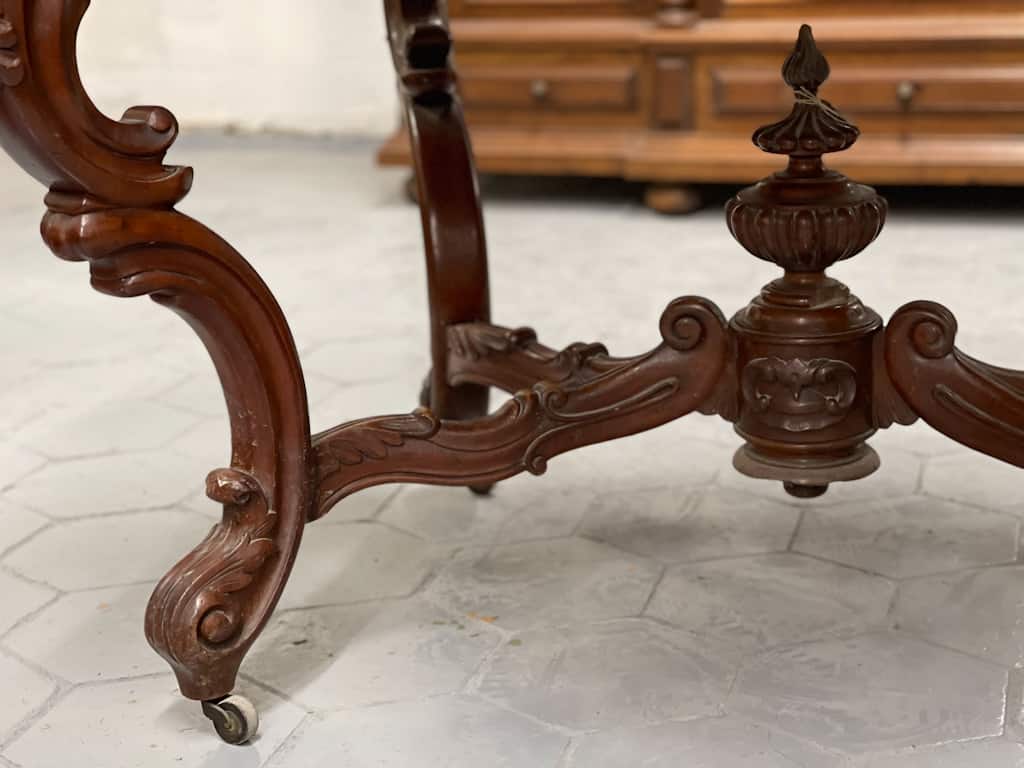
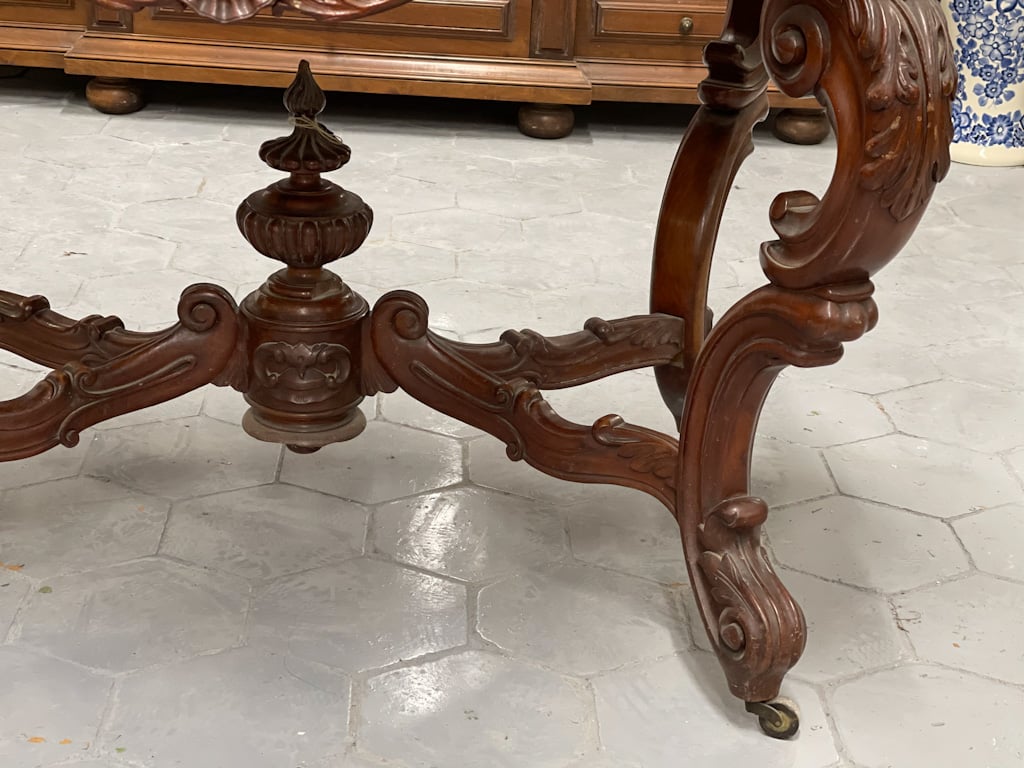
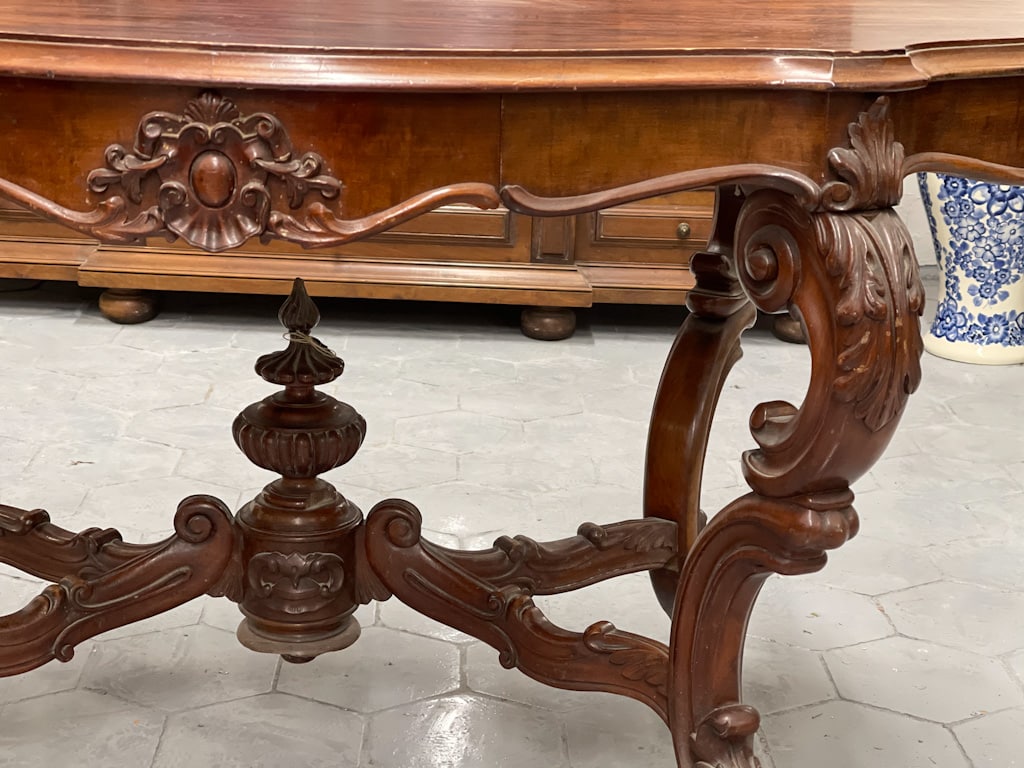
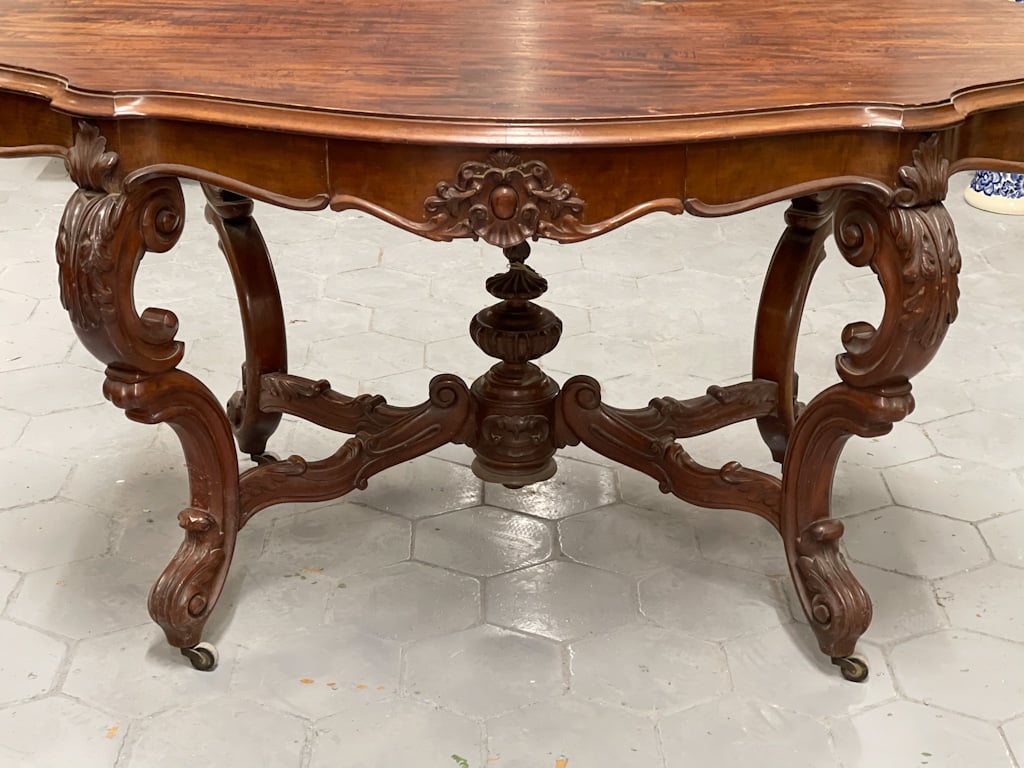
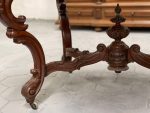
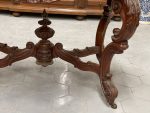
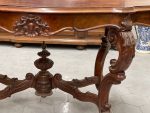
Everything here speaks in the grammar of Baroque and Rococo: the acanthus leaf carvings on the sweeping cabriole legs, the shell cartouche at the centre of the apron, volutes at the leg shoulders, and the X-form stretcher crowned by a central urn with finial — a defining motif of Second Empire and Neo-Rococo design. The table moves on brass castors — an elegant functional detail that allowed it to glide across the parquet of a grand salon.
This piece belongs to that richly productive transitional moment when Historicism still held its magnificent forms, while the spirit of the Belle Époque was already bringing a new ornamental language of joie de vivre — both aesthetics coexist in this single object with remarkable confidence.
Gustave Flaubert had died only a few years before this table’s finest hours. Yet it was precisely in salons like this that his Madame Bovary characters lived — reaching toward the beautiful, expensive life symbolised by every carved acanthus scroll on a walnut leg.
―――――――――――――――――――――
⚜️ MAKER AND MARK
No visible maker’s mark has been identified. The level of execution, quality of timber, and precision of the carved ornament point firmly to a professional or Belgian furniture workshop — the ébénisterie tradition that reached its apex in the capitals and major cities of this period. Belgium was one of Europe’s leading producers of fine walnut furniture during these decades, and tables of this type were exported to the finest households across the continent. The depth and sharpness of the carving indicate a high-end commission rather than a trade piece.
―――――――――――――――――――――
💎 RARITY AND SIGNIFICANCE
Oval salon tables with X-form stretchers and central urn finials represent one of the most iconic furniture forms of Neo-Rococo and Second Empire style — consistently sought and valued on the international antiques market. The richness of this table’s carving and its level of preservation distinguish it from average offerings. Collectors assembling 19th-century salon ensembles seek precisely this type of centrepiece around which to organise a room.
―――――――――――――――――――――
🕯️ USE IN INTERIORS, DESIGN AND PHOTOGRAPHY
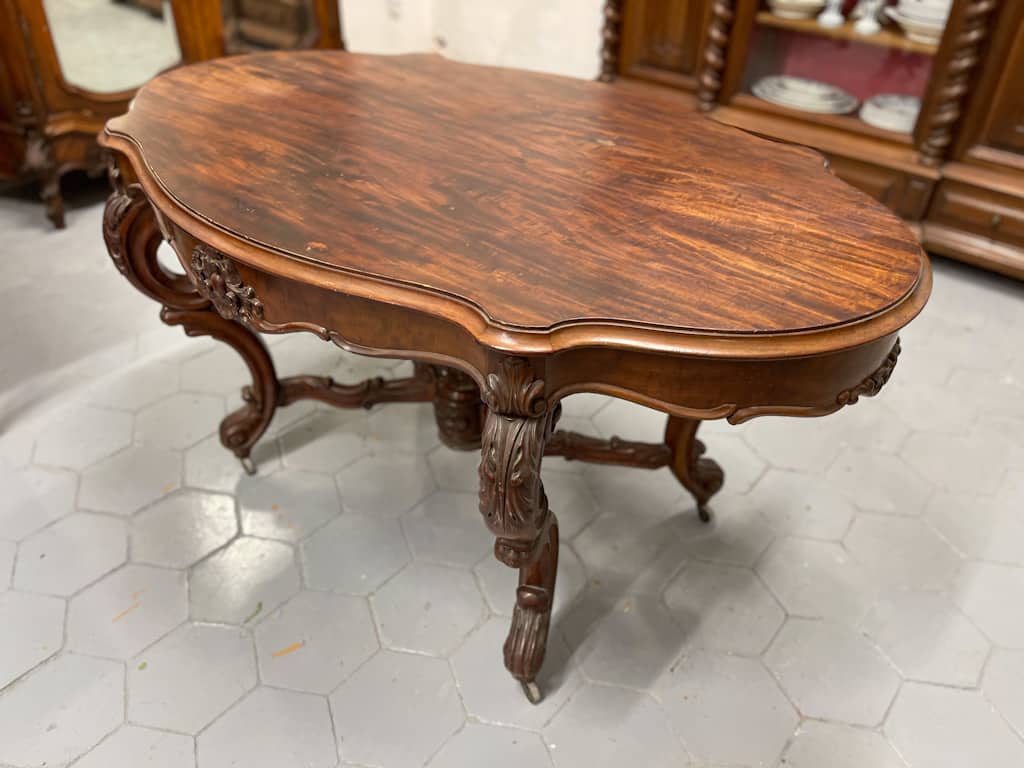
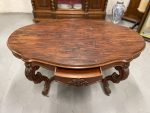
This table was made to occupy the centre of a room — and it will do so with authority in almost any setting. In a classical or eclectic interior it functions as the dominant element around which the space organises itself. In a contemporary maximalist or neo-classical context it imparts immediate historical depth. For interior photographers, the organic walnut grain of the top surface and the sculptural silhouette of the base provide exceptional visual dynamism in any frame.
―――――――――――――――――――――
🎁 GIFT AND PERSONALISATION
A historic salon table of this calibre represents a gift at the highest level — appropriate as a corporate or diplomatic presentation, or as an outstanding addition to a private collection. For anyone who values 19th-century European art and craftsmanship, this table is not merely a piece of furniture but a fragment of history in daily use.
―――――――――――――――――――――
🔍 CONDITION
The table is in good overall condition consistent with its age. The surface shows honest signs of wear and use — minor surface marks that speak of a long and active history. The carved decoration is very well preserved throughout, with details remaining crisp and clearly defined. The brass castors are functional. The structure is solid and stable. The condition of the item is fully reflected in the photographs.