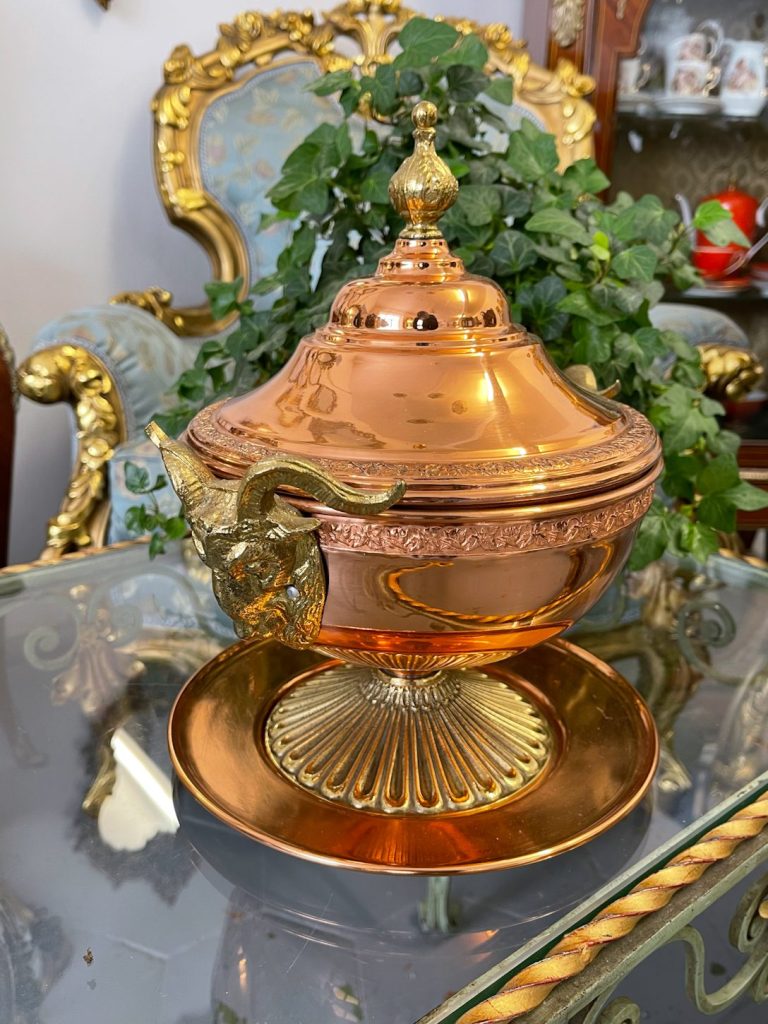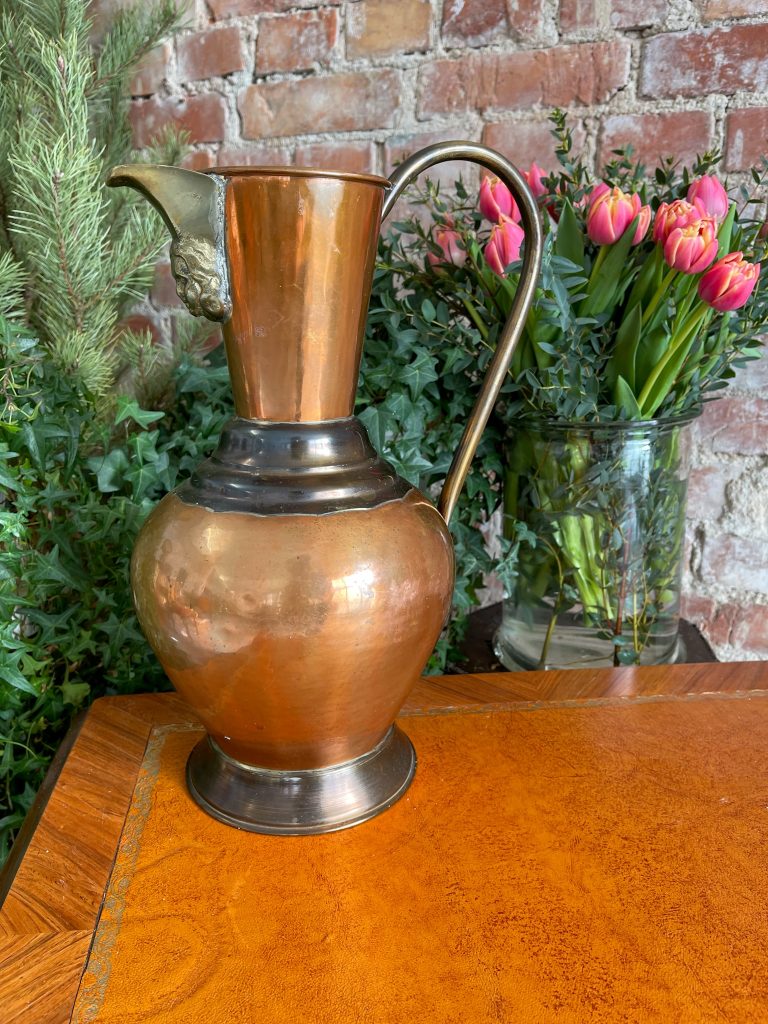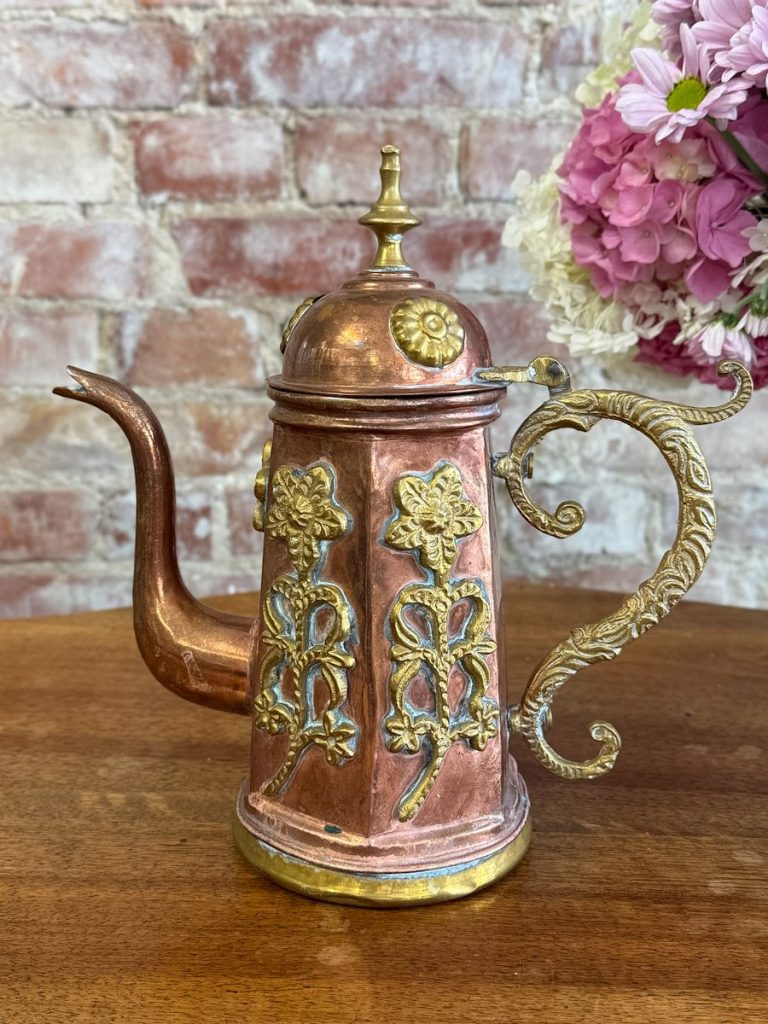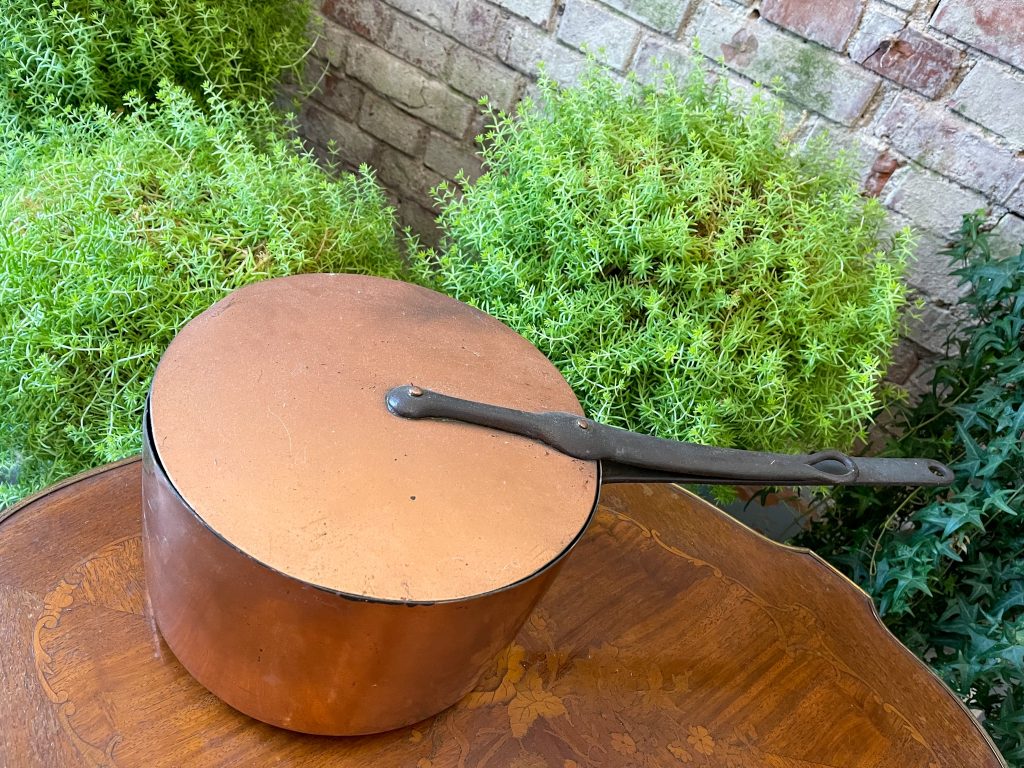
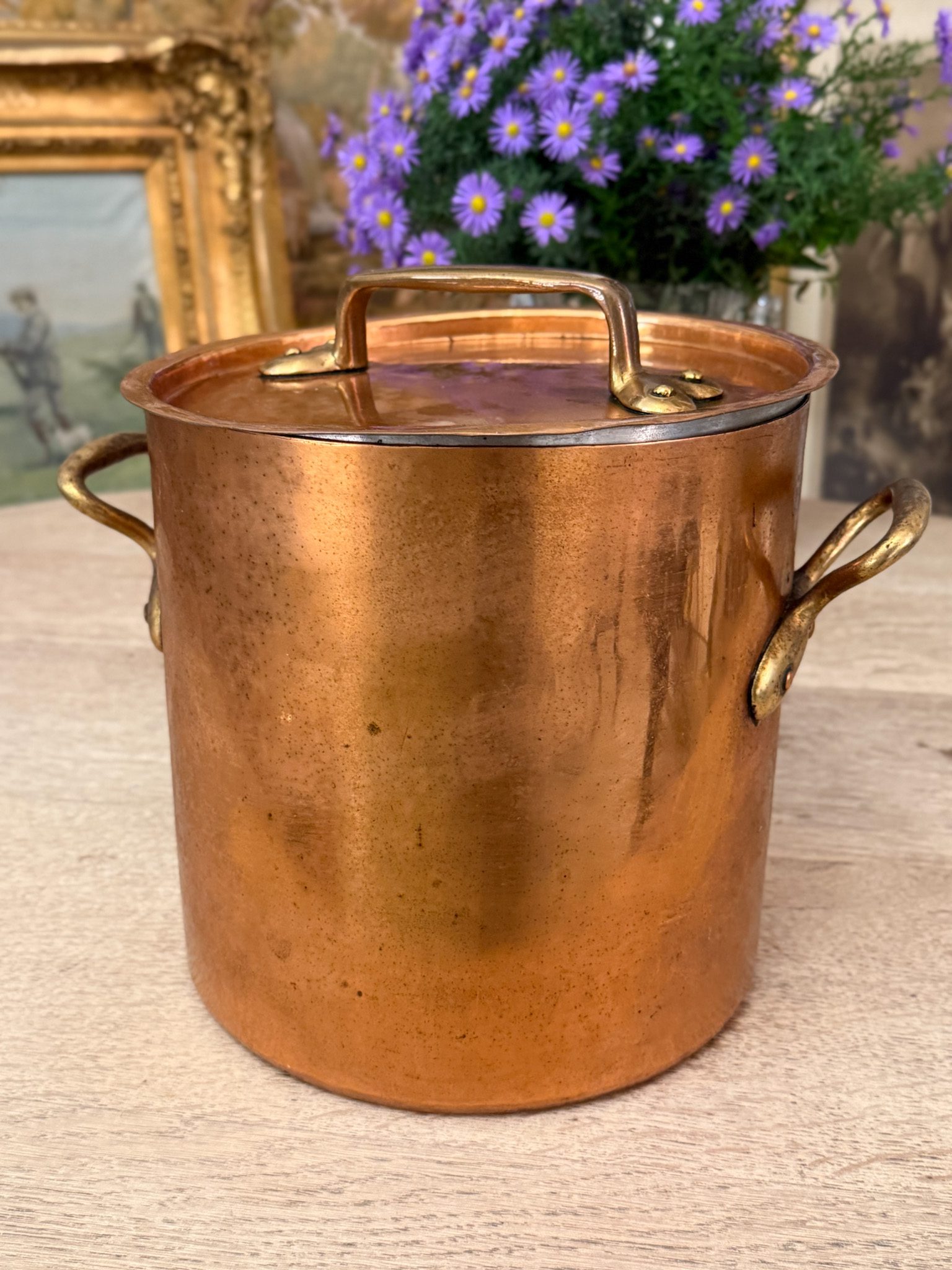
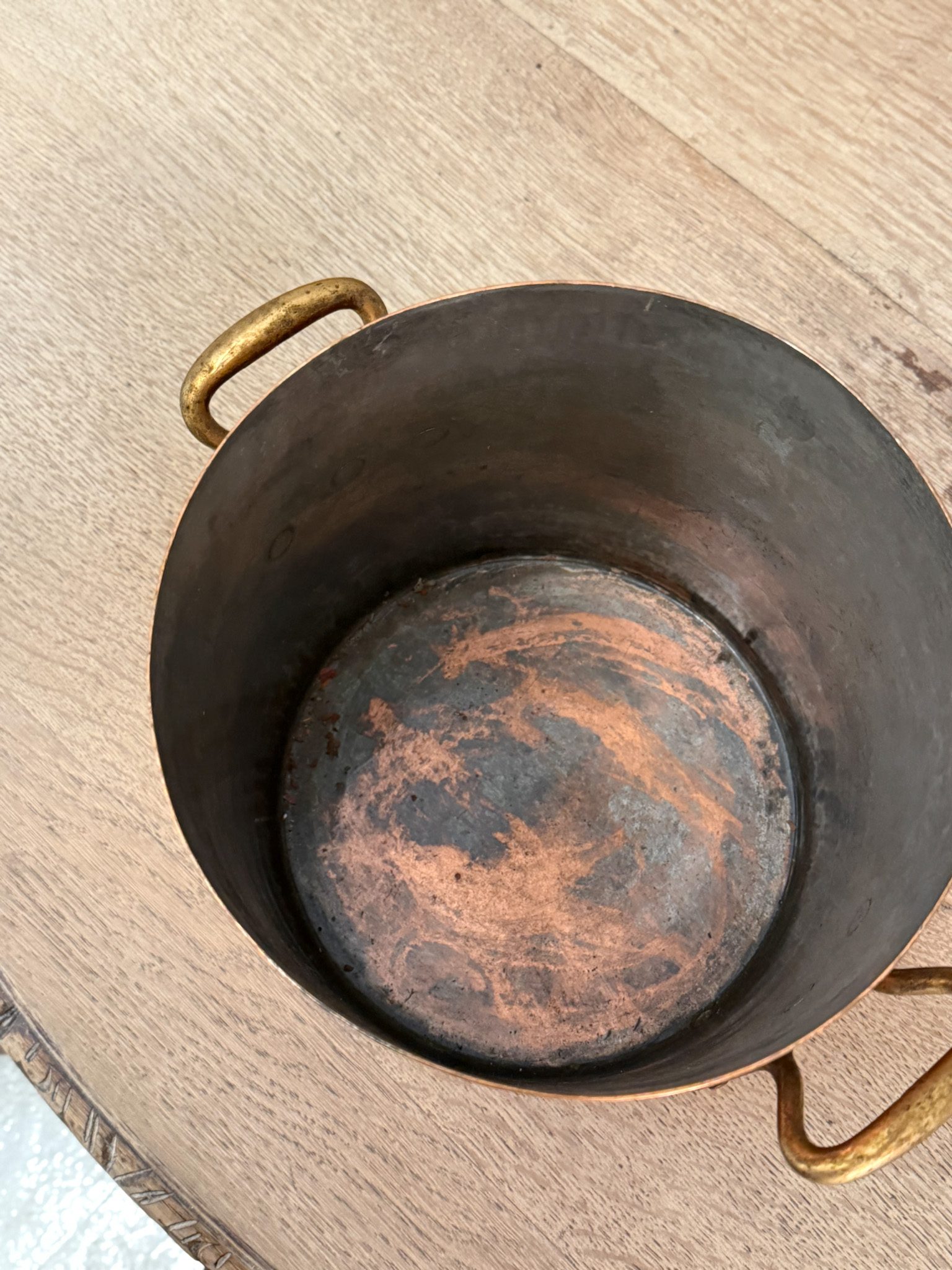
A gorgeous, heavy, and substantial medium-sized antique French copper pot with its original lid. The body is made of thick, high-quality hammered copper with a distinct historic tin lining inside. The pot and its lid are adorned with solid, hand-riveted… 300,00 €
You’re now subscribed to price tracking for this product. We’ll notify you if the price drops. 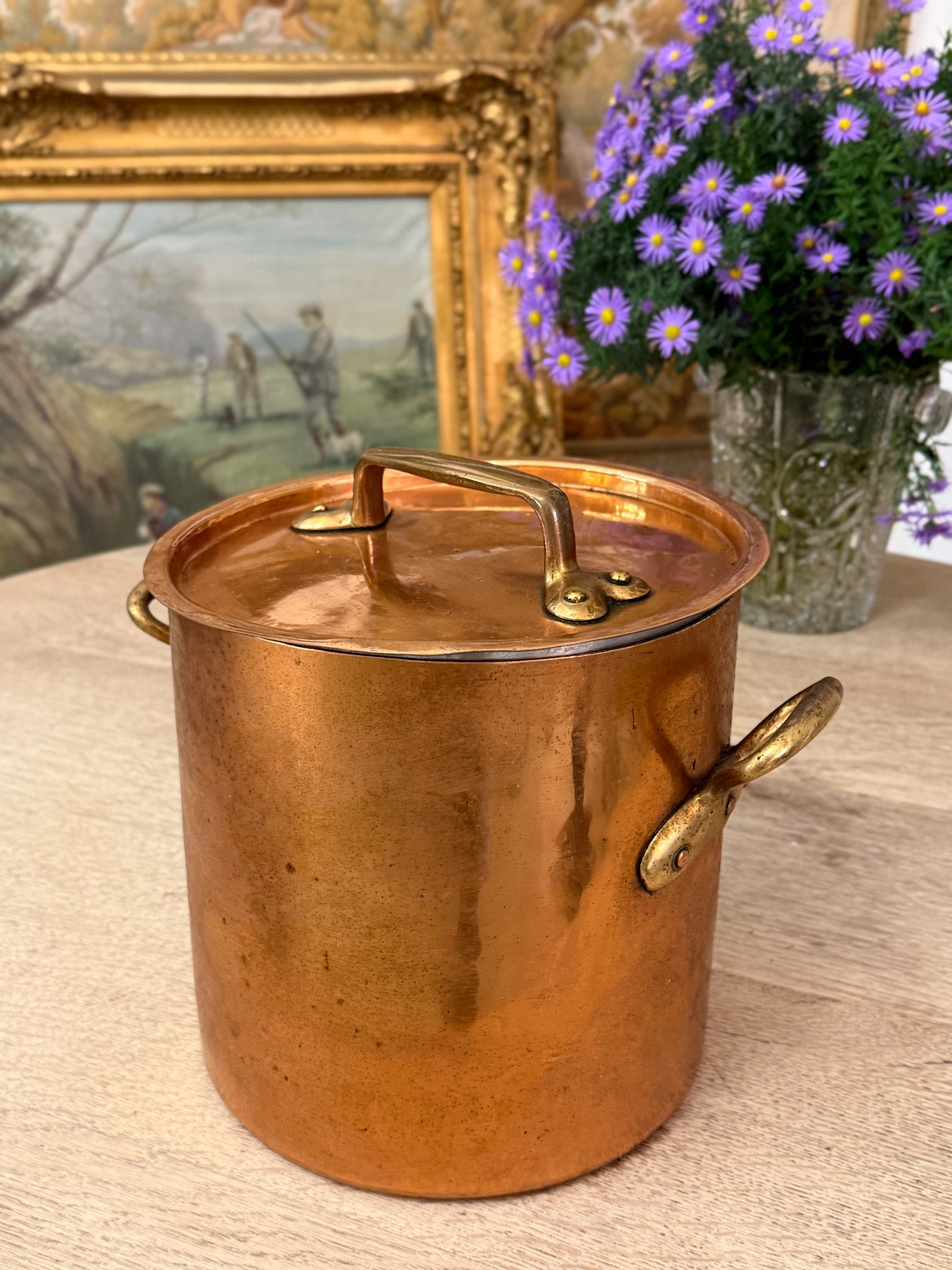
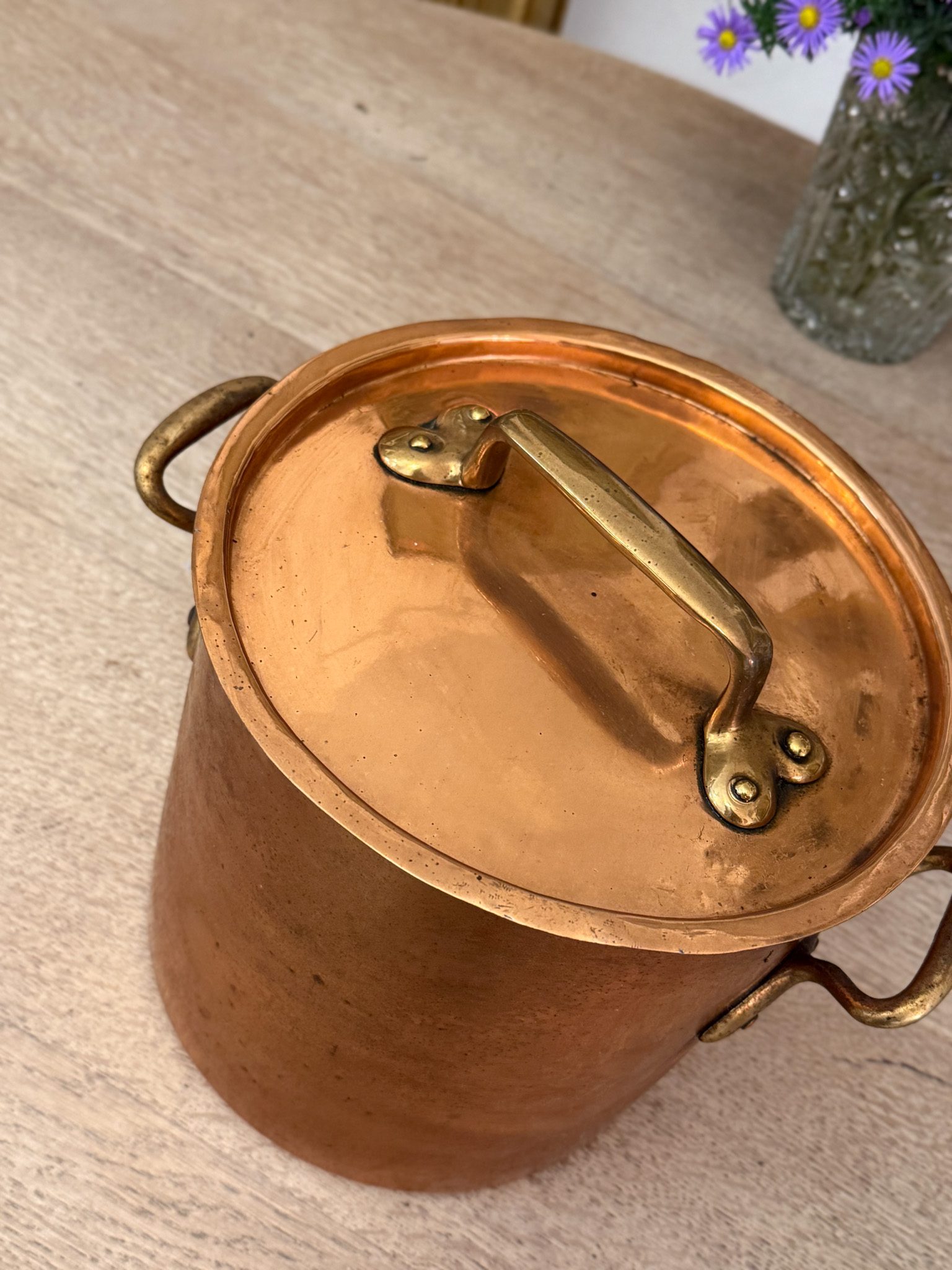
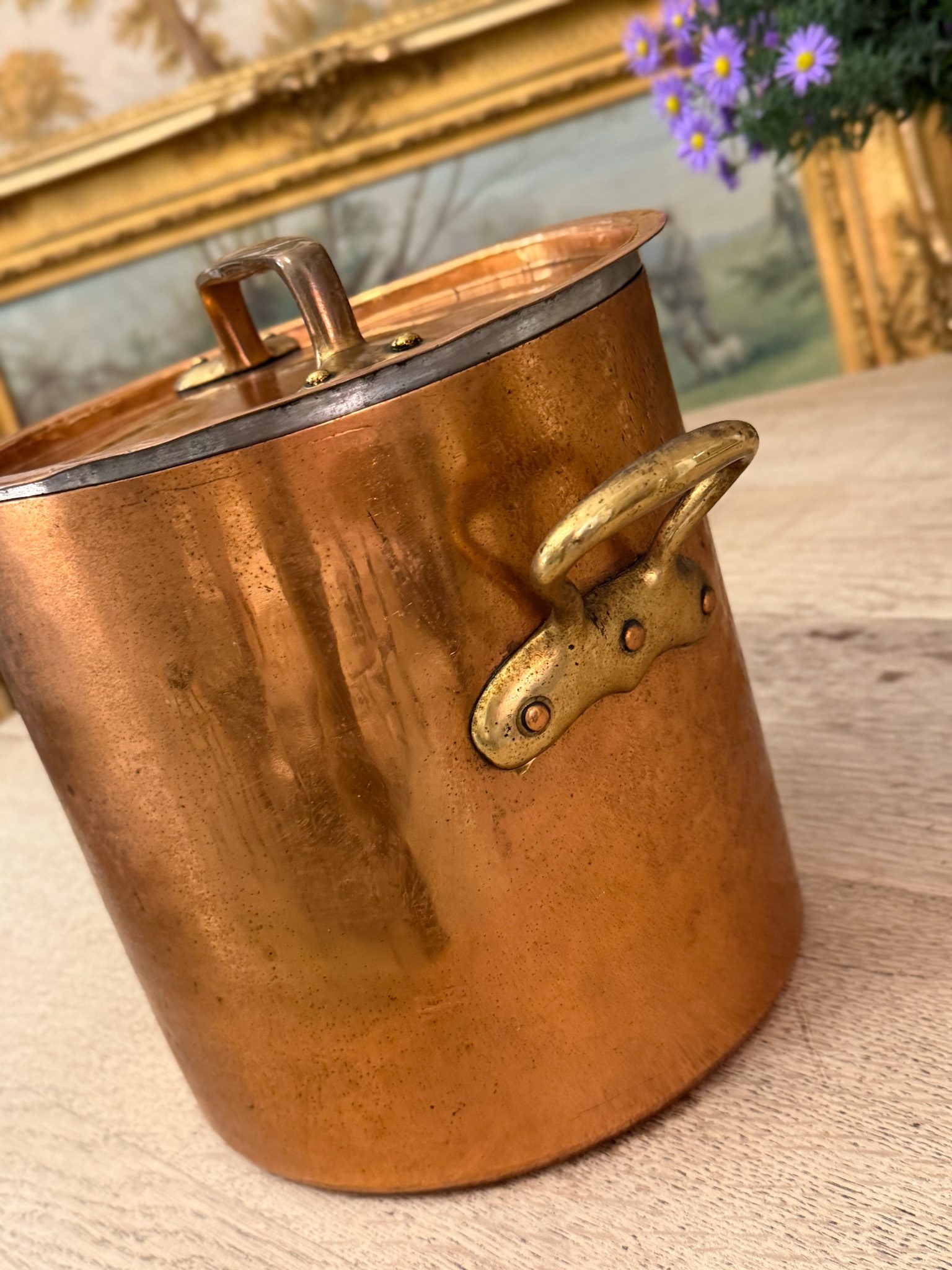
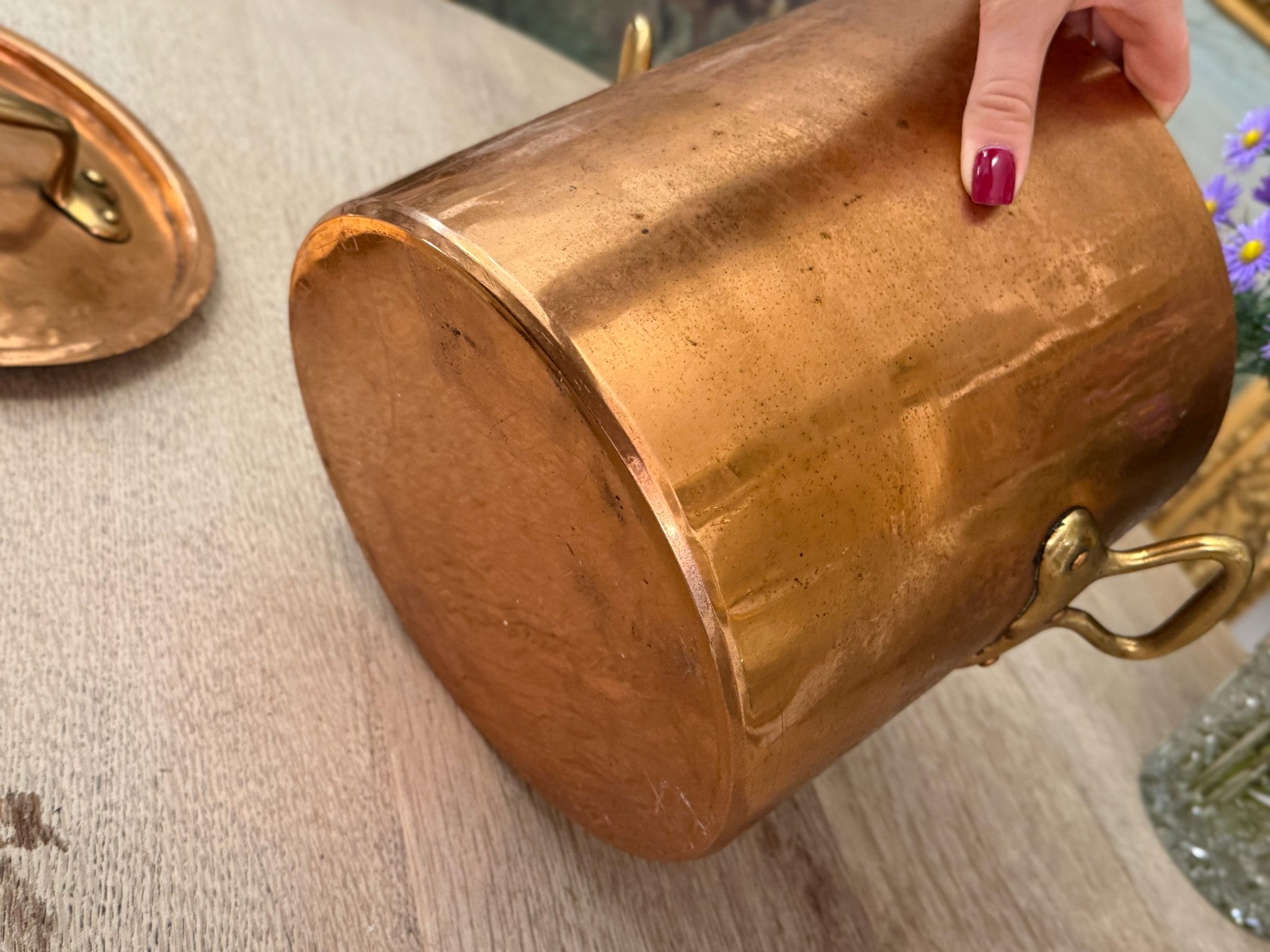

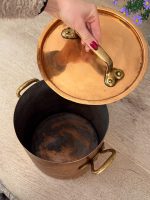


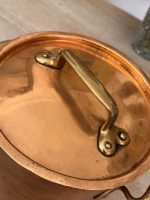
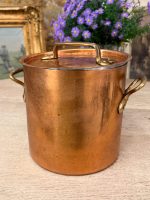
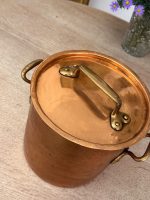


Authentic antique French copper pot with lid and brass handles (6204)
Height 33 cm Width 26.5 cm

Description
Height: 33 cm
Width: 26.5 cm
Authentic antique copper pot with lid and brass handles (antique copper stockpot)
The substance of historical cuisine and the forging traditions of 19th-century masters meet in this medium-sized, exceptionally heavy copper pot. Such deep, thick-walled pots (stockpot) were the heart of every serious kitchen in provincial and city homes, serving for generations. The item is made of a solid, high-quality copper alloy, ensuring excellent heat conductivity, and its interior is lined with the traditional protective tin layer.
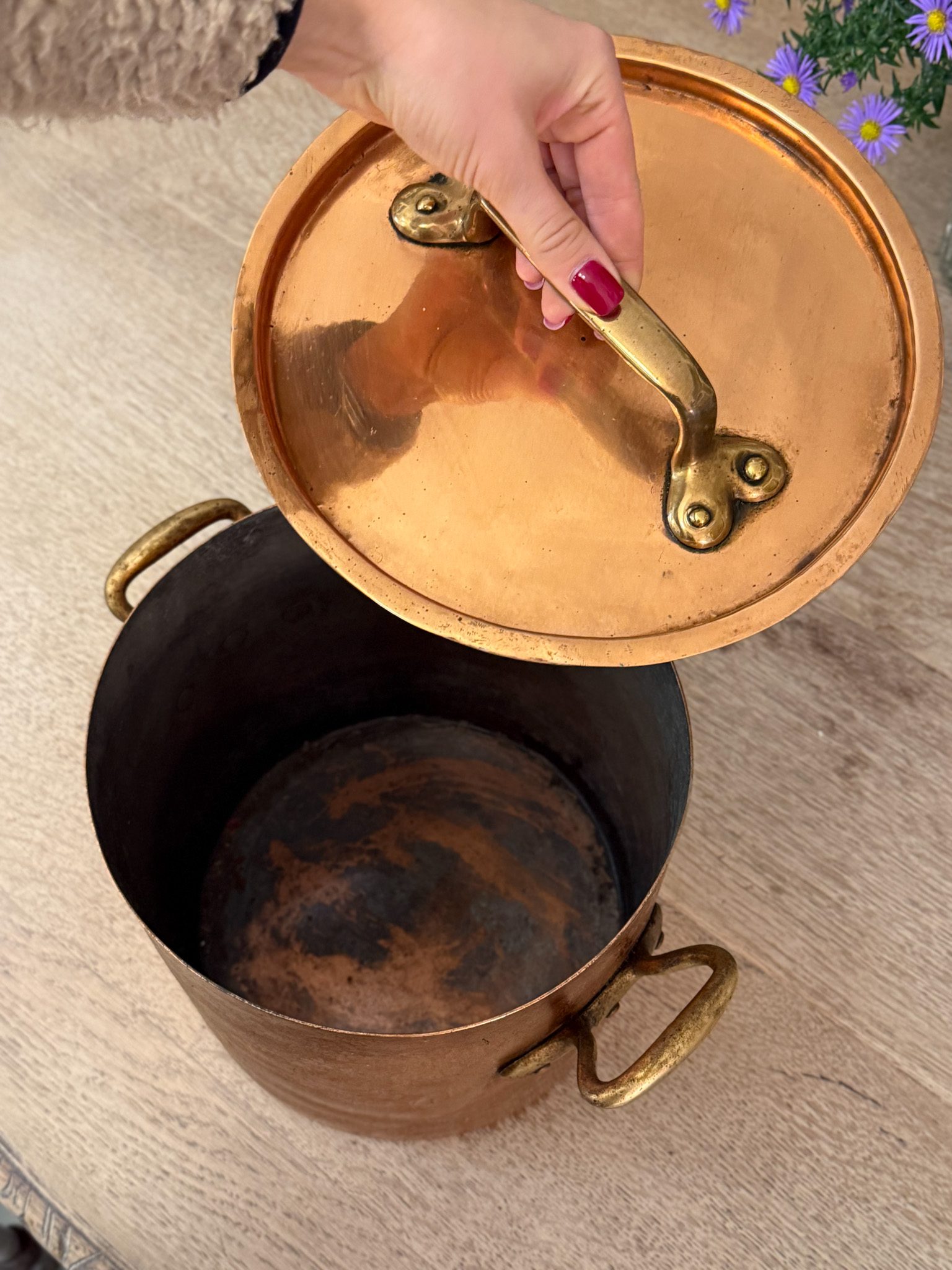
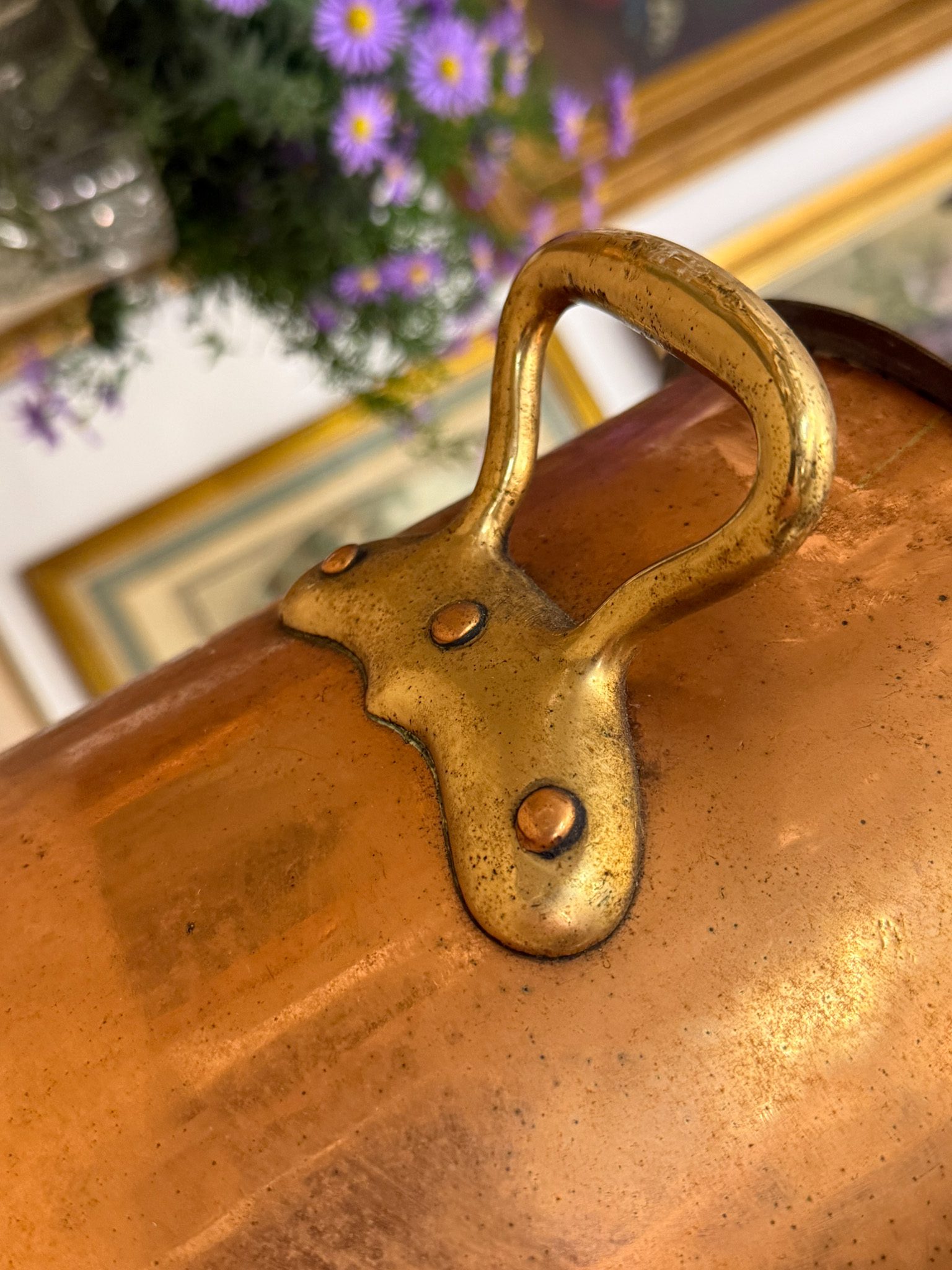
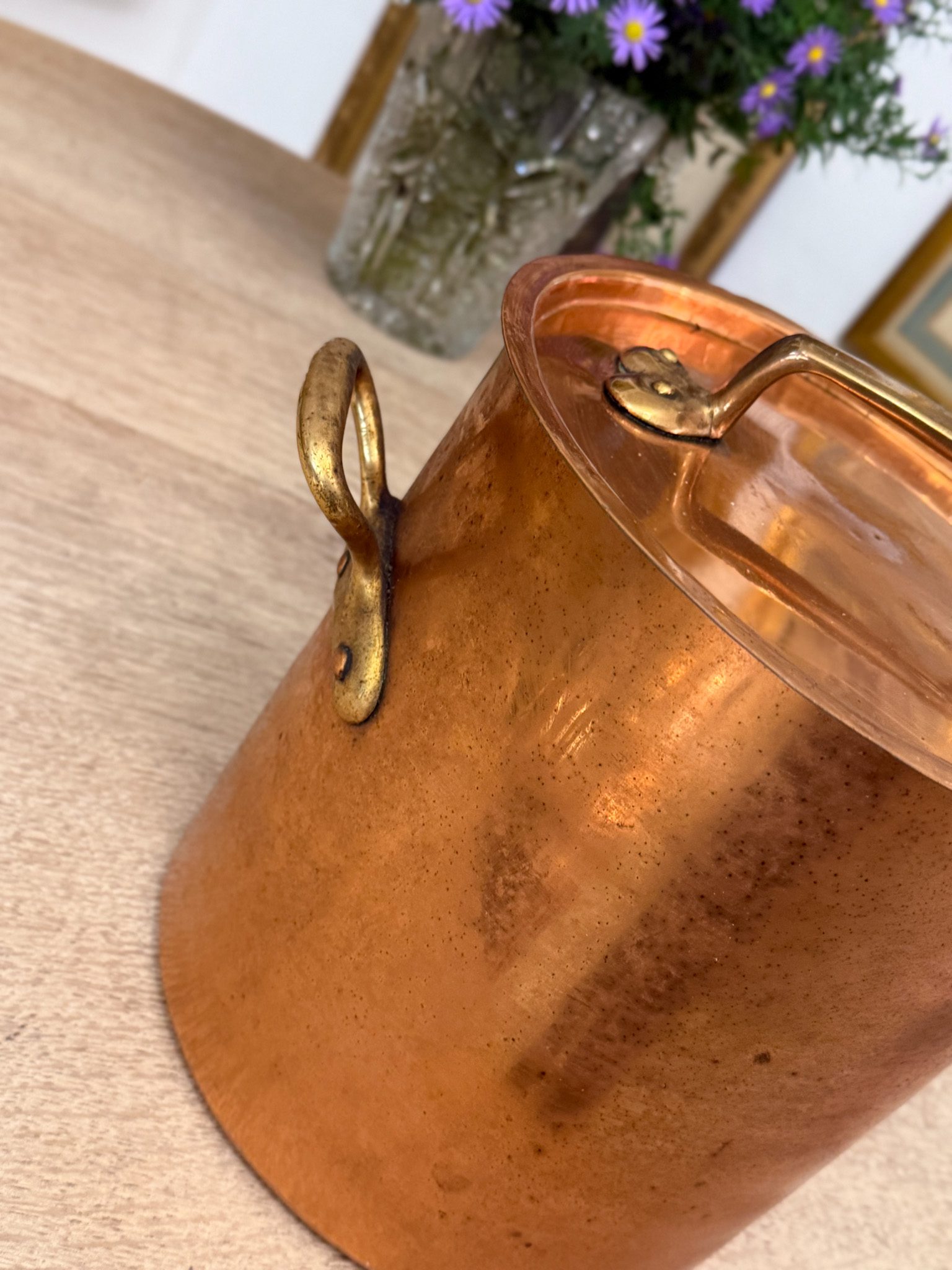
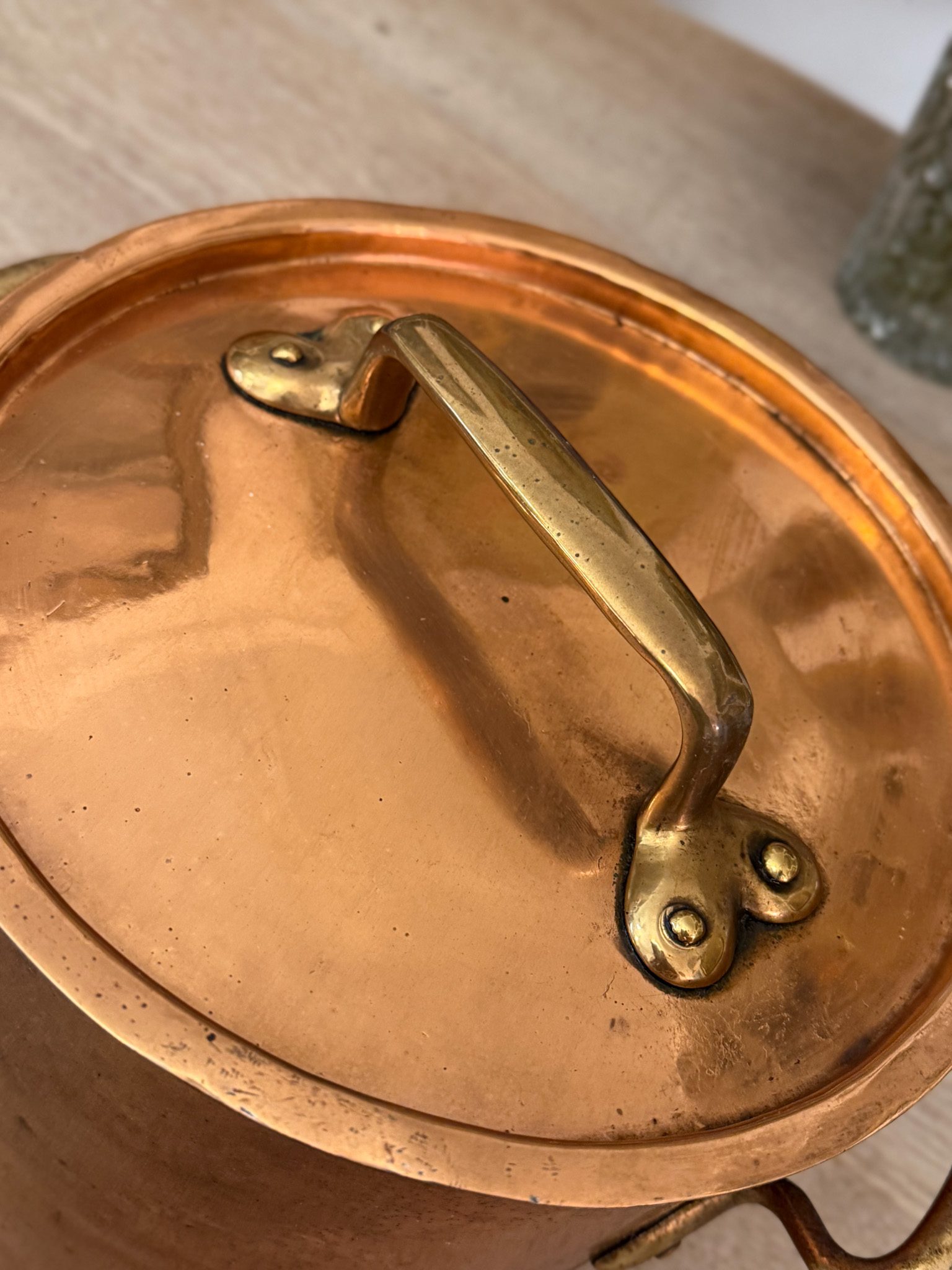
The item’s special visual and collector’s value is enhanced by its excellent completeness with the original, precisely fitting copper lid. Both the sides of the pot and the center of the lid feature solid, hand-cast and polished brass handles. They are attached with substantial, boldly highlighted copper rivets on decorative heart and stylized leaf-shaped bases, clearly testifying to this vessel’s origin and high level of craftsmanship.
Period of Manufacture
Second half of the 19th century. During this period, France’s best iron and non-ferrous metal manufactories produced such professional, heavy copper vessels, which were purchased not only by the finest European restaurants and manors but also by the highest officer clubs and garrisons of the imperial army, where the kitchen had to be representative.
Manufacturer / Signature / Mark
The proportions of the shape, the nature of the rivets, and the details of the brass casting indicate the work of classic masters (for example, from the famous Villedieu-les-Poêles region). Such vessels were made for long-term use, therefore they are practically indestructible.
Rarity and Significance
The greatest value lies in the pot’s impeccable structure and the fact that the original lid set has been preserved. Due to intensive use, lids on culinary vessels most often got lost or were damaged over the centuries. The copper surface has not been mechanically over-polished, preserving the authentic hammered texture and pleasant, warm tone.
Application and Interior Use
This pot is an exquisite and striking interior object. It will look impeccable in a country-style or classic kitchen, on an antique stove, a fireplace mantel, an open vaisselier shelf, or on a wine cellar console, instantly filling the space with coziness and historic charm.
Condition
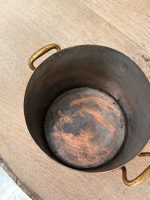
The pot is in excellent antique condition. The body is completely firm, stable, without holes or serious deformations. The brass handles and rivets are firmly attached and do not move. The internal tin lining shows natural historic patina and wear from use, which fully preserves the item’s authenticity. The condition of the item is fully reflected in the photographs.
A snapshot of the era, a garrison command kitchen: In the solid stone building of the Libau Fortress and Naval Port, housing the kitchen block of the highest officers’ club, a late evening bustle prevails. Through the window, the domes of Nicholas II’s Naval Cathedral can be seen in the distance, while here, in the room, the air is fragrant with roasted game and herbs. A chef is working by the large cast-iron stove, having just removed a heavy copper pot, newly purchased from France, from the heat. Its shiny, warm reddish surface gleams in the stove’s fire, casting contrasting shadows over the massive brass handles, whose heart-shaped bases are firmly attached to the copper body.
This pot is a true pride in the kitchen – while steam hammers pound and engineers sketch new ship hulls in the nearby workshops of Tosmare, the officers’ table must be set according to the best European standards. The chef, with a linen cloth, grasps the heavy brass loop of the lid and carefully lifts it, allowing a thick cloud of steam to rise, momentarily obscuring the window. Here, on the harsh coast of Kurzeme, such a copper vessel is a small, cozy, and unshakeable symbol of old-world comfort and elite lifestyle. Outside, the steps of the changing guard echo on the paved square, but inside the kitchen, time momentarily pauses around the steaming copper pot.