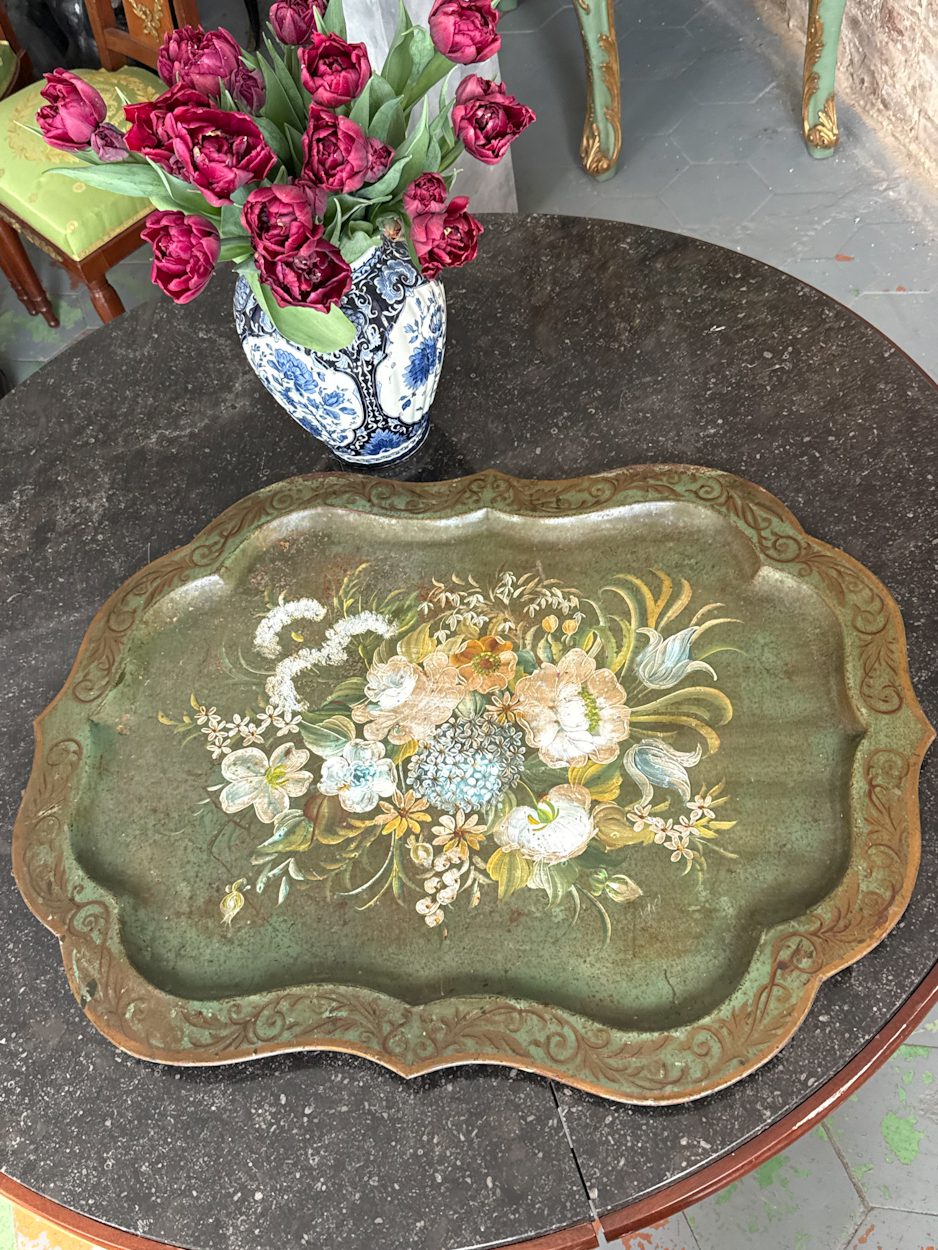
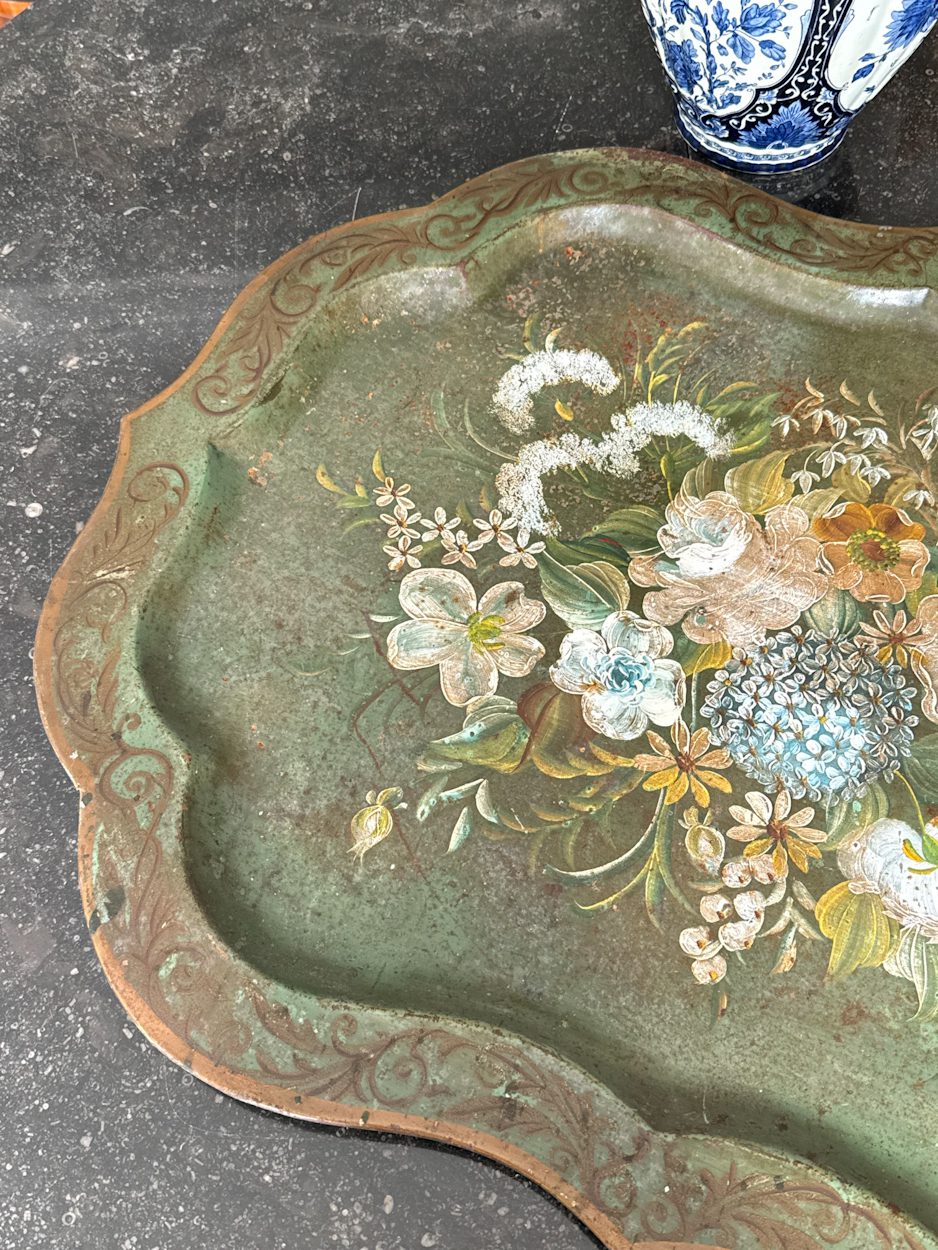
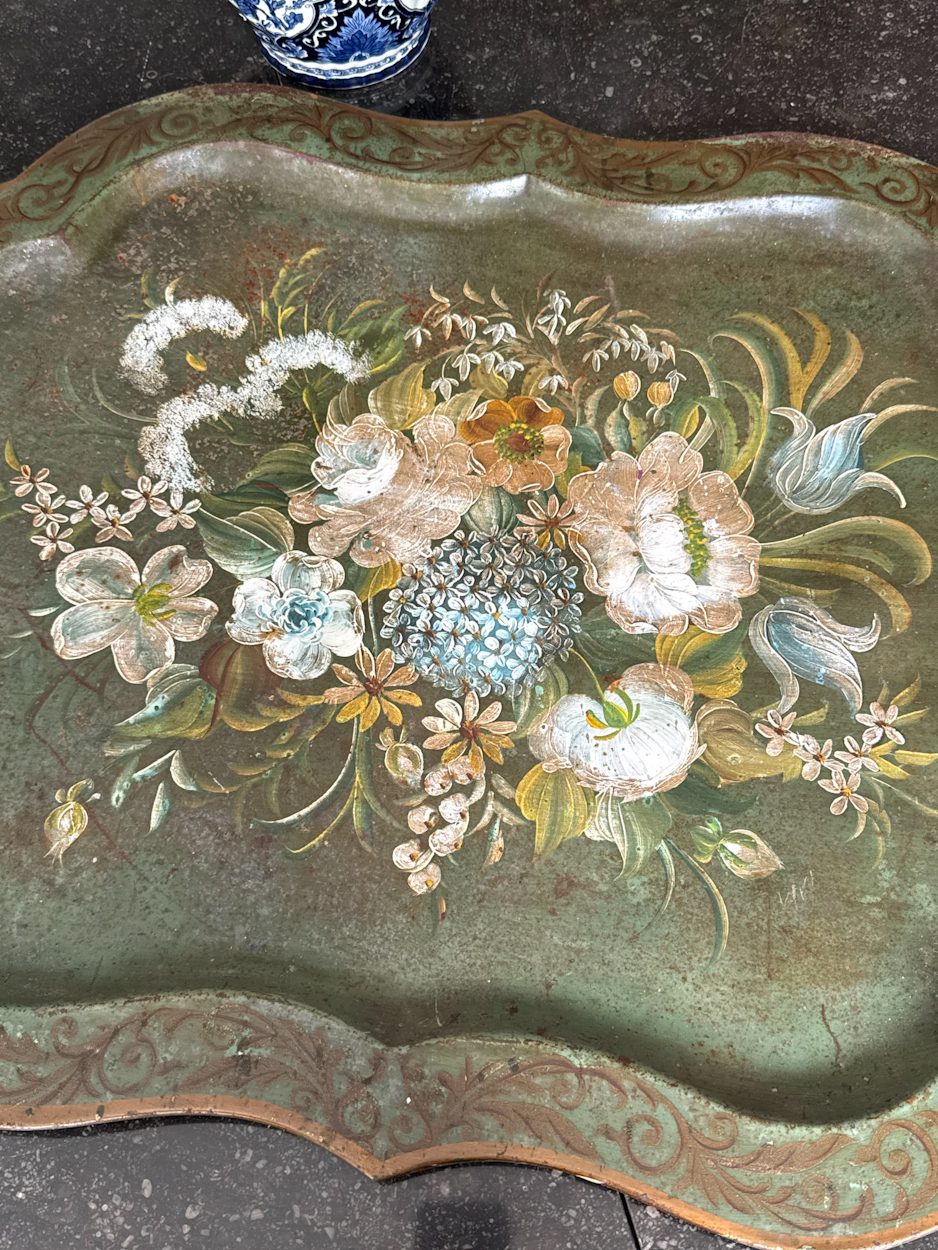
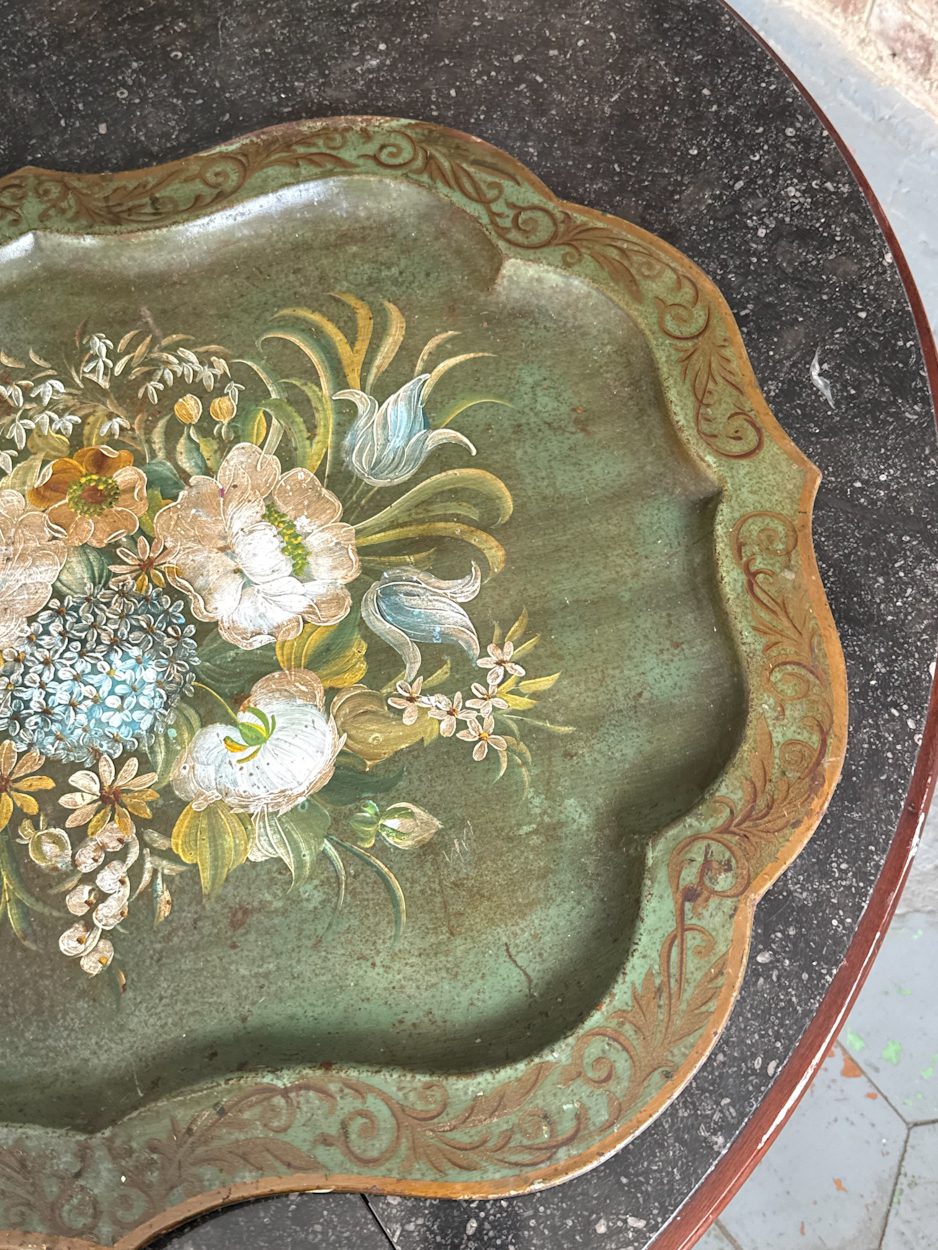
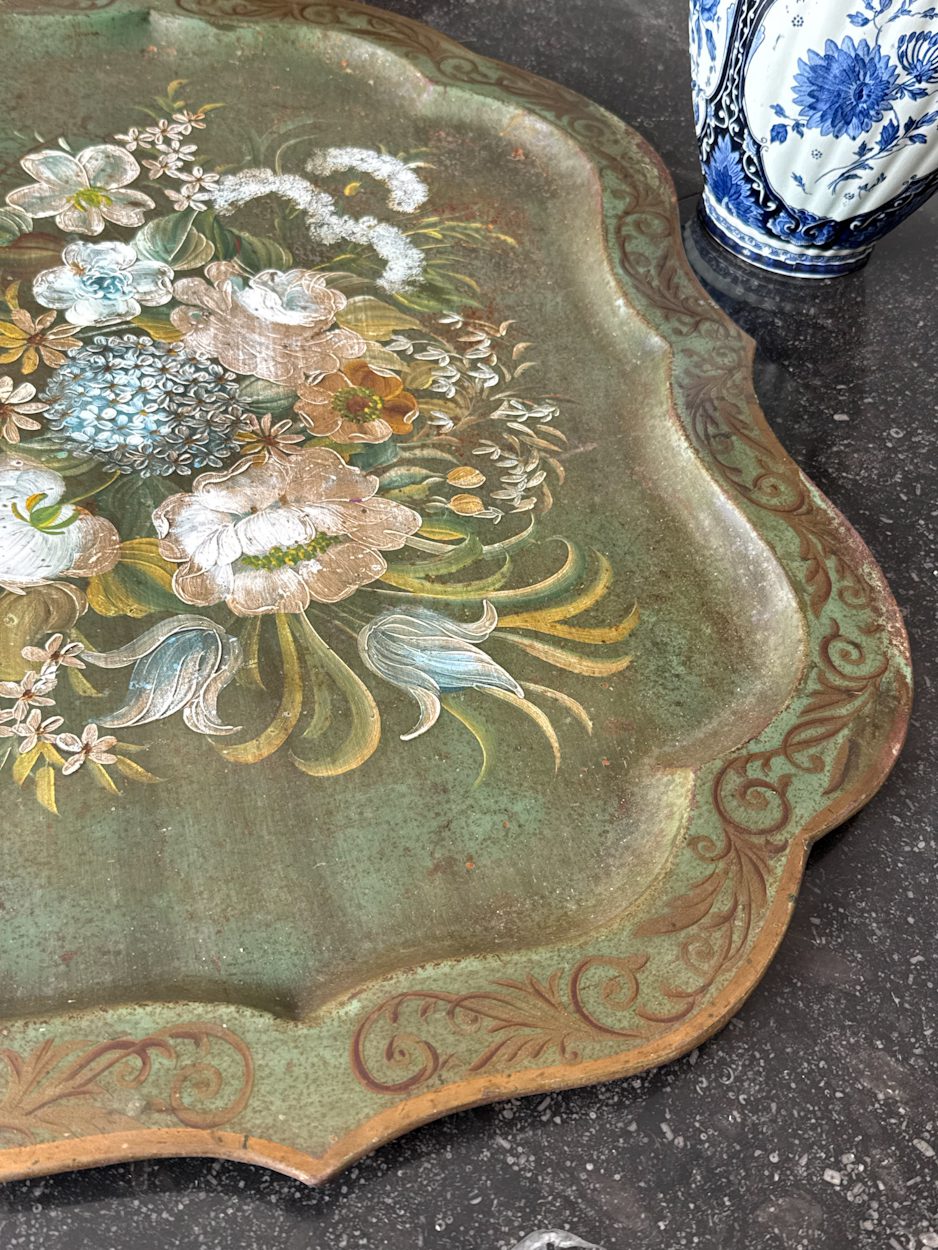
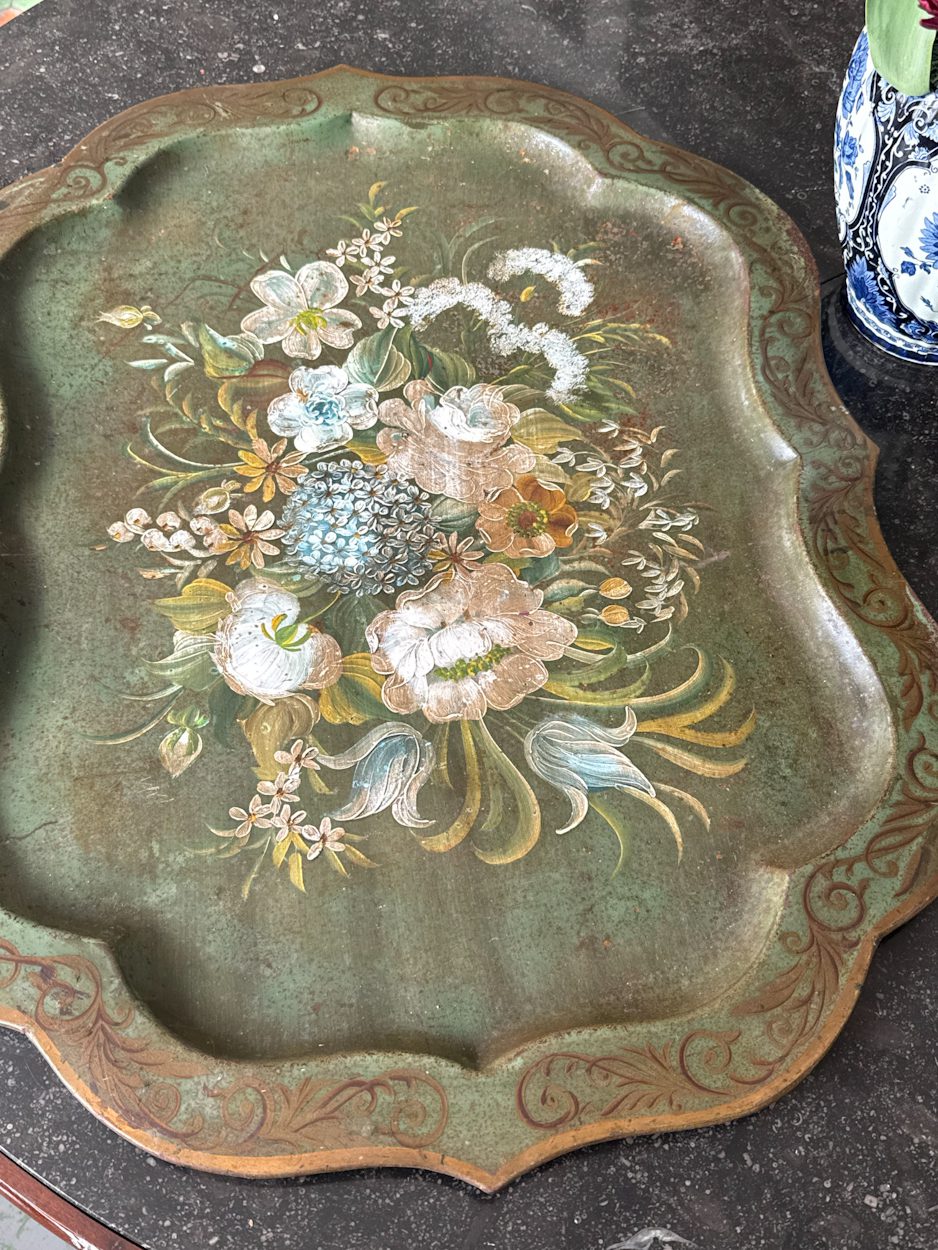
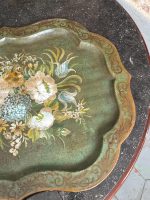
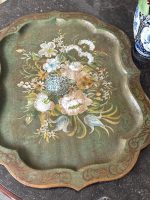
Antique Biedermeier style hand-painted metal tray — mid-19th century. This large, ornate tray features a deep green-grey base with a vibrant floral bouquet and gilded vine motifs. A rare and beautiful piece, perfect as a wall art or statement decor. 260,00 €
You’re now subscribed to price tracking for this product. We’ll notify you if the price drops. 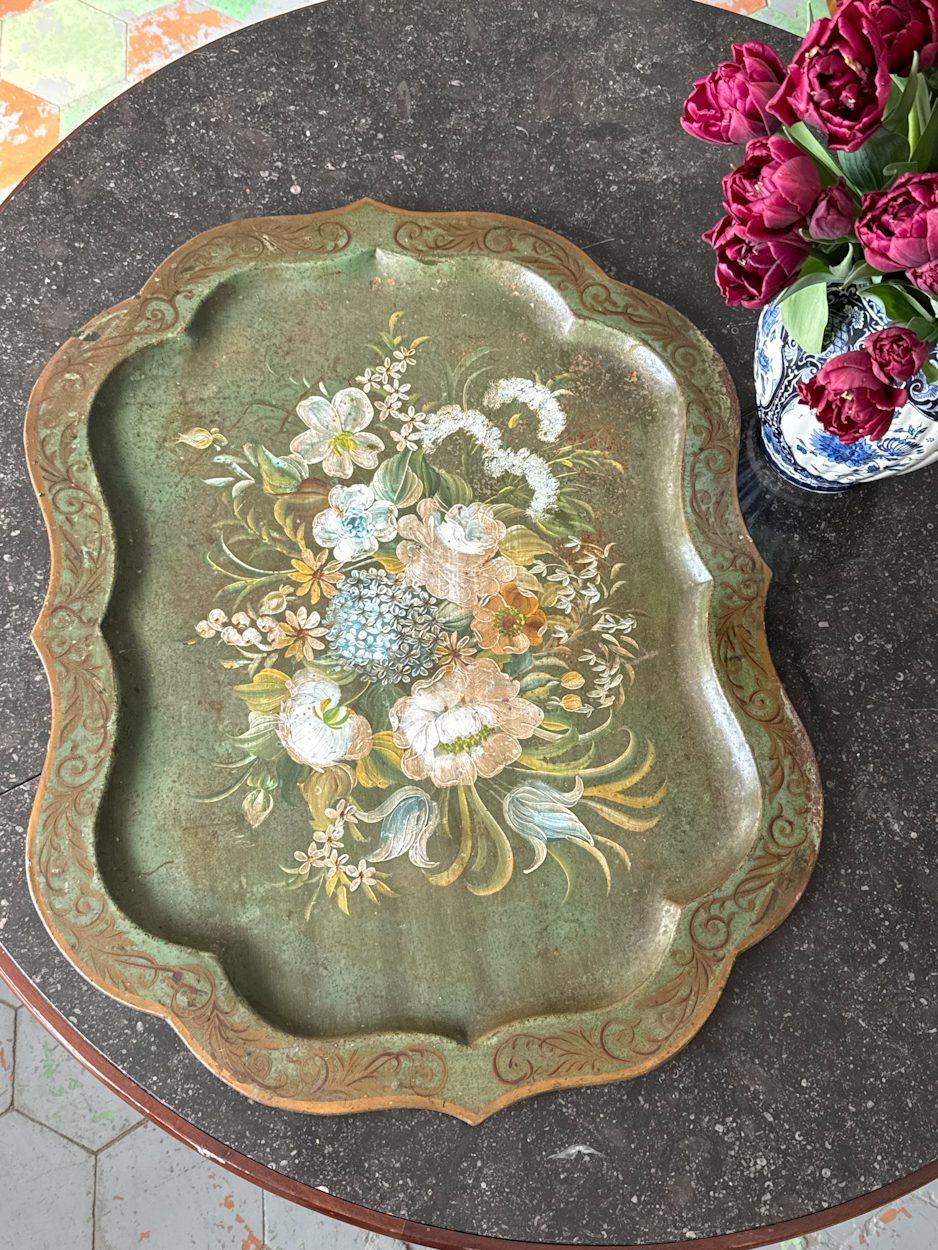





Antique Biedermeier Style Hand-Painted Metal Tray — Mid-19th Century (6369)
Length 80 cm Width 61.5 cm Color NaturalDark greenCoffee
Description
SET:
Length: 80 cm
Width: 61.5 cm
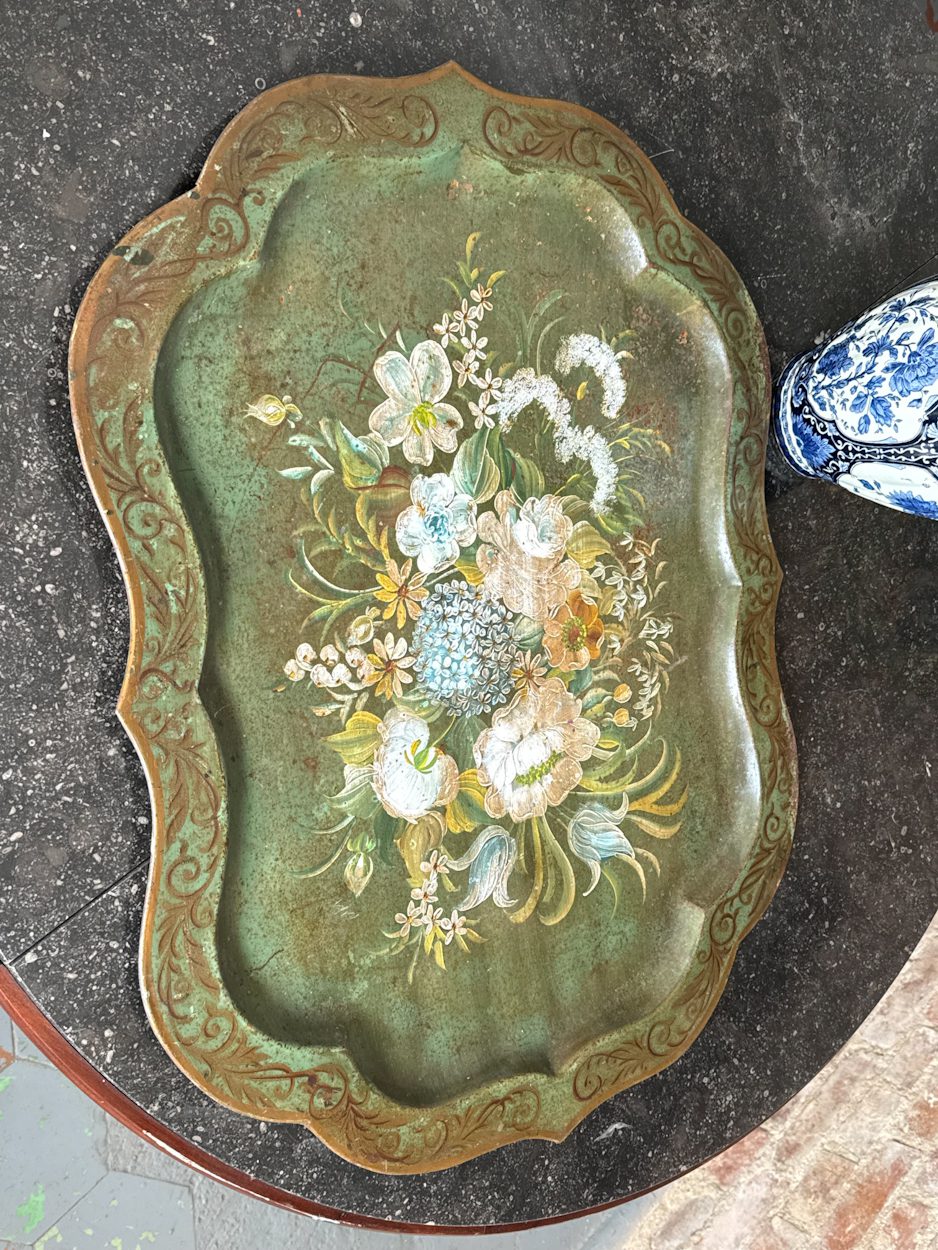
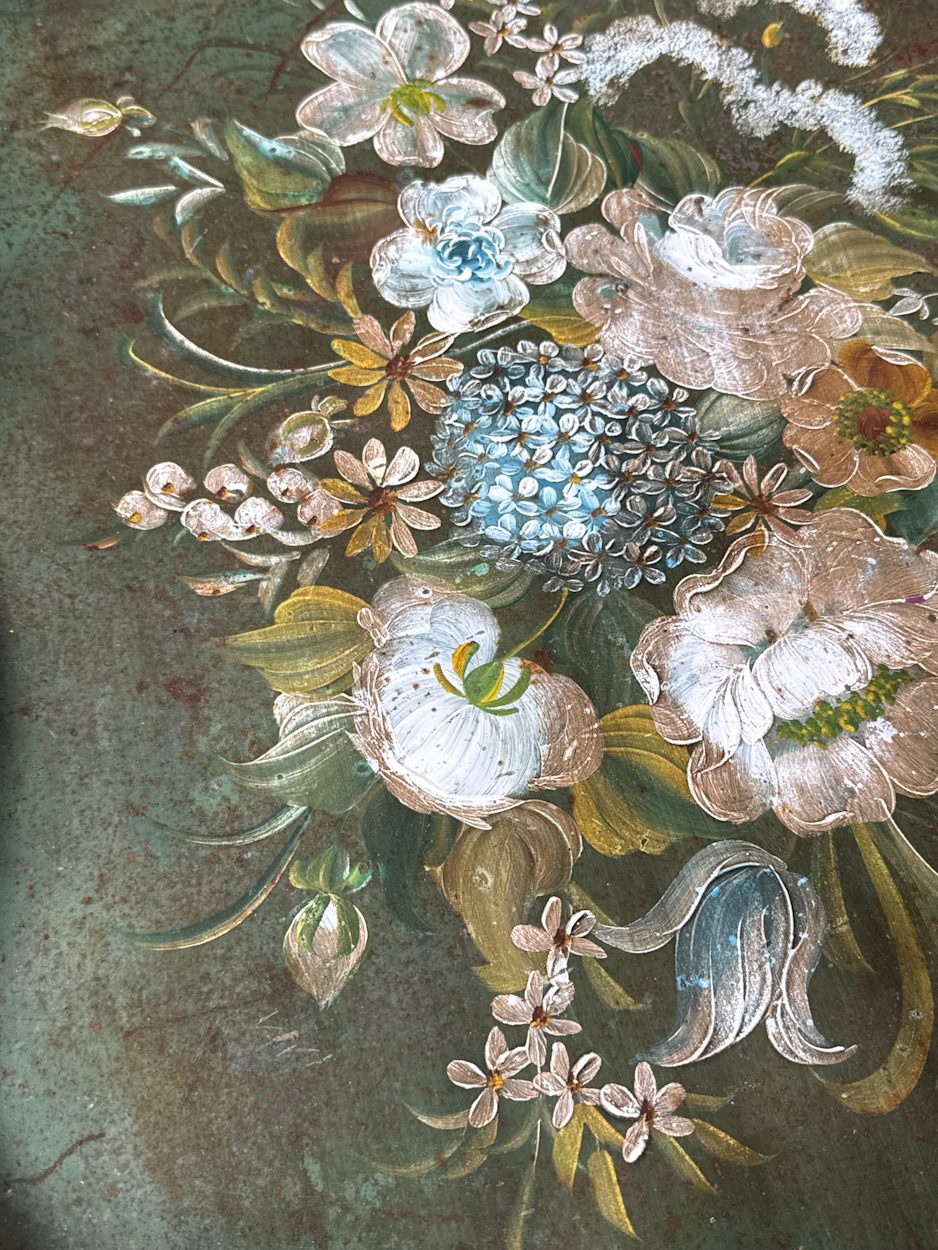
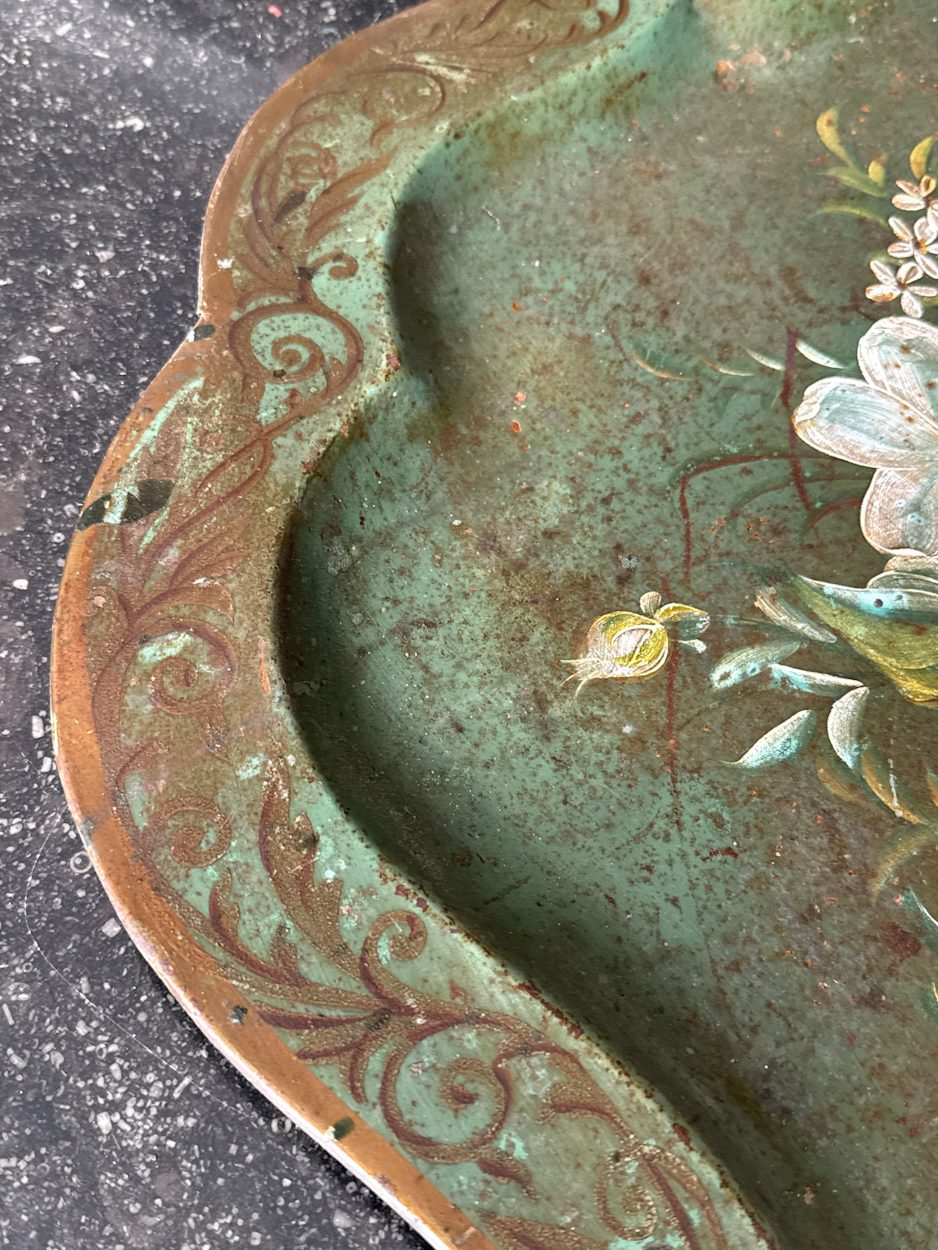
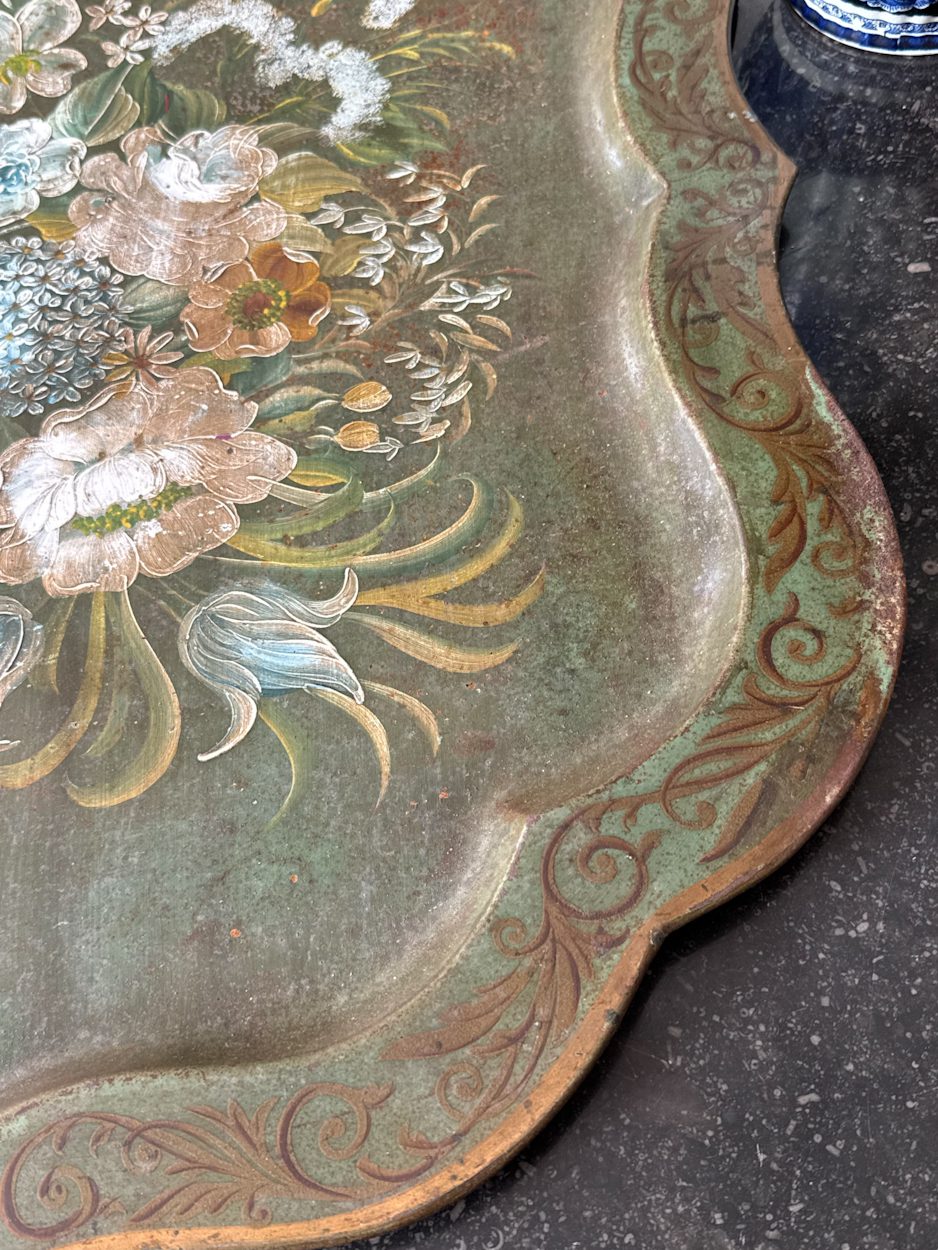
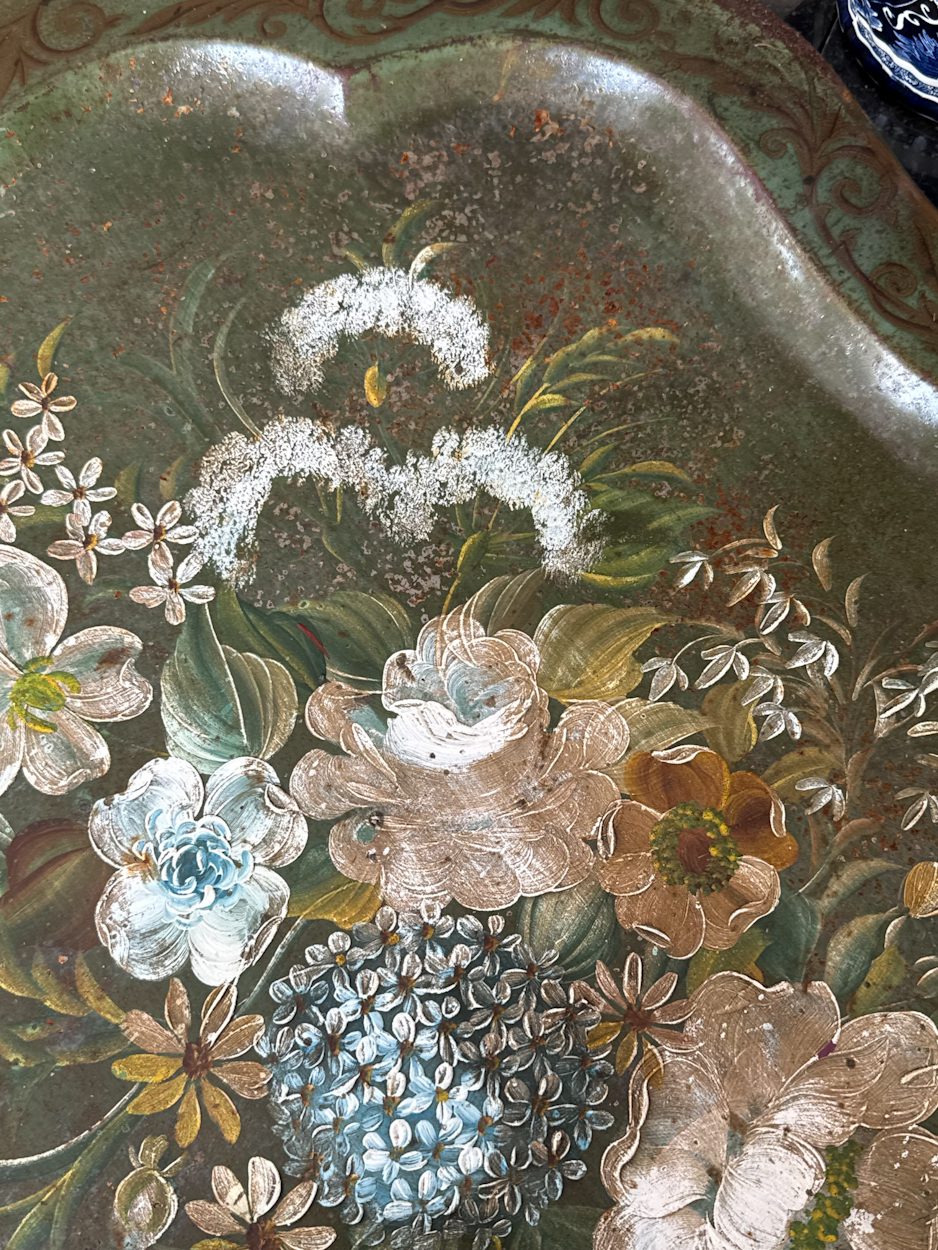
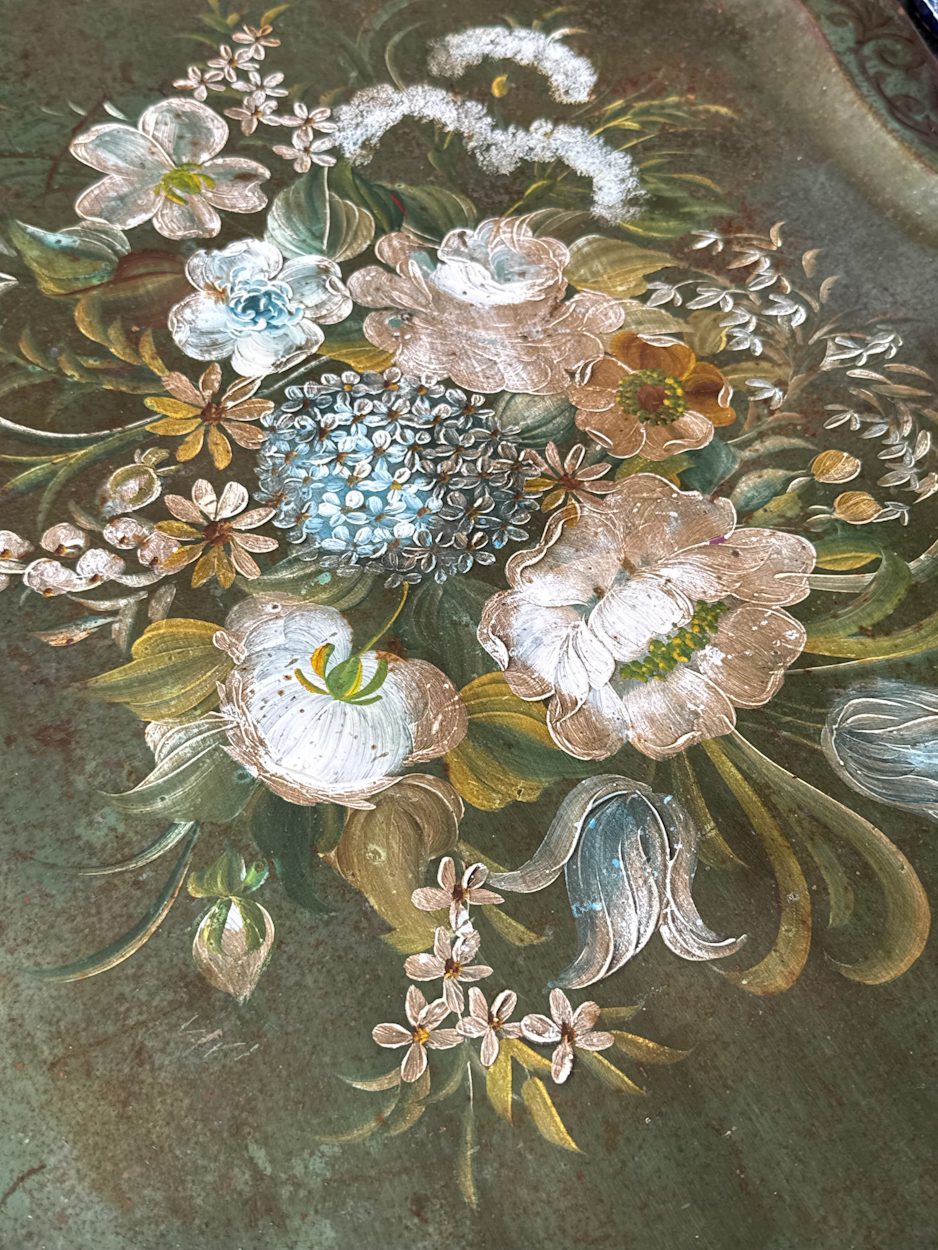
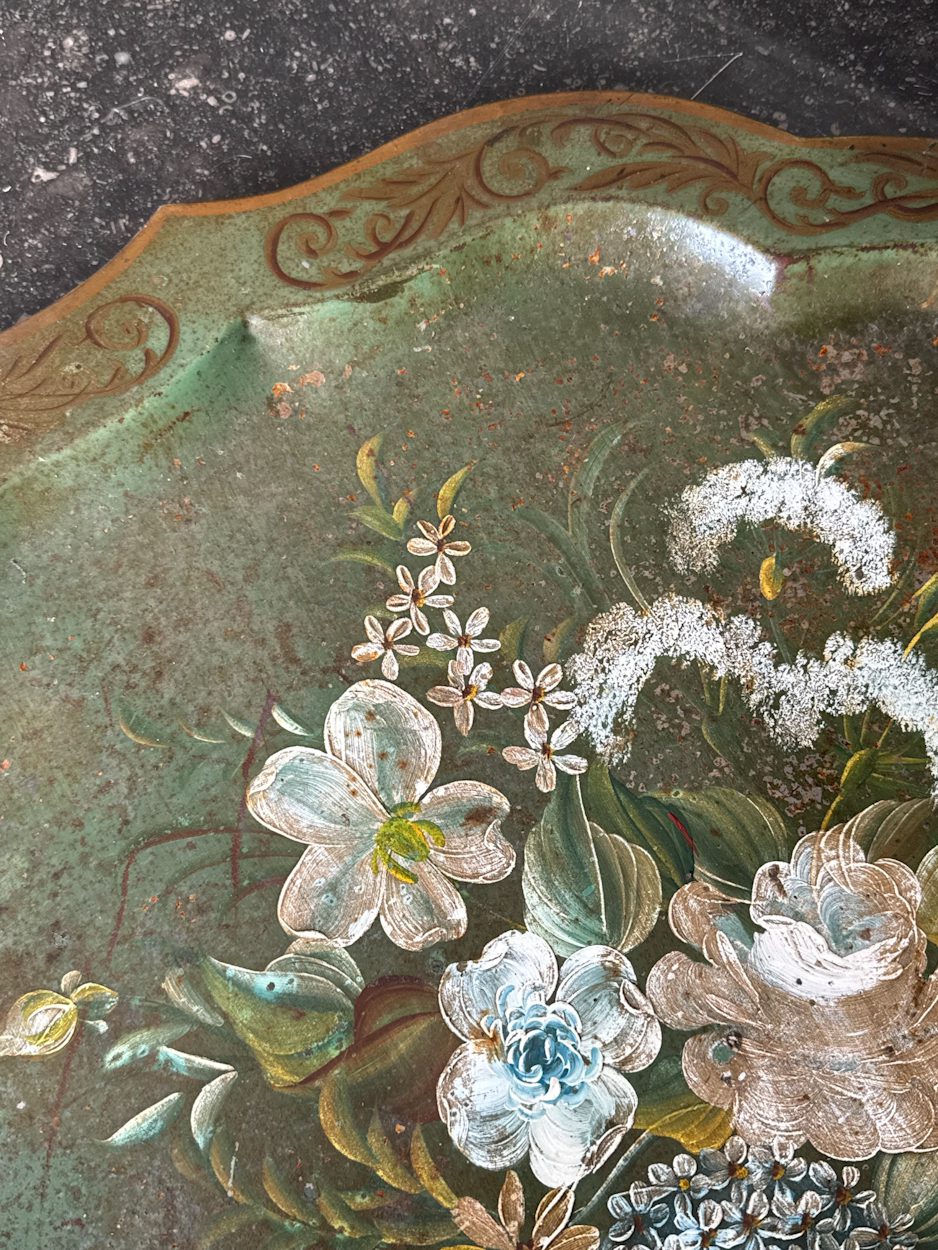
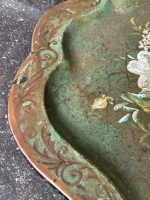
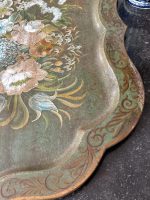
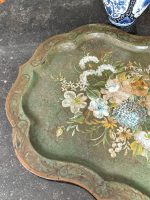
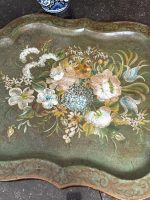
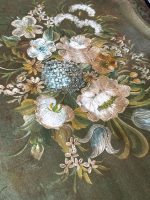
The tray is made of solid metal (sheet iron or tin) with a distinctively wavy, profiled border characteristic of Second Rococo aesthetics. The base tone of the surface is a deep greenish-gray, which harmonizes precisely with the historical “Night Pine Gray” aesthetic. The central part is occupied by an exceptionally well-preserved, multi-colored hand-painted floral composition — a magnificent bouquet of garden flowers, dominated by roses, hydrangeas, and spring field flowers with delicate shading and interplay of light and shadow. The tray’s wide, wavy border is adorned all around with delicate, brush-drawn gilded vine and leaf motifs, which nobly frame the central painting.
A snapshot of the Biedermeier era: 1856, Vienna. A calm afternoon mood prevails in the living room of writer and poet Adalbert Stifter (Adalbert Stifter), and the room is filled with the aroma of freshly brewed coffee and warm pastries. By the window, where the spring sun illuminates the delicate corners of the room, a large, heavy pride of the household is placed on a massive walnut table. The attendees do not even notice the dishes and fine porcelain — their gazes capture the peculiar play of light on the dark green base and the gilded swirls that encompass the familiar, yet poetically depicted garden flower motifs. Every touch of the fingers on the cool, slightly patinated surface and the hand-drawn brushstrokes opens a whole story of memories about riverside gardens and rural peace. It is a moment when a simple household ritual transforms into a leisurely and picturesque enjoyment of art before the long evening conversations.
MANUFACTURER AND CRAFTSMAN’S MARK No direct manufacturer’s stamps or master signatures have survived on the item, which were typical for tin and metal art objects of this kind from the mid-19th century. The execution technique — the forging of the tray’s shape and the asymmetrical, professional application of paint — indicates a specialized Austrian or workshop (possibly in the Braunschweig or Vienna region), which provided the highest quality for the demanding market of that time.
RARITY AND SIGNIFICANCE Trays of this size (80 cm in length) and in such good condition of preservation of the painting are a great rarity and are a collector’s priority. Most often, the amalgam and paint layer on metal items from this period has been completely worn away or damaged by rust over time, but this specimen has astonishingly authentically preserved its pictorial and decorative integrity.
APPLICATION IN INTERIORS, DESIGN, AND PHOTOGRAPHY This item is versatile and an extremely powerful visual accent for any interior. It will look regal as a central object on a large sideboard, dining table, or mounted on the wall as a painting. Thanks to its patinated green tone and rich floral motif, it fits perfectly into classic country house (Country House / Chateau) interiors, as well as serving as a dramatic and expensive element in modern Eclectic or Maximalist style rooms, contrasting with modern textures. For photographers and decorators, this tray is an indispensable, large-scale prop for creating historical and luxurious still lifes.
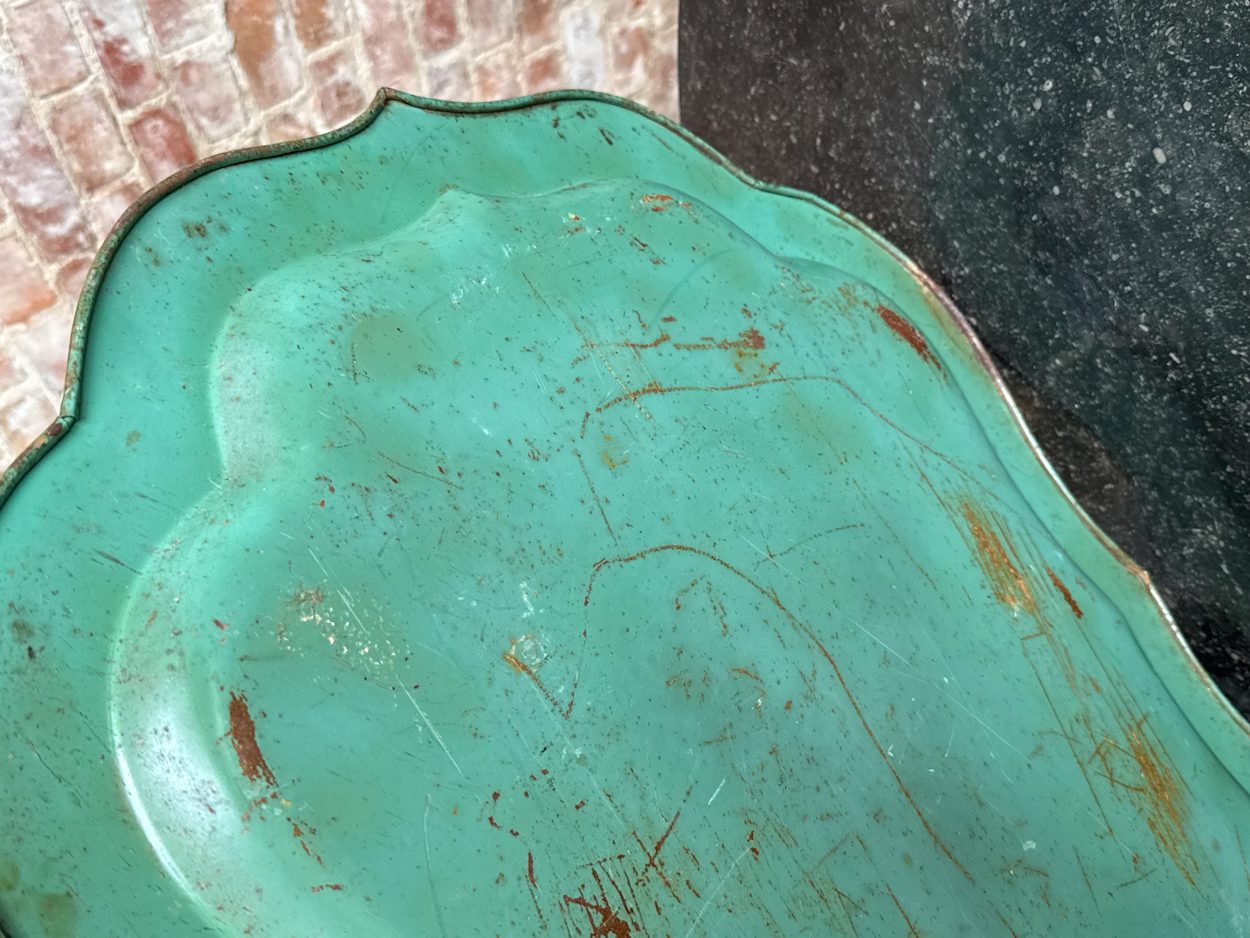
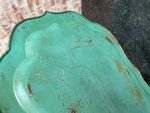
CONDITION The tray is in good, authentic historical condition with natural patina of age and use. Small, natural signs of age are visible on the surface and back — micro-cracks in the paint layer and small, superficial corrosion spots (rust), which only enhance the item’s 19th-century origin and connoisseur value. The painting is stable, the colors have not lost their original charm and depth.