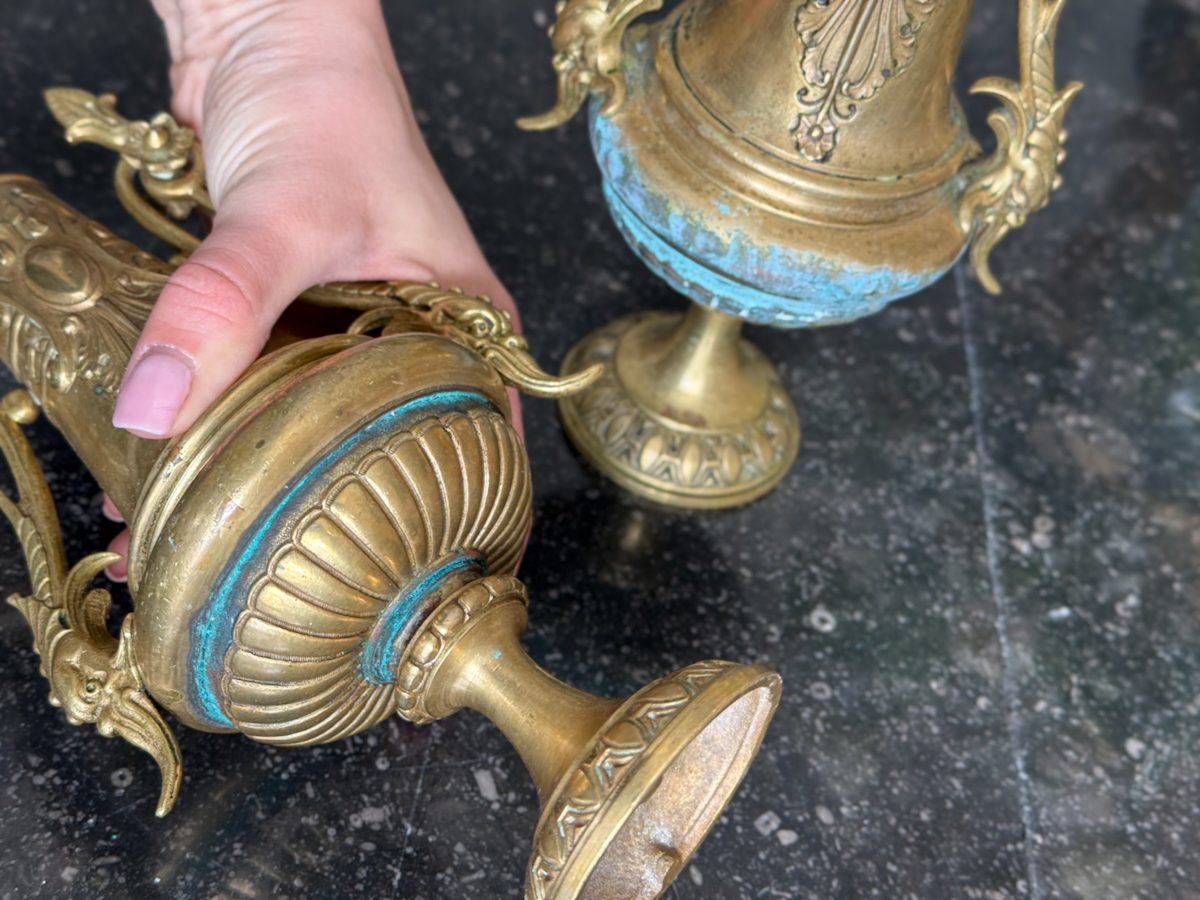
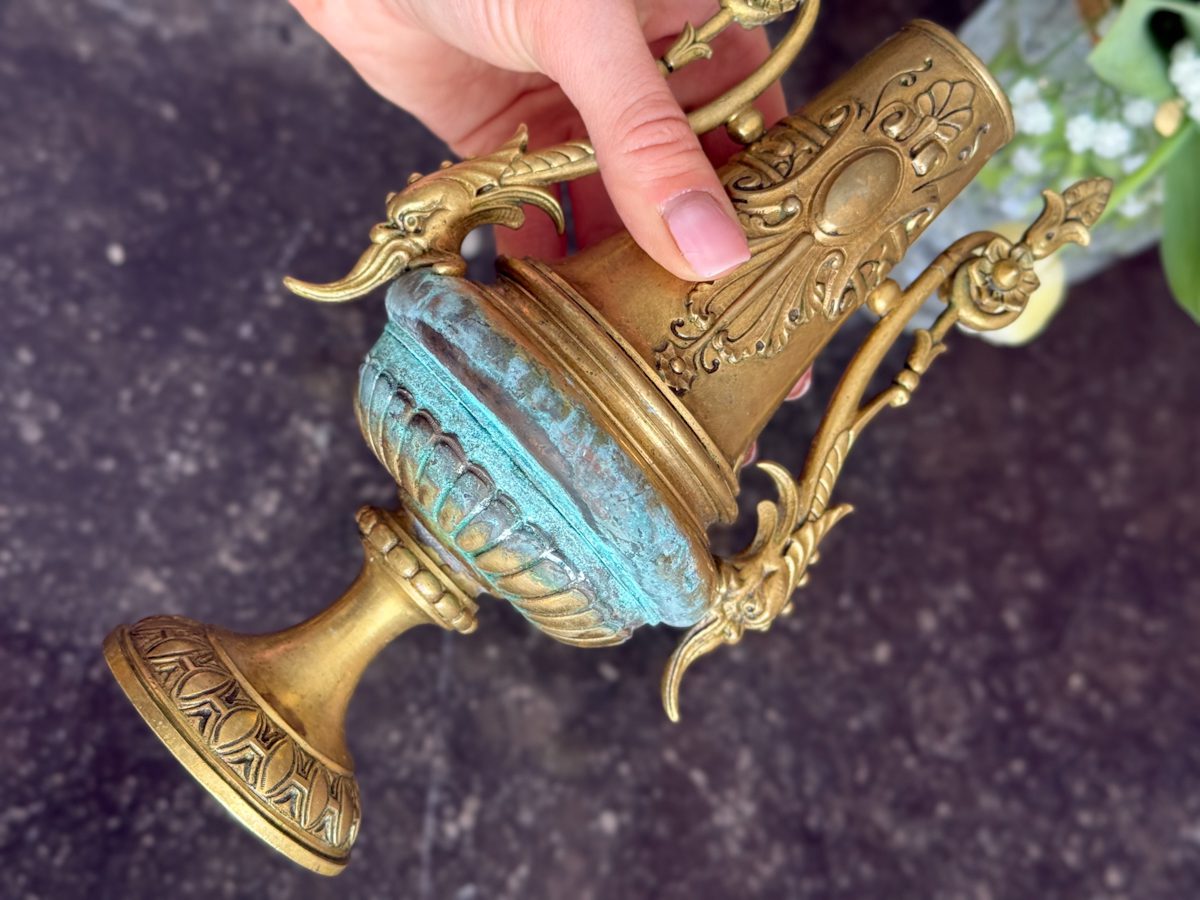
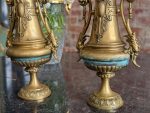
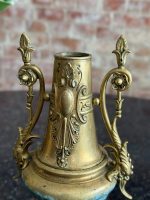
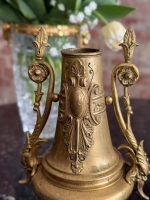
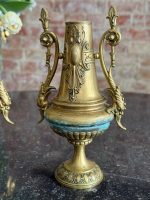
Antique gilded bronze Neo-Rococo decorative urns — France, late 19th century This exceptional pair of massive decorative urns is an outstanding example of French Rococo Revival (Second Rococo style) decorative art, dating from the late 19th century. Intended for formal… 380,00 €
You’re now subscribed to price tracking for this product. We’ll notify you if the price drops. 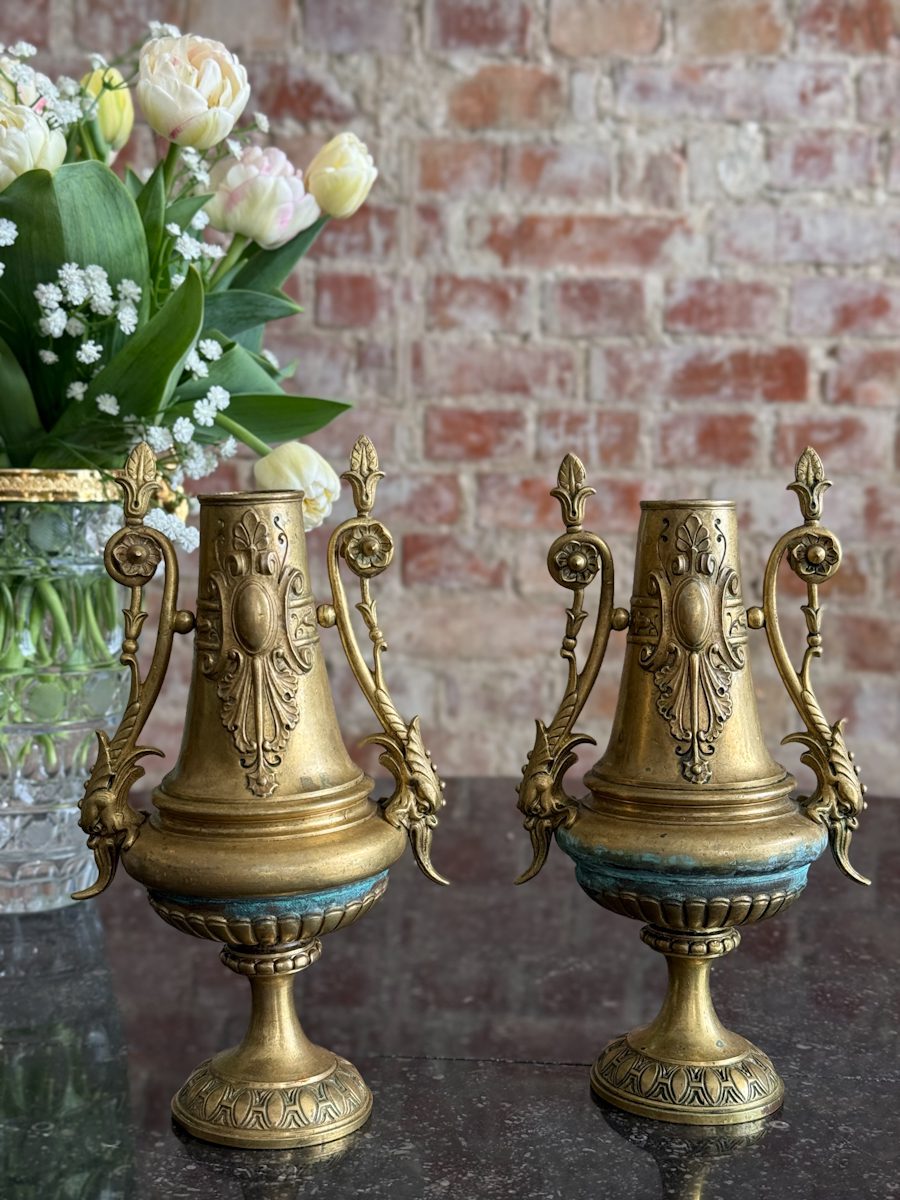
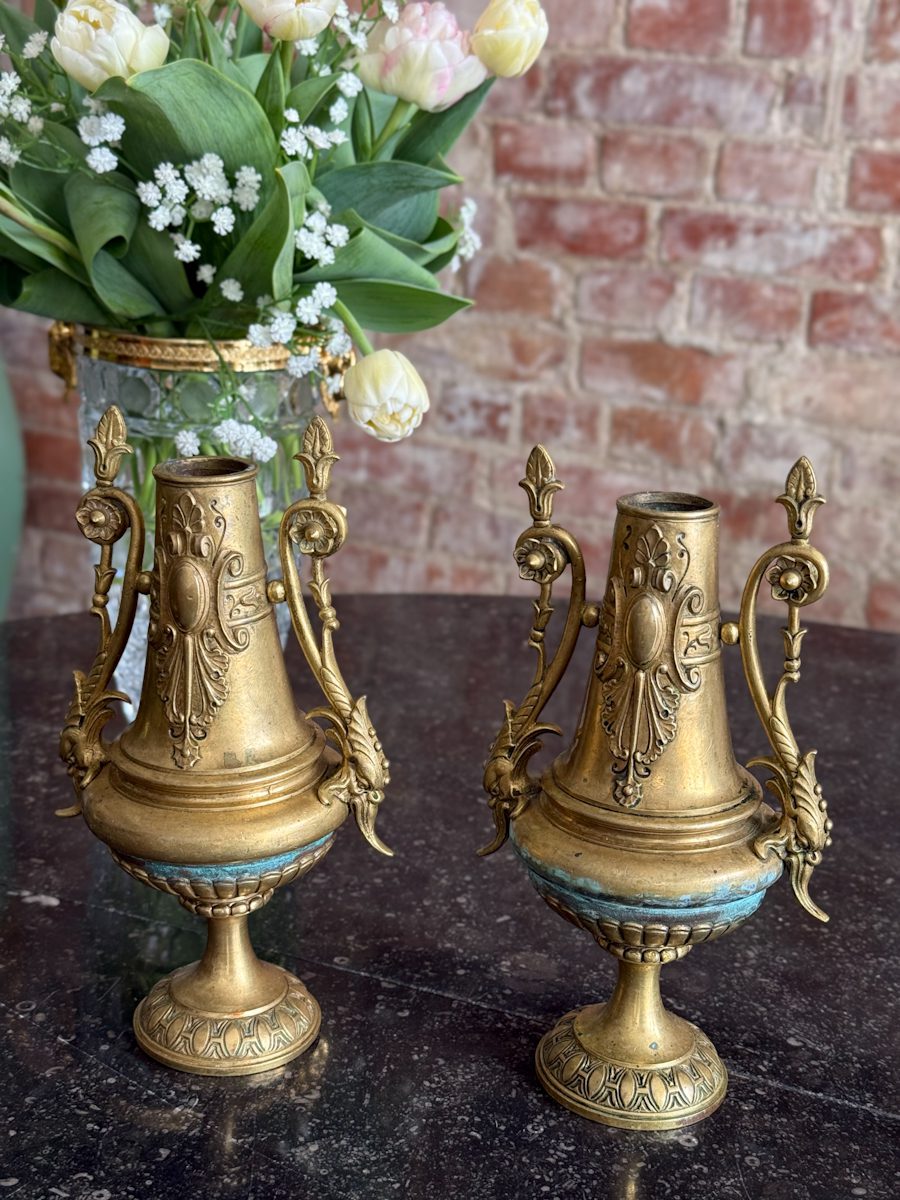
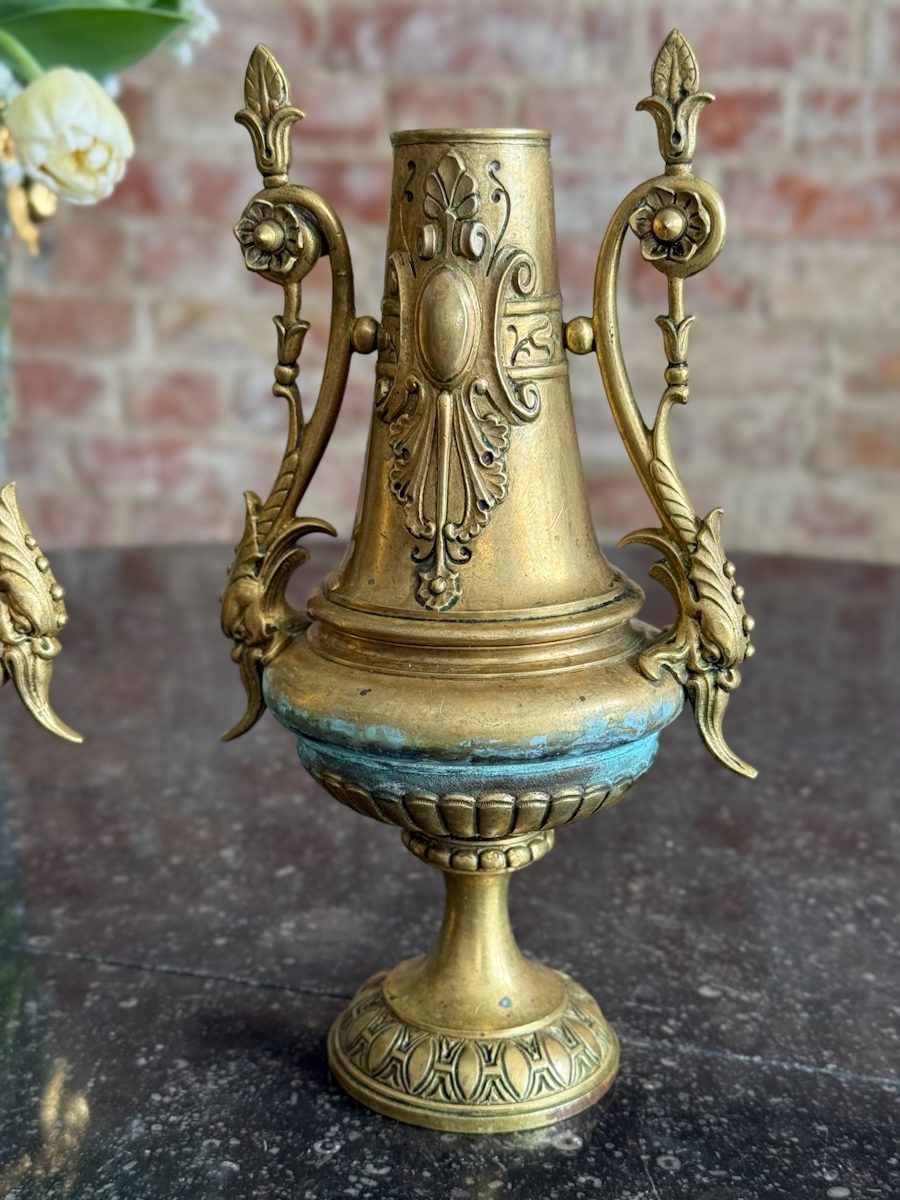
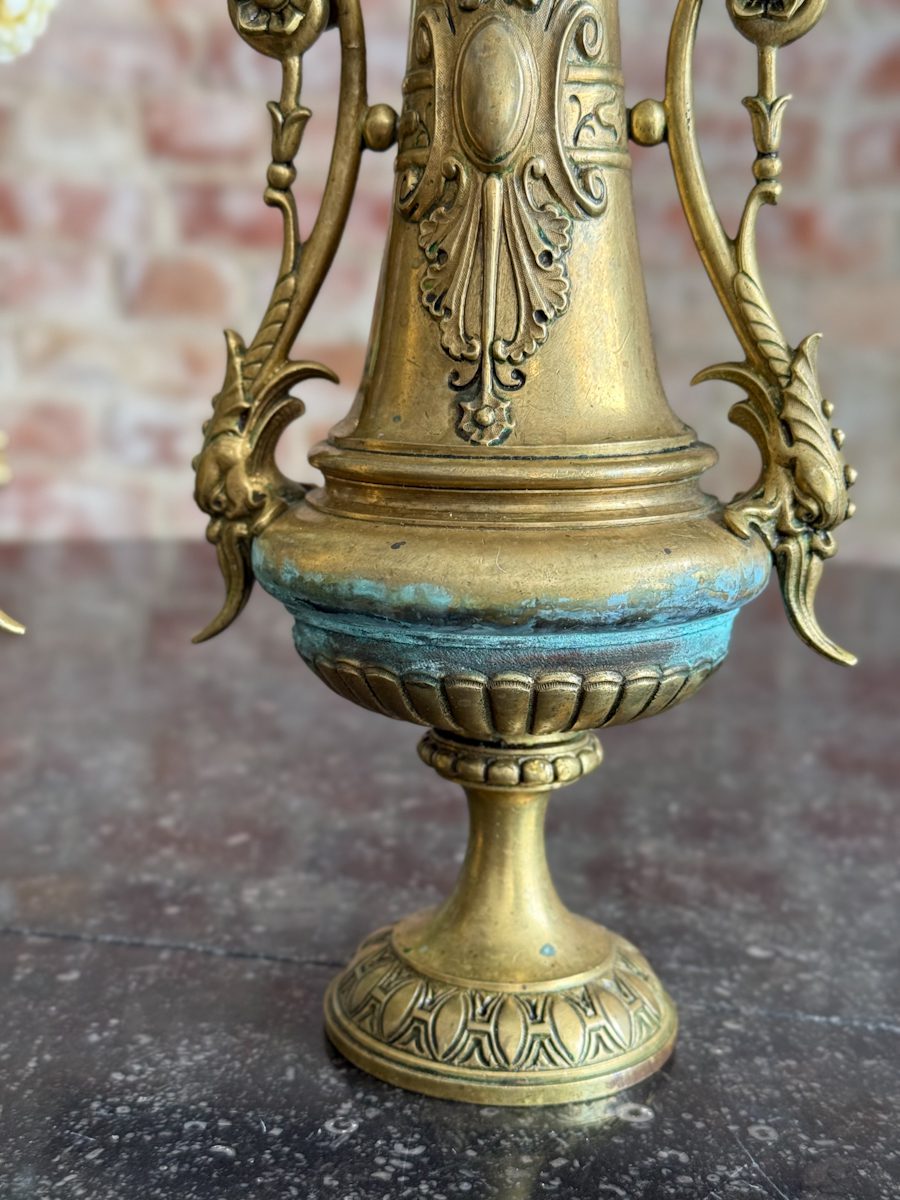
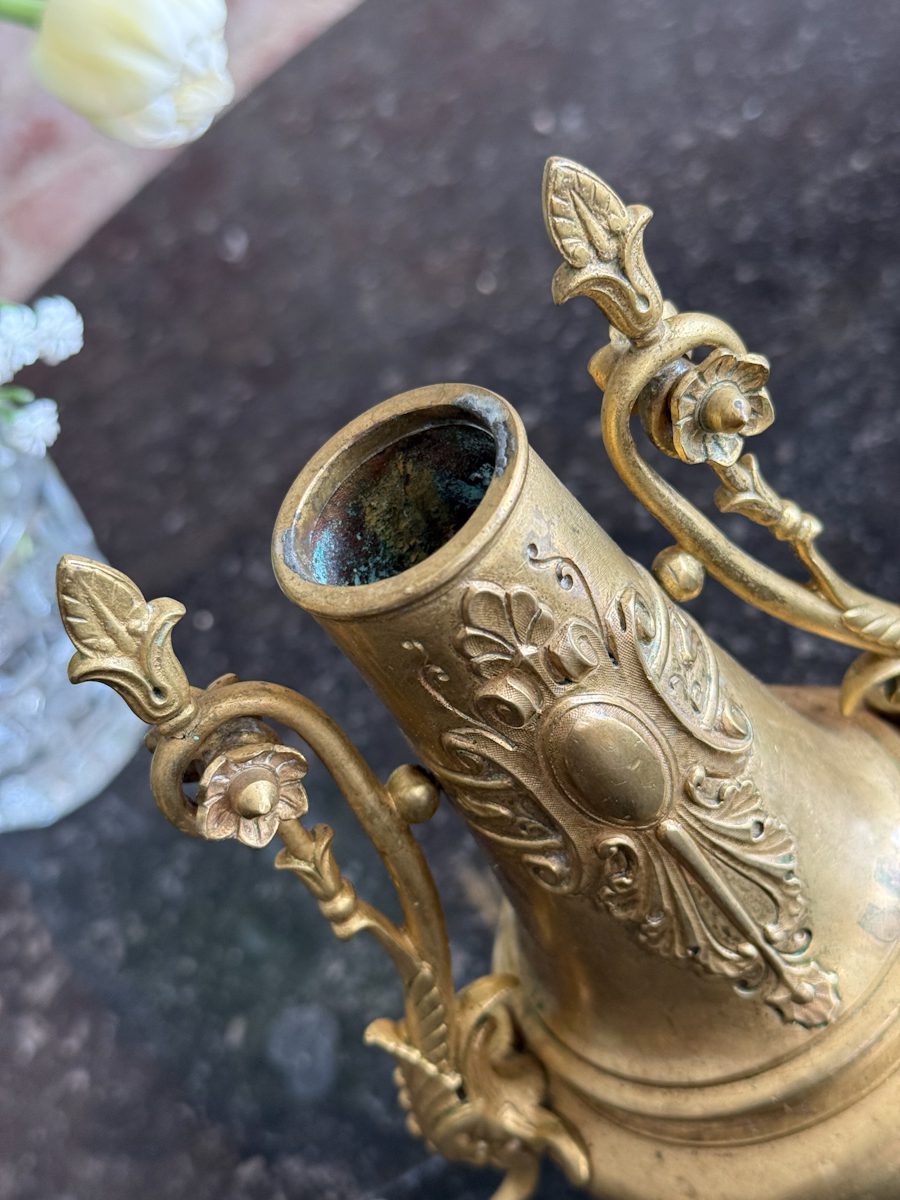
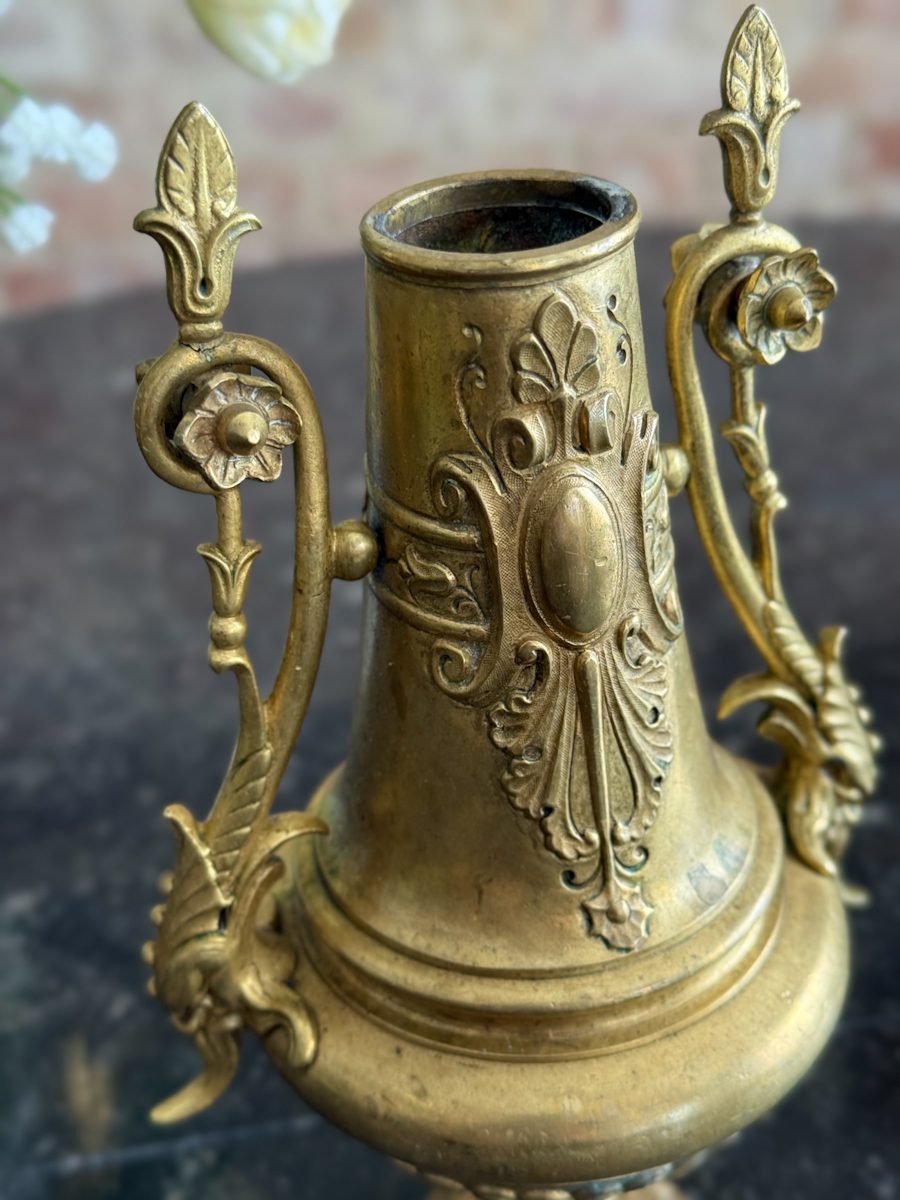
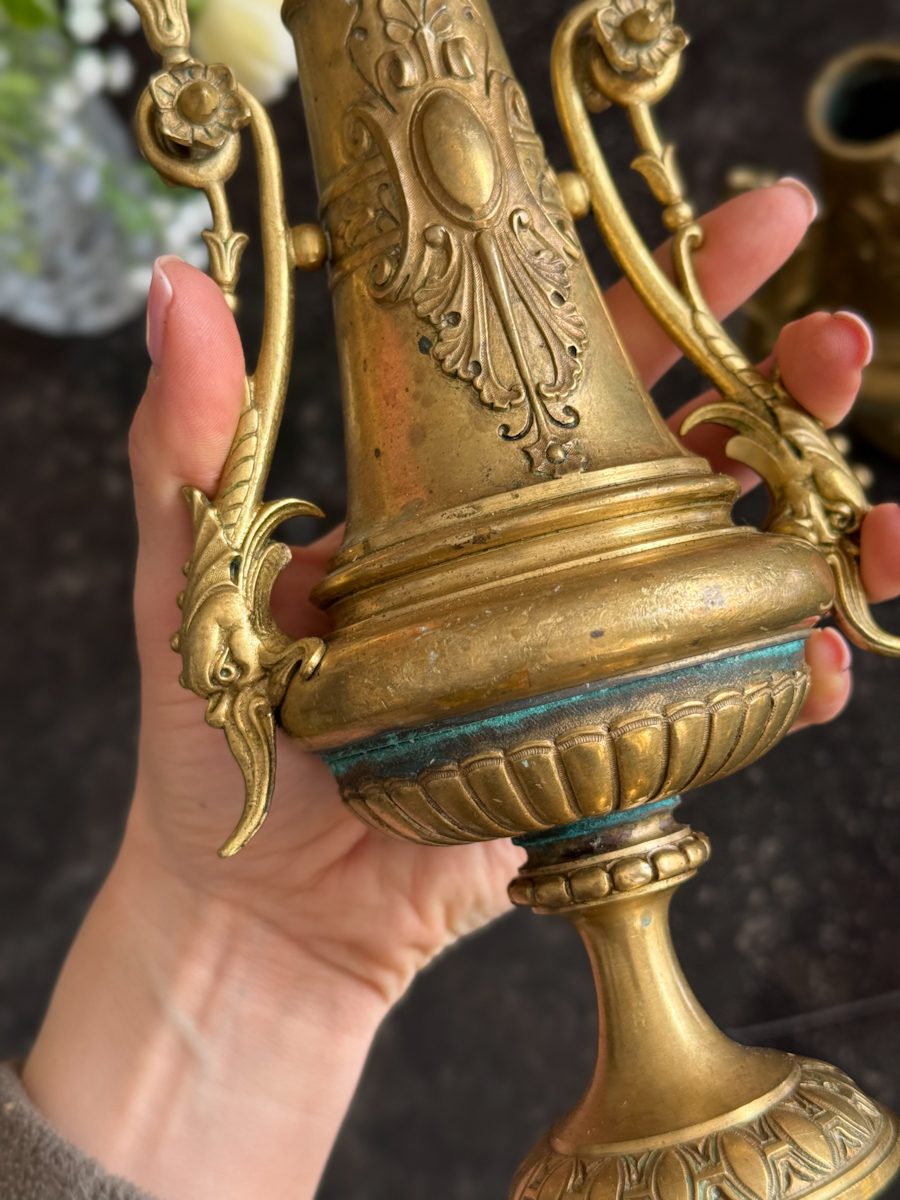
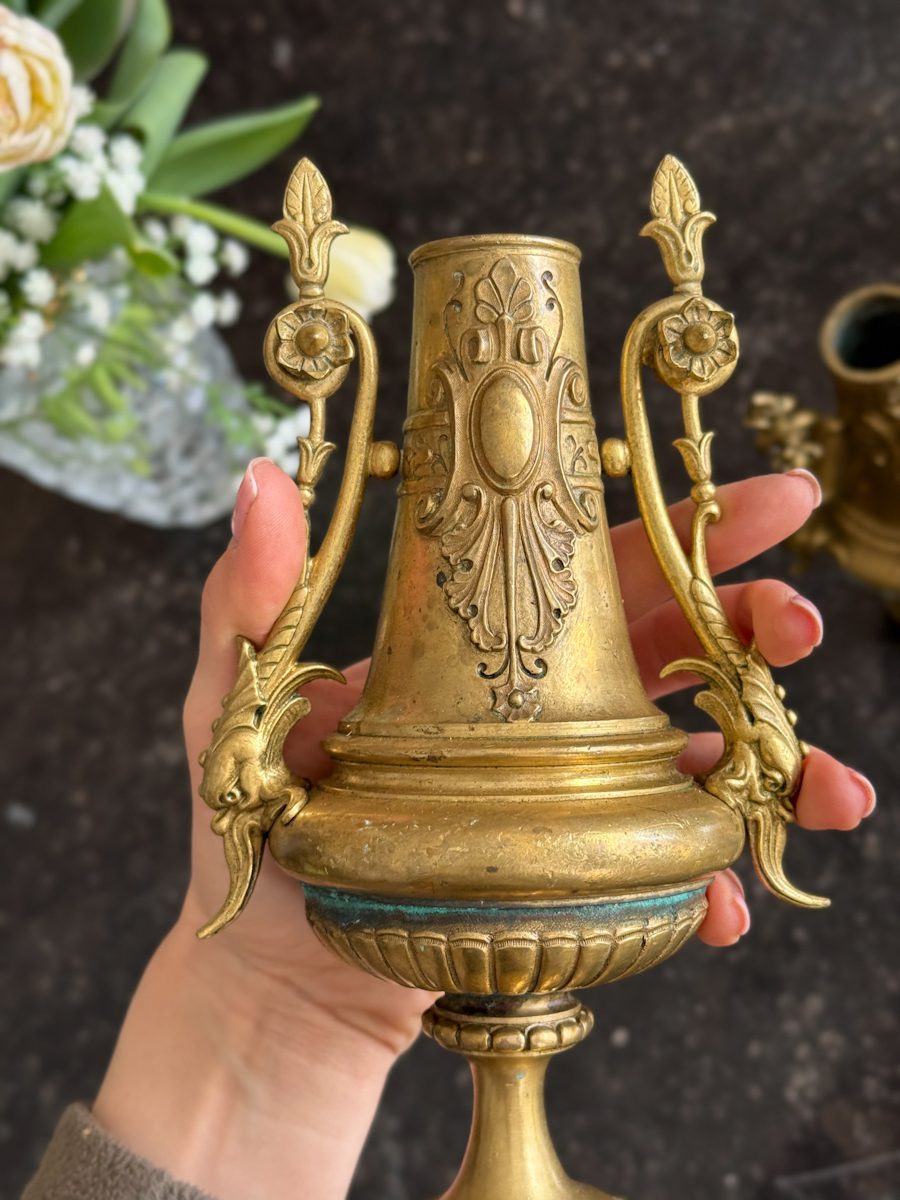
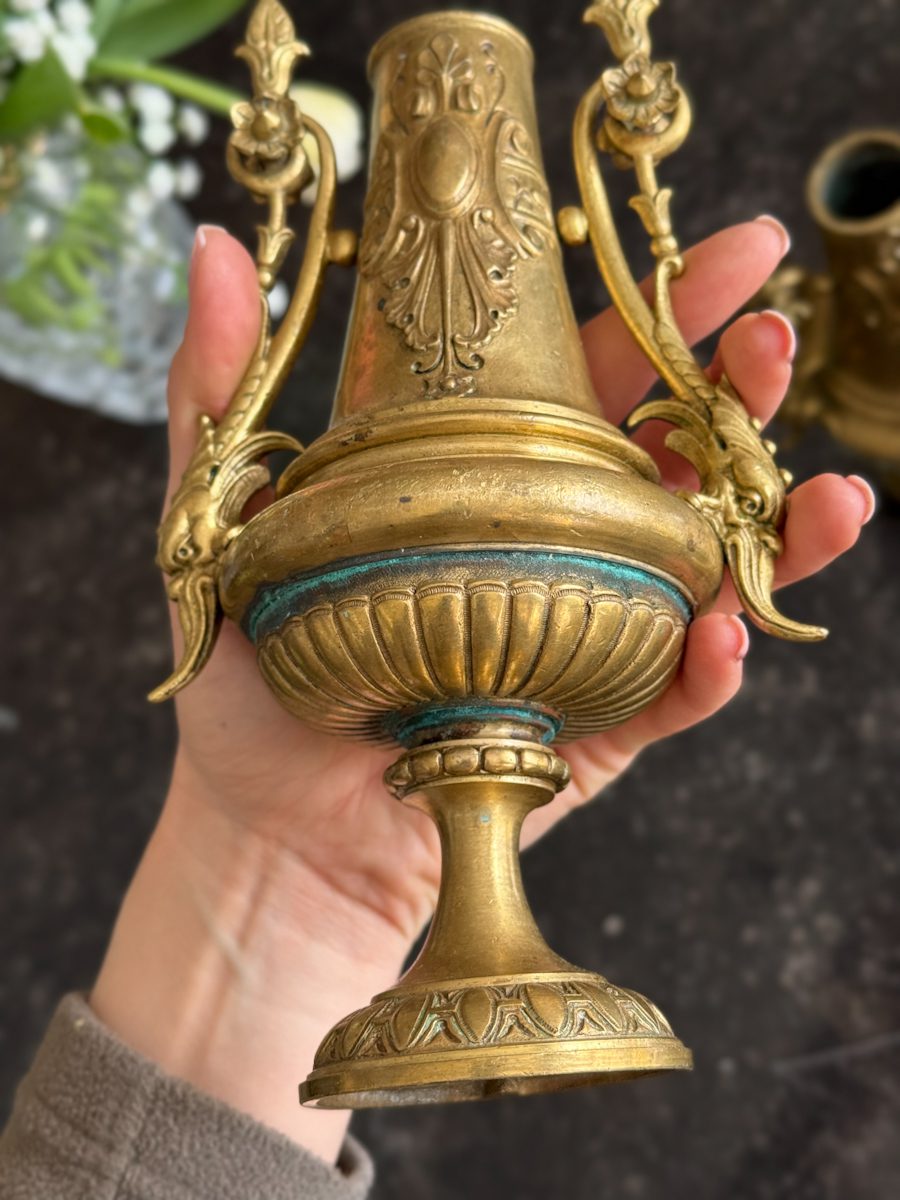
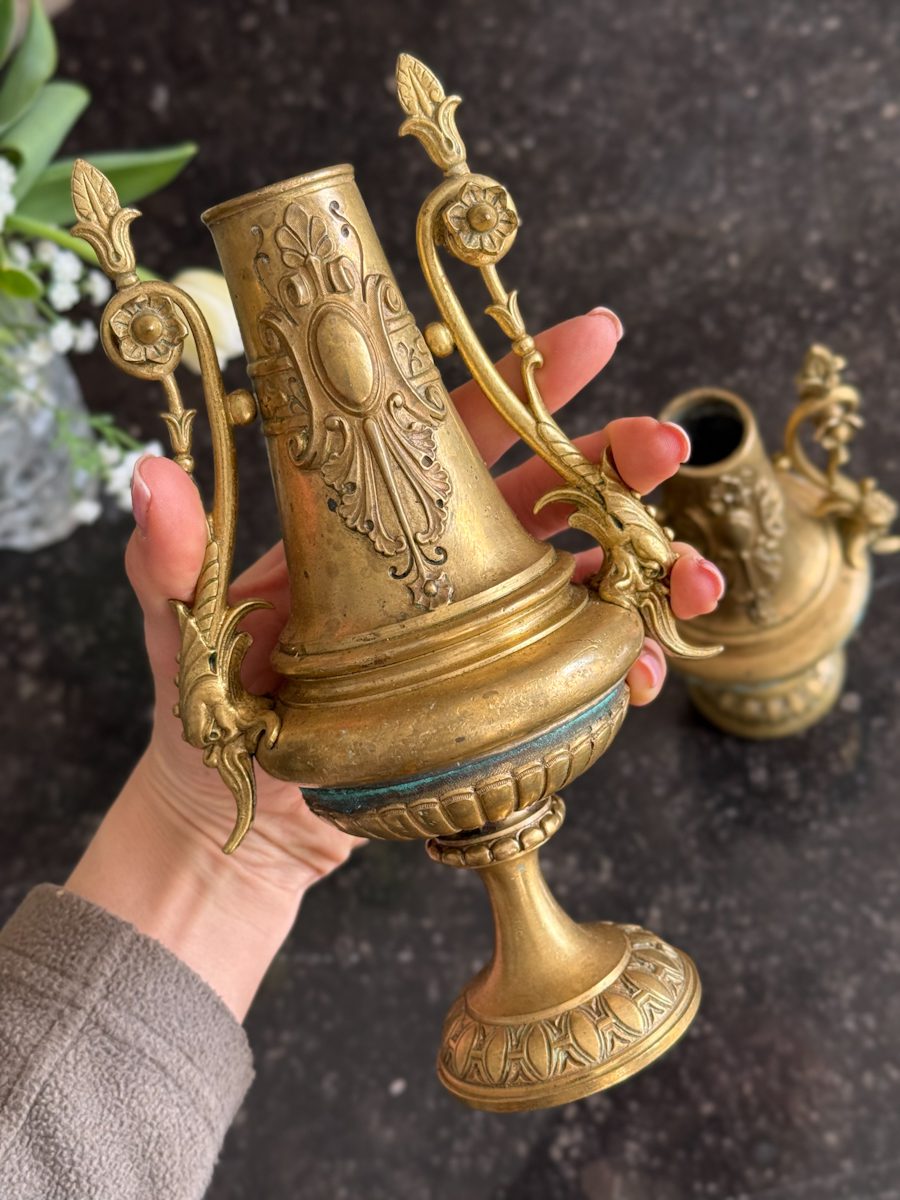


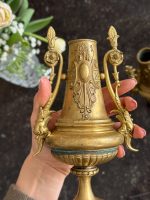

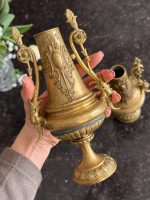
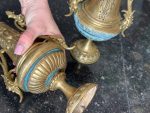
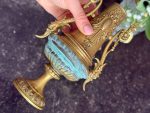
2pcs Pair of Antique Neo-Rococo Style Bronze Decor — antique bronze urns — France, late 19th Century (6495)
Height 22.5 cm Width 12.5 cm Color WalnutNaturalTurquoise
Description
Dimensions: Height — 22.5 cm Width — 12.5 cm Note: Price for a pair (paire)
Antique gilded bronze Neo-Rococo decorative urns — France, late 19th century
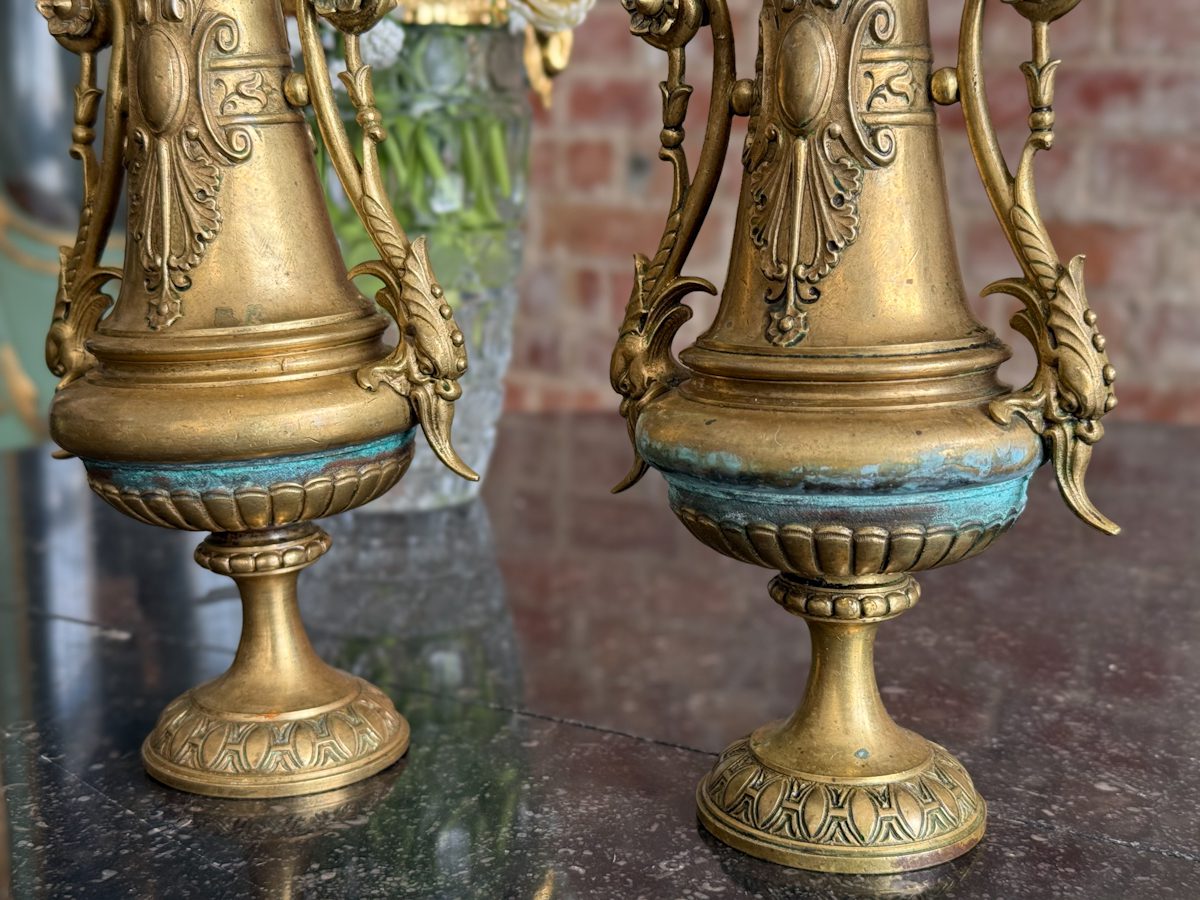
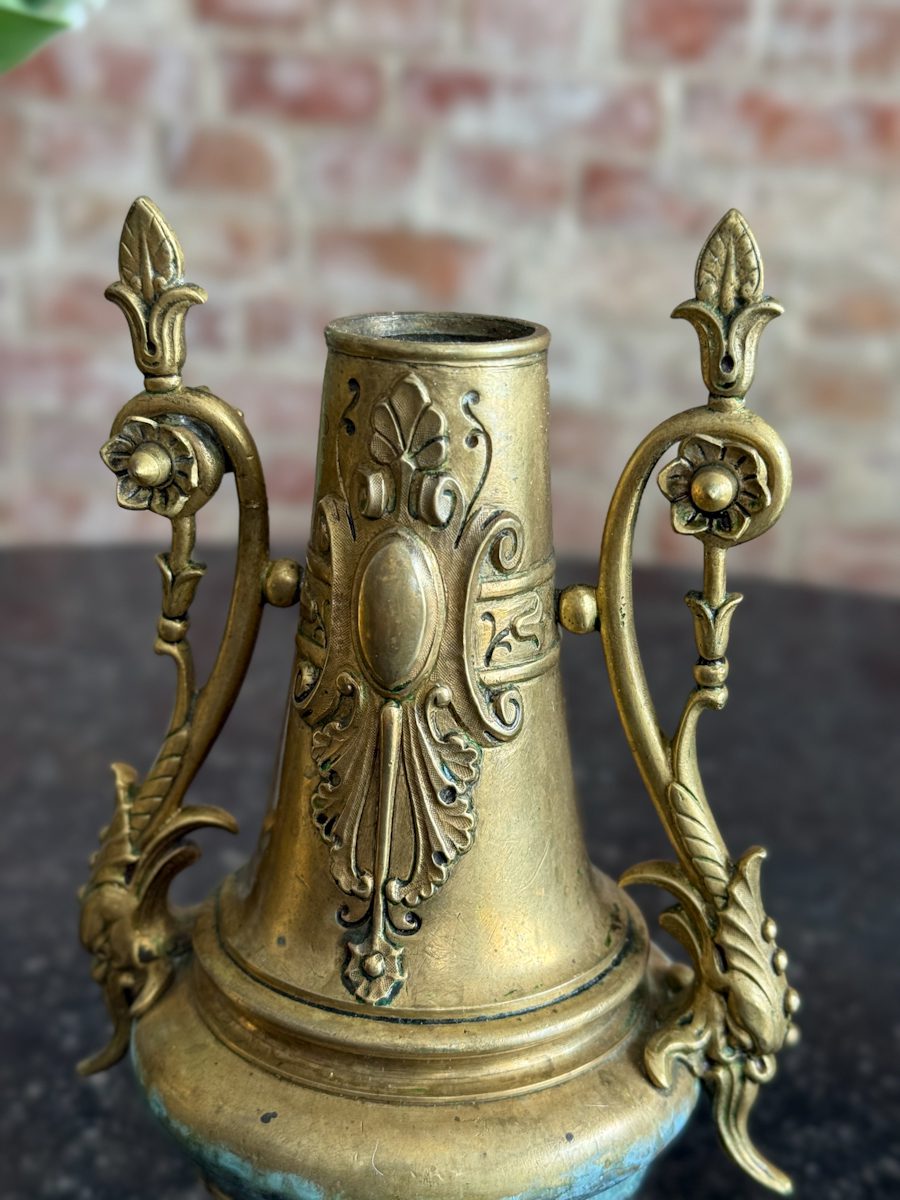
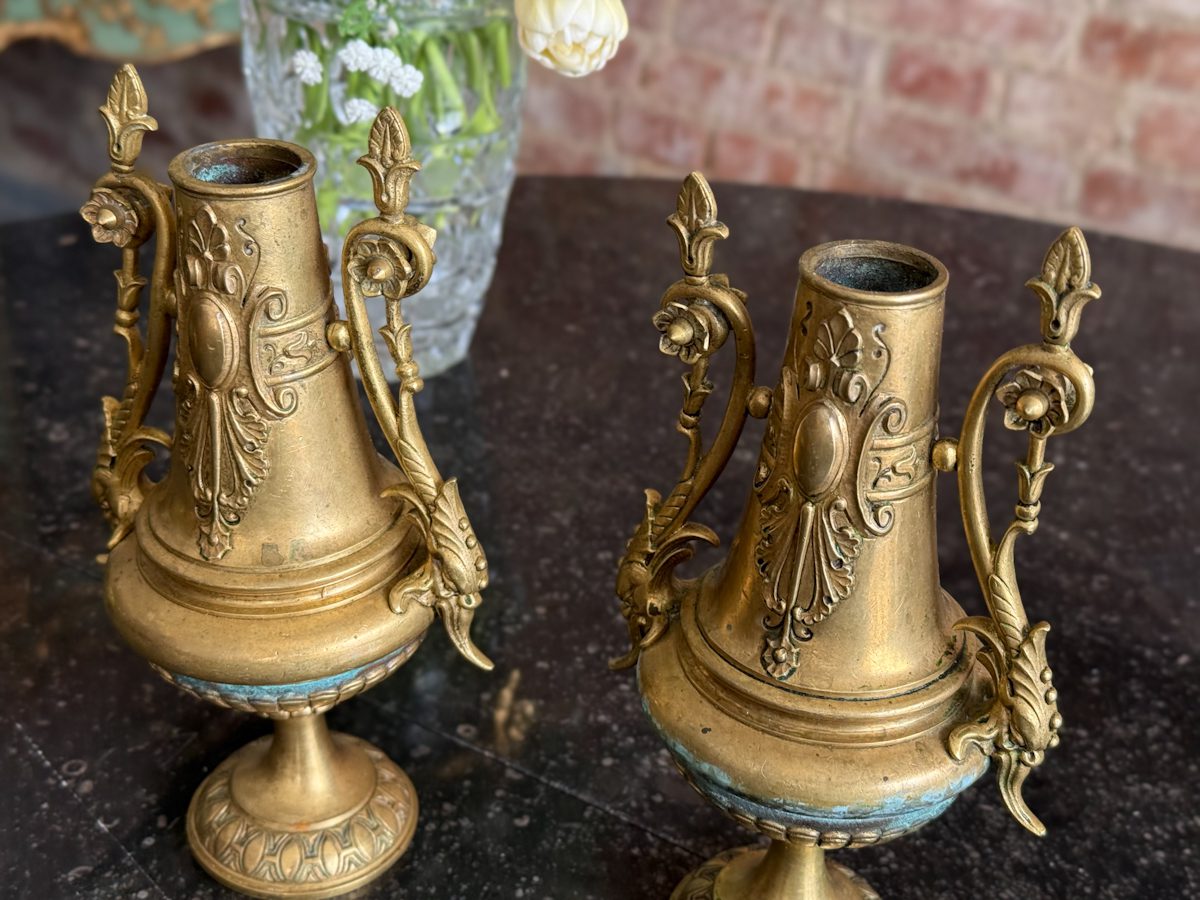
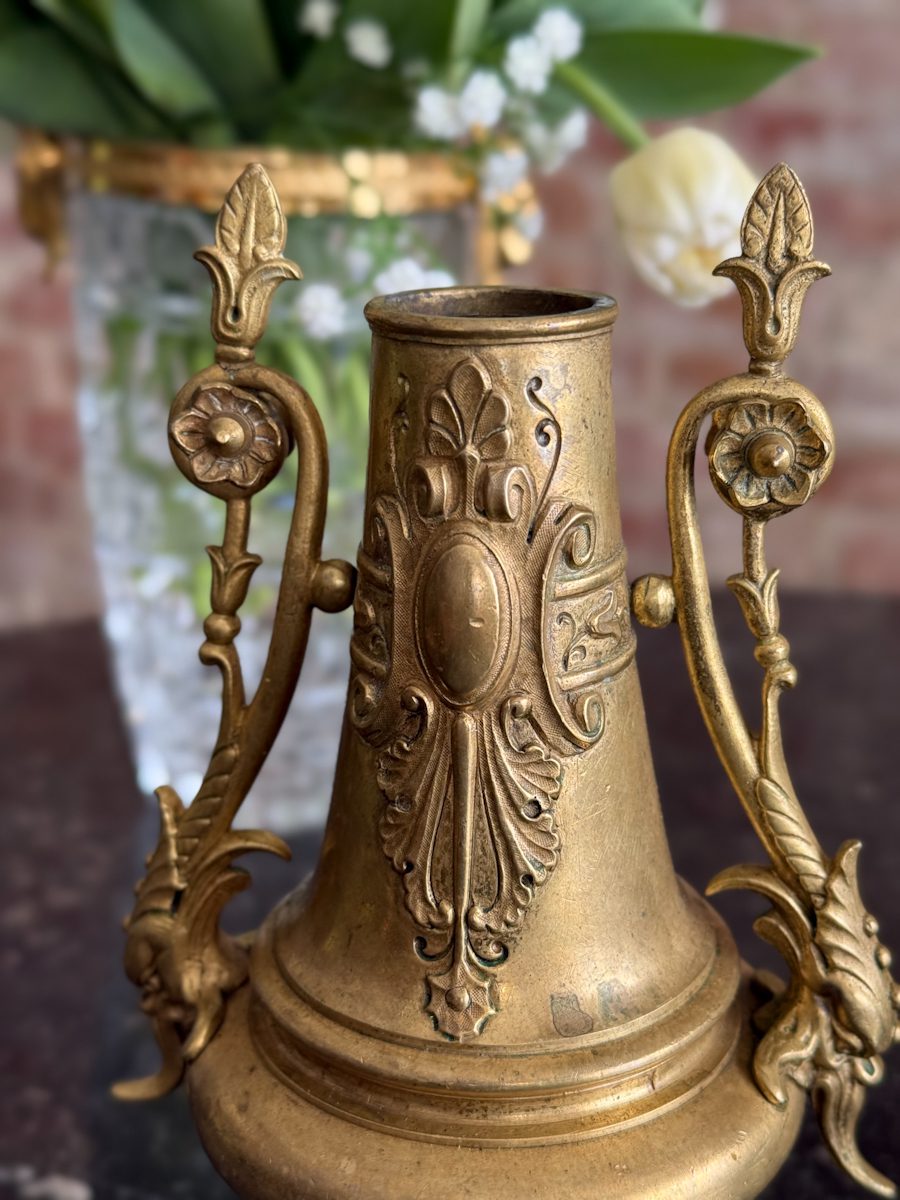
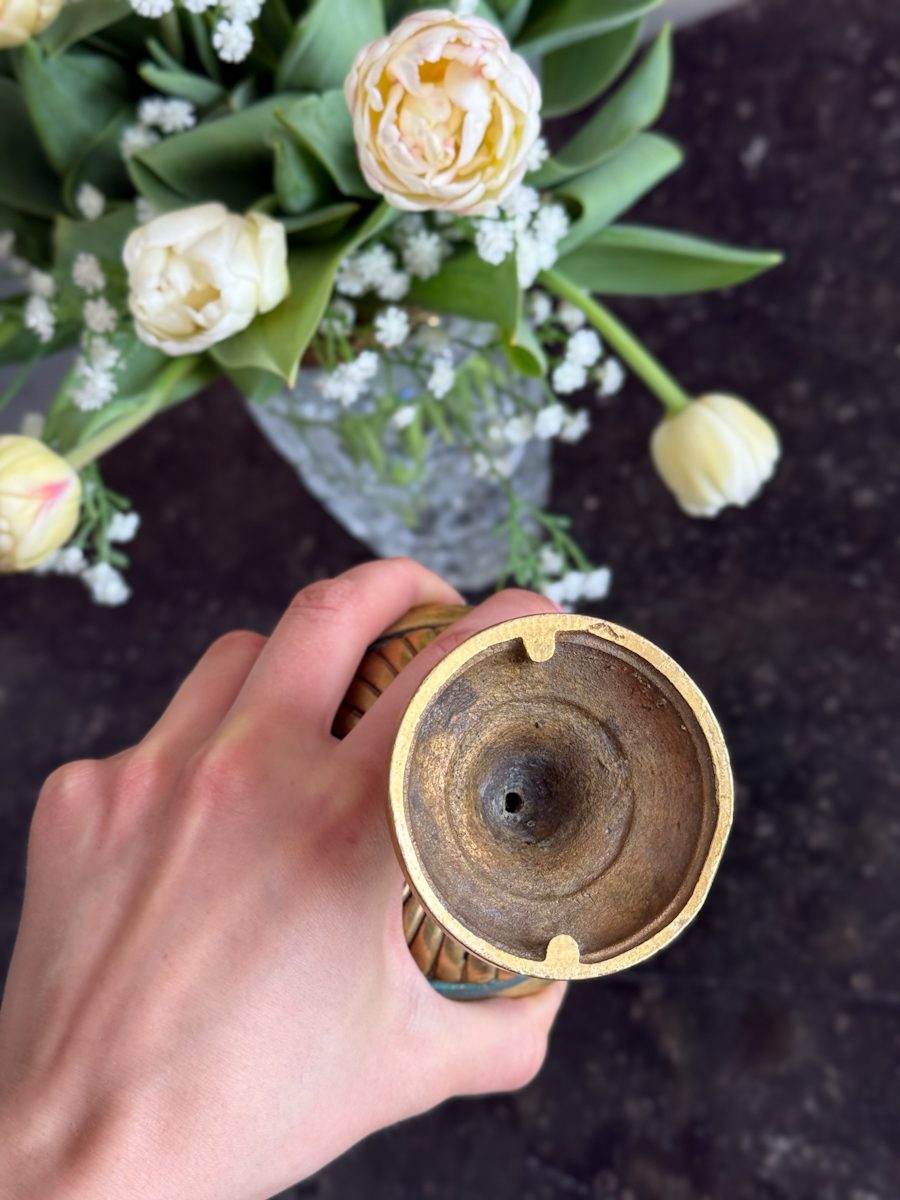
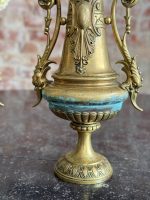
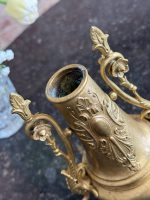
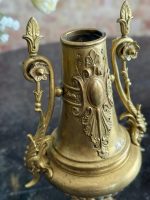
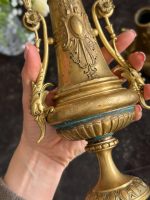
This exceptional pair of massive decorative urns is an outstanding example of Rococo Revival (Second Rococo style) decorative art, dating from the late 19th century. Intended for formal salon and library receptions, the ensemble serves as an exquisite mantelpiece garniture (garniture de cheminée). The heavy antique bronze urns feature a beautifully proportioned vase silhouette, raised on molded circular bases. The massive cast bronze bodies are masterfully adorned with relief rocaille ornamentation, central cartouches, and panels of acanthus leaves. A truly sculptural accent is found in the asymmetrical handles, where the lower mounting sections seamlessly transition into highly detailed mythical creatures (griffins or dragons), while the upper ends terminate in delicate botanical buds. Importantly, the metal has not been subjected to modern cleaning agents, retaining its gorgeous natural turquoise patina that infuses the rich casting grooves. Preserving excellent antique condition with all structural elements perfectly secure, this complete pair is a top-tier collector’s priority.
Belle Époque Evening Snapshot: A warm, breezy September evening in 1908, along the coast of Étretat. After a long day by the ocean, watching the sun set directly through the chalk arches, guests gather in the dining room of a seaside estate. The light from candles and the fireplace casts warm reflections on the polished walnut furniture. On the mantelpiece, occupying a central position on either side of an antique clock, sits this magnificent pair of bronzes. In the dim light, their flowing acanthus leaf forms literally glow, and the shadows of the mythical creatures cast upon the brick wall seem almost alive. The host slowly raises his glass, contemplates the cool, heavy metal, and quietly savors that unwavering, elite sense of belonging to the world of fine, historical masterpieces.