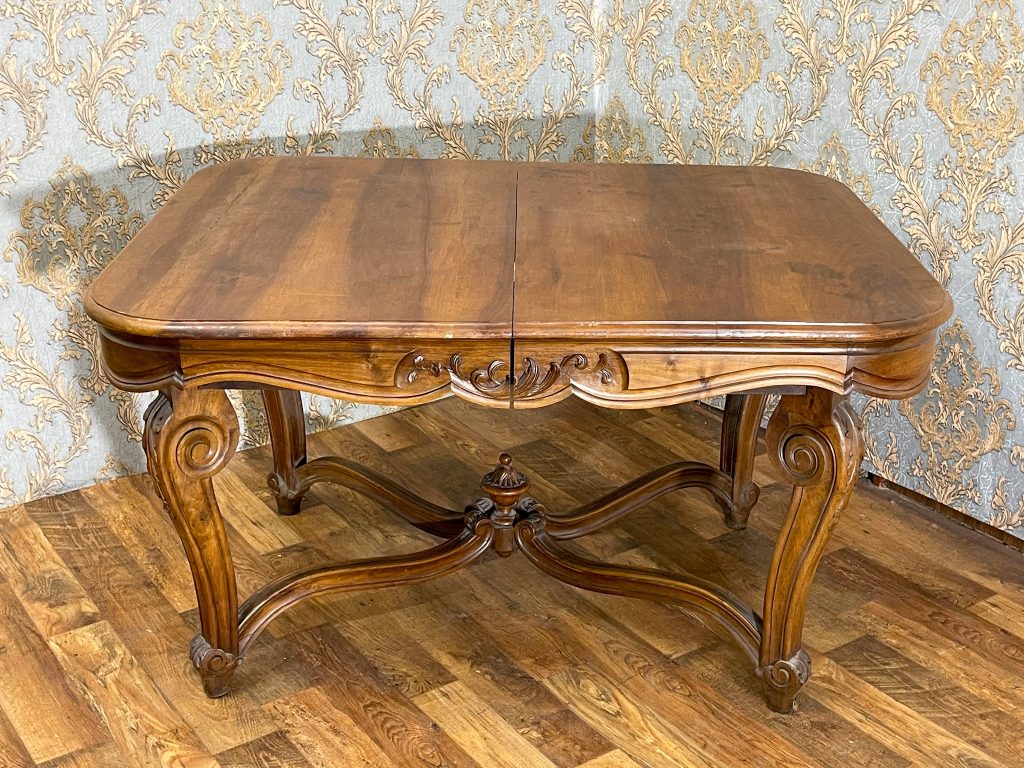
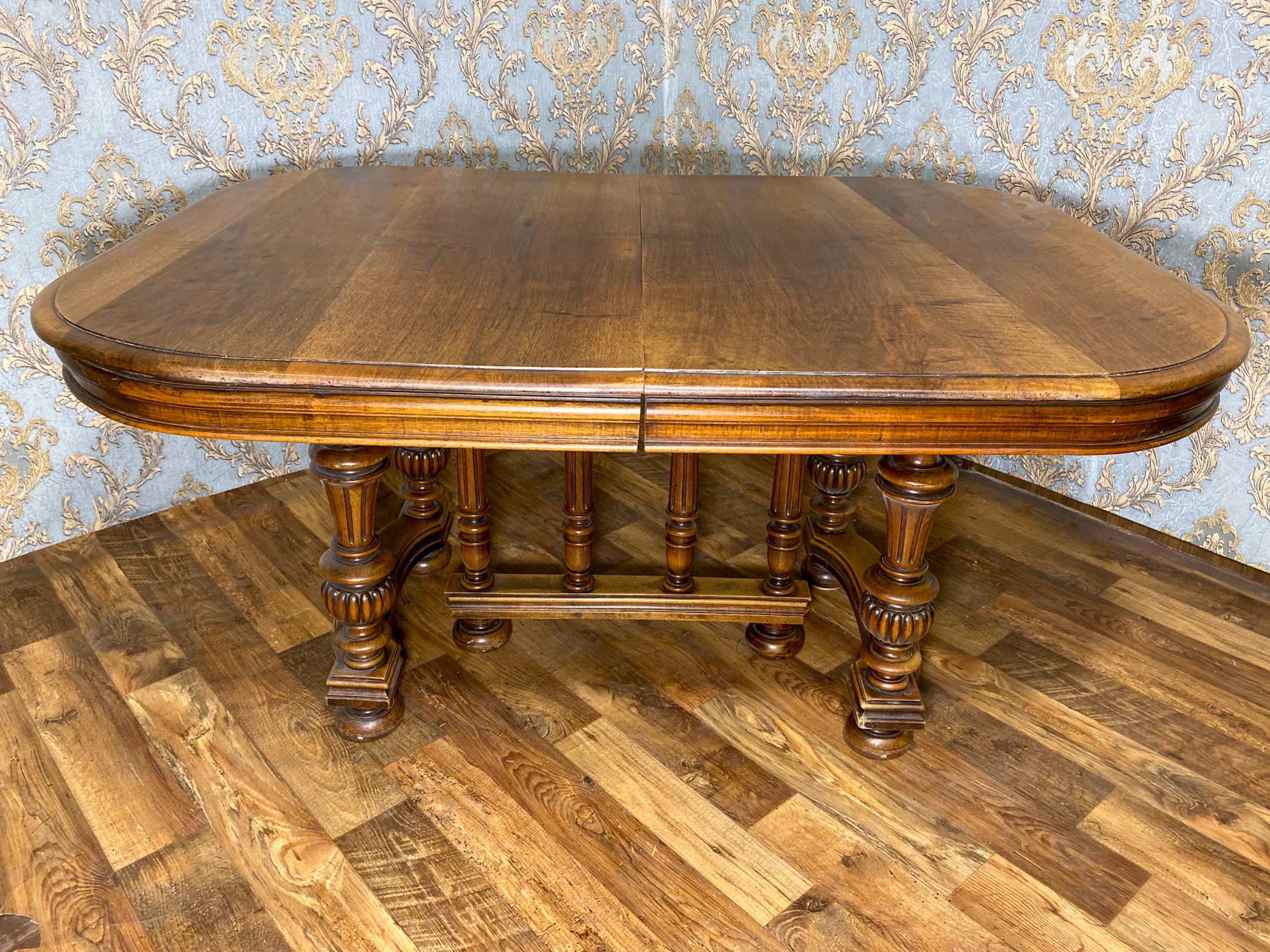
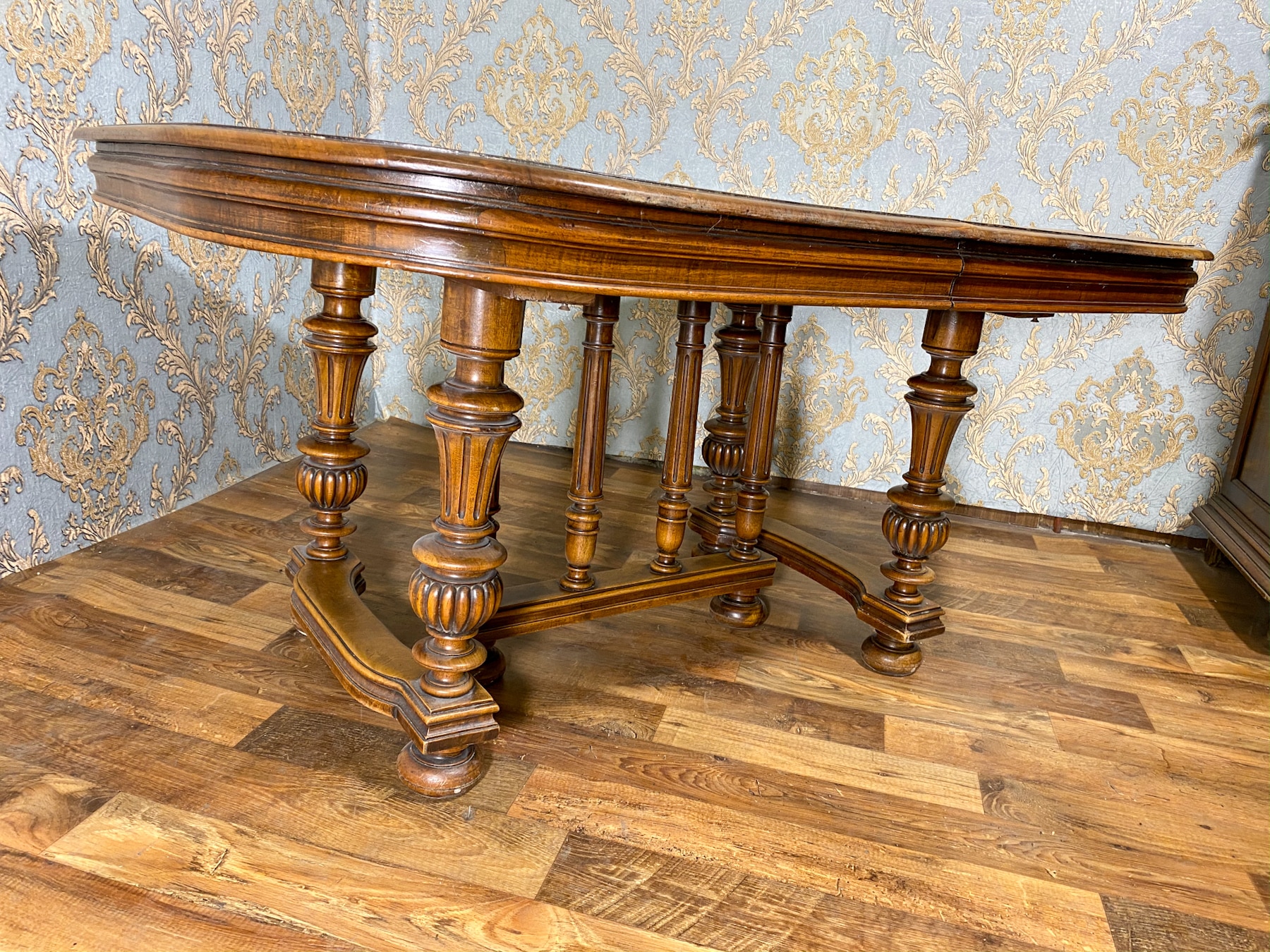
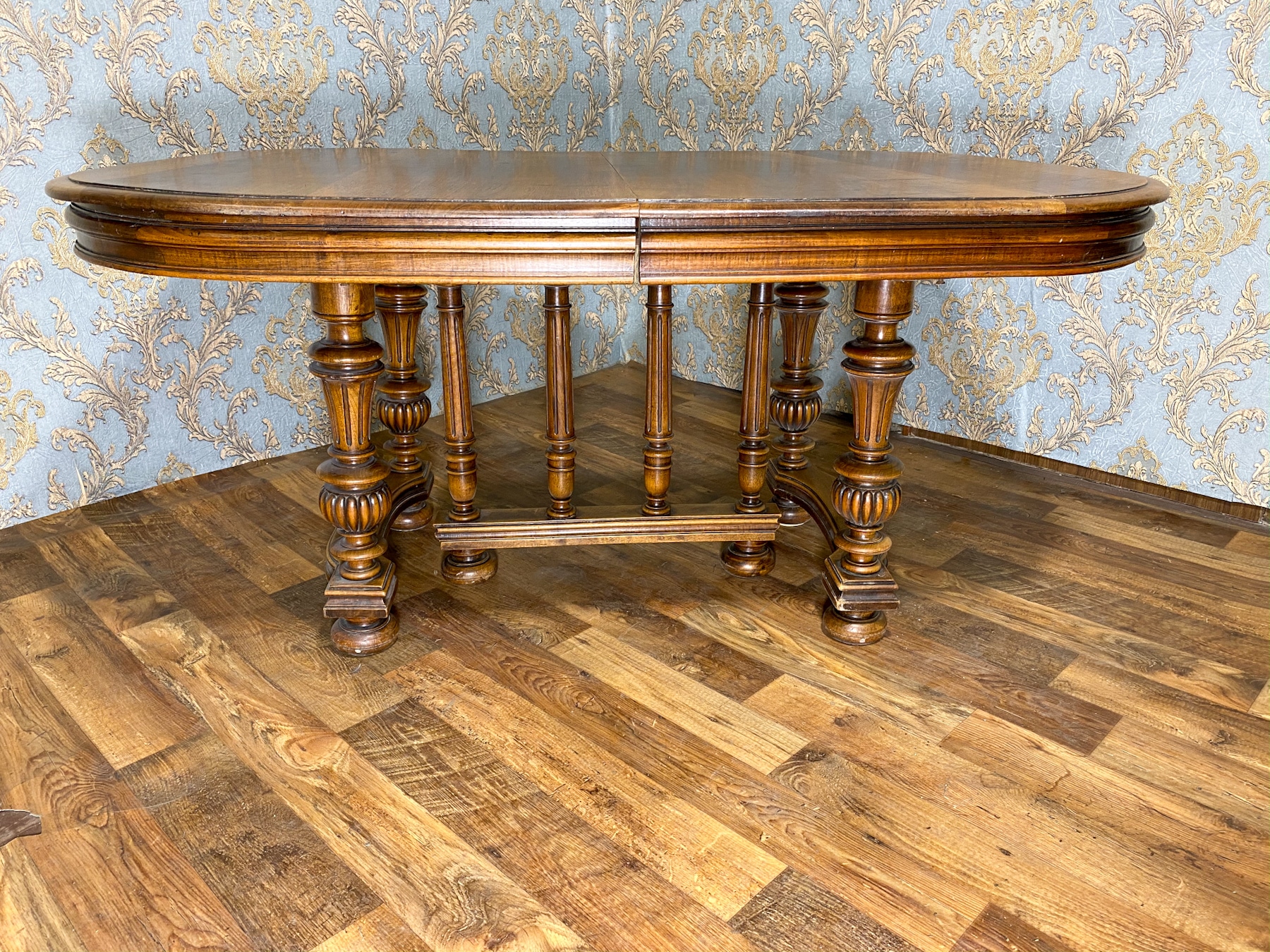
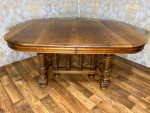
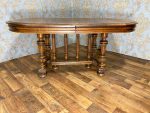
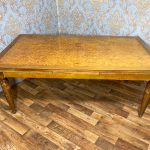
An extendable Neo-Renaissance oak dining table from France/Belgium, circa 1870-1900. Featuring six fluted column legs and a robust H-stretcher, this table embodies the grandeur of the Historicism period. A rare and substantial piece, perfect for large gatherings. 750,00 €
You’re now subscribed to price tracking for this product. We’ll notify you if the price drops. 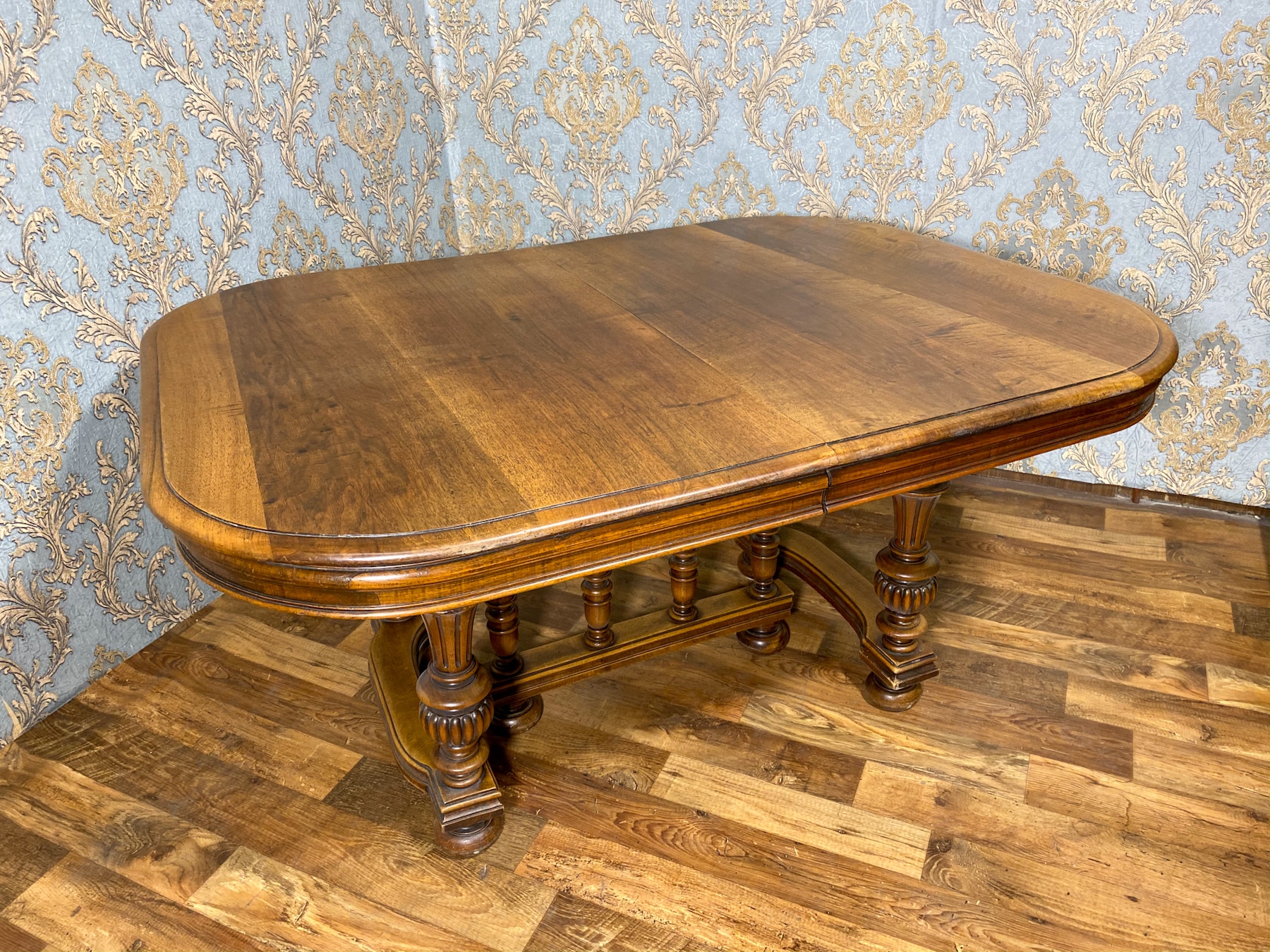
Extendable Oak Dining Table with Fluted Column Legs — Neo-Renaissance / Historicism, France/Belgium, 19th Century (531)
Height 69 cm Color BrownNaturalOak
Description
DESCRIPTION IN
―――――――――――――――――――――
📐 DIMENSIONS
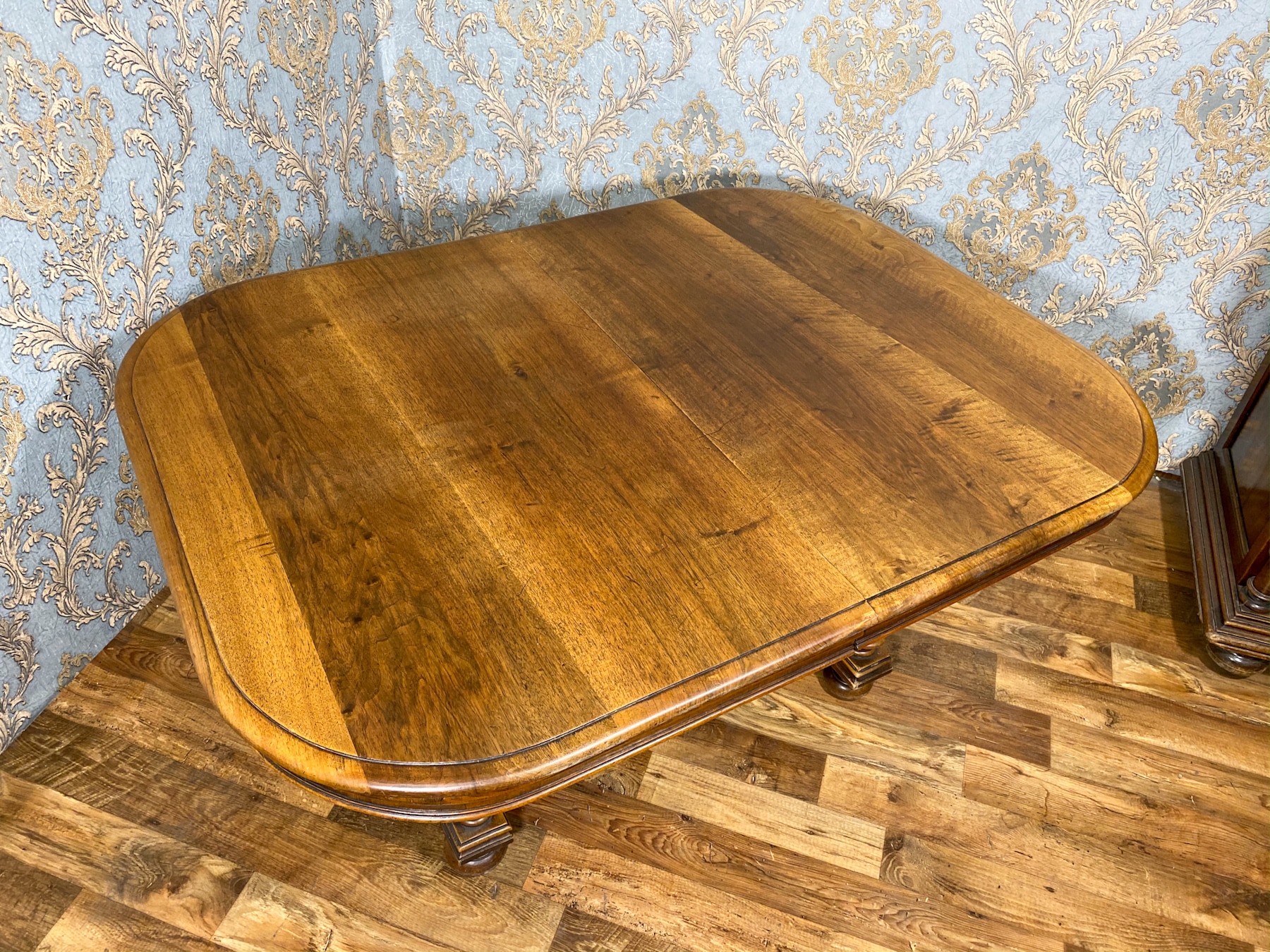
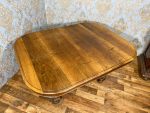
Surface 137 cm × 104 cm × height 69 cm. Extendable. Extremely heavy, solid oak construction.
―――――――――――――――――――――
Extendable Oak Dining Table with Fluted Column Legs — Neo-Renaissance / Historicism, France/Belgium, c. 1870–1900
―――――――――――――――――――――
🏛️ PERIOD, ART STYLE, EPOCH
This monumental dining table belongs to the flowering of the Belle Époque — that brilliant period from 1871 to 1914 when Historicism in its fullest expression governed the dining rooms of Europe’s finest homes. The table dates to approximately 1870–1900, the period when Neo-Renaissance became the furniture choice of the bourgeoisie and upper society, uniting the dignity of classical architecture with 19th-century technical precision.
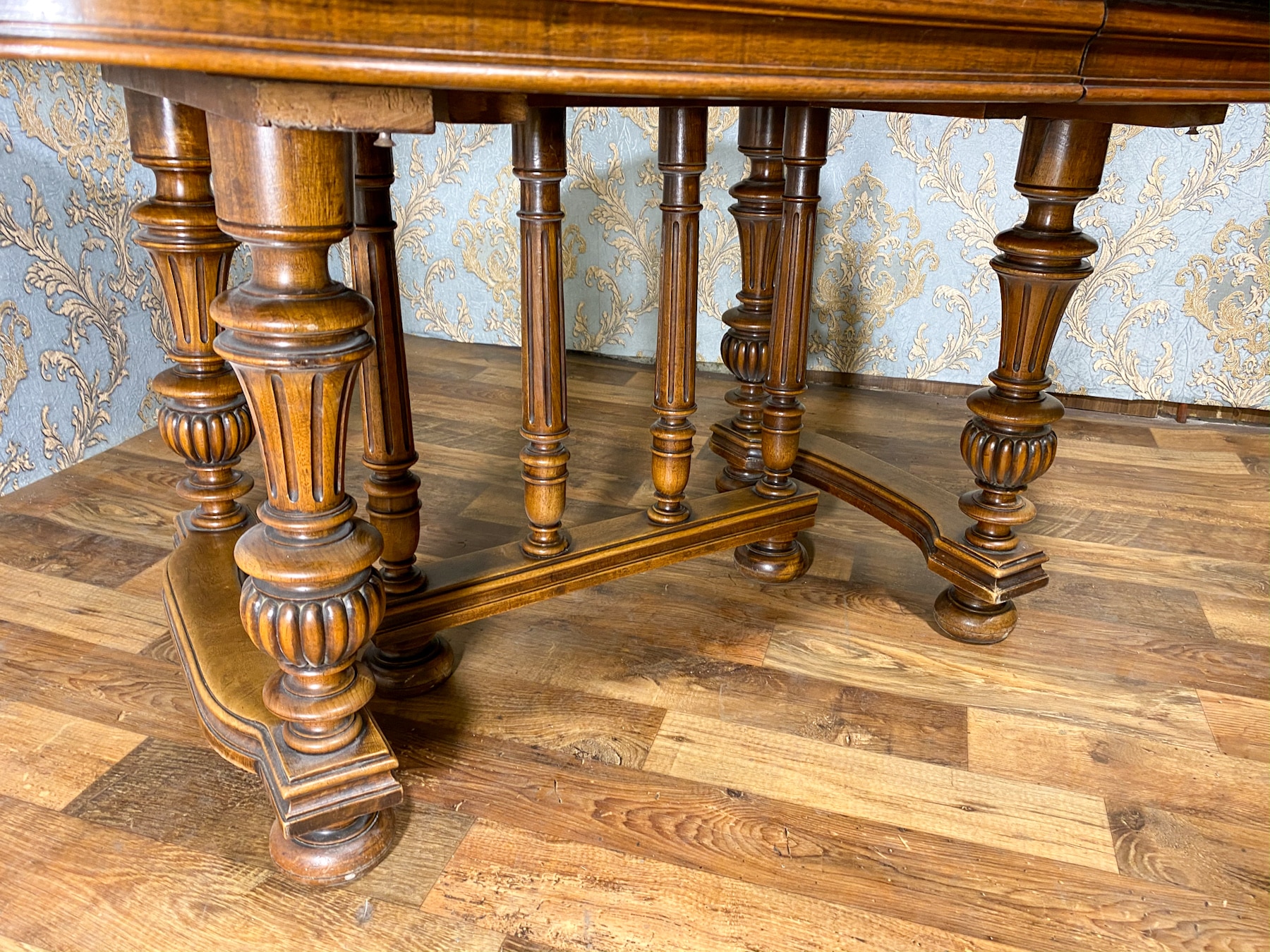
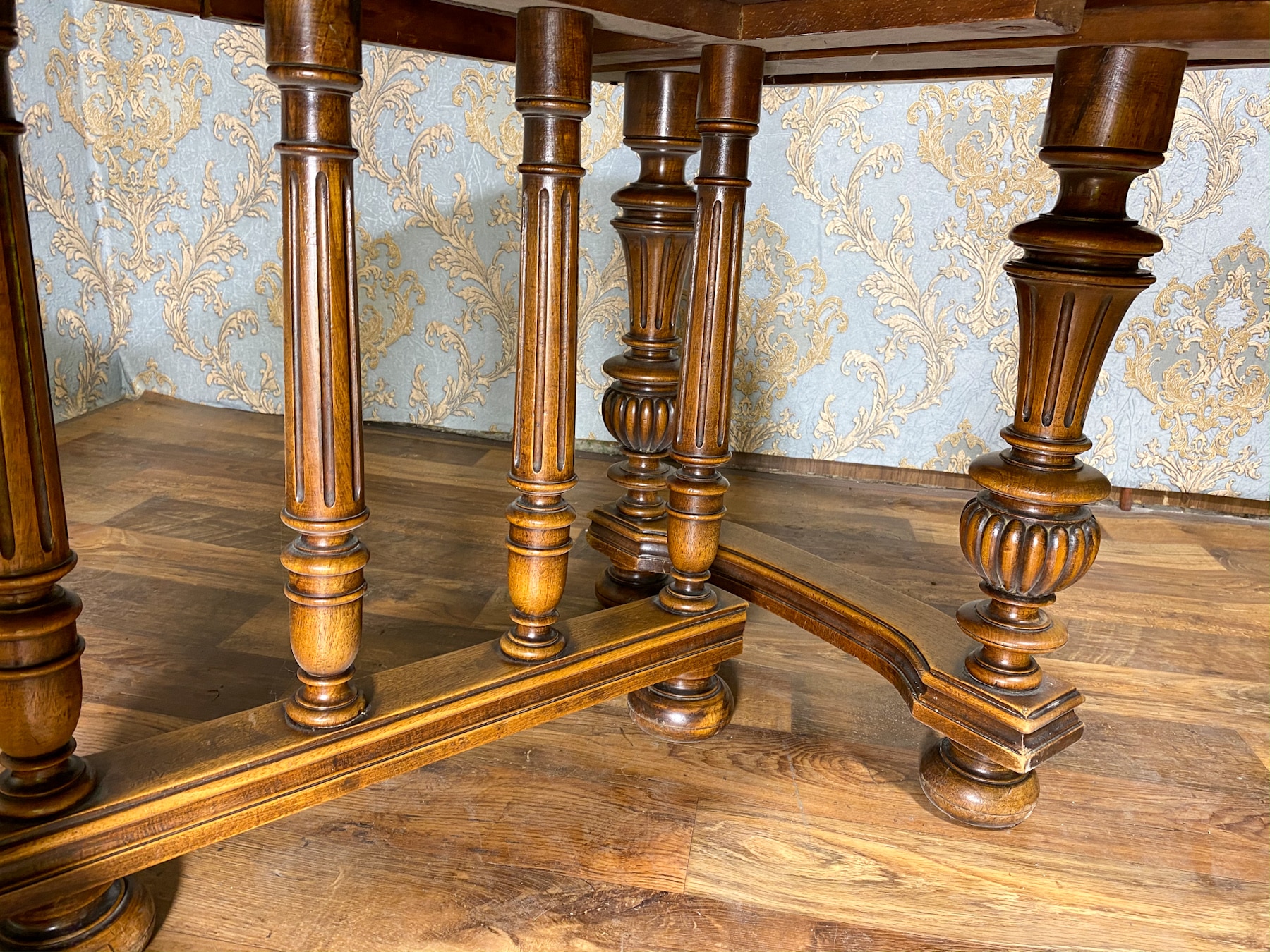
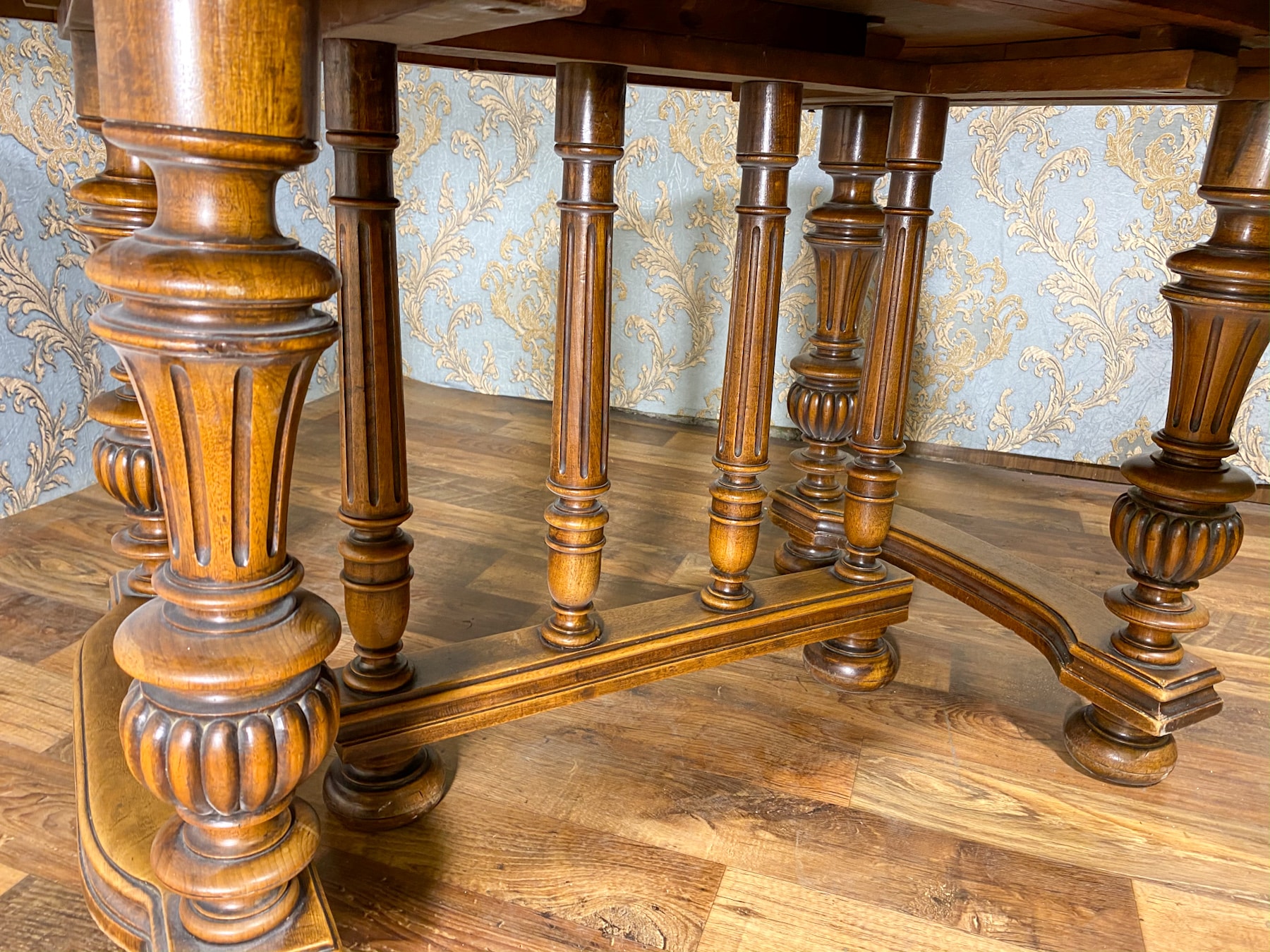
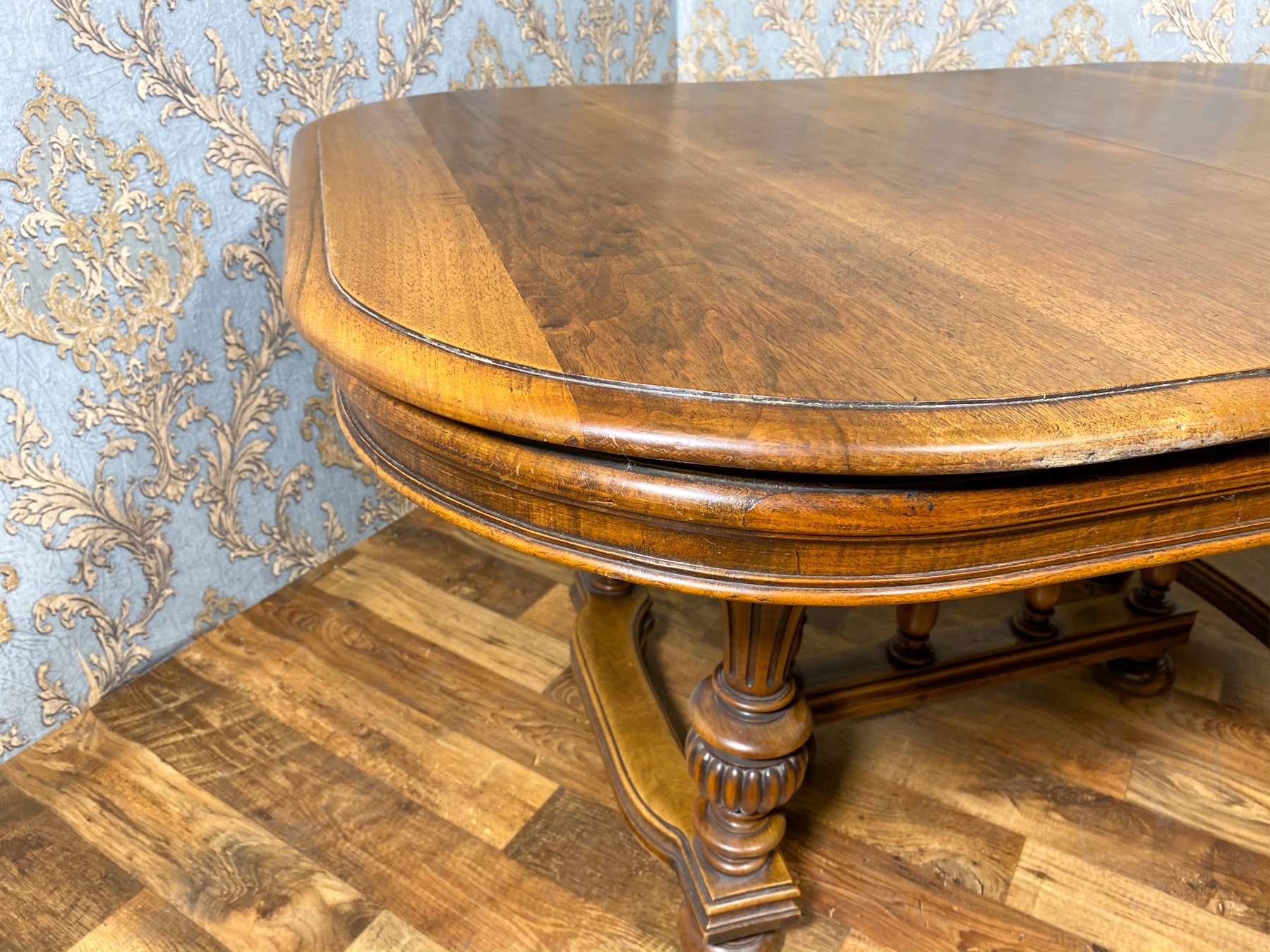
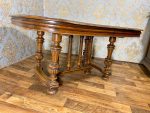
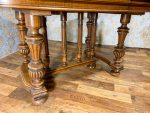
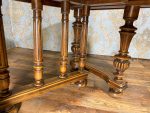
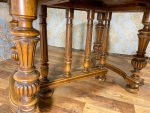
The leg design is the defining element of this style: six massive fluted columns — a direct reference to the Doric and Ionic orders of ancient Greek architecture — rise from gadrooned ornamental bases and are united by a heavy H-form stretcher. This six-column arrangement is characteristic specifically of and Belgian large-format dining tables intended for banquet settings of ten to fourteen guests. Oak — the material Neo-Renaissance prized for its associations with medieval château and town hall furniture — here reveals its warm honey-toned grain with exceptional natural texture.
Émile Zola was writing Nana and Germinal in those same years — and it was precisely around tables like this that those he described gathered: manufacturers, bankers, notaries, families with names and inheritance, whose dining rooms were theatres of social standing. Oak and six columns: architecture that said this family intends to endure.
―――――――――――――――――――――
⚜️ MAKER AND MARK
No visible maker’s mark has been identified. The massive construction, the quality of the fluted column turning, and the precision of the gadrooned ornamental bases point firmly to a professional or Belgian ébénisterie or menuiserie workshop. Neo-Renaissance oak furniture in this period was a speciality of Belgian workshops — particularly the Liège and Brussels regions — from which it was exported across Europe. The extendable sliding mechanism confirms a high level of technical execution.
―――――――――――――――――――――
💎 RARITY AND SIGNIFICANCE
Large-format extendable Neo-Renaissance dining tables with a full six-column leg arrangement are rare on the antiques market — the majority of such pieces were lost to modification or dismemberment. The preservation level here — both the surface condition and the integrity of the legs — makes this an exceptionally valuable find. Collectors and restaurant owners assembling authentic Belle Époque or Neo-Renaissance ensembles search long for pieces of this scale and quality.
―――――――――――――――――――――
🕯️ USE IN INTERIORS, DESIGN AND PHOTOGRAPHY
This table demands space — and the space it occupies it immediately charges with character and historical depth. In a classical or eclectic dining room it functions as the room’s nucleus; in a loft or industrial setting it operates as a dramatic historical counterpoint. The warm honey tones of the oak surface harmonise equally well with dark interior schemes and lighter Scandinavian solutions. For restaurant and hotel designers this table is an ideal centrepiece for a principal dining room. For photographers the architectural silhouette of the six columns provides exceptional variety of angles.
―――――――――――――――――――――
🔍 CONDITION
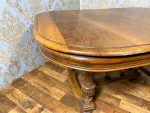
The table is in good overall condition consistent with its age. The surface shows signs of a life well lived — minor wear marks and slight tonal variation that speak of a long history of use. The fluted columns and gadrooned bases are very well preserved — forms clear and fully intact. The H-form stretcher is firm. The structure is solid and stable throughout. The condition of the item is fully reflected in the photographs.