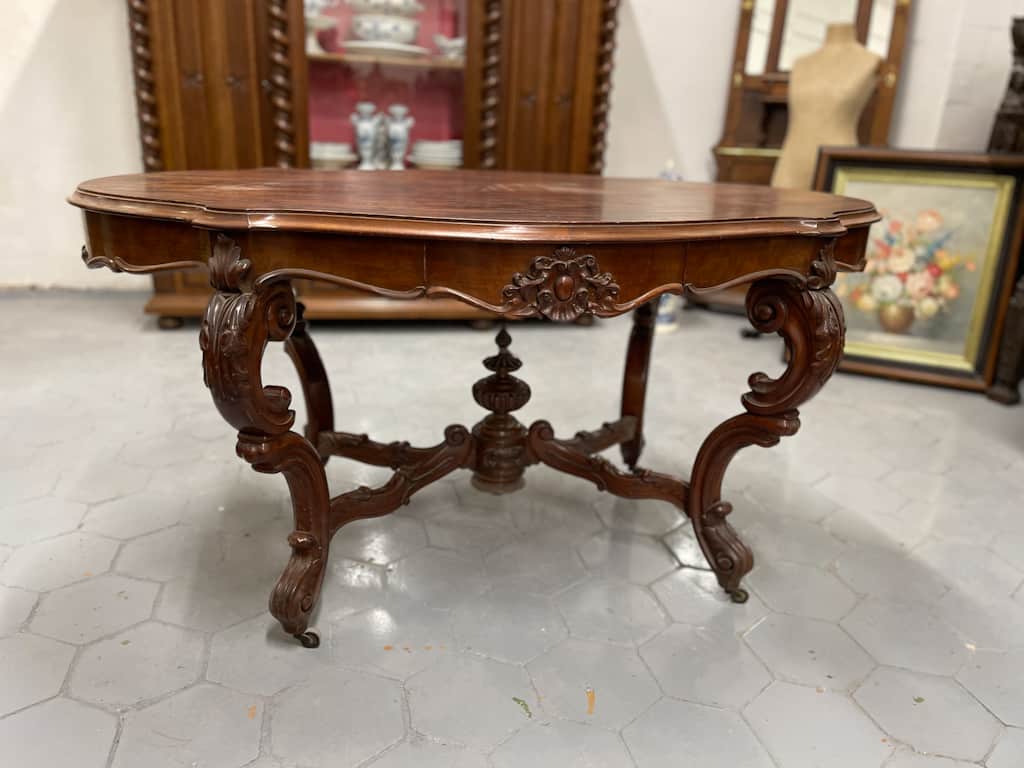
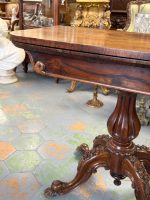
A Victorian rosewood gaming console table with a carved tripod pedestal — Rococo Revival, England/Belgium, c. 1840-1870. This exquisite piece features a flip-top surface and intricate acanthus leaf carvings, showcasing masterful craftsmanship. A rare find, it serves as both a functional table and a striking decorative art object. 650,00 €
You’re now subscribed to price tracking for this product. We’ll notify you if the price drops. 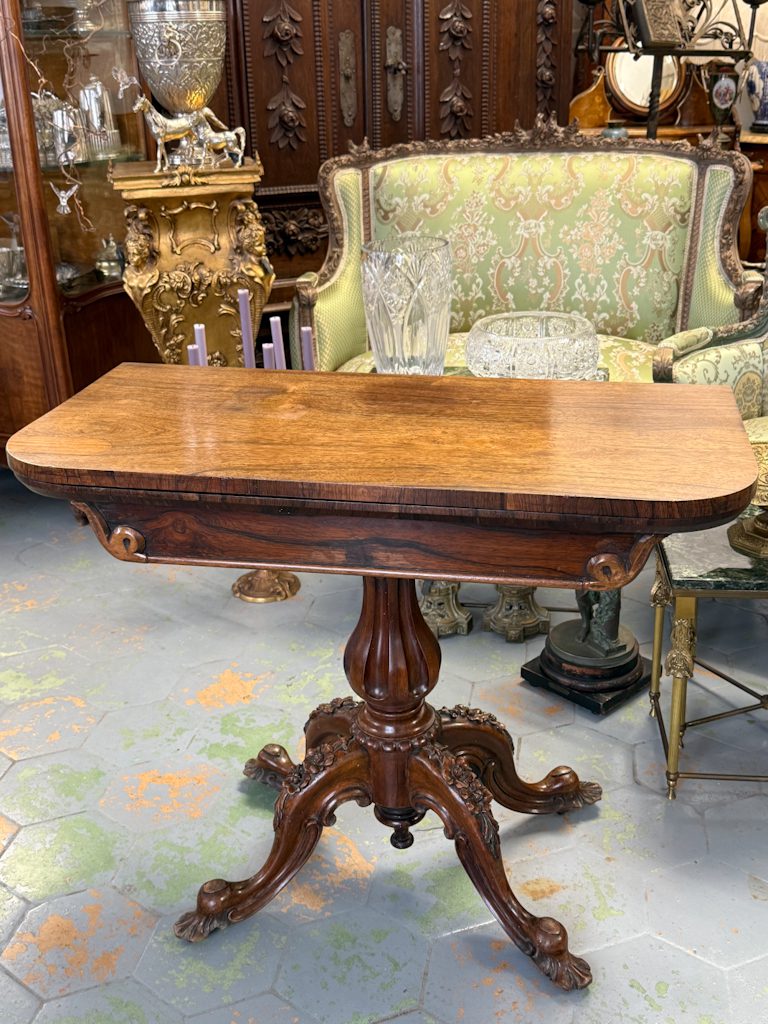
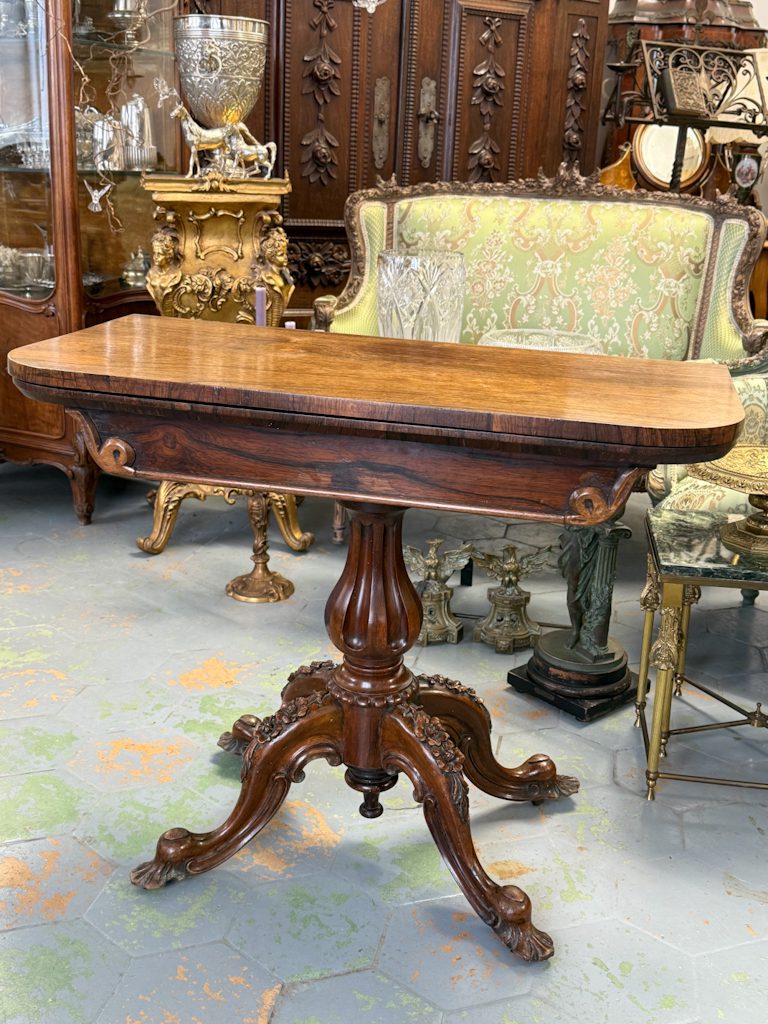
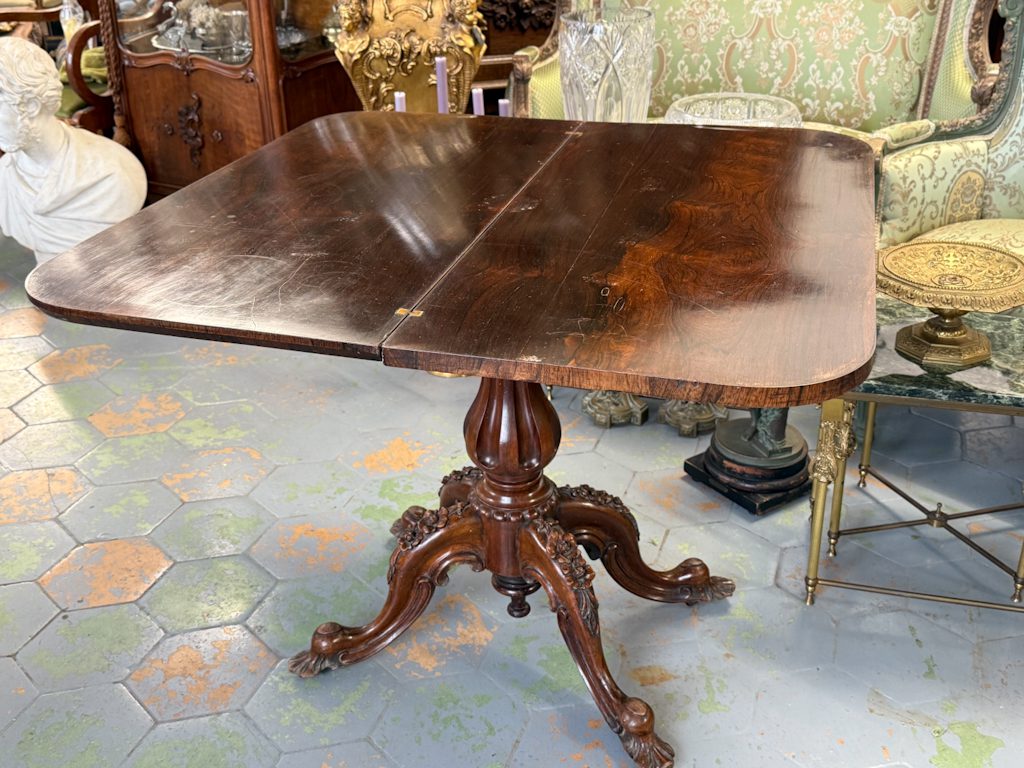
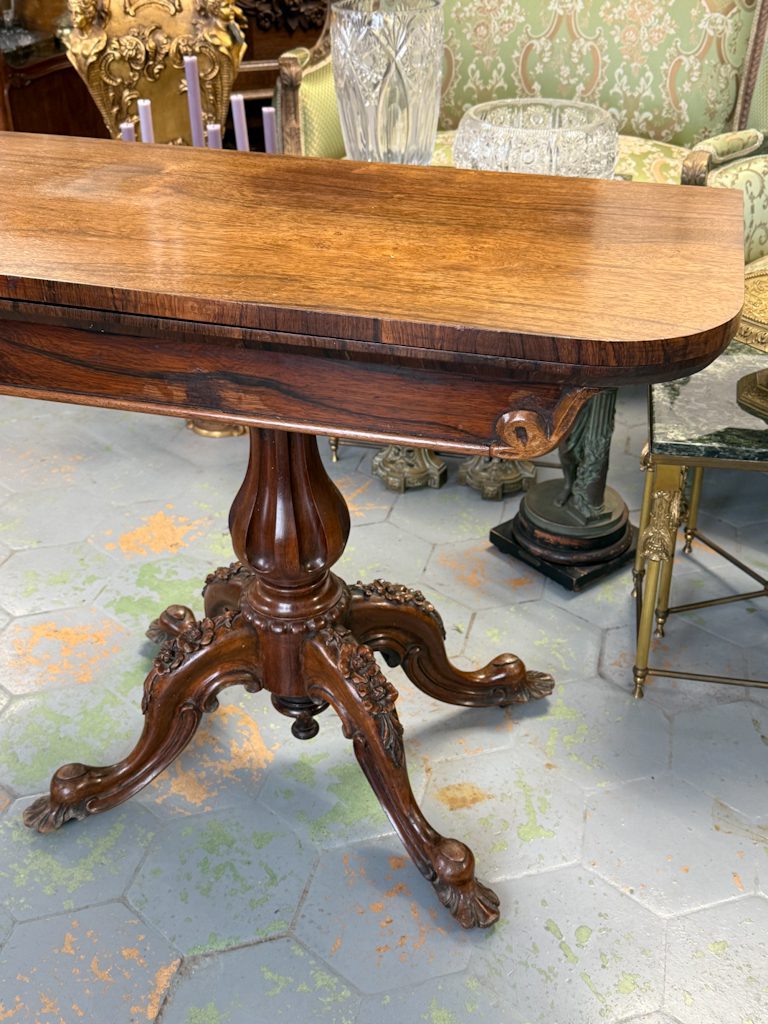
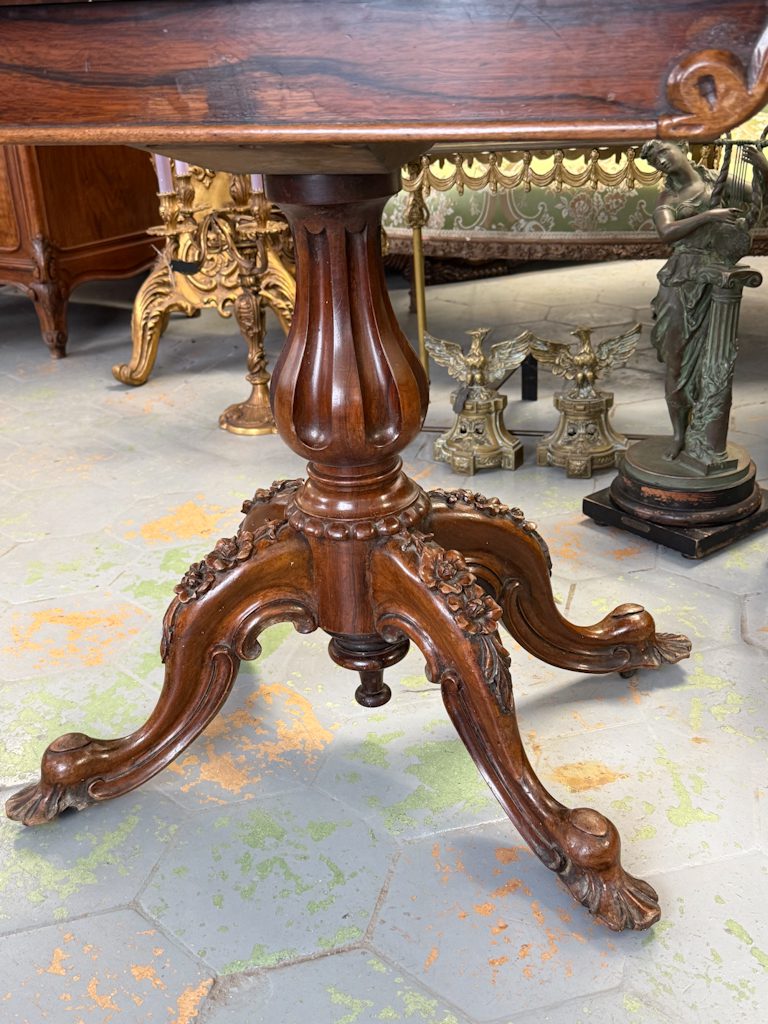
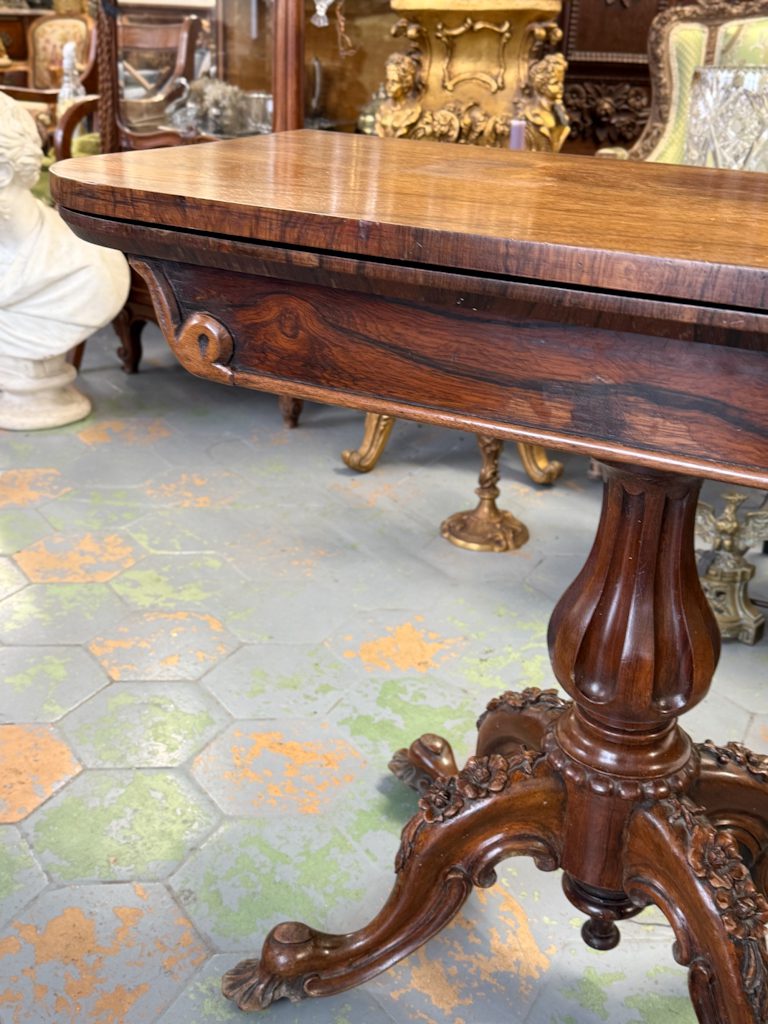
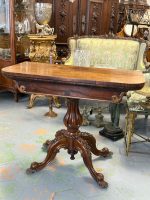
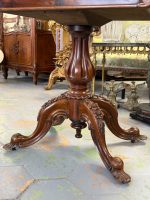
Rosewood Console Table with Tripod Pedestal — Victorian Era, England/Belgium, 19th Century (5450)
Height 75 cm Width 91.5 cm Color NaturalGreenCream
Description
DESCRIPTION IN
📐 Dimensions: Height 75 cm × Width 91.5 cm × Depth 45 cm. Open surface: 90 cm × 91.5 cm.
―――――――――――――――――――――
Rosewood Fold-Open Card Table with Carved Tripod Pedestal — Victorian / Rococo Revival, England or Belgium, c. 1840–1870.
―――――――――――――――――――――
🏛️ PERIOD, ARTISTIC STYLE, ERA
This exceptional rosewood card table with fold-open top and massively carved tripod pedestal base belongs to the highest period of Victorian decorative cabinetmaking — the years from 1840 to 1870, when England and Belgium produced rosewood furniture with virtuoso Rococo Revival carving that frequently surpassed the plastic quality of 18th-century originals.
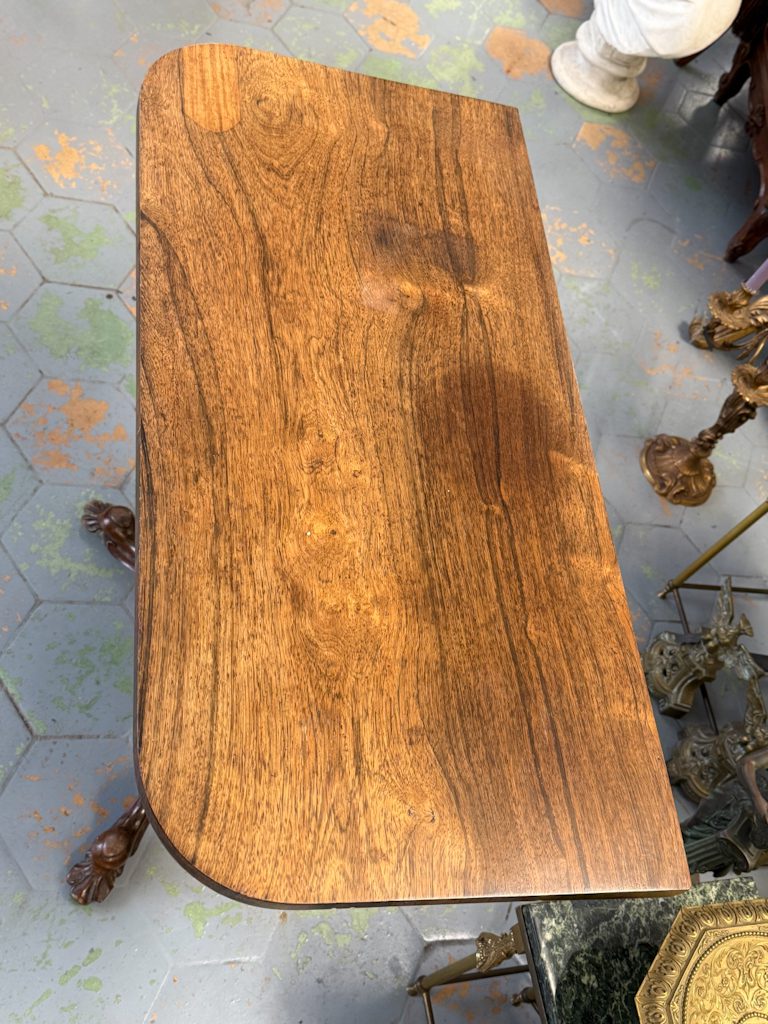
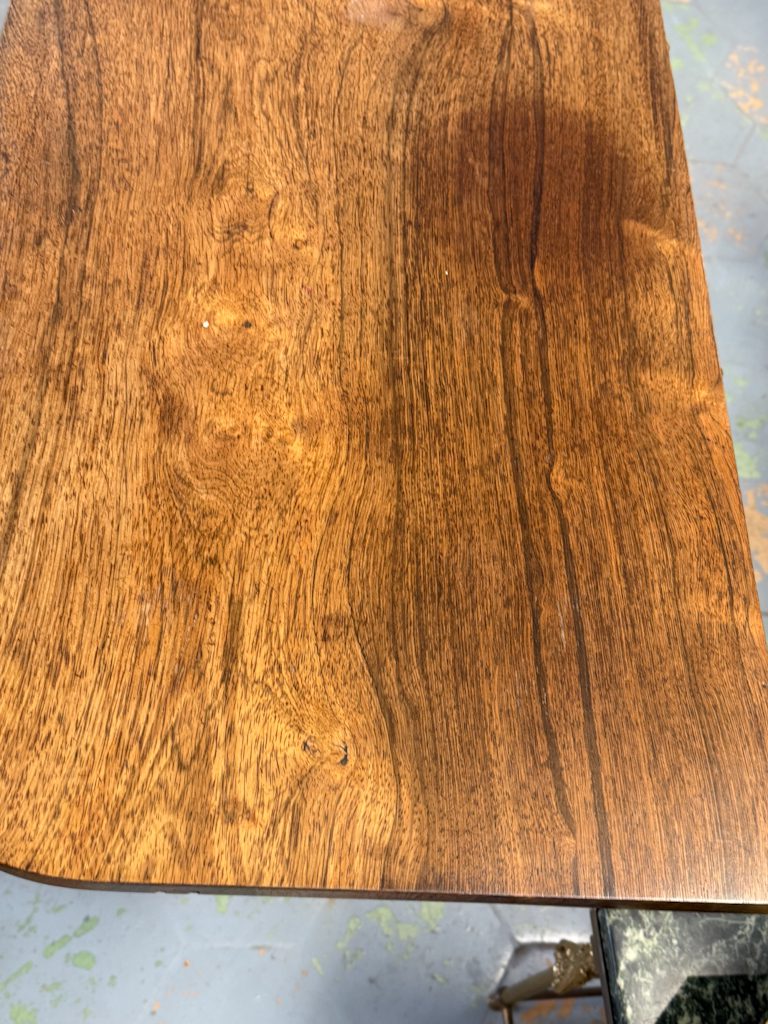
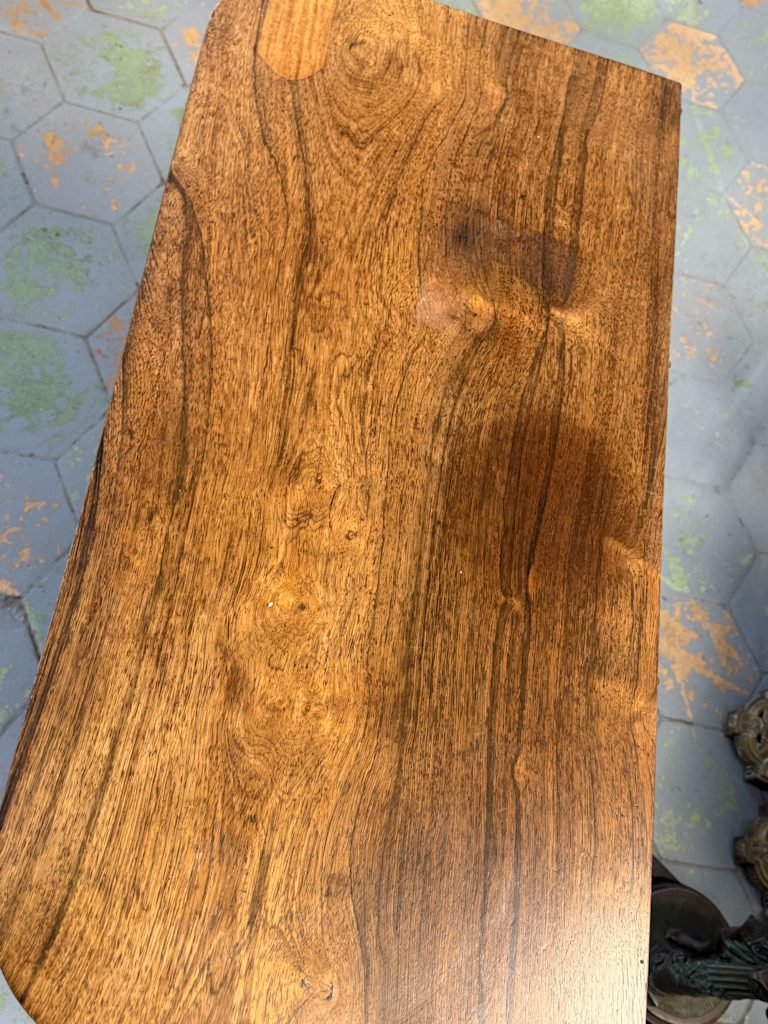
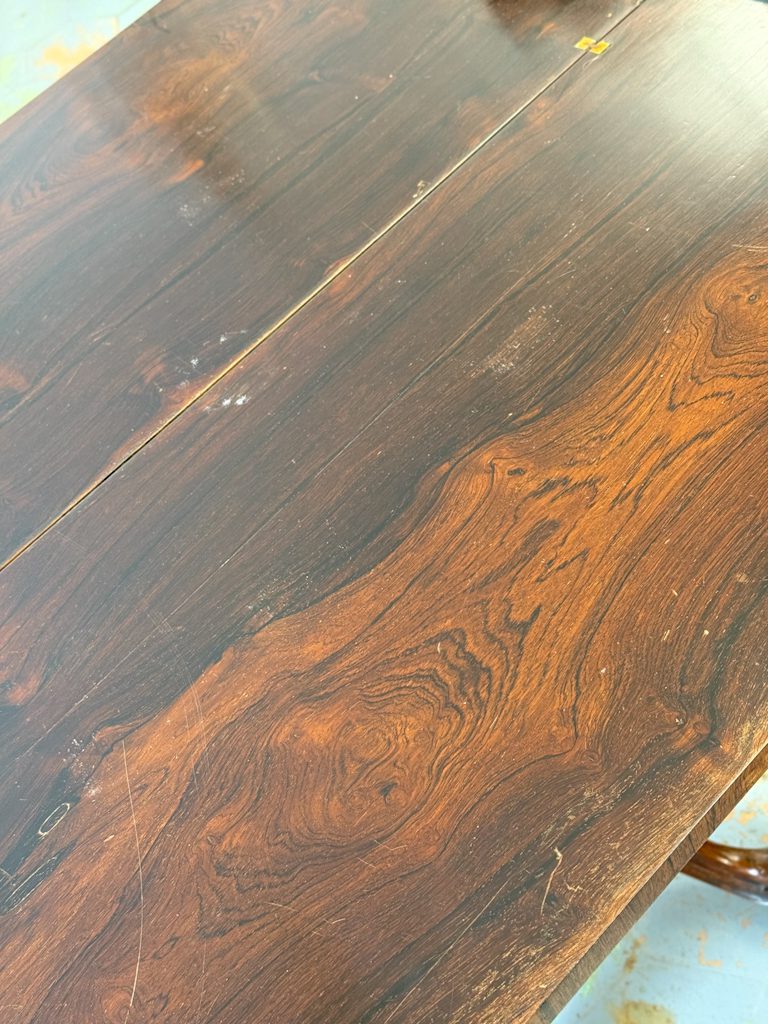
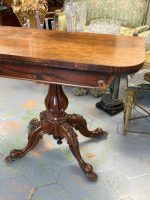
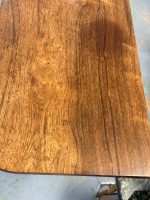
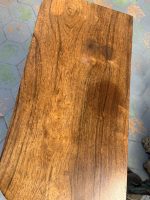
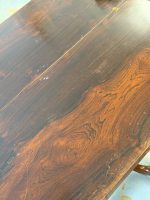
Stylistically, the piece belongs to the Rococo Revival movement — known in the Victorian era as the Louis Quatorze or Louis Quinze style — which represented a new, romantically interpreted vision of these historical forms rather than their direct imitation. The rosewood veneer surface displays the vivid natural figuring — dark veins against a lighter ground — characteristic of Brazilian rosewood (Dalbergia nigra), prized above all other timbers by Victorian cabinetmakers.
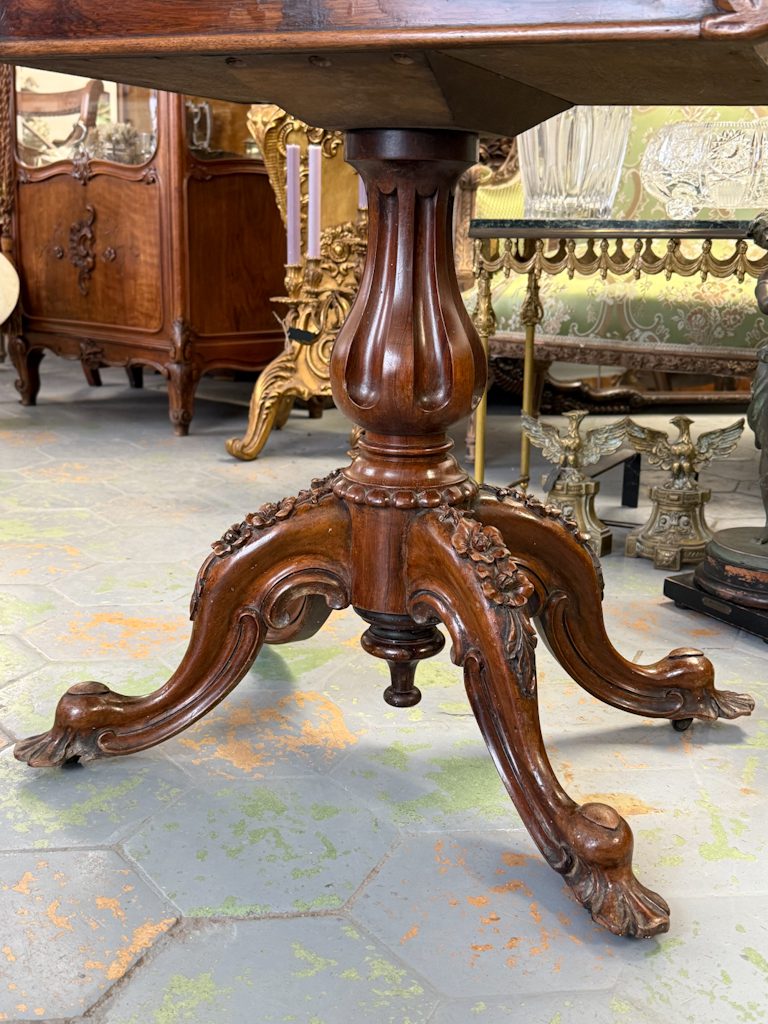
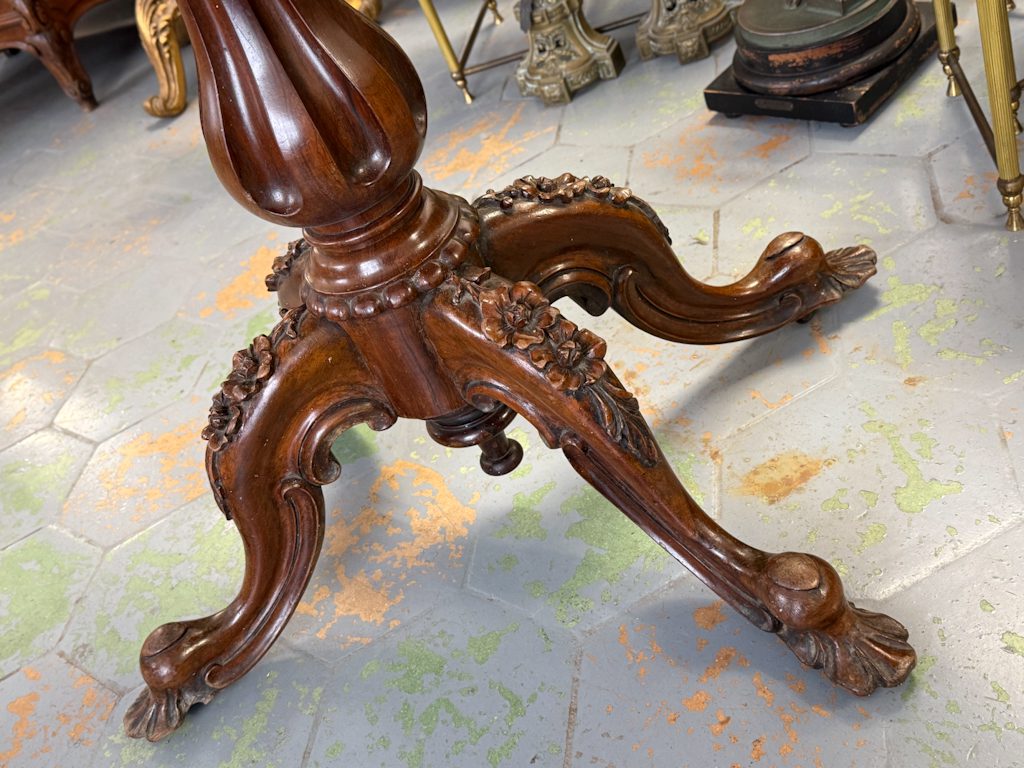
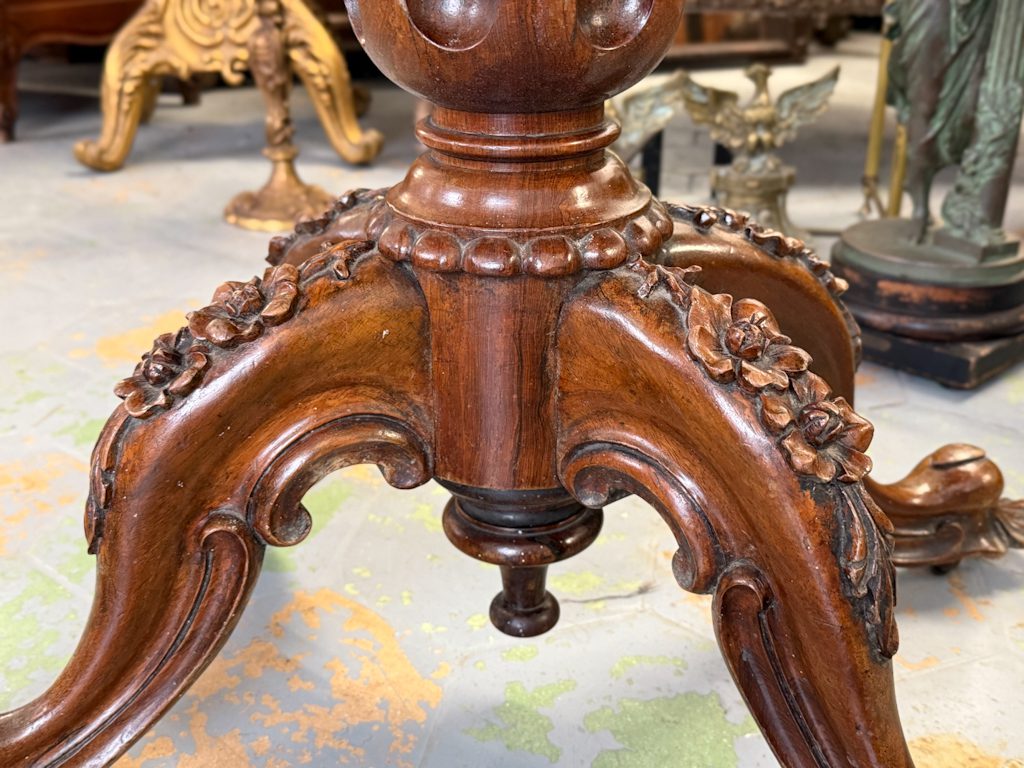
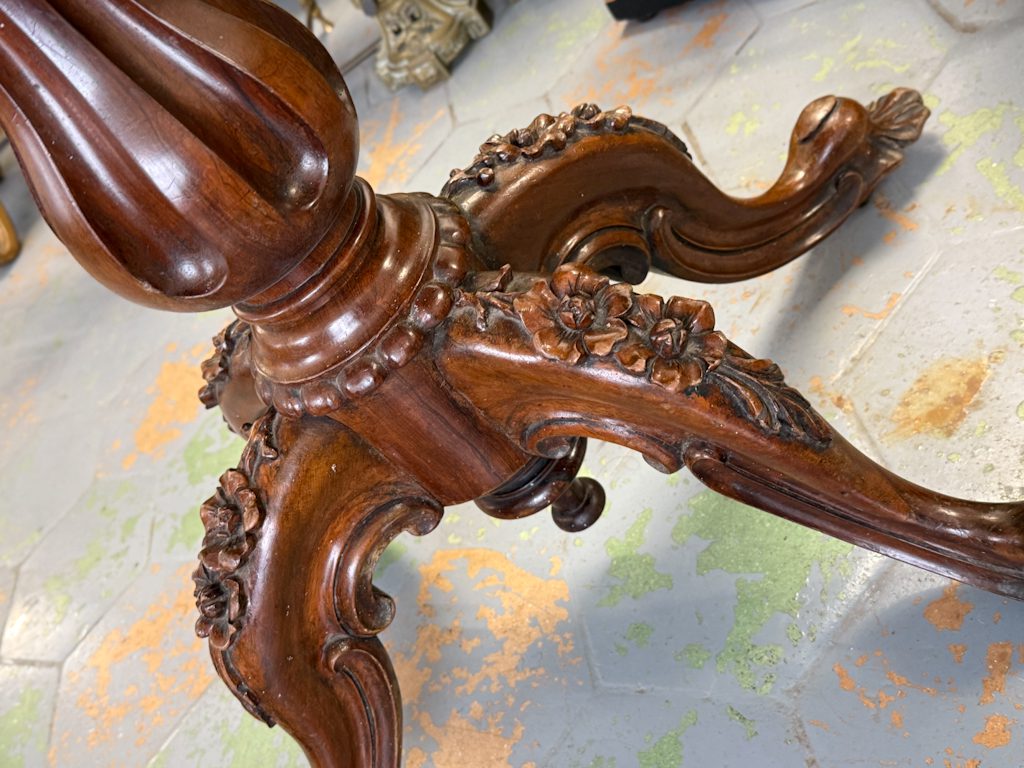
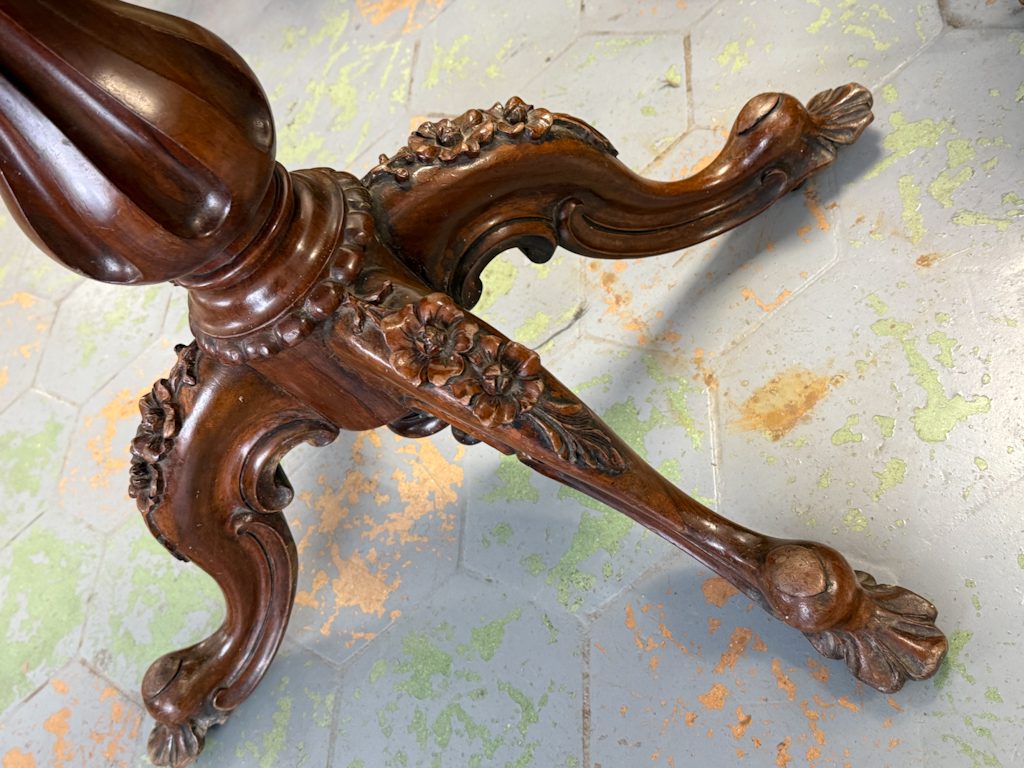
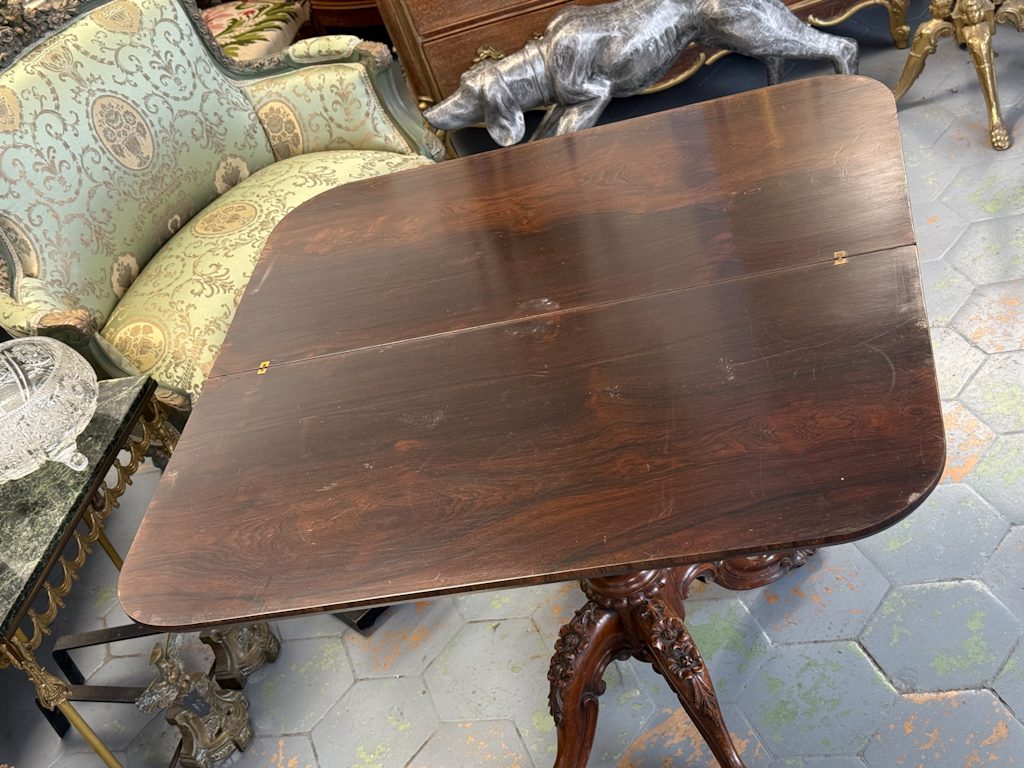
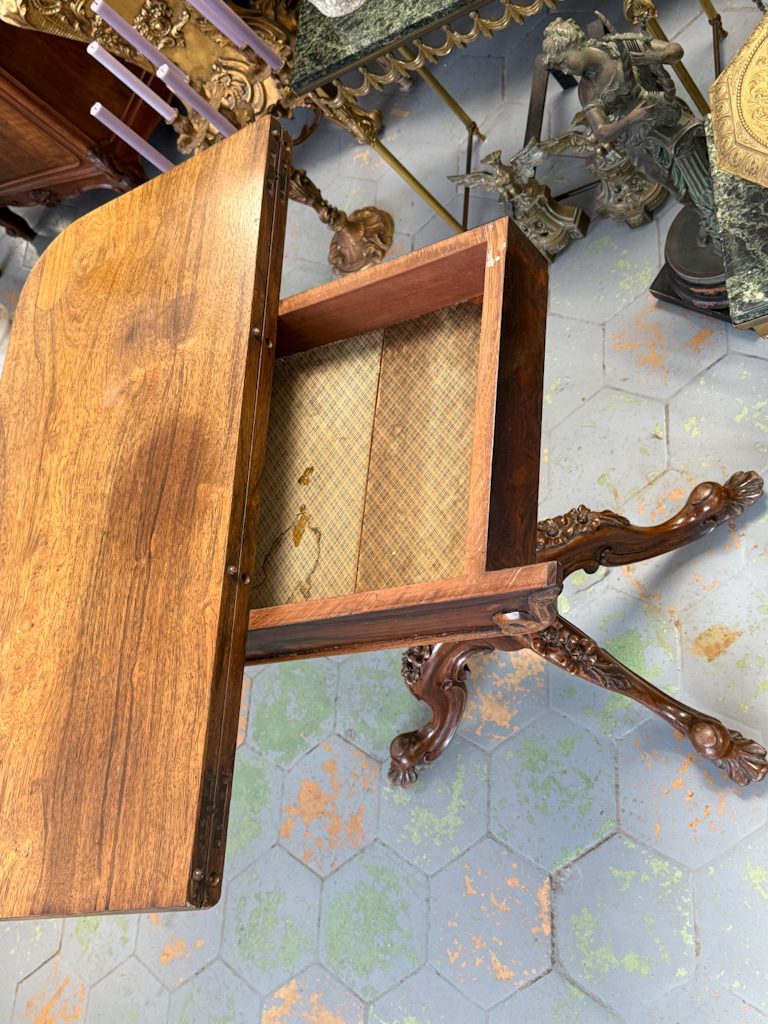
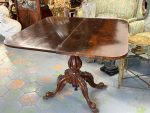
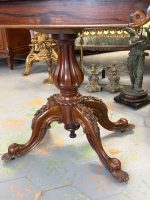
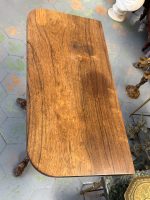
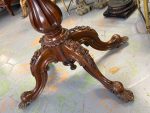
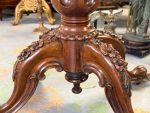
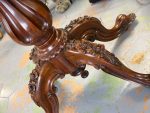
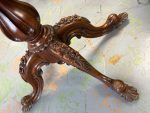
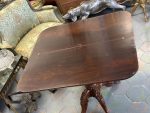
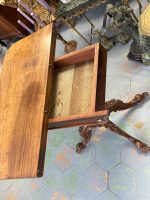
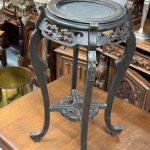
The tripod pedestal base is the artistic culmination of the piece: a massive carved vase-form central column with gadroon ornament, from which spring three broad curved legs bearing acanthus leaves and naturalistic floral garlands carved at their junction with outstanding botanical precision — roses and leaves of exceptional plasticity. The legs terminate in large lion’s paw (patte de lion) sabots, a hallmark of Victorian Rococo Revival cabinetmaking. The top is serpentine-profiled with softened corners and delicate scroll ornaments on the sides. Opened, the surface becomes nearly square and reveals the original baize lining beneath.
✨ Belle Époque snapshot: This table may have been made in the very year Charles Dickens was writing Great Expectations — a novel in which card games and gaming tables are symbols of social ritual. In Victorian England, a games table was not merely furniture — it was a mark of status, signalling the education, social standing, and cultural habits of a household. At such a table, it was not only ladies who sat — fates were decided there.
―――――――――――――――――――――
⚜️ MAKER AND MARK
No specific maker’s mark has been identified on this piece. However, the quality of the rosewood veneer figuring, the virtuosity of the tripod pedestal carving, and the plasticity of the naturalistic floral garlands point clearly to a high-calibre or Belgian cabinetmaking workshop. In Victorian England, games tables of this type were produced by makers including Gillows of Lancaster, Holland & Sons, and several London and Birmingham workshops specialising in the highest category of drawing room furniture. The choice of rosewood and the tripod pedestal form correspond to the standard of the finest Victorian card tables of the 1840s–1860s.
―――――――――――――――――――――
💎 RARITY AND SIGNIFICANCE
Rosewood card tables with carved tripod pedestal bases and naturalistic floral garlands are genuinely rare on the antique market — the great majority of Victorian card tables survive with simpler cabriole legs or without their original baize surface. This piece stands out for the virtuosity of the tripod pedestal carving, the beauty of the rosewood veneer figuring, and the preservation of the opening mechanism. Victorian rosewood furniture with Rococo Revival carving is currently experiencing significant renewed collector demand across the United Kingdom and continental Europe.
―――――――――――――――――――――
🕯️ USE IN INTERIORS, DESIGN AND PHOTOGRAPHY
Closed, the table functions as an elegant side table with a strongly sculptural silhouette — the tripod pedestal, viewed from any angle, reads as a work of sculpture in its own right. Open, it becomes a near-square gaming table at which four players can comfortably sit. The dark rosewood tone with its natural figuring harmonises with clay, terra cotta, deep green, and cream-toned interiors. Interior designers deploy it in Victorian, Historicist, Rococo Revival, or dark academia schemes as the primary spatial composition object. For photographers, the tripod pedestal base and the rosewood veneer figuring in detail shots are absolutely exceptional.
―――――――――――――――――――――
🎁 AS A GIFT
A rosewood card table with a carved pedestal is a gift with character — a gift for someone who values art not only on the wall but in daily life. Suitable as a distinguished corporate offering, and equally compelling as a personal gift for a chess or card enthusiast, a collector of Victorian decorative arts, or anyone captivated by the cabinetmaking tradition.
―――――――――――――――――――――
🔍 CONDITION
The table is in good overall condition for its age. The rosewood veneer surface shows natural scratches and some localised veneer lifting in places — characteristic of authentic Victorian pieces and only confirming their provenance. The baize lining on the underside of the open leaf is worn and may benefit from replacement. The tripod pedestal carving is well preserved with full integrity of the floral garlands. The opening mechanism functions correctly. The structural frame is stable and sound.
Condition is fully reflected in the photographs.
―――――――――――――――――――――