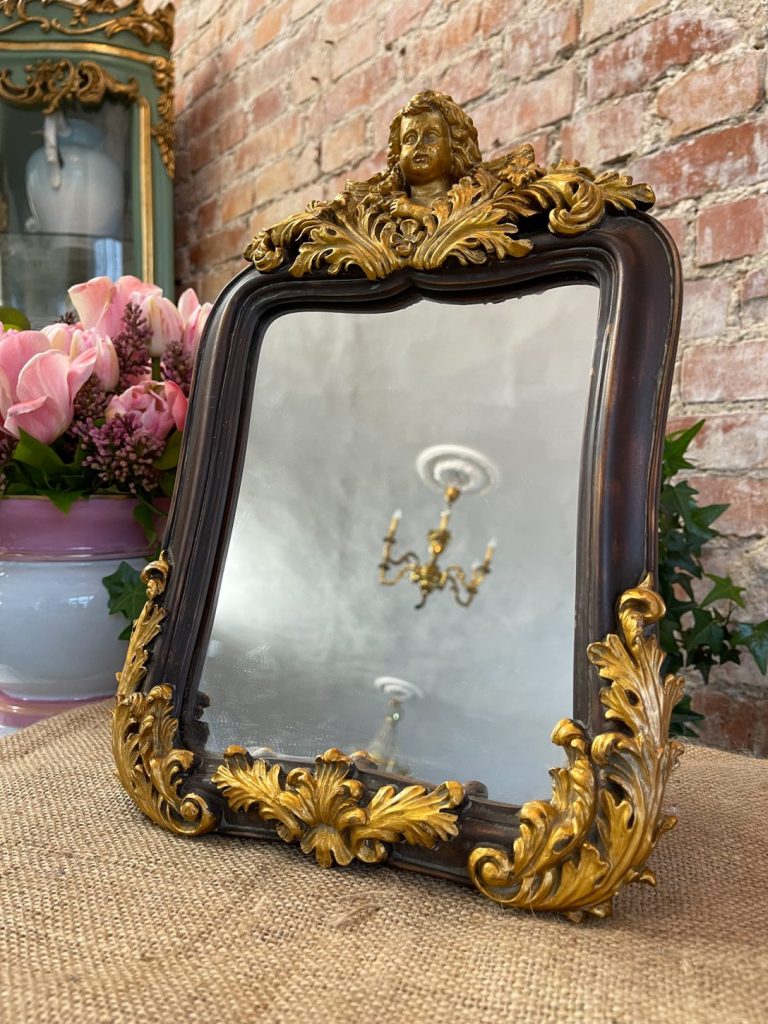
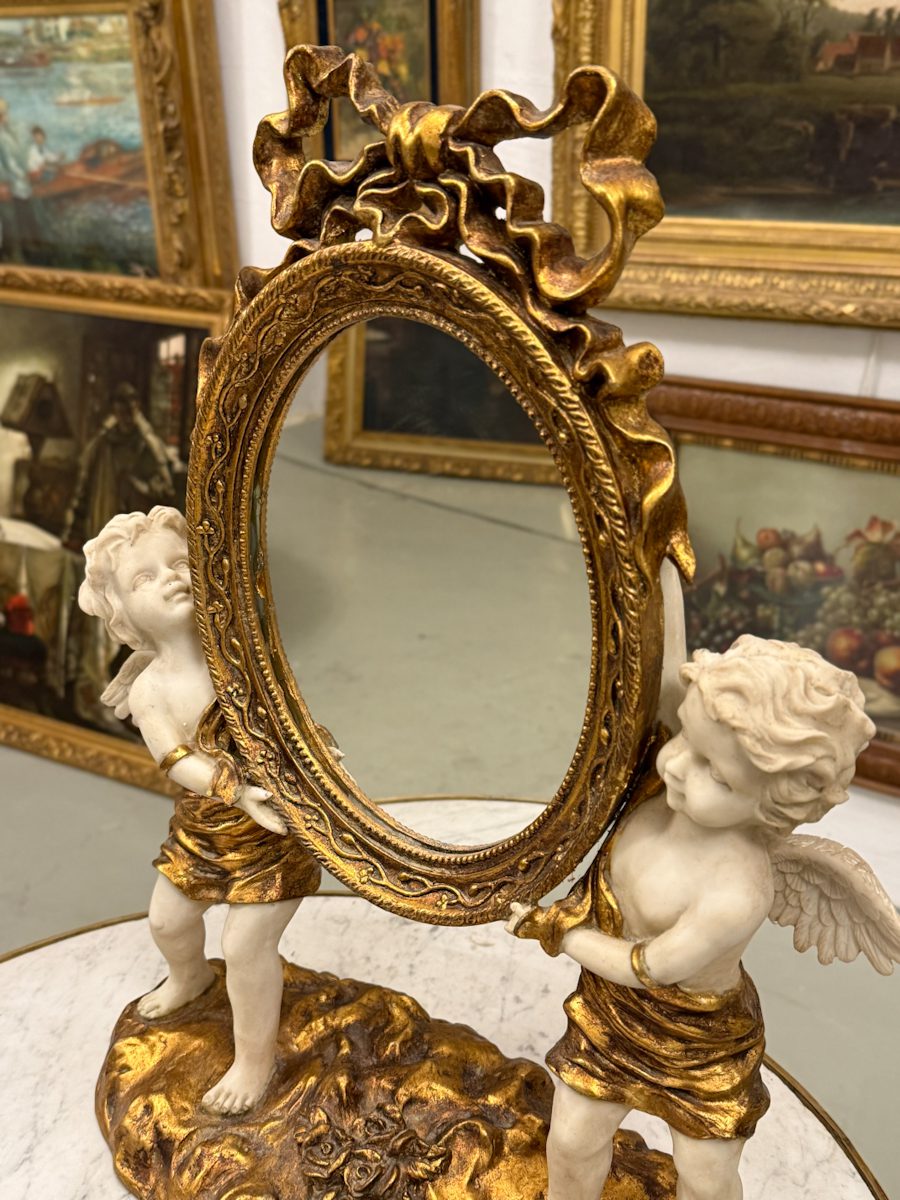
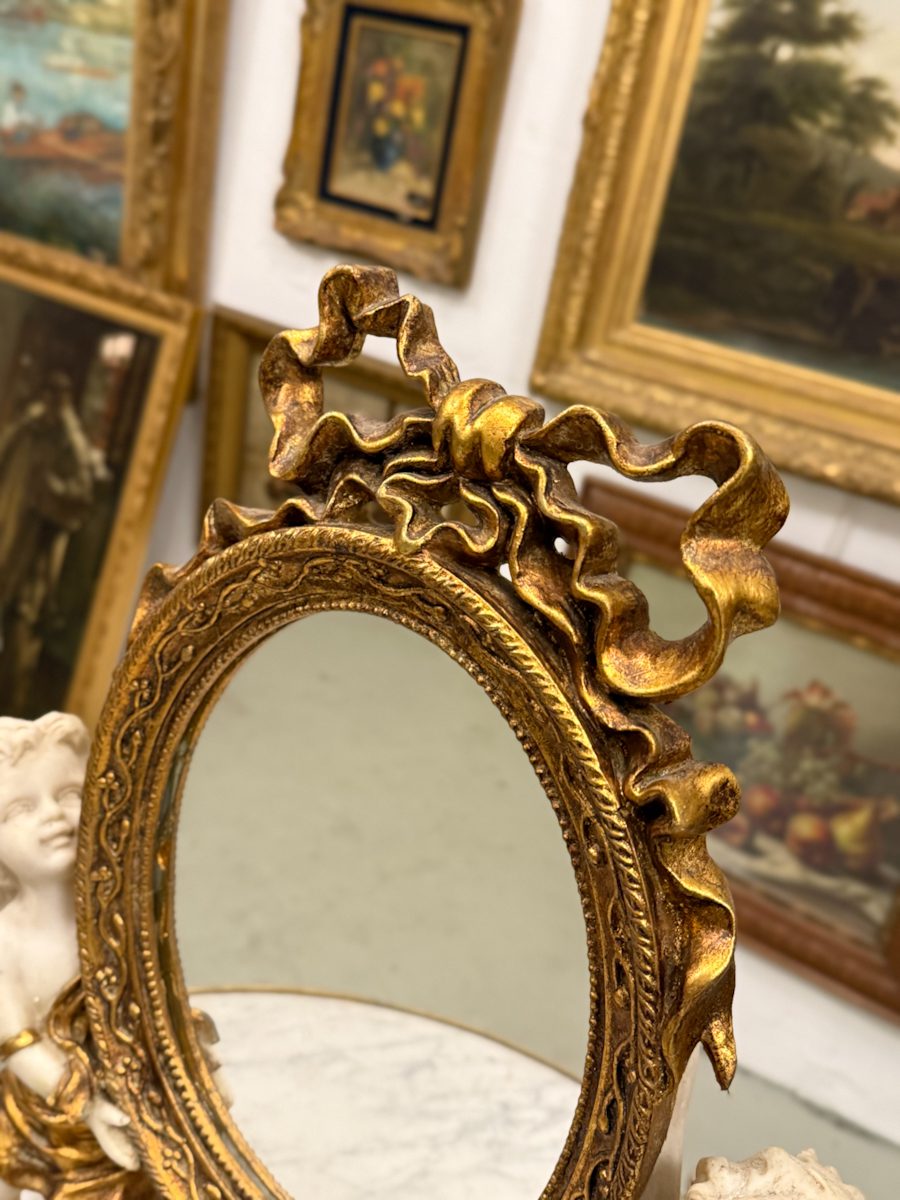
Neo-Baroque table mirror with angel (cherub) figures — France, circa 1900 PRODUCTION PERIOD, ART STYLE, ERA This luxurious, medium-sized table mirror is an outstanding masterpiece of the Historicism (Neo-Baroque) era, created in France around 1900. A period that coincided with… 350,00 €
You’re now subscribed to price tracking for this product. We’ll notify you if the price drops. 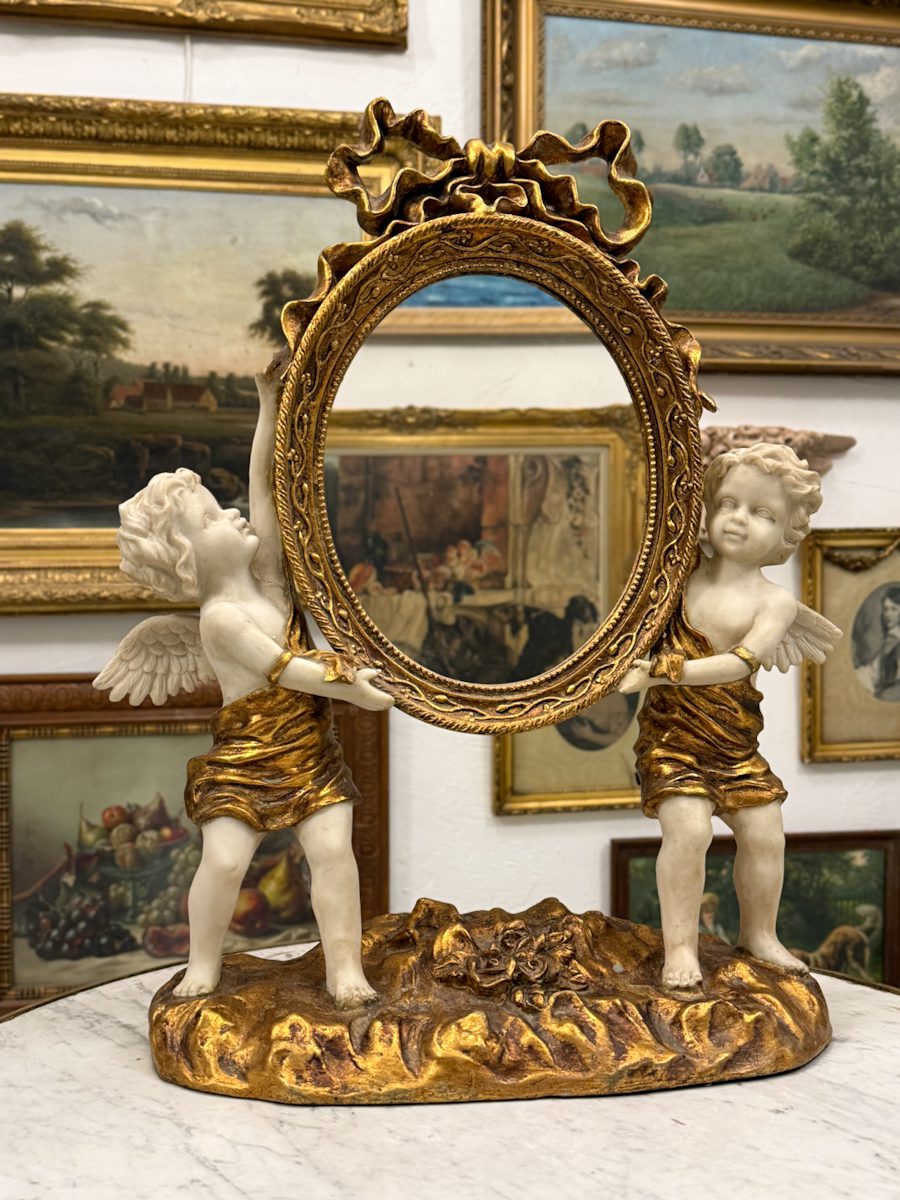
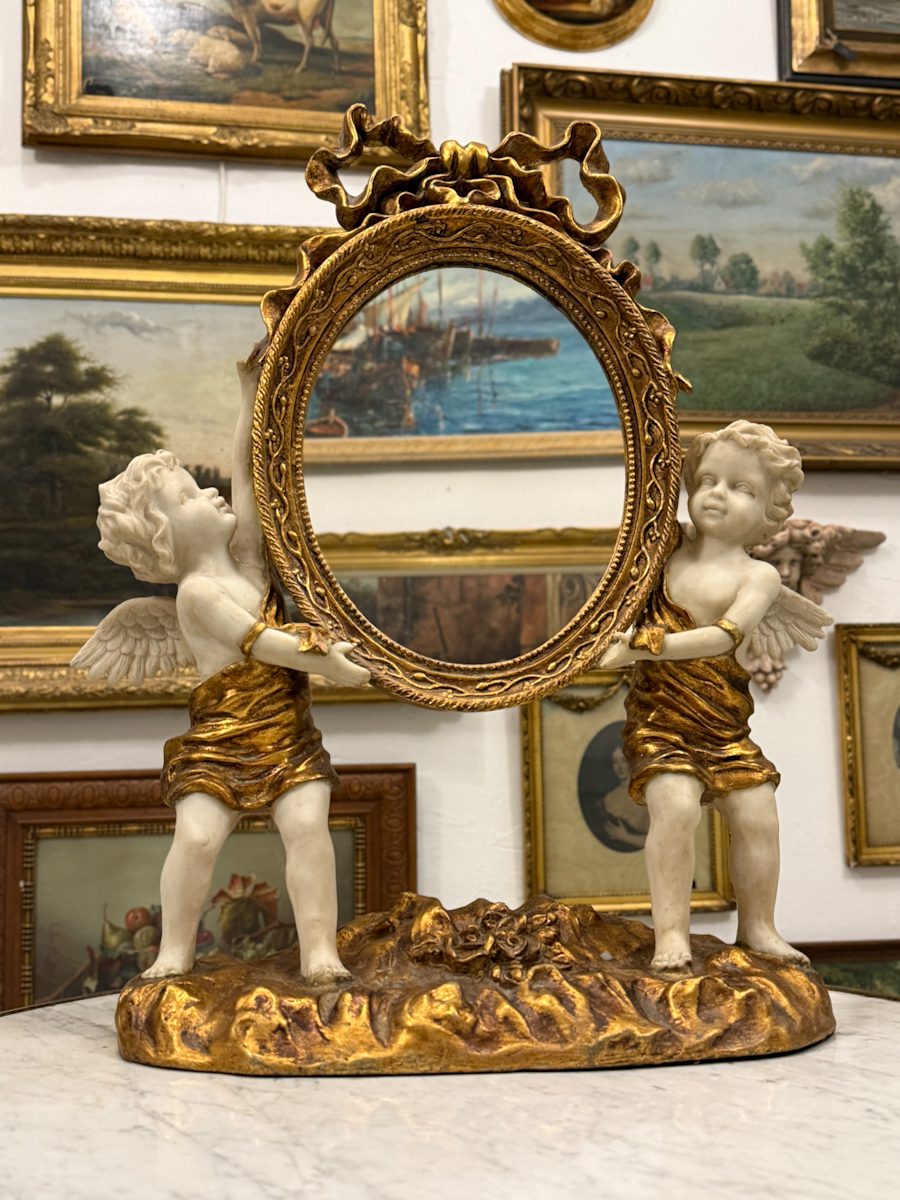
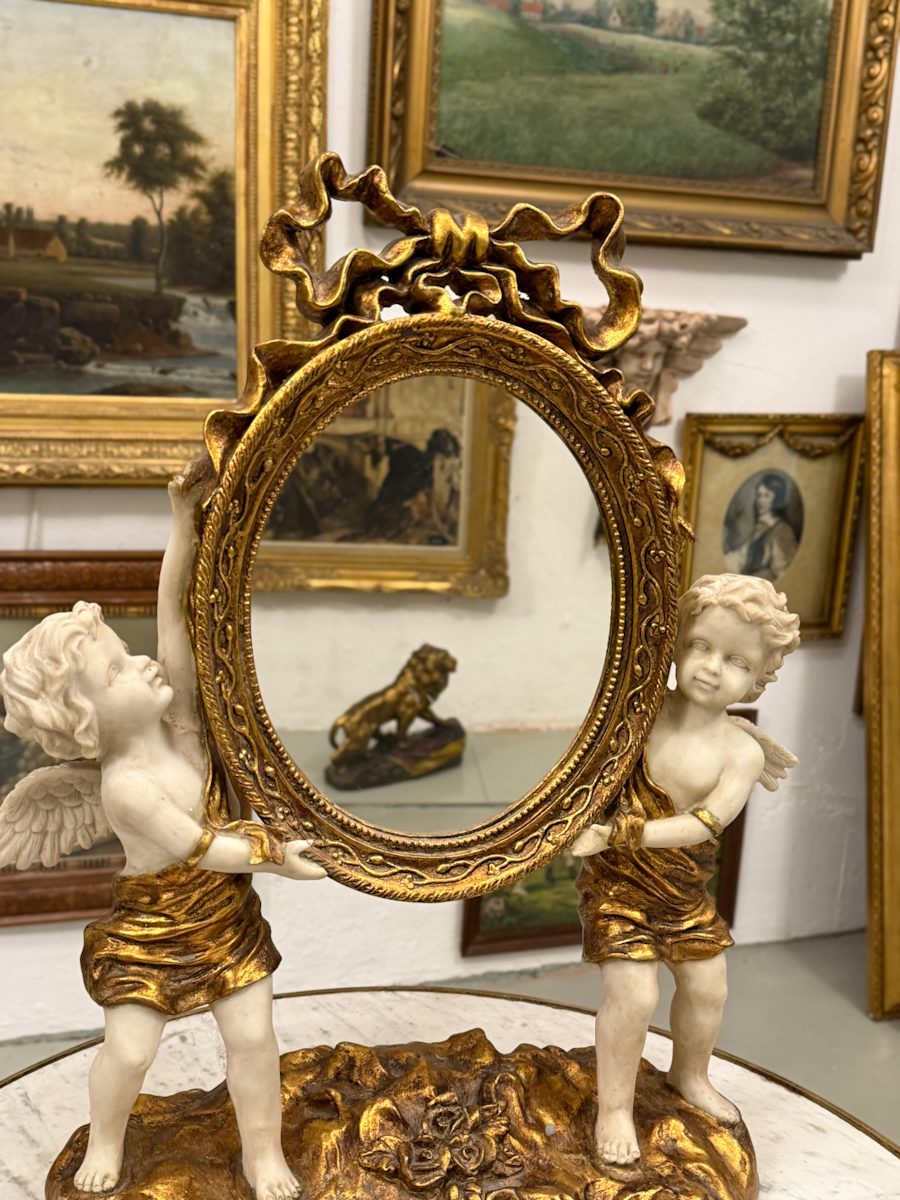
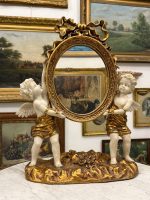
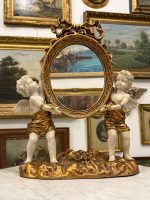
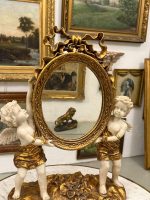
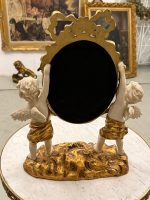
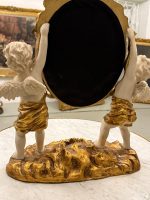
Exclusive Neo-Baroque Table Mirror with Angel (Cherub) Figures – France, c. 1900 (6208)
Color BronzeGoldNatural
Description
Neo-Baroque table mirror with angel (cherub) figures — France, circa 1900
PRODUCTION PERIOD, ART STYLE, ERA This luxurious, medium-sized table mirror is an outstanding masterpiece of the Historicism (Neo-Baroque) era, created in France around 1900. A period that coincided with the beginning of the Belle Époque, reviving the splendor of Madame de Pompadour and the court of Versailles in European decorative arts, where every household item was transformed into a theatrical and visually rich art object. This mirror (table mirror cherubs) is a direct messenger of this golden age’s aesthetics.
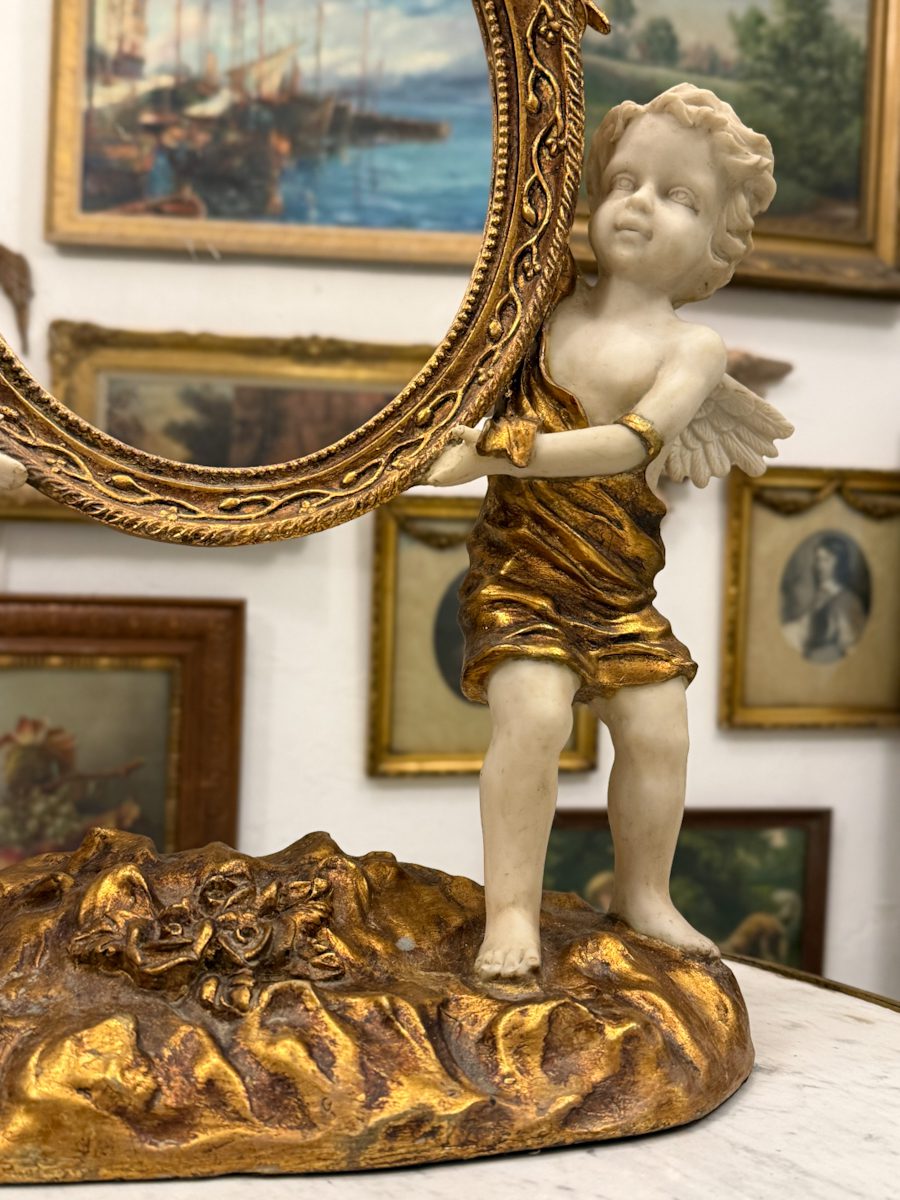
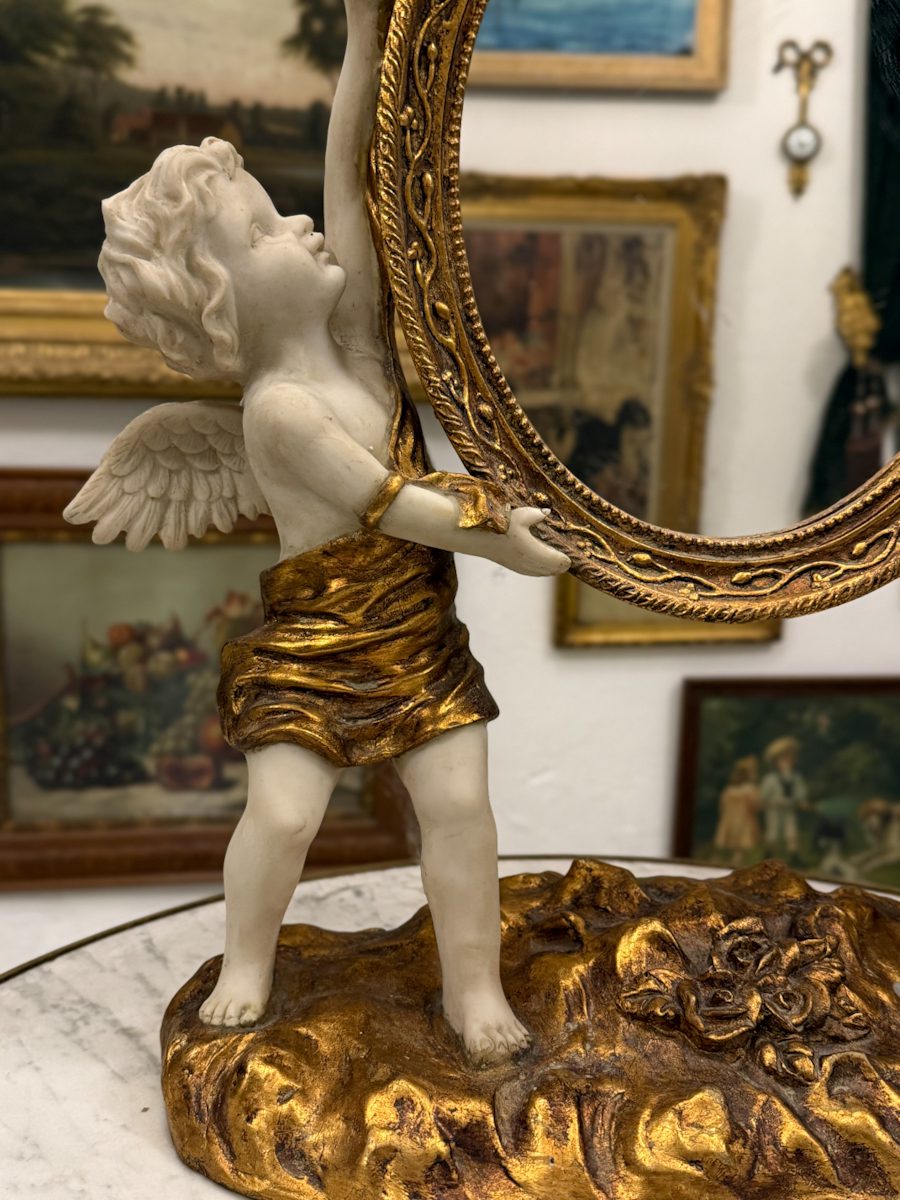
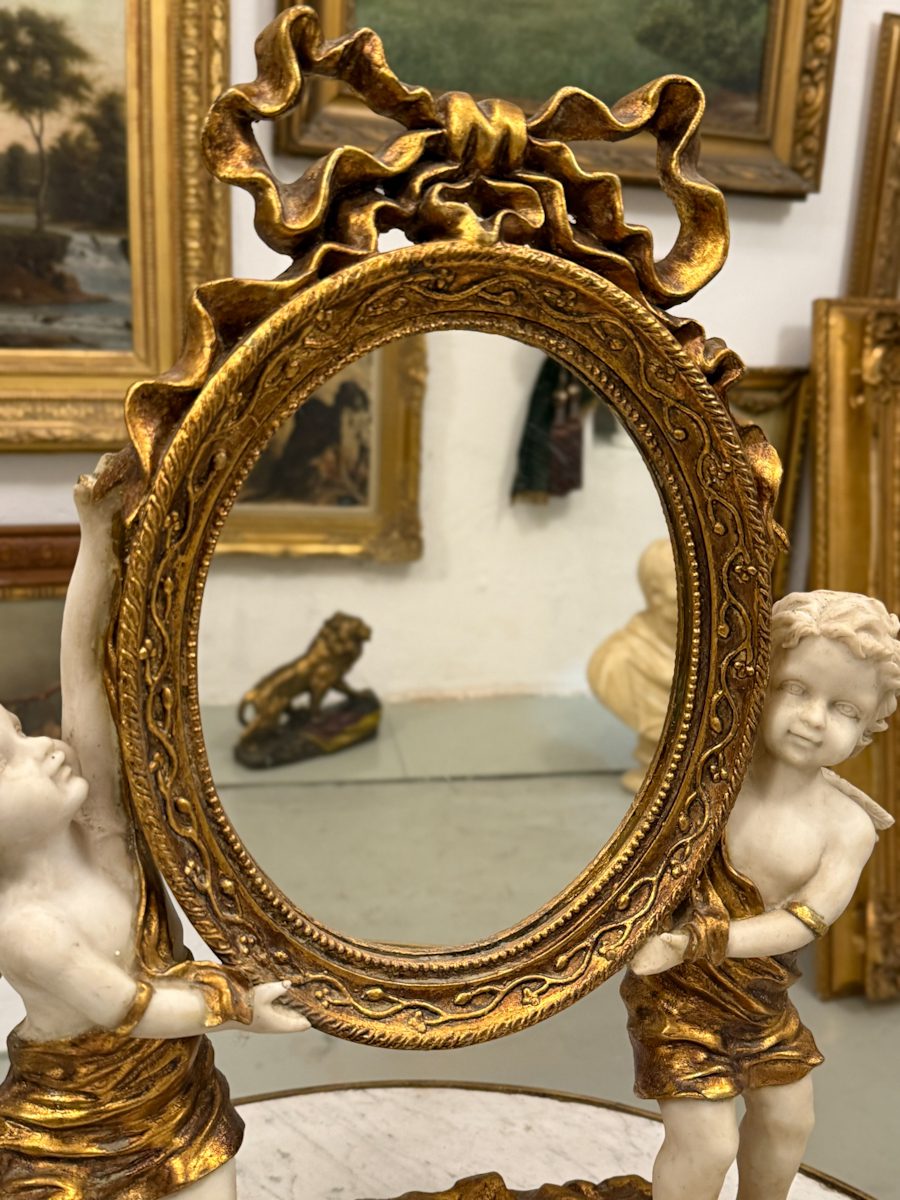
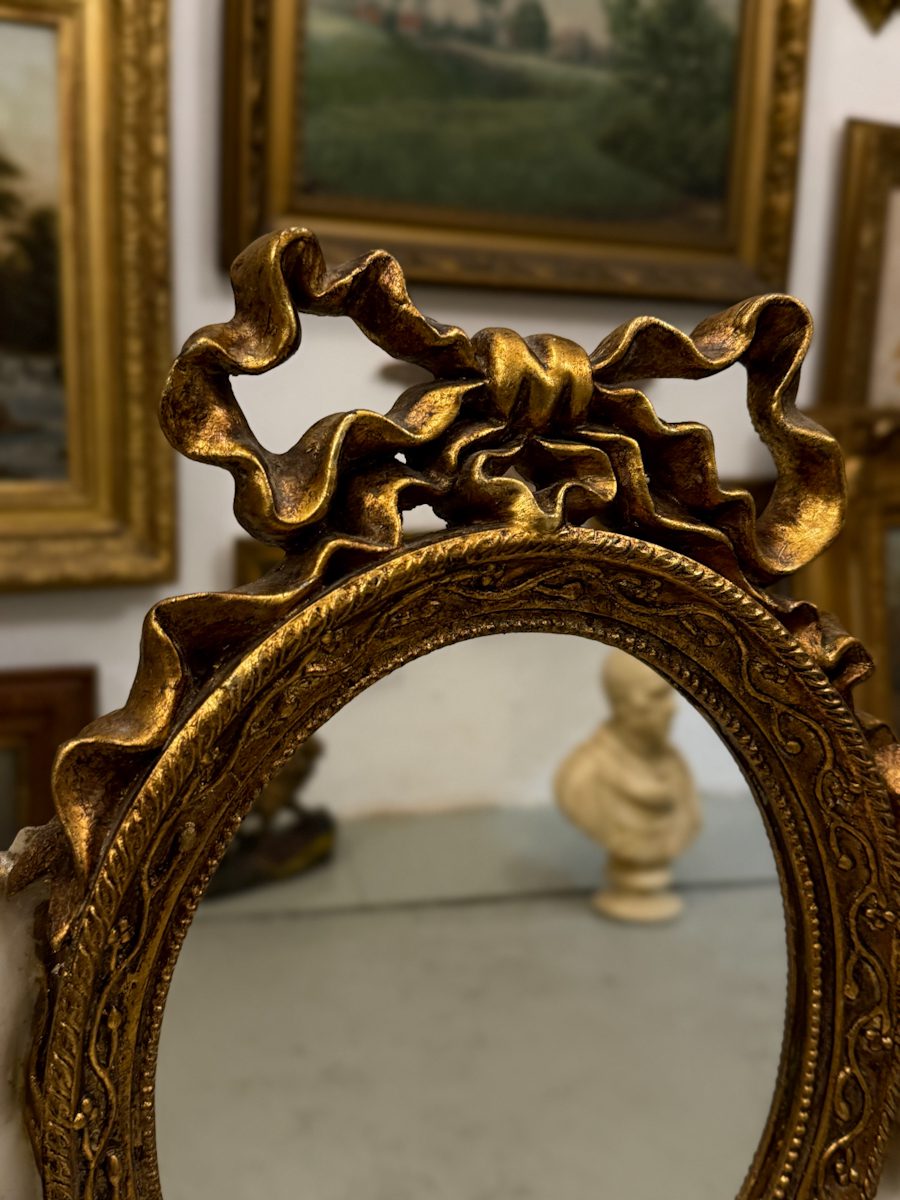
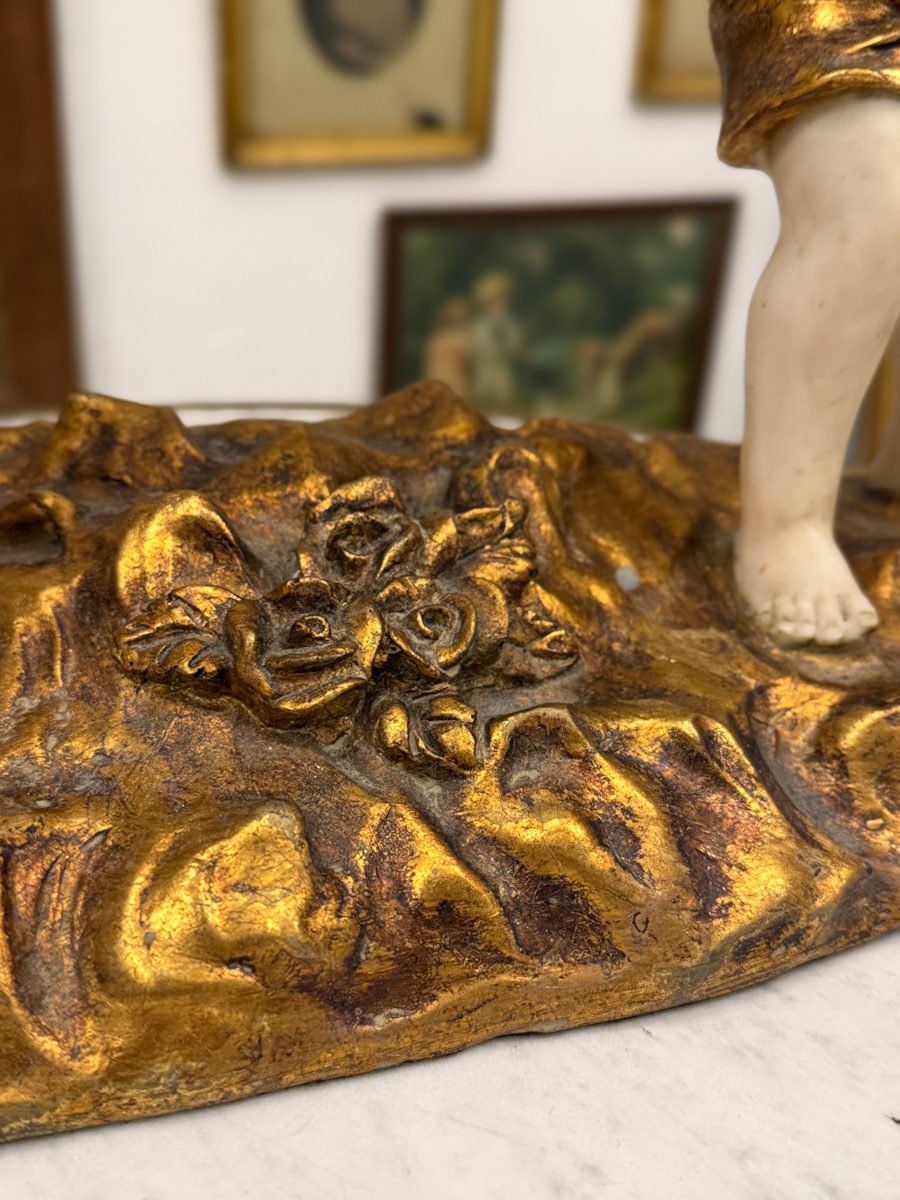
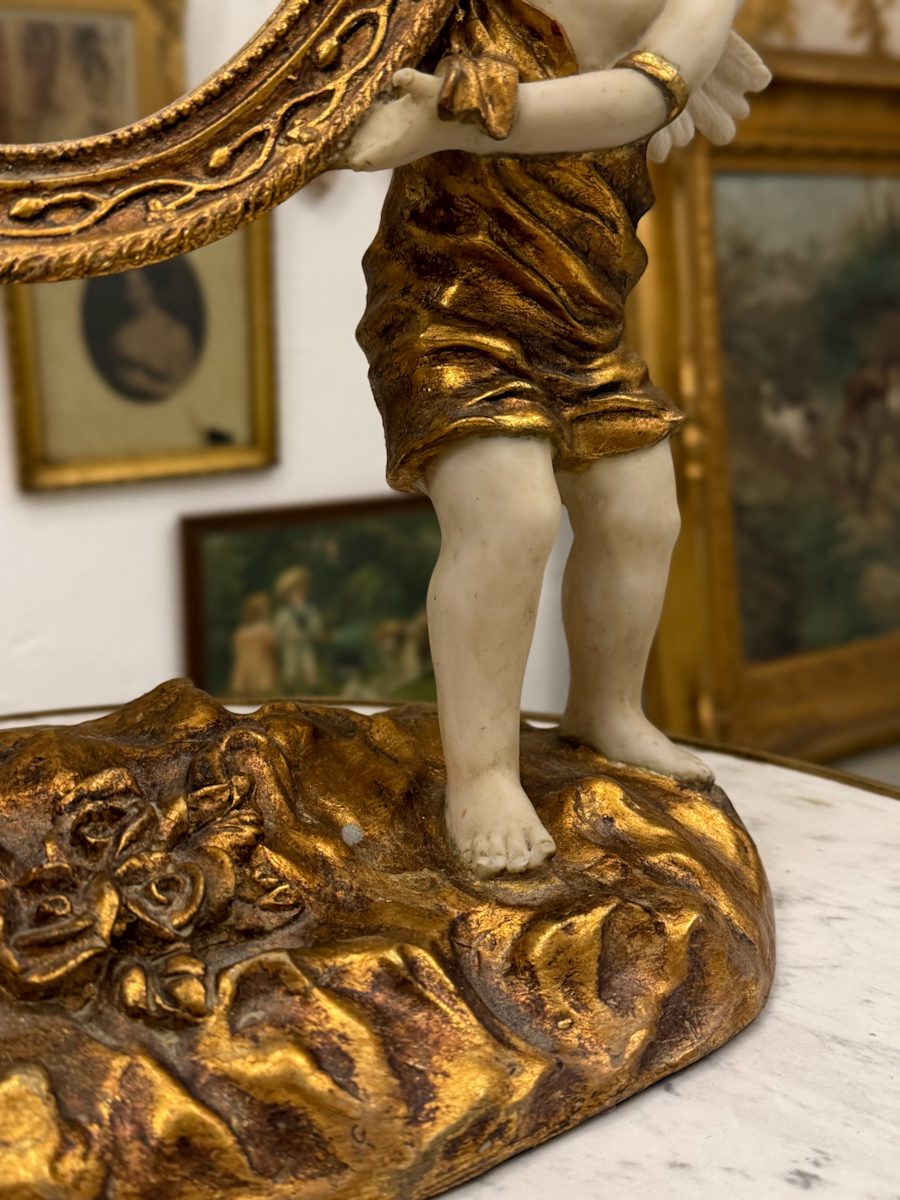
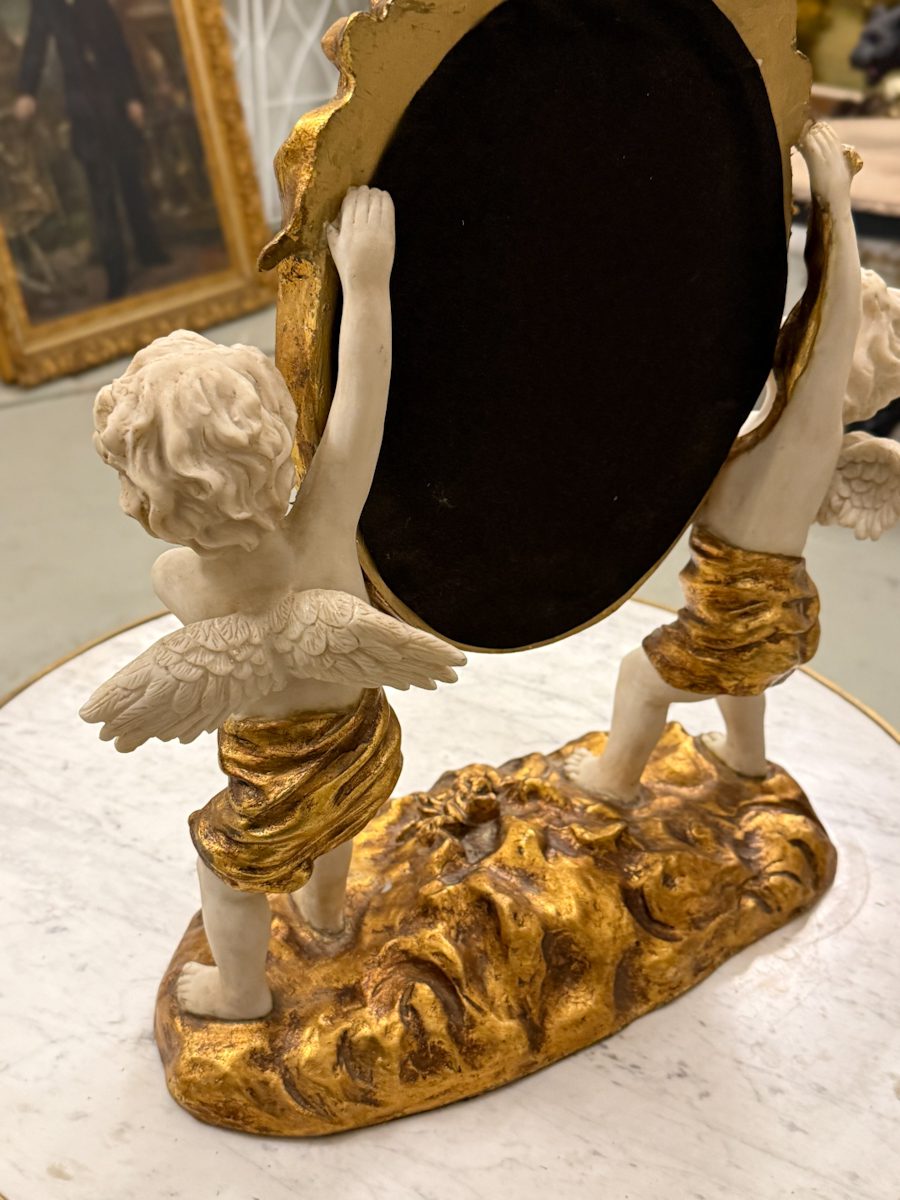
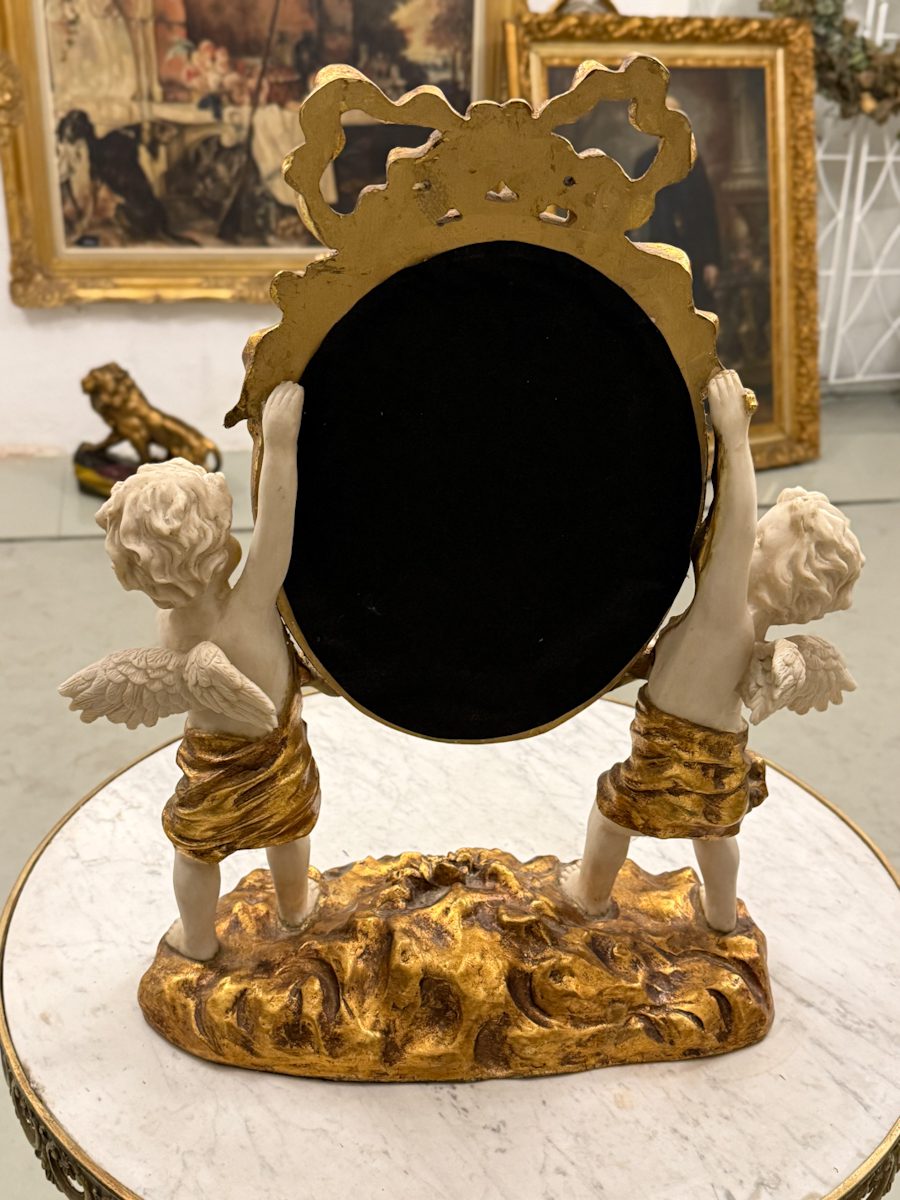
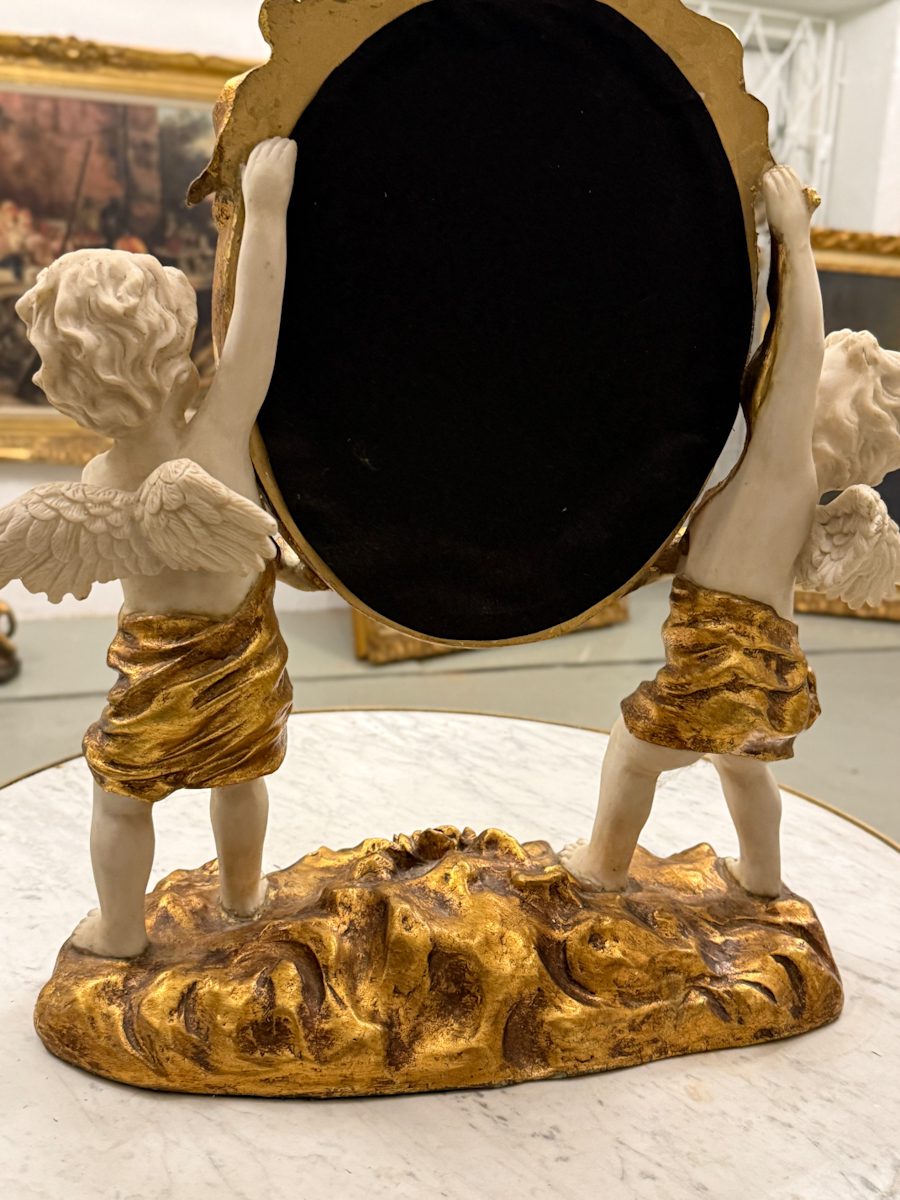
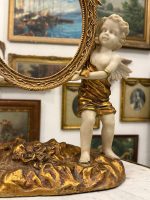
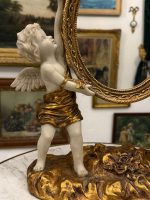
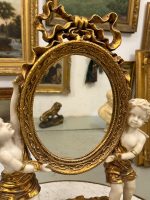
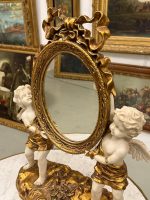
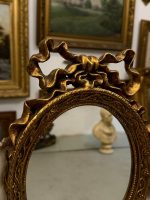
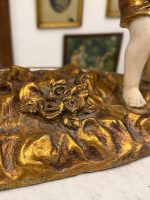
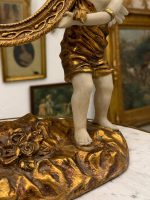
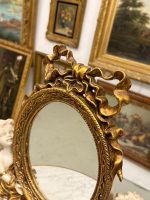
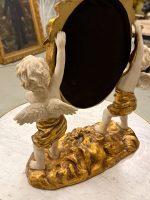
At the center of the mirror’s composition is an oval, deeply profiled frame with a delicate vine or leaf ornament and an expressive, lush ribbon knot (noeud) at the top. The frame is dynamically supported on both sides by two expressive angel (cherub) figures, crafted from fine, matte stoneware (plaster/stone composite imitating marble or alabaster). The drapery, wings, and curls of the figures’ hair are gilded, creating a sophisticated contrast with the white texture of the bodies. The entire ensemble rests on a massive, relief-decorated base adorned with a relief of rose bouquets. The back of the mirror is carefully lined with dark protective material, attesting to the high quality of craftsmanship.
A snapshot of the Neo-Baroque era: The year is 1899, Vienna. In the boudoir of the Hofburg Palace, Empress Elisabeth (Sisi) prepares for her usual promenade. Silence reigns in the room, broken only by the rustle of silk dresses. A delicate set of toiletries rests on the table, and the morning light, filtering through the heavy curtains, immediately catches the golden shimmer on the wings of two small Amors. She doesn’t even look directly into the mirror glass; her gaze lingers for a moment on the white, matte figures that so stubbornly hold the heavy oval. This contrast of cold stone and warm metal on her fingers instantly imparts a strange sense of peace and anticipation before the long day. It is a moment when time stands still between the past of Versailles and the inexorable dawn of the new century.
MANUFACTURER AND FOUNDRY MARK The item lacks a visible direct author’s signature or foundry mark, which was typical for luxury interior items of this kind around 1900, as they were often made in specialized Parisian bronze and interior decor workshops by individual commission. The quality of execution — the plasticity of the figures, the facial features, and the depth of the finish — clearly indicates a high-level manufacturer who worked for the elite clientele of the Third Republic.
RARITY AND SIGNIFICANCE Such table mirrors with fully preserved angel (cherub) figures and original finish are a great rarity on the antique market and are a collector’s priority. Most often, the delicate wings or hands of the angels in such compositions have suffered damage over time, but this specimen has retained its original architectural integrity. It is not just a mirror, but a standalone small sculptural form.
APPLICATION IN INTERIORS, DESIGN, AND PHOTOGRAPHY This item is a versatile accent for any interior. It will work perfectly as a classic element for a bedroom vanity or on a fireplace console next to bronze candlesticks. It fits equally well into a modern Eclectic or Maximalist interior, where it serves as a striking, historical contrast to minimalist furniture (e.g., next to polished stainless steel). For photographers and decorators, this mirror is an indispensable prop — its frame and oval glass capture light fantastically and double the depth of the space, creating a mysterious backdrop.
CONDITION The mirror is in excellent historical condition with minimal, natural signs of age that only enhance its authenticity. The stoneware figures are intact, without breaks or signs of restoration. The finish has retained its pleasant, historical patina and depth. The mirror glass is clean, without significant defects or delamination.