Exclusive and complete Victorian era silver-plated fish cutlery ensemble for 12 people in original mahogany wooden box — Goulding, Silversmith Plymouth, late 19th century This exceptionally elegant, presentable, and visually flawless antique fish cutlery set for a full service of… 700,00 €
You’re now subscribed to price tracking for this product. We’ll notify you if the price drops. 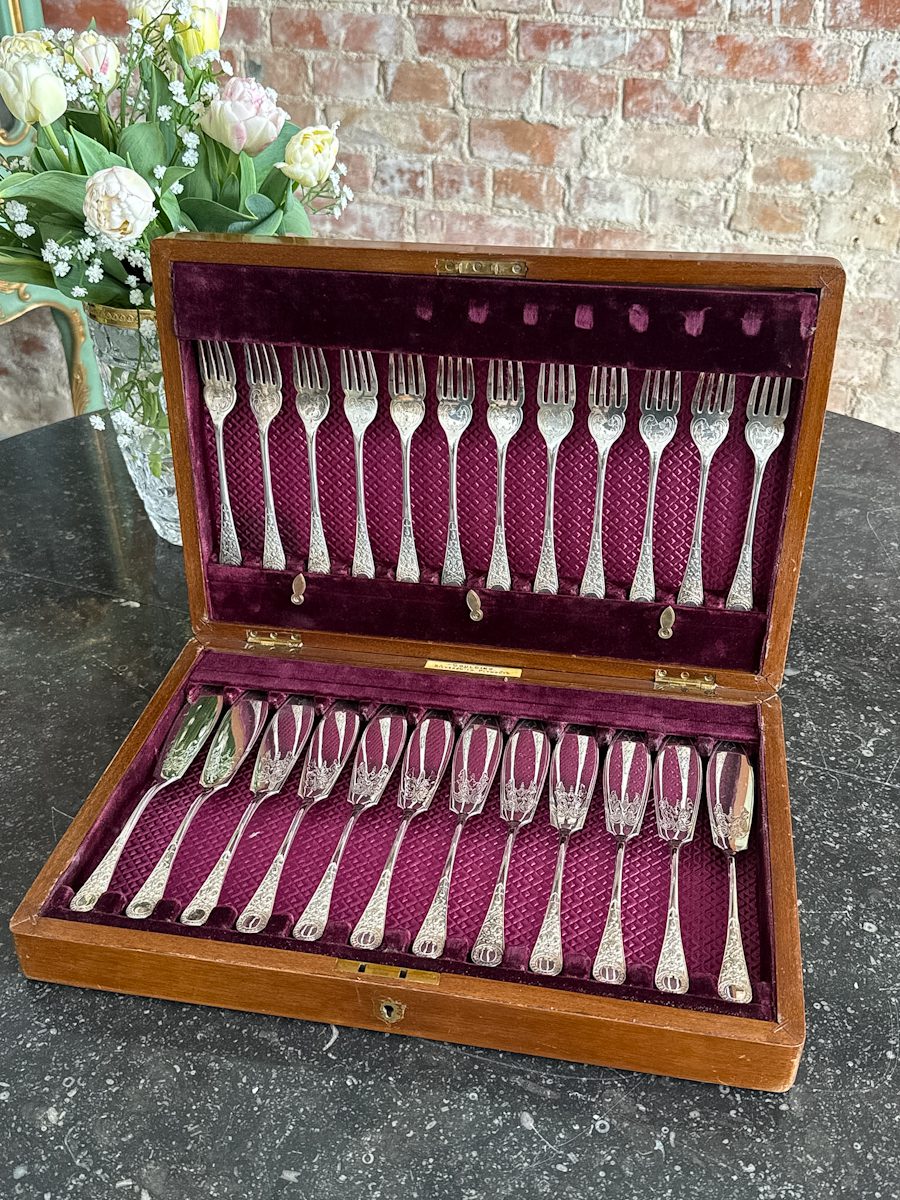
Antique Fish Cutlery Set for 12 Persons in Original Wooden Box – Goulding Plymouth (6583)
Color NaturalMahoganySalmon
Description
Exclusive and complete Victorian era silver-plated fish cutlery ensemble for 12 people in original mahogany wooden box — Goulding, Silversmith Plymouth, late 19th century
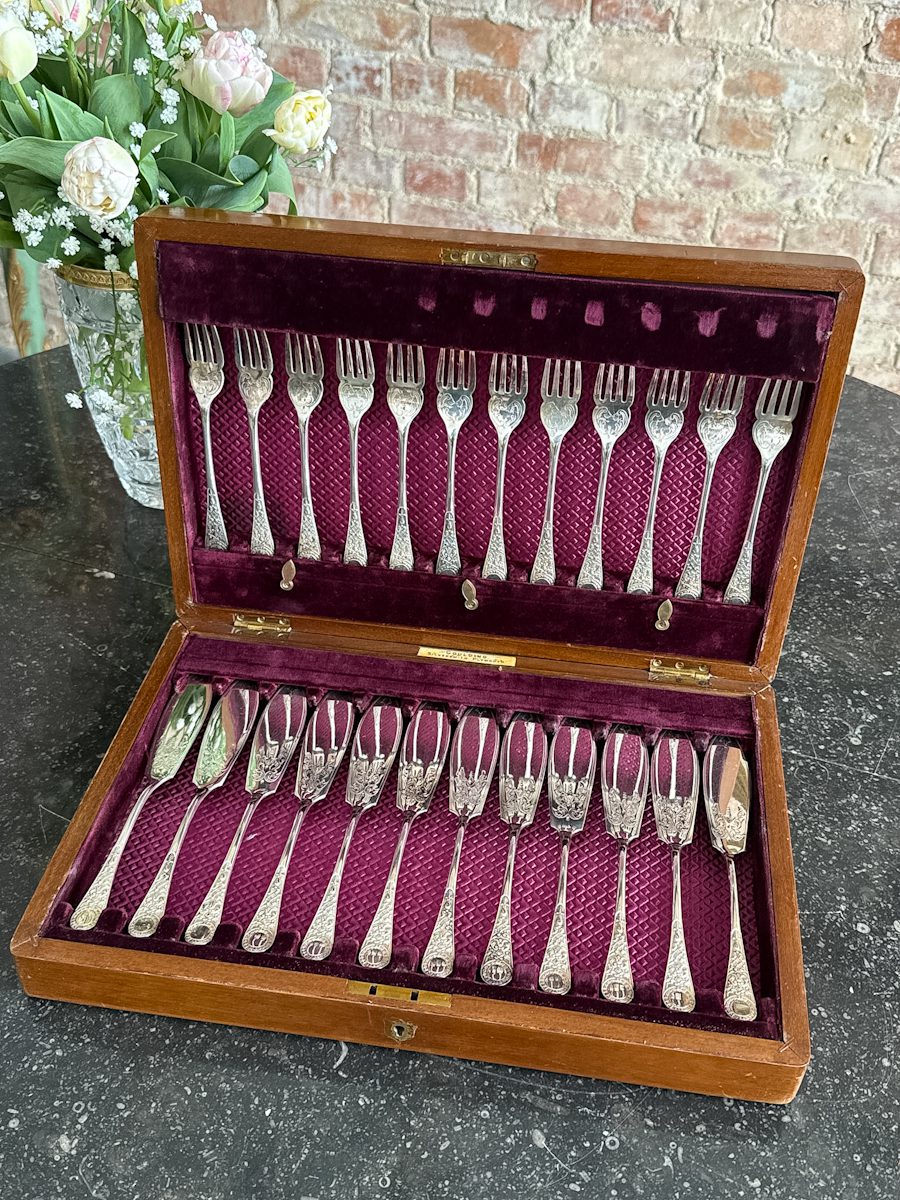
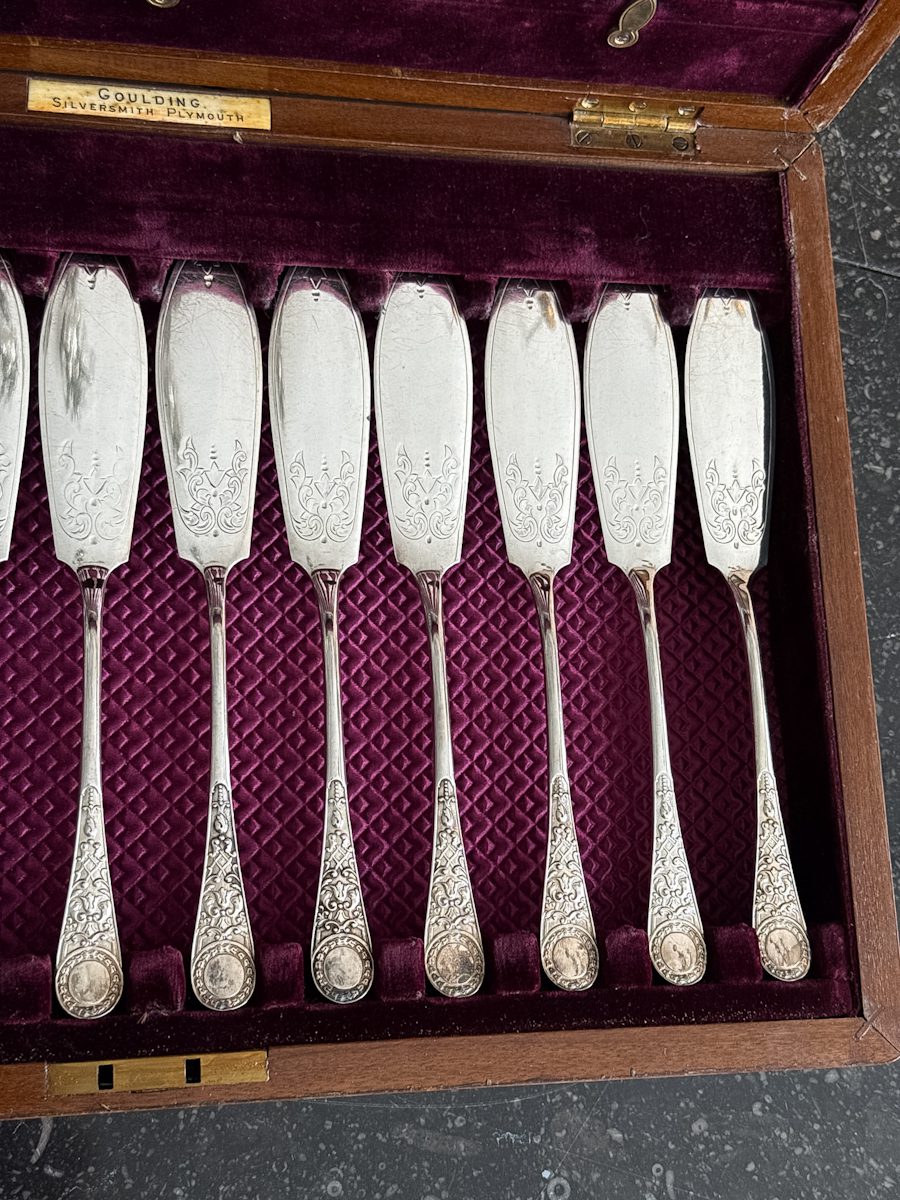
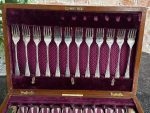
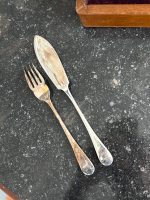
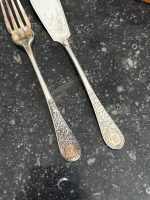
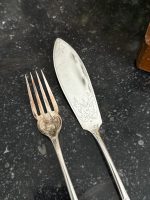
This exceptionally elegant, presentable, and visually flawless antique fish cutlery set for a full service of 12 people is an outstanding monument to British silver and table culture from the late 19th century. The ensemble consists of 24 historical pieces, executed in the highest quality silver-plating technique (silver-plated / EPNS) on a dense metal base, ensuring a pleasant, distinct weight and excellent balance in the hand.
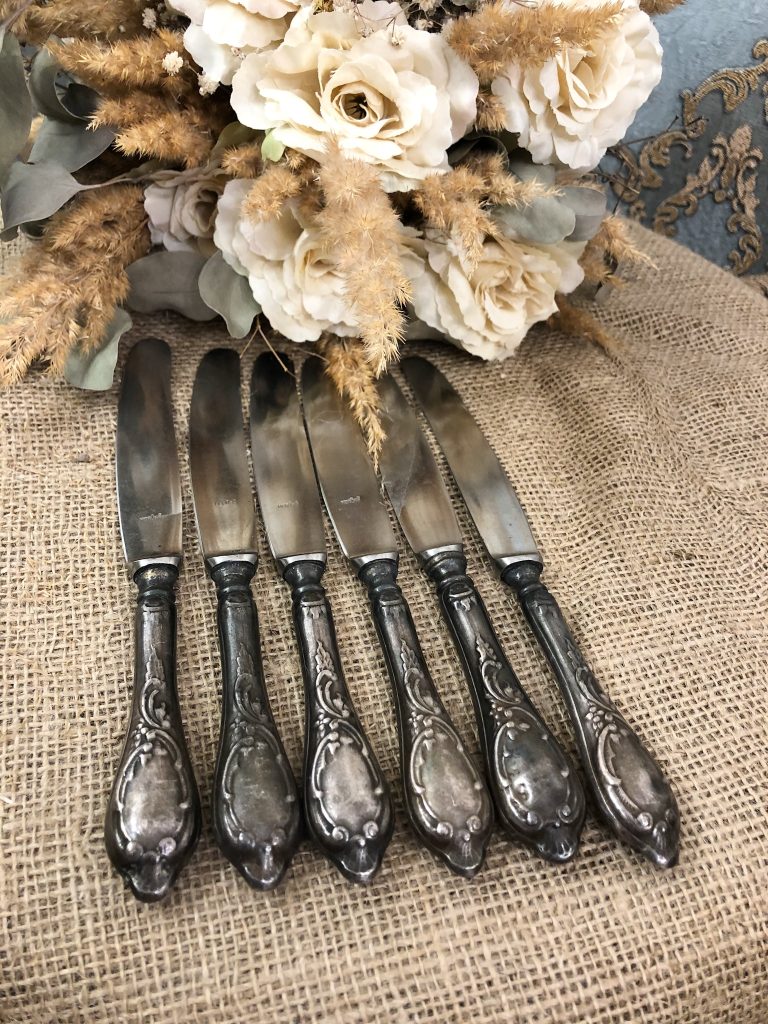
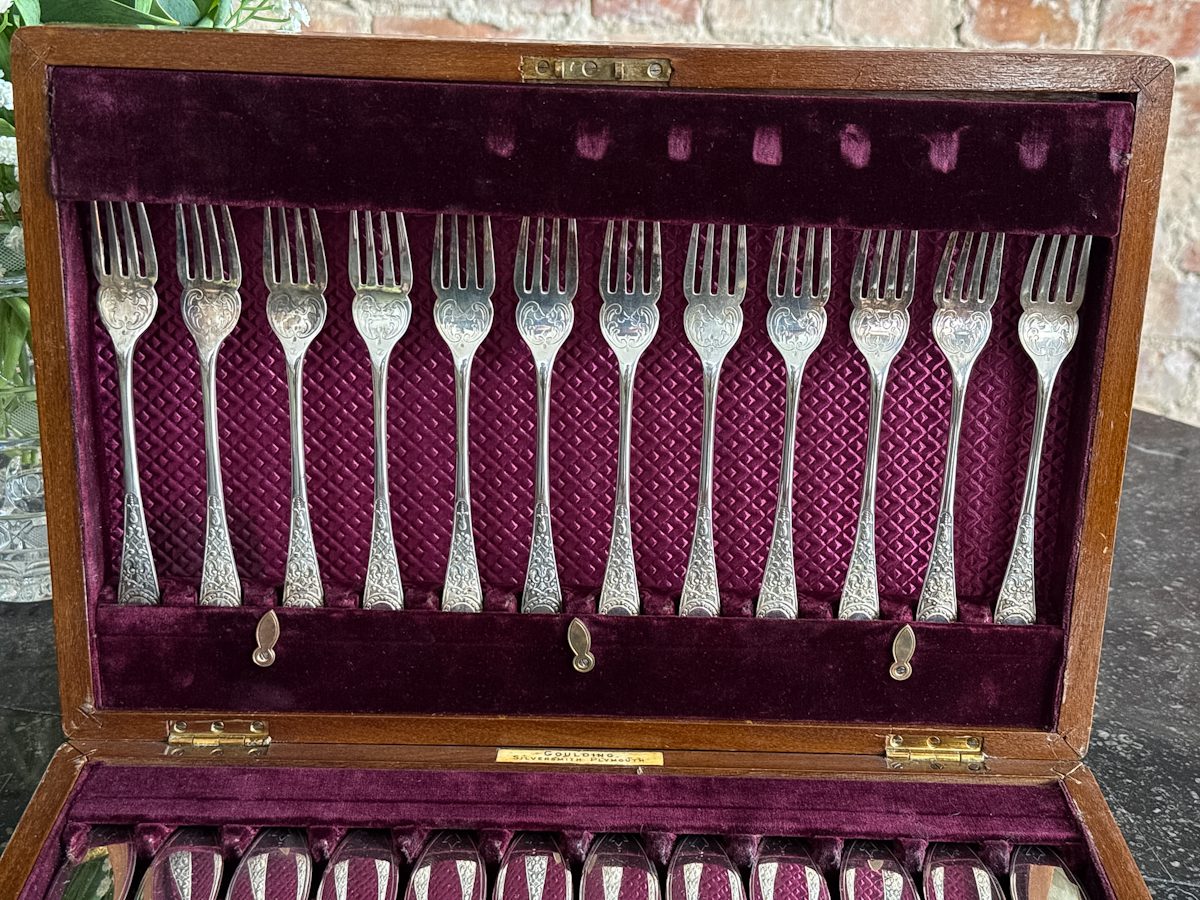
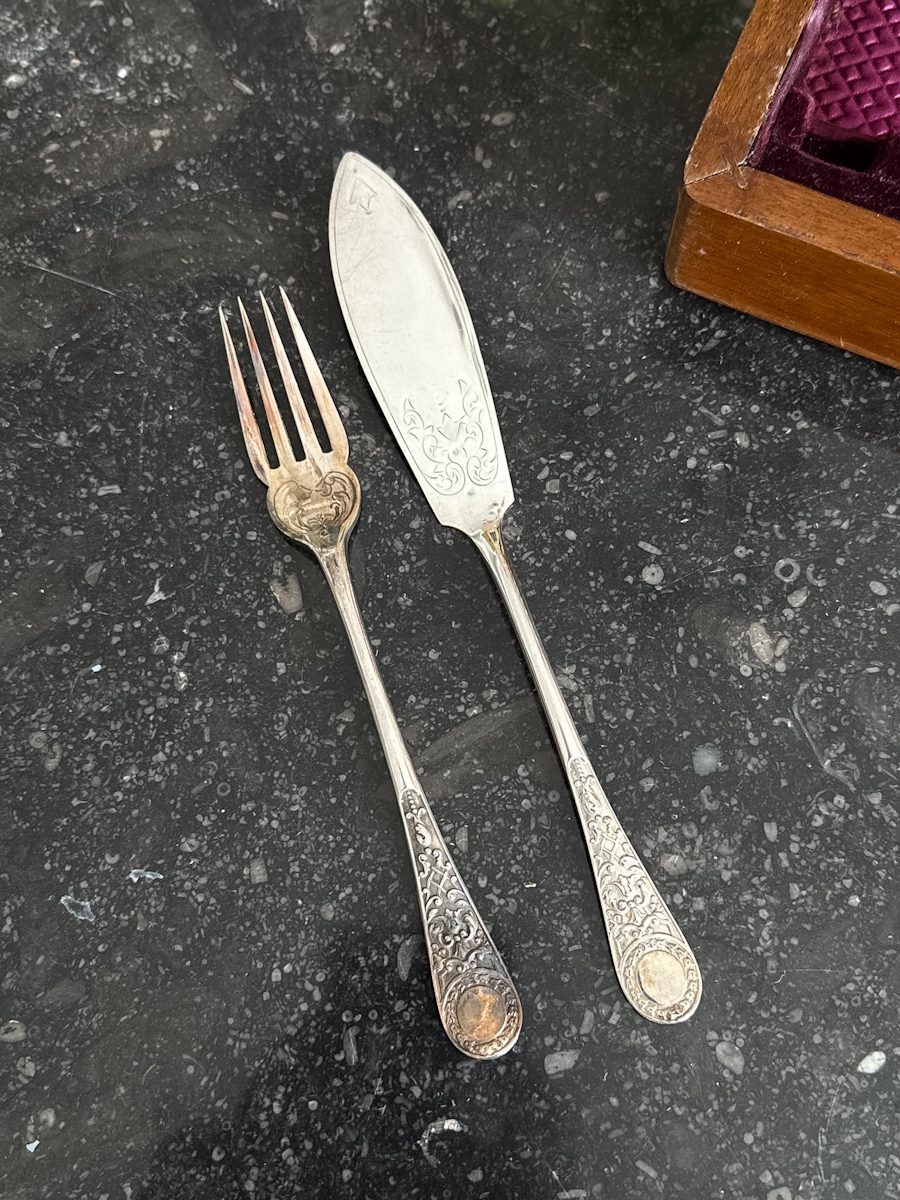
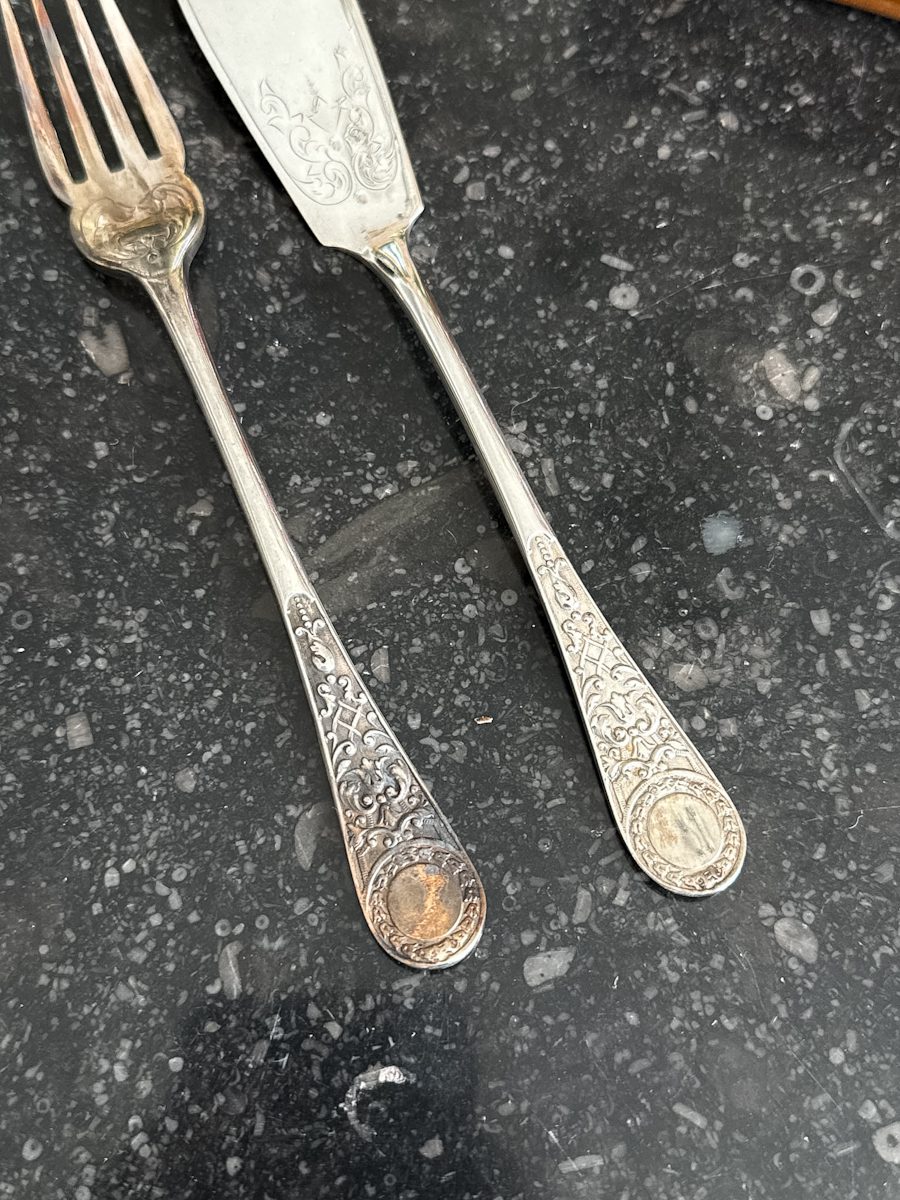
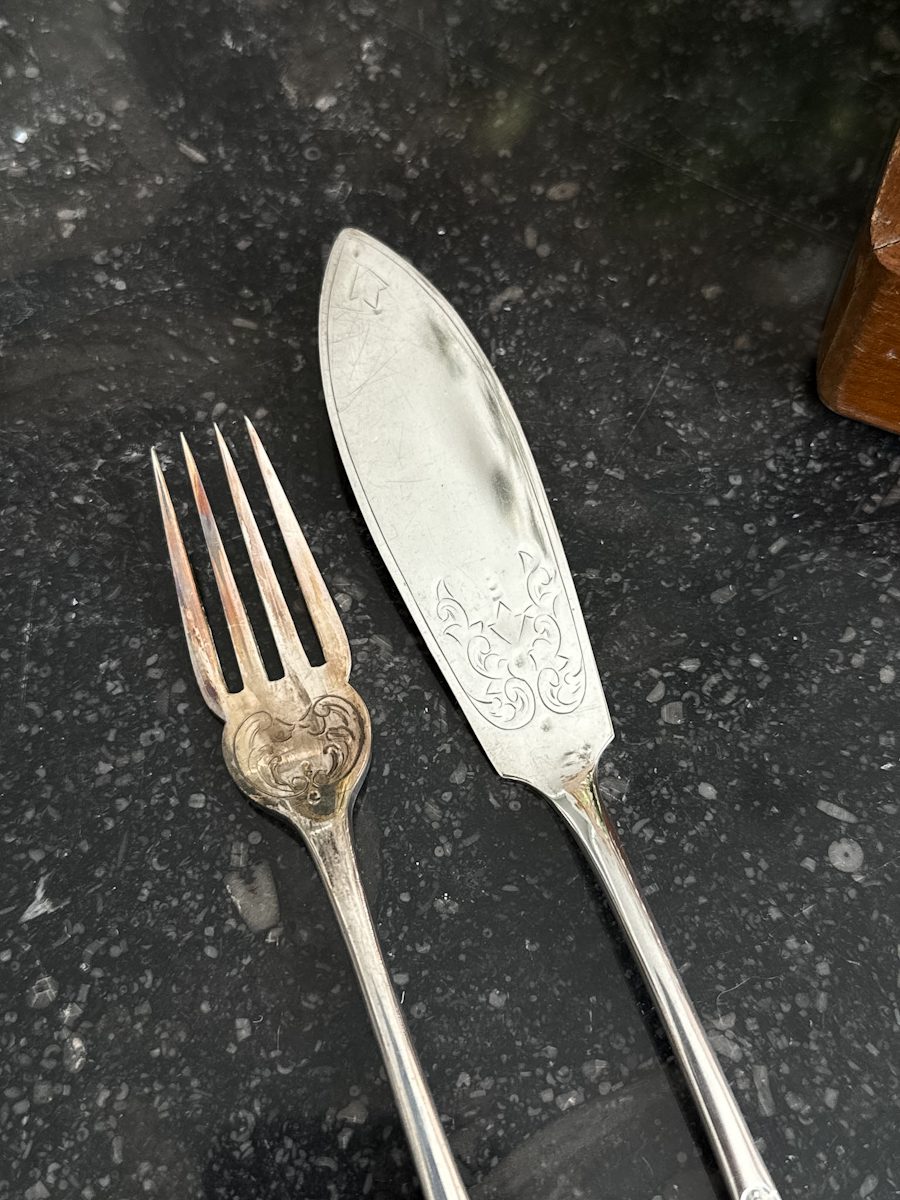
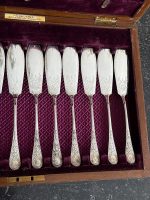
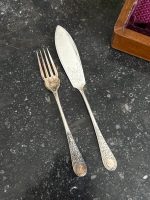
The design and artistic craftsmanship of the cutlery are a virtuosic example of Victorian and late Historicism aesthetics. The wide blade part of the fish knives and the bases of the forks are decorated with sharp, meticulous hand engraving depicting classic baroque semi-circles, acanthus leaf scrolls, and stylized natural motifs. This delicate ornamentation creates an excellent contrast with the polished, mirror-smooth surfaces. The handles of the cutlery are cast and chased in relief in the neo-rococo style, with winding, raised borders adorning the perimeter on both sides, and the ends finished with elegant medallions containing clean, unpolished ovals—intended for engraving the owner’s monogram or family crest.
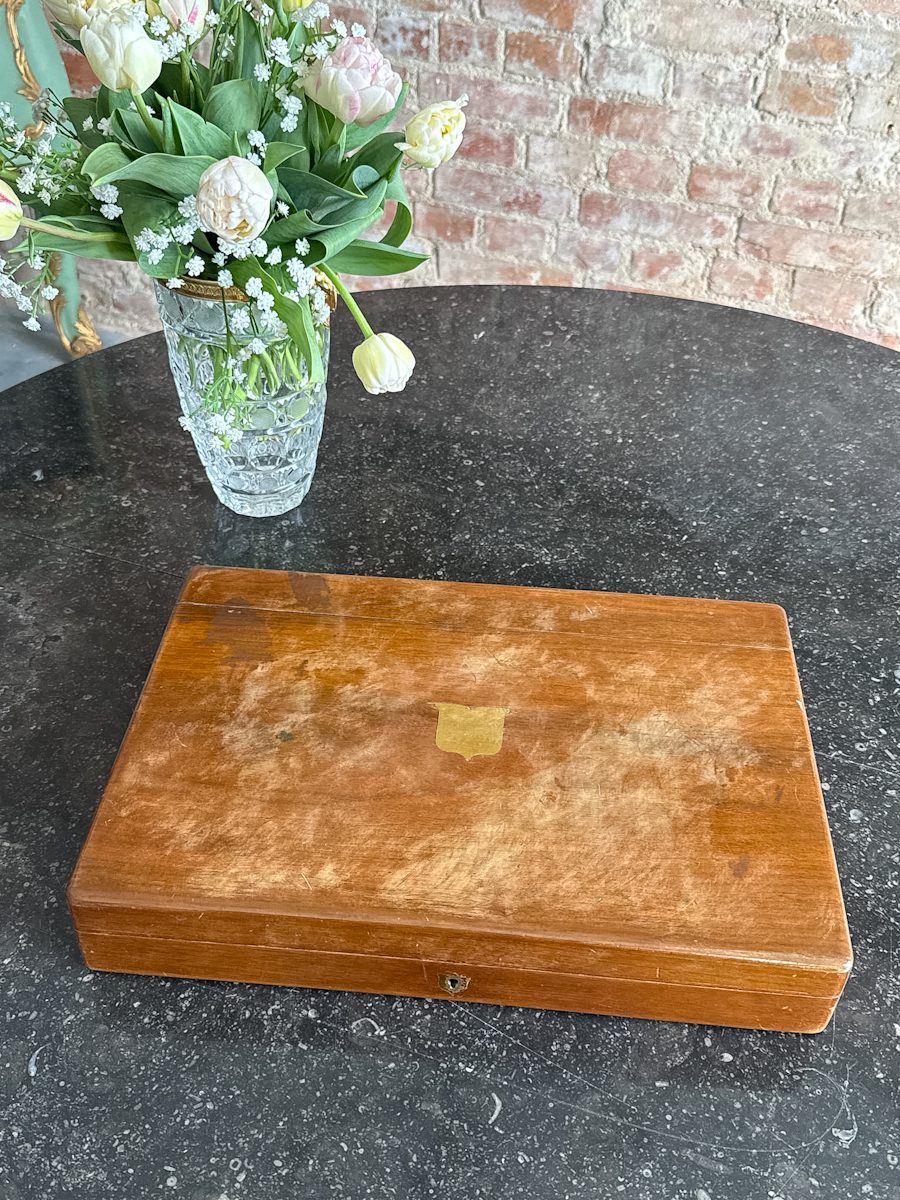
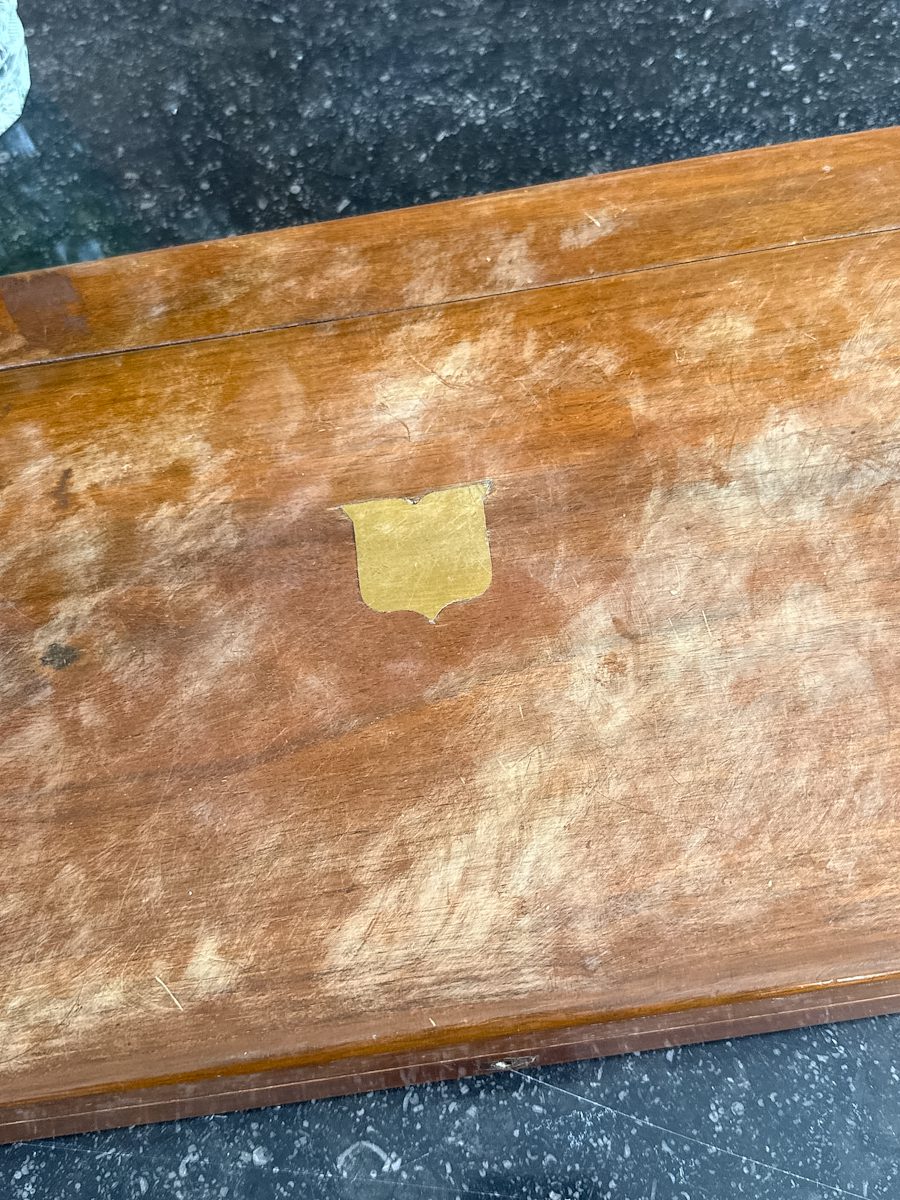
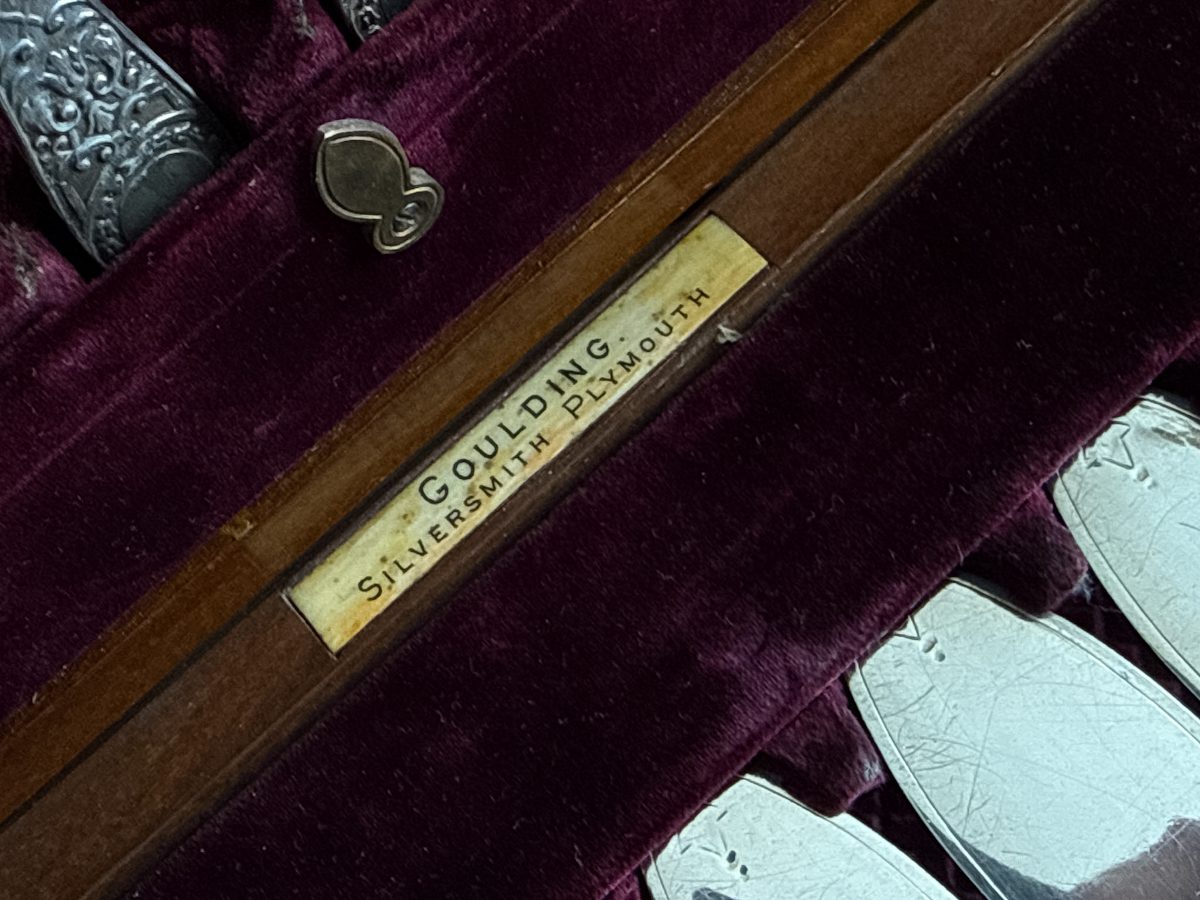
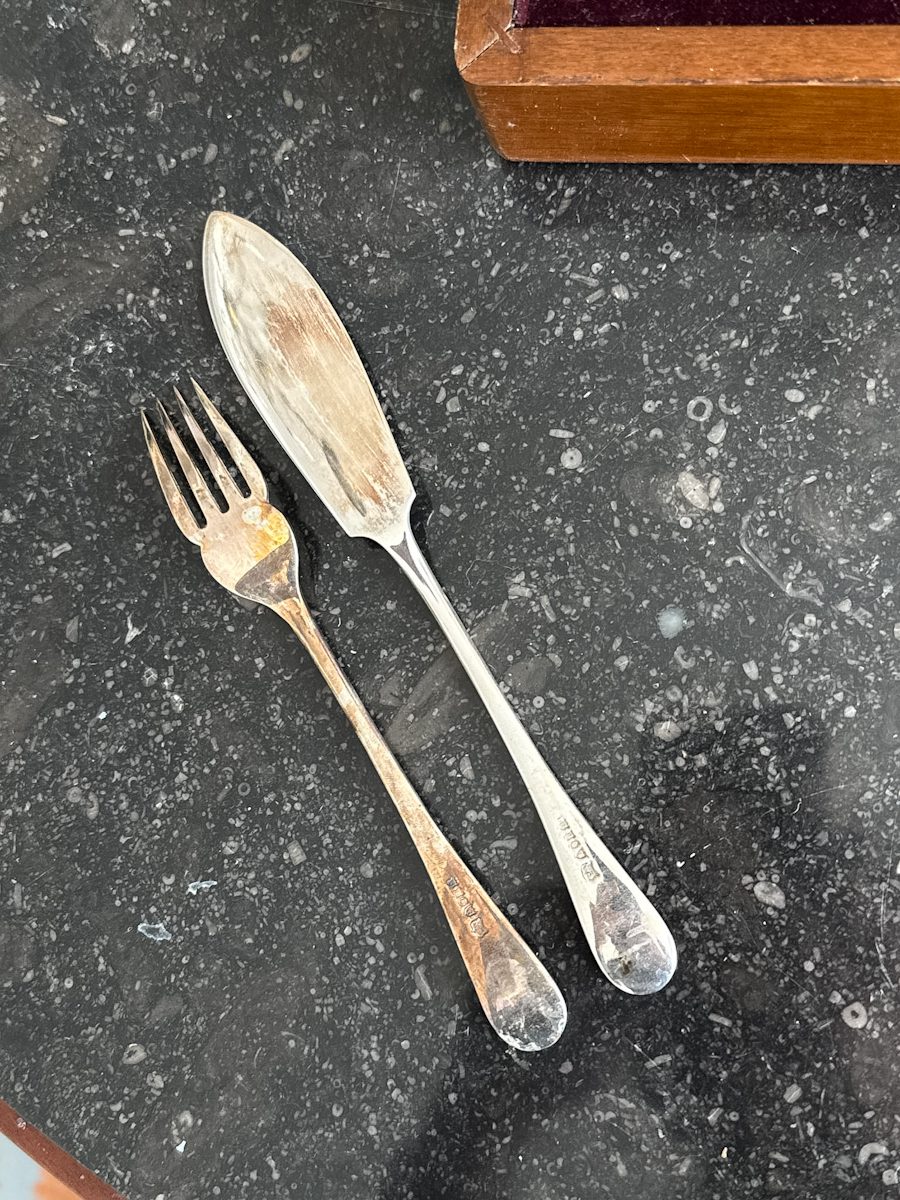
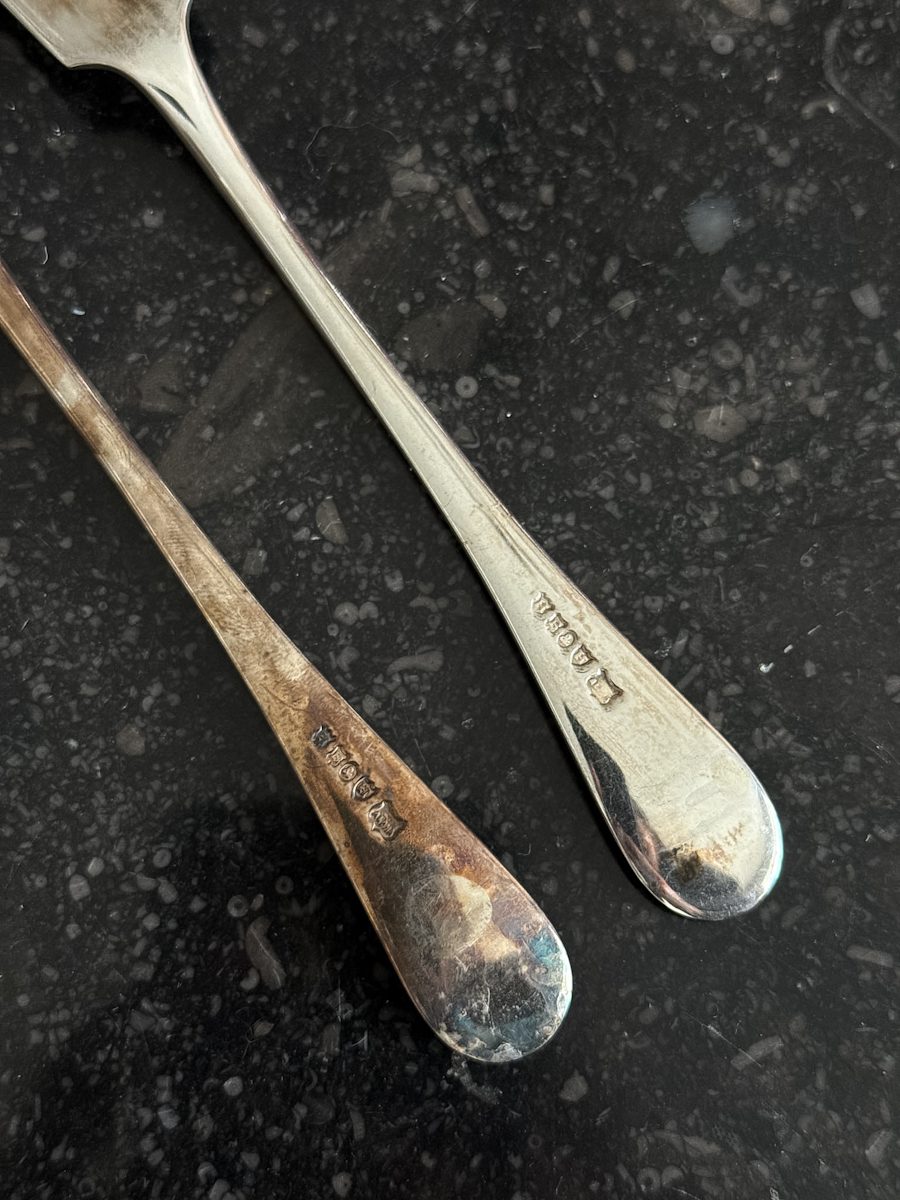
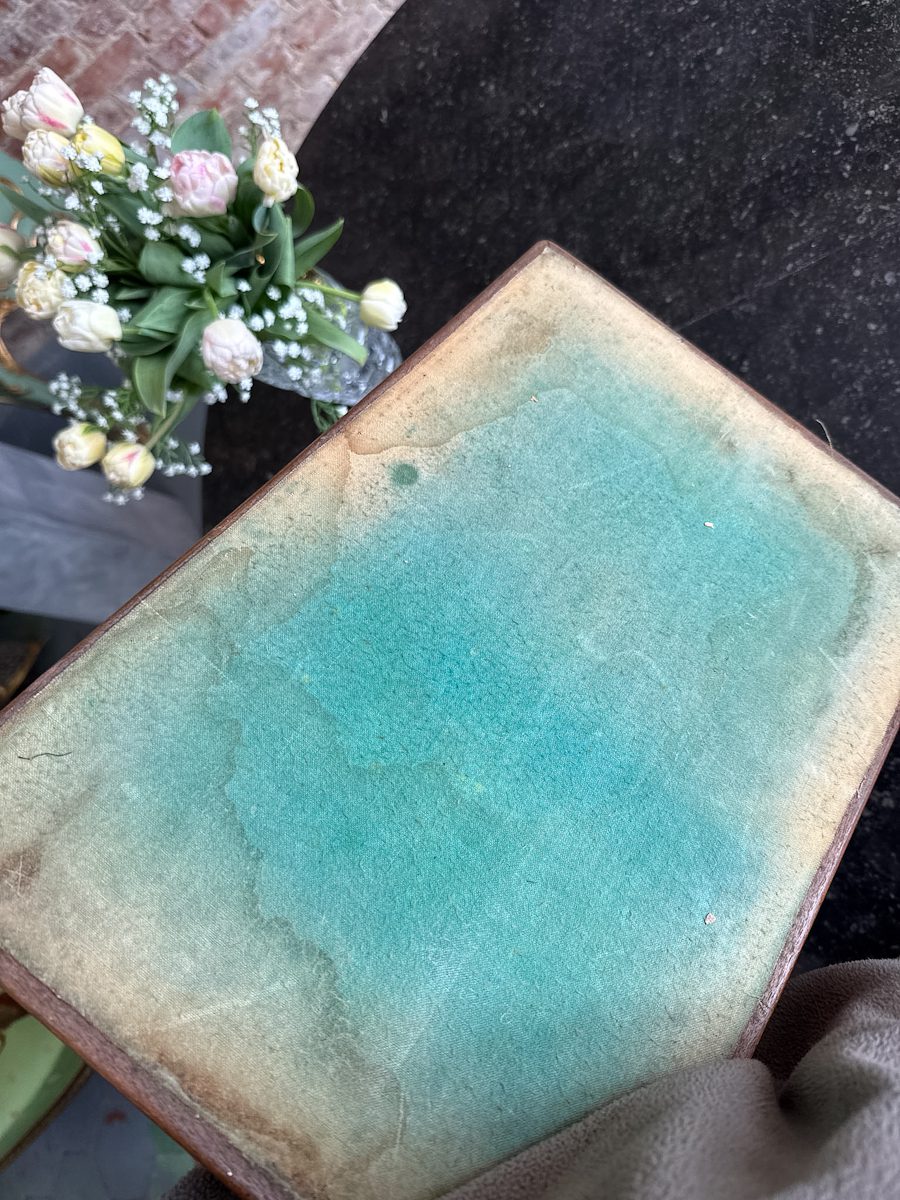
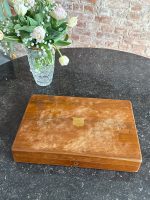
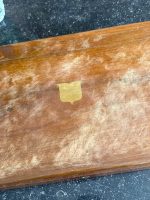
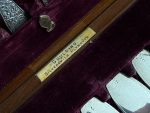
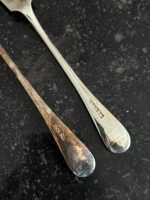
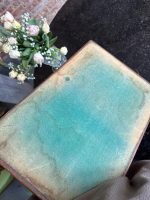
The special value of the set lies in its original, perfectly preserved presentation box, made of noble solid wood. A gilded brass medallion in the shape of a shield is embedded in the center of the lid. Opening the box lid reveals a world of luxury Victorian interior design: the interior is lined with original, deep, and rich royal purple velvet upholstery and a quilted silk base, where each knife and fork has an individual, precise socket and retainer. At the top of the inner frame of the box, the original bone or ivory plaque with the manufacturer’s and master’s mark is proudly preserved: Goulding, Silversmith Plymouth. The historical manufacturing stamps and master’s initials are clearly visible on the back of the cutlery, confirming the substance and age of the silverware.
PERIOD OF MANUFACTURE, ARTISTIC STYLE, ERA Manufactured approximately between 1880–1895, in Plymouth, England. The item belongs to the splendid British Late Victorian period, when the serving of seafood and fish was one of the most complex and respected rituals in aristocratic homes. The etiquette of that time demanded that ordinary meat knives not be used for eating fish (as they could spoil the delicate fish flavor), but rather specialized, wide knives and four-tined forks with ornate engravings symbolizing the water and natural realms. Such sets in massive boxes were presented as exclusive wedding or inheritance gifts to high society.
Snapshot of the era: In the very late Victorian era, a calm, solemn, and aristocratically intelligent evening peace reigned in the private dining room of Sir Henry Edwards, a count and Member of Parliament, at his seaside estate in Plymouth. The room smelled pleasantly of expensive port wine, beeswax candle smoke, and freshly served baked salmon, and the flames of silver candelabra reflected brilliantly off the polished mahogany panels and fine porcelain. On the table, right next to a crystal vase with fresh flowers, lay an open, heavy wooden box with a gilded shield on the lid, its royal purple velvet nests gleaming with delicate silver fish cutlery. The guests watched with admiration as, when the host raised a knife, the hand-engraved neo-rococo scrolls and acanthus leaves caught every ray of light in the room, creating deep reflections and bringing complete academic design elegance and unwavering courtly harmony into this solemn space.
MANUFACTURER AND ORIGIN The perfect symmetry of the knife blades, the depth of the handle casting, and especially the authentic maker’s plaque by Plymouth master Goulding, Silversmith Plymouth indicate the leading jewelry and silversmith workshops of Southern England, which worked to the highest London and Birmingham academic silver-plating standards.
RARITY AND SIGNIFICANCE While individual, incomplete Victorian cutlery sets for 6 people or without original boxes appear relatively regularly on the antique market, such a complete set for 12 people (24 items), with no instrument lost and in its original, century-old wooden box with intact purple velvet upholstery and master’s plaque, is a great and sought-after rarity. Such soft velvet fabrics are most often irreversibly damaged or worn out over time, hence the integrity of this ensemble determines its high cultural-historical and collector’s value.
APPLICATION IN INTERIOR AND SERVING The set will serve as a grand, instantly noticeable, and aristocratic accent on any festive table, transforming the serving of fish dishes into a special historical ceremony. The box, when open, is also an excellent exhibit for an antique silverware collection—to be placed in a private dining room on a sideboard or next to antique porcelain, where the velvet color and silver shine will fantastically capture the light of the room, creating a deep and relaxed historical atmosphere.
CONDITION The cutlery set is in excellent antique condition. All 24 items are structurally perfectly straight, firm, and monolithic, with no handle movement or hinge defects. The silver plating is clean, with a beautiful historical sheen and minimal patina consistent with an antique item and natural in the depth of relief and on the back, which only confirms its age. The wooden box is firm, with fully functional original brass hinges and lock mechanism. The interior purple velvet and silk are preserved clean, without tears or significant structural damage, and the master’s bone plaque is perfectly legible and intact.