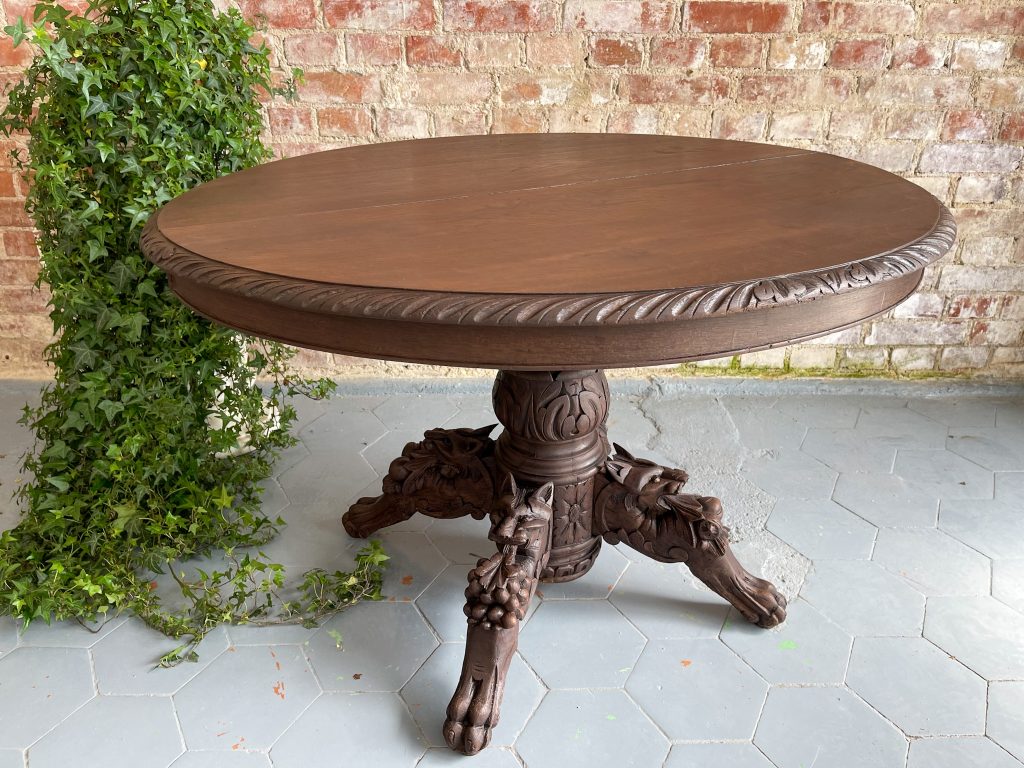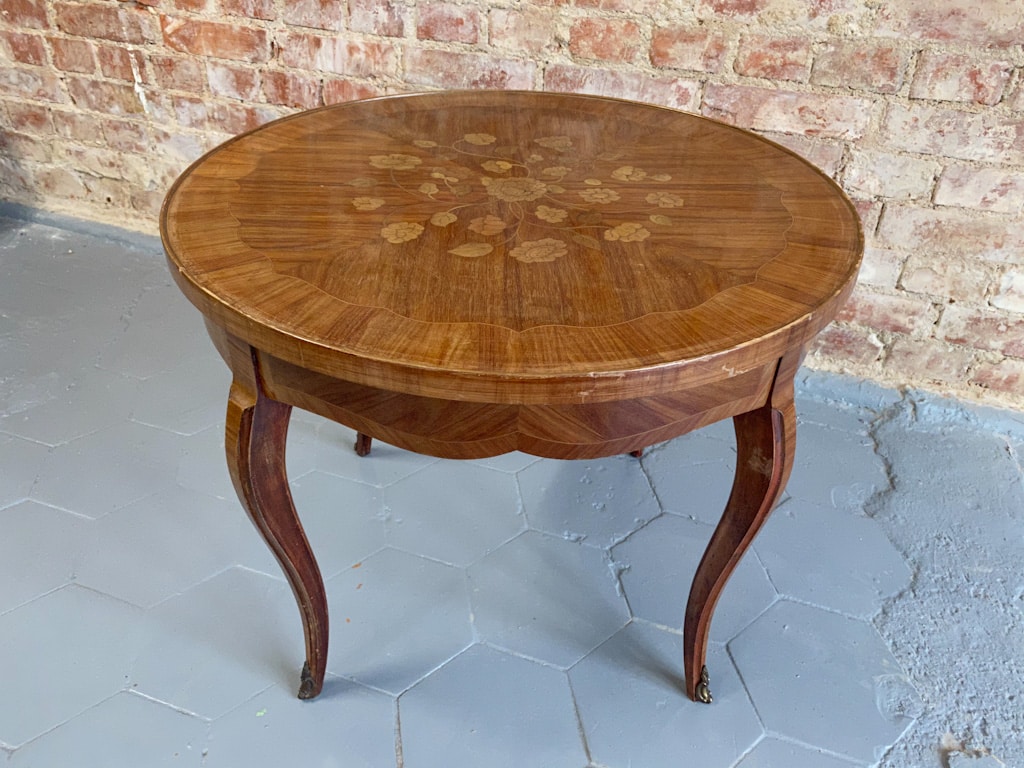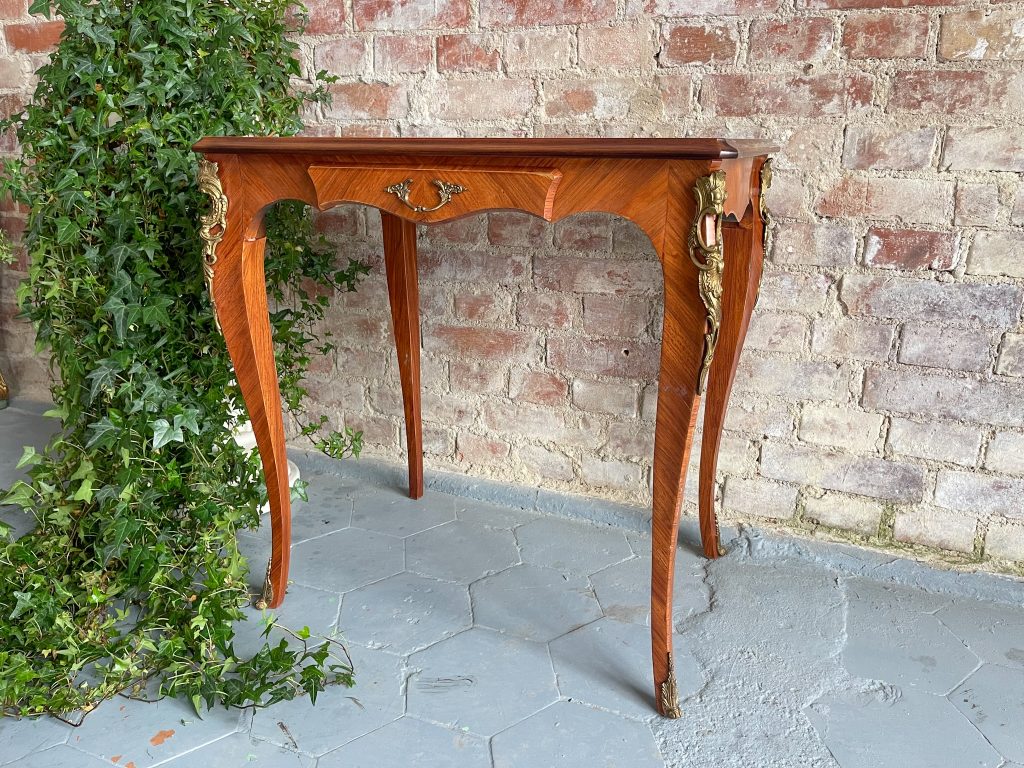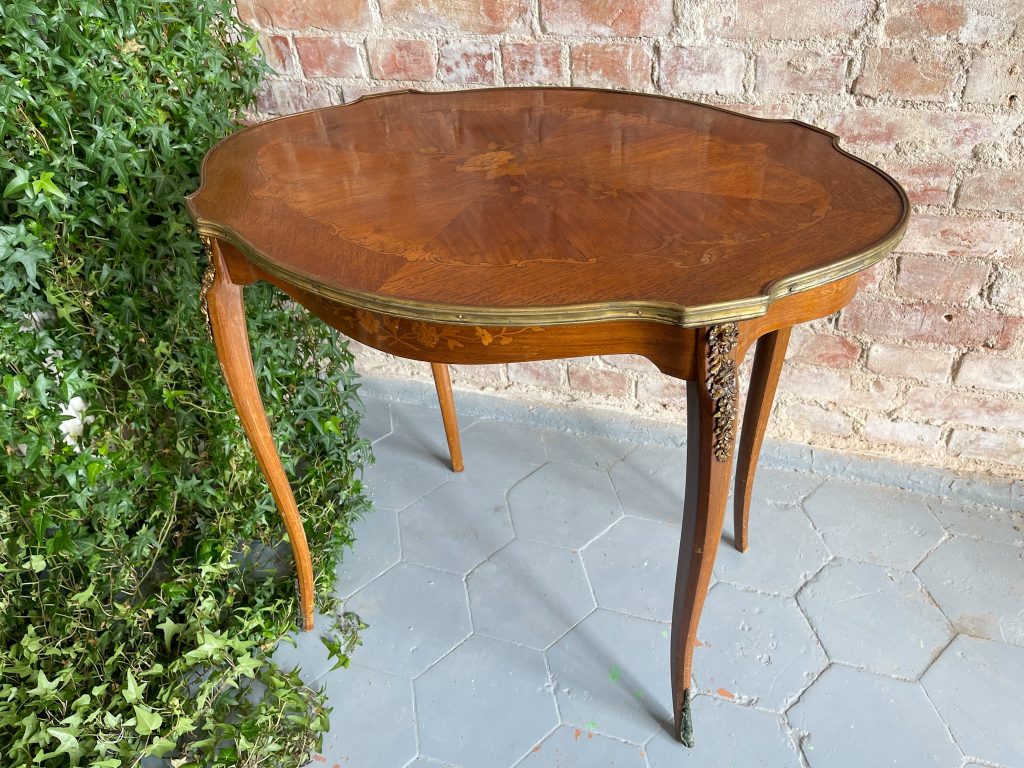
Деревянный столик в стиле Людовика XVI — элегантный приставной столик с белой мраморной столешницей и бронзовой отделкой. Изготовлен из красного дерева с изящными каннелированными ножками и декоративным основанием. Прекрасно подойдет как прикроватный столик или подставка для декора. 345,00 €
You’re now subscribed to price tracking for this product. We’ll notify you if the price drops. 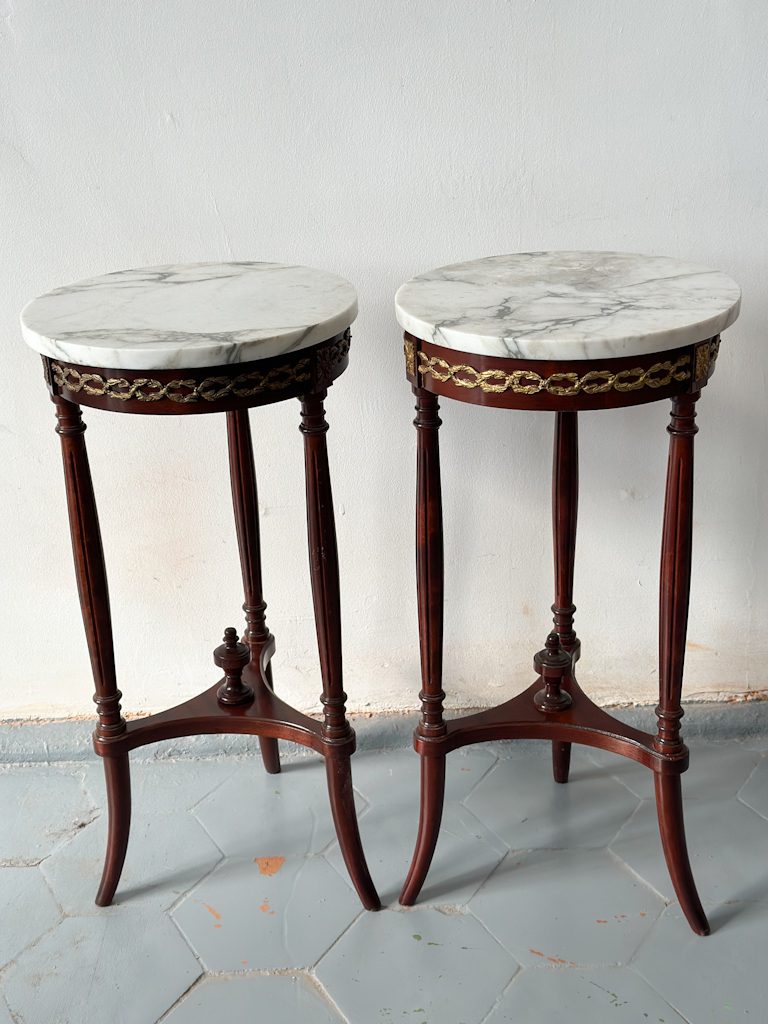
Деревянный столик с белой мраморной столешницей и бронзовой отделкой (5149)
Высота 71.5 cm Ширина 35 cm Цвет БронзовыйНатуральныйМахагон
Описание
Размеры (каждый): Высота — 71,5 см Ширина поверхности — 35 см
Деревянный столик с белой мраморной столешницей и бронзовым декором
Этот элегантный круглый приставной столик (side table), или геридон, выполнен в утончённом стиле Людовика XVI — языке классицизма, знаменитом своим равновесием, прямыми линиями и сдержанной роскошью. Корпус выполнен из красного дерева тёплого красновато-коричневого тона с блестящей полировкой, а столешница представляет собой natural плиту белого мрамора с серыми прожилками — прохладную, элегантную и практичную деталь.
Круглую столешницу обрамляет золочёный бронзовый декор (ormolu) с тонким мотивом переплетённой лавровой гирлянды, характерным для стиля Людовика XVI. Столик опирается на четыре стройные каннелированные ножки, соединённые в средней части треугольной полкой с декоративной точёной вазочкой в центре; ножки изящно изгибаются наружу, завершаясь саблевидной (sabre) формой. Вся конструкция оставляет лёгкое, воздушное, но устойчивое впечатление.
Столики выполнены в духе классического стиля Людовика XVI (неоклассицизма), сложившегося во французском мебельном искусстве в конце XVIII века и впоследствии широко и качественно возрождавшегося в эпоху историзма. Пропорции и бронзовый декор говорят об умелом исполнении. Видимого клейма мануфактуры или подписи мастера на столиках нет; исполнение — стройные каннелированные ножки, точное обрамление мрамора и бронзовый декор — указывает на хорошую мастерскую, специализировавшуюся на мебели французского классического стиля.
Сохранившаяся одинаковая пара с оригинальными мраморными столешницами — находка заметно более редкая, чем отдельный столик. Пара позволяет создавать симметричные композиции — по обе стороны от дивана, кровати или камина, — высоко ценимые как в исторических, так и в современных интерьерах. Идеальный приставной столик у дивана или кресла, прикроватный столик в спальне или постамент для вазы, лампы или скульптуры. Мраморная поверхность устойчива к влаге и теплу, поэтому столик одновременно декоративен и практичен. Тёмное красное дерево с белым мрамором и золочёным декором — благодарный объект и для интерьерной фотографии.
Это изысканный подарок ценителю антиквариата, хозяину нового дома или паре. Наличие пары позволяет подарить один столик как часть набора или оба вместе как единый, представительный подарок.
Столики устойчивы и цельны, полировка красного дерева блестящая. Мраморные столешницы в хорошем состоянии, с естественными прожилками; на бронзовом декоре и дереве отдельные следы естественной патины и пользования соответствуют возрасту.
Снимок эпохи Бель Эпок: Жирарден (Gabrielle Réjane) вернулась с вечернего спектакля и положила перчатки на маленький мраморный столик у кресла. Мрамор под пальцами был прохладным и гладким, золочёная гирлянда едва ощутима, ножка красного дерева тёплая и стройная. В комнате пахло свежесрезанными розами и воском; за окном тихо стучали последние экипажи. Она поставила на него бокал и небольшую книгу, следя взглядом за линией каннелированных ножек вниз до саблевидной стопы, и ощутила то уютное удовлетворение, какое возникает, когда возвращаешься домой и каждая вещь ждёт именно там, где ей положено быть.
Dimensions (each): Height — 71.5 cm Top width — 35 cm
Marble Top Side Table in Mahogany with Ormolu Mount — Louis XVI Gueridon
This elegant round side table, or guéridon, is made in the refined Louis XVI style — the language of classicism celebrated for its balance, straight lines and restrained luxury. The frame is of mahogany in a warm, reddish-brown tone with a glossy polish, while the top is a natural slab of white marble veined in grey — a cool, elegant and practical detail.
The round top is framed by a gilt ormolu (bronze) mount with a fine interlaced laurel-garland motif characteristic of the style. The table stands on four slender fluted legs, joined in the middle by a triangular shelf with a decorative turned finial at the centre; the legs curve gracefully outward in a sabre termination. The whole structure gives a light, airy yet stable impression.
Made in the spirit of the classical (neoclassical) style, which took shape in furniture in the late eighteenth century and was later widely and finely revived in the historicist period. The proportions and the ormolu mount speak of skilled work. There is no visible maker’s stamp or signature on the tables; the execution — the slender fluted legs, the precise marble surround and the bronze mount — points to a good workshop specialising in classical-style furniture.
A surviving matched pair with their original marble tops is a noticeably rarer find than a single table. A pair allows symmetrical arrangements — flanking a sofa, bed or fireplace — much valued in both period and contemporary interiors. A perfect side table beside a sofa or chair, a bedside table in a bedroom, or a stand for a vase, lamp or sculpture. The marble surface resists moisture and heat, so the table is both decorative and practical. The dark mahogany with white marble and gilt mount is also a rewarding subject for interior photography.
This makes a refined gift for a lover of antiques, for the owner of a new home, or for a couple. Having a pair allows one table to be given as part of a set, or both together as a single, handsome gift.
The tables are stable and sound, the mahogany polish glossy. The marble tops are in good order with natural veining; the bronze mount and wood show some natural patina and traces of use, in keeping with their age.
Belle Époque snapshot: Gabrielle Réjane (Gabrielle Réjane) came home from an evening performance and laid her gloves on the little marble table beside her chair. The marble was cool and smooth beneath her fingers, the gilded garland barely felt, the mahogany leg warm and slender. The room smelled of cut roses and beeswax; beyond the window the last carriages rumbled softly. She set down a glass and a small book upon it, her eye following the line of the fluted legs down to the sabre foot, and felt the homely contentment that comes when one returns home and each thing waits exactly where it ought to be.
Maße (je): Höhe — 71,5 cm Deckflächenbreite — 35 cm
Holztisch mit weißer Marmorplatte und Bronzebeschlag — Louis-XVI-Gueridon
Dieser elegante runde Beistelltisch (side table), ein Guéridon, ist im feinen Louis-XVI-Stil gefertigt — der Sprache des Klassizismus, gerühmt für ihr Gleichgewicht, ihre geraden Linien und ihren zurückhaltenden Luxus. Der Korpus ist aus Mahagoni in warmem, rötlich-braunem Ton mit glänzender Politur, die Platte aber besteht aus einer natürlichen Platte weißen Marmors mit grauer Äderung — ein kühles, elegantes und praktisches Detail.
Die runde Platte wird von einem vergoldeten Bronzebeschlag (Ormolu) mit feinem, verschlungenem Lorbeergirlanden-Motiv eingefasst, das für den Louis-XVI-Stil charakteristisch ist. Der Tisch ruht auf vier schlanken kannelierten Beinen, die in der Mitte durch einen dreieckigen Boden mit einem dekorativen gedrechselten Zierknauf in der Mitte verbunden sind; die Beine schwingen anmutig in einer Säbel-Form nach außen. Das Ganze wirkt leicht, luftig und doch standfest.
Gefertigt im Geist des klassischen Louis-XVI-Stils (Neoklassizismus), der sich im französischen Möbel im späten 18. Jahrhundert herausbildete und später in der Zeit des Historismus vielfach und hochwertig wiederbelebt wurde. Die Proportionen und der Ormolu-Beschlag zeugen von gekonnter Arbeit. Ein sichtbarer Herstellerstempel oder eine Signatur fehlt an den Tischen; die Ausführung — die schlanken kannelierten Beine, die präzise Marmor-Einfassung und der Bronzebeschlag — weist auf eine gute Werkstatt hin, die auf Möbel im französischen klassischen Stil spezialisiert war.
Ein erhaltenes gleiches Paar mit den originalen Marmorplatten ist ein deutlich selteneres Fundstück als ein Einzeltisch. Ein Paar erlaubt symmetrische Aufstellungen — zu beiden Seiten eines Sofas, Bettes oder Kamins —, die in historischen wie zeitgenössischen Interieurs hoch geschätzt sind. Ein perfekter Beistelltisch neben Sofa oder Sessel, ein Nachttisch im Schlafzimmer oder ein Ständer für eine Vase, Lampe oder Skulptur. Die Marmoroberfläche ist beständig gegen Feuchtigkeit und Hitze, sodass der Tisch zugleich dekorativ und praktisch ist. Das dunkle Mahagoni mit weißem Marmor und vergoldetem Beschlag ist auch ein dankbares Motiv für die Interieurfotografie.
Das macht ein feines Geschenk für Liebhaber von Antiquitäten, für die Besitzer eines neuen Hauses oder für ein Paar. Das Paar erlaubt es, einen Tisch als Teil eines Sets zu verschenken oder beide zusammen als ein einheitliches, repräsentatives Geschenk.
Die Tische sind stabil und ganz, die Mahagoni-Politur glänzend. Die Marmorplatten sind in gutem Zustand mit natürlicher Äderung; Bronzebeschlag und Holz zeigen etwas natürliche Patina und Gebrauchsspuren, dem Alter entsprechend.
Momentaufnahme der Belle-Époque-Zeit: Gabrielle Réjane (Gabrielle Réjane) kam von einer Abendvorstellung nach Hause und legte ihre Handschuhe auf den kleinen Marmortisch neben ihrem Sessel. Der Marmor war kühl und glatt unter ihren Fingern, die vergoldete Girlande kaum spürbar, das Mahagonibein warm und schlank. Es roch nach geschnittenen Rosen und Bienenwachs; jenseits des Fensters rollten leise die letzten Wagen. Sie stellte ein Glas und ein kleines Buch darauf, das Auge der Linie der kannelierten Beine hinab bis zum Säbelfuß folgend, und empfand jene heimelige Zufriedenheit, die entsteht, wenn man heimkehrt und jedes Ding genau dort wartet, wo es hingehört.
Dimensions (chacun) : Hauteur — 71,5 cm Largeur du plateau — 35 cm
Table d’appoint en bois à plateau de marbre blanc et monture de bronze — guéridon
Cette élégante table d’appoint ronde (side table), un guéridon, est réalisée dans le raffiné style — le langage du classicisme célèbre pour son équilibre, ses lignes droites et son luxe retenu. Le bâti est en acajou d’un ton chaud brun-rougeâtre, au poli brillant, tandis que le plateau est une dalle naturelle de marbre blanc veiné de gris — un détail frais, élégant et pratique.
Le plateau rond est encadré d’une monture de bronze doré (ormolu) à fin motif de guirlande de laurier entrelacée, caractéristique du style . La table repose sur quatre pieds cannelés élancés, réunis au centre par une tablette triangulaire ornée d’un fleuron tourné décoratif ; les pieds s’incurvent gracieusement vers l’extérieur en terminaison sabre. L’ensemble donne une impression légère, aérienne et pourtant stable.
Réalisées dans l’esprit du style classique (néoclassicisme), qui prit forme dans le mobilier à la fin du XVIIIᵉ siècle et fut par la suite largement et finement repris à l’époque de l’historicisme. Les proportions et la monture d’ormolu témoignent d’un travail habile. Aucun cachet de fabrique ni signature visible sur les tables ; l’exécution — les pieds cannelés élancés, l’encadrement précis du marbre et la monture de bronze — indique un bon atelier spécialisé dans le mobilier de style classique .
Une paire assortie conservée avec ses plateaux de marbre d’origine est une trouvaille nettement plus rare qu’une table isolée. Une paire permet des compositions symétriques — de part et d’autre d’un canapé, d’un lit ou d’une cheminée —, très appréciées dans les intérieurs d’époque comme contemporains. Table d’appoint parfaite près d’un canapé ou d’un fauteuil, table de chevet dans une chambre, ou support pour un vase, une lampe ou une sculpture. La surface de marbre résiste à l’humidité et à la chaleur, si bien que la table est à la fois décorative et pratique. L’acajou sombre, le marbre blanc et la monture dorée sont aussi un sujet gratifiant pour la photographie d’intérieur.
Voilà un cadeau raffiné pour un amateur d’antiquités, pour les propriétaires d’une nouvelle maison ou pour un couple. La paire permet d’offrir une table dans le cadre d’un ensemble, ou les deux ensemble comme un cadeau unifié et distingué.
Les tables sont stables et entières, le poli de l’acajou brillant. Les plateaux de marbre sont en bon état, au veinage naturel ; la monture de bronze et le bois présentent une légère patine naturelle et des traces d’usage, conformes à leur âge.
Instantané de la Belle Époque : Gabrielle Réjane (Gabrielle Réjane) rentra d’une représentation du soir et posa ses gants sur la petite table de marbre près de son fauteuil. Le marbre était frais et lisse sous ses doigts, la guirlande dorée à peine sensible, le pied d’acajou tiède et élancé. La pièce sentait la rose coupée et la cire ; au-delà de la fenêtre, les dernières voitures roulaient doucement. Elle y posa un verre et un petit livre, l’œil suivant la ligne des pieds cannelés jusqu’au pied sabre, et ressentit ce contentement paisible qui naît quand on rentre chez soi et que chaque chose attend exactement là où elle doit être.