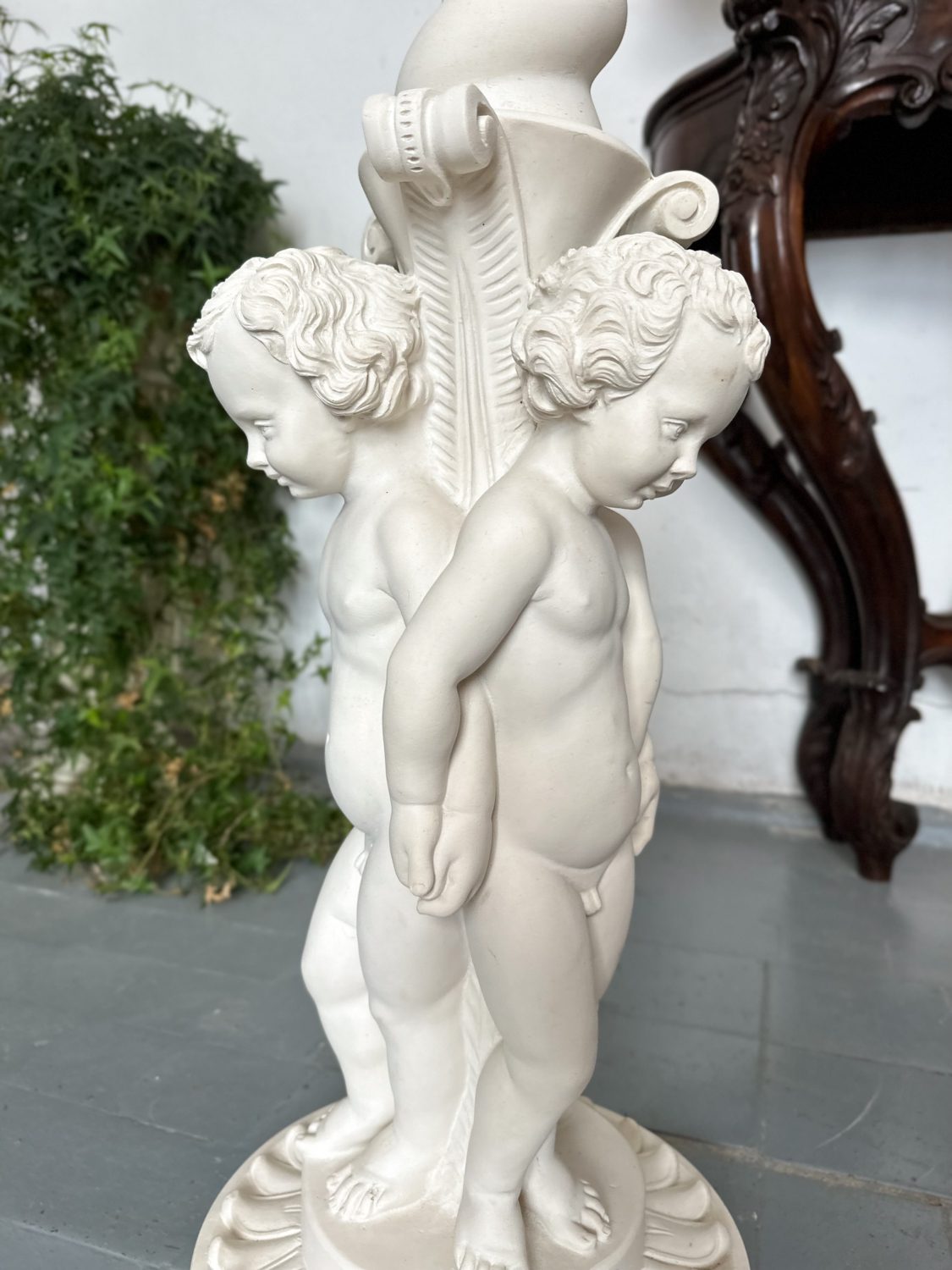
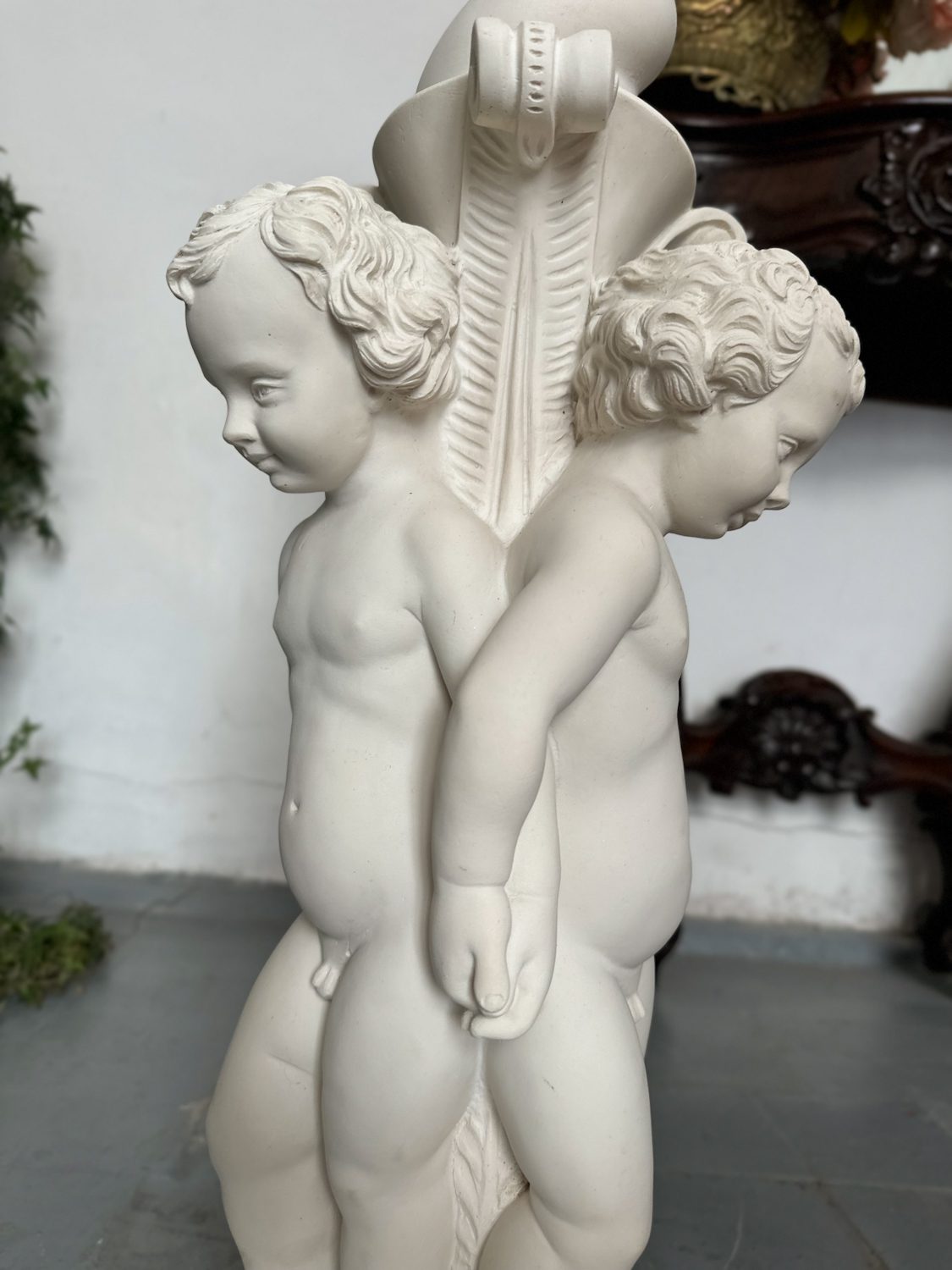
Белая колонна с ангелами (херувимами) — неорококо пьедестал для скульптуры или вазы Эта внушительная декоративная колонна-пьедестал (cherub pedestal) принадлежит к той редкой категории предметов, что одновременно служат и подставкой, и самостоятельным скульптурным произведением. У круглого основания, спинами друг к другу,… 430,00 €
You’re now subscribed to price tracking for this product. We’ll notify you if the price drops. 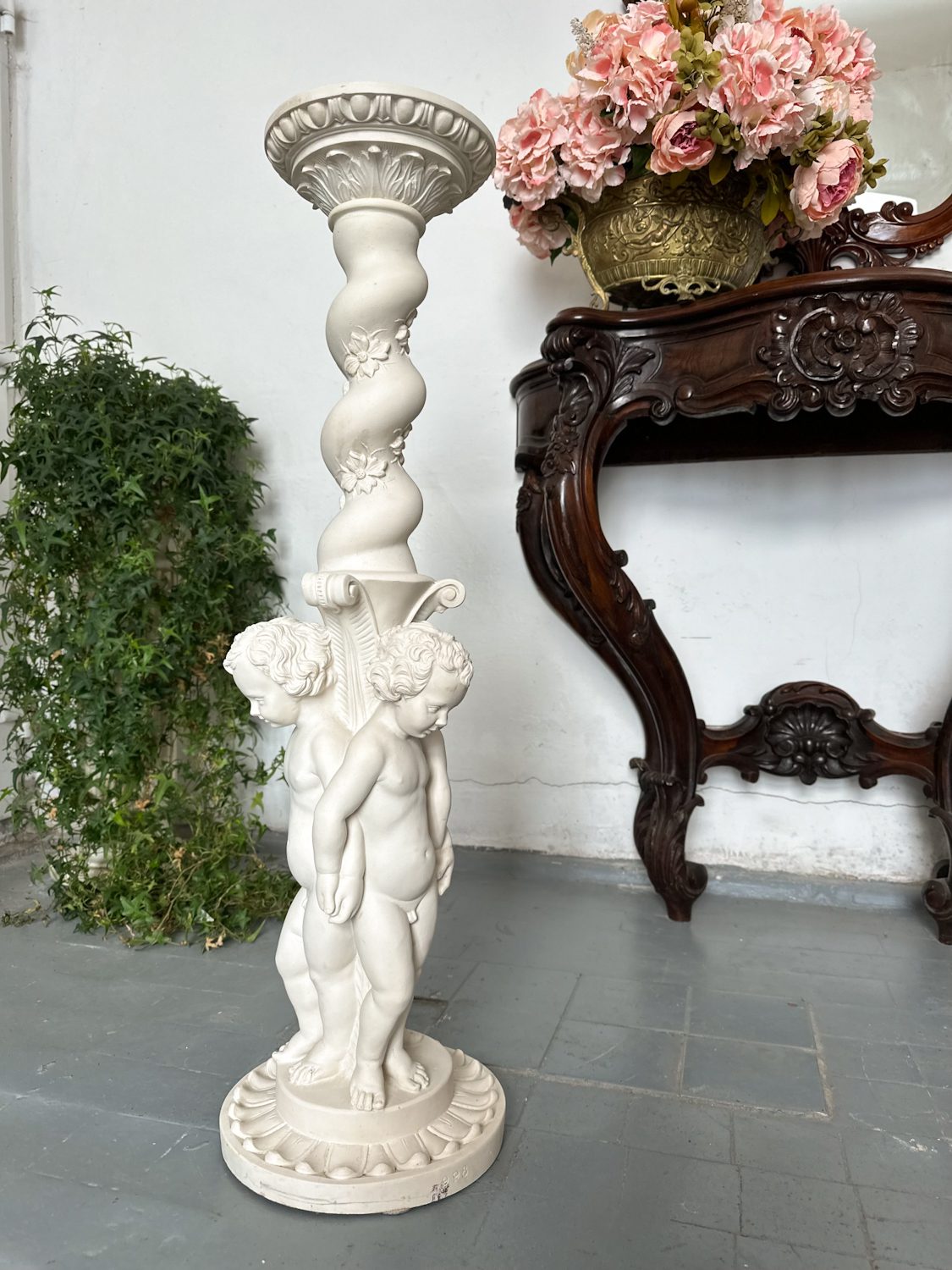
Dekoratīva kolonna ar diviem eņģeļiem (ķerubiem), lieta akmens masa, neorokoko gaumē (4712)
Ширина 94.5 cm
Описание
Белая колонна с ангелами (херувимами) — неорококо пьедестал для скульптуры или вазы
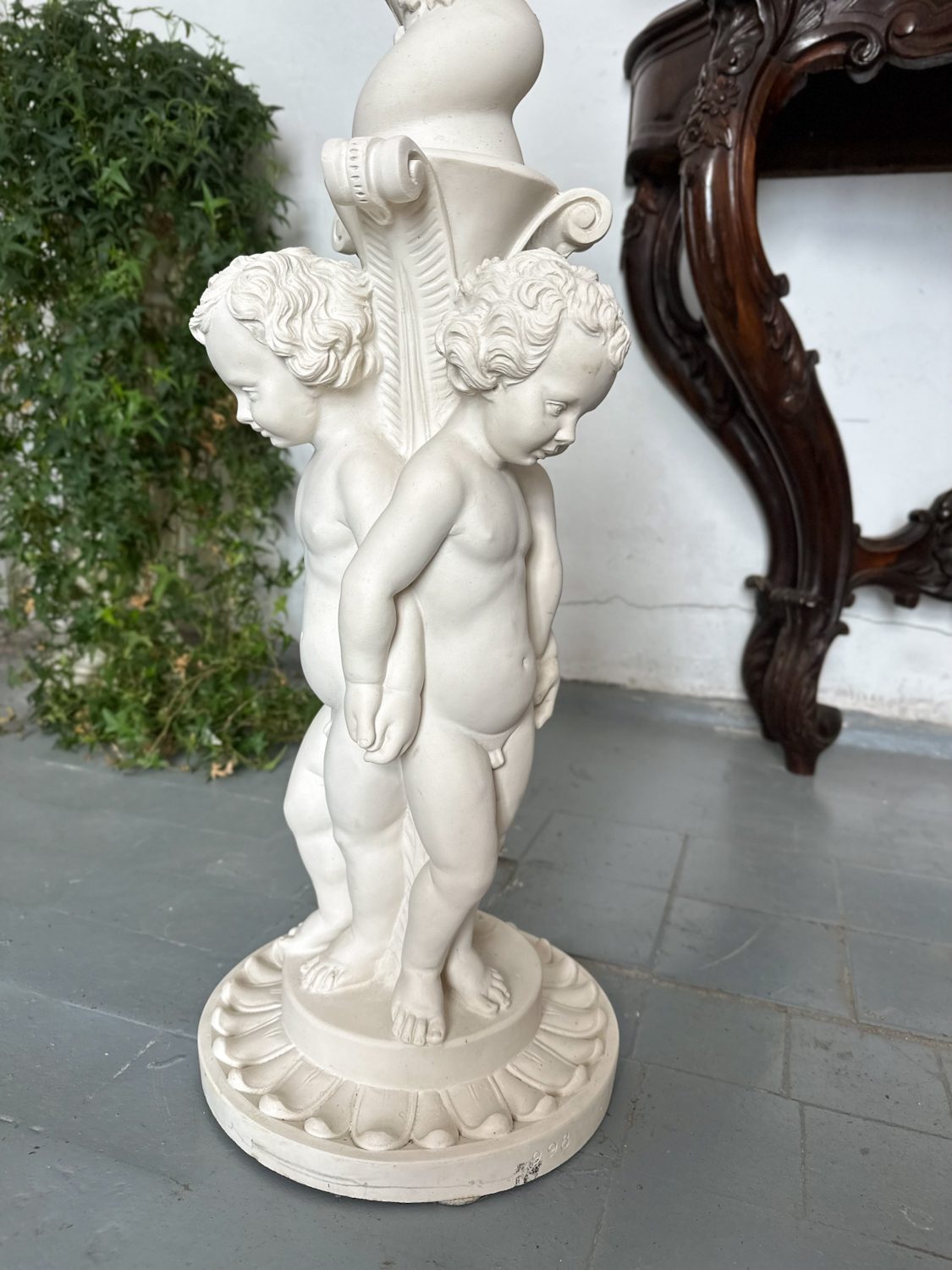
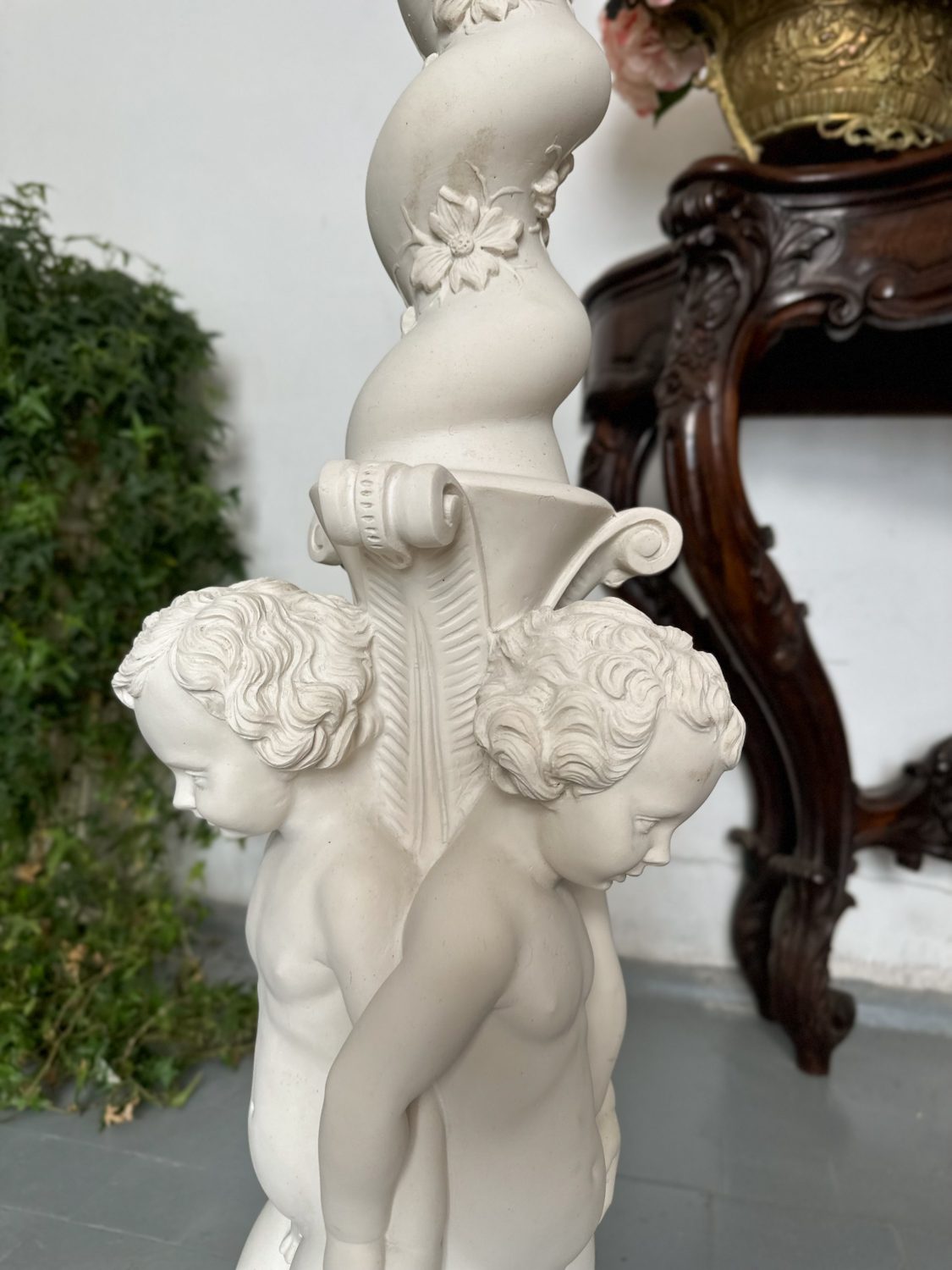
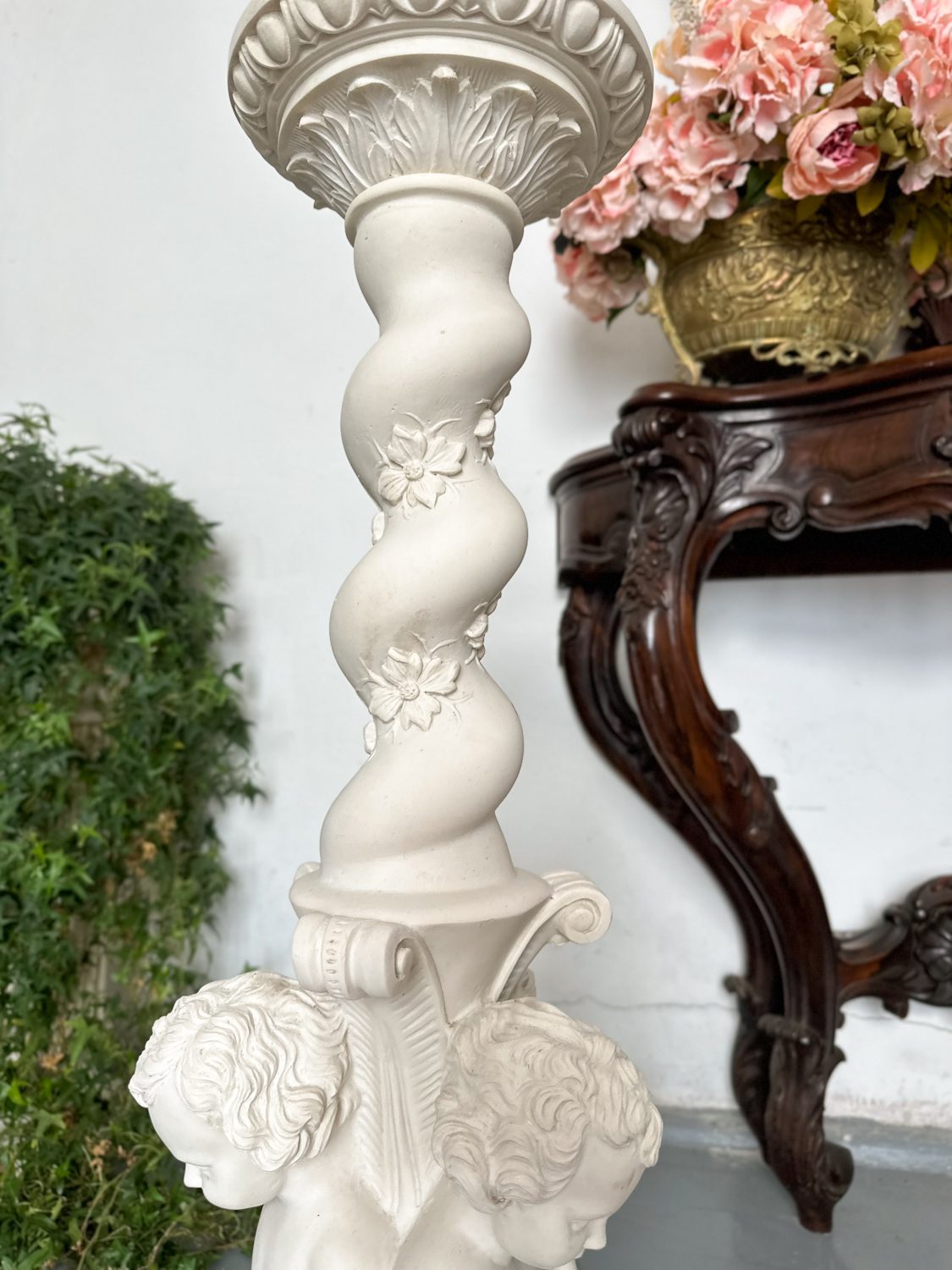
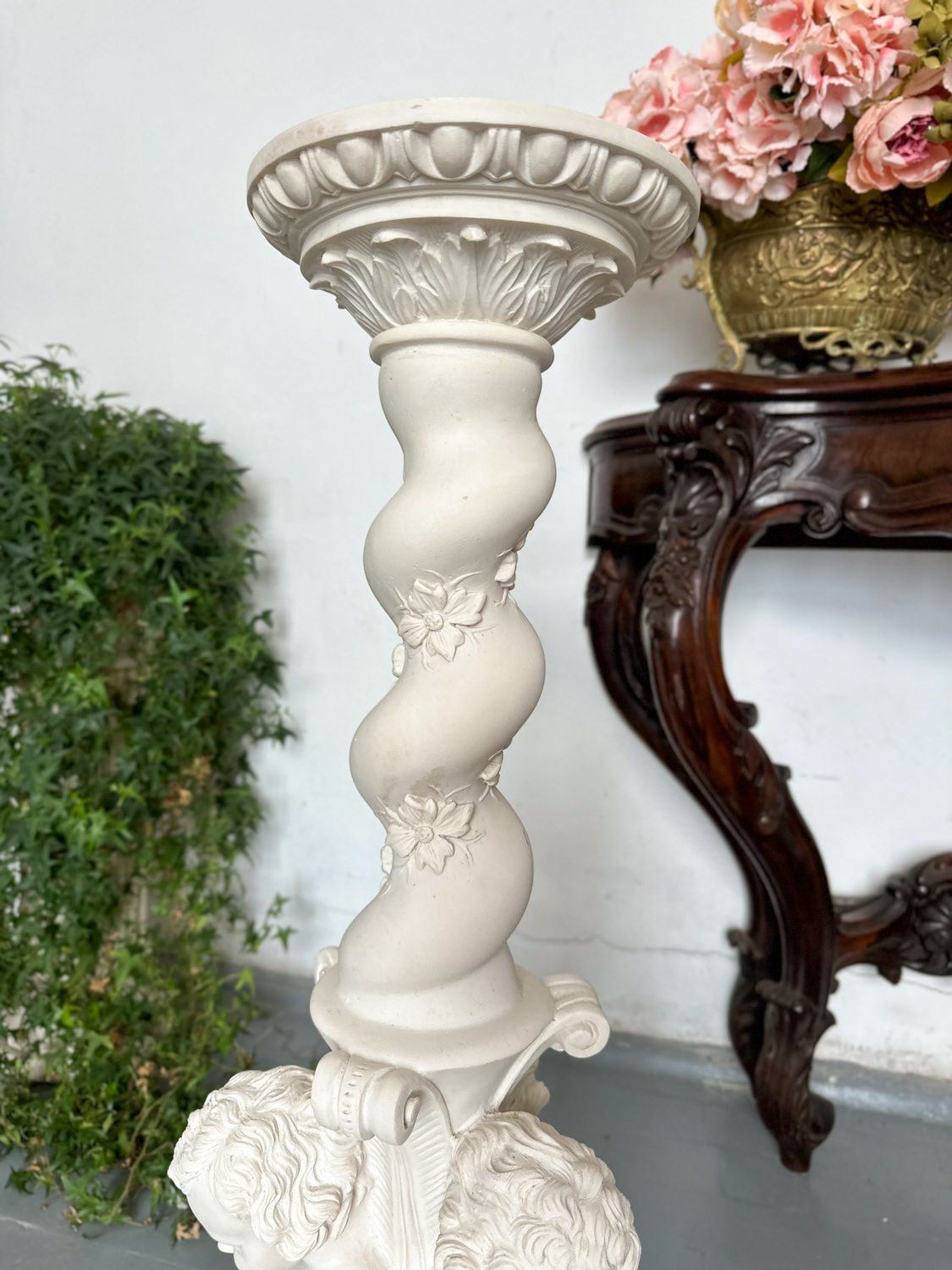
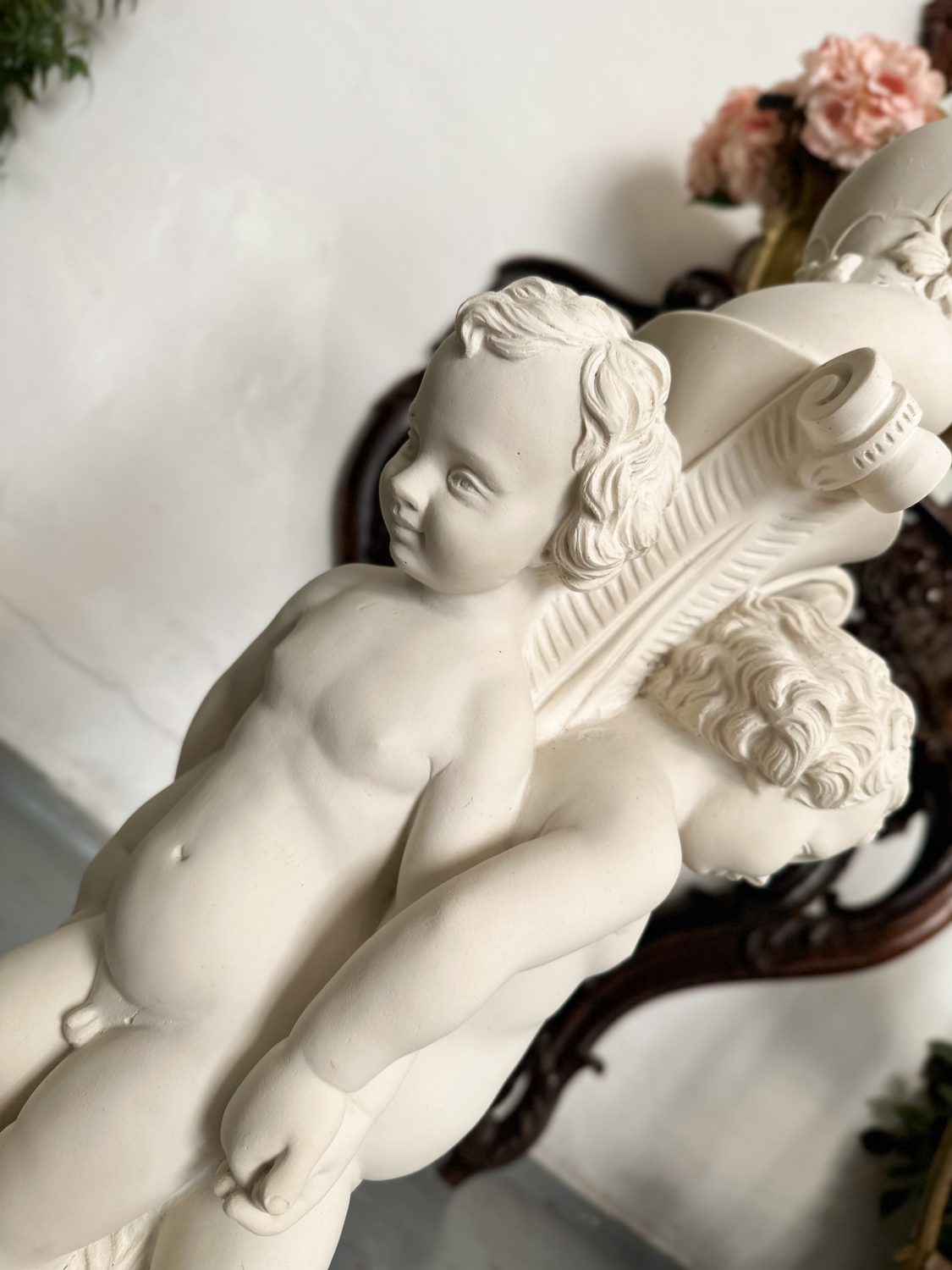
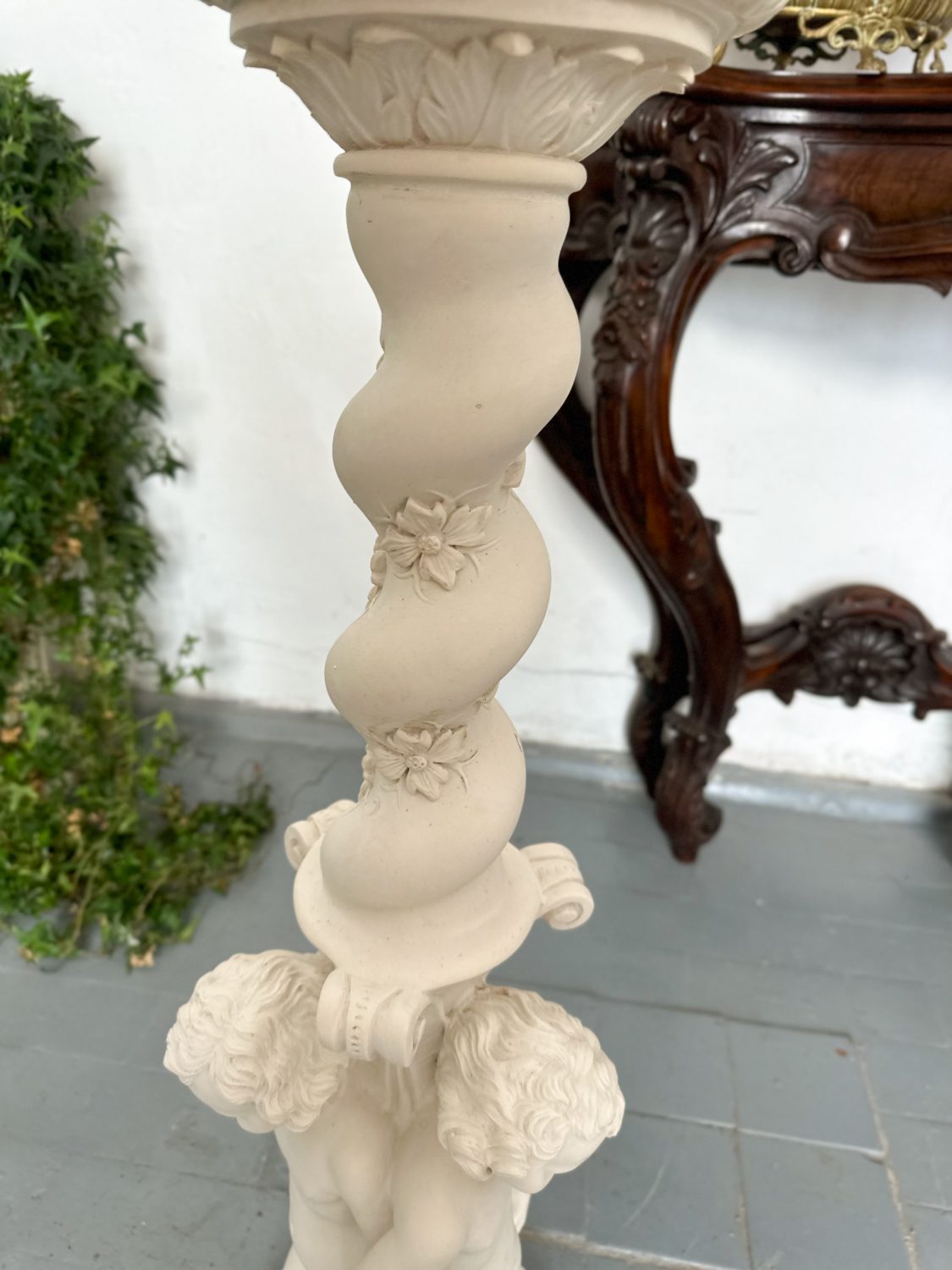
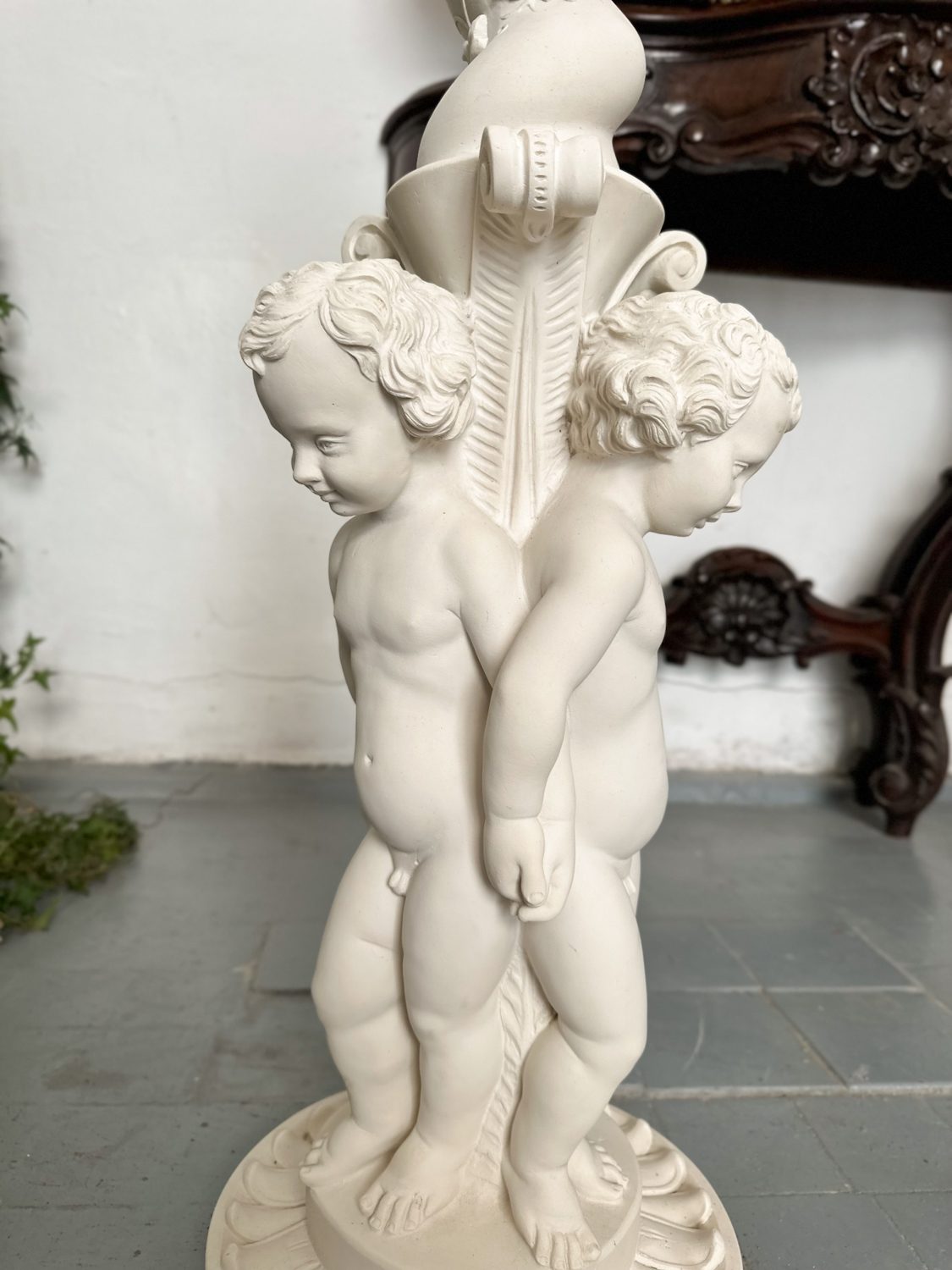
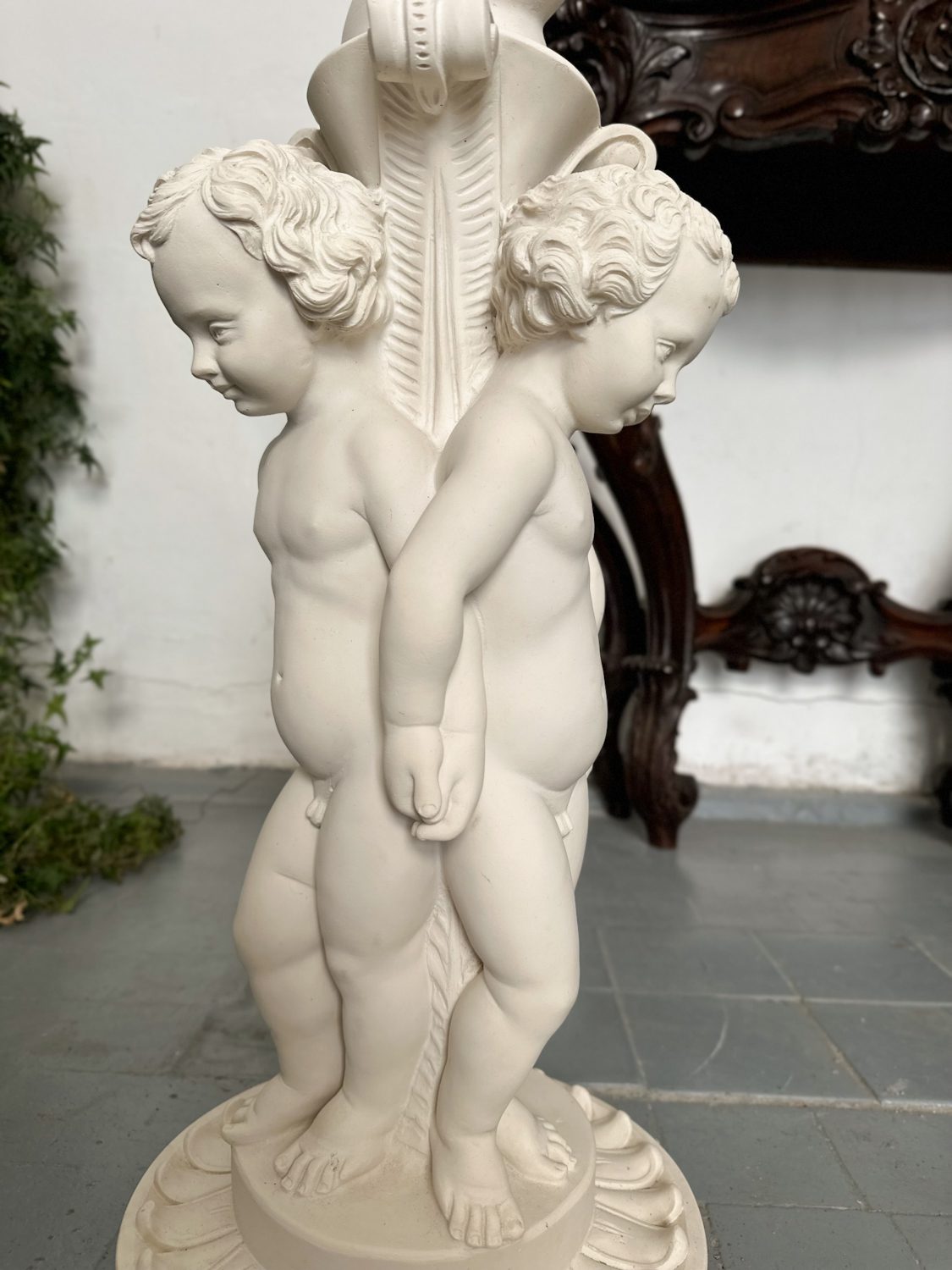
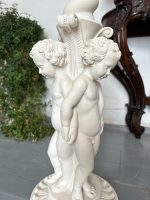
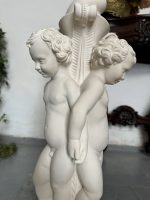
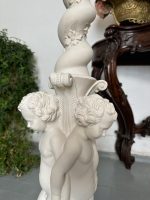
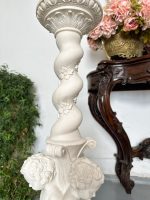
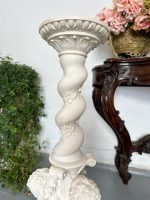
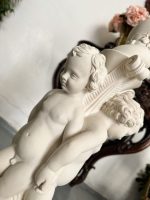
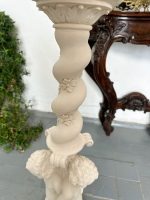
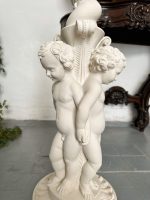
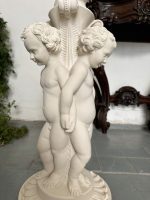
Эта внушительная декоративная колонна-пьедестал (cherub pedestal) принадлежит к той редкой категории предметов, что одновременно служат и подставкой, и самостоятельным скульптурным произведением. У круглого основания, спинами друг к другу, стоят два пухлых ангелочка (херувима) — с наклонёнными головками и мечтательно опущенными глазами, с такой нежностью в лицах, что на миг забываешь: это белый камень, а не живая плоть. Над ними поднимается резной витой ствол, обвитый цветочной гирляндой, и завершается широкой, глубоко профилированной капителью из листьев аканта и овального венца — готовая площадка для вазы, бюста или роскошного комнатного растения.
Материал — литая каменная масса (гипсовый композит, имитация мрамора): массивная, равномерно матовая, тёплого белого тона, с той приглушённой пудровой поверхностью, что напоминает изысканность бисквитного фарфора. Проработка деталей высокая: кудри детей вылеплены прядь за прядью, ладошки и стопы переданы мягко и естественно.
Стиль и период изготовления. По композиции, трактовке путти и рокайльному вкусу пьедестал выполнен в духе неорококо / стиля Людовика XV — декоративная работа, эстетика которой прямо продолжает французскую традицию XVIII века с её игривыми ангелами и текучими линиями. Это подлинная интерпретация своего времени, а не исторический оригинал.
Применение. Идеальная подставка для скульптуры, дорогой фарфоровой вазы, большого букета или растительной композиции; прекрасно смотрится в гостиной, холле, зимнем саду или у лестницы. Белая матовая поверхность гармонирует и с тёмным антикварным деревом, и со светлым современным интерьером.
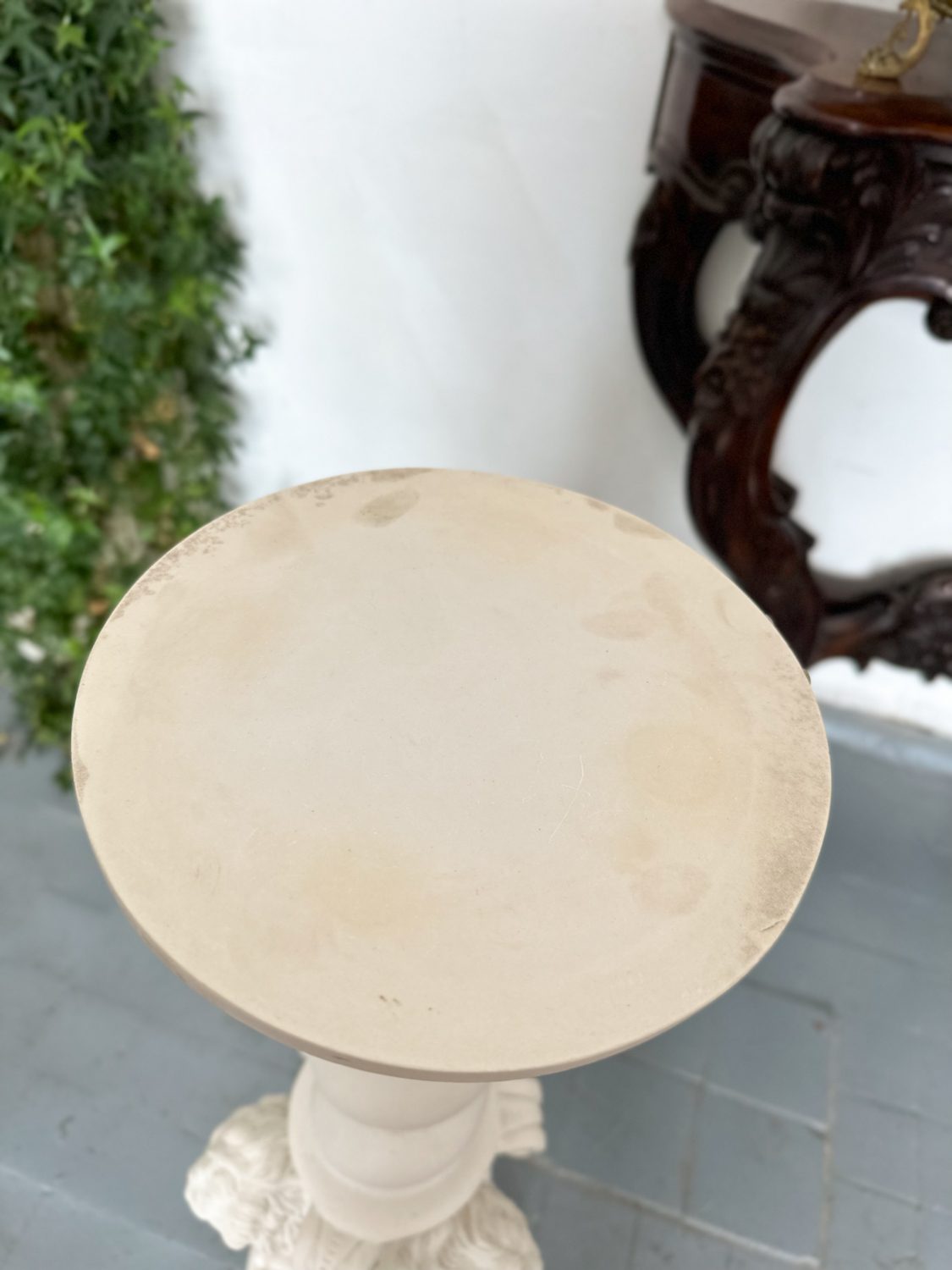
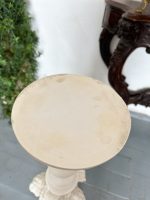
Состояние. Хорошее, соответствующее возрасту и размеру. На поверхности — лёгкие следы пользования и пыли, верхняя плита с естественной патиной (см. фото). Конструкция устойчивая и очень тяжёлая — переносить лучше вдвоём.
Размеры: Высота · диаметр основания: 94,5 · 24 см
Снимок эпохи Бель Эпок: Сара Бернар (Sarah Bernhardt) скользнула в свой будуар после позднего прогона, и пламя свечи поймало белую форму у окна — две детские головки, склонённые в темноте как во сне. Она поставила на прохладную верхнюю плиту маленькую бронзовую вазочку с одной камелией, и в комнате на миг воцарилось то тихое торжественное спокойствие, которое знают лишь те, кто только что сошёл со сцены. Пальцы скользнули по капители из листьев аканта — холодной, гладкой, надёжной. Завтра здесь будет стоять чья-то охапка цветов; этим вечером хватило одного цветка и двух каменных ангелов, что охраняли её усталость.
Cherub Pedestal Column in Cast Stone — Neo-Rococo Stand for a Sculpture or Vase
This imposing decorative cherub pedestal is one of those rare pieces that is at once a functional stand and a sculptural work in its own right. At the round base, set back to back, stand two plump putti (cherubs) — heads inclined, eyes lowered in dreamy reverie, their faces carrying such tenderness that for a moment one forgets this is white cast stone rather than living flesh. Above them rises a twist-carved shaft wound with a floral garland, crowning in a broad, deeply moulded capital of acanthus leaves and egg-and-dart — a ready surface for a vase, a bust or a handsome houseplant.
The material is cast stone (a plaster composite in imitation of marble): solid, evenly matte, warm white in tone, with that softly powdery surface that recalls the refinement of biscuit porcelain. The modelling is finely done — the children’s curls worked lock by lock, hands and small feet rendered soft and lifelike.
Style and period. In composition, in the treatment of the putti and the rocaille spirit, the pedestal is made in the Neo-Rococo / Louis XV taste — a decorative work whose aesthetic continues the 18th-century tradition of playful cherubs and flowing line. It is an authentic interpretation of its own time rather than a historical original.
A perfect cherub pedestal for displaying sculpture, a fine porcelain vase, a generous bouquet or a trailing plant, it suits a drawing room, hallway, conservatory or stair landing equally well. The matte white finish sits beautifully against dark antique wood and pale modern interiors alike. Condition is good for age and scale, with light surface wear and a naturally patinated top plate (see photos); the construction is stable and very heavy — best moved by two.
Dimensions: Height · base diameter: 94.5 · 24 cm
Belle Époque snapshot: Sarah Bernhardt (Sarah Bernhardt) slipped into her boudoir after a late rehearsal, and the candle flame caught the white form by the window — two children’s heads, bowed in the dark as if asleep. She set a small bronze vase with a single camellia on the cool top plate, and the room filled for a moment with that quiet, solemn calm known only to those just down from the stage. Her fingers slid over the acanthus capital — cold, smooth, sure. Tomorrow someone’s armful of flowers would stand here; tonight one bloom and two stone angels guarding her tiredness were enough.
Weiße Putten-Säule (Cherubim) — Neorokoko-Postament für Skulptur oder Vase
Diese eindrucksvolle dekorative Säule mit Postament (cherub pedestal) gehört zu jener seltenen Gattung, die zugleich funktionaler Ständer und eigenständiges Bildwerk ist. Am runden Sockel stehen, Rücken an Rücken, zwei pummelige Engelskinder (Cherubim) — die Köpfchen geneigt, die Augen träumerisch gesenkt, mit solcher Zartheit in den Gesichtern, dass man für einen Augenblick vergisst, dass dies weißer Steinguss ist und kein lebendiges Fleisch. Über ihnen erhebt sich ein gedrehter, geschnitzter Schaft, von einer Blütengirlande umwunden, und gipfelt in einem breiten, tief profilierten Kapitell aus Akanthusblättern und Eierstab — eine bereite Fläche für eine Vase, eine Büste oder eine prächtige Zimmerpflanze.
Das Material ist Steinguss (eine Gipskomposition in Marmorimitation): massiv, gleichmäßig matt, von warmem Weiß, mit jener sanft pudrigen Oberfläche, die an die Feinheit des Biskuit-Porzellans erinnert. Die Ausarbeitung ist fein — die Locken der Kinder Strähne für Strähne gearbeitet, Hände und kleine Füße weich und lebensnah modelliert.
Stil und Entstehungszeit. Nach Komposition, Auffassung der Putten und Rocaille-Geschmack ist das Postament im Neorokoko- / Louis-XV-Stil gefertigt — eine dekorative Arbeit, deren Ästhetik die französische Tradition des 18. Jahrhunderts mit ihren verspielten Engeln und fließenden Linien unmittelbar fortsetzt. Es ist eine authentische Interpretation ihrer eigenen Zeit, kein historisches Original.
Ein perfekter Ständer für eine Skulptur, eine feine Porzellanvase, einen üppigen Strauß oder eine Rankenpflanze — passend für Salon, Diele, Wintergarten oder Treppenabsatz. Das matte Weiß harmoniert ebenso mit dunklem antikem Holz wie mit hellem modernem Interieur. Der Zustand ist dem Alter und der Größe entsprechend gut, mit leichten Gebrauchsspuren und einer natürlich patinierten Deckplatte (siehe Fotos); die Konstruktion ist stabil und sehr schwer — am besten zu zweit zu tragen.
Maße: Höhe · Sockeldurchmesser: 94,5 · 24 cm
Momentaufnahme der Belle-Époque-Zeit: Sarah Bernhardt (Sarah Bernhardt) glitt nach einer späten Probe in ihr Boudoir, und die Kerzenflamme fing die weiße Form am Fenster — zwei Kinderköpfe, im Dunkeln geneigt wie im Schlaf. Sie stellte ein kleines Bronzeväschen mit einer einzigen Kamelie auf die kühle Deckplatte, und für einen Augenblick erfüllte den Raum jene stille, feierliche Ruhe, die nur jene kennen, die eben erst von der Bühne kommen. Ihre Finger glitten über das Akanthus-Kapitell — kalt, glatt, sicher. Morgen würde hier jemandes Armvoll Blumen stehen; heute Abend genügten eine Blüte und zwei steinerne Engel, die ihre Müdigkeit hüteten.
Colonne aux angelots (chérubins) en pierre reconstituée — piédestal néo-rococo pour sculpture ou vase
Cette imposante colonne-piédestal (cherub pedestal) appartient à cette rare catégorie d’objets qui sont à la fois un support fonctionnel et une véritable œuvre sculptée. À la base ronde se tiennent, dos à dos, deux angelots (chérubins) potelés — la tête inclinée, les yeux baissés dans une rêverie, le visage empreint d’une telle tendresse que l’on oublie un instant qu’il s’agit de pierre reconstituée blanche et non de chair vivante. Au-dessus d’eux s’élève un fût torsadé sculpté, ceint d’une guirlande de fleurs, couronné d’un large chapiteau profondément mouluré de feuilles d’acanthe et d’oves — une surface toute prête pour un vase, un buste ou une belle plante d’intérieur.
Le matériau est la pierre reconstituée (composition de plâtre en imitation de marbre) : massive, uniformément mate, d’un blanc chaud, avec cette surface doucement poudrée qui rappelle la finesse du biscuit de porcelaine. Le modelé est soigné — les boucles des enfants travaillées mèche par mèche, mains et petits pieds rendus avec douceur et naturel.
Style et période. Par la composition, le traitement des putti et le goût rocaille, le piédestal est réalisé dans le style néo-rococo / Louis XV — une œuvre décorative dont l’esthétique prolonge directement la tradition e du XVIIIᵉ siècle, avec ses angelots espiègles et ses lignes fluides. C’est une interprétation authentique de son temps, et non un original historique.
Support idéal pour une sculpture, un vase de porcelaine, un bouquet généreux ou une plante retombante, il convient au salon, à l’entrée, au jardin d’hiver ou au palier d’escalier. Le blanc mat s’accorde aussi bien au bois ancien sombre qu’à un intérieur clair et contemporain. L’état est bon pour l’âge et la taille, avec de légères traces d’usage et une plaque supérieure à la patine naturelle (voir photos) ; la construction est stable et très lourde — à porter de préférence à deux.
Dimensions : Hauteur · diamètre de la base : 94,5 · 24 cm
Instantané de la Belle Époque : Sarah Bernhardt (Sarah Bernhardt) se glissa dans son boudoir après une répétition tardive, et la flamme de la bougie saisit la forme blanche près de la fenêtre — deux têtes d’enfant, inclinées dans l’ombre comme endormies. Elle posa sur la plaque supérieure fraîche un petit vase de bronze portant un seul camélia, et la pièce s’emplit un instant de ce calme silencieux et solennel que connaissent seuls ceux qui viennent de quitter la scène. Ses doigts glissèrent sur le chapiteau d’acanthe — froid, lisse, sûr. Demain, une brassée de fleurs s’y dresserait ; ce soir, une seule fleur et deux anges de pierre veillant sur sa fatigue suffisaient.