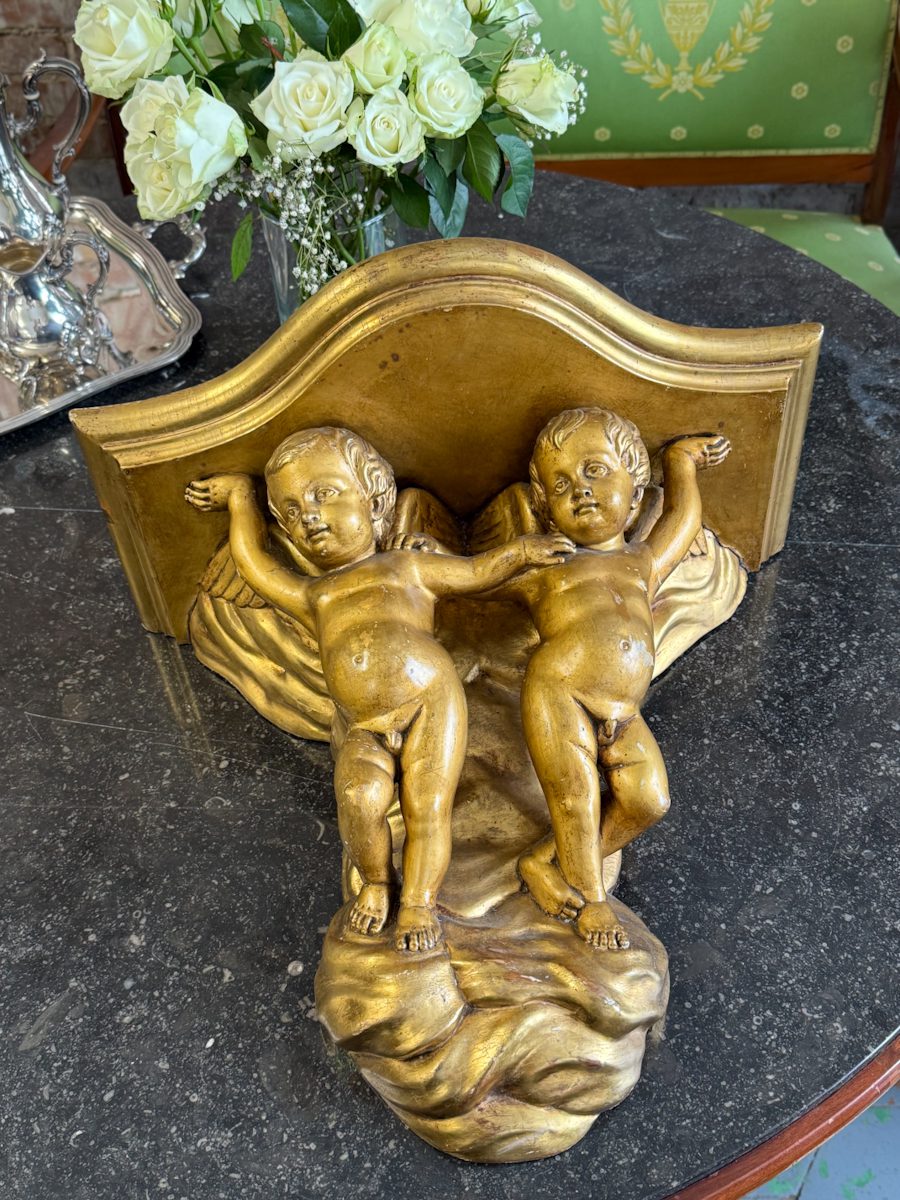
Gilt Wall Console with Two Putti — Neo-Rococo, France/Italy, c. 1880–1920 This impressive giltwood wall console with two putti is a true decorative artwork — two winged putti, positioned on drapery and cloud-like waves, with raised hands as if supporting… 950,00 €
You’re now subscribed to price tracking for this product. We’ll notify you if the price drops. 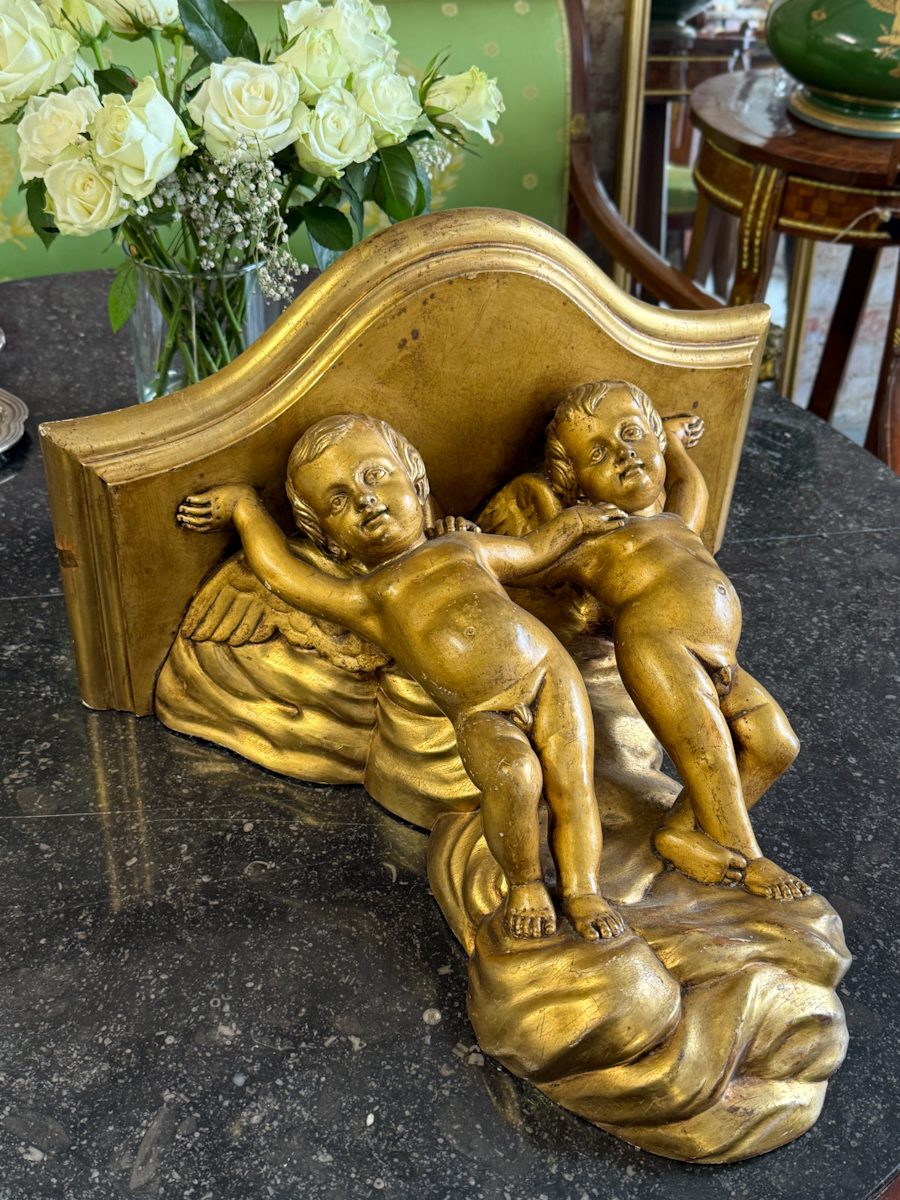
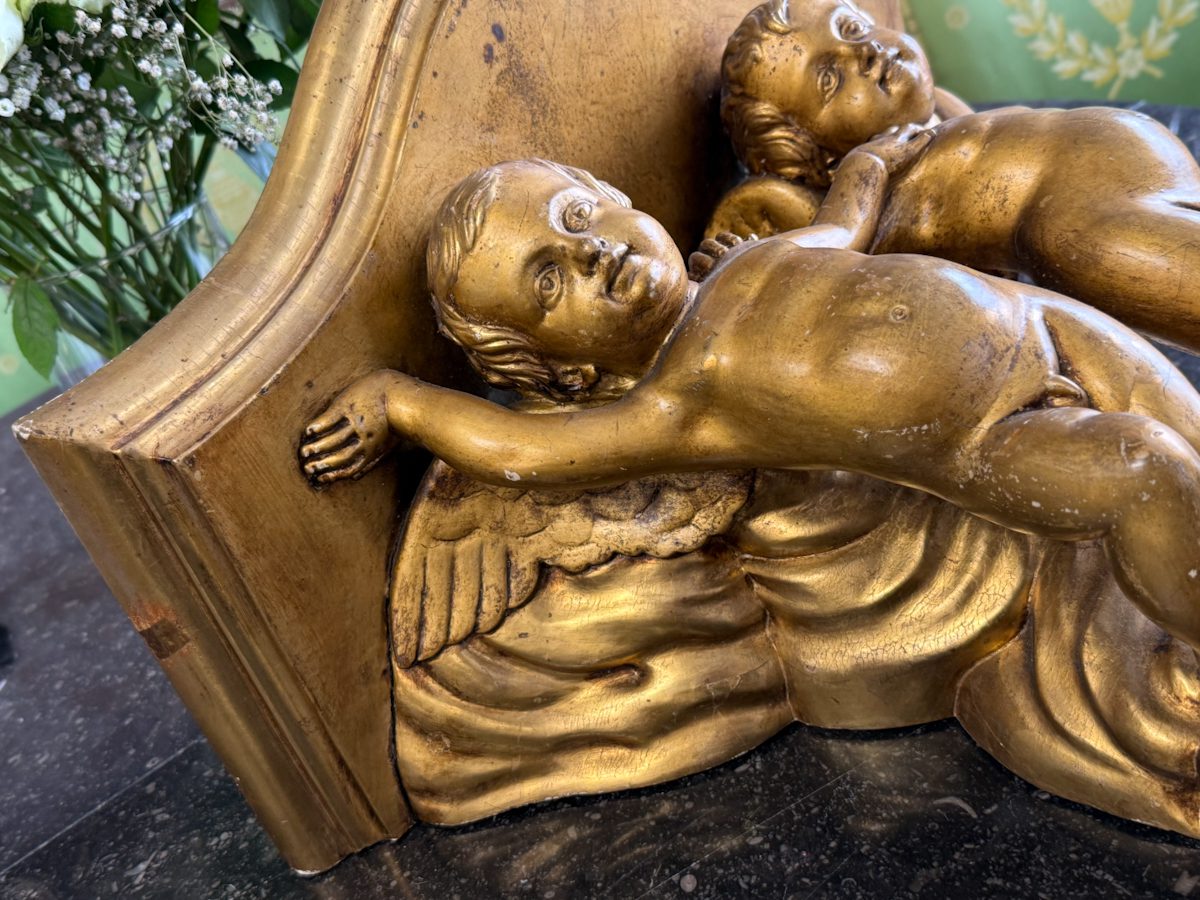
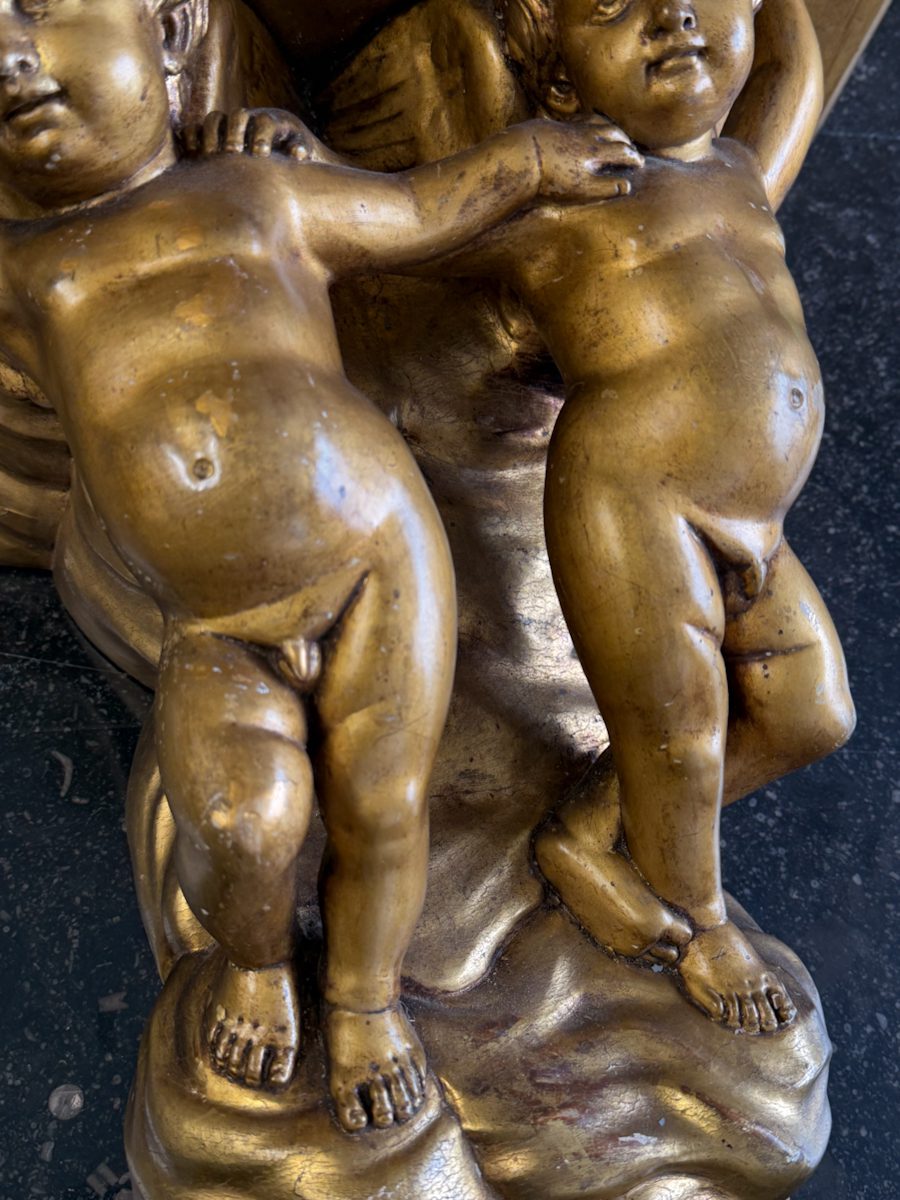
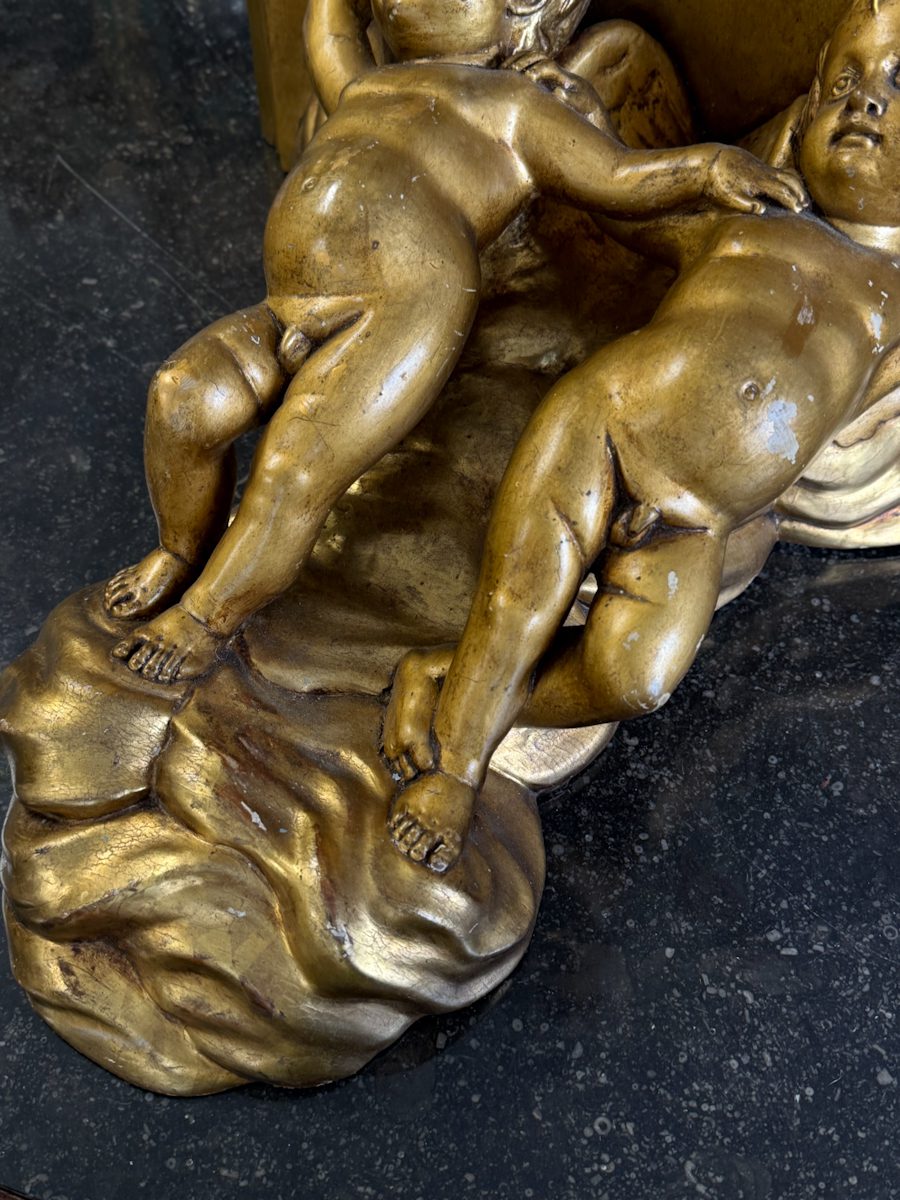
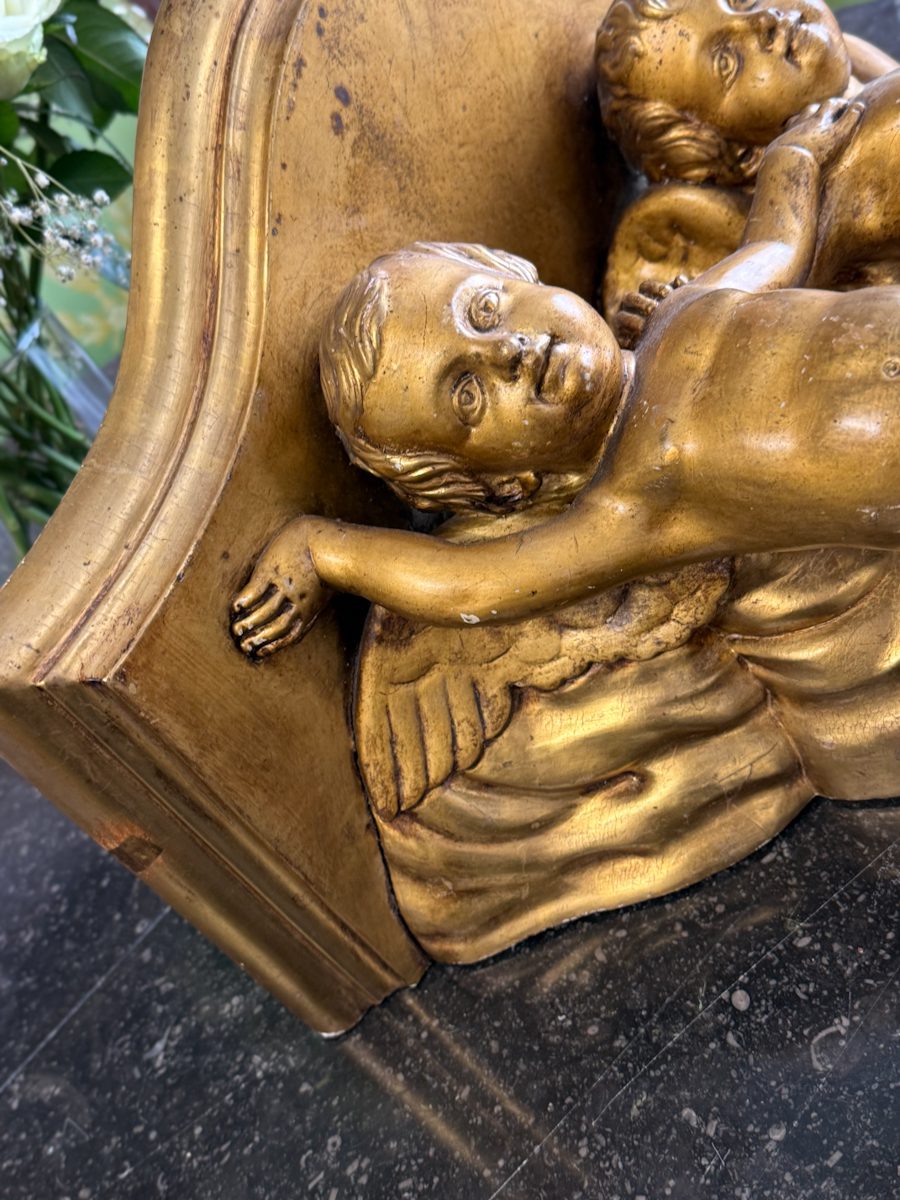

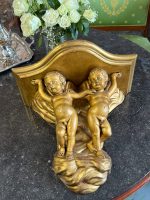










Gilt Wall Console with Two Putti — Neo-Rococo, Wall-Mounted, Medium Weight, France/Italy, c. 1880–1920 (6657)
Height 44.5 cm Width 50.5 cm


Description
Gilt Wall Console with Two Putti — Neo-Rococo, France/Italy, c. 1880–1920
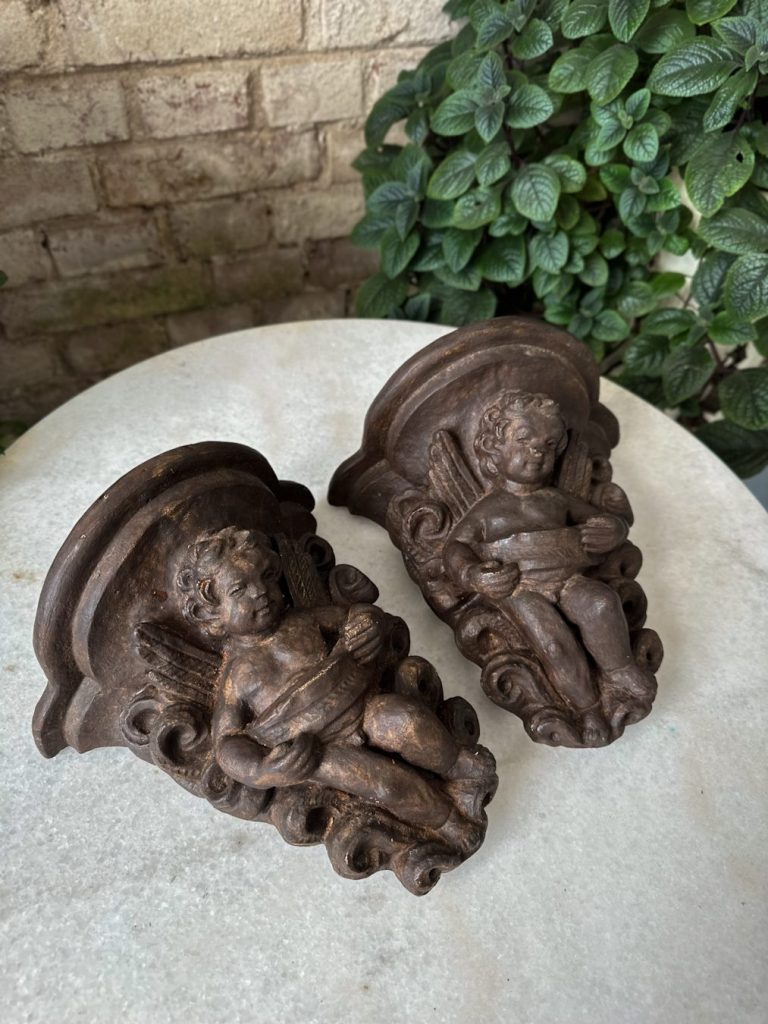
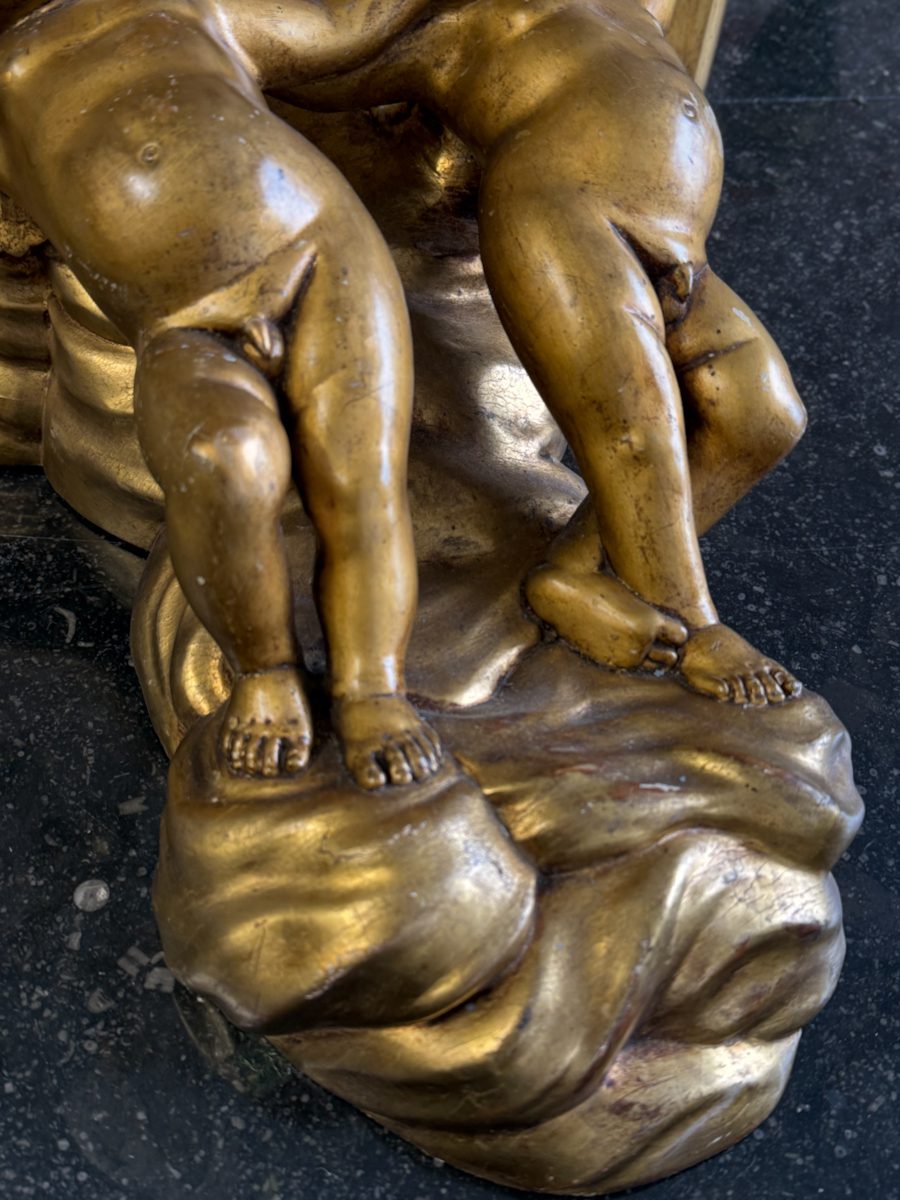
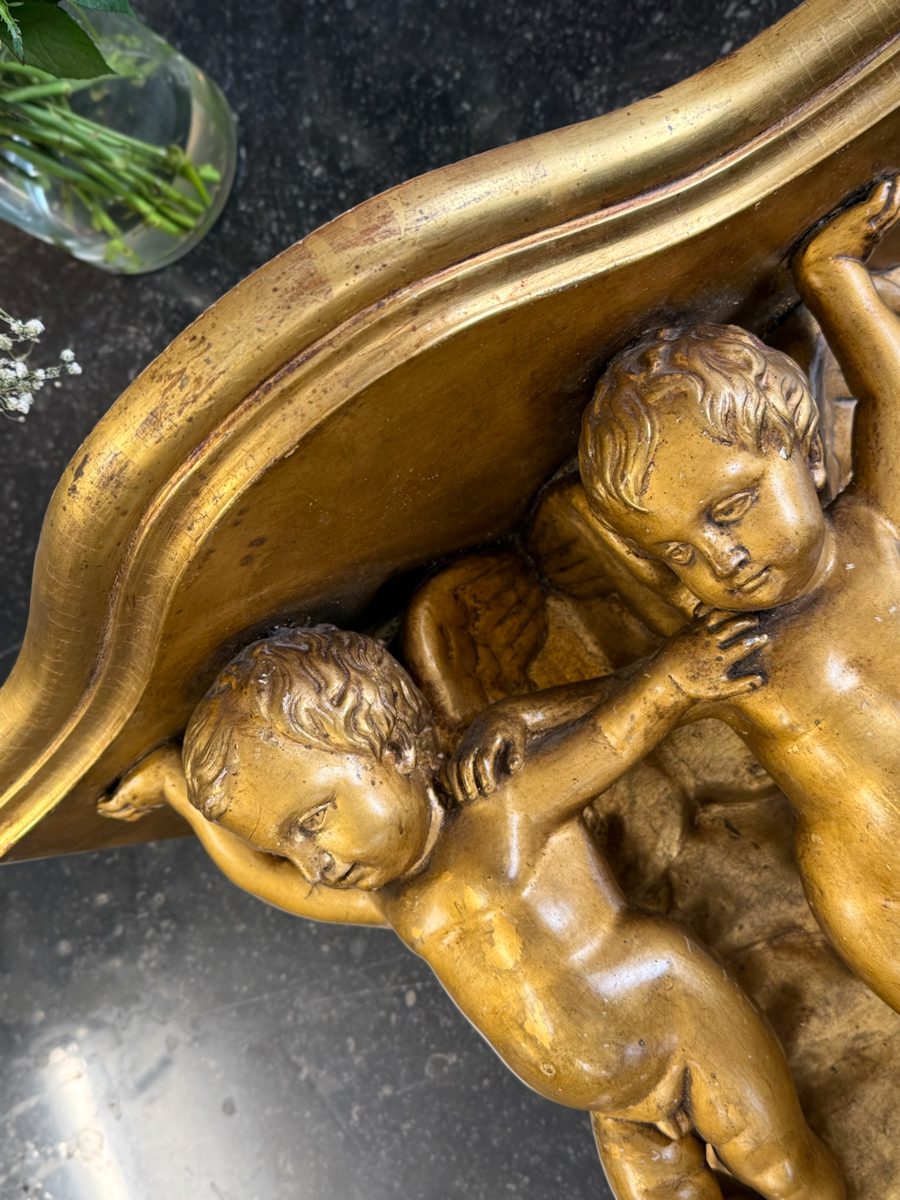
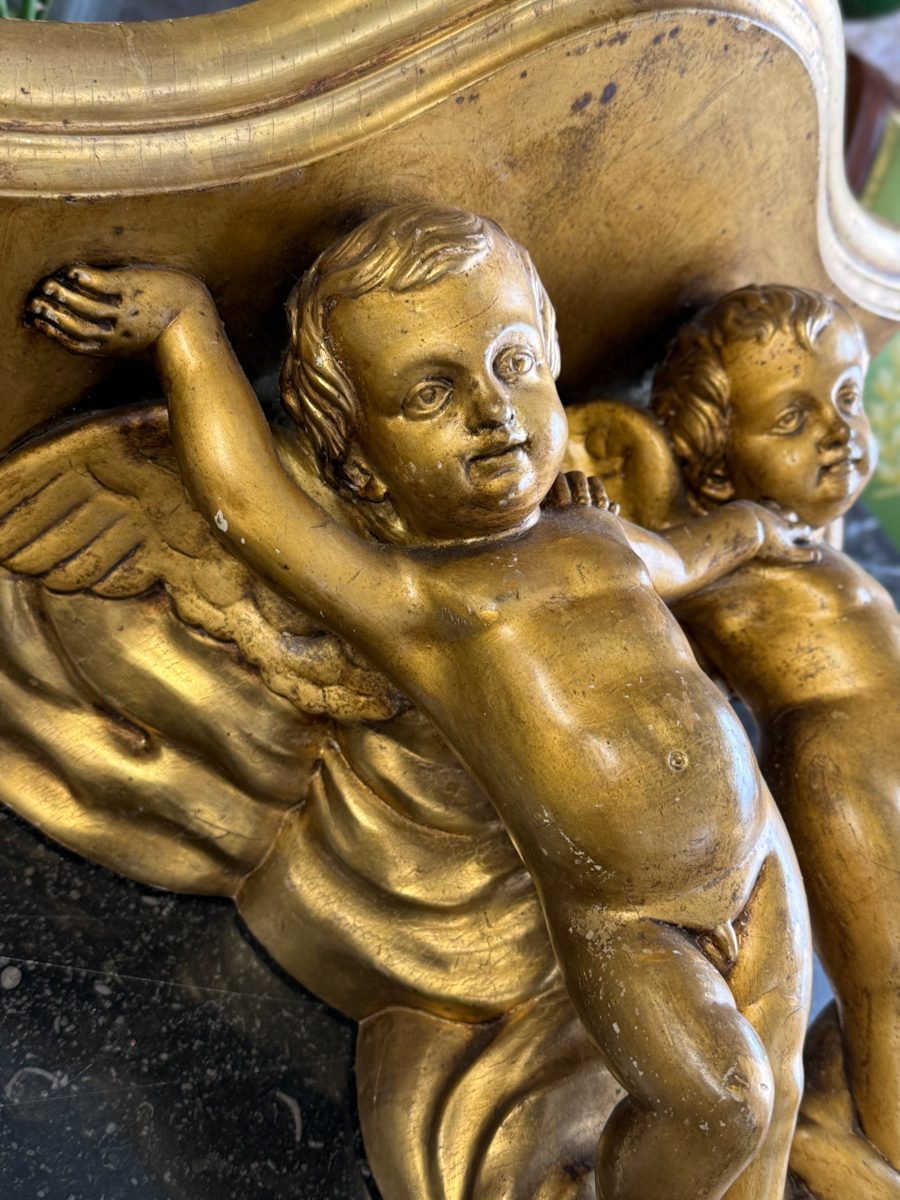
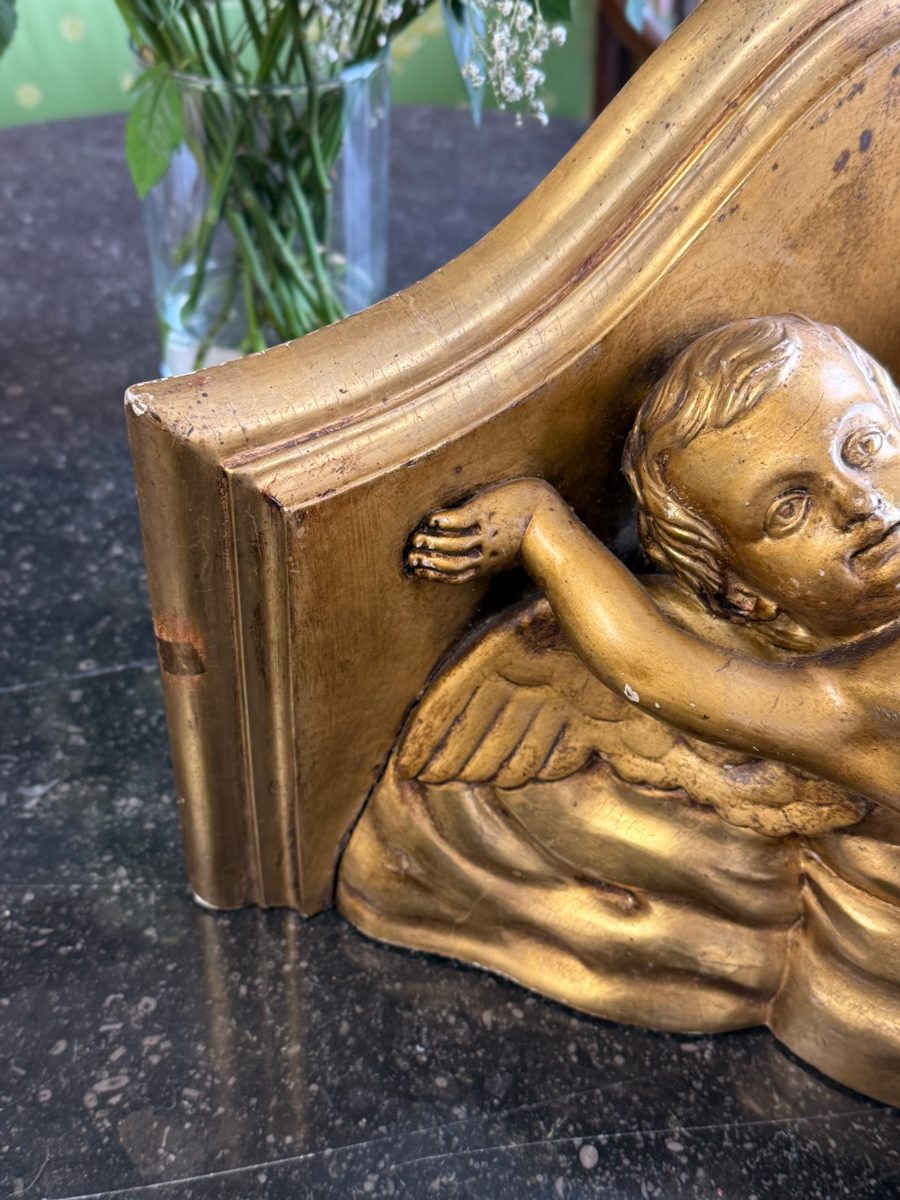
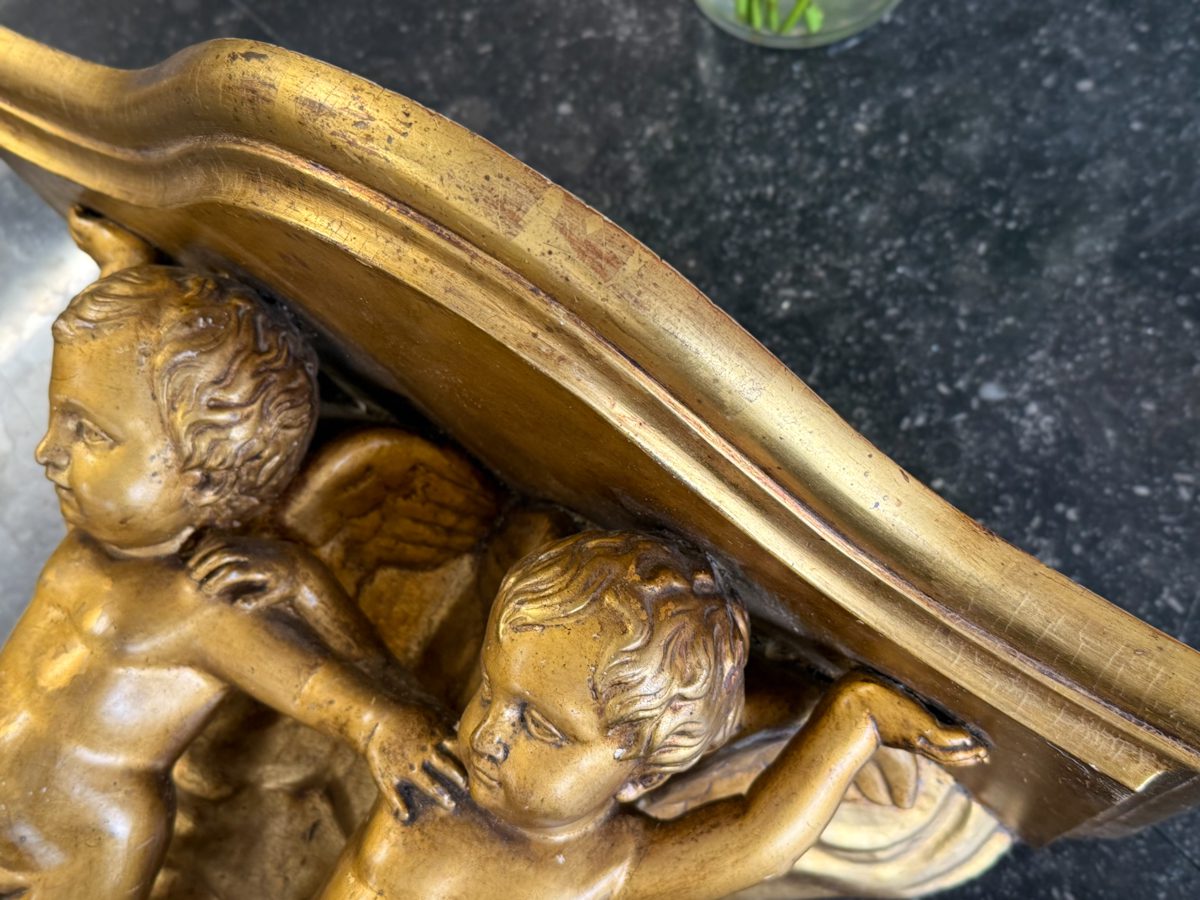
This impressive giltwood wall console with two putti is a true decorative artwork — two winged putti, positioned on drapery and cloud-like waves, with raised hands as if supporting the curved, bombe-shaped shelf surface above them. The cherubic bodies are modelled with delicate, naturalistic plasticity; the faces are round, lively, with finely carved curls.
Dimensions
Height 44.5 cm (+ 3 cm mount) × width 50.5 cm × depth 30 cm.
Period and Style
The console dates to approximately 1880–1920 and is crafted in the Neo-Rococo (style Louis XV revival) spirit — with putti motifs, wavy rocaille drapery, and a curved surface. Putti — the small winged genies or cupids — are one of the oldest and most beloved motifs in European decorative art, a legacy from the Renaissance and Baroque, which experienced a revival in the Neo-Rococo era with renewed tenderness and sentiment. It is a typical object of the Belle Époque interior — a time when the affluent bourgeoisie rediscovered the lightness and playfulness of the 18th century.
A Belle Époque Snapshot: Auguste Rodin was walking past an antique shop window on Rue de l’Université when his eye caught something golden. He stopped. Behind the misted glass, two small forms seemed to move — a wave of drapery, a raised hand, a child’s face looking upwards at something that was no longer there. He lingered longer than he should have. It is in these small, anonymous objects that what great art seeks in vain is sometimes found — a movement frozen just before it would have become a pose.
Material and Craftsmanship
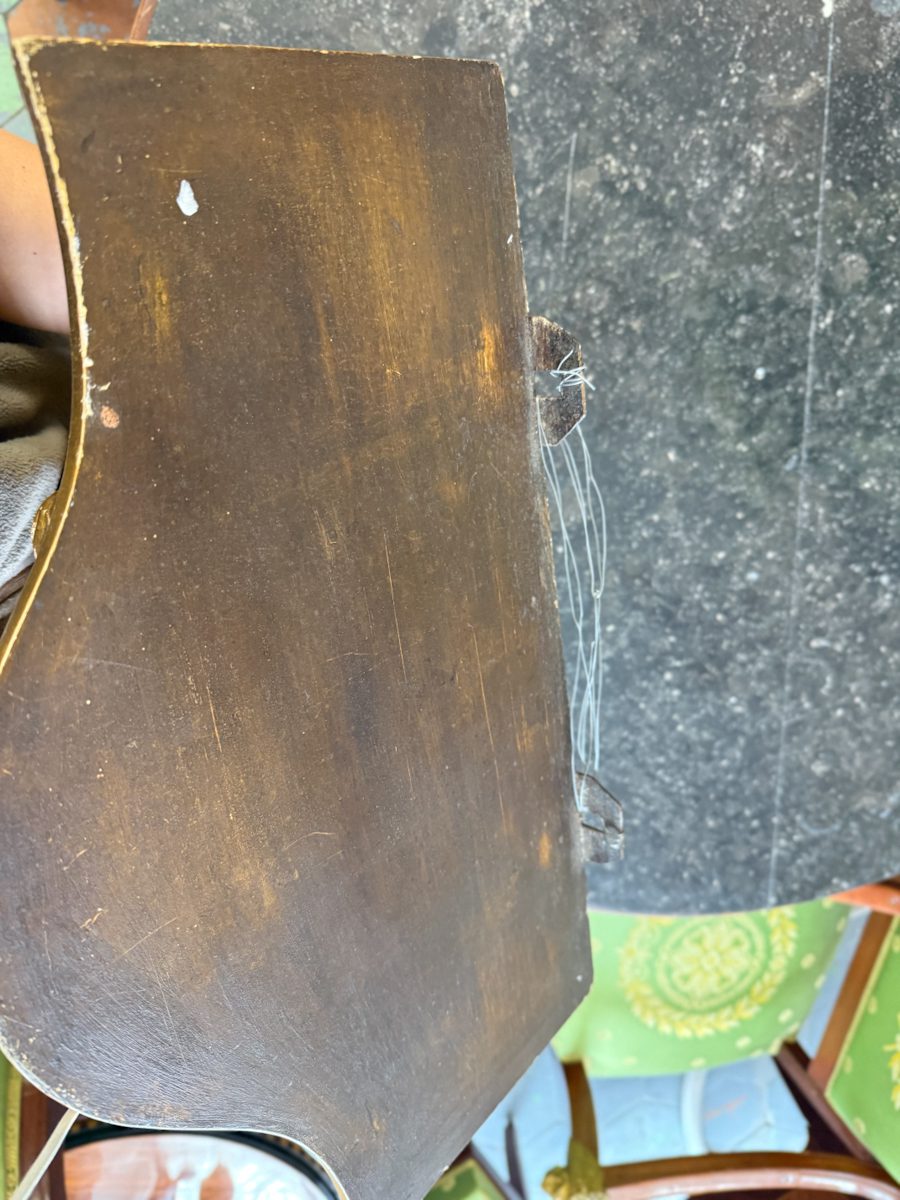
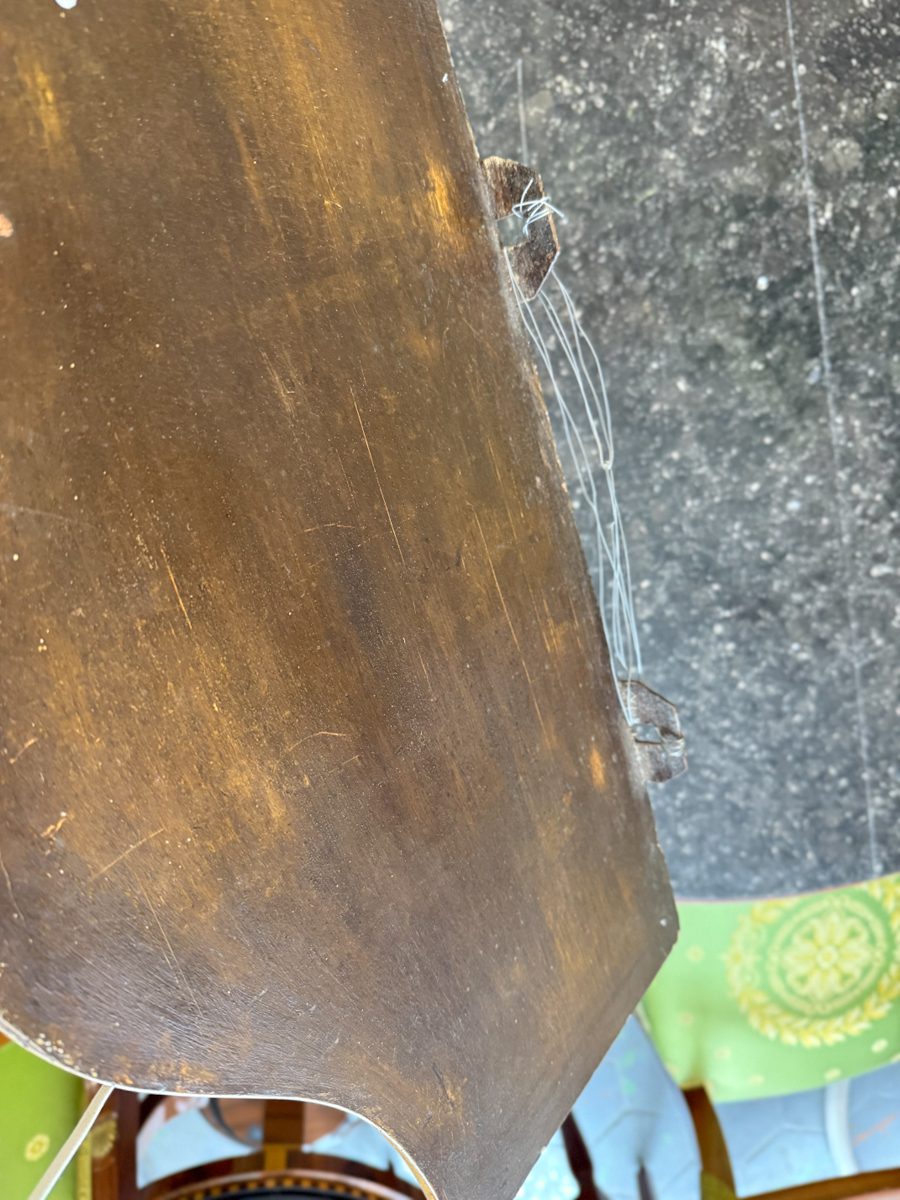
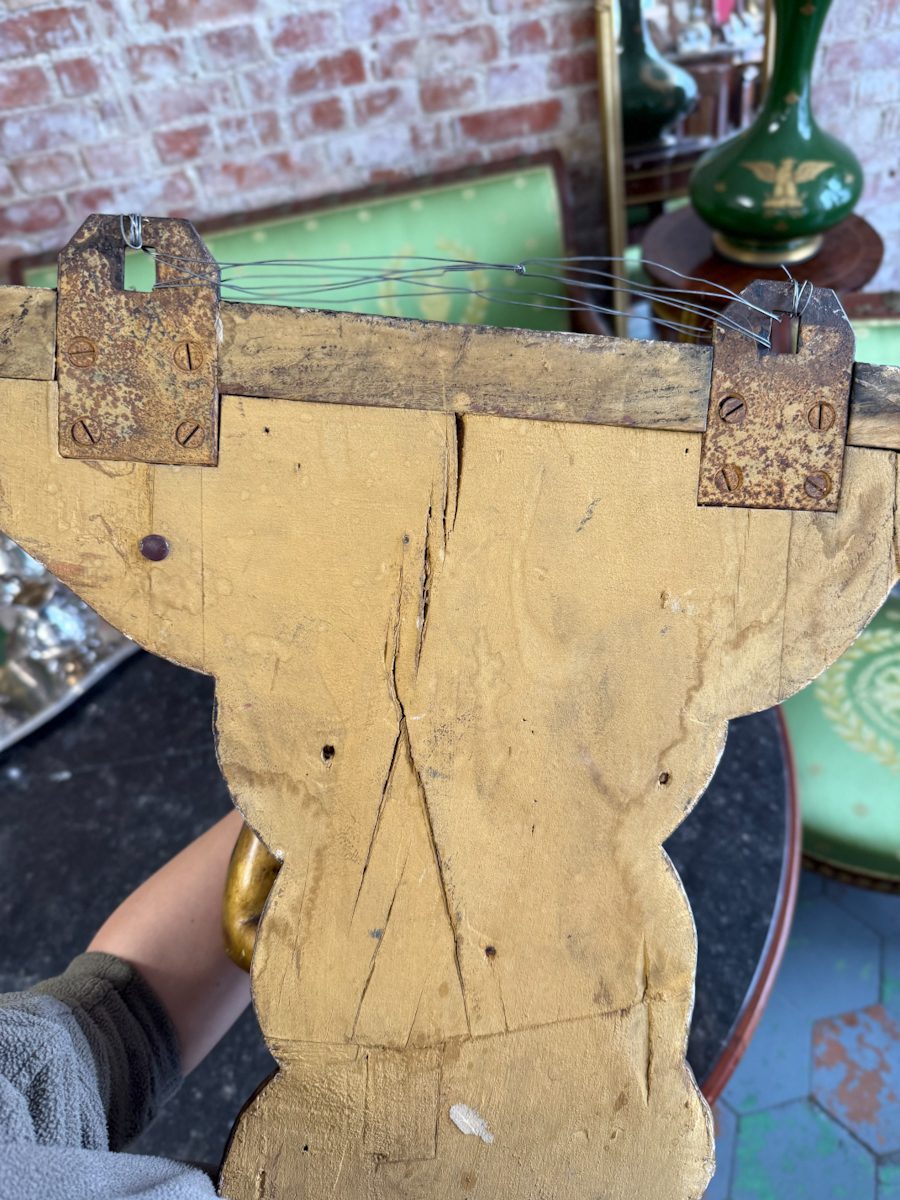
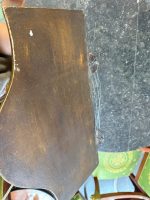
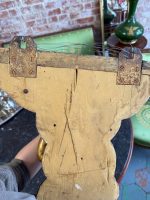
The console is carved from wood and covered with gilt. The original wooden base with hand-forged iron mounting plates and an old wire hanger is visible on the back — authentic signs of age. There is no separate maker’s mark, which is common for decorative consoles of this type.
Rarity and Significance
Gilt figurative wall consoles with putti are increasingly difficult to find in good condition — their delicate, protruding details (hands, wings, fingers) are easily damaged. This console has retained all its main elements and compositional integrity, making it a rare and decoratively valuable piece.
Application in Interiors, Design, and Photography
The wall-mounted console serves both as a standalone sculptural accent and as a shelf for displaying small items — a vase, clock, candles, or statuette. It fits perfectly into a classical, , Baroque, or romantic interior, as well as a theatrically eclectic space. The gilt surface photographs luxuriously and warmly.
Gift and Personalization
Such a console makes a sophisticated gift for interior design enthusiasts, antique collectors, or as an impressive accent for a new home — an object with presence and character.
Condition
The console is in good, age-appropriate condition, with natural signs of age and use: the gilding is worn and rubbed in places, revealing the wooden base; there are fine craquelure in the gilding and wood, as is typical for gilded objects of this age. The original iron mounts on the back show traces of rust. The condition of the item is fully reflected in the photographs.