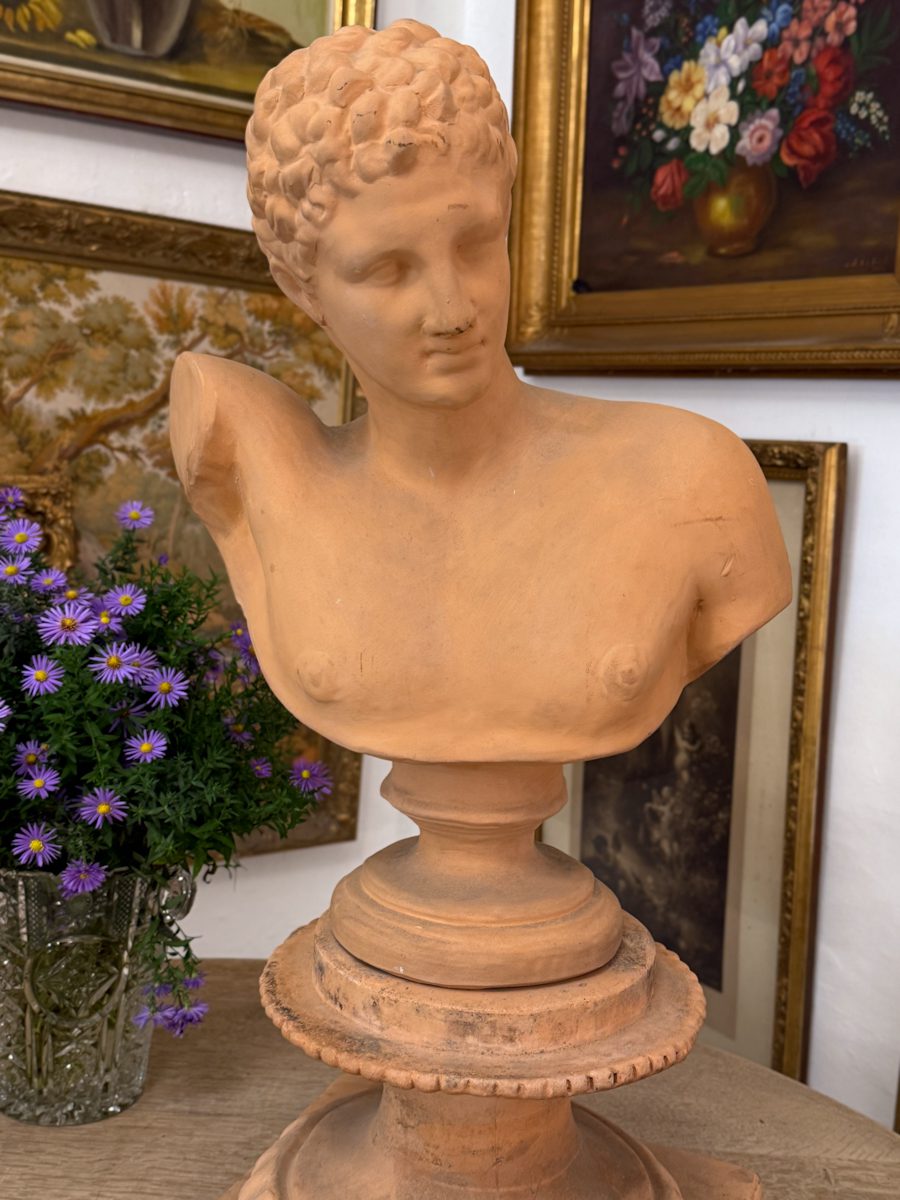
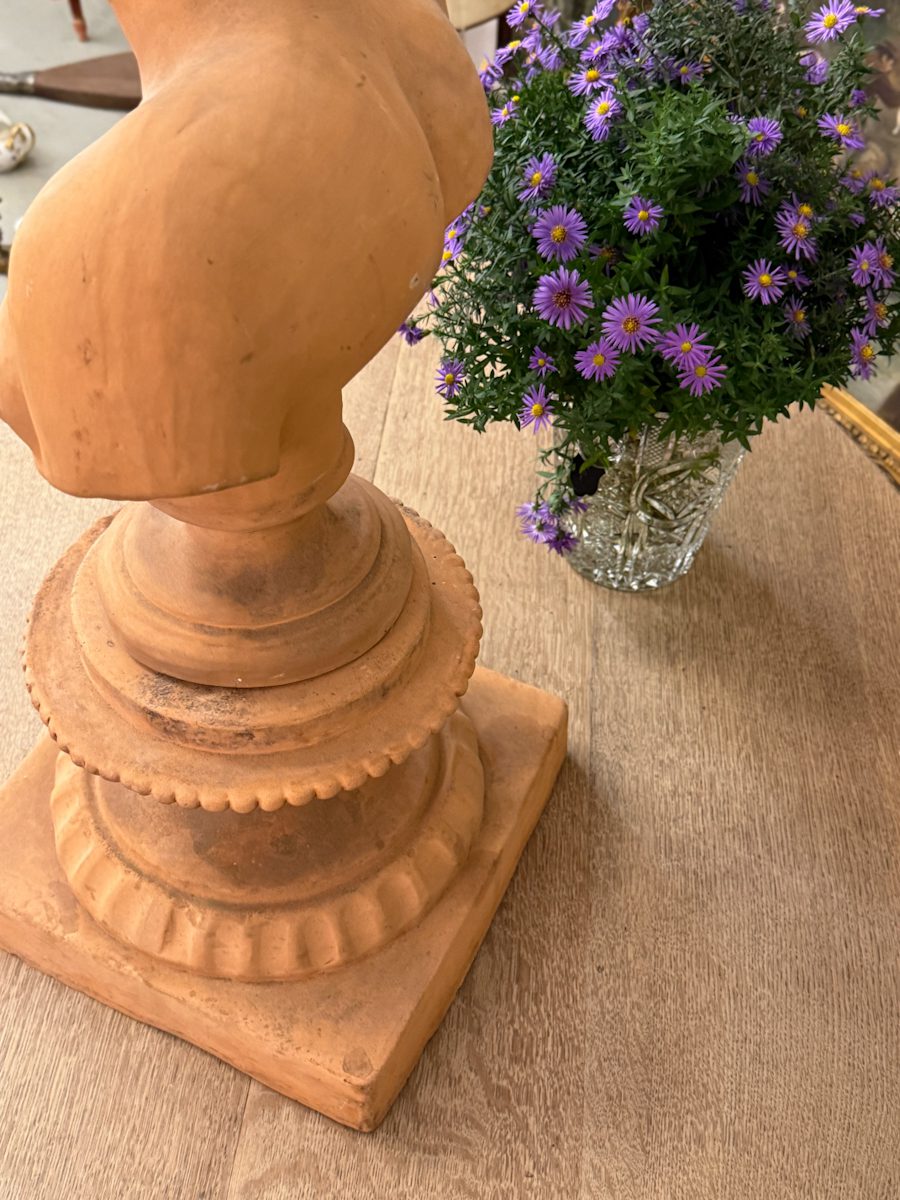
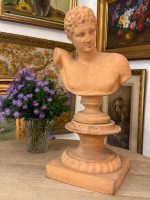
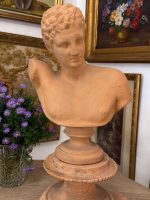
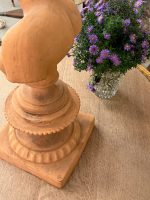
Terracotta bust — Hermes with the young Dionysus after the antique model by Praxiteles, on a terracotta pedestal. Bust height 77.5 cm, pedestal ~38 cm. Europe, 19th–20th c. 380,00 €
You’re now subscribed to price tracking for this product. We’ll notify you if the price drops. 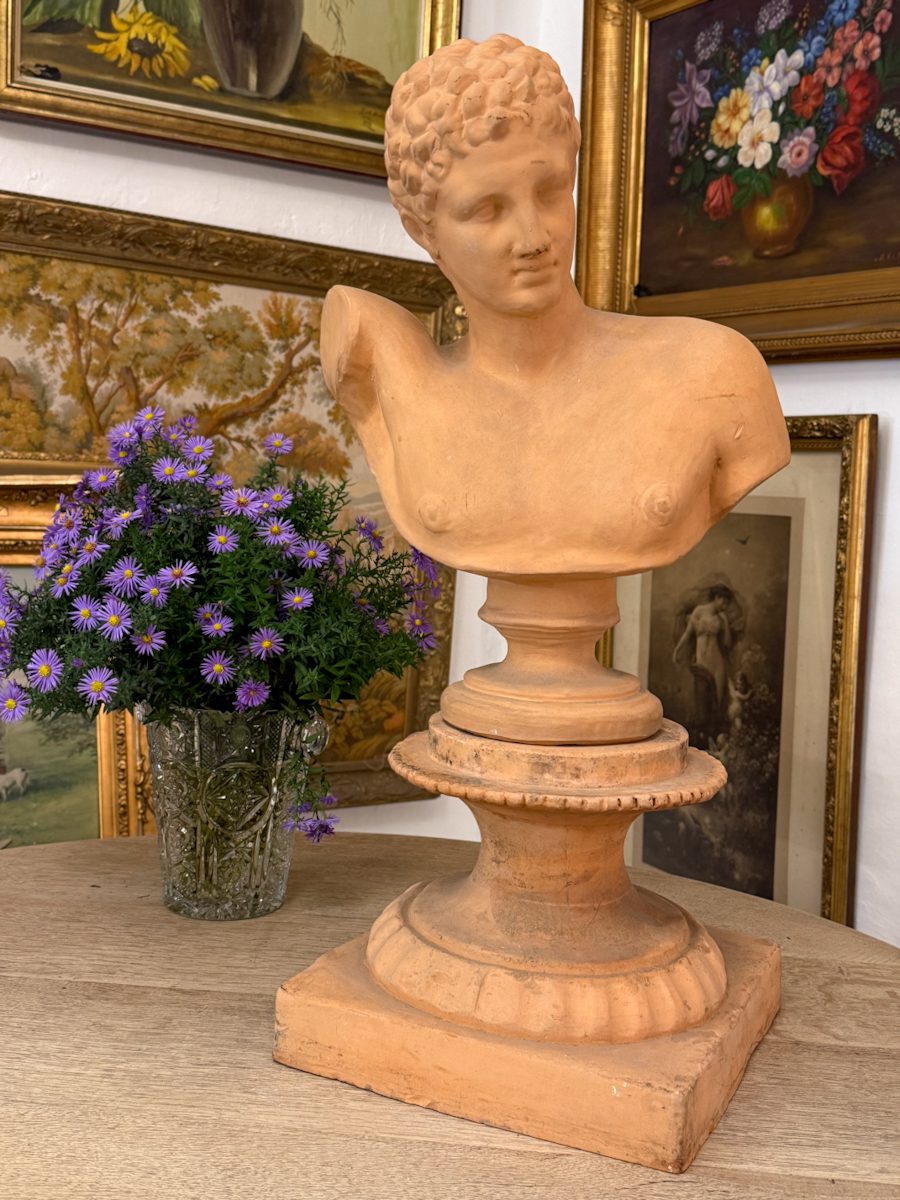
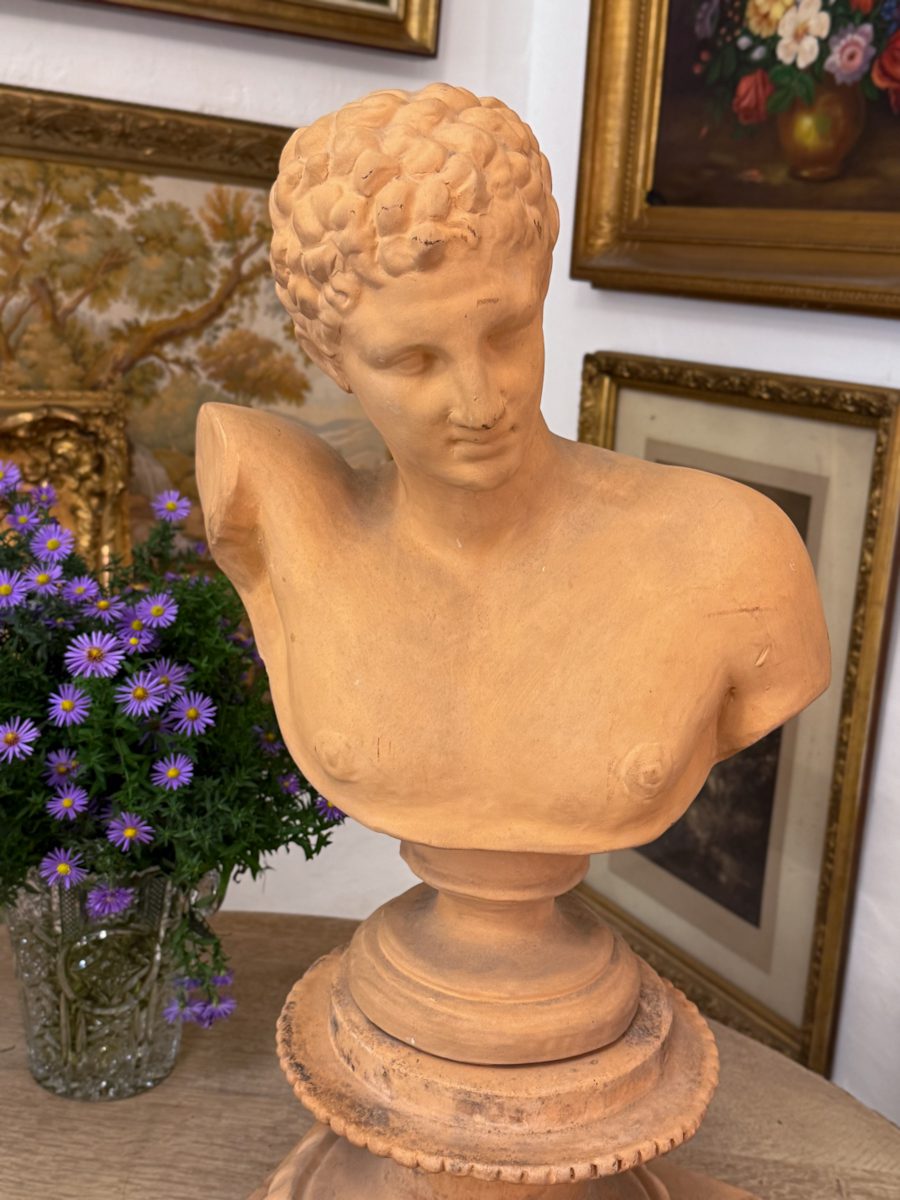
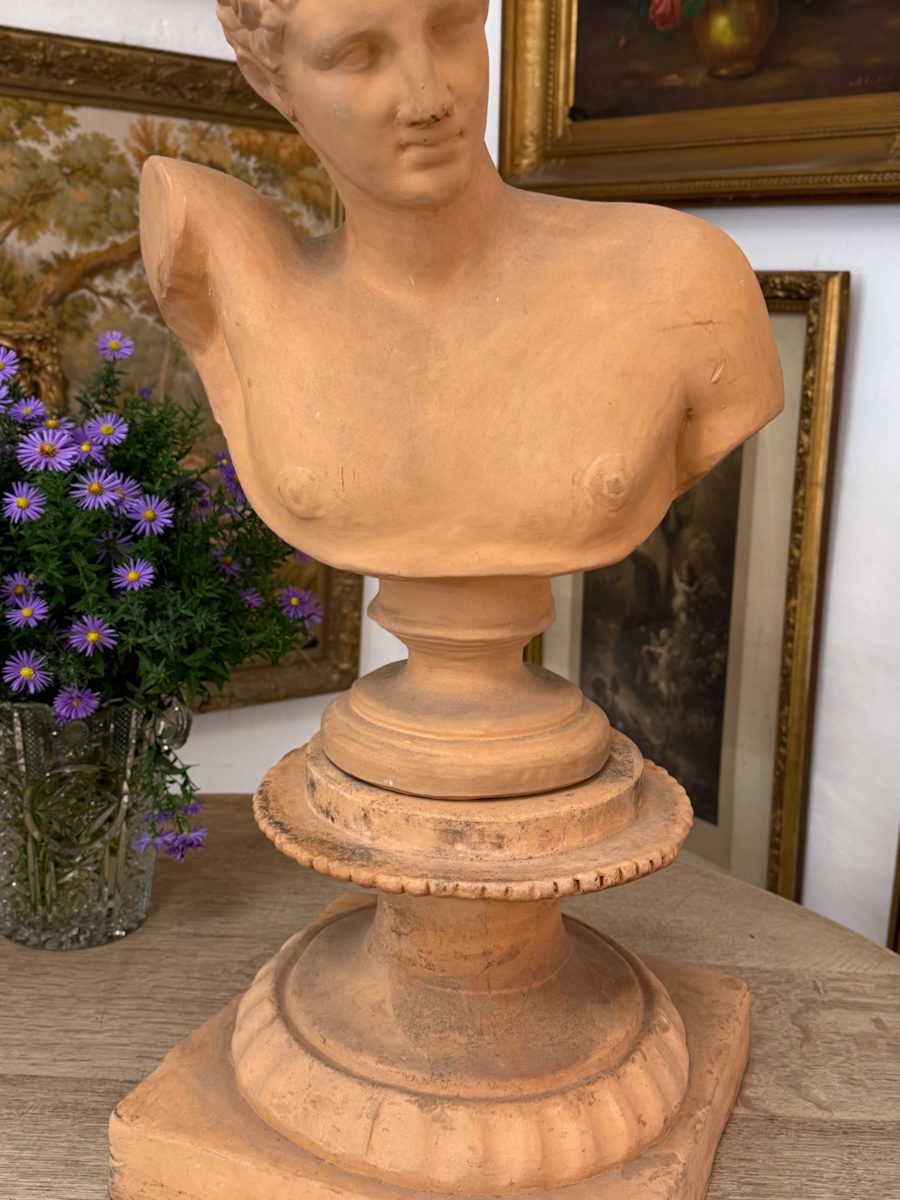
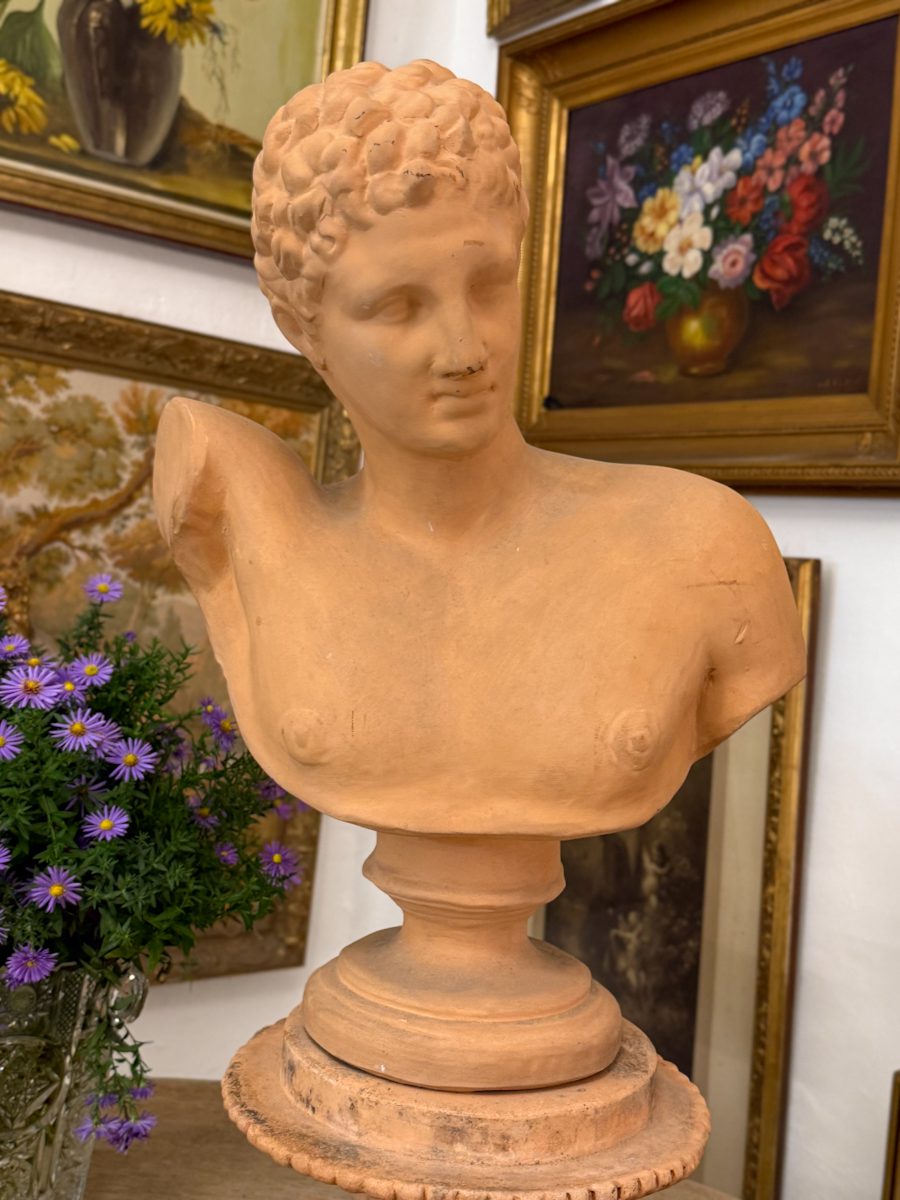
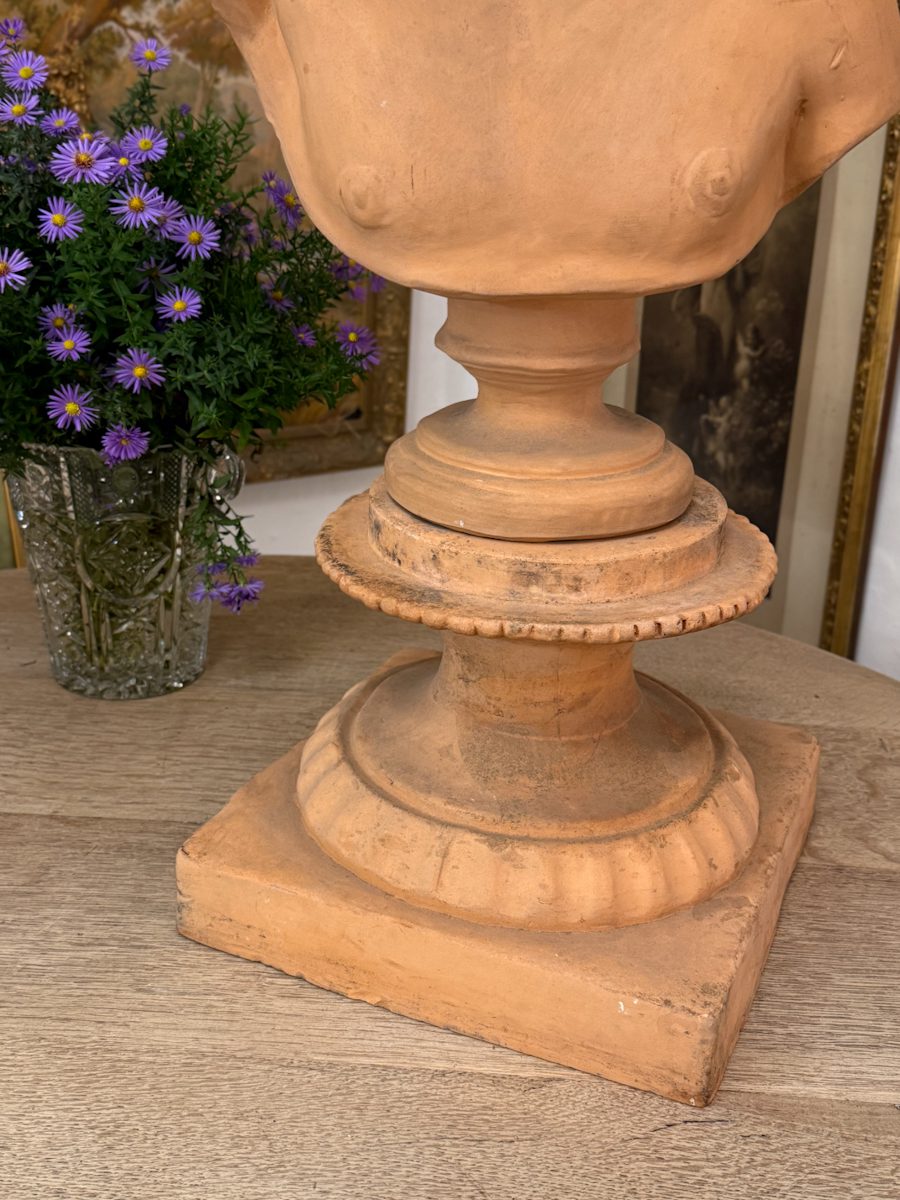
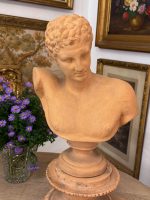
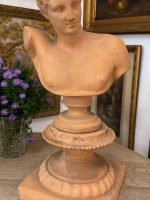
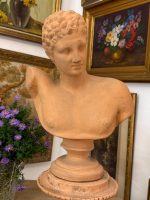
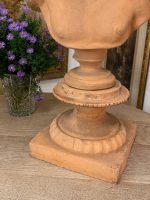
Terracotta Bust — Hermes with Dionysus, After Praxiteles (6157)
Height 38 cm, 77.5 cm Color OrangeTerracottaStone
Description
Dimensions: Bust height 77.5 cm × pedestal height ~38 cm (total ~115.5 cm)
Terracotta bust — Hermes with the young Dionysus (Hermès de Praxitèle), Classicism after an antique model, Europe, 19th–20th c.
Period of creation, art style, era
This beautiful terracotta bust depicts Hermes — the messenger of the Greek gods — after Praxiteles’ famous work “Hermes with the young Dionysus” (c. 340 BC), discovered in Olympia in 1877 and which became one of the most renowned benchmarks of ancient sculpture. This terracotta bust belongs to the circle of classicism and academic tradition, when in the 19th and early 20th centuries, European sculptors and manufactories created replicas of ancient masterpieces for museums, academies, and the homes of the educated bourgeoisie. The idealized profile, the soft modeling of the curls, and the expression of classical peace — all carry the ideal of beauty from Praxiteles’ era.
Belle Époque snapshot: Auguste Rodin stopped in a museum hall in Paris. Late evening light slid along the window, and something light-colored in clay shone in the semi-darkness — the line of the shoulder, the turn of the neck, the presence of ancient peace. He brought his hand closer, almost touching, but not quite. “It’s not stone,” he quietly told his companion. “It’s breath.” And he stood motionless for a long time, gazing thoughtfully.
Manufacturer and hallmark
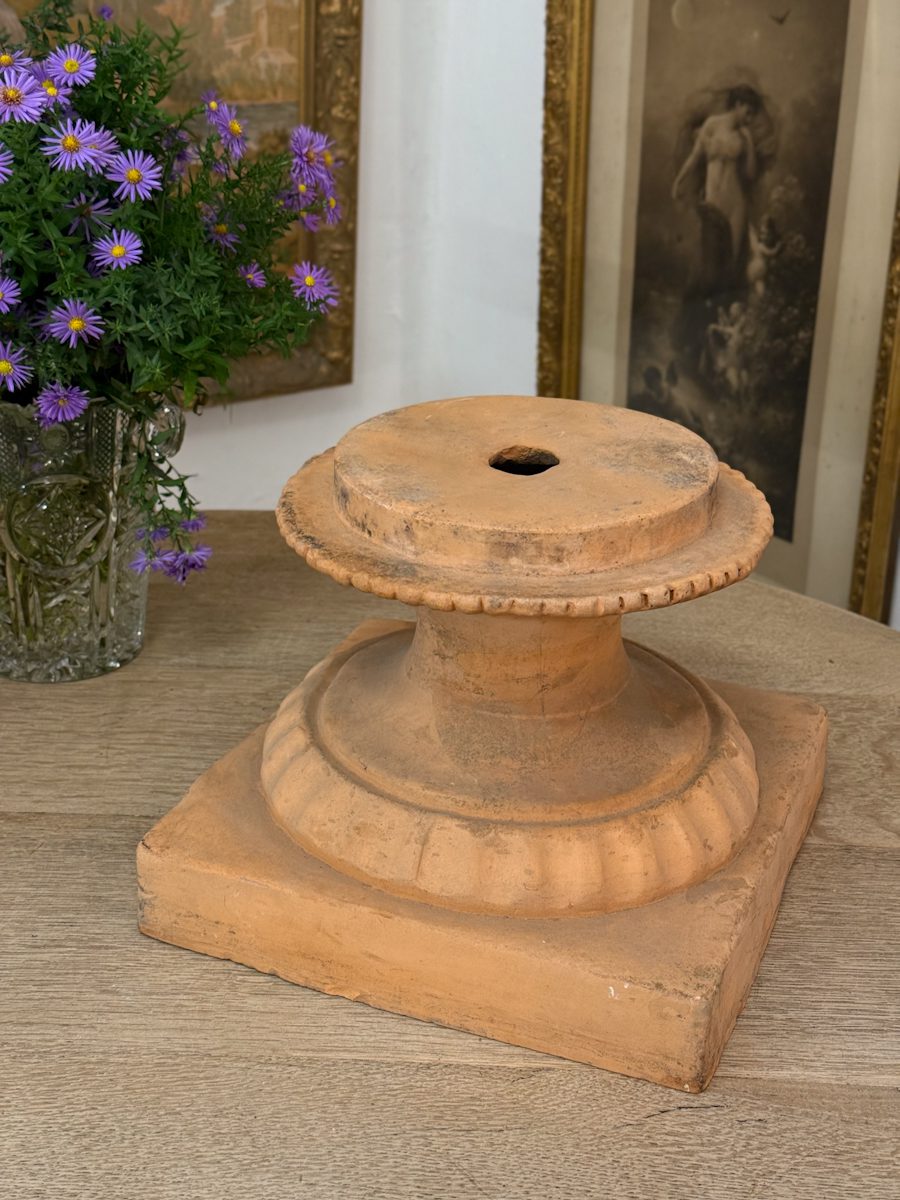
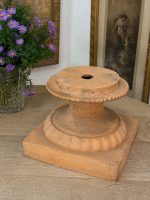
The manufactory or author’s hallmark has not been identified. Based on the material, execution, and model, the terracotta bust corresponds to the European academic terracotta tradition of the 19th–20th centuries. The pedestal is a separate terracotta element with a fluted, classically profiled shape.
Rarity and significance
Replicas of Praxiteles’ Hermes in terracotta are decoratively noble and culturally significant — they embody one of the fundamental forms of Western art. The bust, complete with a matching pedestal, is particularly valuable as it forms a finished, exhibition-ready whole.
Application in interior, design, and photography
An excellent accent in a classical, academic, or eclectic interior — in a library, study, living room, or gallery. The antique theme lends the space an educated, noble atmosphere. A very photogenic object.
Gift
A significant gift for a lover of art, ancient culture, and classical education.
Condition
The warm orange surface characteristic of terracotta, with age patina and minor surface wear consistent with the object’s age. A mounting hole is visible at the top. The condition of the item is fully reflected in the photographs.