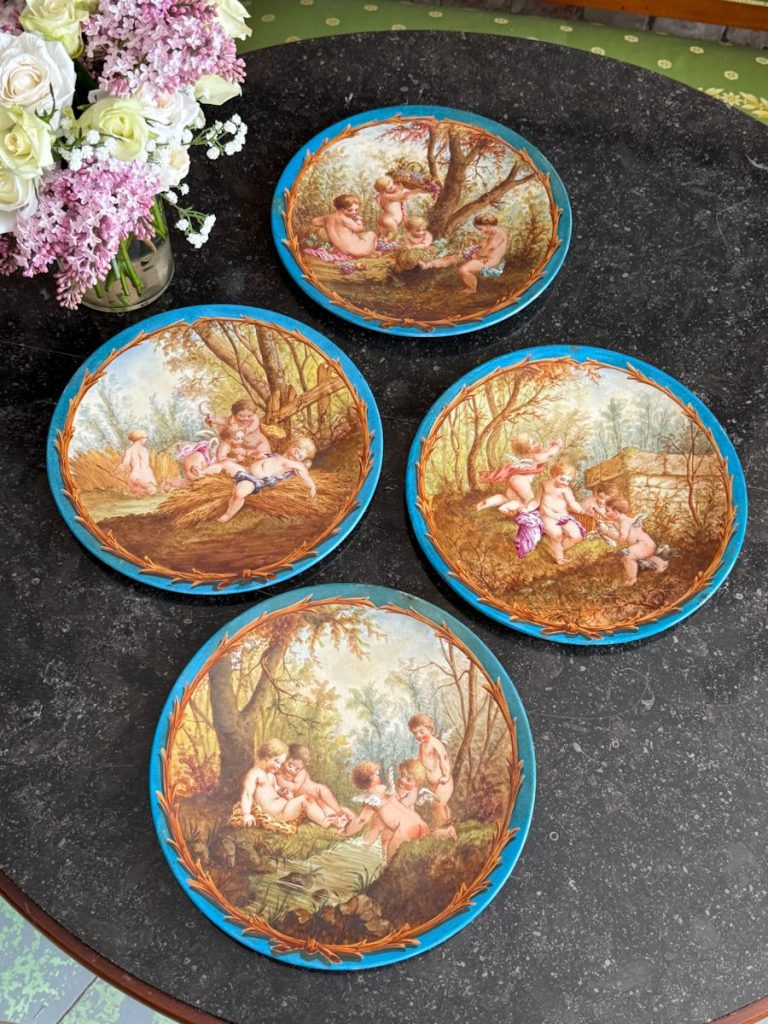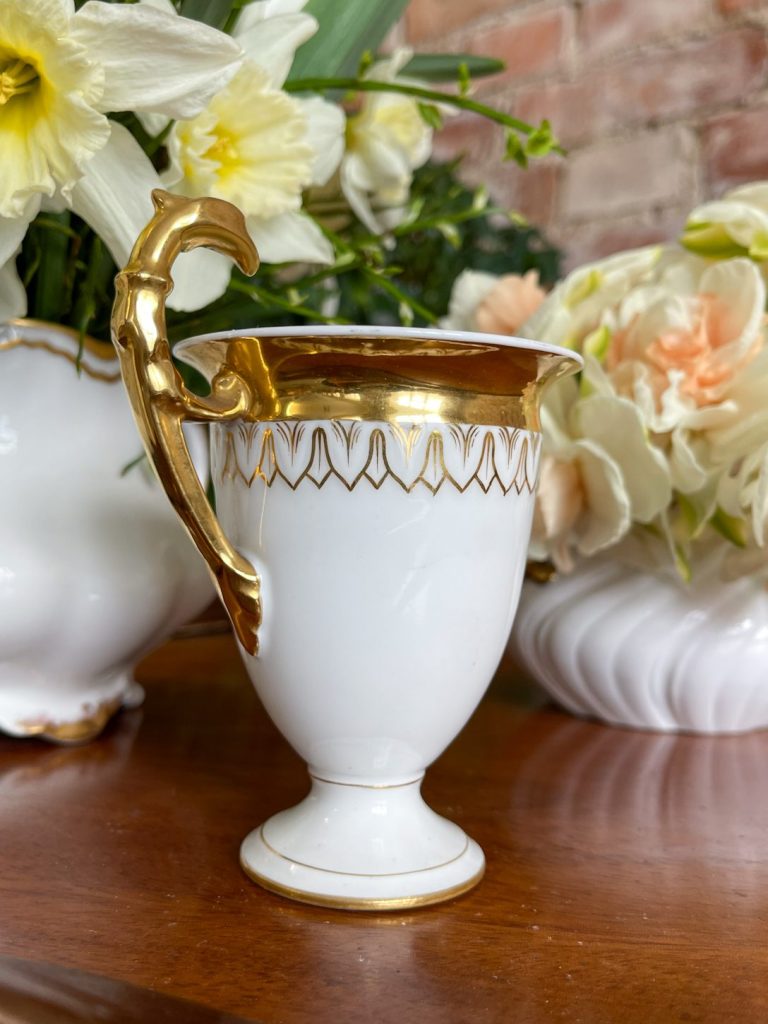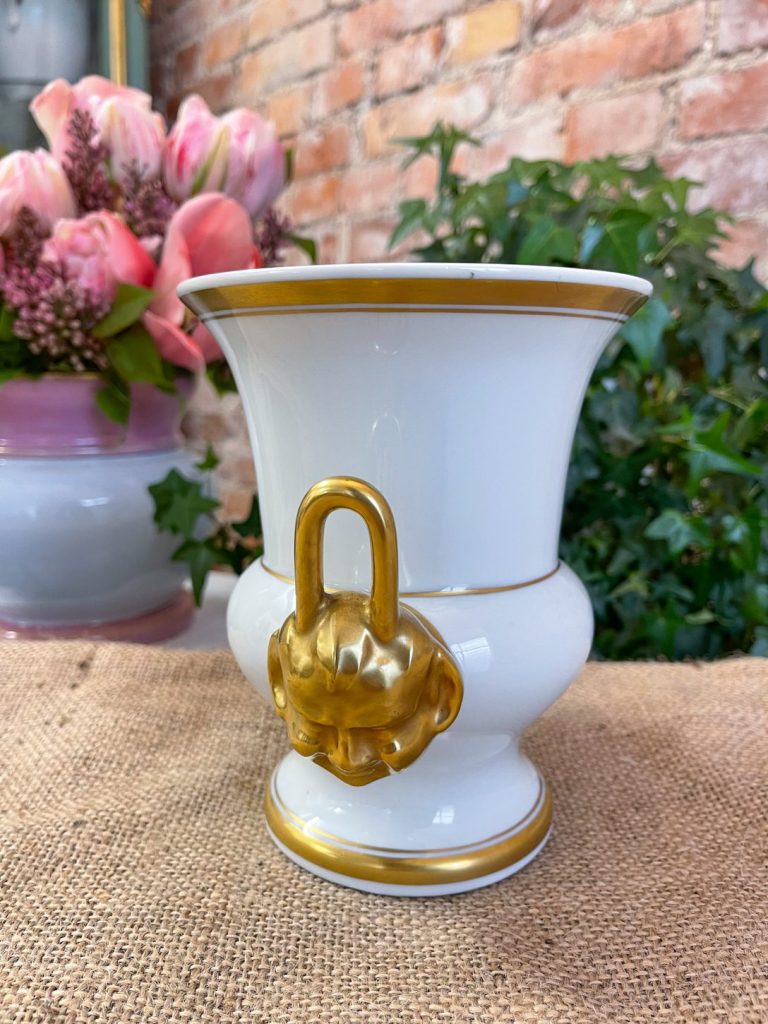
Porcelain dinner service with rosehip and thistle motif. France or Bohemia, circa late 19th – early 20th century (circa 1880–1910). This exquisite dinner service belongs to the transitional period of Late Historicism and early Art Nouveau, which dominated European decorative… 400,00 €
You’re now subscribed to price tracking for this product. We’ll notify you if the price drops. 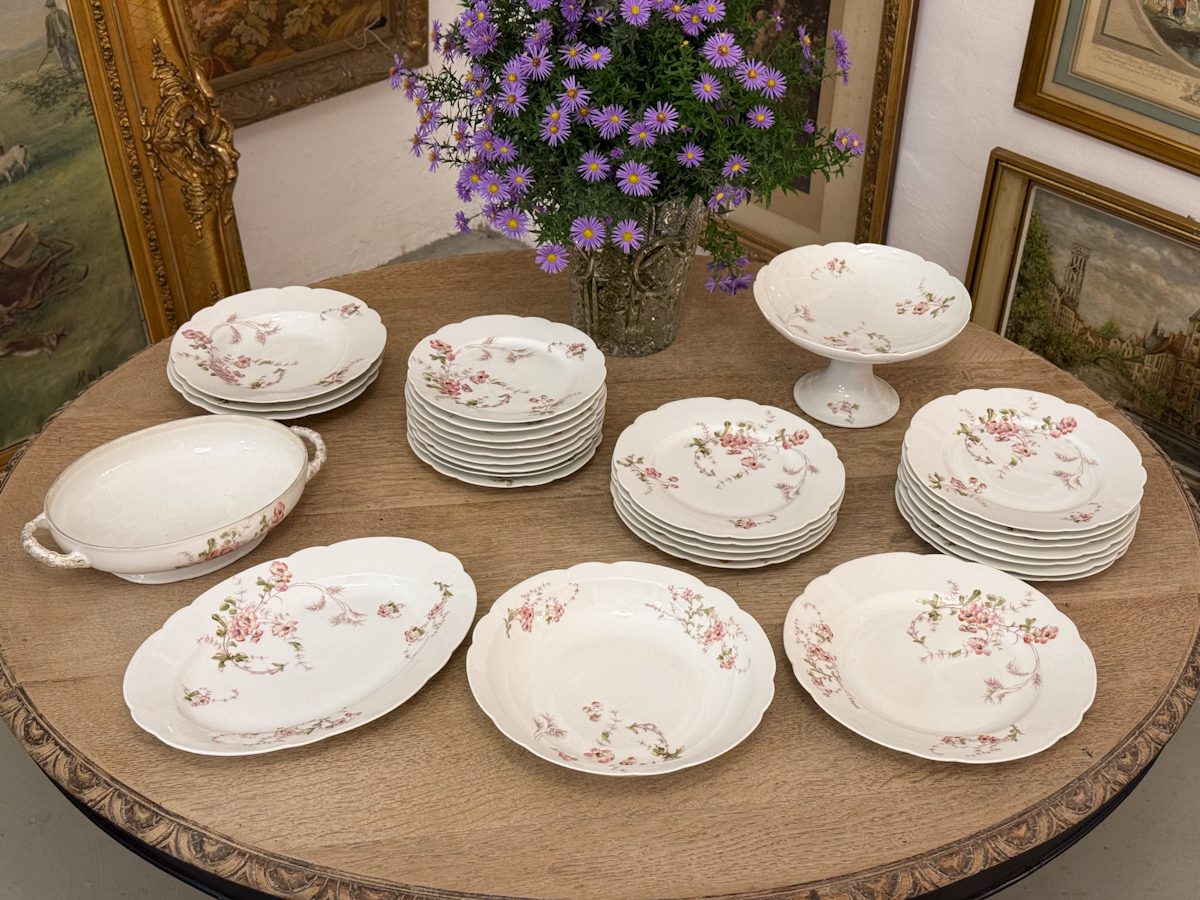
Porcelain dinner service with floral motifs, France or Bohemia, circa late 19th – early 20th century (6189)
Color WhiteNaturalCoral
Description
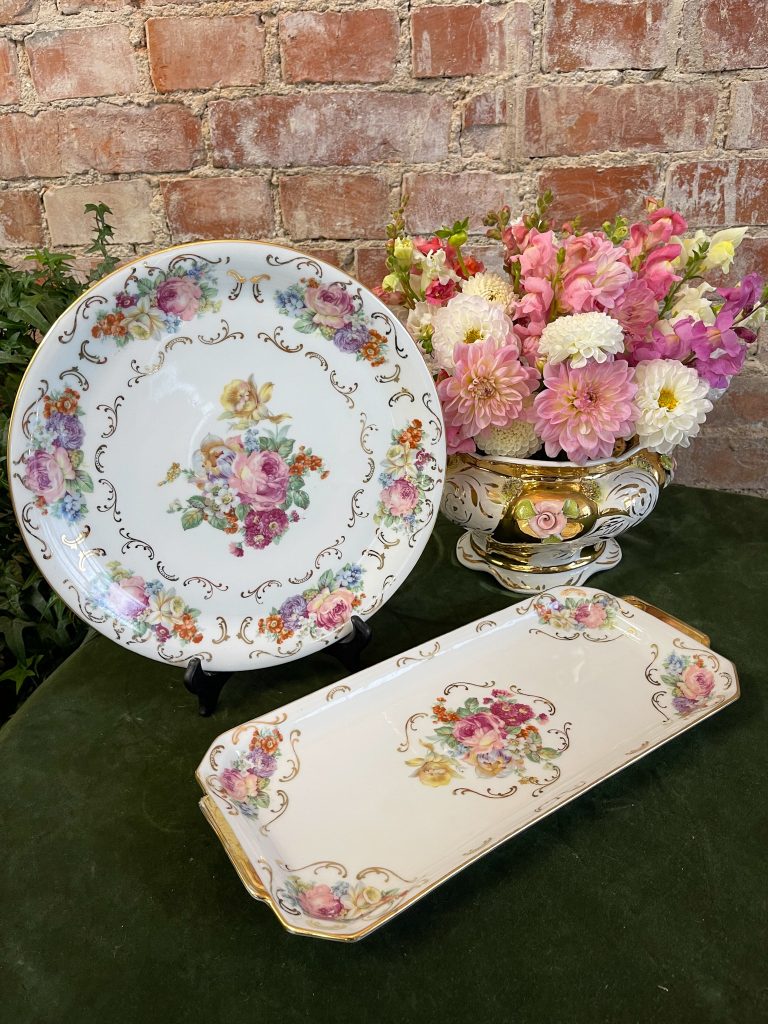
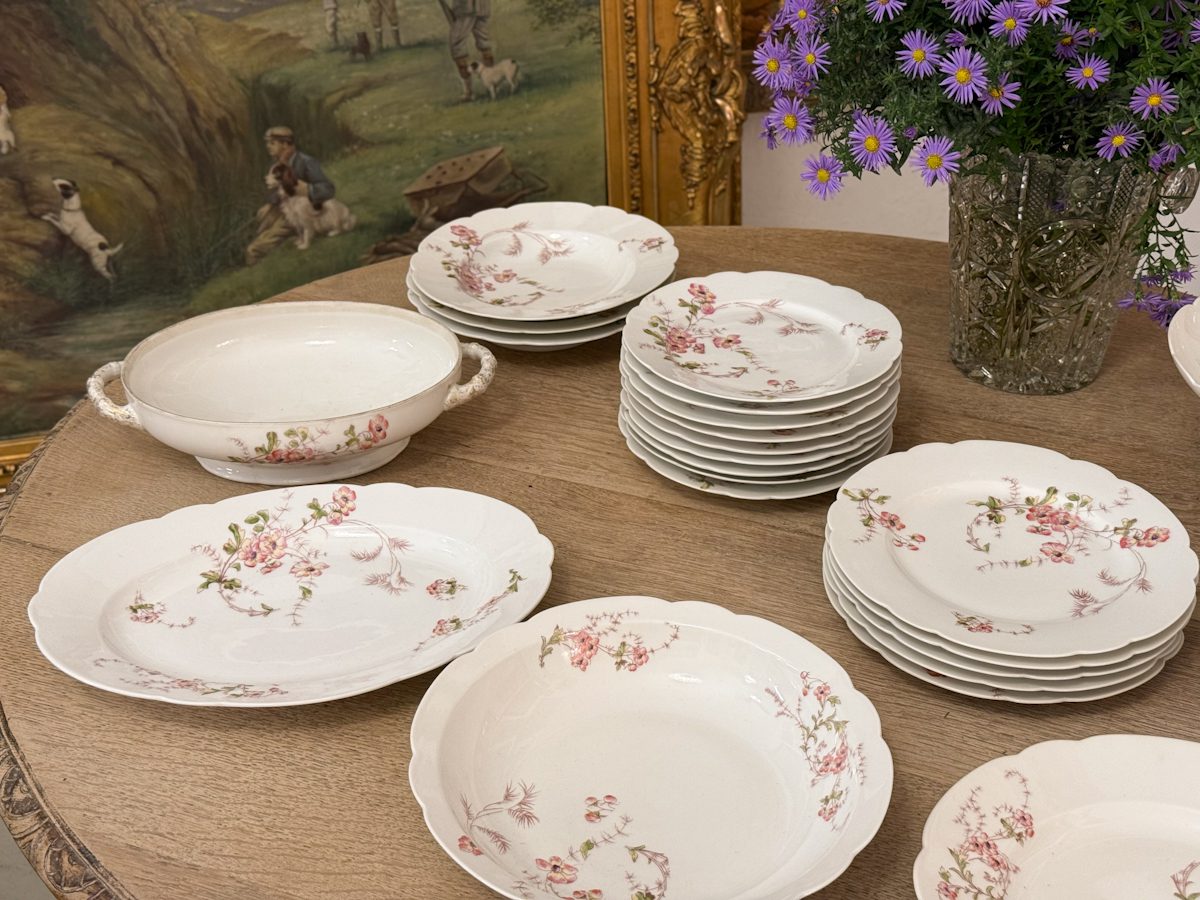
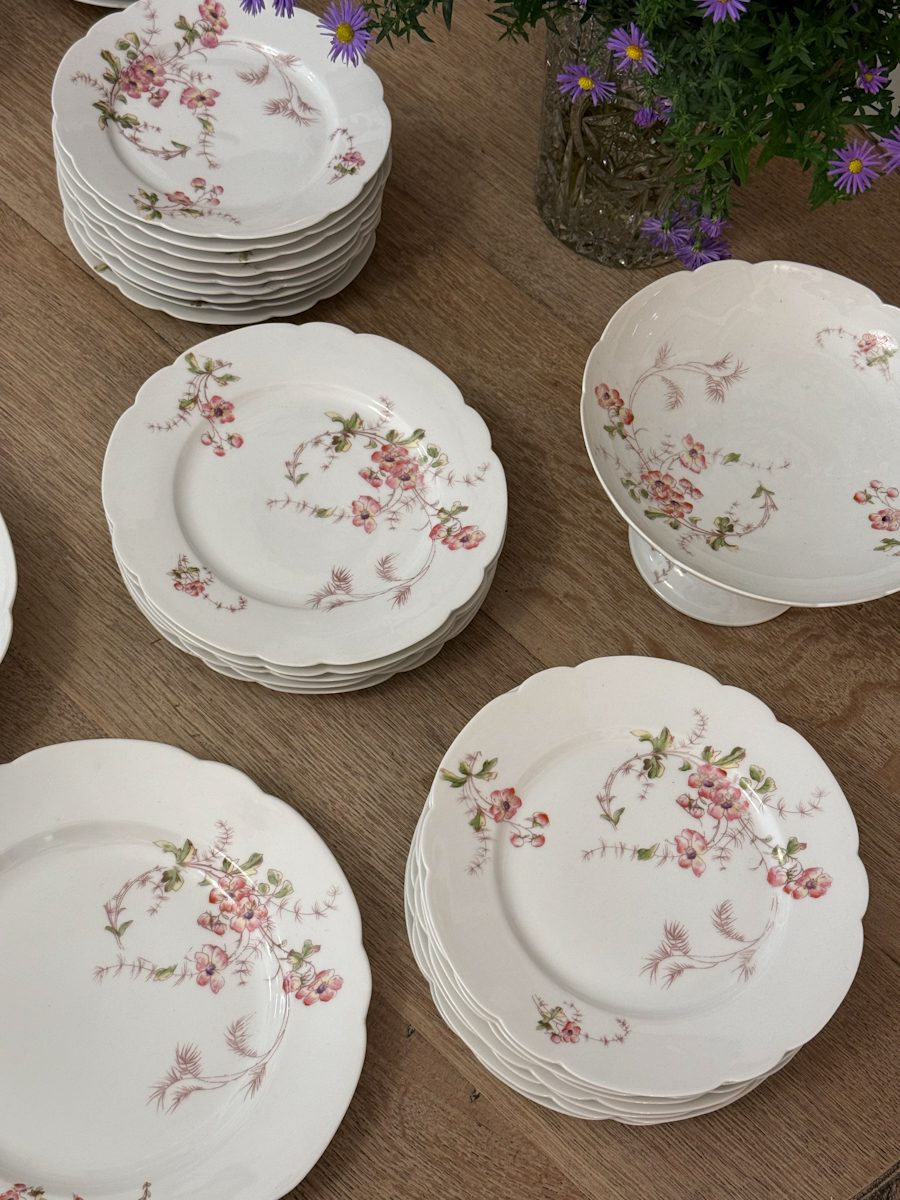
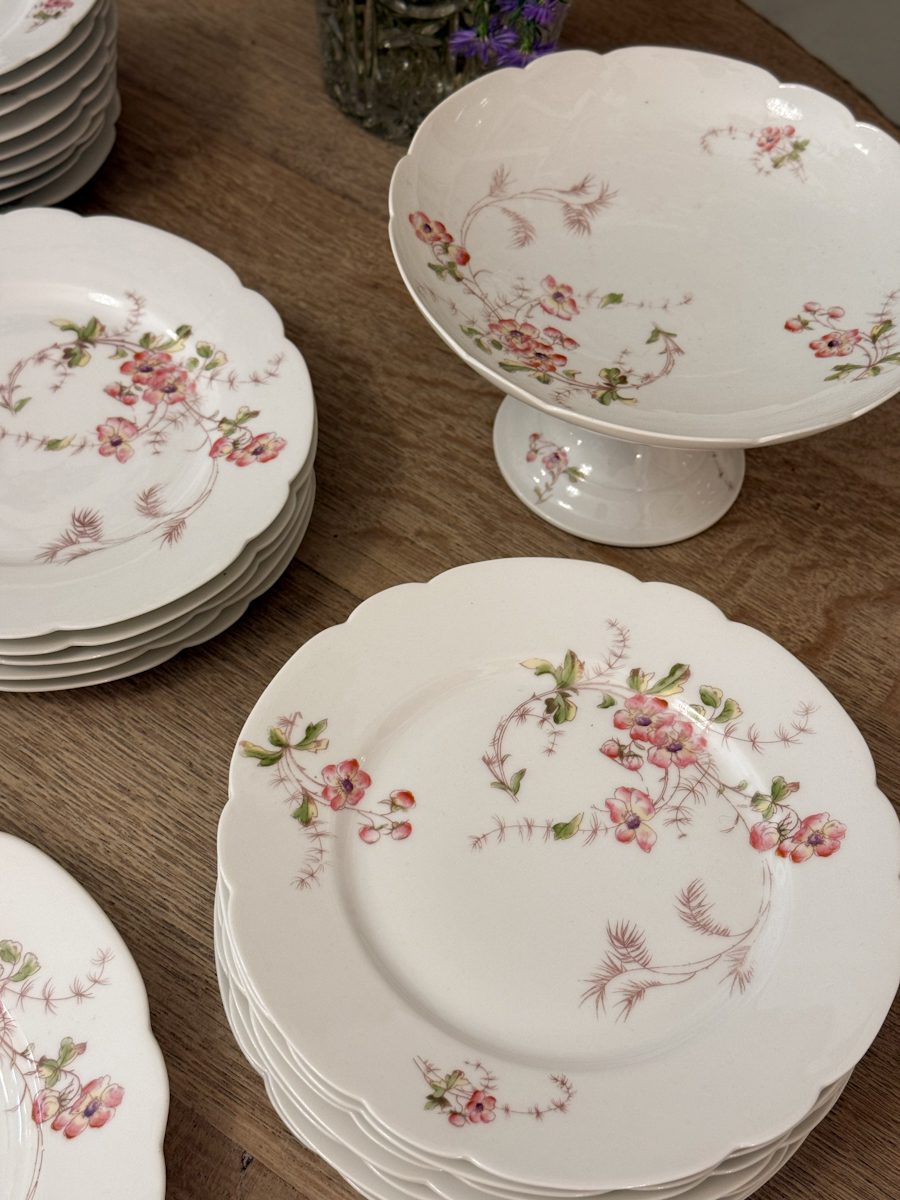
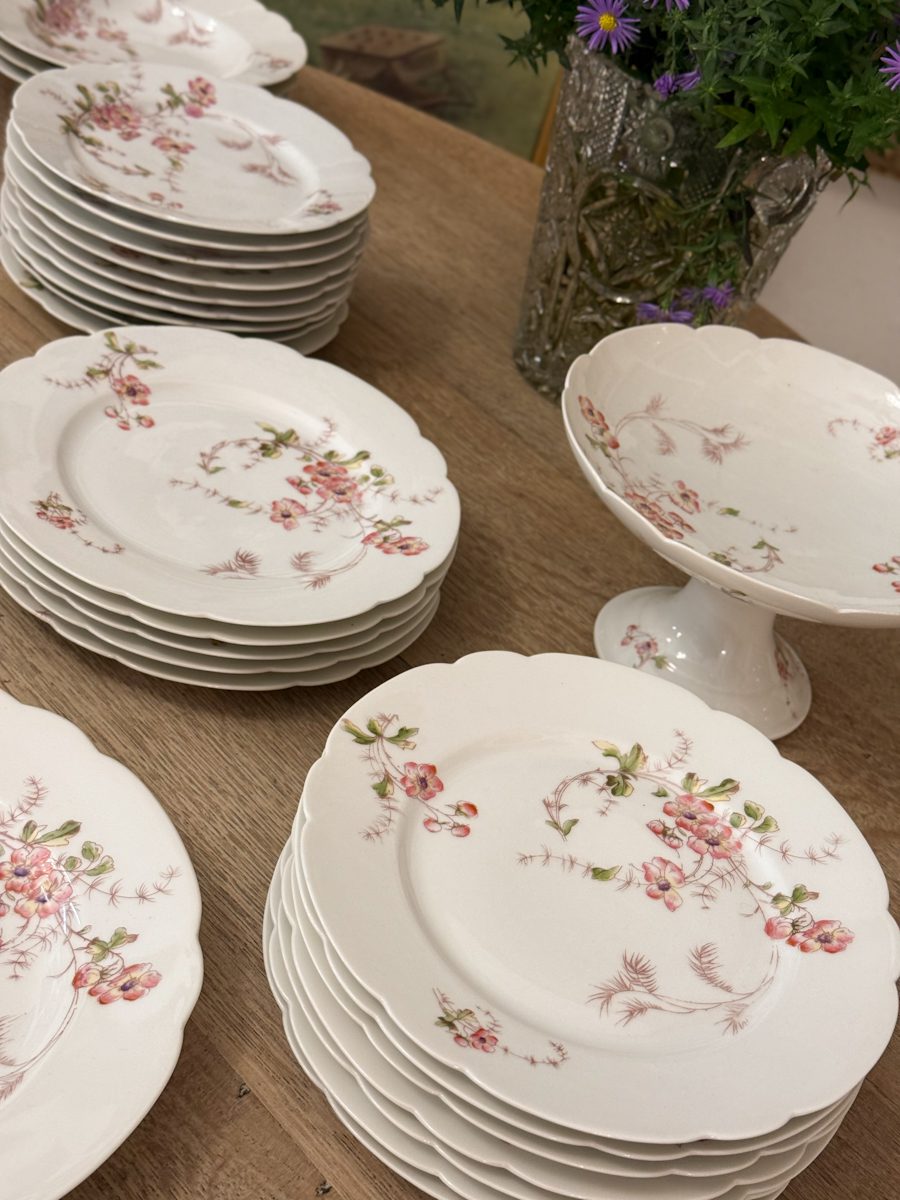
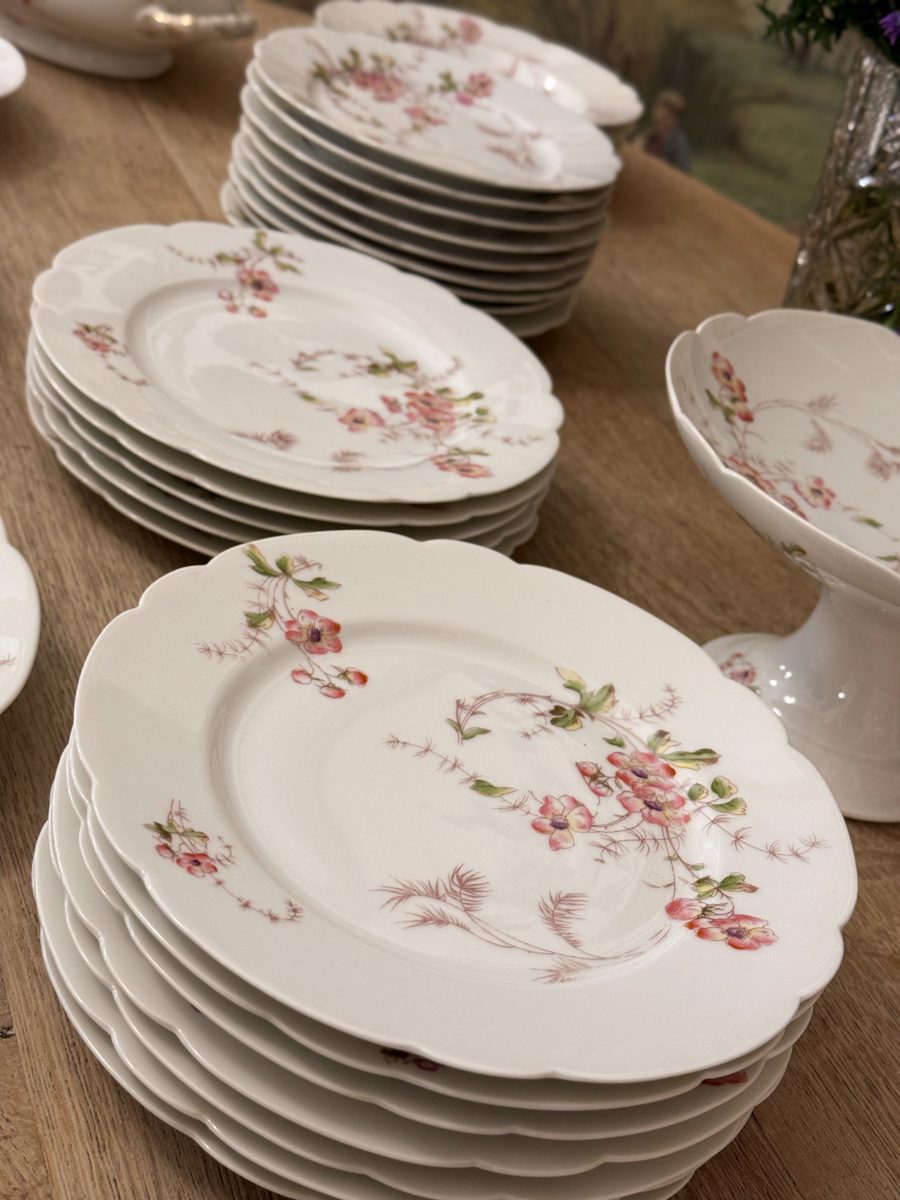
Porcelain dinner service with rosehip and thistle motif. France or Bohemia, circa late 19th – early 20th century (circa 1880–1910).
This exquisite dinner service belongs to the transitional period of Late Historicism and early Art Nouveau, which dominated European decorative arts approximately from 1880 to 1910. It was during this time that European porcelain manufacturers, particularly in France and Bohemia, began to move away from heavy gold decoration in favor of lighter, more naturalistic paintings — delicate floral garlands and botanical motifs on a clean white background. The service’s decoration — entwined rosehip flowers and thorny thistle stems — is a typical symbol of this transitional period: a gentle, naturalistic interpretation of nature themes, heralding the growing influence of Art Nouveau philosophy.
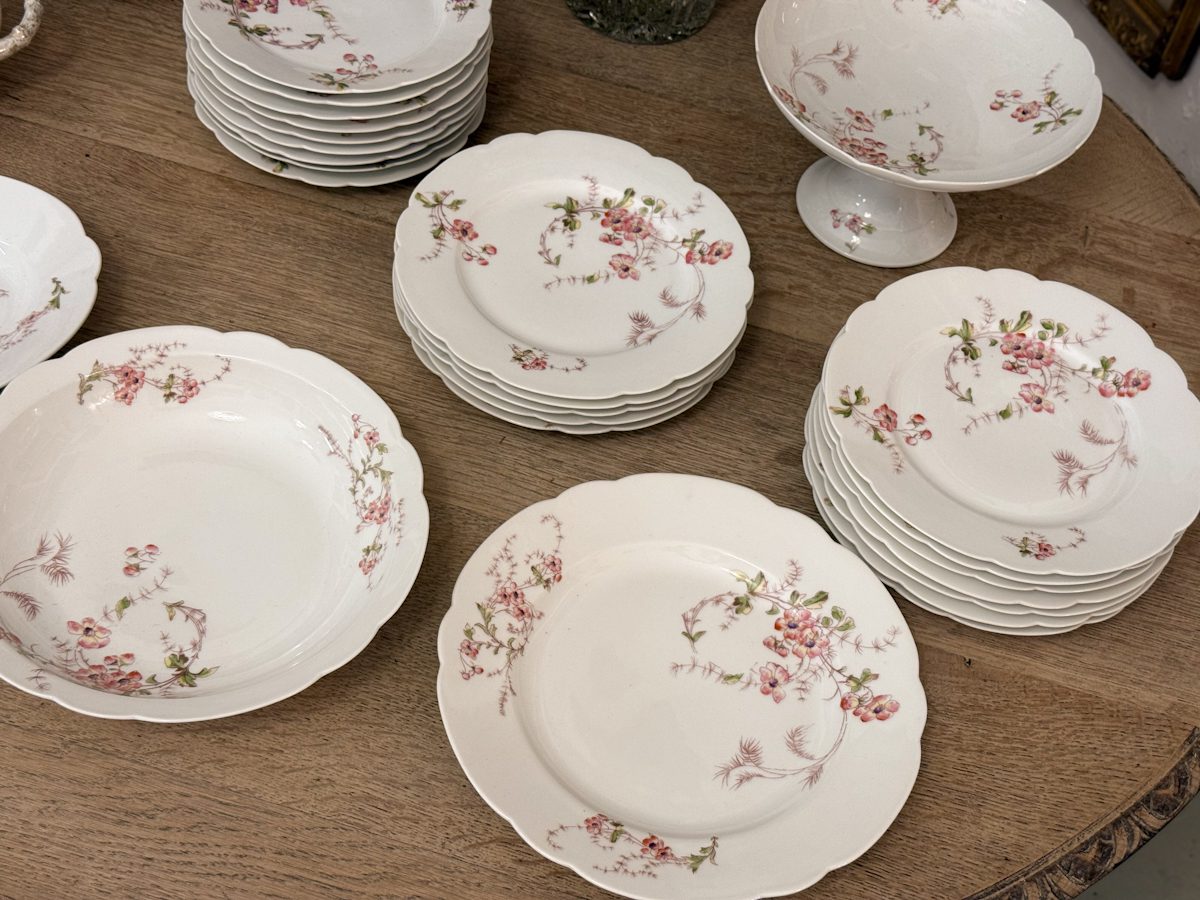
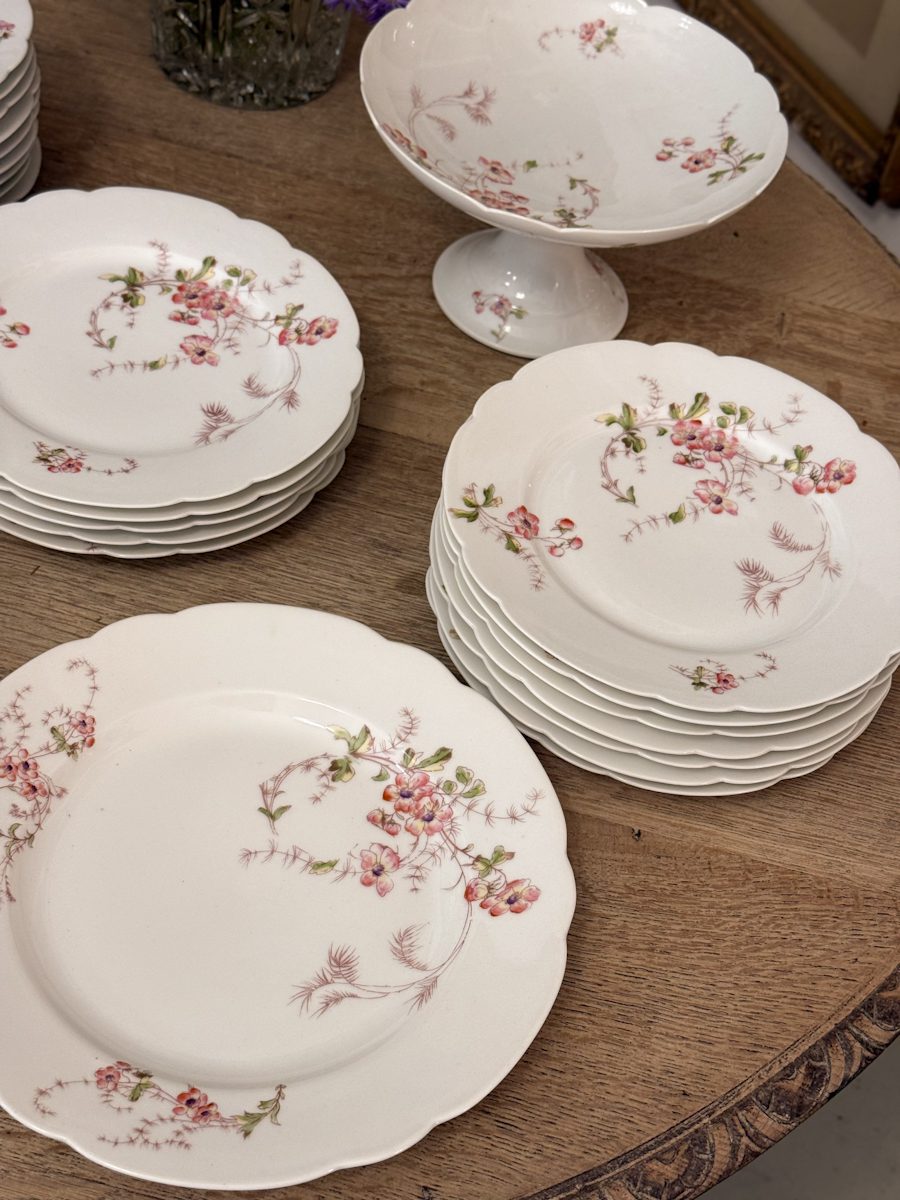
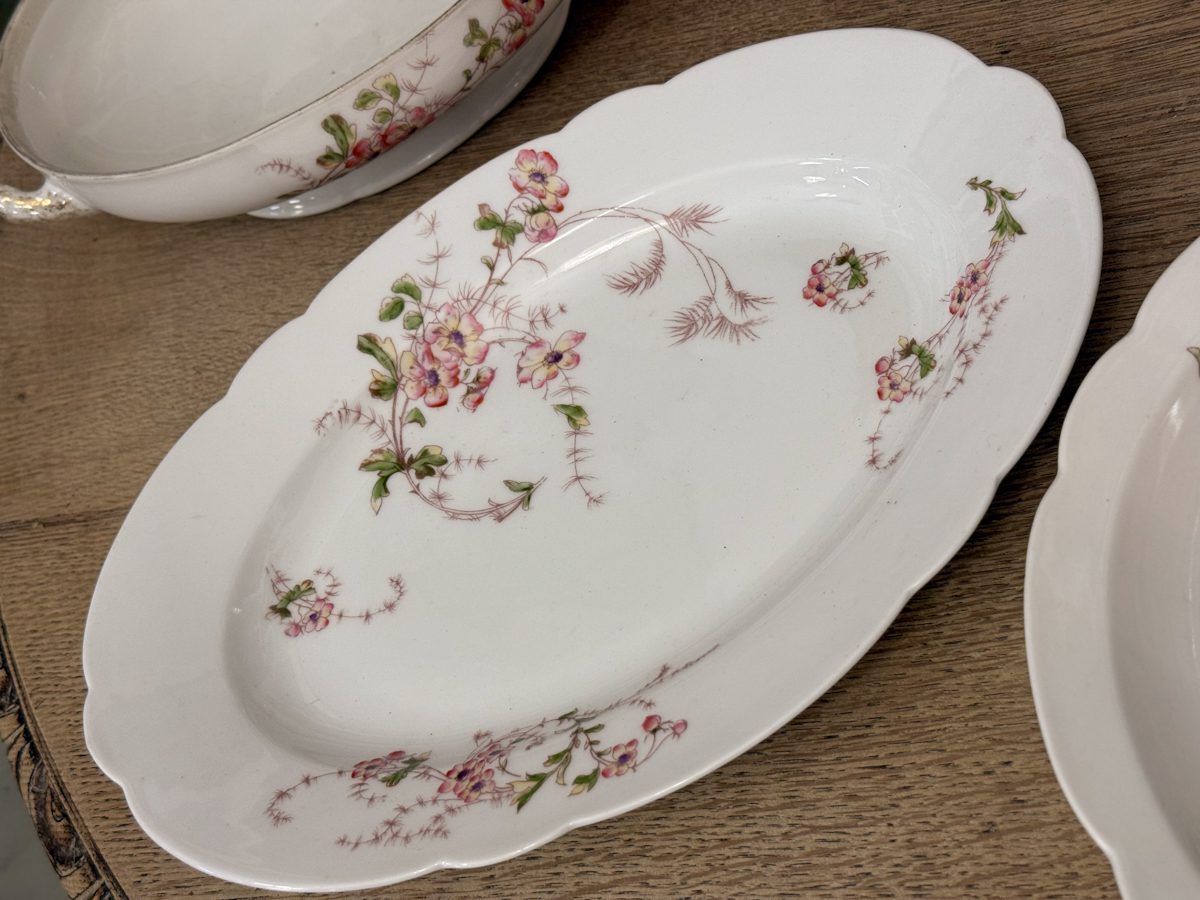
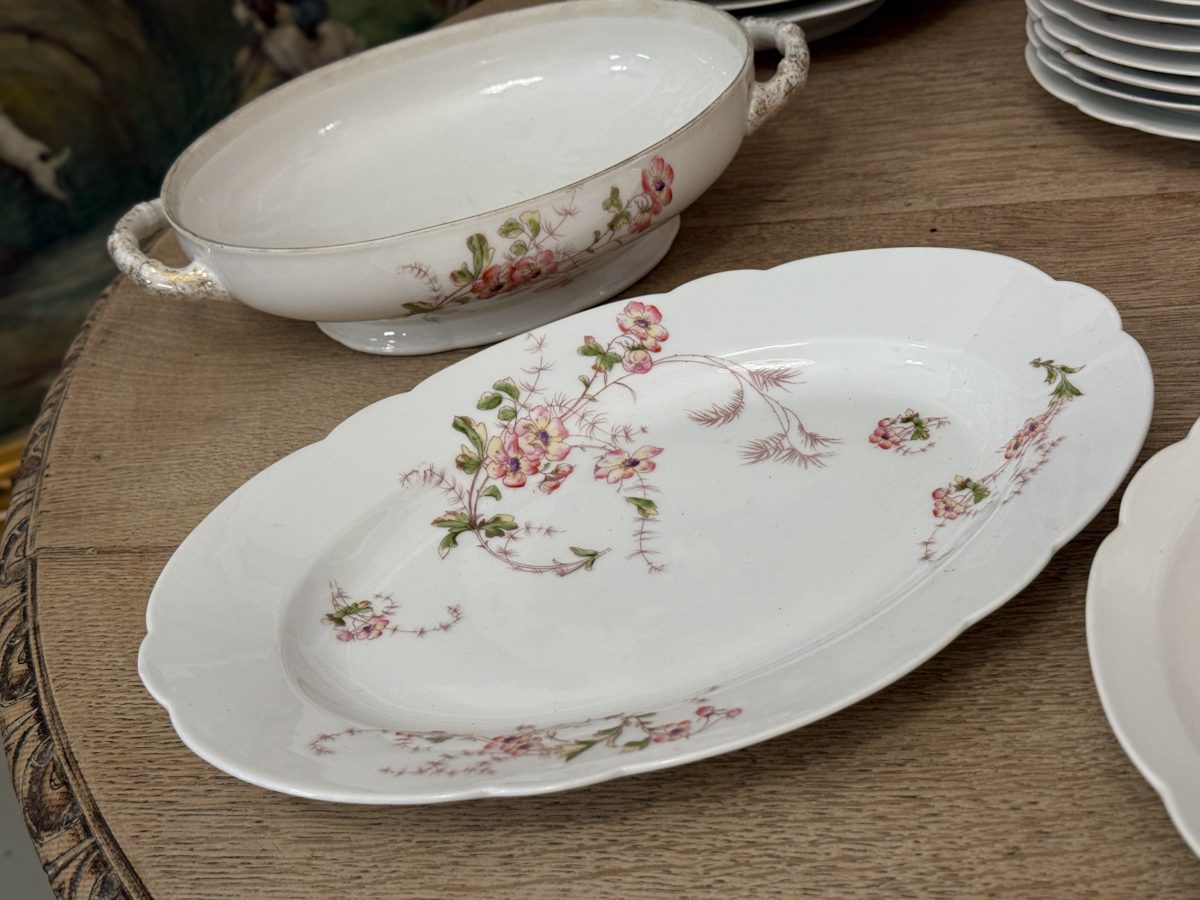
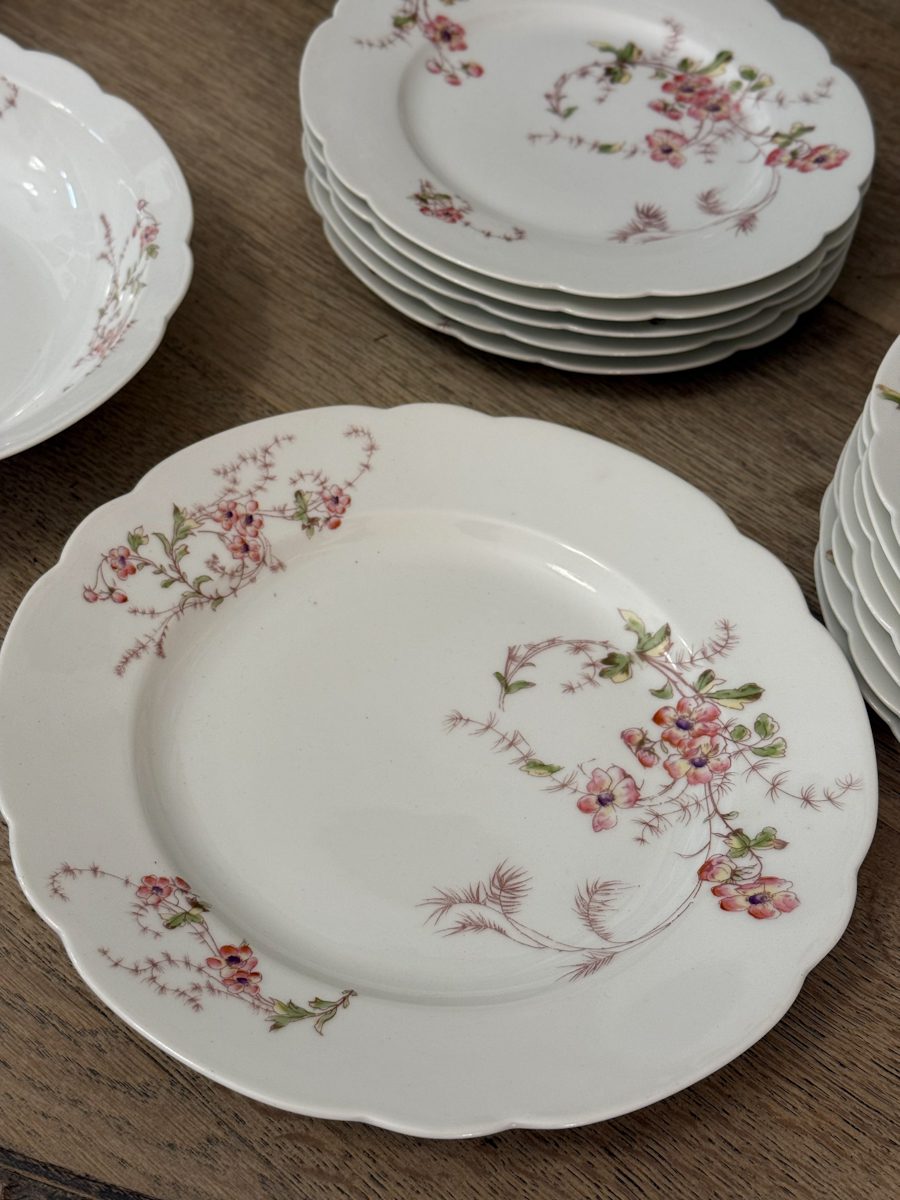
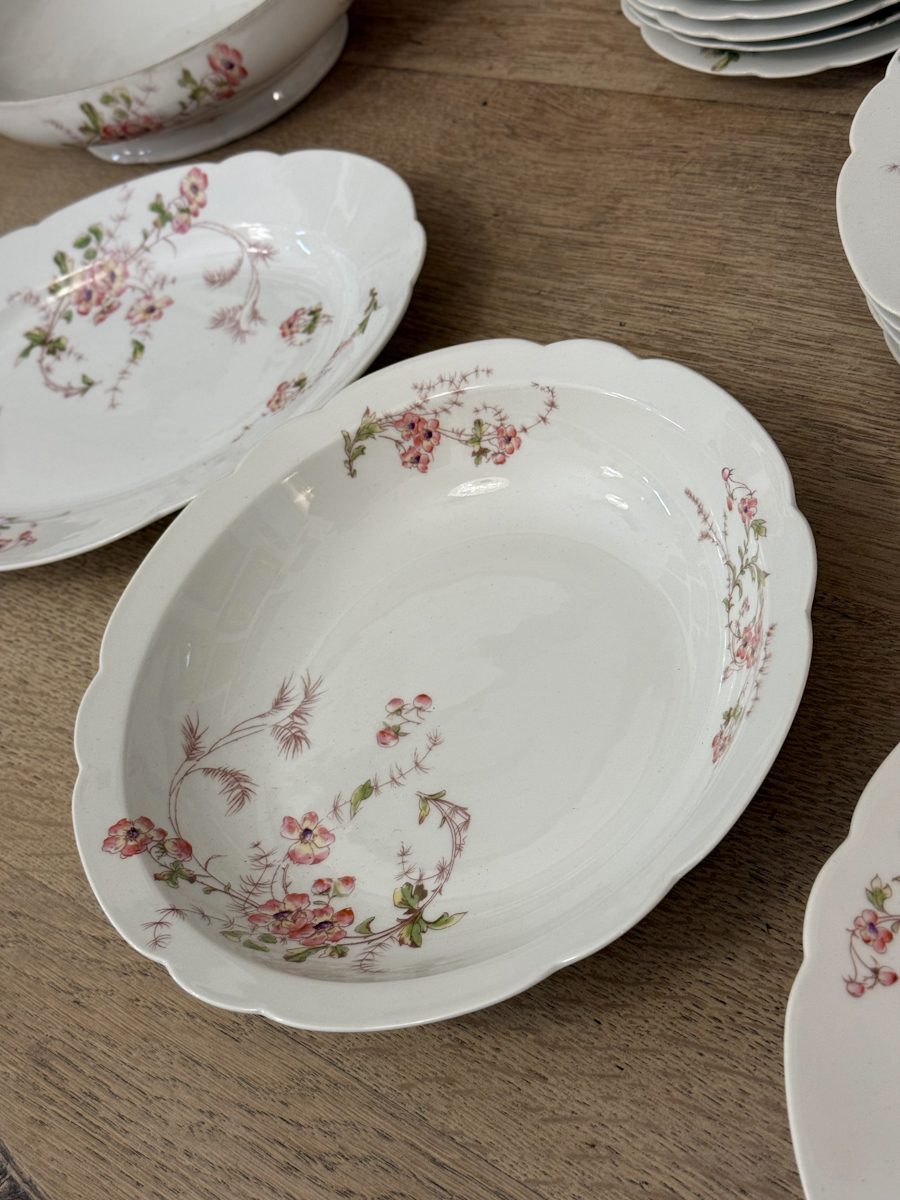
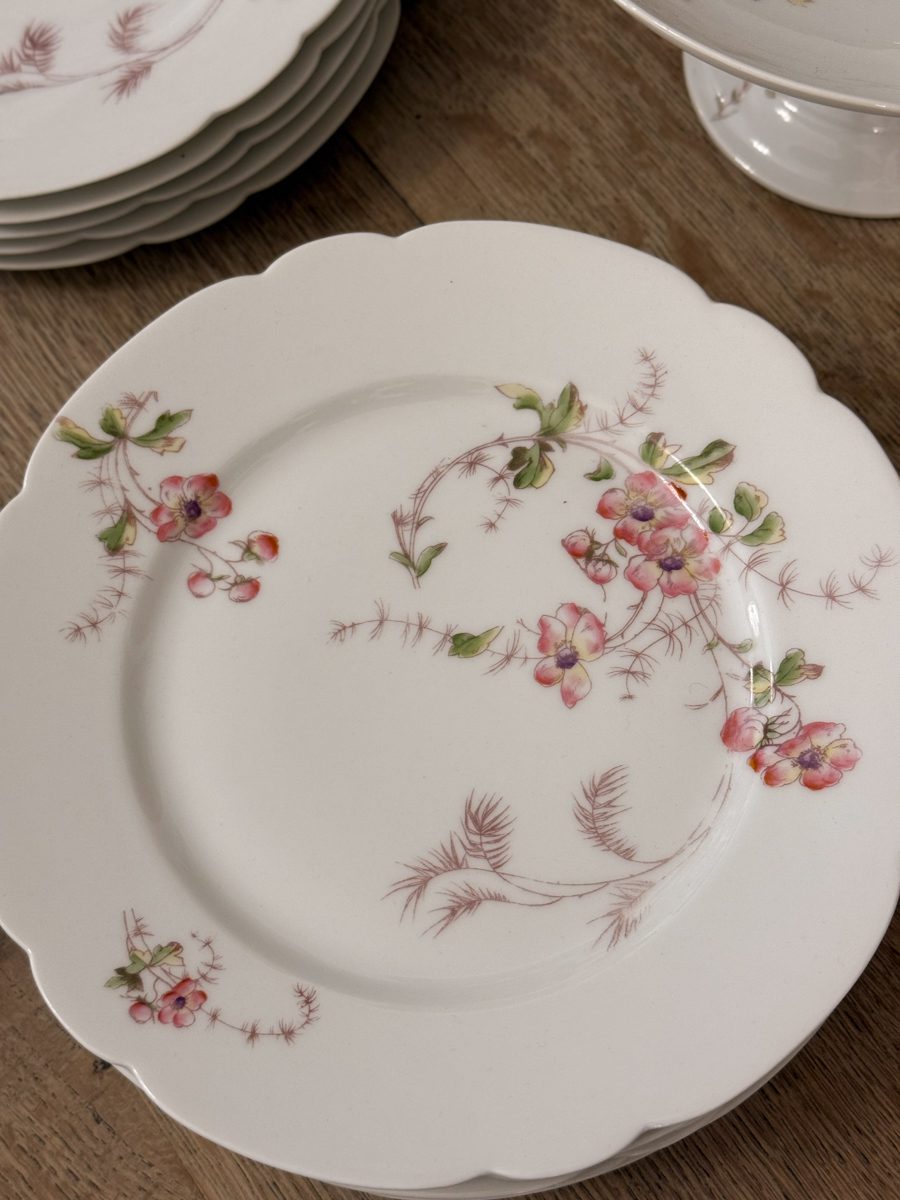
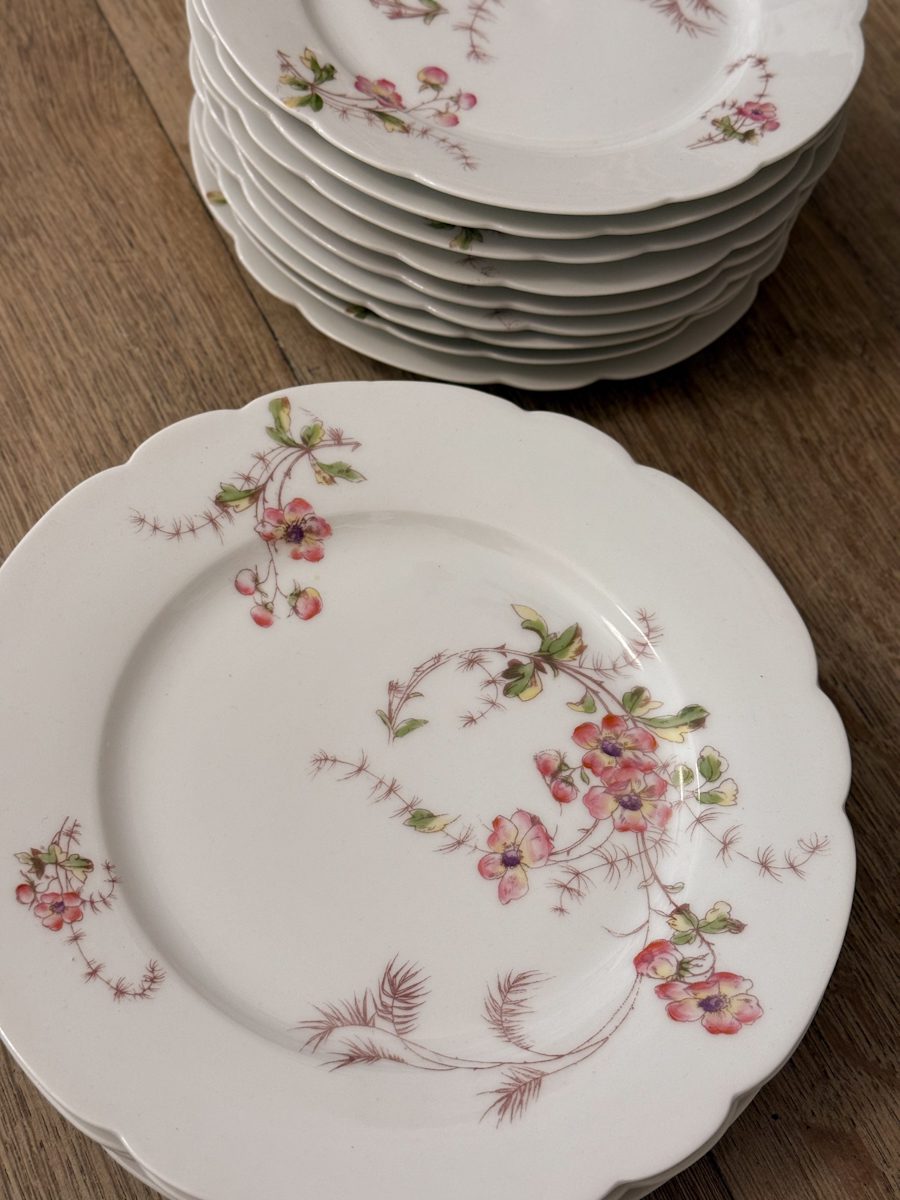
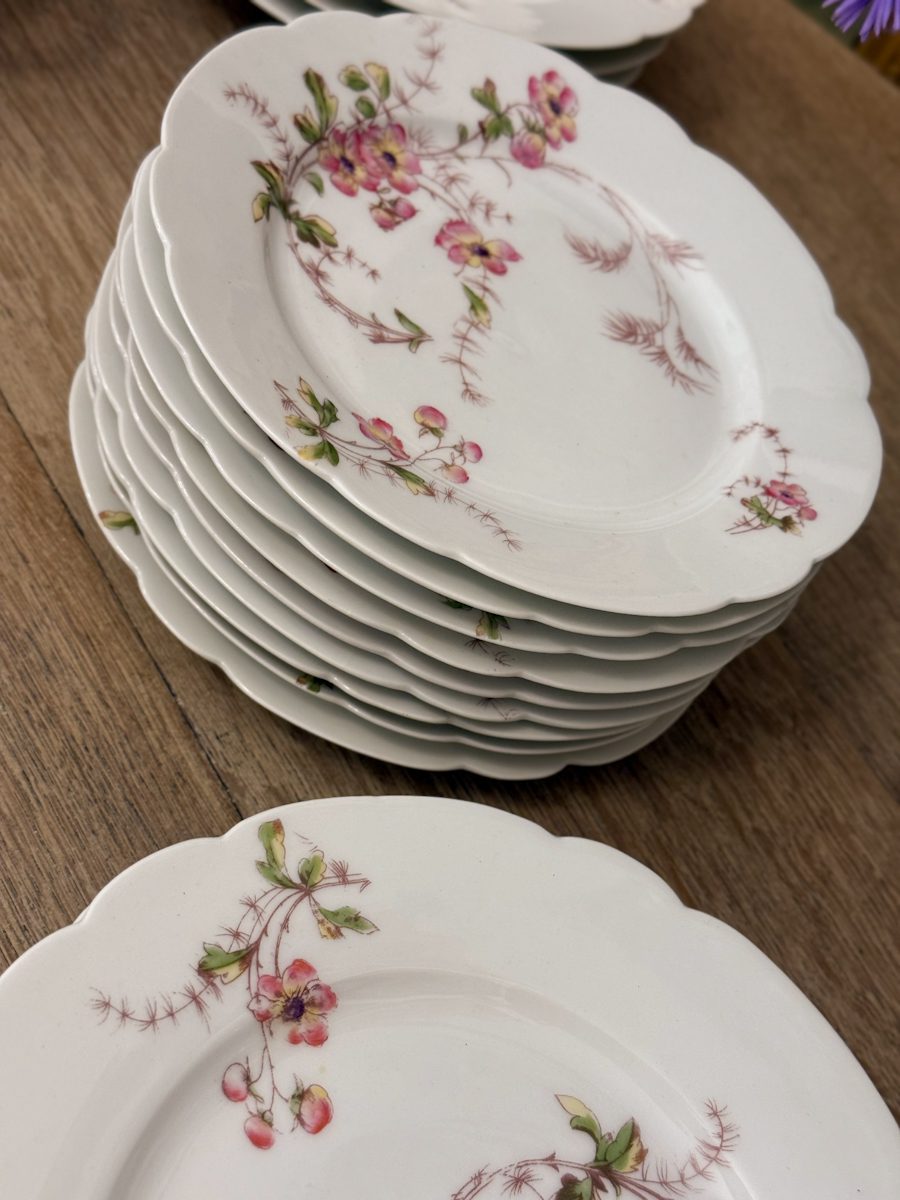
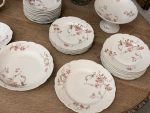
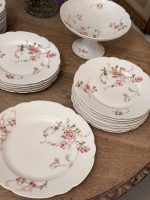
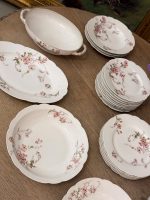
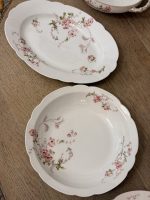
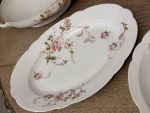
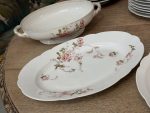
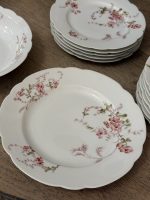
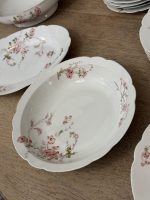
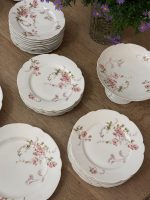
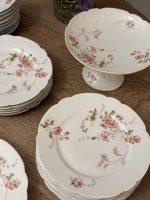
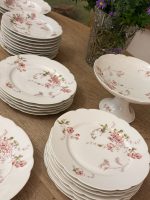
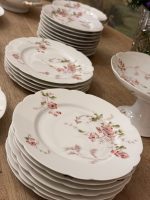
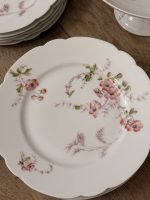
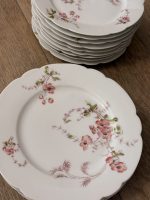
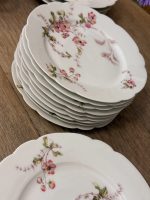
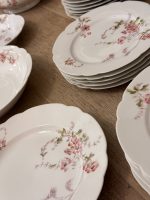
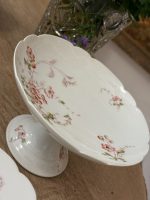
The service is made of high-quality white bone china porcelain with delicate, slightly raised rims. The painting is executed with high precision — soft pink and coral red rosehip flowers with green foliage accents and the characteristic thistle stem pattern with small thorns were most likely created using a top-class colored transfer printing method with minor hand finishing. This botanical motif — the rosehip with thistle — was extremely popular precisely in the Limoges porcelain manufactories in the last two decades of the 19th century, where it was used by many manufacturers, both Haviland and lesser-known manufactories.
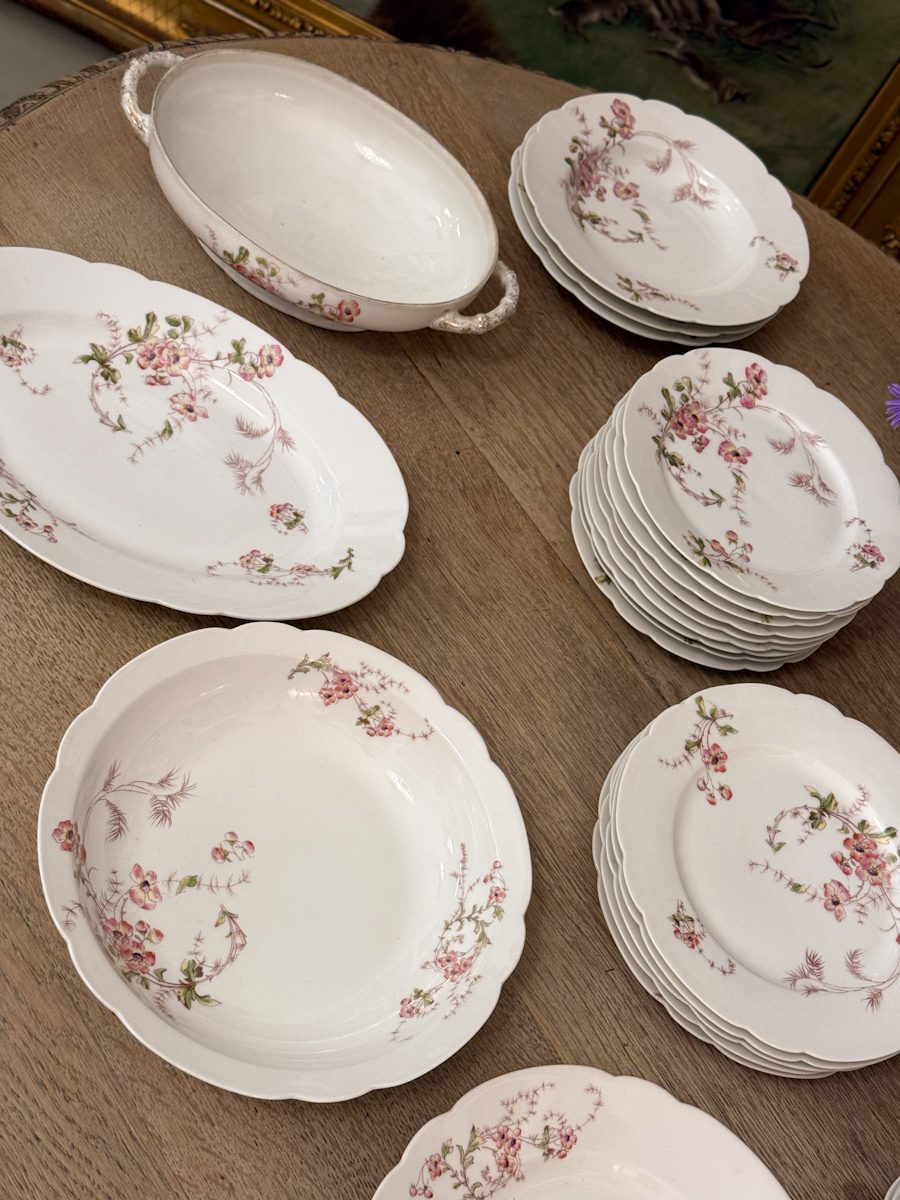
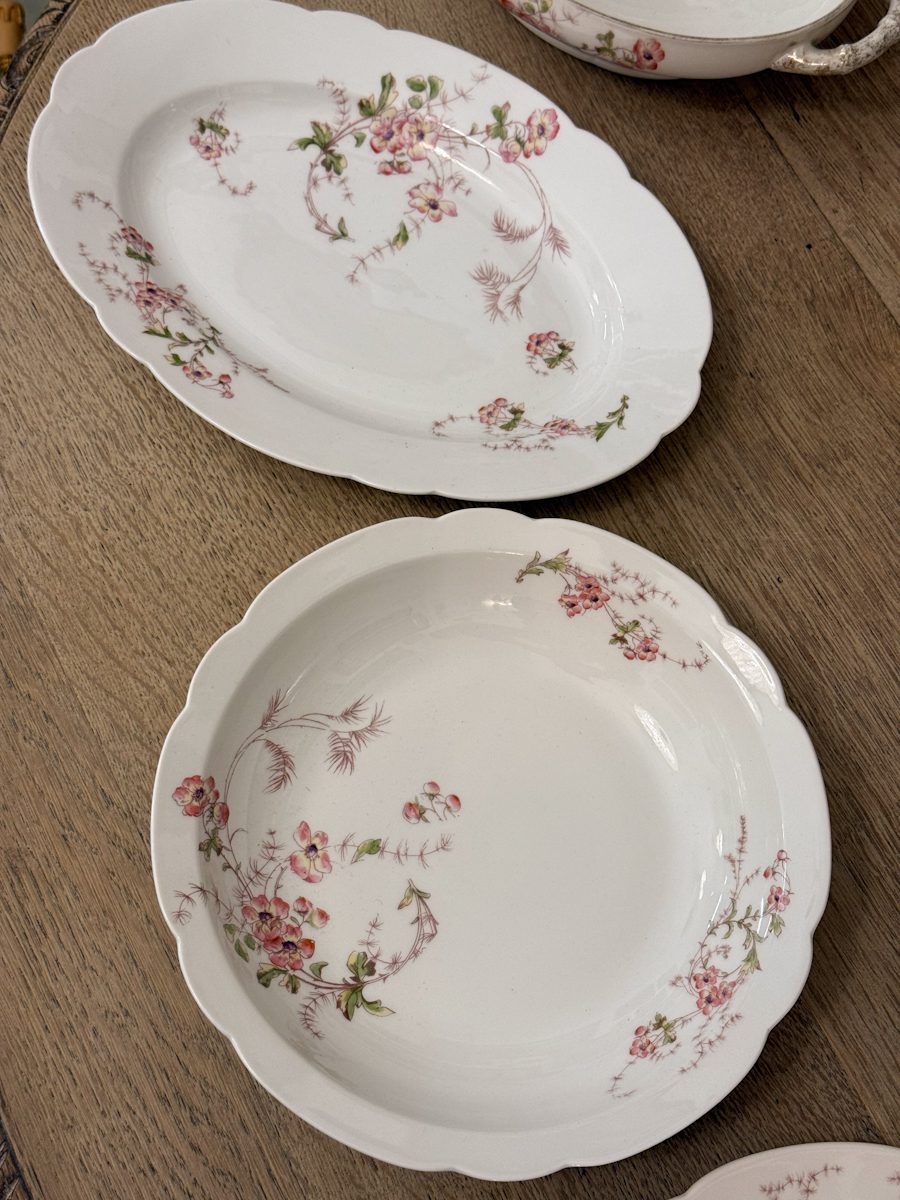
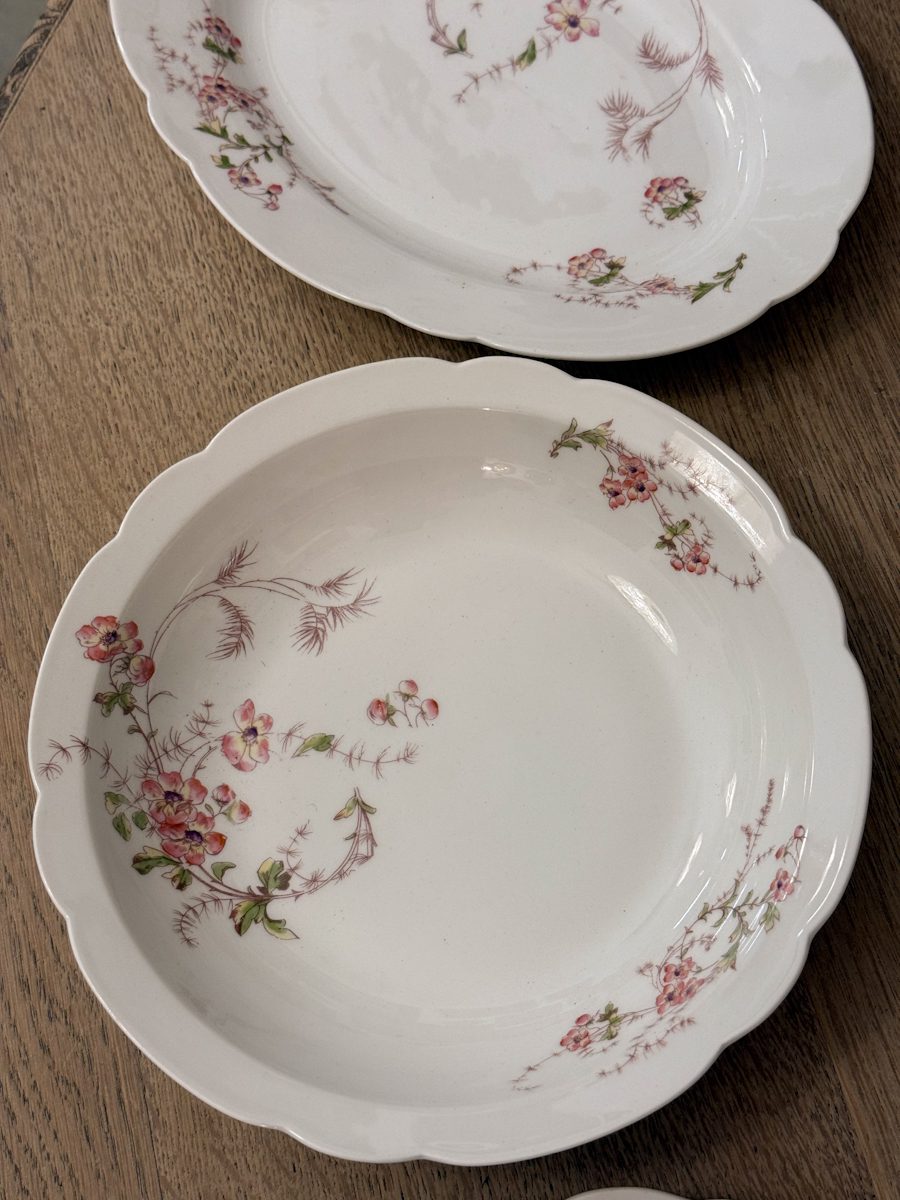
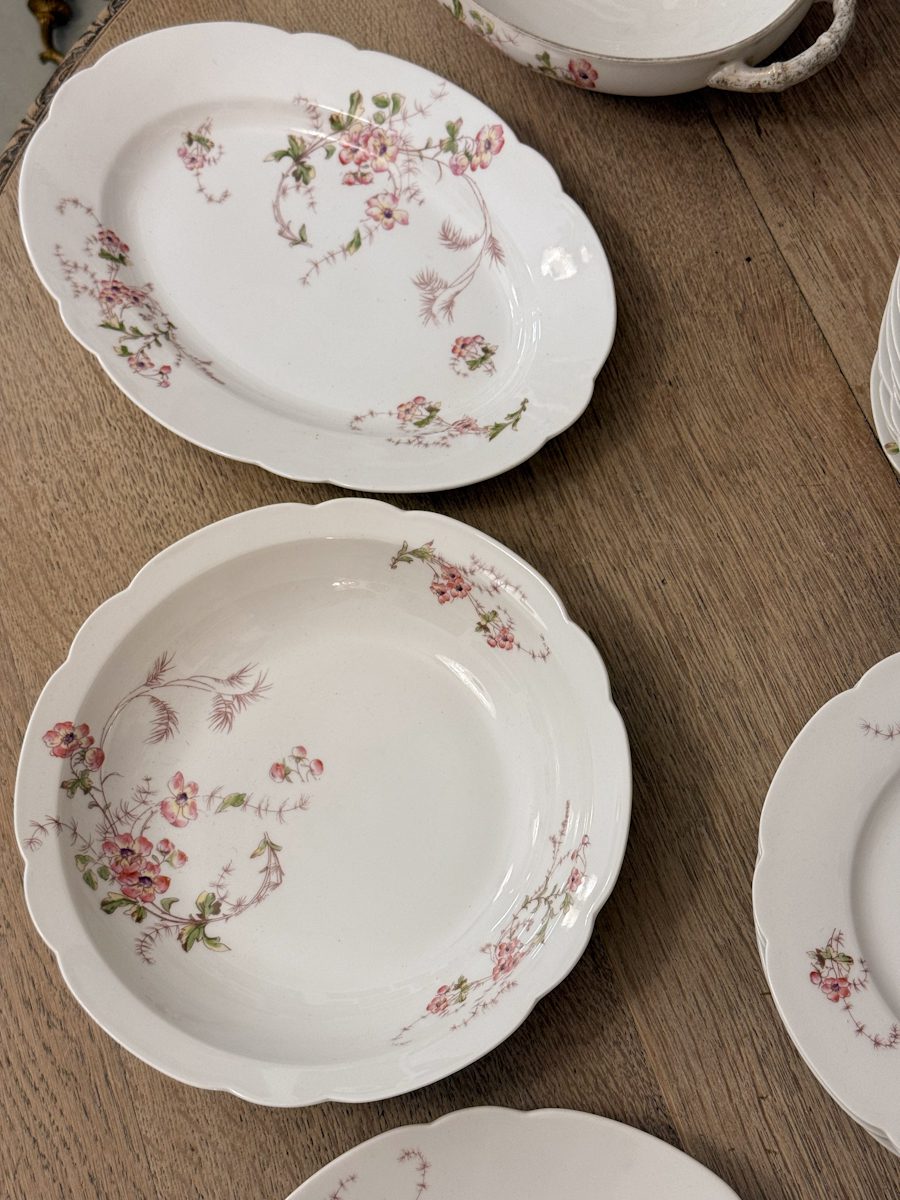
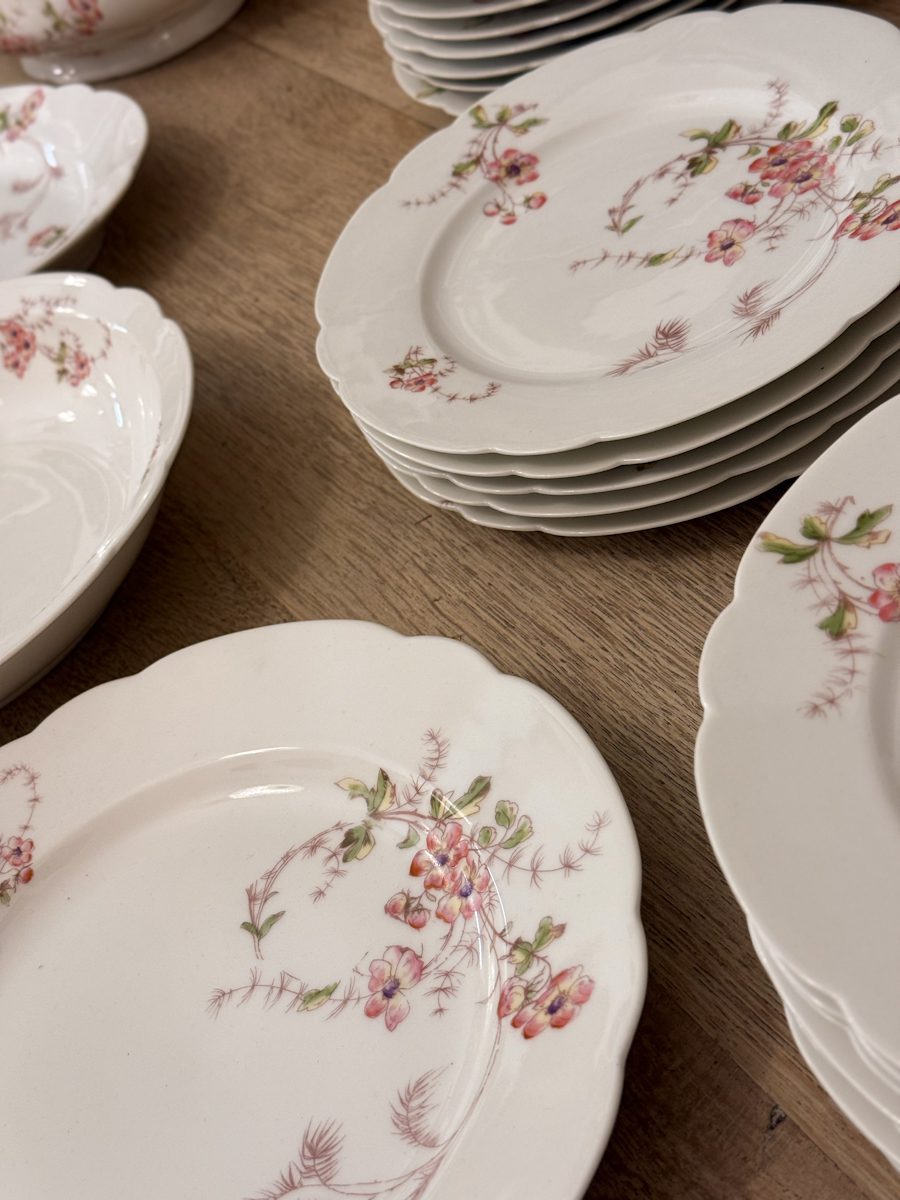
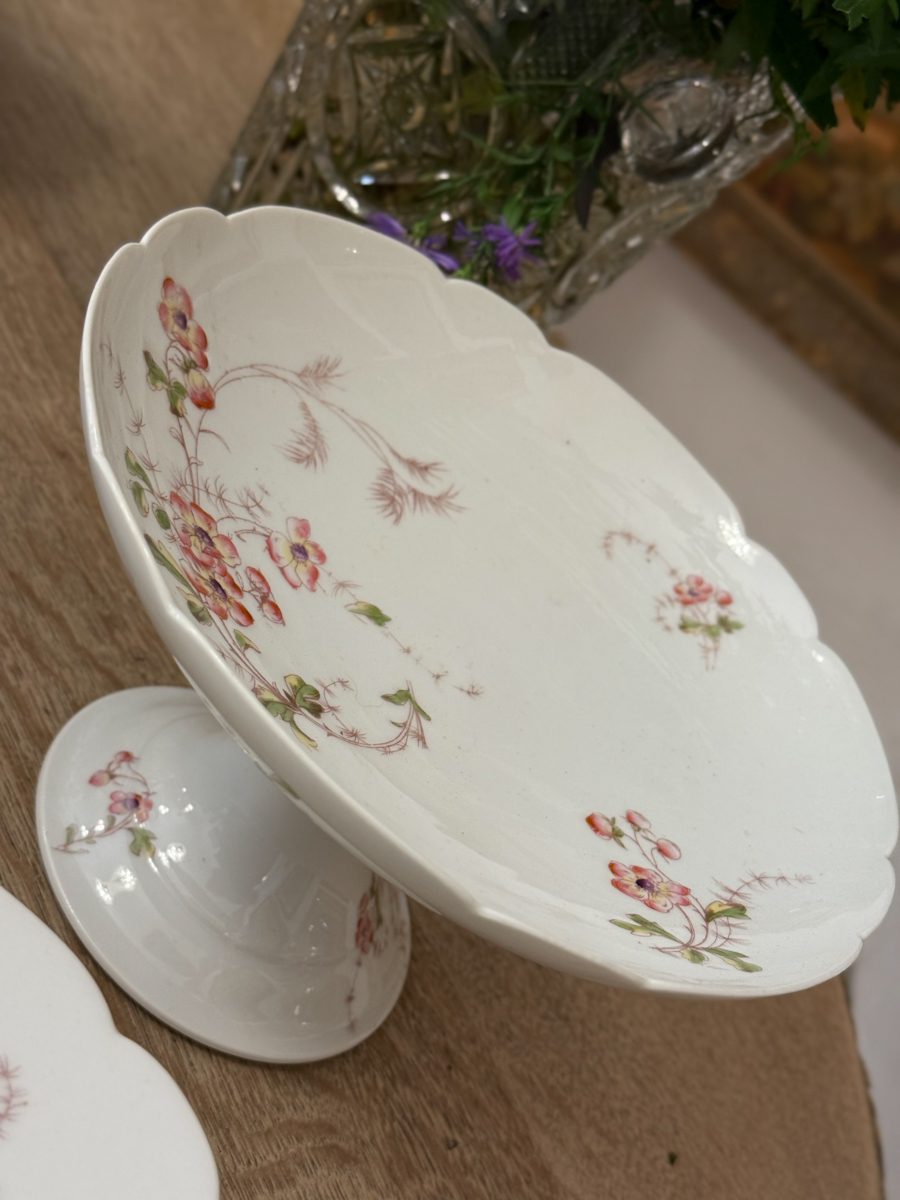
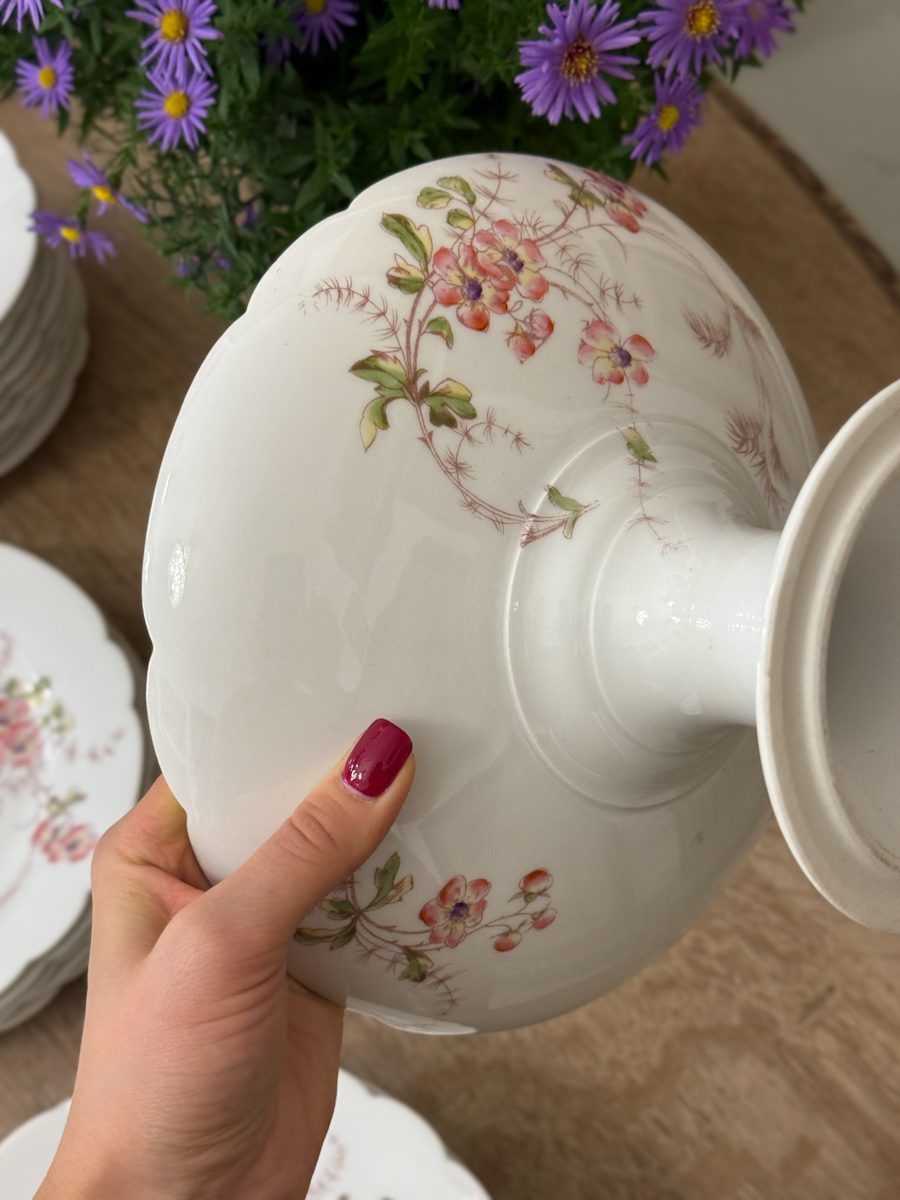
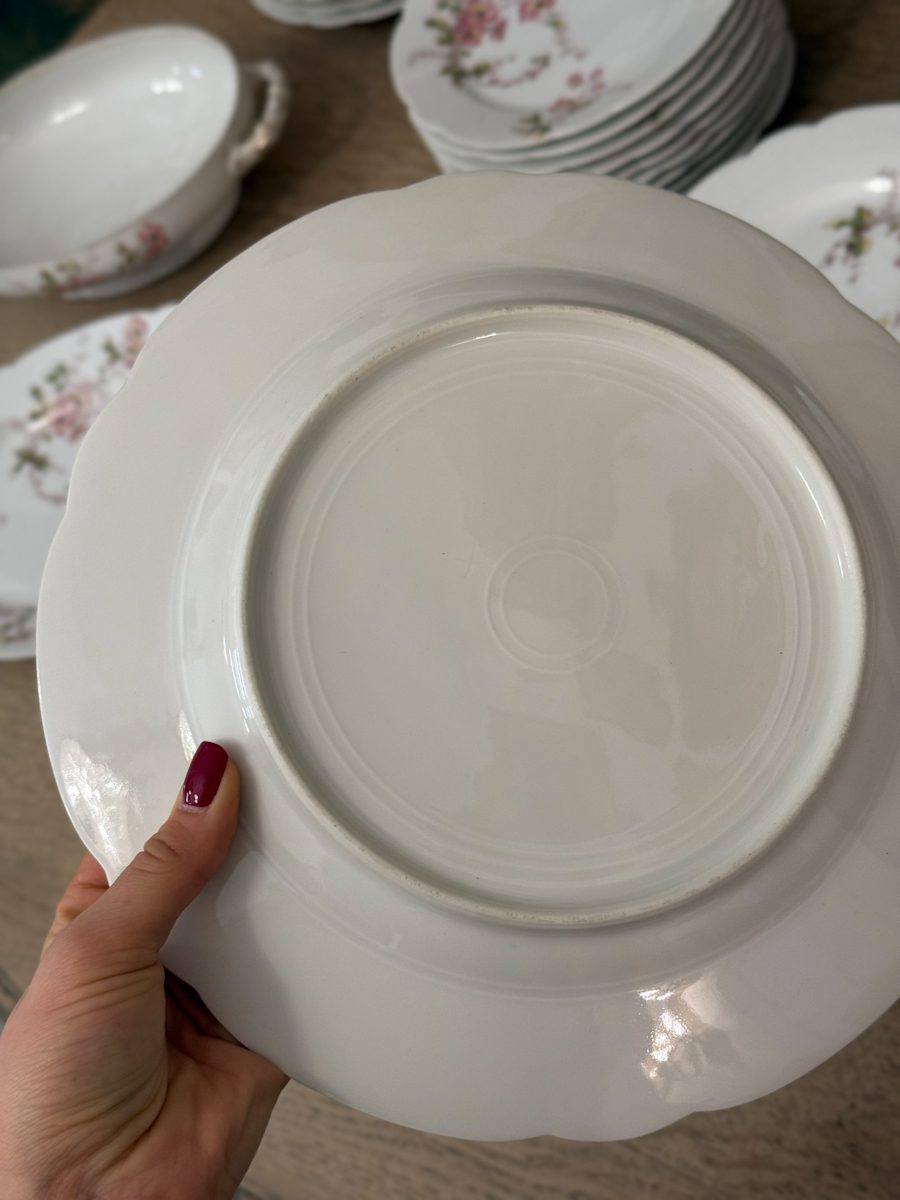
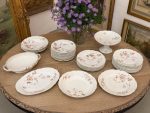
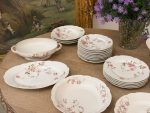
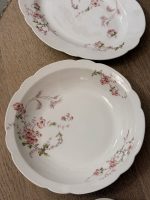
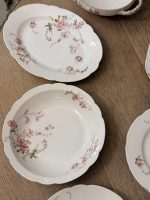
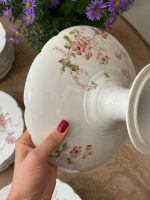
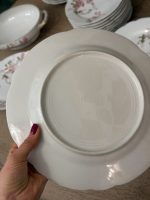
The set includes several plate sizes (large dinner plates, medium-sized plates, and saucers), deep plates, an oval serving platter, an oval soup tureen with handles, a small round bowl, and a pedestal vase (compotier/tazza). Overall, the set is remarkably large and diverse, suggesting it was originally purchased as a complete for a wealthy family. The manufacturer’s mark is not clearly visible in the photographs, but based on the glaze quality, form language, and painting style, such services were produced in Limoges (France) or in high-class Bohemian manufactories.
Interior and usage recommendation: this service is ideal for a dining room decorated in a romantic, Country, Provence, or classic style. It can be used both as a complete table setting for festive occasions, or decoratively displayed on a buffet or in an open cabinet — the colors and form perfectly complement natural materials such as oak, linen, and marble. The pedestal vase alone will serve as an excellent decorative element on the dining table or kitchen buffet.
Condition assessment: The service is generally in good to very good condition, considering its age. The painting on all pieces is vibrant and well-preserved. The porcelain is not cracked, with no signs of chips or repairs. Several plates show minor normal signs of wear — slight dirt accumulation on the rim (cleanable) and fine “crayoning” (knife and fork marks) — which is absolutely normal for items that have been actively used. Overall, the service is in excellent collector’s and usable condition.
The condition of the item is fully reflected in the attached photographs.
Porcelain with rosehip and thistle motif. France or Bohemia, circa late 19th – early 20th century (circa 1880–1910).
This exquisite belongs to the transitional period of Late Historicism and early Art Nouveau, which dominated European decorative arts approximately from 1880 to 1910. It was during this time that European porcelain manufacturers, particularly in France and Bohemia, began to move away from heavy gold decoration in favor of lighter, more naturalistic paintings — delicate floral garlands and botanical motifs on a clean white background. The service’s decoration — entwined rosehip flowers and thorny thistle stems — is a typical symbol of this transitional period: a gentle, naturalistic interpretation of nature themes, heralding the growing influence of Art Nouveau philosophy.
The service is made of high-quality white bone china porcelain with delicate, slightly raised rims. The painting is executed with high precision — soft pink and coral red rosehip flowers with green foliage accents and the characteristic thistle stem pattern with small thorns were most likely created using a top-class colored transfer printing method with minor hand finishing. This botanical motif — the rosehip with thistle — was extremely popular precisely in the Limoges porcelain manufactories in the last two decades of the 19th century, where it was used by many manufacturers, both Haviland and lesser-known manufactories.
The set includes several plate sizes (large dinner plates, medium-sized plates, and saucers), deep plates, an oval serving platter, an oval soup tureen with handles, a small round bowl, and a pedestal vase (compotier/tazza). Overall, the set is remarkably large and diverse, suggesting it was originally purchased as a complete for a wealthy family. The manufacturer’s mark is not clearly visible in the photographs, but based on the glaze quality, form language, and painting style, such services were produced in Limoges (France) or in high-class Bohemian manufactories.
Interior and usage recommendation: this service is ideal for a dining room decorated in a romantic, Country, Provence, or classic style. It can be used both as a complete table setting for festive occasions, or decoratively displayed on a buffet or in an open cabinet — the colors and form perfectly complement natural materials such as oak, linen, and marble. The pedestal vase alone will serve as an excellent decorative element on the dining table or kitchen buffet.
Condition assessment: The service is generally in good to very good condition, considering its age. The painting on all pieces is vibrant and well-preserved. The porcelain is not cracked, with no signs of chips or repairs. Several plates show minor normal signs of wear — slight dirt accumulation on the rim (cleanable) and fine “crayoning” (knife and fork marks) — which is absolutely normal for items that have been actively used. Overall, the service is in excellent collector’s and usable condition.
The condition of the item is fully reflected in the attached photographs.