This elegant porcelain cachepot with its matching saucer belongs to the Neo-Rococo and Romantic style that was enormously fashionable in European decorative arts from approximately 1860 to 1910. During this period, porcelain cachepots became desirable objects in the salons and… 250,00 €
You’re now subscribed to price tracking for this product. We’ll notify you if the price drops. 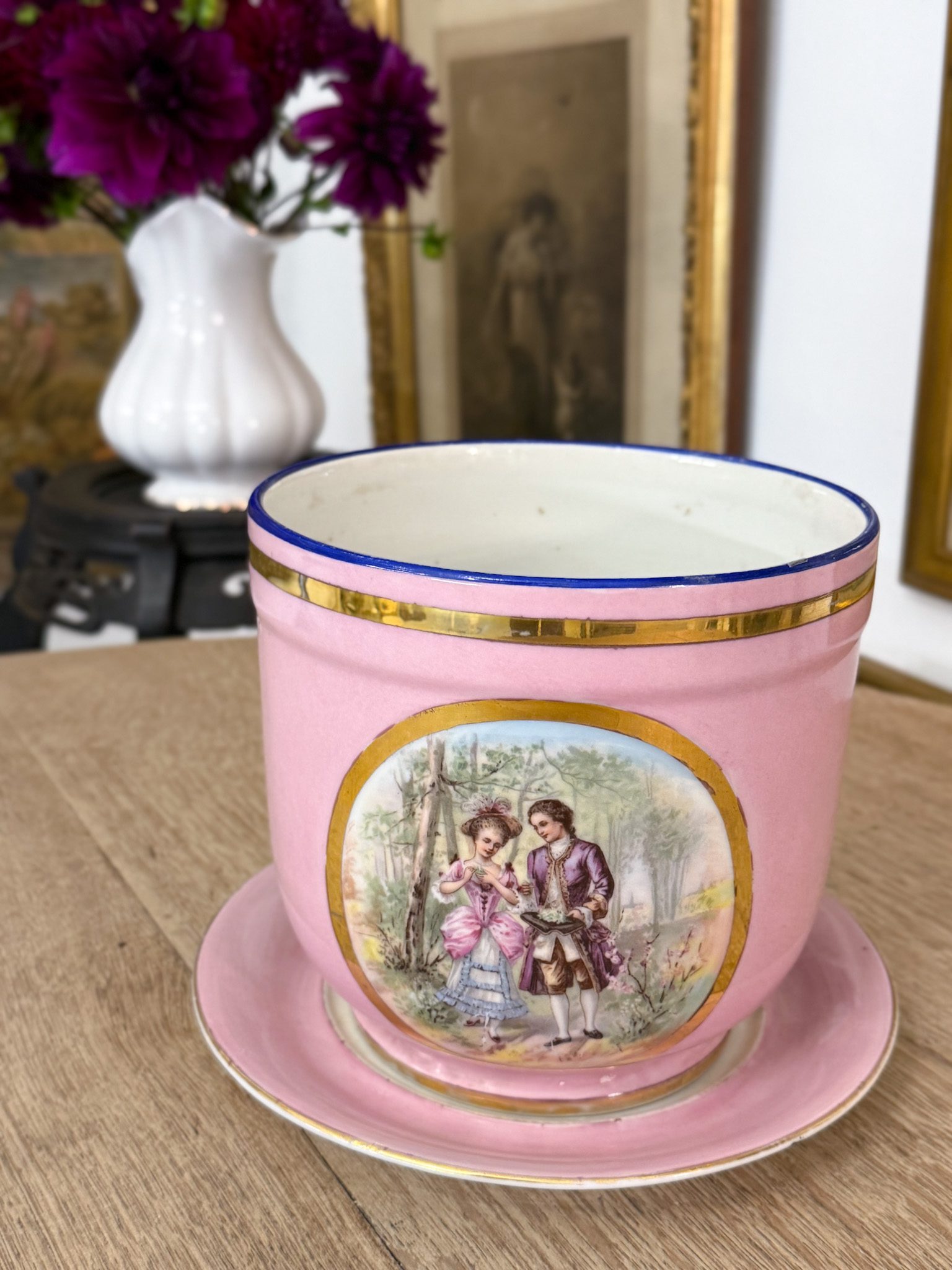



porcelain cachepot/planter with saucer, Neo-Rococo / Romanticism, medium size (6087)
Height 20 cm Width 20 cm Color Cobalt blueLavenderCobalt

Description
Height 20 cm, width 20 cm, saucer diameter 25 cm.
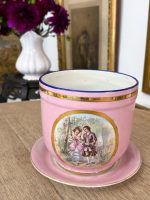
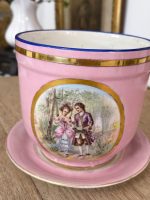
Porcelain cachepot with saucer. Pink ground, romantic couple painting. Europe (France or Bohemia), approximately late 19th – early 20th century. Neo-Rococo / Romanticism.
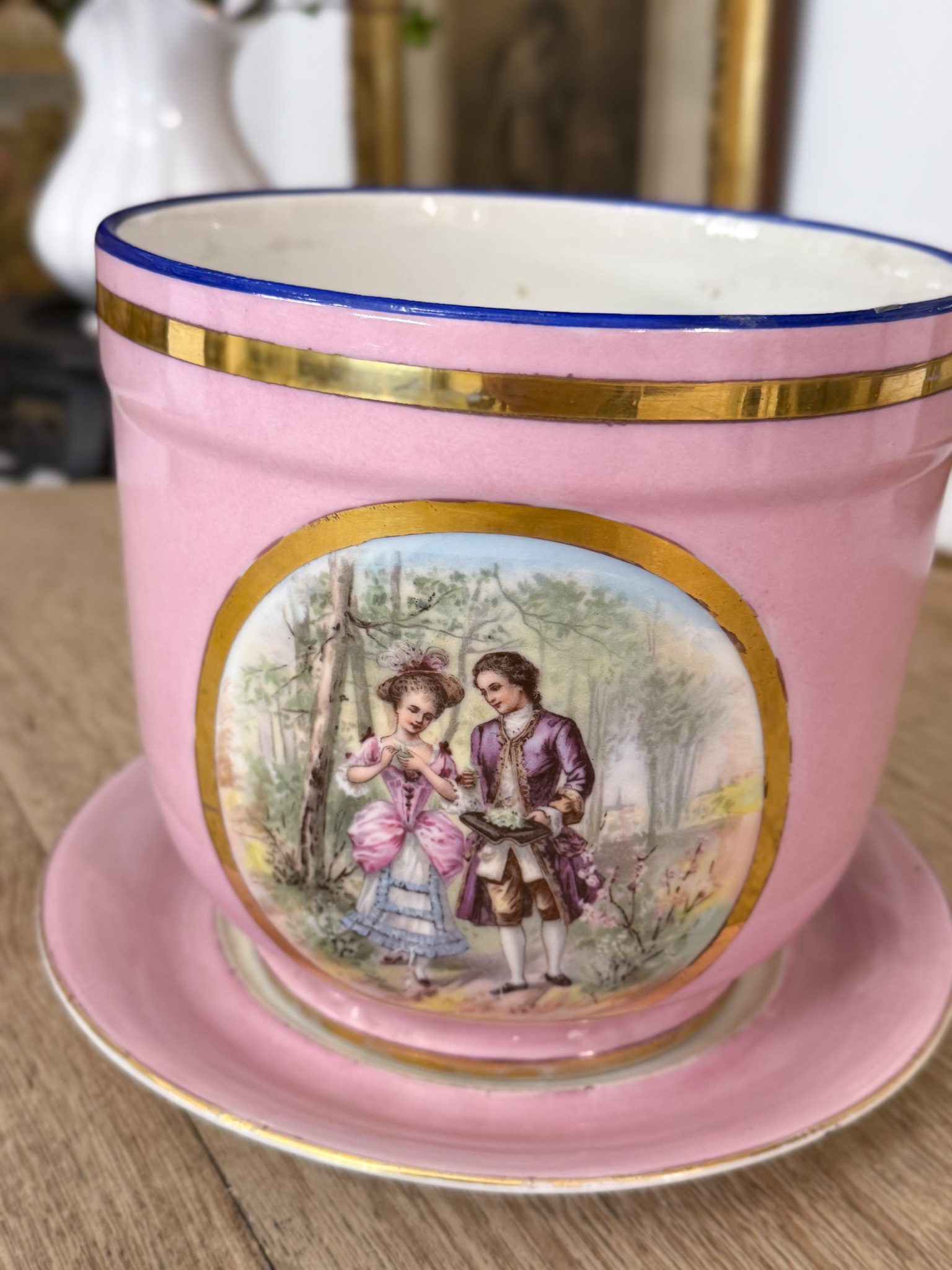
This elegant porcelain cachepot with its matching saucer belongs to the Neo-Rococo and Romantic style that was enormously fashionable in European decorative arts from approximately 1860 to 1910. During this period, porcelain cachepots became desirable objects in the salons and drawing rooms of European high society — used both as decorative holders for potted plants and as standalone ornamental pieces on mantelpieces and console tables. The pink ground colour — in the tonality of the celebrated “rose Pompadour” or “rose du Barry” — was a deliberate reference to the Versailles porcelain tradition established by the Sèvres manufactory in the mid-18th century, and its use in late 19th-century decorative ceramics was an intentional signal of luxury and sentiment.
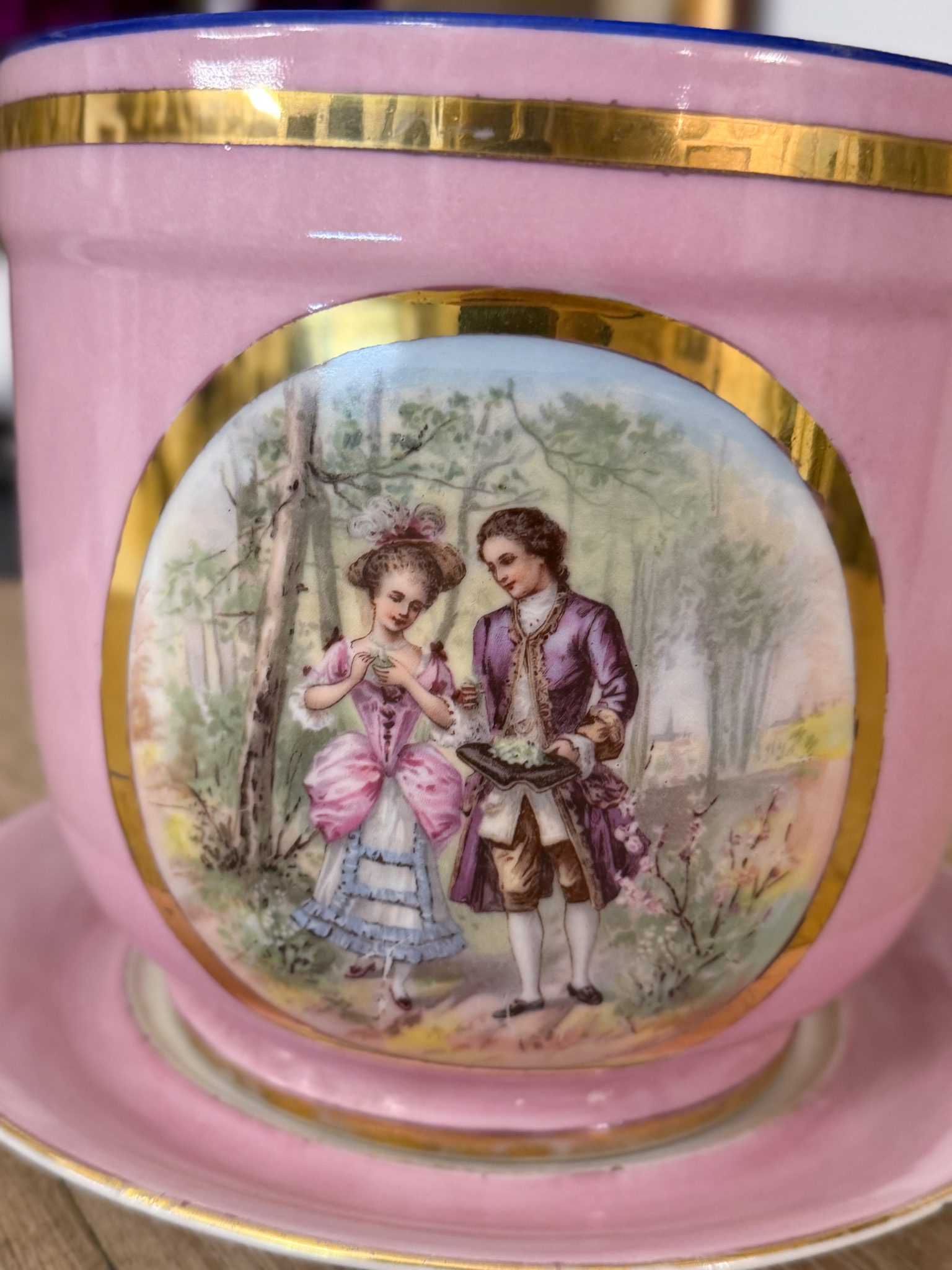
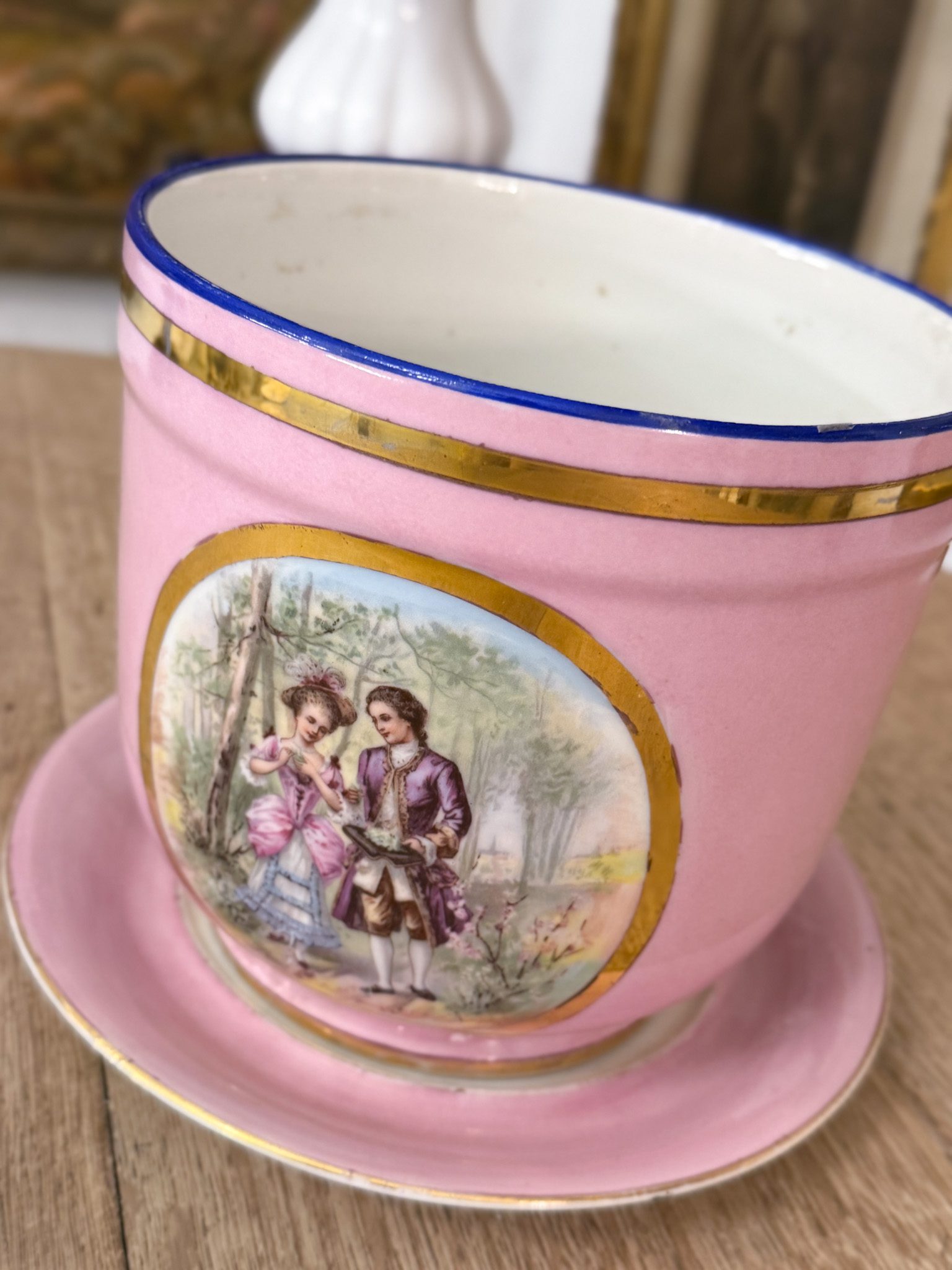
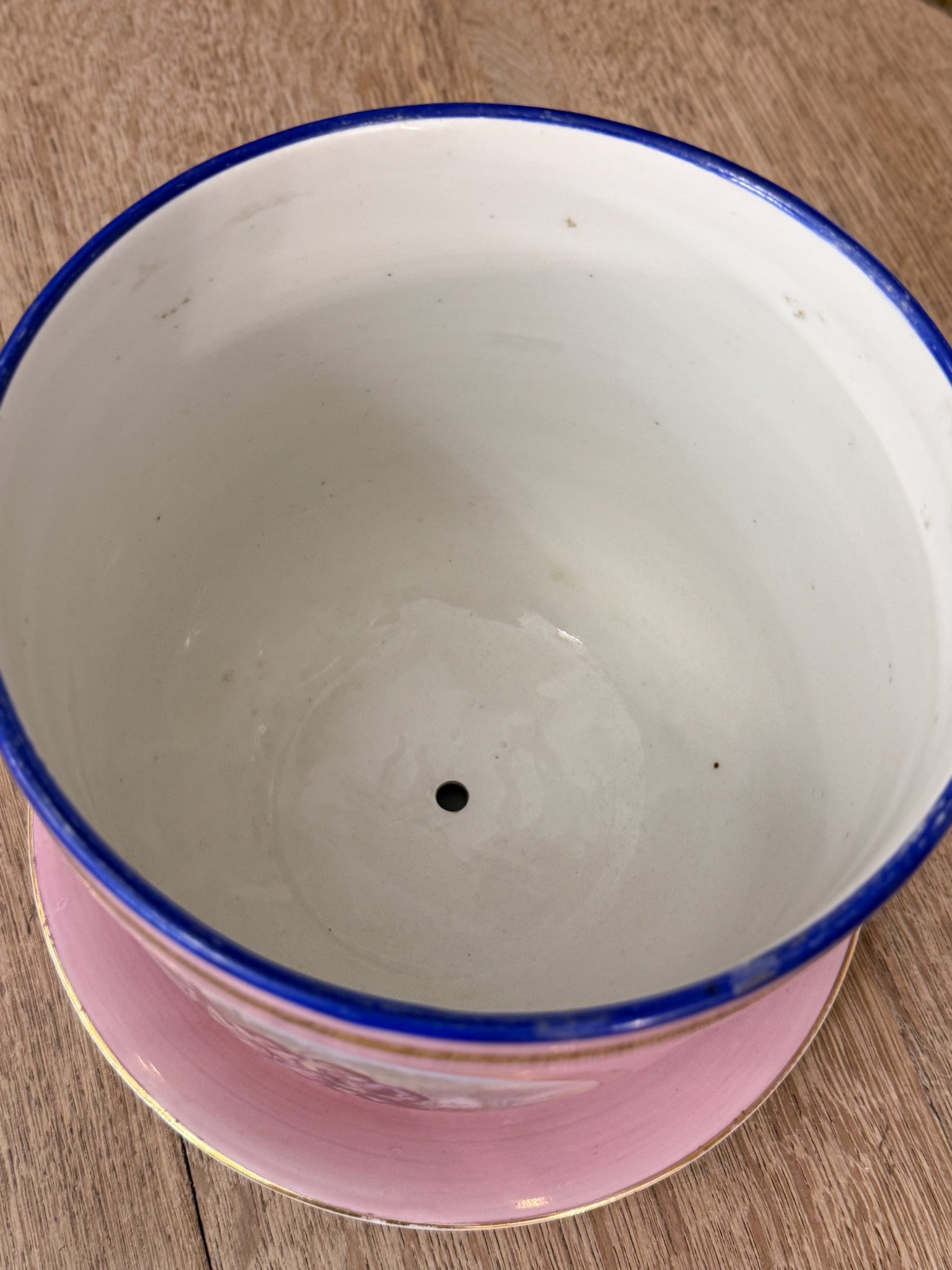
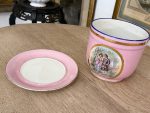
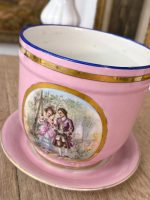
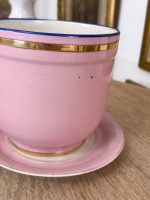
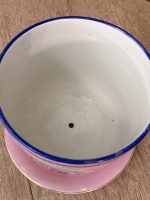
The cachepot is made from white porcelain covered with an evenly applied soft pink glaze on the exterior. The rim is finished with a cobalt blue band and a broad gold band below — this colour combination of pink, blue, and gold is highly characteristic of porcelain produced in the Sèvres style and its many interpretations across , Bohemian, and manufactories in the second half of the 19th century. The central medallion, framed by a gilded border, presents a polychrome miniature scene: an elegantly dressed 18th-century-style couple — a young lady in a pink gown with broad ribbons and a young gentleman in a purple coat — standing in a park setting among trees. The fineness of the costume detail, the atmospheric landscape background, and the depth of colour tones suggest high-quality chromolithographic transfer printing with hand-enhanced details, or precise miniature painting. The white undecorated interior with a single drainage hole at the base confirms the piece’s original functional use as a plant holder.
The Sèvres porcelain manufactory, founded in 1740 near Paris, became the symbol of Europe’s most prestigious and costly porcelain. Its distinctive ground colours — “bleu de Roi”, “rose Pompadour”, and “vert pomme” — combined with medallion paintings on white reserves became the standard for court and aristocratic commissions across Europe. In the second half of the 19th century, the Sèvres style was widely emulated by private manufactories and by Bohemian, , and producers, generating a large body of decorative wares “in the Sèvres manner.” This cachepot corresponds precisely to that distinguished category.
Interior recommendation: This cachepot is ideally suited to a Romantic, Classical, or Country interior. As an active plant holder — with a compact plant placed inside a separate plastic liner — it works beautifully on a windowsill, sideboard, or console table with a small orchid, violet, or fern. As an empty decorative piece, it lends itself to a mantelpiece or open-shelf arrangement, perhaps with a small dried flower or lavender sprig composition. The pink tones integrate harmoniously into both white-and-gold classical interiors and soft grey-green Provençal schemes.
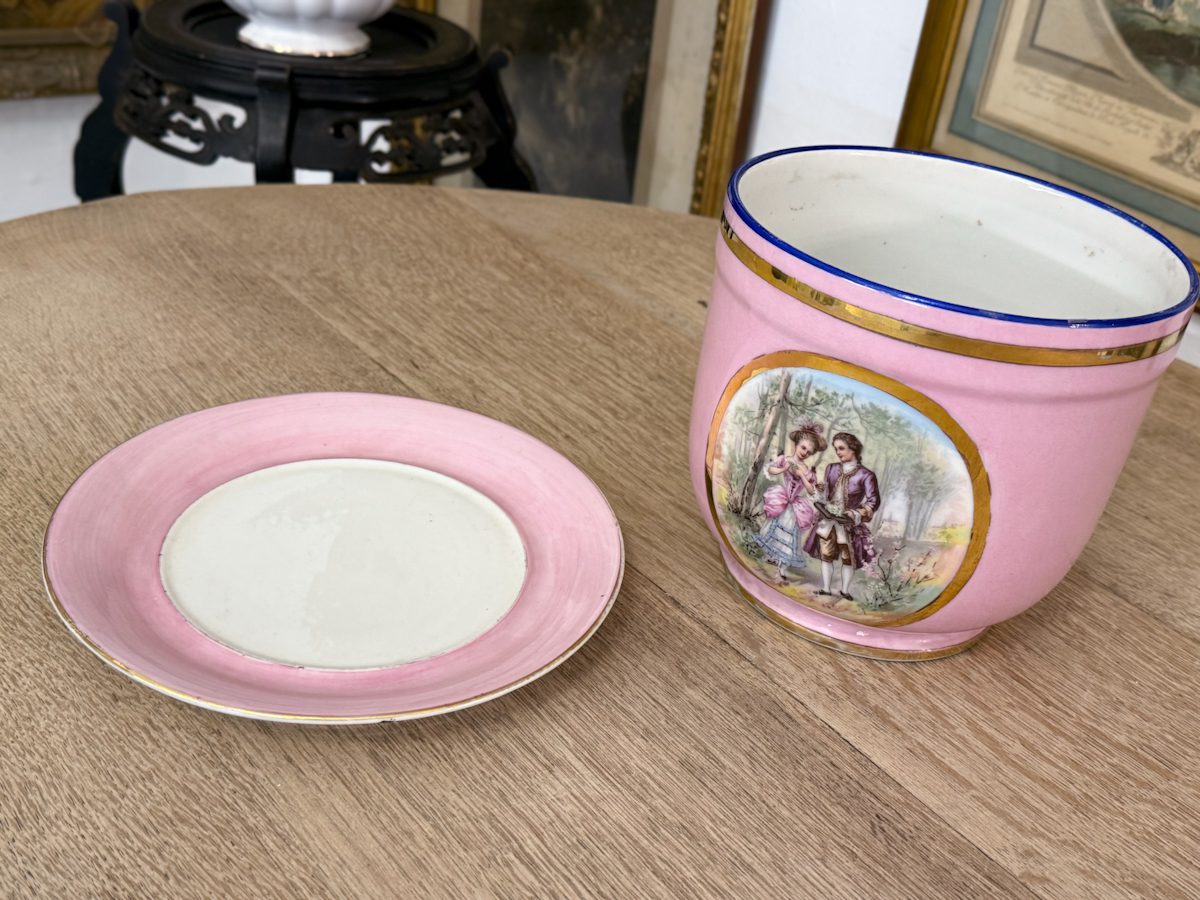
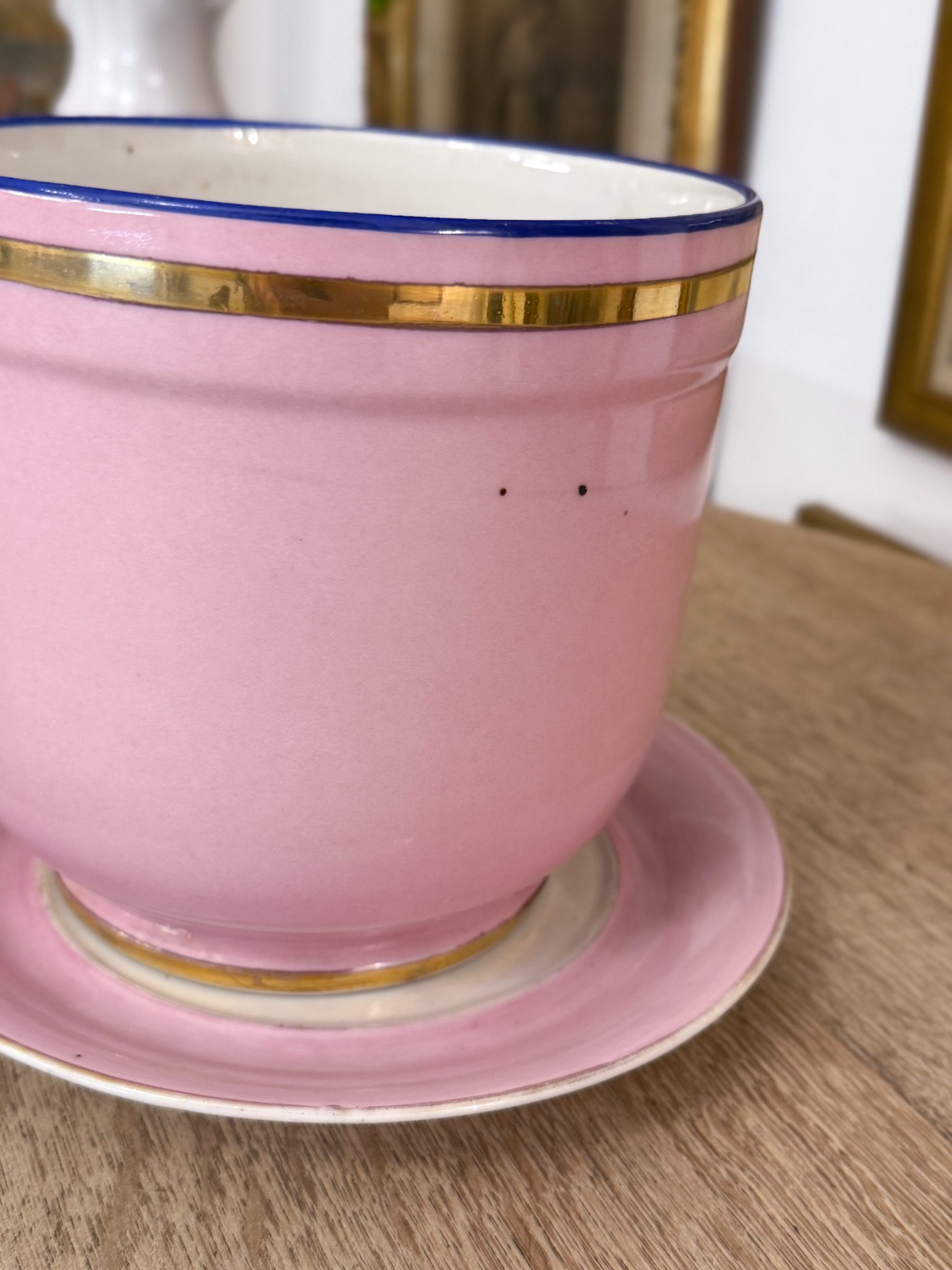
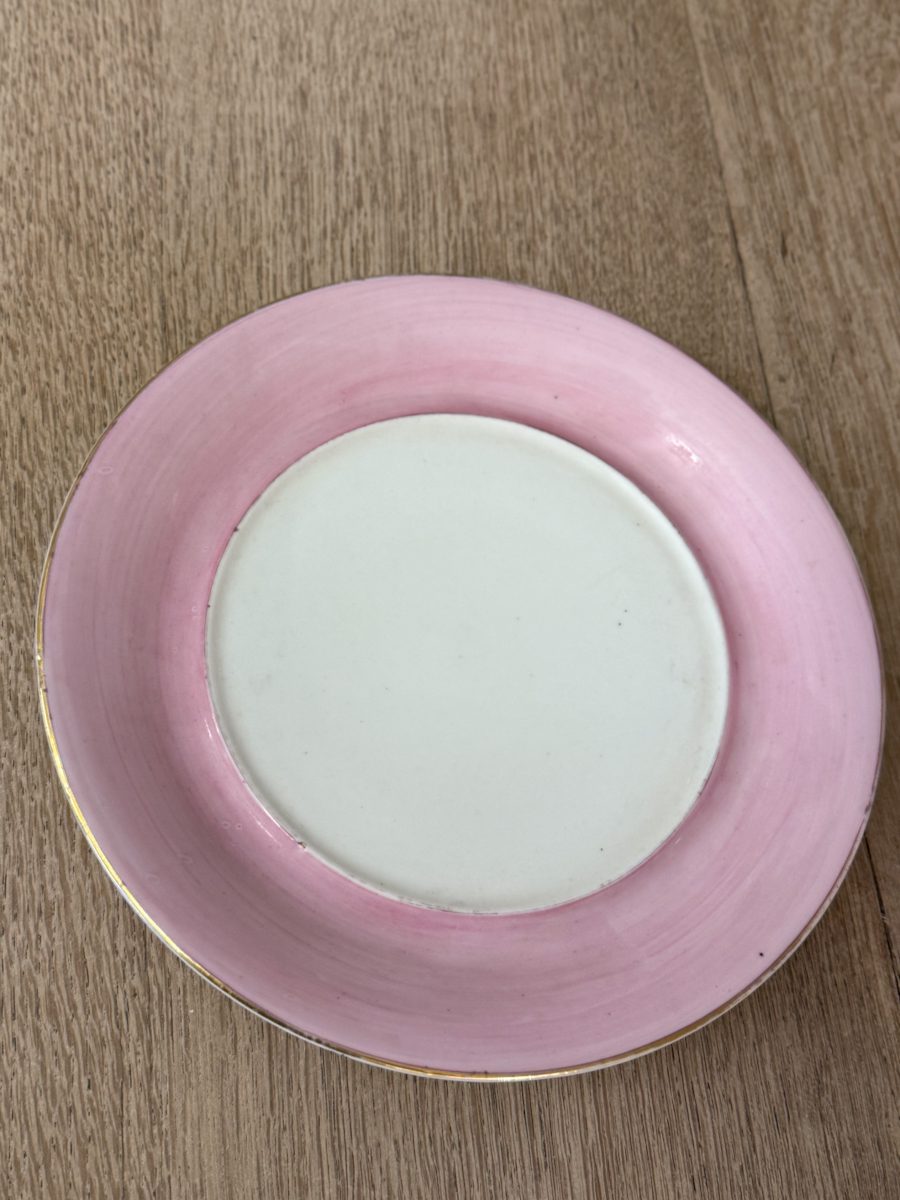
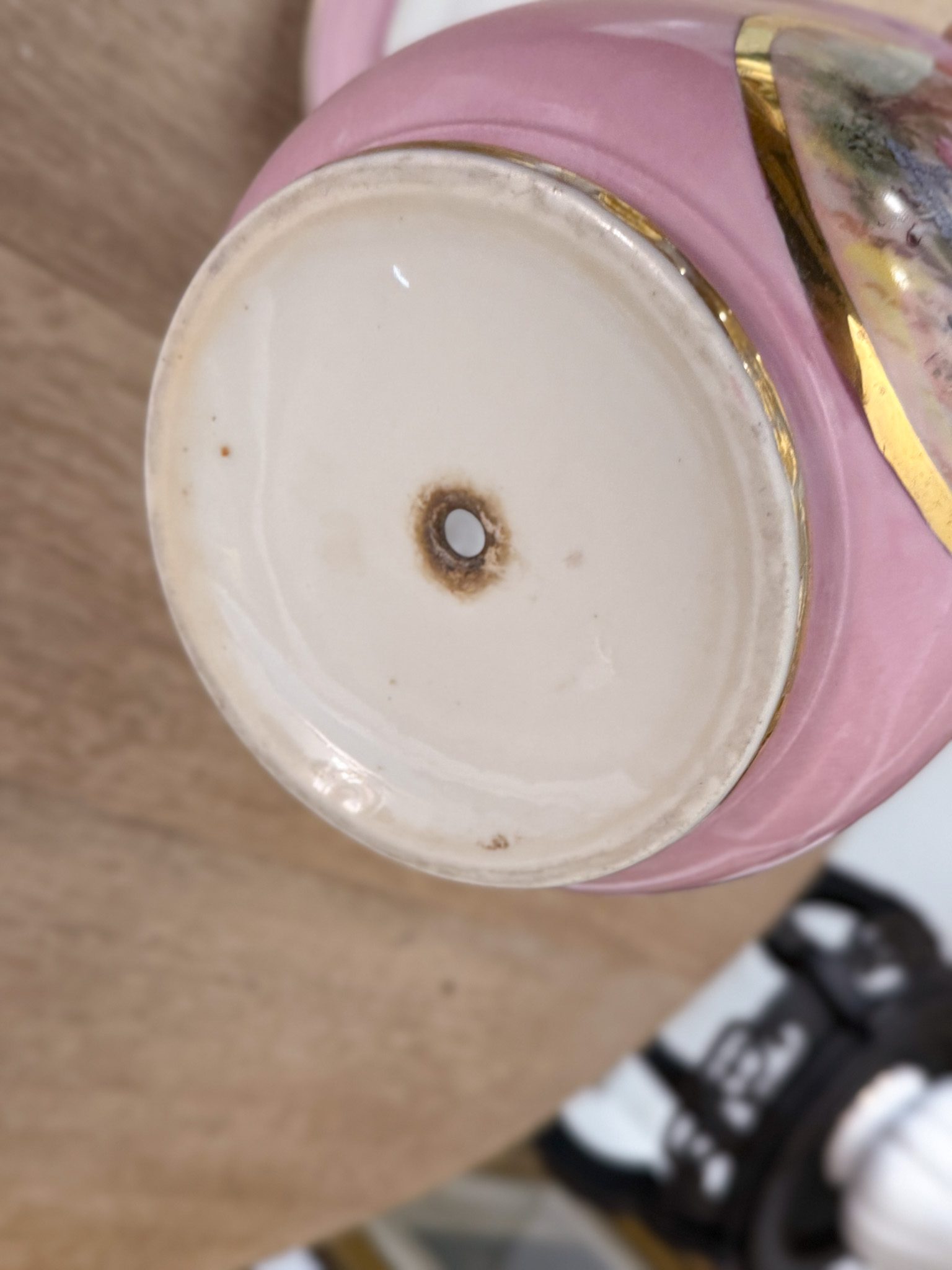
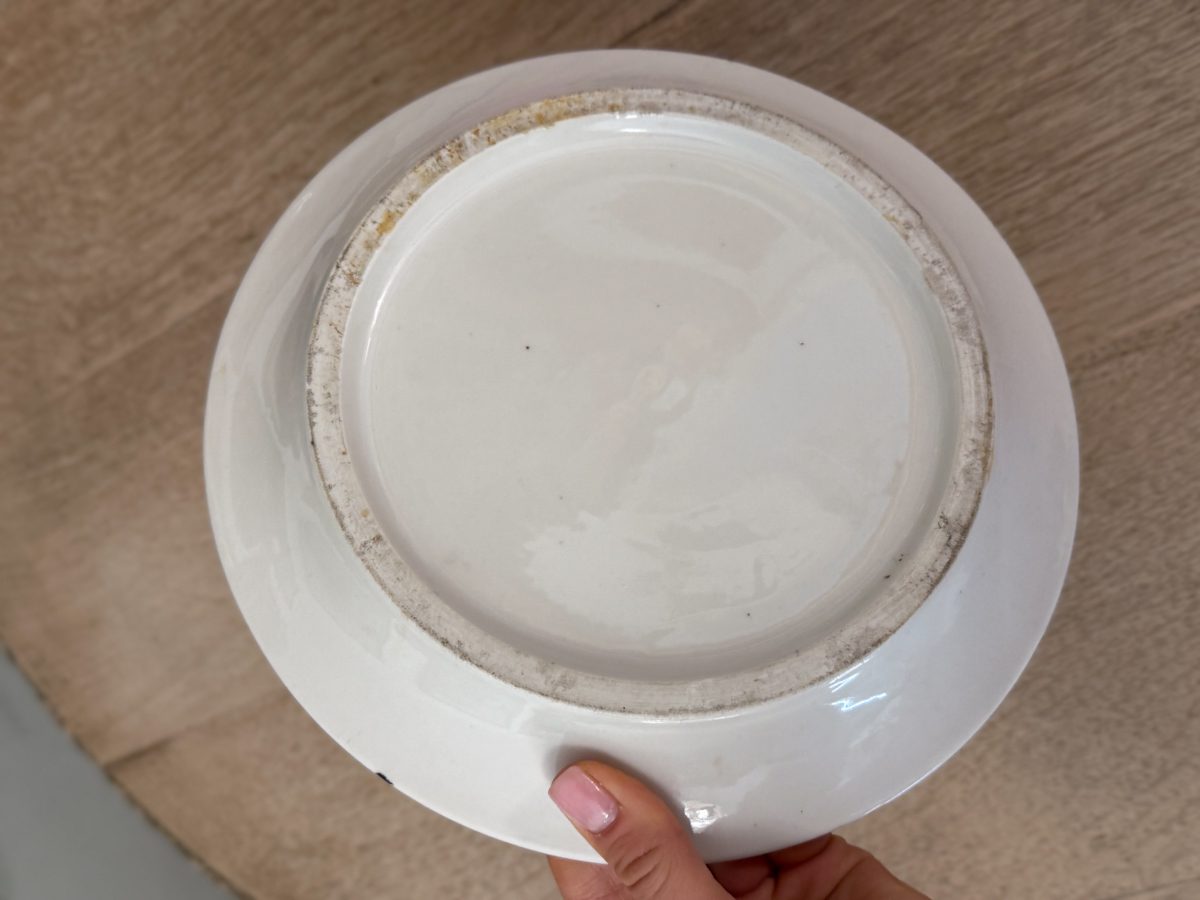
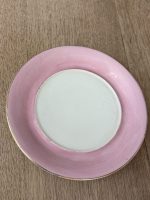
Condition: The cachepot is in good overall condition. The pink glaze is even and vivid. The gilding is largely well-preserved, with minor wear to the base rim area. On the undecorated side of the body, two very small dark specks are visible in the glaze — most likely a minor kiln inclusion from manufacture rather than mechanical damage. The medallion painting is clear and undamaged. The drainage hole at the base is a normal functional feature. The saucer is in good condition with light wear to the underside consistent with normal use. No chips, cracks, or restoration are present.
The condition of this piece is fully reflected in the accompanying photographs.
Height 20 cm, width 20 cm, saucer diameter 25 cm.
Porcelain cachepot with saucer. Pink ground, romantic figural medallion. Europe (France or Bohemia), approximately late 19th – early 20th century. Neo-Rococo / Romanticism.
This elegant porcelain cachepot with its matching saucer belongs to the Neo-Rococo and Romantic style that was enormously fashionable in European decorative arts from approximately 1860 to 1910. During this period, porcelain cachepots became desirable objects in the salons and drawing rooms of European high society — used both as decorative holders for potted plants and as standalone ornamental pieces on mantelpieces and console tables. The pink ground colour — in the tonality of the celebrated “rose Pompadour” or “rose du Barry” — was a deliberate reference to the Versailles porcelain tradition established by the Sèvres manufactory in the mid-18th century, and its use in late 19th-century decorative ceramics was an intentional signal of luxury and sentiment.
The cachepot is made from white porcelain covered with an evenly applied soft pink glaze on the exterior. The rim is finished with a cobalt blue band and a broad gold band below — this colour combination of pink, blue, and gold is highly characteristic of porcelain produced in the Sèvres style and its many interpretations across , Bohemian, and manufactories in the second half of the 19th century. The central medallion, framed by a gilded border, presents a polychrome miniature scene: an elegantly dressed 18th-century-style couple — a young lady in a pink gown with broad ribbons and a young gentleman in a purple coat — standing in a park setting among trees. The fineness of the costume detail, the atmospheric landscape background, and the depth of colour tones suggest high-quality chromolithographic transfer printing with hand-enhanced details, or precise miniature painting. The white undecorated interior with a single drainage hole at the base confirms the piece’s original functional use as a plant holder.
The Sèvres porcelain manufactory, founded in 1740 near Paris, became the symbol of Europe’s most prestigious and costly porcelain. Its distinctive ground colours — “bleu de Roi”, “rose Pompadour”, and “vert pomme” — combined with medallion paintings on white reserves became the standard for court and aristocratic commissions across Europe. In the second half of the 19th century, the Sèvres style was widely emulated by private manufactories and by Bohemian, , and producers, generating a large body of decorative wares “in the Sèvres manner.” This cachepot corresponds precisely to that distinguished category.
Interior recommendation: This cachepot is ideally suited to a Romantic, Classical, or Country interior. As an active plant holder — with a compact plant placed inside a separate plastic liner — it works beautifully on a windowsill, sideboard, or console table with a small orchid, violet, or fern. As an empty decorative piece, it lends itself to a mantelpiece or open-shelf arrangement, perhaps with a small dried flower or lavender sprig composition. The pink tones integrate harmoniously into both white-and-gold classical interiors and soft grey-green Provençal schemes.
Condition: The cachepot is in good overall condition. The pink glaze is even and vivid. The gilding is largely well-preserved, with minor wear to the base rim area. On the undecorated side of the body, two very small dark specks are visible in the glaze — most likely a minor kiln inclusion from manufacture rather than mechanical damage. The medallion painting is clear and undamaged. The drainage hole at the base is a normal functional feature. The saucer is in good condition with light wear to the underside consistent with normal use. No chips, cracks, or restoration are present.
The condition of this piece is fully reflected in the accompanying photographs.