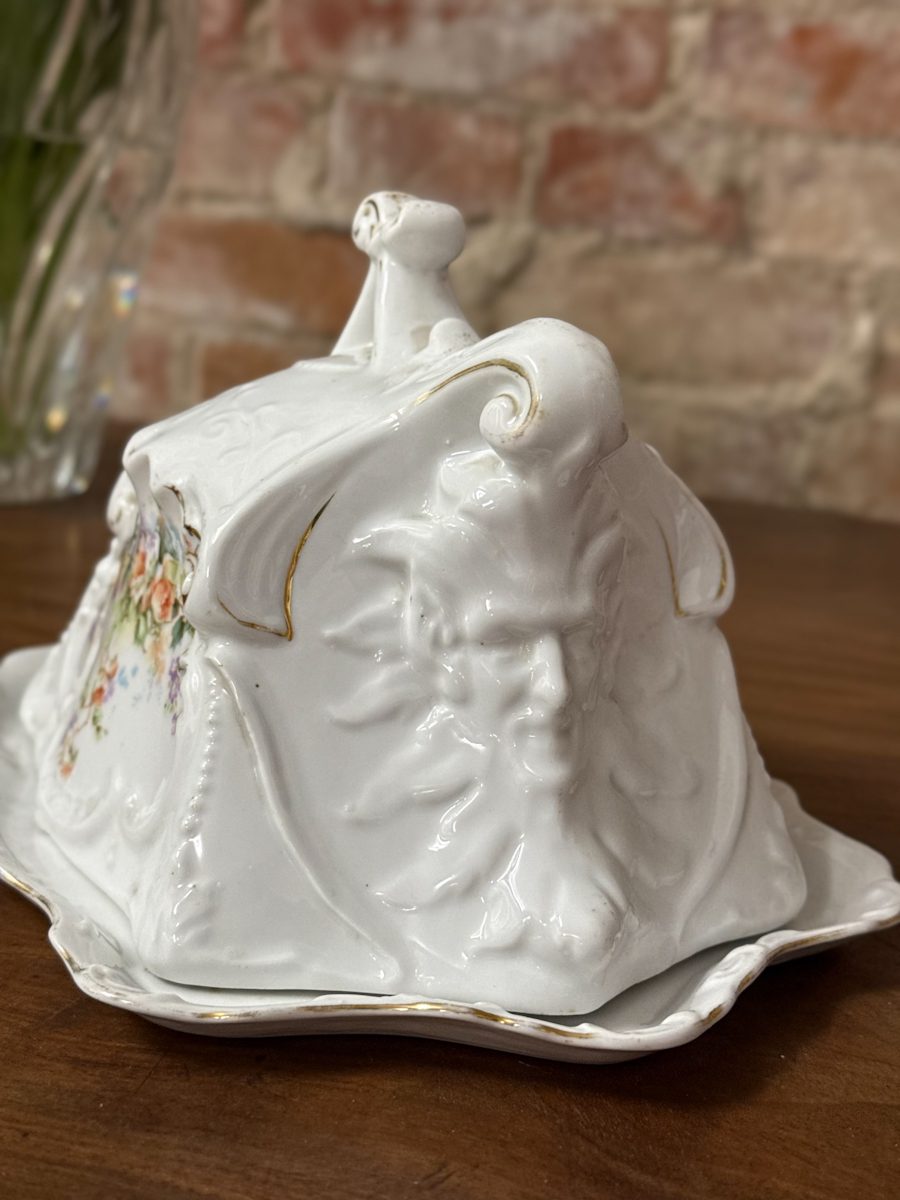
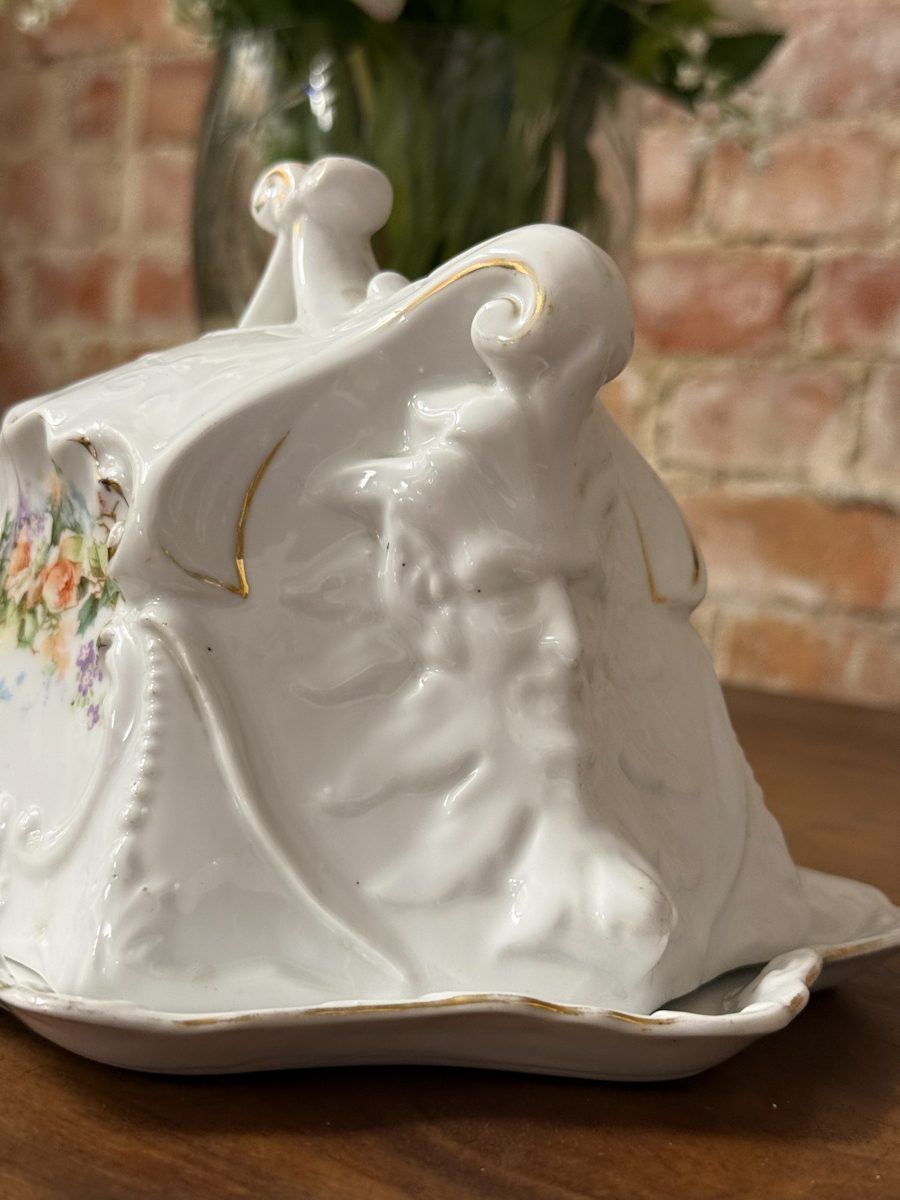
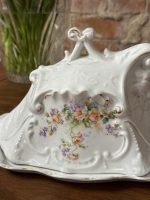
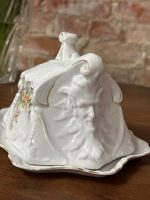
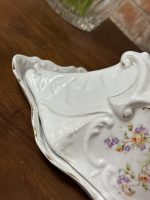
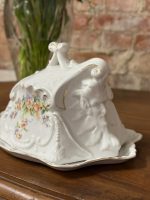
Exclusive antique German porcelain butter dish – circa 1900 (Belle Époque). Exquisite craftsmanship with high relief, rose blossoms, and gilding. The dish is in excellent antique condition, without cracks or chips. 150,00 €
You’re now subscribed to price tracking for this product. We’ll notify you if the price drops. 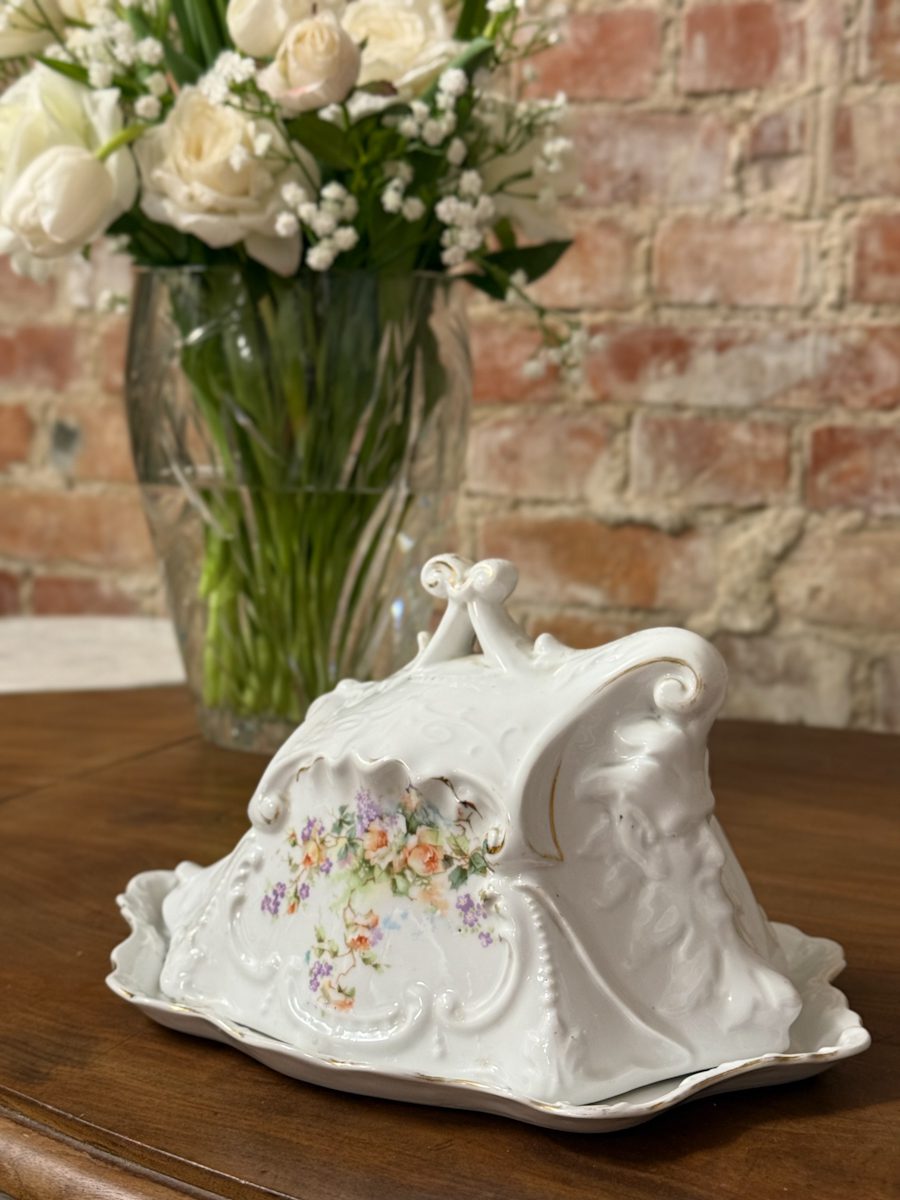
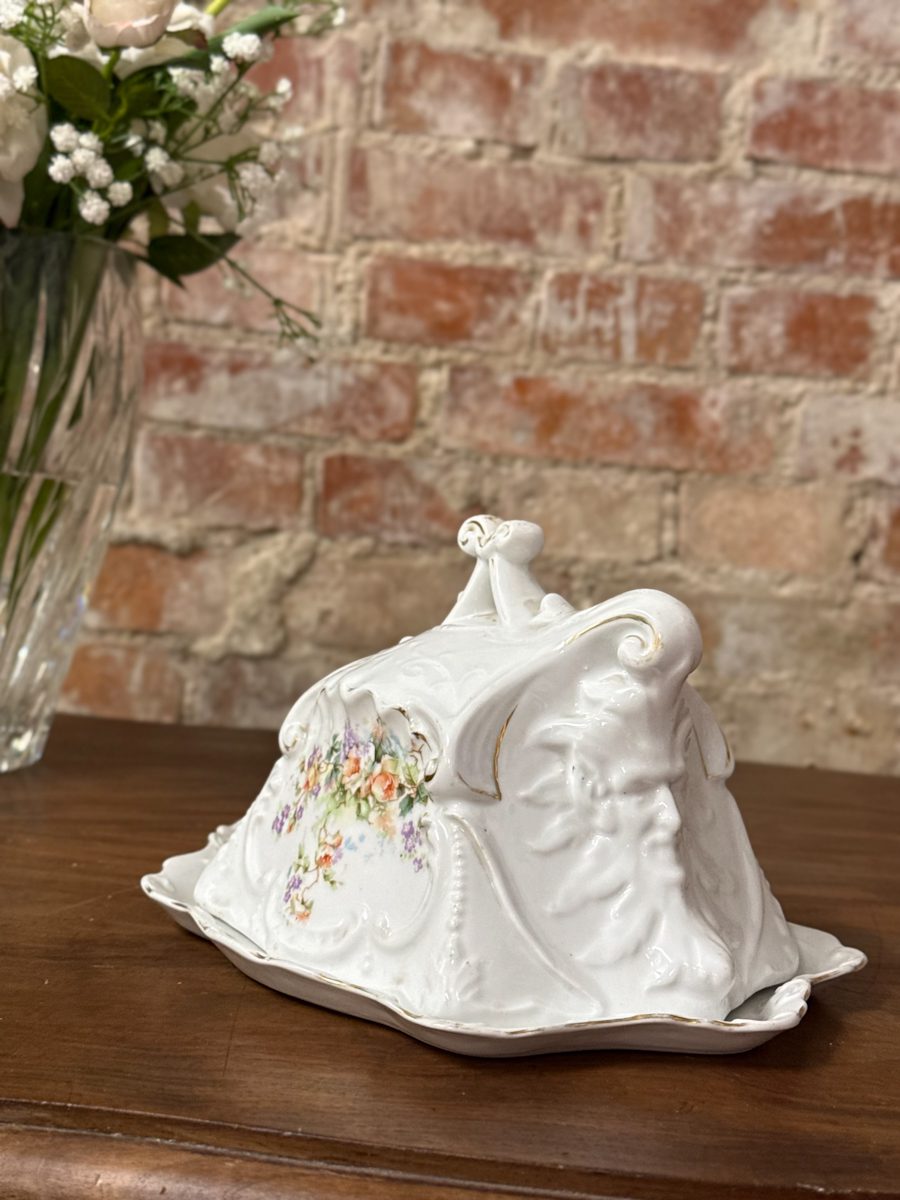
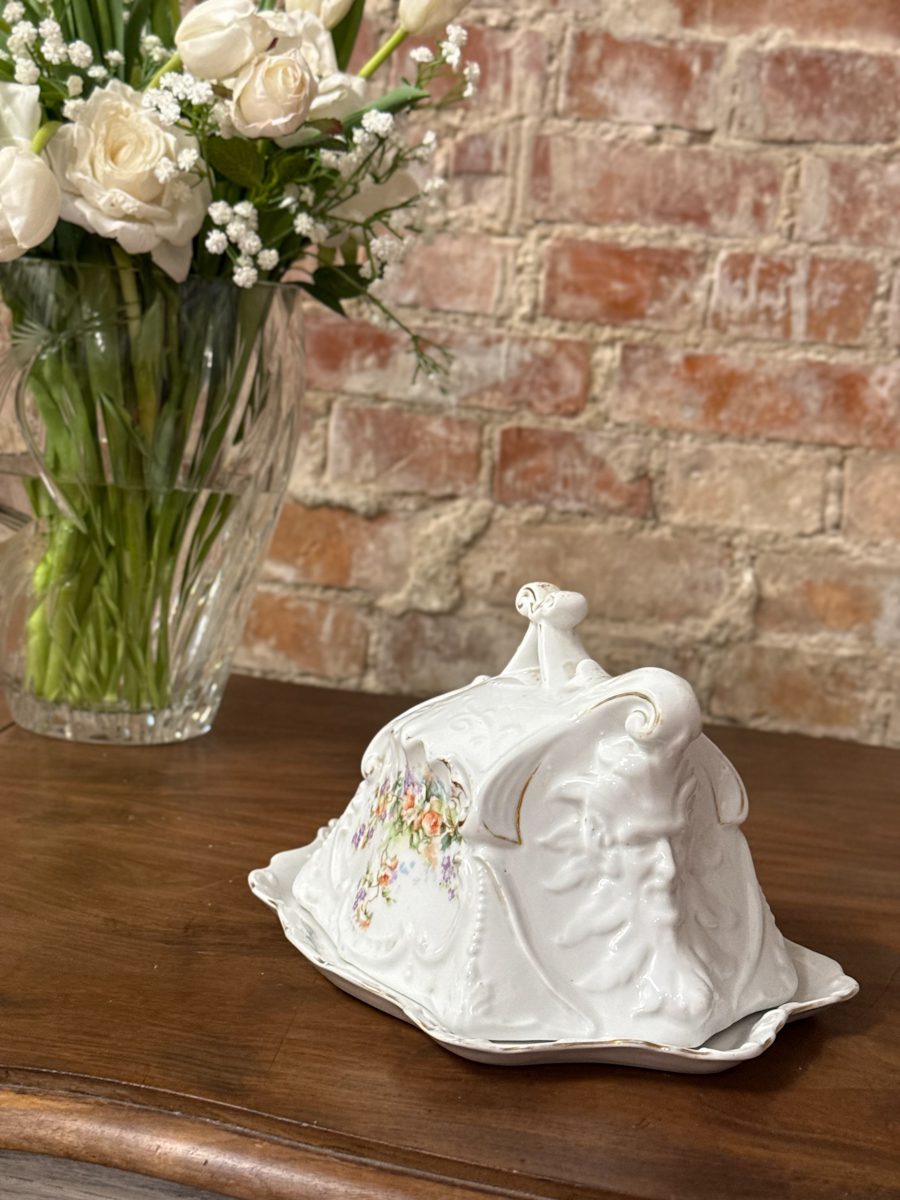
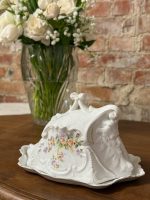
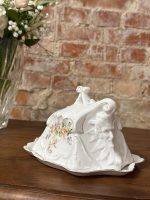
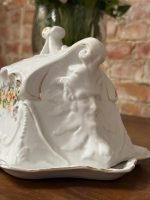
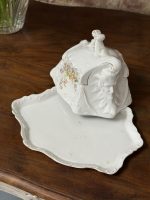
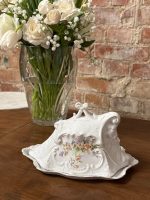
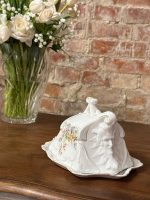
Porcelain Dish for Butter/Cheese (6275)
Height 13 cm Length 27.5 cm Width 20 cm Color NaturalGreenRose
Description
Height 13cm, length 27.5cm, width 20cm.
Exclusive antique porcelain butter dish with high relief and roses – circa 1900 (Belle Époque / Art Nouveau)
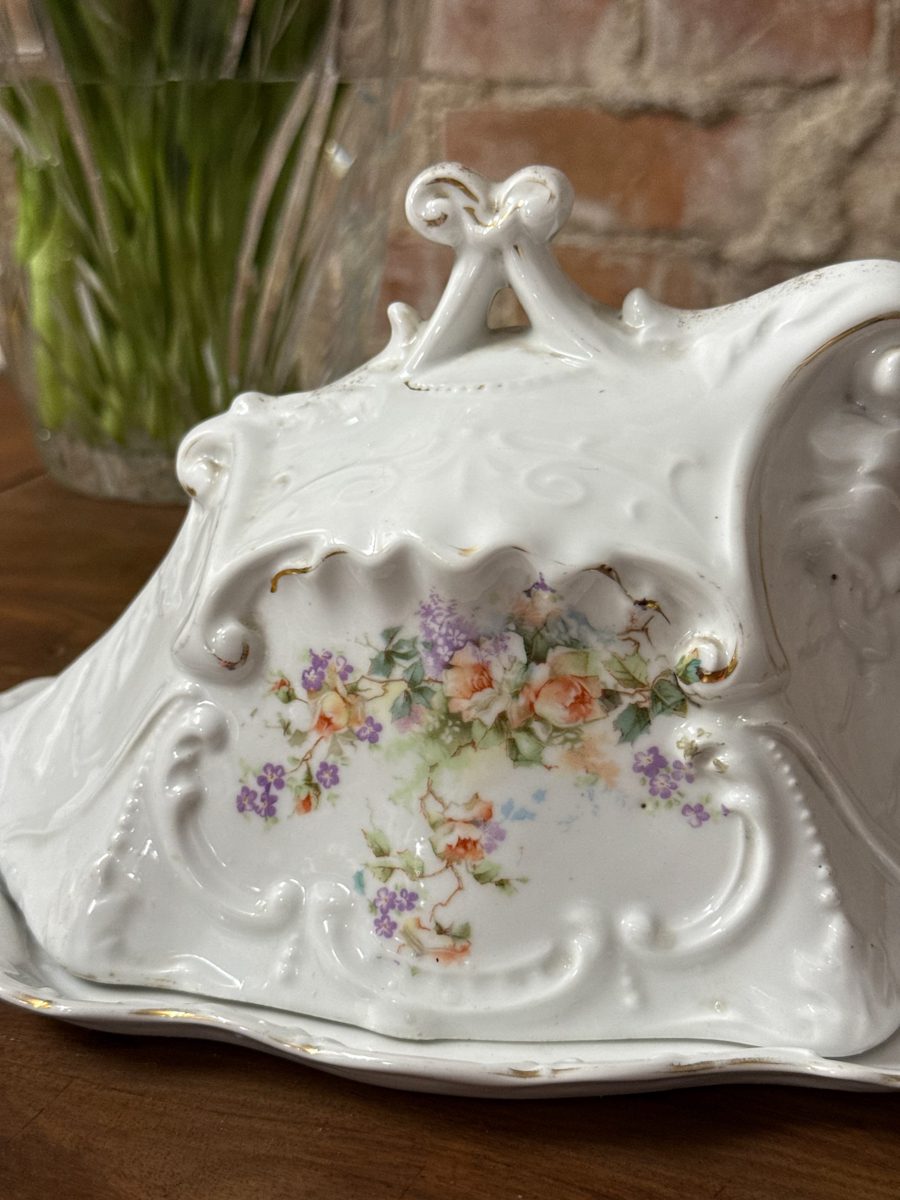
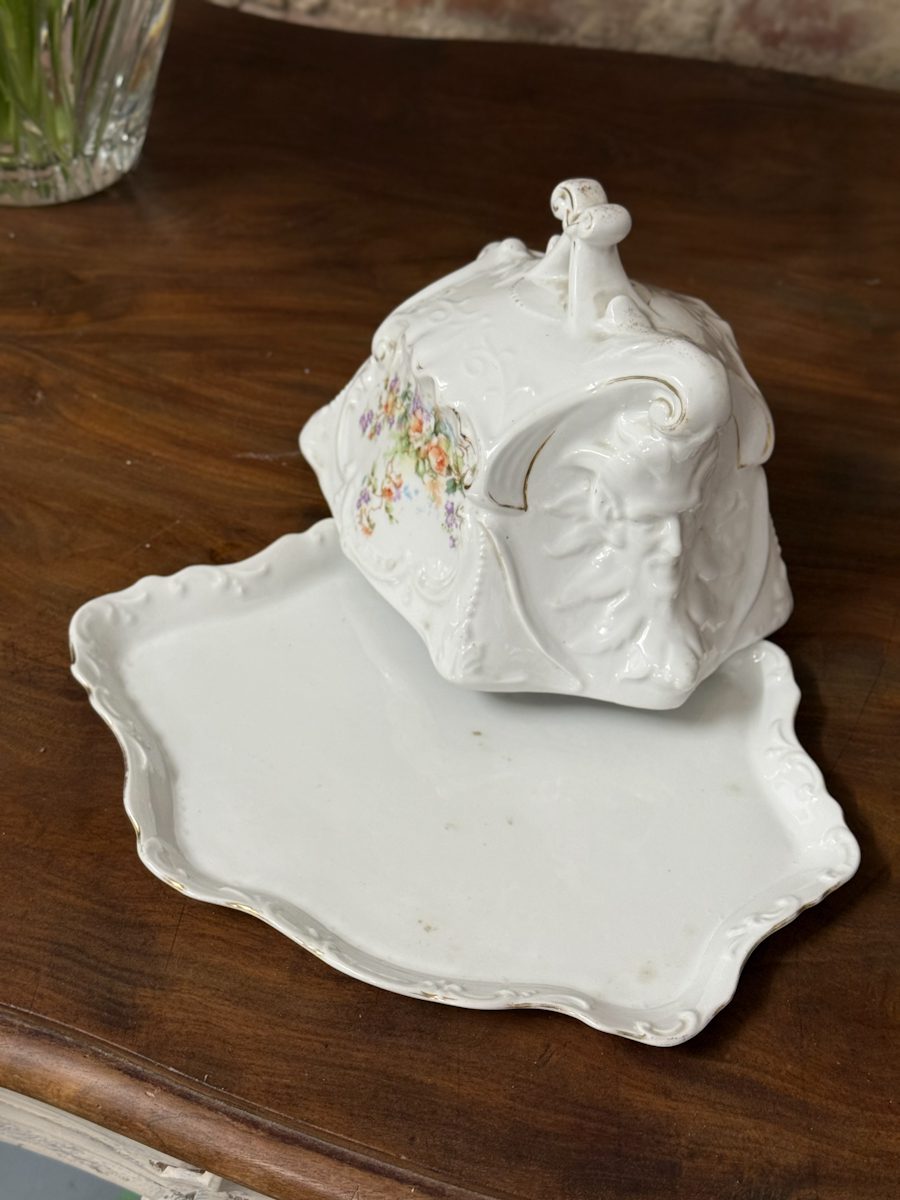
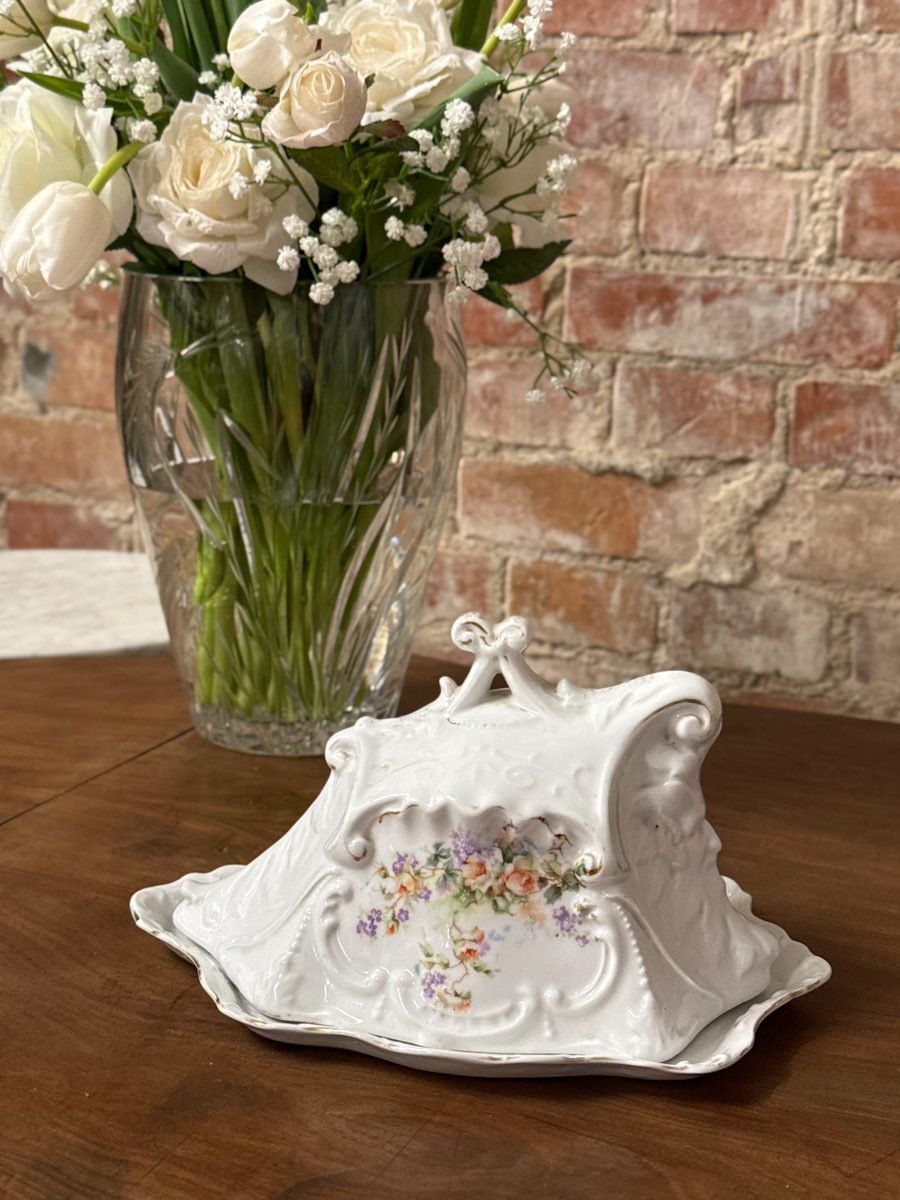
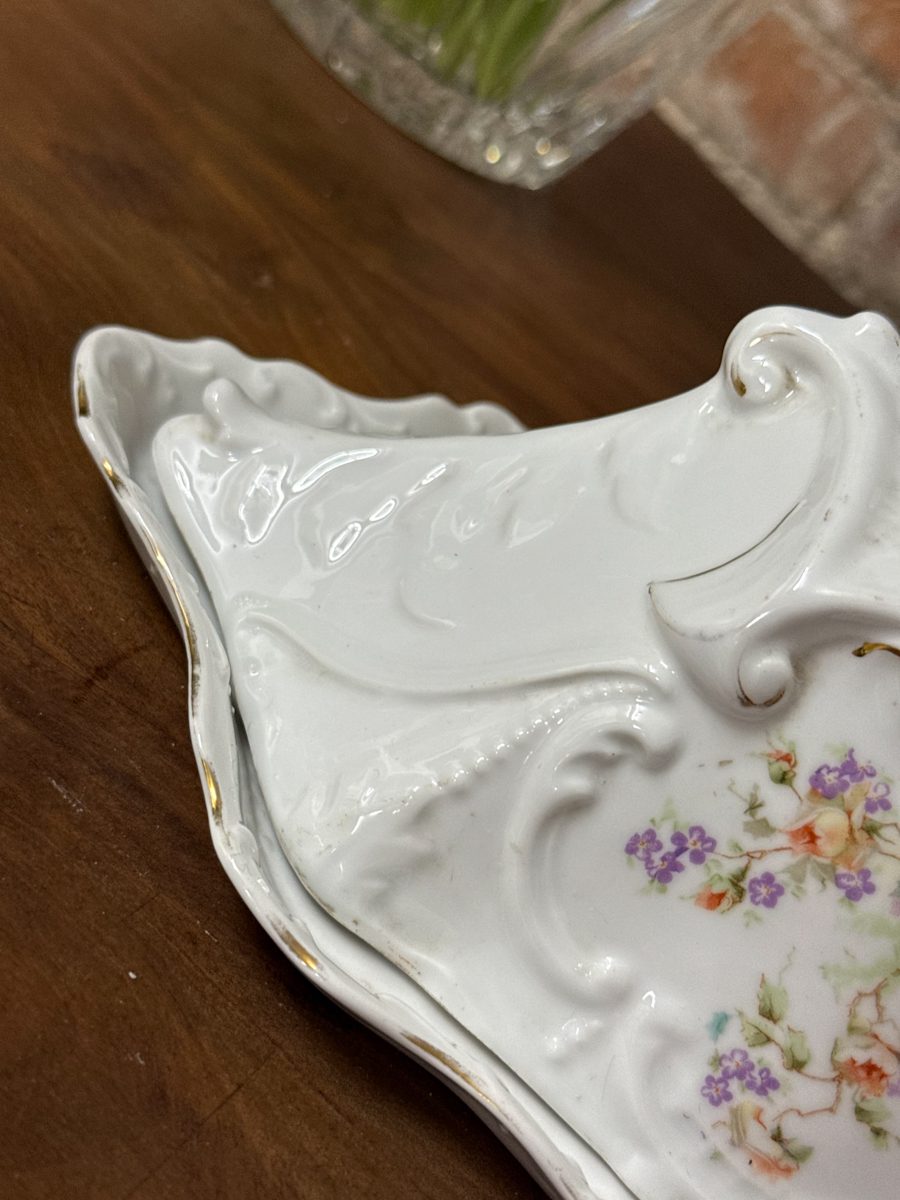
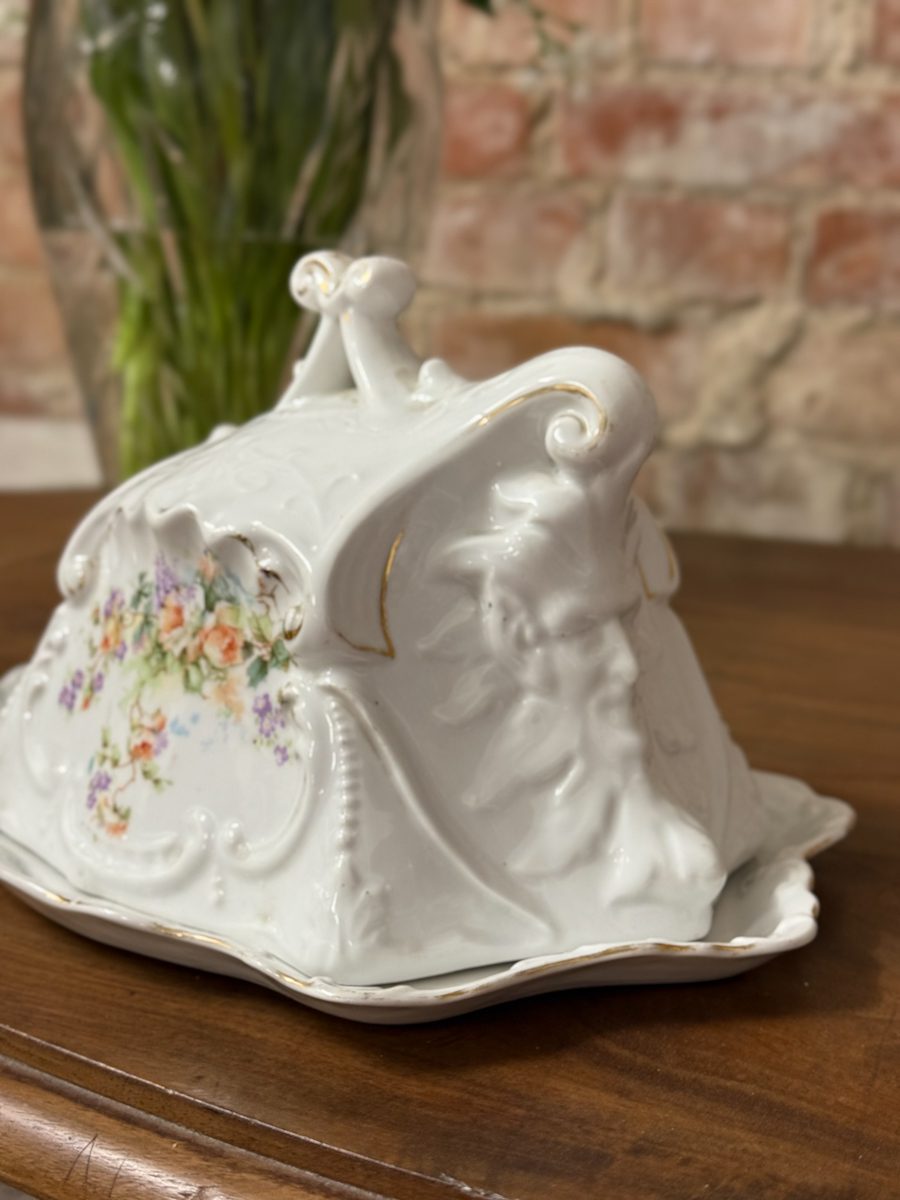
1. Description Exquisite synergy of Baroque and Art Nouveau – a royal-sized porcelain masterpiece with sculptural relief for your festive table! The site antik1.com offers a unique and exceptionally beautiful antique porcelain butter dish (cassette-type box with lid), executed in the exquisite aesthetic of the “Belle Époque” era. The dish is made of high-quality hard porcelain, and its design stands out with distinctly plastic, high porcelain relief, forming flowing natural shapes characteristic of Art Nouveau and Baroque rocaille elements. The body and lid are richly decorated with hand-painted romantic garden roses and wildflowers, surrounded by mixed greens and pink tones, as well as luxurious gilding.
Possible origin and period:
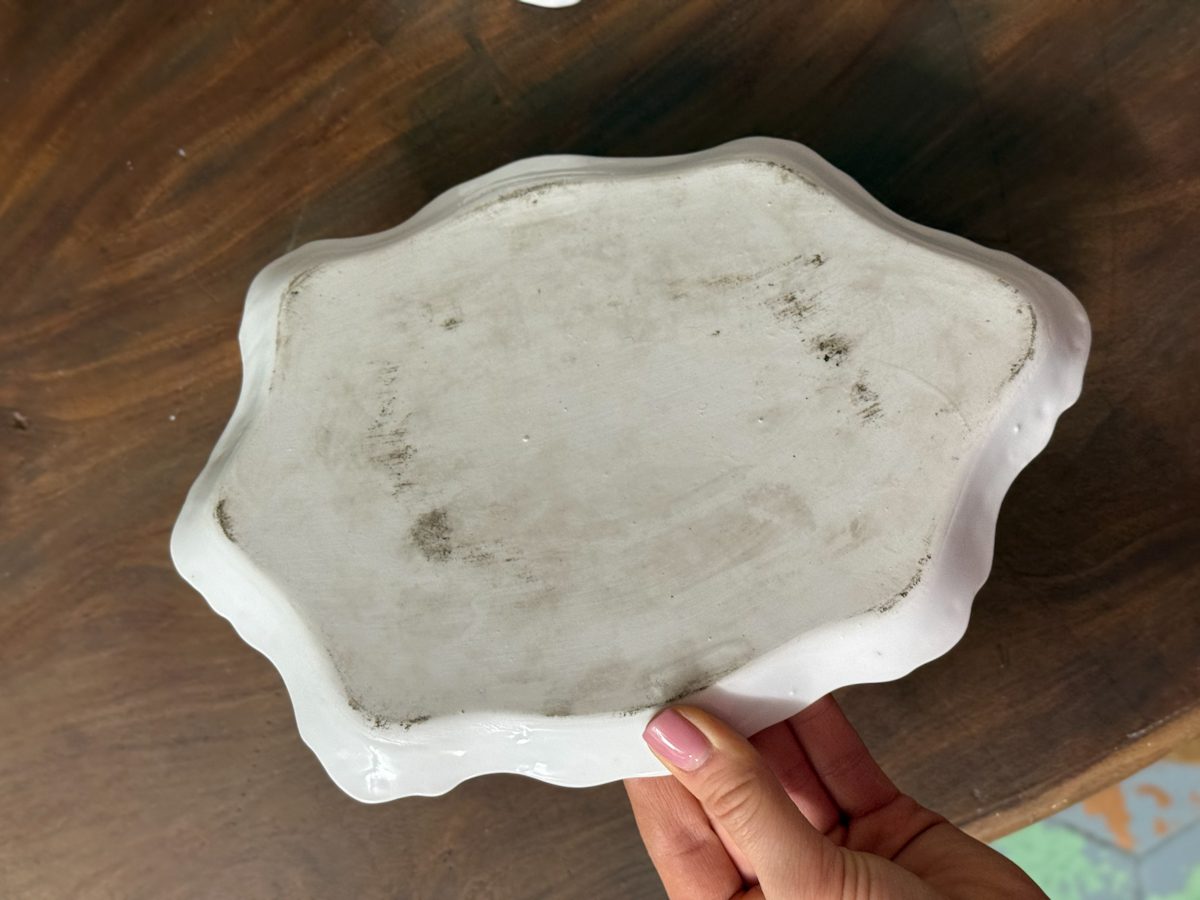
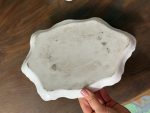
The dish, based on its plastic form, high relief, and color palette, was likely produced in one of the leading (and historical Bohemian region) manufactories specializing in the creation of such intricate, Baroque-inspired “Belle Époque” porcelain items for elite society at the turn of the 19th and 20th centuries. Such execution is typical of workshops like R.S. Prussia / Reinhold Schlegelmilch or similar Saxon and Bohemian manufactories that regularly produced stunning tableware without clearly visible factory stamps or markings.
- Period: Belle Époque (circa turn of the 19th and 20th centuries, approx. 1890–1910).
- Material: Top-class antique hard porcelain, hand-painted, hand-gilded.
- Includes: Body with a removable lid and decorative handle.
- Condition: Excellent antique condition, which is a great rarity for an everyday item of this age and fragility. The porcelain body and lid are completely intact – without cracks, without chips, and without signs of restoration. The brilliance of the colors and hand-painting is excellently preserved. It should be noted that the gilding is slightly worn in places, which is completely normal and natural for an antique item of this age and only confirms its authenticity.
2. Description 2. Dimensions: Height 13cm, length 27.5cm, width 20cm.
Exclusive antique porcelain high relief butter dish “Royal Garden Roses” – circa 1900 (Belle Époque)
- Item: A wonderful, highly decorative, and rare antique European porcelain butter dish with a lid (cassette type), executed in the exquisite aesthetic movement style of the late Victorian era.
Attribution and Manufacturing:
Based on its intricate organic form, pronounced high relief molding, and distinctive color palette, this item was most likely manufactured in a leading or Bohemian (region) workshop at the turn of the 20th century. Factories such as R.S. Prussia / Reinhold Schlegelmilch and similar top-tier Saxon/Bohemian studios were renowned for creating intricate, Baroque-inspired, often unmarked, “Flower Girl” or “Royal Rose” porcelain items for the elite market.
- Period: Late 19th / Early 20th Century (Belle Époque / Jugendstil era, approx. 1890–1910).
- Design Features: Crafted from fine hard porcelain, with heavily sculpted, high relief, featuring intricate foliate molding, rocaille, and naturalistic handles characteristic of the period. Lavishly decorated with hand-painted clusters of romantic garden roses and botanical blossoms on a soft, mixed gradient background (pink and green), finished with detailed hand-gilding.
- Condition: Excellent antique condition. Structurally perfect, both lid and base are completely free of chips, cracks, crazing, or restoration. Colors and central painting remain brilliantly preserved. As expected for an item of this use and age, the hand-applied gilding shows some natural, minor signs of wear, which is entirely appropriate and attests to its historical character.