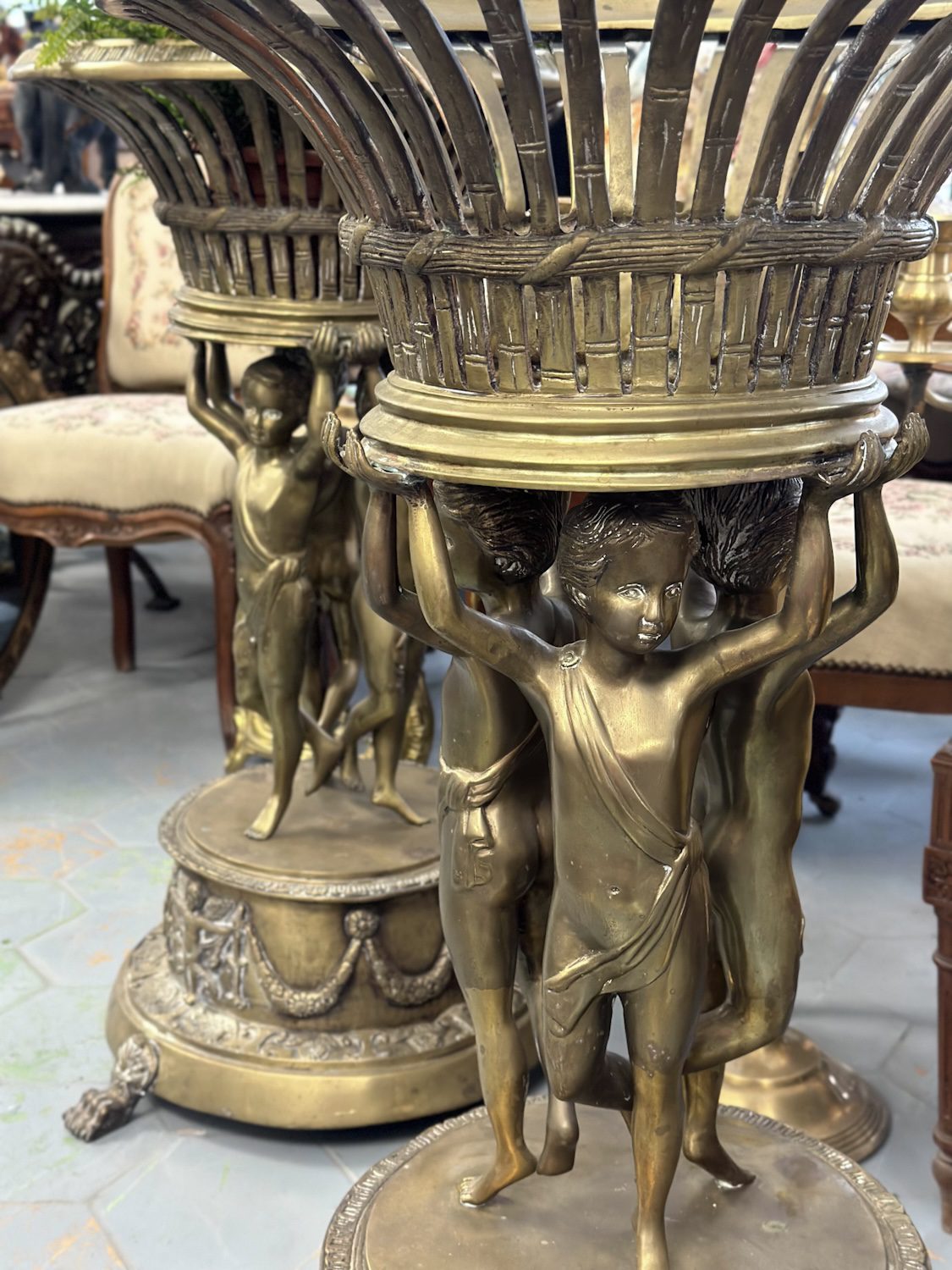
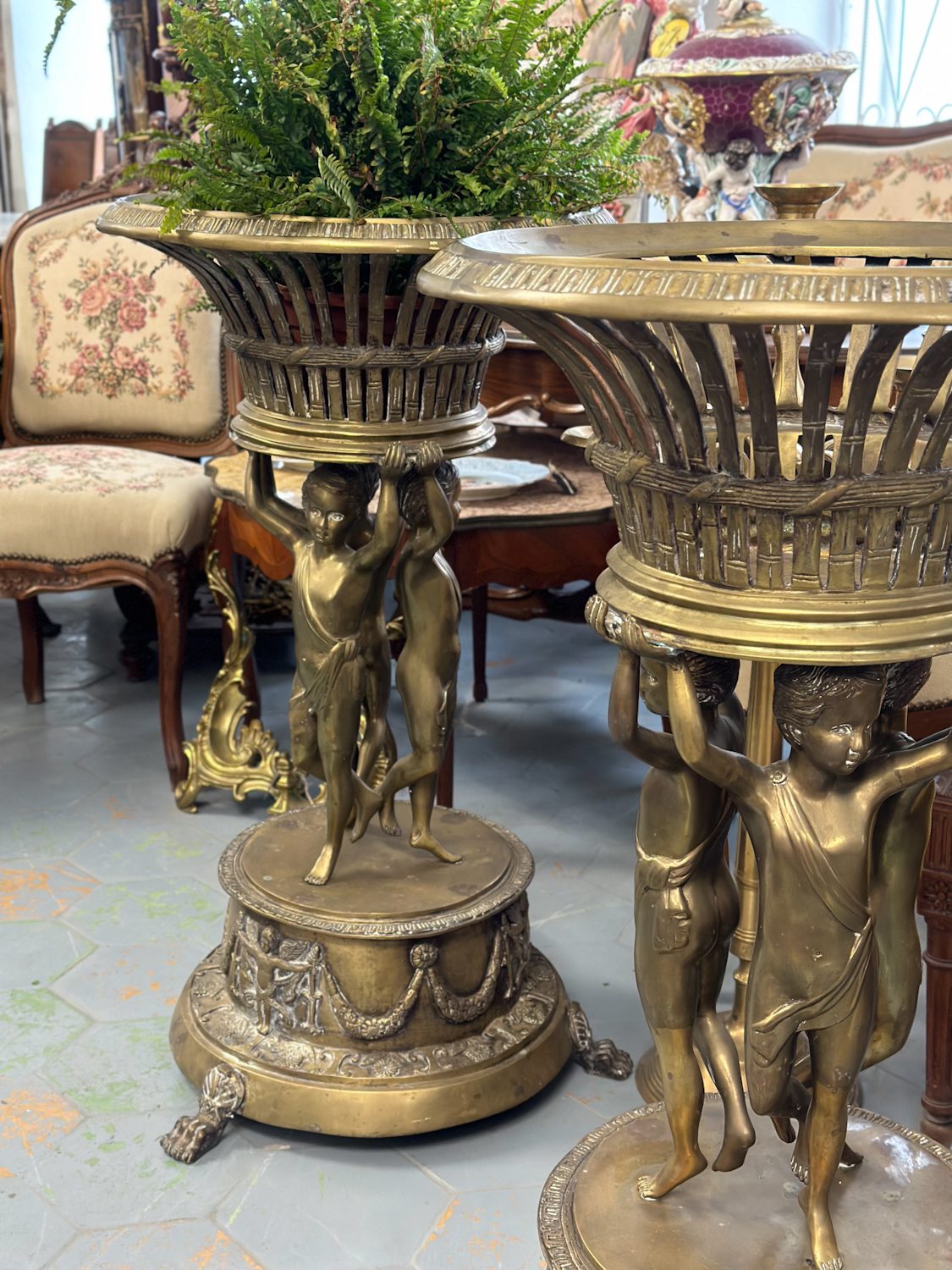
Pair of Brass Baskets with Putti — Empire & Neoclassical, France, c. 1850–1900. These monumental baskets represent the highest segment of French Empire and Neoclassical tradition. Price is for the pair. 4 850,00 €
You’re now subscribed to price tracking for this product. We’ll notify you if the price drops. 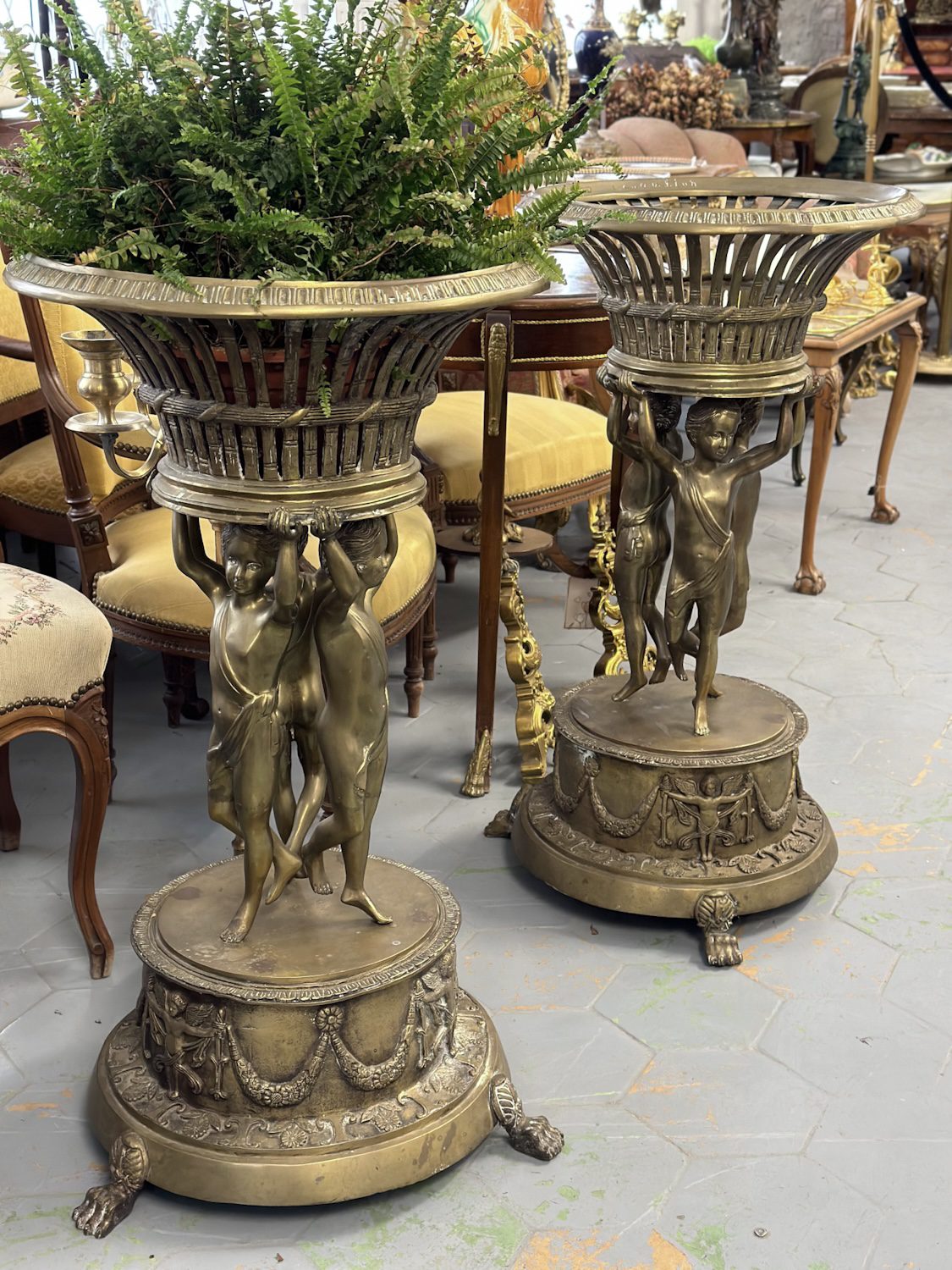
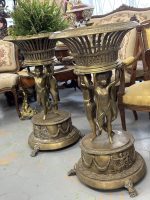
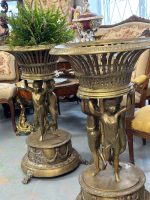
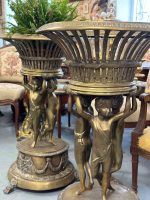
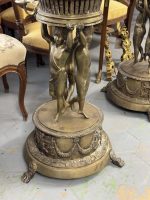
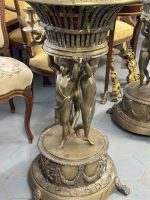
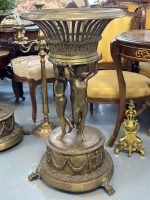
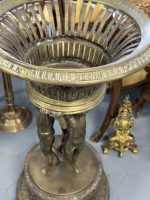
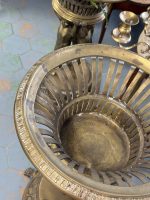
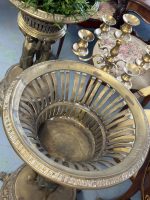
Pair of Brass Baskets with Angels or “Putti” — Empire and Neoclassicism, France, c
Height 19 cm, 93 cm Width 51 cm Color GoldNaturalSilver
Description
DESCRIPTION IN
Pair of Brass Corbeilles with Putti — Empire and Neoclassicism, France, circa 1850–1900 — 2 pieces
―――――――――――――――――――――
📐 DIMENSIONS
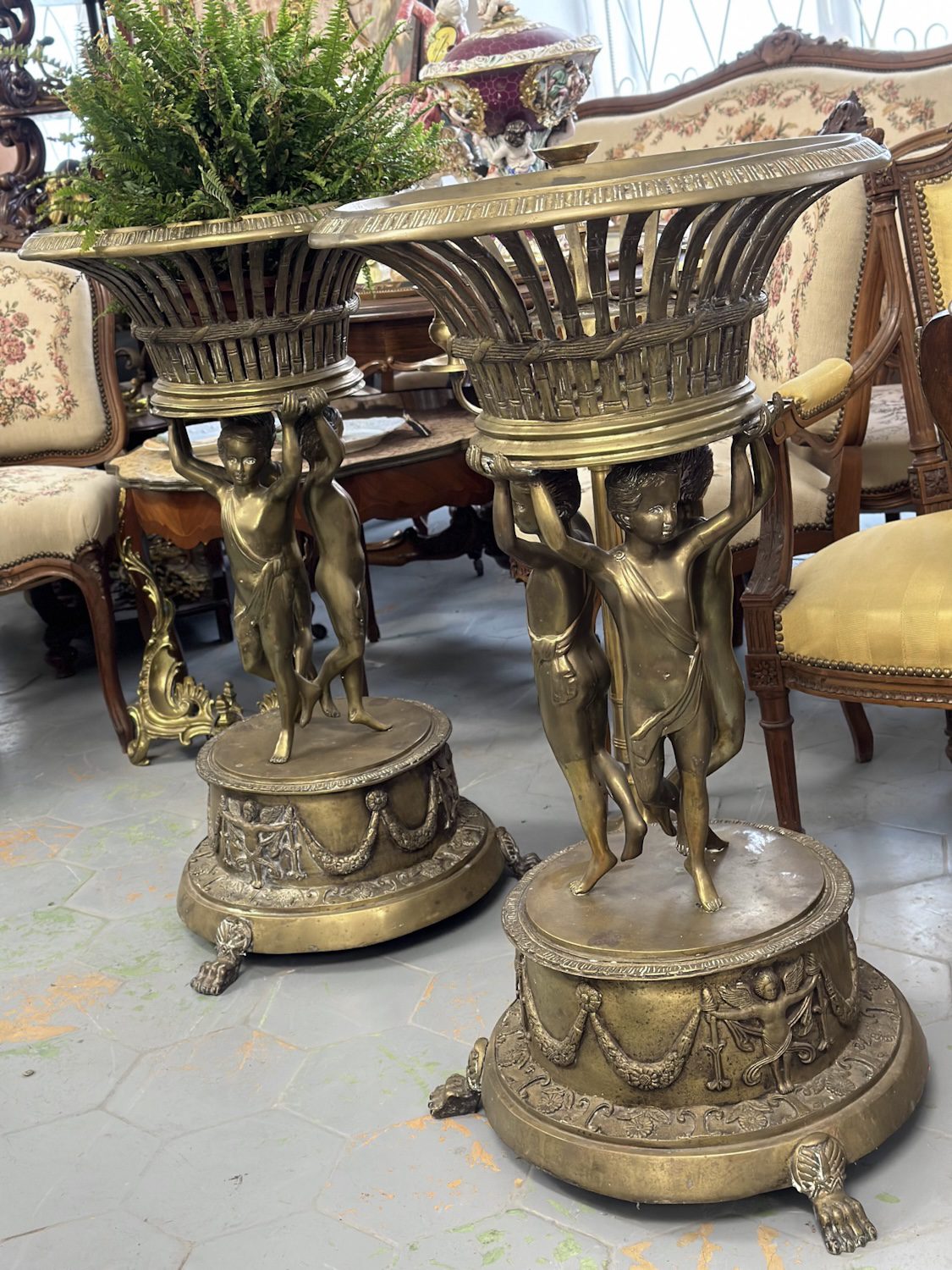
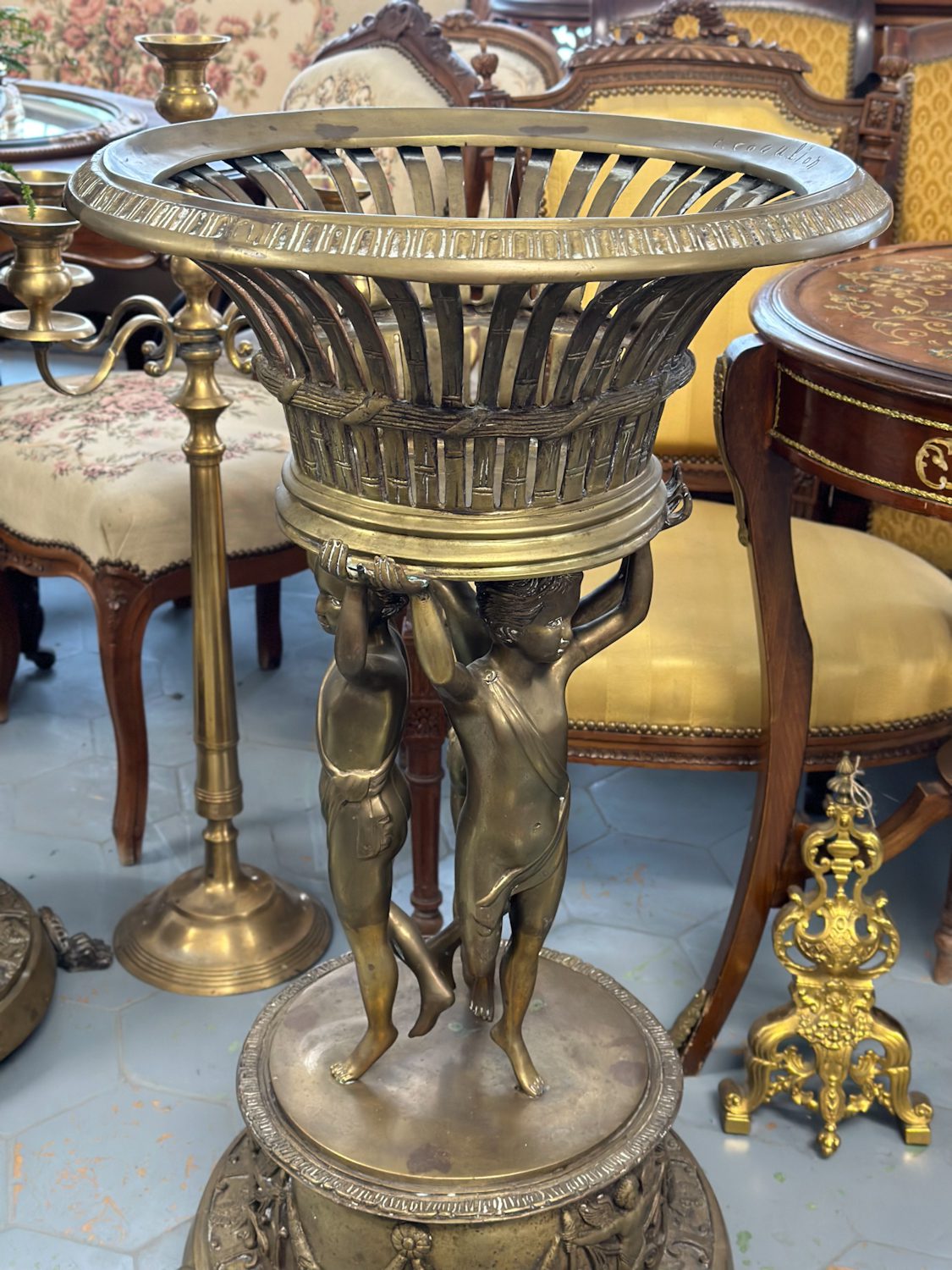
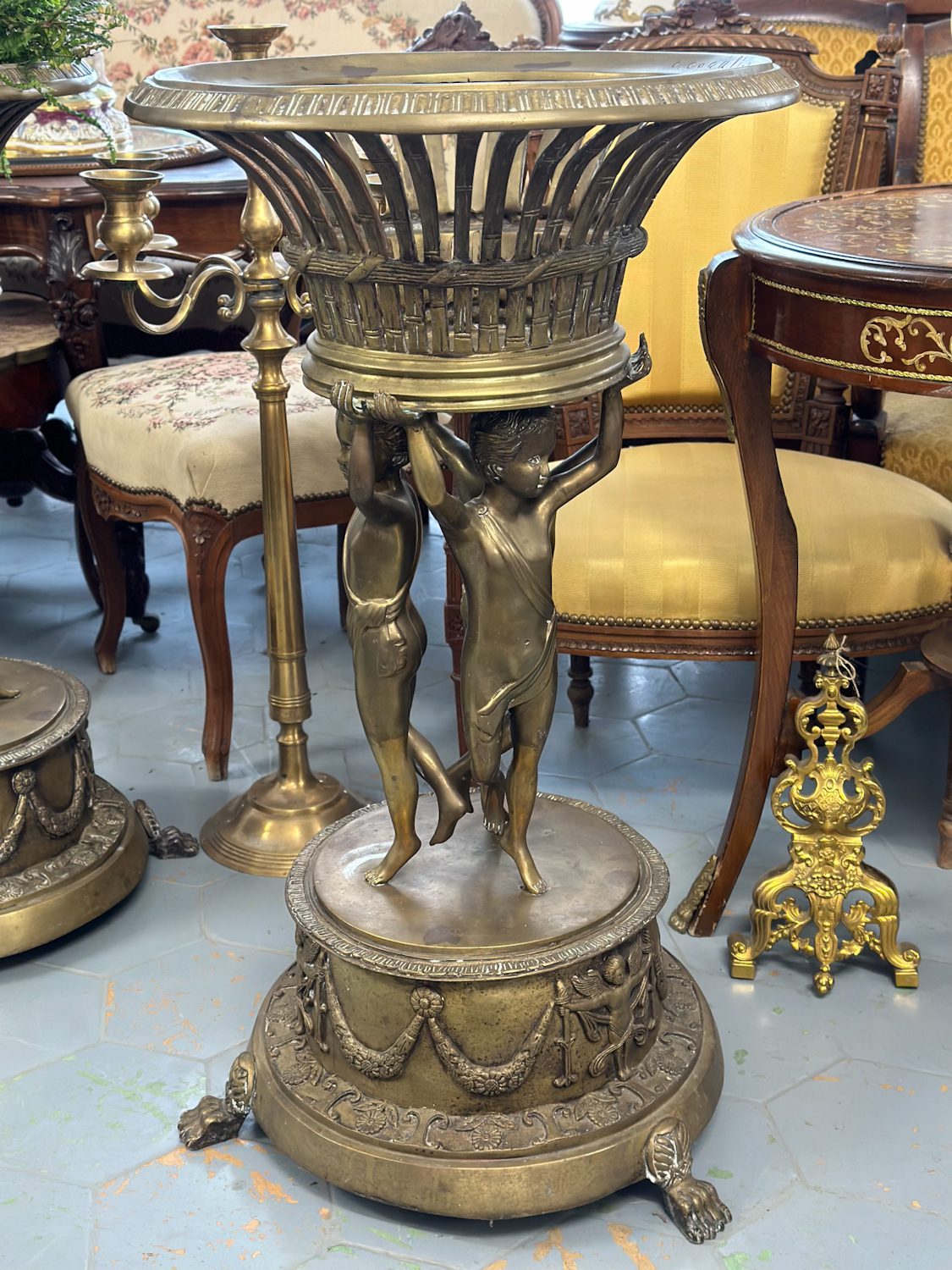
Height: 93 cm. Width: 51 cm. Weight: very substantial — a massive brass or bronze cast in each unit. The piece is sold as a matched pair — 2 pieces.
―――――――――――――――――――――
🏛️ PERIOD, ARTISTIC STYLE, ERA
These monumental corbeilles belong to the highest tier of the Empire and Neoclassical tradition — the period when the representative art of the Napoleonic era and the Neoclassicism of Louis XVI produced the rich synthesis that dominated the interiors of European aristocratic buildings throughout the 19th century.
The corbeille — a bronze or silver basket on a figural stem — was one of the most representative table and interior decorative objects of the 19th century. At the balls and receptions of Parisian high society, and in the furnishing of palaces and great houses, corbeilles adorned the centrepieces of dining tables, vestibule consoles and ballroom shelves — filled with fresh flowers, fruit, confections or decorative branches. Large-format corbeilles such as these 93 cm examples were intended for floor placement — in vestibules, galleries or the corners of grand reception rooms.
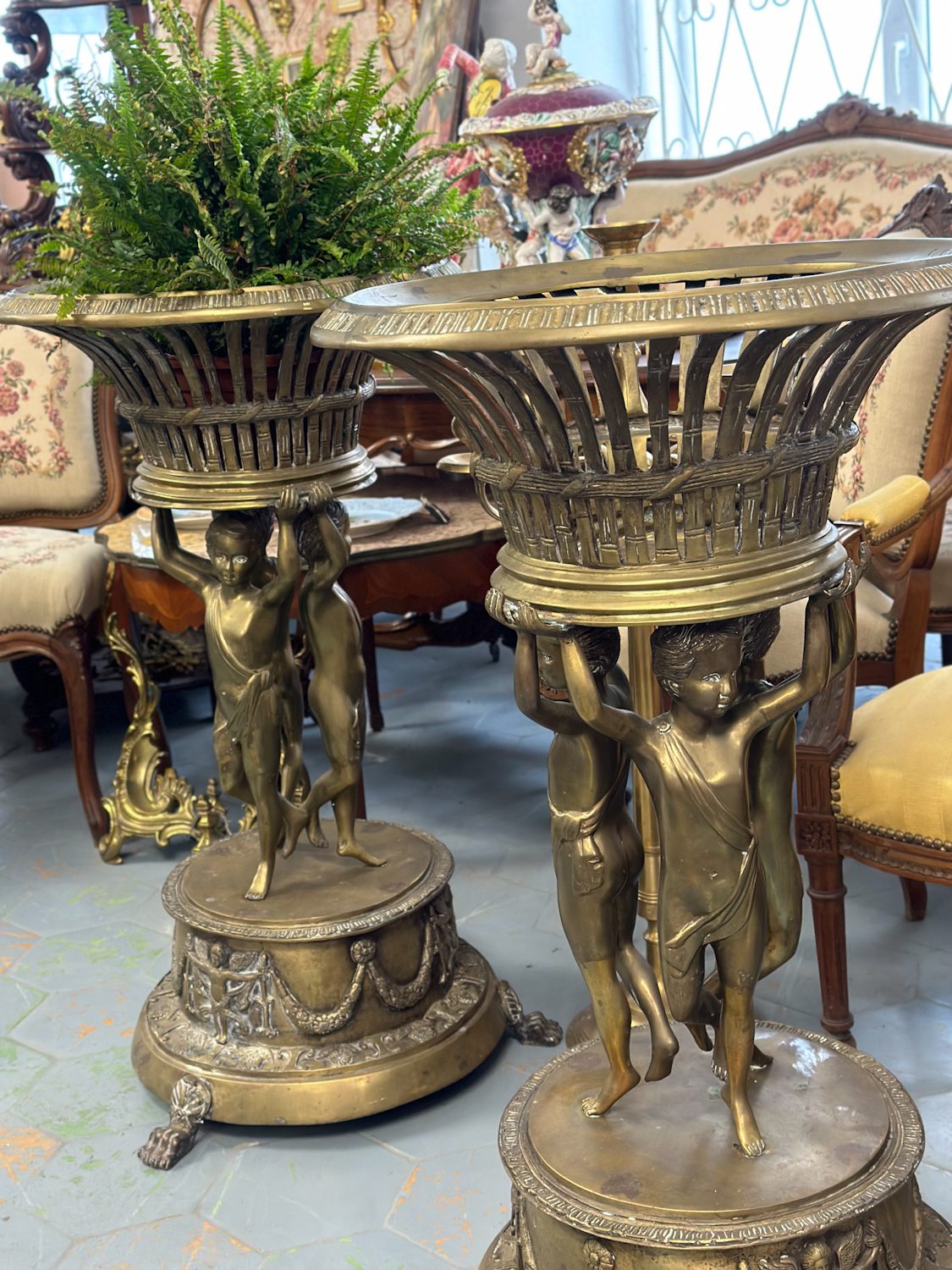
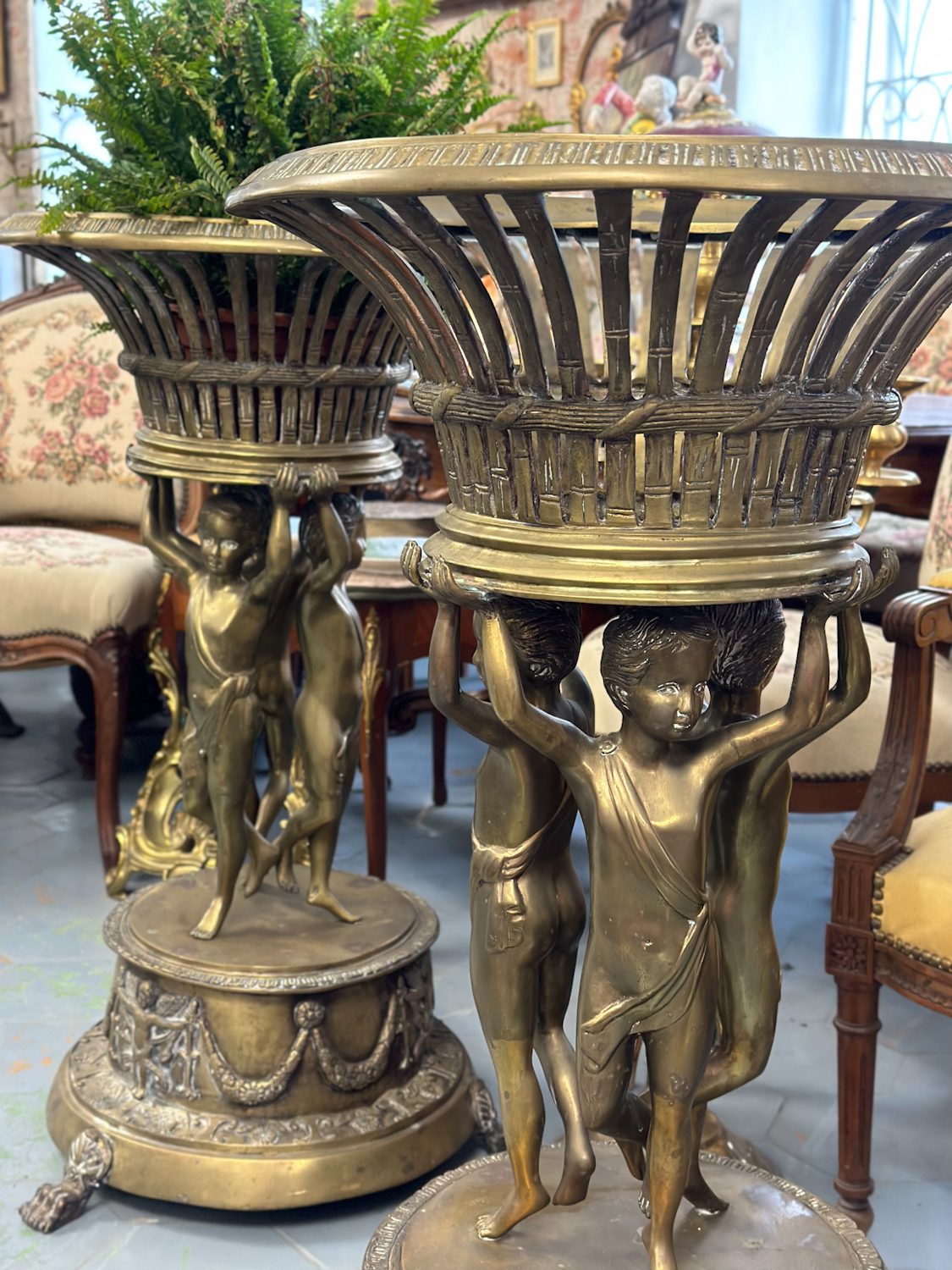
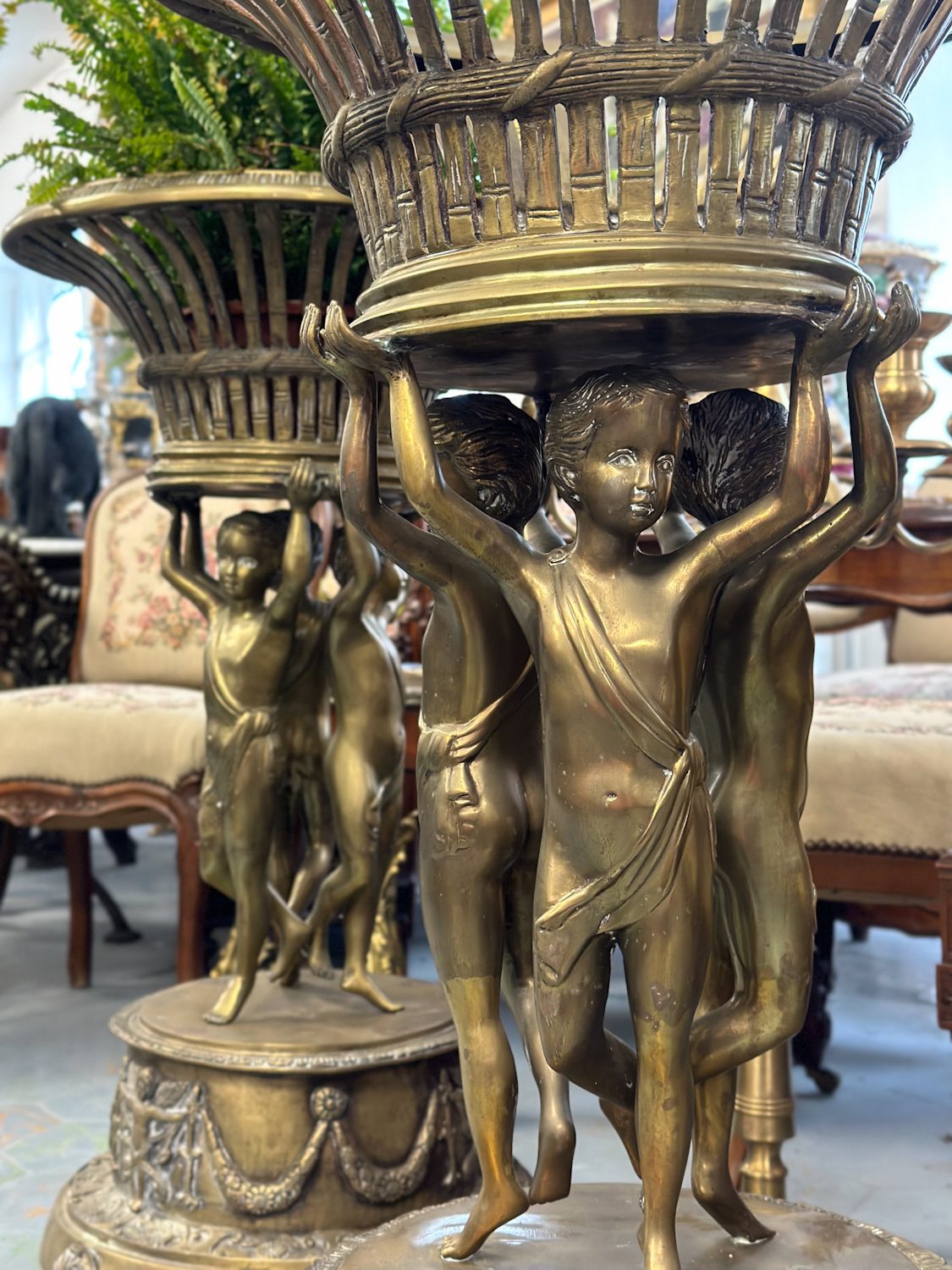
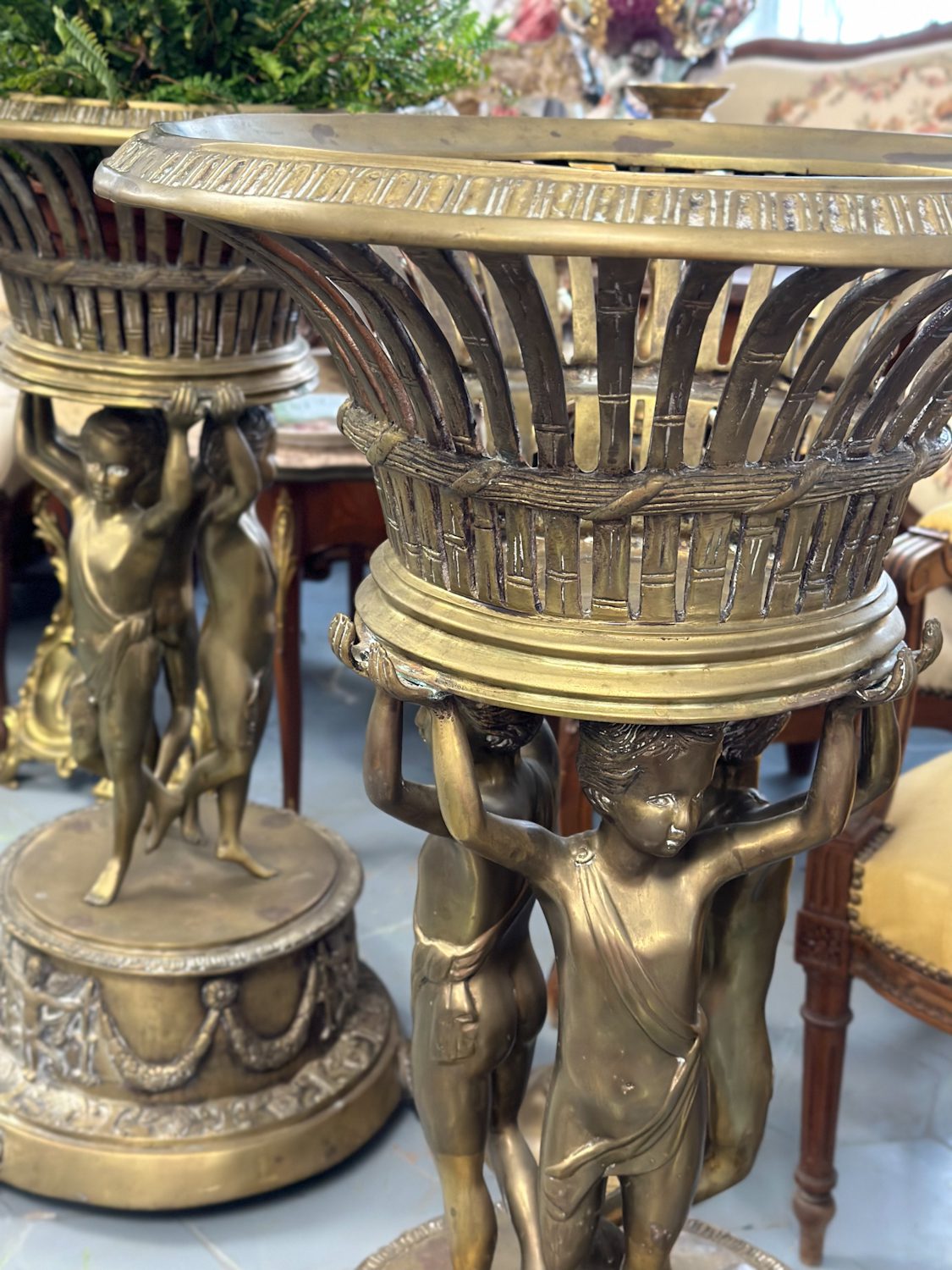
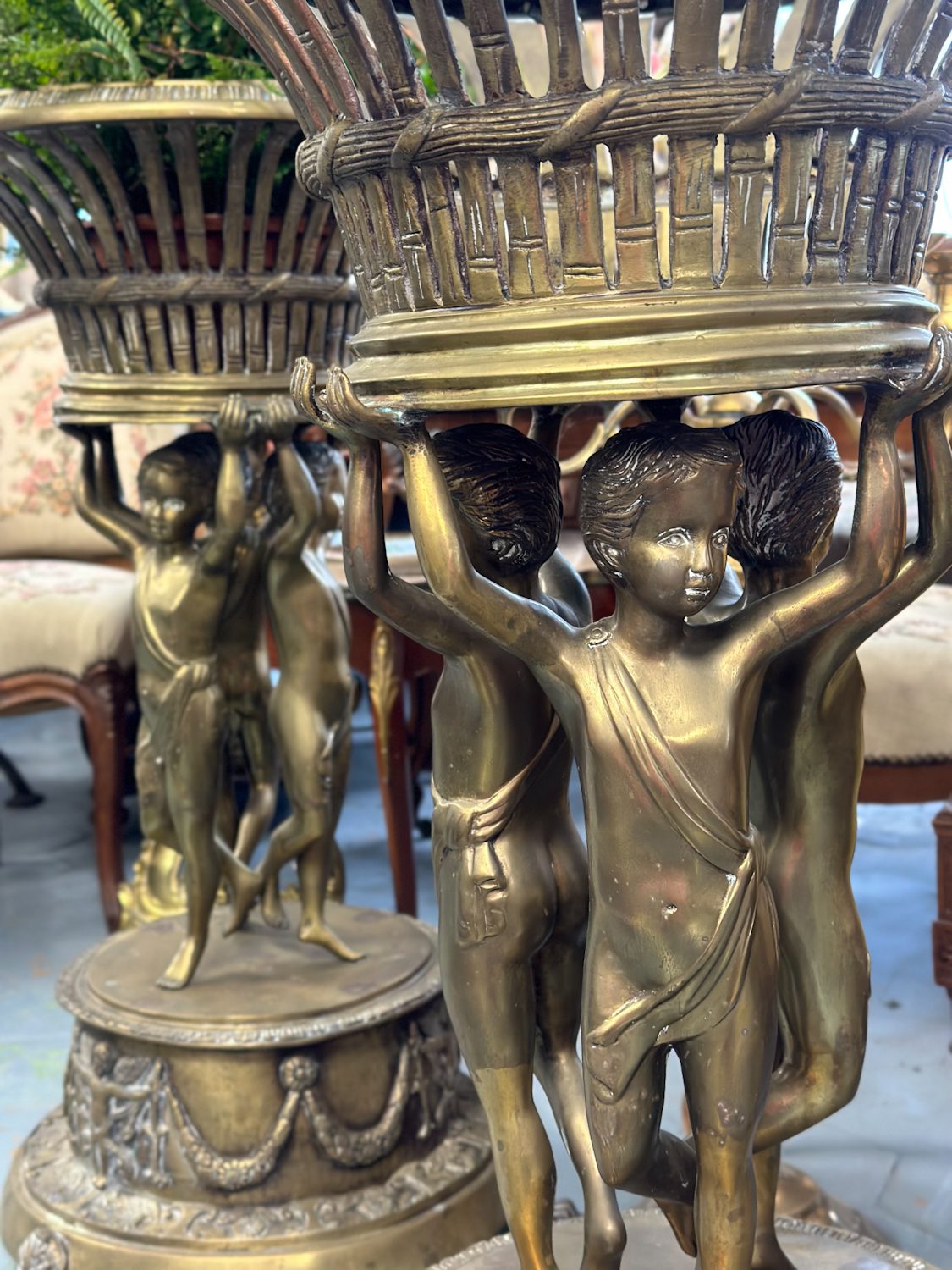
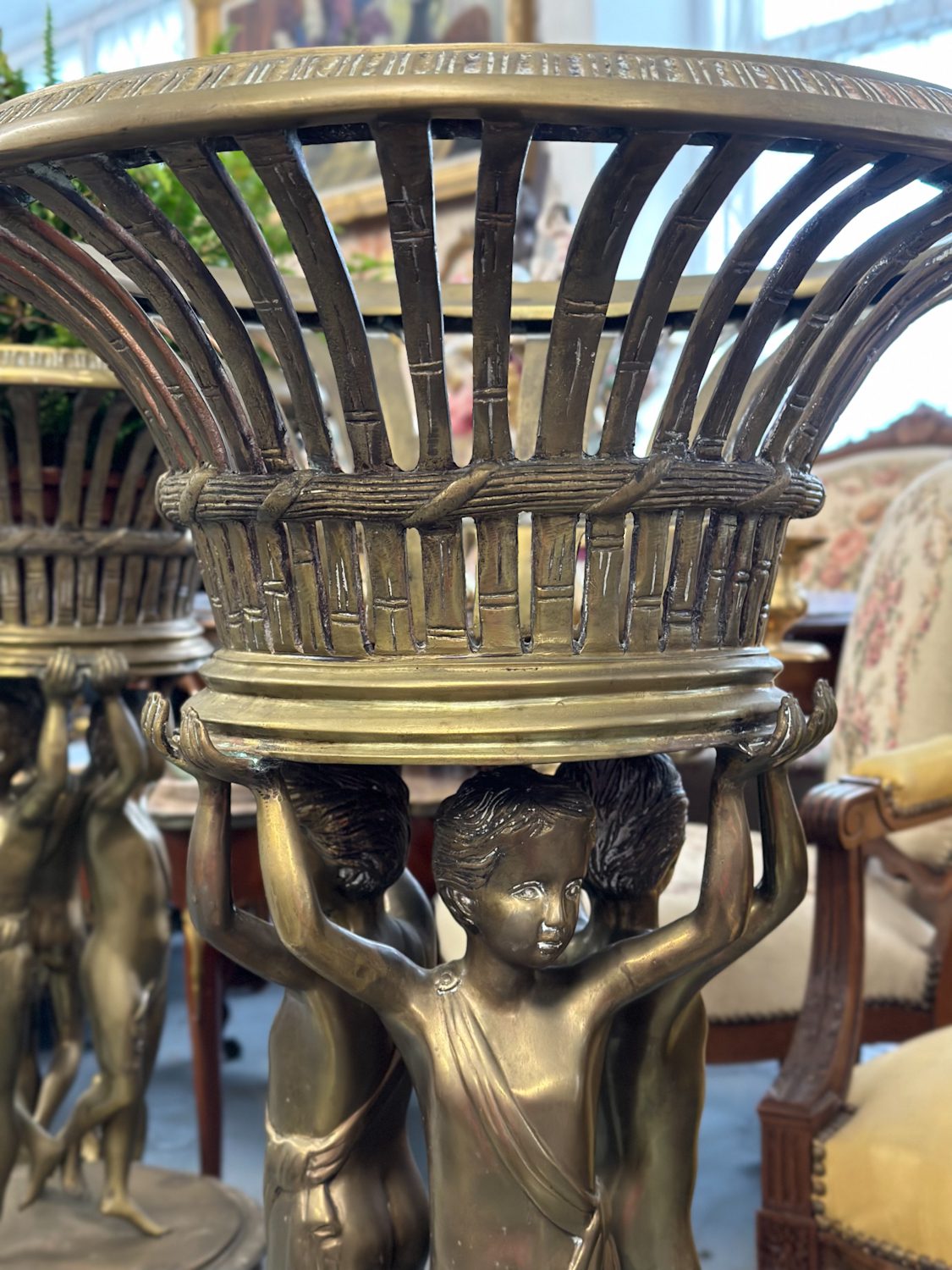
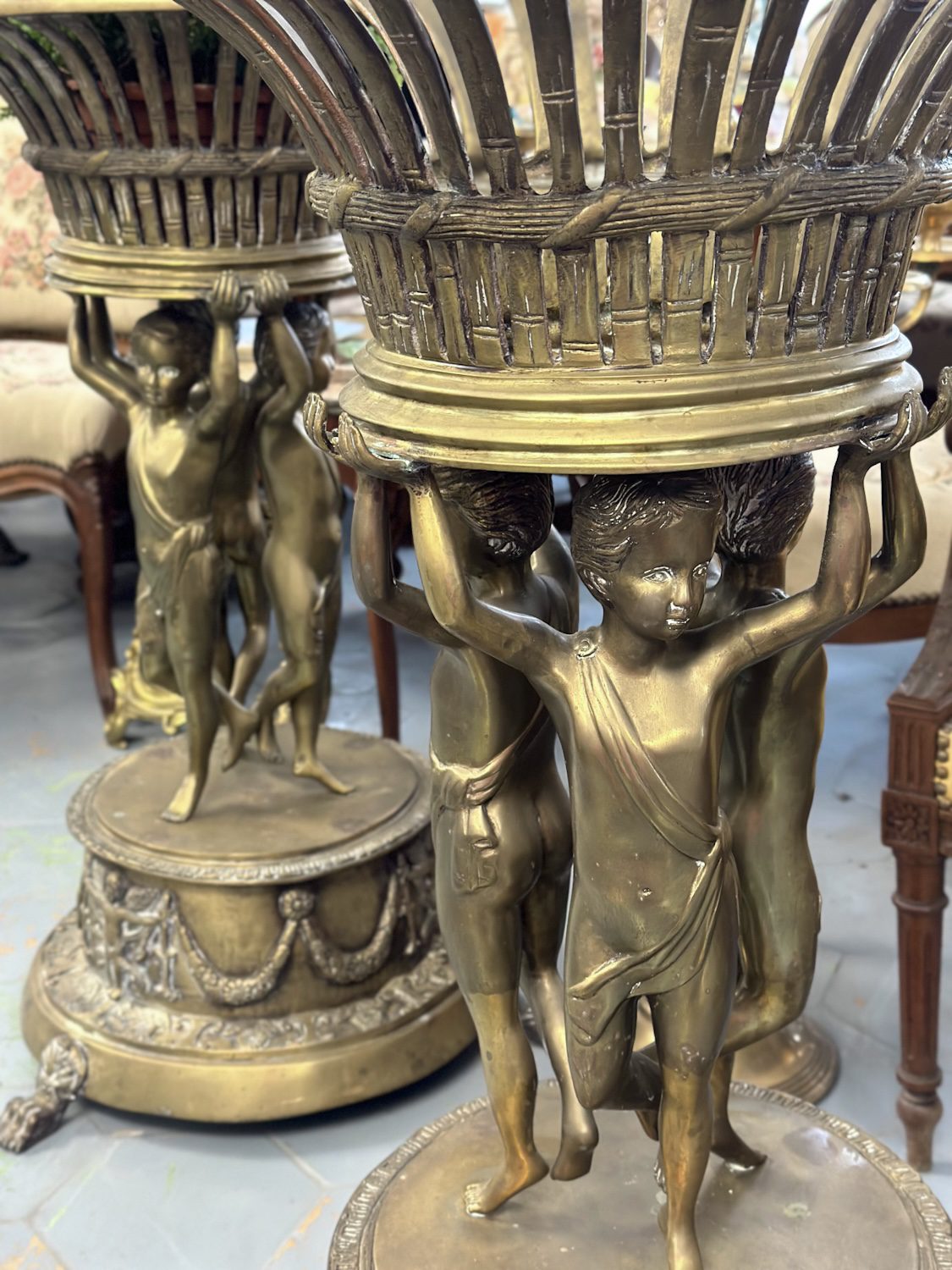
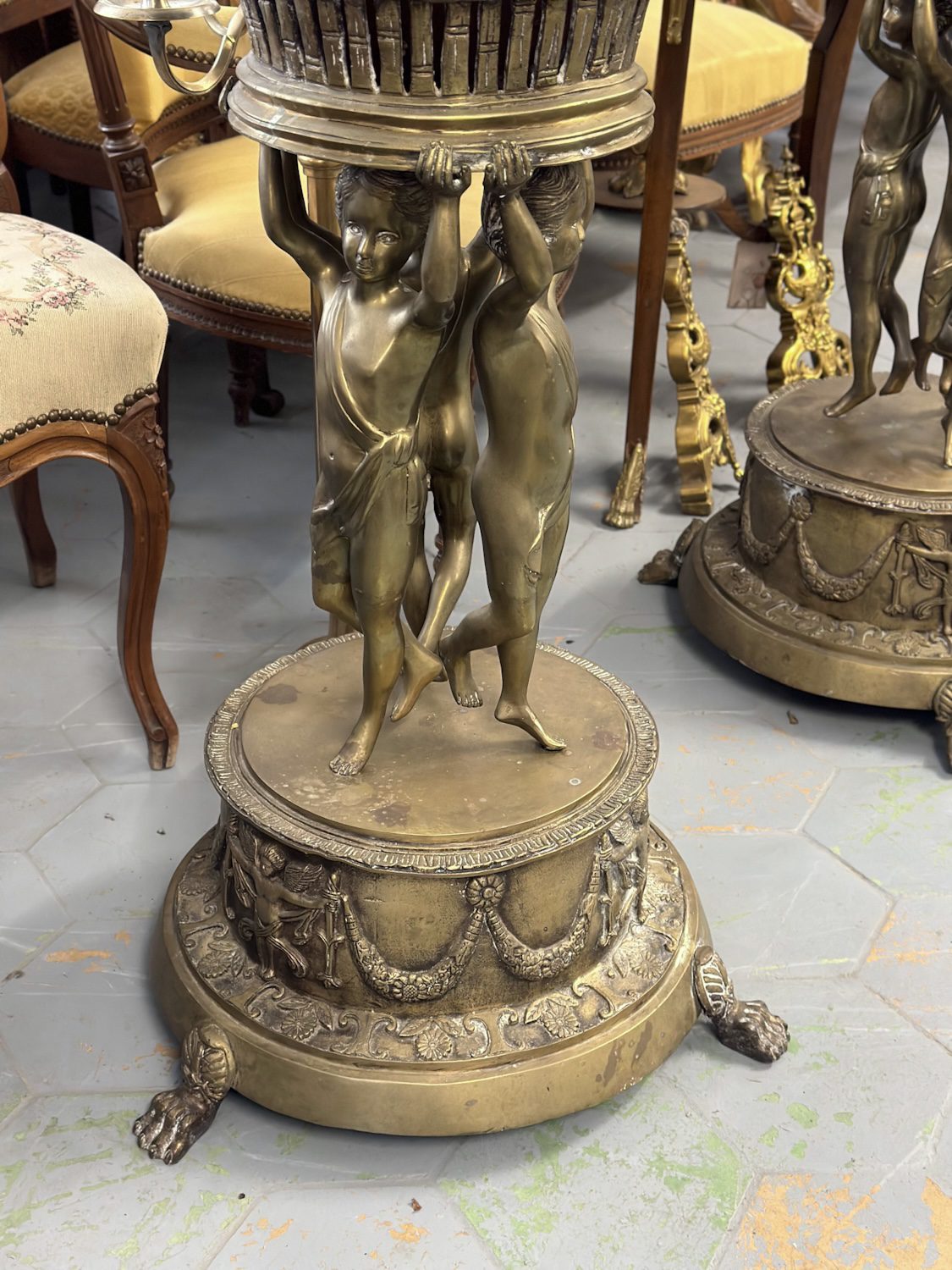
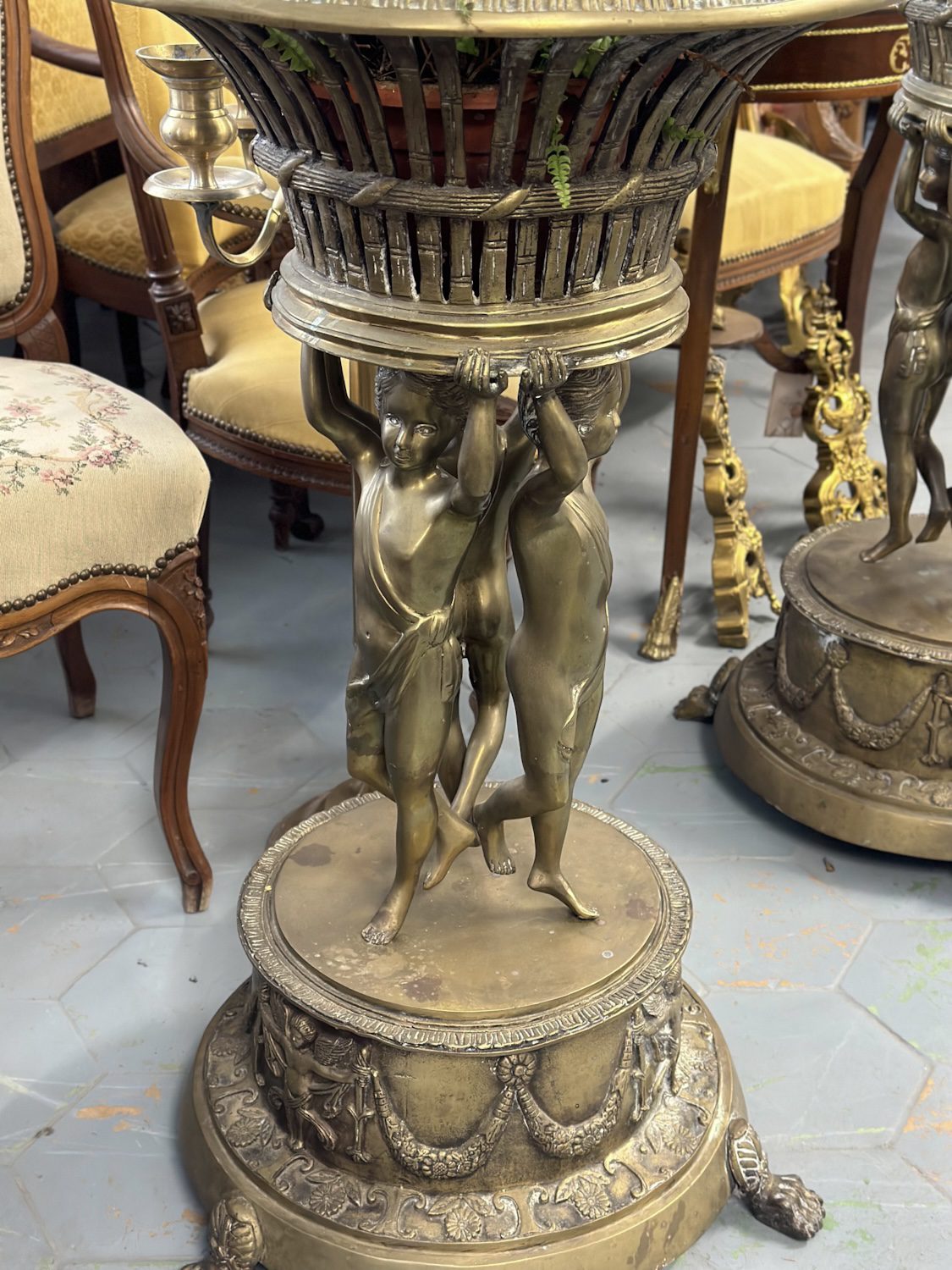
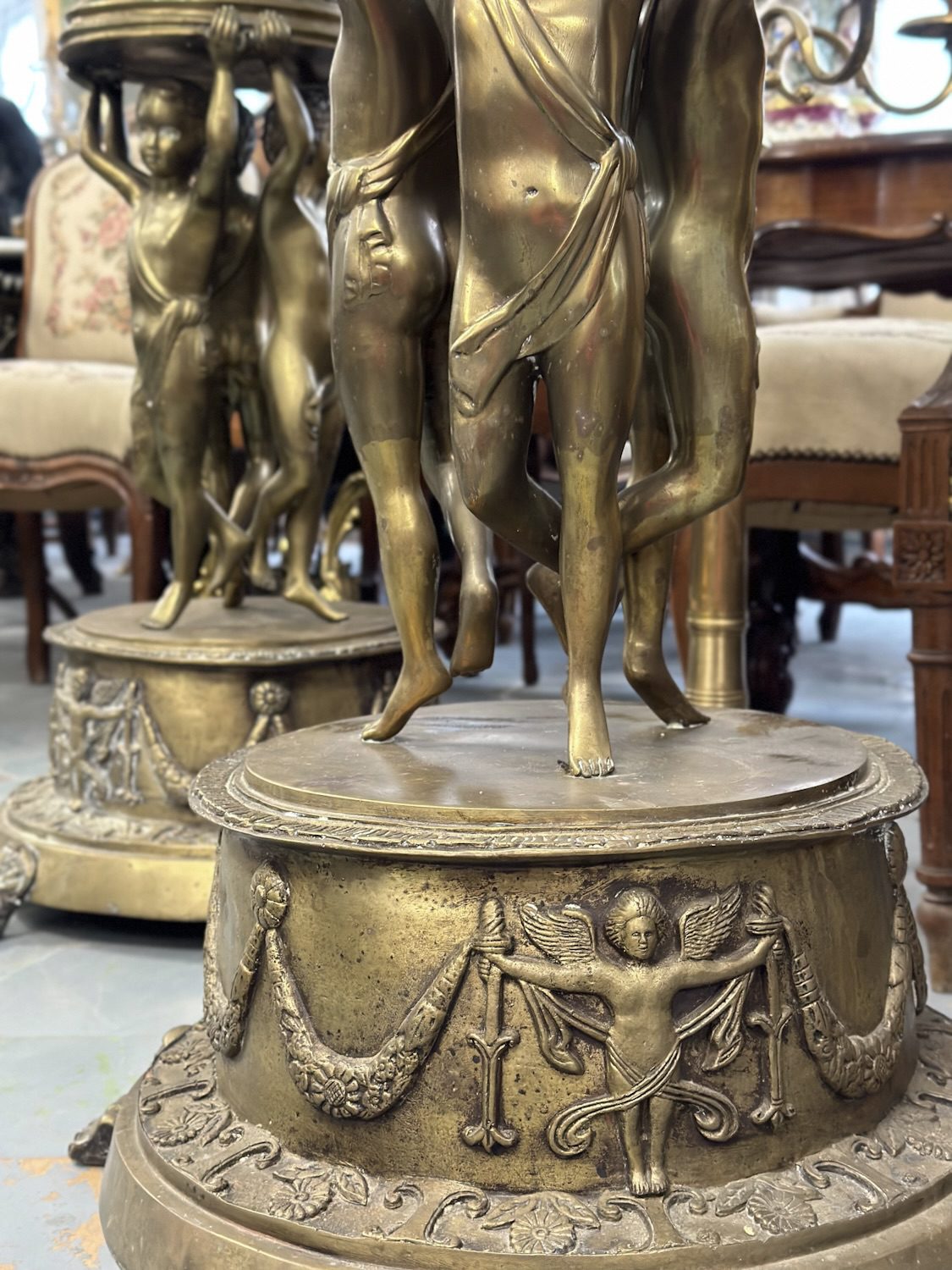
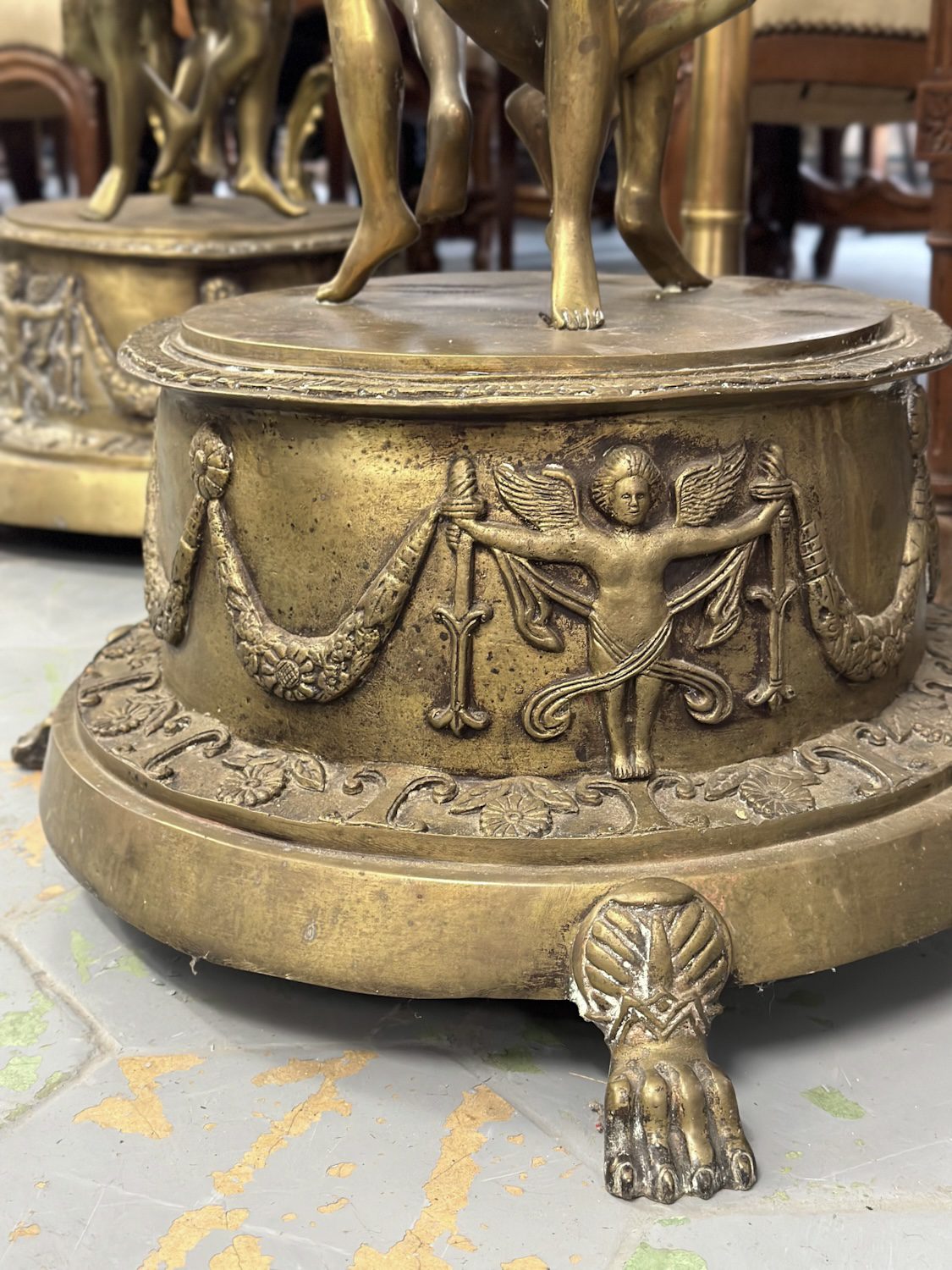
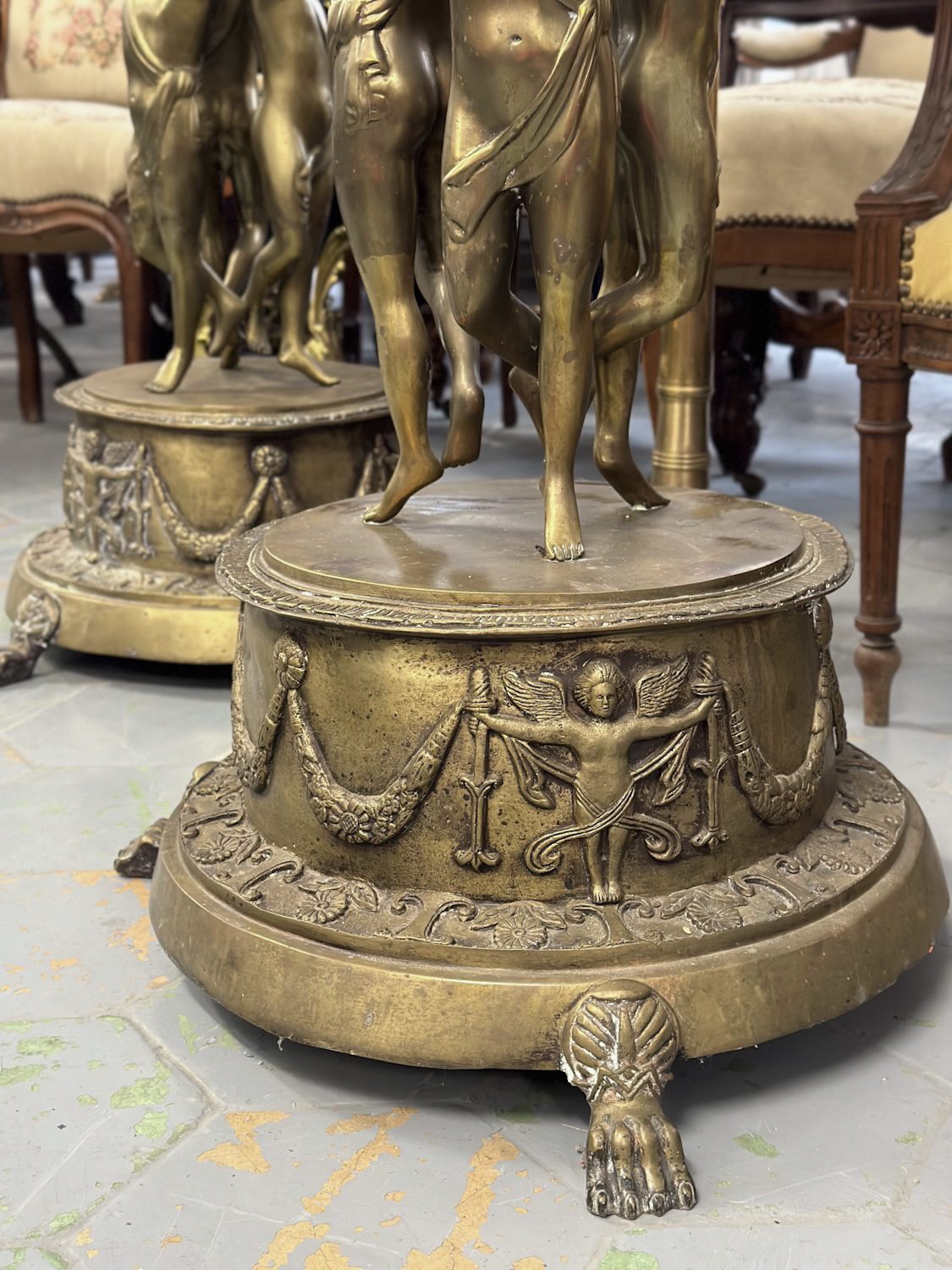
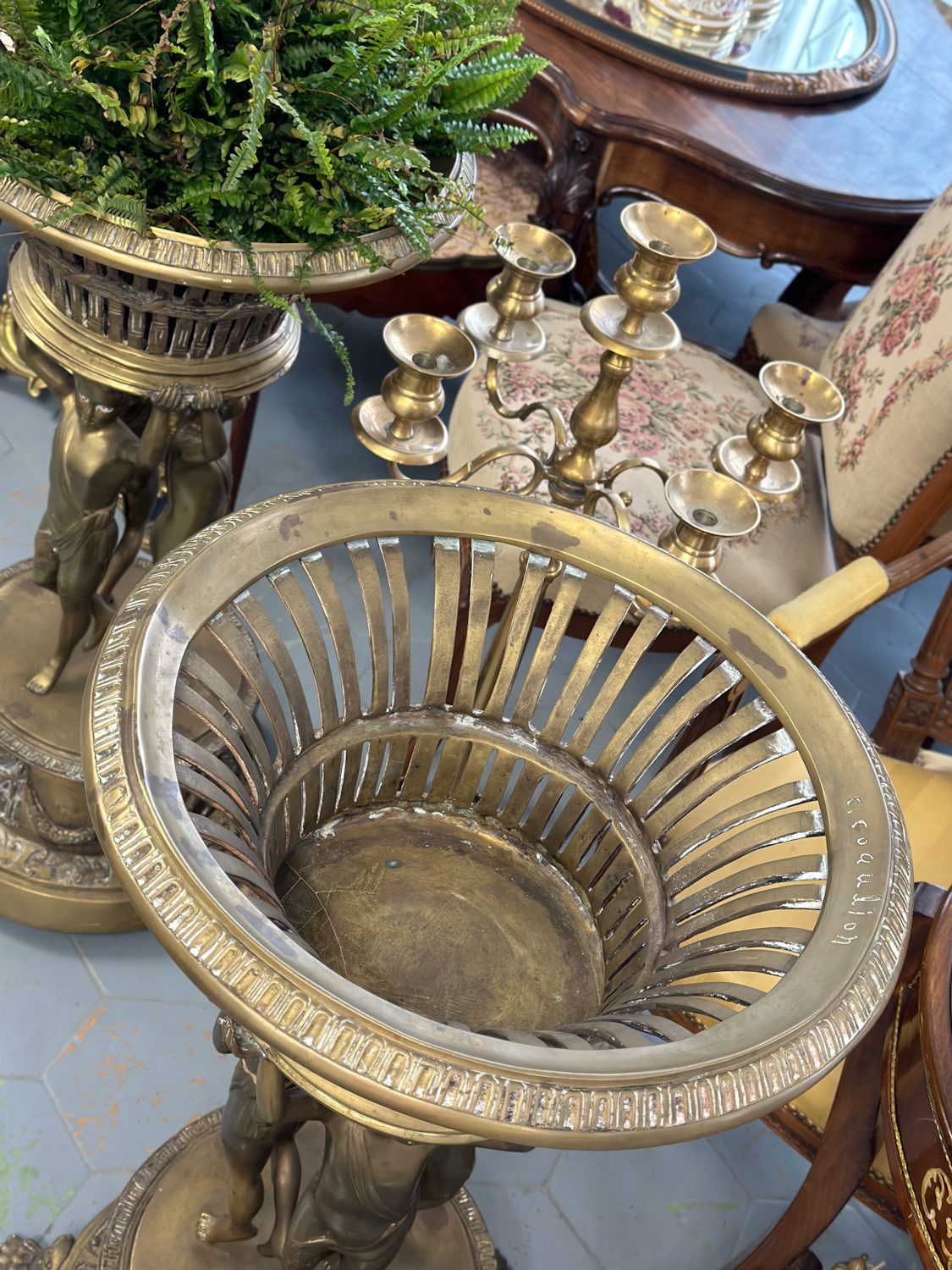
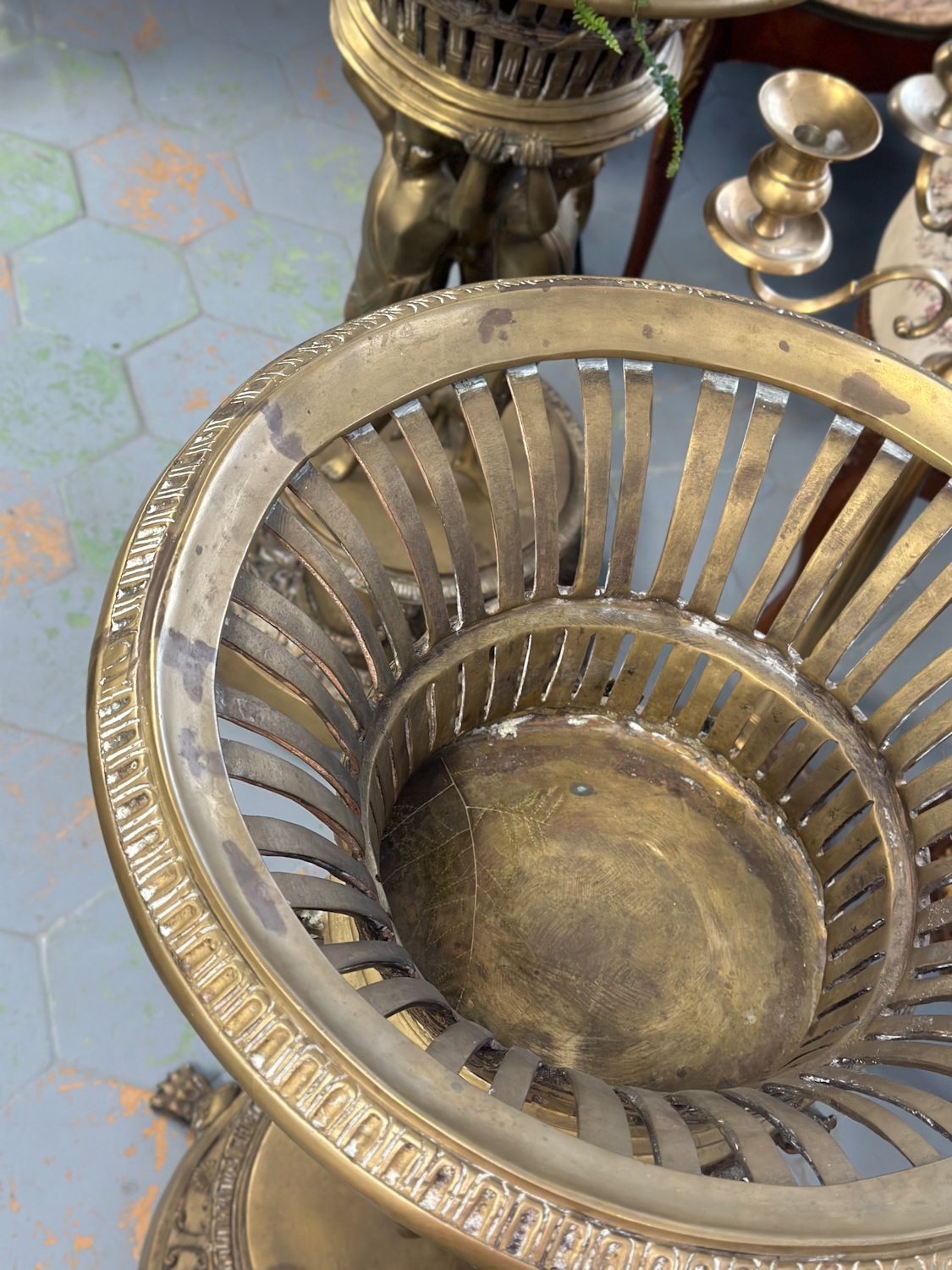
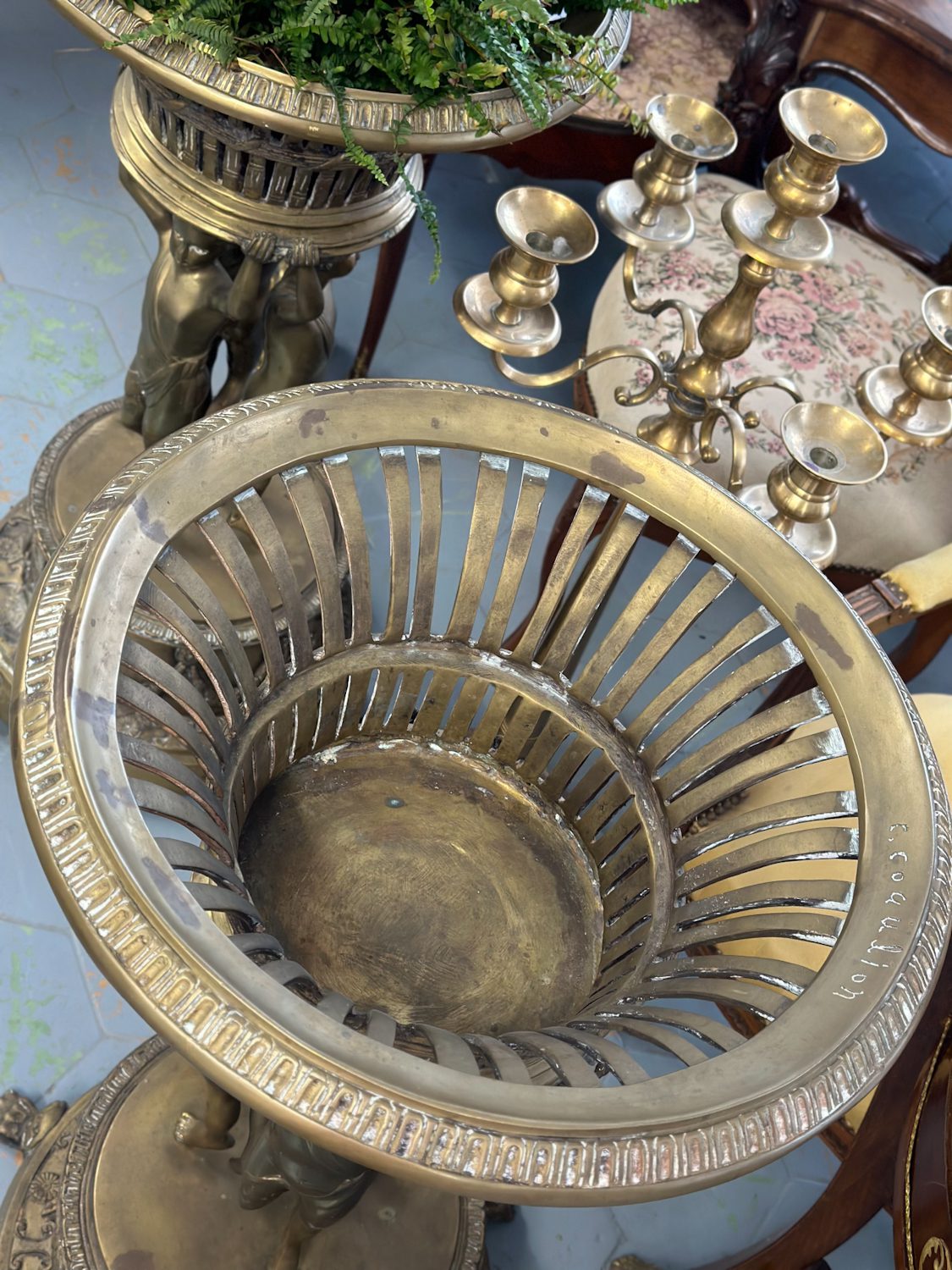
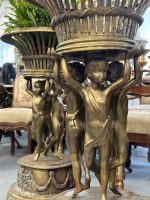
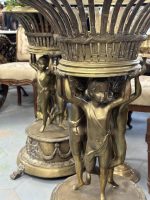
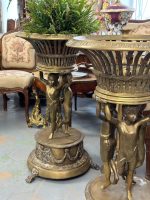
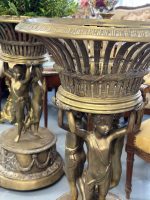
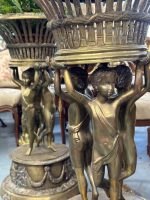
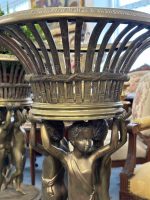
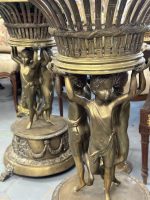
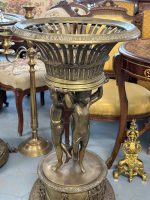
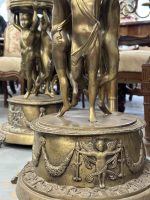
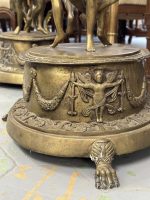
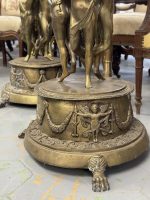
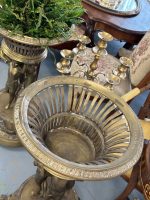
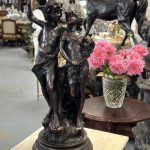
The composition of each piece is tripartite and iconographically rich. The basket bowl — with precisely modelled woven reed or bamboo texture and a wide rim with dentil ornament — rests upon three angels or “putti” figures holding it aloft with raised arms. These putti — nude or lightly draped child figures — are Neoclassical symbols of love and abundance, inherited from the antique Roman tradition of the eros. The base is a massive cylindrical plinth bearing a winged figure holding the scales of justice — a unique element revealing the piece’s philosophical programme: love, art and justice as the three pillars of civilisation. Below the plinth, three lion’s paw feet — the imperial symbol of power and strength, the classical Empire-style architectural support element.
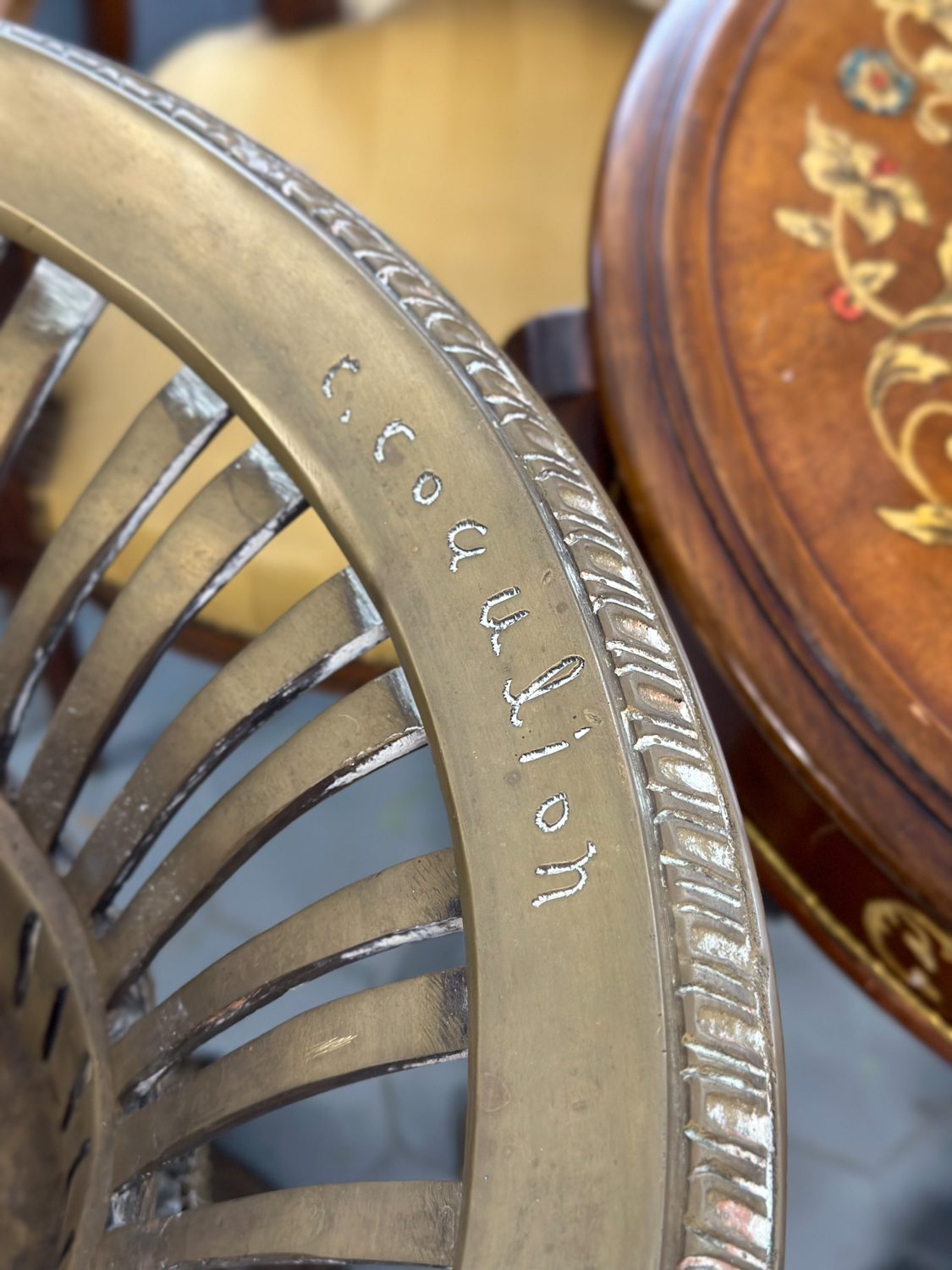
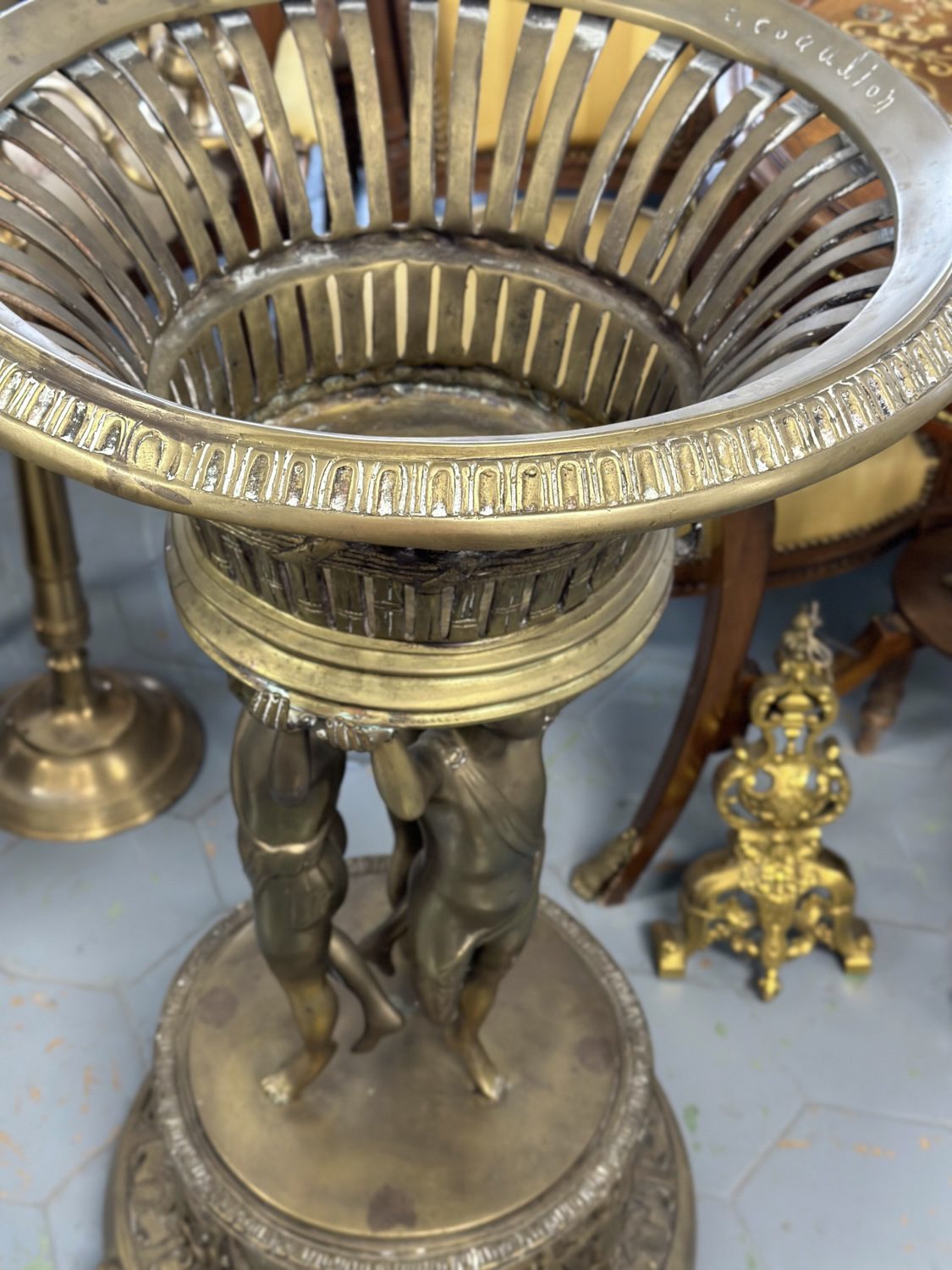
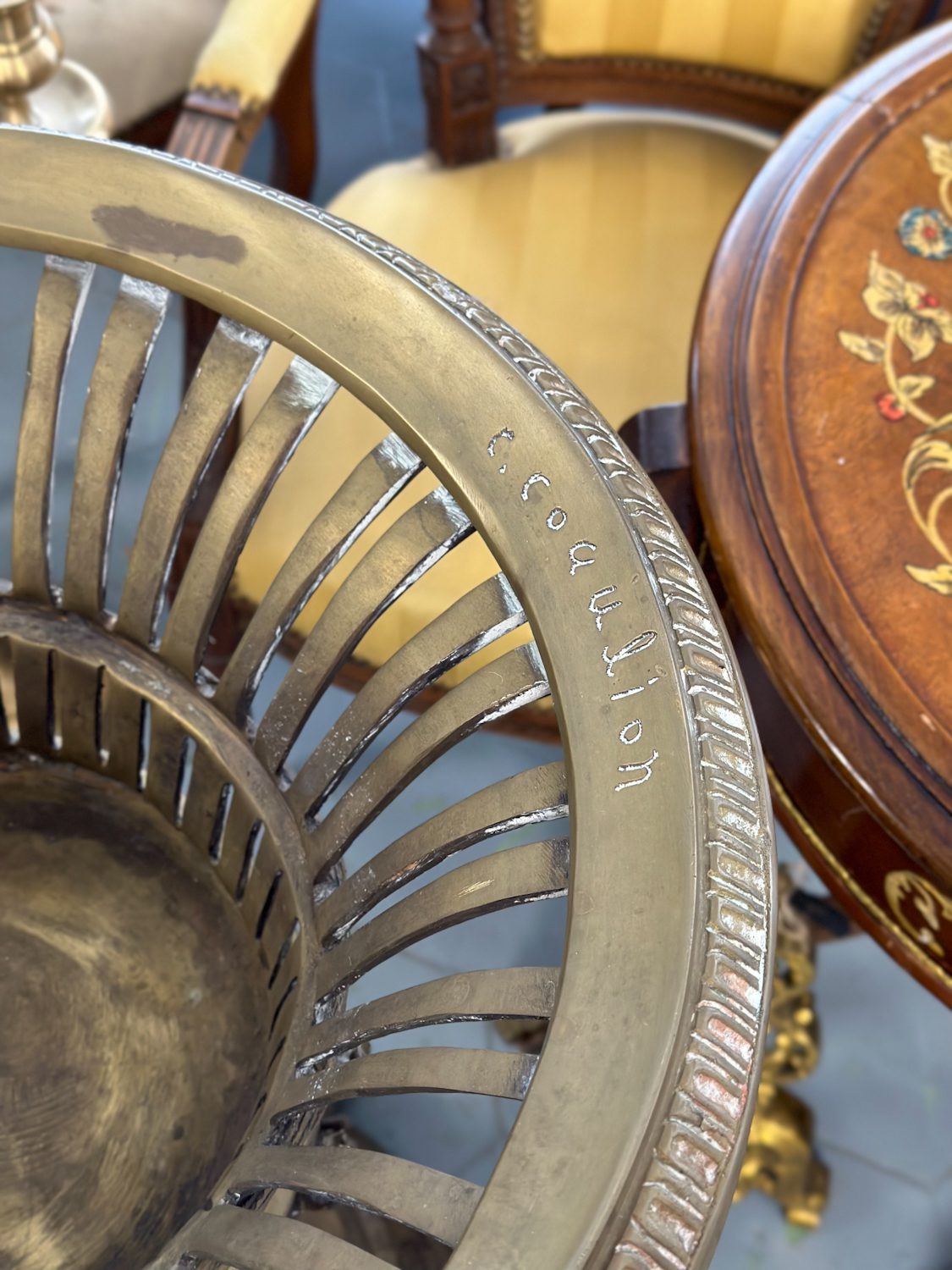
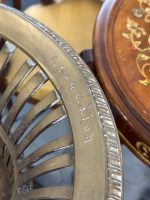
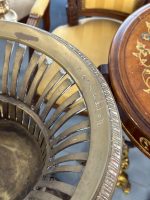
The engraved inscription on the rim of the basket — “L. Coudion” or a similar reading — is a probable maker’s or designer’s signature. Such an inscription significantly enhances the piece’s traceability and collector value.
―――――――――――――――――――――
⚜️ MAKER AND SIGNATURE
Both corbeilles bear an engraved signature on the basket rim, legible in the photographs as “L. Coudion” or “E. Coudion” — this is a significant authentication element. In the history of bronze art, the sculptor and bronze caster Claude Michel, known as Clodion (1738–1814), worked in a manner and style directly reflected in these pieces — putti, garland ornaments and Neoclassical figurative sculpture are precisely his tradition, and 19th-century Parisian workshops continued to work in his manner. Large-format representative bronze objects of this type were produced in Paris by specialised ateliers supplying aristocratic households, the Opéra de Paris, Grand Hôtel-type establishments and the export trade to England, Belgium and Russia.
―――――――――――――――――――――
💎 RARITY AND SIGNIFICANCE
A matched pair of large-format brass or bronze corbeilles — at 93 cm in height, with a preserved figural programme, an engraved signature and original patina — is exceptionally rare on the international antiques market. Pairs of this scale and quality appear at the most prestigious auction houses — Christie’s, Sotheby’s, Drouot — attracting both private collectors and institutional buyers. The preservation of the pair together as a matched set doubles the piece’s value — as historically, corbeilles of this type were always conceived and used symmetrically.
―――――――――――――――――――――
🕯️ USE IN INTERIOR, DESIGN AND PHOTOGRAPHY
At 93 cm in height, these corbeilles are monumental interior elements that independently organise a space. In a vestibule — one on each side of an entrance — they create the impression of a Parisian Grand Hôtel or aristocratic palace. At the ends of a large dining table, filled with fresh or artificial plant compositions, they become the culminating point of the entire setting. In contemporary minimalist interiors with high ceilings and clean planes, they function as a powerful cultural and historical counterpoint — two golden towers with putti and garlands say everything that words cannot. In interior and fashion photography, such objects are enormously valuable props — they transform a frame into a scene from a 19th-century Parisian salon.
―――――――――――――――――――――
🎁 AS A GIFT AND PERSONALISATION
A matched pair of corbeilles is a representative gift for the furnishing of hotels, restaurants and cultural institutions — and for the private client building their residence in the tradition of European high culture. The putti as symbols of fertility and love make them appropriate for a wedding or anniversary gift at an exceptional scale. In a corporate context — as a representative investment in the furnishing of an office, bank or diplomatic residence — they speak of culture, history and refinement without any words at all.
―――――――――――――――――――――
🔍 CONDITION
Both corbeilles survive in notably good condition for their considerable scale and age. The brass/bronze surface displays natural ageing patina — darker tones in the recesses of the base ornamental forms, which only enhance the visual richness of the sculptural detailing. The putti figures, the lattice basket bowl, the base relief with the winged figure and scales of justice, the dentil ornaments and the lion’s paw feet are all preserved without structural damage. The engraved signature on both baskets is clearly legible. The condition of the pieces is fully reflected in the photographs.