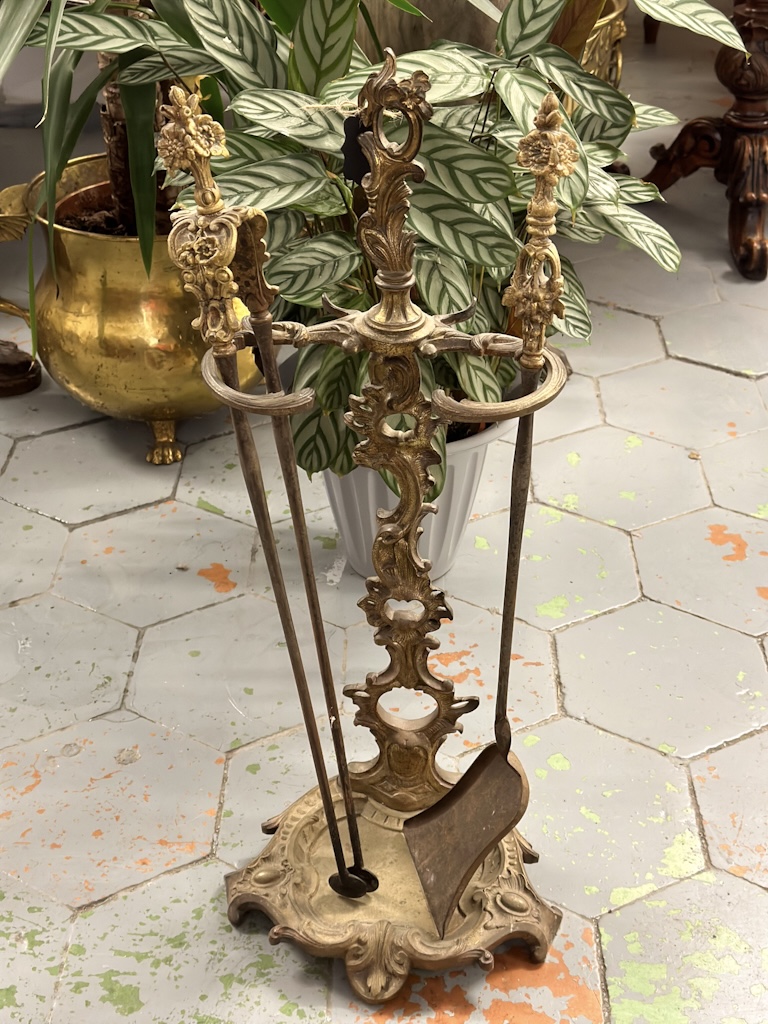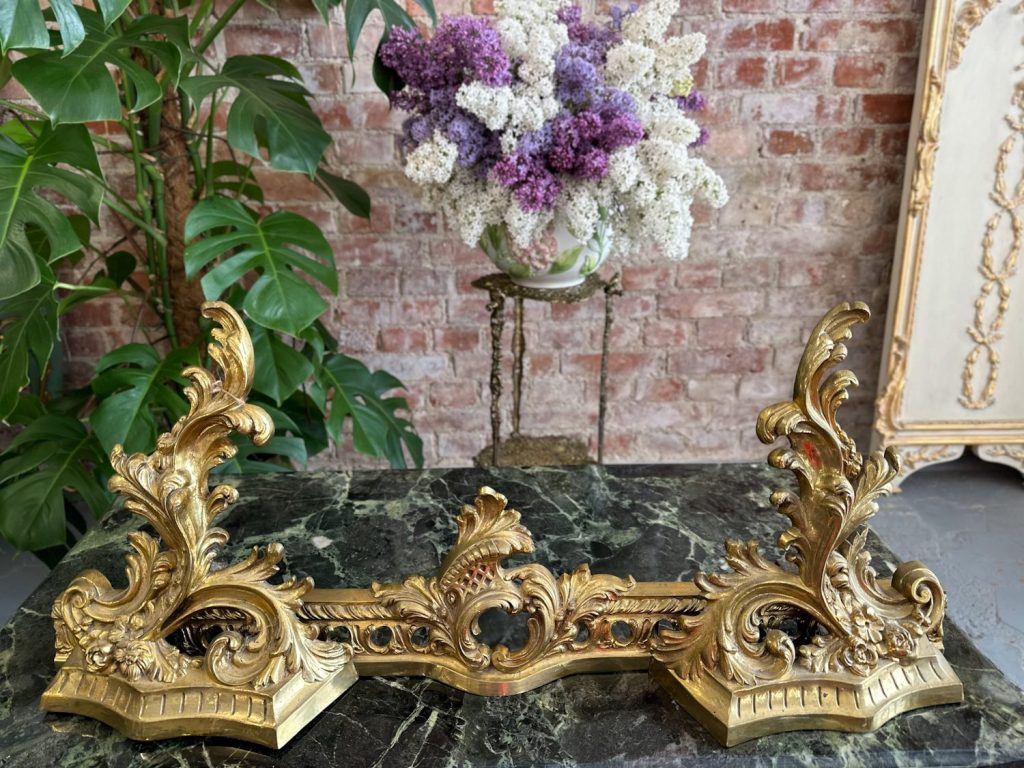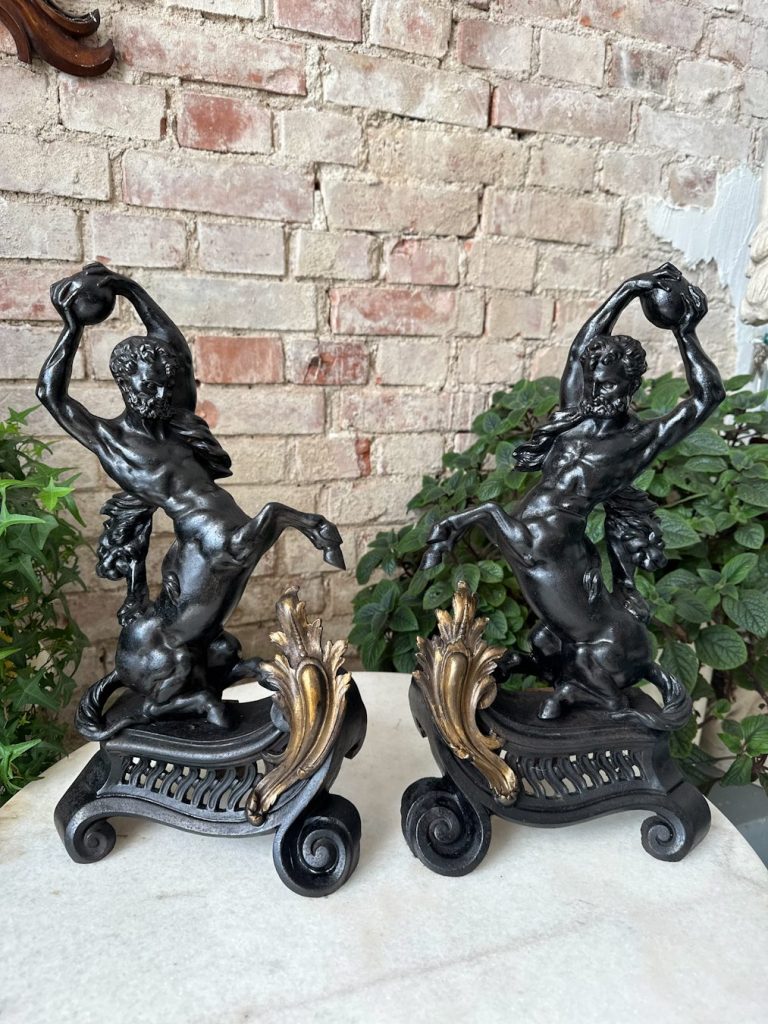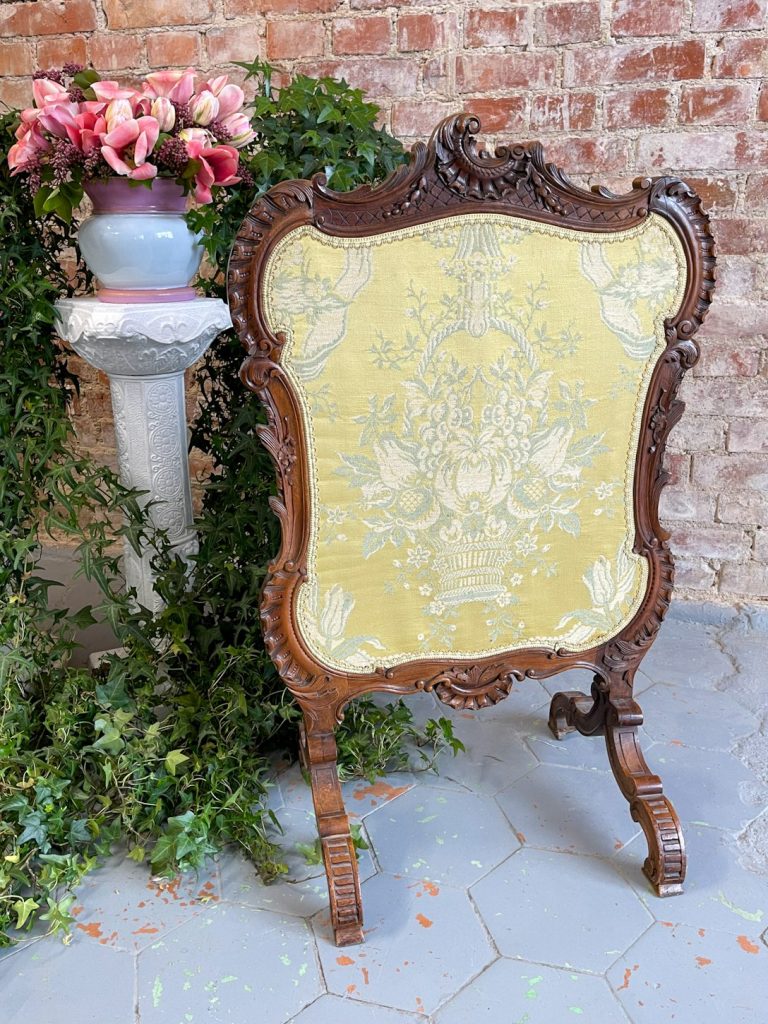
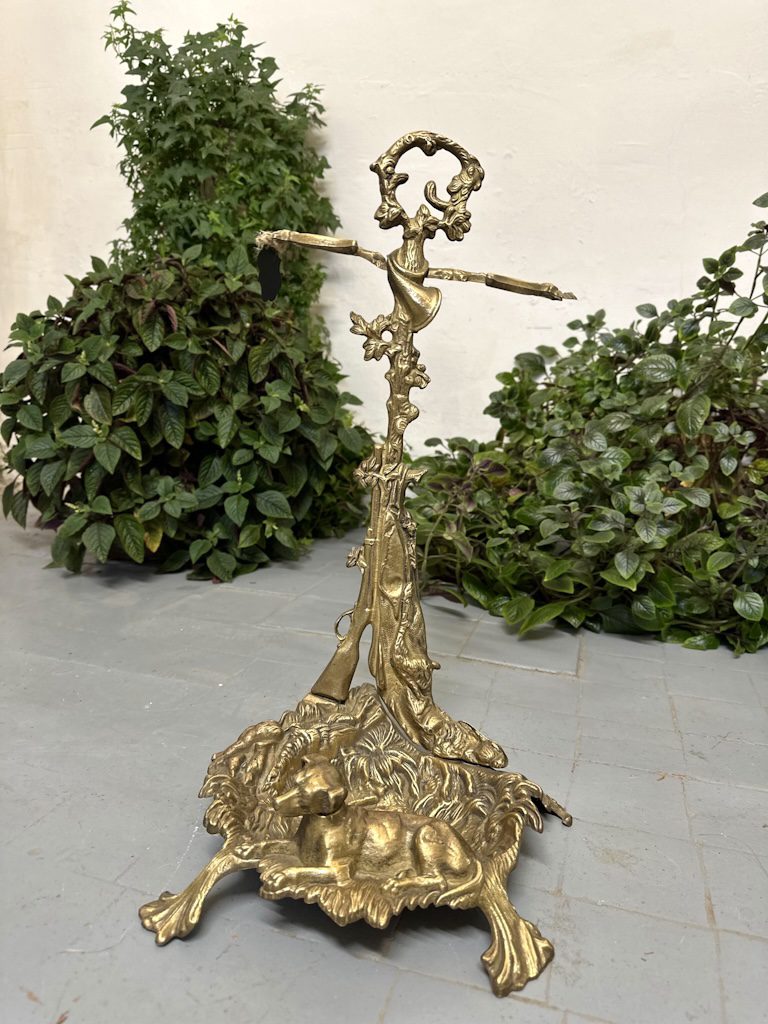
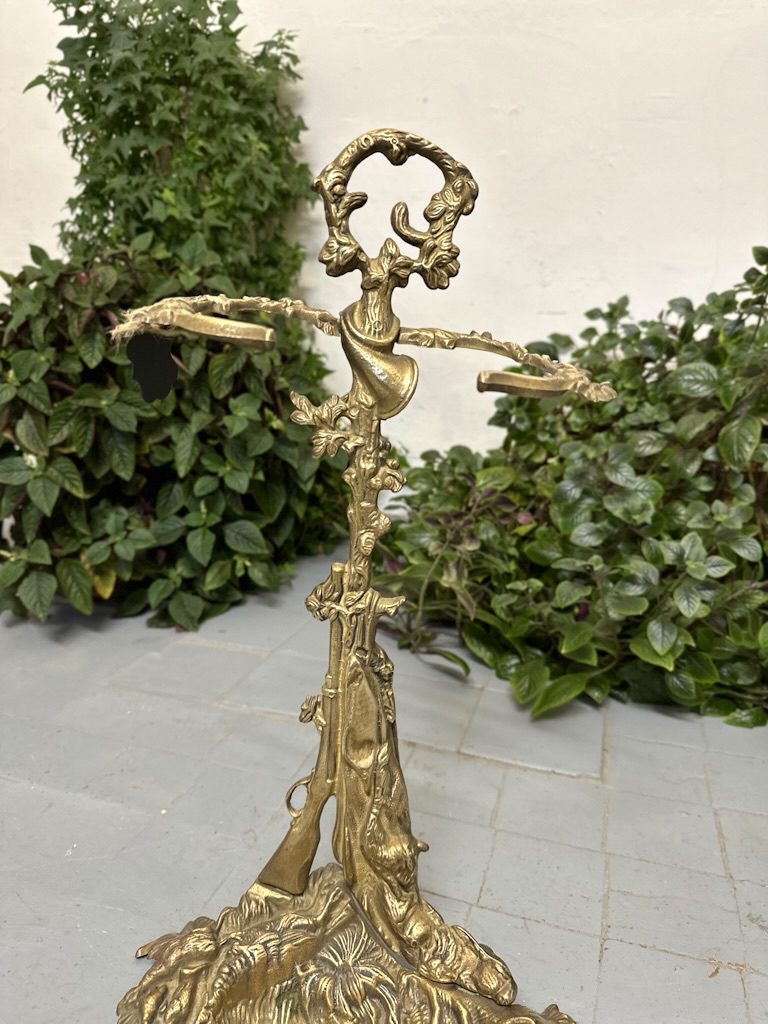
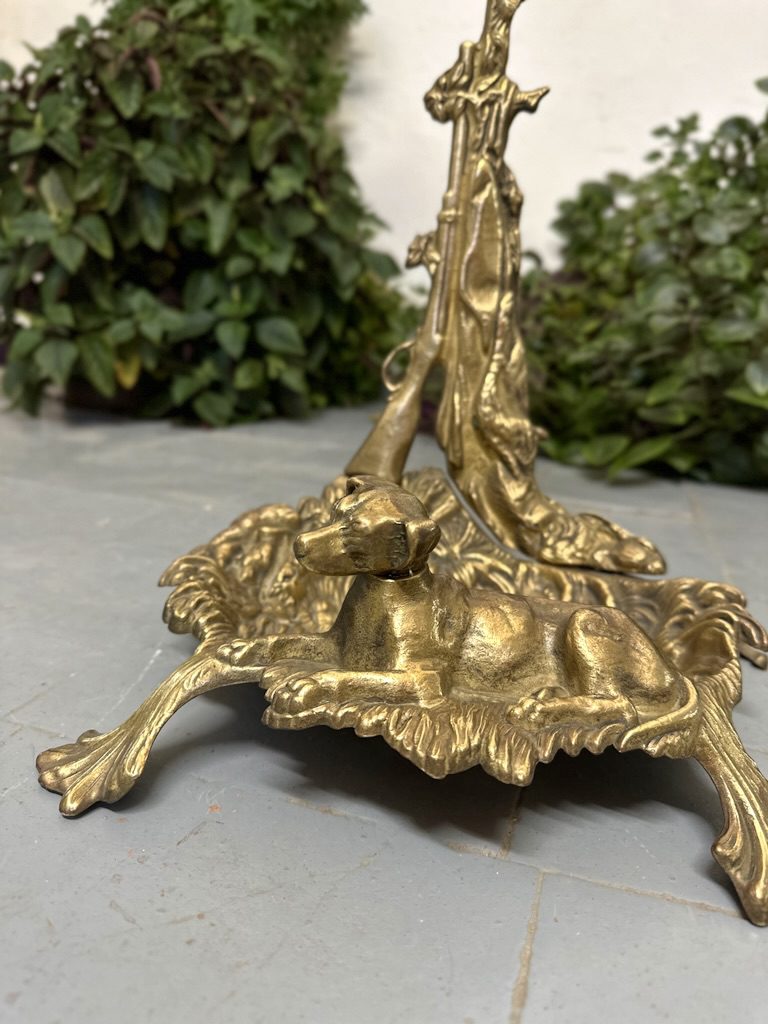
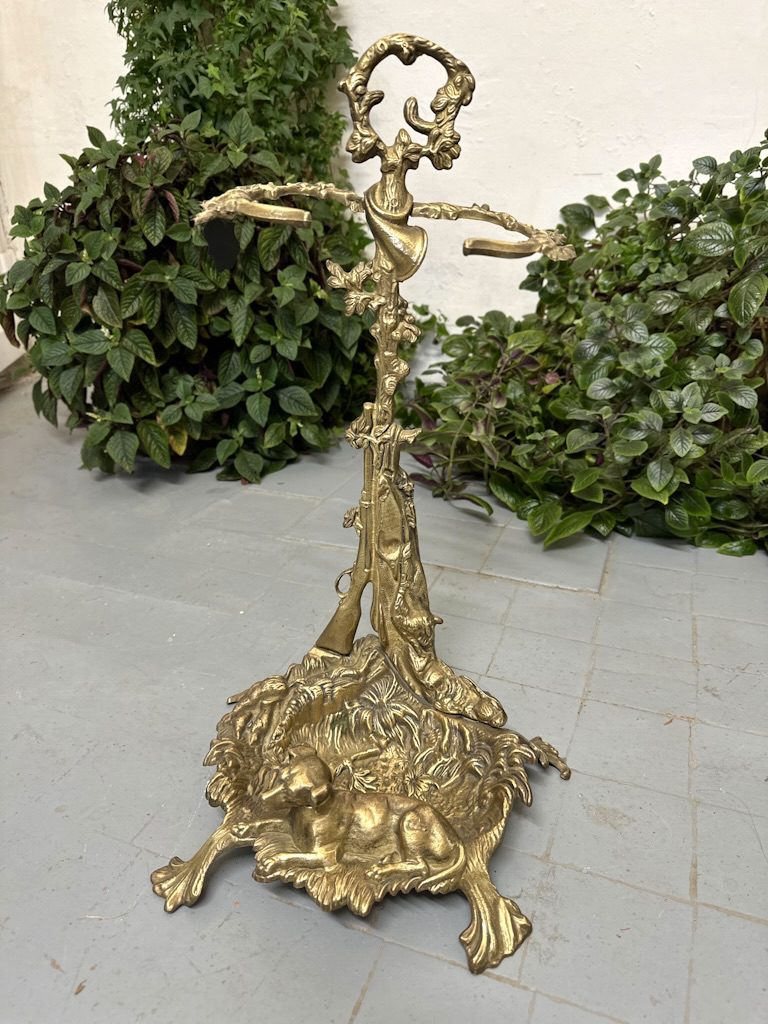
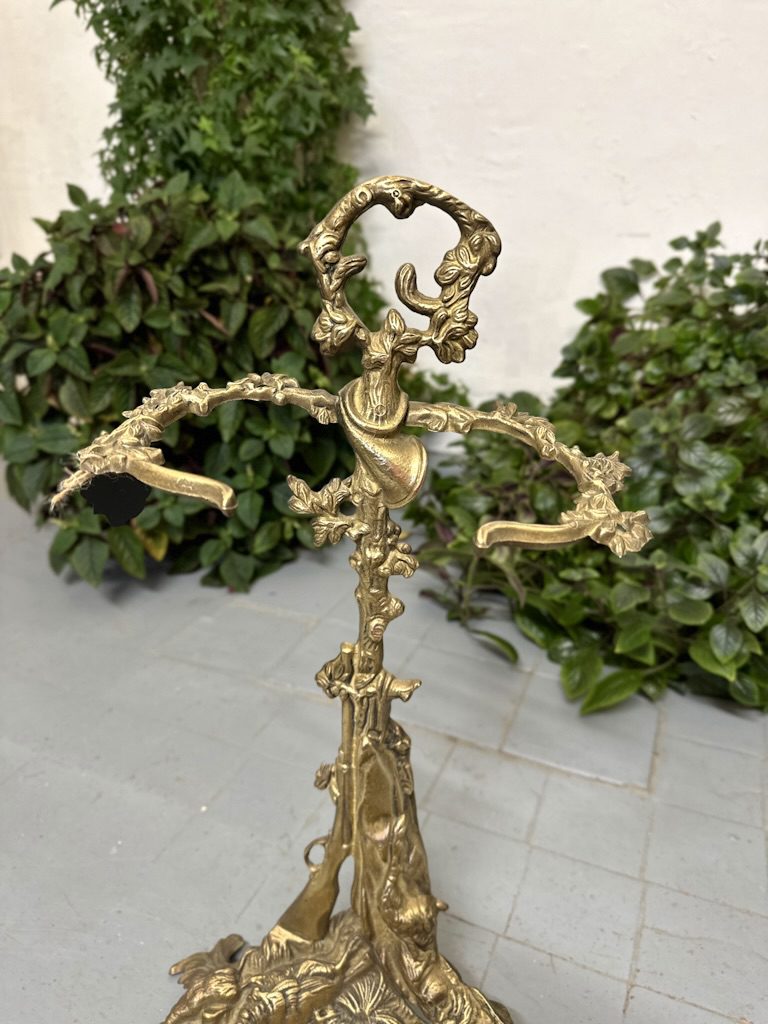
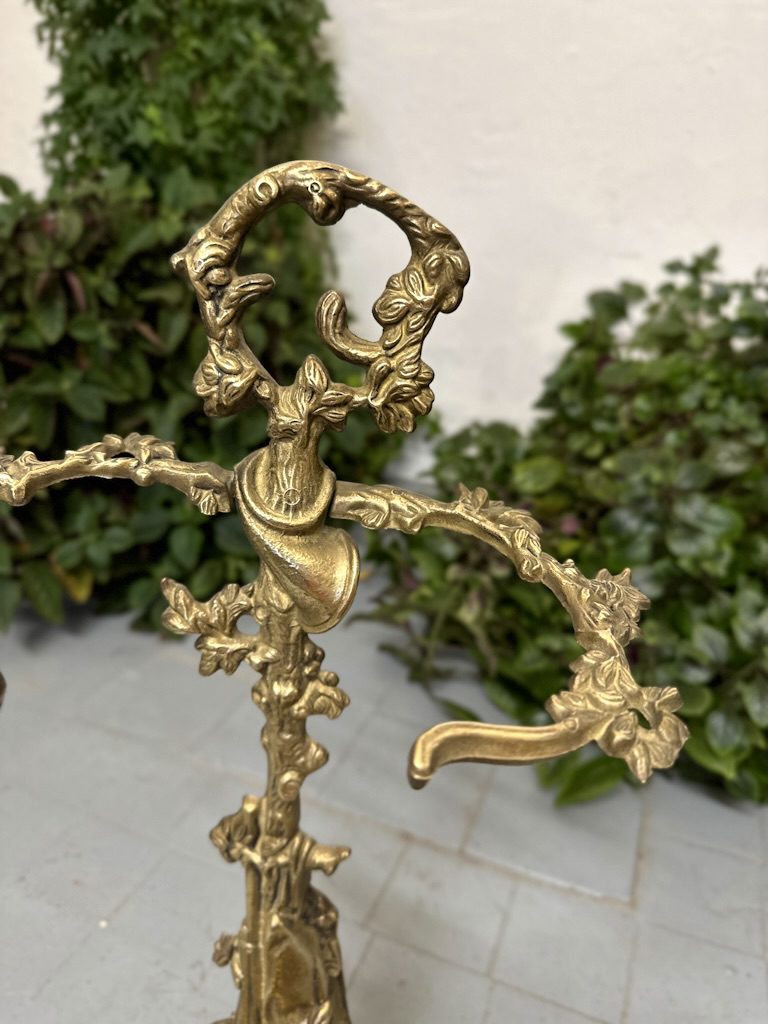
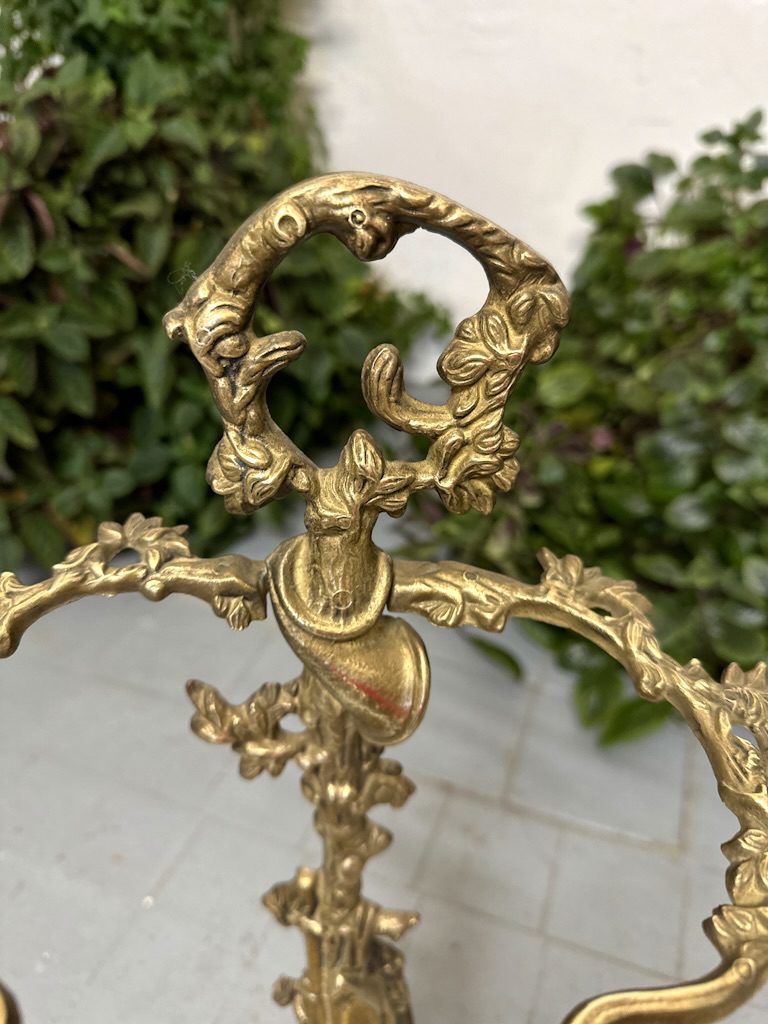
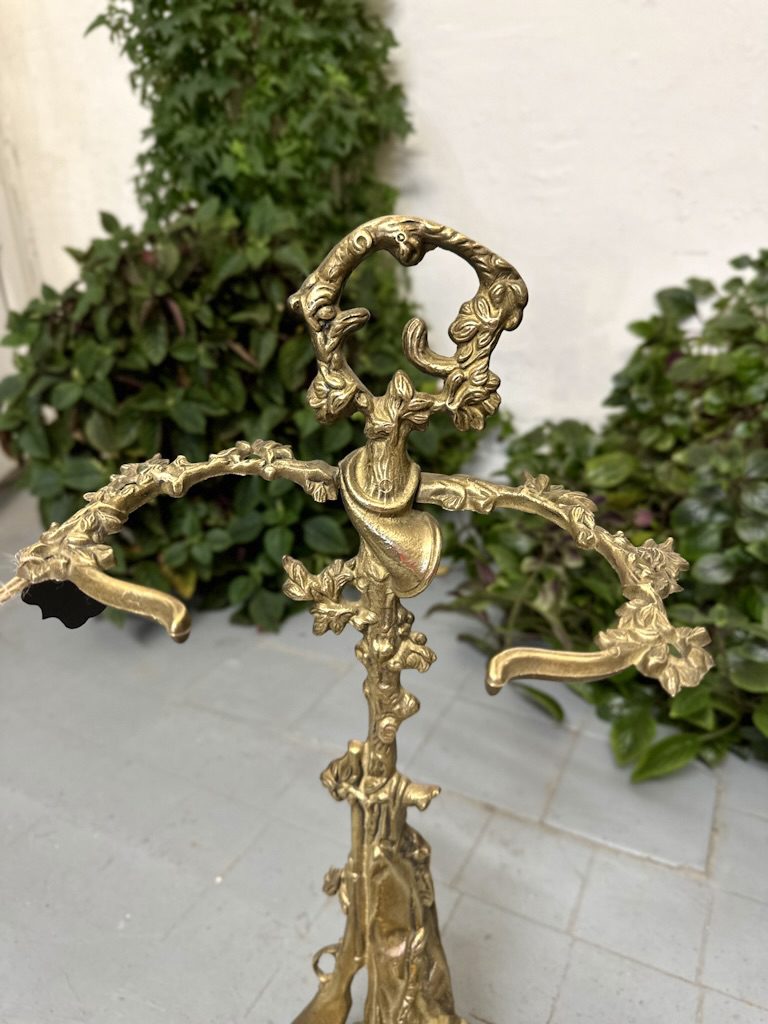
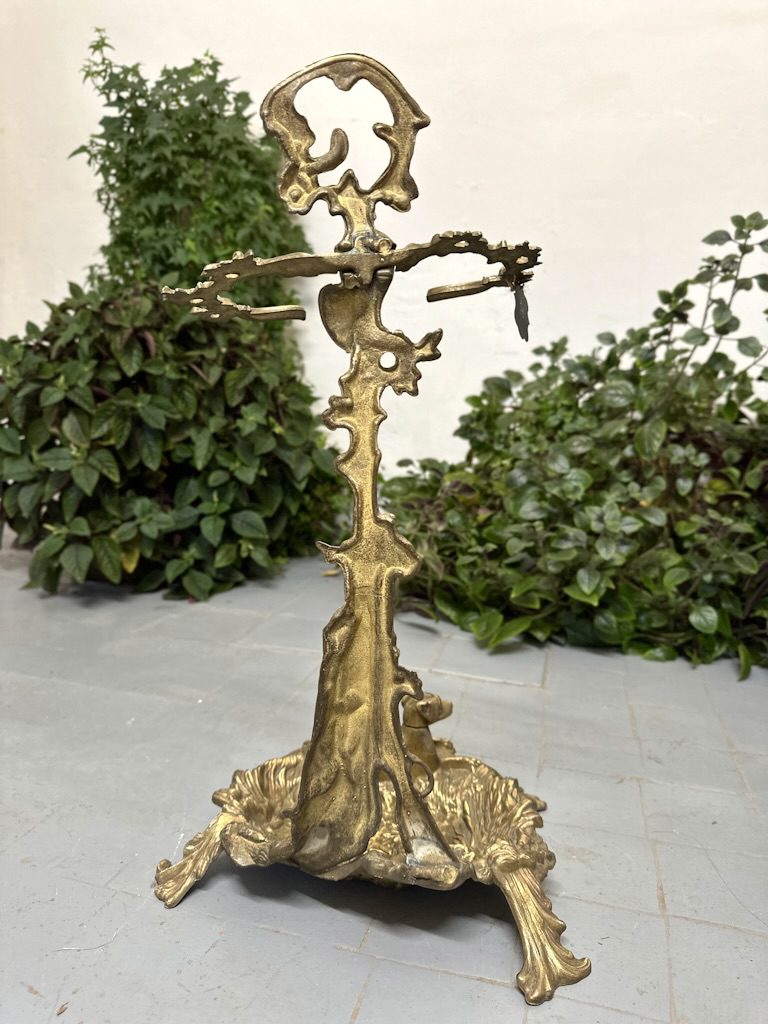
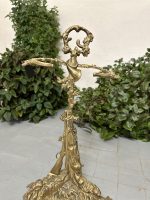
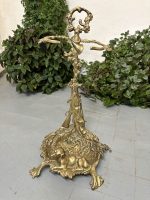
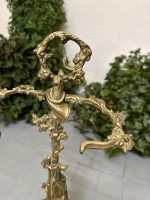
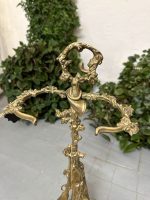
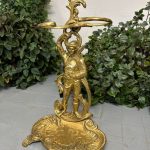
Elegant and detailed medium-sized cast brass stand-holder for umbrellas, canes, or fireplace accessories. Designed in the late 19th century with magnificent, expressive hunting motifs — a resting hound, a shotgun, a hunting horn, and a deer. (4468) 270,00 €
You’re now subscribed to price tracking for this product. We’ll notify you if the price drops. 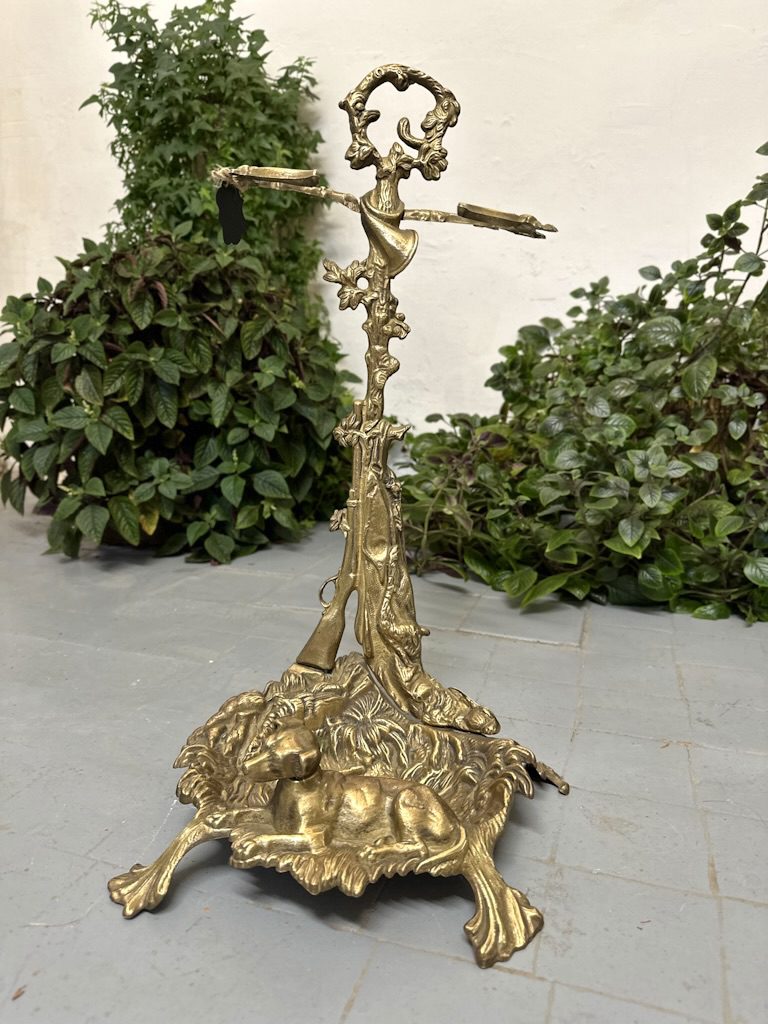

Luxury Brass Umbrella and Fireplace Tool Stand with Hunting Motifs — Historism Style (4468)
Height 55.5 cm Width 32 cm Color BronzeNaturalBrass
Description
SET:
Height: 55.5 cm
Width: 32 cm
Dimensions approximately: Height — 55.5 cm Width — 32 cm
Brass umbrella and fireplace accessory holder with hunting motifs — in the Historicism style
This unusually expressive and decorative cast brass stand-holder (antique brass stick and umbrella stand) is a high-quality example of late 19th-century European applied arts. The item is multifunctional — it historically served both as an elegant stand for umbrellas and canes in the home’s entryway, and as a container for fireplace accessories (andiron brushes, pokers, and tongs) in aristocratic salons. The stand’s design is based on a magnificent and scenically rich hunting theme, characteristic of the eclectic aesthetic of the late Historicism period.
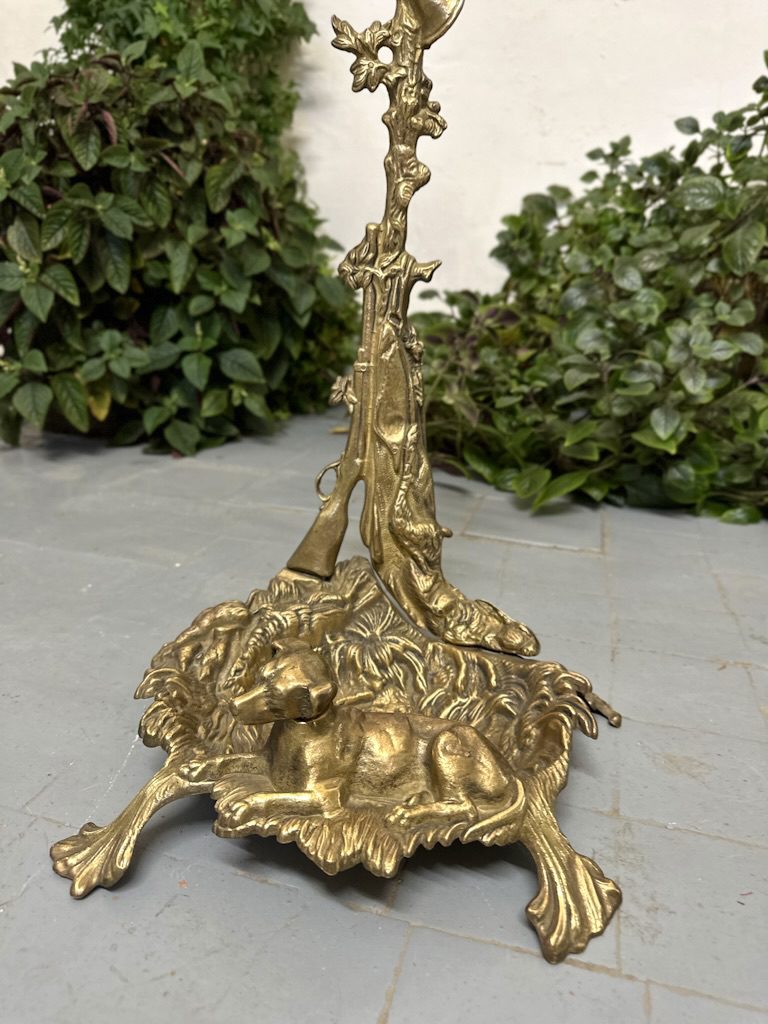
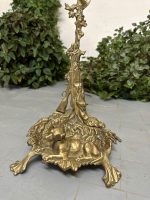
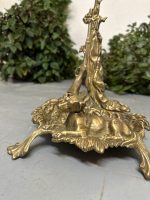
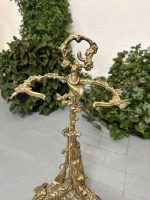
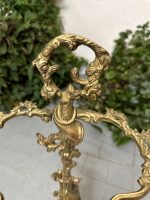
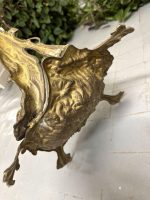
The base is designed as a relief forest floor, upon which a hunting hound rests faithfully. The vertical axis of the stand is formed by a realistically cast tree trunk with oak leaf tendrils, next to which a hunting shotgun (fowling piece) and the hunted game are placed. The upper part of the support stem is adorned with a plastic cast of a hunting horn, while the very top handle-crown is decorated with a detailed deer head with antlers. A double-sided, branched frame is integrated into the middle section of the stand, ensuring stable fixation of accessories or canes. Such thematic, masculine, and aristocratic brass interior items were extremely popular in the second half and end of the 19th century in the manors of the Tsarist and European imperial elite, hunting lodges, and city houses, where hunting culture held a significant place in the daily life of the upper echelons of society.
Period of Manufacture Dated to the late 19th century, approximately the 1880s–1890s, when fine, detailed brass and bronze interior items with historical and genre scenes were in high demand among European (especially or ) foundries.
Manufacturer / Signature / Stamp The stand is an outstanding and meticulous work of professional art foundry craftsmanship. There are no industrial stamps on the inner surfaces of the casting, indicating a limited-edition artistic casting made to special order for decorating salons or entryways.
Rarity and Significance Cast brass items with such a high degree of detail, where every dog’s hair, oak leaf vein, and weapon element is clearly visible, are a valuable find on the antique market. Such intricate, mobile stands are particularly rare to have survived without cracks, broken stem parts, or deformed branch holders.
Application The stand can be excellently used for its original purpose in the entryway as a luxury umbrella and cane holder, or as a magnificent accent next to a fireplace in historical interiors, hunting rooms, and men’s studies, lending the space a distinct aristocratic character.
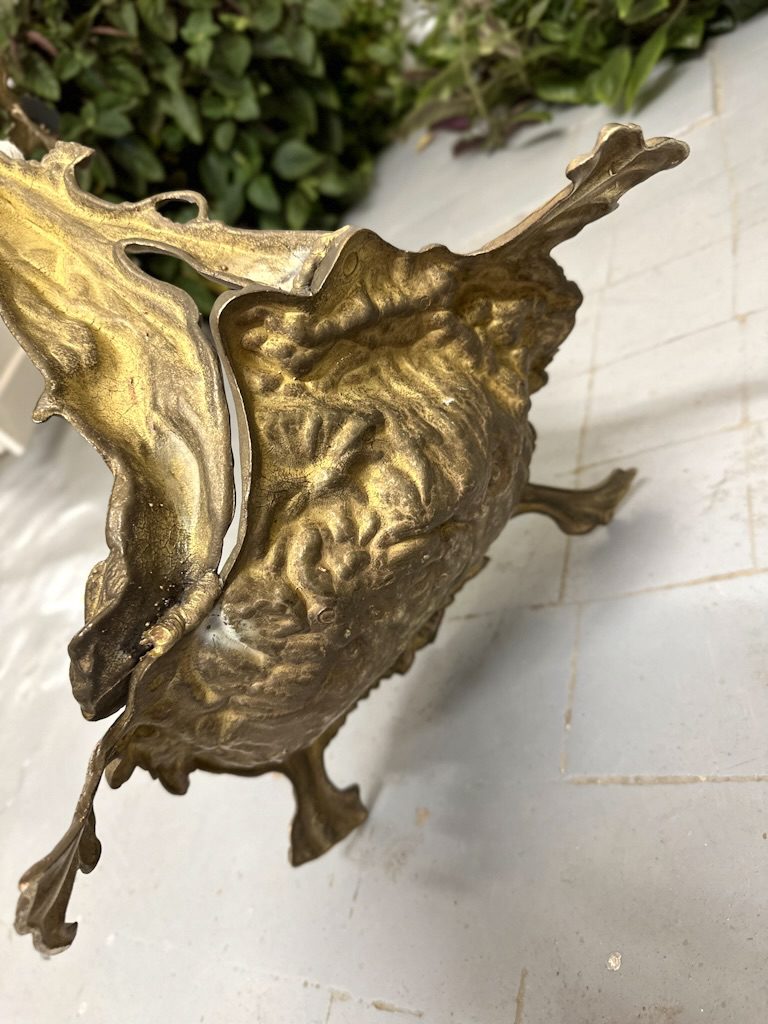
Condition Excellent antique condition. The cast brass construction is completely firm and stable, with no cracks or signs of soldering. The brass surface has a pleasant, calm, and natural patina of age with a noble sheen on the raised relief points. The condition of the item is fully reflected in the photographs.
Snapshot from the Historicism era: State Councillor and passionate hunter, Count Sergei de Witte, returns after an early autumn hunt to his cozy Riga house entryway, where the space is filled with the quiet warmth of the fireplace and a smoky aroma. By the door, next to the massive oak cabinet, stands out the elegant brass holder, its gilded metal shimmering pleasingly in the subdued light. His chilled fingers briefly touch the stand’s upper handle, feeling the textured, cool cast of the deer head, before he places his expensive cane next to the cast shotgun. The brass hound resting at the base seems almost alive in the morning sunbeams, recalling the forest silence just experienced. This exquisite European craftsmanship brings an unexpected visual substance and masculine elegance to the house’s first room, immediately indicating the owner’s high status in imperial society.