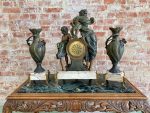
Luxurious fireplace clock set with two vases — late historicism (neoclassicism) style This monumental, artistically valuable, and tall three-piece fireplace clock set (antique clock garniture set) is an outstanding masterpiece of applied art from the second half of the 19th… 1 800,00 €
You’re now subscribed to price tracking for this product. We’ll notify you if the price drops. 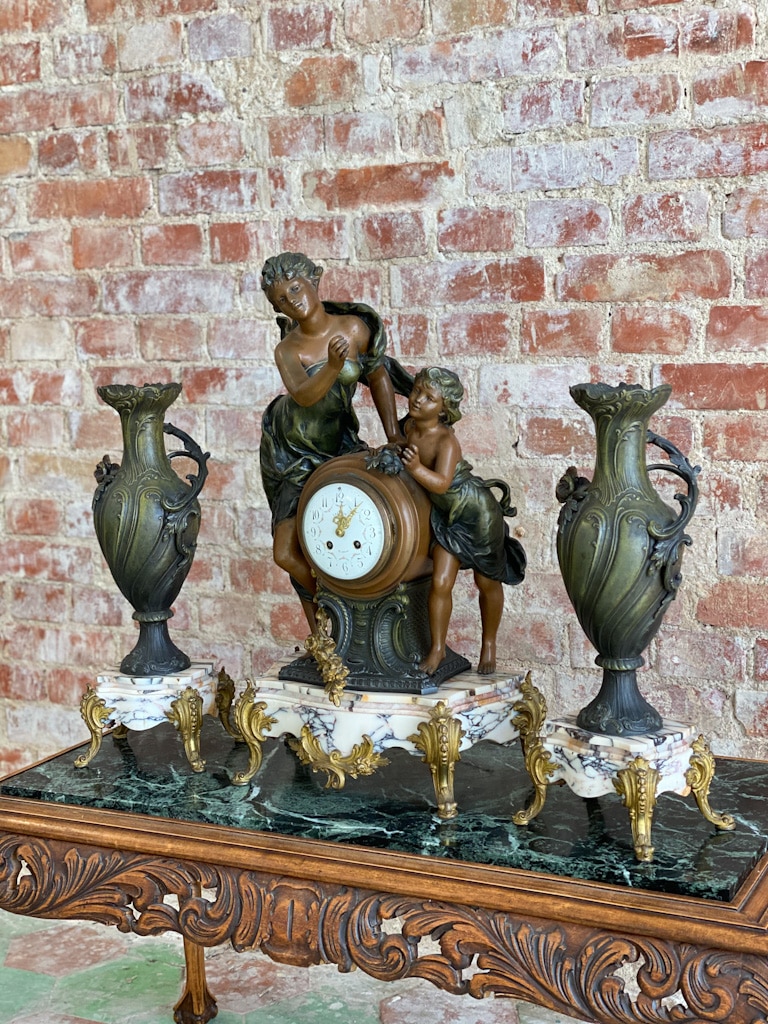
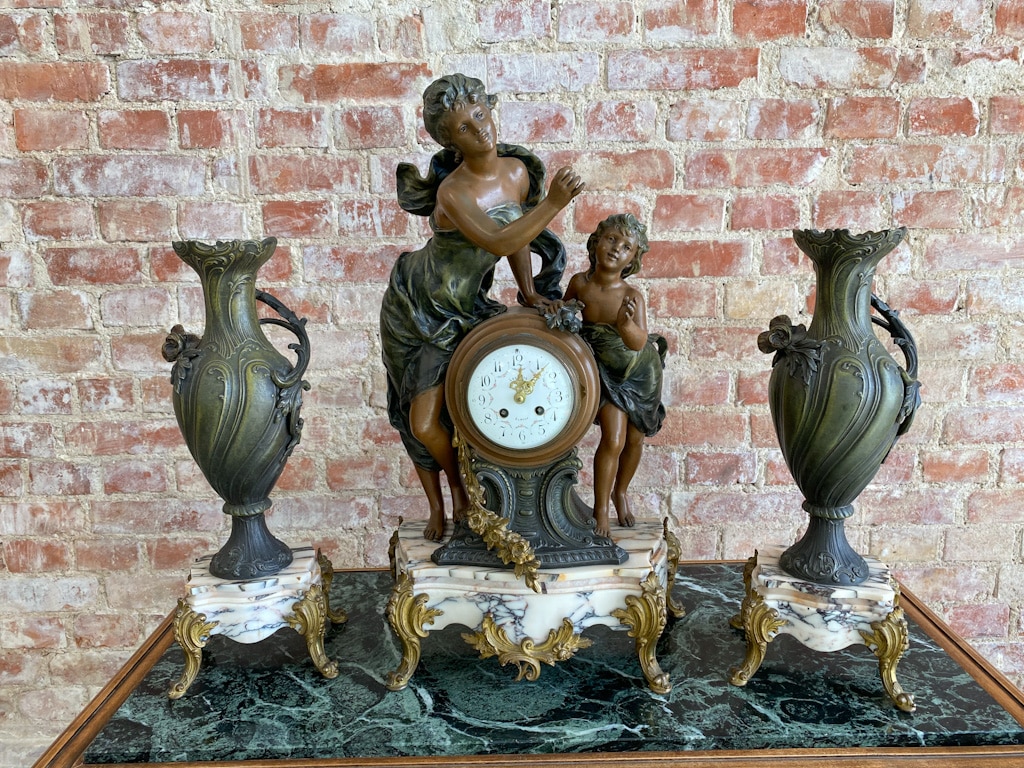
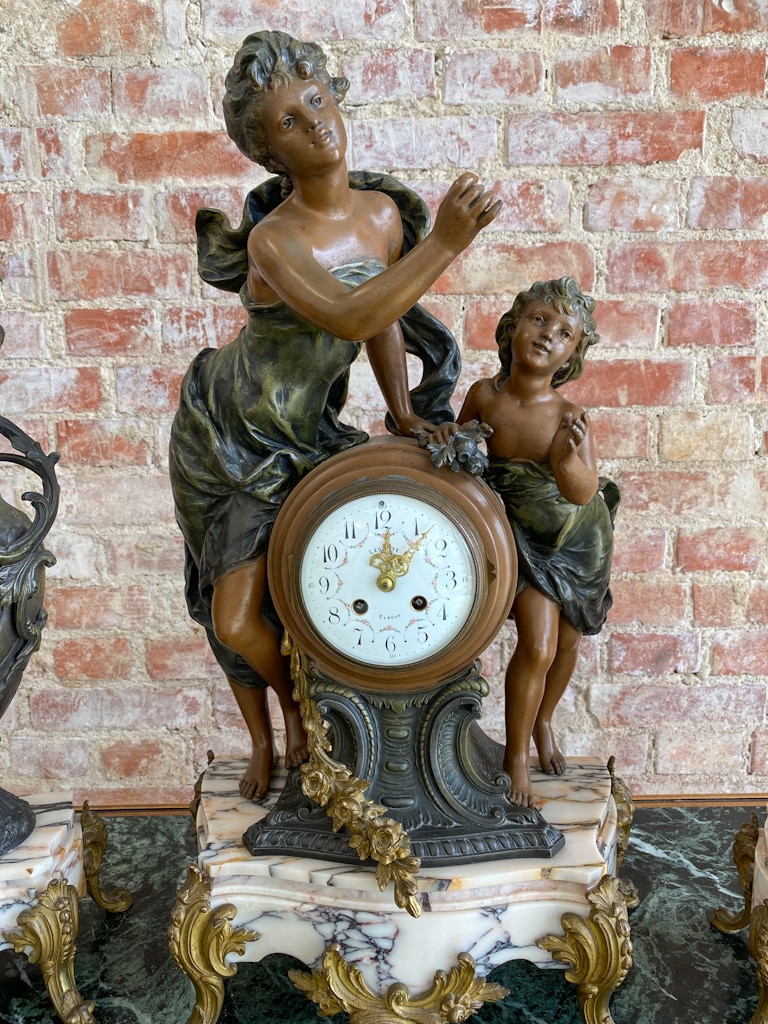
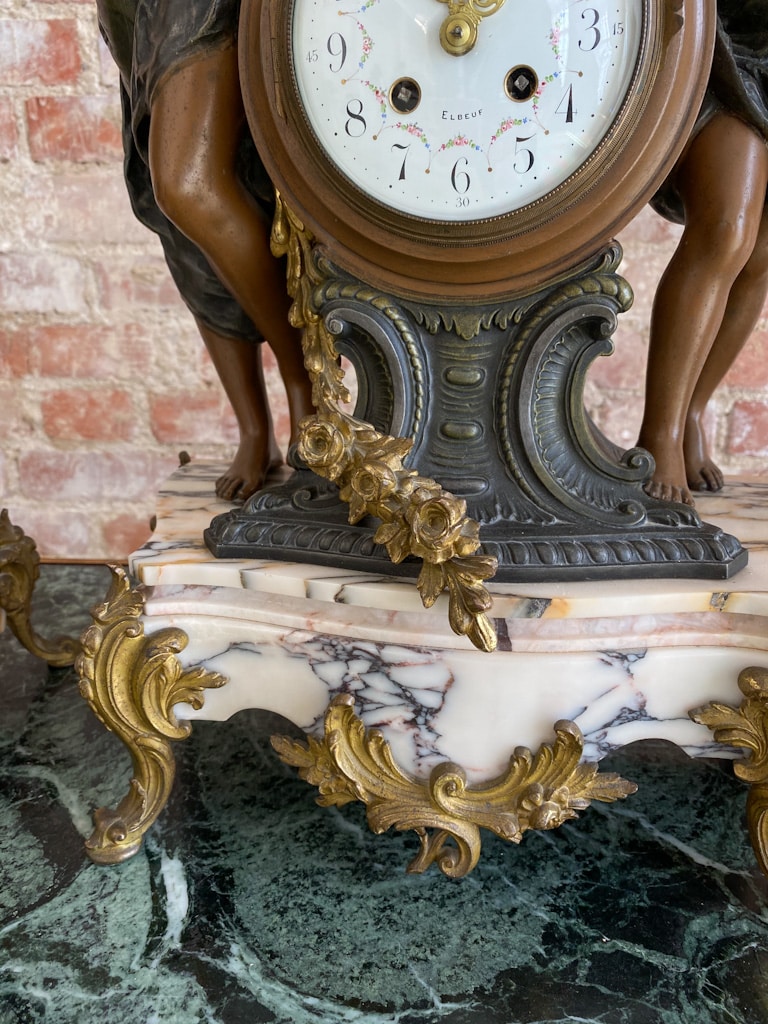
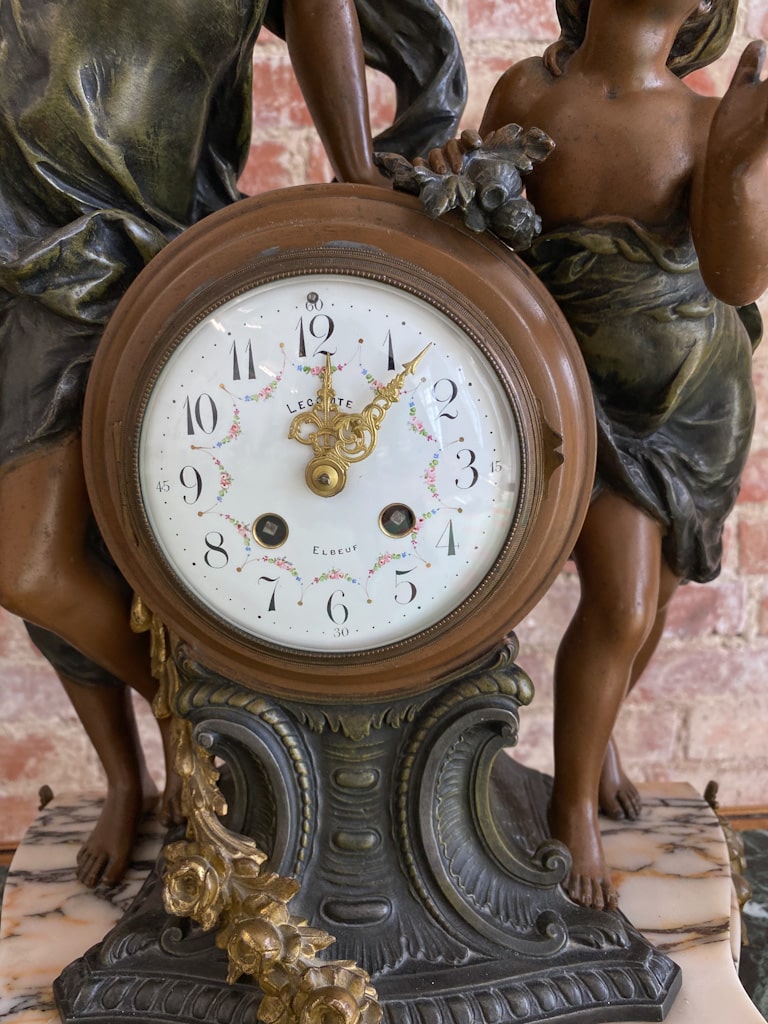
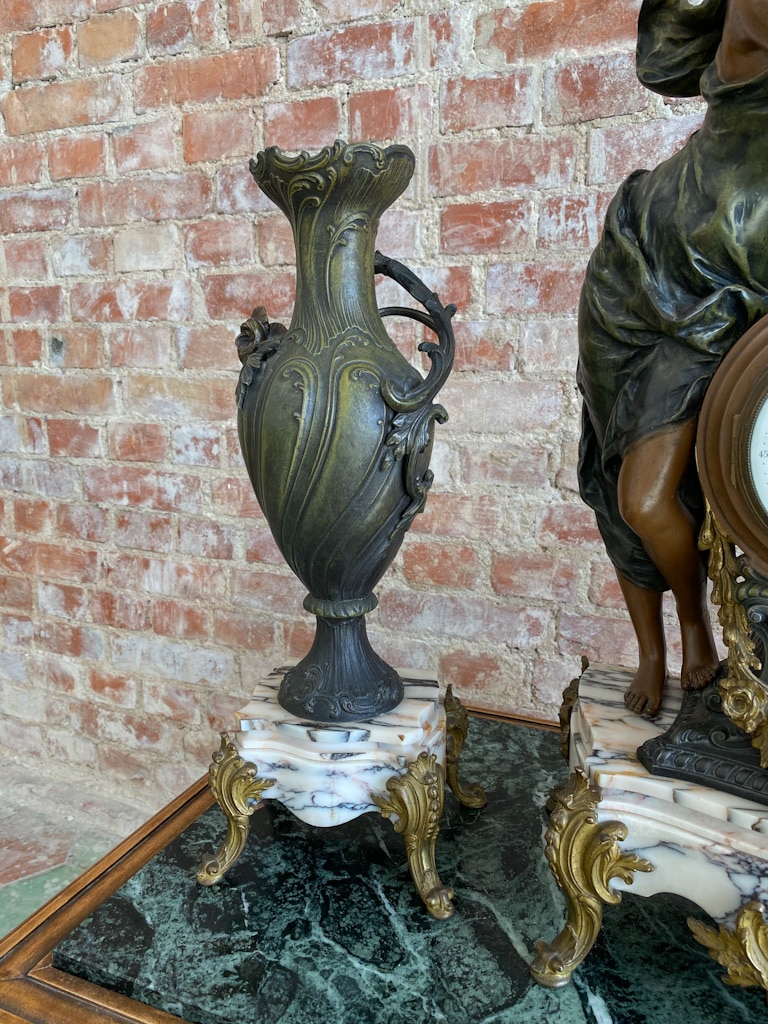
Luxurious fireplace clock set with two vases — late historicism (neoclassicism) style, (598)
Height 61 cm Width 36 cm Color GoldWhite
Description
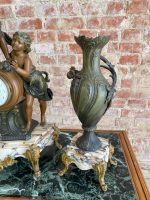
Dimensions approximately: Clock height — 61 cm Clock width — 36 cm Clock depth — 19 cm Vase height — 46.5 cm Vase width — 16 cm Vase depth — 14 cm
Luxurious fireplace clock set with two vases — late historicism (neoclassicism) style
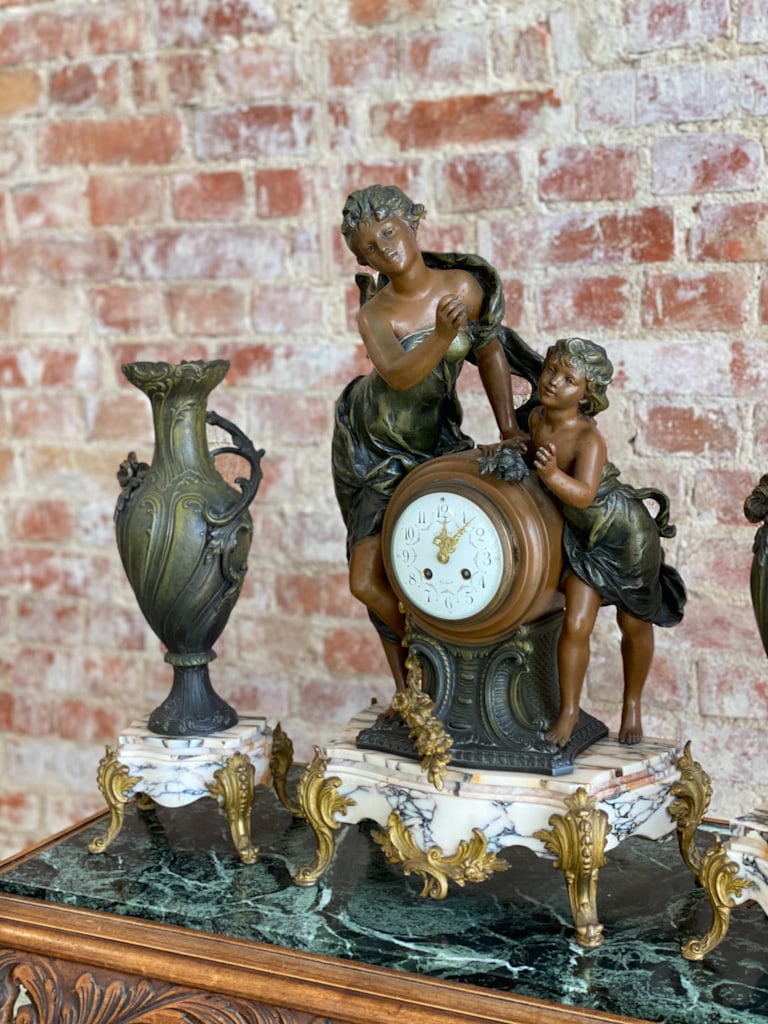
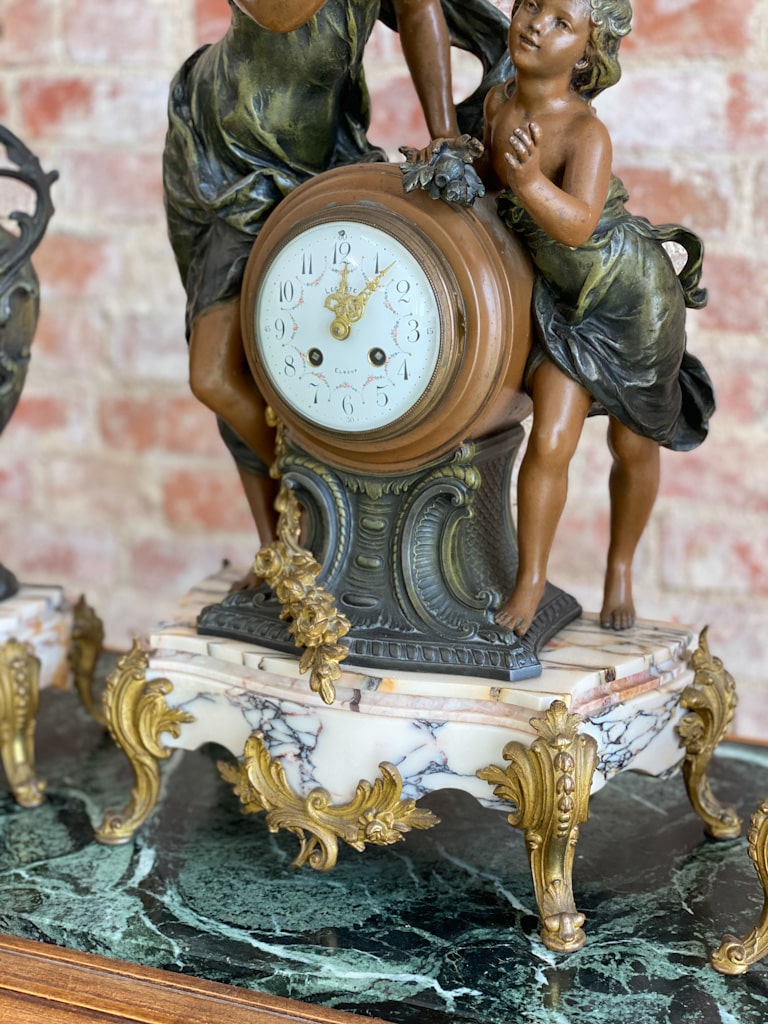
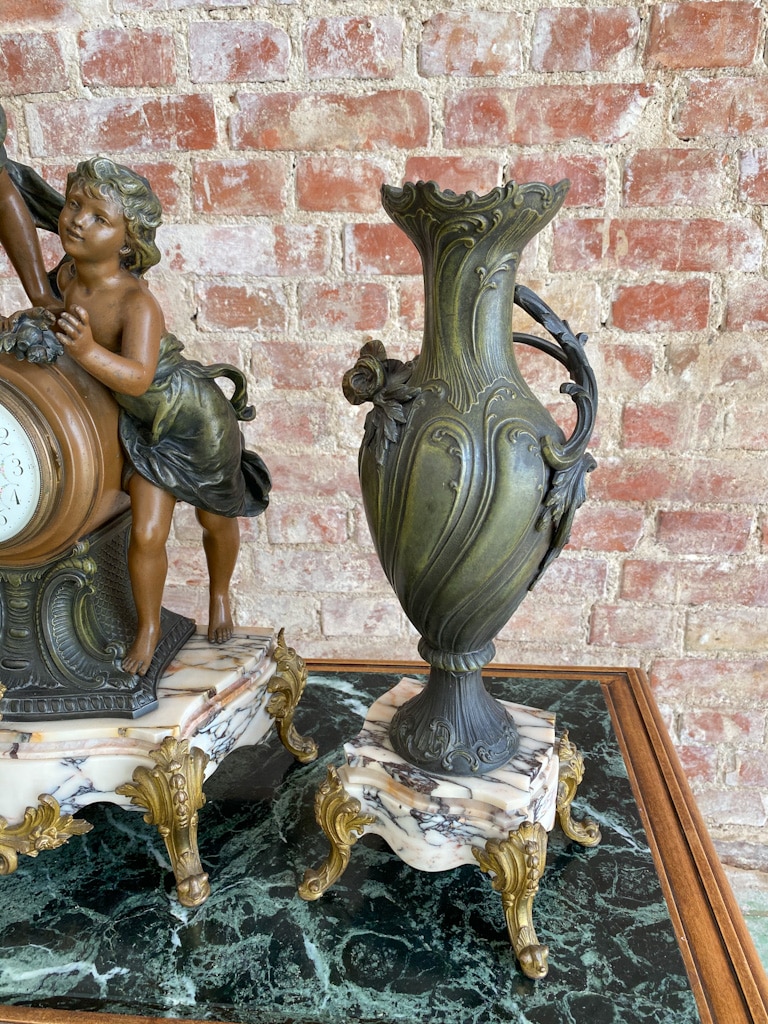
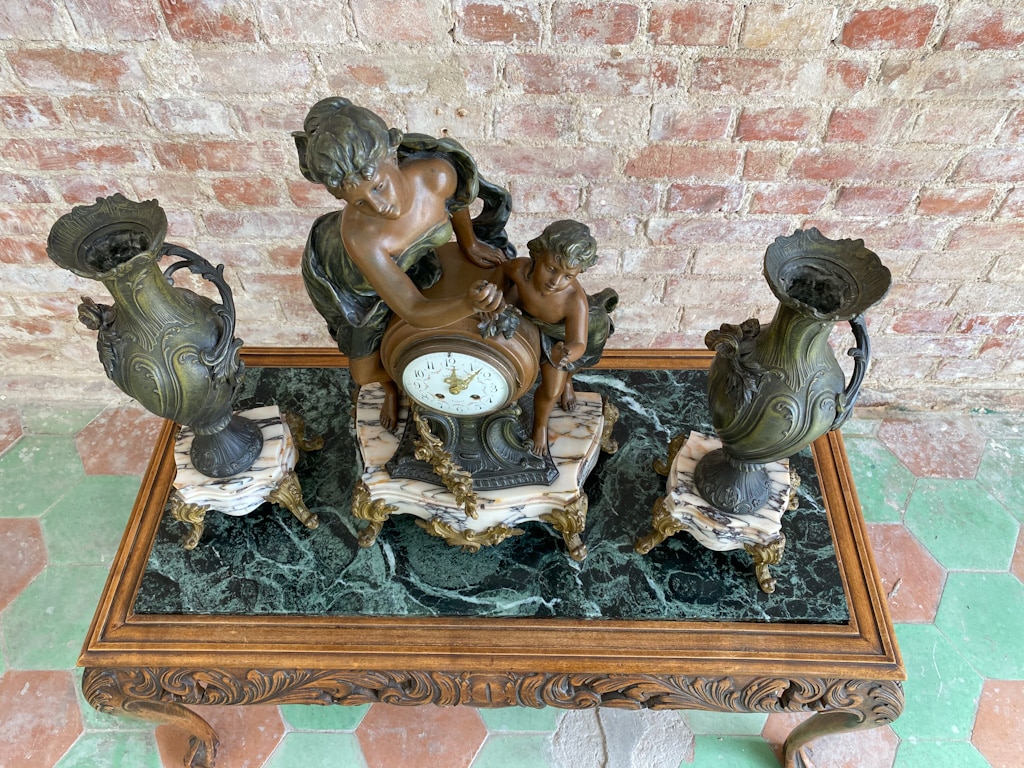
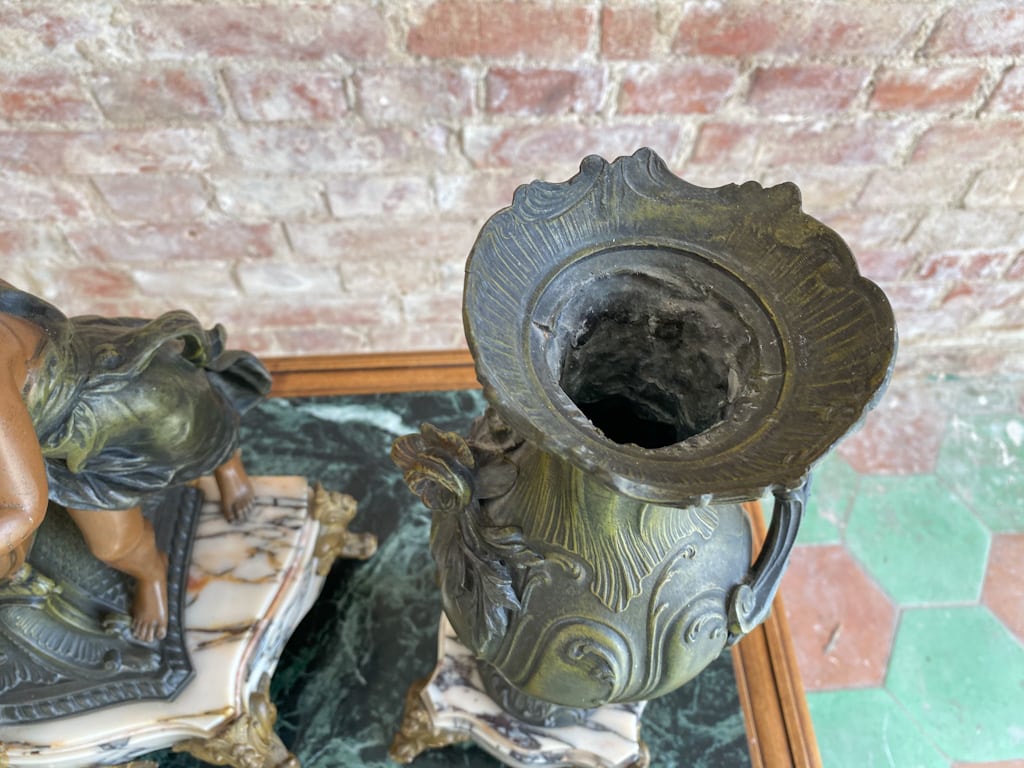
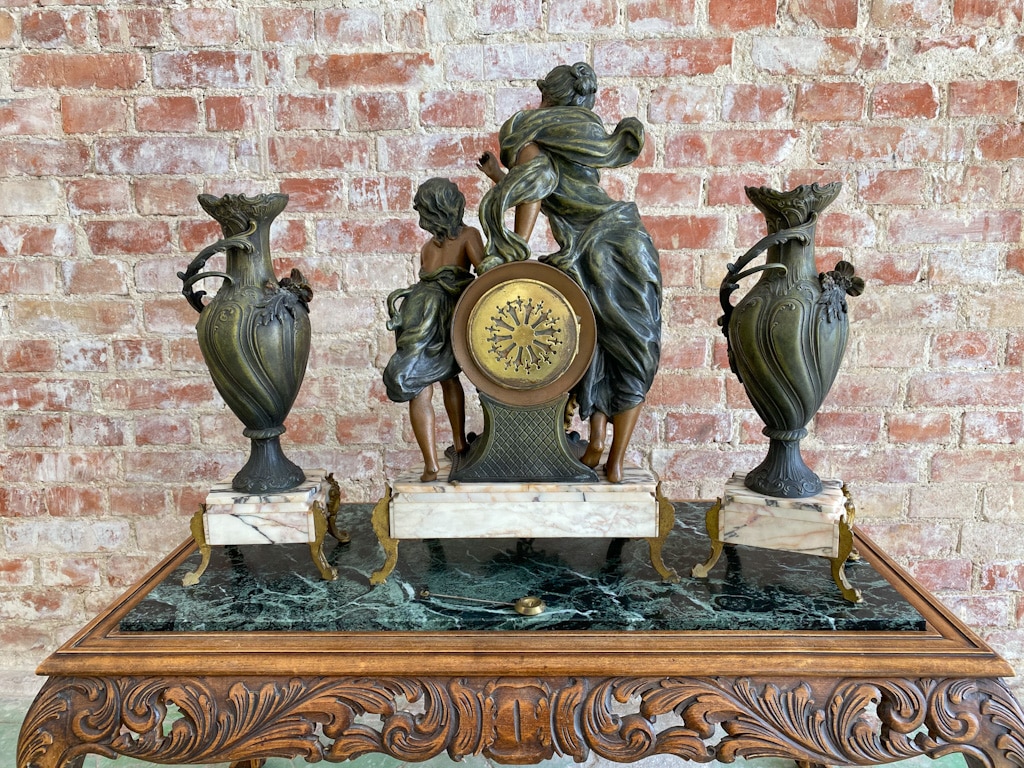
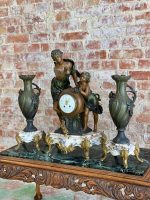
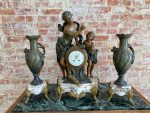
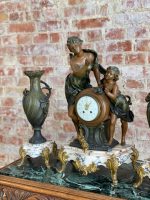
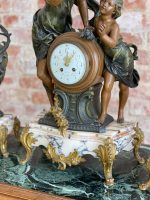
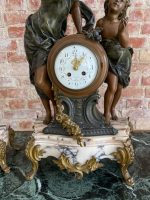
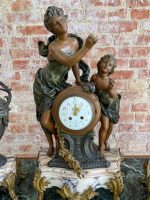
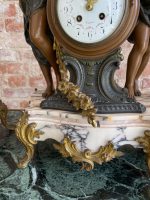
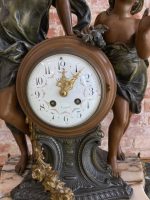
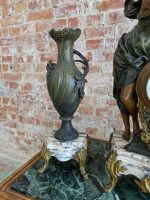
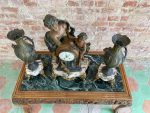
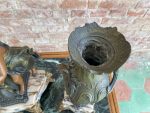
This monumental, artistically valuable, and tall three-piece fireplace clock set (antique clock garniture set) is an outstanding masterpiece of applied art from the second half of the 19th century in Europe. The garniture consists of a central clock and two luxurious, matching decorative amphora vases. The combination of materials is a classic testament to top-tier luxury: the bases are made of solid, naturally veined light marble, complemented by magnificent gilded metal (bronze/spelter) leg castings and ornaments. The central composition of the casing is crowned by an expressive, masterfully patinated sculpture of two figures, depicting a female classical antique figure and a small child (cherub) next to the clock mechanism. Both vases are decorated with relief floral garlands, acanthus leaf scrolls, and elegant handles, forming a completely unified visual ensemble.
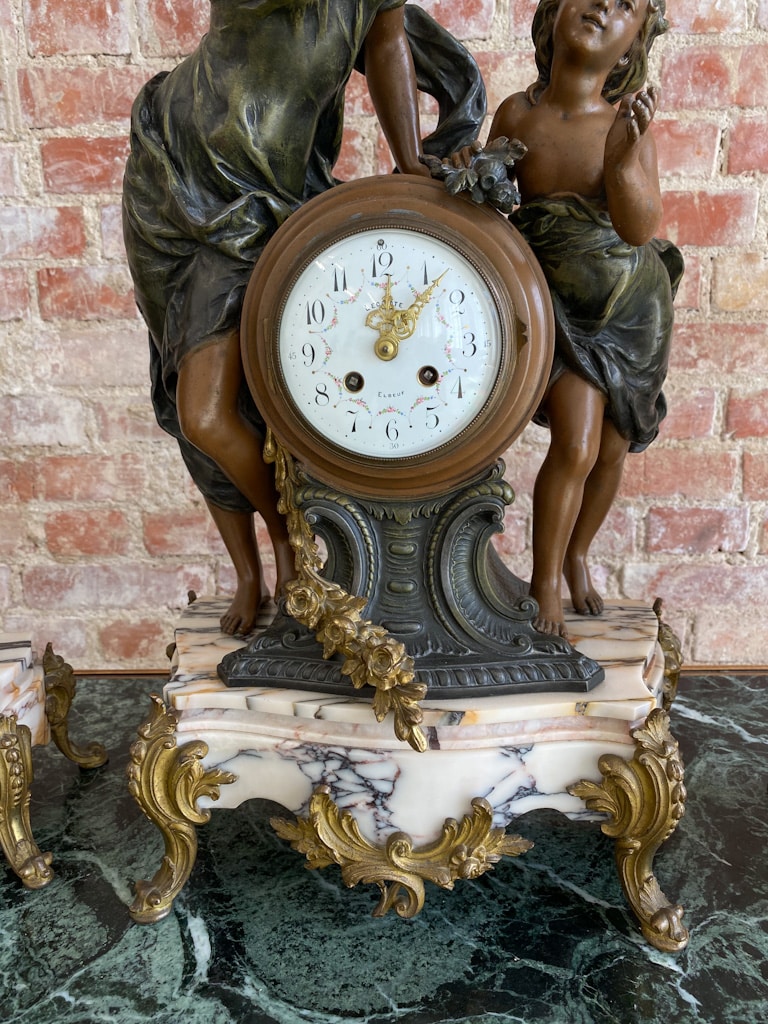
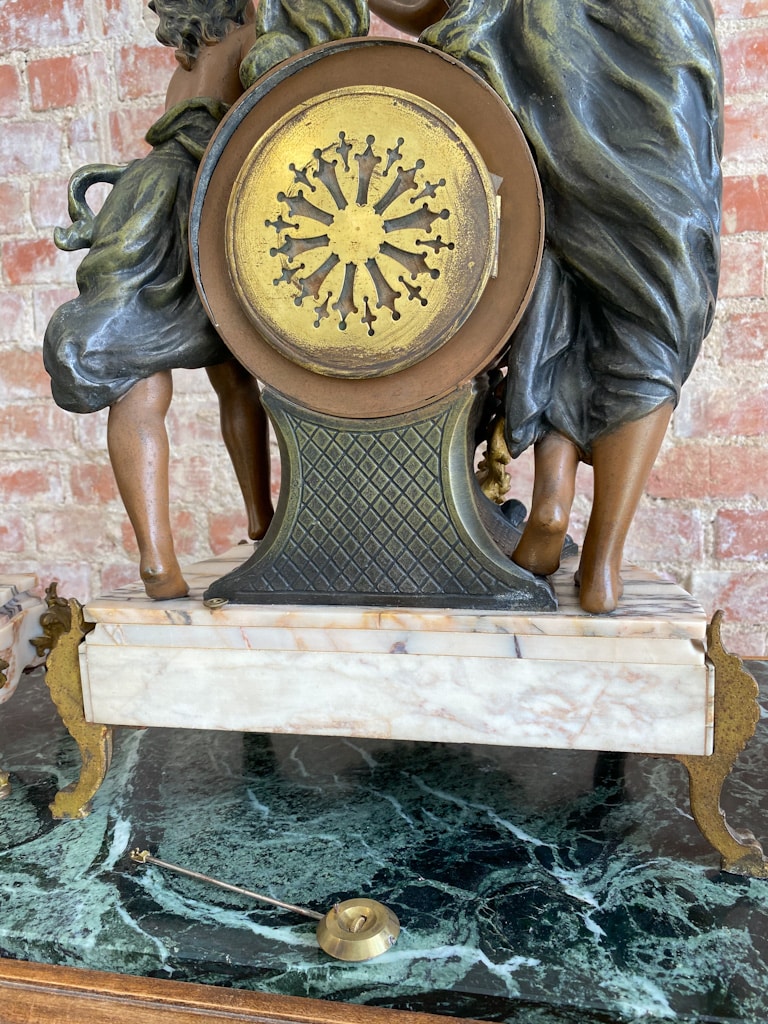
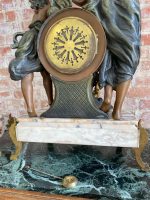
The clock face is made of a white enamel disc with Arabic numerals, adorned with delicate, hand-painted floral motifs and gilded, openwork hands. The dial clearly displays the historical inscription of the clockmaker or merchant Lecomte / Elbeuf, indicating the connection of this set to the elite craftsmanship of the northern region. The mechanism is covered by an authentic, perforated brass cap on the back. Such magnificent garniture sets became a primary element of representation in the homes of the Empire and European aristocracy in the late 19th century, where they were placed on massive mantelpieces or consoles in living rooms. The price is for the entire set (three-piece ensemble — ensemble).
Period of Manufacture Dated to the second half of the 19th century, approximately 1870–1890, when monumental interpretations of classical antiquity and neoclassical themes were in high demand in leading sculpture and bronze foundries in Europe and France.
Manufacturer / Signature / Stamp The historical inscription Lecomte / Elbeuf is visible on the dial. The city of Elbeuf (near Rouen) was an important center of wealth and industry in the 19th century, home to exquisite craftsmen and merchants of expensive interior items who assembled these works of art for the orders of the imperial elite.
Rarity and Significance The greatest value of this set lies in its impressive, majestic size (the clock height reaches 61 cm) and its complete three-piece preservation. Fireplace garnitures are often disassembled over time, making a three-piece ensemble with intact marble bases and unlost vases a rare and highly collectible find.
Application The set is ideally suited for placement on a large fireplace, a representative console, or a dining room buffet. It instantly becomes the main visual axis of any classical interior, lending an aristocratic flair to the room, and serves as a valuable conversation piece about the history of European applied arts.
Condition Excellent antique condition. The marble bases and bronze structures are firm and without cracks. The patina and gilding have retained their noble, historical luster and depth. The visual condition and completeness are fully reflected in the photographs.
Snapshot of the Late Historicism Era: The outstanding poet and writer Anton Chekhov sits in the late evening in a cozy Riga salon study, where the monumental clock set gleams in the subdued light on the mantelpiece. Silence reigns in the room, broken only occasionally by the calm, deep hum of the mechanism and the scratching of a quill pen against paper. His tired fingers pause for a moment over the manuscript pages, his gaze lingering on the majestic bronze sculpture and the smooth, clear light marble base, which appears almost translucent in the candlelight. On both sides, two slender vases guard the central figures, their relief acanthus scrolls casting long, dramatic shadows against the brick wall. This creation by masters, brought into the wealthy circles of the empire through the port, brings unexpected visual substance and tranquility to the room, allowing the author a moment’s respite from the weight of the destinies of his new characters.
Dimensions approx.: [Dimensions are given above in the LV block]