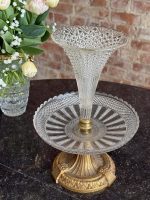
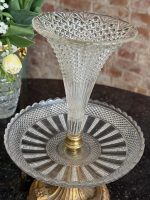
A Napoleon III style cut crystal table centrepiece with a gilt metal base, France, circa 1870-1890. This exquisite two-part piece features a shallow bowl and a tall vase, perfect for formal dining or as a decorative accent. A rare find in such complete condition. 380,00 €
You’re now subscribed to price tracking for this product. We’ll notify you if the price drops. 


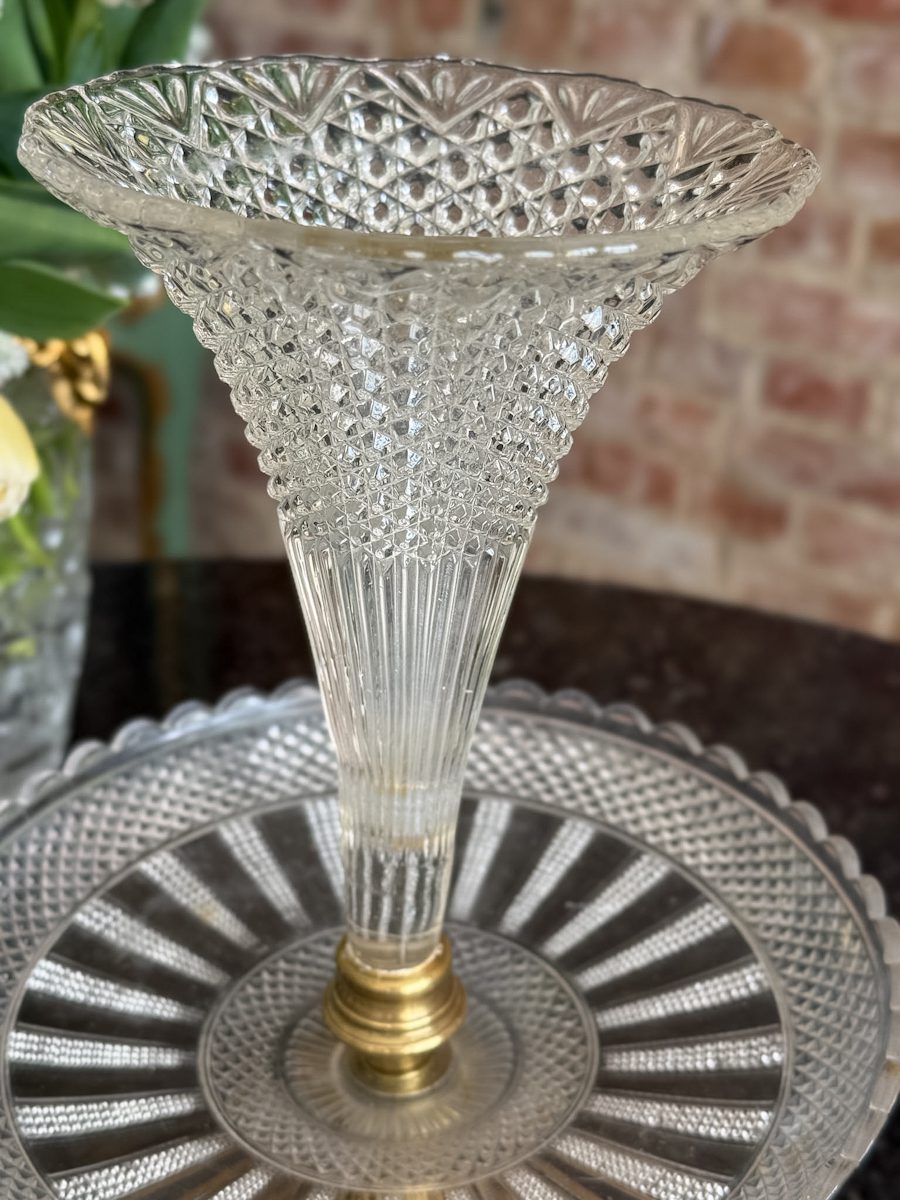






Cut Crystal Table Centrepiece with Vase and Gilt Metal Base — Napoleon III Style, France, c. 1870–1890 (6597)
Height 33.5 cm Width 23 cm
Description
Cut Crystal Table Centrepiece with Vase — Napoleon III Style, France, c. 1870–1890
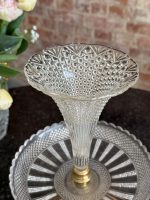
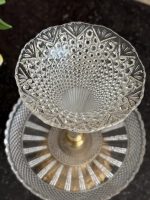
This elegant cut crystal table centrepiece (crystal centrepiece) with an upper funnel-shaped vase and gilt metal pedestal is a refined example of Napoleonic III era (Second Empire, c. 1870–1890) table luxury. Such a two-part crystal centrepiece — a wide, shallow crystal bowl at the bottom for fruit or sweets, and a tall funnel vase above for flowers — served as the decorative centre of a formal table in a late 19th-century salon.
Dimensions: Height 33.5 cm × Width 23 cm.
Period of Manufacture, Art Style, Era
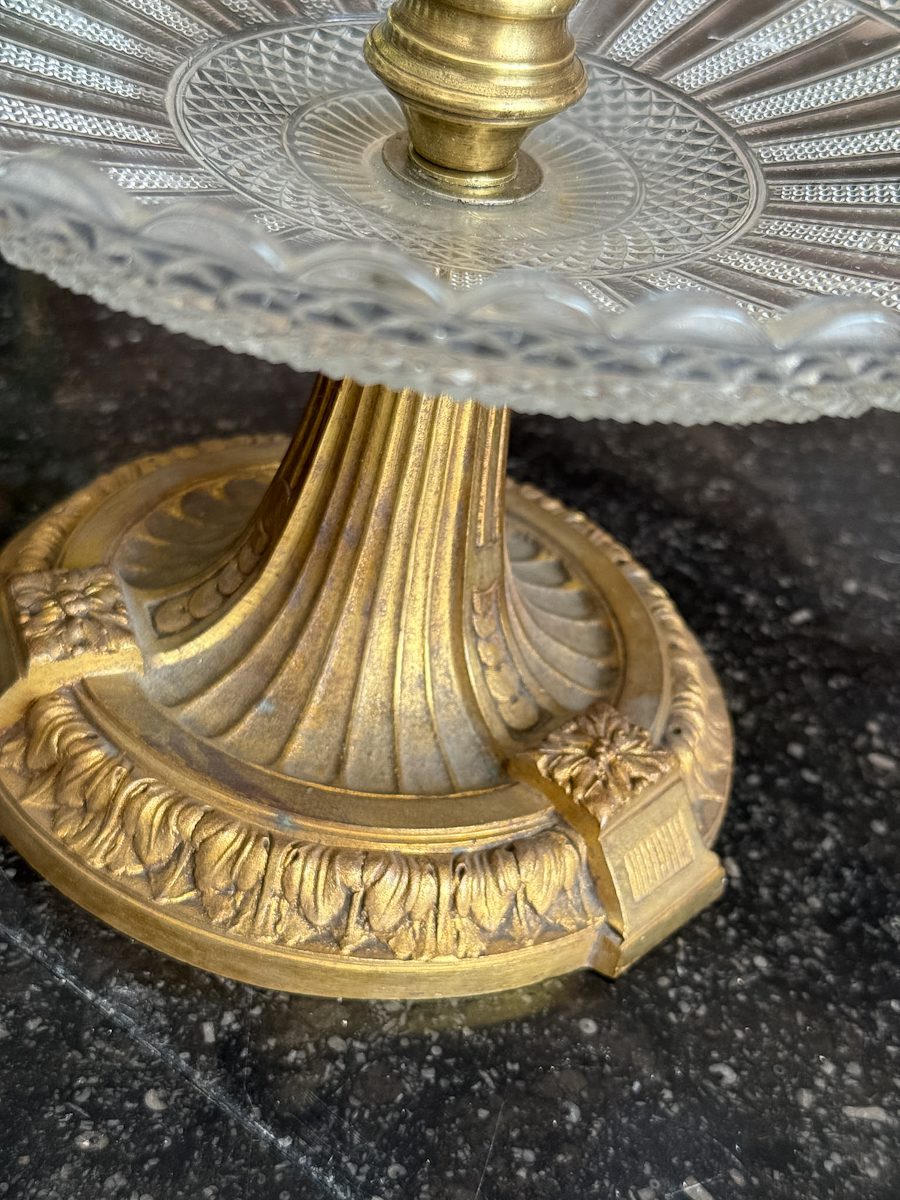
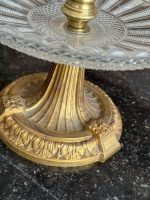
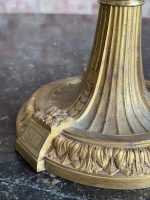
The item was crafted in France in the late 19th century, around 1870–1890, in the Napoleonic III (style Napoléon III) style, which freely combined motifs from historical styles with luxurious materials. The crystal parts are cut with a rich diamond (taille diamant) and fan pattern, sparkling in the light with countless facets. The central support is formed by a fluted gilt metal column with an acanthus leaf band, resting on a round base decorated with a rosette and leaf frieze.
Belle Époque Snapshot: Marcel Proust slowly turned towards the window… through which the late afternoon light flowed over a Parisian salon table, still laid after lunch. In the centre of the room, in the white light, countless clear facets suddenly flashed — a tall, slender form rising like a column of frozen water, and beneath it a wide, iridescent circle where light shattered into a thousand tiny flashes. His fingers lightly brushed over the cold, sharply cut edge, and somewhere deep within he felt that same fragile, almost painful sense of beauty that always accompanied the awareness that the moment was already fading. In this shimmering, transparent form resided the entire era — its bright, slightly melancholic elegance, which he so desperately tried to capture on his pages.
Manufacturer and Mark
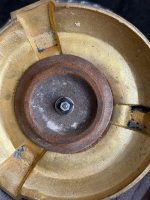
The crystal parts are high-quality cut (possibly in the spirit of Baccarat, Saint-Louis, or Val Saint-Lambert, though without a mark this cannot be stated with certainty). The pedestal is made of gilt metal. The material cannot be reliably determined from the photographs — it is gilt metal (bronze or brass); a construction of an iron rod and nut connecting the two crystal parts is visible at the bottom of the base. No manufacturer’s mark or signature has been found, so we do not attribute it to a specific manufactory.
Rarity and Significance
Fully preserved, two-part crystal table centrepieces with their original metal pedestals are increasingly difficult to find — often the upper vase has been lost or broken over time. Such a set with both crystal parts preserved is significantly more valuable than a single piece.
Application in Interiors, Design, and Photography
The item is an impressive accent for a formally set table, sideboard, or dresser — as a flower vase, fruit bowl, or simply a sculptural crystal and gold accent. Its sparkling facets beautifully reflect candlelight or natural light and serve as an elegant background in table and interior photography.
Gift and Personalization
Such a crystal centrepiece is a sophisticated gift for weddings, anniversaries, or housewarmings — a classic, lasting item with a festive character.
Condition
The item is in good condition, preserved appropriately for its age. The crystal parts are intact, with a brilliant cut; minor signs of surface wear or edge chips characteristic of age may be present. The gilt metal pedestal is stable, with a natural age patina — some wear of the gilding and minor paint flaking are visible in places, but the connecting construction (see the bottom of the base in the photograph) is functional. The condition of the item is fully reflected in the photographs.