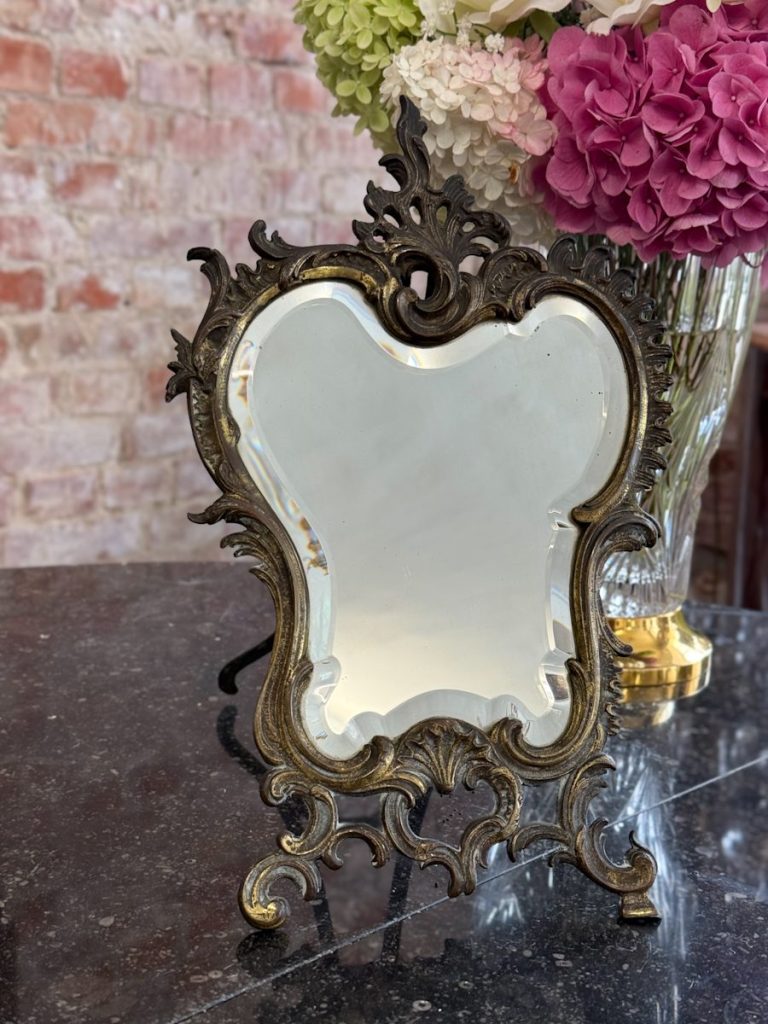
This small-sized, visually charming, and unusually rich in subject matter bronze mirror is an exquisite example of late 19th-century European decorative art and high-level sculpture. The piece is cast from a high-quality, dense bronze alloy and then meticulously finished by… 450,00 €
You’re now subscribed to price tracking for this product. We’ll notify you if the price drops. 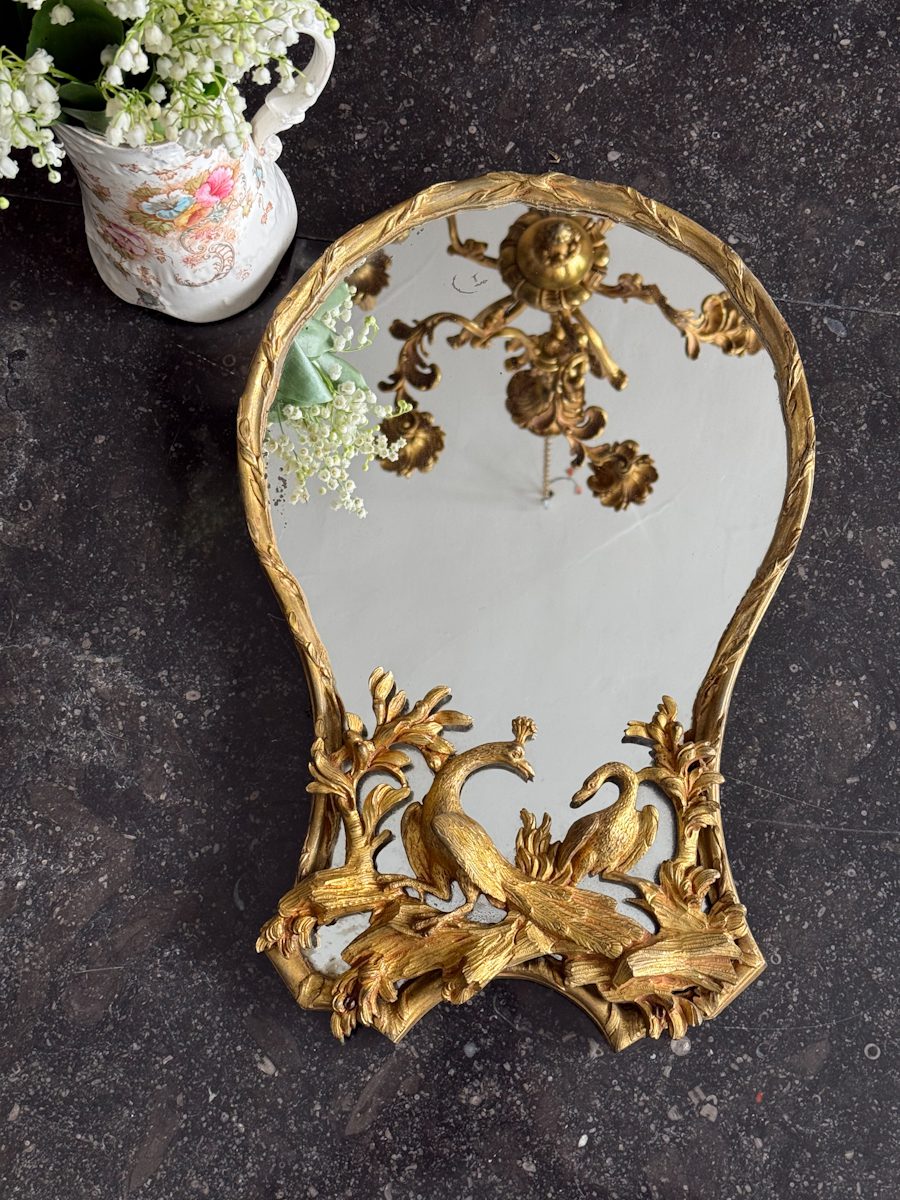
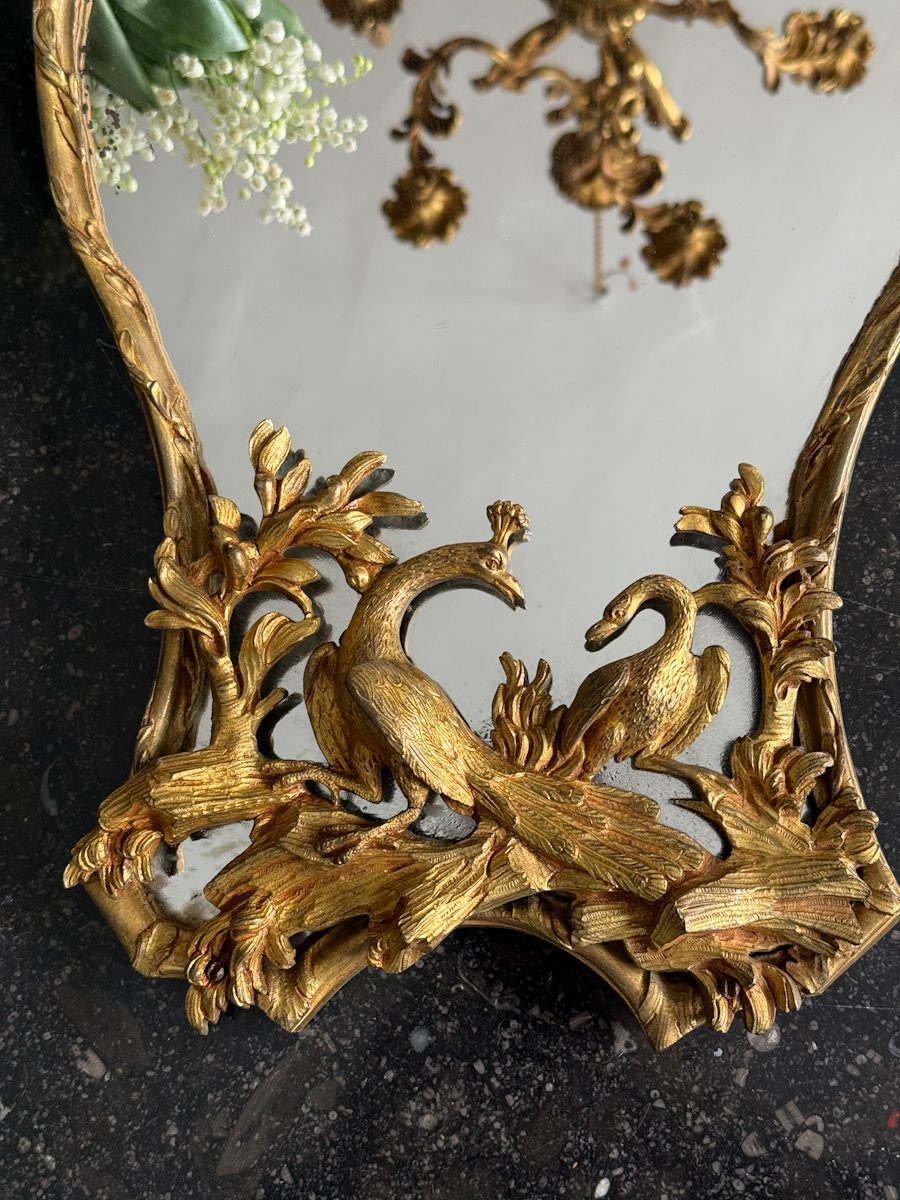
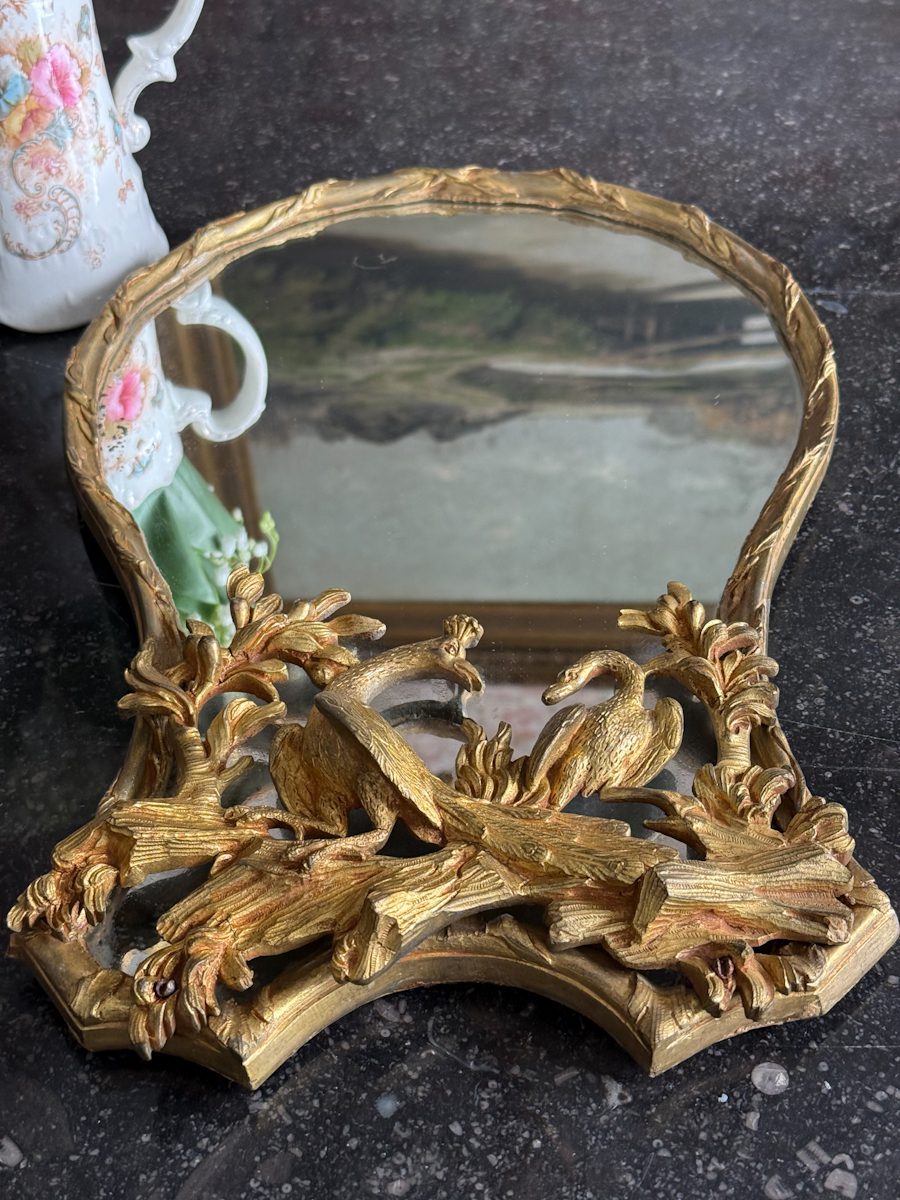
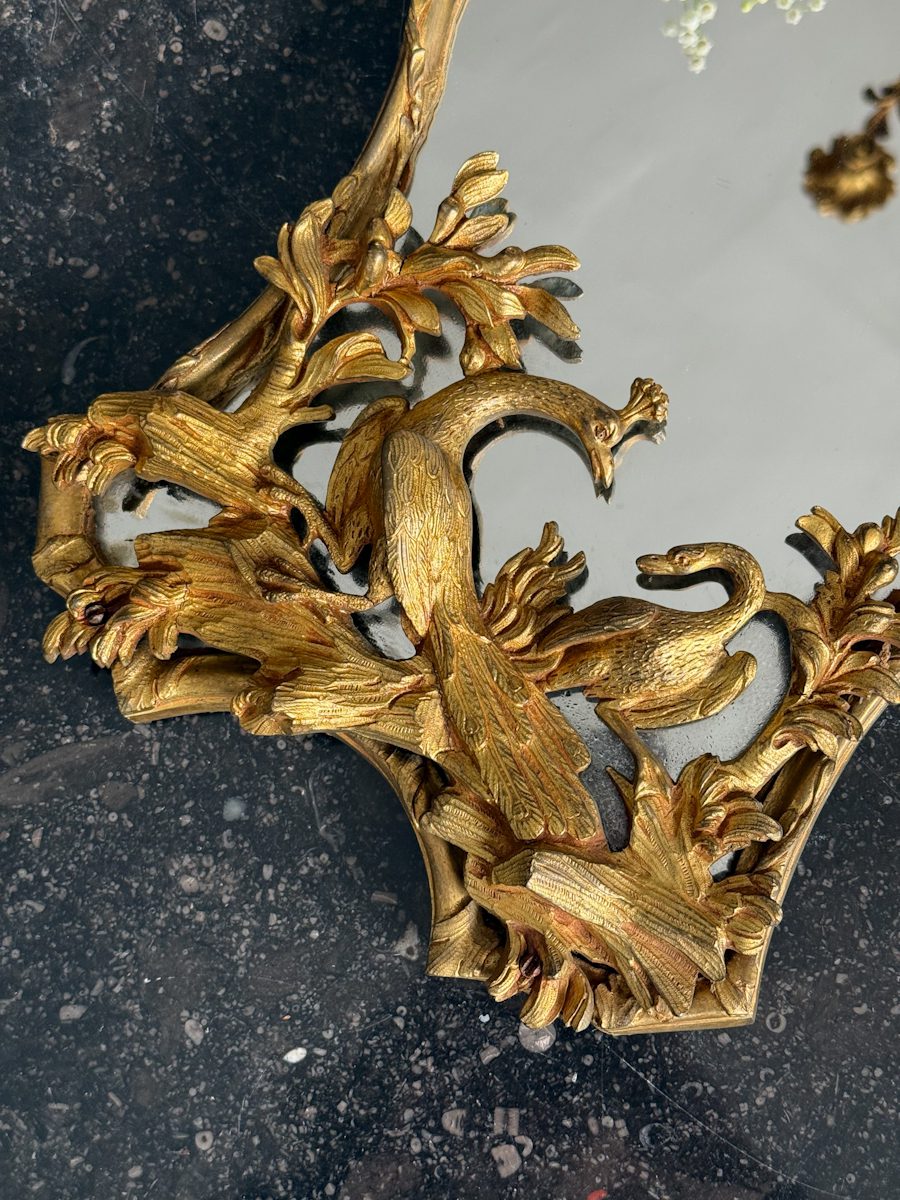
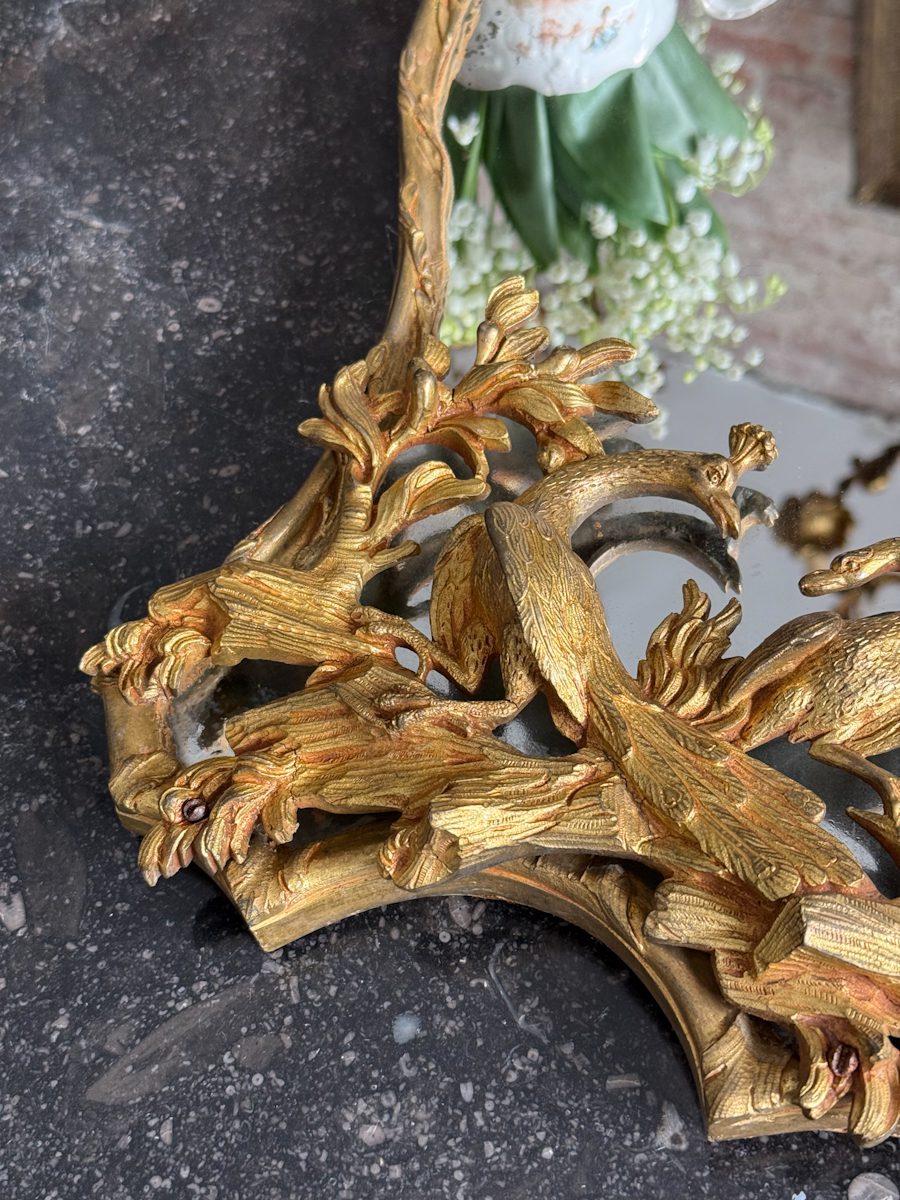
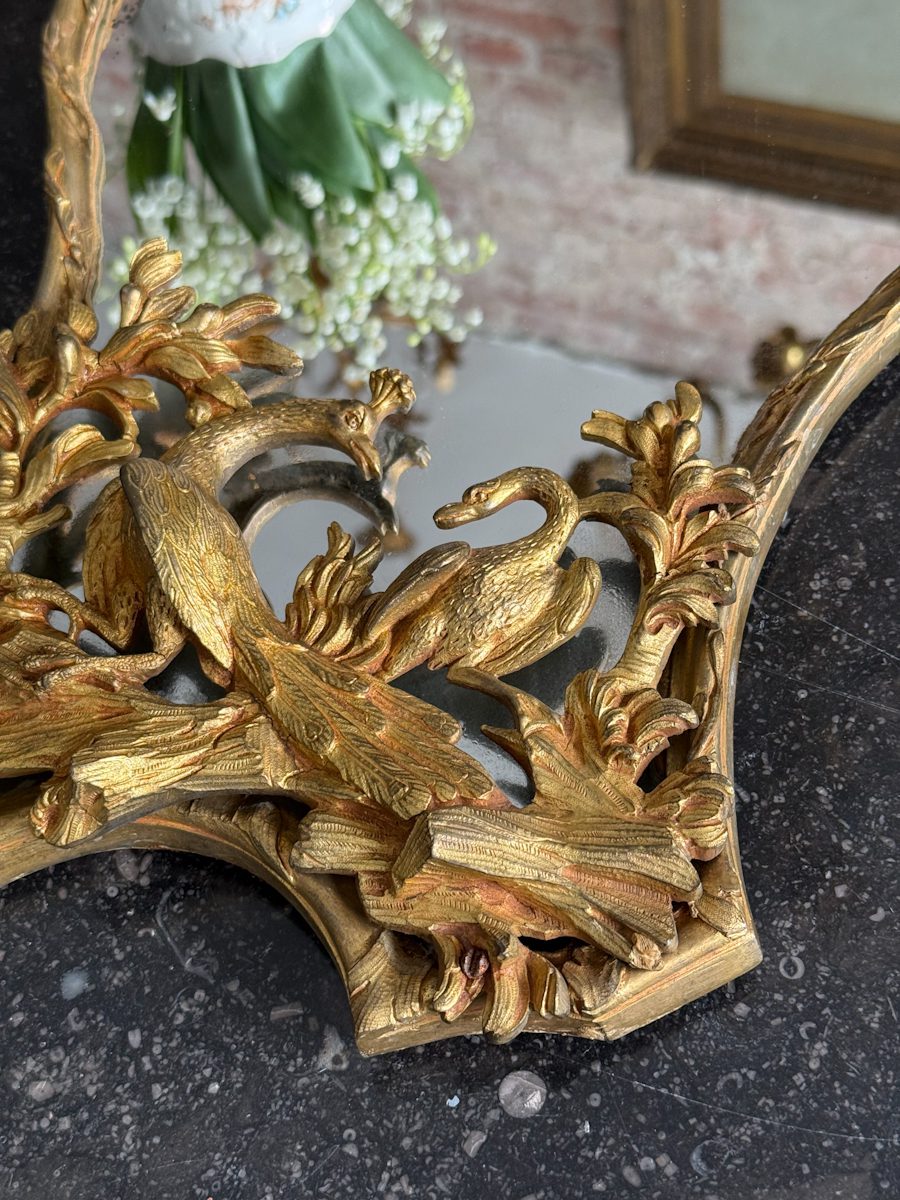
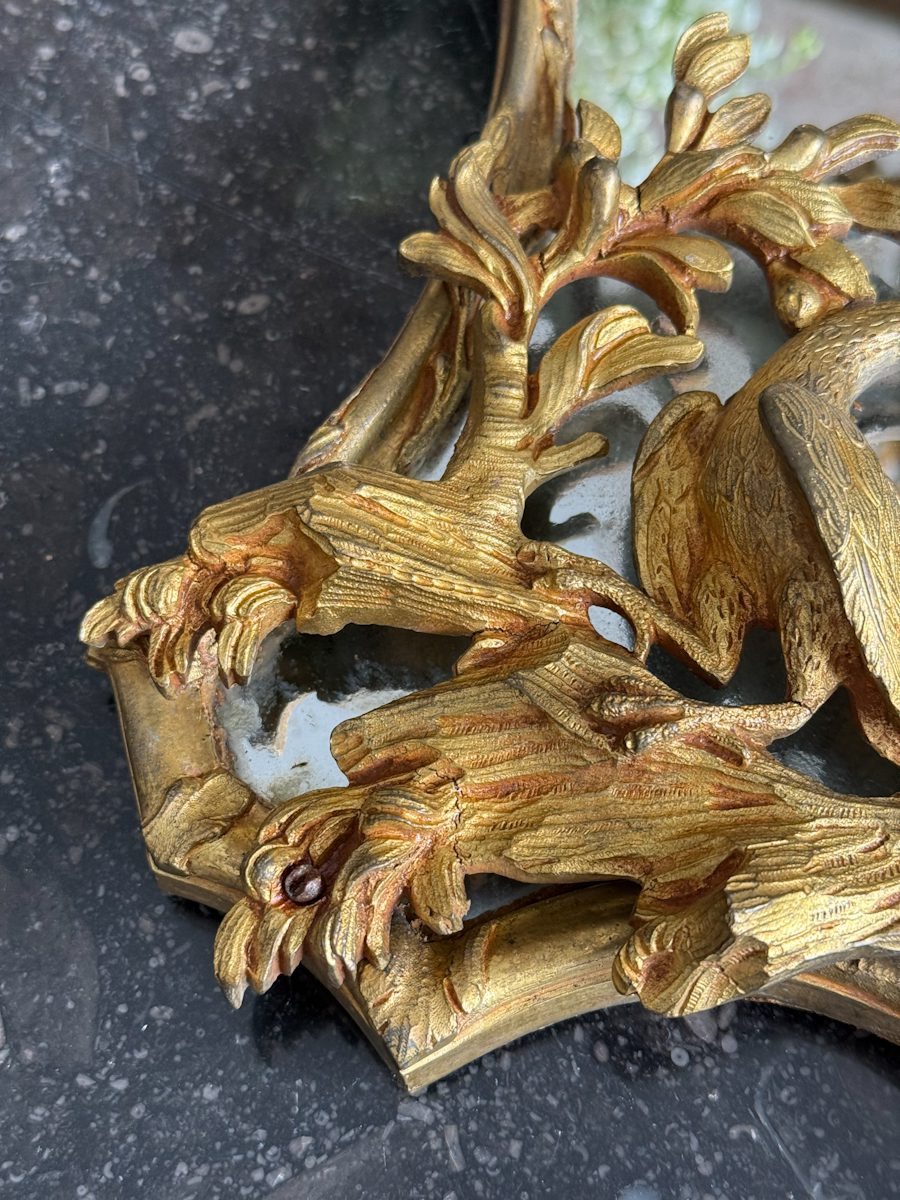
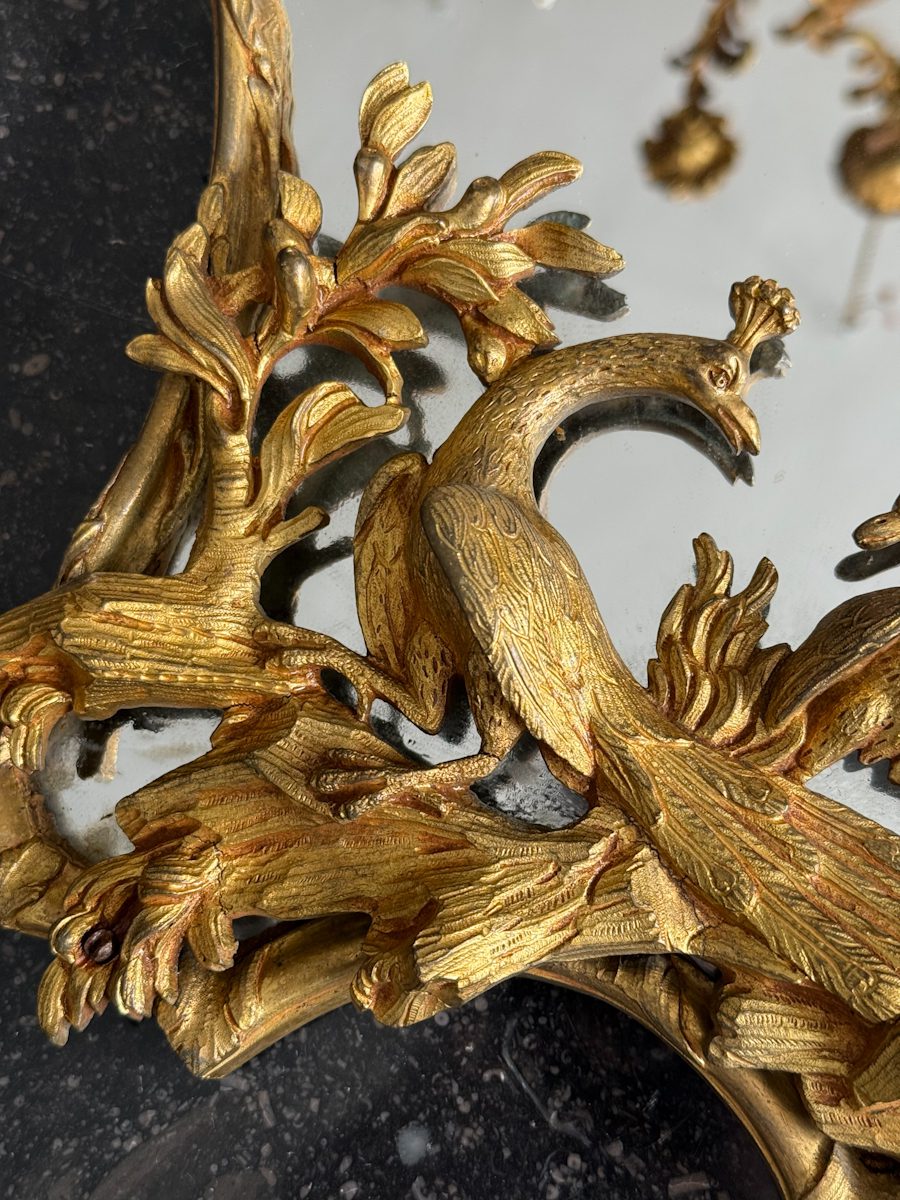
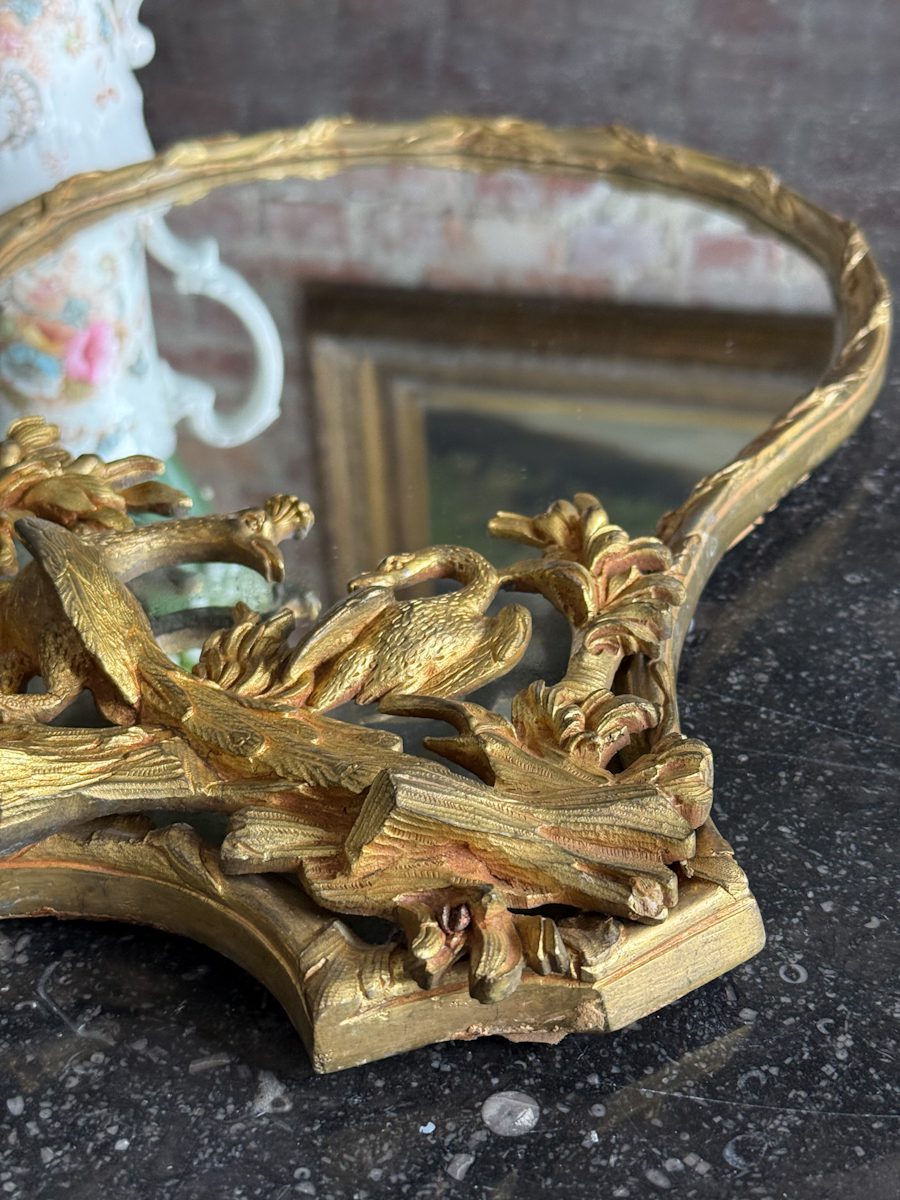
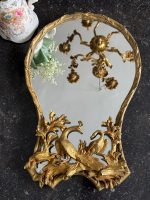

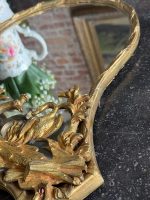
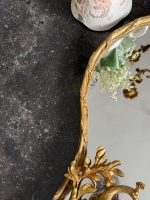
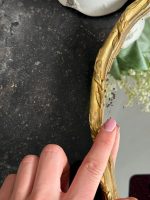
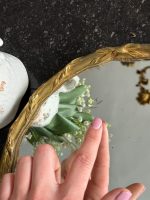
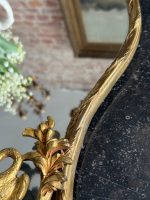
Luxurious antique bronze mirror with peacock and swan figures — Late 19th Century (6814)
Height 45 cm Width 30 cm
Description
45 cm height, 30 cm width. Elegant, small Rococo art brass mirror with sculptural peacock and swan motifs — late 19th century (6814)
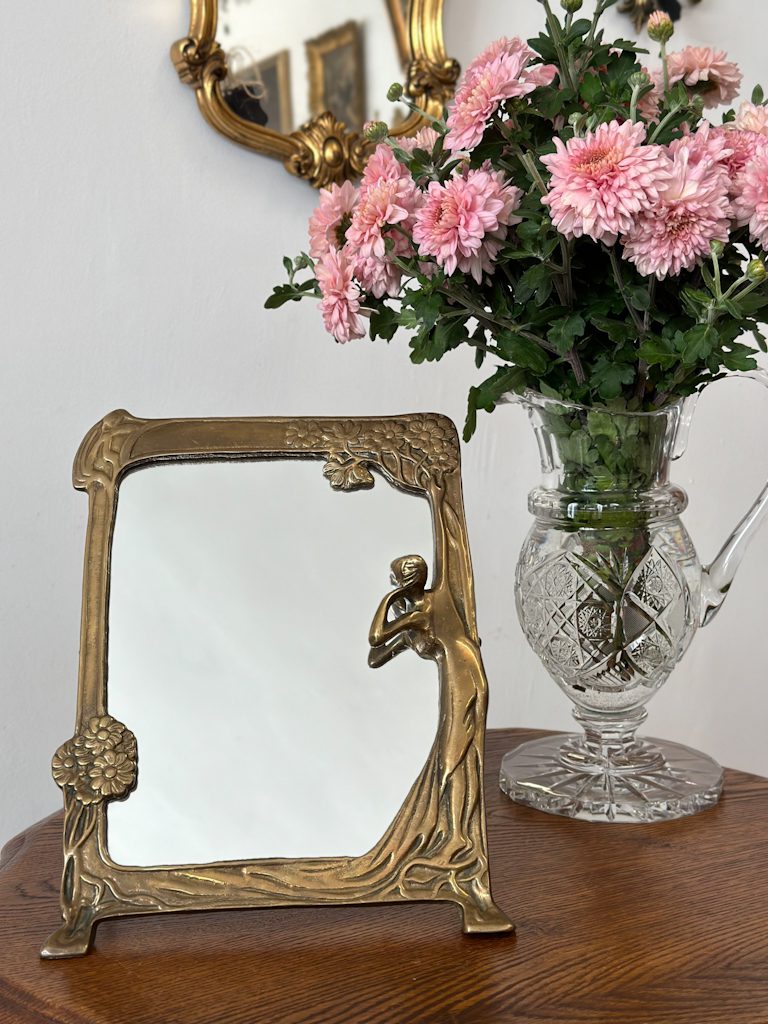
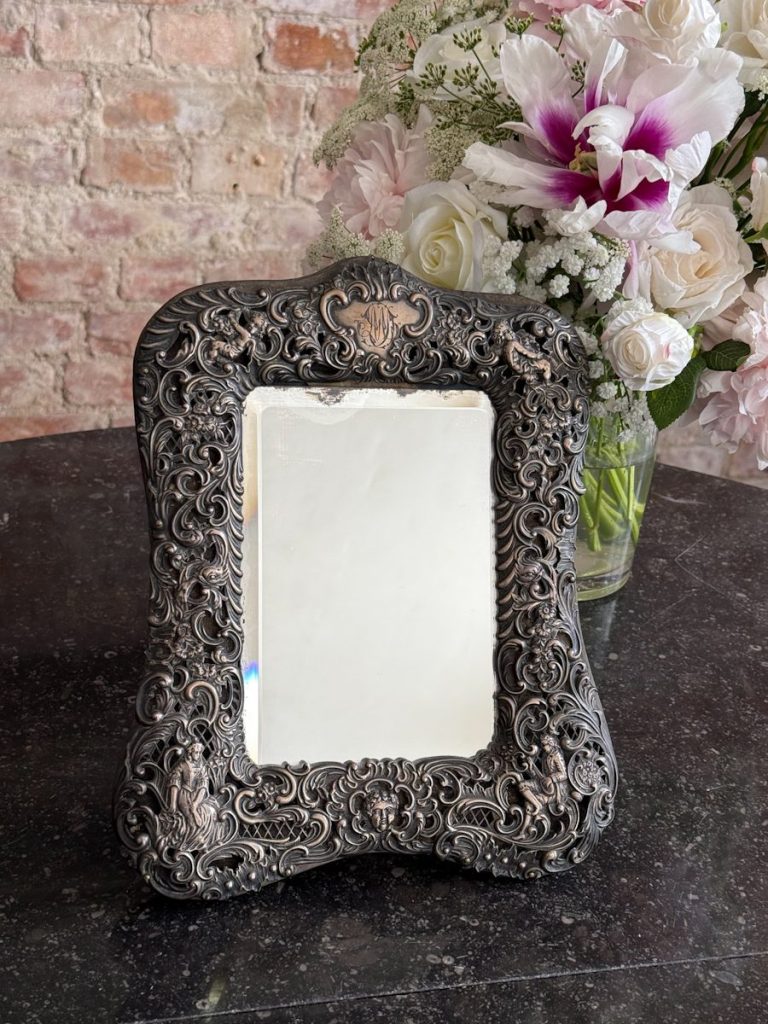
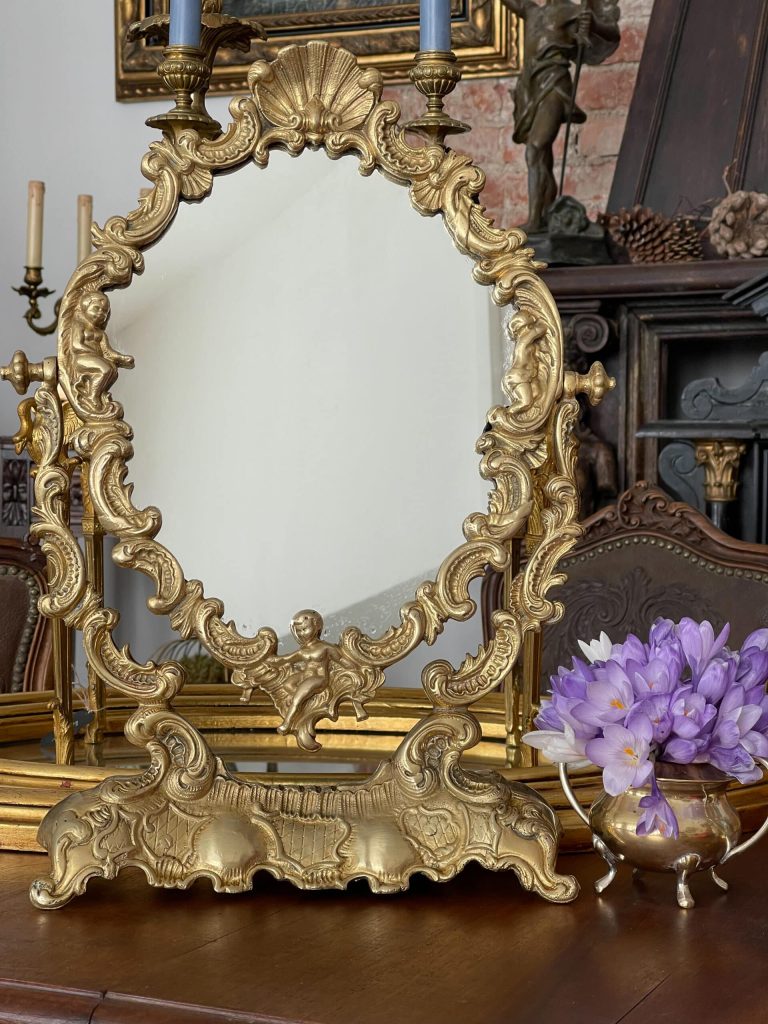
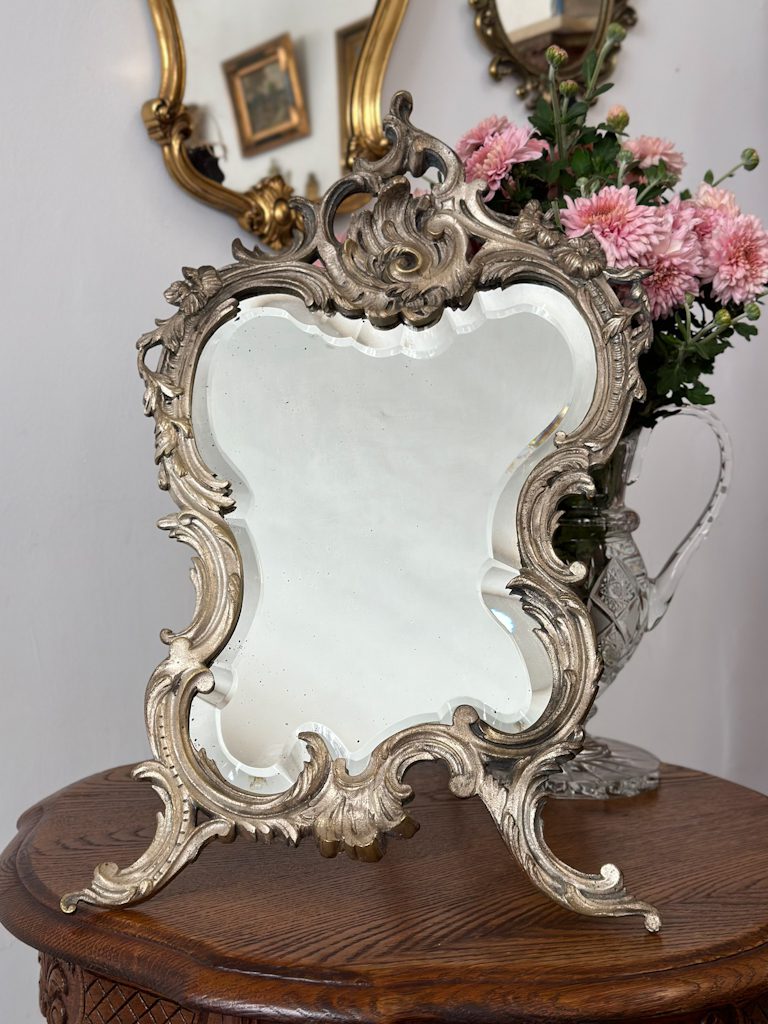
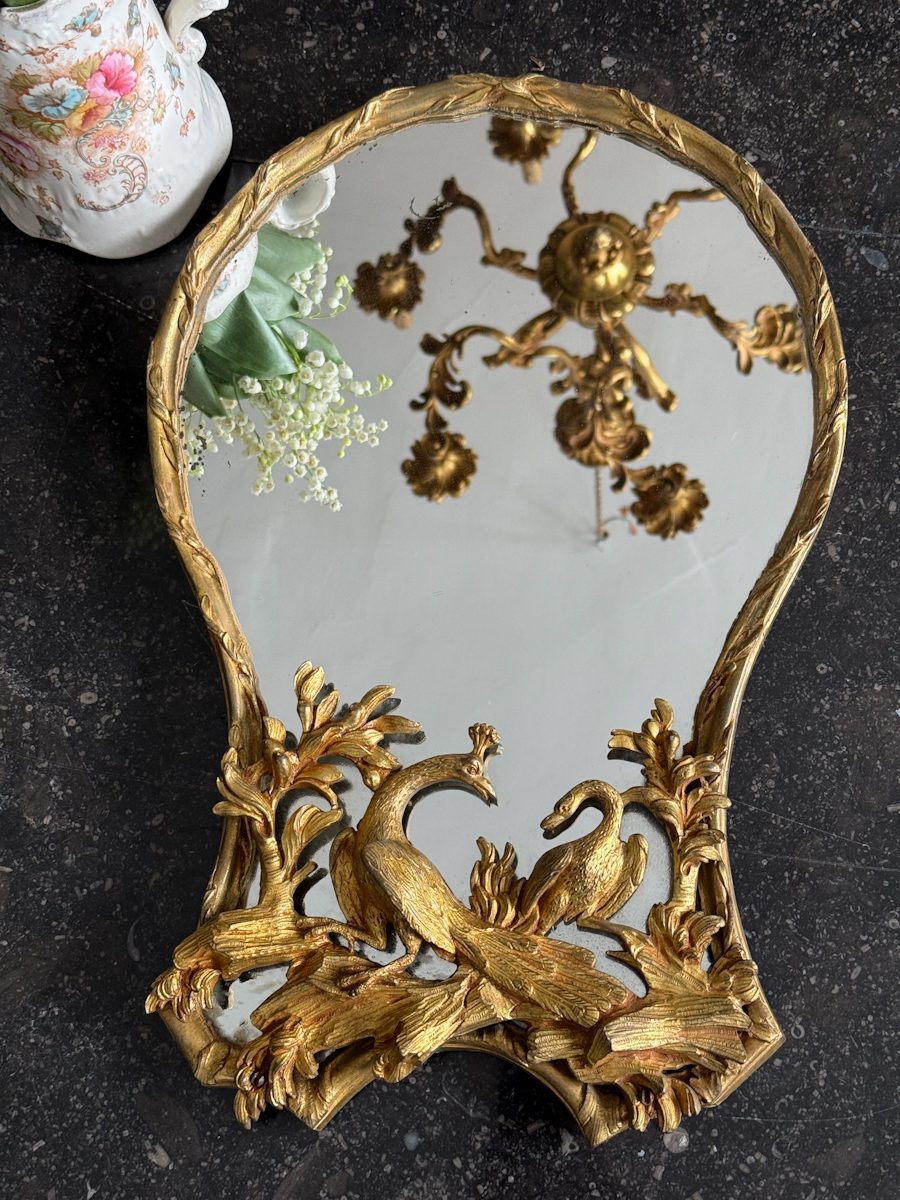
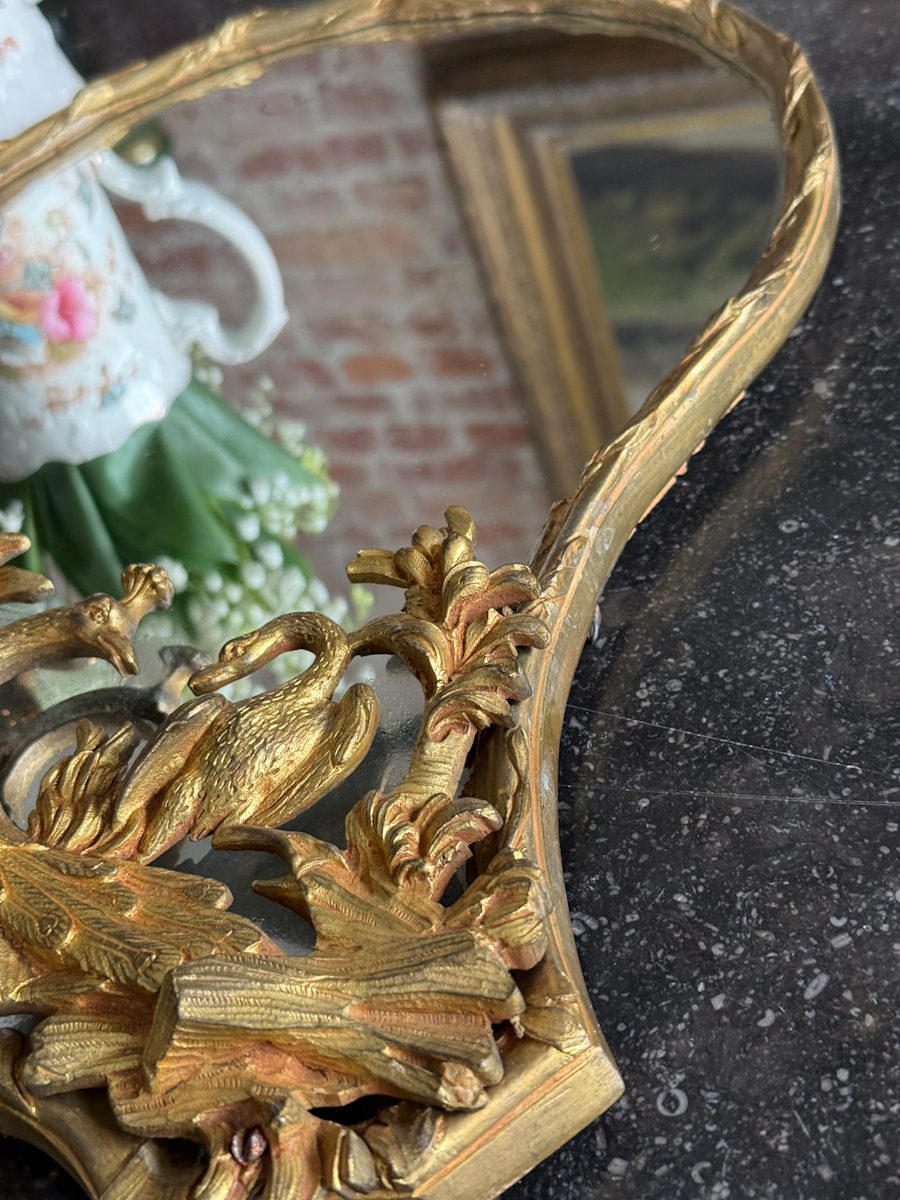
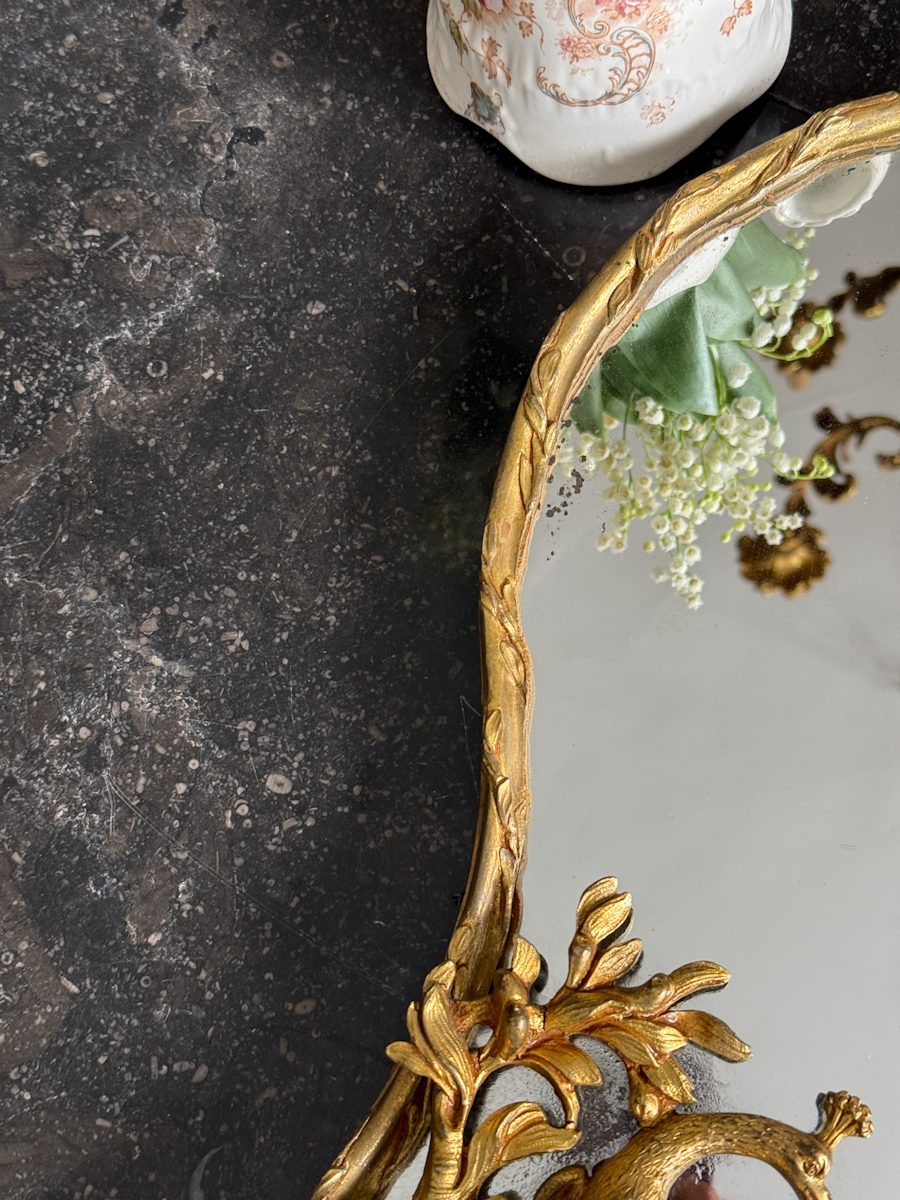
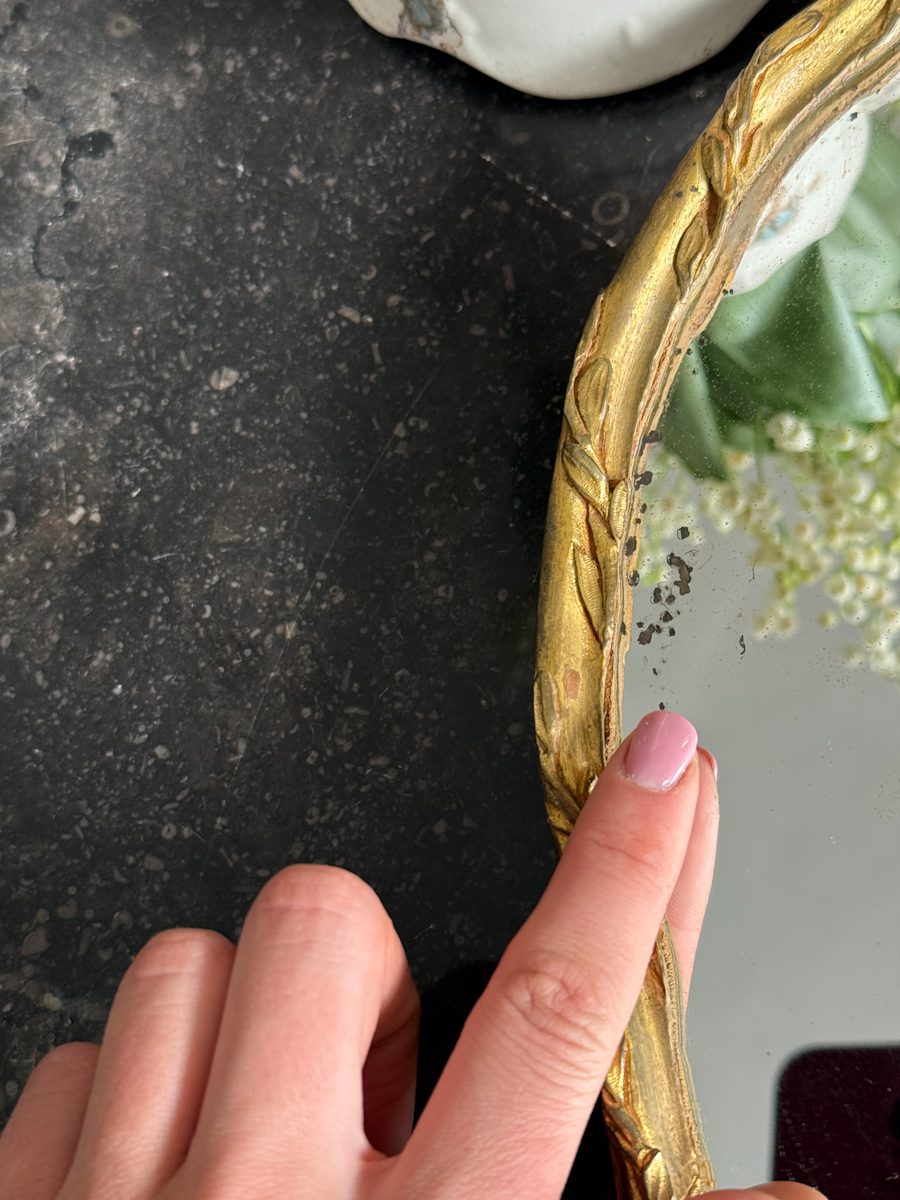
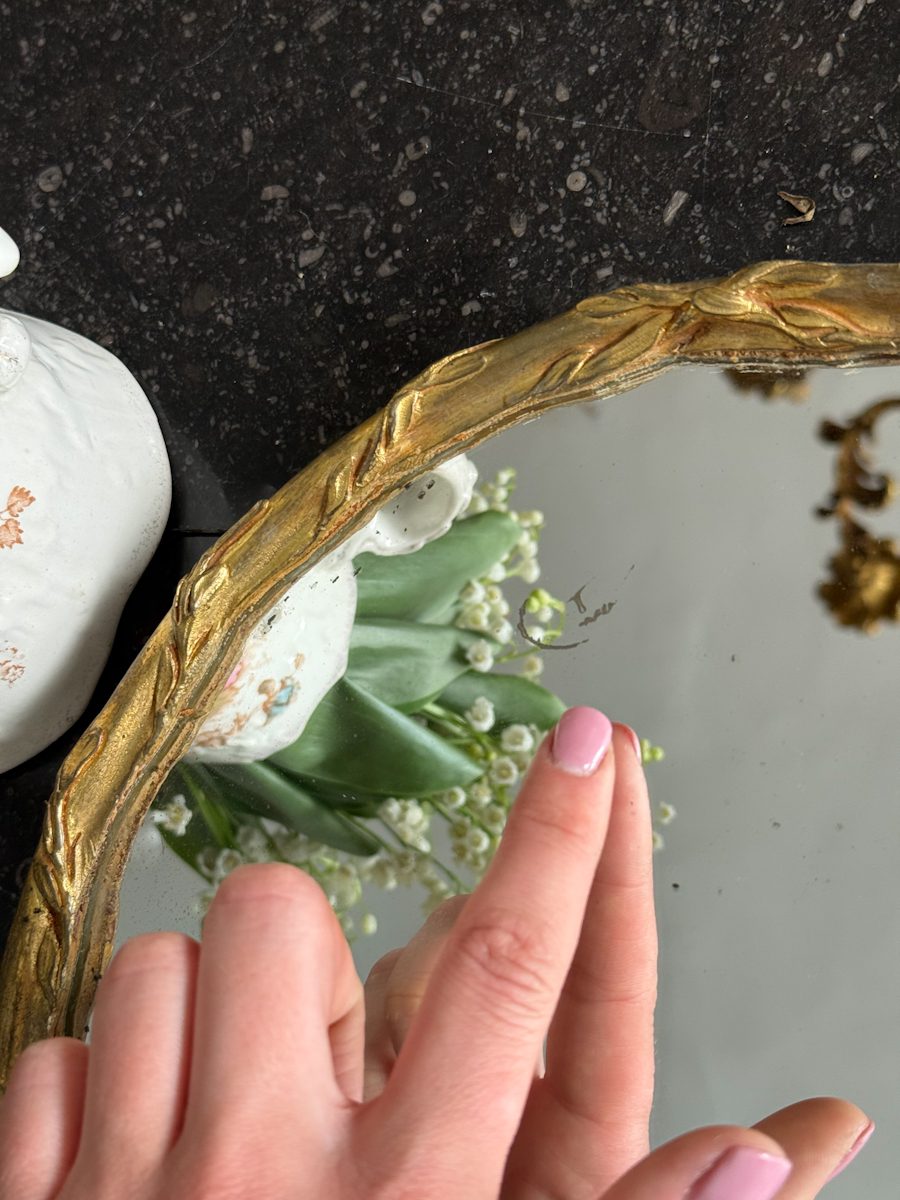
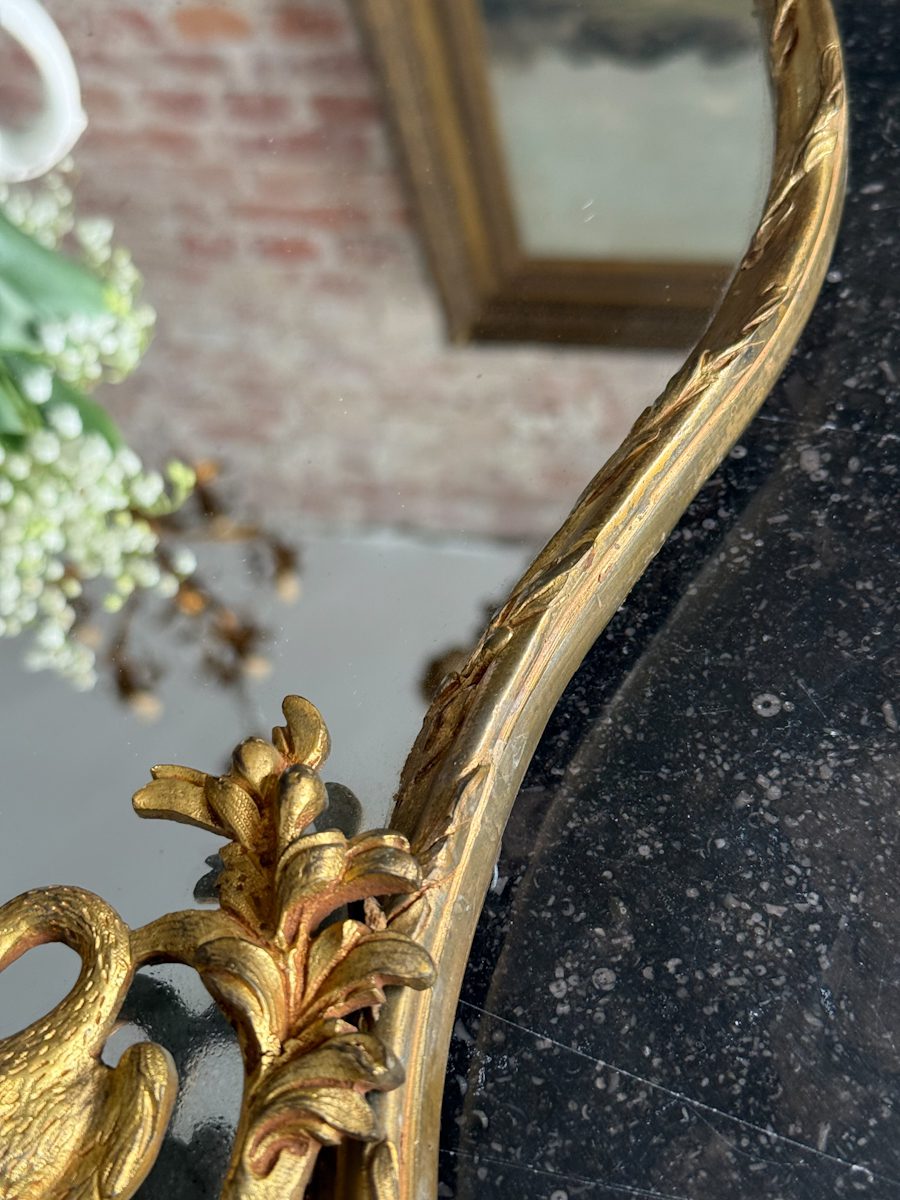
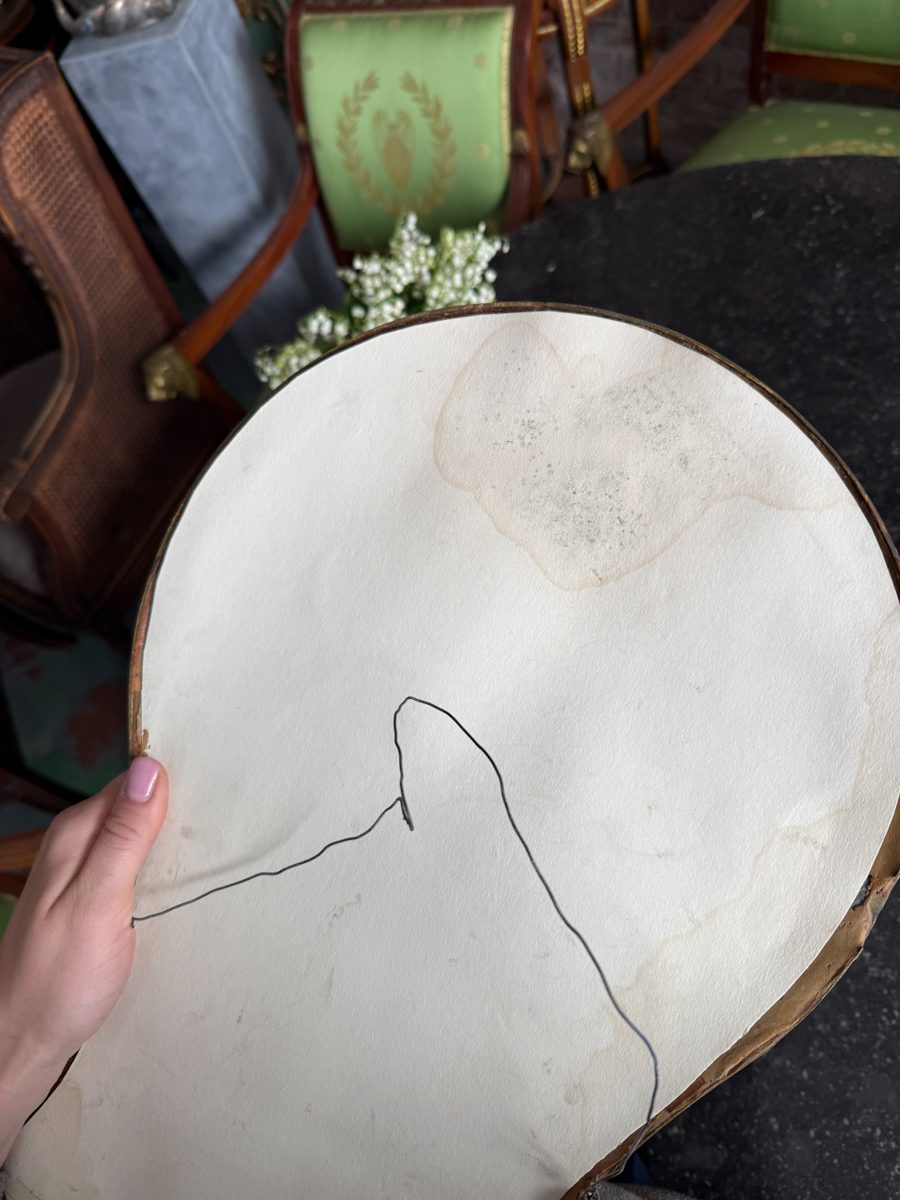
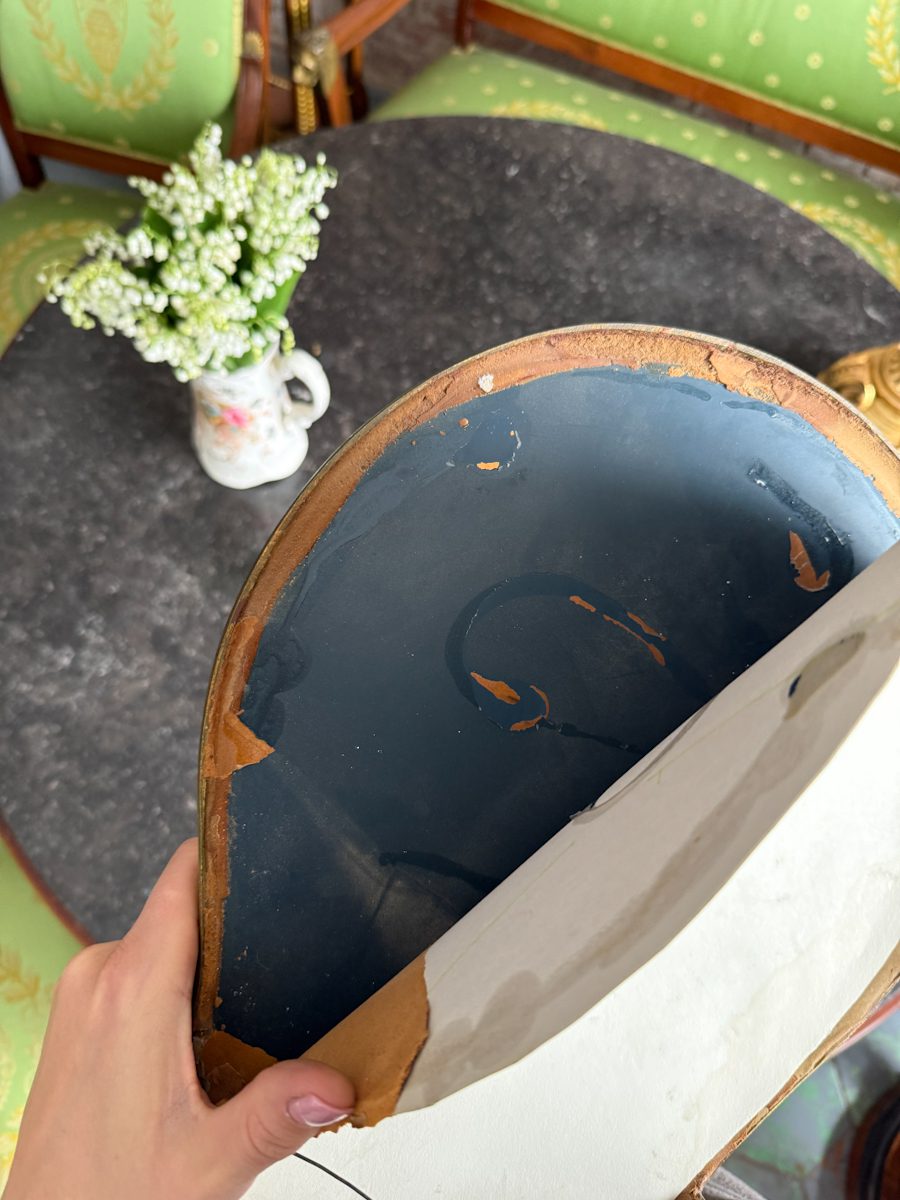
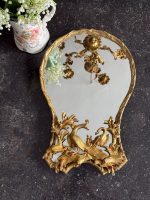
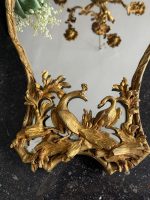
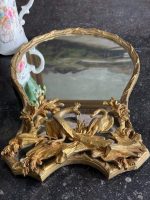
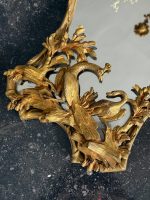
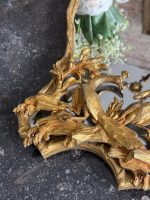
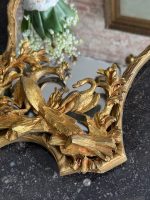
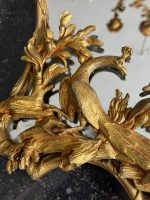
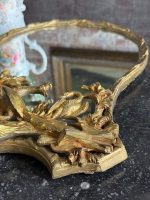
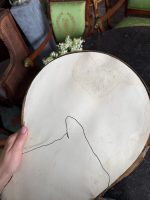
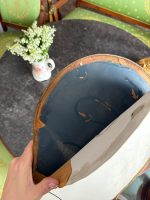
This small, visually charming, and unusually rich in motifs bronze mirror, or art brass mirror, is an exquisite example of European decorative art and sculpture from the late 19th century. The object is cast from a high-quality, dense bronze alloy and then masterfully finished (chased) by hand, giving each bird feather, bark texture, and foliage a distinct sharpness, relief, and three-dimensionality. The mirror frame has retained its original, warm, and sunlight-reflecting golden sheen with a gentle, natural patina in the relief depths that has developed over time. The artistic substance of the mirror is defined by its unique, nature-inspired Rococo (Louis XV and Naturalism / Rococo Revival) motif, which is a rarity in the antiques market. The frame is shaped by elegant, flowing, and naturally curved tree trunk and branch motifs with delicate leaf buds encircling an asymmetrical mirror surface. The main jewel of the composition, however, is the frame at the bottom — on massive, relief-rich branches, two expressive bird figures are sculpturally and three-dimensionally cast. On the left stands a proud peacock with a magnificent, long feather train and an exquisite crown on its head, while on the right, a graceful swan with a characteristically curved, slender neck. The birds face each other, creating a lively, dynamic, and symbolic dialogue. The center of the mirror has retained its authentic, historical, and thick mirror glass. The surface shows charming signs of amalgam aging and mild patterns, which give the object an unmistakable antique charm and document its centuries-old history. On the back, the mirror is equipped with the original historical paper/cardboard protective plate with watermarks and patina imprints from the passage of time. Dimensions and Scope: * Dimension Category: Small/medium size (ideal for a lady’s boudoir, desk, or as an exclusive accessory on a console)
* Construction: Solid, rigid, and monolithic art brass frame with distinct motif relief at the base and stable three-point placement. Production Period, Art Style, Era
Produced approx. 1885–1900, France. The object represents the flourishing of the magnificent Belle Époque (the beautiful era), when small, but extremely elegant, sculpturally rich lady’s boudoir and vanity table accessories were a major fashion trend in the Parisian elite’s and wealthy bourgeois homes. Bronze mirrors of this size and motif served not only practical purposes but were also exquisite and intellectual interior decorations, where the peacock traditionally symbolized aristocracy, beauty, and immortality, while the swan symbolized loyalty, grace, and purity. A snapshot from the era: In an elegant lady’s boudoir in a Parisian home, dressed in silk fabric, a calm afternoon peace reigned… The room smelled faintly of powder and freshly cut roses in a porcelain vase on the vanity table. The incoming sun, filtered through thin curtains, illuminated the small, heavy bronze mirror, whose golden frame, sculptural peacock, and graceful swan seemed almost alive in the sunbeams, like a frozen symphony of nature in metal. This object exuded a true, unwavering “old school” elegance and refinement from the monarchical era. It is precisely such visual perfection, aristocratic grace, and effortless historical atmosphere that the producers of the major series “Sisi” have chosen for five consecutive seasons, as such a treasure immediately transforms a simple corner of a room into a sublime aesthetic space. Manufacturer and Origin
The high degree of bronze casting technique, the sharpness of the feather pattern, the precision of the birds’ proportions, and the plasticity of the branches undoubtedly testify to the outstanding and costly work of specialized art bronze foundries (fonderies d’art), which at the end of the century focused on exclusive individual commissions. Rarity and Significance
While simple bronze frames with classic floral vines or ribbons appear relatively regularly on the antiques market, such a motif mirror, where the peacock and swan figures are fully sculpturally and so detailedly crafted in the base among branches, is an exceptional and unique rarity. Since such small, protruding decorative elements were most often broken or lost in daily use, its complete preservation without missing details determines its high collector’s value and art-historical significance. Use in Interior and Design
The mirror will serve as an exquisite, unusual, and immediately noticeable visual and plastic accent in any room — on a gentleman’s desk, a lady’s vanity table, a bookshelf, or on a mantelpiece next to antique candlesticks and porcelain. Thanks to the high reflectivity of the bronze surface and deep reliefs, it captures light wonderfully and creates a unique play of shadows, making it an outstanding object for first-class interior design photography. Condition
The mirror is in excellent antique condition of preservation. The massive bronze frame is completely rigid, stable, and monolithic. All the delicate sculptural elements — the peacock figure with crown and tail, the swan’s neck, and branch motifs — are original, sharp, and completely intact, without breaks or traces of restoration. The brass/bronze surface is clean, has retained its magnificent original golden sheen and natural patina. The original, thick mirror glass is solid, with beautiful and natural historical amalgam aging effects that only enhance the object’s authenticity and true age. The condition of the object is fully reflected in the photographs.