Silver Tea and Coffee Set with Ram Heads — Empire Style, 19th C. (6715) This luxurious silver tea set is a prime example of the Empire style, featuring a ram’s head (têtes de bélier) motif at the base of the… 550,00 €
You’re now subscribed to price tracking for this product. We’ll notify you if the price drops. 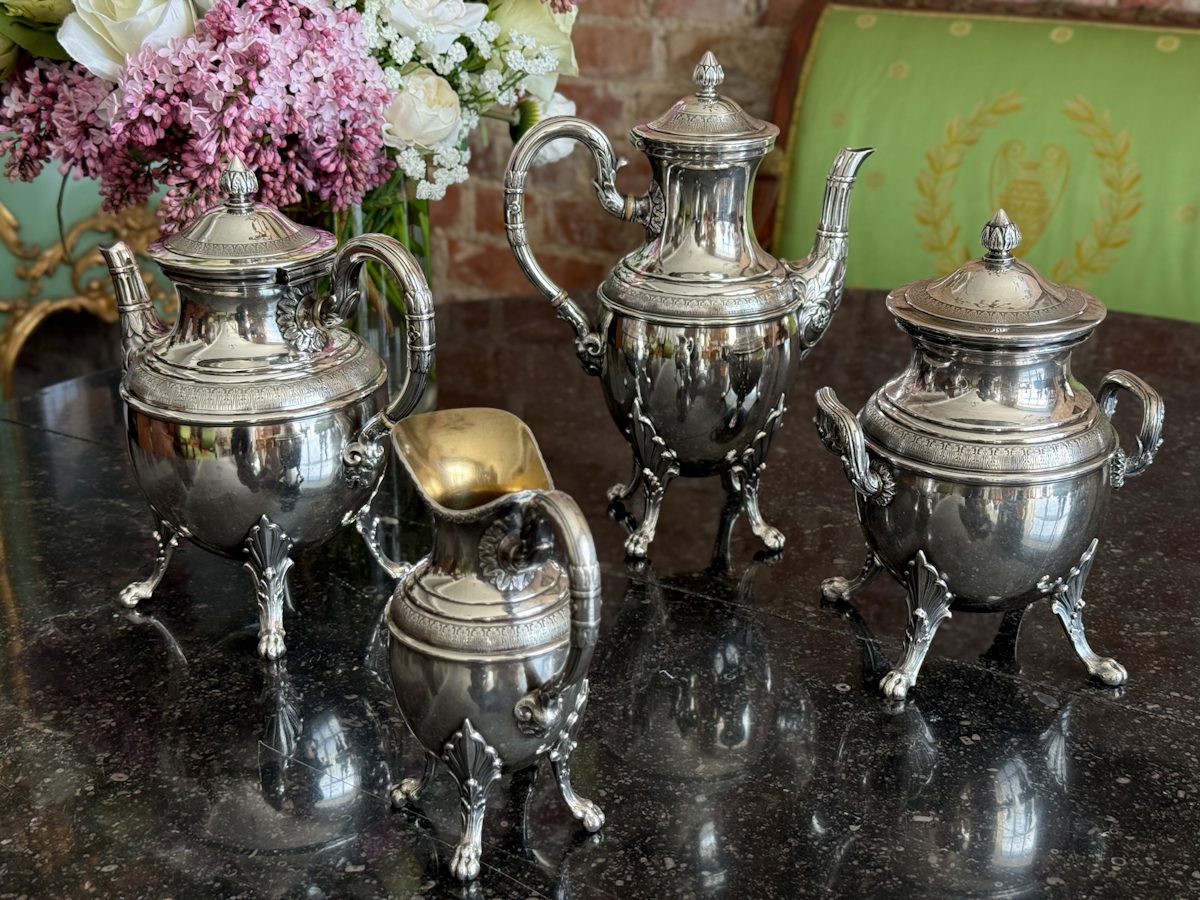
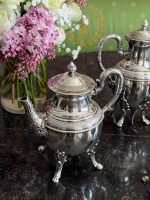
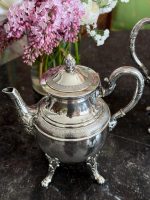
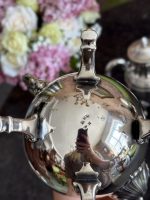
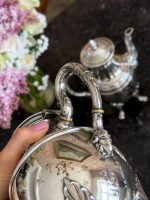
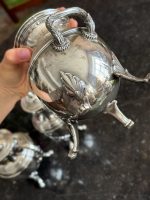
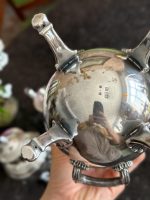
French Silver Tea and Coffee Set with Ram Heads — Empire Style, 19th C. (6715)
Color NaturalSilverCoffee
Description
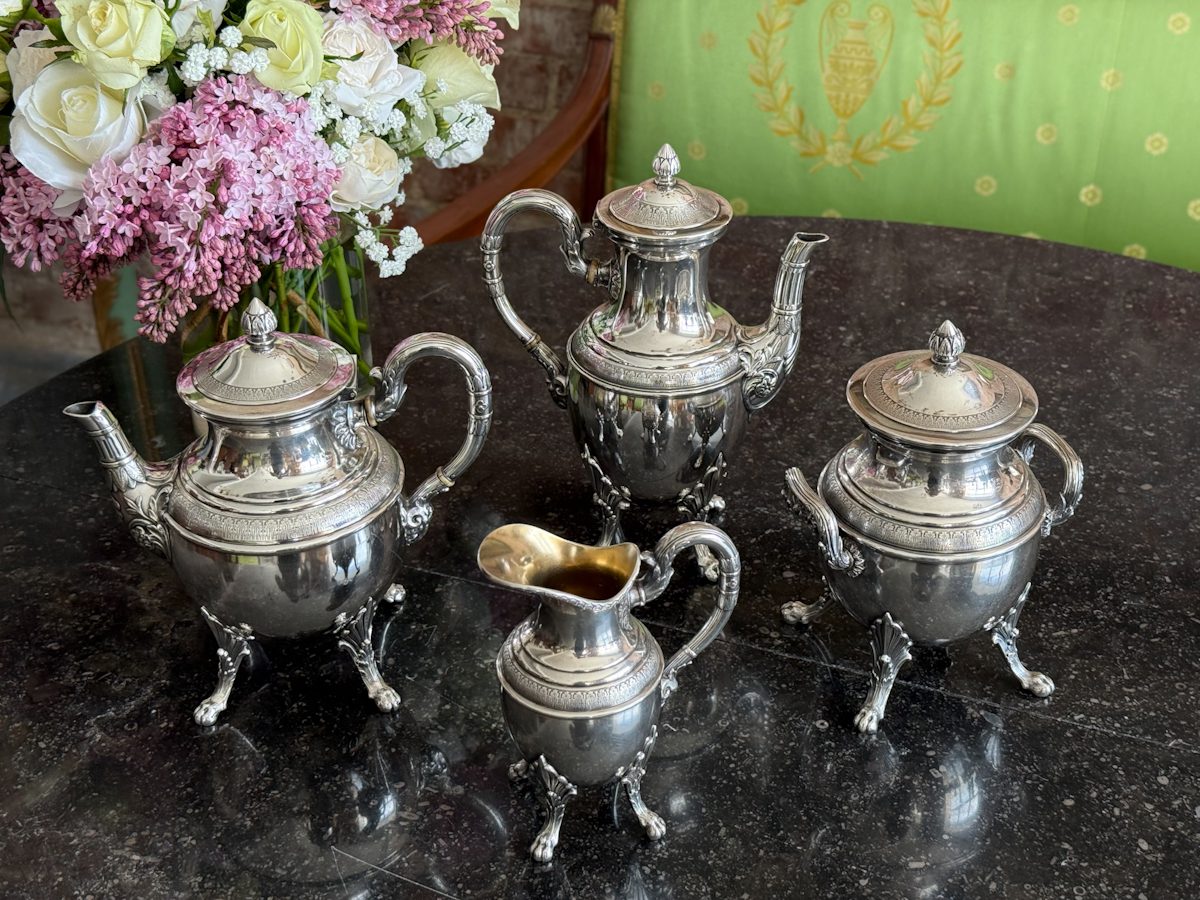
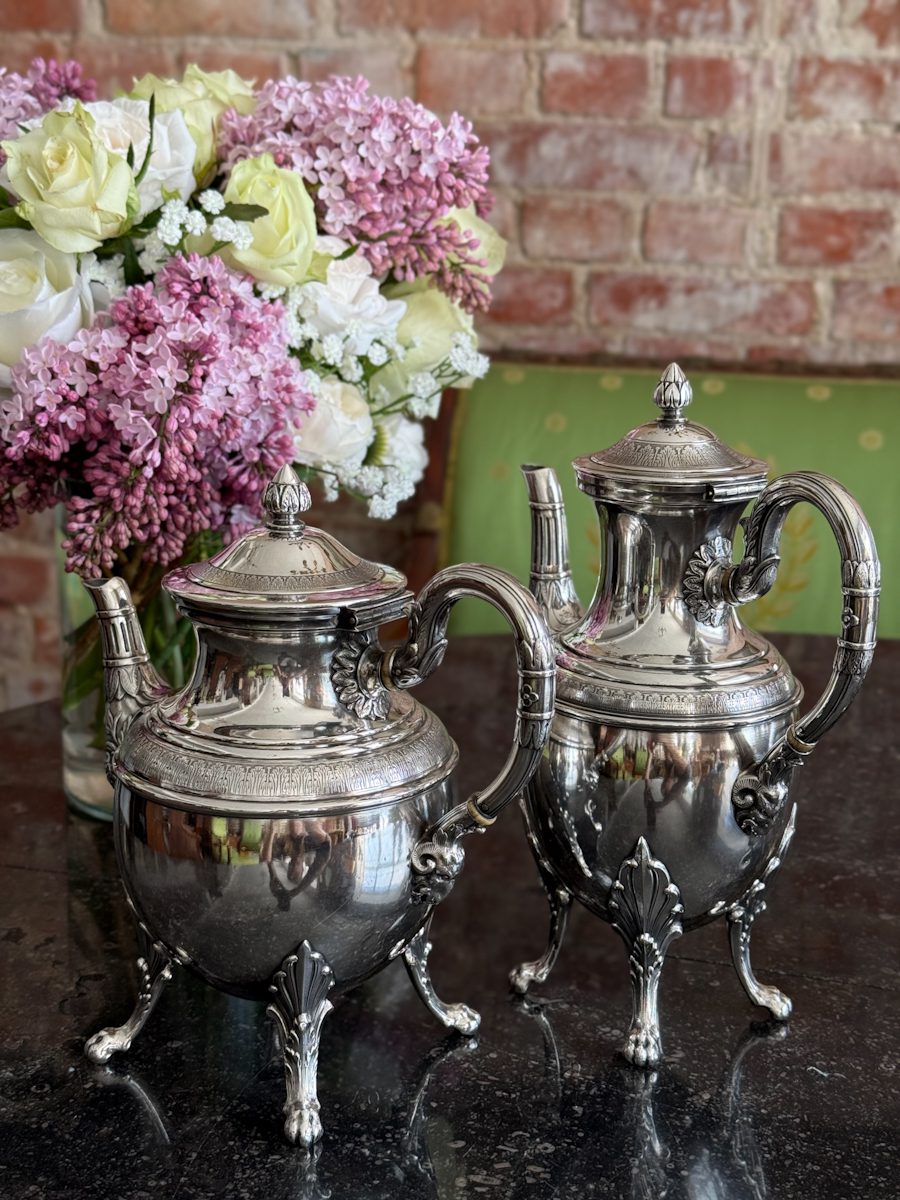
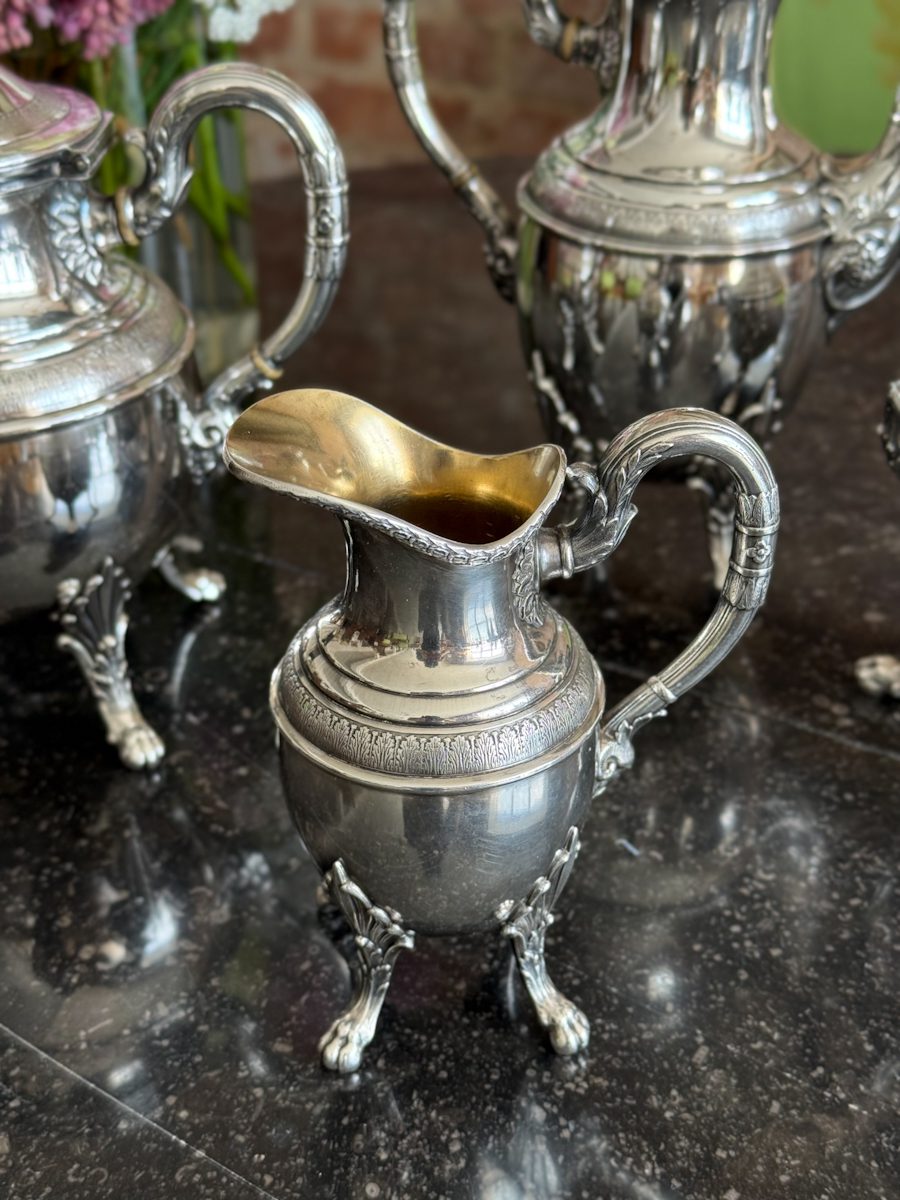
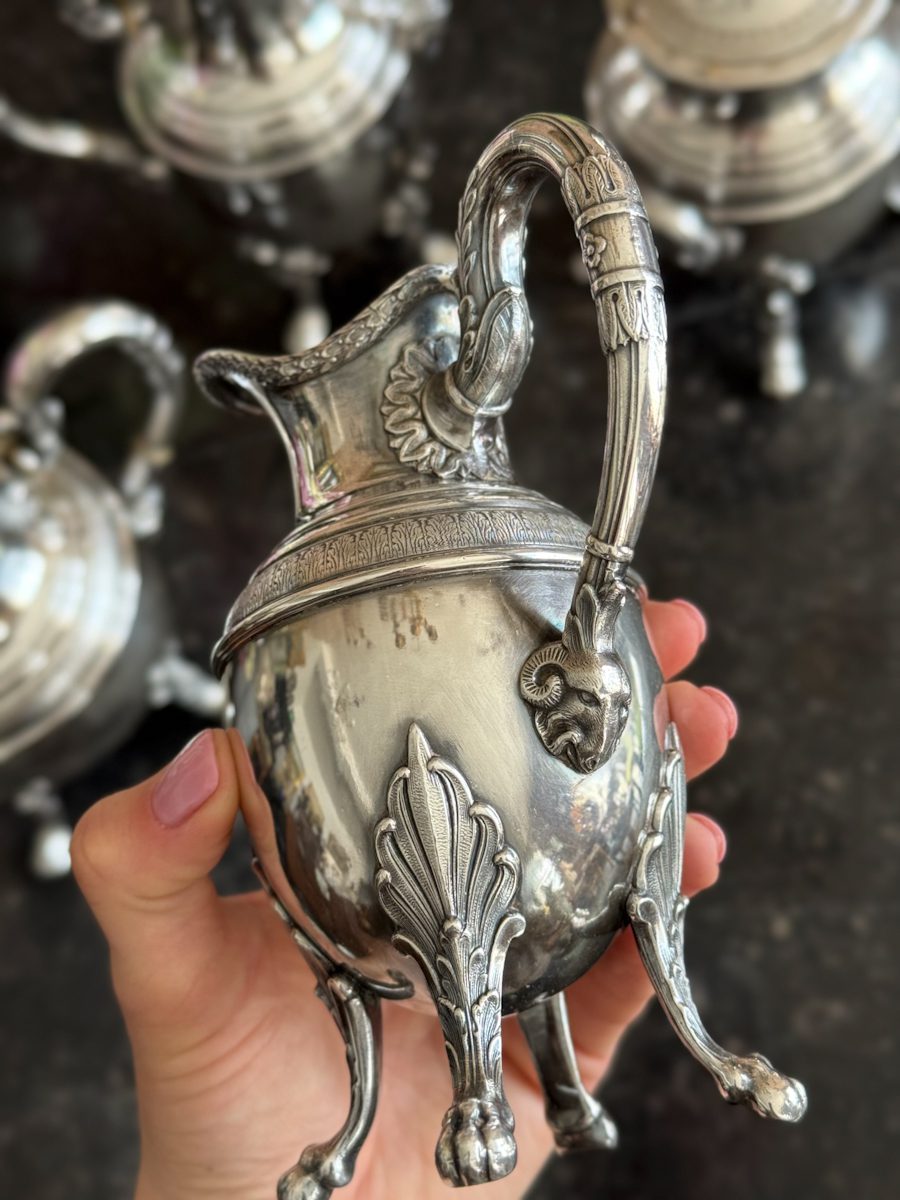
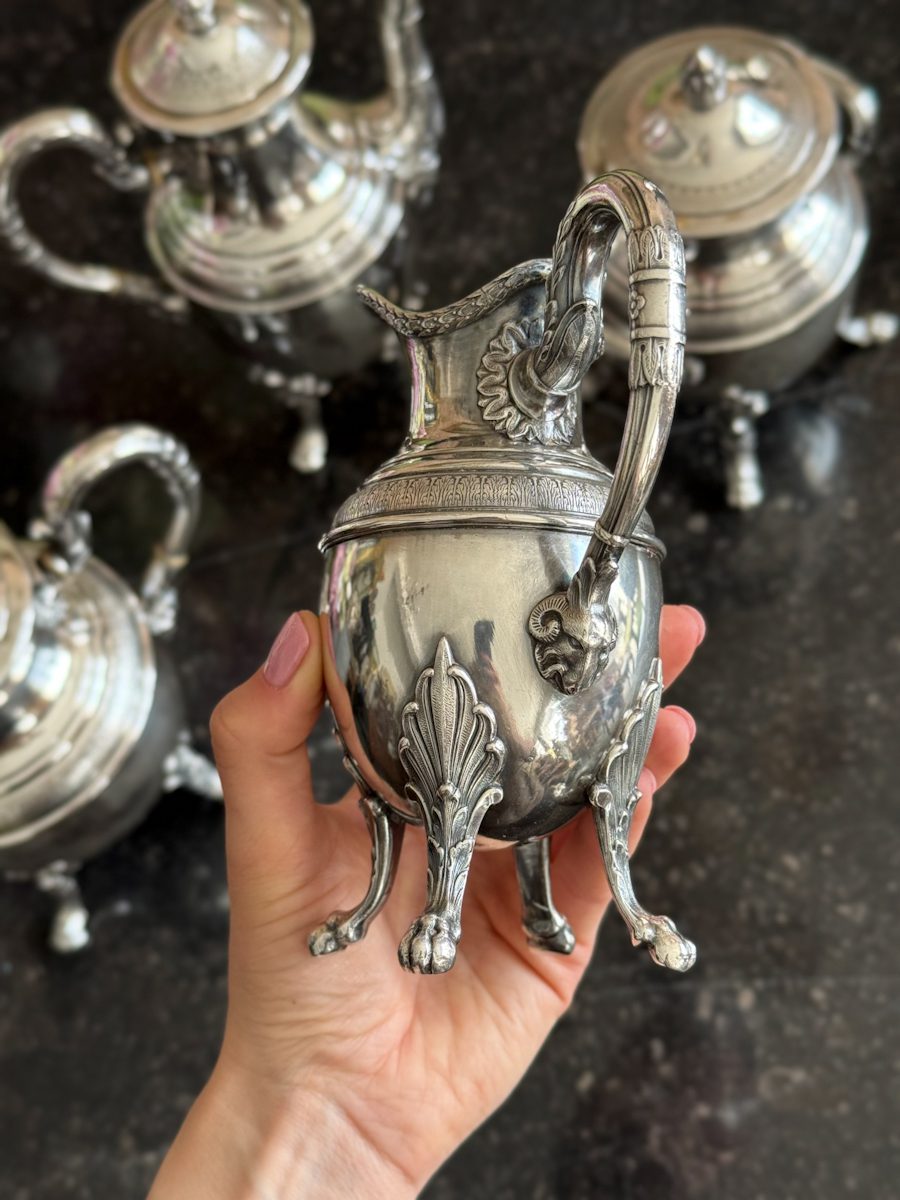
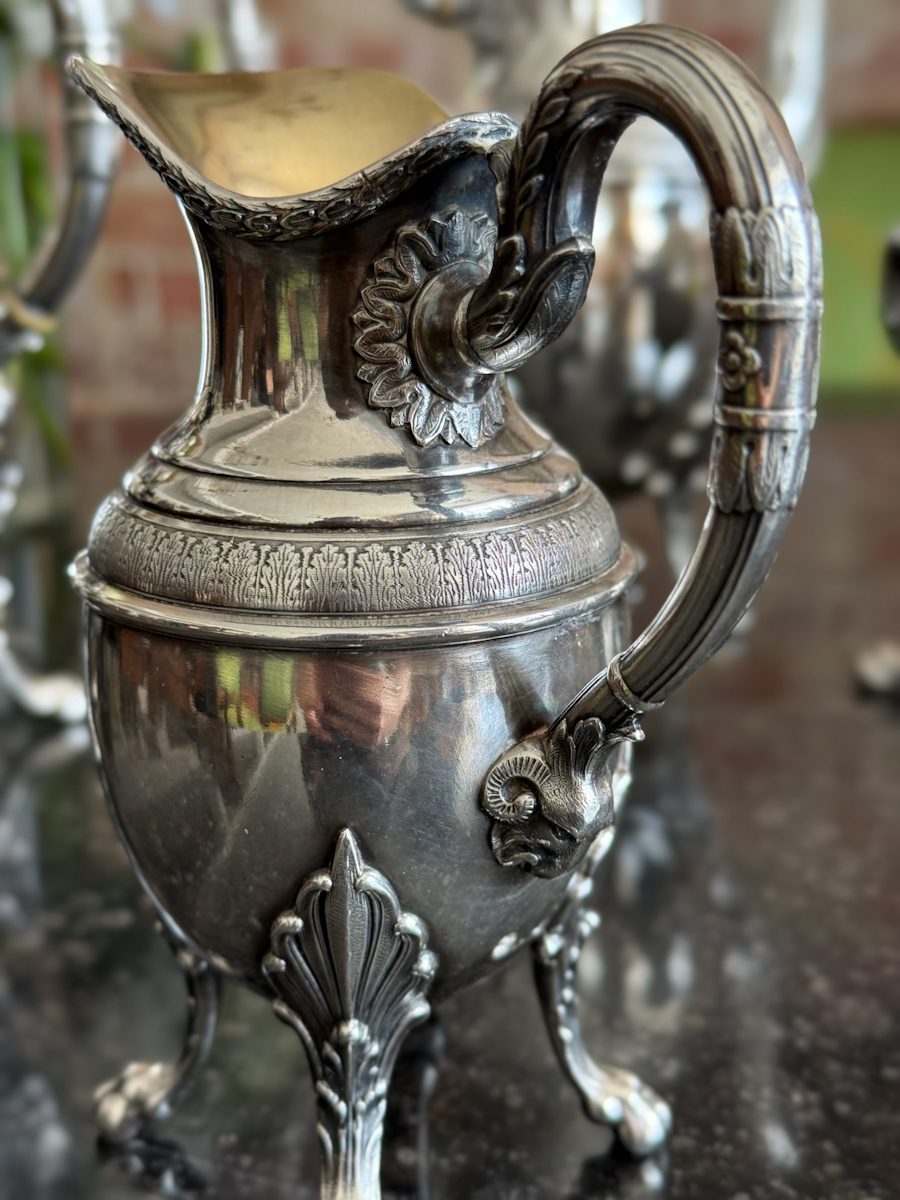
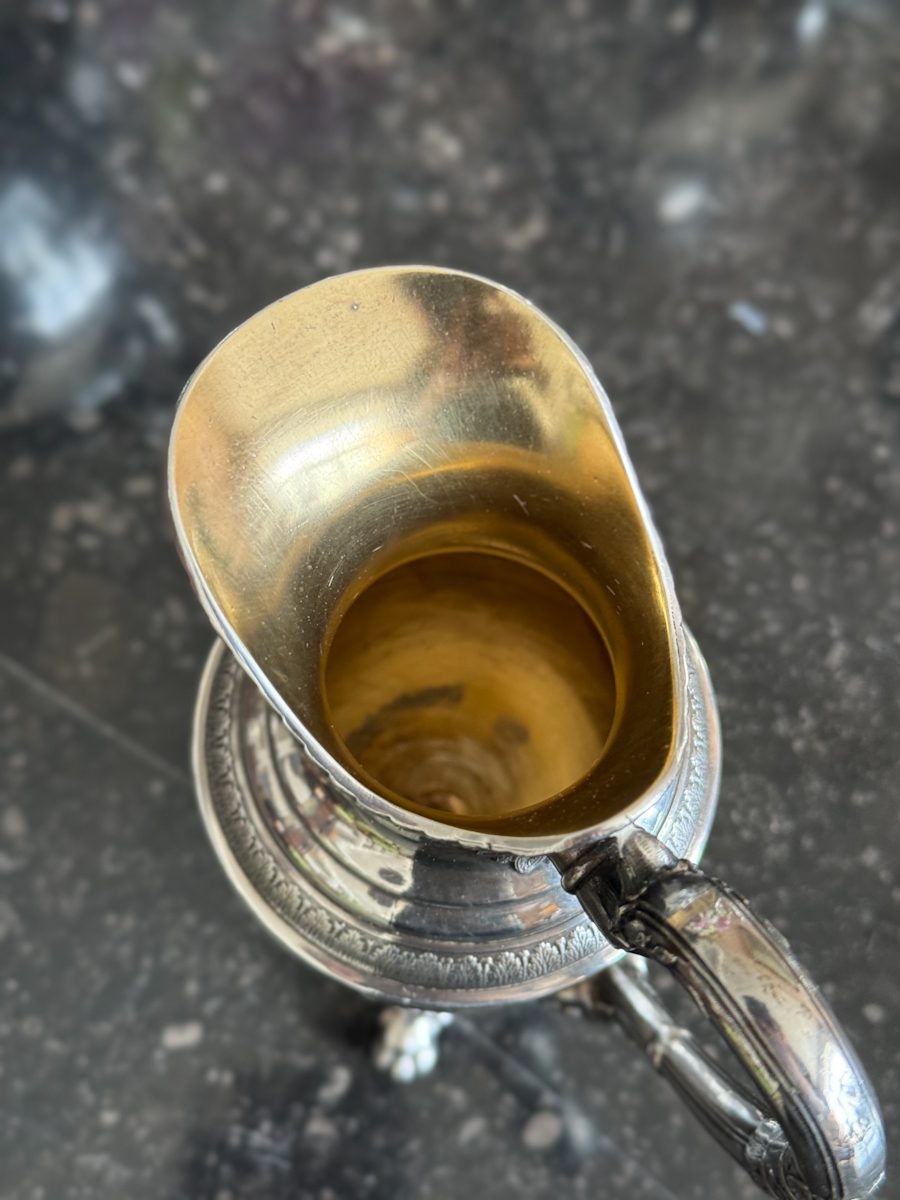
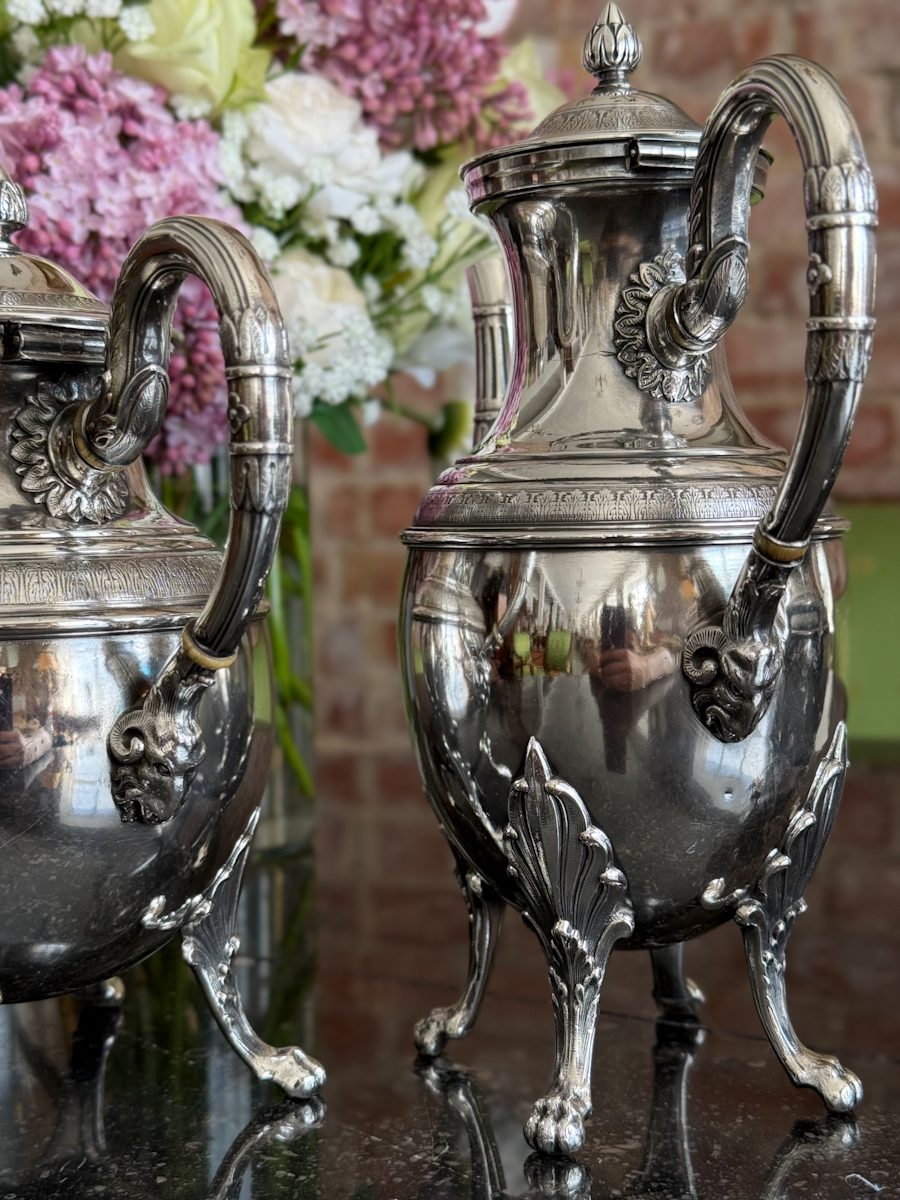
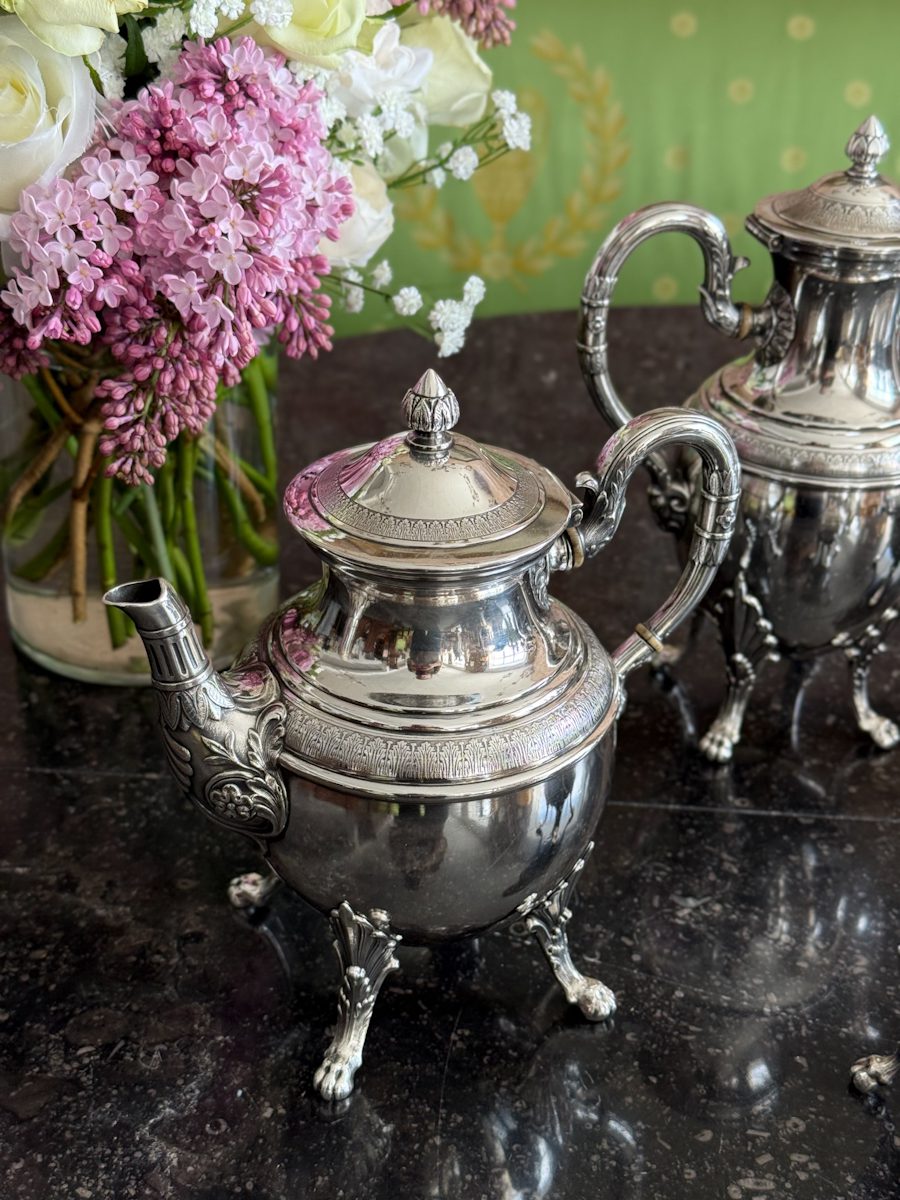
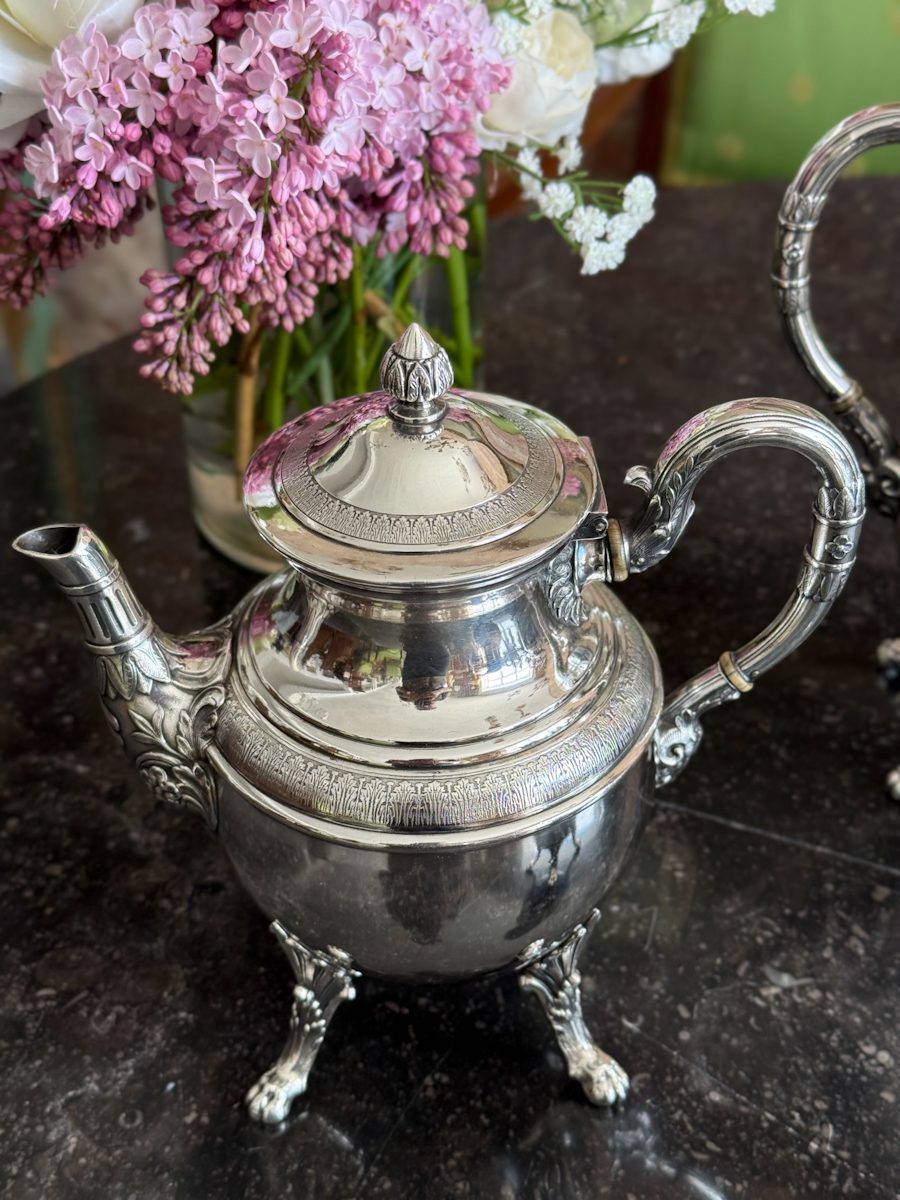
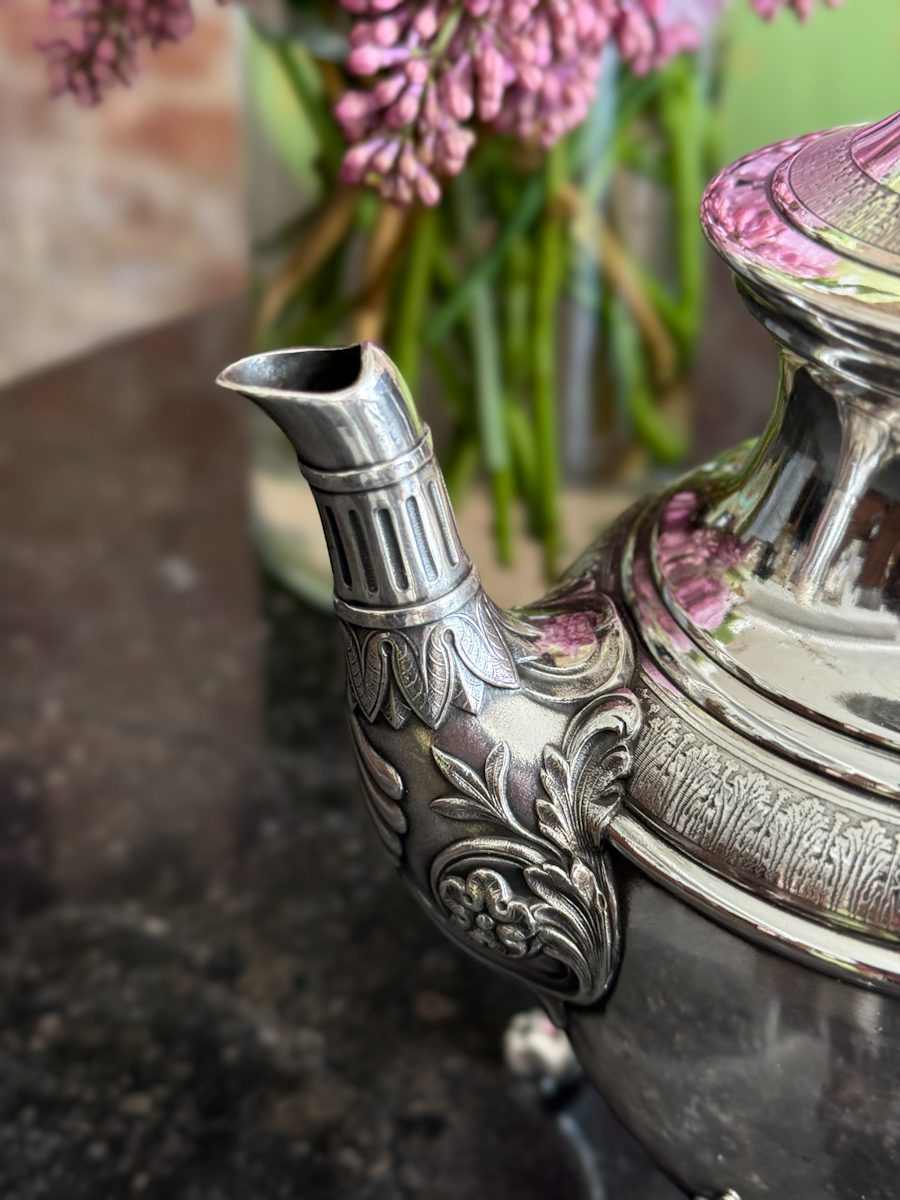
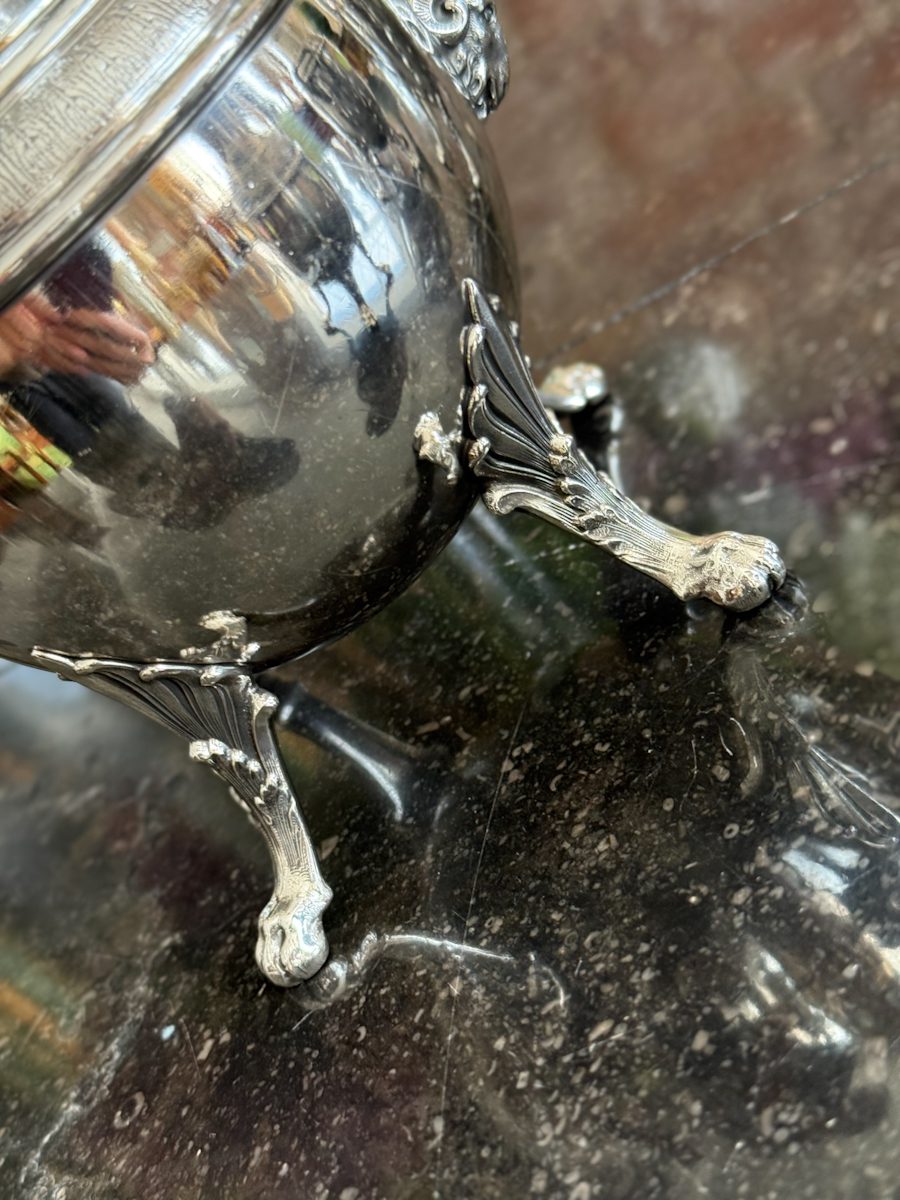
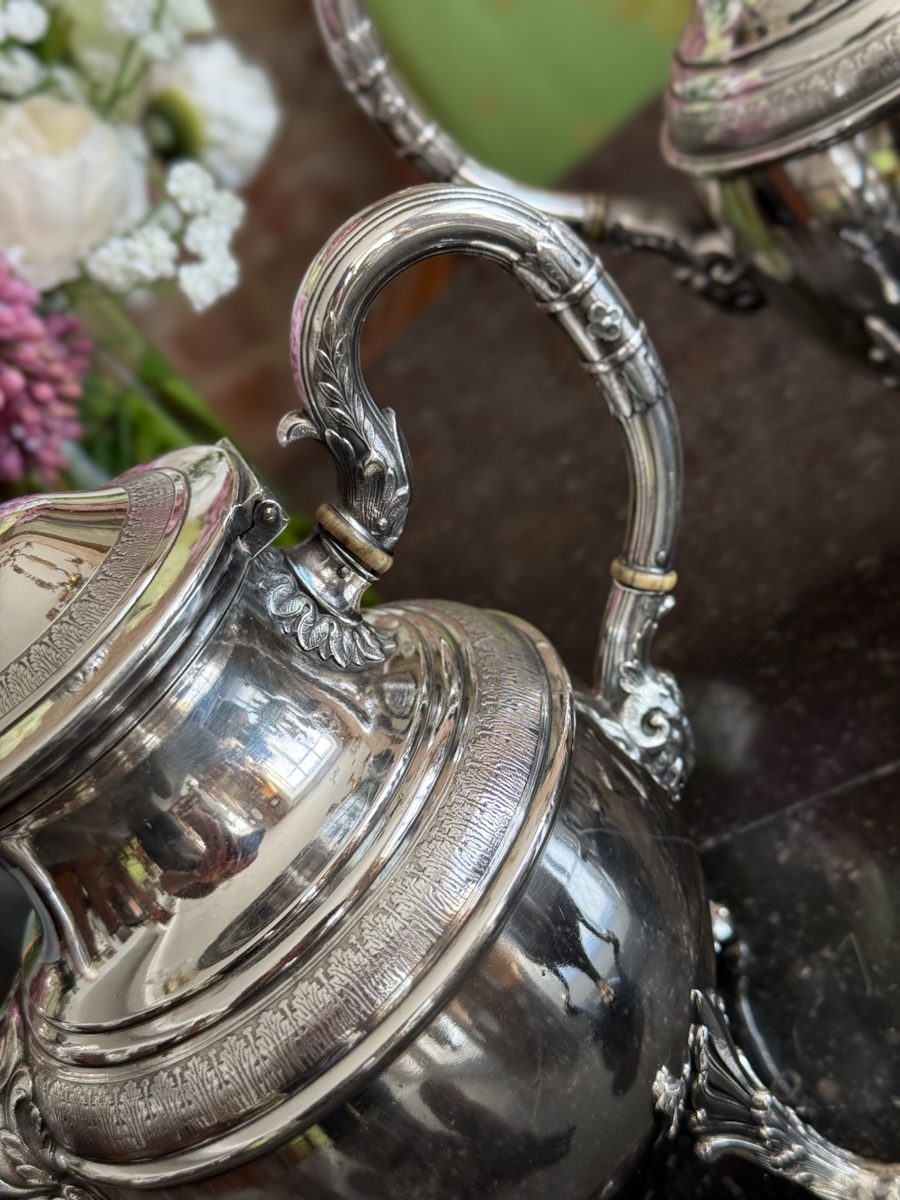
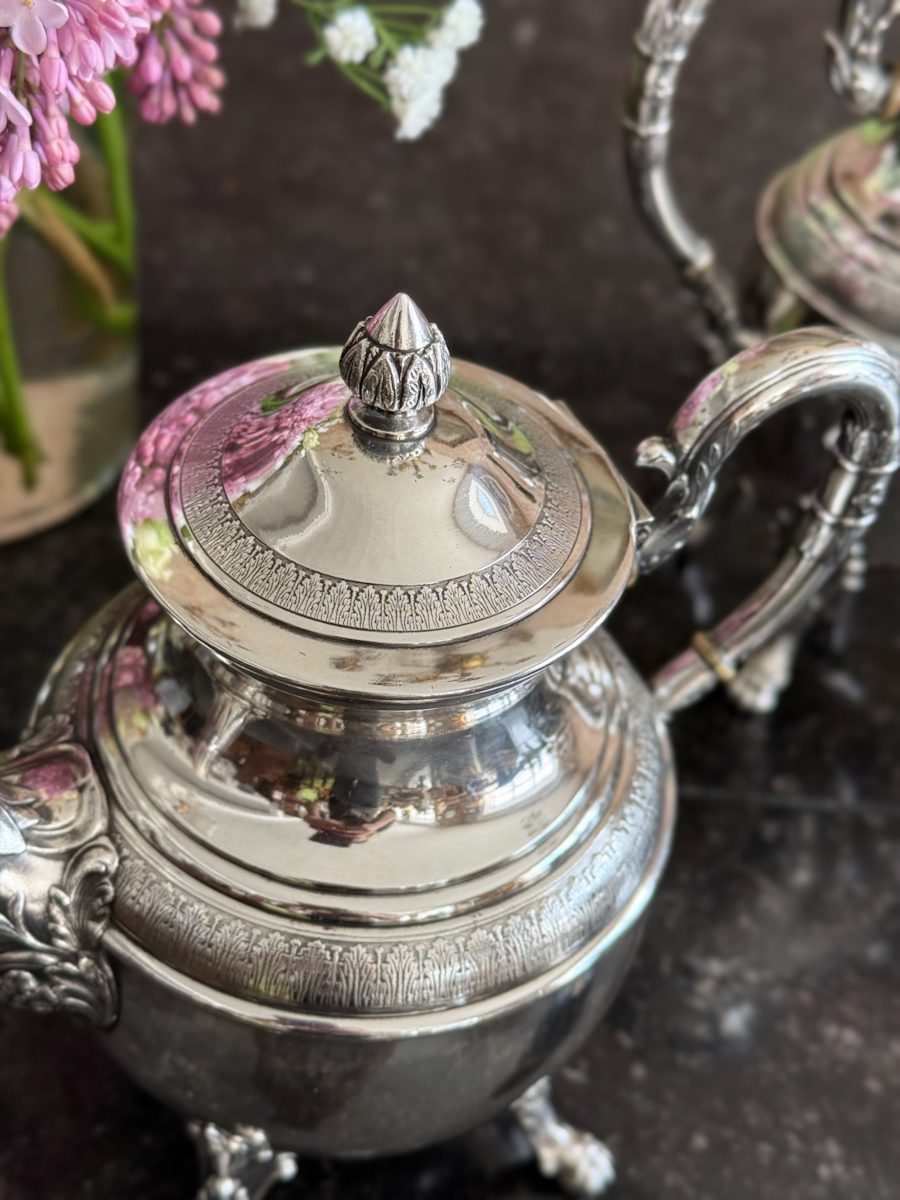
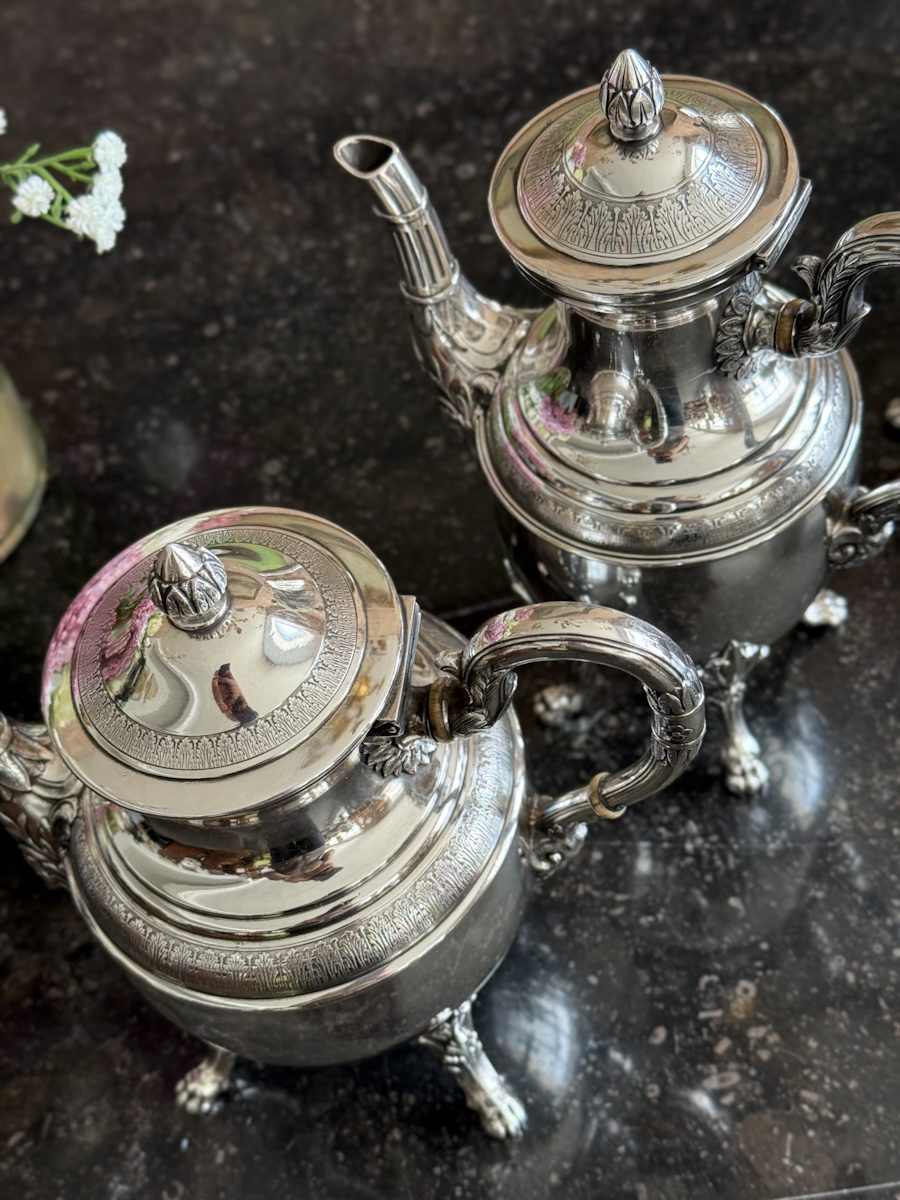
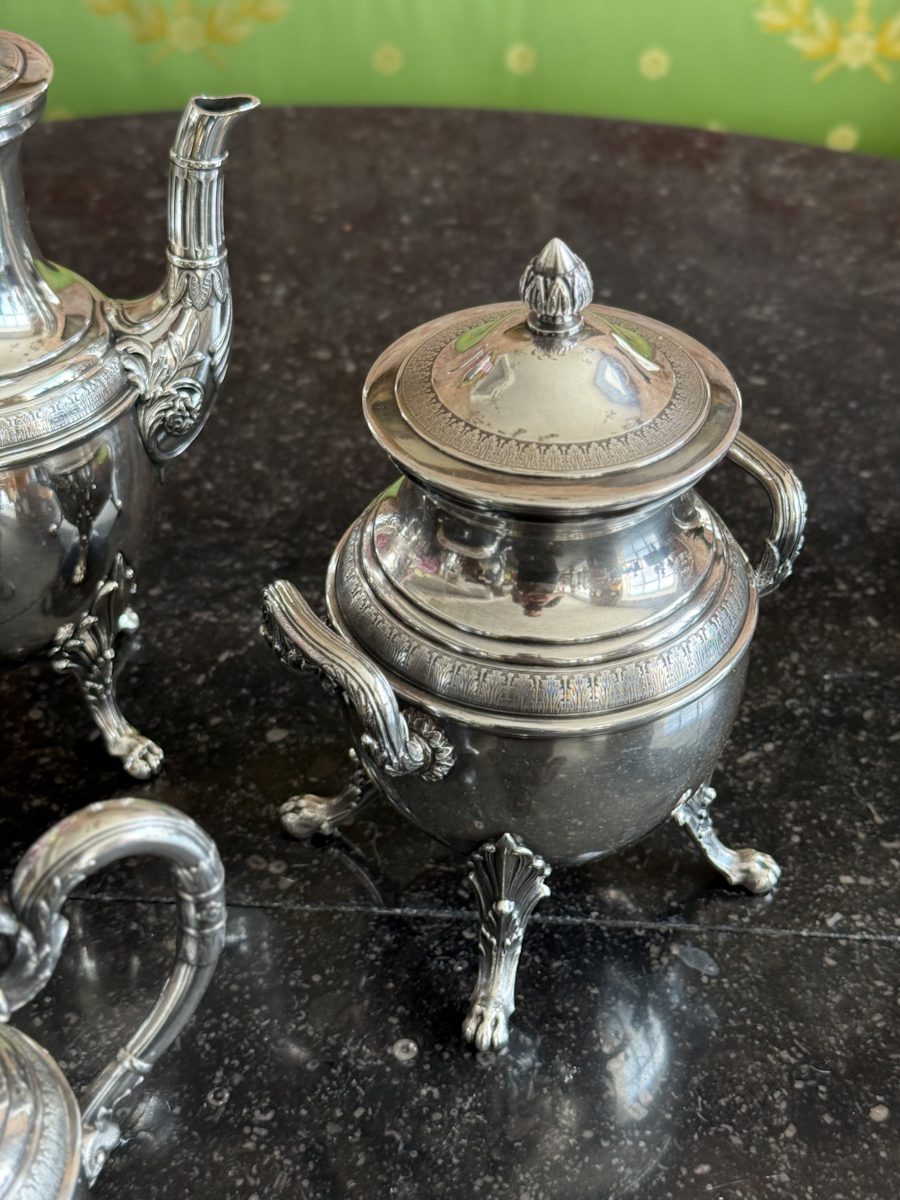
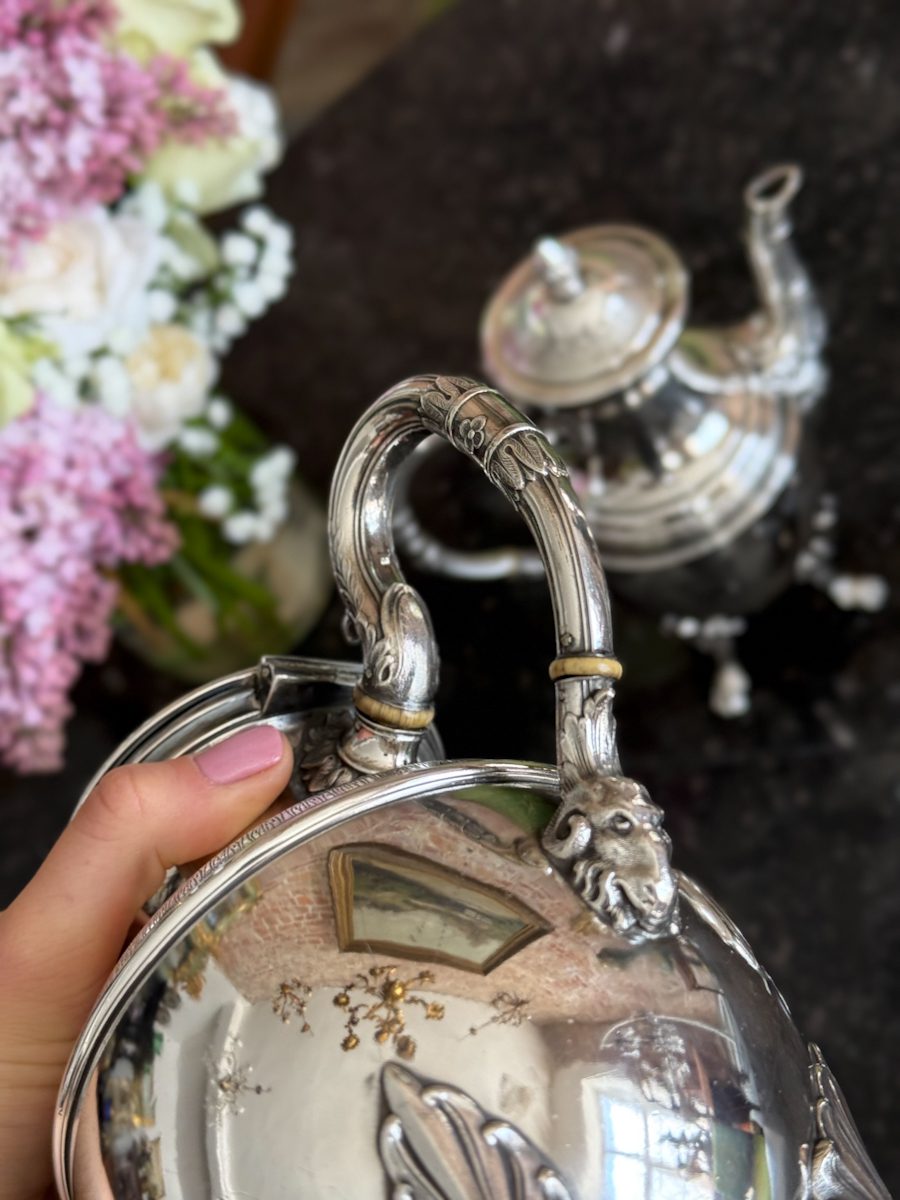
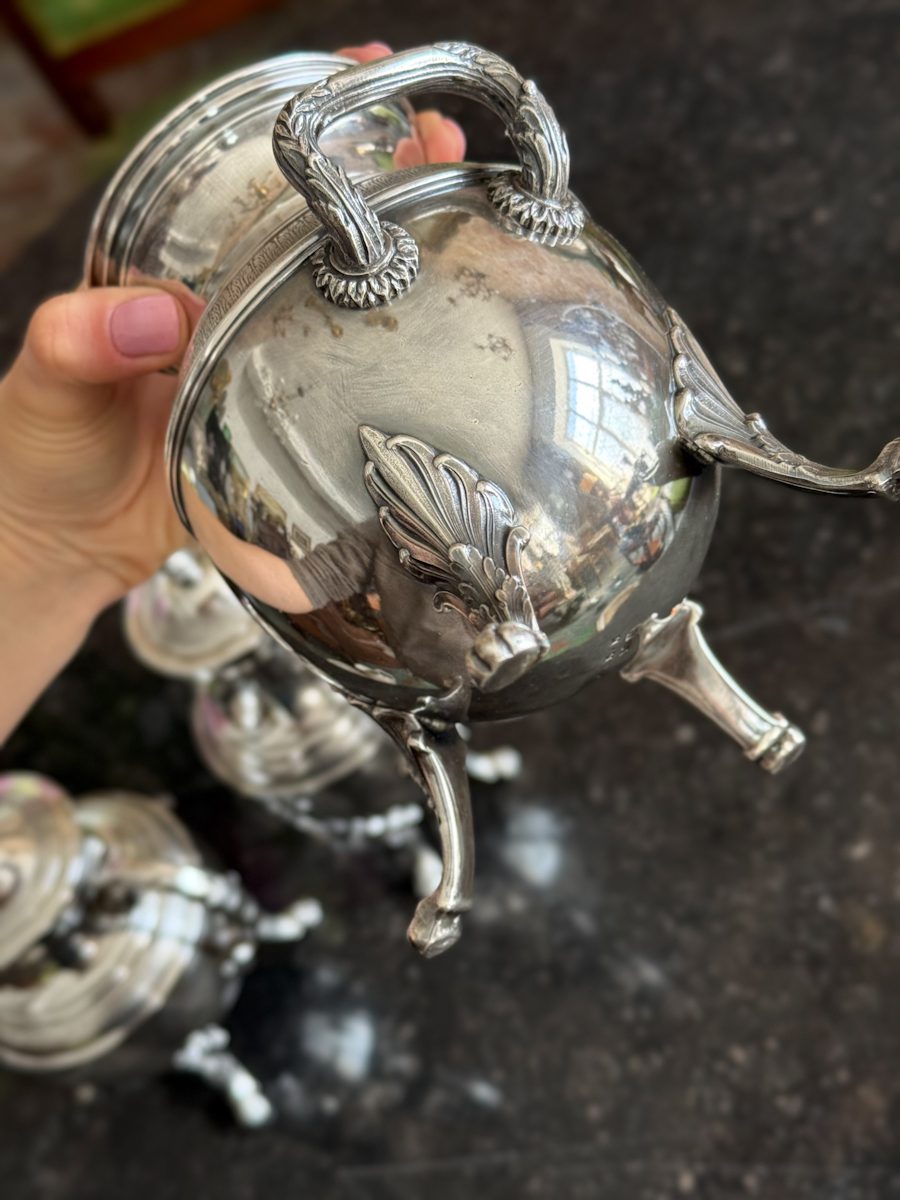
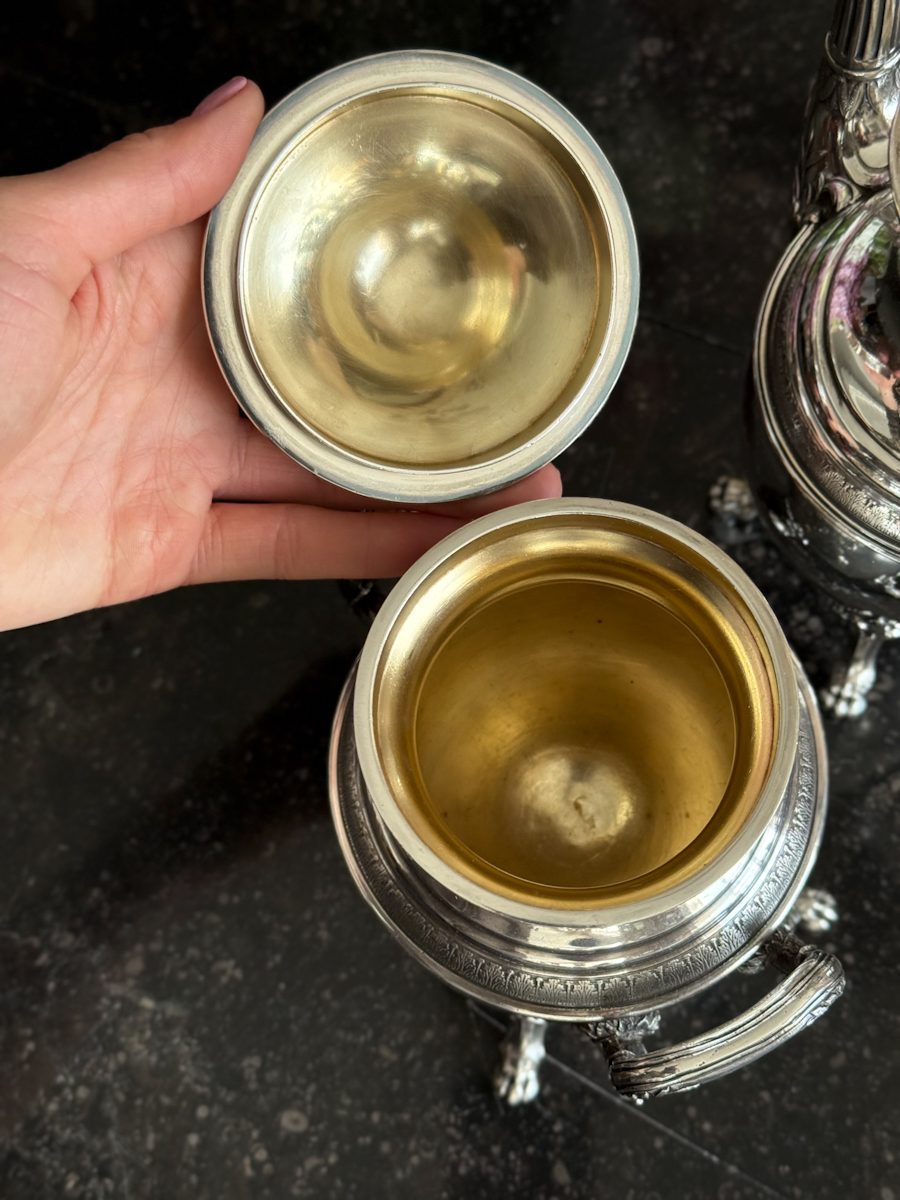
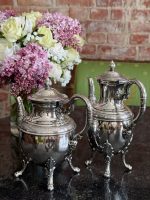
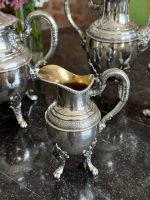
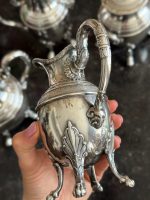
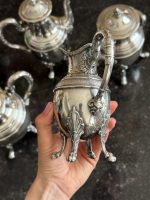
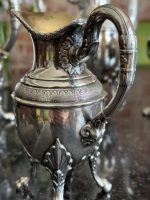
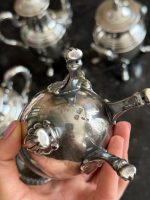
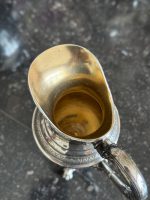
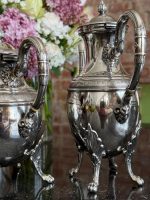
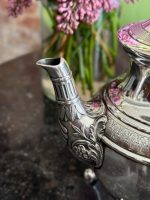
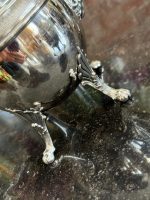
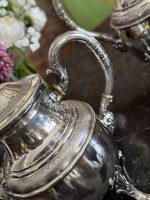
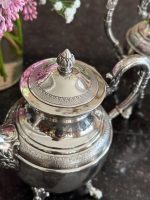
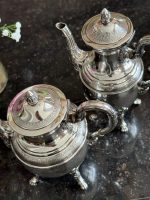
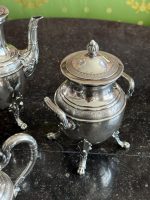
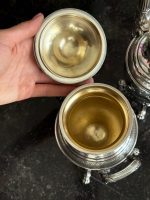
This luxurious silver tea set is a prime example of the Empire style, featuring a ram’s head (têtes de bélier) motif at the base of the handles, lion paw feet, acanthus and palmette friezes, and pine cone finials on the lids. The four pieces – a coffee pot, teapot, lidded sugar bowl, and milk jug – form a cohesive and impressive ensemble, with warm gilding (vermeil) adorning their interiors.
Set includes: coffee pot (tallest), teapot, two-handled lidded sugar bowl, milk jug. Material: Silver (see hallmarks on bases). The price is for the complete 4-piece set.
Period and Artistic Style The set dates from the 19th century, France, and belongs to the Empire / Neoclassical tradition – a style that emerged during the Napoleonic era and persisted throughout the century as the classic language of silversmiths. The ram’s head, acanthus, palmette, and lion’s paw are direct borrowings from the decorative repertoire of ancient Rome and Greece. The bulbous body on three curved feet with paws is a typical théière boule form. The interior gilding (vermeil) protected the silver from the acids in tea and coffee.
An Empire Era Snapshot: Jacques-Louis David paused by a table in a Faubourg Saint-Germain salon, where the hostess had just served coffee. His gaze lingered for a moment on a ram’s head that peered from the edge of a silver vessel – the same motif he had sketched for the Emperor in his compositions. He said nothing, merely tracing a finger over the cool metal. The ancient world, he mused, had never truly left; it had simply migrated to the dining table.
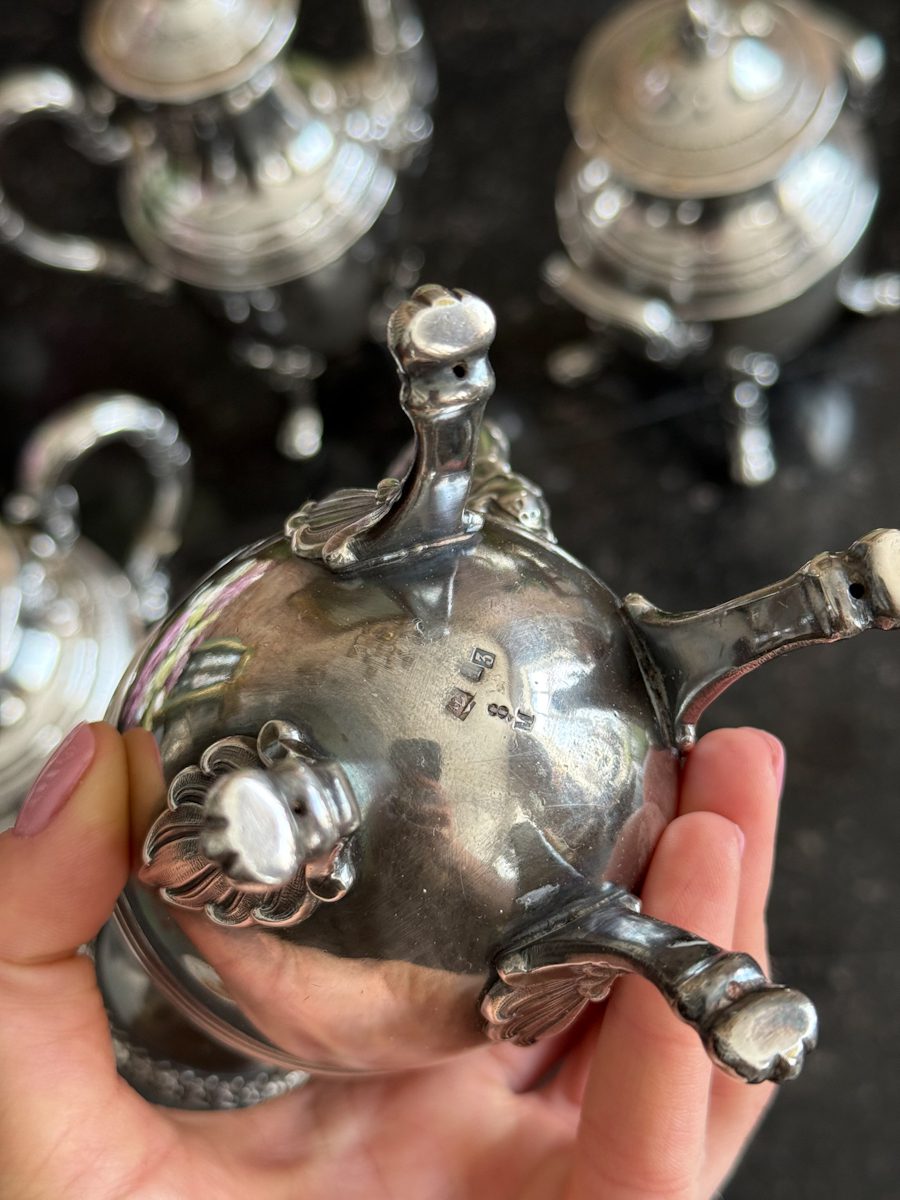
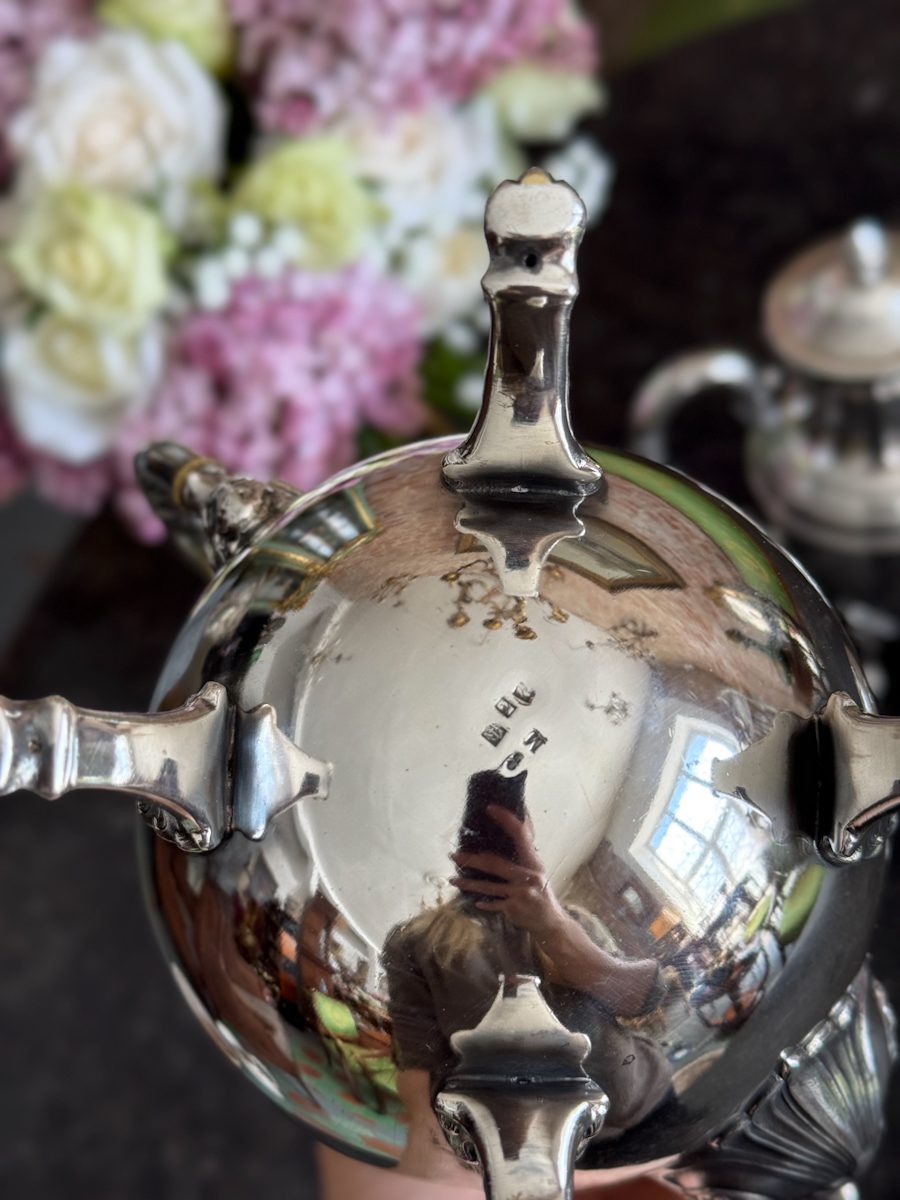
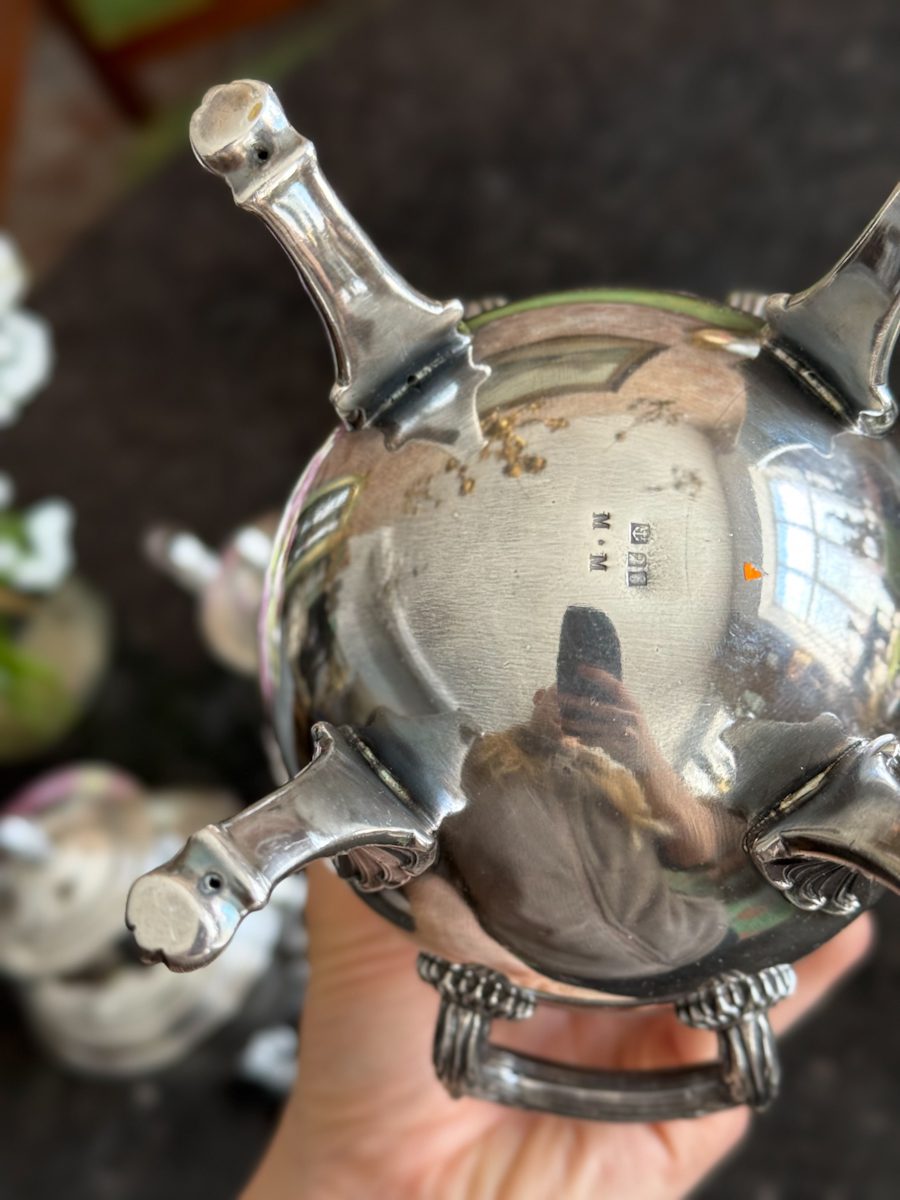
Maker and Mark The bases and bodies of the pieces bear assay and maker’s marks (including a maker’s mark in a diamond and possibly the Minerva head assay mark, attesting to the silver standard). Please examine the hallmarks with a magnifying glass – the Minerva head indicates sterling silver (800–950‰), significantly increasing its value. The interior gilding (vermeil) is an additional mark of quality.
Rarity and Significance Complete 19th-century silver tea and coffee sets, preserved together and in matching condition, are genuinely valuable and difficult to find. The ram’s head motif and vermeil interiors signify a high-class piece, not an everyday service.
Interior Design and Photographic Application An impressive presentation set – for the dining table, sideboard, display cabinet, or as a centerpiece for a festive occasion. Polished silver with gilded interiors gleams effectively and makes for a rewarding subject in interior and tablescape photography.
Gift Idea An exceptional gift for a silver collector, a newlywed couple, or a significant anniversary – a set with lasting value and elegance.
Condition In condition commensurate with age. The silver surface shows natural patina and minor scratches from use in places, as expected for a used item over a hundred years old; the insulating rings on the handles (bone or horn inserts) are preserved. The interior gilding may show wear in places. The condition of the item is fully reflected in the photographs.