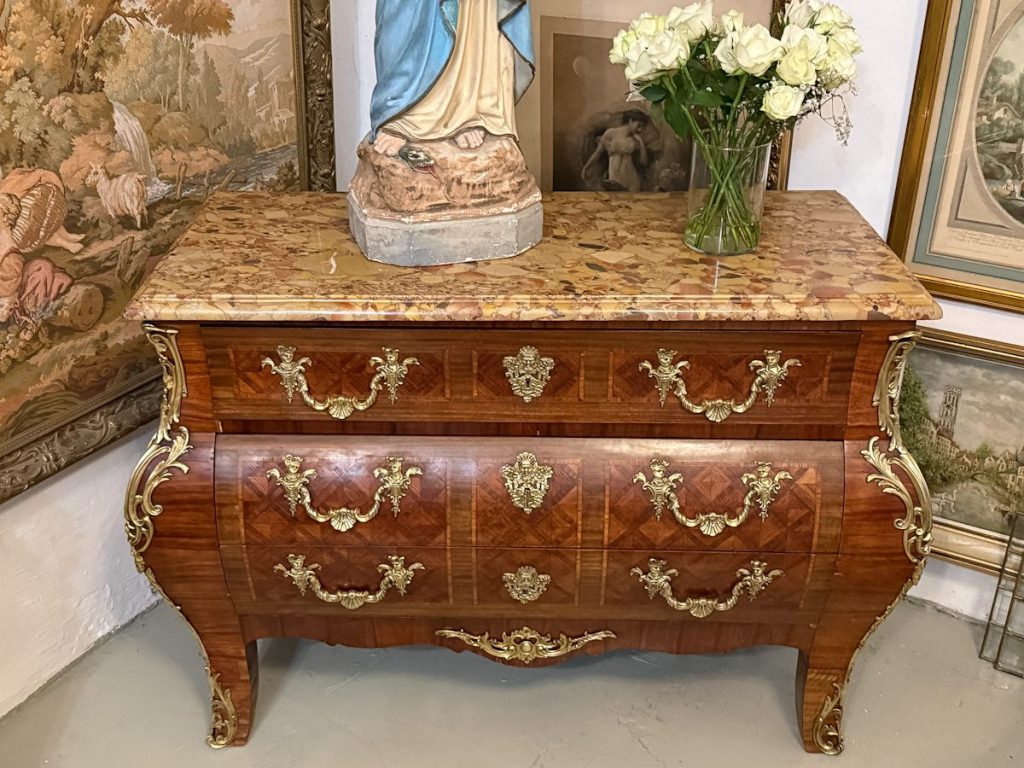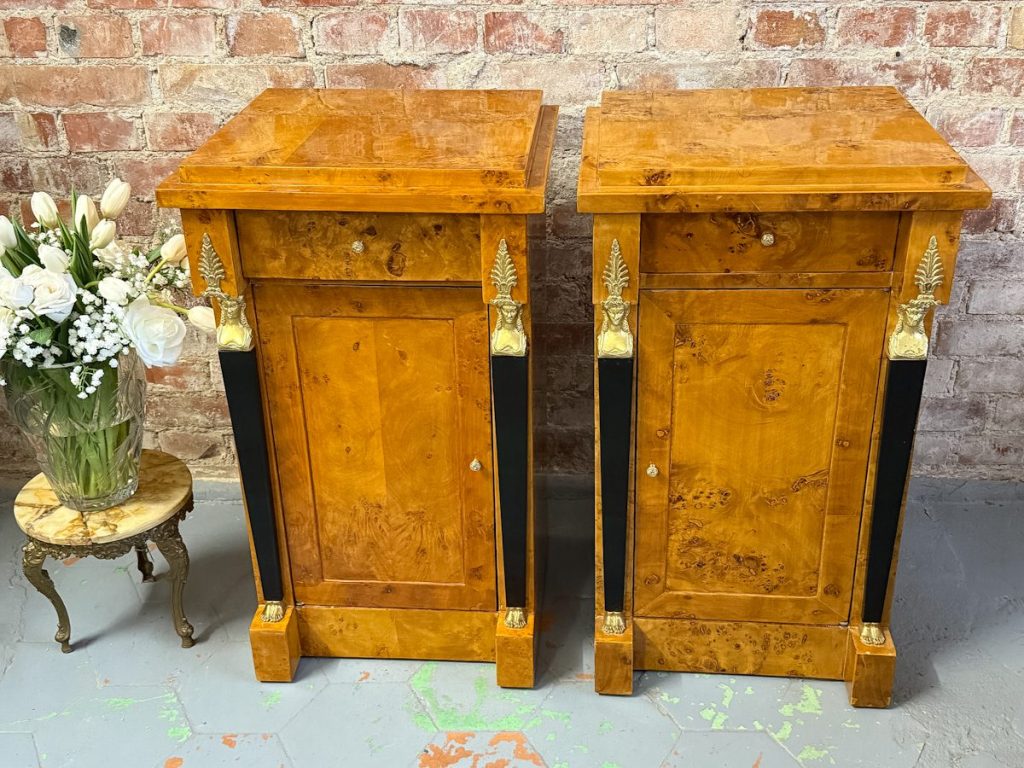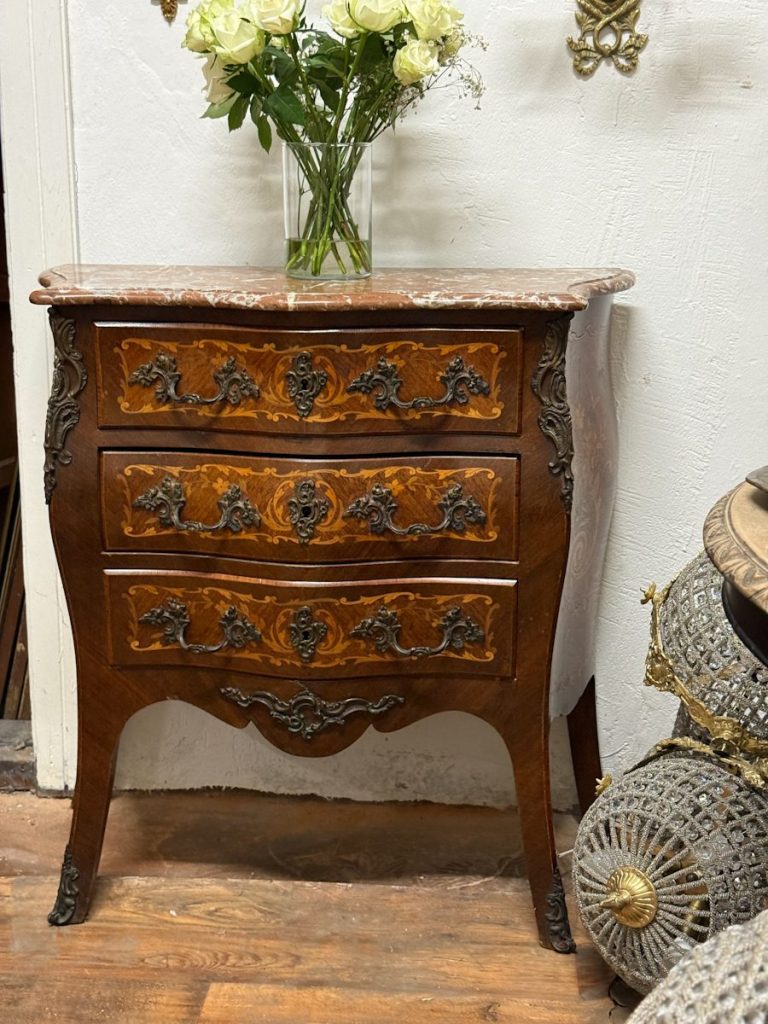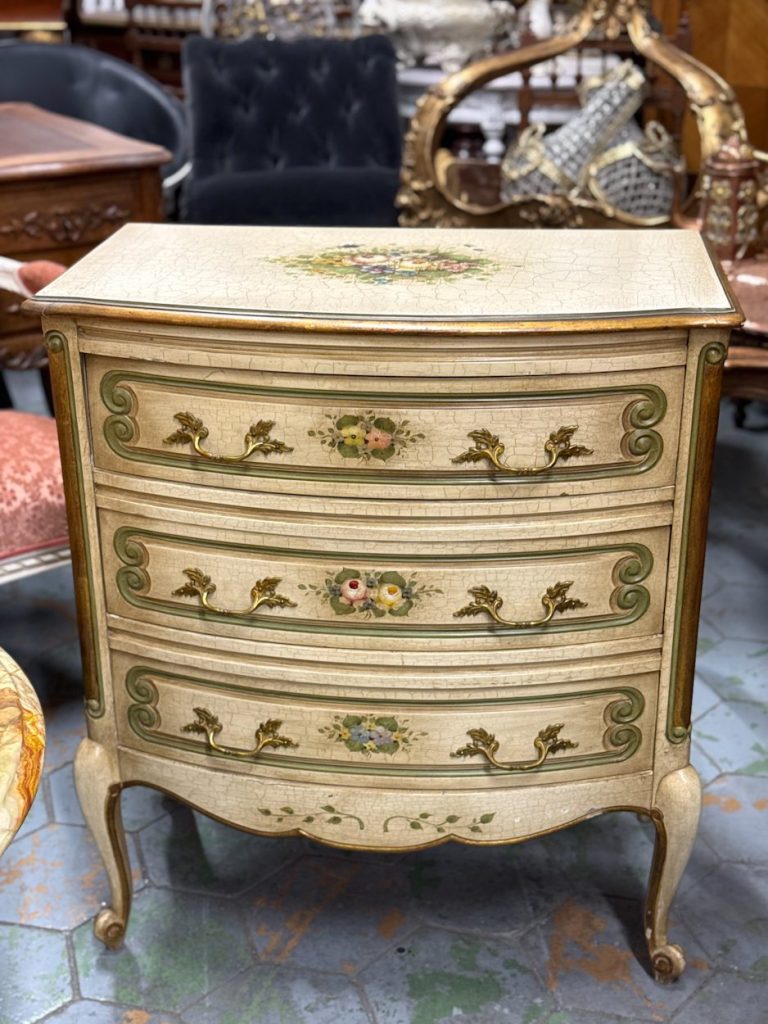
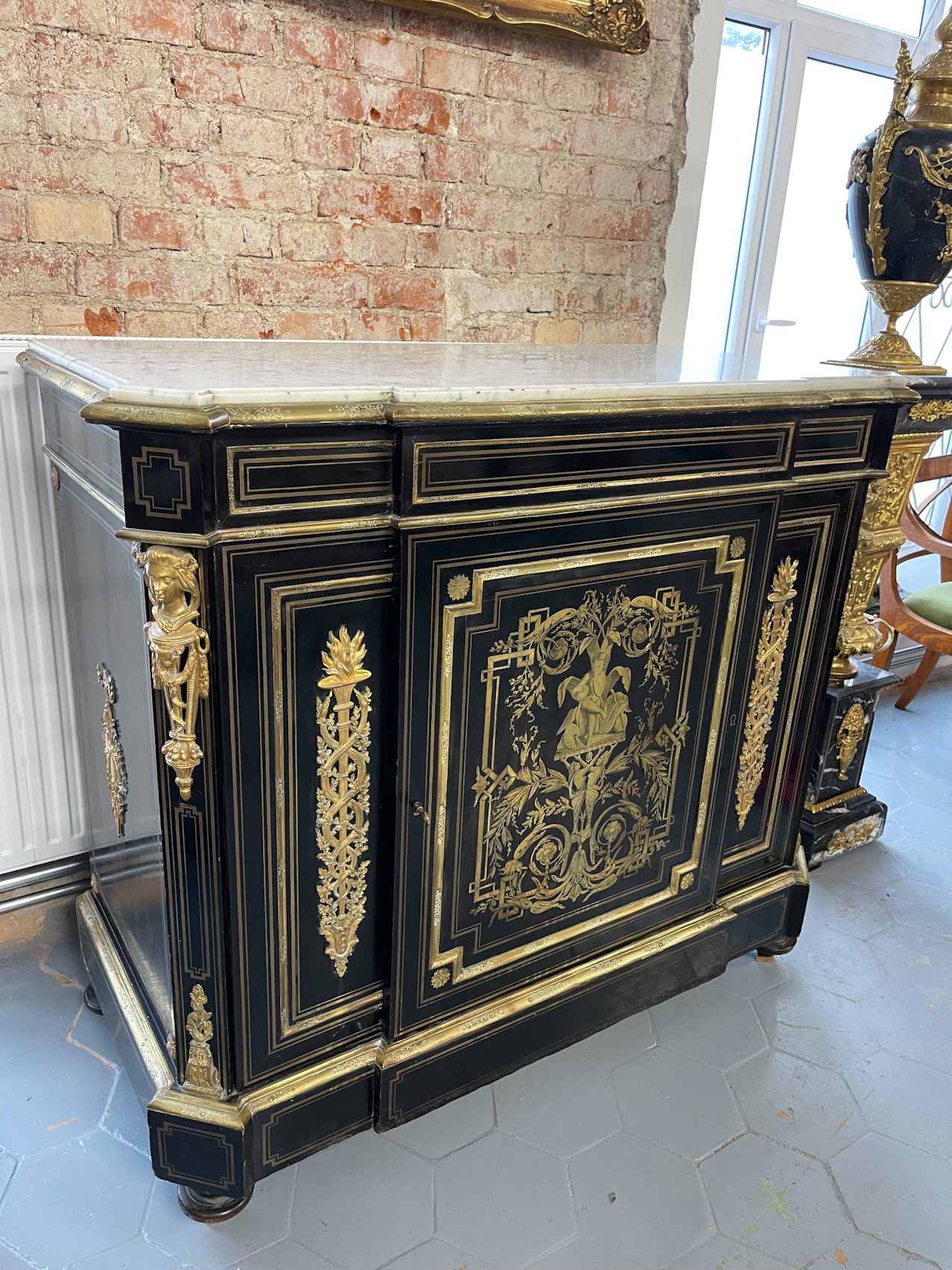
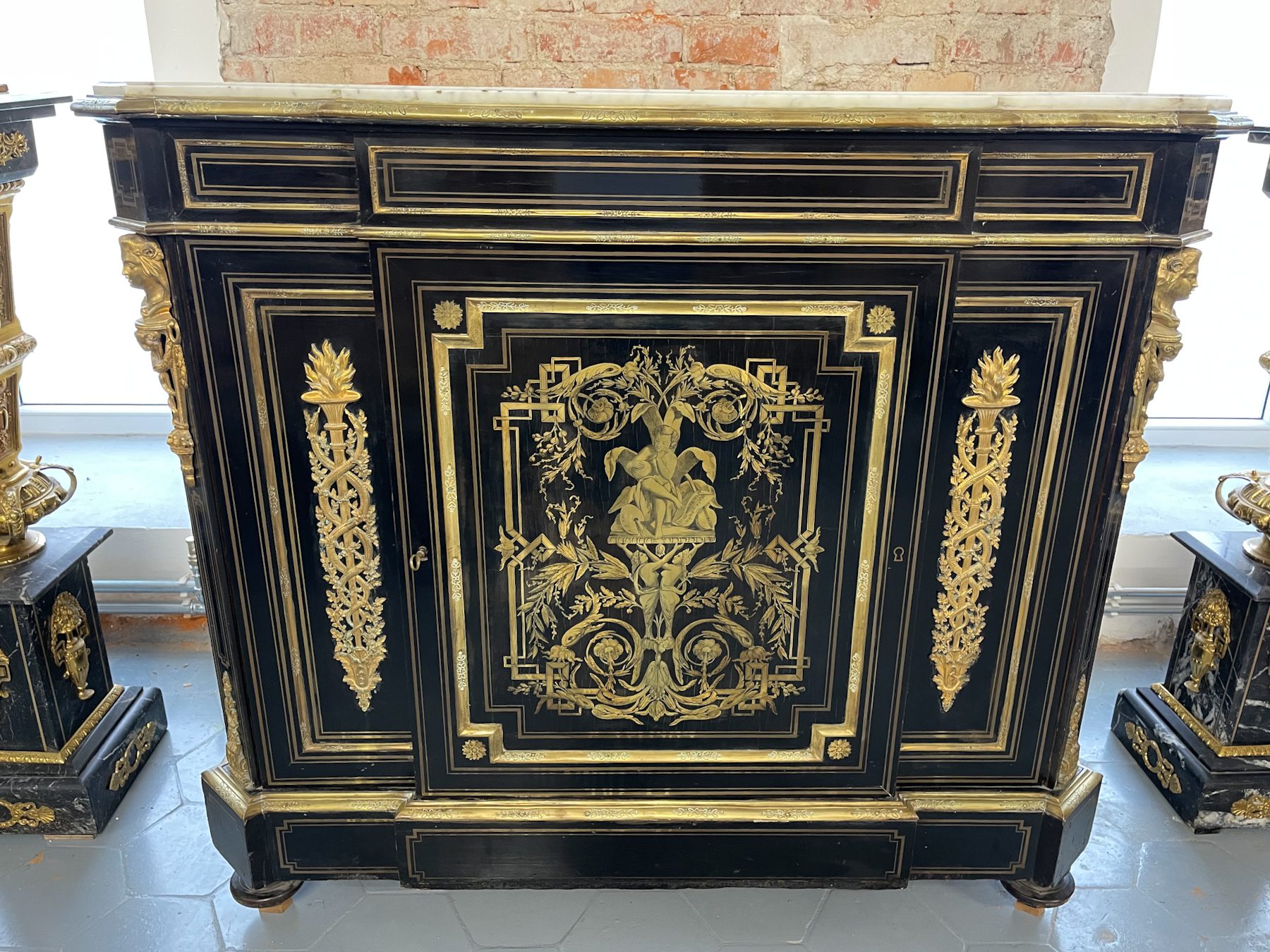
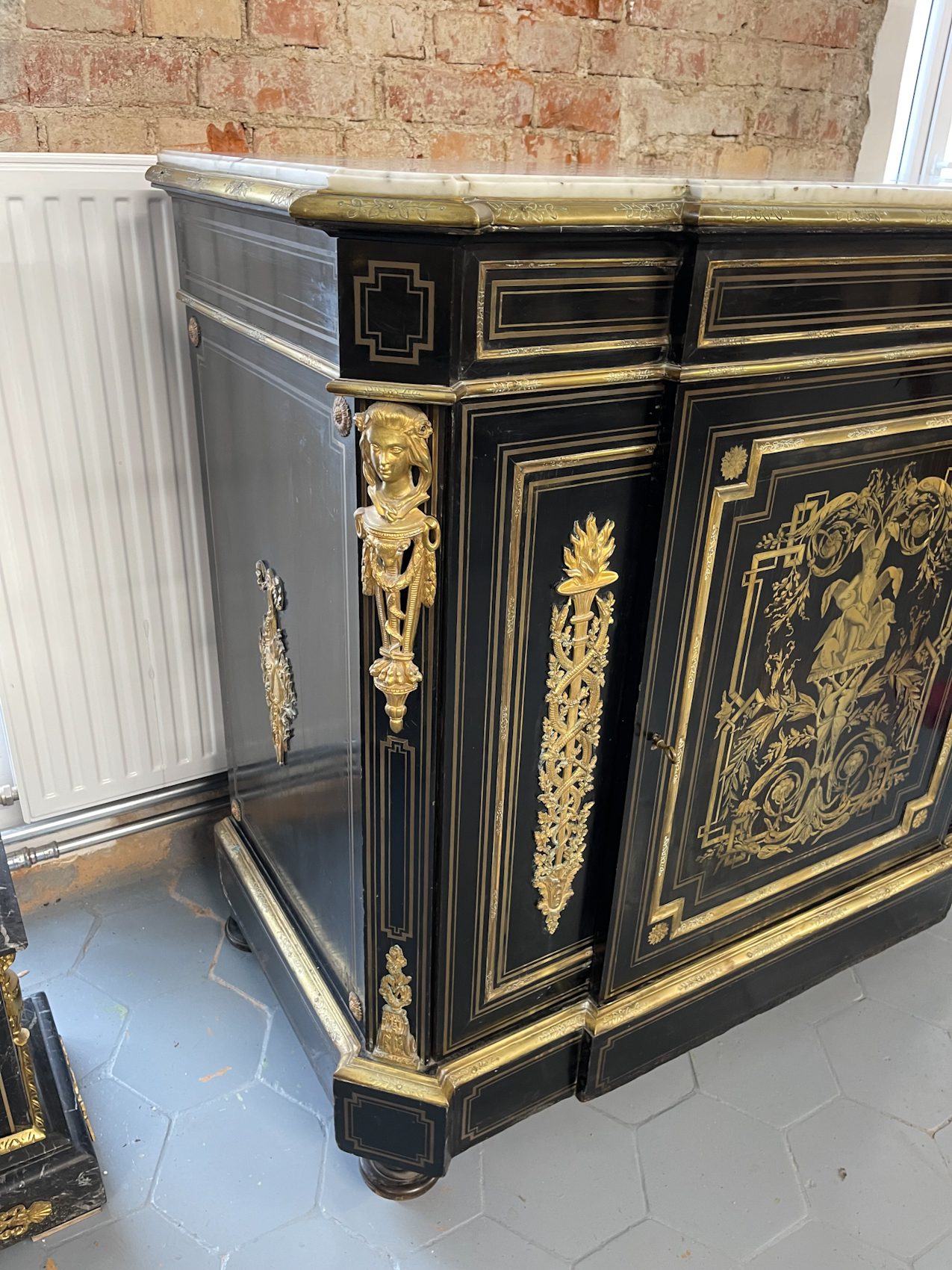
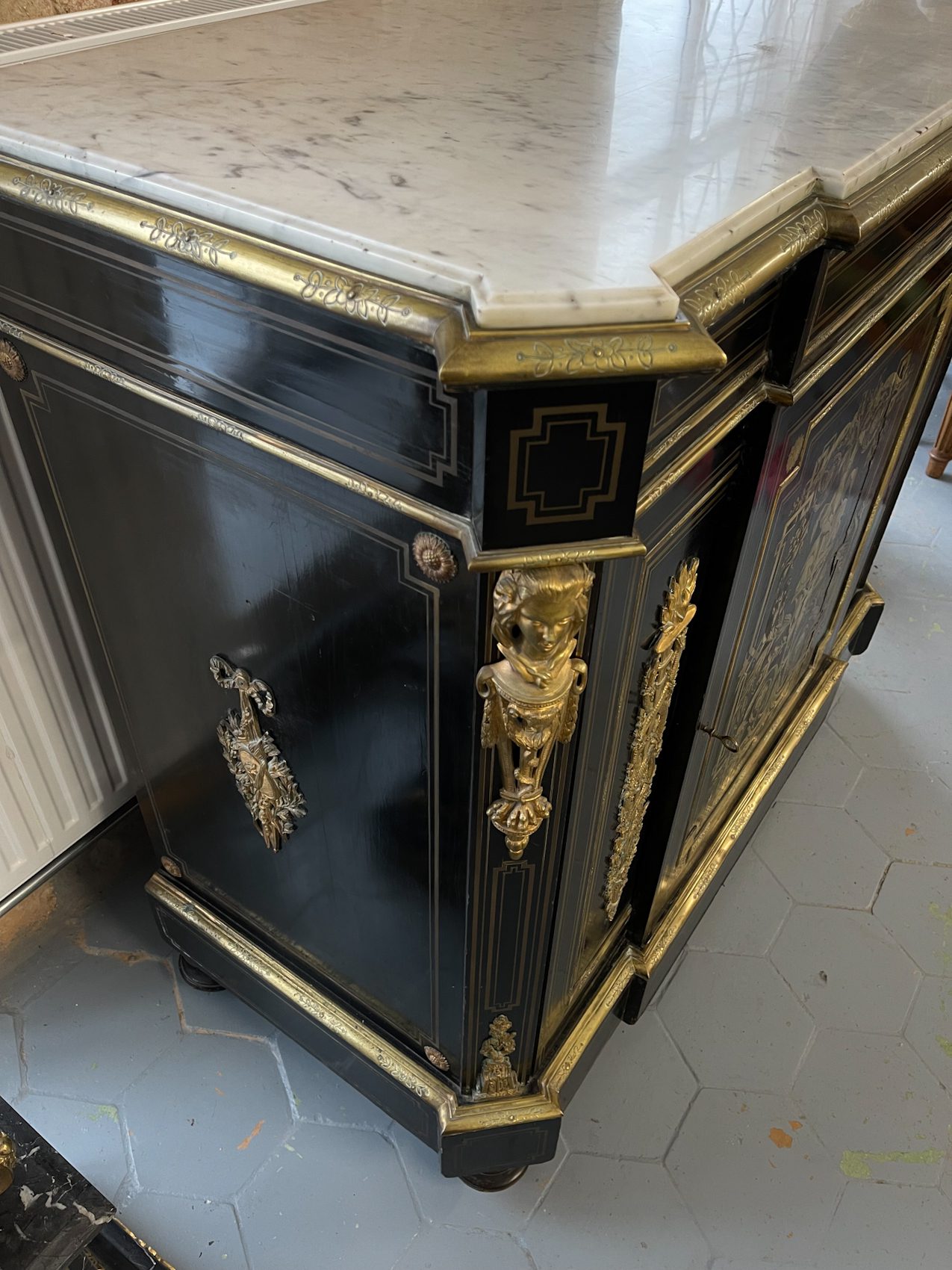
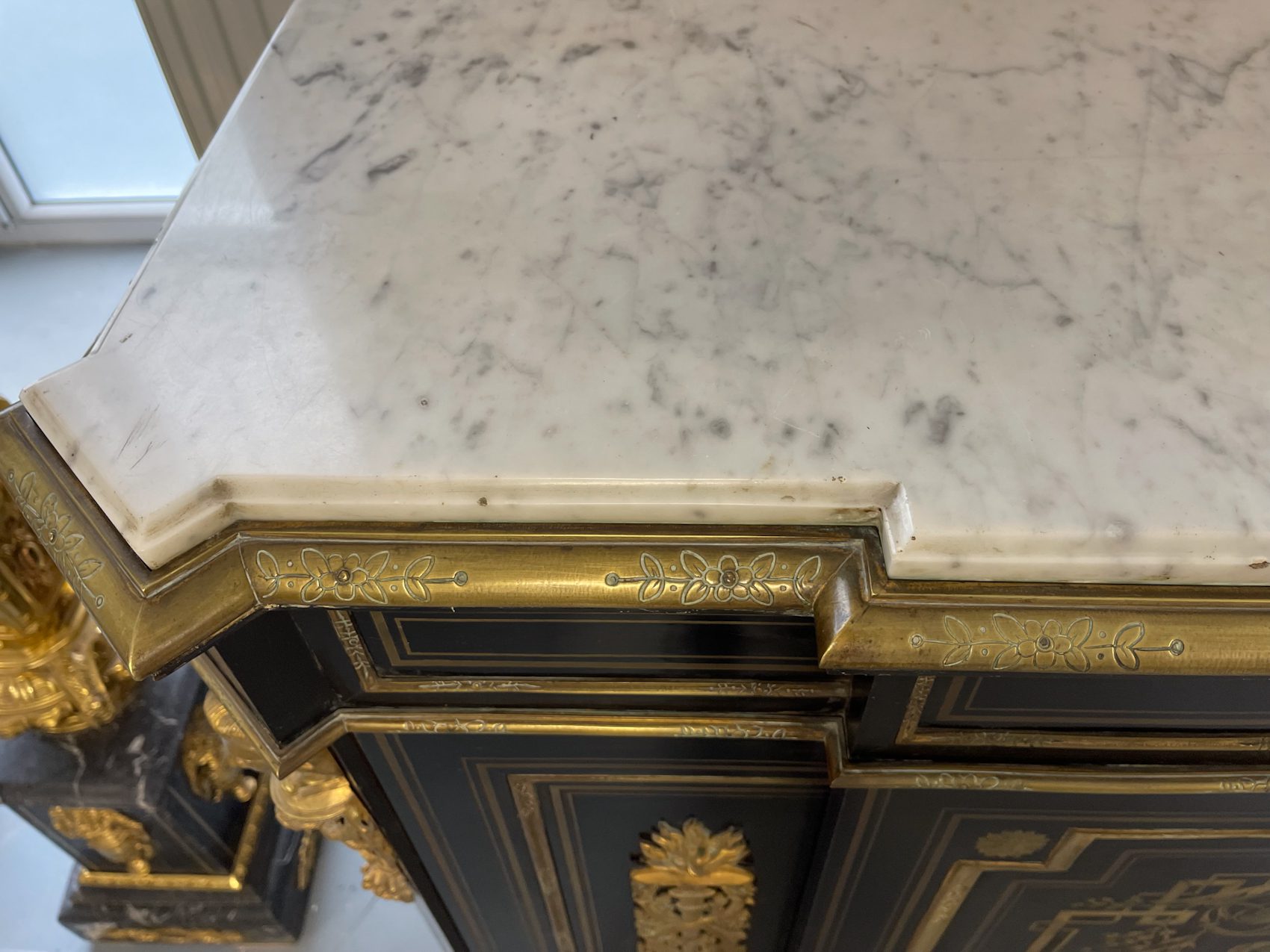
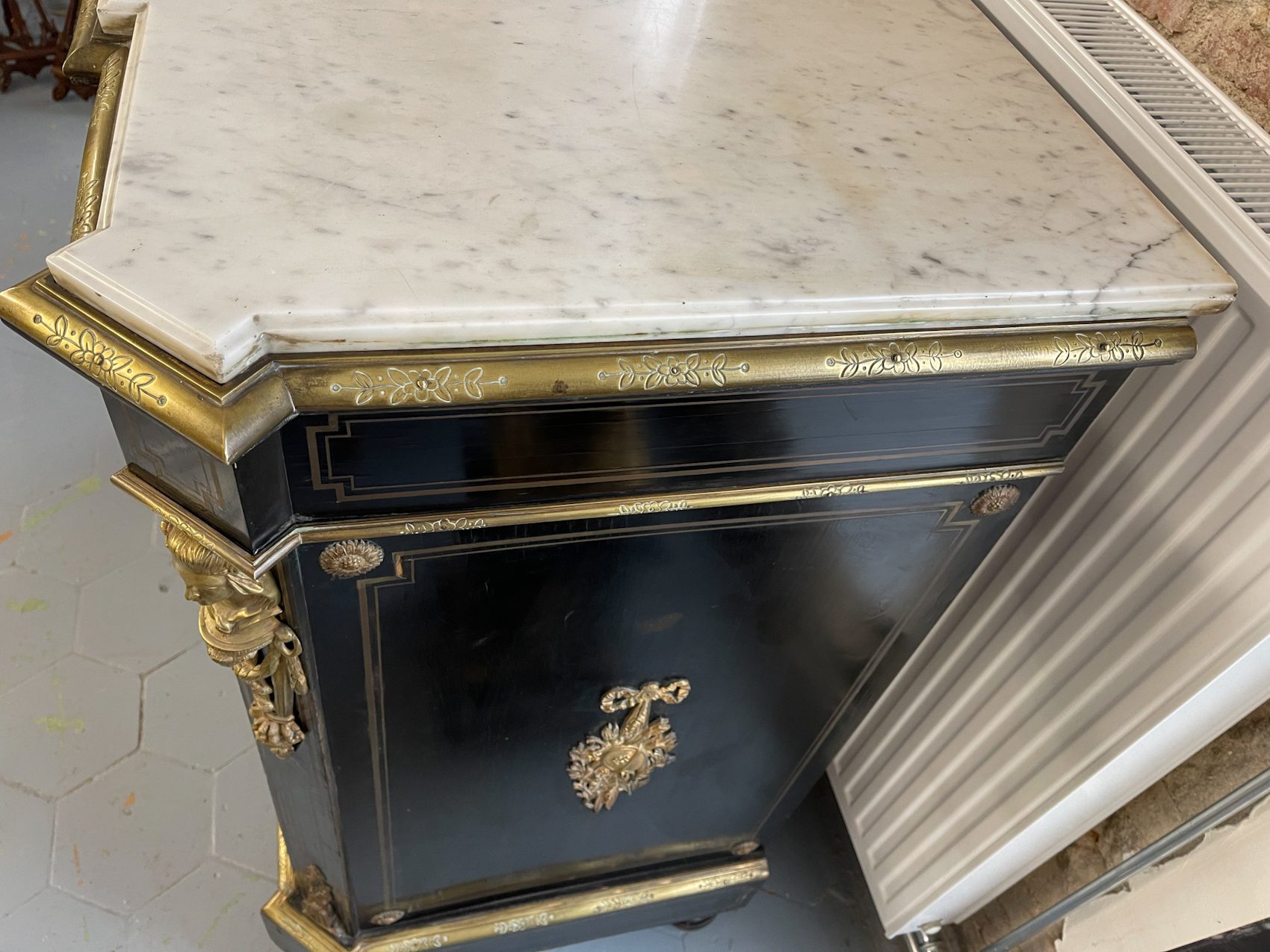
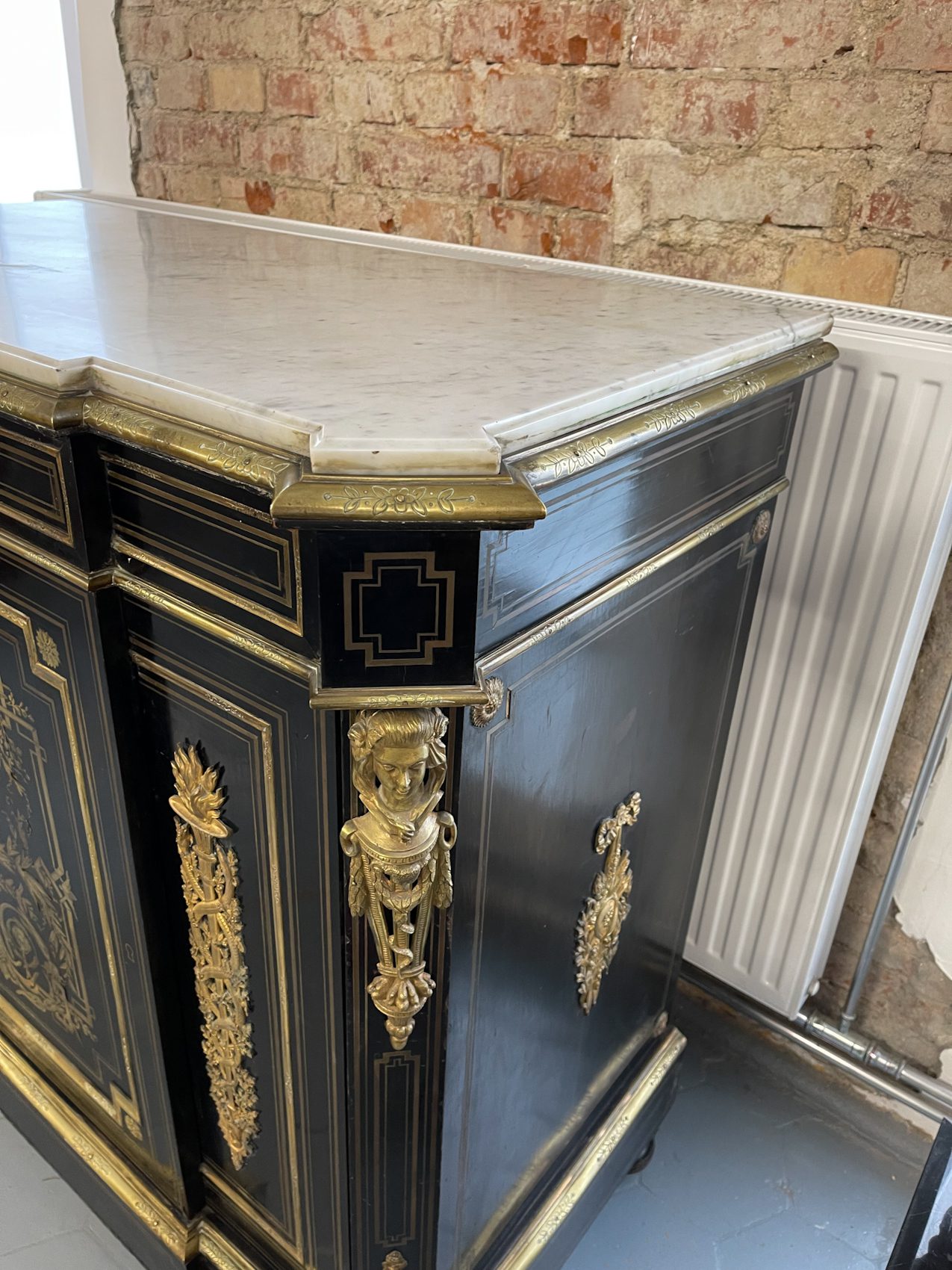
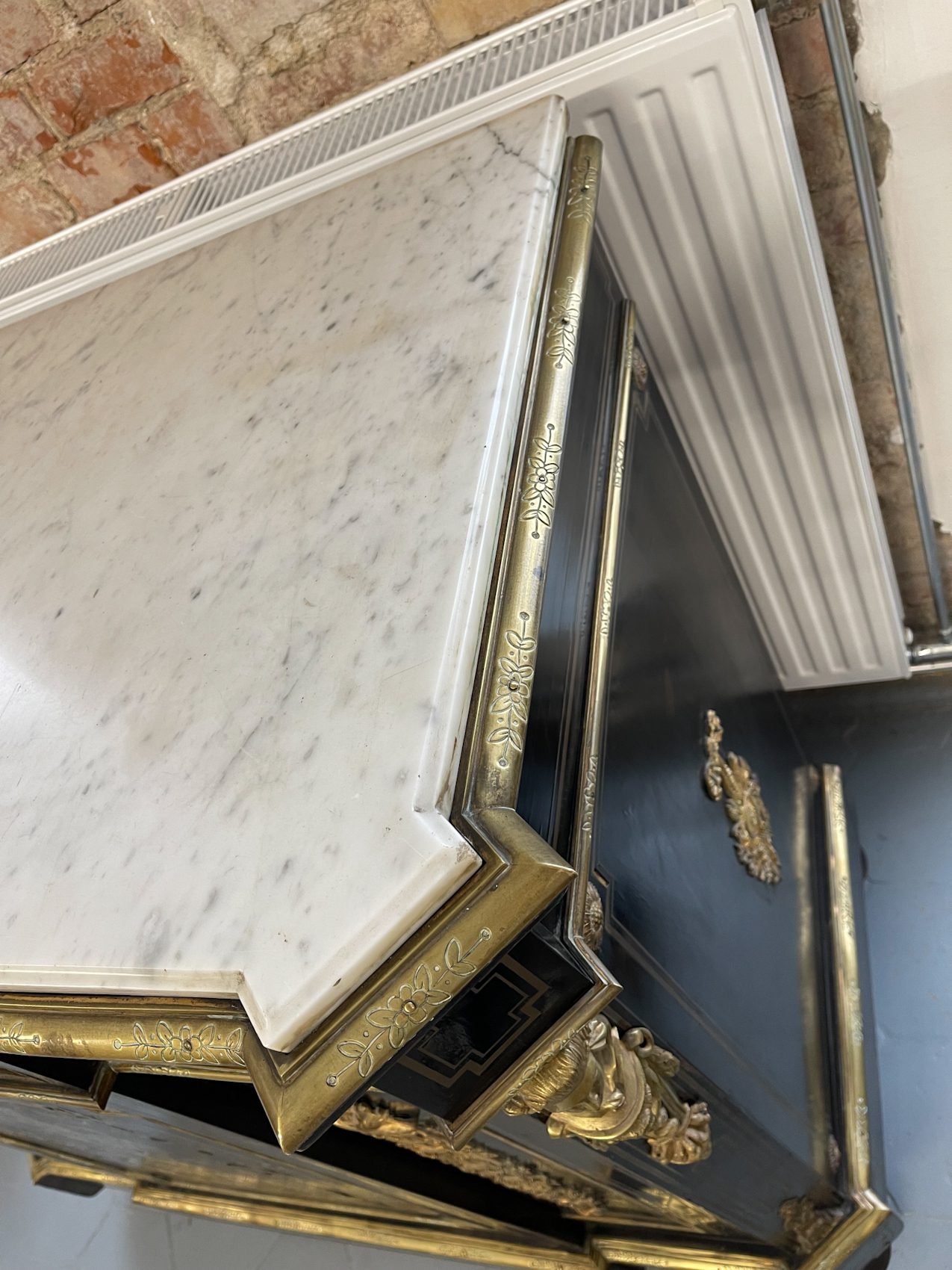
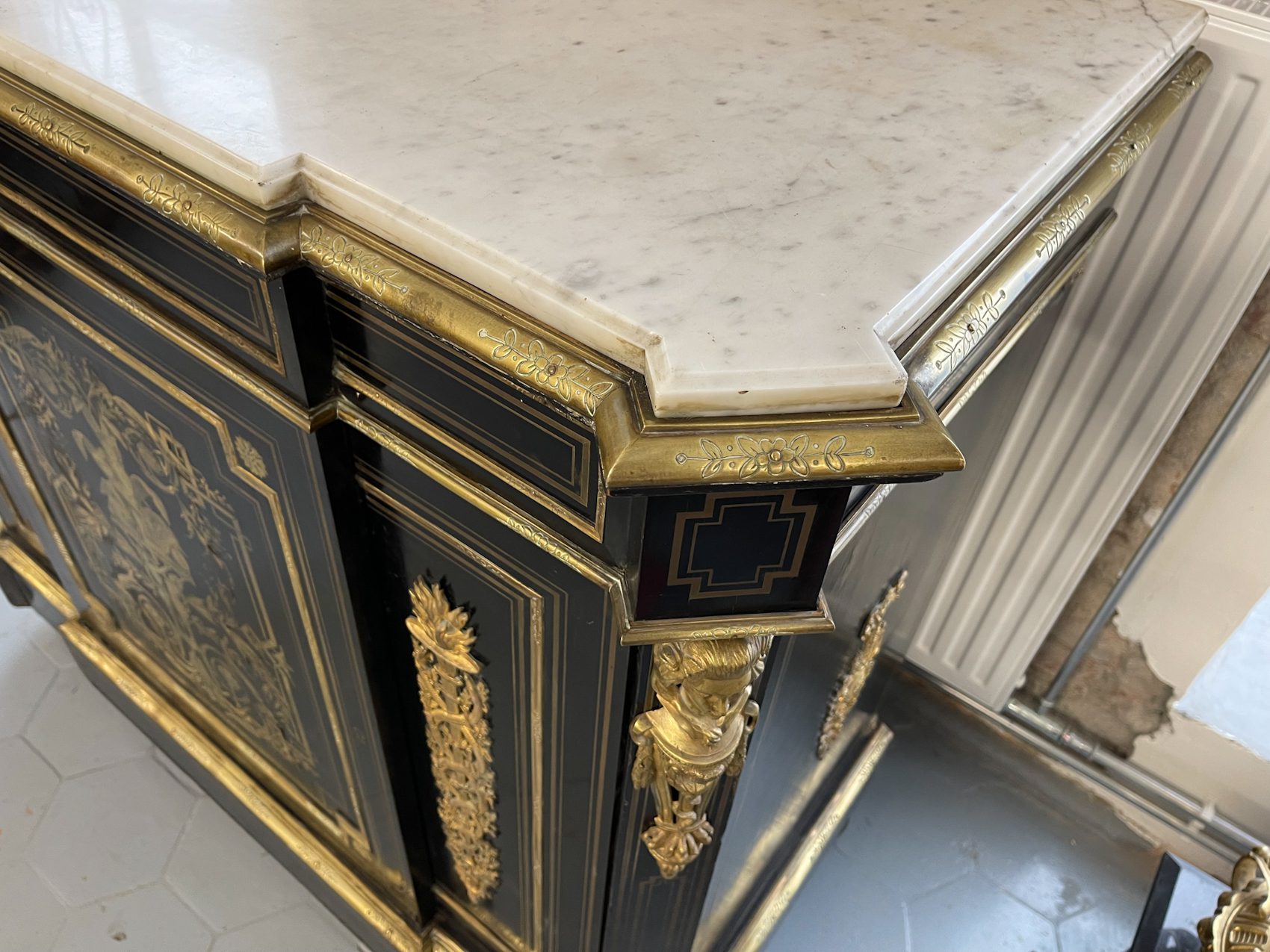
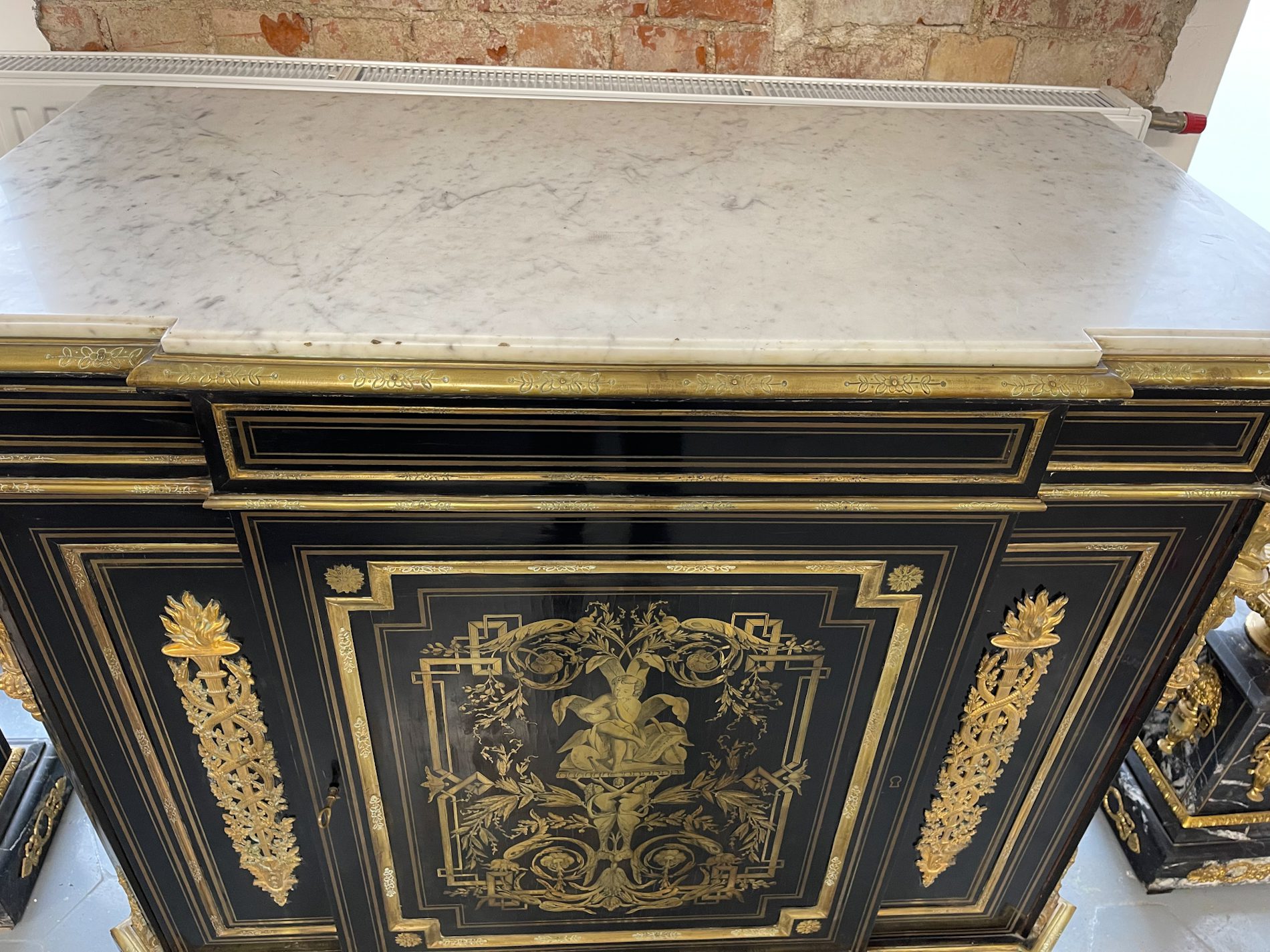
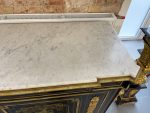
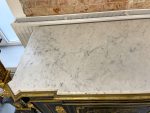
Boulle style commode — Napoleon III style, France, c. 1860. This exceptionally large piece features intricate brass inlay, bronze mounts including caryatids, and a marble top. A magnificent statement piece for any grand interior. 5 200,00 €
You’re now subscribed to price tracking for this product. We’ll notify you if the price drops. 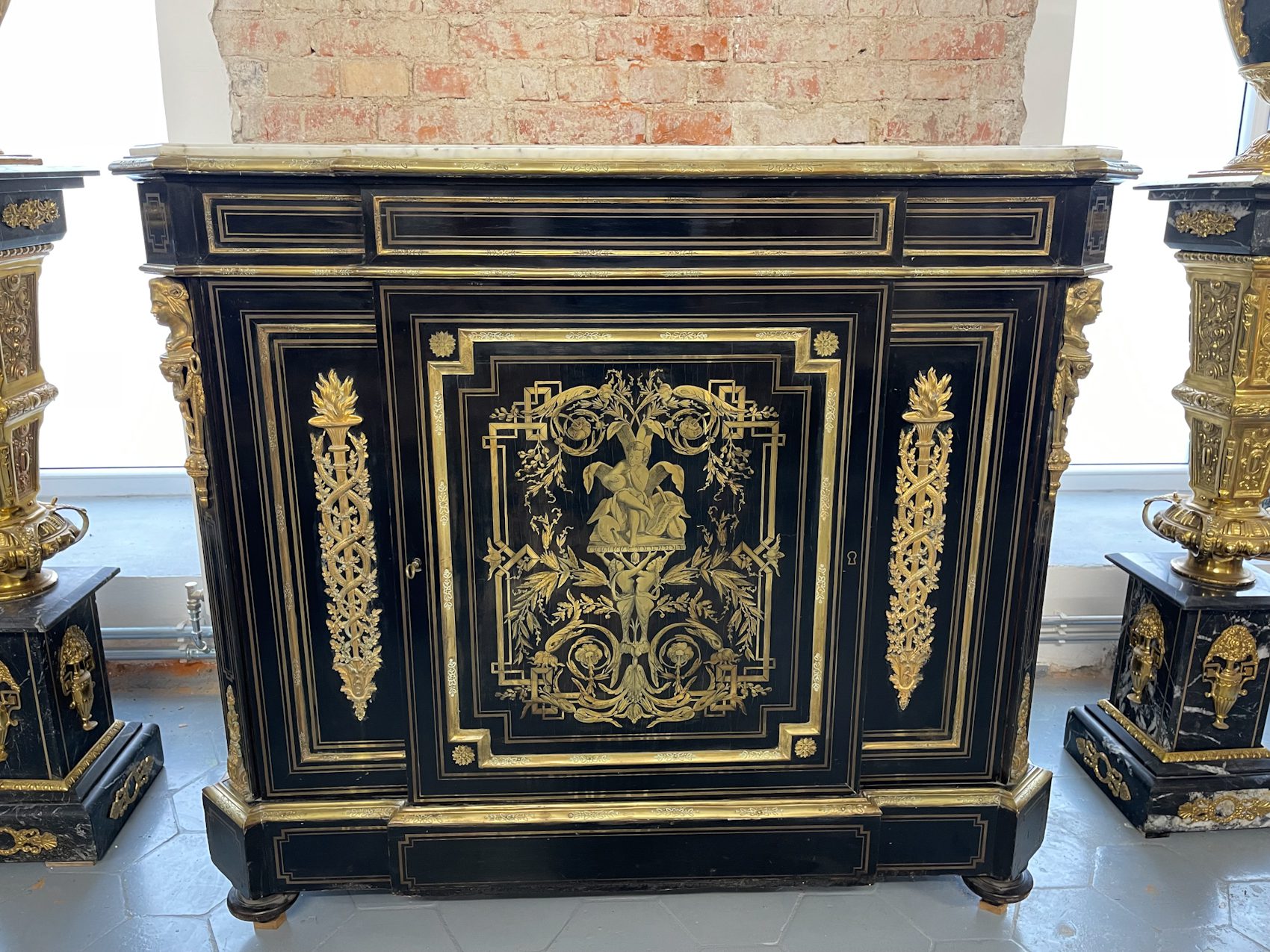
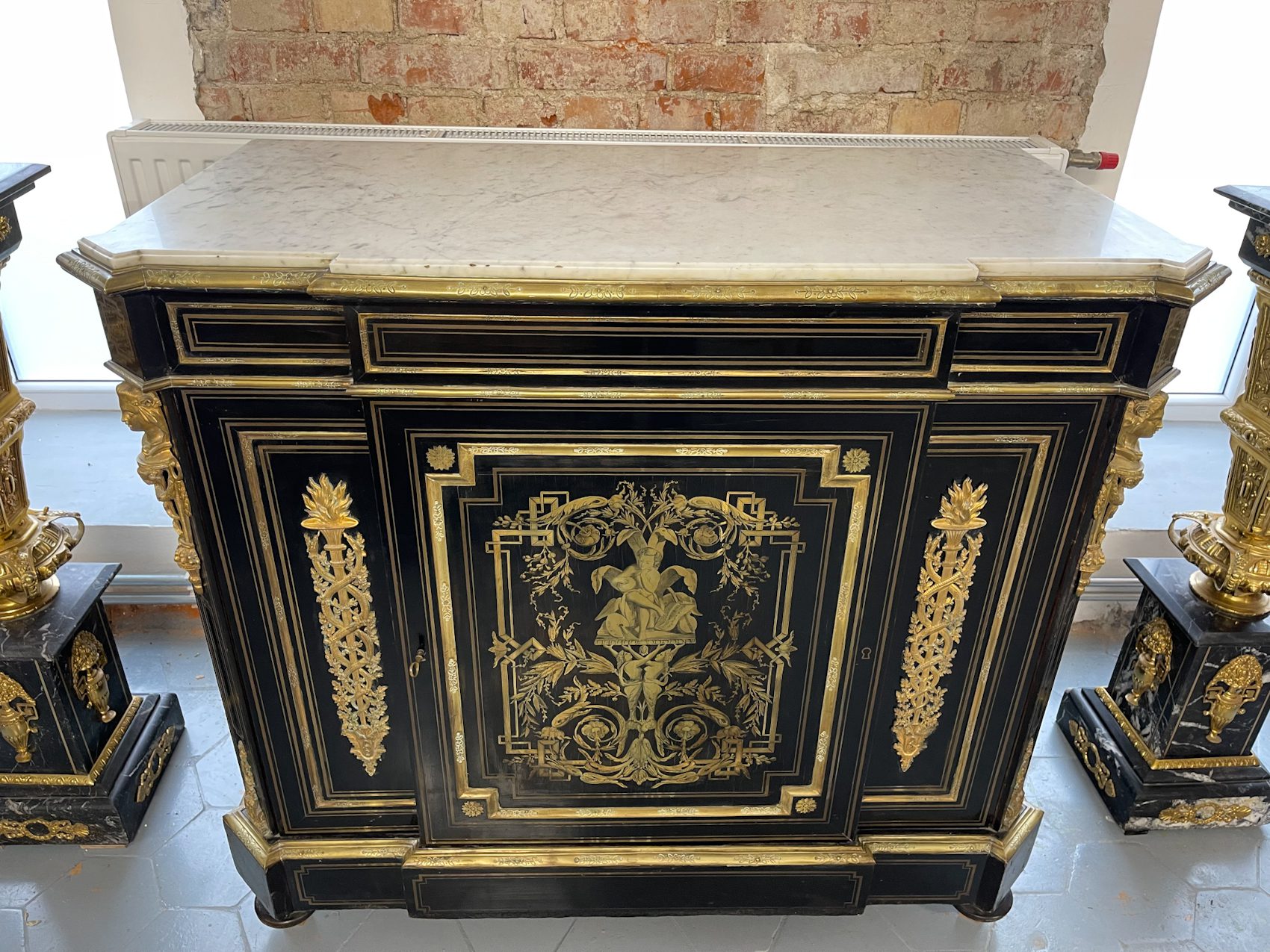
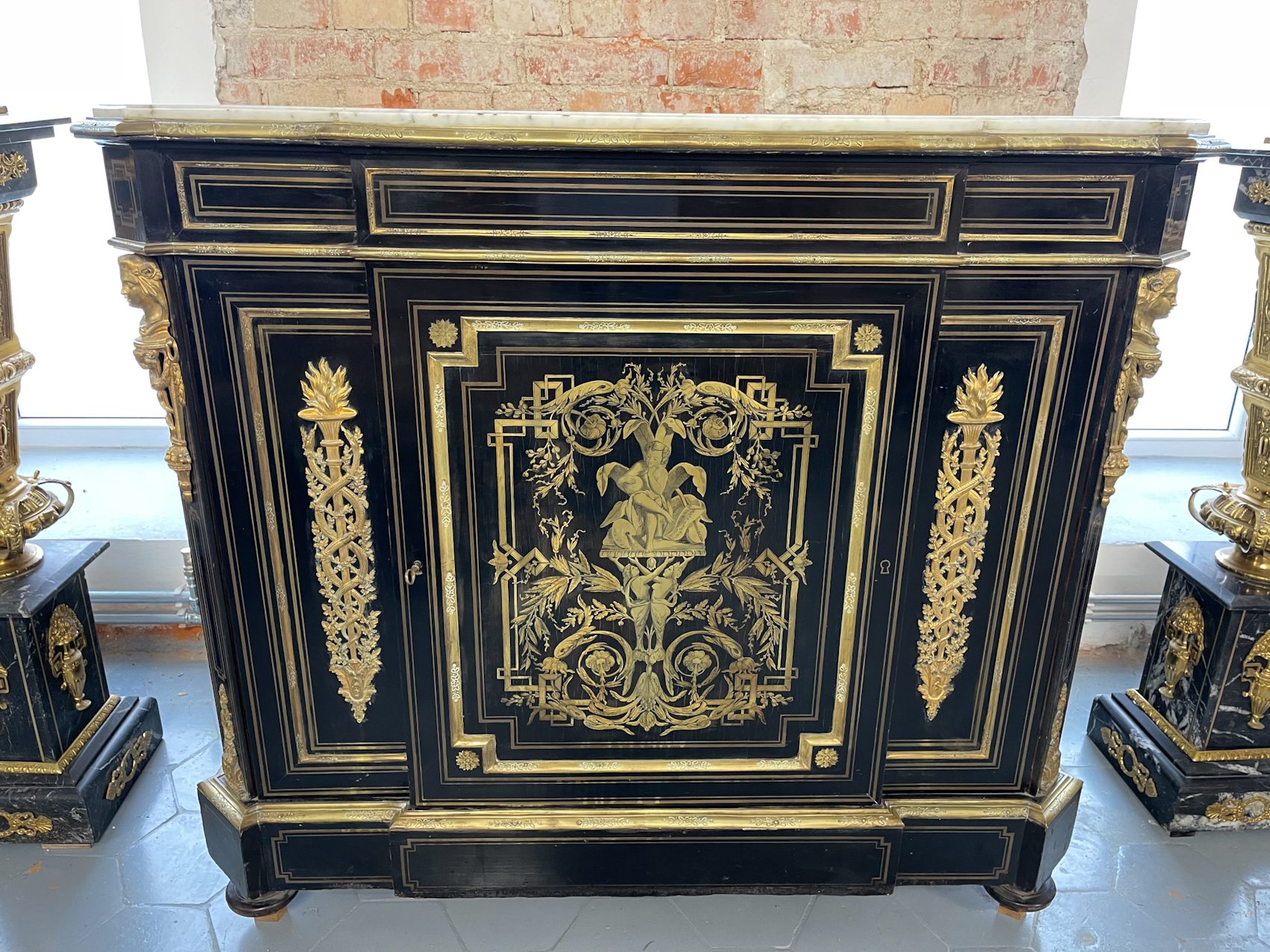
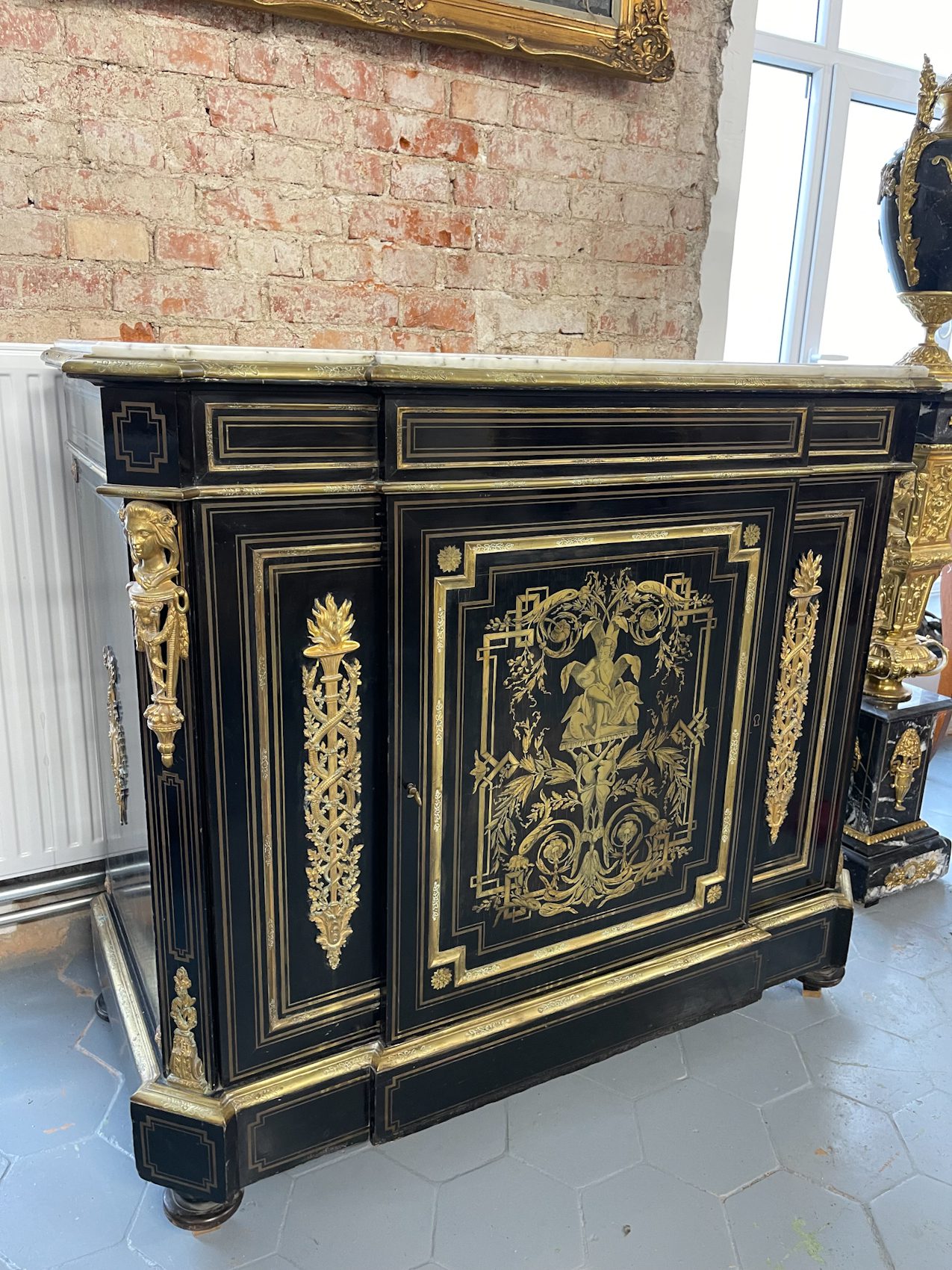
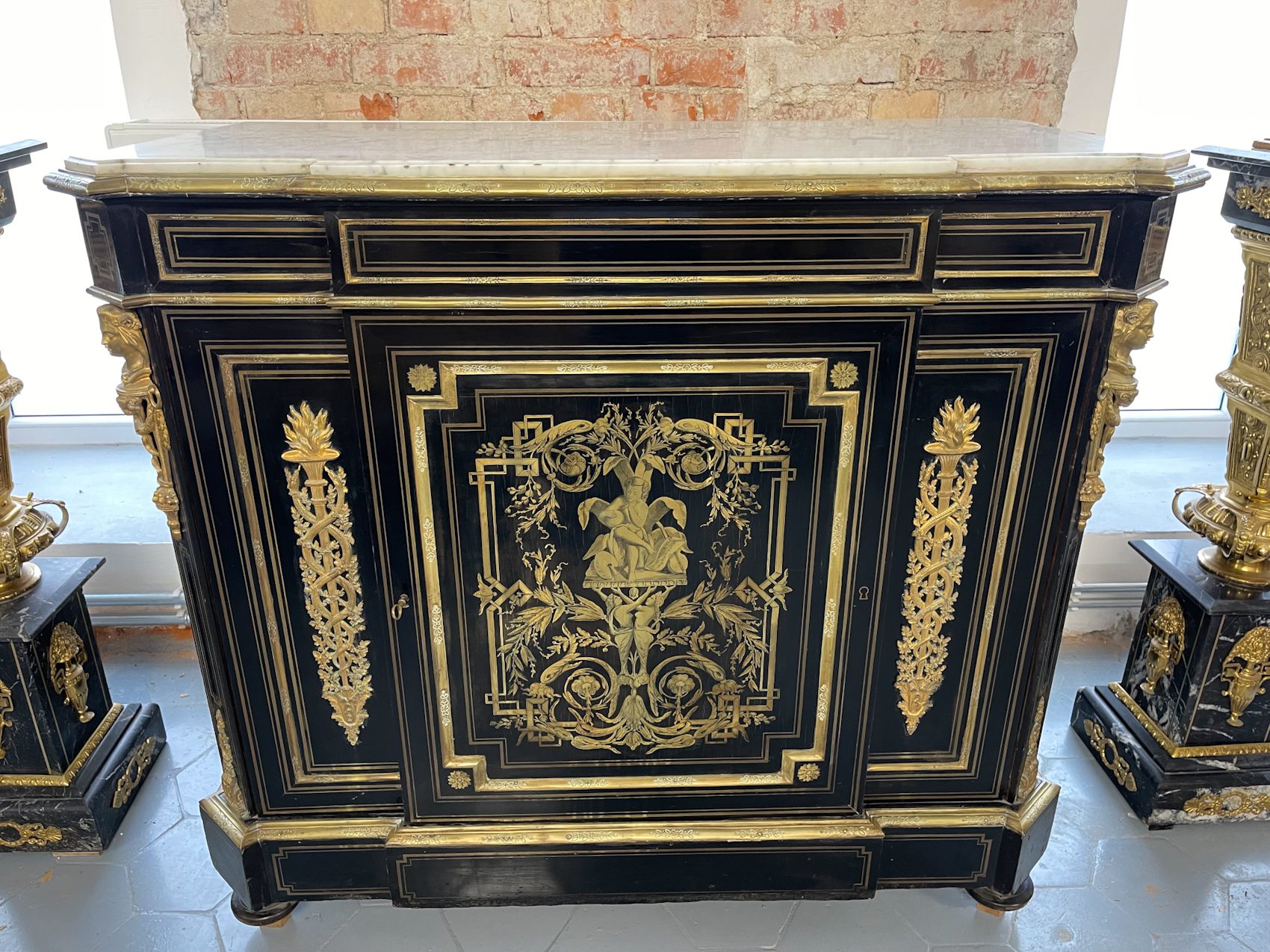
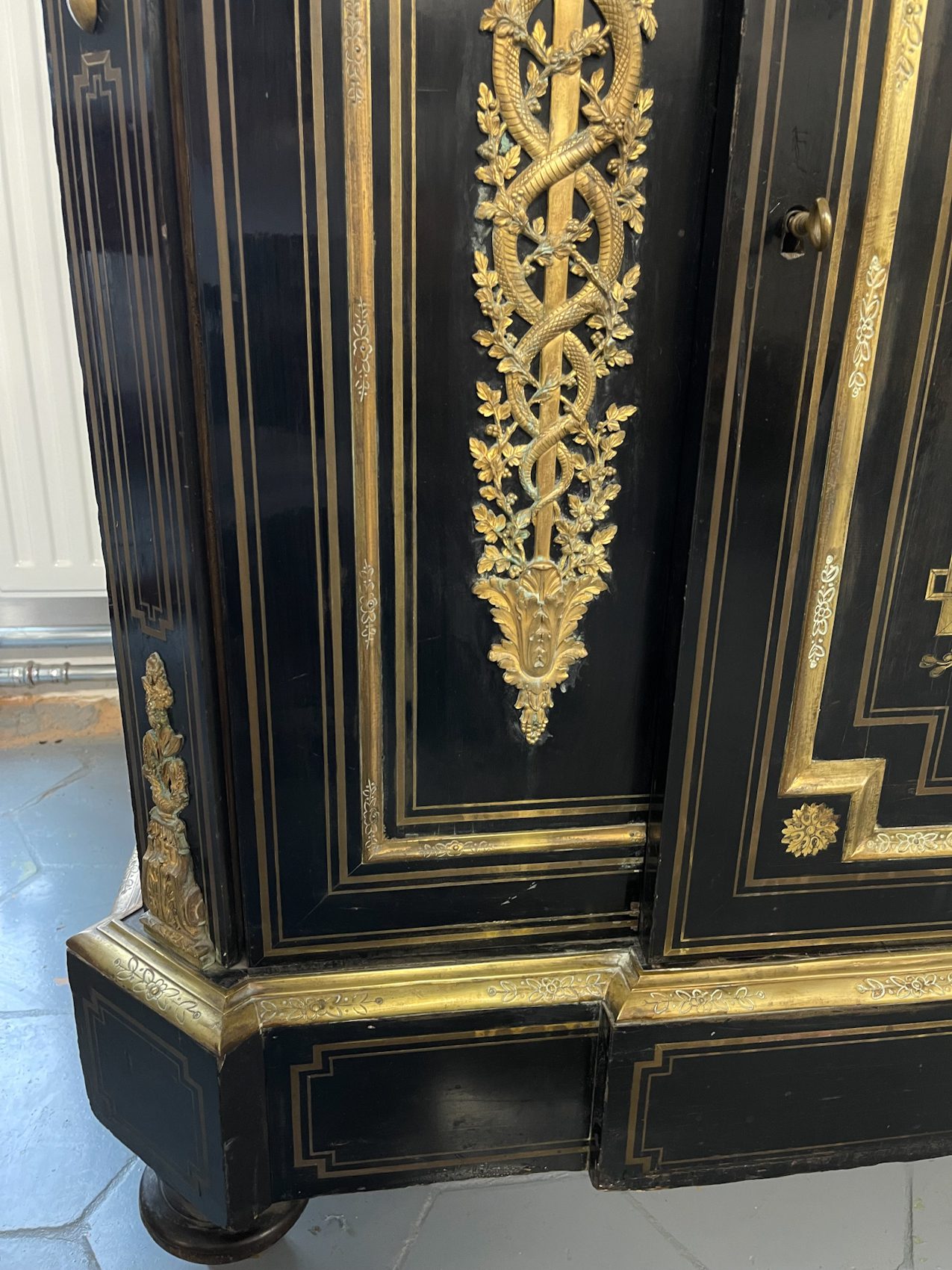
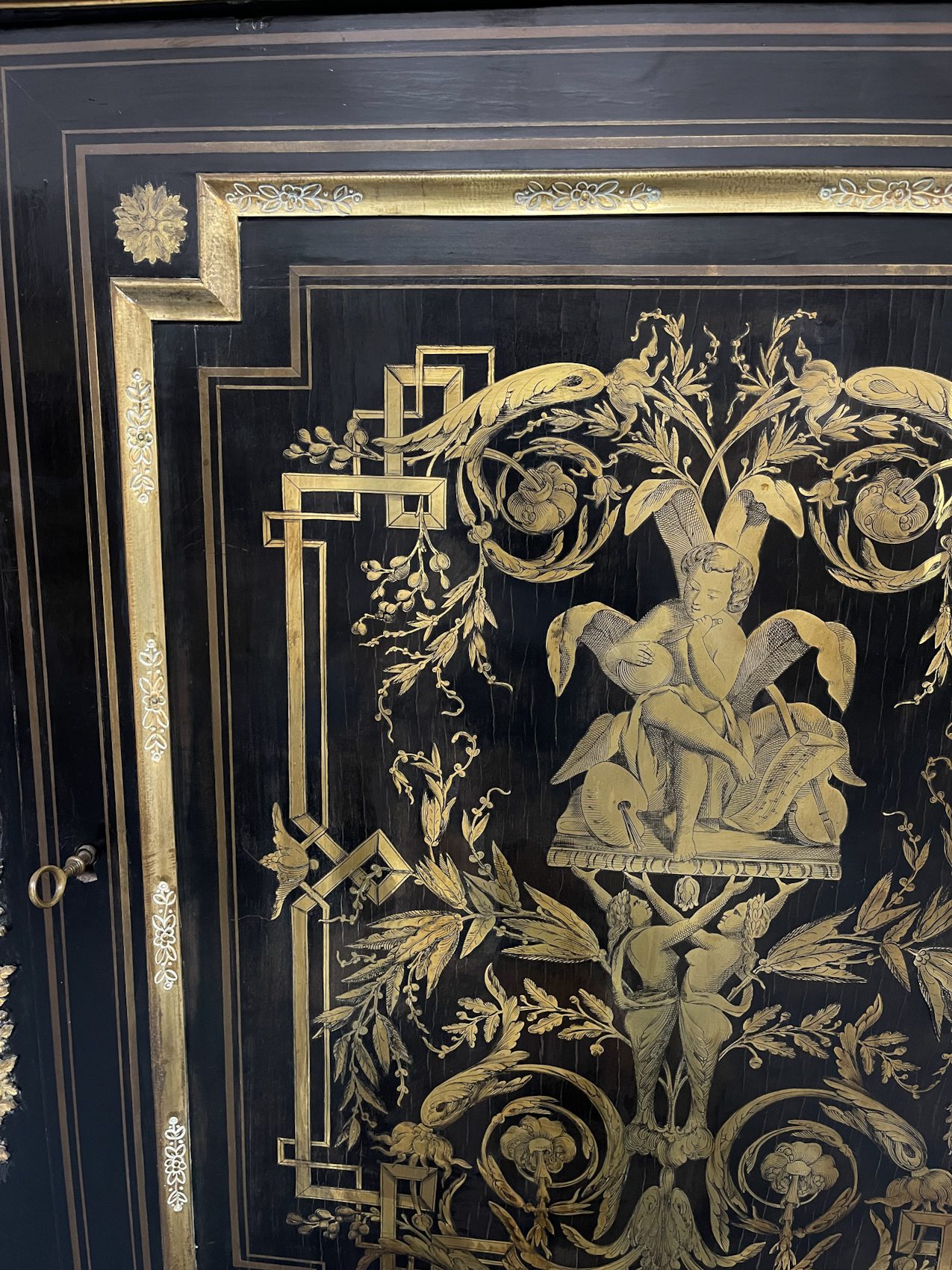
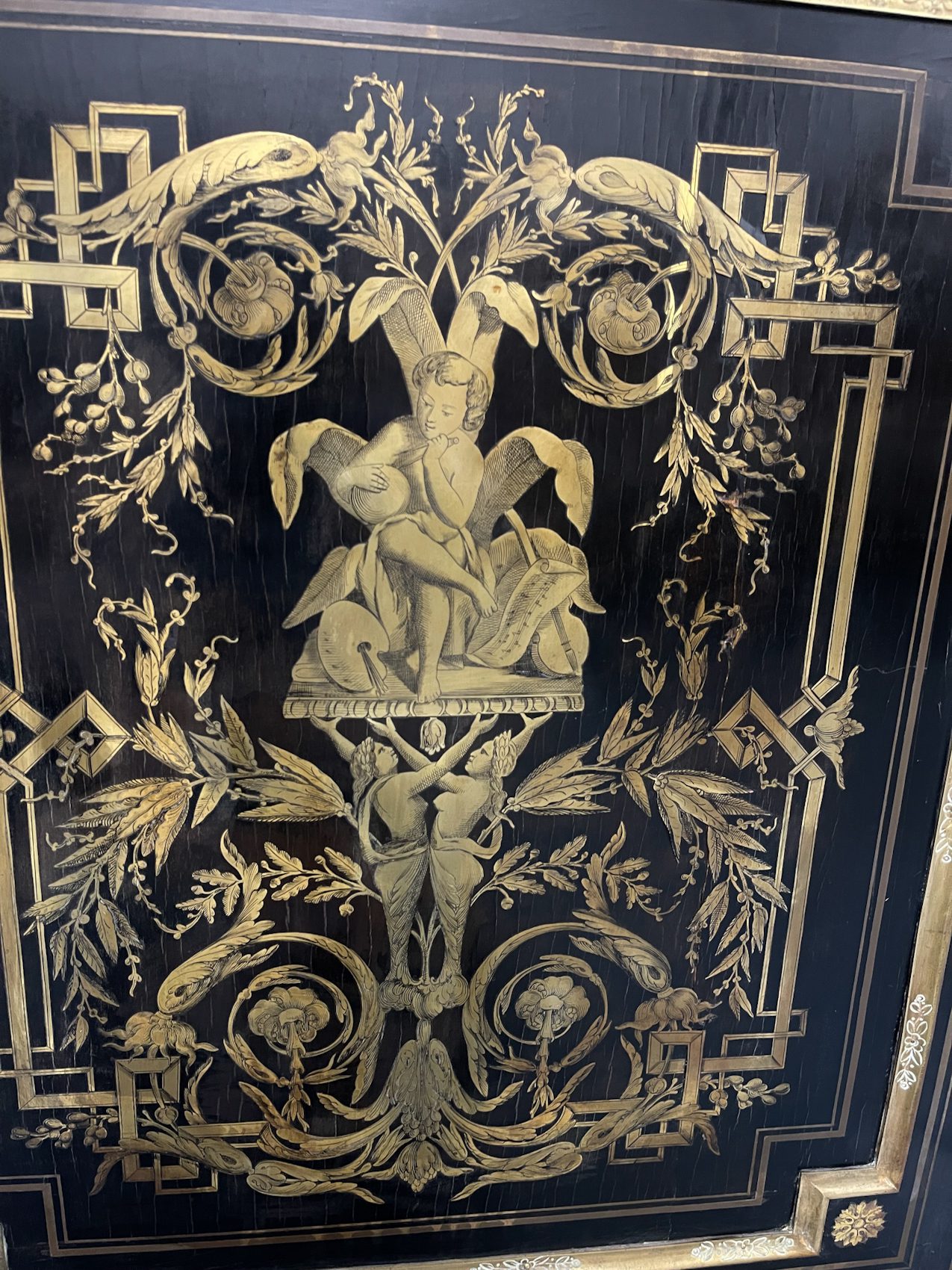
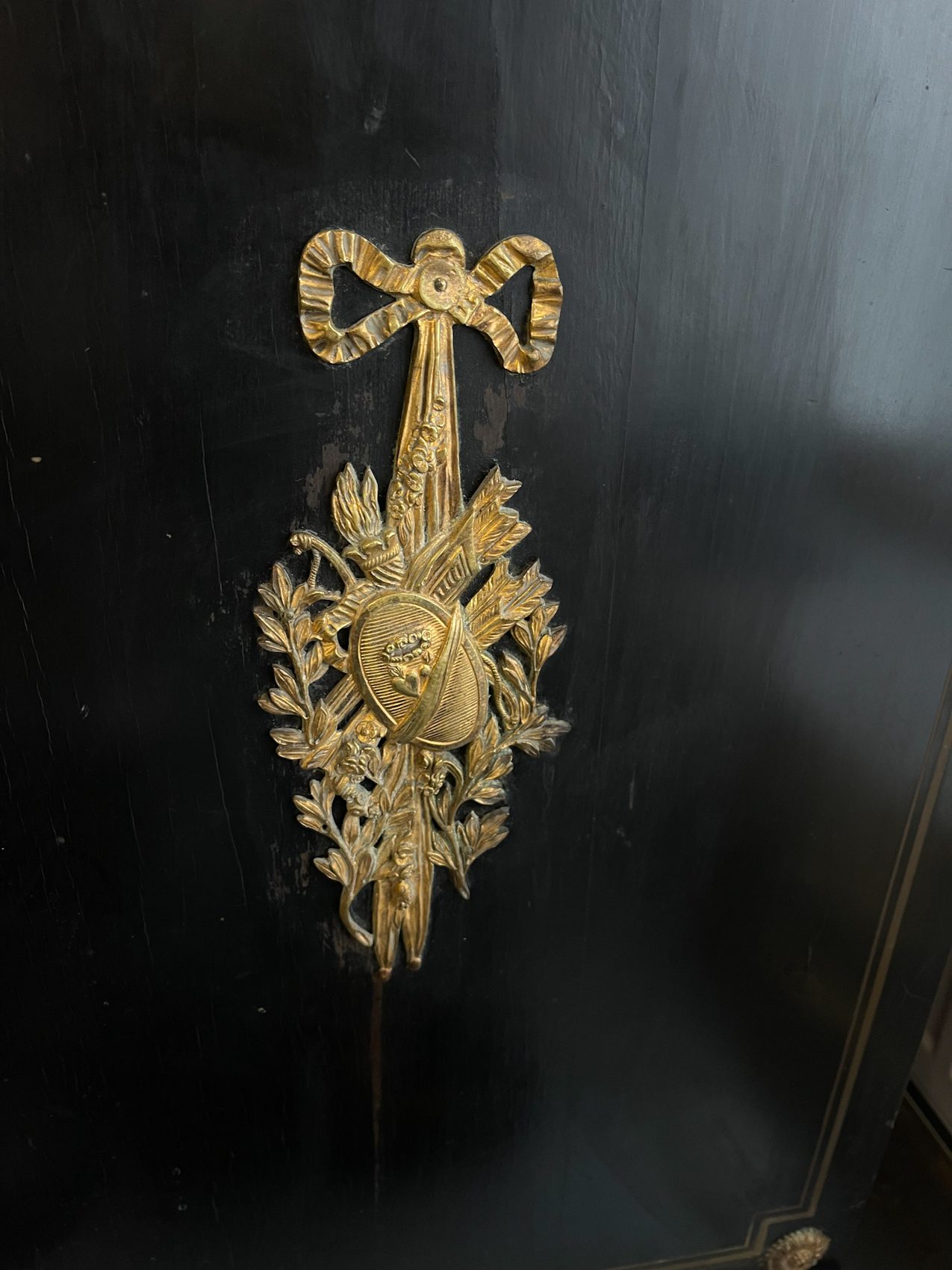
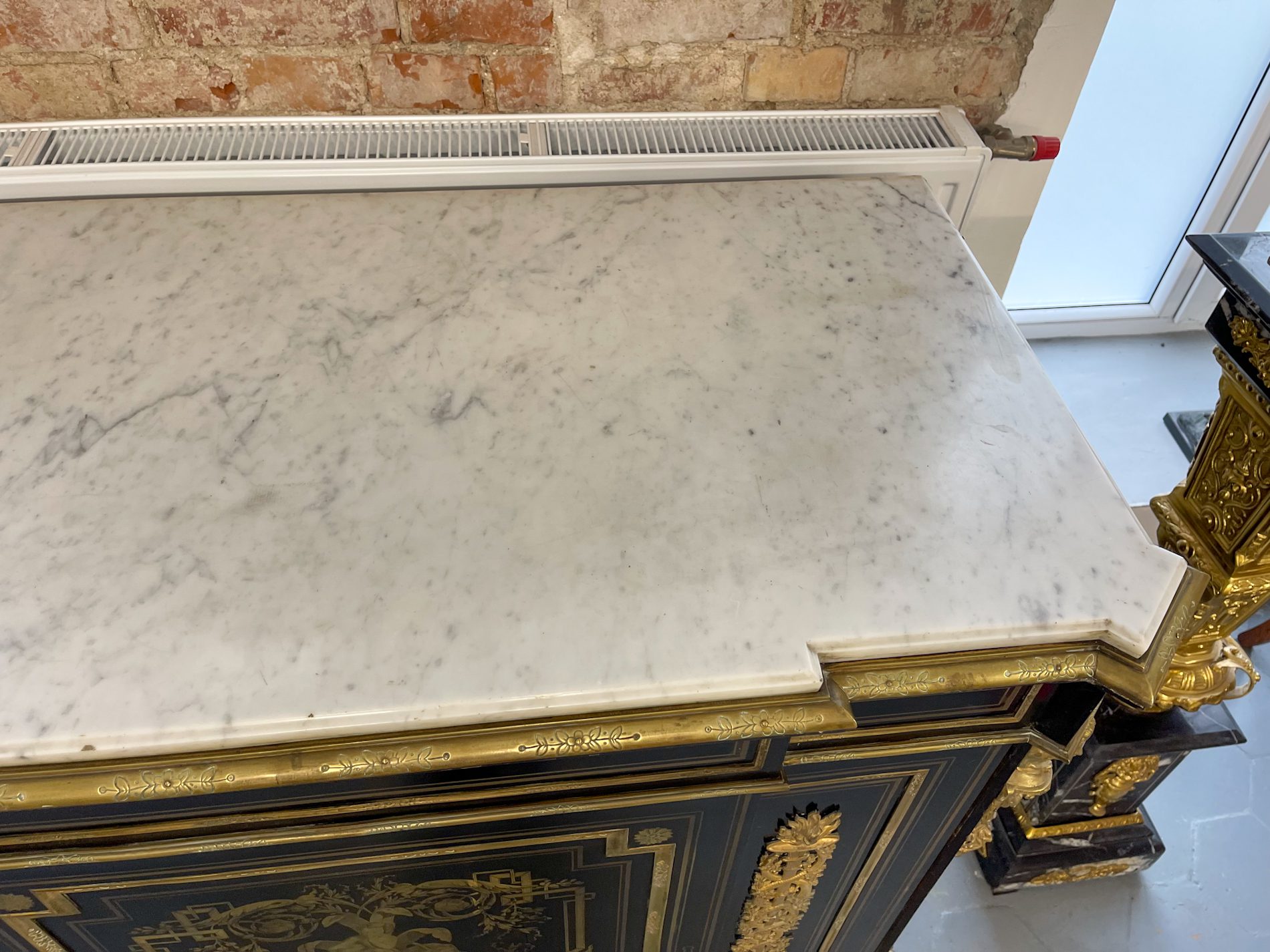
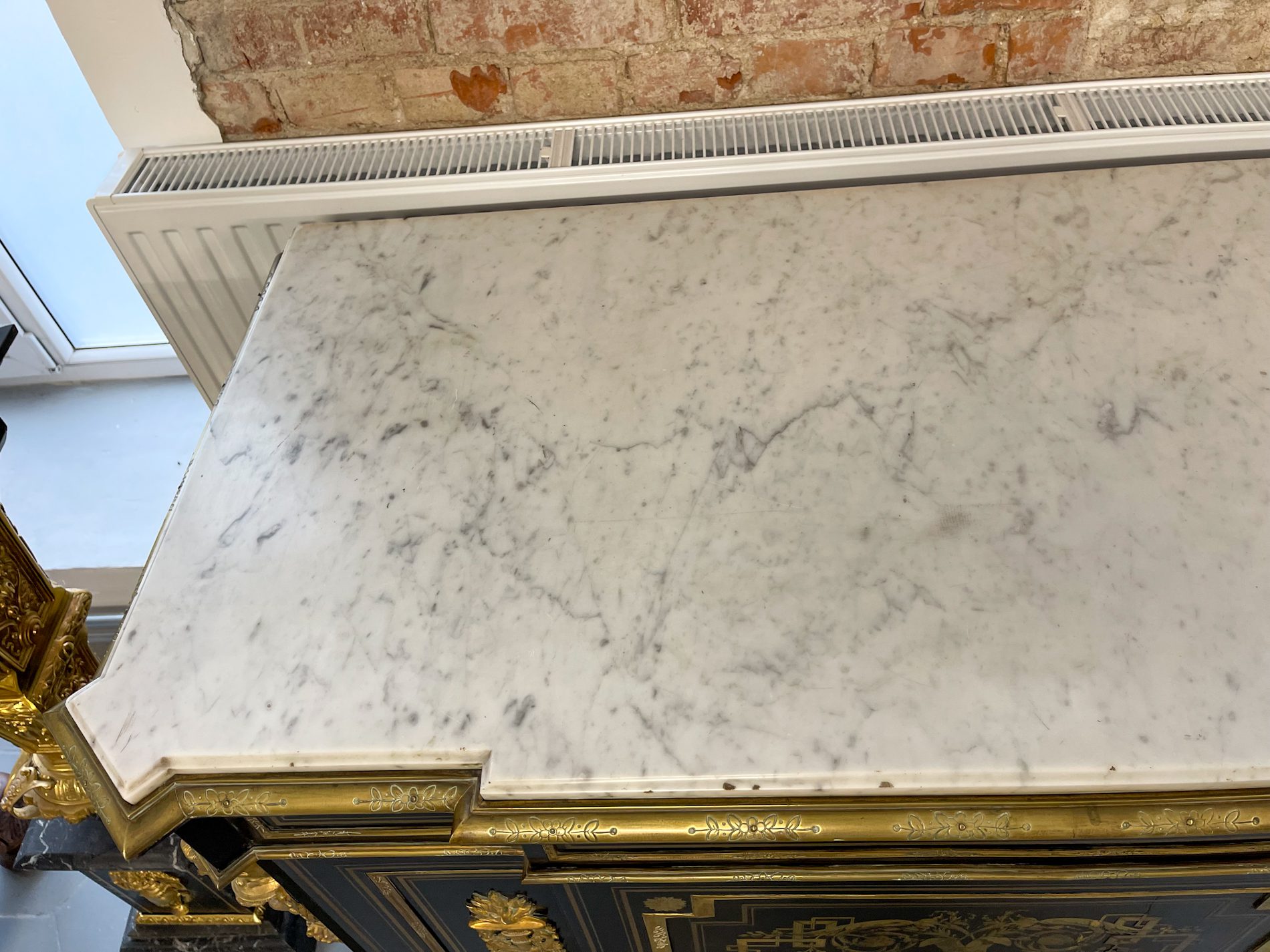
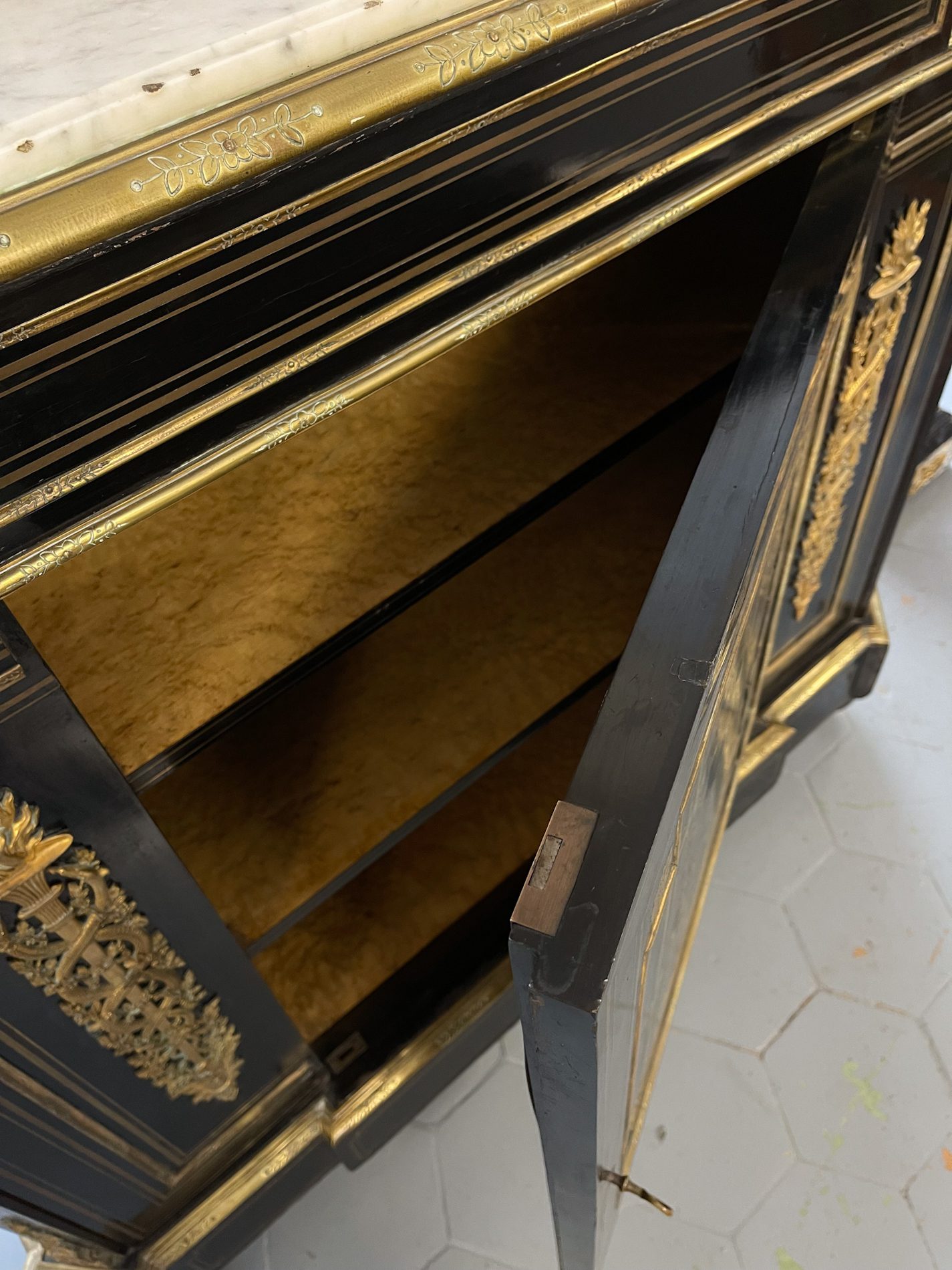
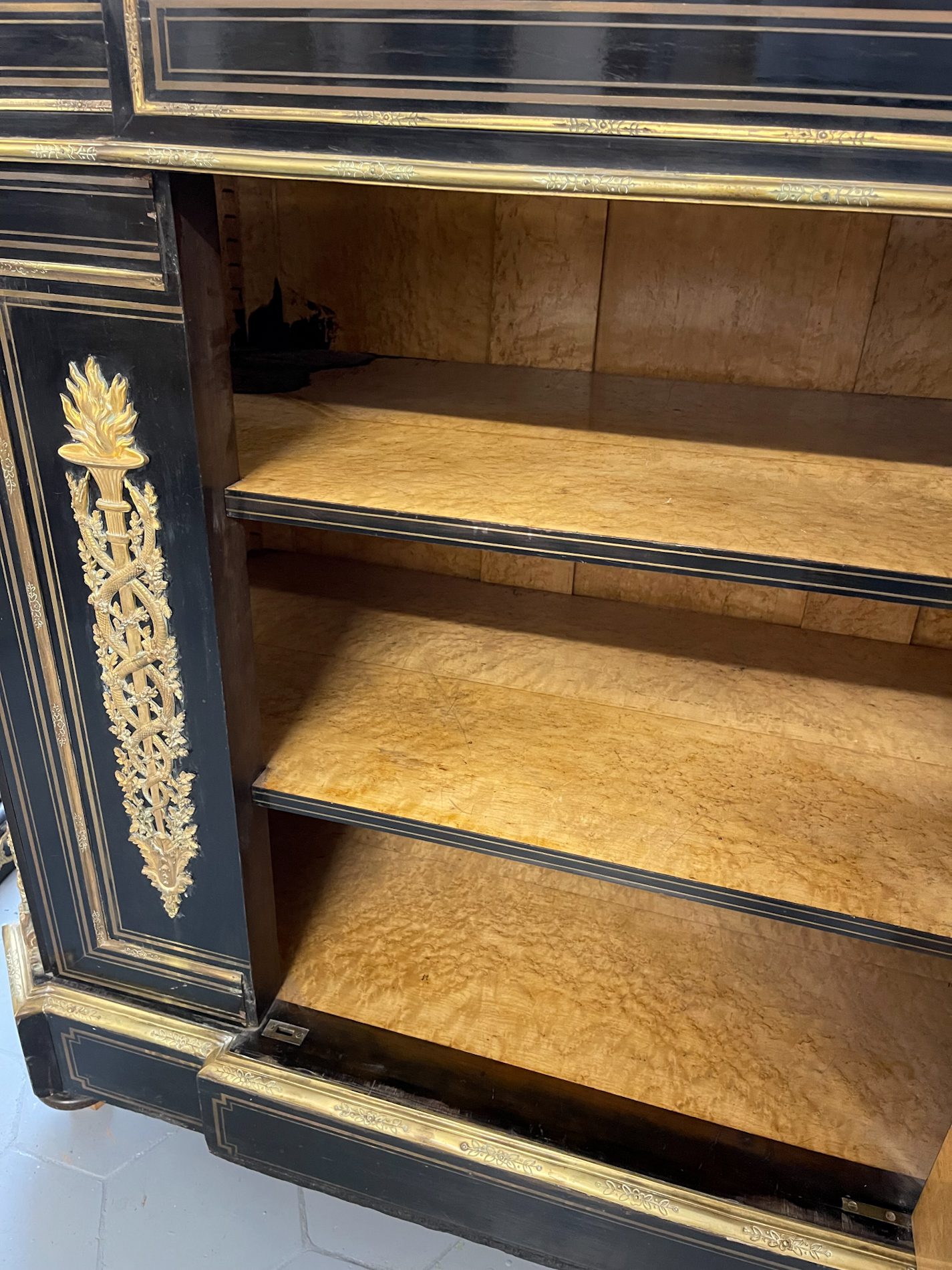
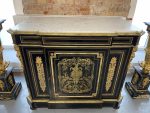
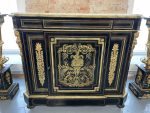
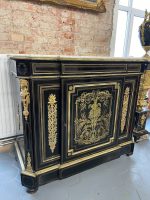
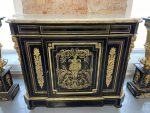
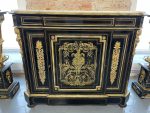
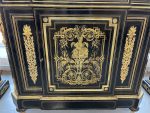
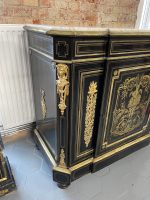
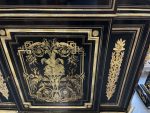
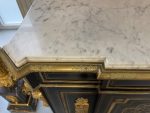
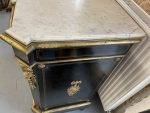
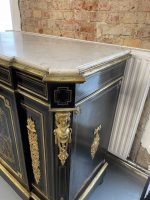
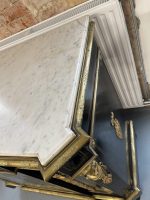
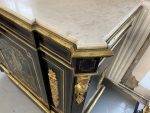
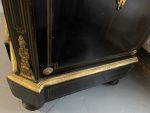
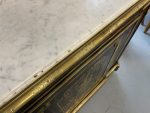
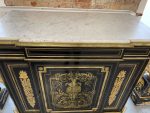
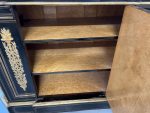
Boulle Style Chest of Drawers with Bronze Appliqués and Marble Top – Napoleon III Style, France, c. 1860 (3566)
Height 115.5 cm Length 126 cm Color BronzeBlackSilver
Description
Boulle Marquetry Cabinet with Ormolu Mounts and Marble Top — Napoleon III Style, France, approximately 1860–1880
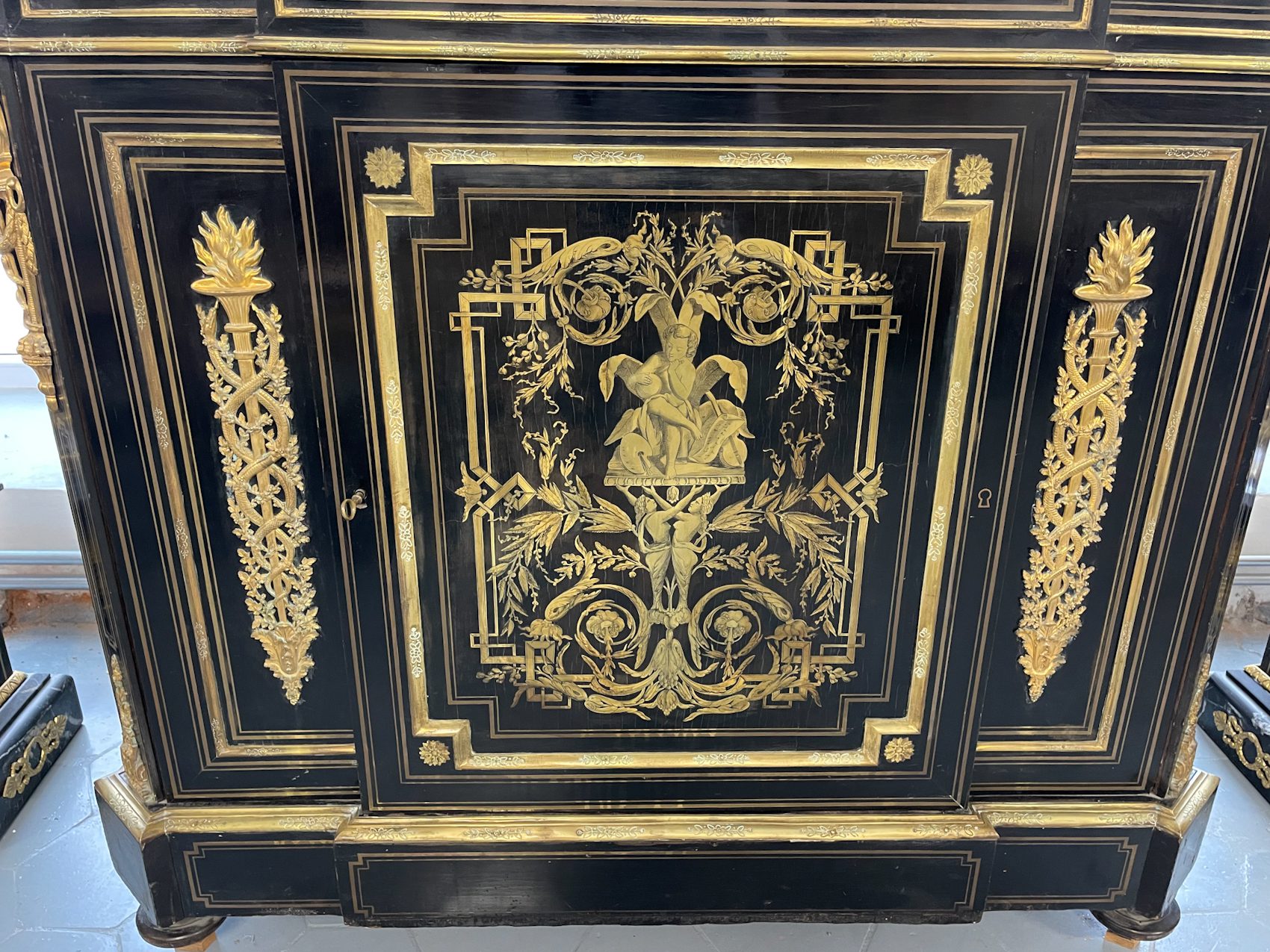
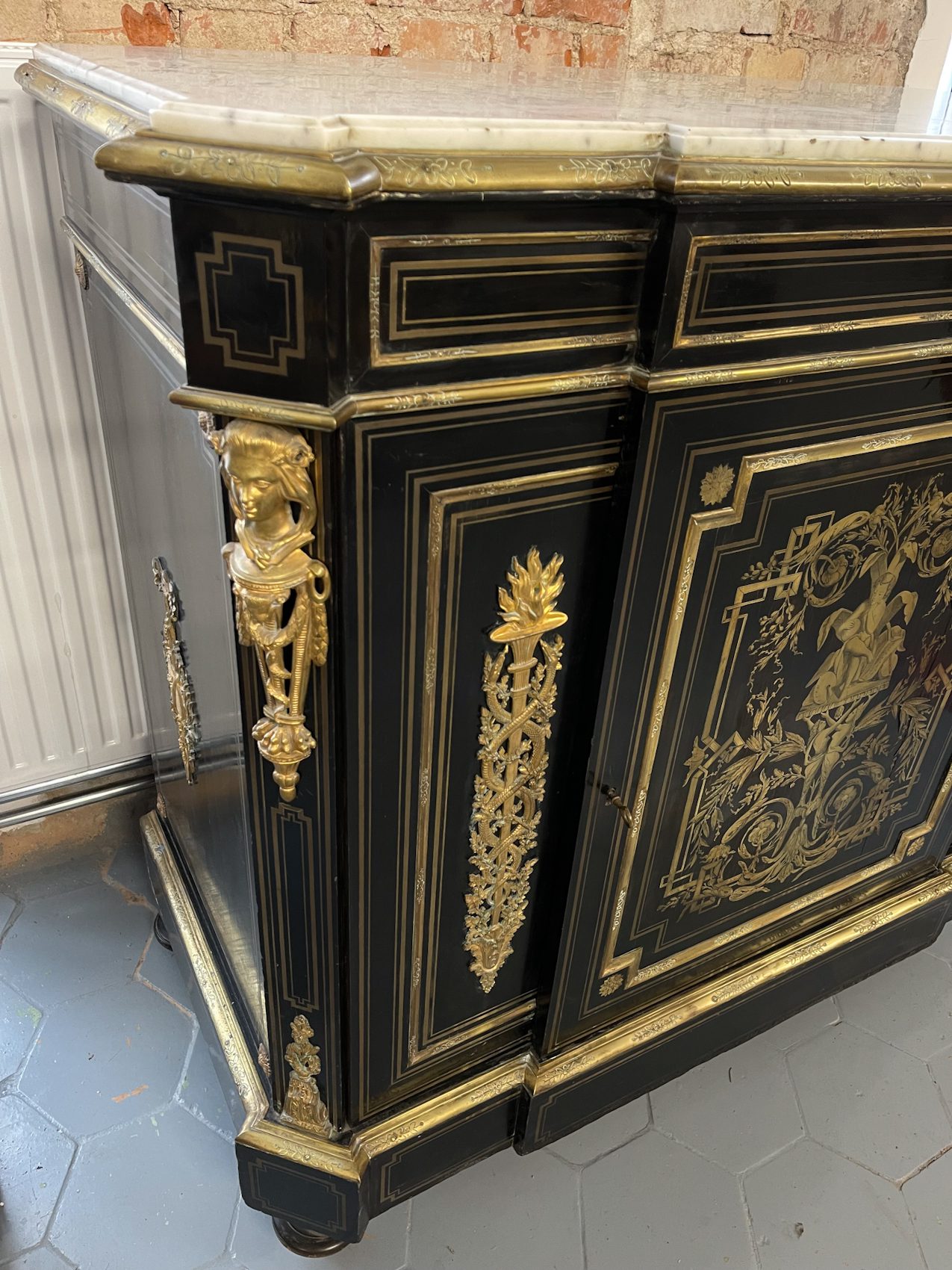
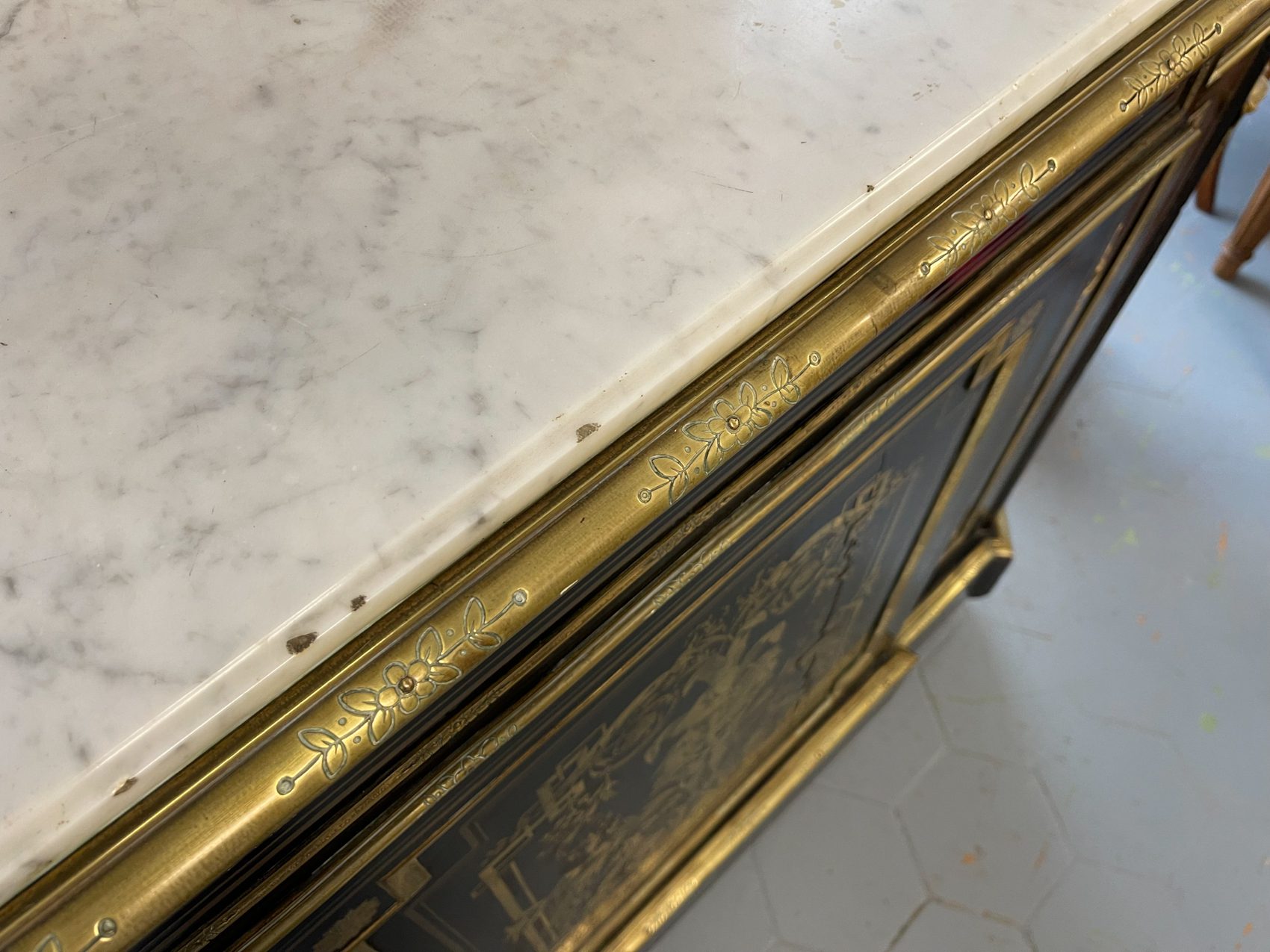
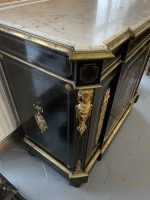
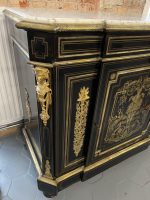
This exceptional meuble d’appui is one of the finest expressions of the Napoleon III style in decorative arts — an era when the Second Empire (1852–1870) and the ensuing Belle Époque generated an unprecedented culture of luxury among the Parisian haute bourgeoisie and aristocracy. Crafted in ebonised wood with extraordinarily rich Boulle marquetry inlay in brass and silver across the entire facade, it represents the apex of mid-19th-century ébénisterie.
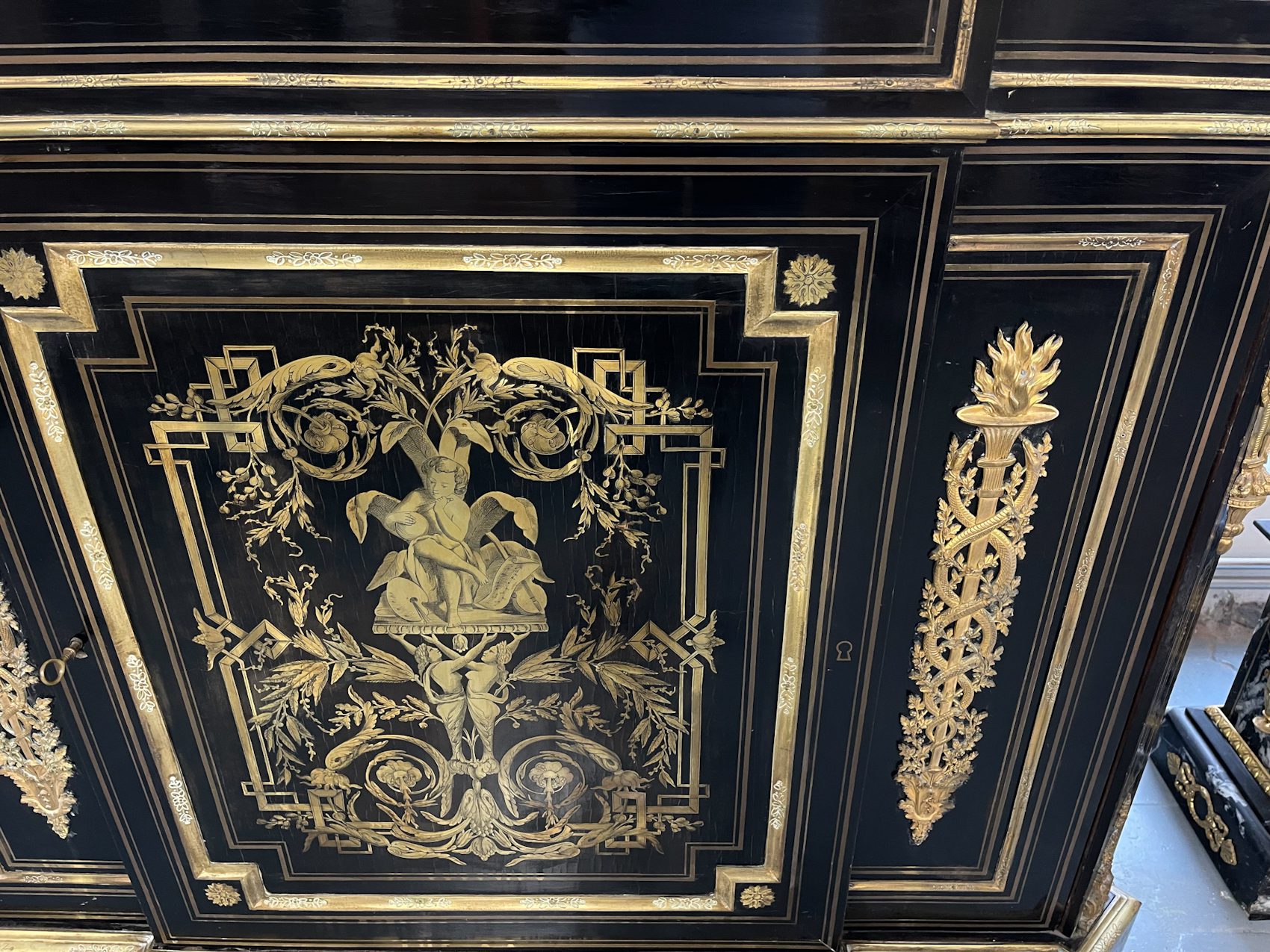
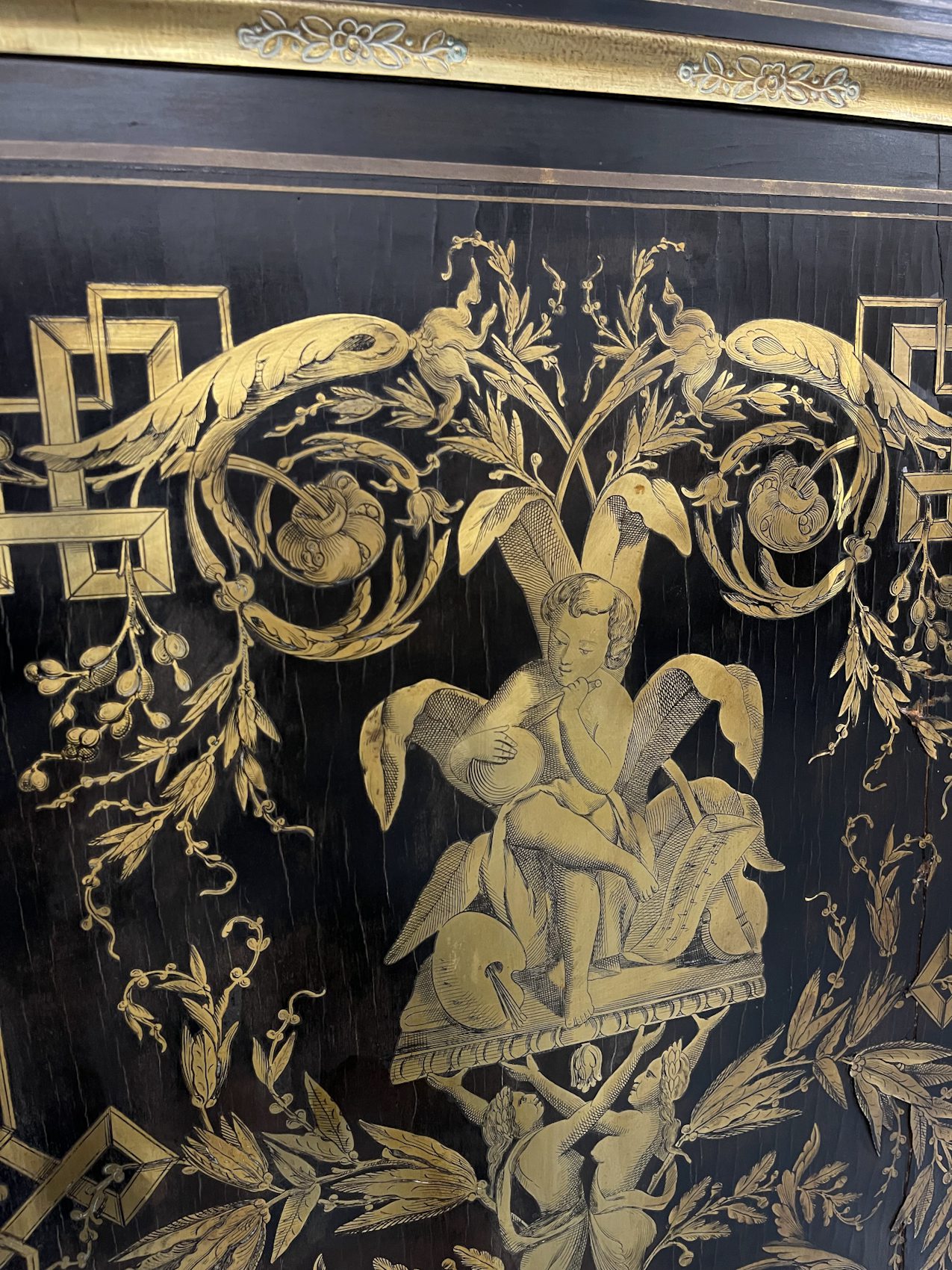
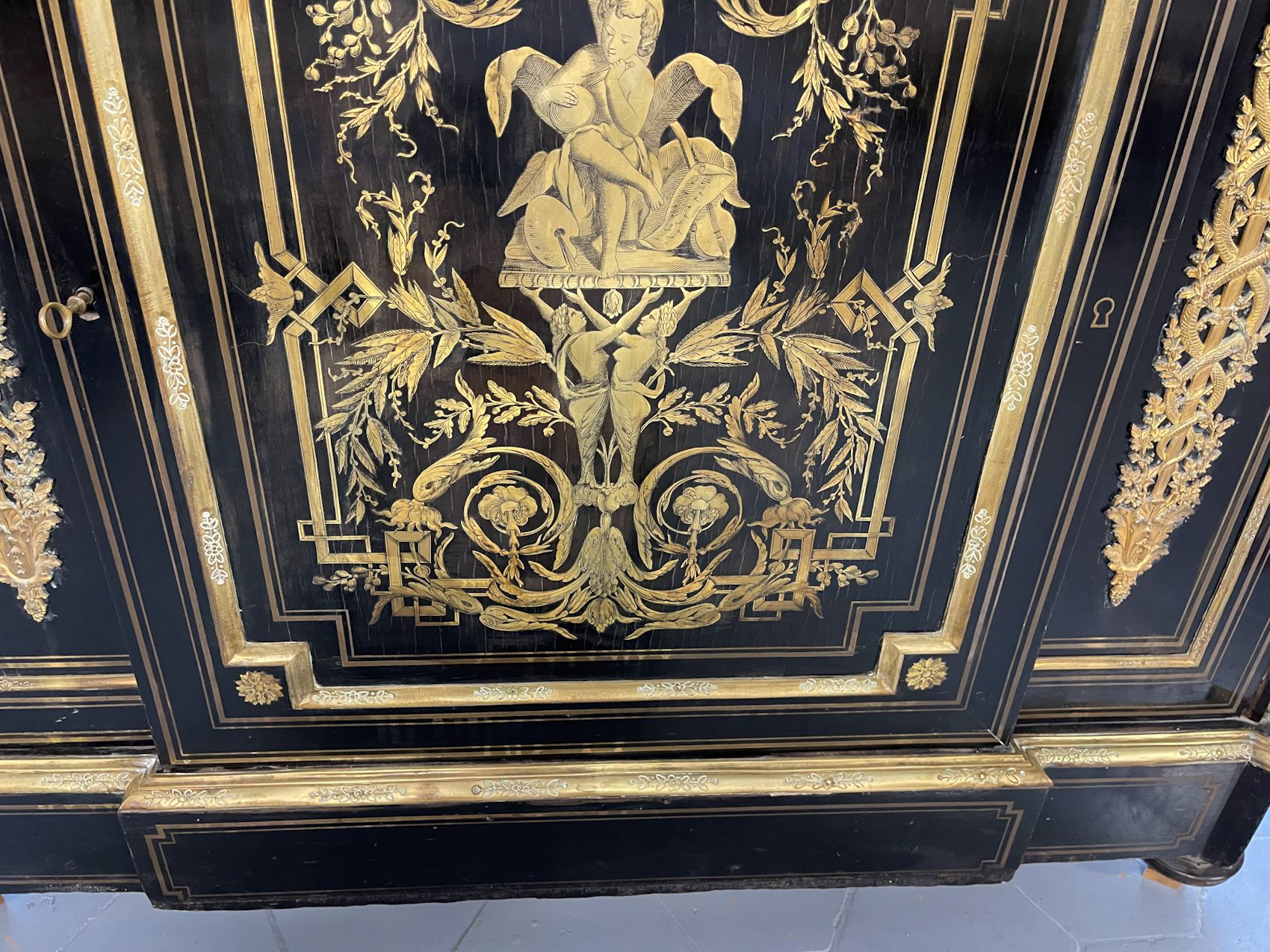
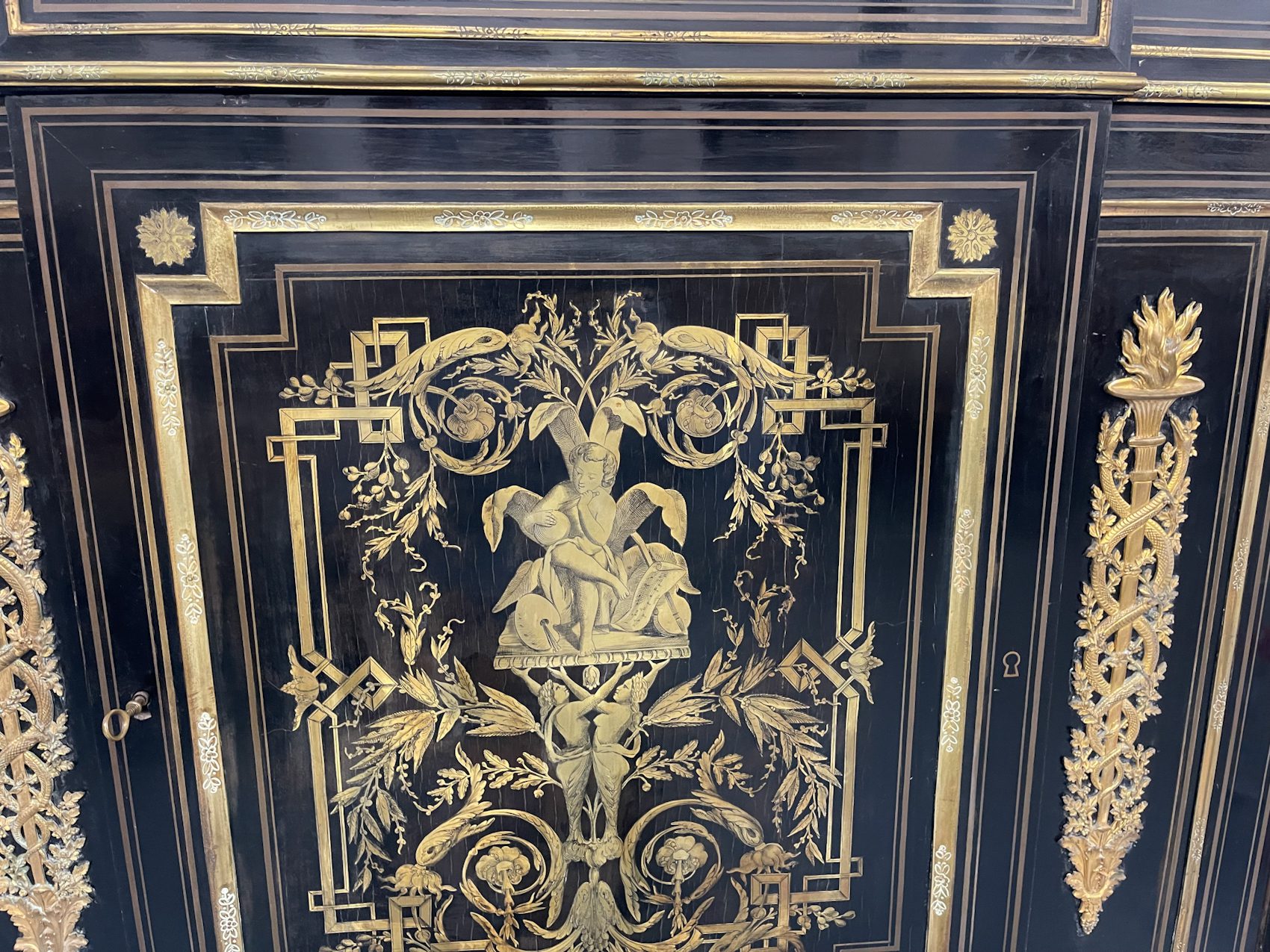
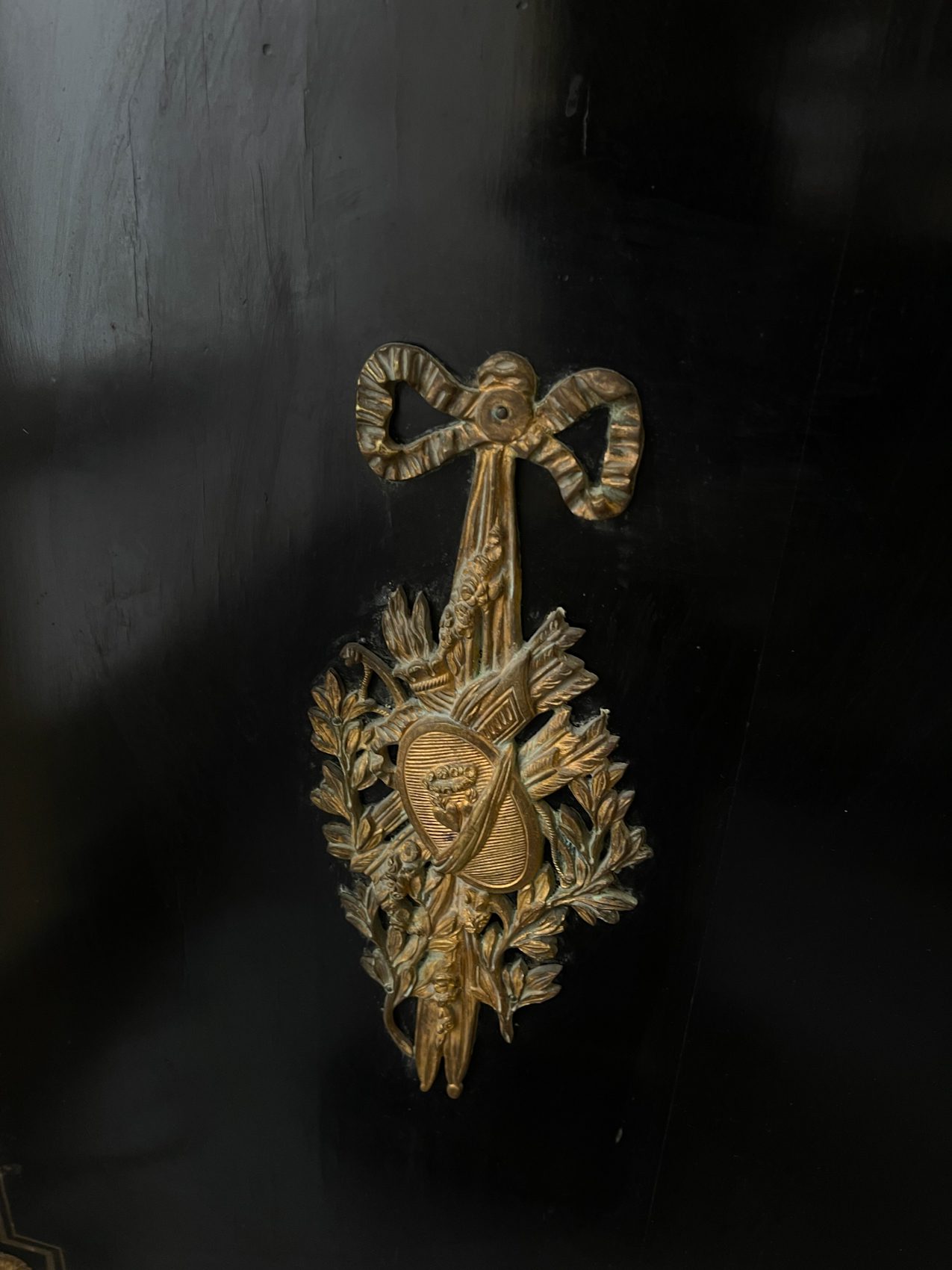
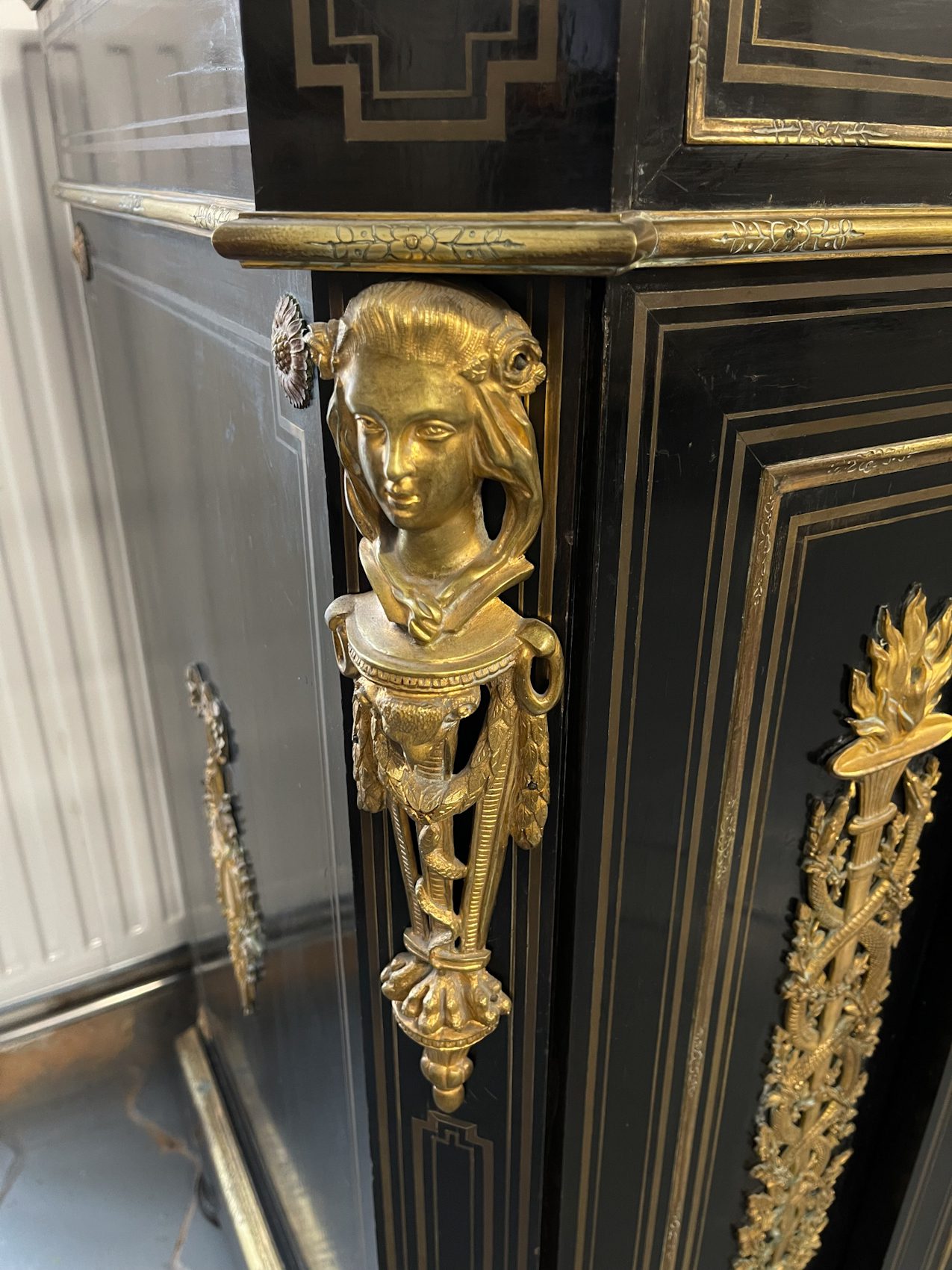
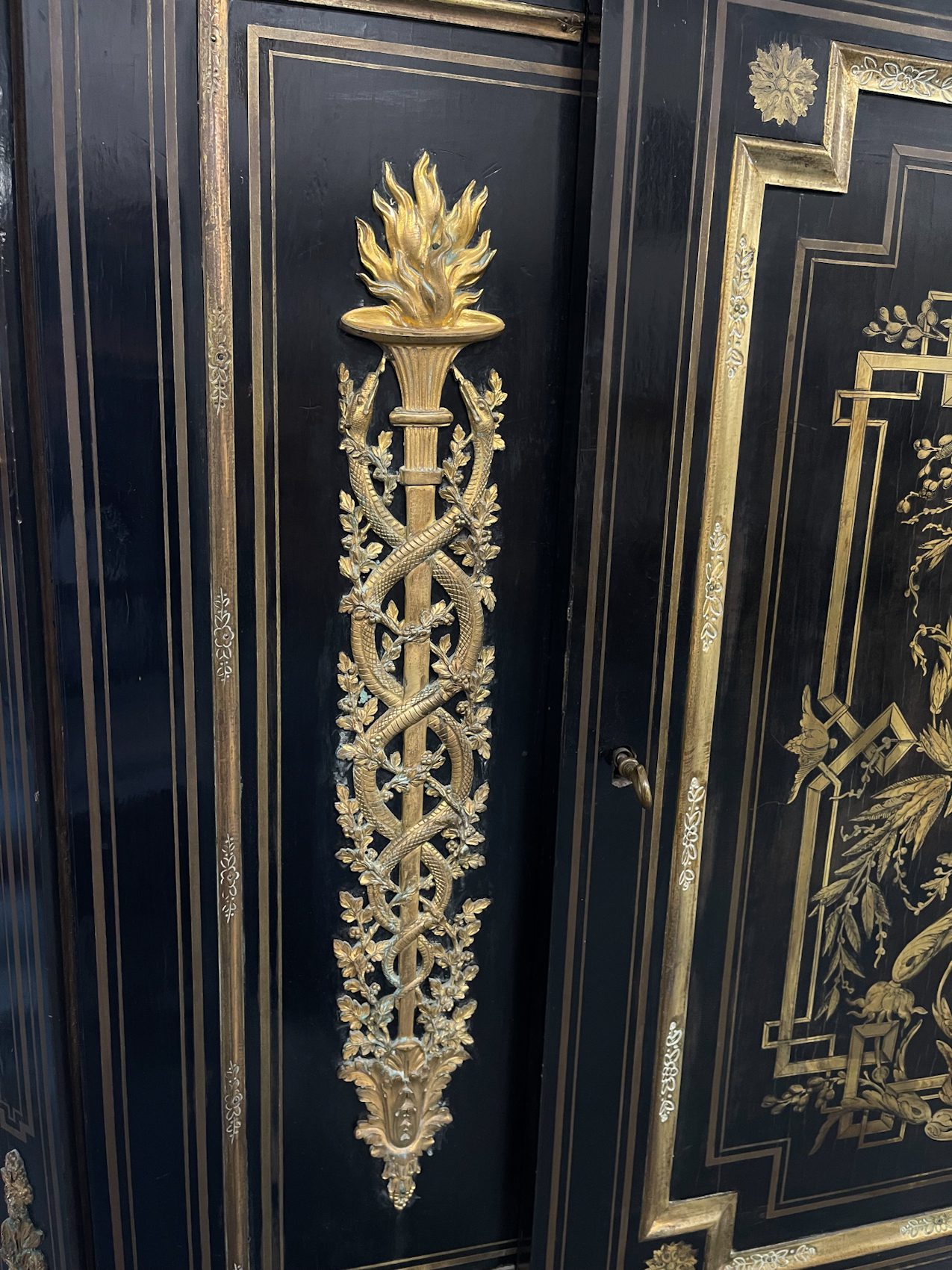
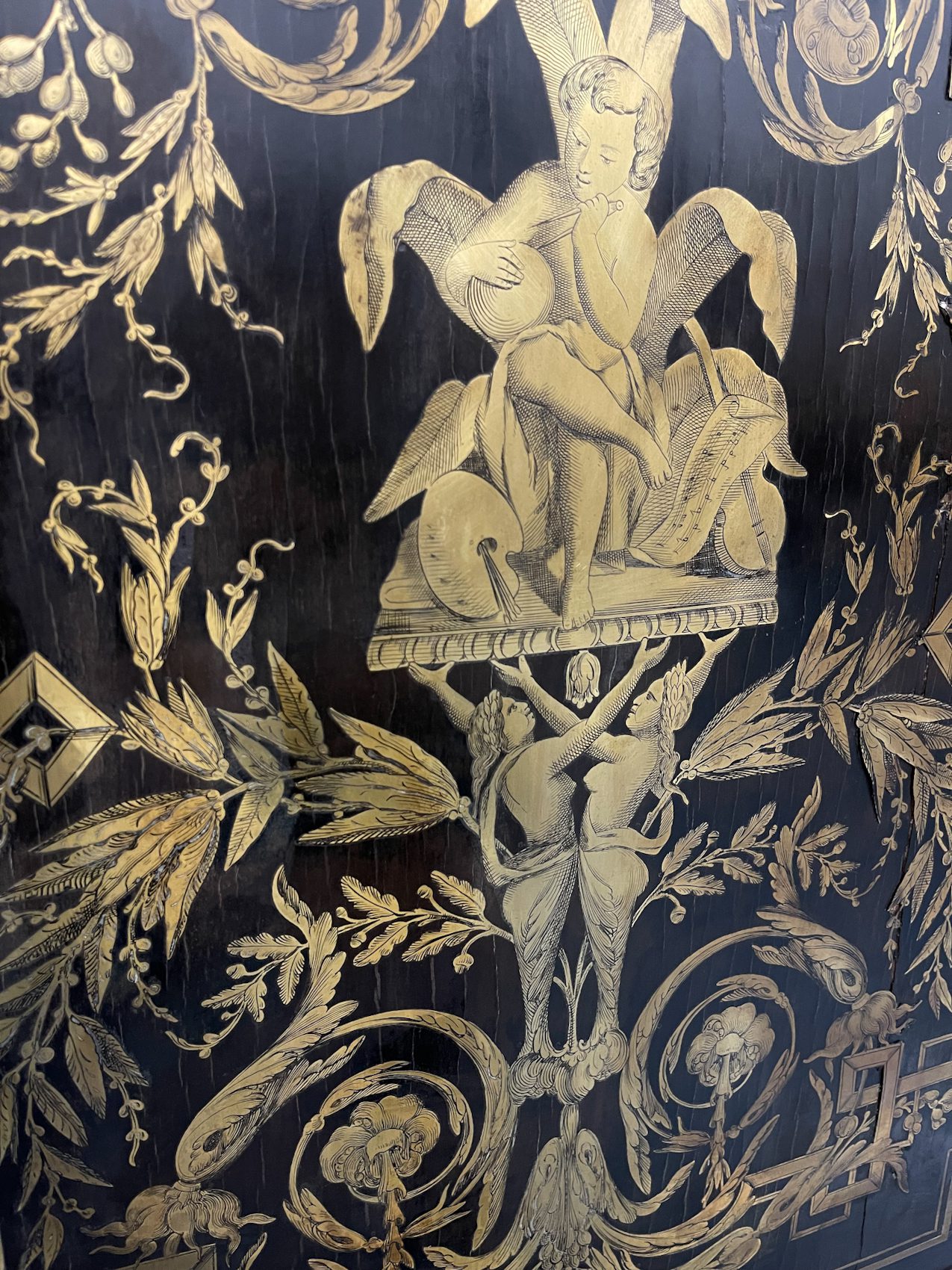
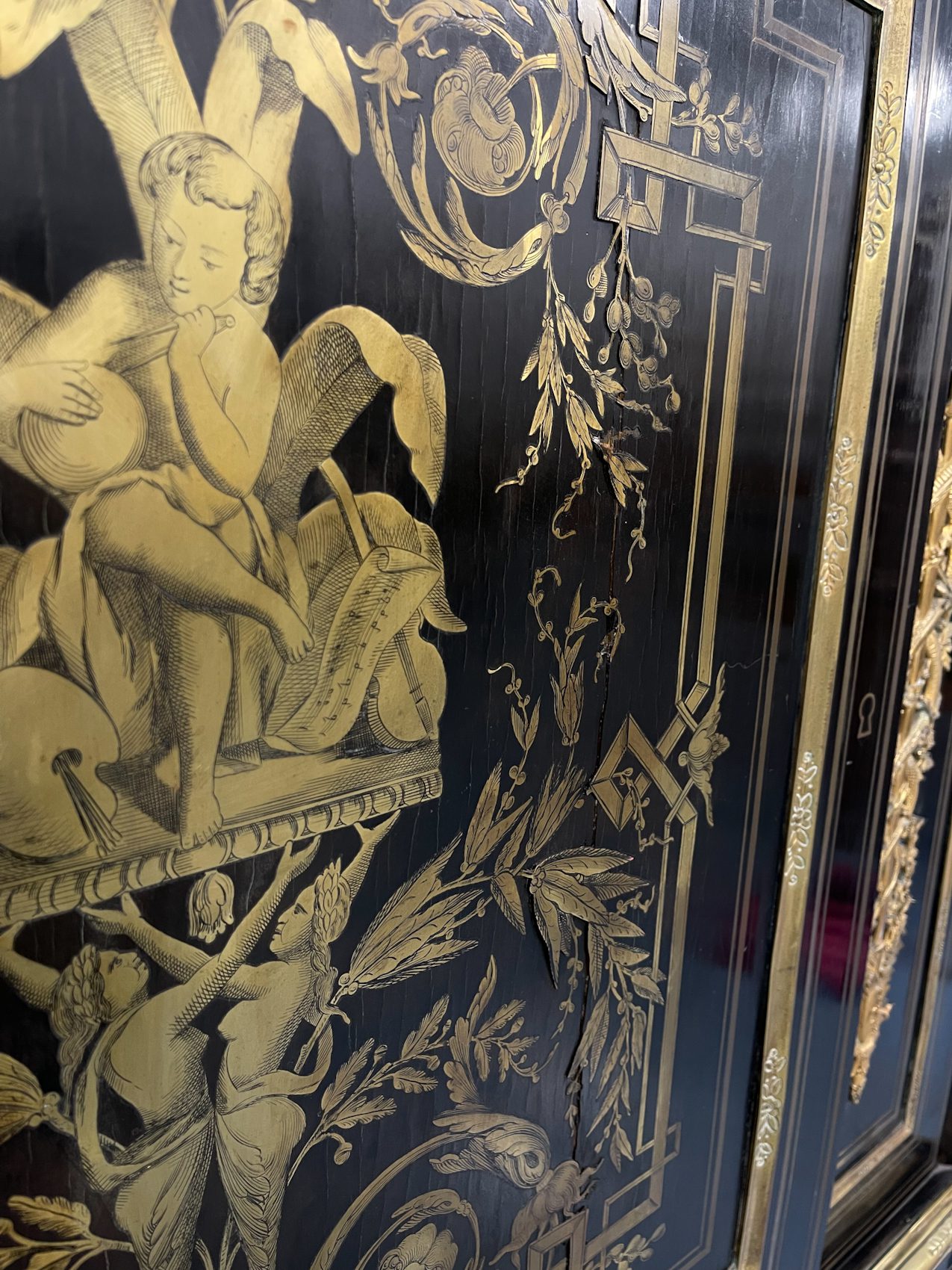
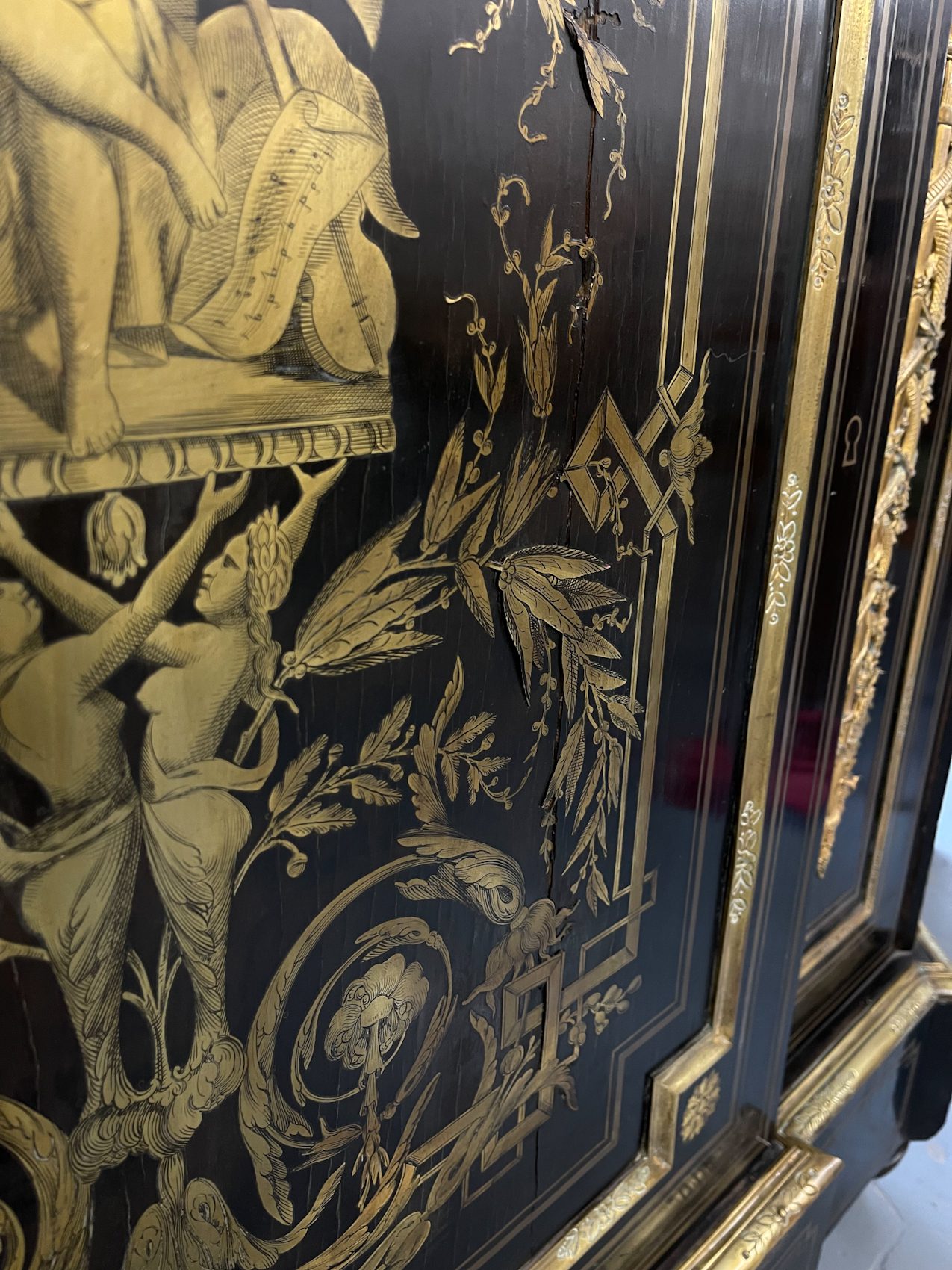
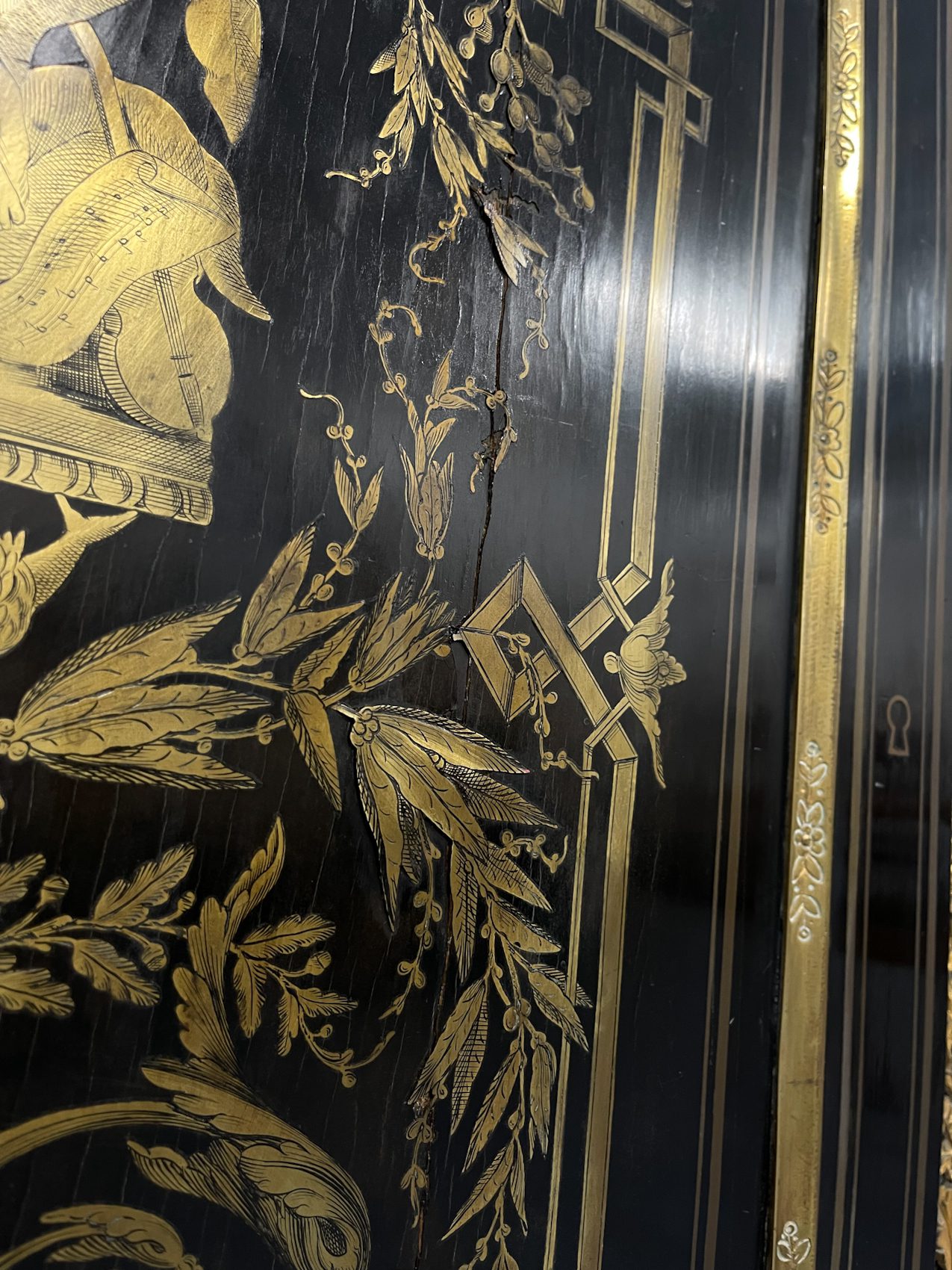
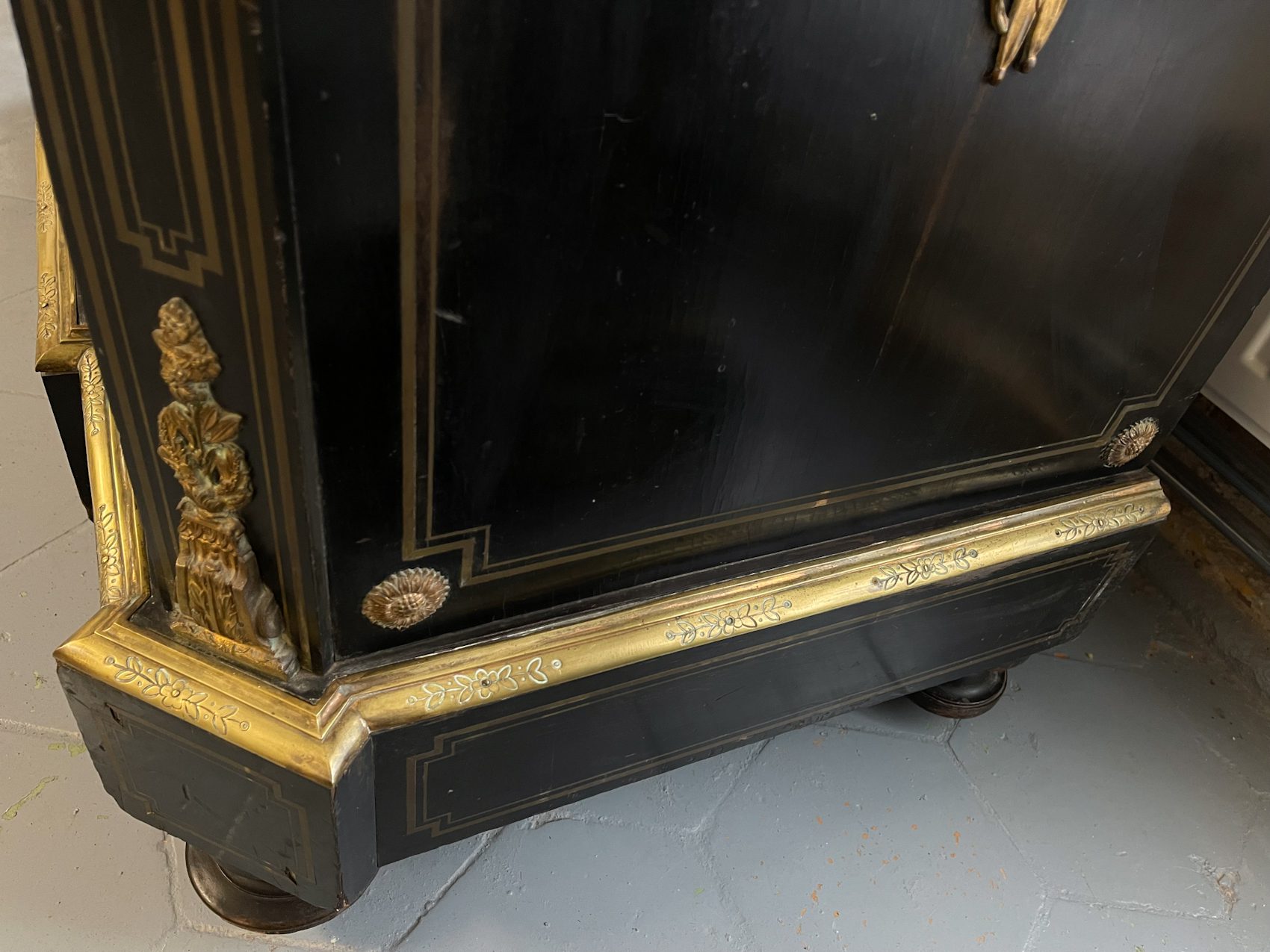
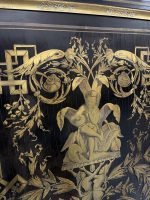
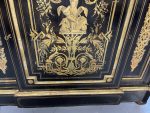
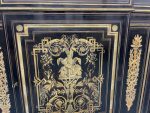
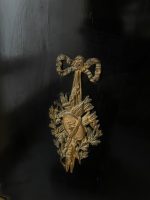
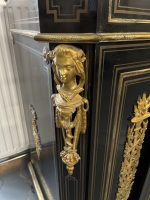
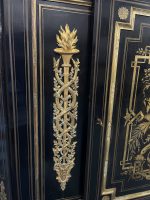
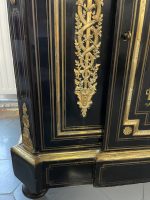
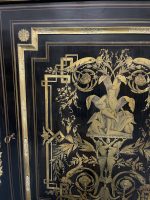
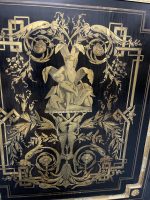
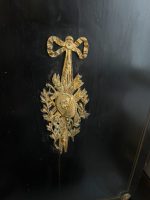
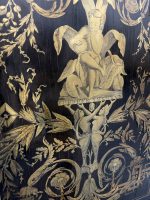
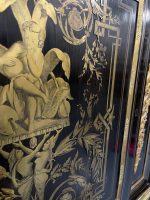
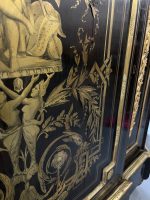
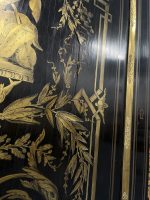
The central door panel is a miniature masterpiece: against a lacquered black ground, an allegorical scene is rendered in gold and silver intarsia — a winged muse (putto) with musical instruments and a scroll of sheet music, surrounded by flowing acanthus garlands, exotic birds, ribbon-tied trophées and geometric chinoiserie frames. The side pilasters carry vertical gilt bronze torch appliqués with a flame finial, entwined with a serpent and laurel branches. Corner mounts feature refined female bust caryatids in gilded ormolu bronze. Door lock escutcheons take the form of a military trophée with shield, quiver and laurel wreath.
A Belle Époque moment. At the 1867 Exposition Universelle in Paris, Empress Eugénie paused before a meuble d’appui exactly like this one — ebonised, with bronze caryatids at the corners and a white marble top. Her old friend Prosper Mérimée, who had written Carmen for her in younger years, stood slightly behind and observed quietly: the piece looked like a musical score translated into wood and bronze. That evening at Compiègne, the Empress asked for it to be brought for the next day’s reception. Somewhere in the Faubourg Saint-Antoine, a master craftsman received his commission.
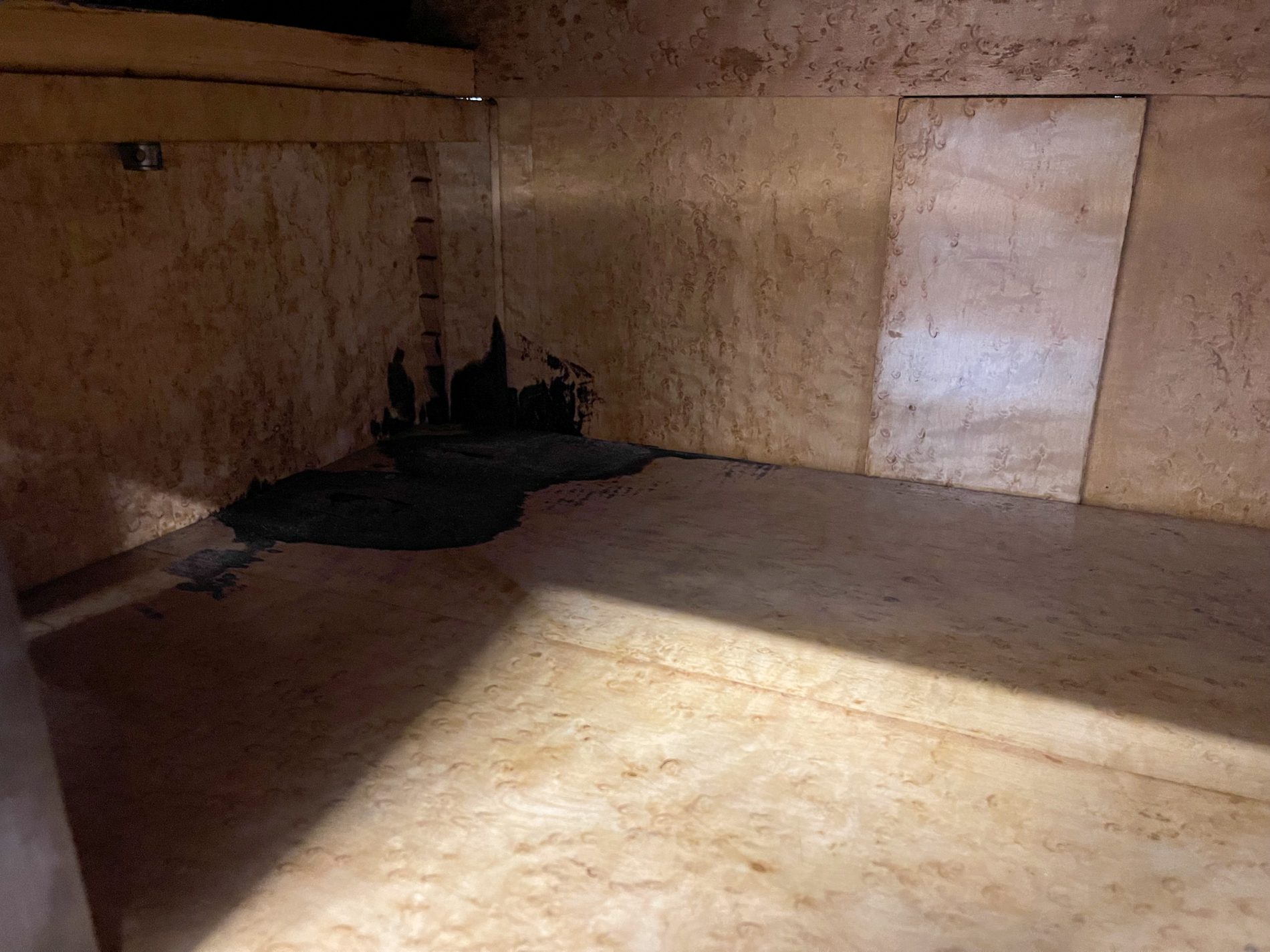
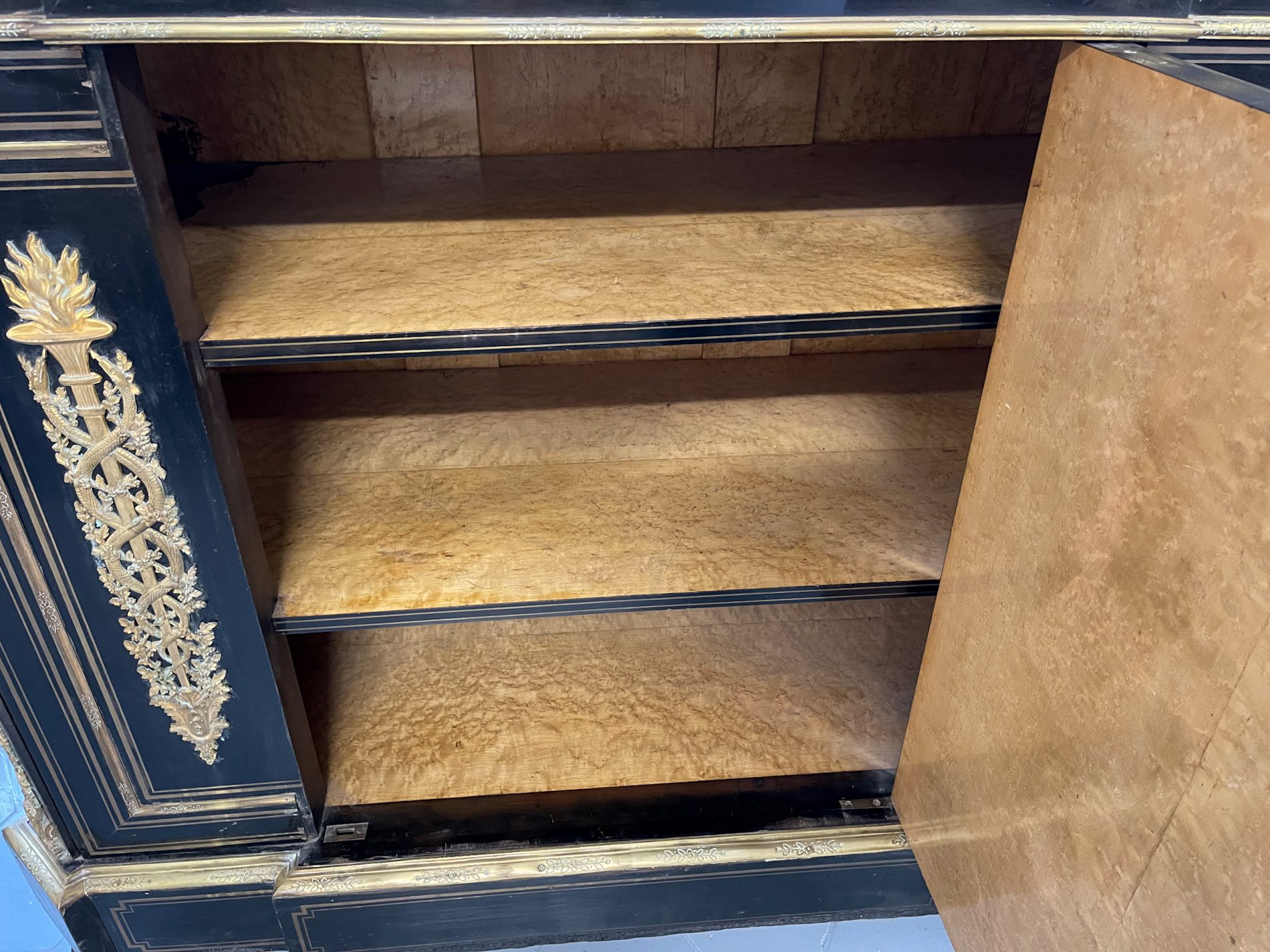
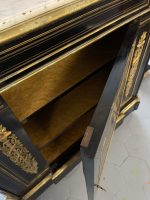
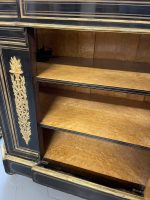
No maker’s mark is present, consistent with bespoke production for the imperial circle. The precision of the ormolu mounts, the density of the Boulle inlay and the quality of the marble top point unequivocally to a premier Parisian workshop. A with complete Boulle marquetry, ormolu caryatids, marble top and near-complete bronze mounts of this quality is genuinely rare — sought by collectors and by the major European auction houses. The condition of the item is fully reflected in the photographs.
BESCHREIBUNG AUF
Höhe 115,5 cm × Länge 126 cm × Tiefe 62,5 cm
Boulle avec Bronzes Dorés et Dessus de Marbre — Style Napoléon III, France, vers 1860–1880
Ce exceptionnel est l’une des expressions les plus abouties du style Napoléon III dans les arts décoratifs — une époque où le Second Empire (1852–1870) et la Belle Époque qui lui succéda engendrèrent un culte du luxe sans précédent au sein de la haute bourgeoisie et de l’aristocratie parisiennes. Réalisé en bois ébénisé avec une marqueterie Boulle d’une richesse exceptionnelle en laiton et argent sur l’ensemble du façade, il représente le sommet de l’ébénisterie e du milieu du XIXe siècle.
Le panneau central de la porte est un chef-d’œuvre miniature : sur fond laqué noir, une scène allégorique en intarsia d’or et d’argent représente une muse ailée (putto) avec des instruments de musique et un rouleau de partitions, entourée de guirlandes d’acanthe, d’oiseaux exotiques, de trophées à rubans et d’encadrements géométriques chinoiserie. Les pilastres latéraux portent des flambeaux en bronze doré avec une flamme au sommet, enroulés de serpents et de branches de laurier. Les montants d’angle sont ornés de caryatides féminines en bronze ormolu.
Un instant Belle Époque. À l’Exposition Universelle de Paris en 1867, l’impératrice Eugénie s’arrêta devant un exactement semblable à celui-ci — ébénisé, avec des caryatides en bronze aux angles et un dessus de marbre blanc. Son vieil ami Prosper Mérimée, qui avait écrit Carmen pour elle en des temps plus jeunes, se tenait légèrement en retrait et observait silencieusement : la pièce ressemblait à une partition de musique traduite en bois et en bronze. Ce soir-là à Compiègne, l’impératrice demanda qu’on la fasse livrer pour la réception du lendemain. Quelque part dans le Faubourg Saint-Antoine, un maître ébéniste reçut sa commande.
Un avec marqueterie Boulle complète, caryatides ormolu et dessus de marbre de cette qualité est une rareté absolue sur le marché antiquaire — recherché par les collectionneurs et les grandes maisons de vente européennes. L’état de la pièce est entièrement reflété dans les photographies.