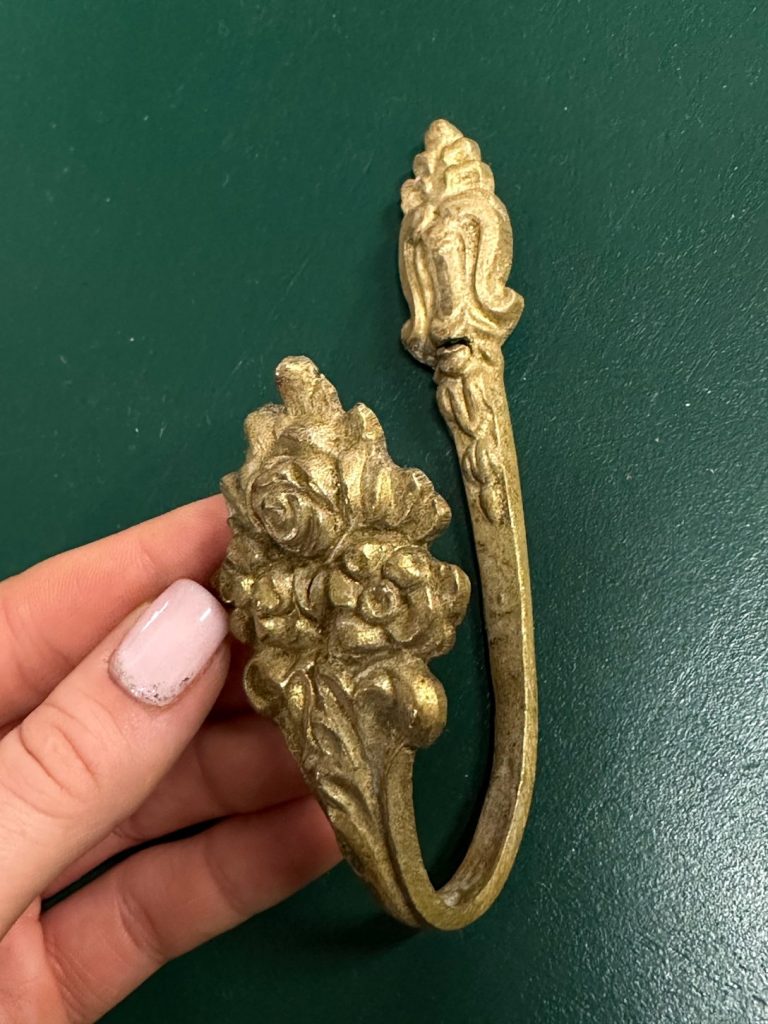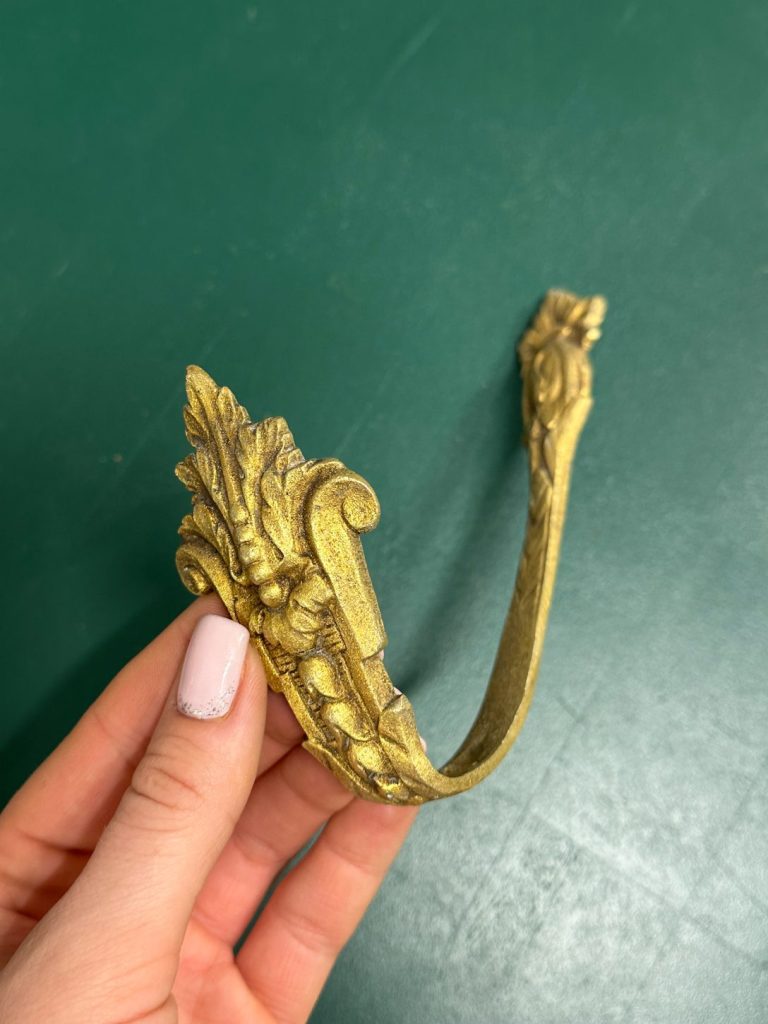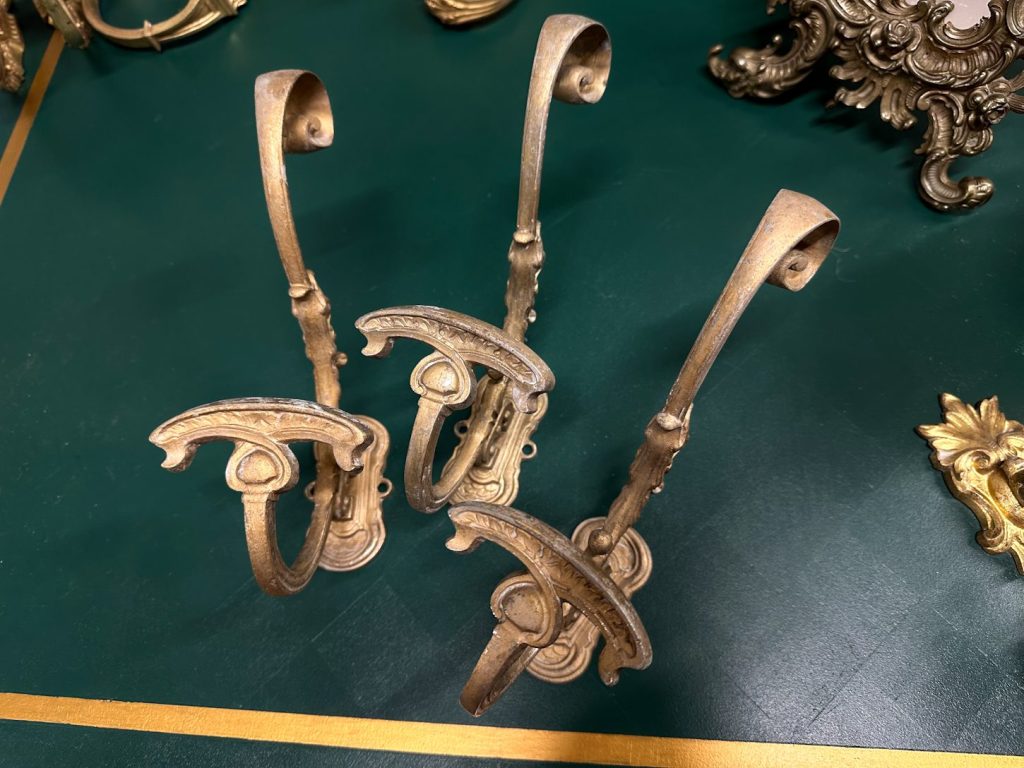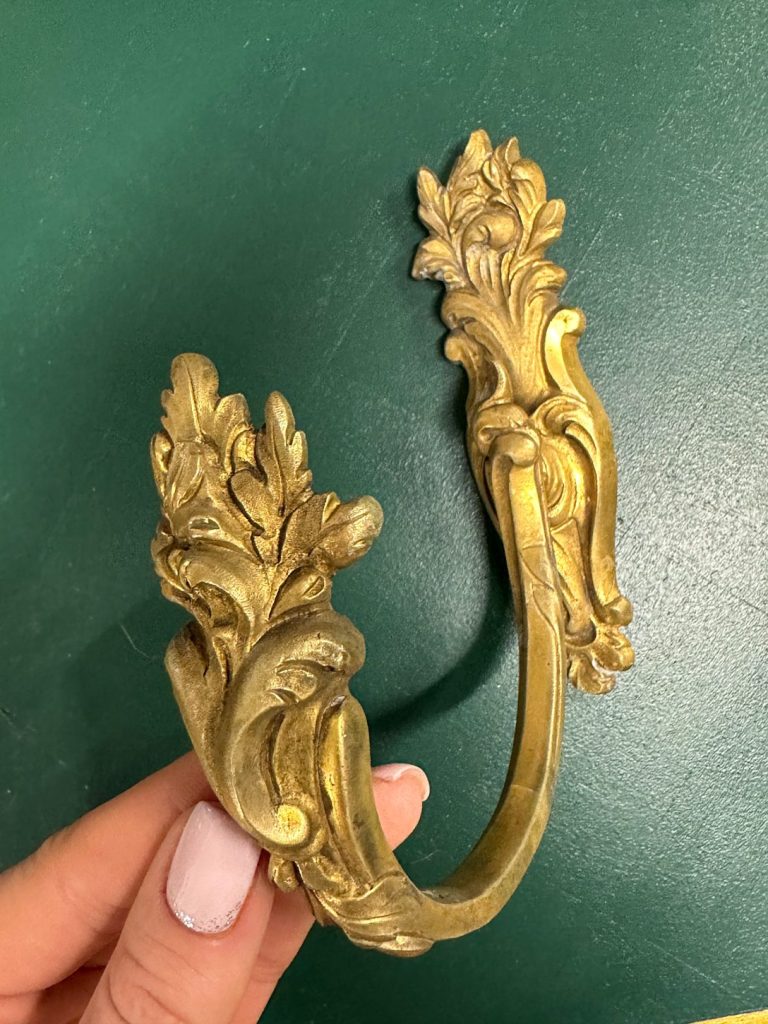
Elegant antique brass letter and napkin holder with two compartments — Historicism style (brass letter rack) 220,00 €
You’re now subscribed to price tracking for this product. We’ll notify you if the price drops. 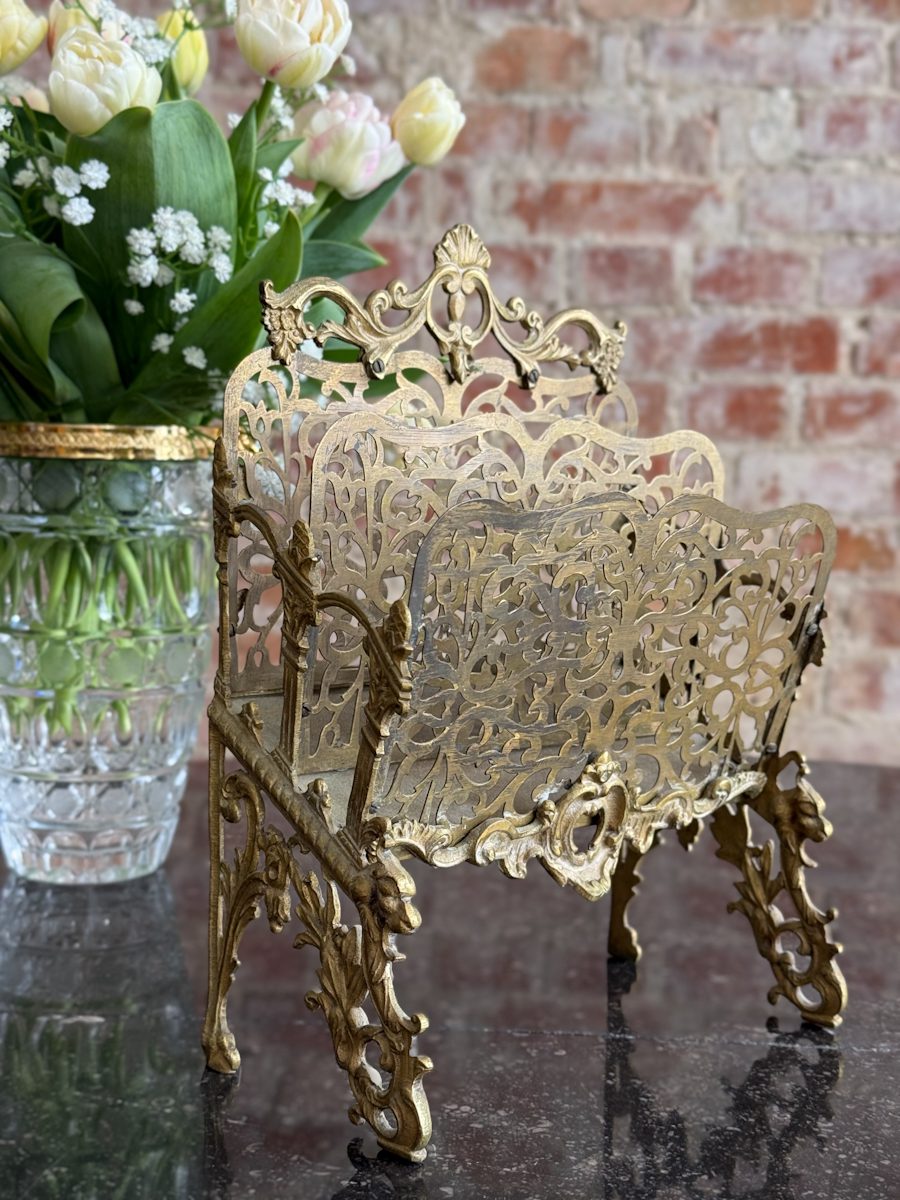
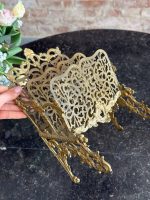
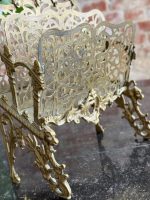
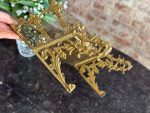
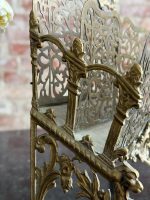
Elegant antique brass letter and napkin holder with two compartments — Historicism style (6560)
Height 28.5 cm Width 20.5 cm
Description
Height: 28.5 cm
Width: 20.5 cm
Depth: 11 cm
Elegant antique brass letter and napkin holder with two compartments — Historicism style (brass letter rack)
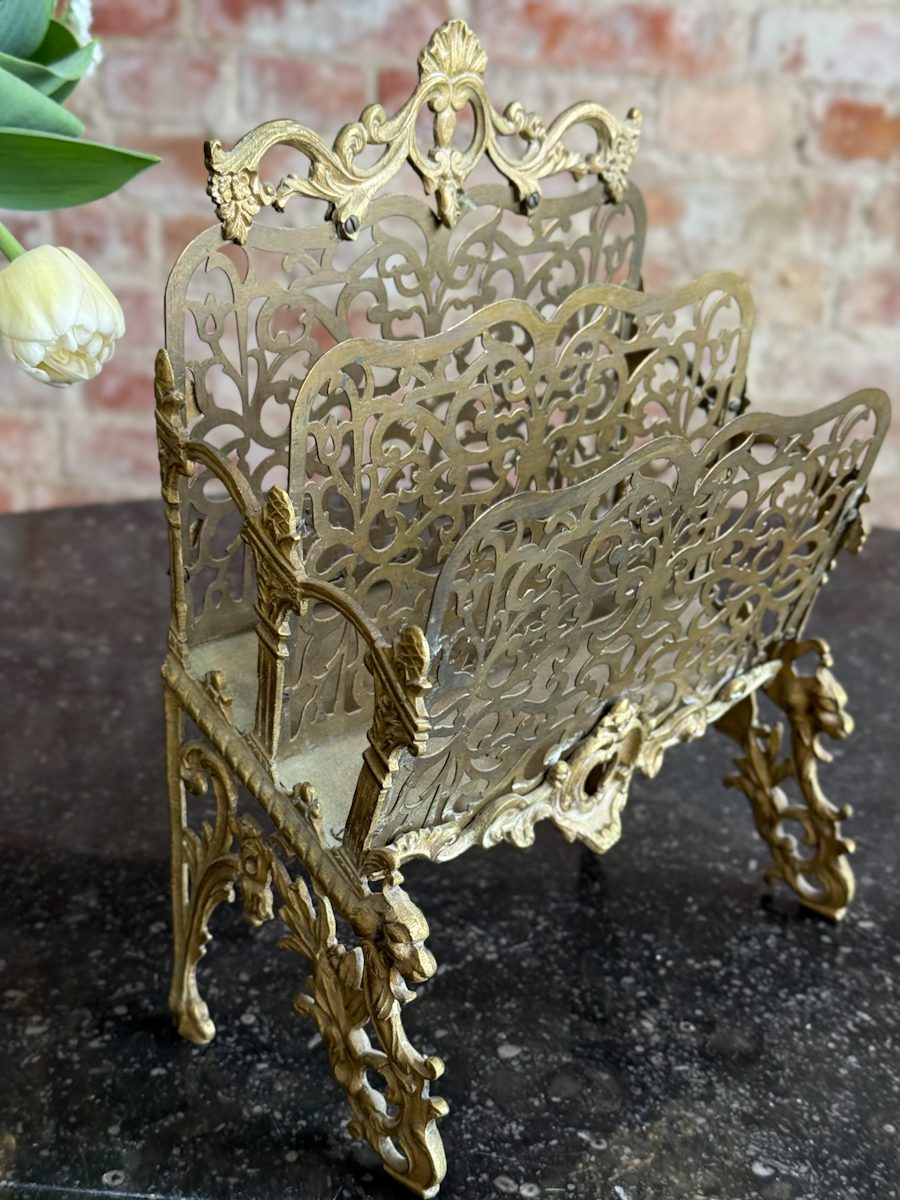
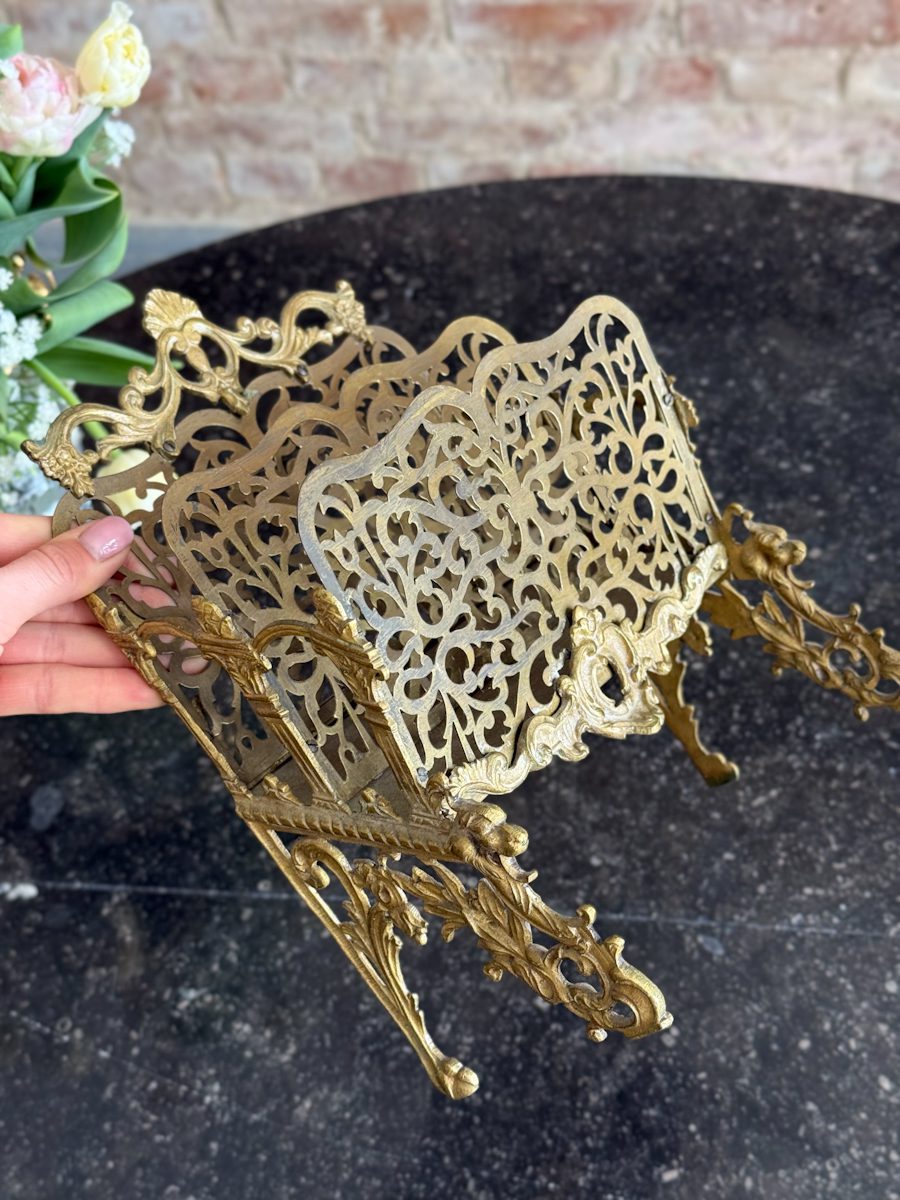
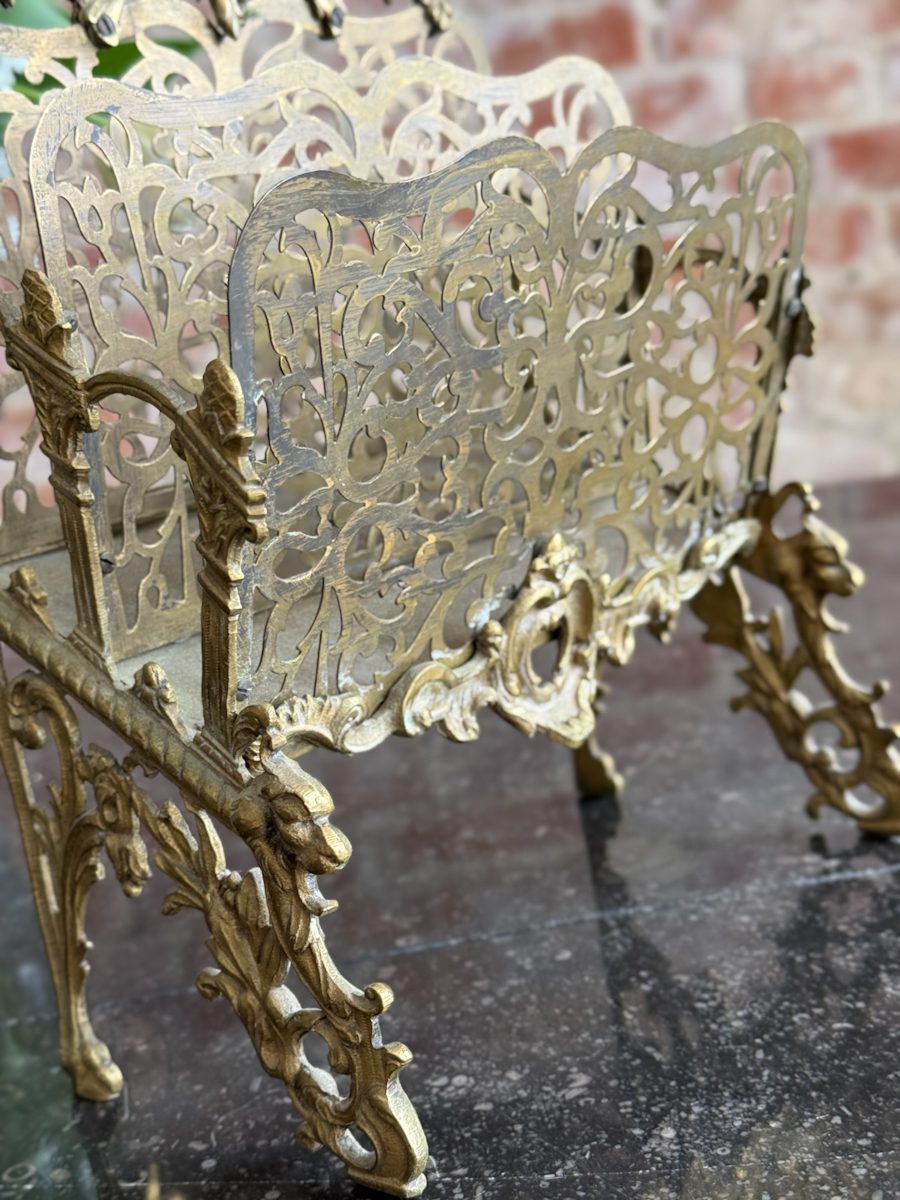
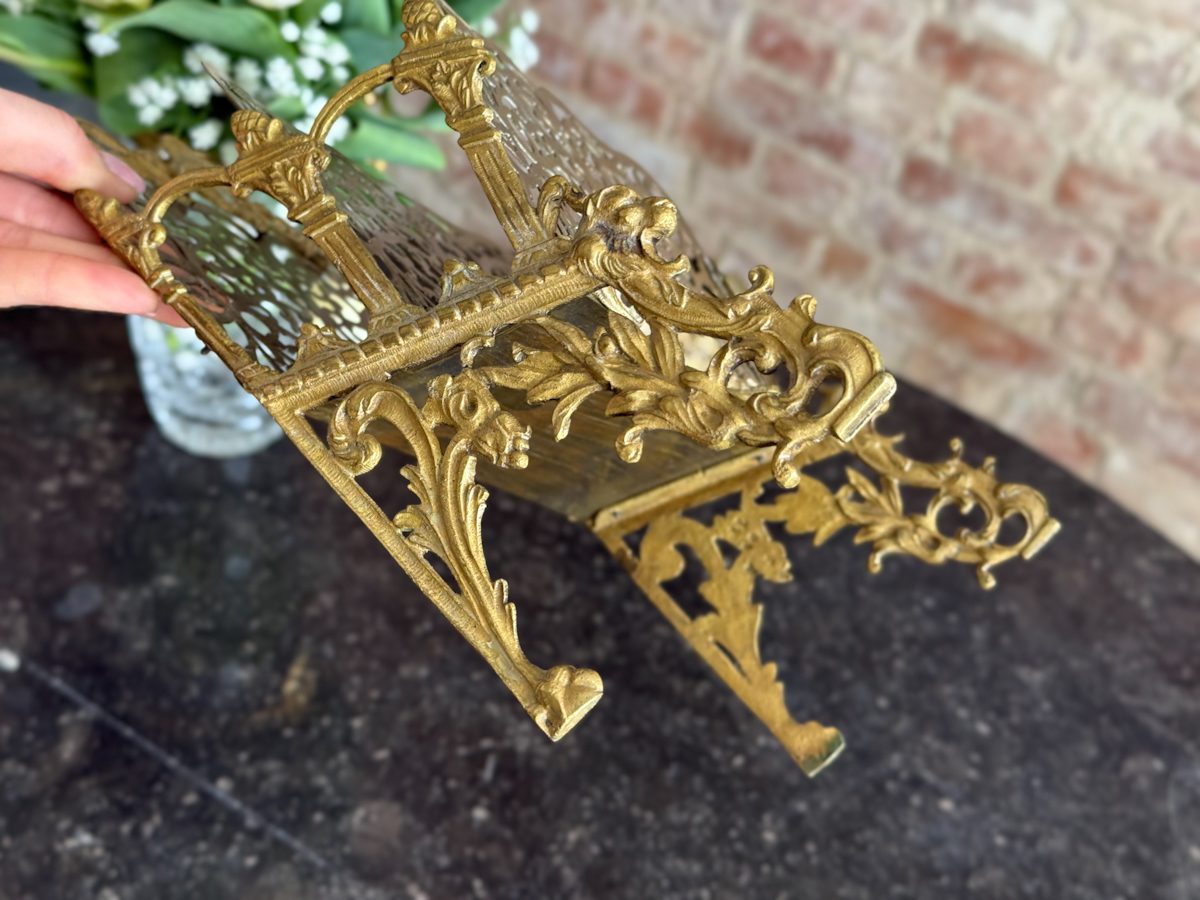
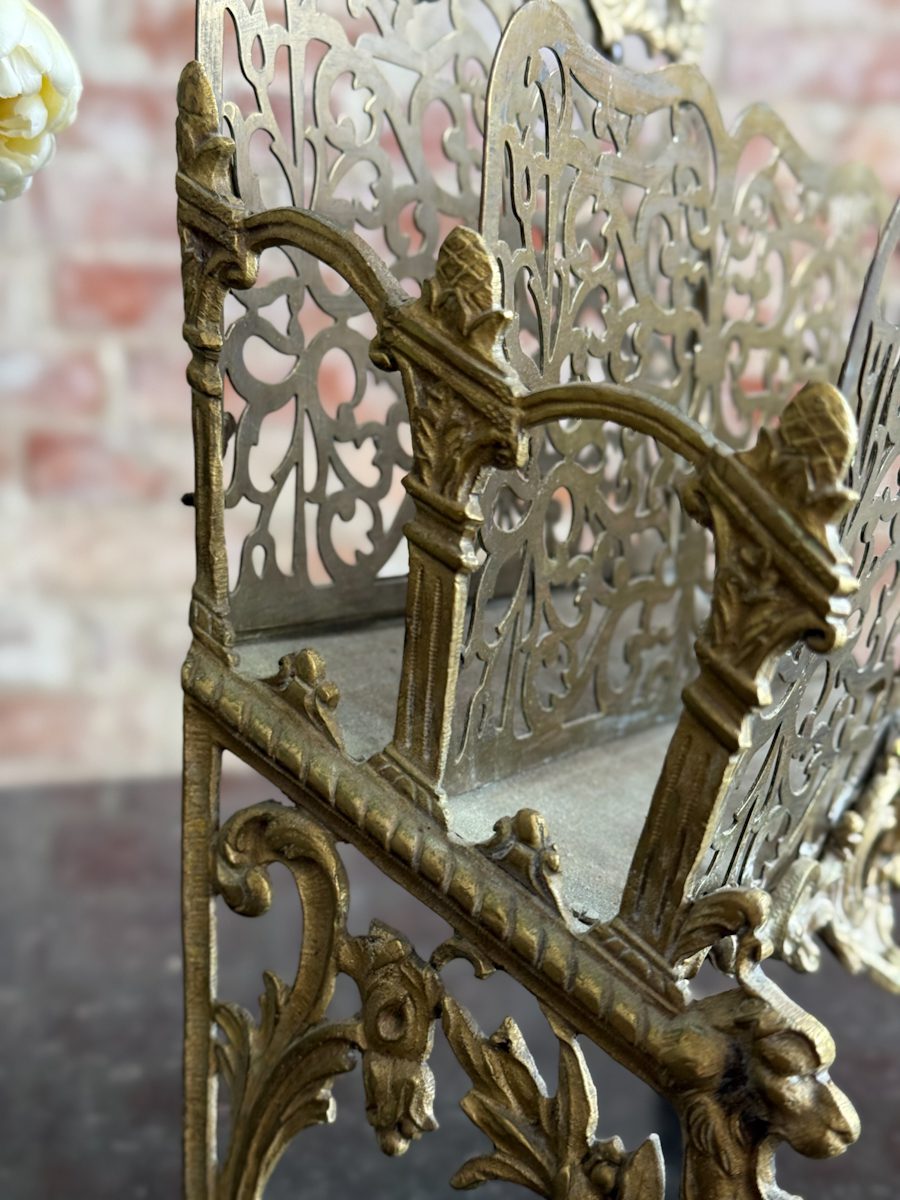
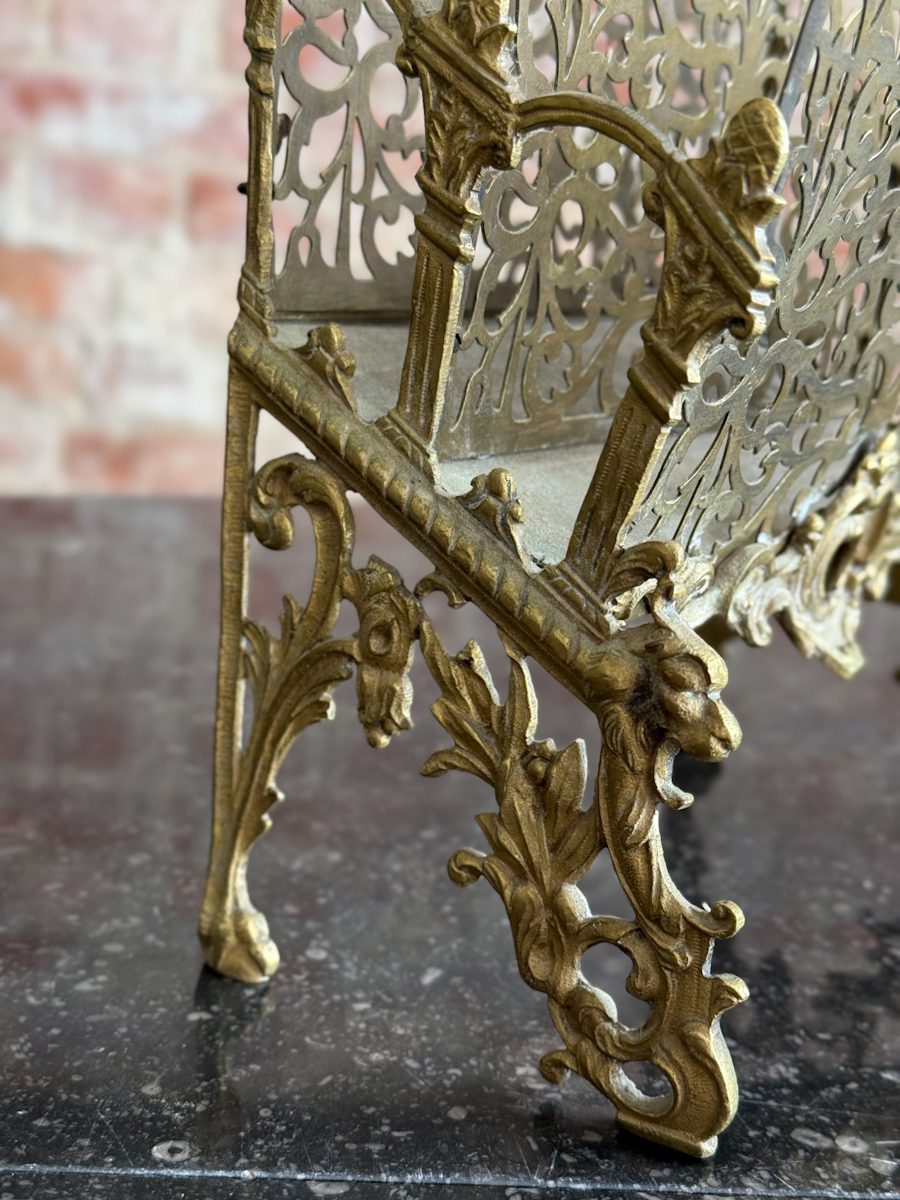
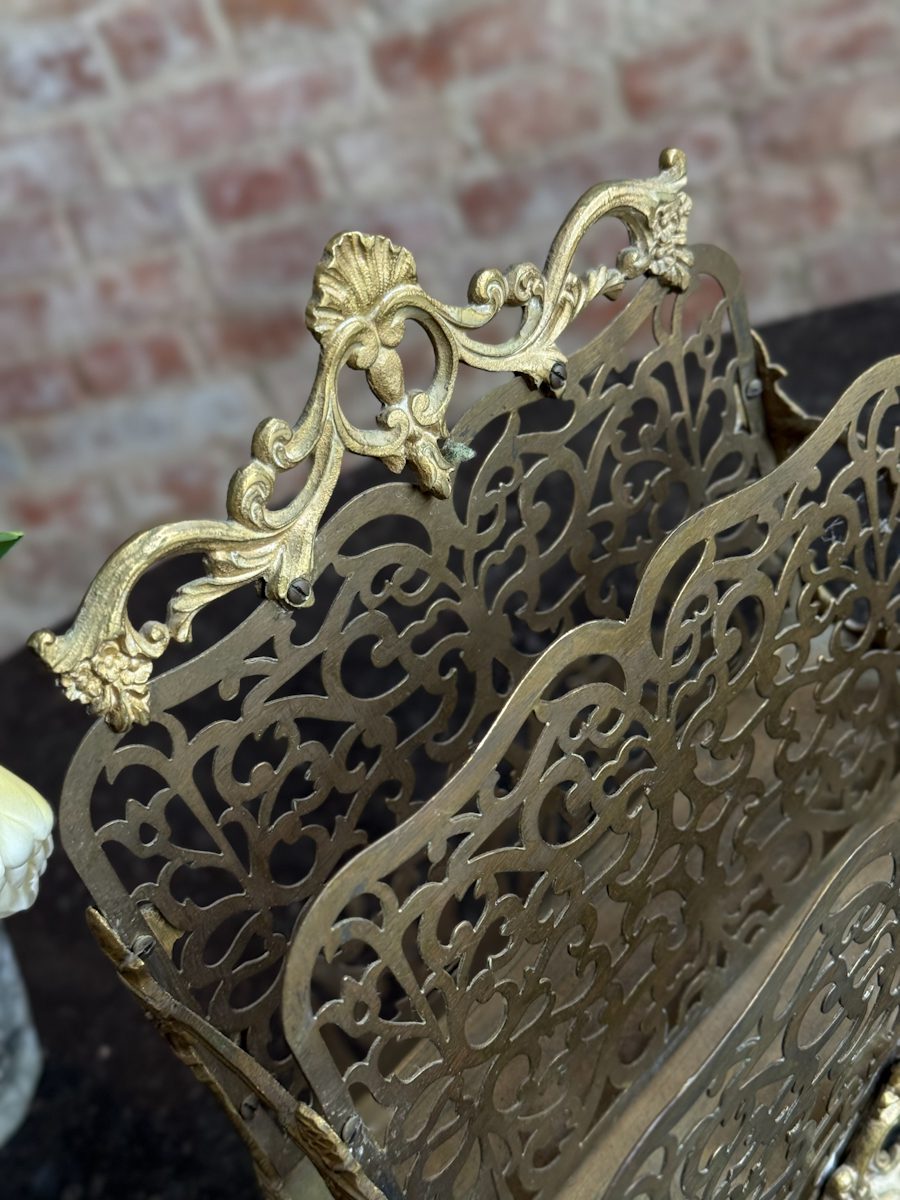
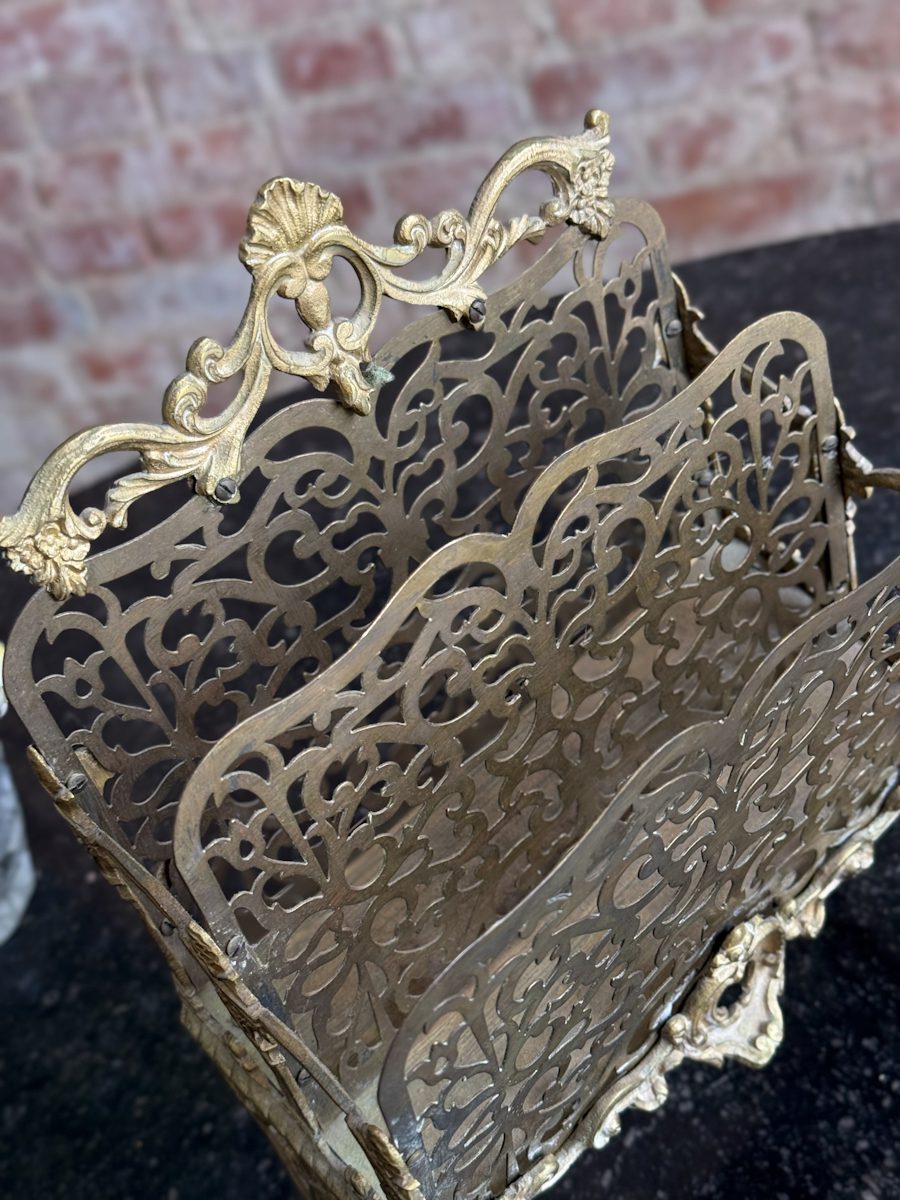
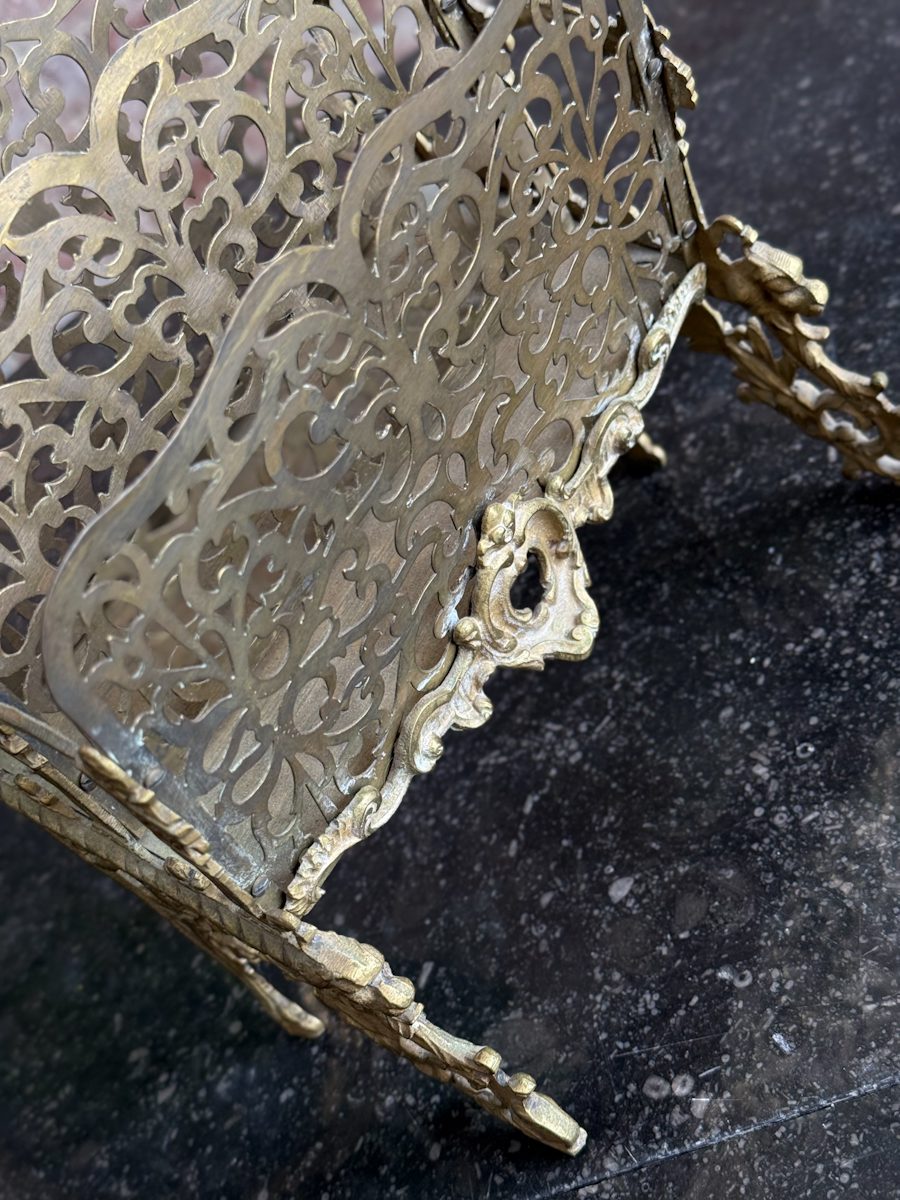
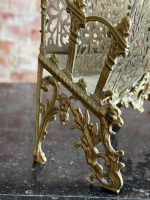
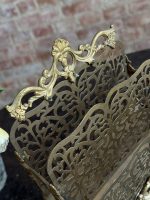
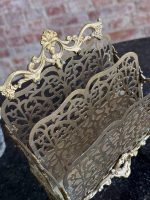
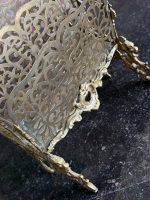
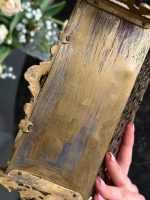
Refined desk etiquette and the late 19th-century office aesthetic meet in this small yet expressive holder made of a brass and bronze alloy. Originally designed as a representative stand for letters and important documents (letter rack) for a gentleman’s study, in a modern interior, it serves just as impeccably as a magnificent and functional napkin holder on a festive table. The item’s design is in the lavish Historicism (Neo-Baroque) style — its three parallel walls are crafted as openwork, filigree ornaments cast using the lost-wax technique, featuring flowing acanthus leaves and natural motifs. The two convenient, deep compartments allow for clear organization of correspondence or placement of table linen, while the base itself is firmly supported by four distinctive, embossed legs with stylized floral elements.
Period of Manufacture Late 19th century, approximately 1885–1895. During this period, particular attention was paid to the splendor of writing desk and dining table accessories in European bourgeois society and provincial centers, where every detail was meant to attest to the owner’s status and level of education.
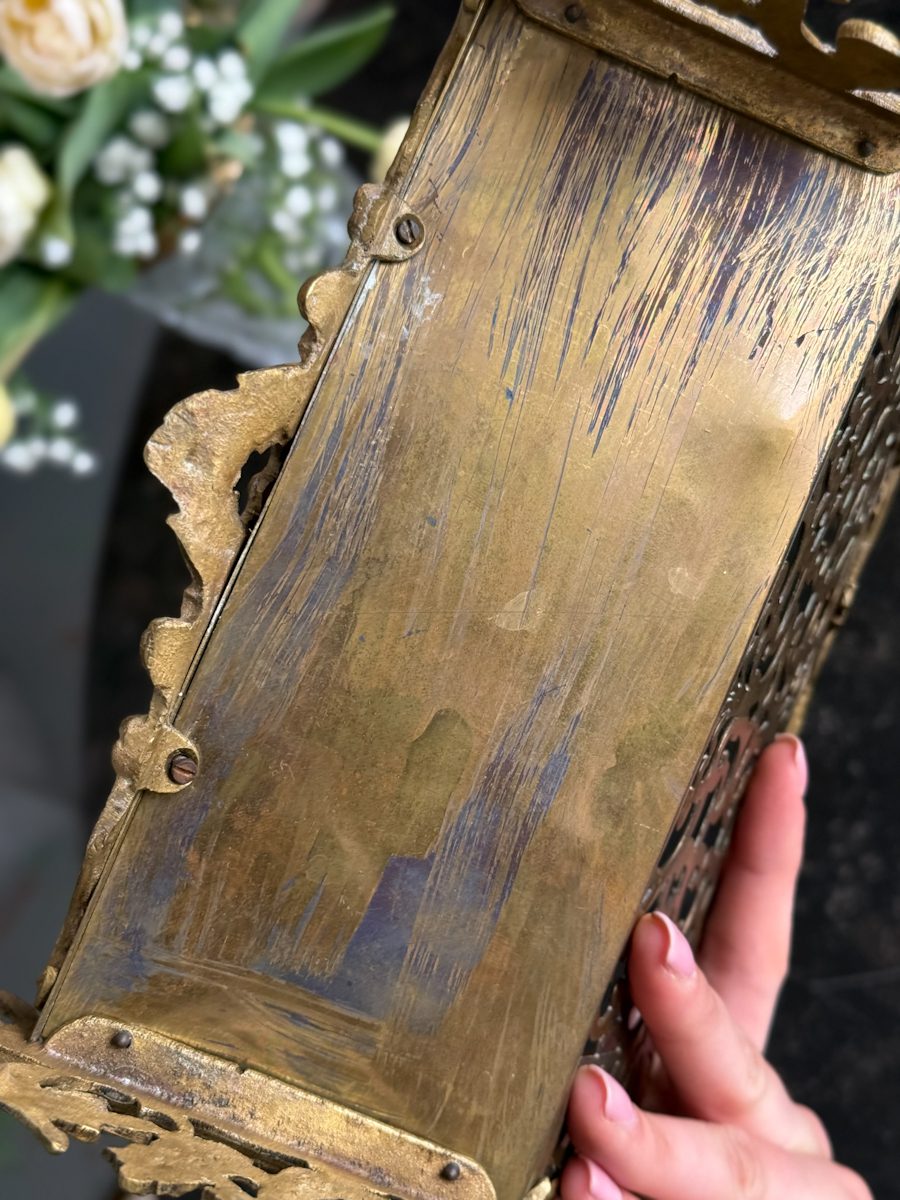
Maker / Signature / Mark The stand is a high-quality example of Western European (most likely or ) artistic metalwork. The fastenings of the structural components with historical screws and the grinding of the base attest to the meticulous handiwork of a manufactory, such as was gladly offered by elite merchants in their salons and stationery shops in Riga and Libau.
Rarity and Significance The value of such everyday office and table items lies in their untouched decorative condition. As the openwork casting is delicate and fragile, many similar examples have suffered breaks or lost internal partitions over time and generations. This item has reached our days in complete structural integrity — without signs of repair or losses.
Application and Interior Use This holder will become an exquisite and noticeable accent. It will perfectly complement a solid wood writing desk in a study, a secretary, or an antique console in the hallway for storing correspondence, and will also bring the necessary historical charm and elegance to a dining or kitchen area, serving as a napkin stand.
Condition The item is in excellent antique condition. The brass/bronze body is firm, straight, and completely stable. The metal surface has retained its natural, noble patina of age with a pleasant contrast of golden and darker bronze hues, which has been intentionally left unpolished to preserve the item’s historical value. The compartment dividers are firmly fixed. The condition of the item is fully reflected in the photographs.
Snapshot of the Era, Engineer Louis Wells: A late evening silence reigns in the study of Louis Wells, chief draftsman and engineer at the Tosmare shipyard, softened only by the rustle of document folders. On the desk, next to the drawings of new steamship hulls, among books and an inkwell, stands a small, heavy brass letter holder, whose baroque openwork swirls this evening neatly hold two newly arrived letters from Paris and England. Wells rests his head in his hands and momentarily pauses his gaze on the patinated acanthus leaf forms — this delicate object, where the play of light barely glints, is like a small, calm anchor of art amidst the iron calculations and smoky dock scenes outside the window.
While in neighboring offices, directors and cashiers meticulously record the province’s new industrial orders with quill pens, and the world races ahead of time, here, at one desk, the etiquette of the office and the elegance of Parisian salons remain untouched, fixed in one heavy, hand-polished brass stand.